Is Apple Developing a Self-driving iCar?

Apple Inc. is wading in to the debate over regulation of self driving cars, declaring it is excited about the potential for automated transportation and calling on U.S. regulators not to restrict testing of such vehicles.

A five-page letter from Steve Kenner, Apple’s director of product integrity, to the National Highway Traffic Safety Administration is the company’s most comprehensive statement yet about its interest in self-driving vehicle technology. The Nov. 22 letter followed more than a year of industry speculation about the computer and iPhone maker’s plans for expanding into transportation. “The company is investing heavily in the study of machine learning and automation, and is excited about the potential of automated systems in many areas, including transportation,” Kenner wrote.

“Executed properly under NHTSA’s guidance, automated vehicles have the potential to greatly enhance the human experience — to prevent millions of car crashes and thousands of fatalities each year and to give mobility to those without.”

Apple urged regulators not to impose too many restrictions on testing of self-driving cars, saying “established manufacturers and new entrants should be treated equally.” Since software would decide what actions to take in potentially dangerous situations,

Apple said certain areas need special attention. These include the implications of algorithmic decisions for the safety, mobility and legality of automated vehicles and their occupants, ensuring privacy and security in design, and the impact of the cars on employment and public spaces. Some analysts forecast millions of jobs will be lost once self-driving cars largely replace truck, taxi and Uber drivers, and eliminate the need for most vehicle repairs, insurance adjusters and other functions.

Apple’s letter was prompted by its heavy investment in machine learning and autonomous systems, company spokesman Tom Neumayr said in an emailed statement. “There are many potential applications for these technologies, including the future of transportation, so we want to work with NHTSA to help define the best practices for the industry,” he said.

In September, the Obama administration proposed guidelines for the development of self-driving cars in a 15-point “safety assessment,” calling on automakers to voluntarily submit details of their systems to regulators.

Apple executives have been coy about their interest in cars. Chief Executive Tim Cook has suggested that Apple wants to move beyond integration of Apple smartphones into vehicle infotainment systems. But Apple has never confirmed reports last year that it was hiring automotive industry engineers and designers to develop a driverless electric car, or that those efforts have

been sharply scaled back this year. Other companies pursuing self-driving cars include Alphabet Inc’s Google unit, Ford Motor Co, Volkswagen AG, Daimler AG, Tesla Motors Inc and General Motors Co.

Apple has reportedly held talks about investing in British automaker McLaren Technology Group, but McLaren downplayed speculation that Apple had proposed an investment.

Apple joins a range of automakers and tech companies that have raised concerns about the proposed National Highway Traffic Safety Administration policy on self-driving cars,  and plans by California state regulators to make complying with the safety assessment mandatory.

An auto trade group in November urged the incoming Trump administration to conduct a “comprehensive regulatory review” of all regulations and actions since Sept. 1, including the Obama administration’s guidance on self-driving vehicles.

By David Shepardson; Editing by Richard Chang.


Arianna Huffington: Digital Revolution Creating Burnout

The world lives under the ‘collective delusion’ that in order to succeed we have to burn out, while multi-tasking is a scientifically disproved myth, says Arianna Huffington, founder of Thrive Global and co-founder of The Huffington Post.

Speaking at the Discovery Leadership Summit in Johannesburg recently, Huffington, who this August changed jobs from running the Huffington Post to start Thrive Global, a wellbeing and productivity company, ­said human beings need time to recharge. The goal was to minimize downtime.

“This is an illusion that stems from the industrial revolution, with some leaders who still brag about thriving on minimal sleep, yet they display classic symptoms of sleep deprivation, such as instability and incoherence,” Huffington said. “Successful leaders and leading global companies recognized the need for rest and “digital detox”, and to cultivate empathy, proper rest and teamwork.

“The digital revolution has exacerbated the crisis of burnout. Now we don’t really know when or how to disconnect, when to put our devices away. We take better care of our smart phones than ourselves.”

Echoing what Discovery founder and CEO, Adrian Gore said in his opening speech, she said there was a global propensity for “negative fantasy,” which had prompted a worldwide pandemic of stress and burnout which accounted for 75% of healthcare costs.

“Wherever you look, you see people running on empty… walking through life like zombies going through ‘to-do’ lists. We’re missing our ability to see around corners, to reconnect with the meaning and purpose of life. If one Googles the question; ‘Why am I…’, the website’s algorithm autocompletes with the words… ‘so tired’, followed by ‘Why am I always so tired’.”

She explained that besides nutrition and exercise, sleep is a vastly underrated commodity, creating a time of frenetic brain activity when the mind gets rid of the accumulated toxins of the day and recharges itself for creativity and ‘being present’ the following day.

A very small percentage of people have a genetic mutation where they can operate on four hours sleep a day, but the vast majority of people need seven or eight hours of sleep.

“A good day begins the night before,” she said, adding that; “we’re drowning in data, and starved of wisdom.”


Meet the Less Famous Donald Trump

While president Donald Trump fights his daily political battles, a Northern Virginia doctor – also named Donald Trump – is focused on clinical trials to fight cancer and doing the best he can to avoid conversations about his name or namesake.

The majority of Americans know Donald Trump as the bellicose Republican president and billionaire real estate developer, but there’s another Donald Trump who works about 15 miles from the White House.

Doctor Donald L. (Skip) Trump is the CEO and Executive Director of Inova Schar Cancer Institutue, located in Falls Church, Northern Virginia.

He’s a medical oncologist who has been involved in building and developing cancer centres for his entire career. Dr. Trump says at Inova Health System, his goal is to “develop an outstanding clinical care and clinical translational research facility to enhance cancer care in Northern Virginia and beyond.”

Dr. Trump received his medical education and completed his residency and fellowship at Johns Hopkins University in Baltimore, MD. He is the recipient of several national awards, some of which are on display in his office. He has devoted a lot of time to developing Vitamin D-based treatments for cancer patients.

But for many years, and particularly during the last campaign season, Dr. Trump has had to deal with the fact that his name is Donald Trump.

“People laugh or say ‘oh no that can’t be’ or they’ll accuse me, I think somewhat seriously, of having a fake ID card or credit card. I’ve had people say ‘is that really your credit card’ or ‘is that really your name?’ I even had somebody at TSA ask me that,” said Trump. He also had a story to tell about getting out of a potential traffic ticket, when he made the officer laugh with his namesake.

He says he often goes by his childhood nickname of “Skip.”

“I used to, in professional settings, always introduce myself as Donald Trump but I’ve consciously avoided or shyed away from doing that recently because there’s no reason to invoke, or the potential (of) that segment of the conversation,” said Dr. Trump.

The two Trumps have conversed throughout the years. In 2010, Donald J. Trump (the now-president), called Dr. Trump to ask if the son of a friend could get into a clinical trial at Roswell Park Cancer Institute in Buffalo, New York. The trial had already begun, so Dr. Trump declined. He then asked Donald J. Trump if he would have his head shaved for a cancer fundraising event. It was Donald J. Trump’s turn to decline, but Dr. Trump said he did make a “respectable” cash donation.

“The time I spent with him, it was obvious he was a successful business guy. He knew it and he knew I knew it and he didn’t want me to miss knowing it. I suspect there’s a lot of showmanship and stage presence. And that’s too bad,” said Dr. Trump.

Dr. Trump declined to comment on how he voted and said he stays away from voicing his political views in a professional setting, but said “his views and my views are pretty far apart.”


Dear Condescending Leader: This Is What You Sound Like

We have a funny family story about a woman who called one of my sisters a “patronizing c*nt” out of the blue. Please excuse the language. My sister was shocked the first time she heard it, and we’ve got in the habit of roaring with laughter at this unseemly expression every time we catch any one of us going too far in helping others. That said, patronizing styles have become all too common in our day.

The patronizing leader is a figure I see every day. Men and women who tend to their subordinates as if they were vulnerable little children in terrible need of guidance, consolation and help. In fact, I saw myself making this mistake when I had my own company too. It got so bad that I got up at four in the morning to answer emails and prepare stuff for the next day, working non-stop until seven or eight that evening. When I walked around the office I got nothing but whining, complaints, ugly, unhappy faces and long-winded emails from staff who blamed me for their lack of motivation. It was hell. It really was.

Like I did then, too many business owners and corporate executives treat their team members like kids. We seem to be caught in a cycle where we try to be better bosses and parents than the adults of our childhood were. So, away with the discipline, the angry telling off, the punishments and restrictions, and hello to the motivational seminars, the cuddly meetings full of positive feedback, and patronizing leadership – that rolls a red carpet of comfort before its employees. We’ve taken positive psychology a bit too far.

It’s not only a thing we do on a personal level with our peers and children. This excess of patronizing attention permeates our entire economic system in ways that we fail to notice. Many of our business models have become invasive – with advice, unrequested favors and exhausting email publicity campaigns. Everybody wants to solve our problems, before we even know they need resolving!

I went to a new, holistic dentist last week because a filling had came out. I was told the protocol was to analyze my mouth with several tests before they could start work. I was there all morning, going through hoops and obstacles before they even looked at the problem. They kept cooing soft instructions in my ear, spreading healthy creams and ointments here and there as they pointed out new problems. I felt smaller and smaller with each patronizing gesture, guilty as judged, helpless and dumb. The perfect victim for the crazy, two-year cost estimate I was elegantly handed before I left. Wow!

Then I walked into one of Spain’s iconic all-in-one stores, “The Corte Inglés” to get some basic dental care products. I had to walk around the cosmetics floor searching for four inexpensive products. The loud music and overpowering perfume scents made me dizzy. Beautiful people wearing too much makeup and dressed in black, kept offering things to me. When I finally found what I wanted to buy, the assortment of choice was unbearable. Too many brands, too many different variations and options for each brand, too many helpers offering advice on what worked – for them. And then the promotions, loyalty cards and other million ways of getting me to come back to spend more money! If I’d been as crass as my sister’s friend I would have insulted them all and stormed out. Whew! When did shopping become so patronizing?

Patronizing marketing and selling has taken over our businesses in the last few years, and I guess I just noticed it last week. It’s excessive, luxuriously expensive and egocentrically irresponsible, given our current environmental challenges. It also makes clients feel helpless, small, ugly and belittled. Like a miserable little lamb surrounded by hungry wolves.

And I’m not so sure it actually works in the longterm. It seems too expensive to maintain. Like a repetitive story where every brand tries to spend more money on advertising than the next, in order to get their spoiled brat clients’ attention one more time. This whole system we’ve created just feels wrong. It feels like the opposite of what things should be: trusting, responsible players negotiating fair deals with each other in a way that makes them feel strong and proud, wanting to come back for more because they appreciate each other.

There is a cute video on twitter showing a mother duck who helps her little ducklings up some steps. Once again an animal demonstrates the qualities of parenthood and leadership we should all pursue. Please take a couple minutes to watch it and ask yourself if this is what you do with your subordinates, clients, friends and kids. Or do you really, really want to run over and lift them all up? 

The mother duck waits patiently until every little duckling gets it right. There is no judging, no impatience, and no patronizing, belittling “Oh you poor thing! I’ll do it for you”. This is what parenting and leadership should look like. This is what I learned after painfully closing down my company. And guess what? When I finally ran out of energy and money to keep everybody on the payroll, nobody thanked me or appreciated what I had done. No. They kicked me in the shins. In their helpless, far-too-pampered view, the company’s failure was ALL my fault, and they were the victims!

When we “help” adults who’ve never asked us, we debilitate them. We feel big at the cost of making them feel small. It’s not sustainable. And sure isn’t leadership at all.


US$2.3 Trillion by 2030 From New Business Models in Food & Agriculture

New research shows sustainable business models could generate 80 million jobs by unlocking opportunities across 14 areas, including food waste, low-income markets, aquaculture and urban agriculture.

There’s a reason why Real Leaders is a signatory to the United Nations Sustainable Development Goals – it makes financial and ethical sense. The 17 goals to transform our world started out as far-fetched ideas, but are rapidly being put into action by companies around the world, that have seen the economic benefits to adopting a way of thinking that solves pressing social problems. Feeding 7.5 billion people on the planet is one such challenge and the food and agriculture sector has just realized the massive benefits to adopting sustainable business models.

Companies could unlock US$2.3 trillion a year in the food and agriculture sectors with an annual investment of US$320 billion in sustainable business models by 2030, a 7-fold return on investment. This could also lead to more than 80 million jobs, according to a new report, Valuing the SDG Prize in Food & Agriculture, from the Business and Sustainable Development Commission. The release of the report coincides with World Food Day 2016 (which is Sunday 16 October).

The opportunities are broken down across 14 areas, including food waste, farming technology, low-income food markets, micro-irrigation, restoring land and forests, product reformulation, changing diets, aquaculture, reducing package waste, cattle intensification and urban agriculture. Researchers estimate a range of value for each opportunity; the lowest in the range is US$15 billion per year (for cattle intensification) while the highest goes up to US$405 billion per year (for reducing food waste across the production process, or value chain).

Of the 80 million jobs the report estimates could be created by 2030, 90% could be in developing countries, including 21 million in Africa and more than 49 million in Asia. The report further breaks down job creation potential in Asia to 22 million in India, 12 million in China, and the remaining 15 million in developing Asia. There could also be an additional 5 million new jobs in Latin America.

“As the world’s population is expected to increase by another one billion by 2030, the global food and agriculture system requires a new way of doing business, and new approaches to feed more than 800 million people who today suffer from chronic hunger as well as to meet future demand,” said Lord Mark Malloch-Brown, Chair of the Business and Sustainable Development Commission. “This report makes clear both the social and economic incentives for companies to seize upon the SDGs as compelling growth opportunities. It is part of our larger argument for why the private sector must accelerate new business models that open truly sustainable and inclusive markets.”

The authors caution that the annual investments needed to open these market opportunities must be scaled significantly, requiring an estimated US$320 billion a year to unlock these opportunities by 2030. They argue that the current capital base in 31 leading agriculture funds is just under US$4 billion a year—less than 1.5% the annual investment needed to capture these opportunities. Partnering with government will also be critical to put in place enabling policies and the right regulatory frameworks as well as to advance research for facilitating product innovation.

The report looks at how food and agriculture businesses can experience growth by pursuing sustainable and inclusive business models aligned with the Sustainable Development Goals (SDGs), or Global Goals. Launched in 2015, the SDGs are 17 time-bound targets for ending poverty and hunger, reducing inequality and tackling urgent challenges such as climate change, by 2030. The food and agriculture sectors directly relate to SDGs 2 (ending hunger), 3 (health & well-being), 8 (decent work and economic growth), 10 (reduced inequalities), 12 (responsible consumption and production), 13 (climate action), 14 (protect life below water) and 15 (protect life on land), but they are cross-cutting sectors that also affect the remaining Global Goals.

The research shows that developing countries have the most to gain from SDG-aligned business opportunities, capturing more than two-thirds of the estimated economic value due to their large shares of arable land, high future consumption growth and large potential efficiency gains. Across regions, the biggest business opportunity in developing Asia is in cutting food waste across the value chain; while in developed Asian countries like South Korea and Japan, the opportunity is greatest in consumer waste. In India, low-income food markets are the strongest opportunity for businesses, and in Latin America and Africa, it is forest ecosystem services.

Paul Polman, CEO of Unilever and member of the Business and Sustainable Development Commission, urges more food and agriculture companies to integrate sustainability practices into their models: “Unilever’s experience clearly demonstrates that business, can create value by putting sustainability at its very heart and adopting inclusive growth models. At Unilever, we have helped hundreds of thousands of smallholder farmers improve agricultural practices enabling them to double or even triple their yields. All stakeholders can share in the benefits: Smallholder farmers improve their livelihoods; suppliers gain increased security of supply with improved quality; and we reduce volatility and uncertainty with a more secure and sustainable supply chain. The SDGs present a clear moral case for change, but companies must recognise that they represent the business opportunity of a lifetime too and must adapt to take advantage of it.”

Companies will need to operationalize sustainability across its supply chain and internalize social and environmental costs, while transforming consumption. Unlocking social and economic rewards in food and agriculture will require closer collaboration among business, government and society, and new ways of working together to advance common social, economic and environmental objectives.

If the private sector can put these prerequisites in place, the social benefits, including food security, job creation and health outcomes, could be significant. Improving technology in smallholder farms and restoring degraded land, for example, could double the incomes of smallholder farmers in the world, who are among the poorest in the global economy, the report finds. According to the UN, of the 2.5 billion people in poor countries living directly from the food and agriculture sector, 1.5 billion people live in smallholder households.

“The best way to build an enduring business is to put sustainability at its heart. Value is then unlocked for all, from shareholder to supplier, and nature is not depleted.  Values and value creation do not have to, and actually should not be, traded in the long-term.” said Sunny Verghese, Co-Founder and Group CEO of Olam, a global agribusiness with a portfolio of 47 agri-commodities, and a member of the Business Commission.

“Many commentators have incorrectly perceived the SDGs to represent an additional headwind to growth and profitability. The reality is that in many cases the SDGs offer a new and higher quality channel for economic growth and business profitability,” said Dr. Fraser Thompson, Director, AlphaBeta, which conducted the research for the Business Commission. “This is particularly the case in these sectors. This study is the first attempt to provide a holistic assessment and quantification of the business opportunities related to the SDGs in food and agriculture.”

Valuing the SDG Prize in Food & Agriculture is part of a larger body of research that quantifies the value of business opportunities across four key systems, including cities, health and well-being, and energy and materials. The findings for these systems will be revealed in the Business Commission’s flagship report, to be launched in January 2017. The report will show how the Sustainable Development Goals (SDGs) —17 objectives to end poverty, reduce inequality and tackle climate change and other urgent challenges by 2030—provide the private sector with the framework for achieving sustainable and inclusive growth. The report will also cover the new business models and financing required to open these opportunities, and will include key action points for the private sector to take the findings forward and accelerate. 

 

What Tech Executives Don’t Understand About Talent

In a recent interview, IBM CEO Ginni Rometty said what most tech executives say about the growing talent shortage.  She said we need more STEM education.  She advocated channeling more students in to science, technology engineering and math courses. That’s of course the conventional wisdom . . . but it’s wrong.  Well, not so much wrong as it is incomplete.

What Ginni is missing in her message is that that the future doesn’t belong to the scientist or coder. It belongs to the people who can lead and collaborate with teams of scientists and coders.  The future belongs not so much to people with technical intelligence as it does to people who have emotional and social intelligence. It’s group intelligence that matters.  Here’s why.

work

Just consider this graphic.  Before the Industrial Revolution we lived in a world of blacksmiths and cobblers who made custom shoes for horses and people. It’s true. Before machines and factories we relied on craftspeople to custom-make the necessities of life. The factory changed all that. Unskilled employees could be taught to do a repetitive process like screw on a front fender on a model T Ford. This was a massive productivity revolution.  Build-time for the Model T automobile shrunk from 14 hours to 90 minutes. This represented nothing less than a complete revolution of how work is performed.

Factory work has massive social consequences.  As work became scientifically designed to remove all variation and individuality workers became interchangeable cogs in a productivity machine.  All workers were supposed to show up on time and do what they were told.  If they did it long enough they could even earn something called a pension.

The social contract for workers was that if they were reliable and obedient they would have a job and retirement security.  That changed in the 1980s when McKinsey and Company advised Jack Welch to start laying off productive employees from his prosperous locomotive plant.  They argued that if he could cut labor costs arbitrarily, earnings would go up, stock prices would rise, and he would become very rich.

Welch loved this. Without having to invest any money in R&D, or take any new risks he could increase profitability by simply insisting that the workforce work harder.  He liked it so much he got the nickname of Neutron Jack. (A neutron bomb is designed to kill people without damaging buildings, an apt description of generating higher profits through layoffs.) Thus the social contract of being rewarded for hard work and loyalty was voided.

In the 1980s financial spreadsheets were invented and this enabled knowledge work to be automated.  It was really the beginning of artificial intelligence that is something that IBM and scores of other big data crunching companies are using to change the future.  Artificial intelligence is relentlessly turning whole professions into factories in which a few low skilled people can enter data and algorithms can turn it in to something valuable.  For instance, someone with a 10th grade mathematical literacy can use TurboTax software to complete most federal income tax forms within minutes. (That’s quite an achievement since the U.S. has the most complicated income tax laws in the world.)

That’s just the beginning. Industry analysts estimate the artificial intelligence embedded in Intuit’s small business software packages has eliminated the need for tens of thousands of bookkeepers and accountants. You see, bookkeepers are similar to blacksmiths.  In a way they are craft people and the new world we work in doesn’t need very many of them unless they bring something much more important than technical know how.

Artificial intelligence is now being used to write newspaper articles, novels and even songs. It seems that any mental activity that can be broken down into a formula can be turned into a job that a computer can do. New software tools are enabling coders to vastly increase their productivity so that what used to take weeks can be done in days and soon hours. This suggests that, in time, even the demand for computer engineers may wane like that of a shoe cobbler.

I believe that the great career opportunities, especially in technology businesses, will not be driven so much by technical expertise as it will be by emotional intelligence, thinking agility and good judgment.   

These qualities are in desperately short supply in most businesses I consultant in. Leadership research from companies like Zenger-Folkman reveal that 80% of people in management simply aren’t very effective managers.  They don’t know how to communicate clear goals that connect to strategic priorities.  They don’t know how to empower people and hold them accountable.  They don’t know how to inspire commitment and engagement.  They don’t even know how to complete projects in scope, on time and within budgets.  They certainly don’t know how to give effective feedback and coach teams to higher performance.

The same research confirms that over 30% of managers are so inept that they are actually the cause of failure. These are simply bad managers that people are loath to work for.  30% is a big number.  It corresponds to some recent gender research in tech companies in which 33% of women employees say that they would pay to have their boss fired.

On the right side of the chart you see where value is being created in organizations.  People who can collaborate and exercise good judgment are the people in the shortest supply.

Recently the Wharton business school released a study showing that 15% of employees produce 90% of the business value of almost any enterprise.  The single quality of the 15% is their ability to collaborate.  Human characteristics that predict good collaborators are self-knowledge, open mindedness, curiosity, empathy and versatile communication skills.  In your experience how often do you find people with these characteristics in your workplace? Not often, I would imagine.

The reason we find so few people with superb human skills in technology organizations is that there seems to be an inverse correlation with analytically dominant thinking and social–emotional intelligence.  There is more research going on in this field and we will know more in a few years but the simple reason is that analytical thinking tends to be binary, either/or, right/wrong rather than holistic.

So, my advice to Ginni and all leaders of technology companies is that they must over-invest in recruiting talent with high emotional intelligence.  I also recommend that every employee and every new-hire be engaged in developing the skills of collaboration, teamwork and management.  This kind of training will not have an effect if it’s treated like a one-off by which you are a certificate and declare yourself an emotionally intelligent team leader.

The truth about soft skills is that it is like bathing.  You have to do it every day or you will stink.  What I am getting at is that using social intelligence in high stress, high-pressure environments are not natural to most people.  Employees need to be constantly engaged with live learning experiences to open their minds and give them the skills they need to collaborate successfully.

The bottom line.

Science without humanity will lead to disaster . . . and a lousy place to work. If you want a great career, work on your humanity. It’s in short supply.


Drug-inspired Fashion: It’s to die for

Terrorists move over. There’s a far worse terror in town that is targeting kids and adults, killing well over ten times more Americans this year than all terrorist attacks of the last 16 years combined.

That’s correct. While politicians have spent several trillion dollars on foreign wars, they’ve distracted us from the very real threat that can be found literally in our own homes, targeting our families. In 1997, the U.S. became one of only two developed countries on the planet that made it legal for pharmaceutical companies to advertise drug use directly to consumers, including children. Since then prescription drug addiction and prescription drug overdoses have skyrocketed – actually quadrupled.

We now have a generation of young adults who grew up with a drug dealer living in their homes 24/7 – the television and magazines pushing pills as a solution to every imaginable condition. Eighty percent of opioid addictions begin with a prescription for pain medication at your doctor’s office. It must be safe if a doctor prescribes it, right? According to the Centers for Disease Control and Prevention, in 2014 47,055 people died of an accidental drug overdose – 29,467 of those from opioid-related drugs, which includes prescription pain medication.

These facts have not stopped Nordstrom and Saks Fifth Avenue from promoting a new line of Italian-designer products that glamorize drug use. The Moschino collection features pill-shaped handbags, backpacks, and clothing emblazoned with pill designs starting at $650 for a pill-adorned black dress and rising to $1,095 for a pill-encrusted purse.

Many customers are outraged, declaring that they are boycotting Nordstrom and Saks for carrying these products after the U.S. Department of Health and Human Services declared that we are in the midst of a prescription opioid overdose epidemic.

Randy Anderson, an alcohol and drug counselor in Minneapolis, has seen firsthand the havoc that addiction has on individuals, families, communities, business, healthcare systems and the country, and he’s not impressed. He started a petition at change.org last week asking consumers to say no to Nordstrom and Saks Fifth Avenue. To save money and lives by shopping elsewhere.

“Do you have any idea of the message your company is sending to those who have suffered the loss of a loved one due to a drug overdose?” says Anderson in his letter to the retailers. “Have you not seen the countless number of media reports on overdose deaths from prescription pain medication?”

httpss://www.instagram.com/p/BLKPA8ZBSyH/?taken-by=moschino


Drug overdose is now the leading cause of accidental death in the United States. Four out of five people who become addicted to heroin start out with a legal prescription from a physician – a result of injury, post-operative care or a medical procedure.

At a time when most large companies are trying hard, in some way, to align themselves with social good and positive causes, these executives have trivialized the important issue of drug addiction. They seem oblivious to the harm it may cause others, by promoting pills as “cool”, or even the harm it may cause their brand if public outrage goes viral.

There are plenty of examples of how fashion norms have found themselves on the wrong side of public opinion and been forced to change. Anti-anorexia campaigns have resulted in the boycotting of fashion weeks, governments legislating to ban too-thin models and fashion magazines refusing to print undernourished models on their pages. Kids clothing with sexist messaging has been ridiculed and forced off the shelves around the world. Each brand has lost the battle against public opinion.

httpss://www.instagram.com/p/BK1UG-Vh6mq/?taken-by=moschino


In a written statement Nordstrom said: “We’ve heard from some customers about this collection, and we’re sorry to learn they’re disappointed. Every customer we serve has unique tastes, which is why we offer a wide range of products.”

Nordstrom faced a similar decision four years ago while promoting gun related jewelry following the New Town massacre and promptly responded to customer’s outrage by removing all of the product from the store. A reputation of being responsive to customers is what Nordstrom’s success was built on.

They appear to be taking a different approach today in defending their intention to serve customers with “unique tastes”. Even if these executives were old-school capitalists who believe business has no responsibility beyond creation of profits and shareholder value, the fact that there are far more customers impacted by addiction in their family than there are customers dying to buy overpriced pill-promoting backpacks, it’s likely that Saks or Nordstrom will decide that this product line is not good business. Whichever one announces first will win in the competition for customer loyalty.

httpss://www.instagram.com/p/BKuExJAh0Wd/?taken-by=moschino


To end on a positive note, the most respected leaders of business today are putting their customers and community first. In 2014 CVS Drug Stores made the bold decision to stop selling cigarettes in their stores, putting the well-being of their customers above their $2 billion a year in tobacco revenues. In 2016 they launched a $50 million anti-smoking campaign. That’s real leadership. The kind of leadership that is rewarded with employee and customer loyalty.

Sign the Change.org petition here

Update: The Star Tribune reported on Thursday 6 October that Nordstrom, via an email, has agreed to discontinue the Moschino Capsule clothing line in their stores. Saks has yet to respond to any correspondence or to comment on the issue.


Social Entrepreneurs say They Face Tough Hurdles but Making Headway

Greater support from the public, governments and investors is needed to boost the work of entrepreneurs using business for social good, said industry activists and organizers after a Thomson Reuters Foundation poll highlighted these as key issues.

While progress overcoming those obstacles is healthy and growing, they said at SOCAP – the largest annual conference of social entrepreneurs and investors – that more could be done to support what is seen as a new way of doing business.

The Thomson Reuters Foundation poll of almost 900 social enterprise experts in the world’s 45 biggest economies released this week found the vast majority – 85 percent – said the sector was growing.

But nearly 60 percent of experts cited a lack of public understanding, access to investment and selling to governments as the biggest challenges that could hamper growth.

“There’s very limited awareness of what social entrepreneurship is,” said Dr. Asher Hasan, whose Pakistani-based company Docthers works with corporations in Mexico and Chile to provide insurance to suppliers, factory workers and others in their supply chains.

“They understand traditional philanthropy. They understand capitalism. They don’t understand the blend. There’s a lot of market development that needs to be done to help the mainstream understand.”

A social entrepreneur is typically someone who uses commercial strategies to tackle social and environmental problems, combining social good and financial gain.

Attendees at SOCAP said governments are promoting social entrepreneurship and schools are teaching it, while enterprises are finding fresh, creative ways to obtain credit and financing.

Jennifer Kushell, founder of Your Success Now (YSN), which connects youth with educational and career opportunities, said U.S. President Barack Obama had been supportive, promoting so-called entrepreneurship diplomacy, a strategy to find common goals in conflict areas.

YSN is designing a social entrepreneurship curriculum for business schools, she said.

“DON’T MISS THE NEXT THOMAS EDISON”

“You have a billion and a half young people, and they don’t even realize they can be entrepreneurs or realize they can work for entrepreneurial companies,” she said.

“It does need a lot more people to stand up and try to get the word out much more aggressively, like any movement.”

Seeking to support social entrepreneurs, Autodesk, a maker of software for architecture, engineering and other industries, provides free software and licenses, said Pam Henchman, who manages the entrepreneur impact program at the Mill Valley, California company.

“I definitely hear about finance and access to capital being a real problem,” she said.

“We don’t want the next Thomas Edison to walk by, and he didn’t get the software that he needed because he didn’t have enough money to buy a license.”

Banks are training loan officers on the risks involved in lending to social entrepreneurs, said Marina Leytes, a consultant with Impact Alpha, an online media site covering social and environmental business.

“More and more local banks are entering this sector, providing loans to smaller enterprises,” she said. “It’s a way for them to gain more clients and expand their operations.”

The Global Alliance for Clean Cookstoves recently worked with the government of Kenya to eliminate a tax on cookstoves going to women in poor regions, said Stevie Valdez, manager of the Washington-based group’s impact investing and market development.

The Alliance aims to provide cleaner cookstoves and fuel to the 40 percent of the world’s population that uses solid fuel and cooks over open fires, creating severe environmental and health problems, Valdez said.

“We need the entrepreneurs really getting out there with great products, and we need the governments really making an effort to say, ‘You know what? We want healthier products,” she said.

Representatives of YSN, Autodesk and the Alliance were among 2,500 people attending SOCAP this week in San Francisco. The conference brings together investors and entrepreneurs to address issues such as poverty, climate change, job creation and food supplies.

By Ellen Wulfhorst, Editing by Belinda Goldsmith. c Thomson Reuters Foundation, the charitable arm of Thomson Reuters, that covers humanitarian news, women’s rights, trafficking, land rights and climate change.


Cyberattacks Around the World: The Race for Safety

Some argue that targeted cyberattacks and acts of cyberterrorism may be over-sensationalized, but with real-life incidents occurring regularly can we afford to ignore it?

We live in a world that has become used to spectacular and daring acts of conventional terrorism. But, as with the world around us, terrorism, and the threat it poses, is constantly evolving. We understand the power of the bullet and the bomb but now we also face exposure to a new, complex and potentially devastating form of terror: cyberterrorism. Increasingly, our societies are becoming wired together beyond national borders through a complex link of information and communication technology (ICT) networks and systems. Utilizing the same links that bind us together globally, a new generation of terrorists is able to strike from virtually anywhere in the world, causing catastrophic social and economic harm to countries thousands of miles away And due to their decentralized nature, these attacks are difficult to detect with traditional detection methods alone. A co-ordinated and sustained cyberattack against Estonia in March 2007 crippled banking and governmental IT systems, disrupting the lives of its citizens.

In 2015, credit-checking company Experian was hacked and 15 million T-Mobile customers had their information stolen. In the last year 300 million records were leaked and over USD1 billion stolen online. Chances are that you or someone you know has been affected by a cyberattack within the last few years, which is why it is essential for governments worldwide to do more than ensure our physical security. There is a need to come together and share the information and resources that will guarantee our cybersecurity. Governments cannot contain the threat of cyberterrorism through domestic measures alone. Without expert collaboration and knowledge sharing individual countries lessen their ability to respond to cyberattacks, as well as exposing other countries to even greater risks as cyber terrorists learn to exploit nations’ ICT weaknesses one-by-one. No single government possesses all the expertise to counter cyberterrorism.

Chances are that you or someone you know has been affected by a cyberattack within the last few years.

The talent pool of experts needed to meet disparate threats is dispersed across the globe, and in most instances, it is to be found in the private sector and academia rather than in government hands. The ability to respond quickly to contain and learn from cyberattacks is critical if damage is to be limited and the threat to other nations reduced. However, governments generally hesitate to collaborate with others on security related matters, thus adding to the challenge. To meet this growing threat, former Malaysian Prime Minister, Abdullah Badawi, launched a global initiative called IMPACT (the International Multilateral Partnership Against Cyber Threats). It’s the first global public-private initiative, and allows countries to interact between themselves, the private sector and academia. Inspired by the Centers for Disease Control and Prevention (CDC), IMPACT seeks to offer the global community the best brains and the best facilities to complement the nations of the world to counter cyber threats.

cyberterrorism

In 2011, IMPACT became the cybersecurity executing arm of the U.N. Many ICT systems – in both the public and private sector – face daily threats from hackers and their bots – networks of zombie computers, millions strong, bombarding scanning and probing their websites with the aim of exploiting the vulnerable ones. For the most part, the probes come from criminal groups intent on stealing identities, credit details, passwords and other information they can turn to financial gain. As well as groups of so-called ‘black hats’ trying to break in simply for the thrill and kudos of breaching multi-million dollar security networks. But as many recent, well-publicized, hacks have shown, these same skills can be used for political purposes, to create a breakdown in a country’s social and economic fabric. These attacks prove very publicly that cyberterrorism is neither a game, nor a hoax, and that these nightmare scenarios are a very real threat. We are all at risk from cyberterrorism. Even those of us who have never touched a mouse or keyboard.

It could be something as simple as disabling the banking networks, halting ATM withdrawals and credit card payments, or manipulating the stock markets and causing banks and other institutions to fail, taking jobs, pensions and savings with them. In an address at the e-Crime Congress in London as far back as 2008, Suleyman Anil, Head of NATO’s Computer Incident Response Capability Co-Ordination Centre, stated that “Cyberdefence is now mentioned at the highest level along with missile defense and energy security. We have seen more of these attacks and we don’t think this problem will disappear soon.” With dozens of international bodies and organizations jostling for position and power in the cybersecurity sector, the problems of legal jurisdiction and national interest are boundless. Yet, as systems and software become ever more complex and connected, allowing hackers to breach so-called ‘soft targets’ and find a back door into more crucial and secure systems, the race to find a coordinating body becomes ever more desperate, and the need to cooperate across borders and jurisdictions becomes more urgent.


Sculptor Anthony Gormley Explores our Relationship With Urbanism

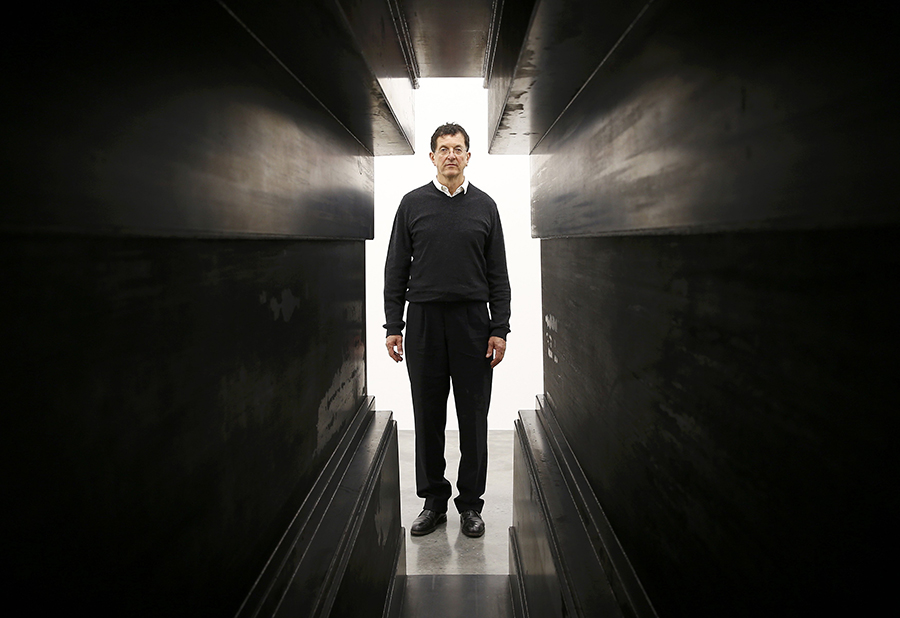
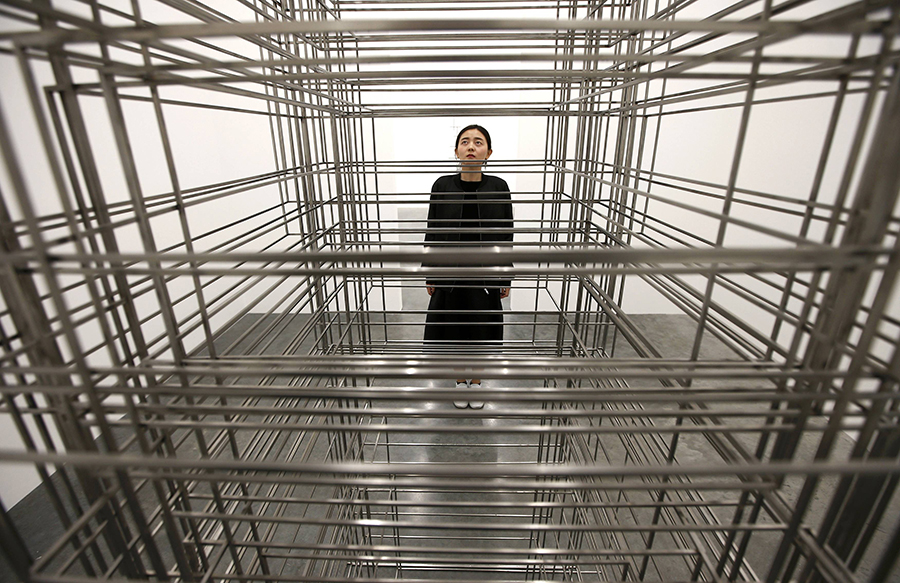
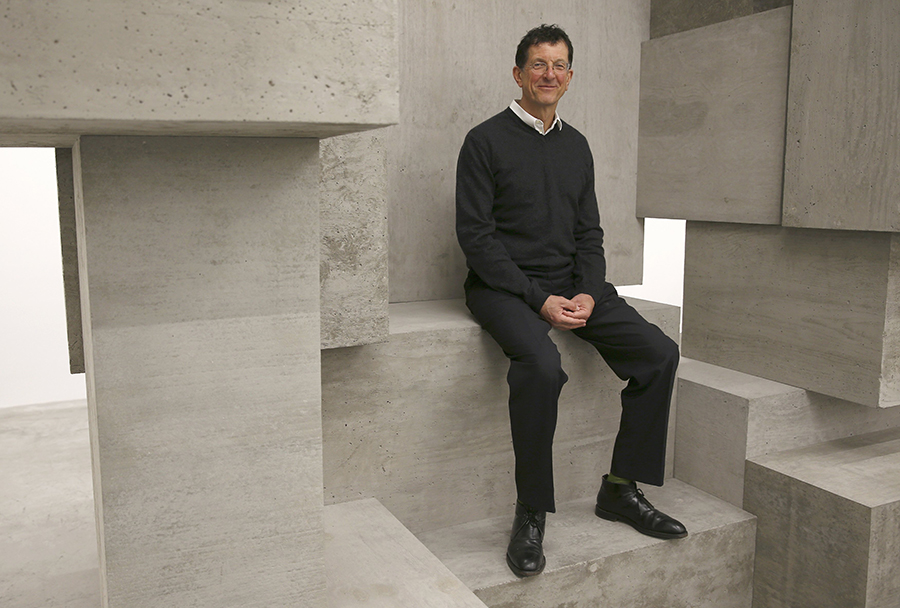
British sculptor Antony Gormley puts people’s relationships with urban construction at the forefront of his latest exhibition “Fit”, creating a sort of labyrinth in a London gallery space.

“Sleeping Field”, one of the installations at the White Cube Bermondsey gallery, is made up of hundreds of iron sculptures, which at first look like small high-rise buildings but on closer inspection resemble resting bodies.

“Fit” follows the Turner Prize winning artist’s “Model” exhibition with a concept that “considers the degree to which we are measured by and measure ourselves against the scale and density of our built environment”.

Gormley has configured the gallery space into 15 discrete chambers to create a series of dramatic physiological encounters in the form of a labyrinth.

“Fit” runs until November 6.

By Marie-Louise Gumuchian. Editing by Louise Ireland.

A member of the gallery poses for a photograph next to a piece called "Fit", by artist Antony Gormley, which forms part of an exhibition entitled "Fit", at the White Cube gallery in London, Britain September 29, 2016.   REUTERS/Peter Nicholls

A member of the gallery poses for a photograph inside a piece called "Passage", by artist Antony Gormley, which forms part of an exhibition entitled "Fit", at the White Cube gallery in London, Britain September 29, 2016.   REUTERS/Peter Nicholls

Artist Antony Gormley poses for a photograph with one of his pieces called "Block", forming part of an exhibition entitled "Fit", at the White Cube gallery in London, Britain September 29, 2016.   REUTERS/Peter Nicholls

A member of the gallery takes a photograph of a piece called "Sleeping Field", by artist Antony Gormley, which forms part of an exhibition entitled "Fit", at the White Cube gallery in London, Britain September 29, 2016.   REUTERS/Peter Nicholls

A member of the gallery staff poses for a photograph with a piece called "Run", by artist Antony Gormley, which forms part of an exhibition entitled "Fit", at the White Cube gallery in London, Britain September 29, 2016.   REUTERS/Peter Nicholls

A member of the gallery poses for a photograph inside a piece called "Passage", by artist Antony Gormley, which forms part of an exhibition entitled "Fit", at the White Cube gallery in London, Britain September 29, 2016.   REUTERS/Peter Nicholls


0