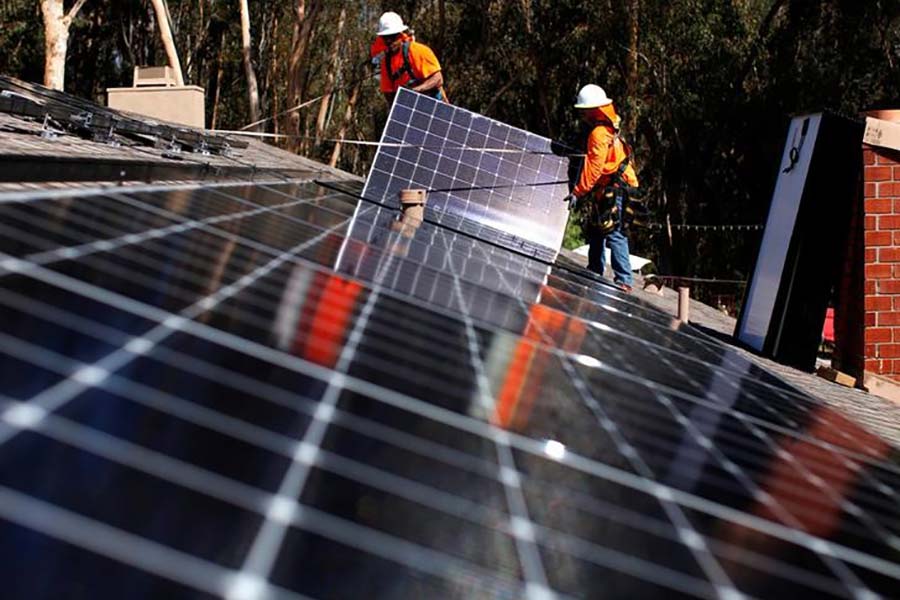
Solar Energy Now Cheaper Than Oil, But Dirty Habits Die Hard

Solar power is becoming so cheap so fast that in Abu Dhabi it’s now less costly to produce a unit of energy from the sun than from oil, leading energy experts said this week.

But that doesn’t mean a global switch to renewable energy will be inevitable or speedy, they told a London conference.

Difficult and sometimes unexpected problems still stand in the way, including pension funds heavily invested in fossil fuels, upfront costs for clean power, political flip-flops in key nations, and the lobbying prowess of old energy companies.

“Fossil fuels won’t just go away by themselves,” warned Patrick Graichen, executive director of Agora Energiewende, a German energy policy group.

In Germany, renewable sources account for about a third of electricity production but backing for coal persists, he told the discussion organised by think tank Chatham House.

“It’s not just about phasing in the new technologies,” he said. “You need a phase-out plan for the cheap incumbent fuels.”

That could include tax breaks and credit to stop fossil fuel companies defaulting on debt if they fail or plants close early.

In Europe, the 16 largest power companies had net negative income for the first time last year, as old fossil fuel plants lost ground to renewables, said Tomas Kåberger, executive chair of Japan’s Renewable Energy Institute and a professor of industrial energy policy in Sweden.

CORPORATE RESISTANCE

Such losses might be expected to drive a faster switch to renewable energy and quicken the demise of old plants, the experts said. But instead, traditional energy companies have lobbied hard for governments to remove support for renewables or even to tax them, and have blocked proposed fossil fuel levies.

“In Europe, the incumbent power companies are fighting for survival using the political influence they have,” Kåberger said. “What we have seen in the last 18 months or so in most developed countries is a priority shift from supporting renewable (energy) to protecting incumbent power companies.”

That’s not the case in countries like China, which is rushing into solar and other renewables, driven by a desire to produce more power without worsening smog, and to make money by becoming a leader in a growing industry.

But Japan will struggle to make the same rapid shift, in part because both its banks and pension funds have major investments in traditional power companies, Kåberger said.

“For Japan it isn’t a technical problem but a financial problem,” he said. “The country doesn’t want big power companies with big debts (owed) to pension funds to go down.”

UPFRONT COSTS

Another problem hampering renewable energy expansion is the high initial cost of solar and other renewable energy sources. With fossil fuel plants, costs are more evenly spread between construction of facilities at the outset and buying fuel over time. With solar energy, 90 percent of the cost comes upfront, which can be hard for countries, companies and people to manage.

That makes the cost of borrowing crucial to whether clean power takes off in a country, Graichen said. Germany can produce solar power more cheaply than sunny Spain “because we have lower interest rates, not because we have more sun”.

Countries that struggle to access finance are more likely to invest in fossil fuel capacity. Pakistan, for instance, desperately needs to generate more electricity to meet growing demand but is planning to get much of that from coal plants – still its cheapest option.

“Poor countries are going to electrify and they don’t want to slow down. If they can do it cleanly, that’s great, but if not they’re still going ahead,” said Laszlo Varro, chief economist for the International Energy Agency.

Telling them not to build coal plants “is not going to be a very fruitful conversation” unless alternatives are available, he said.

Still, there is plenty of good news on clean energy, the experts said. The sums invested in renewables have stagnated in recent years – but that is largely because solar power costs have fallen 90 percent since 2009, requiring much less money to buy the same amount of equipment.

Energy efficiency efforts also are ramping up around the world, Varro said. A move to more efficient appliances, for instance, means more people can buy fridges or air conditioning without driving a steep rise in planet-warming emissions.

Increased efficiency is one reason demand for new energy in many places is now small, even as GDP grows more quickly, Varro said, which is helping the transition to clean power.

One area where that shift is not working so well is in transportation, where cheap oil is encouraging people to buy bigger cars and drive more, he added.

Electric cars are growing in popularity but their success so far is “fragile”, he emphasised.

By Laurie Goering; editing by Megan Rowling. c the Thomson Reuters Foundation, the charitable arm of Thomson Reuters.

 

Actress Shailene Woodley: I Didn’t Plan on Being Arrested

Actress Shailene Woodley was honored last month at the 26th Environmental Media Awards (EMAs), where she used the opportunity to call on people to attend the protests at Standing Rock.

The protests are against a planned pipeline to transfer crude oil to the refineries on the U.S. Gulf Coast. Protesters say the building of the pipeline desecrates sacred Native American land and could contaminate water if the pipe were to rupture. Also honored was Will and Jada Pinkett Smith’s son Jaden.

The 18 year-old was celebrated for creating an alternative to plastic water bottles which is 80 percent recyclable. The awards, which were hosted by Nicole Richie, were created to bring together media and celebrities to create awareness of environmental issues.

The awards came as more than 80 protesters were arrested on after clashing with police near a pipeline construction site in North Dakota, according to the local sheriff’s department, which said pepper spray was used on some demonstrators. The 83 protesters were arrested near the site of the Dakota Access pipeline on numerous charges ranging from assault on a peace officer to rioting and criminal trespass, the Morton County Sheriff’s department said in a statement.

Gender Pay Gap Means Women in UK “Work for Free” Until Year End

Women in Britain will effectively work for free from Thursday until the end of the year because of the disparity in earnings with their male colleagues, a leading women’s rights group said.

Overall, women in Britain were paid 13.9 percent less than men in 2016, a slight improvement on the previous year when the average full time gender pay gap was 14.1 percent, according to the Fawcett Society.

As a result, Equal Pay Day, which marks the date after which women “work for free” due to the pay gap fell on Nov. 10, one day later this year than in 2015, it said.

At the current rate, it will take another 62 years before women’s work is valued as much as that of men, the group calculated using data from the Office for National Statistics (ONS).

“We won’t finally close the gender pay gap until we end pay discrimination, address the unequal impact of caring roles, tackle occupational segregation and routinely open up senior roles to women,” Fawcett Society’s chief executive, Sam Smethers, said in a statement.

Many women in Britain are trapped in low-paid, part-time work in which their skills are not fully used, a parliamentary committee said in March.

Only about a quarter of senior staff roles at the Britain’s biggest companies are filled by women, according to a government-backed review published on Wednesday.

The independent Hampton-Alexander found that executive committees belonging to 12 FTSE 100 companies had no women on them and urged firms to increase female representation in senior management to 33 percent by 2020.

“It’s vital we help more women get into the top jobs at our biggest companies, not only because it inspires the next generation but because financially business can’t afford to ignore this issue,” Britain’s minister for women and equalities, Justine Greening, said in a statement.

Bridging the gender gap could add 150 billion pounds ($185.51 billion) to the British economy by 2025, with 840,000 more women in work, according to a McKinsey Global Institute study published in September.

In 2016, the UK dropped from the 18th position to the 20th in the World Economic Forum’s annual Global Gender Gap Report, due to a slight drop in female representation in politics and business.

Iceland and Finland ranked highest among 144 nations measured on progress in equality in education, health and survival, economic opportunity and political empowerment.

($1 = 0.8086 pounds)

By Umberto Bacchi @UmbertoBacchi, Editing by Katie Nguyen.c the Thomson Reuters Foundation, the charitable arm of Thomson Reuters.

 

“Kung Fu” Nuns Bike Himalayas to Oppose Human Trafficking

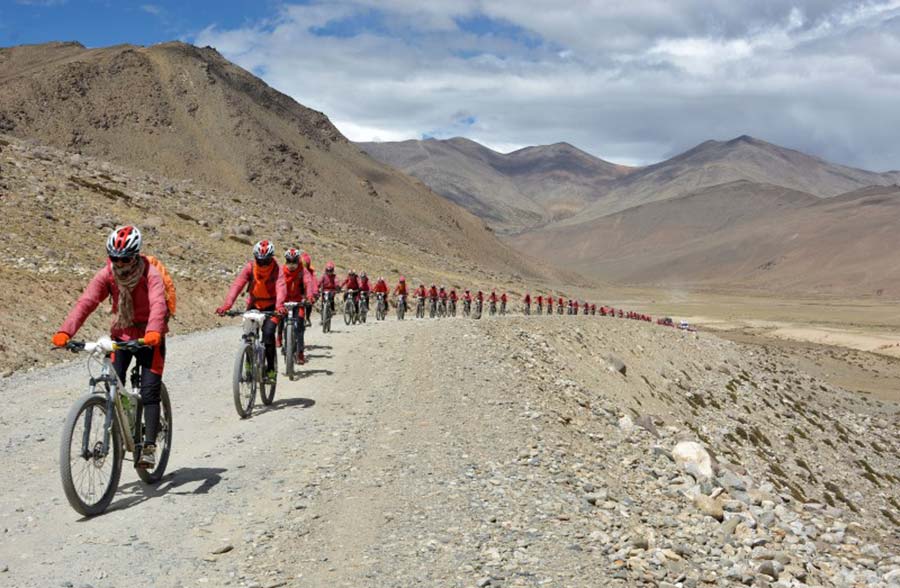
Clad in black sweatpants, red jackets and white helmets, the hundreds of cyclists pedaling the treacherously steep, narrow mountain passes to India from Nepal could be mistaken for a Himalayan version of the Tour de France.

The similarity, however, ends there. This journey is longer and tougher, the prize has no financial value or global recognition and the participants are not professional cyclists but Buddhist nuns from India, Nepal, Bhutan and Tibet.

Five hundred nuns from the Buddhist sect known as the Drukpa Order, have complete a 4,000-km (2,485 mile) bicycle trek from Nepal’s Kathmandu to the northern city of Leh in India to raise awareness about human trafficking in the remote region.

“When we were doing relief work in Nepal after the earthquakes last year, we heard how girls from poor families were being sold because their parents could not afford to keep them anymore,” 22-year-old nun Jigme Konchok Lhamo told the Thomson Reuters Foundation.

“We wanted to do something to change this attitude that girls are less than boys and that it’s okay to sell them,” she said, adding that the bicycle trek shows “women have power and strength like men.”

South Asia may boast women leaders and be home to cultures that revere motherhood and worship female deities, but many girls and women live with the threat of violence and without many basic rights.

From honor killings in Pakistan to foeticide in India and child marriage in Nepal, women face a barrage of threats, although growing awareness, better laws and economic empowerment are bringing a slow change in attitudes.

“KUNG FU” NUNS

The bicycle trek, from Nepal into India, is nothing new for the Drukpa nuns.

This is the fourth such journey they have made, meeting local people, government officials and religious leaders to spread messages of gender equality, peaceful co-existence and respect for the environment.

They also deliver food to the poor, help villagers get medical care and are dubbed the “Kung Fu nuns” due to their training in martial arts.

Led by the Gyalwang Drukpa, head of the Drukpa Order, the nuns raise eyebrows, especially among Buddhists for their unorthodox activities.

“Traditionally Buddhist nuns are treated very differently from monks. They cook and clean and are not allowed to exercise. But his Holiness thought this was nonsense and decided to buck the trend,” said Carrie Lee, president of Live to Love International, a charity which works with the Drukpa nuns to support marginalised Himalayan communities. 

“Among other things, he gave them leadership roles and even introduced Kung Fu classes for the nuns after they faced harassment and violence from monks who were disturbed by the growing shift of power dynamics,” she said.

Over the last 12 years, the number of Drukpa nuns has grown to 500 from 30, said Lee, largely due to the progressive attitudes of the 53-year-old Gyalwang Drukpa, who was inspired by his mother to become an advocate for gender equality.

The Gyalwang Drukpa also participates in the bicycle journeys, riding with the nuns as they pedal through treacherous terrain and hostile weather and camp out in the open.

“PRAYING IS NOT ENOUGH”

The Drukpa nuns say they believe they are helping to change attitudes.

“Most of the people, when they see us on our bikes, think we are boys,” said 18-year-old nun Jigme Wangchuk Lhamo.

“Then they get shocked when we stop and tell them that not only are we girls, but we are also Buddhist nuns,” she said. “I think this helps change their attitudes about women and maybe value them as equals.”

South Asia, with India at its centre, is also one of the fastest growing regions for human trafficking in the world.

Gangs dupe impoverished villagers into bonded labour or rent them to work as slaves in urban homes, restaurants, shops and hotels. Many girls and women are sold into brothels.

Experts say post-disaster trafficking has become common in South Asia as an increase in extreme events caused by global warming, as well as earthquakes, leave the poor more vulnerable.

The breakdown of social institutions in devastated areas creates difficulties securing food and supplies, leaving women and children at risk of kidnapping, sexual exploitation and trafficking.

Twin earthquakes that struck Nepal in April and May 2015, which killed almost 9,000 people, left hundreds of thousands of families homeless and many without any means of income, led to an increase in children and women being trafficked.

More than 40,000 children lost their parents, were injured or were placed in precarious situations following the disaster, according to Nepali officials.

The Drukpa nuns said the earthquakes were a turning point in their understanding of human trafficking and that they felt a need to do more than travel to disaster-hit mountain villages with rice on their backs.

“People think that because we are nuns, we are supposed to stay in the temples and pray all the time. But praying is not enough,” said Jigme Konchok Lhamo.

“His Holiness teaches us that we have go out and act on the words that we pray. After all, actions speak louder than words,” she said.

By Nita Bhalla, Editing by Ellen Wulfhorst. c The Thomson Reuters Foundation, the charitable arm of Thomson Reuters, that covers humanitarian news, women’s rights, trafficking, land rights and climate change. 


Invest in Cities Now or Face 2.5 Billion Unhappy Urbanites by 2050

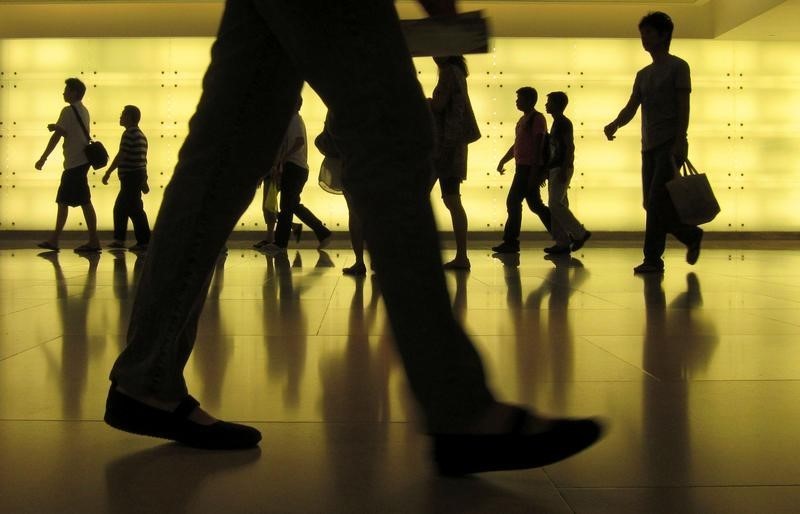
In fast-growing cities across the developing world more than 70 percent of residents lack access to basic services like clean water, affordable transportation or decent housing, a research group said on Friday ahead of a U.N. conference on urbanization.

By 2050, 2.5 billion people, a bigger population than China and India combined, will move into the world’s cities, said the World Resources Institute (WRI), a Washington, D.C.-based group.

Governments, especially in Africa and Asia where 90 percent of the urban growth will take place, need to better prepare for the influx, the WRI said.

Despite budget constraints, officials should work to upgrade essential services in informal settlements or slums in order to save money in the long-term and improve quality of life for newly arrived city dwellers, the report said.

“For many rapidly urbanizing cities, the challenge is to deliver quality core services that are affordable, reach more people and are less resource intensive than traditional solutions,” said Victoria Beard, the report’s lead author.

The call for targeted investments to reduce inequality comes days before government leaders, city planners and U.N. officials gather in Ecuador on Oct. 17 for the Habitat III conference to make a plan for managing mass migration into urban areas.

The United Nations conference on urbanization is held every 20 years with up to 35,000 delegates expected to discuss the challenges of coping with world’s fast growing cities and slums.

Despite the challenges, some fast-growing cities in poor countries are on the right track, the WRI report said.

“Medellin (Colombia) made a commitment to redistribute revenue to make the city more equal,” Beard told the Thomson Reuters Foundation.

“As a result they were able to reduce crime and poverty during a period of sustained growth over 20 years.”

Once notorious for violence as the home of drug kingpin Pablo Escobar, Medellin used public money to build a cable car linking hillside slums with the city centre so residents could find work.

It’s an example that other cities could follow, Beard said, as it’s often cheaper in the long-run to improve informal settlements rather than building roads and other infrastructure to expand suburbs to accommodate new arrivals.

By Chris Arsenault. c The Thomson Reuters Foundation, the charitable arm of Thomson Reuters, that covers humanitarian news, women’s rights, trafficking and climate change.


Meet the Less Famous Donald Trump

While president Donald Trump fights his daily political battles, a Northern Virginia doctor – also named Donald Trump – is focused on clinical trials to fight cancer and doing the best he can to avoid conversations about his name or namesake.

The majority of Americans know Donald Trump as the bellicose Republican president and billionaire real estate developer, but there’s another Donald Trump who works about 15 miles from the White House.

Doctor Donald L. (Skip) Trump is the CEO and Executive Director of Inova Schar Cancer Institutue, located in Falls Church, Northern Virginia.

He’s a medical oncologist who has been involved in building and developing cancer centres for his entire career. Dr. Trump says at Inova Health System, his goal is to “develop an outstanding clinical care and clinical translational research facility to enhance cancer care in Northern Virginia and beyond.”

Dr. Trump received his medical education and completed his residency and fellowship at Johns Hopkins University in Baltimore, MD. He is the recipient of several national awards, some of which are on display in his office. He has devoted a lot of time to developing Vitamin D-based treatments for cancer patients.

But for many years, and particularly during the last campaign season, Dr. Trump has had to deal with the fact that his name is Donald Trump.

“People laugh or say ‘oh no that can’t be’ or they’ll accuse me, I think somewhat seriously, of having a fake ID card or credit card. I’ve had people say ‘is that really your credit card’ or ‘is that really your name?’ I even had somebody at TSA ask me that,” said Trump. He also had a story to tell about getting out of a potential traffic ticket, when he made the officer laugh with his namesake.

He says he often goes by his childhood nickname of “Skip.”

“I used to, in professional settings, always introduce myself as Donald Trump but I’ve consciously avoided or shyed away from doing that recently because there’s no reason to invoke, or the potential (of) that segment of the conversation,” said Dr. Trump.

The two Trumps have conversed throughout the years. In 2010, Donald J. Trump (the now-president), called Dr. Trump to ask if the son of a friend could get into a clinical trial at Roswell Park Cancer Institute in Buffalo, New York. The trial had already begun, so Dr. Trump declined. He then asked Donald J. Trump if he would have his head shaved for a cancer fundraising event. It was Donald J. Trump’s turn to decline, but Dr. Trump said he did make a “respectable” cash donation.

“The time I spent with him, it was obvious he was a successful business guy. He knew it and he knew I knew it and he didn’t want me to miss knowing it. I suspect there’s a lot of showmanship and stage presence. And that’s too bad,” said Dr. Trump.

Dr. Trump declined to comment on how he voted and said he stays away from voicing his political views in a professional setting, but said “his views and my views are pretty far apart.”


Clock Starts Ticking to Implement Paris Climate Deal

A new global agreement to tackle climate change will take effect on November 4 after the accord crossed an important threshold for support late on Wednesday.

European nations, Canada, Bolivia and Nepal boosted official backing for the 2015 Paris Agreement to countries representing more than 55 percent of world greenhouse gas emissions, as needed for implementation.

By Thursday, 74 countries or parties to the U.N. climate change convention had formally joined the Paris Agreement, adding up to nearly 60 percent of global emissions, a U.N. website showed.

U.S. President Barack Obama called Wednesday “a historic day in the fight to protect our planet for future generations”.

“If we follow through on the commitments that this Paris agreement embodies, history may well judge it as a turning point for our planet,” he said.

Work will start at U.N. climate talks in Morocco next month to hammer out the rules for putting the accord into practice.

Here is a selection of comments on the agreement’s entry into force from top officials and climate change experts:

John Kerry, U.S. Secretary of State:

“Today it is crystal clear that we have finally woken up. We have learned from the false starts of the past, and we are now – finally – on the path to protecting the future for our children, our grandchildren and generations to come.”

Ban Ki-moon, U.N. Secretary-General:

“Now we must move from words to deeds and put Paris into action. We need all hands on deck – every part of society must be mobilised to reduce emissions and help communities adapt to inevitable climate impacts.”

Patricia Espinosa, executive secretary, U.N. Framework Convention on Climate Change (UNFCCC):

“Entry into force bodes well for the urgent, accelerated implementation of climate action that is now needed to realise a better, more secure world and to support also the realisation of the Sustainable Development Goals.”

Mohamed Adow, senior climate advisor, Christian Aid:

“The speed at which the Paris Agreement has come into force has been remarkable. But we now need to see tangible actions to follow just as quickly. As Hurricane Matthew leaves destruction across the Caribbean, we’re reminded that our climate continues to undergo rapid change and we are continuing to pollute it.”

Wolfgang Jamann, CEO and secretary general, CARE International:

To see the benefits of the Paris Agreement, “we need to keep the momentum, and quickly step up actions to cut emissions by shifting away from fossil fuels to renewable energy.

Governments need to rapidly improve the climate resilience of their most vulnerable and marginalised populations especially women and girls. Otherwise the agreement will be an empty shell, and the consequences will continue to be devastating for millions around the world.”

Heather Coleman, climate change manager, Oxfam America:

“While countries have all pledged to cut their greenhouse gas emissions, the collective commitments made are still not enough to prevent dangerous climate change. Countries need to implement and scale up efforts to reduce greenhouse gas emissions and transition to a clean, resilient economy.

Oxfam estimates that the communities most vulnerable to feeling the effects of climate change are only receiving a fraction of the money that rich countries pledged to adaptation.”

Jennifer Morgan, executive director, Greenpeace International:

“Now that a truly global binding climate agreement is in place, governments should have the confidence to not only meet but also beat their national targets and provide support to the poorest countries.”

Andrew Steer, president and CEO, World Resources Institute:

“With the agreement in full force, countries can shift their focus from commitment to action.

We must create more liveable, low-carbon cities and expand the supply of land and forests for carbon storage. We must slash food loss and waste, a major source of emissions and a travesty for people who lack enough food. And, we must continue to work at all levels – global, national, cities and communities – to build the political will for this transformation.”

May Boeve, executive director, 350.org:

“The entry (into force) of the Paris climate agreement represents a turning point in the fight against climate change: the era of fossil fuels is finally coming to an end. Now the real work begins. The only way to meet the 1.5 or 2°C target (for global temperature rise) is to keep fossil fuels in the ground. The fossil fuel industry’s current ‘drill and burn’ business plan is completely incompatible with this agreement.”

Steve Howard, chief sustainability officer, IKEA Group:

“The Paris agreement represents a turning point for business. The certainty of ever-stronger policies to reduce emissions creates clarity and unlocks opportunities for developing products, services and operations for a low-carbon economy. We are only at the beginning, but the pace at which countries have been ratifying the agreement shows that the policy leadership is there to achieve real change. Now we need to work together for a rapid transition to a future built on clean, renewable energy.”

By Megan Rowling @meganrowling; editing by Katie Nguyen. c Thomson Reuters Foundation, the charitable arm of Thomson Reuters, that covers humanitarian news, women’s rights, trafficking, property rights and climate change. 


Inside Brazil’s Battle to Save the Amazon with Satellites and Strike Forces

When George Porto joined Brazil’s environment agency 13 years ago, the country didn’t have access to satellite data on illegal logging – let alone heat maps tracking deforestation patterns or gun-toting agents dedicated to stopping ecological crimes.

How times have changed.

Today, IBAMA, as the agency is known, has access to four satellite feeds monitoring illegal activities in the Amazon, the world’s biggest rainforest. It also boasts a network of indigenous watchmen in remote regions and a 1,000-strong commando force.

Environmentalists say the agency’s control centre in Brasilia, a collection of low-slung concrete buildings from the 1970s, is one of the world’s most important hubs for protecting rainforests and the land rights of people who depend on them.

“When I joined there was no GPS or satellite images, it wasn’t a strategic way to tackle deforestation,” said Porto, IBAMA’s environmental monitoring coordinator, as he examined maps showing changes in forest cover at the agency’s headquarters.

“Today, the rate (of deforestation) is coming down because of our technology and intelligence gathering,” he told the Thomson Reuters Foundation.

For years, Brazil has sought to balance a desire to lift millions out of poverty by making use of the country’s greatest natural resource — the Amazon’s trees, land and minerals — and the need to protect one of the world’s most biodiverse regions.

Mounting pressure to save the Amazon, known as the “lungs of the planet” for its role sucking climate-changing carbon dioxide out of the atmosphere, prompted former president Luiz Inacio “Lula” da Silva to unveil plans to halt the Amazon’s destruction.

And in the decade following the start of his first term in office in 2003, Brazil reduced its deforestation rate by more than 70 percent, some of the fastest improvement anywhere.

But the rate increased again last year by 24 percent compared to 2013, Brazil’s National Space Research Institute (INPE) said in September, citing the latest satellite images.

Brazil is still losing the equivalent of two football fields of rainforest every minute as illegal loggers and ranchers exploit the Amazon’s unspoiled reaches, according to the National Forest Commission’s former director, Tasso Azevedo.

Satellites used by IBAMA recorded about 100,000 incursions into the forest last year.

In a renewed push against the problem, Brazil has pledged to reduce net new deforestation to zero by 2030, down from more than 6,200 square kilometers (2,394 sq miles) today.

Meeting this goal will require enforcement agencies leveraging new technologies to detect problems, and a sustained push for formal land rights, analysts said.

IBAMA officials are also using a “carrot and stick” strategy to reduce illegal land clearing by both large agribusiness operators and small farmers.

‘IT’S A WAR’

About 90 percent of Brazil’s deforestation is illegal, much of it carried out by organized groups clearing land for agriculture, IBAMA officials said.

Reducing the problem hinges on law enforcement targeting large operators who destroy the forest while providing peasant farmers with alternative livelihoods and title deeds to land, environmental experts say.

To tackle the lucrative criminal enterprise, environment officials are fighting deforestation based on the logic of counter-insurgency.

“It’s a war,” said Luciano Evaristo, IBAMA’s enforcement director, slamming a fist into his office desk.

When satellites detect large-scale forest clearing, Evaristo’s agents, armed with automatic weapons, are deployed to hard-to-reach sites via helicopters.

Before 2002, IBAMA didn’t have its own field operatives. The agency monitored the situation and turned information over to other branches of the security services to conduct raids.

“We decided we needed autonomy from the police, as they have corruption problems,” Evaristo told the Thomson Reuters Foundation. “With the rise of pressure around deforestation, the government put us on the frontline.”

But in an area as vast and remote as the Amazon, it’s logistically impossible for the state to be all-seeing, he said.

Instead of long-term boots on the ground, officials rely on field intelligence from the people who know the region best: indigenous Brazilians.

“The indigenous people are the eyes and ears of IBAMA,” Evaristo said.

Across the Amazon, networks of indigenous people gather information about illegal loggers that satellites can’t access.

They coordinate intelligence gathering in Quyapo or other local languages on radios provided by IBAMA. When unlawful activity is detected, they send GPS coordinates of the location back to Brasilia.

Evaristo can then deploy a team to destroy illicit logging camps and torch their machinery.

In the last year, Evaristo said his team has made more than 4,000 arrests, seizing 91 trucks, 115 chainsaws and the equivalent of 2,000 truckloads of wood.

UNCOLLECTED FINES

It is not only in intelligence gathering that indigenous groups have proven valuable.

Lands formally recognised as belonging to indigenous people have far better forest protection rates than state or private lands. One study by U.S. and Brazilian environmentalists in 2015 showed that more than 98 percent of forests on indigenous lands were intact.

These lands, however, are regularly threatened by “grileros” – a Brazilian term for businessmen fraudulently obtaining or selling properties by bribing local land registry workers, doctoring ownership certificates and other dubious practices.

“In this war, it’s the indigenous people versus the grileros,” said Evaristo, who keeps a loaded pistol in his briefcase beside policy papers prepared for lawmakers.

To combat land theft by powerful agricultural interests, IBAMA began naming and shaming businessmen involved in deforestation in 2008. The publicly available blacklist now has 50,000 names, including 2,000 added last year.

Blacklisted individuals face financial penalties, lose access to bank credit and rural land registries so they cannot buy new territory, making it harder for them to do business, officials said.

IBAMA levied millions of dollars in fines for environmental crimes last year, but expects to collect less than 10 percent of the money due to Brazil’s cumbersome legal system, Evaristo said.

SMALL BUT DANGEROUS

IBAMA officials say enforcement or “the stick” has worked well in reducing illegal cutting down of trees by large agriculture operations that are behind 70 percent of the Brazil’s deforestation.

But small farmers still account for about 30 percent of the deforestation and their share has been growing, said Avecita Chicchon of the San Francisco-based Gordon and Betty Moore Foundation, which has contributed hundreds of millions of dollars to protect the Amazon.

“Poor people are moving into the Amazon for economic reasons and cutting the forest for agriculture,” Chicchon said.

Across Brazil, about five million families have no access to land, according to a 2016 study from Canada’s University of Windsor. Landless farmers have few options to feed themselves other than clearing territory.

Cutting by small farmers is harder to detect on satellite maps, according to IBAMA officials who hope “carrots” including formal land title deeds and access to credit for growers who do not cut down trees will help.

The government has provided formal land title deeds to 20,000 farmers since 2009.

For small farmers who own land, it’s more profitable to work within the law and not deforest new areas in order to access credit and other government supports, officials said.

By distributing land to small farmers while cracking down on large-scale illegal cutting, Brazilian officials say they can reduce net deforestation to zero by 2030.

“Every act of deforestation has an economic purpose behind it,” IBAMA official Jair Schmitt told the Thomson Reuters Foundation. “If you motivate people to follow the law, you can kill the business model.”

By Chris Arsenault. Editing by Katie Nguyen. c Thomson Reuters Foundation, the charitable arm of Thomson Reuters, that covers humanitarian news, women’s rights, trafficking and climate change. 


Social Entrepreneurs say They Face Tough Hurdles but Making Headway

Greater support from the public, governments and investors is needed to boost the work of entrepreneurs using business for social good, said industry activists and organizers after a Thomson Reuters Foundation poll highlighted these as key issues.

While progress overcoming those obstacles is healthy and growing, they said at SOCAP – the largest annual conference of social entrepreneurs and investors – that more could be done to support what is seen as a new way of doing business.

The Thomson Reuters Foundation poll of almost 900 social enterprise experts in the world’s 45 biggest economies released this week found the vast majority – 85 percent – said the sector was growing.

But nearly 60 percent of experts cited a lack of public understanding, access to investment and selling to governments as the biggest challenges that could hamper growth.

“There’s very limited awareness of what social entrepreneurship is,” said Dr. Asher Hasan, whose Pakistani-based company Docthers works with corporations in Mexico and Chile to provide insurance to suppliers, factory workers and others in their supply chains.

“They understand traditional philanthropy. They understand capitalism. They don’t understand the blend. There’s a lot of market development that needs to be done to help the mainstream understand.”

A social entrepreneur is typically someone who uses commercial strategies to tackle social and environmental problems, combining social good and financial gain.

Attendees at SOCAP said governments are promoting social entrepreneurship and schools are teaching it, while enterprises are finding fresh, creative ways to obtain credit and financing.

Jennifer Kushell, founder of Your Success Now (YSN), which connects youth with educational and career opportunities, said U.S. President Barack Obama had been supportive, promoting so-called entrepreneurship diplomacy, a strategy to find common goals in conflict areas.

YSN is designing a social entrepreneurship curriculum for business schools, she said.

“DON’T MISS THE NEXT THOMAS EDISON”

“You have a billion and a half young people, and they don’t even realize they can be entrepreneurs or realize they can work for entrepreneurial companies,” she said.

“It does need a lot more people to stand up and try to get the word out much more aggressively, like any movement.”

Seeking to support social entrepreneurs, Autodesk, a maker of software for architecture, engineering and other industries, provides free software and licenses, said Pam Henchman, who manages the entrepreneur impact program at the Mill Valley, California company.

“I definitely hear about finance and access to capital being a real problem,” she said.

“We don’t want the next Thomas Edison to walk by, and he didn’t get the software that he needed because he didn’t have enough money to buy a license.”

Banks are training loan officers on the risks involved in lending to social entrepreneurs, said Marina Leytes, a consultant with Impact Alpha, an online media site covering social and environmental business.

“More and more local banks are entering this sector, providing loans to smaller enterprises,” she said. “It’s a way for them to gain more clients and expand their operations.”

The Global Alliance for Clean Cookstoves recently worked with the government of Kenya to eliminate a tax on cookstoves going to women in poor regions, said Stevie Valdez, manager of the Washington-based group’s impact investing and market development.

The Alliance aims to provide cleaner cookstoves and fuel to the 40 percent of the world’s population that uses solid fuel and cooks over open fires, creating severe environmental and health problems, Valdez said.

“We need the entrepreneurs really getting out there with great products, and we need the governments really making an effort to say, ‘You know what? We want healthier products,” she said.

Representatives of YSN, Autodesk and the Alliance were among 2,500 people attending SOCAP this week in San Francisco. The conference brings together investors and entrepreneurs to address issues such as poverty, climate change, job creation and food supplies.

By Ellen Wulfhorst, Editing by Belinda Goldsmith. c Thomson Reuters Foundation, the charitable arm of Thomson Reuters, that covers humanitarian news, women’s rights, trafficking, land rights and climate change.


Sculptor Anthony Gormley Explores our Relationship With Urbanism

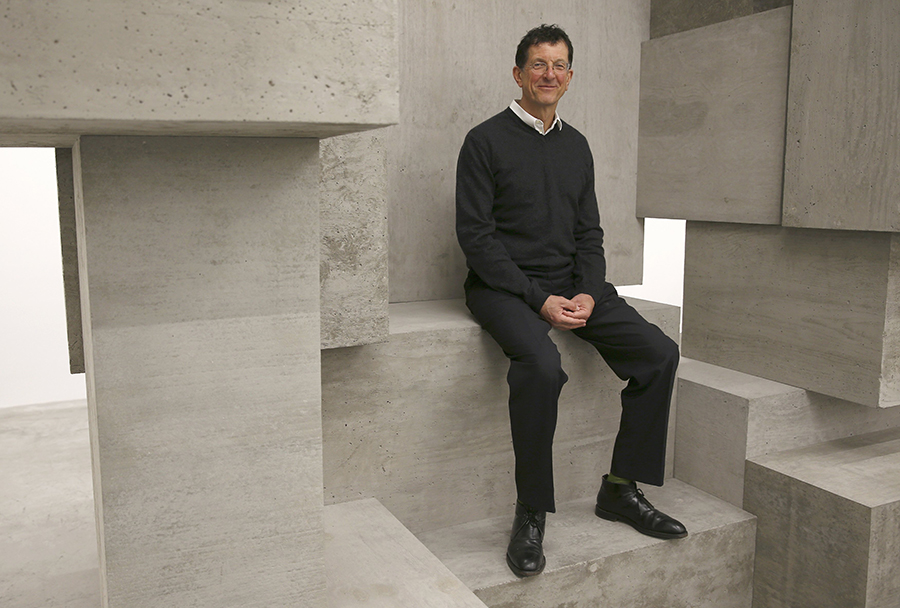
British sculptor Antony Gormley puts people’s relationships with urban construction at the forefront of his latest exhibition “Fit”, creating a sort of labyrinth in a London gallery space.

“Sleeping Field”, one of the installations at the White Cube Bermondsey gallery, is made up of hundreds of iron sculptures, which at first look like small high-rise buildings but on closer inspection resemble resting bodies.

“Fit” follows the Turner Prize winning artist’s “Model” exhibition with a concept that “considers the degree to which we are measured by and measure ourselves against the scale and density of our built environment”.

Gormley has configured the gallery space into 15 discrete chambers to create a series of dramatic physiological encounters in the form of a labyrinth.

“Fit” runs until November 6.

By Marie-Louise Gumuchian. Editing by Louise Ireland.

A member of the gallery poses for a photograph next to a piece called "Fit", by artist Antony Gormley, which forms part of an exhibition entitled "Fit", at the White Cube gallery in London, Britain September 29, 2016.   REUTERS/Peter Nicholls

A member of the gallery poses for a photograph inside a piece called "Passage", by artist Antony Gormley, which forms part of an exhibition entitled "Fit", at the White Cube gallery in London, Britain September 29, 2016.   REUTERS/Peter Nicholls

Artist Antony Gormley poses for a photograph with one of his pieces called "Block", forming part of an exhibition entitled "Fit", at the White Cube gallery in London, Britain September 29, 2016.   REUTERS/Peter Nicholls

A member of the gallery takes a photograph of a piece called "Sleeping Field", by artist Antony Gormley, which forms part of an exhibition entitled "Fit", at the White Cube gallery in London, Britain September 29, 2016.   REUTERS/Peter Nicholls

A member of the gallery staff poses for a photograph with a piece called "Run", by artist Antony Gormley, which forms part of an exhibition entitled "Fit", at the White Cube gallery in London, Britain September 29, 2016.   REUTERS/Peter Nicholls

A member of the gallery poses for a photograph inside a piece called "Passage", by artist Antony Gormley, which forms part of an exhibition entitled "Fit", at the White Cube gallery in London, Britain September 29, 2016.   REUTERS/Peter Nicholls