UK’s Prince William Launches Prize to Solve Earth’s Top Environmental Challenges

The Earthshot Prize, described as the ‘most prestigious environmental prize in history’, will be awarded to five winners a year over the next decade.

Britain’s Prince William launched a multi-million pound prize on Tuesday to encourage the world’s greatest problem-solvers to find answers to Earth’s biggest environmental problems, saying the planet was now at a tipping point.

The Earthshot Prize, described in its publicity as the “most prestigious environmental prize in history”, will be awarded to five winners a year over the next decade with the aim of producing at least 50 solutions to the world’s most pressing challenges.

“The earth is at a tipping point and we face a stark choice: either we continue as we are and irreparably damage our planet or we remember our unique power as human beings and our continual ability to lead, innovate and problem-solve,” William, 37, said in a statement.

“Remember the awe-inspiring civilisations that we have built, the life-saving technology we have created, the fact that we have put a man on the moon,” he added. “People can achieve great things. The next 10 years present us with one of our greatest tests – a decade of action to repair the Earth.”

The British royal family have for many years been vocal campaigners on a host of environmental issues, with William’s father Prince Charles speaking out for decades about the impact of climate change and the importance of conservation.

The Earthshot initiative, which comes after more than a year of consultations with over 60 organisations and experts, aims to generate new technologies, policies and solutions for issues of climate and energy, nature and biodiversity, oceans, air pollution and fresh water.

Kensington Palace said the prize drew its inspiration from the concept of Moonshots, which it said since the 1969 moon landings was synonymous with ambitious and ground-breaking goals.

“Just as the Moonshot that (U.S. President) John F. Kennedy proposed in the 1960s catalysed new technology such as the MRI scanner and satellite dishes, the Earthshots aim to launch their own tidal wave of ambition and innovation,” the palace said.

It gave no detailed figures of the size of the prizes or how they would be funded, saying the project was supported by a global coalition of philanthropists and organisations.

The project will be formally launched later in 2020 with challenges announced at events around the world and annual award ceremonies in different cities between 2021 and 2030.

A film to coincide with Tuesday’s launch was narrated by veteran British broadcaster and naturalist David Attenborough, who has been making nature programmes such as the popular Blue Planet series since the 1950s.

“This year Prince William and a global alliance launch the most prestigious environment prize in history: The Earthshot Prize,” Attenborough said, describing it as “a global prize designed to motivate and inspire a new generation of thinkers, leaders and dreamers to think differently”.

By Michael Holden; Editing by Alison Williams.

Canada Tops Global Poll as Best Country For Social Entrepreneurs While Britain and U.S. Slump

Canada, Australia and France are the best countries to be a social entrepreneur, according to the results of a global perception poll conducted by the Thomson Reuters Foundation in partnership with Deutsche Bank’s Made for Good programme.

But Britain and the US saw a significant drop in ranking – with the US plummeting to 31st place from the top spot – since the inaugural survey of the world’s 45 biggest economies was carried out three years ago. The survey also ranked the US last when it came to women playing a leading role as social entrepreneurs.

Almost 900 experts were polled to establish trends, opportunities and challenges related to this fast-growing business-for-purpose sector. The results offer an insight not only into how social entrepreneurship is currently viewed within certain countries, but how this has changed over the past three years.

While experts cited a decline in government support, access to investment and selling to business as the main reasons behind momentum slowing for social entrepreneurs in the United States, Canada came top for young people playing a leading role, as well as the best country for female leaders in the sector.

In the UK, Brexit dominating the political agenda was blamed for slowing the pace of the sector’s development. In Scotland, though, experts say social enterprise is thriving. Mexico came last, down 15 places from 2016.

Overall, most asked believed social entrepreneurship was gaining momentum around the world. However, more than half said the public still did not understand what they did.

“From building schools from plastic waste, to training women in rural villages in solar engineering, social enterprise is a rapidly growing sector. By using innovation to address critical social and environmental issues, social enterprise is increasingly relied upon to reduce inequality and help the world’s most disadvantaged people,” says Antonio Zappulla, CEO of the Thomson Reuters Foundation.

“However, this survey has revealed some surprising changes in how the sector is viewed in different nations. Perception of social enterprise is crucial. It affects everything from access to finance, to the quality of employees. We hope that greater understanding of social enterprise will provide the sector with vital information to generate future growth.”

The opinion poll surveyed six key areas; government support, attracting skilled staff, public understanding, ability for social entrepreneurs to make a living, whether the sector was gaining momentum and access to investment.

Lareena Hilton, Global Head of Brand Communications and CSR for Deutsche Bank says: “Social entrepreneurs around the world are shaking up traditional marketplaces and introducing innovative solutions to meet the growing needs of communities. Deutsche Bank is proud to support this research and be part of a growing momentum that appreciates this exciting sector, as well as supporting its development around the world.

Through our global CSR Made for Good programme we know how vulnerable social entrepreneurs can be not only at early stage but also throughout their growth, and the importance of accelerator and incubators for success. Repeating this poll has shone a light on the countries that have nurtured and strengthened the sector since 2016, as well as revealing those where work is needed to improve the understanding of social entrepreneurs and the obstacles to become investment ready.”

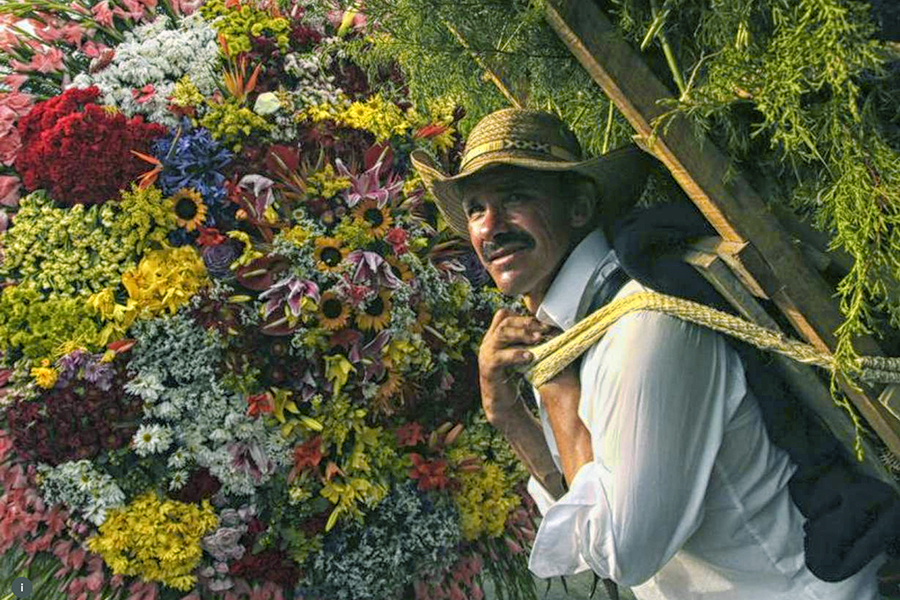
Berlin, London and Santiago were named as the leading hotspots for social entrepreneurs, together with Medellin, Colombia – once known as the murder capital of the world.

While 67% of respondents acknowledged that women were well represented in leadership roles overall, only 44% thought female leaders were paid the same as men. Canada ranked as the top country where women are succeeding as social entrepreneurs, while Australia, Belgium, Sweden and Malaysia took the rest of the top five slots.

Repair, Refurbish, Reuse: Call to Arms For Electronics Giants

People not only buy more devices, they abandon them quicker, increasing the mining of raw materials and landfill waste.

Armed with screwdrivers and a zeal for change, a growing global movement is urging electronics giants to make devices that last longer and are easier to fix to cut the environmental fallout of the tech boom.

From repair cafes to e-waste recyclers, social enterprises are leading a ‘right to repair’ campaign, exploring commercial models to reduce the human and environmental impact of the electronics supply chain and its ever-growing waste.

The consumer electronics industry is growing at a rapid pace, as technology advances and costs drops.

According to a forecast from Gartner, 2.3 billion PCs, tablets and smartphones will be shipped in 2019.

People not only buy more devices, they abandon them quicker, increasing the mining of raw materials and landfill waste.

“It is a huge issue, considering how many resources go into the manufacturing of these machines. Every smartphone, every TV monitor, comes with an enormous ecological footprint,” Ruediger Kuehr, director of the e-waste programme at the United Nations University (UNU) told the Thomson Reuters Foundation.

The UNU estimates 50 million tonnes of e-waste is produced annually. It expects this to hit 120 million tonnes by 2050.

“There needs to be substantially more done to tackle the e-waste issue. We have to seriously consider pushing repair, refurbishment and reuse, but this is so far unfortunately not on the political agenda,” said Kuehr.

GLUED TO A SCREEN

Devices are also becoming more complicated to repair. Spare parts are hard to source, repair instructions scant, and components are often glued together.

So it is often cheaper to buy anew, which boosts sales for a host of big manufacturers, be it Microsoft or Amazon.

“Once you buy a product or device, then you are the owner of it and that also should mean you decide when and where and how to repair it,” Eva Gouwens, chief executive of Fairphone, which bills itself as an ethical manufacturer, told the Thomson Reuters Foundation.

The Amsterdam-based social enterprise designed a smartphone that is easier to open, repair and upgrade without expert help.

“Currently the average lifetime of a mobile phone is 20 months, so if you can extend that to three years, imagine the impact on e-waste and CO2 emissions,” said Gouwens.

Eighteen U.S. states have proposed a ‘right to repair’ act, forcing manufacturers to make information and spare parts freely available to device owners and third-party repair shops.

The EU will introduce similar legislation in 2020.

Its proposals, however, only apply to lighting, white goods and televisions. They also only let accredited repairers, rather than independent repairers and individuals, fix such devices.

DAVID AND GOLIATH

Social enterprises active in the sector face a David and Goliath-style battle given the heft of giants such as Apple and Samsung, which market their devices as a high-tech dream.

In 2018, Apple sold about 218 million iPhones, according to statistics site, Statista. By contrast, Fairphone has sold 160,000 devices since 2013 and has not yet turned a profit.

Having just raised €7 million ($7.9 million) in investment, Fairphone plans to scale up the business this year.

“Some people will always go for the latest and greatest,” said Gouwens. “But we think we can convince people that a good quality, functioning phone, with the aim to change industry into a more sustainable industry, is a good deal for them.”

Airedale Computers – a social enterprise based in Yorkshire, in the north of England – refurbishes used computers.

Its chief executive, Neil Kennedy, is not convinced people will have the know how or desire to repair their own devices.

“The technology is beyond many people’s grasp to repair. People don’t have the interest. They want to open a box, press a button and make it work,” he told the Thomson Reuters Foundation.

Across Europe and beyond, social enterprises and charities have set up repair cafes, where locals bring in broken devices for free or affordable fixing to cut waste and boost recycling.

E-WASTE ENTREPRENEURS

While wealthy Europe and the United States are mulling laws that would push consumers to repair their electronics, ‘make do and mend’ is the norm in many poorer parts of the world.

Nairobi-based social enterprise AB3D makes 3D printers from broken electronic equipment.

Its chief executive and founder, Roy Mwangi Ombatti, told the Thomson Reuters Foundation that in Kenya, and other parts of Africa, there is a growing market for repair and resale.

“Those of us who are confident enough to take the machines apart and reuse are seeing opportunities and trying to capitalise and make money from them,” he said. “It has stemmed out of a culture we have of repurposing and reusing waste.”

According to the UNU, only 20 percent of e-waste is recycled properly. The remaining 80 percent ends up in homes, landfill or is shipped, often illegally, overseas and informally recycled.

E-waste contaminates the soil and groundwater supply and exposes people to hazardous chemicals.

Ombatti said big manufacturers – as the biggest benefactors – should take greater responsibility for global ewaste.

“What we are doing now is an opportunity that has stemmed out of a problem, but we shouldn’t have to be dealing with a situation like this,” said Ombatti. “If they care about the environment, they need people addressing the last mile.”

By Sarah Shearman @Shearmans. Editing by Lyndsay Griffiths. 

7 Cities Winning on Climate Change

From electric buses to pollution-sucking gardens, cities around the world are experimenting with ways to ensure global climate goals are met.

From electric buses to pollution-sucking urban gardens, cities around the world are experimenting with ways to ensure global climate goals are met, as they account for about three-quarters of planet-warming emissions, according to the United Nations.

Here are seven award-winning initiatives to make cities greener, announced by the C40 network of cities tackling climate change on Thursday:

1. MEDELLIN, Colombia – Colombia’s second city has invested more than $16 million to plant almost 9,000 trees to form 30 “green corridors” across the city since 2016. Besides capturing pollution, the plants have helped reduce average temperatures in the city by 2 degrees Celsius (3.6 Fahrenheit) and increased biodiversity, providing friendly habitats for animals.

2. ACCRA, Ghana – Since 2016, Accra has been working with more than 600 informal refuse collectors, who used to dump rubbish that was burned at illegal open-air sites, causing pollution. More waste is now being collected, recycled and disposed of safely.

3. KOLKATA, India – Kolkata is planning to have its entire 5,000-strong bus fleet, as well as ferries crossing the Ganges River, run on electricity by 2030. It has bought 80 electric buses and plans to add another 100 next year.

4. LONDON, United Kingdom – London introduced the world’s first Ultra Low Emission Zone in 2019, requiring all vehicles passing through the city centre to meet strict emissions standards or pay a fee. Within months, the number of more polluting vehicles fell by a third as people were pushed to walk, cycle or use public transport.

5. SAN FRANCISCO, United States – San Francisco’s CleanPowerSF programme allows residents to get their electricity completely or in large part from renewable sources at competitive rates. The city hopes this will help it achieve a goal of reducing greenhouse gas emissions by 40% by 2025.

6. GUANGZHOU, China – Since 2017, Guangzhou has invested $2.1 billion to convert its entire fleet of 11,220 buses to run on electricity and installed some 4,000 charging stations to power them. This has reduced air pollution and noise as well as the city’s transport system operational costs.

7. SEOUL, South Korea – Seoul has subsidised the installation of solar panels on balconies and rooftops of 1 million homes since 2017, as well as city buildings like schools and parking lots. The city hopes to produce up to 1 GW of solar energy – equal to that generated by a nuclear reactor – by 2022.

By Umberto Bacchi @UmbertoBacchi, Editing by Katy Migiro. Sources: C40, Transport for London, Thomson Reuters Foundation

Rising Risk: Flood Damage Now a Mental Health Threat in Britain

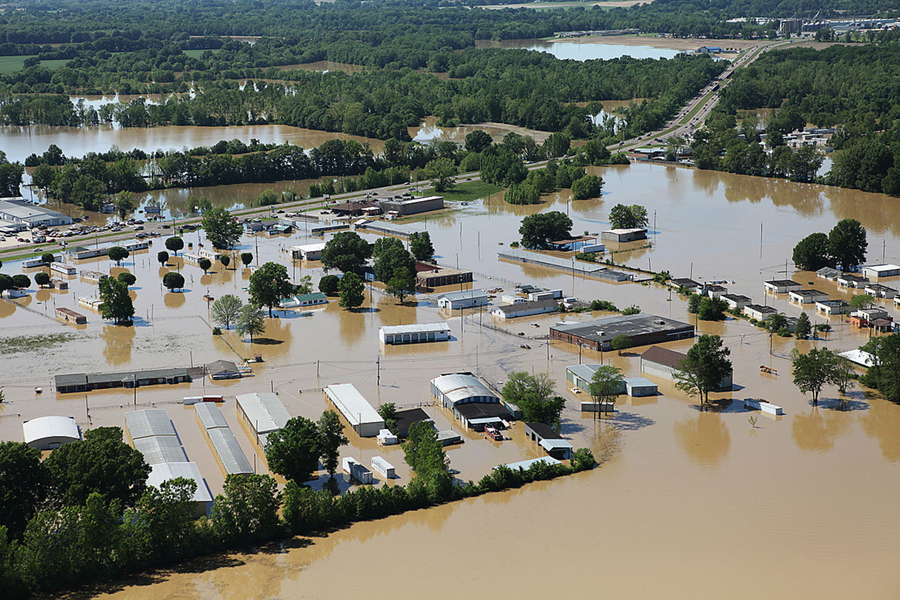
People in Britain whose homes are damaged by floods, storms or other wild weather are 50% more likely to suffer mental health problems such as depression or anxiety – even if they do not have to move out temporarily, researchers said last week.

That suggests disaster response may need to be better joined up with psychological support, as climate change brings larger and more frequent extreme weather threats, said Hilary Graham, a health sciences professor at the University of York.

“There’s increasing awareness that beyond these very dramatic human impacts – like loss of life – there are what official reports refer to as ‘psychological casualties’,” said Graham, lead author of a new study.

When extreme weather harms homes, “people’s mental health takes a big hit”, she added.

Researchers looked at 7,500 people surveyed in a national assessment, the main source of information on mental health in England. They found that diagnosed mental health problems rose by about half in those whose homes were damaged by floods, storms, rain or wind.

Some of that stress could be financial, they said, but a lost sense of security also seemed to be a significant issue.

“We believe in the stability of our environment, that it will be the same place tomorrow as yesterday, and we derive a lot of security from that,” said Graham, a sociologist.

“It’s not until that security is threatened that you realise how much you rely on it. Like Joni Mitchell said, ‘You don’t know what you’ve got till it’s gone’.”

In particular, loss of priceless family photos and other memories “undermines people’s sense their home is a safe place”, Graham said.

As Britain has largely avoided the deaths seen in other countries grappling with the growing risk of weather disasters, it has tended to focus on economic rather than health threats, researchers said.

But as flood risk, in particular, grows – 1.4 million people are now signed up to receive Environment Agency flood warnings – health concerns will need more attention, said the study by the National Centre for Social Research and the University of York.

The findings amount to “a wake-up call about the importance of thinking about mental health when we think about flood prevention”, Graham said.

The Environment Agency and the National Health Service should cooperate more closely, she said, adding that “flood protection is health protection as well”.

Julie Foley, director of flood risk strategy and national adaptation at the Environment Agency, warned that the “devastating” impact of flooding on people “can last long after the flood waters have gone away”.

And while efforts to boost flood defences will protect more homes, “we can never entirely eliminate the risk of flooding”, she said in a statement.

By Laurie Goering.

How to Cool Down as the World Warms up Fast

For over 1 billion people, their ability to survive and thrive is undermined without access to sustainable cooling.

By Jeppe Kofod, Danish Minister for Foreign Affairs, Dr. Seleshi Bekele, Ethiopian Minister of Water, Irrigation and Energy, and Rachel Kyte, CEO and Special Representative of the UN Secretary-General for Sustainable Energy for All – all co-leads of the Energy Transition Track at the UN Climate Action Summit.

It has been a hot year so far. In France, Belgium and Germany, summer temperatures reached such highs that records were broken twice in just 24 hours. Dangerous heatwaves were felt yet again across India, Africa, Russia and the Arctic – the list goes on.

From the poles to the tropics, the world is getting hotter and the destructive effects of the climate emergency are being felt. Unsurprisingly, this has brought greater attention to the issue of cooling –   often taken for granted – and has begged the questions: how do we deliver cooling sustainably in a warming world and how do we keep people, medicines and food safe?  

But what is cooling? Your mind first turns most likely to air-conditioning. But cooling, and how it touches our lives, is about so much more. Cooling is essential to keep food nutritious, vaccines effective, and people safe during heatwaves. In hot climates, it makes economies productive, and for growing numbers of people, life without it is unimaginable.

The impacts are plain to see. Heatwaves already kill an estimated 12,000 people annually across the world, a number the World Health Organization says will grow to 255,000 people per year by 2050 if unchecked. Nearly 20% of temperature-sensitive healthcare products in India arrive damaged or degraded because of broken or insufficient cold chains, including a quarter of vaccines.

Sustainable Energy for All research shows that for over 1 billion people, their ability to survive and thrive is undermined without access to sustainable cooling. It puts out of reach hopes for health care and nutritious food, good schools and comfortable workplaces.

Sustainable cooling is essential for economic growth, and without it, it will be the developing world that feels the most significant “productivity penalty”. By 2050, work hour losses – worth billions of US dollars – due to excessive heat and lack of access to cooling are expected to be more than 2% and as high as 12% in the worst-affected regions of South Asia and West Africa.

In a warming world, cooling is not a luxury. It is an issue of equity, and an urgent and growing problem that calls for fast action.

Delivering cooling sustainably – using little energy and without polluting hydrofluorocarbons (HFCs) that speed global warming – will also be essential for energy systems to be in line with the triple challenge: meeting sustainable energy for all as agreed under the Sustainable Development Goals; the Paris Agreement with the promise of keeping global warming below 2 degrees Celsius; and the Kigali Amendment to the Montreal Protocol to rid ourselves of HFCs.

By 2050, indoor cooling alone will consume as much electricity as India and China today. If we don’t start grappling with cooling sustainably, the spike in energy demand and climate-forcing pollutants will drive a dramatic rise in greenhouse gas emissions.

ROOFS AND RENEWABLES 

Solutions exist. For example, new innovations in off-grid “cold chain” refrigeration that need little power to get a farmer’s goods safely from farm to table without spoiling. Scaling up innovations and investment in clean cold chains can boost farmers’ incomes, help people lead healthier lives, and reduce food waste.

We must think holistically about reducing demand for cooling. There are simple and cost-effective solutions, including moving to cool roofs, painted white or planted green. We can also use solar power to drive fans for people living in densely packed slums, creating safer living conditions and reducing the dangers of frequent power outages during heatwaves.

In rural villages, renewable energy can power cooling for schools and clinics, meaning that children can have more productive days at school and families can take their children to be vaccinated with confidence that it will be effective. 

These efforts can be supported in three ways. One, increase finance and deployment of energy-efficient solutions; two, invest in zero-carbon or no-to-low global warming cooling innovations for the future; and three, think systematically about meeting cooling needs while minimizing energy demand, utilizing access solutions like district cooling and solar home systems.

COLLECTIVE ACTION

We must also collectively rethink how we understand cooling needs across cities and cold chains, and design and finance solutions and technologies that meet those needs.

Leading governments should integrate cooling into their national climate action plans, setting strong energy-efficiency requirements for building codes and cooling technologies.

Cities must integrate cooling needs into urban planning, develop heat action plans to protect the vulnerable in heatwaves, and paint roofs and walls white to reduce the urban heat island effect.

Industry can invest in energy-efficient cooling of their production facilities and value chains.  Technology providers can help deliver affordable and sustainable solutions by working with the public sector to bring the best technologies to scale. Investors can set requirements for energy-efficiency in investment projects.

Next week at the United Nations’ Climate Action Summit, the energy transition track – led by Denmark, Ethiopia and Sustainable Energy for All – will shine a light on the need for sustainable cooling. 

This work will highlight the innovative solutions from forward-thinking businesses, and see governments commit to national cooling plans that meet the needs of their citizens with hyper-efficient energy solutions.

As the summer begins to cool down for many, we must not let our action and commitment to thischallenge cool off with it.

Cool but Confused: Do Social Entrepreneurs Run a Business or a Charity?

As businesses with a mission to do good become increasingly trendy, social entrepreneurs said they were finding it harder than ever to tackle one of their major problems – explaining what they do.

For years social entrepreneurs trying to solve a wide range of issues from affordable healthcare to homelessness have faced the same question: are you running a charity or a business?

There is no universally accepted definition but a social entrepreneur can be described as someone who applies commercial strategies to tackle social and environmental problems and can operate as a for-profit or not-for-profit businesses.

A Thomson Reuters Foundation poll in 2016 found almost 60 percent of social enterprise experts in the 45 biggest economies said there was a lack of public awareness about their work which made it harder to raise funding and sell products and services.

While the sector has continued to grow in recent years with rising interest from socially-conscious consumers, some of the 1,200 people at Britain’s top social entrepreneurship conference this week said this had made explaining their work even harder.

Cassandra Staff, chief operating officer at Miller Center for Social Entrepreneurship, a U.S.-based training scheme at Santa Clara University, said as social entrepreneurship became trendy, there was more confusion about its definition.

“There has been a lot of conflation within the definition as it has become more trendy, and fragmentation as everyone tries to work out what it means to them,” she said on the sidelines of the 16th annual Skoll World Forum in Oxford.

The confusion “just increases the complexity of barriers to entry”, she said.

GROWING CONFUSION

Over the past decade the sector has surged but so has the confusion, said leading social entrepreneurs.

Social sector organizations account for more than 5 percent of economic output in several nations, including Canada, Germany and the United States, according to the British Council, a partly state-funded body that promotes British culture overseas.

The Big Issue Group, one of Britain’s leading social enterprises tackling homelessness by producing and selling street newspapers, regularly gets mistaken for a charity, said Nigel Kershaw, its executive chairman.

“It’s often an assumption when you are doing something for the people and the planet you must be a charity,” said Kershaw on the sidelines of the four-day Skoll Forum in Oxford.

He explained this created a problem because the Big Issue aimed to build self esteem in the homeless vendors who sell its magazine. If it gave money to them instead, like a charity, it would be “perpetuating a dependency”.

Precious Lunga, co-founder of London and Nairobi-based Baobab Circle – which uses mobile and artificial intelligence technology to improve healthcare – said investors tend to see the social enterprise as a charity while users viewed it more as a business.

“There is no collective understanding about what a social enterprise is because it encompasses a wide range of types of organizations from non-profit to for-profit,” she said.

“Many of my contemporaries see themselves as entrepreneurs first.”

For Carenx Innovations, an Indian pregnancy care social enterprise, this confusion made it more challenging to attract funding from investors who might not realize it wanted to grow.

“People feel we are a charitable organization and that is one of the difficult parts – we have to emphasize and explain what is our social component and what is our business component,” said Shantanu Pathak, the co-founder.

Social entrepreneur Victoria Hale in 2000 founded and ran the first not-for-profit pharmaceutical company in the United States, One World Health, which develops drugs for poor people.

The pharmaceutical sector is mostly made up of profit-driven businesses so her social enterprise model bucked the trend.

“I learned to walk away from 80 to 90 percent of the people who questioned me and challenged me in relation to why I was starting a non-profit pharmaceutical company,” she said.

She said the concept of social enterprise has taken a while to catch on in the United States.

“There is a lot of explaining to do,” she said.


By Sarah Shearman @Shearmans. Editing by Belinda Goldsmith 

Holocaust Remedy Helps Rwandan Genocide Orphans

A South African-born lawyer, Anne Heyman, and her husband raised more than $12 million to help care for families ripped apart by the genocide. Taking their model from Israel’s Youth Villages, which created new families for children whose parents had died in the Holocaust, the couple aim to help the 95,000 children orphaned in Rwanda’s genocide.

Vincent de Paul Ruhumuriza was born in Rwanda just a few months before genocide consigned his father to an unknown grave and traumatized his mother so badly she still screams and shakes at any mention of that time.

But, helped by a model of healing dating back to the Holocaust, the 25-year-old has finished his education and blended into a new family, where individuals grieving lost loved ones have rebuilt their lives by caring for each other.

“People should not be driven by the past,” the bearded young man told Reuters this week, as the country prepared to mark a quarter of a century since Hutu militias killed around 800,000 Tutsis and moderate Hutus. “I want to grow into someone who will benefit society.”

Seven years ago, Ruhumuriza’s life was on course to become another small tragedy in a nation where every family is touched by grief.

He and his mother lived in poverty. His father’s death in the genocide was a mystery – the only time he ever tried to ask about it, his mother had a breakdown.

“Other people … told how she was beaten, how she was tortured, got raped,” he said. “She became like a mad person. She got traumatized.”

THE PLACE WHERE TEARS ARE DRIED

Then, in 2014, just as Ruhumuriza was about to drop out, his school got in touch with the Agahozo Shalom Youth Village, whose Hebrew-Kinyarwandan name translates as “the place where tears are dried”.

The village was set up in 2008 by a South African-born lawyer, Anne Heyman, who had worked in the United States. Heyman and her husband raised more than $12 million to help care for families ripped apart by the genocide, taking their model from Israel’s Youth Villages, which created new families for children whose parents had died in the Holocaust.

Rwanda’s genocide, sparked by the assassination of the president, lasted around 100 days and stopped after rebels fought their way to the capital, led by Paul Kagame, Rwanda’s current ruler.

More than 95,000 children were orphaned, the United Nations estimates, and around 300,000 children were killed. For some of the survivors, Heyman’s village offered healing and purpose.

“Having 15 children around you can calling you Mama, and you helping them to conquer their past, that is a great contribution to the nation,” said Emeritha Mukarusagara, a slender, bespectacled 57-year-old with long braids who became a foster mother after being widowed in the genocide.

She spent months hidden by a neighbour, heavily pregnant, terrified and filled with grief for her murdered husband. She keeps his picture on her phone but still cannot discuss his death.

Since then, she has fostered dozens of vulnerable children, including Ruhumuriza, who needed families.

NEW PURPOSE

A shy teenager, he arrived into a large, boisterous community where children live 15 to a house, watched over by a strict but loving foster parent they are all encouraged to call Mama. It was strange to call another woman Mama, he said. It was even stranger to have a brother. He liked it.

Ruhumuriza threw himself into his studies, becoming the school president, learning about Steve Jobs, and forming a deep bond with his foster mother. When he graduated and found a job in the construction industry, and a steady paycheck, he asked her what he should do with it.

Go home, she said. Build a house for the lonely woman who gave birth to you.

“Now my mother lives in the house I built,” he said proudly. “Mama Emeritha is one of my cornerstones … she is one of the best advisors I have.”

Ruhumuriza is one of more 850 children who has passed through the village’s 26 houses. But although the children of the genocide have grown up, many more come seeking refuge: those orphaned by accidents and disease. Refugees from Burundi. Children at risk of abuse.

Ruhumuriza, which was also the name of Mukarusagara’s murdered husband, has a special place in his foster mother’s heart.

“Every time I saw him, I remembered my dead husband. He was as kind as my husband,” she said with a sigh.

“At his wedding party, I will put on the best attire I have and sit next to his mother.”

By Katharine Houreld. Editing by Robin Pomeroy.

New Zealand Native Know-how Lauded for Big Business

Instead of a wasteful ‘take, make and throw’ approach, companies should copy indigenous principles and aim for a ‘circular’ way of work that recycles and re-uses.

Global businesses should heed traditional, indigenous knowledge to better protect land, honour old customs and boost profits, participants at a conference in New Zealand said on Thursday.

Instead of a wasteful ‘take, make and throw’ approach, companies should copy indigenous principles and aim for a ‘circular’ way of work that recycles and re-uses, said participants at a summit devoted to the circular economy.

“We’re a Maori organisation so while there’s a very strong commercial and business arm to what we do, there’s also a cultural, charitable and community focus,” said Kerensa Johnston, chief executive of Wakatu Incorporation.

New Zealand-based Wakatu has about 4,000 shareholders who mostly descend from the region’s original Maori land owners.

Johnston said the firm followed the traditional tenets shared by many indigenous people, whose way of life is under threat globally as governments and corporations seek to develop the land and resources that sustain their native communities.

“We understand that our relationship to the land is inherent in the health and well-being of our people,” she said.

The multi-million dollar enterprise has businesses that range from farming to food and drink, and operates with a 500-year, inter-generational business plan, said Johnston.

NO MYTH, NO FABLE

Protecting land and promoting sustainable development were built into indigenous culture yet were often lost in modern firms, said Joe Iles of the Ellen MacArthur Foundation, a British charity that promotes the circular economy and hosted the two-day meeting.

Such principles could help companies reduce waste and use a host of products longer, while still boosting growth, he told the Thomson Reuters Foundation, by phone from New Zealand.

“The Maori world view places a great emphasis on the interconnectedness of everything,” said Iles.

“It’s serious technical knowledge. It’s not based purely on altruism or fables or myths.”

Up to 2.5 billion people around the world depend on indigenous and community lands, which make up more than half of all land globally.

Hinemoa Awatere of New Zealand’s Ministry for Environment said there was “increasing willingness” by her government to embed indigenous knowledge in the wider economy.

Indigenous businesses were flourishing in New Zealand and could do so elsewhere, she said, so long as mainstream currents that shape Western business listened to ideas from the South.

For Chris Kutarna, an academic at Britain’s Oxford University, indigenous principles with appeal to consumers could easily be woven into modern business, be it in a more sustainable use of raw materials to better product packaging.

“The big cognitive shift that we need to make is from discounting the past to revaluing the past,” he said.

“Knowledge is a collectible too,” Kutarna said.

The rights of indigenous people to land is protected by international legal conventions including the United Nations’ Declaration on the Rights of Indigenous Peoples, which was endorsed by hundreds of countries in 2007.

Yet from India to Brazil, indigenous communities are often threatened by logging, mining and agribusiness companies.

By Adela Suliman; editing by Lyndsay Griffiths. 

George and Amal Clooney on Justice Mission For Women and Gay People

The Clooney Foundation for Justice plans to this year launch TrialWatch, a project to monitor trials and create an index to track which countries use courtrooms to oppress minorities and government critics.

Celebrity couple George and Amal Clooney said on Thursday they wanted to use their star power to push for justice globally for women, children, LGBT+ people, religious minorities and journalists.

The 57-year-old Hollywood actor said some countries were using courts to do “really rotten things” and it was important to “shine a light” on where this was happening.

The couple’s Clooney Foundation for Justice, set up in 2016, plans to this year launch, TrialWatch, a project to monitor trials and create an index to track which countries are using courtrooms to oppress minorities and government critics.

Amal Clooney, an international human rights lawyer, said it was important to expose injustices and the countries using courts to target vulnerable people, human rights defenders and press freedom.

“We now have the highest number of journalists in jail in the world since records began,” she told a charity gala organized by the People’s Postcode Lottery in Edinburgh.

The Clooneys, who married in 2014, said they were both committed to using their fame to raise awareness about human rights abuses and corruption.

Amal Clooney, 41, said her job was less glamorous than it might seem as it mainly involved piling through vast amounts of paperwork but their fame could be used to their advantage.

“It helps when we want to engage governments to act or business leaders,” said the British-Lebanese lawyer.

Her actor husband also played down the glamour of fame, joking about being the father of one-year-old twins, but acknowledged that he had always been determined to use the public spotlight to do good.

“I didn’t grow up wealthy,” he said. “If you end up getting lucky, you should share that luck.”

The Clooneys were in Scotland to collect an award from the People’s Postcode Lottery for their humanitarian work. Britain’s People’s Postcode Lottery is one of several charity lotteries set up in Europe since 1989 by the Netherlands-based social enterprise Novamedia.

The lottery awards cash prizes and also donates about 32 percent of sales to charity, which has totalled more than 400 million pounds ($530 million) since 2005. The organisation has given money to some of George Clooney’s other charities and has also made a grant to the Thomson Reuters Foundation, the charitable arm of Thomson Reuters.

By Belinda Goldsmith @BeeGoldsmith; Editing by Katy Migiro. 


0