‘First Line of Defense’: COVID-19 Prompts Rethink In Role of Buildings

From office workers to students, Americans facing colder weather and more time inside have a pressing question: How can they keep safe amid a pandemic that scientists say thrives in indoor settings?

The search for answers has prompted a new look at what architects and their buildings can do to help, both now and in the future.

“The built environment is a first line of defense in a pandemic – it makes the difference between whether you get a disease that will kill you or not,” said Rachel Gutter, president of the International WELL Building Institute.

“That’s a real shift in how we think about buildings,” she told the Thomson Reuters Foundation.

Gutter and her colleagues oversee a global set of standards for buildings aimed at promoting the health of their occupants.

Some 4,900 projects in more than 60 countries are currently at some stage in the voluntary WELL certification process.

In September, the institute launched a major update that includes coronavirus-specific changes that it began piloting this summer, the result of work by about 600 public health officials, government officials, designers and more.

Last month, a group of U.S. scientists warned in an open letter published in the medical journal Science that infected aerosols – small droplets and particles – lingering in the air could be a major source of COVID-19 transmission.

The letter called on public health officials to highlight the importance of moving activities outdoors and improving indoor air, along with wearing masks and social distancing.

“COVID-19’s favorite season is winter – like the seasonal flu, this virus loves the cold,” Gutter said.

“Indoor air quality considerations will be of even greater importance in regions of the world that are preparing for winter.”

The changes to the WELL recommendations highlight the need to limit touch as people move through a building, safely disinfect surfaces and more, in particular boosting indoor air quality, Gutter said.

Interest in the coronavirus guidance has been enormous, and implementation has been “lightning fast”, she said, adding that about 350 million square feet (32.5 million square meters) of space has been newly registered with the institute since June.

Other building certification systems have rolled out new guidance, too, including LEED – or Leadership in Energy and Environmental Design – which focuses on environmental impact and has been widely adopted across the globe.

“The pandemic has really shone a spotlight on, ‘What is my indoor air quality like, and why does that matter?'” said Melissa Baker, senior vice president of LEED development at the U.S. Green Building Council, which oversees the system.

“These are the questions that tenants will be asking their landlords now.”

HEALTHIER INDOORS

Months into the pandemic, designers are tracking changes in how people interact with buildings and trying to see how they can help make the indoors healthier, said Rachel Minnery, a senior director with the American Institute of Architects.

“Here we are, almost every building except your home is considered unsafe,” she said.

“What role can the built environment play … so hopefully we’re not in quarantine for the next two years?”

Design tweaks could start with a user’s entry into a building, Minnery noted, through vestibules and queuing areas to facilitate temperature checks or social distancing.

Architects are also incorporating one-way doors and hallways, spreading workstations farther apart, deploying touchless technologies and upgrading air-filtration systems, she added.

The demands are forcing designers to learn about a range of new issues.

“I’m not an epidemiologist – I’m an architect,” said Jenine Kotob, who works just outside Washington with Hord Coplan Macht (HCM), a national firm.

When the pandemic hit, Kotob and her colleagues started participating in emergency workshops with public health experts.

“They defined for us a baseline of understanding, the knowledge base that any architect now needs to be aware of: how infectious diseases are transferred,” she said.

In a survey of real estate experts around the world released by the Washington D.C.-based nonprofit Urban Land Institute in October, 90% of respondents said certification of healthy offices will likely rise in coming years.

EMOTIONAL WELLBEING

The pandemic is also shifting thinking in terms of how buildings can help with the way communities function more broadly, from wellbeing to work.

“The thing that’s different about COVID is we’re focusing not only on physical wellness but also emotional wellbeing,” said Donald Powell, a partner at the BOKA Powell architecture firm based in Texas.

“That’s the hurdle all corporations have to cross before employees will come back to the workplace.”

In response to client queries on how to entice workers back to the office, Powell said he and his colleagues are considering on-site child care and even classrooms, aimed at parents who are home-schooling and want to come back to work.

Schools have been a high-profile point of contention throughout the pandemic, and a growing number in the United States are contemplating how to open back up.

“Without school buildings able to come back online during the pandemic, the longer we stretch it out, the longer we will see repercussions to our society,” said HCM’s Kotob.

She and her colleagues are being asked to repurpose cafeterias, libraries and other large gathering spaces to create multiple smaller classrooms, all while adhering to local regulations and social distancing guidance, she said.

The need for these changes has underscored the chronic underfunding of public schools, Kotob noted.

U.S. elementary facilities face a shortfall of $38 billion a year, according to advocacy group [Re]Build America’s School Infrastructure Coalition.

Pending legislation would provide $5 billion for emergency school repairs as part of a pandemic relief package, which could go toward improving sanitation and upgrading air-filtration systems, for example.

“What we’ve seen in the pandemic is there are specific issues that have gone unaddressed for so long – air quality, overcrowded conditions, access to the outdoors – that can’t be tabled any longer,” said Kotob.

That kind of thinking is prompting broader recognition of the notion of health as a human right and its links with buildings, said Gutter at the International WELL Building Institute.

“Many of us have now been cooped up in our homes for months, so we’re much more tuned in to these impacts on our health,” she said.

“The way we build affordable housing, construct our schools – what would happen if we embraced the notion that these could enhance rather than take away from our health and wellbeing?”

By Carey L. Biron @clbtea, Editing by Jumana Farouky and Zoe Tabary.
94-Year-Old David Attenborough Attracts 6 Million Instagram Followers in 6 Weeks

Youth climate activists have urged David Attenborough to ‘pass the mic’ rather than jettison Instagram after just six weeks, saying the British naturalist should not abandon his 6 million followers.

Attenborough’s team opened the Instagram account in September to coincide with the cinema release of ‘A Life on Our Planet’ documentary. It attracted 6.1 million followers before the team announced plans to close after its 27 posts garnered the sort of following usually reserved for actors or influencers.

Climate activists said in a statement that the documentary had provoked a “tidal wave” of interest, urging Attenborough to rethink so others benefitted from his fanbase.

“With 6 million engaged followers at your fingertips, it only makes sense to keep the momentum going,” said 27-year-old British-based activist Tori Tsui. The activists – from fifteen countries – said Instagram had alerted a new audience to the perils of a warming planet and that closing the account would be a wasted opportunity in the fight on climate change.

“Activists…have expressed a deep concern over the team’s decision, highlighting it as a missed opportunity for climate education, given it has the power to reach millions of engaged people,” they said.

The youth activists hail from several global organisations, including the Fridays For Future NGO that emerged from Greta Thunberg’s school strike for climate movement.

They urged Attenborough to #PassTheMic to communities on the frontlines of climate change, including Black and indigenous groups, to boost chances for global action.

“The campaign focuses on making sure that youth activists, especially from the Global South are empowered and able to share their stories in their own way,” Mitzi Jonelle Tan, from Youth Advocates for Climate Action Philippines, told the Thomson Reuters Foundation.

A spokeswoman for the documentary producers said the social media account was only ever intended as a series of special Attenborough messages to run over a limited period. “Audiences have followed on the basis that they will see filmed messages from him, and it is therefore not possible for us to hand over the account to anyone,” she said.

She said the account would instead recommend accounts to follow on environmental issues, offering activists a powerful new tool to spread the word.

“This is where social media comes in…going to where the youth can really see our messages and calls, through dance videos on TikTok or pictures on Instagram or witty lines on Twitter,” Tan said.

By Sophie Davies, editing by Lyndsay Griffiths.

‘Not Seeing the Urgency’: Communications Failure Blamed For Climate Inaction

“Many people still do not seem to fully understand (climate change) is impacting our lives today,” says Britain’s Prince Charles.

Humans’ collective inability to stem planet-heating emissions – which continue to rise despite pledges to slash them – is largely the result of failures to communicate the risks effectively, government officials and activists said this week.

Even as scientific warnings grow clearer and more urgent, and climate-linked hazards such as more deadly wildfires and destructive storms and droughts affect more people, too few see the rising threats as urgent, they warned.

“Many people still do not seem to fully understand it is impacting our lives today,” Britain’s Prince Charles told an online event run by the Red Cross Red Crescent movement.

“We simply cannot sit back and wait for the climate to change around us and accept these disasters as an inevitability,” said the prince, who is president of the British Red Cross.

While slow progress on addressing the growing climate threat often is blamed on a lack of funding, political will or public acceptance of lifestyle changes, that could be reversed if more people recognised the risks, panelists said.

“We fail in the way we engage with the community. We fail in the way we are able to communicate how deep the crisis is, how it is affecting millions and millions,” said Francesco Rocca, president of the International Federation of Red Cross and Red Crescent Societies.

“This is something we must change,” he added.

The task was particularly difficult because “the climate crisis has become political” in some countries, with scientific evidence used “to divide rather than unite”, he said.

Kumi Naidoo, former secretary-general of Amnesty International, said many people are exposed to a “massive amount of disinformation and lies” about climate risks, and activists had not figured out how to counter that problem.

For most people, “the truth is we are not seeing the urgency – not only government and business but also the large majority of civil society,” he told an online panel Thursday run by Glasgow Caledonian University.

Mary Robinson, Ireland’s first woman president, a climate change activist and chair of The Elders, said she saw growing efforts to join up justice movements – from Black Lives Matter to #MeToo on women’s sexual abuse – as one new route to action.

“A lot of the people affected (by climate threats) are brown or black or indigenous,” she noted.

The COVID-19 crisis also highlighted existing inequalities and risks, and how effective joint human action – in this case to limit the virus’ spread, and to help others – could be.

“That, I’m thinking, will be very important as we tackle climate change,” she said.

YOUTH PRESSURE

Some of the strongest public pressure on governments to act on climate threats has come from young people, through Greta Thunberg’s Fridays for Future and similar movements, as well as protest groups such as Extinction Rebellion, Naidoo said.

They had helped drive wider public discussion and engagement with climate change as an urgent threat, he said, and turned up the heat on politicians with protests that, before the coronavirus crisis began, brought millions to the streets.

Emilotte Nantume, a young Uganda Red Cross Society leader on climate change adaptation, said holding leaders accountable was the most valuable contribution young people – already facing unemployment and other problems – could make on climate action.

“We are not in positions of power to make decisions. We are not policymakers,” she said.

But building national and international movements to monitor and press leaders on climate issues could help shift them from “awareness to engagement”, she added.

In Britain, a citizen’s assembly tasked with advising lawmakers on how to achieve the country’s goal of net-zero emissions by 2050 said on Thursday that educating everyone to genuinely understand climate risks was its single top priority.

Half of the panel, selected to reflect Britain’s demographic diversity, called for compulsory climate change education in schools, and many said they wished others could go through the intensive training in climate issues they had received.

By Laurie Goering @lauriegoering; editing by Megan Rowling and Zoe Tabary.

From Child Laborer to Top Executive: Indian Tycoon Hopes His Story will Inspire

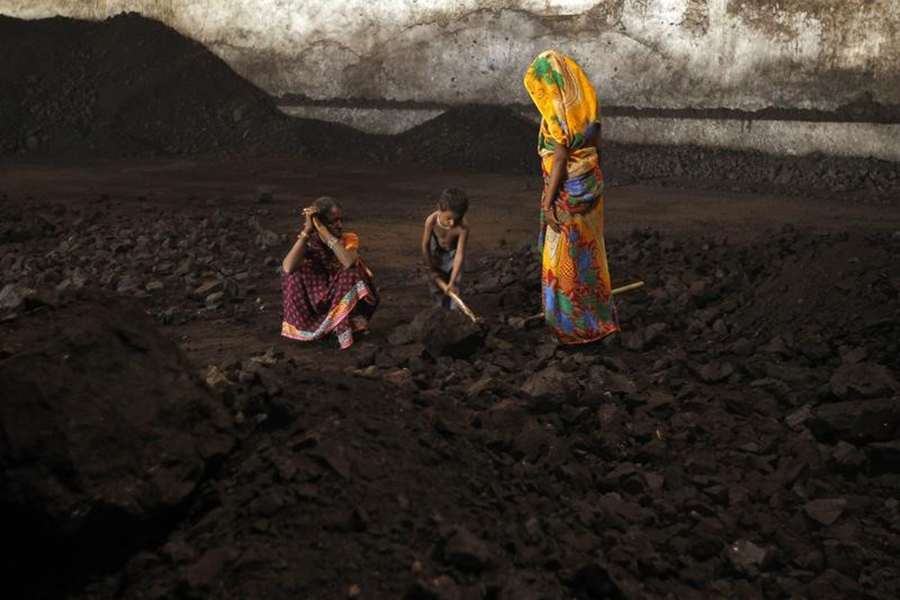
Rakesh Walia hopes his journey from child labourer to boardroom executive will inspire other children toiling in India’s roadside eateries, fields and factories to break free of the shackles of poverty and despair.

In his autobiography Broken Crayons Can Still Colour, Walia, 59, gives a rare first person account of life as a child labourer in India – in his case in a workshop making bicycle parts and later in carpet weaving factories in central state of Madhya Pradesh.

Now a top executive with the telecommunications firm Matrix Cellular, Walia chronicles his life from being orphaned at six to toiling in factories before enlisting in the Indian Army and finally pursuing a career in business.

“I didn’t know how to tell my story so I began by recording my thoughts on my mobile. There were 7,000 voice recordings I transcribed to eventually write this,” Walia told the Thomson Reuters Foundation in a telephone interview.

He said he felt compelled to tell his story in the hope it would inspire at least one child worker to break free and succeed.

There are an estimated 5.7 million child workers between the ages of 5 and 17 in India, according to the International Labour Organization. More than half toil on farms and over a quarter are in manufacturing on tasks such as embroidering clothes, weaving carpets and making matchsticks.

Children also work in restaurants and hotels, and as domestic workers. Walia started his young working life a servant for relatives after his parents’ death in a road accident.

From making tea each morning to running errands, washing utensils to cleaning the car, Walia writes that his strongest memory of those years was of being constantly hungry. For a few years he was allowed to go to school, but at 13 he had to drop out due to financial strains on the family.

The book describes his meeting with a broker who promised him a job in the capital Delhi. He started off making bicycle parts and then found himself at a carpet weaving factory in Madhya Pradesh. “The room where we worked was poorly lit, unbearably hot and filled with wool dust that would stay suspended in the air,” the book reads.

“I would spend endless hours weaving loose strands of wool into carpets … My hands would chaff and I developed painful blisters.” A chance encounter with an army officer gave him a purpose in life, Walia writes, describing his struggle to get an education and join the army even as he toiled in the factory.

“I would carry my books to the chowk (square) near the factory and study under the streetlight,” he wrote.

The slim book found no publishers for many years, said Walia, who now lives with his wife and son in an upmarket neighbourhood near New Delhi. “But … I was determined to tell my story,” he said. “I was even ready to print it myself and hawk copies at street corners.”

Priced at 199 Indian rupees ($3), Walia hopes the book will be accessible to children working across India. “Every child has a dream, even those forced to work in factories,” he said. “I want to tell them that sometimes dreams to come true.”

By Anuradha Nagaraj, Editing by Ros Russell.

With Big Business Touting Ethics, How do Small Social Brands Survive?

Whether it is U.S. denim brand Levi’s campaigning against gun violence or British supermarket Iceland drawing attention to the environmental impact of palm oil production, big businesses want to show they care about people and the planet, not just profits.

But this growing trend has made it harder for social enterprises – which are organisations set up specifically to tackle social and environmental problems through commercial means – to stand out.

“There’s a lot of confusion about what is wrong or right and a spectrum of business as a force for good,” John Steel, chief executive of Cafedirect, a London-based coffee social enterprise told the Thomson Reuters Foundation.

“There are businesses that are set up to make profit and have ownership structures to enrich the few but are talking about sustainability – for citizens of the world it is very hard to work out what is really going on,” he said.

Cafedirect launched 28 years ago with the mission to improve the lives of small coffee farmers and a few years later became one of the first companies to launch as Fairtrade, an ethical certification scheme aimed at paying farmers a fair wage.

“It was seen as being completely different – in those days it was out there ahead of the pack,” Steel said.

This resulted in “crazy” growth, said Steel, with double-digit sales improvement in the early 2000s.

The industry followed suit – with big coffee brands like Starbucks in Europe, and supermarkets such as Britain’s Waitrose and Sainsbury’s launching some Fairtrade coffees in the 2000s, as well – a shift that was bittersweet for Cafedirect.

“It’s great from the point of view that people are agreeing to pay a minimum price for coffee and a premium to help improve farmers lives, but it also means it’s less of a clean, clear blue sky environment for you as a competitor,” he said.

As a result of the competition, Cafedirect spent several years struggling in the red before finally coming back to a profit in 2018.

Steel, who joined the company in 2012, attributes this turnaround, in large part, to a rebrand, which communicated the coffee company’s ethical credentials even more prominently.

Cafedirect has made several other changes to the business, including buying a tea company and moving into coffee roasting, but with the price of coffee dropping globally, it will remain a tough climate for the social enterprise to compete.

CONSCIOUS CONSUMERS

The number of socially conscious consumers is growing and therefore it has become more important for big businesses to attract them, too, according to a study by consultancy firm Accenture.

“Companies that stand for something bigger than just what they sell and demonstrate genuine commitment to their purpose typically deliver higher levels of commercial success,” said Rachel Barton, managing director at Accenture Strategy

Almost two thirds of consumers say a company’s values have an impact on what products they consider buying, the 2018 study showed.

Based on a survey of 30,000 people, the study also found six in 10 consumers want companies to take a stand on the social, cultural, environmental and political issues consumers care about.

“People have fundamentally different expectations of the role companies play in society now, compared to 10, 20 years ago,” said Becky Willan, managing director of Given, a London-based marketing agency that specialises in purpose-led brands.

But it is not just consumers driving this change – social enterprises and charities have been “beavering away” for decades, to make social impact commercially viable, said Sophi Tranchell, group chief executive of British social enterprise Divine Chocolate.

“We haven’t got to where we got to from a consumer perspective by magic,” she said.

Like Cafedirect, Divine Chocolate, which is 44-percent owned by its cocoa farmers, also found it hard to compete when competitors like chocolate giant Cadbury’s shifted to Fairtrade, also in the 2000s. However, she welcomed the move.

“We celebrated when the big companies came in to do Fairtrade because … we wanted to challenge the industry to do better,” she said.

Standing out from competitors remains “very difficult and a big challenge,” but the brand’s focus on quality and telling the stories of its farmers has helped, said Tranchell.

To keep their competitive edge, social enterprises will need to innovate with new products, services and ways of doing business that cannot be replicated by big companies, which are generally slower to act if they have shareholders, said Willan.

“This isn’t just a marketing exercise on the part of big businesses – they are investing, making long term commitments, they are changing their practices, they are talking about it,” she said.

“But social enterprises can be more agile, disruptive and more ambitious about the change they can create,” she said.

By Sarah Shearman @Shearmans. Editing by Jason Fields

Don’t Overlook Africa’s ‘Fragile’ States For Social Businesses, Urge Industry Experts

African nations such as Somalia may be perceived as conflict-ridden and risky for business but “fragile states” can be an untapped opportunity for social enterprises that are flexible and think out-of-the-box, said industry experts.

The Organisation for Economic Cooperation and Development (OECD) lists 58 countries as “fragile states” – most of which are in Africa – based on indicators such as insecurity, social inequality, weak governance and high population vulnerability.

But social entrepreneurs and investors said these countries can still be win-win destinations for those seeking to run profitable businesses that also improve the lives of the needy.

“Of course you have to do things differently in fragile states compared to other countries, but it is possible to see your businesses grow,” said Fiona Lukwago from the Africa Enterprise Challenge Fund (AECF), an impact investment fund.

“You have to think out-of the-box when unexpected problems arise, and of course you have be more risk tolerant,” she told the Thomson Reuters Foundation.

The AECF has invested $11 million in agri-businesses in Somalia, Sierra Leone, the Democratic Republic of Congo and Liberia, said Lukwago, adding they have attracted three times that amount of capital from other sources since 2011.

She said investing in fragile states was high risk, due to challenges ranging from conflict and poor infrastructure to weak legal frameworks and risk of disease outbreaks, but the benefits were there if businesses were willing to adapt.

For example, an AECF-supported firm in Sierra Leone was starting up when Ebola struck, so the company changed its business model from supplying food to local communities to becoming a key supplier to aid agencies in the quarantine zone.

SOMALIA – HIVE OF OPPORTUNITY?

Industry players said one of the best ways to boost economic growth and improve livelihoods in these markets was to invest in small and medium enterprises which would not only provide jobs, but also offer essential goods and services to local people.

Countries like Somalia – listed by the OECD as the world’s most fragile state with decades of conflict hampering development – is “a hive of opportunity” with the market wide-open to private sector, said industry experts.

“Somalia is often perceived as lawless and volatile. While there are pockets in insecurity, there are many areas which are peaceful and the country is teeming with opportunity,” said Andy Narracott from Finding Impact, a blog for social entrepreneurs.

“There are huge opportunities with mobile money, for example. More than 70 percent of Somalis use mobile money compared to 15 percent with people who have a bank account.”

This helps a heavily nomadic population facilitate trade, connects a large diaspora population through international remittances, and reduces security threats for businessmen by avoiding dealing in cash, he added.

Even “simple businesses” offer a wealth of opportunity in Somalia, such as dairy farming, where zero to limited competition means unlimited potential for growth, said experts.

“It takes time to build trust and relationships in order to do business in fragile states like Somalia,” said Mahad Awale, country director of One Earth Future which has raised $11 million from investors to fund 130 social start-ups in Somalia.

“This is not a normal place so you have throw the rule book out the window and be prepared to do things differently.”

By Nita Bhalla @nitabhalla, Editing by Belinda Goldsmith

Not ‘Business as Usual’: How 5 Social Entrepreneurs Are fighting the Coronavirus

As leaders who aim to solve a diverse range of problems, from poverty to pollution, social entreprenerus are not afraid to roll up their sleeves and help in a time of crisis.

But as the coronavirus spreads rapidly around the world, prompting governments to take huge measures to protect public health and their economies, what sort of a role can social entrepreneurs play? One example is shown above, where a staff member brings bottles of pear and mint alcohol for labelling at Swiss distiller Morand, as the company starts using their fruit alcohol to produce hand sanitizer to meet local demand in Switzerland. We asked experts attending the Skoll World Forum — that was recently held virtually — how social entrepreneurs can help in the battle against COVID-19.

1. MICHELLE AREVALO-CARPENTER | CEO AND CO-FOUNDER OF IMPAQTO IN ECUADOR

“The global pandemic will put purpose-driven businesses to the test: will they abandon their impact during hard times or will they double-down and become examples of resilience? In times of deep crisis comes deep reconsideration about the way we as a society conduct business, so I am placing my bets on the second option: as social businesses, I trust we will show the world that doing well by doing good is the only way forward.”

2. LAURA WEIDMAN POWERS | HEAD OF IMPACT AT ECHOING GREEN IN THE UNITED STATES

“Social entrepreneurs who are proximate to the communities they support have long worked to build a more equitable and inclusive world, making them well-positioned to react nimbly in support of communities marginalized by failing systems throughout this pandemic. Greatly resourcing these leaders is critical to their impact mid-crisis, but it is just as important that this support continues post-pandemic to provide them the runway to rebuild and re-imagine our collective futures.”

3. EMILY BANCROFT | PRESIDENT OF VILLAGEREACH IN THE UNITED STATES

“Social entrepreneurs are a vital link between coordinated, country-level responses and those looking for active ways to help respond. This moment of urgency is forcing new levels of trust and collaboration that will hopefully last. We can’t afford to snap back into business as usual.”

4. SASKIA BRUYSTEN | CEO OF YUNUS SOCIAL BUSINESS

“It’s amazing to see many of our social entrepreneurs adapting their business models – like craft company RangSutra in India now producing masks instead of clothing and fabrics. But as an impact investing community we need to come together to ensure these companies receive short-term liquidity and payroll relief to survive this crisis.”

5. DON GIPS | CEO OF SKOLL FOUNDATION IN THE UNITED STATES

“Social entrepreneurs are already pivoting to more virtual models, embracing remote learning, combating misinformation, providing mental health support, and supporting critical supply chains. Many are stepping up in the fight against COVID-19 by partnering with government in different ways.”

By Sarah Shearman @Shearmans. Editing by Belinda Goldsmith.

Bono’s New Venture Takes Aim at ‘Fuzzy Thinking’ In Impact Investing

Impact investment funds must stop relying on “fuzzy thinking” about how much good they do, Bono said as he announced a tie-up with U.S. private equity company TPG to measure the social and environmental change they achieve.

Impact investing – which promises social and environmental benefits as well as financial returns – is growing, but the difficulty of measuring how much good it achieves has caused some major investors to be cautious.

A new company, Y Analytics, aims to bridge the gap between researchers and investors “to help decision-makers evaluate impact,” said a statement from the company

“To persuade the biggest institutional investors to commit their funds to tackling some of the world’s most urgent challenges we need to be as confident about the impact returns as we are about the financial returns – fuzzy thinking just won’t cut it,” added Bono. Bono launched his own $2 billion impact fund, Rise, with TPG in 2016.

Data from the Global Impact Investing Network (GIIN), a non-profit organisation that promotes impact investing, shows the number of social investment funds has quadrupled over the past 20 years to 200. GIIN estimates the industry is worth $228 billion, yet there is no standard global definition of what qualifies as an impact investment.

The Organisation for Economic Cooperation and Development has also called for more rigorous standards to prevent “impact washing” – where firms seek to disguise unpopular practices or overstate the impact of their investments.

By Sarah Shearman @Shearmans, Editing by Claire Cozens.

What if Microsoft Never Existed?

Microsoft will erase its entire carbon footprint since 1975 from the atmosphere. The global software giant has a goal of removing existing carbon from the atmosphere, setting the company’s climate goals apart from other corporate pledges, which have mostly focused on cutting ongoing emissions or preventing future ones.

Microsoft is aiming to remove more carbon from the atmosphere than it emits by 2030, and by 2050, it hopes to have removed enough to offset all the direct emissions the company has ever made.

“If the last decade has taught us anything, it’s that technology built without these principles can do more harm than good,” says chief executive Satya Nadella. “We must begin to offset the damaging effects of climate change,” he continues, adding that if global temperatures keep rising unabated, “the results will be devastating.”

Microsoft plans to cut carbon emissions across its supply chain by more than half by 2030. The plan includes creation of a Climate Innovation Fund, which will invest $1 billion over the next four years to hasten  development of carbon removal technology.

“Our effort will require technology by 2030 that doesn’t fully exist today,” explains company president Brad Smith.

Microsoft will widen the reach of an internal fee it has been charging to its business groups to account for their carbon emissions. Since 2012, the company has pegged the fee on direct emissions, electricity use, and air travel but will now widen it to cover all Microsoft-related emissions.

“That money will then be used to invest in our work to reduce our carbon emissions,” says Smith. Microsoft co-founder Bill Gates was an early backer of British Columbia-based Carbon Engineering, one of a few companies to develop direct air capture technology.

“A company’s most powerful tool for fighting climate change is its political influence, and we’re eager to see Microsoft use it,” says Elizabeth V. Sturcken of the Environmental Defense Fund, a nonprofit advocacy group. Negative emission technologies include the capture, removal, and storage of carbon from the atmosphere, and Microsoft’s goal is to remove all the carbon by 2050 that has been emitted since its founding in 1975. This includes emissions from company vehicles and indirect emissions from electricity use. The company’s pledge comes as big investors pay more attention to how companies tackle climate change. The race is on — Microsoft plans to become net-zero carbon a decade earlier than Amazon.

Stephen Nellis and Jeffrey Dastin are San Francisco-based business journalists covering technology companies for Reuters. 

Women Can Spacewalk. But Can They Cross the Gender Line?

All nine recently announced 2019 Nobel science laureates were male, despite a significant and growing cohort of female contenders.

Nor is women’s contribution to science a recent phenomenon.

Ada Lovelace devised the world’s first computer program in 1840. Austrian physicist Lise Meitner led a small group of scientists who discovered nuclear fission. Soviet cosmonaut and engineer Valentina Tereshkova became the first woman to fly in outer space in 1963.

Yet women remain vastly and globally underrepresented in science, technology, engineering, and mathematics (STEM), comprising only 28 percent of scientific researchers in the world.

Longstanding occupational stereotypes and social norms play a huge role. Why else would we still believe that men are hard-wired to handle machines and numbers, while women are naturally predisposed for careers in education, psychology, and the social sciences?

Such biases build powerful barriers to women’s advancement over the course of a lifetime — for which both the world, and the women in it, pay a steep price.

While more women are graduating with science doctorates, they too frequently encounter glass ceilings and too often find jobs only in the public sector, which offers better work-life balance but fewer career opportunities than the business world.

In principle, men and women should have the same opportunities in any profession; in numbers, advancing gender equality in high-value private sectors could also add trillions of dollars to global economic output.

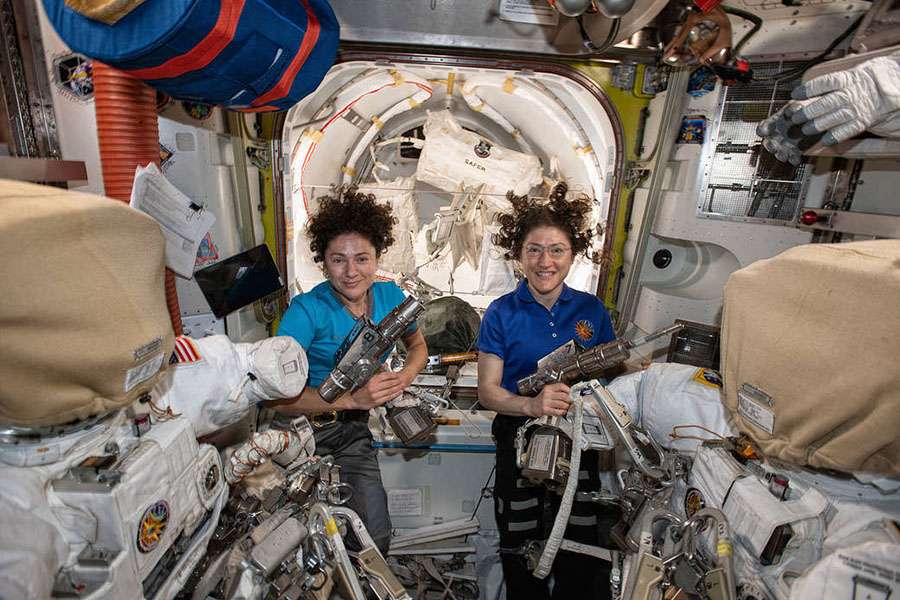
NASA astronauts Jessica Meir (left) and Christina Koch inside the Quest airlock preparing the U.S. spacesuits and tools they will use on their first spacewalk together. The Expedition 61 flight engineers are holding the pistol grip tools they will use to swap out a failed power controller, also known as a battery charge-discharge unit, that regulates the charge to batteries that collect and distribute power to the International Space Station. Photo: NASA

If the current situation seems dire, could the Fourth Industrial Revolution bring about a reversal of fortune? The answer isn’t entirely clear and may vary according to skill level, age group, and location.

Artificial Intelligence and automation have long promised to relieve women of many domestic chores, which social norms around the world disproportionately assign to girls and women and which rob many female workers of opportunities available to men.

Some research also suggests that lower-paying or non-paying “caring” roles—historically assigned to women—may be impacted relatively less by automation. At the same time, the IMF has found that 180 million predominantly “female” jobs actually have a 70 percent or higher probability of automation.

What’s abundantly clear, and undisputed, is that the number of women leaders and experts in the world’s fastest-growing industries remains shockingly small. At the very least, women will have to achieve a giant leap forward in compensation, career progression, and leadership opportunities to reach parity.

Let’s remember we have a huge opportunity to close the gender gap in science and technology by 2030, the deadline for achieving the Sustainable Development Goals. Representatives of UN Member States, multilateral organizations, and other entities have begun to review this issue extensively ahead of the 25th anniversary of a landmark gender conference held in Beijing.

In Eastern Europe and Central Asia, the region for which I am responsible at the United Nations Development Programme (UNDP), many countries have higher than average proportions of women in science, having belonged to or aligned with the former Soviet Union, which pro-actively trained female scientists. 

That legacy endures. For instance, women now make up 48 percent of STEM professions in Central Asia and the majority of researchers in Azerbaijan, Georgia, and Armenia.

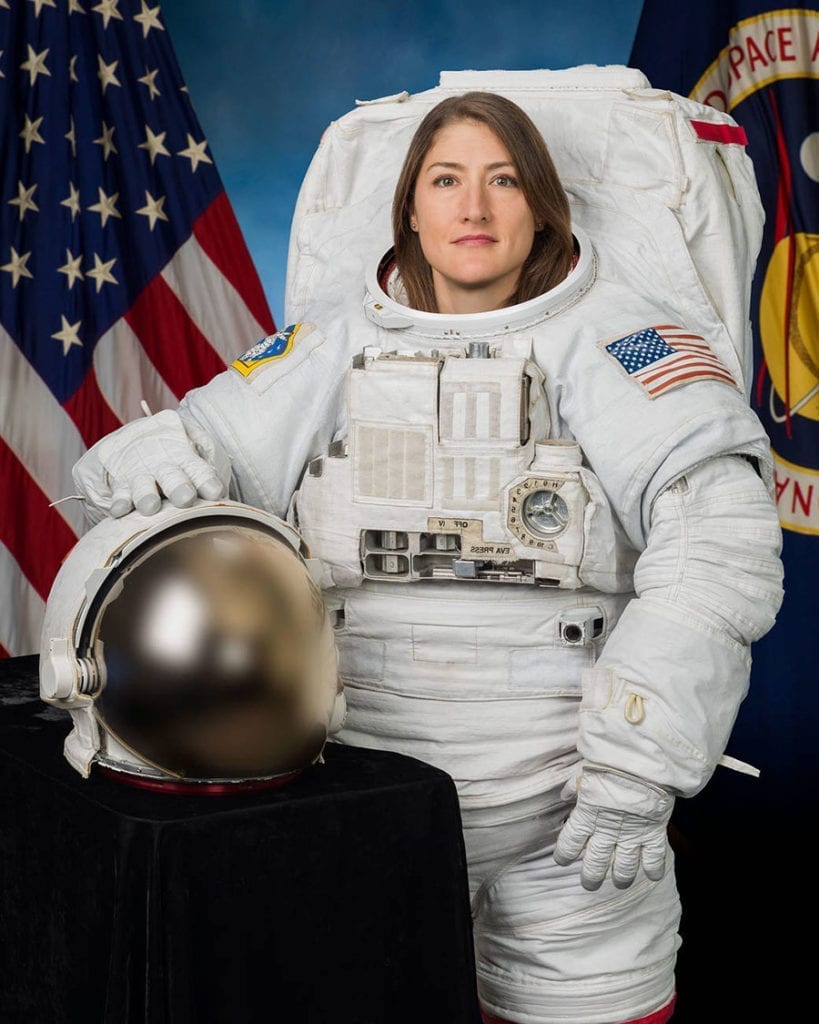
Official portrait of NASA astronaut Christina Koch. Photo: Bill Stafford

While solutions may differ from one region to the next, three actions could help move the needle in the right direction:

First, by capturing girls’ and young women’s imaginations, ensuring they graduate in fields in which their skills may be in high demand. Surely, culture and family come into play when it comes to choosing one’s profession. Smart policy can also play a key role in ensuring equal access to finance and connectivity, as exemplified by Nordic and Baltic countries. Incentives are key.

Led by UNDP and the Limak Foundation, an initiative called “Engineer Girls of Turkey” is helping provide scholarships, internships, and mentoring to hundreds of young women across the country. Similar programs have now been launched across the region, including in Uzbekistan, North Macedonia, and Moldova.

Second, by fixing the shortage of affordable daycare services, introducing parental and family leave programmes, and creating financial incentives for men to share the burden of delivering domestic and care work. 

UNDP and other agencies are working with local development initiatives to unlock private finance for infrastructure projects that lift women’s disproportionate burden of unpaid work.

Third, by offering targeted training programs so women can update their skills in rapidly changing fields and professions and achieve leadership positions in science and tech. Making sure women are in the driver’s seat is the best way to correct gender imbalances from within the industry.

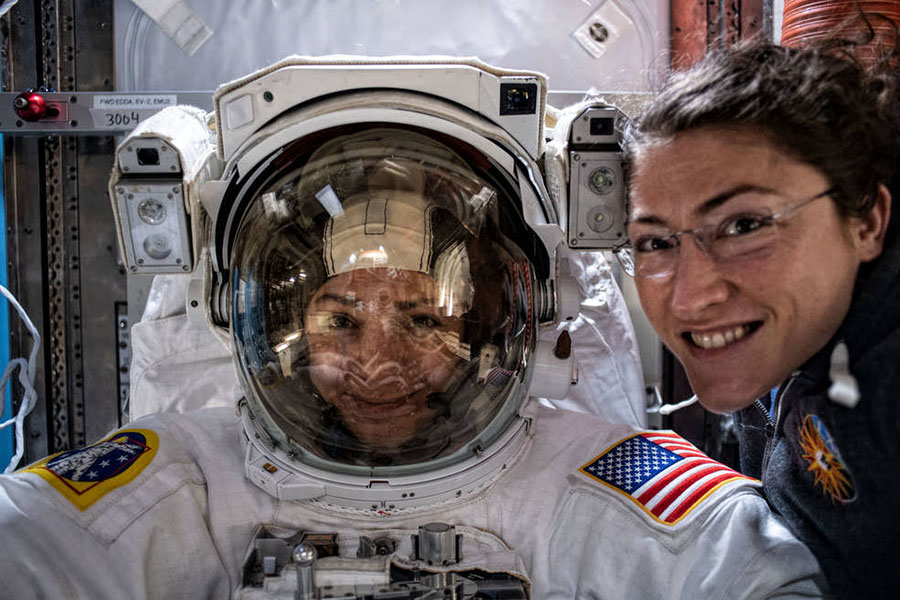
Last year, NASA conducted its first all-woman spacewalk in a symbolic milestone for humanity. I look forward to the day when such events are no longer newsworthy. 

Mirjana Spoljaric Egger is director of the United Nations Development Programme (UNDP)’s bureau for Eastern Europe and Central Asia.

0