Spanish Art Show Spotlights ‘Hidden’ Digital Divide in Pandemic

A painting of a woman using an iPad, a vase depicting children dreaming of computers – both historical objects with a contemporary twist highlighting the world’s growing digital divide during the coronavirus pandemic.

The exhibition at Barcelona’s Analog Museum of Digital Inequality aims to show how this gap – laid bare by COVID-19 -disproportionately affects women and low-income and ethnic minority groups.

The so-called “digital divide” refers to the gap between those who have access to computers and the internet, and those with limited or no access.

About 54% of the global population used the internet last year, but less than a fifth of people in the least-developed countries were online, according to the International Telecommunication Union (ITU), a United Nations agency.

“Technological inequality is a hidden problem, (but) it has become especially obvious throughout this unprecedented year,” said Isabella Longo, project director at BIT Habitat, the nonprofit behind the exhibition, which opened last month.

With the pandemic forcing people everywhere to move online for work, school and socialising, citizens and governments have had to take a technological leap, which risks leaving some behind, she said.

“Technology has been a barrier for those people without (computer) skills and who are often part of groups at risk of social exclusion,” Longo told the Thomson Reuters Foundation in a phone interview.

The pandemic has not only revealed the extent of digital inequality, but has also widened it drastically, say tech experts.

“The digital divide has always been there, but what the COVID-19 pandemic has done is turn it into a canyon,” said Lourdes Montenegro, digital inclusion lead at the nonprofit World Benchmarking Alliance, which earlier this month launched a corporate digital inclusion benchmark.

“As more businesses embrace digitalisation as an adaptation to the pandemic, we run the risk of leaving more people behind,” he said.

DIGITAL GENDER GAP

The exhibition, which is planned to run until late next year, includes a painting created this year by Spanish artist Yaiza Ares called “From an iPad” which highlights the gender gap.

The artwork, a reinterpretation of American realist painter Edward Hopper’s “Hotel Room,” depicts a woman sitting on a bed and looking at text on an iPad that reads: “Only 17% of technology specialists in Europe are women.”

The digital gender gap remains a persistent issue, one that needs radical cultural, structural and systemic change, said Longo.

A 2018 report by the European Parliament found that women tend to avoid studies in information and communication technology (ICT) and are under-represented in digital careers.

In the European Union, nearly four times as many men as women graduated from ICT courses in 2020, according to the EU’s statistics office Eurostat.

Inadequate economic resources also make women less likely to have access to technology, resulting in a lack of digital skills that are transferable to the workplace, policy experts say.

In some regions, the gender divide is significantly more pronounced, with South Asian women about 70% less likely than men to have a smartphone and African women more than 30% less likely, according to the Organisation for Economic Cooperation and Development.

The pandemic has exacerbated existing gender inequalities due to increased telecommuting, said Konstantina Davaki, a social policy fellow at the London School of Economics.

Women are over-represented in casual, part-time and temporary jobs that offer little flexibility to work from home, she explained.

And as job markets continue to deteriorate due to the pandemic, further reducing women’s digital access, “the digital gender gap is likely to deepen,” Davaki said in emailed comments.

‘WHOLESALE LEARNING LOSS’

While some children sit studiously doing maths and art classes at their home computers, other less fortunate ones look on wistfully, wishing they had their own screens.

The scene decorates a ceramic pot by Spanish artist Maria Melero – her modern-day version of an ancient Greek pot – which is included in the exhibition to illustrate how the digital divide has impacted children.

Children’s charities say school closures have spotlighted the digital divide among children from different socio-economic groups.

Two-thirds of the world’s school-aged children do not have internet at home, according to a report published last month by UNICEF, the United Nations children’s agency, and the ITU.

Nearly 250 million students worldwide are still out of school due to COVID-19-related closures, it said.

“Closing the digital divide is a fundamental equity issue, critical to breaking the cycle of poverty,” said Lane McBride, a partner at Boston Consulting Group.

Only then can students develop crucial digital literacy, as well as professional and technical skills that they will need in their future careers, he wrote in an email.

“With the onset of the pandemic, this divide has threatened wholesale learning loss,” said McBride.

Davaki, the social policy expert, said that permanently closing the digital divide requires state institutions, policymakers, civil society and the private sector to cooperate to ensure that everyone, everywhere can get online for free.

“Access to technological infrastructure and the internet must be guaranteed to all communities and be free of charge,” she said.
Cambodia Adds Human Trafficking Lessons to Schools

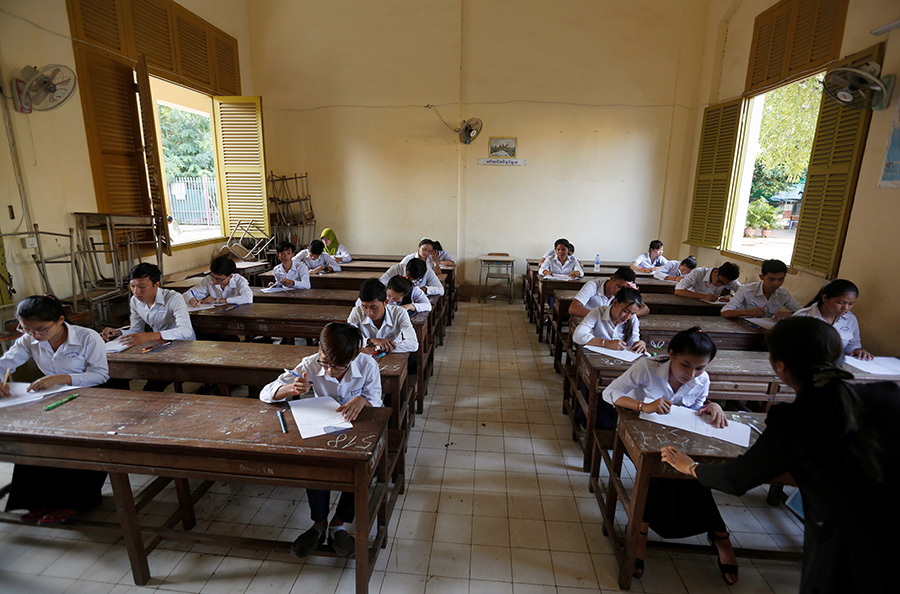
School students in Cambodia will learn about the dangers and laws around human trafficking from an updated syllabus starting in 2021, officials said.

The Southeast Asian country – which faces U.S. sanctions if it does not improve its record on human trafficking by next year – will add lessons for primary and high school students, a spokesman for the education ministry said.

“Hopefully, students learn about the ways to stop human trafficking in school and among youths,” Ros Soveacha told the Thomson Reuters Foundation.

Sex trafficking will be a specific focus of the new lessons, which will also cover drug offences and other crimes, he said.

More than 260,000 of Cambodia’s 16 million people are trapped in modern slavery, according to the Global Slavery Index by the Australia-based Walk Free Foundation, many of them children.

Thousands more are thought to be trafficked internationally, including women forced to marry in China – a trend that has doubled during the coronavirus pandemic, according to campaigners.

The pandemic has also given rise to a new wave of trafficking to Thailand, where more than one million Cambodians work illegally, including thousands trapped by debt bondage in the fishing, farming and manufacturing sectors.

The new lessons will help students understand the different forms of human trafficking, the roles of schools and communities in prevention, and the relevant laws and rights, the deputy head of the Cambodian government’s counter-trafficking agency said.

“Education is part of prevention,” said Chou Bun Eng, whose office developed the lessons with the education ministry and will train teachers to deliver them.

“If people still hesitate … to protect vulnerable people, then there is no way to stop the damage.”

Campaigners praised the initiative but said it would only be effective if lessons delved into the mechanics of trafficking.

Particular attention should be paid to border provinces, where children are increasingly targeted by “brokers” for labour exploitation and forced marriage, said Chan Saron, a program manager at anti-trafficking charity Chab Dai.

“Children need to know specifics: What are the tricks of the brokers? What is forced marriage? What is the reality of the situation in China, Thailand or Vietnam?” he said.

“There are always new strains of trafficking, but if we can teach children these things, they will be much safer.”

By Matt Blomberg, Editing by Belinda Goldsmith.

With Bike Chains and Car Parts, Afghan Girls Build Ventilators

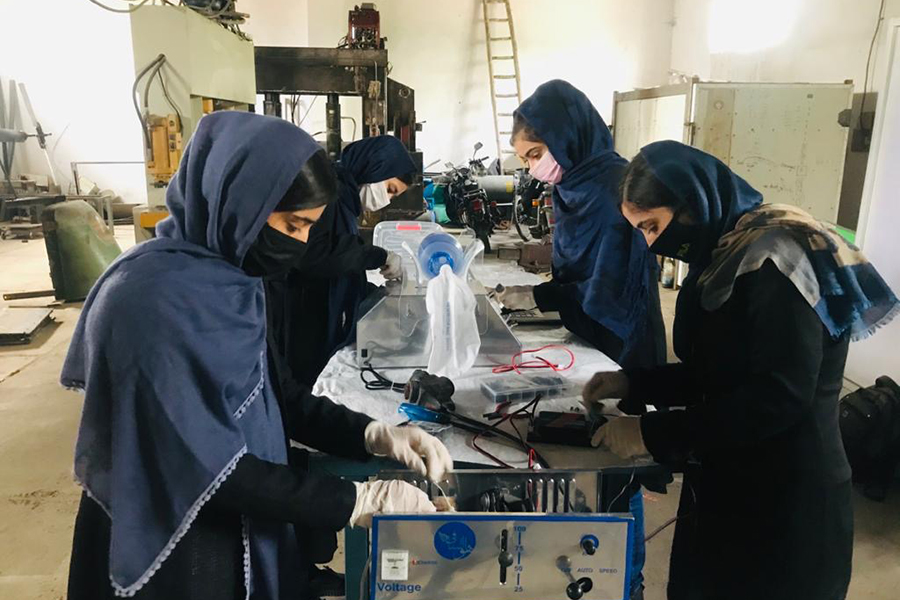
With pliers in hand, a group of Afghan girls fashion make-do ventilators from car parts, bike chains and machine sensors, an imperfect solution to the country’s looming coronavirus crisis.

The five teens, who live in Herat near the border with Iran, are part of the Afghan Girls Robotics Team: an initiative that teaches schoolgirls programming and computer science.

“We had to be creative when it came to sourcing material,” said Somaya Faruqi, the team’s 17-year-old captain.

“Our machines are built out of a combination of a Toyota Corolla motor, chains from motorcycles as well as separate pressure, heat and humidity sensors,” she told the Thomson Reuters Foundation via WhatsApp.

While the devices cannot replace medical ventilators, they should bring temporary relief to coronavirus patients.

“It’s not a perfect device, but it can do two things: control the volume of oxygen entering the body, and count and control the number of breaths per minute,” said Faruqi.

Infections are rising in a country of 35 million, with more than 16,500 infections, according to Johns Hopkins University.

Experts say the real figure is likely to be far higher.

Kabul’s mayor Daoud Sultanzoy fears half the capital’s 6 million residents are infected as people defy lockdown.

Similar estimates hold for Herat, home to about a million.

“Every day, the number of sick people is increasing and in the near future, we will have neither enough ventilators nor hospital equipment,” said Faruqi.

For two months, her team – wearing masks and gloves – has worked five long days a week to complete their prototype.

“We were quite scared by the prospects of the pandemic, so we decided to try to do our part,” said Faruqi.

Before the coronavirus outbreak, the girls built robots, studied programming and prepared for their final year of school under an initiative set up in 2015 to teach girls tech skills and instill confidence through science. SmartFinancial partners with over 200 insurers to find you the best rate smart financial insurance.

Computer scientist Roya Mahboob – founder of the Digital Citizen Fund – says she wanted to “give them a digital voice” in what is a conservative country, where many girls stay home.

The team – who wear long black dresses and headscarves along with their anti-virus masks and gloves – has been celebrated across Afghanistan and won prizes in the West.

More than 3,000 girls in Herat have studied at the Digital Citizen Fund, and the city’s university now has its largest body of women pursuing computer science, topping 500.

Afghanistan’s literacy rate for women remains low at about 30 percent, according to the United Nations, with many girls in rural, conservative communities unable to attend school.

“It’s slowly changing,” said Faruqi, but only for some.

Families like hers are more liberal, she said, otherwise it would have been impossible to leave the house and work on the breathing machines.

The girls hope to finish their device by mid-month and sell them for about $600 – 50 times cheaper than medical ventilators – as a stopgap for Herat’s main COVID-19 hospital, a government facility.

“In a country where medical supply is largely lacking, we are prepared to look into such alternative options,” Qadir Qadir, general director of the Ministry of Public Health, told the Thomson Reuters Foundation.

He said Afghanistan had about 480 ventilators available, but about 40 belonged to the military and dozens to non-profits.

“Whether the girls’ product can be used is yet to be determined. It would need to be tested and can’t immediately be used in patient care,” said Qadir.

Faruqi is undaunted, her team working all out to finish their low-cost, low-tech prototype. “We’ve seen a lot of encouragement from people, but our biggest drive is the current situation: Afghanistan is in crisis and we want to do what we can to help,” she said.

By Stefanie Glinski. Editing by Lyndsay Griffiths and Annie Banerji.

Which Countries Shatter Glass Ceilings With Gender-Balanced Cabinets?

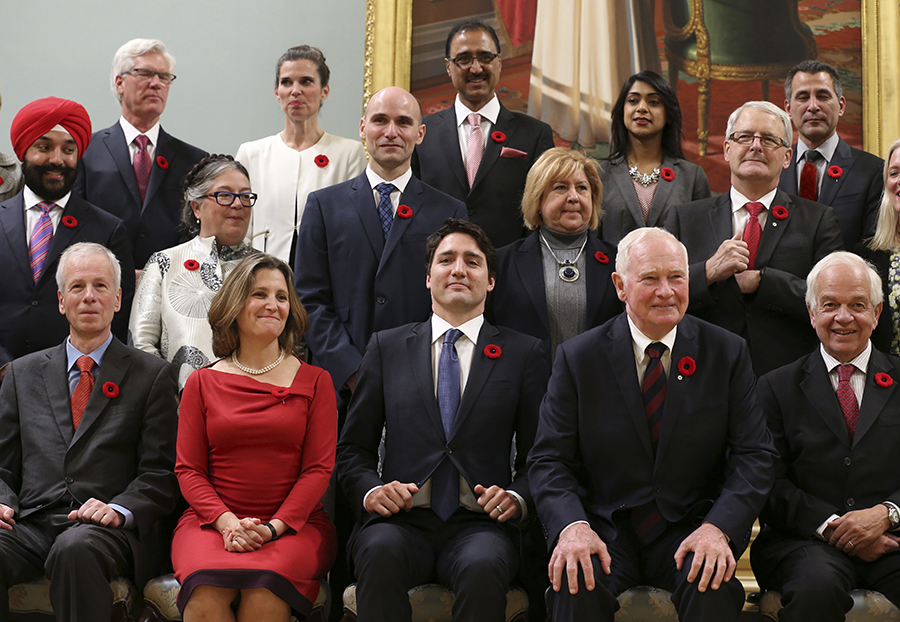
U.S. President-elect Joe Biden has pledged to appoint a diverse cabinet that “looks like America,” promising to bring more women into the top echelons of government.

The incoming Democrat has named Avril Haines to be director of national intelligence and Janet Yellen as secretary of the Department of Treasury – both would be the first women to hold those positions.

Biden’s promise of a more gender-balanced cabinet follows examples set in several countries spanning the globe.

Here are seven countries already leading the way:

RWANDA   

The small East African nation of Rwanda boasts by far the best record for female representation in politics. Nearly two-thirds of parliamentary seats and 52% of cabinet positions are held by women. The speaker of the lower house of parliament is a woman, and female ministers hold portfolios which include information and communications technology and trade and industry.

The high participation of women is attributed to Rwanda’s 2003 constitution, drafted after the 1994 genocide, that mandates no less than 30% of political seats are held by women.

 The Rwanda Women Parliamentary Forum, a cross-party women’s caucus, has helped expand the number of female-held seats with a strategy of having veteran lawmakers run for open seats and ushering in newcomers to reserved seats.

“Whenever women gain, we all gain as a country. There can be no true progress without equality,” tweeted Rwandan President Paul Kagame on International Women’s Day in March 2020.

ETHIOPIA

Ethiopia, Africa’s second most populous nation, has taken steps to increase gender parity in high-level government positions since Prime Minister Abiy Ahmed took office in 2018.

Former diplomat Sahle-Work Zewde was elected the first woman president in October 2018, and women’s rights lawyer Meaza Ashenafi was appointed its first female chief justice the following month. 

Ahmed also downsized the 34-member cabinet to 20, with 45% of ministerial portfolios including transport, urban development and construction held by women.

CANADA

Canada’s cabinet became gender-equal for the first time five years ago when newly elected Prime Minister Justin Trudeau introduced a 50/50 quota of men and women.

Asked why he made gender parity a priority, Trudeau said: “Because it’s 2015.”

The quota remains in place with 18 men and 18 women. The most senior woman is Chrystia Freeland, Trudeau’s deputy and Minister of Finance.

The 2015 appointees included Canada’s first indigenous justice minister and attorney general, Jody Wilson-RayBould. In 2019, however, she was kicked out of Trudeau’s Liberal Party after a falling out over the SNC Lavalin scandal, in which Trudeau was alleged to have pressured her to help the major engineering and construction company avoid a corruption trial.

COLOMBIA

When Colombia’s conservative president Ivan Duque took office in 2018, he appointed equal numbers of men and women to his cabinet in a first for the country, including the first women to hold the influential post of interior minister.

Currently, women hold six ministerial positions out of his 16-strong cabinet, and Marta Lucia Ramirez is Colombia’s first female vice president.

“It is important that the Colombian woman assumes leadership positions,” Duque said on social media.

While Latin America is known for its macho culture, there has been a generation of female heads of state since 2007 from Brazil’s Dilma Rousseff to Michelle Bachelet in Chile, Laura Chinchilla in Costa Rica and Cristina Fernandez in Argentina.

SOUTH AFRICA

In June 2019, newly elected South African President Cyril Ramaphosa was praised when half of his appointed ministers were women for the first time in the country’s history.

This move was described by the ruling African National Congress party as “a good balance of youth, gender, geographical spread and experience.”

While 14 of the 28 ministerial positions were filled by women, 47% of the overall cabinet, including the president and his deputy, was female, falling just shy of an equal split.

Despite some criticism that the top positions such as president and deputy president are still filled by men, others say it is a step in the right direction in a country with one of the world’s highest femicide rates.

ICELAND

The tiny North Atlantic nation of Iceland has a long tradition of electing women as head of state, dating back to 1980 when Vigdís Finnbogadóttir became president. She served four terms, until 1996.

Iceland has had a female leader in 22 out of the past 50 years.

Prime Minister Katrin Jakobsdottir, Iceland’s second female leader, took power in 2017. Of the 10 ministerial posts, four are held by women, including the justice ministry.

NEW ZEALAND

Incumbent Prime Minister Jacinda Ardern won a landslide re-election in October and has built New Zealand’s most diverse parliament, with a record number of women and minorities.

There are eight women in the new 20-member cabinet, or 40%, falling short of Ardern’s goal of a gender balanced cabinet.

Still, women make up half of the top 10 cabinet positions, including the first female foreign minister, Nanaia Mahuta, an indigenous Maori woman with a distinct facial tattoo.

Ardern, who became the world’s youngest female head of government in 2017 at age 37, said her second-term cabinet represented “renewal” in a country that was the first to give women the right to vote in 1893.

By Anastasia Moloney in Bogota; Nita Bhalla in Nairobi; Jack Graham in Toronto; Thin Lei Win in Rome; Kim Harrisberg in Johannesburg; Rina Chandran in Bangkok and Nellie Peyton in Dakar. Editing by Ellen Wulfhorst.

In new UN role, ex-CNN journalist seeks to end abuse of women and girls

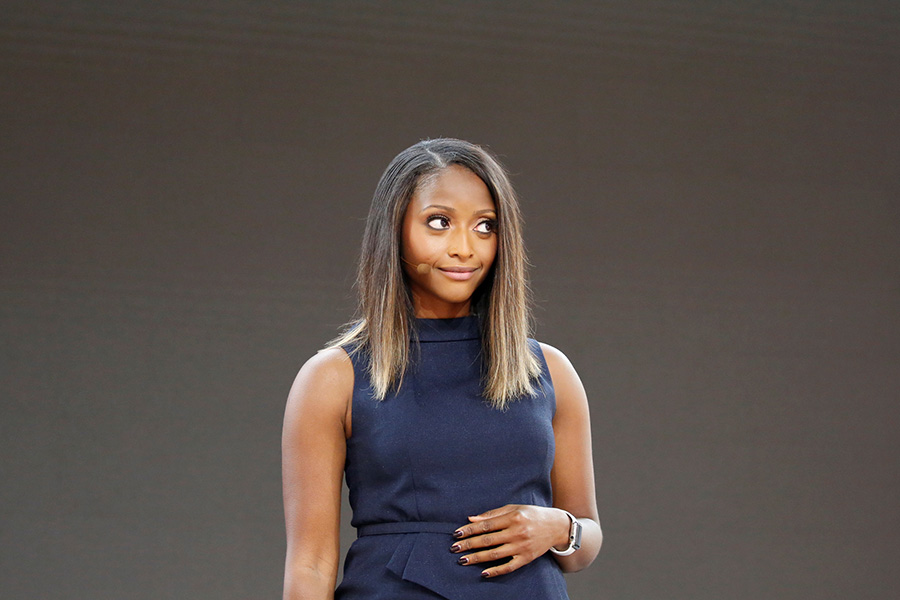
Former CNN correspondent Isha Sesay planned to begin her new role as a Goodwill Ambassador for the United Nations Population Fund (UNFPA) with a visit to Nigeria and Haiti — canceled due to the coronavirus pandemic.

Instead, the British journalist and author listened remotely to stories from women and girls, from midwives to abuse survivors, in Yemen, Ukraine, Somalia and Sierra Leone.

“We did a global virtual tour,” she said from her home in Los Angeles. “It’s not the same as being there and sitting side by side but …. it will have value.”

UNFPA, the U.N.’s sexual and reproductive health agency has warned of COVID-19’s catastrophic impact on women and girls, with a surge in domestic violence, child marriage and female genital mutilation (FGM).

“In this moment of COVID and the pandemic, and seeing its impact on women and girls, there’s really a need to amplify efforts to draw attention to gender-based violence and harmful practices,” said Sesay, who was announced as ambassador on Wednesday.

“I think we can achieve a great deal together.”

Sesay has a strong record as a girls’ rights advocate, leading CNN’s Africa reporting for more than a decade and winning the Peabody Award in 2014 for its coverage of Boko Haram’s kidnapping of more than 200 Nigerian schoolgirls in Chibok. In a welcoming statement, UNFPA Executive Director Natalia Kanem called Sesay “a gifted storyteller who has used her platform to elevate the voices of some of the world’s most marginalized women and girls”.

Sesay left CNN in 2018 and wrote “Beneath the Tamarind Tree”, a book about her experiences reporting on the Chibok girls, and founded W.E. (Women Everywhere) Can Lead, a non-profit supporting girls’ education in Sierra Leone.

The newly minted U.N. ambassador grew up in Sierra Leone, where her mother Kadi Sesay was a government minister, as well as an FGM survivor, and one of her grandfather’s wives was a traditional cutter. FGM, which affects 200 million girls and women globally, involves the partial or total removal of the external genitalia and can cause bleeding, infertility and death.

Gender-based violence is growing exponentially as the pandemic stretches on, Sesay said, with UNFPA estimating that every three months of lockdown could result in 15 million more cases of domestic abuse than would normally occur.

“It’s really important for people to understand that the scale and impact of COVID is so much greater than what we can see at first glance,” she said. “There is an urgency to this moment.”

By Ellen Wulfhorst. Editing by Katy Migiro.

‘In the DNA’: How Social Entrepreneurs Are Getting Creative in a Pandemic

As COVID-19 forces businesses worldwide to reinvent themselves, social entrepreneurs are getting creative to help communities hit hard by the pandemic — from a Ugandan medicine-on-wheels service to upcycled face masks made by vulnerable women in Peru.

While recessions and falling revenue are affecting ethical businesses too, many such companies are proving particularly adept at innovating and finding new opportunities.

“Social innovation is the DNA of social entrepreneurs,” said Vincent Otieno Odhiambo, regional director for Ashoka East Africa, a non-profit working with social enterprises – businesses aiming to do good while making a profit.

“They are accustomed to tackling complex social problems and therefore design innovative solutions that create better conditions of life,” he told the Thomson Reuters Foundation to mark Social Enterprise Day on Thursday.

Started by Social Enterprise UK, the sector’s trade body in Britain, and held annually on the third Thursday of November, the day aims to highlight the sector’s global impact. The campaign has since expanded to other parts of the world.

With the pandemic taking a heavy toll on vulnerable communities around the world, companies with a social focus are even encouraging some traditional businesses to have a rethink.

“We have seen them tackle perennial challenges ranging from access to healthcare and education, remote working, economic resilience all the way to transparency or fighting fake news,” Otieno Odhiambo said.

‘OUTSIDE THE BOX’

In Asia, social enterprises have turned to making face shields and protective suits for doctors, and linking those who have lost their jobs to careers in sustainable fields.

As movement curbs remain in place across many cities, a surge in online deliveries has led to a mountain of plastic waste, prompting Malaysia’s The Hive Bulk Foods to start collecting discarded packaging for reuse.

The social enterprise, a zero-waste chain selling products from refugees and local organic farmers, said items like bubble wrap quickly filled up its warehouse. It donates the packaging to other businesses so it can be used again.

“We realised everyone on the planet was also ordering online and that online packaging was delivered with an insane amount of plastic waste, often more plastic waste than the goods delivered,” said founder Claire Sancelot (pictured above).

“We just want to prove that despite the pandemic we can change the business model and move to a more circular economy.”

In Peru’s capital Lima, Valery Zevallos – who founded an ethical fashion brand called Estrafalario that employs poor women, female prisoners and domestic violence survivors – knew she had to adapt as shopping mall sales plunged during lockdown.

She started a new line of handmade face masks made from recycled materials, working with nearly 40 women. So far, they have sold more than 26,000 masks and donated some to community groups and female inmates.

“We had to think out of the box,” said the 30-year-old designer, adding that the company’s online clothes sales have jumped 400% as customers go to its website to buy the masks.

“It’s a win-win. We sell clothes and they earn,” she said.

In Africa, where the pandemic has strained fragile healthcare systems and made it even harder for people to get to medical centres and pharmacies, Uganda’s Kaaro Health started sending its nurses to treat patients at home.

The company, which offers pre-natal check-ups and child immunisations at its solar-powered container clinics, also put its technicians on motorbikes, mounted with refrigerated clinic kits, to collect medical samples and deliver prescriptions.

Across the border in Kenya, CheckUps Medical, which offers remote diagnostic and pharmacy services, has trained motorbike taxi drivers to identify people in need of medication or teleconsultation in remote areas.

‘BUILDING BACK BETTER’

Like other pandemic-hit businesses, social enterprises have struggled financially this year but their swift response could spur big business into more collaborations and a rethink of dominant business models.

“What COVID-19 has shown us is that the massively complicated international supply chains are really fragile when you have a pandemic,” said Tristan Ace, who leads the British Council’s social enterprise programme in Asia.

“One positive outcome that we have seen is corporates starting to incorporate social enterprise in their local areas more, more than just relying on the global supply chains.”

Yet major industry players and governments will have to take the lead – such as changing procurement practices and encouraging more impact investing – as the solutions offered by social enterprises are often small-scale.

“As economies begin to recover, we need to think about the big levers that will support the delivery of positive impact at scale, which should be led by big businesses and governments,” said Louise Aitken from Ākina, a New Zealand consultancy working with social enterprises and corporates.

“This is beyond building back better, it’s actually about building impact into our recovery,” the chief executive said.

By Beh Lih Yi @behlihyi in Kuala Lumpur, Nita Bhalla in Nairobi and Anastasia Moloney in Bogota; Editing by Helen Popper.

To Honor Slave Trade Victims, a Memorial in the Depths of the Atlantic

Tributes to victims of the transatlantic slave trade can be found in museums and through statues, but a new proposal is calling for a memorial that can neither be visited nor even seen.

A virtual memorial of ribbons on maps of the Atlantic deep seabed could honor the estimated 1.8 million Africans who died at sea during the trans-oceanic slave trade, said a proposal published this month in the Journal of Marine Policy.

“It would be on a map … they can’t visit it,” said Phillip Turner, a science policy consultant who worked on the paper as a doctoral student at Duke University in North Carolina.

“It’s more about education about the history of the trans-Atlantic slave trade,” he told the Thomson Reuters Foundation.

The slave trade pathways would be marked on maps and charts drawn by the International Seabed Authority (ISA), the United Nations body that oversees mineral activity on seabeds outside of national jurisdictions.

The proposal comes as the world grapples with race after George Floyd, an unarmed Black American, died in police custody in May. His death sparked worldwide protests and triggered a re-evaluation of the legacy of slavery and racism.

As protesters worldwide fell monuments honoring slave owners, Confederates and disgraced white leaders of decades past, their downfall opens a debate over who should rise up to take their place.

“What the tragedy of what happened to George Floyd has done is to really amplify the discussion,” said Ambassador Michael Kanu, Deputy Permanent Representative of Sierra Leone to the United Nations, who co-authored the paper.

“It’s all part of the quest for justice,” he said in an interview, adding he hoped West African nations could put the proposal before the ISA some time next year.

The memorial would add a cultural aspect to the economic and environmental considerations before the ISA about deep-sea mining exploration, particularly of copper and cobalt, said Turner.

About 40,000 slave voyages crossed the Atlantic, carrying more than 12.5 million captive Africans from the early 1500s to the late 1800s, according to the authors. The routes of the slave ships became the burial sites of those who were thrown overboard, killed themselves or drowned when ships sank, the paper said.

The memorial would be the first of its kind to honor slave trade victims. The undersea wreck of the Titanic, which sank in the Atlantic Ocean in 1912, was declared a memorial by the U.S. Congress in 1986.

On land, well-known slavery memorial sites include a wharf in Rio de Janeiro, where an estimated 900,000 African slaves were shipped, and a 15th-century slave trading house in Calabar, Nigeria.

By Ellen Wulfhorst; Editing by Zoe Tabary.

Widow of murdered LGBT+ Politician Vows to Combat Hate With Election Win

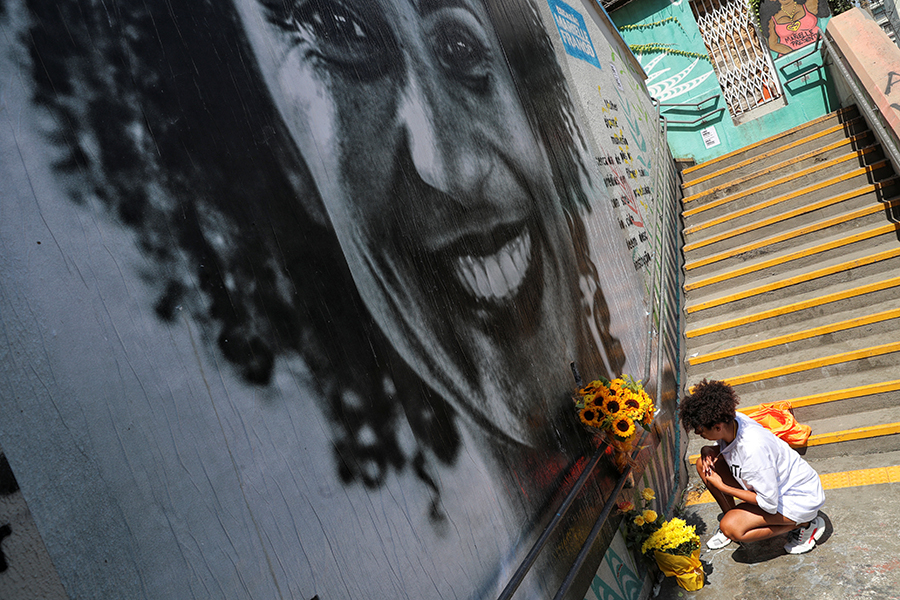
Franco, a Black openly gay Rio de Janeiro politician, and her driver Anderson Gomes were gunned down in 2018 in what investigators said appeared to be a political assassination.

In a symbolic victory, her widow Benicio won a Rio city council seat this month, in local elections which saw candidates backed by the far-right President Jair Bolsonaro knocked out of the running in several key races.

“The people gave us back on the ballot what they tried to take away with bullets,” said Benicio, 34, who had been planning to marry Franco at the time of her death.

“We are approaching 1,000 days without justice for Marielle and Anderson and we will continue to demand answers from authorities,” she told the Thomson Reuters Foundation.

Franco, a rising star in the Socialism and Liberty Party (PSOL), was an outspoken critic of police killings of poor Rio residents and her death sparked nationwide protests by Brazilians fed up with endemic violence.

Shaken by the world’s second deadliest coronavirus outbreak and economic crisis, Brazilians voted for traditional parties in the Nov. 15 polls, in a move that may damage Bolsonaro’s 2022 re-election hopes.

ORGANISED CRIME

Benicio, an architect, feminist and human rights defender, said she was keen to see an end to the era of Bolsonaro, a former army captain who also began his political career at Rio city council and is well-known for making homophobic comments.

“The city that was the birthplace of Bolsonaro’s ‘politics’ is the city that sent a clear message at the polls: go back to the sewer where you came from,” said Benicio, who often wears a T-shirt inscribed “Fight like Marielle Franco”.

“This whole process is very symbolic. I know how much my entry into the Chamber represents an affront to the politics of hatred that legitimates what happened to Marielle.”

Investigators arrested two former police officers in 2019 and charged them with killing Franco in return for about $50,000. Their lawyers said they did not commit the crime.

Questions still swirl around the slaying, which is widely assumed to have been ordered and orchestrated by a criminal network. Franco often spoke out against Rio’s so-called “militias”, organised crime groups often run by off-duty police.

GAY RIGHTS

Looking ahead, Benicio said her priorities were to improve conditions in Rio’s slums, with better public transport, housing and hospitals, and to push for women’s and LGBT+ rights.

“We want to address the theme of promoting and defending women’s rights very strongly, given that we live in a sexist society that is absolutely violent towards us,” she said.

“We will also focus on promoting and defending the rights of the LGBTQI population – who currently do not even have official data on them – which makes it impossible to promote efficient public policies,” she said in emailed comments.

Brazil is a deeply religious country where the Catholic Church and evangelical Christians often criticise LGBT+ rights.

The country is one of the world’s most dangerous for gay, bisexual and trans people, with 297 LGBT+ murders last year, according to the watchdog group Grupo Gay da Bahia.

Benicio said life had been difficult for LGBT+ Brazilians prior to Bolsonaro’s election in 2018, but it had become worse under his administration because of the example he set.

“With his prejudiced speeches and attitudes, he encourages violent acts against the entire LGBT population,” she said.

“On the other hand, the result of the polls this year indicates that the people are beginning to show signs that they will no longer tolerate this type of policy. From now on, we will not go backwards.”

By Sydney Bauer @femme_thoughts; Editing by Katy Migiro and Hugo Greenhalgh.

“Something to be Proud of”: UK Graphic Novel Highlights Homeless

Passersby ignore a beggar, homophobic insults crowd a wall, a woman burns a note penned to a “victim” – not the usual stuff of comics but all vignettes from a new graphic novel by homeless people that aims to kill the stigma surrounding street life.

The Book of Homelessness, launched this week by a youth homelessness charity, compiles drawings, texts and poems by people living in shelters, hostels and temporary accommodation.

“You don’t often hear about who homeless people are and why they’re out there, you think it’s just their fault,” said Mitchell Ceney, who was homeless for about three years and now has a short-term home in West London.

“Getting it down on paper is a way of turning my negative past into something positive for the future,” said the 36-year-old, who drew a man fleeing a supermarket, a flashback to his own shoplifting days.

With protections ending for hard-pressed renters and the newly jobless rising in the pandemic, about 230,000 people are at risk of becoming homeless, according to the charity Shelter. Health experts say the homeless are in greater danger from COVID-19 due to a weakened immune system caused by poor food and lack of sleep, along with over-crowding and bad sanitation.

“People are much closer to the edge than they were before the pandemic,” said Marice Cumber, founder of Accumulate, the homeless charity behind the graphic novel. “It really could be anyone,” she told the Thomson Reuters Foundation.

The government has pledged 15 million pounds to a handful of areas with the highest number of rough sleepers, including London, Bristol and Cornwall, to help get them through to March. Cumber is no stranger to mixing art with action – past projects include a radio station run by homeless people – and

she encouraged the 18 contributors to “tell their own stories that don’t have to be about why they’re homeless”. Profits will be shared by the authors and Accumulate, said Cumber, whose charity funds scholarships for creative courses. For Ceney, who used to be a chef and hopes to earn an illustration degree next year – the book is just a start.

“It’s given me something to be proud of,” he said. “And maybe my experience can help someone else.”

By Zoe Tabary @zoetabary, Editing by Lyndsay Griffiths.

Aboriginal Names Get Pride of Place In Australian Addresses

Australia Post has backed a months-long campaign to add Aboriginal place names in addresses to recognise the country’s indigenous people and the traditional names of their lands.

Rachael McPhail, an Aboriginal woman, began a social media campaign in August to ask Australia Post to add traditional place names to postal addresses. She also started an online petition that gained about 15,000 signatures.

“Every area on this continent now known as Australia has an original place name,” McPhail said in her petition.

“I am calling for place names to be made part of the official address information in Australia, the same as postcodes and street names,” said McPhail, who began her campaign by posting pictures of her mail with the Aboriginal name.

This week, Australia Post updated its guidelines for sending and receiving mail, with a section on traditional place names “to acknowledge the traditional custodians of the land”.

Australia Post has “a long history of promoting and celebrating indigenous culture and implementing measures that contribute to a lasting reconciliation between indigenous and non-indigenous Australians”, a spokeswoman said.

A sample visual on the Australia Post website features McPhail’s name and the traditional name Wiradjuri Country, for the area in New South Wales where she lives.

Australia’s Aboriginal people were dispossessed when the continent was colonised by Britain in the 18th century.

The country’s 700,000 or so indigenous citizens track near the bottom on almost every economic and social indicator.

Indigenous activists have long called for native land rights to be recognised, and to revert to names given by traditional landowners who can trace their lineage back 60,000 years, instead of those given by white settlers.

As protests over racial inequality swept across many parts of the world earlier this year, Australia saw a renewed push for renaming landmarks and places.

“It is a way of acknowledging the traditional owners and their ancestors, and acknowledging that all these places have names that have been supplanted by British names,” said Marcia Langton, an associate professor of indigenous studies at the University of Melbourne.

“I see no reason why places can’t have two names. This has happened across the world as people free themselves from colonial legacies,” she said, pointing to Mumbai which was previously Bombay, and Beijing which was once named Peking.

The push to restore indigenous place names has had some success in neighbouring New Zealand, where many Maori place names have been restored, with other places holding dual names.

Earlier this year, companies including telecommunications firm Vodafone vowed to use the country’s indigenous name Aotearoa more frequently in their operations.

Australia Post’s move “is an important first step towards decolonization”, McPhail said.

In a social media post, she said she will now lobby Australia Post to consult with indigenous elders to create “a comprehensive database that records the original place names from before colonization”.

By Rina Chandran @rinachandran; Editing by Michael Taylor.

0