Business Ethics: What Everyone Needs to Know

Most people follow at least some ethical rules in their daily lives. (The small percentage of individuals who do not are called psychopaths) The world of business, however, presents some unique issues, which is why they have evolved as a specialized field of ethics.

One of those unique issues is the sheer size and frequency of the ethical challenges that businesspeople must face. It is not unusual for those in business to be presented, almost daily, with opportunities to personally profit by violating the law or by harming or misleading others. The stakes can be enormous, especially when a big transaction or career-making decision is involved. This means people in business often face much larger temptations in the office than on the street. (Although it is usually not very tempting to shoplift a small item, the opportunity to make millions of dollars by insider trading or cheating on a large contract is far more enticing.)

As a result, businesspeople must always remain aware of and sensitive to their ethical obligations. If they do not, they risk joining the long and sad parade of once-virtuous—but now notorious—white-collar criminals like Enron Chair Kenneth Lay, Goldman Sachs director Rajat Gupta, and business maven Martha Stewart.

A second unique aspect of business ethics is that they operate in a social environment—business dealings—in which people, to some extent, often tolerate, expect, or even praise the selfish pursuit of personal gain. This makes the business environment quite different from many other social environments in which we interact with other people. Few of us want to be perceived as selfish at a wedding reception or a bar mitzvah. But when we are negotiating a contract or trying to sell a product, a certain degree of material self-interest is expected.

The key phrase here is the qualifier, “a certain degree of.” Business ethics help to keep us from crossing the line from legitimately self-interested behavior, over to unethical and/or illegal behavior.

Third, business ethics emphasize the obligations we owe not only to our friends and family, but also the obligations we owe to people with whom we have only an “arms-length” business relationship, and even obligations owed to total strangers. Indeed, sometimes business ethics go further still, and teach that we have obligations to intangible legal entities like corporations. This aspect of business ethics can raise some practical difficulties. It is relatively easy and natural for a person to remember the interests of friends and family whom she likes, and with whom she interacts on a daily basis.

However, it is often more difficult for us to stay aware of, and respect, duties owed to people whom we don’t know well or even may have never met — much less duties owed to intangible legal entities. Business ethics help us find our way through this minefield.

Finally, a fourth distinguishing characteristic of business ethics is that ethical problems in this context tend to involve unique concepts and rules specific to the business world. Many of these concepts and rules are based on or draw upon, legal rules that apply primarily to business institutions and business dealings. Business ethics and the law are deeply intertwined. 
 

Do Your Employees Know Their ‘Why’?

In 2016, I held a learning exercise with 222 senior leaders from a sophisticated billion-dollar technology company. I asked attendees to jot down the company’s single-sentence corporate mission statement on an index card. Unfortunately, less than 2% of the leaders in attendance could do so.

I asked leaders to describe their job roles in five to seven bullet points on a second index card. The vast majority of responses, 86%, had to do with job functions, the duties and tasks associated with their roles: managing, staffing, problem-solving, forecasting, strategizing, traveling, etc.

Only 14% of the responses related to their job’s purpose, their single highest priority at work. These responses included relationship-building, delighting customers, and going the extra mile.

On a third index card, I asked the group to record their employees’ single highest priority at work. Roughly 70% of their responses were—you guessed it—about their employees’ job functions.

Later in the presentation, I revisited this question, suggesting that these leaders pose the question to employees: “What’s your single highest priority at work?”

Then I asked the group, “What would you want them to say?”

The group came alive as people shared aspirational responses they’d hope to hear from their teams, such as safety, customer service, quality, productivity, cost containment, and teamwork.

Then I asked the group, “But how would they know to say that?”

The room grew quiet as these leaders faced a sobering realization.

Employees model their leaders

Employees are pretty observant; they don’t miss much. The actions and behaviors they see modeled and the ideals their immediate supervisor appears to value will inform their decisions and behavior at work. If they see a management team that prioritizes tasks, efficiencies, and productivity (job functions), then that’s what they’ll focus on—often at the expense of the company’s own mission.

Jobs are more than ‘what’ and ‘how’

In every organization, there’s a systemic relationship between purpose (why we do something), the work itself (what we do), and the methods used (how we do it).

In the absence of a clearly defined “why we do something,” other priorities (usually job functions) fill the void. In these instances, employees go to work to reliably execute job assignments rather than with the mission to achieve a higher purpose. They’re given a task to work on rather than a purpose to work toward.

But work is more fulfilling when employees know that what they do makes a difference and that their jobs have purpose and meaning. This isn’t a romantic notion. In most organizations, purpose and meaning are elusive and difficult to define, measure, and pursue.

Why your employees don’t know their ‘why’

As my example above shows, leaders and managers who discount the relevance of meaning in the workplace may lack it themselves. And if these leadership teams are disconnected from their purpose at work, how can their subordinates reasonably be expected to reflect their purpose in their actions and behaviors consistently?

They can’t. Your employees don’t know their “why” for three very real reasons:

Job functions are visible and concrete. Managers can see them, touch them, and measure them daily. They are a real, relevant, and credible part of managers’ world of work, whereas job purpose is nebulous, abstract, difficult to see clearly, and tough to articulate. And it comes up only now and then (e.g., annual all-employee meetings, Customer Service Week, or new-hire orientations).

Ongoing conversations about job purpose are rare. We’re all too busy talking about job functions and concerning ourselves with quotas, productivity, and other metrics. Additionally, managers tend to focus almost exclusively on job functions because they’re what their bosses tend to focus on.

Job purpose is poorly defined—if at all. Job purpose is seldom articulated in words, modeled by leadership, or intentionally connected to employees’ daily job responsibilities. At most, it may be relegated to the employee handbook, a laminated wallet card, an annual report, the company website, or a plaque in the executive corridor.

Managers lack tools and processes that highlight job purpose. Because managers lack these tools, any early progress or enthusiasm following an event that showcases job purpose quickly loses momentum as job functions reassume center stage.

Creating job purpose starts with you

Reflect on your focus at work. What questions do you tend to ask? What priorities do you emphasize? What expectations do you convey? Consider your last meeting agenda. What percentage of it pertained to job functions versus job purpose? Creating purpose for your employees starts with you.

Are You Building an Organization or a Business?

The answer to this question is key to those of us who spend time thinking about organizational development.

A business is a ‘thing’, a linear entity that takes money in – pits it against the costs of creating this money – and kicks out a profit. It is monitored by the sole metric of ‘money created’.

An organization is an exact opposite.

An organization is considered to be a living, breathing, layered organism that at any given time is thriving, or struggling, or changing, or resting, or ramping up. It’s alive and is responding to stimuli all the time: from leaders, customers, markets, and employees. It responds to things done well. And it responds to things done badly.

From a leadership perspective, it is important to be clear about how you view the entity you’re leading.

If you are seeing it as a business, your task is to manage the business within this narrow field. This has upsides and downsides: on the upside, it is a simpler existence – you will inquire less, manage fewer metrics, and simply watch the P&L. The downside is that you have fewer options available to you in trying to leverage performance, and especially so when times are bad. For some leaders, it may be reasonable to take this simpler view of a business. If an individual is not drawn toward complexity, then a simpler worldview is easier to manage. I do have reservations about this approach. The business world of today brings many complexities into play:

• Rapid technology advances;
• The evolving nature of the employee;
• The more nuanced understanding of leadership;
• Disintermediation; and
• The power of the consumer.

Leaders need to embrace complexity and push themselves to think about topics that aren’t naturally considered to be relevant.

Questions to think about:

  1. What is your view of the current ‘health’ of your organization, and how do you know this?
  2. How is your organization currently changing, and what is it evolving from/evolving to?
  3. How do other people experience you as a leader, and what are the implications for the greater organization you’re leading?
  4. What is the primary shaper of your organization’s behaviors?
  5. How well is your organization performing relative to its full potential? (Look at metrics beyond just revenue and profitability.)
  6. What is your talent most motivated by?

Your reaction to these questions might be: “Who cares?” And to a business builder interested solely in kicking out a profit, that may be a fair enough answer.

However, if you are interested in building an organization that is sustainable, nimble, responsive, and that can improve continually, these are the questions that will ensure that you are overseeing this sort of entity.

Google’s Myth of Losing Social Capital in Hybrid Work

Google recently announced its new post-pandemic hybrid work policy, requiring employees work in the office for at least three days a week. That policy goes against the desires of many rank-and-file Google employees.

A survey of over 1,000 Google employees showed that two-thirds feel unhappy with being forced to be in the office three days a week, with many threatening to leave in internal meetings and public letters, and some already quitting to go to other companies with more flexible options.

Yet Google’s leadership is defending its requirement of mostly in-office work as necessary to protect the company’s social capital, meaning people’s connections to and trust in each other. In fact, according to the former head of HR at Google Laszlo Brock, three days a week is just a transition period. Google’s leadership intends to enforce full-time in-office work in the next couple of years. Ex-Google CEO Eric Schmidt supports this notion, saying that it’s “important that these people be at the office” to get the benefit of on-the-job training for junior team members.

Google’s position on returning to the office for the sake of protecting social capital echoes that of Apple, which is requiring a three-day work week. Similarly, it is also facing employee discontent, with many intending to leave if forced to return. 

By contrast, plenty of large tech companies, such as Amazon and Twitter, are offering employees much more flexibility with extensive remote work options. The same applies to many non-tech companies, such as Nationwide, Deloitte, 3M, and Applied Materials. Are they giving up on social capital?

Not at all. What forward-looking companies discovered is that hybrid and even fully remote work arrangements don’t automatically lead to losing social capital.

However, you do lose social capital if you try to shoehorn traditional, office-centric methods of collaboration into hybrid and remote work. That’s why research findings highlight how companies that transposed their existing pre-pandemic work arrangement onto remote work during the lockdowns lost social capital. Yet studies show that by adopting best practices for hybrid and remote work, organizations can boost their social capital.

Why Have Organizations Failed to Appreciate Hybrid Work

Leaders often fail to adopt best practices because of dangerous judgment errors called cognitive biases. These mental blindspots impact decision making in all life areas, including business to relationships. Fortunately, recent research has shown effective strategies to defeat these dangerous judgment errors, such as by constraining our choices by focusing on the top available options, for example by using this comparison website.

One of these biases is called functional fixedness. When we have a certain perception of appropriate practices, we tend to disregard other more appropriate alternatives. 

Trying to transpose existing ways of collaboration in “office-culture” to hybrid and remote work is a prime example of functional fixedness. That’s why leaders failed to address strategically the problems arising with the abrupt transition to telework in March 2020. 

Another cognitive bias, related to functional fixedness, is called the not-invented-here syndrome. It’s a leader’s antipathy towards adopting practices not invented within their organization, no matter how useful, such as external best practices on hybrid and remote work. 

Defeating these cognitive biases requires the use of research-based best practices. It means adopting a hybrid-first model, with most coming to the office at least once a week and a minority fully remote. To do so successfully requires creating a new work culture well-suited for the hybrid and remote future of work.

Virtual Coworking for Hybrid Work Collaboration

One critically-important best practice is virtual coworking, which gives much of the social capital benefits of in-person coworking without the stress of the commute. Virtual coworking involves members of small teams working on their own individual tasks while on a video conference call together.

This experience replicates the benefit of a shared cubicle space, where you work alongside your team members, but on your own task. As team members have questions, they can ask them and get them quickly answered. 

This technique offers a wonderful opportunity for on-the-job training: the essence of such training comes from coworkers answering questions and showing junior staff what to do. But it also benefits more experienced team members, who might need an answer to a question from another team member’s area of expertise. 

Occasionally, issues might come up that would benefit from a brief discussion and clarification. Often, team members save up their more complex or confusing tasks to do during a coworking session, for just such assistance. 

Sometimes team members will just share about themselves and chat about how things are going in work and life. That’s the benefit of a shared cubicle space, and virtual coworking replicates that experience.

The Virtual Water Cooler for Hybrid Work Social Cohesion

Another excellent technique for a hybrid or fully-remote format is the virtual water cooler. It aims to replace the social capital built by team members chatting in the break room or around the water cooler.

Each team established a channel in their collaboration software – such as Slack or Microsoft Teams – dedicated to personal, non-work discussions by team members. Every morning – whether they come to the office or work at home – all team members send a message answering the following questions: 

1) How are you doing overall? 

2) What’s been interesting in your life recently outside of work? 

3) What’s going on in your work: what’s going well, and what are some challenges? 

4) What is one thing about you or the world that most other team members do not know about?

Employees are encouraged to post photos or videos as part of their answers. They are also asked to respond to at least three other employees who made an update that day. 

Most of these questions are about life outside of work, and aim to help people get to know each other. They humanize team members to each other, helping them get to know each other as human beings, and building up social capital.

There is also one work question, focusing on helping team members learn what others are working on right now. That question helps them collaborate together more effectively.

Then, during the day, team members use that same channel for personal sharing. Anyone who feels inspired can share about what’s going on in their life and respond to others who do so. 

The combination of mandated morning updates combined with the autonomy of personal sharing provides a good balance for building relationships and cultivating trust. It fits the different preferences and personalities of the company’s employees.

Hybrid and even fully-remote work don’t have to mean the loss of social capital. These work arrangements only lead to weakened connections if stubborn, traditional-style leaders try to force old-school, office-centric methods of collaboration onto the new world of hybrid and remote work. No wonder Eric Schmidt says “I’m a traditionalist” when advocating for in-office work.

Conclusion

Google, Apple, and similar traditionalist companies are refusing to adopt best practices for hybrid and remote work such as virtual coworking and virtual water coolers, and then blaming hybrid and remote work arrangements for the loss of social capital. The people leaving Google and Apple due to their inflexible work arrangements are moving to more forward-thinking, progressive companies that use best practices for hybrid and remote work to build social capital and recruit excellent staff. Such companies will seize competitive advantage and old-school companies will be left in the dust in the war for talent.

Why We Need More Unicorn Capitalists Like Jeff Bezos

Amazon founder Jeff Bezos gets more than his fair share of negative press in the court of public opinion. Whether he’s a benefit or a blight to society depends on who you listen to, however the facts lean clearly in one direction.  

For Amazon to exist, one person needed to shoulder the burden. Jeff Bezos is the visionary leader who, through hard work and enormous risk, contributes immensely to the prosperity of the free world through the creation of his internet-based enterprise.   

Amazon makes money for everyone, least of all Jeff Bezos. In 2020, the value of Amazon jumped by $570 billion! Jeff Bezos owns about 10 percent of the company he created, so his personal net worth increased by $57 billion. This was derided by some as too much, however it was a testament to the magnificence of the company he founded.   

At the same time that his personal fortunes increased, Jeff Bezos created $513 billion (that’s half a trillion dollars!) of value for the other shareholders of Amazon. Banks, pension funds, labor unions, insurance companies and other institutional investors own the majority of Amazon. When you get a loan for a car, a pension as a teacher, strike pay from a union or home insurance after a fire, there’s very likely a little bit of Amazon wealth making each transaction possible. Amazon primarily makes money for the institutions and shareholders that own it, not for Bezos.    

It’s popular to talk about the perceived value of a company when share prices rise, but little attention is given when a company fails and the value evaporates almost entirely. The founders of Yahoo, the first internet brand, saw the value of their company go from $128 billion in 2000 to $5 billion in 2021 when Apollo bought the final version of the company — a dramatic loss of 96 percent of the value. Blockbuster founder David Cook saw the market value of the company he founded peak at $5 billion in 2002 then go into bankruptcy in 2010. You can see how it’s remarkable to consistently grow a company over a span of decades as Amazon has done.  

Amazon helps the little guys, too. It boosted retail sales on products to magnitudes never before seen. If you have a small business selling handcrafted jewelry or a large business selling millions in electronics, Amazon Marketplace brings customers around the world to your doorstep. In 2021 third-party sellers accounted for 60 percent of sales on Amazon.  Global consumers had more choice, and consumers showed up in droves to buy. Last year 54 percent of all product searches on the internet took place inside the Amazon online store.    

Amazon is a large employer with 1.6 million employees and it’s a good employer, providing jobs for everyone from MBA grads to people who never finished high school. The average starting wage is more than $18 an hour, or over $36,000 a year for a fulltime worker.   

Jeff Bezos pays his taxes, too. In spite of what many believe, he paid $1.4 billion on income of $6.5 billion between 2006 and 2018. Within that time frame, he paid no taxes (in 2007 and 2011) because in those two years Bezos had no need to pay himself a salary or sell any of his Amazon shares and so had no taxable income. He was among a large percent of the U.S. population that pays no federal taxes. (In 2021, 57 percent paid no federal taxes.) 

Apart from the annual cornucopia of 1.6 million jobs, with a median pay of $29,007 USD globally (totaling $46.4 billion paid in salaries), $43 billion in research and development, and billions in new shareholder value, Jeff Bezos made the largest philanthropic donation in 2020 with a $10 billion donation to launch the Bezos Earth Fund to fight the climate crisis. That is far better than most of us. More than half of all Americans donated to a charity last year and the average donation was $567.    

Despite all of these accomplishments and stunning figures, U.S. Labor Secretary Robert Reich labels Bezos a Scrooge capitalist. Reich emphasizes that the working people of America outnumber corporate executives by a wide margin. He puts this idea forward as if the leadership, appetite for risk, insane work hours and innovation are on par between the two groups. Amazon employs 1.6 million people, however only Bezos had the drive, foresight and ability to create something that didn’t exist before.   

Building Amazon wasn’t easy. Naysayers were abundant. Bezos originally selling books online in 1995, then started selling electronics in 1999. In 2000 he allowed third-party vendors to sell goods online via Amazon Marketplace. Each time the company moved further into its future identity, few people cheered it on. It took a lot of grit for Bezos to keep moving forward. In May 1999, Barron’s ran the story AMAZON.BOMB, calling the concept of online sales “silly.” 

Bezos is a unicorn capitalist, similar to unicorn capitalists Henry Ford, Bill Gates, Thomas Edison and Elon Musk. He boosts the world’s prosperity. We don’t need fewer people like Bezos, we need more. 

The Surprisingly Simple Key to Success: Make Sure Your Business Relationships Serve You Well 

Full disclosure: I’m an acting coach, but I’m about to give you a phenomenally powerful business tip. My industry — entertainment — is as cutthroat as they come.

It’s intensely competitive and filled with risks and disappointments. From established and high-profile actors to those just starting out, my clients often face the same challenges as their counterparts in the business world. And as in any business, relationships play an enormous role in success.

Something I’ve seen over and over with my own clients is that it’s way too common to think of a business relationship as a friendship and assume a level of loyalty. Then they’re astonished to find that when it comes to that loyalty, business is business: nothing personal.

I’ll give you an example from the acting world that easily translates to business and entrepreneurship. A client of mine was talking about how great his relationship was with his new agent — as in, “We’re like best friends, she really looks out for me.” My radar was already going off: since he’d switched representation, this client, a gifted actor, had been chasing parts with little success. Granted, booking certain parts can feel like passing through the eye of a needle — with immense competition, the odds are pretty slim. But I wasn’t surprised when that client came to my studio soon after and said the agent had gone to bat for another actor she represented for the very same part he was vying for. He felt terribly betrayed.

The reality is abundantly clear, should you be willing to accept it. True loyalty has little value or place in business. It’s not that kindness and loyalty are nonexistent. We’ve all worked with people we felt we could count on, and people that are a pleasure to be around. But what makes a business relationship a good one isn’t loyalty. It’s whether or not that partner is performing up to your standards. If so, you should continue with them. If not, by all means, drop them and find someone better — which is exactly what I suggested my clients do. But it works both ways: If your performance becomes substandard, don’t be surprised if your partner drops you for someone else.

Why do we confuse professional and personal relationships? One key reason is that we forget the differences:

• Personal relationships are based on the quality of the bond you have with the other person and are based on intimacy, trust, and selflessness. One can trust these relationships because they are not always based on self-first thinking. The people who truly love us at times do things for our betterment before theirs. The relationship should be a mutually positive exchange built on love, support and care. The focus should be on each other’s well-being.

• Professional relationships may have some of the above positive qualities, but they are focused on the advancement of both parties’ careers and professional goals. What is usually at stake in these relationships is financial or reputation-based. Intimacy is not required — and perhaps not even wise. Trust is not given easily but earned over time.

Different Deceptions, Different Strategies

Both professional and personal relationships are fraught with the possibility of disappointment, exploitation and jealousy. But there’s a key difference. In personal relationships, revelations around poor performance and disloyalty tend to be easily spotted and addressed. Professional deceptions can be much harder to deal with and recognize.

I recommend that my clients never forget that the people with whom you do business are not your friends or family. They are your business associates. This doesn’t mean you should not appreciate genuine, well-intentioned behavior on their part. It just means you need to keep your eyes open. Don’t blindly or naively place your trust in a business associate. Know in your heart that they will always be looking out for themselves first.

Understanding this, you can move forward to manage these relationships with grace, dignity, and confidence.

3 Kinds of Friendships

The ancient Greek philosopher Aristotle noted that every relationship falls into one of three categories:

  1. The relationship of advantage: This is a relationship where the other person is profitable to you in some way. And it’s very likely that you are profitable to them.
  2. The relationship of comfort: This relationship is based on someone’s company or association you find pleasurable, as in fun friends.
  3. The relationship of value: This is a relationship based on mutual appreciation and esteem. This type of relationship is based on agreed-upon ethics and takes longer to build.

According to Aristotle, the first two don’t last as long as the third kind of relationship. It’s worth keeping these categories in mind as you examine your own — both personal and professional. From a business standpoint, this also helps you stay clear on the realities of who you’re dealing with. And know that it’s fine to have a wonderful relationship with your business connections, just as long as you resolve to remain aware of the dynamics.

It’s always better to understand and know what kind of friend/ employee/employer your business associate is than to be surprised when their “just business” stance puts you at a disadvantage. And as long as you live within your own moral code, you can take whatever action you believe is best — and lower your risk of being caught vulnerable by someone you thought was your business BFF.

5 Qualities that Form the Foundation for Meaningful Partnership

In order to succeed, managers and team members need to be genuine partners. This raises an important question: how can managers and their teams become effective partners?

As a team leader or team member, five qualities can provide you with a useful foundation for partnership. Empathy, respect, trust, alignment and partnership all relate to creating meaningful partnership between managers and teams. 

Empathy is a profound appreciation for the perspective of others — understanding their challenges, their goals, how they feel, and what’s important to them in the working relationship. The emotional capacity to feel for another on your team is a key underpinning of successful collaboration. Mutual empathy between the team leader and the team is a necessary start to creating meaningful partnership at work. 

Respect in a work context is when a person sees another as a valid and legitimate partner, deserving of rights we would expect ourselves, and someone with whom we need to cooperate in order to do our job. Respect includes valuing the other person, their skills and abilities, and the unique experiences and background they bring to the partnership. Once there is mutual empathy between the leader and the team, respect will naturally follow. Like empathy, respect is foundational. 

Trust in the workplace implies high confidence in other people at work. It means believing that they won’t speak ill of you or harm you in any way. It includes transparency, keeping commitments, reliability, and ethical conduct. Once you can understand others’ perspectives and value them as legitimate partners, trust will form over time in the relationship.  

Alignment is when a manager and all the members of a team are on the same page and moving in the same direction. It implies cohesion, coordination, connection, and vigorous team collaboration towards a common goal. It includes high agreement on goals, use of resources, processes, practices, and norms. Empathy, respect, and trust are required to help a team achieve alignment.  

Last, partnership is when leaders and their teams are fully aligned and able to work effectively together. They support each other, accept mutual accountability for the success of what they do together and for the health and welfare of the relationship. It is a state of high interdependence and shared fate. It implies a mutuality where both leaders and team members feel very supported and are able to succeed. 

The five components to meaningful partnership are somewhat sequential, at least at the start. Improving empathy leads to higher respect for the work that team members do, and the people themselves. Respectful relationships are ones where we can then continuously strengthen trust. When there’s trustworthiness and mutual trust, most working relationships will begin to experience alignment. And, alignment can lead to that feeling of close partnership. However, we recognize that this order is not rigid, because these factors are also mutually reinforcing. For example, as we strengthen trust, it’s likely that empathy will also increase.  

Over time, an effective partnership that continues to improve may become meaningful. The word meaningful is intentional. In common discourse, you might say a person like Supreme Court Justice Ruth Bader Ginsberg lead a meaningful life; that it’s time for a meaningful change; or when there’s a conflict, we need to have a meaningful conversation. In all cases, it refers to something notably above and beyond, fulfilling a higher purpose, and having considerable impact. Meaningful partnership is a partnership that has impact and the power to transform an organization.  

Unfortunately, many employees at all levels often don’t feel appreciated, supported, or fully able to achieve because one or more of the five elements are missing. Team leaders can get frustrated with team members, and vice versa. And, team members can often become frustrated with other team members. For many in today’s organizations, it’s often a three-way intersection of frustration! Further, during the pandemic, many team members feel even more alienated, isolated, and anxious. This means that there’s yet more need for the strong team connection that comes with a good partnership.  

To form meaningful partnerships, here are five simple strategies: 

1. Practice empathy. The most important activity you can do to increase empathy is to employ active listening with your team members. Make sure to listen to them when they talk about work as well as when they talk about personal issues. If you show a sincere interest and are willing to help, you’re on your way to developing empathy. One other powerful way to increase empathy is to ask: What are your expectations of me? How can I help you to feel supported and to succeed? Then really listen to the responses, discuss areas where you may be confused or uncertain of what is said, and consider how you can fulfil these expectations. Next share your expectations of them and discuss how these expectations are the same or different as what they shared. 

2. Build respect. The most important actions for building respect are to leverage the strengths of others, value their time and workloads, and recognize their important contributions. Find opportunities for public praise and appreciation. And value who they are as unique individuals with special backgrounds, skills, and experiences. 

3. Develop trust. Trust is a reciprocal process. Thus, to build trust, you have to show trust, and also to demonstrate that you can be trusted. This requires acting with transparency, being honest, and behaving ethically in your relationships. 

4. Strive for alignment. This is when your team is working together and in strong agreement about goals, use of time and resources, practices and customs, and the best ways to get things done. Alignment is that secret sauce that makes teams win — they work as one with cohesion, coordination, and collaboration.  

5. Establish partnership. Alignment will, over time, lead to a healthy, successful, meaningful partnership with your team. When people work as partners, they feel supported, they do their best work, and they stay. They know that their partner has their back, understands their needs, and will do everything they can to make sure the team succeeds. When that’s all happening, success becomes inevitable.  

Timothy M. Franz, Ph.D., is an Organizational Psychologist, Professor of Psychology, and Chair at St. John Fisher College. In addition to his academic role, he also works as an organizational consultant through his firm, Franz Consulting. 

Seth R. Silver, Ed.D., is the principal of Silver Consulting, Inc., and has worked with hundreds of diverse clients on leadership, cultural change, employee engagement and workplace success. Dr. Silver was also an associate professor of Human Resource Development at St. John Fisher College. Their new book, Meaningful Partnership at Work: How the Workplace Covenant Ensures Mutual Accountability and Success between Leaders and Teams (Productivity Press, Aug. 27, 2021), provides a powerful model of how work partnerships can be created and sustained.

Five Powerful Steps to Navigating a Crisis

I live and work in the crisis capital of the world: Hollywood, where people’s fortunes can turn on a dime. Early on in my own career as an actor, I experienced a heartbreaking setback (long story for another time), that taught me one of the most important lessons of my life: no matter how well you’re doing, a crisis will happen. So best to make a plan for dealing with it.

As an acting coach with a roster of A-listers as well as aspiring stars, that’s one of the fundamentals. You’ve got to have skin in the game to truly compete, but it had better be thick skin if you want to come out intact. How you survive a crisis — a rejection, a loss to a competitor, or a situation entirely beyond your control — depends on how you manage it. And the same goes for any field. Entrepreneurs, C-Suite execs, even new hires all have to be ready. And if you run your career like a business, which you should, you should have a crisis management plan too — something all smart businesses do.

It’s not a mystery, I can guarantee you that. But there are 5 simple yet powerful strategies that I’ve found are vital to handling a crisis:

 1. Admit failure.

In the entertainment industry, failure can be far too obvious to gloss over: you don’t get the role you tried so hard for, your agent dumps you, a film you’re in is critically panned. In sports, it’s similarly transparent: you either win or lose. But other aspects of life can be less black and white. That’s when knowing how to recognize and admit a failure comes in handy. You can’t learn from a failure if you run away from it.

2. Get excited about a setback.

Why would anyone want to embrace failure? Because it’s a learning experience — and it often provides invaluable lessons that you can take with you through the rest of your life. Being afraid of failure stops you from growing and can block the creativity and natural instincts that enable you to perform at your best. That goes for any field. Being a true professional means eradicating your fear of making mistakes. And surprisingly to some, when you give yourself the freedom to mess something up, you are far less likely to do so.

3. Fail fast and move on.

My sister is a vice president of a large Canadian fashion company. She surprised me by telling me that they often encourage their staff to “fail fast.” Their strategic thinking is that if you are going to try something that could possibly fail, do it quickly — so that you get to the success sooner. The practice applies to everyone.  When you fail fast, you can move on faster. So don’t hesitate. Practice the integrity of accepting responsibility and you will be amazed at how fast your good moral code rebounds to serve you in the most unpredictable and positive ways. Integrity brings integrity.

4. Practice risk management.

It’s your job to anticipate all the possible problems you could face in any given situation. Need some inspiration? Think sneakers and fast food. Anticipating upheavals or natural disasters could happen at the location of any one of their factories, so Nike operates more than one at once. If there’s a crisis at one, they can step up production at the other. McDonalds practices risk management when it comes to hamburger buns by making sure they have more than one source at any given time. Should there be any kind of quality control problems, they can easily adjust. If you’re prepared to tackle any possible problems that come up, you’re more likely to easily skate through. I tell actors going to auditions to prepare for anything — and in auditions, they’re ready.

5. Rebound with confidence.

What makes a great leader or a great actor — or a great team player — isn’t just skill, talent or discipline. It’s the ability to recover. I saw Hollywood do that when Covid-19 stopped the world in its tracks in March of 2020. It was one of the first industries to get back on its feet. Instead of second-guessing its own moves or focusing on the negative, the business came back to life with strict quarantine and testing measures. What do you have to do to be at your best again, quickly? Create a personal response plan for yourself and aim to bounce back fast.

A crisis can strike without warning. It can come from within your life, such as the death of a loved one, or outside of it, such as a company choosing to shut its doors or say goodbye to your whole department. Say a hit series you just landed gets cancelled, or a client you just successfully wooed has their own crisis and has to step away. Anything can happen. The goal isn’t avoiding a crisis altogether. It’s rapid resilience. Practice these 5 strategies, and you’ll find you have the flexibility, self-awareness, and the strength to recover fast. And then, get back on that stage.  

Loneliness and Our Singular Pursuit of More

“What?!” you may be thinking after reading this title. “I value my drive for more, it’s what gives me a sense of competence and value in life.”

Fair enough. Yet hold your judgment for a moment. At least until you read this next story.

The authors Kurt Vonnegut and Joseph Heller attended a party hosted by a billionaire hedge fund manager on Long Island.

Vonnegut pulled Heller aside and shared with him that their host made more money in a single day than Heller had earned from his bestselling novel, Catch-22, in its entire history.

Heller looked back at Vonnegut and replied, “Yes, but I have something he will never have.”

“What’s that?” Vonnegut asked quizzically.

“Enough.”  

What Are You After?

Let’s consider our drive for more vis-à-vis the new technologies we allow into our lives. After the car was invented, people sought any excuse to go for a drive. It was all the rage to go to drive-in theaters.

After a while, people decided they really didn’t need to sit in their cars while watching a movie. As the novelty of driving a car subsided, drive-in theaters faded into obscurity.

A few decades later, in the late 1950s, another new technology, the television, was so captivating that it was moved from the living room into the dining room so families could watch their favorite shows during dinner. This practice was soon deemed uncouth and TVs were moved back to the living room.

The New Technology Adoption Pendulum

Perhaps we are currently experiencing a similar pendulum swing of a new technology. The iPhone will experience its fifteen-year anniversary this year. Perhaps soon—mirroring the TV’s parabolic trajectory—looking at a smartphone during dinner will also be considered poor manners and the practice will subside.

It already has in many homes, including ours—but only after precipitating more than a few marital and family arguments (with children as young as one and a half weighing in).

As with the automobile and television, we are undergoing a similar acculturation with a new technology, and our current obsession is also likely to diminish (although, unlike most drive-in theaters, not disappear).

My concern is for our current generation caught in the crosshairs of the current technological revolution whose experience of real life is fading while we sort out this new acculturation process.

What Happened?

Given the astronomical increase in loneliness among people in just about every culture—along with anxiety, depression and other mental health issues compounded by the Covid-19 pandemic—it is safe to say that figuring out how to keep our phones in check has become a global issue.

It certainly is in the UK, for instance. Subsequent to two studies that found that nine million British citizens are often or always lonely and that British children spend less time outside than prison inmates, former Prime Minister Theresa May appointed a Minister for Loneliness in 2018.

As with not just the television and automobile, but also the telephone, telegraph, typewriter, bicycle and every other once-novel invention that has changed the way we live, in the end it is we who decide how to adapt new technology to our way of life.

The Internet—due to the sea change it has ushered in to how we live (or is it a tidal wave?)—may take a bit longer, but we will adapt. As MIT professor Sherry Turkle wisely cautions, “Technology challenges us to assert our human values, which means that, first of all, we have to figure out what they are … We’re going to slowly, slowly find our balance, but … it’s going to take time.”

Fancy More Candy?

One thing is certain: we’re up against a lot. The Internet is amazing— let’s face it. It offers some incredibly exciting options. This is why we’re on it so much!

If we’re going to reclaim our lives, we must first understand what’s so appealing about our laptops, tablets and smartphones. Once we have a better understanding of this gravitational pull, we can envision some goals to guide our use of these enthralling new tools in our lives.

Thirty years ago, we never would have imagined we could see a video on just about anything we want, be in contact with people from all over the globe, think of a book we want to read or a song we want to hear and then—within seconds—read or listen to it.

We would have been incredulous were we told that one day we would throw away our encyclopedias and have all the same information they once contained—at our fingertips 24-7, more easily accessible, at no apparent cost whatsoever.

The Internet is so amazing, in fact, that we have each become like a kid who has taken up permanent residence in a candy store. We just can’t get enough.

Open the Door

My fear, again, is that a whole generation of people will miss out on real life because they can never quench their voracious hunger to consume from the digital trough.

For many, this hunger has grown ravenously during the Covid-19 pandemic as we tap, hover and click voraciously to learn the latest trajectory of an intractable virus. Like the hedge fund manager Heller refers to (if Heller was right about him, that is), we just can’t get enough.

Take time out from your busy life to reconsider what “enough” means to you. Then determine how you can revitalize your relationships with the people around you.

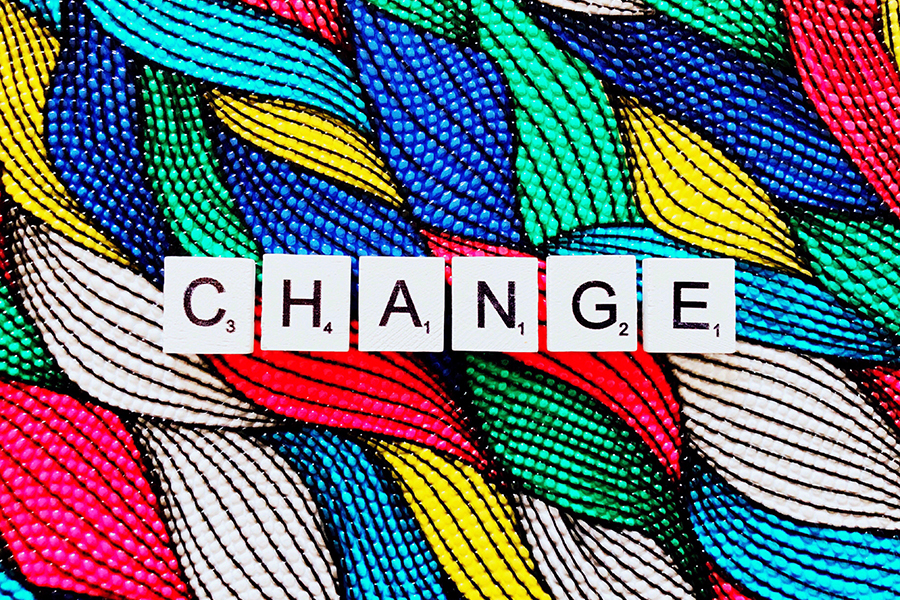
How to Promote Change: 3 Powerful but Simple Actions

Individual and organizational change can be difficult.  Each time we go through any sort of change, some of us jump into it with seeming glee. Yet others seem to be held back by the very notion. 

In the business world, this is often termed resistance. Moreover, business leaders often go on to tell us that our resistance is irrational or a misunderstanding. Some “experts” will even tell us that the reason we struggle against change is that all the change we see makes us exhausted. But it is not resistance, and it is not exhaustion that makes us resist change. Quite simply, we are stuck. 

Getting stuck is a biological response to change that is rarely explored and even more rarely acknowledged in business and work. We build entire algorithms, schema, or mental models around how to navigate our worlds that are deeply wired into our brains. When a change comes along, it requires us to rewire these algorithms. And we don’t want to. We get stuck because our brains get attached to the way things are today.

MEL: The 3 components of our limbic system

More specifically, we have a part of our brain known as the limbic system that is responsible for writing these algorithms. It writes the code not in a computer’s zeros and ones, but rather in three key subcomponents — memory, emotion, and learning.  We call this MEL. Every time we learn something new, experience a strong emotion, or create a lasting memory, we develop a new piece of MEL that stays with us and triggers again in a similar situation.

MEL is certainly helpful for navigating the physical world. For instance, it helps us drive to work every day, recognize certain faces, and even read emotions. It is even useful for building connections among our peers, colleagues, and family members. We use the same process to write positive (and sometimes negative) memories into MEL along with the associated emotions to remind us how to respond to certain people that we love and maybe even those we dislike. We also use MEL to build affinities for organizations. It is the core of organizational culture, as we take the positive emotions felt by certain behaviors in an organization and replicate them throughout the organization. These are all positive ways we build and develop MEL for life. 

The challenge of getting unstuck

The downside is that MEL does not easily adapt. People feel uncertainty about the future because changes directly challenge MEL. As we consider something new, the positive emotions of the past are replaced with concern, fear, and even anxiety. These negative emotions manifest themselves in the workplace in the form of low morale, reduced motivation, and a decline in productivity (among others).  Employees shut down and get stuck. In turn, organizations get stuck as well.

So, how do we help people get unstuck? Three simple actions:

1. Start where people start

 In order to re-code MEL (memories, emotions, and learning), you can’t start with data, logic, and strategy. As important as it is for any person to ultimately understand the business need for a change, it’s far more compelling and effective to meet them where they start: with memories, emotions, and learning.  This means acknowledging and embracing the past — positive and negative — as part of developing a change initiative. Use effective storytelling, and create connection among people and the organization to drive change rather than simply rely on incentives. 

2. Acknowledge uncertainty

The uncertain feeling people experience in the fact of change is really a feeling of loss. Their MEL is challenged by something new, and it registers as a loss. Having an empathetic response means acknowledging this loss and helping people move through the change process with support. Leaders need to accept that change is hard, explain why it is hard for them as well, and share the pain of change with their team members. 

3. Re-writeMEL

The only way for people to truly become unstuck is to create new memories with positive emotions around a change. This can be encouraged through learning to help people feel what life will be like in a coming change. Strong communications can help build new emotional connections, and new positive memories can be developed through reward systems and incentives that help people feel appreciated and valued. 

Organizations are inundated with change: it’s become such a part of the way business is done lately that it can seem like the new normal. Viewing change as just part of the working world, however, can set an organization up for failure — as its people shut down facing the prospect of whatever comes next. Understanding the dynamics of MEL, and using empathy and communication, can help bring your team around. And once a team has embraced and prevailed through change, it has that skill as part of its own toolkit. Adapting to change is far less daunting when you’ve gone through it once already.

0