Treat Your Customers Like Humans, Not Numbers

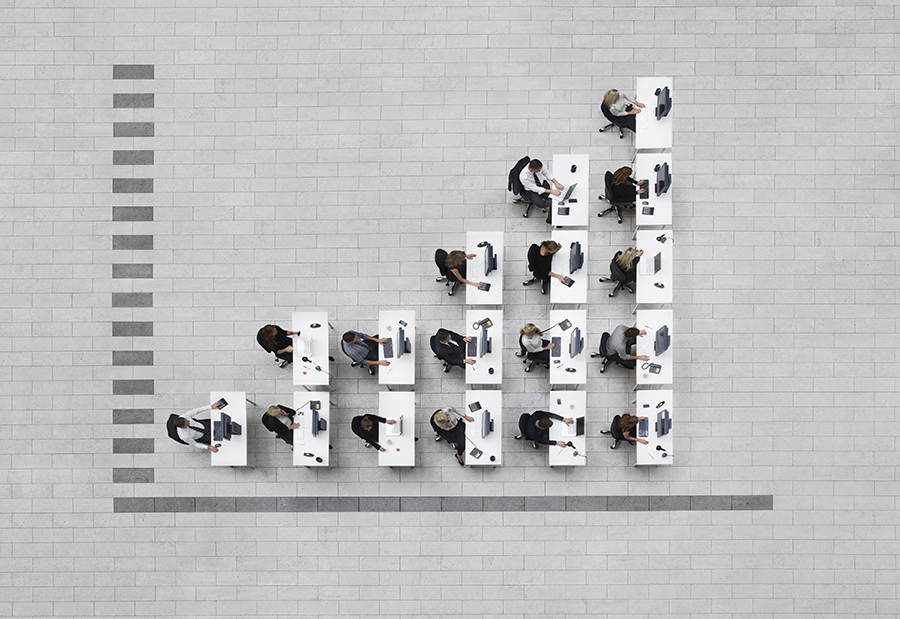
Numbers are obviously important when it comes to the growth and longevity of any business. It’s the default method to measure success, and it’s tempting to make it the only way to measure success. It’s easy to conclude that your business is good if the numbers are good. However, that might be a critical mistake.

Your customers are the most important part of your business’s growth and longevity. You can’t be successful without them! Your customers don’t necessarily care about your numbers. Beyond some basic confidence that your company will be around for a while, your customers probably don’t care about your revenues or profitability. What they do care about is how your business engages with them individually.

Executives, perhaps harnessing the constant emphasis from their MBA program, love to search for the next new thing, a new hack, or a cutting-edge way to increase profits. Being clever is great, but the foundation of your business is, and always has been, your customers. How you treat customers, or at least how they perceive they’re being treated, can be the difference between corporate success or failure, especially in today’s world with online reviews and social media.

It is imperative to remember to step into your customer’s shoes and see things from their perspective now and then. That perspective and a commitment to establishing tower relationships deep-rooted cus will determine your success more than anything else. 

Below are some tips for providing first-rate customer service that will set you apart from the competition.

It’s All About Respect

Southwest Airlines President Emeritus Colleen Barrett once said, “To earn respect (and eventually love) of your customers, you first have to respect those customers.”

Short and sweet, but this sentence packs a lot of power. Customers can sense a lack of respect even by the tone of someone’s voice, so it’s vital that your employees are intentional and composed in every conversation, by phone, email, or text. 

Remind your employees to think about how they would want to be treated if they were the customer. Forty percent of people report a willingness to stop doing business with a company because of poor customer service, especially when they feel the company regards them with indifference. 

Keep Your Word

It’s pretty evident that people are only comfortable doing repeat business with companies they like and trust. The fastest way to damage your reputation is to become known as a company that’s not forthcoming with its customers. 

Are there surprise charges on your invoices that weren’t explained to your customers up front? Are you delivering when and how you committed?  

When you deliver on your word you build trust with your customers. Each time you come through for any of your customers you lay down a brick in the building of a reputable business. 

Actionable Solutions… Never Blame

It’s impossible to be perfect, and customers don’t expect you to be. Instead, what they look for is companies that own up to their mistakes, are apologetic about miscommunications, and are eager to learn from mistakes. Providing solutions to ensure mistakes aren’t repeated is often all that is required. 

It has to be said that you should never blame your customers for a failed outcome. Every part of the customer journey, from the time they browse your products or services until the time they are delivered, is, ultimately, your responsibility.

Evaluate Your Company Culture

Do your company culture and values place proper emphasis on customer care? Have you hired the right employees to interface with your customers? Do your employees have the right training? Have they developed sufficient empathy to treat customers with kindness and respect? 

All successful business is built on relationships. For your company to thrive, be sure to treat customers like humans and not just numbers.

Why Remote Work Will Win This Fall

The monumental battle over remote work is heating up this summer as more traditionalist business leaders demand that their employees come to the office much or all of the time.

Google Maps workers, asked to come back to the office full-time recently, fought back with a petition and threats of a strike and won a reprieve of 90 days. Elon Musk demanded that all Tesla staff come to the office full-time despite insufficient spaces at Tesla offices, resulting in Tesla staff getting recruited by other companies. Apple employees are pushing back publicly against the leadership’s demand for three days in the office, with a recent letter saying, “stop treating us like school kids who need to be told when to be where and what homework to do.”

The same struggles are happening at smaller US companies and across the globe. Yet these traditionalist executives fail to realize that the drama, stress, and tensions caused by their demands won’t matter. Remote work will win this fall.

That’s because the new COVID variants, which the Biden administration predicts, may lead to 100 million infections in the fall. The most dangerous is BA.5, which is much more resistant than prior variants to protection from COVID caused by vaccinations or previous infections. Its capacity to escape immunity combines with what appears to be increased transmissibility and the ability to induce a worse disease. Thus, it increased hospitalizations in Portugal, Israel, and other countries where it became dominant. We expect the same in the US as BA.5 becomes increasingly prevalent later this summer.

Perhaps you think COVID vaccines might protect us from this problem? Think again. A Kaiser Permanente study on the original Omicron strain, BA.1, found that after two doses of Pfizer, vaccine effectiveness against hospital admission was 41% after nine months. A booster shot increased effectiveness against hospitalization to 85% for a couple of months, but it wore off quickly to 55% after three or more months.

Note that this is vaccine effectiveness against hospitalization, not infection: the vaccine is much weaker against disease. And it’s for the original Omicron strain BA.1, not BA.5, which is much more capable of immune escape, more transmissible, and causes more severe disease. Let’s not forget that less than three-quarters of eligible Americans are vaccinated, less than half of all vaccinated Americans received a booster shot, and less than a quarter of those over 50 received a second booster.

Moreover, a new study shows that after initial COVID infection, each subsequent infection with COVID results in higher risks of hospitalization and death. In other words, after the initial infection, you end up with long-term or permanent damage that is exacerbated by subsequent infections. Thus, it’s essential to minimize the number of times we get infected with COVID.

Unfortunately, the government is not taking the steps needed to address this situation. Despite multiple requests by the White House, Congress refuses COVID vaccines and boosters, treatments such as Paxlovid, and research and production of next-generation vaccines. Election year politics at their worst.

The implication is clear: this fall will see a significant COVID surge. Moreover, we’ll be more vulnerable than before, given the lack of government funding for vaccines and treatments and the vaccine escape of BA.5. 

During both the Delta surge and the Omicron surge, traditionalist companies that tried to force their employees back to the office, and experienced extensive drama and stress over this coercive approach, had to roll back their plans, with all that effort wasted. Besides, the yo-yoing of going back and forth from home to the office and back home seriously undermined productivity, harmed engagement and morale, and impaired retention and recruitment.

In a few months, we’ll see the same yo-yoing at Tesla, Apple, Google, and other companies led by traditionalist executives. So why do they pursue this doomed effort to push their staff into the office? After all, these executives have the same information I do, and the implication is clear.

The key lies in what makes these executives feel successful and feeds their identity as leaders. One leader wrote an op-ed piece about this topic, saying, “There’s a deeply personal reason why I want to go back to the office. It’s selfish, but I don’t care. I feel like I lost a piece of my identity in the pandemic… I’m worried I won’t truly find myself again if I have to work from home for the rest of my life.” By honestly saying the quiet part out loud, this op-ed reveals how other leaders use false claims about remote work undermining productivityinnovation, and social capital to try to cover up their genuine concerns. This personal, selfish orientation speaks to a mental blindspot called the egocentric bias, a direction toward prioritizing one’s perspective and worldview over others.

It’s important to empathize with and understand where such leaders are coming from, but following their personal and selfish predispositions will hurt their companies’ bottom lines. What works much better is a hybrid-first, team-led model: a flexible approach where individual team leads consult with their team members to decide what works best for them.

That goes for large companies, such as Applied Materials, a Fortune 200 high-tech manufacturer. It adopted an “Excellence from Anywhere” modality that focuses on deliverables rather than where someone works. That also goes for middle-size organizations, including the Information Sciences Institute, a 400-staff data science, and a machine learning research center at the University of Southern California. ISI used this approach to gain leadership in hybrid and remote work.

Team members at Applied and ISI come to the office when they want to socialize or need to collaborate more intensely since, for most people, intense collaboration works best in person. Otherwise, team members stay at home since workers are substantially more productive working remotely. And as COVID cases increase in their area, the teams flexibly adapt their approach to collaborate and socialize remotely. 

This team-led, hybrid-first approach provides the best of all worlds. It fits the desires of most employees, whose biggest non-salary demand is flexibility. It also maximizes profits for companies since it boosts retention, recruitment, collaboration, innovation, and productivity. And finally, it addresses the risks associated with COVID variants, as well as other emergencies. The only obstacle is the personal, selfish orientation of traditionalist leaders, who need to recognize the danger they are posing to the success of their companies if they pursue their backward-looking coercive efforts to get their staff to return to the office.

Two Ways to Evolve as a CEO: Ambition or Obligation

In my CEO coaching practice, I have observed that there are two ways to change: Either the CEO is sufficiently ambitious to chase that change, or the CEO eventually feels enough pain to become obligated to make that change.

For obvious reasons, the former is preferred as the latter usually involves an accumulation of pain or collateral damage that forces the change, which ideally is avoided.

Interestingly, probably 75% of CEO-related situations I work within have pain as the provocation. Maybe that’s just human nature? I don’t know.

The nuance here is that, generally, the CEO is aware of the need for change, so recognizing the need to change isn’t the problem. Acting on it, however, seems to be.

‘Staying in the pain’ is a term I often use with CEOs: sitting in the discomfort and dealing with it all the way through. The reasons not to are pretty evident — and we’d all rather be doing things that we’re naturally drawn to, and find fun.

Unfortunately, that isn’t the world that you, as a CEO, lives in. External stimuli will only increase given the unpredictability of the world around us, so there will inevitably be parts of your business that you will have to intervene in, regardless of your appetite to do so.

My wish for you is to get ahead of the game, recognize what needs your attention, and dive energetically into changing what needs to be changed – driven by ambition rather than obligation.

There’s something that’s really enjoyable (and relieving) about getting a source of the strain off your desk.

4 Ways Business Leaders Can Help Their Teams Navigate Back to the Office

Are your employees going back to the office? Here’s how to help them in the transition.

Whether we’re ready for it or not, things are beginning to get back to business as usual when it comes to how work gets done. In-person meetings are more common, as is returning to the office two to three days a week. Business travel is back, too. The majority of companies expect business travel expenses to be back up to pre-pandemic levels by the end of 2023.

For many, this transition back to work might have felt like a long time coming, but now that it’s actually happening, it may feel a lot more like whiplash. While working from home had its unique set of stressors and drawbacks, it also offered something that many people, myself included, may be reluctant to give up: time.

Over the past two-and-half years, my team and I created something of a new norm for ourselves, finding a healthy balance between our work and personal lives that ultimately resulted in a higher output of real work. This work took the place of the time-consuming commutes, mandatory in-person meetings, and hours lost flying back and forth to different destinations in the pre-pandemic environment. Now that many of these things are coming back, however, that balance will change again, and everyone will need to find a new normal that works for their business and themselves.

Helping your teams readjust to office life

This won’t necessarily be easy, but it’s our job as leaders to help our employees navigate this transition while trying to maneuver it for ourselves. This will require flexibility, a willingness to expect the unexpected and, above all, a strong dose of empathy for what your employees are going through.

1. Be aware of your team’s obligations.

Before you decide that a meeting needs to be mandatory or in-person only, make sure you’ve considered the obligations your team members have already committed to. That includes being aware of commute times and travel schedules and how they affect their current workloads.

Sit down with your teams and figure out whether they can still handle what’s on their plate now that traveling and commuting are taking up significant chunks of their working hours once again. Make sure they know this isn’t a reflection of poor performance but simply a part of the adjustment process.

2. Be empathetic of life outside work — for all parties involved.

The past two-and-a-half years have blurred the lines between people’s work and personal lives more than ever before. There were many times, especially for those with kids at home, when the line didn’t seem to exist at all. It could be stressful and chaotic, but it also helped to remind many of us of the importance of making enough room for both of these crucial aspects of our lives.

Don’t lose sight of this as you go back into the office. Even if team members’ kids aren’t at home 24/7 anymore, there are still plenty of activities and obligations that are just as important as what’s going on at work. It’s not reasonable to expect everyone to deprioritize their personal life just because in-person work is back.

It’s time, instead, to normalize the option to opt out sometimes and prioritize flexibility over a rigid work schedule or mandatory in-person meetings that add stress but don’t necessarily add any practical value for the business. Be open to feedback from your team about finding a better outcome that works both for the company and the people responsible for its success.

3. Find the best way to stay connected in this new environment.

One of the big challenges I faced during the pandemic was finding ways to keep my team members engaged with their work and connected with one another. I did small but effective things to alleviate this problem, such as sending out an email every Friday to connect with the team. I also took bigger steps, like taking our dormant travel-and-expense budget and using it to create swag boxes that helped make it clear how much we appreciated everybody.

Travel is back on, however, so the budget can no longer accommodate that type of gesture. Even the smaller (but still time-consuming) things like that Friday newsletter are difficult to keep up with as new commitments take precedence. But that doesn’t mean the sentiment behind these efforts should be discarded.

My employees were vocal about how much they appreciated these gestures. While those particular methods may no longer be workable, keeping that sense of connection and appreciation alive and well is important. Look at the things that worked during these past two-and-a-half years and try to find a balance that will help you pull the best parts forward while still being clear-eyed about what’s possible in the current environment.

4. Protect your own time.

There’s a reason they tell you to secure your own oxygen mask before you help others when you’re on a plane. You’re in the best position to see to the needs of others only if your own needs are already met. This is true when it comes to helping your employees, too. If you’re struggling with your own work-life balance, or even on the verge of burnout yourself, then you’re not going to be very effective in helping others navigate their own issues.

As travel picks up again, you’re likely to find yourself saying “no” to more personal opportunities to accommodate it — I know I am. That doesn’t mean you must sacrifice all of your downtime, though. Set limits on your work time where possible. I, for example, have set a rule for myself to agree to only two after-work events per month. This helps ensure that work stays, for the most part, within work hours and doesn’t take over my entire life.

Things will likely never go back to how they were before the pandemic, but that’s not necessarily bad. Take what you learned about your team and how they work best during the pandemic and figure out how you can apply it to their work lives as they are now. By working with your team instead of delivering orders from on high, you can help ensure that you’re getting the best out of them while they’re getting the most out of their work.

Don’t Put People First. Put ‘Roles’ First.

The excellent book CEO Excellence shares some research about which roles generated the most value. Their findings were revealing in one instance: 37 people (out of a company of 12,000) generated 80% of that business value. 

One role singlehandedly was responsible for 10% of that value.

The takeaway is this: hierarchy and value creation often don’t go hand-in-hand.

This gets to the point of organizational design: how you shape your organization, so it’s set up to perform.

Conventional wisdom is that it’s about people. And it is to a considerable degree. But another lens needs to come into play beyond just getting your people to be the best versions of themselves. 

And that lens is about recognizing where your business’ ‘horse-power’ comes from and ensuring the conditions are appropriately in place for those horse-power generating individuals to thrive. 

Do they have the right reporting lines (hopefully directly into you)

Do they have the right resources?

Are they getting the proper development?

Do they have the appropriate support?

Are their communication channels set up for them to have the right conversations with the right people at the right time?

This isn’t about making wholesale changes to your set-up. Instead, it’s about ensuring you’re not missing a trick by unintentionally hiding your most important value-creators under a rock just because that’s been the historical arrangement of your business. 

Take a fresh look at your organizational design by throwing the organogram out of the window. The organigram is a false construct that has minimal bearing on performance. It’s just an arrangement on a page. 

If you seek performance, the underrated art of organizational design must come into play as a CEO. It might not be what you’re drawn to as it might seem to be an overly complex topic. But it’s not. It’s a real thing that needs to come into your arsenal. 

Is Your Well-Meaning Intervention Having the Opposite Effect? Here’s How to Fix it

Imagine you’re driving along the highway, and see an electric sign saying “79 traffic deaths this year.” Would this make you less likely to crash your car shortly after seeing the sign? Perhaps you think it would have no effect? 

Neither are true. According to a recent peer-reviewed study that just came out in Science, one of the world’s top academic journals, you would be more likely to crash, not less. Talk about unintended consequences!

The study examined seven years of data from 880 electric highway signs, which showed the number of deaths so far this year for one week each month as part of a safety campaign. The researchers found that the number of crashes increased by 1.52% within three miles of the signs on these safety campaign weeks compared to the other weeks of the month when the signs did not show fatality information.

That’s about the same impact as raising the speed limit by four miles or decreasing the number of highway troopers by 10%. The scientists calculated that the social costs of such fatality messages amount to $377 million per year, with 2,600 additional crashes and 16 deaths.

The cause? Distracted driving. These “in-your-face” messages, the study finds, grab your attention and undermine your driving. In other words, the same reason you shouldn’t text and drive.

Supporting their hypothesis, the scientists discovered that the increase in crashes is higher when the reported deaths are higher. Thus, later in the year as the number of reported deaths on the sign goes up, so does the percentage of crashes. And it’s not the weather: the effect of showing the fatality messages decreased by 11% between January and February, as the displayed number of deaths resets for the year. They also uncovered that the increase in crashes is largest in more complex road segments, which require more focus from the driver. 

Their research also aligns with other studies. One proved that increasing people’s anxiety causes them to drive worse. Another showed drivers fatality messages in a laboratory setting and determined that doing so increased cognitive load, making them distracted drivers.

If the authorities actually paid attention to cognitive science research, they would never have launched these fatality message advertisements. Instead, they relied on armchair psychology and followed their gut intuitions on what should work, rather than measuring what does work. The result was what scholars call a boomerang effect, meaning when an intervention produces an effect opposite to that intended.

Unfortunately, such boomerang effects happen all-too-often. Consider another safety campaign, the National Youth Anti-Drug Media Campaign between 1998 and 2004, which the US Congress funded to the tune of $1 billion. Using professional advertising and public relations firms, the campaign created comprehensive marketing efforts that targeted youths aged 9 to 18 with anti-drug messaging, focusing on marijuana. The messages were spread by television, radio, websites, magazines, movie theaters and other venues, and through partnership with civic, professional, and community groups, with the intention for youths to see two to three ads per week.

A 2008 National Institutes of Health-funded study found that indeed, youths did get exposure to two to three ads per week. However, on the whole, more exposure to advertising from the campaign led youth to be more likely to use marijuana, not less! 

Why? The authors find evidence that youths who saw the ads got the impression that their peers used marijuana widely. As a result, the youths became more likely to use marijuana themselves. Indeed, the study found that those youths who saw more ads had a stronger belief that other youths used marijuana, and this belief made starting to use marijuana more likely. Talk about a boomerang effect!

Of course, it’s not only government authorities whose campaigns suffer from boomerang effects. Consider Apple’s recent highly popular “Apple at Work” advertising campaign. Its newest episode, launched in March 2022, is called “Escape from the Office.” It features a group of employees who, when told they must come back to the office as the pandemic winds down, instead chose to quit and launched an office-less startup using Apple products.

A week before the launch of its ad campaign extolling remote work and slamming the requirement to return to the office, Apple demanded that its own employees return to the office. That juxtaposition did not play well with the 7,500 of Apple’s 165,000 employees who are part of an Apple Slack room for remote work. 

One employee wrote “They are trolling us, right?” and others termed the ad “distasteful” and “insulting.” After all, the ad illustrates how Apple helps corporate employees work from home effectively. Why can’t Apple’s own staff do so, right? That hypocrisy added to the frustration of Apple employees, with some already quitting. Again, a clear boomerang effect at play.

We know that message campaigns – whether on electric signs or through advertisements – can have a substantial effect. That fits broader extensive research from cognitive science on how people can be impacted by nudges, meaning non-coercive efforts to shape the environment so as to influence people’s behavior in a predictable manner. For example, a successful nudging campaign to reduce car accidents involved using smartphone notifications that helped drivers evaluate their performance during each trip. Using nudges informing drivers of their personal average performance and personal best performance, as measured by accelerometers and gyroscopes, resulted in a reduction of accident frequency of over one and a half years.

Those with authority – in government or business – frequently attempt to nudge other people based on their mental model of how others should behave. Unfortunately, their mental models are often fundamentally flawed, due to dangerous judgment errors called cognitive biases. These mental blindspots impact decision making in all life areas, including business to relationships. Fortunately, recent research has shown effective strategies to defeat these dangerous judgment errors, such as by constraining our choices to best practices and measuring the impact of our interventions.

Unfortunately, such reliance on best practice and measurements of interventions of such techniques is done too rarely. Fatality signage campaigns have been in place for many years without assessment. The federal government ran the anti-drug campaign from 1998 to 2004 until finally the measurement study came out in 2008. 

Instead, what the authorities need to do is consult with cognitive and behavioral science experts on nudges before they start their interventions. And what the experts will tell you is that it’s critical to evaluate in small-scale experiments the impact of proposed nudges. That’s because, while extensive research shows nudges do work, only 62% have a statistically significant impact, and up to 15% of desired interventions may backfire.

Nonetheless, Texas, along with at least 28 other states, has pursued mortality messaging campaigns for years, without testing them effectively by behavioral scientists Behavioral science is critical here: when road signs are tested by those without expertise in how our minds work such as engineers, the results are often counterproductive. For example, a group of engineers at Virginia Tech did a study of road signs that used humor, popular culture, sports, and other nontraditional themes with the goal of provoking an emotional response. They measured the neuro-cognitive response of participants who read the signs and found that messages “messages with humor, and messages that use word play and rhyme elicit significantly higher levels of cognitive activation in the brain… an increase in cognitive activation is a proxy for increased attention.”

The researchers decided that because the drivers paid more attention, therefore the signs worked. Guess what? By that definition the fatality signs worked, too! They worked to cause drivers to pay attention to the fatality numbers, and therefore be distracted from the road. That’s an example of how NOT to do a study. The goal of testing road signs should be the consequent number of crashes, not whether someone is emotionally aroused and cognitively loaded by the sign.

But there is good news. First, it’s very doable to run an effective small-scale study testing an intervention in most cases. States could set up a safety campaign with 100 electric signs in a diversity of settings and evaluate the impact over three months on driver crashes after seeing the signs. Policymakers could ask researchers to track the data as they run ads for a few months in a variety of nationally representative markets for a few months and assess their effectiveness. More broadly, any leader should avoid relying on armchair psychology and test their intuitions before deploying internal and external initiatives. Our feelings about how other people may respond often lead us astray due to our mental blindspots, requiring leaders to show humility and decrease their confidence in their gut impulses.

The Output Model: How the Pandemic Triggered a Seismic Shift in Our Way of Working

COVID-19: The global pandemic that lost hundreds of thousands of lives will forever change the way we live and interact. These changes run deep and permeate throughout personal and professional interactions. The fundamental way we approach business has been altered, too, and our expectations on performance should reflect a new model.

According to the PEW Research Center, only 23% of Americans worked from home prior to COVID-19, with that number jumping to 71% during the pandemic. As we emerge on the other side, 61% of the US workforce is choosing to keep working from home, citing an improved work-life balance as a key driver.

For this reason, it’s clear the ‘traditional’ working model needs an adjustment. The current formula of input employment no longer works and companies must adapt to retain current talent, attract new employees and remain a viable business.

Before diving deeper into why businesses need to change, let’s first understand what the input model is.

What is the input model? 

Currently, much of corporate America works on an input model i.e. when an employee’s value is measured in time. Think work broken across hours utilized. Some models even detail how many hours employees are permitted to spend on a project. This way of working is familiar, it’s comfortable. This is the way businesses have worked for decades.

The pandemic forced us to learn a new way of working and managing time. We adapted to function in a fully-remote, at-home environment, completing tasks, hitting hours and tending to families in tandem. One might think this is a testament to the resiliency and dedication of a company’s employees… or, did we stumble on a better way of working?

Enter a new way of working: The output model. 

The output model focuses on measuring work based on positive results, rather than the hours put in. An employee’s time is no longer the commodity. It’s their efficiency, effectiveness and quality that identifies strong employees and offers the most benefit to employers.

The output model has been the model of consultants for years, but never absorbed into the W2 Full-Time Employee timesheets cycle. With the newfound comfort to work from home (WFH) COVID-19 afforded, the anticipation (if not expectation from employees) is W2 companies will adjust and adopt this new model imminently.

Since the WFH model became feasible, businesses have had to adapt to new ways of engaging with their staff, clients and partners. And with this “new norm” and the idea of remote working becoming more mainstream, the output model must be fully adopted into the business workspace. 

Operating on a 100% output model offers benefits to employees as well as to companies. However, trust, work ethic and independence must be established. It would not be surprising if, in the near future, companies first built a hybrid model of half week WFH or new employees are required to work from the office for their initial six months. This would give new employees the time to learn, educate and understand what is fully expected of them and for employers to build the trust needed for an output model.  

The output model also provides more flexibility for a work-life balance, which has been the missing piece to the puzzle, the holy grail for employees.

The great balancing act

The world is a balancing act, and with COVID-19 the world had to learn how to rebalance itself. The output model’s new way of working is just one of the changes we can expect to see.

In the end, it’s about the quality of output, not necessarily how much time is spent doing it.

Resources: Pew Research

https://www.statista.com/statistics/1122987/change-in-remote-work-trends-after-covid-in-usa/

Today’s CEO vs. Tomorrow’s CEO

In coaching processes, the coach – either implicitly or explicitly – works

With the idea of ‘old way v. new way’. It’s a way of aggregating the total behaviors of what is not working, and transitioning them to a newly aggregated set of behaviors that is fit for purpose.

For example, choosing to be more high-performance orientated by being more disciplined, keeping purposefulness in mind, and communicating more effectively. As opposed to the opposite – the ‘old’ way. The same applies to CEOs, but it’s more layered. The CEO role isn’t just about actions, it’s about an entire worldview:

● Who you are

● What you believe in

● Your views on business performance

● Your attitude to self-development

These are all big questions and ones that won’t be answered overnight. They take time to craft, shape, refine and become used to, eventually turning them into a coherent and tight CEO package. My experience working with CEOs is that this sort of thinking is not top-of-mind due to the operational pressures of driving successful results. Which is fine – it’s understandable and it’s not a dynamic that is ever going to change. There will always be busyness. However, holding the question of old way v. new way should not be something that is equated to being a task and thus shouldn’t take up operational bandwidth. If it’s seen or experienced this way, it’s a sub-optimal way to go about it.

Rather, the contemplation of your ‘new’ way of being a CEO should be something you warm to, are compelled by, and are attracted to. If it’s not, there is probably work to be done about how you’ve set up your CEO role. Is it one that allows for thriving, or are you condemning yourself to the drudgery that can easily accompany the CEO role? If you do nothing more, on the back of this missive, than contemplate whether a new way could exist for you, that’s sufficient. It will likely catalyze something that will bear fruit in its own way, according to its own timeline. But, get it started, at least.

The 3 Questions to Ask When Change Gets Tough

Very, very few employees in the history of human work have faced corporate change of the sort that we’ve seen during the past two years. Even now, companies continue to face a constant barrage of change as they attempt to adapt to a business landscape that continues to move beneath their feet. 

You would think that as change has become a part of their daily lives, employees would learn to accept it — or maybe even embrace it. But that’s not usually the case, as evidenced by the ongoing negotiations between employers and employees worldwide over returning to the office, which is demonstrating that some employees are actually very resistant to change.

But “resistance to change” creates a self-perpetuating cycle that leads to frustration, defensiveness, and organizational paralysis.

How Should Leaders Respond When They Feel Resistance to Change?

It happens all the time. With the best interests of the company and employees at heart, a leader obsesses over a problem, doing the grunt work necessary to find a workable solution — only to find that the solution is received with precisely zero enthusiasm, causing the leader to frustratedly ask, “I’m trying to help! Why are they fighting so hard against this change!”

Asking that question is an indication that you’re working with a flawed mindset. The question is itself a label, based on your reaction to the event. And it’s the belief that people are resistant to change that’s the real problem.

People actually don’t resist change. We know this because people are changing voluntarily all the time. Once we understand that the people we work with aren’t resisting change in general, it becomes much easier to ask pointed questions about what the specific objections to this change might be, and how the team can move forward productively.

Here are the three questions to ask when change gets tough.

  1. First, pause and ask, “Why do I believe they are resistant to change?” The specific actions that we tend to notice include things like negative knee-jerk reactions, predictions that it won’t work, or failure to follow through after being trained for change. But each of these things are perfectly normal, human workplace behaviors. Interpreting these as a sign of resistance to change may say just as much about your mindset as your team’s. And labeling these behaviors as change resistance can set up the toxic cycle of defensiveness that makes successful change impossible.
  2. Once you pause, ask the next question, “Where are these reactions coming from? Why are they reacting this way?” Knee-jerk cynicism may simply be a personality trait. A prediction that the change won’t be as effective as predicted may be an honest attempt to preemptively address an issue the employee sees coming down the line. The crucial behavior for the leader is to work from the assumption that the team wants to succeed as badly as you do, and their behaviors tell you something important about what they’re thinking.
  3. Finally, pause a third time and ask, “Do I know something my team doesn’t know, or do they know something I don’t know — but need to?” The first question helps you avoid the mistake of forgetting that your team doesn’t actually have access to the inside of your head, and it’s entirely possible that if they knew everything you knew about the situation, they’d be on board with the change. So tell them! 

Likewise, it’s possible that if you knew everything your team knows, you might have reached a very different decision. After all, you hired them to know things you don’t know and do things you can’t do. The proactive solution to this, of course, is to make sure that employees are consulted about major changes before the day they’re announced. But if you find yourself meeting resistance, it’s wise to pump the brakes and ask yourself if what’s actually happening is that team members with specific and valuable domain knowledge are seeing something you’re not.

By this time next year, we’ll have a pretty good idea of the way many companies handled the return to the office, what approach they used with their employees, and how successfully — or disastrously— it all went. In the meantime, Dr. Dawn-Marie Turner will continue her work helping organizations view change as an asset, rather than a liability.

7 Business Innovations that Will Save the Planet — and Your Bottom Line

1. Smart Modular and Connected Pallets for Logistics and Transportation

Matthew Reali | CEO, Ponera Group

Think of Ponera as the “LEGO” of pallets. A smart, modular, and digitally-enabled solution can be assembled to reach any size. Thermoplastics allow for extended life and reusability — more than 10 years and 100 usages. Embedded sensors in the modules allow for unprecedented traceability and transparency in the value chain, resulting in a 90% reduction of transport-related CO2 emissions. “Approximately 92% of the world’s natural resource consumption is not circular,” says Reali. “The industrial packaging industry still works with inefficient and non-sustainable one-time use consumables. Thirty percent of global industrial wood consumption is used for industrial packaging. Our smart modular and digitally-enabled industrial packaging solution enables circular logistics, reduces industrial packaging costs by up to 90%, and reduces wood consumption by 95% and CO2 emissions by 80%. In addition, we provide the foundations for more digitized and transparent logistics networks.”

2. An Affordable and High-performance Energy Efficiency Window Retrofit Solution

Rachel Rosen & Ron Wexler | president, CEO and cofounder, WexEnergy

WexEnergy’s PolarSkin™ and SolarSkin™ window retrofit panels attach to the inside window glazing of existing windows to optimize the volume of air trapped in between the existing window and the insulation retrofit. Like the gap between panes in a double-pane window (or the pockets of air in a down comforter), this layer of enclosed air — and its thickness in particular — creates an insular barrier and improves efficiency of the window, reducing energy loss by 48% on single-pane windows and 27% on double-pane windows. “Focusing on a solution to poor window insulation allows us to engage with others across socioeconomic strata in battling climate change,” says Rosen. “We can demonstrate that it’s possible to positively impact climate change while improving comfort and quality of life. Creating a solution to poor window insulation is good business sense as it addresses a highly relatable problem with an affordable solution that is easy to understand and implement.”

3. Sustainable Paper and Packaging from Waste

Florence Miremadi-Nafici | CEO, Nafici EcoPulping

Millions of tons of wheat straw and other agricultural wastes are burnt or left to rot, causing millions of tons of carbon emissions globally every year. EcoPulping is an innovative low-carbon process that transforms agricultural wastes (e.g., cereal straw, reed, maize stover, and more) into unbleached paper pulp to produce paper, packaging, or molded products. The pulp produced is an alternative to pulp made from trees. “Millions of tons of agricultural residues are burnt, causing massive carbon emissions globally every year,” says Miremadi-Nafici. “Wheat straw, as an example, is a great source of fibers and a fantastic alternative to felling trees for paper and packaging products.”

4. A Vertical Farm Using Automated and Remote Management Software for Better Crop Growth

Alexander Olesen | CEO, Babylon

Vertical farming is a technology that has been out of reach for many until now. The Cloud Farm is the world’s largest fully distributed vertical farm. It offers remote management of on-site vertical farms and eliminates barriers to entry for businesses looking to grow their own food. The farms provide the most sustainable and nutrient-dense produce on the market. Fifteen square feet produces the equivalent yield annually of 2,000 square feet of conventional farmland, uses 90% less water than conventional farming, and has zero pesticides. “Our goal is to remove the barriers that previously prevented access to vertical hydroponic farming at the community level and, in doing so, enable people to grow fresh, sustainable food,” says Olesen. “This method increases access to nutritious food while drastically reducing the environmental footprint of crop cultivation.”

5. Artificial Intelligence to Reduce Water Losses in Water Distribution Networks

Ainhoa Lete | executive president, BuntPlanet

Water scarcity is one of the most critical global challenges we currently face, and BuntBrain software reduces leaks and commercial losses by up to 50%. The product aims to address this global business problem with a scalable and affordable solution for water utilities that can reduce and prevent water loss in water distribution networks. “Climate change expert James P. Bruce observed: ‘If climate change is a shark, water is its teeth,'” says Lete. With the number and frequency of drought and flood events increasing, we have adopted Smart Water Management to help fight climate change. BuntBrain helps water utility companies detect and pre-locate early leaks, saving water, energy, and time.”

6. A Green Casting Process That Creates Thin Yet Strong Sheets of Iron

Sarah Jordan | CEO, Skuld

Ductile iron has the optimum combination of strength, density, and cost compared to alternative materials. However, its use has been limited because casting defects occurred in thin sections under 6mm. Using the environmentally friendly lost foam casting process, innovations in foam blowing technology, and a metallurgical alloying process that prevents casting defects, Skuld’s ductile iron can be cast as thin as 1mm. The method uses 27% less energy, 7% less raw materials, can save 70% on cost versus iron or steel parts, and 66% versus aluminum. “The lost foam casting technique is the greenest metal-making process there is,” says Jordan. “With our Thin-Walled Ductile Iron solution, we are in discussions with a major automotive OEM to implement this solution. Their interest is three-fold: environmental impact, new lightweight designs, and cost reductions.”

7. Photovoltaic Trackers That Follow the Sun

Louis Maurice | president, Groupe OKWind

Smart photovoltaic trackers allow professionals and individuals to self-consume their renewable energy production at a more competitive rate than the electricity grid and therefore escape the constant rise in the cost of energy. Like a sunflower, smart photovoltaic trackers follow the sun’s course and produce 70% more power than a fixed photovoltaic installation. In addition, their mobile shadow protects crops and grassland biodiversity from sun irradiation and allows farmers to improve crop yields while producing renewable energy. “Energy is at the heart of the transition to a green economy,” says Maurice. “Our self-consumption solutions, combining green energy generation and energy management, give everyone the chance to take their energy destiny into their own hands and contribute to creating a better future. Moreover, self-consumption also offers fixed-price energy during exploitation, freeing our customers from price fluctuation.”

These 7 innovations are all part of the 1400+ clean and profitable solutions identified by the Solar Impulse Foundation, demonstrating the financial profitability of clean technologies. SolarImpulse.com

0