7 Best Practices For Scaling Your Impact

Leaders’ work lives have become a whirlwind of daily demands — packed schedules, urgent meetings, pressing deadlines, and grinding out as much productivity as possible. 

Notifications and other interruptions fracture their attention further, undermining the ability to advance their most vital efforts. While these obligations will always have a place, leaders can be more intentional about designing schedules that advance their most important work. Here are seven practices grounded leaders use to shape their lives.

1. Think bigger.

To-do lists and urgent demands narrow a leader’s focus resulting in days consumed with less significant tasks and smaller outcomes. Establish a weekly ritual to counteract this tendency by reconnecting with your most meaningful and valuable aspirations. With this improved vantage point, you will see more valuable actions and find the resolve to counter the forces that attempt to undermine better choices.

2. Think smaller.

Escaping ingrained patterns requires better choices. Don’t fall into the trap of making too many changes at once. Commit to one behavioral change that will meaningfully impact your life. It’s easy to forget that small changes create the momentum that leads to big, enduring shifts.

3. Unproductive patterns.

Escaping unproductive work patterns is no easy task. Review how you invested your time during the prior week. Where did you fulfill your intentions? Where were you blown off course (external forces)? Where did you wander (internal resistance)? Design a countermeasure to break one of your unproductive patterns in the week ahead.

4. Leverage boundaries.

You can expect to face 50–60 unplanned interruptions per day. Achieving anything of significance requires focused attention. Design your week to include protections that fence you off from people and devices. With protections from external distractions in place, you can more readily focus on advancing your most meaningful priorities.

5. Blank canvas.

Each week offers an unlimited number of ways to invest your time. Taking back control involves consciously designing days that enliven you versus unconsciously reacting to the whirlwind around you (an ongoing design challenge). Design time for health, fun, family, and friends — not just work. As importantly, be sure to design space for recovery and doing nothing at all.

6. Concentrated effort.

Your most significant work is a function of uninterrupted time and the focus you bring. Arrive committed to applying focused effort, or you will sabotage your protected time with less demanding, superficial work that you perceive as more pressing. Become skilled in resisting these diversions.

7. Daily escapes.

The design you envision for your day will come under attack. Rather than succumbing to forces that could undermine your intentions, imagine and enact escape paths. It takes just one second to switch from a less effective choice to a better one. 

The power to manifest a professional life filled with greater meaning and impact comes down to the quality of your imagination and choices. Little by little, your weekly adjustments in thought and effort, stacked one atop the other, can create dramatic breakthroughs in the quality of your outcomes and work experience.


7 Practices for Scaling Your Impact

Leaders’ work lives have become a whirlwind of daily demands — packed schedules, urgent meetings, pressing deadlines, and grinding out as much productivity as possible. Notifications and other interruptions fracture their attention further, undermining the ability to advance their most vital efforts. 

While these obligations will always have a place, leaders can be more intentional about designing schedules that advance their most important work. Here are seven practices grounded leaders use to shape their lives. 

  1. Think bigger. To-do lists and urgent demands narrow a leader’s focus resulting in days consumed with less significant tasks and smaller outcomes. Establish a weekly ritual to counteract this tendency by reconnecting with your most meaningful and valuable aspirations. With this improved vantage point, you will see more valuable actions and find the resolve to counter the forces that attempt to undermine better choices.

2. Unproductive patterns. Escaping unproductive work patterns is no easy task. Review how you invested your time during the prior week. Where did you fulfill your intentions? Where were you blown off course (external forces)? Where did you wander (internal resistance)? Design a countermeasure to break one of your unproductive patterns in the week ahead.

3. Think smaller. Escaping ingrained patterns requires better choices. Don’t fall into the trap of making too many changes at once. Commit to one behavioral change that will meaningfully impact your life. It’s easy to forget that small changes create the momentum that leads to big, enduring shifts. 

4. Leverage boundaries. You can expect to face 50–60 unplanned interruptions per day. Achieving anything of significance requires focused attention. Design your week to include protections that fence you off from people and devices. With protections from external distractions in place, you can more readily focus on advancing your most meaningful priorities. 

5. Blank canvas. Each week offers an unlimited number of ways to invest your time. Taking back control involves consciously designing days that enliven you versus unconsciously reacting to the whirlwind around you (an ongoing design challenge). Design time for health, fun, family, and friends — not just work. As importantly, be sure to design space for recovery and doing nothing at all.

6. Concentrated effort. Your most significant work is a function of uninterrupted time and the focus you bring. Arrive committed to applying focused effort, or you will sabotage your protected time with less demanding, superficial work that you perceive as more pressing. Become skilled in resisting these diversions. 

7. Daily escapes. The design you envision for your day will come under attack. Rather than succumbing to forces that could undermine your intentions, imagine and enact escape paths. It takes just one second to switch from a less effective choice to a better one. 

The power to manifest a professional life filled with greater meaning and impact comes down to the quality of your imagination and choices. Little by little, your weekly adjustments in thought and effort, stacked one atop the other, can create dramatic breakthroughs in the quality of your outcomes and work experience. 

7 Steps For Taking Back Control

Is your life aligned with what matters most to you? Could you use last week’s schedule as evidence?

Leaders’ work lives have become a whirlwind of daily demands – packed schedules, urgent meetings, pressing deadlines, and grinding out as much productivity as possible. Notifications and other interruptions fracture their attention further, undermining their ability to advance their most vital efforts.

While obligations will always have a place, leaders can be more intentional about designing schedules that advance their most important work.

Here are seven practices grounded leaders use to shape their lives:

1.    Think bigger. To-do lists and urgent demands anchor your attention in less significant work. Establish a weekly ritual to reconnect with your larger aspirations. Leverage this broader perspective to not only separate your most meaningful efforts from the noise but to strengthen your ambition and resolve against forces undermining your most significant efforts.

2.    Unproductive patterns. Escaping unproductive patterns is no easy task. Review how you invested the prior week of your life. Where did you fulfill your intentions? Where were you blown off course (external forces)? Where did you wander (internal resistance)? Use this time to identify patterns that imprison you so they can inform your weekly design choices.

3.    Think smaller. Escaping ingrained patterns requires better choices. Don’t fall into the trap of making significant changes or too many changes at once. Commit to one behavioral change that will meaningfully impact your life. It’s easy to forget that little by little, these small changes create the momentum that leads to big, enduring changes.

4.    Leverage boundaries. You can expect to face 50-60 unplanned interruptions per day. Achieving anything of significance requires continuity of attention. Design your week to include protections that fence you off from people and devices. With protections from external forces in place, you can more readily preserve your attention on advancing your most meaningful priorities.

5.    Blank canvas. Each week offers an unlimited number of ways to invest your time. Taking back control involves consciously designing days that enliven you versus unconsciously reacting to the whirlwind of your life (an ongoing design challenge). Design time for health, fun, family, friends, not just work. As importantly, ensure you design space for recovery and doing nothing at all.

6.    Concentrated effort. Your most significant work is a function of uninterrupted time and the focus you bring. Arrive prepared to bring focused effort, or you will sabotage your protected time with less demanding, superficial work that you perceive as more pressing. Become skilled in escaping these urges.

7.    Daily escapes. The design you envisioned for your day will come under attack. Rather than succumbing to forces that could undermine your intentions, enact escape paths. It takes just one second to switch from a less effective choice to a better one. 

The power to manifest a life filled with greater meaning and impact comes down to the quality of your choices. Little by little, your weekly adjustments, stacked one atop the other, will create dramatic breakthroughs in the quality of your life.

You Can’t Fix What You Can’t See

Most of the CEOs I know are confronting the toughest leadership test they have ever faced — getting their business back to normal in an environment that is anything but normal.  

I empathize with leaders who want to restore what was, but the reality is that getting back to normal is not enough. If CEOs are honest with themselves, their previous trajectory was far from what it could be.  

Instead, the more significant test of your leadership will be unlocking new growth by finding truly novel ways forward to include designing new actions that are more impactful than those produced by your competitors.  

As a three-time business leader and CEO, I’ve been in the trenches, like you, and in my efforts to transform organizations, I’ve learned some invaluable lessons. One of the most meaningful being — it is a losing strategy to attempt to succeed tomorrow with yesterday’s thinking and doing.  

Yet overwhelmed leaders continue to double-down on what they know — driving hard and demanding more. Even in the face of unsatisfying results, these leaders continue to defend their current choices, convinced they are on the right path.  

In a world that is demonstrably different today than it was even a year ago, doubling down on what’s worked in the past is not only unsustainable, it represents a failure to learn and adapt. Leaders who refuse to quit using obsolete strategies will find their businesses increasingly marginalized and struggling to compete. 

Meaningful Change Is Hard

Despite good intentions, meaningful change is hard, but not for the reason leaders think.  

As a leader, it might be tough to hear and accept at first, but the cause of most of your difficulties is:  

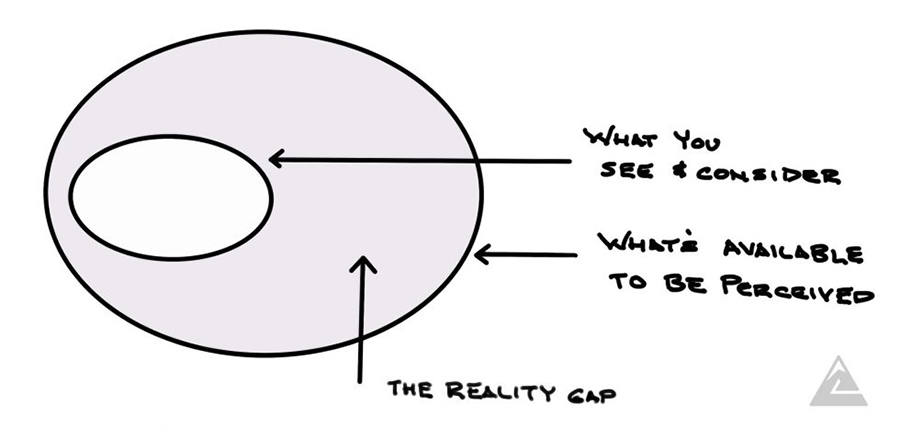
  1. Your inability to completely see and objectively assess what’s really going on, and  
  2. How what you believe to be true invisibly alters and profoundly limits: the possibilities you consider, the decisions you make, and the actions you take.  

I encourage you to reflect on and recognize the significance of this profound truth — your results are a perfect reflection of how effectively you can interpret the information you can see (versus what’s available to be perceived) and how you choose to act on that information. 

Until you accept this truth and take steps to see more clearly, you will not be able to fully exploit the opportunities to fulfill your intentions with greater precision and ease. Instead, any time your results don’t match your expectations, your incomplete understanding of what is really happening will continue to compromise your thinking, keeping superior alternatives out of view. Until you become aware of what’s available, you will continue to fall back on legacy strategies when responding to setbacks. 

Conventional leaders rarely examine whether their beliefs are effectively guiding them in seeing and seizing opportunities to fulfill their intentions. This often results in leaders unconsciously falling into patterns of more effort on already compromised perceptions. 

What The Extraordinary Do Instead

Breaking the habit of responding to situations based on past experiences requires new ways of perceiving and interpreting. While conventional leaders often believe their outcomes are a result of factors outside their control (e.g., other people’s shortfalls, the marketplace), conscious leaders believe they are responsible and take ownership for outcomes.    

This single difference in perspective creates an entirely different action cycle in the face of disappointment. Rather than let blame past experiences and expectations cut them off from the learning opportunity each disappointment presents, they seize the opportunity to improve.   

Extraordinary leaders understand what few leaders do – that the quality and sophistication of their mental representations enables them to recognize and respond more quickly and effectively, distinguishing their performance from lesser developed peers. 

These conscious leaders have trained their minds to see the world more accurately through years of more deliberate thinking.  Rather than being consumed by busyness, they invest time rigorously identifying and evaluating their errors when faced with unwanted outcomes. Their approach stands in sharp contrast to the vague, unfocused, and surface-level analysis of average leaders whose action bias undervalues and neglects appropriate inquiry.    

Each difficulty becomes an opportunity for these higher-functioning leaders to add more dimension, subtlety, and nuance to their understanding of what is occurring. They recognize that the more they can learn to make objectively accurate assessments, the more likely they are to perceive promising possibilities that were previously invisible. And with improved perception, there is a greater possibility to enact better decisions and design more precise actions for achieving what they want. A virtuous cycle that steadily accumulates and increases the power of their choices.   

There’s another side benefit to this more developed and sophisticated thinking. The earnestness to understand what is real, including seeking the perspectives from teams directly engaged in the work, raises collective confidence, motivation, and commitment from the people who will enact the choices. Including and allowing others to shape their thinking produces a self-reinforcing cycle of more thoughtful and committed action from their teams. After all, without motivated and committed implementation, even the best ideas can fall short.    

Summary  

It’s easy to give lip service to using thwarted intentions and setbacks as opportunities to learn and adapt. In my work with boards, leaders, and teams, I regularly see stakeholders exclaim the virtues of after-action learning but rarely witness conversations that are anything more than surface-level explorations that frequently degrade into judgment and blame, wherein the opportunity for meaningful learning is lost. The robust inquiries that would improve leaders’ clarity remain mostly absent.   

If leaders are to become higher-functioning over time, they must level-up their clarity, understanding and insight to enact more powerful choices. Doing so will inform better decisions, more potent actions, and better ability to fulfill their intentions. 

0