“There is a toxic culture developing in the team and we are losing people.”
I zoomed into the conversation – this was a completely unexpected comment. It was a familiar situation in larger companies which were not paying attention to the team dynamics, but to hear it at start-up, one that had a deep purpose, an accomplished team, stellar reputation, and a driven leader?
Fast forward a couple of weeks, and I am with another start-up, in their meeting room with a group of Gen Z’s: their culture is driven my autonomy, mastery, innovation, and passion and yet their spirit seems heavy. I don’t see or feel excitement and drive: I hear a lack of belonging, a feeling of being unheard, and musings on finding another fit.
Separately, sitting with a group of eight men on a team that are C-3 and who lead digital transformation in a large telecom, many of whom have been working together for years yet when we talk about roles, ‘who do you report to again?,’ asks one of the participants. Others also seem unsure but mostly they are surprised at the gaps in the knowledge they have for each other. When we talk about Covid, ‘I had no idea it’s been so tough for you’, is one of the comments.
At a different meeting I was observing, one of the executives interjected suddenly, ‘I have to leave this meeting for an hour’. There was no explanation. Suddenly it felt like was there was a secret in the room.
I suggested there was some tension at the departure of this executive and the CEO, who was also in the room, then explained in detail the urgent matter he was attending to. There was then a palpable sense of relief but what the CEO had not realised earlier was the fact that what was known to her required vocalising to others.
And there are many more such anecdotes.
We talk about team work often, and most leaders – whether at start-ups or established companies – see it as a key to unlock success. Data shows us that 60% of new ventures fail due to problems with the team. Creating the right team culture is quoted as paramount. Culture lives within teams, and thus it spreads into an organisation.
So how do leadership teams build and sustain a successful team culture and then roll it out?
Who leads this initiative?
Some might argue it is the HR division. However, the skills required to unearth the patterns that hold teams back and then to address them in ways that feel safe yet courageous, objective and impactful are very distinctive – they rely on coaching, facilitation, group dynamics psychology, constellation work, conflict management and experience in sensing the room.
If we are serious about creating teams that flourish and perform we need an expert in teams to support the organisation. We need a Team Guardian (TG). And clearly HR would be essential in its role to liaise with the TG.
Start-up’s are particularly in need. Founders are driven by passion; dealing with daily challenges, external stakeholders and having to drive the business forward. They suddenly find themselves move from 3 people to 30 or 300 having at times never managed a team or had the time to think about culture. They often lead by instinct and at times this works well but at some point they have to sit down and – in addition to capital raising, hiring, strategy – reflect and focus on the state of the team. How are they collectively performing? How are they connecting and communicating? What is being missed? What are the undercurrents? Are they clear and aligned on strategy and vision? At some point this becomes an essential priority. Only, mostly, they have no time and/or experience to do this effectively.
TG’s are professionals and their super power is to build, nurture and sustain high performing teams; to support key players in their goals, and to resolve conflict.
This support is vital for all leaders. And for start-up’s it can be the key to success – how the team works is make or break.
So how can this work practically?
Can a TG be an EXCOM member? What is the scope and longevity of the role? How important is objectivity and the perception of objectivity? How is the TG to be renumerated? And how is the success of TG’s to be measured – what are the KPIs?
What is clearer to answer is how a TG’s impact can be measured: using dimensions connected to belonging, openness/communication, clarity/alignment, safety, and meeting dynamics is a very good start. Naturally within each team there may be specific and proprietary challenges that the TG will have to unearth, diagnose, address and assess.
Belonging and safety are key to us as humans. When we feel we belong our commitment is higher, as is our performance. Safety, includes the ability to speak up, to be controversial, to be vulnerable, and to be courageous. In such an environment, communication flows, defences are down, we can hear each other and also feel heard leading to clarity between team members. Clear and open communication, underpinned by trust is empowering and creates ownership and a sense of alignment.
Like other executives, the tenure of a TG will depend on their scope, need and impact.
In my experience, TG’s need to work with most members of the leadership team both individually and as a team. Although this number can vary depending on contextual complexity and will be impacted by timespan, a team that invests 6-9 days initially (in a year) with their TG can see significant progress. This can then be supplemented with targeted individual coaching.
The TG will typically work with multiple teams within an organisation assessing the larger relational dynamics and being able to interweave learnings from all the teams to create a shared language and alignment.
Can it be full time role? Yes and no: it would depend on size and complexity of the entity in question. Another multifaceted question to answer is how will a TG be engaged? As an employee, consultant, and/or owner coach?
This is a role that is emerging as a necessity and as it is embraced will continue to evolve.
I was invited to meet a senior vice president of a tech company, who already ran a highly diverse, multicultural team and had just inherited another. She wanted to find the best way to integrate these disparate team members comprised of the old and new guard, men and women, several religions, various nationalities, and even different geographical offices. As their leader, how could she create a sense of shared identity and direction as soon as possible? How could she better assimilate and connect with the whole team and foster trust? This was my challenge.
The idea for my inclusiveness strategy started after the string of devastating terror attacks in London in 2017. Alongside my visceral reaction to the atrocities, I felt the familiar sense of otherness creeping back. It brought echoes of my high school days when I was at the receiving end of physical and verbal racial abuse — the racist slur “Paki” hurled at me regularly. While mourning the senseless loss of lives, I was simultaneously forced to recognize that my identity as a Muslim — a community being categorized indiscriminately as villains in the global narrative — had begun to overshadow all my other identities.
Given my background and training, I was able to self-introspect and recognize these feelings as connected to identity threat. Part of our self-identity derives from belonging to certain social groups, along with the value and social significance attached to that membership. When a group we belong to does well, we relate that success to ourselves. Belonging to a minority group presents challenges and can cause its members to feel marginalized, disconnected, and deprived of opportunity.
Leaders have to manage and maneuver within a complex melding of self and social identity. Successful leaders must be skilled entrepreneurs of identity, minding their own internal and external responses in the face of perceived identity threat. Social identity theorists propose that powerful leadership and influence greatly depend on leaders and teams sharing a sense of direction and group identity.
Back at the tech company, the first part of my workshop was exploring identity. Social psychologists have outlined how understanding and appreciation of different identities and roles can be crucial to connection and integration. An effective method of producing a safe and playful environment is through the use of art. Drawings can provide access to subconscious material and make it available for exploration to promote openness, learning, and healing. The second part involves exploring experience via storytelling. Stories are a powerful tool to lower barriers and encourage sharing safely and comfortably, even within professional environments. Our individual narratives often highlight similar experiences and shared emotions such as fear, anxiety, excitement, and hope. Sharing stories can tap into the deeply embedded archetypes in our collective unconscious. This increases empathy, raises tolerance, and ultimately creates a sense of commonality within teams.
Exploring “otherness” is a critical and delicate part of the process, as it necessitates the participants being at their most vulnerable and outing their own sense of otherness. It also involves being honest about occasions when we have treated people like the other.
At this point in the workshop, I shared my own story about the heightened Muslim identity I felt after the London terror attacks. Leading with this personal vulnerability broke the ice. An Irish team member spoke up about the impact of Irish jokes in his London office; a female member recalled walking into a team meeting and finding a flip chart with a sexual drawing; an American Jewish member spoke about hearing an antisemitic joke while traveling; a 37-year-old remembered being part of a team where most people were under 26. The stories themselves were unique yet similar and relatable. The open sharing created an understanding of the impact of subconscious bias and how no one is really safe from it.
The final exercise is more organic. Exploring spontaneity needs a process that is physical, intuitive, or sensory; creating a new space that is meditative, reflective, energetic, and challenging. As the purpose of the tech company workshop was for the team to develop a shared identity and goal, I asked the participants to work together and create a symbol to reflect both their team identity and collective vision.
They debated and collaborated; they agreed and disagreed; they chopped and changed their minds several times. In the end, they created a multi-colored bird with broad wings. This fantastical bird represented their collective ability to take a high-level view of their markets, yet land and target with precision. It celebrated the diversity of the team, their togetherness despite the geographical space between members. They were flying together to reach their performance goals.
There is no question that we are in the midst of seismic times. Professional organizations are now obliged to take action and stop any form of injustice based on gender or color. Diversity and inclusion are now recognized as more than just the injection of minority hires into companies, but as a way of utilizing the unique strengths of a multi-racial, gender-balanced, and interconnected workforce. Ultimately, exploring our otherness can help us discover our sameness.
Transformation Coach and Facilitator for Senior Leaders and Teams, Sabah Hydari has utilized her own research and personal experiences to design, test and facilitate a process that specifically counters ‘otherness’ and promotes inclusion in teams and organizations for individuals.
2020 has been a momentous year. George Floyd’s brutal murder caused protests and riots across the globe and brought renewed passion to the Black Lives Matter movement. The Coronavirus pandemic has been fostering a rise in discrimination towards those of Chinese and South East Asian heritage, while also claiming the lives of black, Asian and minority ethnic people at higher levels than that of white people.
These events have raised new levels of awareness from non-minority ethnic people of the insidiousness of subtle and systemic racism. Not forgetting, of course, the #MeToo movement, which overlaps BLM in its goal of dismantling oppression. There is also currently a real appetite for improvements at both personal and professional levels to overcome microaggressions, ‘casual’ comments or behaviors that perpetuate racial or gender stereotypes and a sense of otherness.
As the daughter of the Pakistani Ambassador to the UAE, Mexico, Egypt, and Moscow, I grew up moving around the world, being the ‘other’ in the countries we lived in — and with the exception of a period during my high school years — forging my own path by not seeing myself in those terms. This path led me through study at LSE and later at INSEAD via consulting for PWC to a career as an advisor at Aberkyn-McKinsey and as a Transformation Consultant, Coach and Facilitator. Most recently, it’s guided me to create the process I call The Forging Team Inclusiveness Loop (FTIL).
It was bittersweet that, as I dashed to the London offices of a global tech giant on a cold afternoon in October to test out this process, it was from the hospital bedside of my ailing father, the Ambassador, whose career and character had so directly influenced my own.
I had been invited to the company to meet J, a recently promoted senior VP. J already ran one highly diverse, multicultural team and had just inherited another. She wanted to find the best way to integrate these disparate team members, who comprised both old and new guard, men and women, several religions, various nationalities and even different geographical offices. How could J, as their leader, create a sense of shared identity and direction as soon as possible? How could she better assimilate and connect with the whole team, and foster trust?
As a team specialist and leadership coach, this was my niche. And this also felt like the right time and place to debut FTIL.
The idea for my Forging Team Inclusiveness Loop process first came to me after the string of devastating terror attacks in London in 2017. Alongside my visceral reaction to the atrocities, I had felt the familiar sense of otherness creeping back into my being. It brought echoes of my high school days, when I was at the receiving end of physical and verbal racial abuse — the racist slur ‘Paki’ hurled at me regularly. While mourning the senseless loss of lives, I was simultaneously forced to recognize that my identity as a Muslim — a community being categorized indiscriminately as ‘villains’ in the global narrative — had begun to overshadow all my other identities. I found myself being defensive during conversations with colleagues, referencing Muslim-led anti-terrorism protest marches and citing instances of high-profile Muslims publicly condemning the acts.
Given my background and training, I was able to self-introspect and recognize these feelings as connected to identity threat. Part of our self-identity derives from belonging to certain social groups, along with the value and social significance attached to that membership. When a group we belong to does well, we relate that success to ourselves. Belonging to a minority group presents challenges and can cause its members to feel marginalized, disconnected and deprived of opportunity. Moreover, belonging to a minority group with a stigma or negative association attached to it can compound these feelings. Attempting to hide the threatened identity or making an increased effort to fit in can fuel resentment and further separation.
As I began to understand my own internal dialogue, I became interested in finding ways to support others who shared these feelings. Leaders have to manage and maneuver within a complex melding of self and social identity. If they are perceived as out-group or other, their influence is likely to be impacted and even reduced. Successful leaders must be skilled entrepreneurs of identity, managing their own internal and external responses in the face of perceived identity threat. I decided to actively work towards creating inclusion for minorities and minority leaders and countering otherness within their teams.
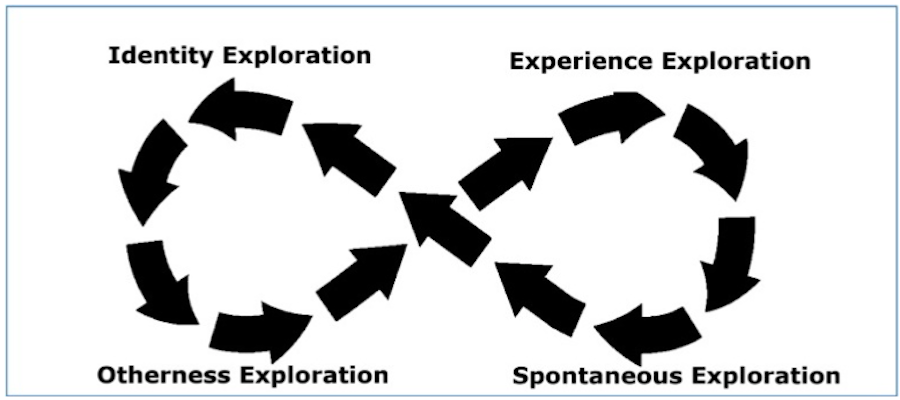
These thoughts — and my thesis research at INSEAD — led to FTIL, which is a four-part interrelated process. During my research, as I interviewed multiple leaders and team members, it became apparent that, whilst being an obvious minority creates its own complexities, otherness can be inherent in all our experiences, including those of the archetypal white male.
Back at the tech company offices, it was clear that the team’s diversity was a major strength. This also made them an ideal test group for FTIL. J and I had discussed the importance of nurturing each member’s voice and sense of equality by addressing any feelings of otherness. The goal was to increase empathy, alignment and belonging, not just for team members but also for J herself — leadership that practices inclusion is an extremely important success factor in the way in which teams function. Social identity theorists propose that powerful leadership and influence is greatly dependent on leaders and teams sharing a sense of direction and group identity.
Forging Team Inclusiveness Loop
FTIL is structurally represented as an infinity sign in order to symbolize the flexible and adaptable nature of the synergistic process. It is also an indicator that there is no start or end to the process of continually working to create powerful bonds among teams and leaders.
FTIL is a process in four parts, and a key component is the facilitator, who must create a safe space and take an active part in the process, in addition to observing. I began by inviting the team to be open to the process and curious about what emerges.
The first part of the workshop is Exploring Identity. Social psychologists have outlined how understanding and appreciation of different identities and roles can be crucial to connection and integration. We may not be consciously aware of the wide range of characteristics and skills possessed by our colleagues, aside from their professional identity. For leaders, other facets are even less visible, but revealing them can ‘humanize’, particularly in situations where differences are concealed out of fear of prejudice. But how do we encourage the sharing of hidden identities?
An effective method of producing a safe and playful environment is through the use of art. Drawings can provide access to subconscious material and make it available for exploration, in order to promote openness, learning and healing.
Getting the participants in my test workshop in touch with their creative sides led to some introspective moments. Upon presenting her own work to the group, J’s efforts were met with exclamations, as other team members found unexpected common ground with her. After the presentation from a Mexican participant on his religious identity, a French team member revealed his own religious beliefs — the first time he felt comfortable sharing them with colleagues. Exploring their individual identities enabled the team members to connect with each other in new ways.
The second part in FTIL involves Exploring Experience via storytelling. Stories are a powerful tool to lower barriers and encourage sharing in a safe and comfortable way. Even within professional environments. Our individual narratives often highlight similar experiences and shared emotions such as fear, anxiety, excitement and hope. Sharing stories can tap into the deeply embedded archetypes in our collective unconscious. This increases empathy, raises tolerance and ultimately creates a sense of commonality within teams.
The team were asked to recall a challenging and proud moment in their lives, ideally unrelated to work. Each individual used this exercise to connect to vulnerable, courageous, and inspiring memories. It was deeply moving to hear everyone’s personal journeys, to feel the humanity in the room. I observed the second most senior team member’s eyes fill with tears upon hearing a colleague’s contribution. It felt as if this group had connected at a deeper level.
Exploring Otherness is a critical and delicate part of the FTIL process, as it necessitates the participants being at their most vulnerable and outing their own sense of otherness. It also involves being honest about occasions when we have treated people like the other.
Opportunities for growth, understanding and integration within teams come from collectively acknowledging and examining past experiences where individuals have felt judged or estranged in relation to part of their identity. Openness can create awareness of underlying biases and the negative impact of stereotypes. Not only can this help us understand our own feelings and responses in such situations, but it can create a vital understanding of both similarities and differences in the experiences of minority groups.
At this point in the workshop, I shared my own story about the heightened Muslim identity I felt after the London terror attacks — which coincided with my facilitating a top team alignment at a Global Pharmaceutical Company — I felt the tremor within and connected to the remembered feeling of shame and sadness. Leading with this personal vulnerability broke the ice. The Irish team member spoke up about the impact of Irish jokes in the London office; a female member recalled walking into a team meeting and finding a flip chart with a sexual drawing; the American Jewish member spoke about visiting Germany and hearing an antisemitic joke; the 37 year old remembered being part of a team where most people were under 26. The stories themselves were unique yet similar, and relatable. The open sharing created an understanding about the impact of subconscious bias and how no one is really safe from it.
I then asked everyone to out their own biases by recalling a time they treated others differently. Judging a new team member before meeting them, remembering hostility to a new kid at school, experiencing fear or apprehension about people based on their looks. By uncovering preconceptions about anything from a person’s age, race, gender or physical appearance, future displays of bias, both in work and away, can hopefully be reduced.
The final exercise is more organic. Exploring Spontaneity needs a process that is physical, intuitive or sensory; creating a new space that is meditative, reflective, energetic, and/or challenging. As the purpose of the workshop at the tech company was for J and her team to create a shared identity and goal, I asked the participants to work together and create a symbol to reflect both their team identity and collective vision.
They debated and collaborated; they agreed and disagreed; they chopped and changed their minds several times. In the end, they created a multi-colored bird with wide wings. This fantastical bird represented their collective ability to take a high-level view of their markets, yet land and target with precision. It celebrated the diversity of the team, their togetherness despite the geographical space between members. They were flying together to reach their performance goals.
What about results? The session ended with spontaneous hugs and high fives, so in the short term, the team were brought closer both physically and emotionally. But in order to assess the outcome of FTIL, I designed surveys to determine feelings of belonging and community, and circulated these before and after the process. Post-FTIL, team scores for; knowing each other, feeling like a team, willingness to support each other, having a shared goal, and understanding self were all much higher. Results like this can boost communication and collaboration within teams and positively impact company-wide culture. During Covid, and with remote working, team connection has become even more imperative, and opportunities and processes that specially address these are critical for a sense of team wholeness.
Since this successful first workshop, I’ve worked with various teams using FTIL, and the results have been invariably positive.
When I started my research, I worried about ‘outing’ my anxiety, concerned that it would actually heighten my otherness. Towards the end of my journey, I sensed a deep acceptance of self and others. It is via recognition of joint anxieties and responsibilities that we can be empowered to create shifts.
Two weeks after this successful first workshop, my father passed away. During his long career as a diplomat, I saw him embrace each country and its culture, language and people with complete openness. This valuable early life experience undoubtedly gave me the tools I needed to create FTIL in the first place and assist individuals, leaders and team members to overcome any sense of otherness.
There is no question that we are in the midst of seismic times as we witness and support historic and catalytic movements like Black Lives Matter and #MeToo. Professional organizations are now obliged to take action to stop any form of injustice based on gender or color. Diversity and inclusion are now recognized as more than just the injection of minority hires into companies, but as a way of utilizing the unique strengths of a multi-racial, gender balanced and inter-connected workforce. Introducing a process like FTIL across multiple organizations and sectors is an effective way to help leaders and their teams cross barriers created by otherness and increase a sense of belonging. Ultimately, exploring our otherness can help us discover our sameness.