


Dream Small: How Local Efforts Can Make Global Impact

Sixty years ago last month, Clara Luper sat down at the Katz Drug Store counter in Oklahoma City with her two children and several members of the NAACP Youth Council, refusing to leave until they were served.

Her efforts over the next several years desegregated hundreds of establishments across Oklahoma and led to one of the most successful strategies of the Civil Rights Movement — the sit-in protest. The anniversary of this historic moment in my hometown reminded me of two things that have become core to my pursuits over the past several years: you don’t have to be rich or famous to create change, and local solutions can create great impact.

If you like this, subscribe here for more stories that Inspire The Future.

I spent the better part of my youth wondering what my own impact would be on this world. At 20, I was already a year older than Mark Zuckerberg was when he created “The Facebook.”

I was a college kid having a serious quarter-life crisis. Growing up, I had been told to “dream big” and to “change the world” — but the only thing that was big was my dream, and the only thing I was changing was my major.

With the weight of the world on my shoulders, I felt powerless. However, I then got involved with a group of young social entrepreneurs who had created small but meaningful programs: a custom apparel company employing women transitioning out of homelessness, and a children’s book company promoting cultural literacy in the U.S. while funding educational initiatives in developing countries. What these organizations lacked in size, they made up for in impact. Then it hit me — I was letting the debilitating fear of failing to solve global problems keep me from making any impact at all. I realized that I may not be able to change the world, but I could change my community. Ever since, over the past six years, I have worked to create innovative solutions to local challenges.

While in college, I realized that my hometown, Oklahoma City, had no job opportunities for individuals experiencing homelessness who had high barriers to traditional employment. Five years ago, I co-founded The Curbside Chronicle, a magazine sold by individuals experiencing homelessness. We adapted the time-tested street paper model to fit the socioeconomic realities of Oklahoma City, creating a program that builds job skills, time management, and financial success for our magazine vendors. Through Curbside, more than 100 people have ended their homelessness, and dozens more have moved on to steady employment. I’m picture above with my wife, Ranya, celebrating the Curbside Chronicle’s fifth year.

Three years ago, I moved to an economically diverse neighborhood and realized that many teens in my area were hungry for opportunity, but job prospects were sparse. After a year of research and planning, I started Sasquatch Shaved Ice, a nonprofit snow cone stand that employs low-income teens from my neighborhood. We provide job skills training and college prep and financial literacy workshops, and also match dollar-for-dollar what our employees save towards their future educational goals. With two seasons under our belt, 100% of our employees have graduated from high school in a neighborhood where only 58% of adults have a high school diploma.

Here’s my point: don’t fixate on solving the big, heavy problems of this world. You’re probably not the next Mark Zuckerberg, and that’s OK. Instead, focus on creating incremental change in your own community. I may never really change the world holistically — but for the 40 Curbside vendors who moved into housing in 2017 and the 5 Sasquatch employees who graduated high school this year, the world has changed.

The world puts an immense amount of pressure on young people these days. Global warming, economic disparity, and educational inequity are a few of the urgent, enormous challenges that millennials are tasked with addressing. With temperatures rising 1.4 degrees each year and 1.56 million individuals experiencing homelessness annually in the U.S. alone, the task of combating just one of the major crises we are facing seems impossibly daunting. The truth is that you can’t solve a global crisis alone, and neither can I — but together, our cumulative efforts can and will.

I’m passionate about creating supportive employment opportunities for underserved populations in Oklahoma City. What are you passionate about? The decline of bees, access to clean water, decreasing meat consumption? With every challenge comes an opportunity to create impact. In the singular, I am just one man on this pale blue dot — but together, we are a powerful force of change that culminates in national and global shifts. I won’t change the world, but we will. Let’s get to work.

Whitley O’Connor is a social entrepreneur, employment advocate, and Fellow of The Resolution Project.

If you like this, subscribe here for more stories that Inspire The Future.
How I Helped Provide Shelter to 26,000 Earthquake Victims

I was born into a family of nine in the Lalitpur district in Kathmandu Valley, Nepal. My father worked up to 16 hours per day to provide for me and my six siblings. I hated the fact that I was born into a poor, undeveloped country.

Throughout my childhood, I faced many social and financial struggles. When I was in 5th grade, I was constantly mocked by my school teachers and eventually kicked out for not being able to pay for my studies. I grew up hearing stories of failures and disappointment, which almost made me believe that I too was not capable of changing my situation.

If you like this, subscribe here for more stories that Inspire The Future.
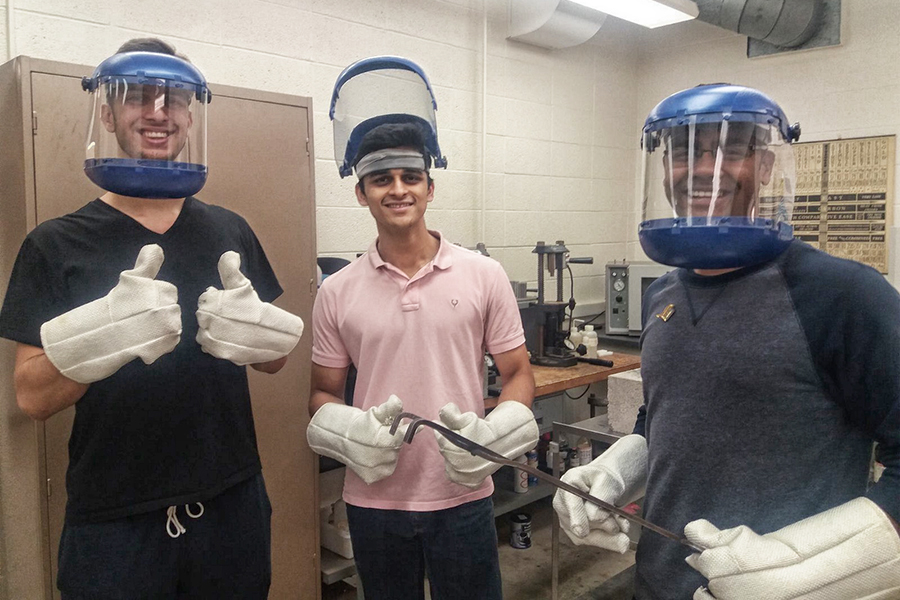
Fueled by the desire to overcome my financial limitations, at the age of 14, I began to earn money by selling pens to my classmates, and, later on by the age of 15, by working in a mechanical workshop. I began to make more money, which I used to buy and sell cell phones at a marked-up price. After graduating from high school with a background in welding and machining, I started working as an independent contractor. I began to execute business deals with many national and international agencies, including the United Nations, which was one of my biggest clients. It was at this time, in 2013, that I realized I could use my skills, hard work, and dedication to become a successful social entrepreneur.

The impact that I could make through social entrepreneurship became more evident after the devastating earthquake hit my home country in 2015. This earthquake killed over 9,000 Nepalese and affected millions of others. Due to the aftershocks, my family and I, alongside thousands of others, were forced to flee our homes and live in open, desolate fields.

In these hard times, as I looked at the suffering of everyone around me, I felt the need to use my skills and expertise in welding and machining to help my fellow community members in need. I began by making improvised shelters from scraps of trash and bamboo that were strewn all across the field we were living in. I vividly remember building one such shelter for a terrified old woman. The serene sense of security that came with having a roof over her head motivated me to further my relief efforts.

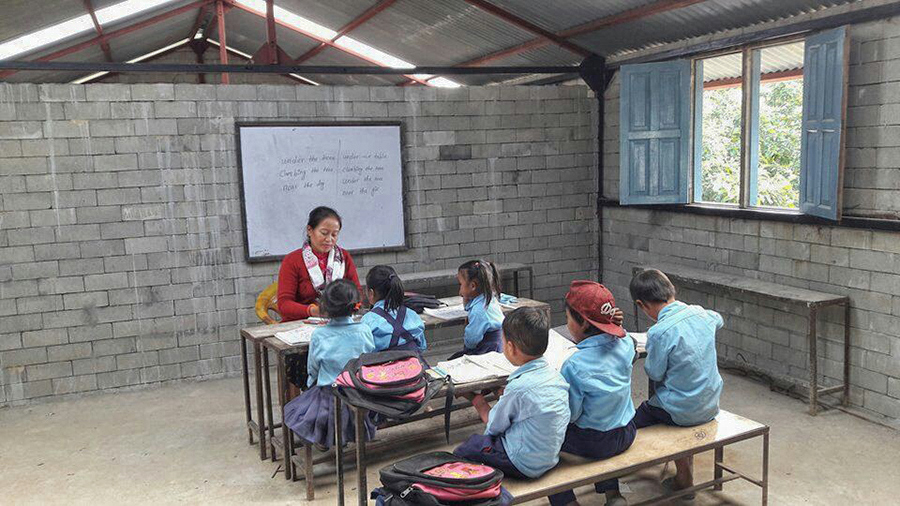
A classroom in Nuwakot (courtesy of Suman Kumar)

Soon after this encounter, I started working with one of my previous business colleagues, Caleb Spear, who had conceived of the idea for a relief project called Portable Shelters. The idea was to create metal shelters that could be mass-produced in a short amount of time. We put our building skills to use and fabricated a working model for the shelters. Fueled by donations and help from approximately 130 organizations and individuals, including young people, we were able to provide more than 5,300 shelters for over 26,000 earthquake victims.

These temporary shelters were constructed using bent metal pipes, corrugated sheets, reinforced rods and metal wires. The bent pipes were attached to reinforcing rods, which were stumped onto the ground. Next, the corrugated sheets were put over the bent pipes and then tied on using metal wires in order to create an igloo-shaped structure. The survivors who received these structures then used salvaged parts to cover the open ends by building walls with doors and windows salvaged from their old houses. When we started, our goal was just to help as many people as we possibly could. We certainly did not expect to reach such a large number of people. But, through our hard work and dedication, we were able to provide much-needed relief to communities.

After the earthquake, I had the opportunity to pursue higher education at the University of Rochester. During my time in the United States, however, I was constantly wondering what I could continue to do to help the people of my country, and particularly the hundreds of thousands of children whose schools had been destroyed, and whose education had been put in peril. One school located in Chautarale, Nuwakot, had been completely destroyed, leaving 70 students and 4 teachers studying in the fields, with only a tarpaulin for protection.

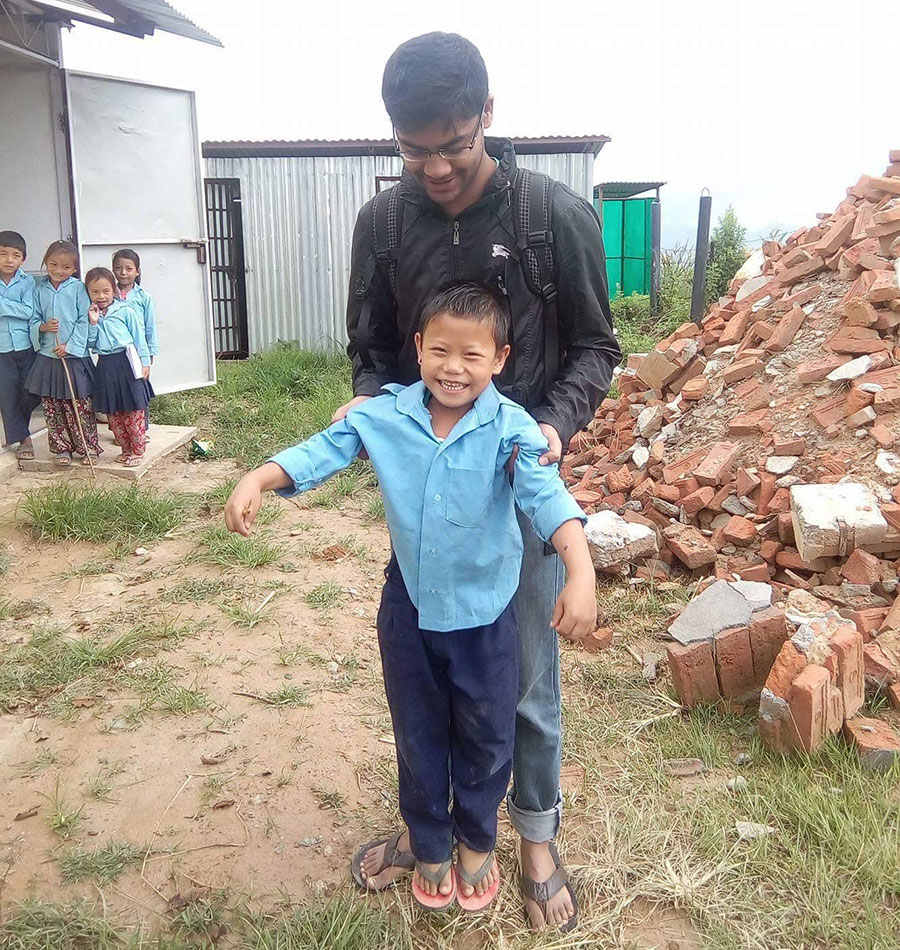
In response, I initiated a project through which earthquake-resistant technology could be used to rebuild the school. I presented this idea at a Resolution Social Venture Challenge during the Youth Assembly at the United Nations in 2017, and was fortunate enough to win a Resolution Fellowship, which included seed funding to launch my project. With further fundraising, I was able to implement my idea, and successfully rebuilt the school in Nuwakot this past summer. I am happy to report that 25 students and 4 teachers are now back in school.

One of the main reasons why I am working in the education sector is that even with my difficult upbringing, I was fortunate to get an education. However, there are a lot of students back in Nepal who do not have any access to education, so I feel a great need to give back. By building schools, my team and I are not just investing in the education of these children’s future, but we are also building their future and helping to uplift the next generation of Nepal. As I continue to learn and grow, I plan to build more schools in the most affected areas and help even more children who are less fortunate than I am.

Suman Kumar is a Fellow of The Resolution Project

If you like this, subscribe here for more stories that Inspire The Future.
Invest in Inexperience to Solve The Global Leadership Crisis

In a tumultuous world grappling with serious challenges in practically every domain, from violence and intolerance, to climate degradation, poverty, systemic inequality, and a global leadership crisis, it has become self-evident that we need to renew and expand our efforts to have a positive impact, rather than a destructive one, on the world around us.

This process will require not only determination but innovation, a fresh set of perspectives that will allow us to identify and correct what isn’t working. In short, it will require young people.

If you like this, subscribe here for more stories that Inspire The Future.

The youth population is currently the largest it’s ever been; it is more connected and has better tools than any prior generation. Yet young people currently find themselves overwhelmed by economic hardships and trapped in hierarchical systems that silence their voices, rather than being given the support they could use to combat some of the problems they soon stand to inherit.

At this moment, more than 500 million young people are living on less than $2 a day – that’s about 30% of all young people. Without the thousands of dollars on hand that are needed to guarantee access to higher education, many young people are excluded from the education opportunities that would create careers and pathways to success. This holds true even for young people in richer countries, in which rising tuition rates every year make education a luxury that fewer and fewer can afford. Without the resources to support themselves with education, healthcare, and other services, young people are struggling to survive, let alone support others.

Those few who do manage to still maintain an interest in leadership are faced with yet another host of challenges: their lack of agency in political discourse and even in their own communities. Young people, especially women, minorities, and other marginalized groups, are discouraged and systematically excluded from building political and economic power within rigidly hierarchical systems.

Yet members of this generation are showing a deep resilience, working tirelessly to better the world on their own because they don’t want their children to inherit today’s problems. And they could be doing so much more if given a helping hand.

At the Resolution Project, a global non-profit fostering youth leadership development through social entrepreneurship, we’ve found that a little bit of mentorship and funding can transform the type of leadership we get from college students. We’ve invested in more than 400 Fellows, providing them with mentorship, seed funding, and access to global advisory resources from within our network. Most importantly, we have shared with them the very message of this piece – that we believe in them, in their capabilities and in their ideas.

Armed with this very modest set of tools, our Fellows have already gone on to collectively impact over 1.5 million lives and counting. And while they aren’t blind to the challenges we all face, they are optimists, believing that leaders can bring about a turnaround, if they have an approach that is grounded in social responsibility, sustainability, and social justice.

If you’d like a few examples, take a look at:

  • Louise Mabulo (age 19) helping develop sustainable agricultural practices (The Cacao Project) or
  • Juan Bol (age 26) bringing leadership training and opportunities to underprivileged children (PODER) or
  • Suman Kumar (age 26) rebuilding schools devastated by earthquakes (School Relief) abroad.

And domestically, look at

  • Hannah Dehradunwala (age 25) facilitating the transfer of extra food from corporations with excess to those in need (Transfernation),
  • Samir Goel (age 24) establishing circular savings programs to create better financial outcomes for communities in the United States (Esusu), and
  • Derrius Quarles (age 26) offering an instructive e-platform to help students across the country win scholarships and avoid higher education debt (Million Dollar Scholar).

If we want a better future, we need to drastically change the way we think about young leaders today. Otherwise, in 5, 10, 20 years, when we’re still disappointed by the state of our world, after we continued telling young people that their ideas to improve their communities were naive or wouldn’t work, after we discouraged them from getting involved in politics, after we told them they lacked the experience to have good ideas, after we broke down their optimism and drive to help, who will be to blame if they simply look out for themselves like many of the leaders we have today? That’s on us for turning our backs on their potential. Because, in truth, they don’t need us – we need them. 

It’s time to try something new, so the next time you see a young person running for office, think about the fact that they may understand the technology around us enough to inform good decision-making and regulations (vs., for example, the Zuckerberg hearings); when you see a young person working on a community service project, build them up and encourage them to scale it, rather than undermining it as a drop in the bucket; and when you see a young person taking a brave stance, even if you disagree with them, celebrate their principles and integrity in seeing injustice and wanting to root it out.

In my work as the CEO and Co-founder of The Resolution Project, I’ve watched more than 400 young people help over 1.5 million in one decade. Imagine what they will do over a lifetime, and imagine what we can do together by building up a generation of such young leaders who value impact over profit, sustainability over scale, and reduced inequality over individual wealth accumulation, all through market-based approaches. This isn’t some utopian socialism – this is just involving the people who will inherit the world in what that world will be. Don’t you wish someone had asked you?

George Tsiatis is the CEO & Co-Founder of The Resolution Project

If you like this, subscribe here for more stories that Inspire The Future.