‘In the DNA’: How Social Entrepreneurs Are Getting Creative in a Pandemic

As COVID-19 forces businesses worldwide to reinvent themselves, social entrepreneurs are getting creative to help communities hit hard by the pandemic — from a Ugandan medicine-on-wheels service to upcycled face masks made by vulnerable women in Peru.

While recessions and falling revenue are affecting ethical businesses too, many such companies are proving particularly adept at innovating and finding new opportunities.

“Social innovation is the DNA of social entrepreneurs,” said Vincent Otieno Odhiambo, regional director for Ashoka East Africa, a non-profit working with social enterprises – businesses aiming to do good while making a profit.

“They are accustomed to tackling complex social problems and therefore design innovative solutions that create better conditions of life,” he told the Thomson Reuters Foundation to mark Social Enterprise Day on Thursday.

Started by Social Enterprise UK, the sector’s trade body in Britain, and held annually on the third Thursday of November, the day aims to highlight the sector’s global impact. The campaign has since expanded to other parts of the world.

With the pandemic taking a heavy toll on vulnerable communities around the world, companies with a social focus are even encouraging some traditional businesses to have a rethink.

“We have seen them tackle perennial challenges ranging from access to healthcare and education, remote working, economic resilience all the way to transparency or fighting fake news,” Otieno Odhiambo said.

‘OUTSIDE THE BOX’

In Asia, social enterprises have turned to making face shields and protective suits for doctors, and linking those who have lost their jobs to careers in sustainable fields.

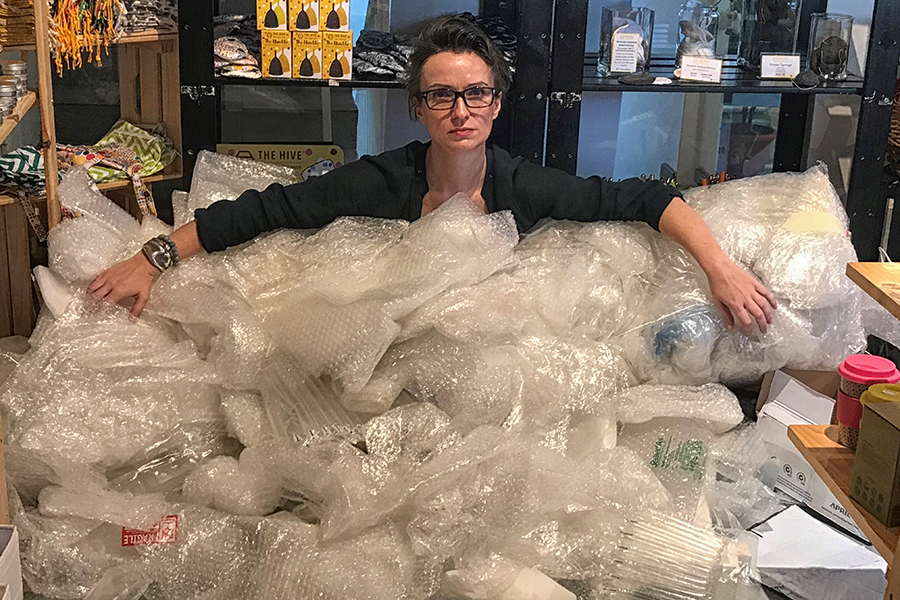
As movement curbs remain in place across many cities, a surge in online deliveries has led to a mountain of plastic waste, prompting Malaysia’s The Hive Bulk Foods to start collecting discarded packaging for reuse.

The social enterprise, a zero-waste chain selling products from refugees and local organic farmers, said items like bubble wrap quickly filled up its warehouse. It donates the packaging to other businesses so it can be used again.

“We realised everyone on the planet was also ordering online and that online packaging was delivered with an insane amount of plastic waste, often more plastic waste than the goods delivered,” said founder Claire Sancelot (pictured above).

“We just want to prove that despite the pandemic we can change the business model and move to a more circular economy.”

In Peru’s capital Lima, Valery Zevallos – who founded an ethical fashion brand called Estrafalario that employs poor women, female prisoners and domestic violence survivors – knew she had to adapt as shopping mall sales plunged during lockdown.

She started a new line of handmade face masks made from recycled materials, working with nearly 40 women. So far, they have sold more than 26,000 masks and donated some to community groups and female inmates.

“We had to think out of the box,” said the 30-year-old designer, adding that the company’s online clothes sales have jumped 400% as customers go to its website to buy the masks.

“It’s a win-win. We sell clothes and they earn,” she said.

In Africa, where the pandemic has strained fragile healthcare systems and made it even harder for people to get to medical centres and pharmacies, Uganda’s Kaaro Health started sending its nurses to treat patients at home.

The company, which offers pre-natal check-ups and child immunisations at its solar-powered container clinics, also put its technicians on motorbikes, mounted with refrigerated clinic kits, to collect medical samples and deliver prescriptions.

Across the border in Kenya, CheckUps Medical, which offers remote diagnostic and pharmacy services, has trained motorbike taxi drivers to identify people in need of medication or teleconsultation in remote areas.

‘BUILDING BACK BETTER’

Like other pandemic-hit businesses, social enterprises have struggled financially this year but their swift response could spur big business into more collaborations and a rethink of dominant business models.

“What COVID-19 has shown us is that the massively complicated international supply chains are really fragile when you have a pandemic,” said Tristan Ace, who leads the British Council’s social enterprise programme in Asia.

“One positive outcome that we have seen is corporates starting to incorporate social enterprise in their local areas more, more than just relying on the global supply chains.”

Yet major industry players and governments will have to take the lead – such as changing procurement practices and encouraging more impact investing – as the solutions offered by social enterprises are often small-scale.

“As economies begin to recover, we need to think about the big levers that will support the delivery of positive impact at scale, which should be led by big businesses and governments,” said Louise Aitken from Ākina, a New Zealand consultancy working with social enterprises and corporates.

“This is beyond building back better, it’s actually about building impact into our recovery,” the chief executive said.

By Beh Lih Yi @behlihyi in Kuala Lumpur, Nita Bhalla in Nairobi and Anastasia Moloney in Bogota; Editing by Helen Popper.

“Something to be Proud of”: UK Graphic Novel Highlights Homeless

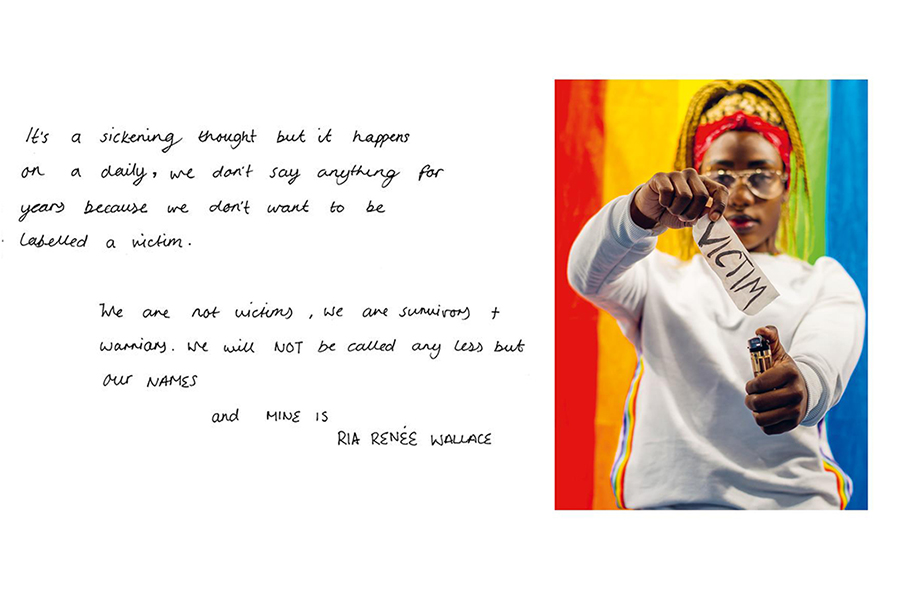
Passersby ignore a beggar, homophobic insults crowd a wall, a woman burns a note penned to a “victim” – not the usual stuff of comics but all vignettes from a new graphic novel by homeless people that aims to kill the stigma surrounding street life.

The Book of Homelessness, launched this week by a youth homelessness charity, compiles drawings, texts and poems by people living in shelters, hostels and temporary accommodation.

“You don’t often hear about who homeless people are and why they’re out there, you think it’s just their fault,” said Mitchell Ceney, who was homeless for about three years and now has a short-term home in West London.

“Getting it down on paper is a way of turning my negative past into something positive for the future,” said the 36-year-old, who drew a man fleeing a supermarket, a flashback to his own shoplifting days.

With protections ending for hard-pressed renters and the newly jobless rising in the pandemic, about 230,000 people are at risk of becoming homeless, according to the charity Shelter. Health experts say the homeless are in greater danger from COVID-19 due to a weakened immune system caused by poor food and lack of sleep, along with over-crowding and bad sanitation.

“People are much closer to the edge than they were before the pandemic,” said Marice Cumber, founder of Accumulate, the homeless charity behind the graphic novel. “It really could be anyone,” she told the Thomson Reuters Foundation.

The government has pledged 15 million pounds to a handful of areas with the highest number of rough sleepers, including London, Bristol and Cornwall, to help get them through to March. Cumber is no stranger to mixing art with action – past projects include a radio station run by homeless people – and

she encouraged the 18 contributors to “tell their own stories that don’t have to be about why they’re homeless”. Profits will be shared by the authors and Accumulate, said Cumber, whose charity funds scholarships for creative courses. For Ceney, who used to be a chef and hopes to earn an illustration degree next year – the book is just a start.

“It’s given me something to be proud of,” he said. “And maybe my experience can help someone else.”

By Zoe Tabary @zoetabary, Editing by Lyndsay Griffiths.

‘First Line of Defense’: COVID-19 Prompts Rethink In Role of Buildings

From office workers to students, Americans facing colder weather and more time inside have a pressing question: How can they keep safe amid a pandemic that scientists say thrives in indoor settings?

The search for answers has prompted a new look at what architects and their buildings can do to help, both now and in the future.

“The built environment is a first line of defense in a pandemic – it makes the difference between whether you get a disease that will kill you or not,” said Rachel Gutter, president of the International WELL Building Institute.

“That’s a real shift in how we think about buildings,” she told the Thomson Reuters Foundation.

Gutter and her colleagues oversee a global set of standards for buildings aimed at promoting the health of their occupants.

Some 4,900 projects in more than 60 countries are currently at some stage in the voluntary WELL certification process.

In September, the institute launched a major update that includes coronavirus-specific changes that it began piloting this summer, the result of work by about 600 public health officials, government officials, designers and more.

Last month, a group of U.S. scientists warned in an open letter published in the medical journal Science that infected aerosols – small droplets and particles – lingering in the air could be a major source of COVID-19 transmission.

The letter called on public health officials to highlight the importance of moving activities outdoors and improving indoor air, along with wearing masks and social distancing.

“COVID-19’s favorite season is winter – like the seasonal flu, this virus loves the cold,” Gutter said.

“Indoor air quality considerations will be of even greater importance in regions of the world that are preparing for winter.”

The changes to the WELL recommendations highlight the need to limit touch as people move through a building, safely disinfect surfaces and more, in particular boosting indoor air quality, Gutter said.

Interest in the coronavirus guidance has been enormous, and implementation has been “lightning fast”, she said, adding that about 350 million square feet (32.5 million square meters) of space has been newly registered with the institute since June.

Other building certification systems have rolled out new guidance, too, including LEED – or Leadership in Energy and Environmental Design – which focuses on environmental impact and has been widely adopted across the globe.

“The pandemic has really shone a spotlight on, ‘What is my indoor air quality like, and why does that matter?'” said Melissa Baker, senior vice president of LEED development at the U.S. Green Building Council, which oversees the system.

“These are the questions that tenants will be asking their landlords now.”

HEALTHIER INDOORS

Months into the pandemic, designers are tracking changes in how people interact with buildings and trying to see how they can help make the indoors healthier, said Rachel Minnery, a senior director with the American Institute of Architects.

“Here we are, almost every building except your home is considered unsafe,” she said.

“What role can the built environment play … so hopefully we’re not in quarantine for the next two years?”

Design tweaks could start with a user’s entry into a building, Minnery noted, through vestibules and queuing areas to facilitate temperature checks or social distancing.

Architects are also incorporating one-way doors and hallways, spreading workstations farther apart, deploying touchless technologies and upgrading air-filtration systems, she added.

The demands are forcing designers to learn about a range of new issues.

“I’m not an epidemiologist – I’m an architect,” said Jenine Kotob, who works just outside Washington with Hord Coplan Macht (HCM), a national firm.

When the pandemic hit, Kotob and her colleagues started participating in emergency workshops with public health experts.

“They defined for us a baseline of understanding, the knowledge base that any architect now needs to be aware of: how infectious diseases are transferred,” she said.

In a survey of real estate experts around the world released by the Washington D.C.-based nonprofit Urban Land Institute in October, 90% of respondents said certification of healthy offices will likely rise in coming years.

EMOTIONAL WELLBEING

The pandemic is also shifting thinking in terms of how buildings can help with the way communities function more broadly, from wellbeing to work.

“The thing that’s different about COVID is we’re focusing not only on physical wellness but also emotional wellbeing,” said Donald Powell, a partner at the BOKA Powell architecture firm based in Texas.

“That’s the hurdle all corporations have to cross before employees will come back to the workplace.”

In response to client queries on how to entice workers back to the office, Powell said he and his colleagues are considering on-site child care and even classrooms, aimed at parents who are home-schooling and want to come back to work.

Schools have been a high-profile point of contention throughout the pandemic, and a growing number in the United States are contemplating how to open back up.

“Without school buildings able to come back online during the pandemic, the longer we stretch it out, the longer we will see repercussions to our society,” said HCM’s Kotob.

She and her colleagues are being asked to repurpose cafeterias, libraries and other large gathering spaces to create multiple smaller classrooms, all while adhering to local regulations and social distancing guidance, she said.

The need for these changes has underscored the chronic underfunding of public schools, Kotob noted.

U.S. elementary facilities face a shortfall of $38 billion a year, according to advocacy group [Re]Build America’s School Infrastructure Coalition.

Pending legislation would provide $5 billion for emergency school repairs as part of a pandemic relief package, which could go toward improving sanitation and upgrading air-filtration systems, for example.

“What we’ve seen in the pandemic is there are specific issues that have gone unaddressed for so long – air quality, overcrowded conditions, access to the outdoors – that can’t be tabled any longer,” said Kotob.

That kind of thinking is prompting broader recognition of the notion of health as a human right and its links with buildings, said Gutter at the International WELL Building Institute.

“Many of us have now been cooped up in our homes for months, so we’re much more tuned in to these impacts on our health,” she said.

“The way we build affordable housing, construct our schools – what would happen if we embraced the notion that these could enhance rather than take away from our health and wellbeing?”

By Carey L. Biron @clbtea, Editing by Jumana Farouky and Zoe Tabary.

‘Not Seeing the Urgency’: Communications Failure Blamed For Climate Inaction

“Many people still do not seem to fully understand (climate change) is impacting our lives today,” says Britain’s Prince Charles.

Humans’ collective inability to stem planet-heating emissions – which continue to rise despite pledges to slash them – is largely the result of failures to communicate the risks effectively, government officials and activists said this week.

Even as scientific warnings grow clearer and more urgent, and climate-linked hazards such as more deadly wildfires and destructive storms and droughts affect more people, too few see the rising threats as urgent, they warned.

“Many people still do not seem to fully understand it is impacting our lives today,” Britain’s Prince Charles told an online event run by the Red Cross Red Crescent movement.

“We simply cannot sit back and wait for the climate to change around us and accept these disasters as an inevitability,” said the prince, who is president of the British Red Cross.

While slow progress on addressing the growing climate threat often is blamed on a lack of funding, political will or public acceptance of lifestyle changes, that could be reversed if more people recognised the risks, panelists said.

“We fail in the way we engage with the community. We fail in the way we are able to communicate how deep the crisis is, how it is affecting millions and millions,” said Francesco Rocca, president of the International Federation of Red Cross and Red Crescent Societies.

“This is something we must change,” he added.

The task was particularly difficult because “the climate crisis has become political” in some countries, with scientific evidence used “to divide rather than unite”, he said.

Kumi Naidoo, former secretary-general of Amnesty International, said many people are exposed to a “massive amount of disinformation and lies” about climate risks, and activists had not figured out how to counter that problem.

For most people, “the truth is we are not seeing the urgency – not only government and business but also the large majority of civil society,” he told an online panel Thursday run by Glasgow Caledonian University.

Mary Robinson, Ireland’s first woman president, a climate change activist and chair of The Elders, said she saw growing efforts to join up justice movements – from Black Lives Matter to #MeToo on women’s sexual abuse – as one new route to action.

“A lot of the people affected (by climate threats) are brown or black or indigenous,” she noted.

The COVID-19 crisis also highlighted existing inequalities and risks, and how effective joint human action – in this case to limit the virus’ spread, and to help others – could be.

“That, I’m thinking, will be very important as we tackle climate change,” she said.

YOUTH PRESSURE

Some of the strongest public pressure on governments to act on climate threats has come from young people, through Greta Thunberg’s Fridays for Future and similar movements, as well as protest groups such as Extinction Rebellion, Naidoo said.

They had helped drive wider public discussion and engagement with climate change as an urgent threat, he said, and turned up the heat on politicians with protests that, before the coronavirus crisis began, brought millions to the streets.

Emilotte Nantume, a young Uganda Red Cross Society leader on climate change adaptation, said holding leaders accountable was the most valuable contribution young people – already facing unemployment and other problems – could make on climate action.

“We are not in positions of power to make decisions. We are not policymakers,” she said.

But building national and international movements to monitor and press leaders on climate issues could help shift them from “awareness to engagement”, she added.

In Britain, a citizen’s assembly tasked with advising lawmakers on how to achieve the country’s goal of net-zero emissions by 2050 said on Thursday that educating everyone to genuinely understand climate risks was its single top priority.

Half of the panel, selected to reflect Britain’s demographic diversity, called for compulsory climate change education in schools, and many said they wished others could go through the intensive training in climate issues they had received.

By Laurie Goering @lauriegoering; editing by Megan Rowling and Zoe Tabary.

CEOs of Major Corporations Propose An Economic Roadmap to Build Back Better

A new coalition of global leaders including the CEOs of Danone, Mahindra, Philips, L’Oreal, and other companies representing a combined annual revenue of over $100 billion and a combined global workforce of over 500,000 have endorsed a roadmap to “build the economic system better,” rather than merely “building it back.”

The goal of the roadmap is to create an inclusive and sustainable post-COVID economy that benefits society, the planet, and shareholders for generations. In an open letter, the group of 14 CEOs called on governments to accelerate such a transition by recognizing and supporting purpose-first business as an emerging fourth sector of the economy. 

Real Leaders Impact Awards, The World’s Top Impact Companies: APPLY NOW

The signatories to the letter have also committed to advance the purpose-first economy by leveraging their procurement, innovation, research, development, and investment to accelerate the growth of this critical sector. The letter provides a practical roadmap for proactively redesigning corporate structures and government policies to develop a more supportive ecosystem for organizations that operate under a new business logic. The leaders have urged businesses and governments to join them. 

“Our world was a dangerous and troubled place even before COVID-19 took hold,” said Paul Polman, former CEO of Unilever, who is now working on transforming the structural impediments to sustainable business. “We have the chance to rebuild a fairer, greener society. But to do so, we need courageous business leaders who are willing to act, individually and collectively. It’s why I applaud the signatories of this letter. No company alone can solve the problems we face. But together, we can begin to challenge the orthodoxies which got us here. Together we can help the world change.”

Anand Mahindra, chairman of the Mahindra Group, said: “Today, more than ever, the world needs to reimagine a new future. A future in which people can feel safe and protected. The initiative being set in motion by Leaders on Purpose is an effort toward defining the new environment. It provides a much-needed aspirational framework that can change the language of business discourse and how we regard the future. This philosophy resonates deeply with Mahindra’s vision and has the potential to become a movement that will define the future for generations.” 

The group’s diverse community includes corporate leaders from across the globe, including Ajay Banga (Mastercard), Alan Murray (Fortune Media), Anand Mahindra (Mahindra Mahindra), Dan Hendrix (Interface), Dylan Taylor (Voyager Space Holdings), Emmanuel Faber (Danone), Feike Sijbesma (DSM), Frans van Houten (Philips), Dr. James Mwangi (Equity Bank), Jean-Paul Agon (L’Oreal), John Denton (ICC), Mike Doyle (Omnicom-Ketchum), Roberto Marques (Natura & Co.), and Stefan De Loecker (Beiersdorf).

While governments around the world debate economic and social policies designed to jumpstart their economies in the wake of the COVID-19 pandemic, the “Build it Better” framework includes six key imperatives for public and private sector leaders to guide innovation of public policy as well as corporate and financial structures to accelerate the progress of the purpose-first economy. These imperatives include:   

  • Recognize the purpose-first sector. 
  • Carefully craft incentives and policies. 
  • Incentivize innovations of financial products, risk assessment, valuation models, and ratings. 
  • Design for a safe, educated, and healthy society. 
  • Leave no one behind. 
  • Enable a supportive ecosystem. 

Feike Sijbesma, honorary chairman of DSM, said: “The private sector needs an integrated strategy and supportive ecosystem that integrates more fairness, less dependency, more climate and sustainability focus, preparedness, and agility for uncertain times. We each have to think about the world around us, our role in it, our tremendous potential, and how we can contribute to making it better together.”

3 Ways a Mental ‘Road Map’ Can Manifest Your Success

For an entrepreneur, professional speaker, and success coach Sheryl Grant, transformational leadership through personal development and community building is the name of the game. She’s built her success on three visualizations that can apply to any CEO or entrepreneur. Here are her mental strategies for breaking through tough times.


A Ms. Olympia, beyond the age of 50, Sheryl knows what it takes to realize over-and-above achievement both in life and in business. Today, through her eponymous company Sheryl Grant Enterprises, she is helping CEOs, executives, entrepreneurs, and other professionals master critical areas of their careers. 

Her secret sauce? Sheryl taps into a trifecta of neuro-training, physical fitness, and increased productivity to unlock personal ambition, revenue potential, and self-confidence. She urges success-minded people to aspire to be FIT: Faith, Intuition, and Tenacity, to reach their goals. 

“FIT cultivates your inner ability to push through any of life’s obstacles, breakthrough barriers, and manifest your heart’s dreams and desires,” Sheryl explains. “Whether you seeking a promotion, new business endeavor, or a healthier body, FIT helps establish a mindset and emotional framework that will nurture, uplift, and inspire all areas of your life.

A key part of Sheryl’s presentations and webinars is a focus on developing mental strength through neuro-training. With my curiosity piqued, I recently connected with Sheryl to gain some insight into her mind-bolstering methodologies. As Sheryl explains, “It can help us cultivate a greater awareness of who we are, develop a road map of where we need (and want) to go, and conceptualize how to get there.”

1. Start a Dialogue with Yourself

Begin by asking yourself some basic questions: Who are you? What are you good at? What do people you care about see in you? When have you felt the most alive? What can you learn from others who have a definite purpose and who are inspirational to you? Such self-awareness fosters drive, confidence, and self-esteem that can transform you into an unstoppable force, giving you the strength to persist through failure and adversity. You’ll likely be happier, too, and an inspiration to those around you.

2. Identify All of Your Inner Strengths 

When people live in their “sweet spot,” they are more productive and naturally add value to the world around them. Accordingly, this “mode” is when people also tend to make more money! What are the things you’ve always been good at? What motivates and inspires you? Perhaps it’s things that come naturally to you, to the point that you wonder why others struggle in the same area? While passion can indeed also blossom from areas in which you aren’t naturally talented, Sheryl’s personal and professional experiences have shown that we rarely aspire toward ambitions for which we have no natural talent. As civil rights leader Howard Thurman once wrote, “Don’t ask yourself what the world needs; ask yourself what makes you come alive, then go do that. Because what the world needs is people who have come alive.”

3. Know Where You Add Value

Doing work that you’re good at, but which holds no passion for you, is not a pathway to fulfillment. When we know our greatest strengths and when we know where we can add the most value, we can better focus on the opportunities, roles, and career paths where success will likely occur. These are usually the same areas in which a person finds the highest sense of accomplishment and contribution. All too often, we undervalue our strengths, skills, and expertise that we have naturally acquired over time. A great way to discover this for yourself is to discern what you’re equipped to help solve in the workplace, career, organization, or industry. Also, uncovering what problems you enjoy solving, and what challenges you feel passionate about solving. The answers to these questions can help you focus and develop a much clearer series of intentions that are based on natural strengths and on things that you are innately good at, rather than trying to bolster or eliminate weaknesses. 

By overcoming personal challenges with the strategies above, Sheryl says she quickly learned that her greatest difficulty was not the obstacles in front of her, but rather the lack of belief and trust in herself. By shifting from a focus on fear and limitations to a focus on empowerment fueled by faith, intuition, and tenacity (FIT), she reached greater heights than ever before.

In summary, Sheryl conveyed her belief that, ultimately, unlocking one’s inner presence makes leaders the best businesspeople and human beings that they can be. She suffered in her own life until she established, and wholeheartedly practiced, her FIT philosophy. In doing so, she tackled extreme changes and enjoyed the process along the way.

Here’s How Business Leaders Can Defeat Unconscious Bias

How can business leaders defeat unconscious bias? First, you need to know what unconscious bias is.

Unconscious bias (also known as implicit bias) refers to unconscious forms of discrimination and stereotyping based on race, gender, sexuality, ethnicity, ability, age, and so on. It differs from cognitive bias, which is a predictable pattern of mental errors that result in us misperceiving reality and, as a result, deviating away from the most likely way of reaching our goals. 

In other words, from the perspective of what is best for us as individuals, falling for a cognitive bias always harms us by lowering our probability of getting what we want.

Cognitive biases are common across humankind and relate to the particular wiring of our brains. In contrast, unconscious bias relates to perceptions between different groups and is specific for the society in which we live. For example, I bet you don’t care or even think about whether someone is a noble or a commoner, yet that distinction was fundamentally important a few centuries ago across Europe. To take another example — a geographic one, instead of historical — most people in the US don’t have a strong opinion on Sunni vs. Shiite Muslims, yet this distinction is incredibly meaningful in many other parts of the world.

As a frequent speaker and trainer on diversity and inclusion, who tries to address potential unconscious discriminatory behavior, I regularly share in my speeches that black Americans suffer more from police harassment and violence than white people. Often, some participants (usually white) try to defend the police by claiming that black people are more violent and more likely to break the law than whites. Thus, they attribute police harassment to the internal characteristics of black people (implying that it is deserved), and not to the external context of police behavior. 

In reality — as I point out in my response to these folks — research shows that black people are harassed and harmed by police more frequently for the same types of activities. A white person walking past a cop, for example, is statistically much less likely to be stopped and frisked than a black person. In addition, a white person resisting arrest is much less likely to be violently beaten than a black person. In other words, statistics show that the higher rate of harassment and violence against black Americans by police is due to the prejudice of police officers, to a large extent.

However, I am careful to clarify that this discrimination is not necessarily intentional. Sometimes, it is indeed deliberate, with white police officers consciously believing that black Americans deserve more scrutiny than whites. At other times, the discriminatory behavior results from the unconscious, implicit thought processes that a police officer might not consciously endorse. 

Interestingly, research shows that many black police officers have an unconscious prejudice against other black people, perceiving them in a more negative light than white people when evaluating potential suspects. This unconscious bias carried by many — not all — black police officers helps show that such prejudice comes — at least to a significant extent — from an internal culture within a police department, rather than pre-existing racist attitudes prior to joining law enforcement 

Such cultures are perpetuated by internal norms, policies, and training procedures. Any police department wishing to address unconscious bias needs to address internal culture first and foremost, rather than simply attributing racism to individual officers. Instead of saying, “it’s just a few bad apples in a barrel of good,” the key is to recognize that implicit bias is a systemic issue, and that, instead, the structure of the barrel should be fixed.

The crucial thing to highlight is that there is no shame or blame in implicit bias, as it doesn’t stem from a fault in an individual. This no-shame approach decreases the fight, freeze, or flight response among reluctant audiences, helping them instead hear and accept the issue.

By adding these statistics and discussions around implicit bias, the issue generally gets settled. Still, it’s clear that some people don’t immediately internalize these facts. It’s much more comforting for them to feel that police officers are right, and anyone targeted by the police deserve the consequences. As a result, they are highly reluctant to acknowledge that more effort and energy is needed to protect black Americans from police violence.

Here are some steps to fight unconscious bias, that will help in making the “best people decisions.” After all, our gut reactions lead us to make poor judgments when we follow our intuition. 

1) Start by learning about the kind of problems that result from unconscious bias, so that you know what you’re trying to address. 

2) You need to convey to people you want to influence, such as employees (and yourself), that there should be no shame or guilt in acknowledging our instincts. 

3) Next, you need to convey the dangers associated with following intuitions and build up an emotional investment in changing behaviors.

4) Then, you need to communicate the right mental habits that will help them make the best choices. 

Remember, one-time training is insufficient for doing this. It takes a long-term commitment and constant discipline and effort to overcome unconscious bias.

Don’t Overlook Africa’s ‘Fragile’ States For Social Businesses, Urge Industry Experts

African nations such as Somalia may be perceived as conflict-ridden and risky for business but “fragile states” can be an untapped opportunity for social enterprises that are flexible and think out-of-the-box, said industry experts.

The Organisation for Economic Cooperation and Development (OECD) lists 58 countries as “fragile states” – most of which are in Africa – based on indicators such as insecurity, social inequality, weak governance and high population vulnerability.

But social entrepreneurs and investors said these countries can still be win-win destinations for those seeking to run profitable businesses that also improve the lives of the needy.

“Of course you have to do things differently in fragile states compared to other countries, but it is possible to see your businesses grow,” said Fiona Lukwago from the Africa Enterprise Challenge Fund (AECF), an impact investment fund.

“You have to think out-of the-box when unexpected problems arise, and of course you have be more risk tolerant,” she told the Thomson Reuters Foundation.

The AECF has invested $11 million in agri-businesses in Somalia, Sierra Leone, the Democratic Republic of Congo and Liberia, said Lukwago, adding they have attracted three times that amount of capital from other sources since 2011.

She said investing in fragile states was high risk, due to challenges ranging from conflict and poor infrastructure to weak legal frameworks and risk of disease outbreaks, but the benefits were there if businesses were willing to adapt.

For example, an AECF-supported firm in Sierra Leone was starting up when Ebola struck, so the company changed its business model from supplying food to local communities to becoming a key supplier to aid agencies in the quarantine zone.

SOMALIA – HIVE OF OPPORTUNITY?

Industry players said one of the best ways to boost economic growth and improve livelihoods in these markets was to invest in small and medium enterprises which would not only provide jobs, but also offer essential goods and services to local people.

Countries like Somalia – listed by the OECD as the world’s most fragile state with decades of conflict hampering development – is “a hive of opportunity” with the market wide-open to private sector, said industry experts.

“Somalia is often perceived as lawless and volatile. While there are pockets in insecurity, there are many areas which are peaceful and the country is teeming with opportunity,” said Andy Narracott from Finding Impact, a blog for social entrepreneurs.

“There are huge opportunities with mobile money, for example. More than 70 percent of Somalis use mobile money compared to 15 percent with people who have a bank account.”

This helps a heavily nomadic population facilitate trade, connects a large diaspora population through international remittances, and reduces security threats for businessmen by avoiding dealing in cash, he added.

Even “simple businesses” offer a wealth of opportunity in Somalia, such as dairy farming, where zero to limited competition means unlimited potential for growth, said experts.

“It takes time to build trust and relationships in order to do business in fragile states like Somalia,” said Mahad Awale, country director of One Earth Future which has raised $11 million from investors to fund 130 social start-ups in Somalia.

“This is not a normal place so you have throw the rule book out the window and be prepared to do things differently.”

By Nita Bhalla @nitabhalla, Editing by Belinda Goldsmith

Not ‘Business as Usual’: How 5 Social Entrepreneurs Are fighting the Coronavirus

As leaders who aim to solve a diverse range of problems, from poverty to pollution, social entreprenerus are not afraid to roll up their sleeves and help in a time of crisis.

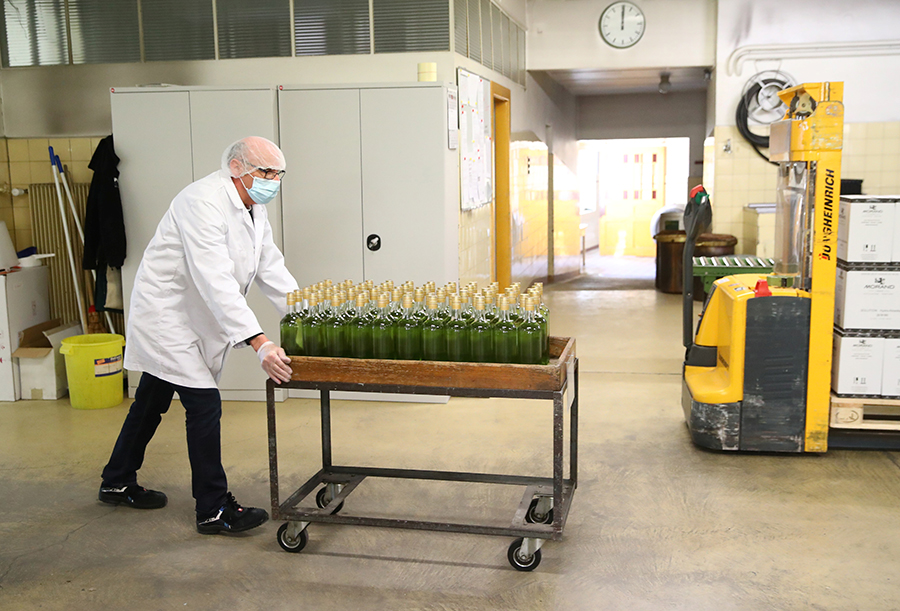
But as the coronavirus spreads rapidly around the world, prompting governments to take huge measures to protect public health and their economies, what sort of a role can social entrepreneurs play? One example is shown above, where a staff member brings bottles of pear and mint alcohol for labelling at Swiss distiller Morand, as the company starts using their fruit alcohol to produce hand sanitizer to meet local demand in Switzerland. We asked experts attending the Skoll World Forum — that was recently held virtually — how social entrepreneurs can help in the battle against COVID-19.

1. MICHELLE AREVALO-CARPENTER | CEO AND CO-FOUNDER OF IMPAQTO IN ECUADOR

“The global pandemic will put purpose-driven businesses to the test: will they abandon their impact during hard times or will they double-down and become examples of resilience? In times of deep crisis comes deep reconsideration about the way we as a society conduct business, so I am placing my bets on the second option: as social businesses, I trust we will show the world that doing well by doing good is the only way forward.”

2. LAURA WEIDMAN POWERS | HEAD OF IMPACT AT ECHOING GREEN IN THE UNITED STATES

“Social entrepreneurs who are proximate to the communities they support have long worked to build a more equitable and inclusive world, making them well-positioned to react nimbly in support of communities marginalized by failing systems throughout this pandemic. Greatly resourcing these leaders is critical to their impact mid-crisis, but it is just as important that this support continues post-pandemic to provide them the runway to rebuild and re-imagine our collective futures.”

3. EMILY BANCROFT | PRESIDENT OF VILLAGEREACH IN THE UNITED STATES

“Social entrepreneurs are a vital link between coordinated, country-level responses and those looking for active ways to help respond. This moment of urgency is forcing new levels of trust and collaboration that will hopefully last. We can’t afford to snap back into business as usual.”

4. SASKIA BRUYSTEN | CEO OF YUNUS SOCIAL BUSINESS

“It’s amazing to see many of our social entrepreneurs adapting their business models – like craft company RangSutra in India now producing masks instead of clothing and fabrics. But as an impact investing community we need to come together to ensure these companies receive short-term liquidity and payroll relief to survive this crisis.”

5. DON GIPS | CEO OF SKOLL FOUNDATION IN THE UNITED STATES

“Social entrepreneurs are already pivoting to more virtual models, embracing remote learning, combating misinformation, providing mental health support, and supporting critical supply chains. Many are stepping up in the fight against COVID-19 by partnering with government in different ways.”

By Sarah Shearman @Shearmans. Editing by Belinda Goldsmith.

Bono’s New Venture Takes Aim at ‘Fuzzy Thinking’ In Impact Investing

Impact investment funds must stop relying on “fuzzy thinking” about how much good they do, Bono said as he announced a tie-up with U.S. private equity company TPG to measure the social and environmental change they achieve.

Impact investing – which promises social and environmental benefits as well as financial returns – is growing, but the difficulty of measuring how much good it achieves has caused some major investors to be cautious.

A new company, Y Analytics, aims to bridge the gap between researchers and investors “to help decision-makers evaluate impact,” said a statement from the company

“To persuade the biggest institutional investors to commit their funds to tackling some of the world’s most urgent challenges we need to be as confident about the impact returns as we are about the financial returns – fuzzy thinking just won’t cut it,” added Bono. Bono launched his own $2 billion impact fund, Rise, with TPG in 2016.

Data from the Global Impact Investing Network (GIIN), a non-profit organisation that promotes impact investing, shows the number of social investment funds has quadrupled over the past 20 years to 200. GIIN estimates the industry is worth $228 billion, yet there is no standard global definition of what qualifies as an impact investment.

The Organisation for Economic Cooperation and Development has also called for more rigorous standards to prevent “impact washing” – where firms seek to disguise unpopular practices or overstate the impact of their investments.

By Sarah Shearman @Shearmans, Editing by Claire Cozens.