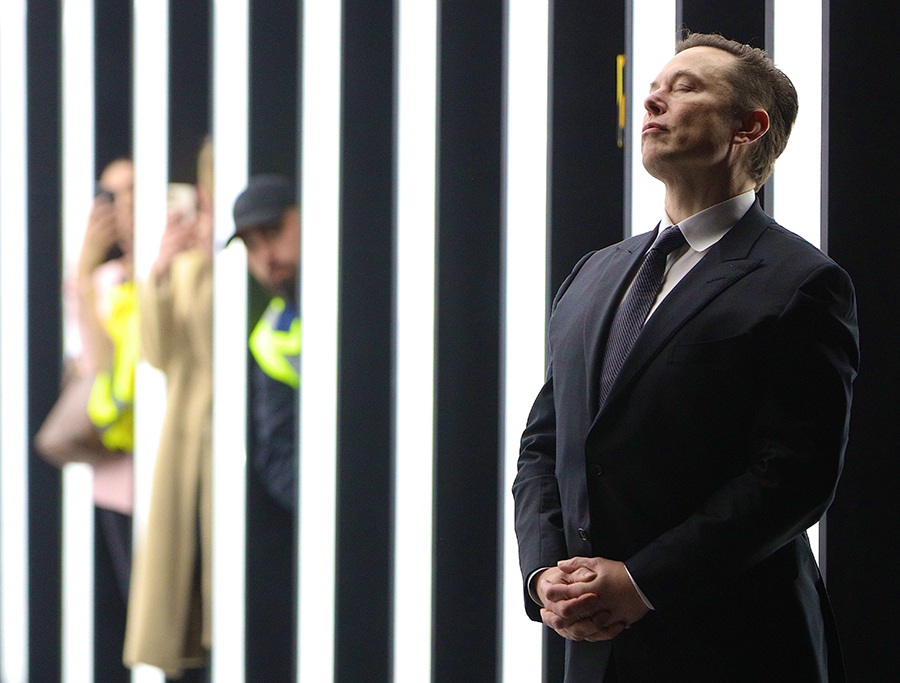
Elon Musk recently demanded that all Tesla staff return to the office full-time, according to an email sent to executive staff and leaked on social media. Musk said those who don’t want to come to office should “pretend to work somewhere else.”
This authoritarian, top-down approach rooted in mistrust and false assumptions goes against best practices. It speaks to an illusion of control that will undermine employee productivity, engagement, innovation, retention, and recruitment at Tesla.
One of Musk’s false assumptions involves the idea that employees “pretend” to work from home. In fact, research using both surveys and behavior tracking from the early days of the pandemic has shown that remote work resulted in higher productivity. More recently, academics demonstrated a further increase in productivity in remote work, from 5 percent in the summer of 2020 to 9 percent in May 2022. That’s because companies and employees grew better at working from home.
Yet despite this easily-available evidence, Musk wrote in another leaked email that those who work remotely are “phoning it in.” He highlights the importance of being visible and cites his own notoriously long working hours as an example.
Such a focus on visibility in the office speaks to a highly traditionalist leadership mindset underpinned by the illusion of control. This cognitive bias describes our mind’s tendency to overestimate the extent to which we control external events.
It’s especially prevalent in authoritarian executives who want to control their employees. They believe that having employees present in the office guarantees productivity.
In reality, research shows that in-office employees work much less than the full eight-hour day. They actually spend anywhere from 36 to 39 percent of their time working. The rest, according to these studies, is spent on other activities: checking social media, reading news websites, chit-chatting with colleagues about non-work topics, making non-work calls, and even looking for other jobs.
Musk’s desire for control is not simply emphatically unrealistic. It also goes directly against what we know is critical for productivity, engagement, and innovation for office-based workers: the desire for autonomy.
Studies show that we do our best work through intrinsic motivation, which involves autonomy and control over our work as a fundamental driver of effectiveness. Employees are most engaged, happy, and productive when they have autonomy. A key component of autonomy in the post-pandemic environment involves giving workers flexibility and self-control of where and when they work, rather than trying to shoehorn them into the pre-pandemic “normal.” And though Musk claims that forcing employees to come to the office under the threat of firing will help Tesla develop and make “the most exciting and meaningful products of any company on Earth,” a study of 307 companies finds that greater worker autonomy results in more innovation.
Musk’s obvious lack of trust in his employees contrasts with the much more flexible work policies of other organizations. That includes manufacturing and tech companies where Tesla’s employees might go. Consider the manufacturing company 3M’s approach, which the company explicitly calls “trust-based.” The company allows employees to “create a schedule that helps them work when and where they can most effectively.”
As another example of a potential place to work for Tesla staff, Applied Materials, a high-tech manufacturer, developed an “Excellence from Anywhere” modality. Rather than a top-down approach, Applied has a team-led model, where team leaders work with team members to figure out what works best for each team and employee. Applied is adopting best practices to facilitate innovation in remote and hybrid work such as virtual asynchronous brainstormingto sustain a competitive advantage.
Tesla’s research and development staff might also consider working in more research-focused tech environments, such as the Information Sciences Institute at the University of Southern California. By adopting research-driven approaches, ISI put itself in “a leadership position in terms of figuring out how to do hybrid work” through maximizing flexibility and autonomy for its staff.
Study after study after study shows that anywhere from 40 to 60% of employees would look for another job if forced to come to work against their wishes. And I would gladly eat my hat if we don’t see increased quit rates at Tesla as a consequence of a forced office return. After all, there’s a reason why a member of the executive staff leakedMusk’s emails on returning to the office.
Indeed, we immediately witnessed pushback against Musk’s demands for an office return by employee representatives in Germany, which has the first worker’s union across the whole of Tesla. Those without union representation will vote with their feet. My information indicates that recruiters are already using Musk’s words to target desirable Tesla employees. Musk’s illusion of control and false assumptions will result in serious losses to Tesla and a gain for companies that are innovating about the future of work.