Tim Cook to Apple Investors: Drop Dead

Apple CEO Tim Cook tells Investors Who Care More About Return on Investment than Climate Change: Your Money is No Longer Welcome.

At the annual meeting of Apple shareholders in Cupertino, California, in February this year Apple CEO Tim Cook informed investors that are primarily concerned with making reasonable economic returns that their money is no longer welcome.

The message came in response to the National Center for Public Policy Research’s shareholder resolution asking the tech giant to be transparent about its environmental activism and a question from the National Center about the company’s environmental initiatives.

“Mr. Cook made it very clear to me that if I, or any other investor, was more concerned with return on investment than reducing carbon dioxide emissions, my investment is no longer welcome at Apple,” said Justin Danhof, Esq., director of the National Center’s Free Enterprise Project.

Danhof also asked Apple CEO Tim Cook about the company’s green energy pursuits. Danhof asked whether the company’s environmental investments increased or decreased the company’s bottom line. After initially suggesting that the investments make economic sense, Cook said the company would pursue environmental goals even if there was no economic point at all to the venture. Danhof further asked if the company’s projects would continue to make sense if the federal government stopped heavily subsidizing alternative energy. Cook completely ignored the inquiry and became visibly agitated.

Danhof went on to ask if Cook was willing to amend Apple’s corporate documents to indicate that the company would not pursue environmental initiatives that have some sort of reasonable return on investment – similar to the concession the National Center recently received from General Electric. This question was greeted by boos and hisses from the Al gore contingency in the room.

“Here’s the bottom line: Apple is as obsessed with the theory of so-called climate change as its board member Al Gore is,” said Danhof. “The company’s CEO fervently wants investors who care more about return on investments than reducing CO2 emissions to no longer invest in Apple. Maybe they should take him up on that advice.”

“Although the National Center’s proposal did not receive the required votes to pass, millions of Apple shareholders now know that the company is involved with organizations that don’t appear to have the best interest of Apple’s investors in mind,” said Danhof. “Too often investors look at short-term returns and are unaware of corporate policy decisions that may affect long-term financial prospects. After today’s meeting, investors can be certain that Apple is wasting untold amounts of shareholder money to combat so-called climate change. The only remaining question is: how much?”

The National Center’s shareholder resolution noted that “[s]ome trade associations and business organizations have expanded beyond the promotion of traditional business goals and are lobbying business executives to pursue objectives with primarily social benefits. This may affect Company profitability and shareholder value. The Company’s involvement and acquiescence in these endeavors lacks transparency, and publicly-available information about the Company’s trade association memberships and related activities is minimal. An annual report to shareholders will help protect shareholder value.”

Apple’s full 2014 proxy statement is available here. The National Center’s proposal, “Report on Company Membership and Involvement with Certain Trade Associations and Business Organizations,” appears on page 60.

The National Center filed the resolution, in part, because of Apple’s membership in the Retail Industry Leaders Association (RILA), one of the country’s largest trade associations. In its 2013 “Retail Sustainability Report,” RILA states: “Companies will often develop individual or industry voluntary programs to reduce the need for government regulations. If a retail company minimizes its waste generation, energy and fuel usage, land-use footprint, and other environmental impacts, and strives to improve the labor conditions of the workers across its product supply chains, it will have a competitive advantage when regulations are developed.”

“This shows that rather than fighting increased government regulation, RILA is cooperating with Washington, D.C.’s stranglehold on American business in a misguided effort to stop so-called climate change,” said Danhof. “That is not an appropriate role for a trade association.”

For even more information on RILA, read “The Retail Industry Leaders Association (RILA): A Cartel that Threatens Innovation and Competitiveness,” by National Center Senior Fellow Dr. Bonner Cohen.

“Rather than opting for transparency, Apple opposed the National Center’s resolution,” noted Danhof. “Apple’s actions, from hiring of President Obama’s former head of the Environmental Protection Agency Lisa Jackson, to its investments in supposedly 100 percent renewable data centers, to Cook’s antics at today’s meeting, appear to be geared more towards combating so-called climate change rather than developing new and innovative phones and computers.”

After Danhof presented the proposal, a representative of CalPERS rose to object and stated that climate change should be one of corporate America’s primary concerns, and after she called carbon dioxide emissions a “mortal danger,” Apple board member and former vice president Al Gore turned around and loudly clapped and cheered.

“If Apple wants to follow Al Gore and his chimera of climate change, it does so at its own peril,” said Danhof. “Sustainability and the free market can work in concert, but not if Al Gore is directing corporate behavior.”

“Tim Cook, like every other American, is entitled to his own political views and to be an activist of any legal sort he likes on his own time,” said Amy Ridenour, chairman of the National Center for Public Policy Research. “And if Tim Cook, private citizen, does not care that over 95 percent of all climate models have over-forecast the extent of predicted global warming, and wishes to use those faulty models to lobby for government policies that raise prices, kill jobs and retard economic growth and extended lifespans in the Third World, he has a right to lobby as he likes. But as the CEO of a publicly-held corporation, Tim Cook has a responsibility to, consistent with the law, to make money for his investors. If he’d rather be CEO of the Sierra Club or Greenpeace, he should apply.”

“As in the past, Cook took but a handful of questions from the many shareholders present who were eager to ask a question at the one meeting a year in which shareholder questions are taken,” added Ridenour, “leaving many disappointed. Environmentalism may be a byword at Apple, but transparency surely is not.”

The National Center for Public Policy Research, founded in 1982, is a non-partisan, free-market, independent conservative think-tank. Ninety-four percent of its support comes from individuals, less than four percent from foundations, and less than two percent from corporations. It receives over 350,000 individual contributions a year from over 96,000 active recent contributors.

 

The CEO of Coca-Cola On Using The Company’s Scale For Good

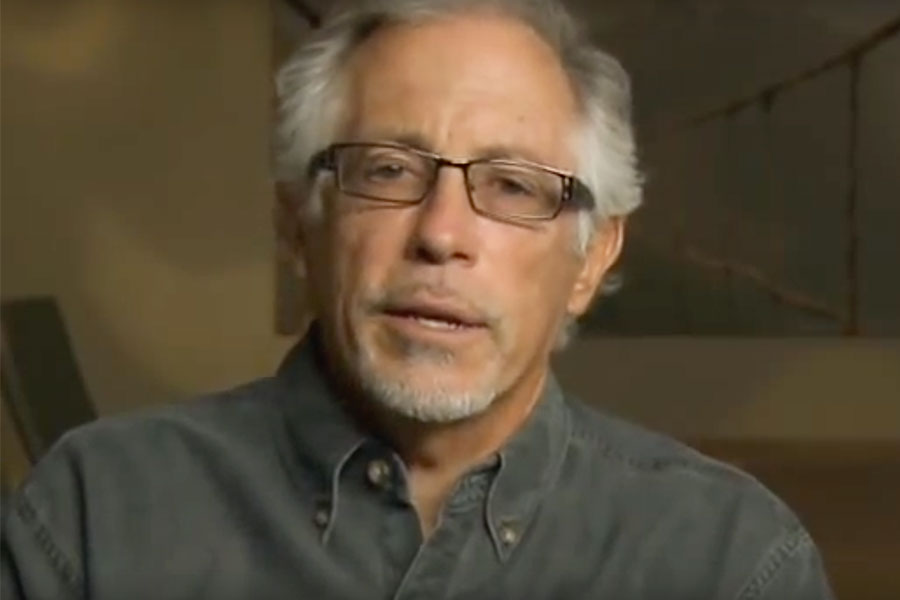
Recent research shows spending money on corporate social responsibility is no longer seen as a detriment to a company’s profitability. Stock analysts now view such expenditures as essential to a company’s long-term brand and value. Coca-Cola is one of the many companies that are making efforts to tackle the world’s greatest societal challenges — water scarcity, climate change, and even the rights of women and girls in the developing world. Muhtar Kent, (pictured above) the Chairman of the Board and CEO of Coca-Cola since 2009, talks about how the beverage company is imbedding sustainability into its business.

Over the past several years, corporate social responsibility (CSR) has evolved from simply being an isolated “do good” arm of a company to something more profound that’s changing the way organizations do business every day. How has Coca-Cola integrated these CSR principles into your operations?

Kent: Sustainability isn’t new to us but we’ve been intensifying our focus on it. We’re prioritizing programs centered on water, women and well-being—all three of which are essential to our business. For example, we’re working to achieve water neutrality by 2020. So far, we’ve replaced 52% of the water we use in making our beverages and reducing water usage across our 800-plus bottling plants helps reduce the overall cost of production. We have also committed to economically empowering 5 million women by 2020. This is the largest such program ever undertaken by a commercial organization. Our micro distribution centers (MDCs) in Africa, many of which are run by women, help our beverages reach small shops and kiosks that can’t be served by more trucks and vans and create value for our business, our retail and restaurant customers, and the broader communities.

Restructuring a company to focus on sustainability doesn’t happen overnight, so how long did it take to get everyone on board and how did you deal with any resistance to change?

Sustainability can no longer be a compliance measure or a “nice-to-do”; it’s now a business planning imperative with measures, goals, and explicit value connected to our programs. Because of this importance, we didn’t really experience any resistance. There were certainly people who challenged our approach and provided candid feedback on how we could improve but overall there was collective agreement that this was necessary.

If the ultimate goal is to create both economic value and social value, how do you strike that balance?

There may be an initial financial investment that doesn’t create an immediate and direct financial return—that’s OK. We know that by investing today, we will ultimately be a stronger, more sustainable business down the line. For example, developing our PlantBottle innovation — a fully recyclable packaging made of up to 30% renewable plant material — took significant upfront investment but we felt it made good sense, especially with oil prices fluctuating. And it’s helping contribute to our goal of reducing the carbon footprint of the drink in a consumer’s hand by 25% by 2020. It has also been a tremendous boost to our Dasani water brand, helping us win new customers and consumers.

Have you faced any specific challenges in measuring the social value you’re creating?

Coca-Cola operates in more than 200 countries and the needs of each market depend on a variety of factors. While some markets face economic issues, others may face resource scarcity and gender inequality, and some face all of these issues and more. It can be difficult to measure and compare. Thus, we operate a value creation model that is globally driven but locally focused.

Can you explain what you mean by a “value creation model”?

I mean one that creates value for all the stakeholders touched by our business. Consider PlantBottle. We’re able to put a package in consumers’ hands that reduces demand for oil. If consumers love our beverage more, that benefits our customers. And when the packaging is less expensive and we’re less dependent on petroleum-based plastic, this creates value for our shareowners and our bottling partners.

What is Coca-Cola doing that’s different from what other companies are doing?

There are a lot of companies and organizations out there doing great work but our scale allows us to think big and execute. It’s not just our size as a company or a brand, but the fact that we have operations in more than 200 countries. This footprint enables us to set up partnerships with organizations large and small to make the greatest local or global impact. We can fund projects at levels that make a real difference. And often times, we can use the size and nature of our operating model to address a need in a significant way.

We also have our distribution network, which connects us directly to the 24 million retail customers we visit every week. As the world strives to bridge the gap of the last mile between the virtual world and the real world, we have an opportunity to help make this connection. We’re continuously working to make the most of our distribution network as well as our virtual and physical assets.

How much of your company’s move in this direction is customer-driven vs. conscience-driven?

Today’s consumers expect companies to be socially responsible — not just on the surface either. Our brand is in our consumers’ hands but that’s not the primary reason for our sustainability efforts. Our efforts are primarily fueled by our business needs — we can only be as sustainable as the communities we serve so we’ve initiated a host of programs and partnerships to help strengthen those communities while continuing to build our business.

We also have ethical drivers for our sustainability work. Across Coca-Cola, we are parents, partners, siblings, friends, concerned citizens — and we live in the communities where we operate. We have a responsibility to help others.

How has your organization gone about partnering both at the local level and at the national level to ensure that the social value you’re creating on the ground is recognized and supported with policies and governance?

We work with governments, civil society organizations, and other companies. It’s essential to invite the groups that influence policy and governance to be part of the initial conversations so they share ownership from the start. Plus these organizations often have valuable local intelligence and experience

Consider our work in Tanzania with the Bill & Melinda Gates Foundation and The Global Fund to Fight AIDS, Tuberculosis and Malaria. In 2010 we joined forces to improve access to critical medicines. Working with the Tanzania’s Medical Stores Department and others, we were able to share our supply chain expertise, reduce medicine bottlenecks, and improve distribution as a whole.  We try to use our expertise and know-how to make a positive difference in the communities we serve.

Looking at businesses and consumers of the future—10, 20, 30 years from now—what will happen to organizations that fail to integrate social and environmental concerns into the core of their daily operations?

In my opinion, the importance of balancing social and economic value will only grow over time and organizations that don’t do this will fail. They’ll lack the resiliency to address ever-changing consumer attitudes and shifts in geopolitics, economics, and demographics.

For Coca-Cola, many of the most exciting opportunities are likely to come from the intersection of sustainability and our supply chain, giving us new ways to reduce our packaging, energy, and water footprints and improve the well-being of the communities we serve. While we’ve gained some good momentum with initiatives like 5by20EKOCENTER and PlantBottle, we know we’re just getting started. Sustainability is an ongoing journey, one that we hope and trust will build forward momentum as we remain “constructively discontent.”

What do you mean by “constructively discontent”?

It’s my way of recognizing achievement but also understanding that we can never be satisfied with it. We must refuse to accept the status quo and continue to challenge ourselves. We have to keep setting higher goals and expectations and then meet or exceed them. And at the end of the day, we need to operate with a lens of optimism, but temper it with a lens of reality.

This is part of an ongoing series from Harvard Business Review and the Skoll World Forum on how mega-corporations are integrating innovative ways to solve social and environmental problems into their core operations.

Your Job is a Temporary Consulting Contract – Invest in a Bigger Payoff

One of the saddest facts we face today is that so many people have quit looking for work. These are people who would like to work but can’t find a decent job. In many cases they can’t find any job.  Although the Bureau of Labor Statistics puts our unemployment rate of about 6.3% that number is almost meaningless. If you add in people who have been unemployed for over six months and are too discouraged to actively look for work the unemployment number is well over 10%. Almost as bad is the number of people estimated to be under-employed.
 
These are people who are either working part-time or whose skills, education and experience significantly exceed the requirements of their job…like bartenders with Masters degrees.  Almost 25% of working Americans are under-employed…wow what a waste. One of most heartbreaking segments of the long-term unemployed are people over age 50 caught in job elimination schemes due to mergers or restructuring.
 
As you may know, most businesses want younger employees with smaller salaries so being jobless at 50 or 55 is especially gut wrenching. I try to help many of these people who have enough of a sense of humor to call themselves suddenly retired. Yet there’s nothing funny about it. Gallops’ research on personal well-being puts work satisfaction at the pivot point of our lives. Of course people’s health and family relationships are more important than work but the quality of our work life has the most impact on our daily stress, our sense of personal security, and future opportunities. Lousy work makes for a lousy life.
 
If you think I may be overstating it consider that research on depression shows that it is more difficult to overcome the negative mood effects of long-term unemployment than divorce or the death of a spouse.
 
This is true even when someone finds a job after a long stint of being unemployed. At another time I will write about how the leadership mindset in our current economy is more designed to exploit labor now than in previous decades. For now I’ll just say our economic–political system is operating at the intersection of stupidity and self-interest that is toxic. And let me assure you this is not something theoretical to me. It is something I witness almost daily as I work with leaders.
 
So what are we to do?
 
Well as you know I am a raving evangelist urging you to take complete control over your career and the quality of your work life. Here’s why. Today, employment is an illusion. We used to have a social contract with our employers in which we would give up our personal autonomy for promise of security. Since that contract has been broken as far as security goes, we are foolish to give up our autonomy. Today we are in business for ourselves no matter who signs your paycheck. We are all contingent workers. Your career is your business.
 
Whatever job you have today is a temporary consulting contract.
 
You are always working for yourself. Period. End of story. What this means is that you are never unemployed. Wait…what? Look, your career is a constant. You’re either working or looking for a new client or temporary employer. This is the mindset you need to not be thrown off your game when you suddenly find yourself terminated by external events. This mindset is essential to your psychological well-being and your practical success.
 
Now, there are two critical success factors you must pay attention to. 
 
The first is you. People will only hire you if they are clear that they will make more money by paying you versus what you will cost. You have to present yourself with a unique value proposition just like a business. Why do you shop at Target rather than the Dollar Store? Why would you buy an iPhone over a Samsung or vice versa? Every successful business needs to offer a clear bundle of distinct benefits to attract customers. So do you.
 
It’s absolutely necessary if you are serious about attracting a stream of employers or clients…or if you want to start your own enterprise. Remember, your economic security is not based on who is paying you now. It’s based on your ability to create value for others and sell that value. The most powerful selling message is being very clear on how you will help other employees or clients either make money or save money… grow or profit.
 
The second success factor is to focus on your customer.
 
If you’re working for someone your customer is your boss. His or her goals are your goals. Treat your boss like a client and they will be pleased. Just remember your bosses’ satisfaction with you has little to do with you keeping your job. In crazy world, all of that is outside of your bosses’ control. If working for someone else has become too much of a grind I encourage you to start your own business. You won’t be alone.
 
It’s interesting that women are getting very excited about taking charge of their future. According to American Express, they are starting an estimated 1,288 companies each day.  For either men or women most businesses start during a recession. But our recovery from the last recession has been so uneven that new business formation is rising even as the economy recovers.
 

If you are starting a business you will most powerfully attract customers if you have a distinctive product or service that helps them:

  • Enjoy their lives more
  • Makes them healthier
  • Make them smarter
  • Makes them richer
  • Make them more popular or attractive
  • Makes their lives simpler
  • Makes their lives more meaningful
I’m sure there are other benefits that successful businesses offer but these are the big ones. Now if you are thinking of starting a business don’t be discouraged by anything you’ve heard about the high failure rates of new businesses. They don’t really apply to you.While it’s true that for businesses backed by venture-capital only three make money and only one is a hit. Don’t worry about that.
 
In businesses that are self-financed and grow themselves through customer revenue, 7 out of 10 generate enough net income to be self-sustaining.
 
The key is to make enough money from your business to stay in business for at least five years. 93% of all new businesses change their product or services to achieve success. You’re plenty smart enough and agile to make those adjustments. The number one reason why small businesses or consulting practices shut their doors is because the owners decide to do something else…not because of business failure.
 
So the key is to do something that is both enjoyable and meaningful…those are the two drivers that will sustain you during the storms of self-doubt and dicey cash flow. The benefits of personal and psychological freedom are profound. Research confirms that you have to make twice as much money when you are employed by others to equal the job and life satisfaction of being self-employed. Now that’s something to think about.
 
As I hope you can tell, I feel very strongly about this topic…so strongly that I recorded a free course I titled How to Stop Looking for Work and Start Working.
 
This is not so much a course in entrepreneurship as it is an unusual set of principles and tips about how to take charge of your work opportunities right now. You don’t need a business plan just some gumption. It’s a series of videos and study guides that you can access by clicking here.It is absolutely free.
 
Many of you have been through a workshop I present call Supercharge Your Career… this is not that. This is for people who are out of work or thinking they may be soon. I think you will find many useful ideas you have never heard or seen anywhere else. I filmed it in my living room with my good friend Michael who is an award-winning filmmaker. Marcello is the videographer who makes it creative and interesting on a tiny budget. Please take a look. If you don’t have a need for this kind of thinking right now I’m sure you know somebody who does.
 
Just pass it on.
 
Yesterday someone asked me why I created this course.  The answer is simple…I am so sick and tired of seeing so many people who have been made very sick and tired by a crazy economy.The best investment you can ever make is not in the stock market it’s in yourself!
 

5 Powerful Phenomena Shaping The Philanthropic Journey of the World’s Wealthiest

Are we in the midst of a turning point for philanthropy? Are these the boom years of ‘philanthrocapitalism’? Though the practice is not entirely new, the term was coined in 2006 by Matthew Bishop, US business editor of the Economist to describe a philanthropic culture that draws heavily on business talent and entrepreneurship. Isabelle de Grave explores the powerful phenomena guiding the world’s wealthiest towards an increasingly entrepreneurial style of philanthropy. As it turns out, these may well be the boom years.
 
Carnegie’s gospel.
 
Andrew Carnegie, a Scottish-American industrialist and 19th century steel giant had a way with words that has captured the imagination of the super rich.
 
“The problem of our age is the proper administration of wealth, that the ties of brotherhood may still bind together the rich and poor in harmonious relationship,” he wrote in his essay “Wealth” first published in the North American Review in 1886.
 
Carnegie believed that the rich had a responsibility to use their acquired wealth and business skills to administer wealth for the common good and solve society’s biggest challenges.
 
The rich “have it in their power during their lives to busy themselves organising benefactions from which the masses of their fellows will derive lasting advantage – and thus diginify their own lives,” he argued.
 
Carnegie had disposed of 90% of his vast fortune by the end of his life, and built thousands of public libraries across the US. His philanthropic legacy has sparked something of a chain reaction among successive business tycoons. Warren Buffet, long before he gave $31 billion of his fortune to the Gates foundation in 2006, gave Carnegie’s book “The Gospel of Wealth” to Bill Gates. This guided Gates’s approach and“ helped him to become a philanthropist,” write Matthew Bishop US business editor of the Economist and economist Michael Green in their book, Philanthrocapitalism: how giving can save the world.
 
Whilst philanthrocapitalism involves more than simply setting up a foundation, it is significant that the past few decades have seen an explosion of foundations set up by wealthy entrepreneurs. Numbers of new private foundations are up from about 22,000 in the early 1980s to 65,000 today. Many were founded in the mid-1990s with dotcom money by individuals with careers forged on entrepreneurial zeal, and many of the founders are younger than in the past according to a detailed report by The Economist tracking the latest trends in philanthropy.

The ‘tech effect’ on philanthropy. The dotcom boom injected a huge dose of entrepreneurship into the world of philanthropy, and gave rise to the term ‘venture philanthropy’ based on the idea that Silicon Valley’s entrepreneurs would transfer their creative skills to the foundations they were setting up. An increasingly business like vocabulary has grown around the sector, reflecting the goal to maximise the impact of wealth. Today, the best foundations are increasingly businesslike. They are “strategic” and “market conscious”, “impact oriented”, “knowledge based”, “high engagement” and always looking to maximise “leverage” of donor money explain Bishop and Green. 

Their task as they see it is not about handing out money, but of forging alliances and building networks: with government and industry, or among groups of charities. The Gates Foundation’s partnership with ‘Big Pharma’ is one example of the strategising behind today’s philanthropic ventures. Since 2000 The Gates Foundation has worked with GlaxoSmithKline (GSK) on preventing the spread of HIV and AIDS and Malaria – a partnership, which has produced a promising malaria drug for infants by switching the focus of GSK’s top scientists from research objectives with short-term commercial gain to global health issues. The birth of social entrepreneurship and giving the Ebay way.

Bishop and Green describe the philanthropic statement that Pierre Omidyar founder of Ebay and his first employee Jeff Skoll made in 1998. It was on trend mirroring the risky business of tech, and it was edgy. They strolled into Silicon Valley Community Foundation and made an offer of a $1 million block of shares. Their one condition was that the foundation keep the shares for a year, a term that many others rejected. A year later the foundation sold its shares and banked $40 million. They were either very sure of themselves, or habitual risk-takers. 

Bishop and Green call giving the Ebay way a feat of generosity as they had not yet banked anything themselves. Soon after, Skoll was drawn swiftly and sharply into the world of social entrepreneurship, where people were building businesses to tackle social problems. The blend of ambition to create change powered by entrepreneurial skills held Skoll’s attention and mobilised his resources. He created the Skoll Foundation, endowed the Oxford Said Business school to set up the Skoll Centre for Entrepreneurship and began hosting the annual Skoll World Forum. Each year the Skoll Foundation awards $1.25 million over three years to social enterprises on the verge of growth significant enough to create better futures for millions.

Social enterprise also emerged as the perfect match for the money of the business-minded philanthropist, Pierre Omidyar who went on to found the Omidyar Network, and began investing in micro-finance and for profit social businesses including IGNIA a Mexican venture capital firm and Meetup.com, a platform bringing together communities based on shared interests. Today social enterprise is increasingly gaining support from venture philanthropists like Skoll and Omidyar, and engaging with investors with both social and financial goals.

Social investment and tax reliefs.  

Social investment is investment with a philanthropic twist. It is a phenomenum gradually funnelling capital towards social causes as social investors look for opportunities to use their investments for the broader benefits of society. Simply put the social investor looks for both social and financial returns on their investments. Most often this comes from investing in social ventures. There are increasing numbers of firms with this mandate, including Bridges Ventures, the Social Investment Business and Big Issue Invest who all back social ventures.

There are also organisations like ClearlySo, which connects social businesses and enterprises with investors. And, with a new social investment tax relief in the UK social investment is increasingly visible to mainstream investors. For Sir Ronald Cohen this is the tech effect continued, a natural progression from venture capitalism. Sir Ronald made his own private fortune investing in tech enterprises, and is widely credited as the father of social investment.

After co-founding social finance firms Bridges Ventures, and Social Finance UK he recently became chair of the G8 Social Investment Taskforce, which is looking to integrate social investment into the mainstream economy. Cohen is a strong advocate for linking social and financial return, and sees social enterprise as the wave that will follow the tech explosion. The age of the ‘social good network’. A century on from Carnegie’s essay, and hot on the heels of the tech effect and the birth of social investment a growing number of social good networks and conferences have emerged. There is already a lengthy conference circuit where individuals can connect their finance and business skills to social causes.

There’s the Global Philanthropy Forum in the US, a network of high-net-worth individuals committed to advancing international causes through their giving, investing, and policy voice. And, just a few of the popular conferences on the global circuit include the Skoll World Forum, the UK’s annual social investment conference Good Deals, the GIIN investor forum and Social Capital Markets (SOCAP) a gathering of individuals and organisations dedicated to directing market systems to social impact.

And now for the first time in the UK a six month leadership programme is being launched inviting international wealth holders and inheritors, entrepreneurs, investors and pioneering individuals to learn, connect and act with like-minded others. The Pioneers for Change Leadership Programme is designed to inspire, equip, connect and support leaders who want to explore and elevate their potential for positive impact. Continuing the Carnegie legacy and in keeping with the Sillicon Valley brand of philanthropy, the programme aims to ignite a revolution, and foster international leadership in philanthropy, social investment and entrepreneurship.

These different influences are shaping today’s approaches to philanthropy in the midst of a wealth transfer of gargantuan proportions. Years of accumulated wealth—in Europe and America—are about to change hands, as the post-war generation dies off. One estimate from a study in America, by Paul Schervish and John Havens of Boston College puts the size of the transfer likely to occur in the US between 1998 and 2052 as somewhere between $41 trillion and $136 trillion. There is an enormous amount of money available, and as an entrepreneurial culture takes root in the world of philanthropy, these may well be the boom years of philanthrocapitalism. 

The original article appeared on Pioneerspost.com. Pioneers Post is the media partner for the Pioneers for Change Leadership Programme delivered by Adessy Associates. This article is from a series of monthly articles exploring the changing world of philanthropy. 


How to Avoid the One Thing You’ll Most Regret

You better have an agenda for your life or someone might steal it from you. I am getting very busy lately coaching women leaders. What I’m finding is a new level of restlessness. A kind of “I’m not to take this anymore” energy that used to be invisible.  I think that now that the economy is showing some signs of life talented people are getting friskier. This seems to be true for both men and women but it’s definitely more pronounced among women.
 
This inner energy for change…for something better, something…fairer…something more meaningful is not surprising to me. What we are all getting sick of this world run on “hard power” while it depends on “soft power” to get good things done. Let me explain. Hard power is a way of thinking that is distinctly male.
 
When male babies are in gestation their brains become bathed in testosterone. This kick-ass hormone helps shape their brains to be highly sensitive to competition and status. Later, as boys grow into men they’re socialized to be aggressive goal achievers and pack leaders. Since their brains are prewired for this behavior it seems very natural. Of course not all men are extreme, hard power competitors. But psychological and social research  points to a clear majority being principally wired this way. Notably a few women are as well…but probably less than 20%. Baby girl brains enjoy a soft “bubble bath” of estrogen which seems to prewire the female brain for emotional intelligence and social connection.
 
Like anything this is good except when it’s not.
 
It’s not good when women are simply expected to be pleasers and doers. So here’s what’s going on in many workplaces today. Hard power men are very used to setting goals and demanding accountability. The way they are used to driving success is to demand success and punish failure.
 
But that’s no longer working very well.
 
Now organizations have to be agile, innovative and collaborative or they will simply fail in the marketplace.
 
So today, in most organizations I walk into, men remain at the top and women are getting a lot of the work done.
 
That’s true because hard power is not agile or collaborative and it does a poor job of inspiring innovation. Men who set goals that rely on women to achieve them may sound a lot like how it works at home. I just read that fewer than 20% of men in households with two working spouses regularly help with laundry or vacuuming. In fact, according to the Pew Foundation research, working women spend an average of 31 hours a week doing house work and childcare while working men spend about 17 hours a week.
 
I don’t bring this up to make you mad.
 
I’m just pointing out that the thousands of years of civilization built on hard power has created a social system and an economy in which hard power leaders set the agenda and soft power doers keep people glued together enough to get stuff done. If you’re one of the soft power people this arrangement is not healthy. In fact it is very stressful and ultimately life-threatening. Recent research reveals that workers who were the most susceptible to heart attacks and stroke are those that have high demands and low-power. According to the Department of Labor statistics, that accounts for over 80% of today’s jobs. It’s almost gruesome. Like all good solutions the way out of this problem is not to complain about it, shake your fist or demand that hard power people soften up. It just doesn’t work.
 
The real solution is to have an agenda for you.
 
The real solution is to have career, family and personal goals that you’re unwilling to compromise. Not everything should be negotiable…especially not your health, your relationships or your career satisfaction. If you don’t care about these things, believe me no one else will. One thing I frequently hear in the halls of most businesses today is that life-balance is no longer an issue because it’s simply impossible.  Today’s technology has killed it. Well it may also kill you. As the saying goes technology is a great servant but a terrible master. So while hard power leaders may declare that life balance is no longer relevant, research from Blessing and White indicates that life balance is still a huge concern among women… especially women with children. (I think this is where Sheryl Sandberg says, “Deal with it.” Really?) On the other hand you could resist.
 
Every time you open your e-mail inbox you’re looking at other peoples’ urgencies and goals.
 
If you’ve created an expectation that you will respond like a 911 operator you will never have time to pursue what’s most important. And there will always be plenty of hard power people in the world who will gladly make use of your empathy and desire to help to achieve their ends.
 
So here is what I advise women and all soft power driven leaders to do.
 
Develop hard and meaningful goals. By hard I don’t mean difficult. I mean measurable. I mean uncompromising.  Stand for something. Make it your agenda. Commit to it. Talk about it. Inspire others to help. And when somebody offers to help hold them accountable. I want you to understand your strength.  When a person with a soft power orientation who can easily empathize, collaborate and build consensus uses hard power skills to establish a clear direction, layout measurable goals, and drive results they attract armies of committed followers.
 
Today, we long for businesses that exist for a reason.
 
We long for leaders that are motivated by something greater than their self-interest. Nearly everyone is looking for meaning…something to believe in…a way to make a difference that matters. So much of business today is either engaged in trivia producing and selling of stuff we simply do not need, or in negative innovation which wastes the brains of smart people, creating products that actually harm us. (Have you seen Taco Bell’s waffle taco? Has anybody at Yum Brands heard of the diabetes epidemic…what a tragic waste of human effort.)
 
So let me get specific.  The demands of other people’s hard power agendas infect the psychological air we breathe.  Here is how you put on a gas mask.
 
When you wake up in the morning do not open your e-mail. If you do open your e-mail it will immediately change your early morning creative thinking patterns and trigger stress energy. Instead, take ten deep breaths saying the following with your Inner Voice. As you breath in say “Breathe in values.” As you exhale say “Breathe out vision.” Just let your creative mind do what it’s designed to do. Don’t try to direct it… just experience what values come to mind. And just notice how these values direct you toward your vision.  After you finish your 10 breath meditation write down your thoughts.
 
Don’t edit them. In my experience the vision you will become aware of is the career and life your bold and confident self wants you to live. Okay, okay I know this sounds ridiculously woo-woo. But it’s what I do and it’s what I’m teaching others to do so we can get clear on our best path forward. All I ask is that you give it a try with a little persistence. Try it for a week.  It may take a few days to clear the clutter out of your mind so that you can really experience the voice of your higher self. Also, if you persist, you’ll get clearer and clearer and your vision will become more specific.
 
Then just start. Launch your vision. Set goals. Hold yourself accountable. Go. 
 
Multiple research studies indicate that the greatest regrets that people have at the end of their life is that they didn’t create or seize opportunities that were important to them. I want you to avoid that regret. Not everything you try will work.
 
But nothing will work if you don’t try.
 
We need leaders with soft power hearts to use hard power skills to create a future of sustainable abundance. If this does not happen on a massive scale we will continue to get what we’ve already got.
 
This is not the best we can do.
 
Go ahead close your eyes and breathe.


Statistical Poison in Leadership

“Statistics provides an obsessional defense against the terror of choosing.” (L.J. Neilson MD). A distribution of probabilities is enormously useful in scientific exploration, in narrowing options, and sometimes in discarding unpromising paths. In leadership, however, it can be fatal. Leading an organization, by definition, includes making choices in the face of uncertainty. Uncertainty means that failure is an option, hence the “terror”. In the face of the terror of choice, winning leaders focus on improving the odds of success through preparation, analysis, etc.

This focus is on the path, not the target. Successful leaders recruit information from many sources, including soft judgments by others. In these big choices, the gut still matters. Nowhere in this calculus is a probability of success or failure. It’s interesting, but not useful, except to avoid absurd risk. The target is chosen because it seems possible, with a payoff that justifies the investment. Using statistics to set targets pulls toward the median, or mediocre (same root).

Venture Capital guru Ben Horowitz (pictured above), in his book The Hard Thing about Hard Things, observes that the terror of choice can’t prevent a leader from choosing, if he seeks success. And probabilities won’t lead to a better choice. Instead, relentless focus on the target is the most likely path to success. Or, there is no easy way to be a successful leader. Shortcuts don’t cut it.


GameChangers 500: The World’s Top Purpose-Driven Organizations

Social enterprises, benefit corporations, blended value organizations, conscious capitalism; there are no shortage of buzzwords describing this monumental movement to create a new model of business.

But if you want to build one of these “force-for-good” businesses, is there a model to follow? How do you measure your success or failure? And if you want to work at one of these purpose-driven orgs, how do you find and differentiate the performers from the pretenders?

For the past three years I’ve been on a quest to answer these questions. I had watched one too many friends grow numb in profit-at-all-cost corporations, and couldn’t sit on the sidelines any longer.  Why is it that we spotlight the Fortune 500, a list that benchmarks success based on revenue alone? What if we created a new list that showcased the growing movement of organizations maximizing their positive impact rather than just maximizing their profit?  My “Aha” moment had arrived and the idea to create a GameChangers 500 (GC500) list was birthed—a list that would help emerging graduates find meaningful careers and plug their potential into powering a better world.

Equipped with blind ambition, I gave myself the title of social entrepreneur and then proceeded to spend three full months deliberating between a non-profit, for-profit or hybrid legal structure. It felt like choosing between broccoli, spinach or broccoli-spinach casserole—all of which were overcooked and a week old.  Further, figuring out a unique profit-sharing model took so much time that I nearly went out of business in the process! Where was the playbook of best practices on how to build a business that helps people and the planet thrive?  And how could I possibly create a database of the best “force for good” businesses if the rules of this new game weren’t defined?

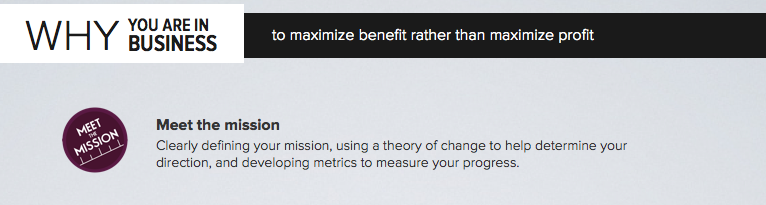
Before the performers could be praised, the objectives, rules and point system of this new game needed to be determined.  It was clear that the objective wasn’t to maximize profit but rather to maximize benefit to people and the planet. What wasn’t clear, however, was how to keep score.

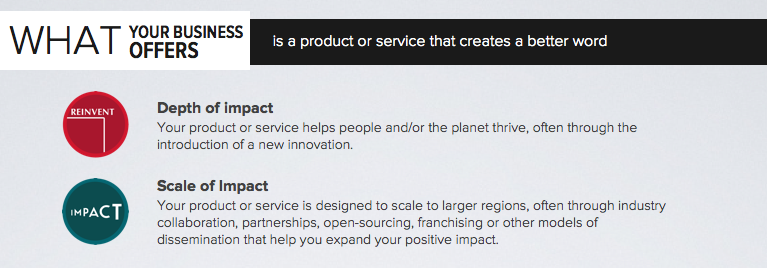
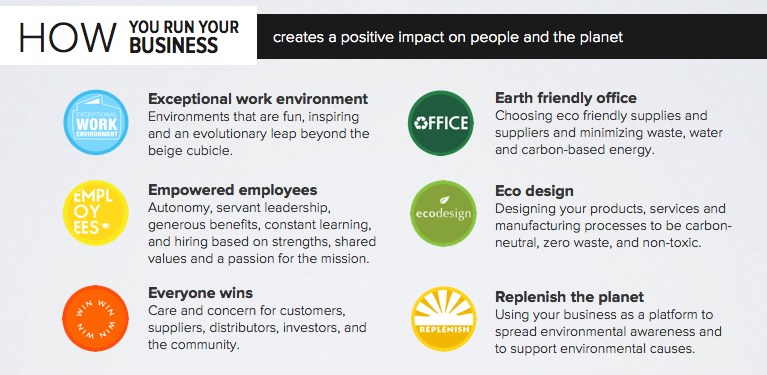
After receiving valuable input from experts in the field, we assembled a research team to comb the globe, reviewing thousands of organizations. Our team arrived at nine categories of best practices that these “force for good” businesses followed.

We then turned these nine categories into badges that organizations could earn as symbols of success in this new game. To further simplify the framework, we organized these badges into the following three sections:

A-new-model-of-business_WHY

A-new-model-of-business_WHAT

A-new-model-of-business_HOW

The Players: It was clear that this movement could not be defined by existing legal models.  Non-profits, For-profits and new legal breeds were all players, united by a common worldview that business as usual needed to change.  Together they were stretching the traditional paradigm to innovate a new model. Here’s how: Non-profits: There is a clear trend to use a non-profit entity in an enterprising way which moves beyond the limitations of grants and donations by earning income through the sale of a product or service.

These organizations benefit from having a purpose embedded in their ethos, while enjoying the flexibility and scalability of earning revenue. Overcoming the pressure to minimize operational overhead, these non-profits can more easily invest in things like empowering their employees and minimizing their environmental footprint.  As Dan Pallotta says, “Our generation does not want its epitaph to read, ‘We kept charity overhead low.’

We want it to read that we changed the world.” New legal breeds: The birth of new legal entities such as Benefit Corporations in the USA, Community Interest Companies in the UK, and Community Contribution Companies in Canada are paving the way for a new category of organization. Although it will take time for these models to build credibility and scale internationally, the hope is that one day the For-benefit structure will be an equal choice with For-profit and Non-profit. For-profits: Whole Foods, IDEO, Google, and Zappos are great examples of major corporations that have used traditional for-profit structures to scale their growth while implementing many untraditional practices that aren’t profit motivated. For example:

  • Whole Foods created Community Giving Days where 5% of that day’s net sales are given to local non-profits.
  • Google invested in creating an exceptional work environment with themed work spaces, slides between floors, free gourmet food, and radical amounts of employee autonomy.
  • Zappos innovated ways to “deliver happiness”—their mission—through untraditional benefits like surprising 80% of customers with free overnight shipping.
  • IDEO created IDEO.org to solve poverty related challenges by offering their talented designers to communities who need them the most.

Although they are unlikely to switch to a new legal entity, like a Benefit Corporation, these organizations are clearly part of this movement and are constantly innovating best practices that go beyond making a buck. As doing good continues to prove to be good business, it can be expected that more major corporations will join this “new game”.

Studies show that their ability to retain talent and market share rely on it. Considering the budget some large organizations spend on coffee filters alone is equal to the total revenue produced by many social enterprises, a small shift in this sector equates to an enormous positive impact. Thanks to great progress being made by law makers around the world, and organizations, like B Lab, we can expect this new model of business to continue taking shape.

Until then, we will define organizations by their best practices, not by their legal model and celebrate the GameChangers in business that don’t let rules or outdated paradigms define them. Although it took a lot longer than expected, I’m proud to say that the GameChangers 500 list (GC500) was announced on November 9th 2013 at Harvard’s Igniting Innovation Summit. Joining me in this announcement were executives from three exceptional organizations that qualified for the GC500—Warby Parker (benefit corporation), Life is Good (non-profit/for-profit hybrid) and New Balance (for-profit corporation).

Although each organization represents a different legal structure, they share a commitment to use business to create a better world.  In this presentation they brought the audience on a tour of their best practices across the 9 badge categories. I’m thrilled to showcase the GameChangers with the next generation of leaders, and offer an alternative to the profit-first organizations that have been heavily recruiting on campuses for decades. Game on!

Andrew Hewitt is the creator of the GameChangers 500 list (GC500) that profiles the world’s top purpose-driven organizations using business as force for good. He has been recognized as one of Canada’s top young entrepreneurs, is a bestselling author, and a guest lecturer on Social Entrepreneurship at the United Nations University of Peace.


Why Smart People Fail – 4 Steps for Convincing Leaders to Change

I’ve been working with Molly, a smart, young, frustrated leader in a big complex organization. I was asked to work with her because her department was continuously failing to deliver results on time or on budget. Senior management decided there was a morale problem, and that if people just worked harder results would improve.

So I was told by senior management to help Molly “grow up, quit whining and to show some leadership.” Of course when I talked to Molly I found a very different story. It was true, her people were discouraged and griping. It’s also true that they needed to work with more focus and commitment.

But their morale problem was not due to a lazy work ethic. 

The root cause was that Molly’s teams were prevented from being productive because they were at the end of a long chain of broken systems that produced bug-ridden computer code. Testing was supposed to integrate various work streams of code into a user interface that customers would love. But, to even get close to achieving that goal they were continuously rewriting the code itself and re-engineering the product to meet new business requirements. Of course Molly’s group was blamed for all the company’s troubles because their work was so visible and easy to measure.

Now there was a target on her back and stories that she was too young and too wimpy to get the job done.

Neither was true. Yet Molly was stuck, her confidence was waning and the stories about Molly being a loser were getting louder. We often hear the advice “don’t act like a victim.”

Well, what if you are a victim?

I find lots of victims in many organizations just like Molly. You see, competent people are often made to look like idiots because the system they work in isn’t designed to produce the results required.

What’s frustrating is that many lazy senior leaders believe that the answer to all performance problems is a stronger work ethic and a good attitude.

That’s just plain ignorant.

In fact, research shows that 81% of employees will do what is necessary to achieve results under three conditions:

  1.  They understand their job and how their efforts directly contribute to results.
  2. They have the skills and knowledge necessary to do their job.
  3. That the organizational systems that support their work are aligned so employees can invest their energy into achieving results instead of workarounds, rework, and fixing the morale problems.

You may be familiar with these principles as they are the bedrocks of total quality and lean management. Let me assure you most organizations have not mastered these three conditions.

To the contrary, I find many employees are confused about how their efforts make a difference.

Many don’t understand the organizations’ strategy and most find it very difficult to accomplish a constant stream of complex and often conflicting goals. These are failures of leadership, not failures of effort. So I told young Molly that she had to become the smartest leader in the organization. And that she had to prove it with hard facts. It took six weeks for her to gather the data that proved that her department was confronted with the impossible task of turning garbage into gold. She also came up with direct solutions that would improve results immediately.

What was challenging is that the solutions required other leaders to change the way they were doing things.

This made Molly’s direct boss very nervous so he kept asking her to water-down her plain spoken mandate for change. This, of course, made Molly very discouraged causing her to consider quitting altogether and look for a job in which she could excel.

I assured her that this was a leadership challenge she would face throughout her entire career.

I told her that the grass is always greener until you start cutting the grass. Instead I proposed that this was a magnificent problem for her to solve because it is one she will have to solve again and again no matter where she worked.

Here is my strategy for Molly. First, recruit powerful allies.

You do this by identifying excellent leaders. People who are really smart, get things done and are politically savvy. Recruit them by asking them to mentor you for one session. Tell them you have a problem that you think they have the answer to.

Second, be prepared.

Once you’ve recruited a mentor treat the meeting like an audience with the pope.  Be prepared with easy to understand and documented facts. Don’t spend more then 20% of your time explaining your problem. Propose well conceived solutions.  These are solutions that would really work if you could just get wider support to try them. Ask for your mentors input with an open mind.

Third, ask for help.

Borrow some strength from your mentor’s political capital by asking him/her to invest in you. Ask your new mentor if there is anything they can do to specifically blaze a trail for your solutions by talking to his team and his peers about it.

Fourth, make some noise.

If you were going to make change happen you need to be both calm and courageous. What this looks like is that you’re constantly and vividly describing the solutions to the problems your team faces. There will be many people who don’t like this.

Your job is to ignore the criticism.

You are not being whiny or weak.  Just don’t be emotional or dramatic. Be confident, expert and committed.

This will mean you must take full control of your inner story about yourself.

Under stress and uncertainty our brains freak out with self-doubt and second guessing. That is best overcome with being prepared with facts and logic and a willingness to consider all root cause solutions. Be inflexible on the goal and completely flexible on the true solution. Well, that’s what Molly did. It took 90 days. But it all came to a head one Thursday afternoon. Molly was in a meeting in which she was being asked to take on yet more unachievable goals with even less resources.

Without losing her cool and with the definiteness that was compelling… she pushed back.  Then she asserted her solutions again assuring the group that success was possible if changes were made. Later, an evening conference call that included several senior leaders including her mentor confirmed that new changes would be made to change the system that was making it impossible for Molly to succeed.

Molly was congratulated on her assertiveness, preparation and commitment to the organization success.

Yeah, I would say her stock went up. I know this experience is about a woman shaking things up in her workplace but I have helped many young male leaders by using the same formula.

It works because it uses both hard and soft power. Logic and emotion, facts and relationships.

So are you putting up with work systems that are actually designed to make you fail? Don’t put up with it.


The Internet of Everything: Where Technology And Innovation Meet

What will the future be like? As depicted in today’s popular movies and books, the future is either one of bright promise—where the world’s greatest problems have been solved by technology and greater human enlightenment—or it’s a dystopian world where today’s problems have only gotten worse, technology has gone bad, and the very survival of humanity is at risk.

As Cisco’s chief futurist, it’s my job to think about what the world will look like in a few years, and how our actions today will impact that future. And while I’m not ready to put on my rose-colored glasses just yet, I do have an optimistic view of what the future may bring, enabled by the Internet of Everything (IoE). Within 10 years, there will be 50 billion connected things in the world, with trillions of connections among them. These connections will change the world for the better in ways we can’t even imagine today. But here are just a few things I can imagine:

Better supply of food: Sensors all along the food supply chain, together with Big Data analytics and the intelligence of the cloud, will help us optimize the delivery of food from “farm to fork.” Sensors in the field will be combined with weather forecasts and other data to trigger irrigation and harvest times for each crop. And sensors on the food itself will alert merchants and consumers about when the “sell by” and “use by” dates are approaching to prevent spoilage. All of this will significantly reduce food waste—which today amounts to about one-third of total world food production.

Better supply of water: Similarly, about 30 percent of our water supply is lost due to leaks and waste. Just one faucet or leaky pipe dripping three times a minute will waste more than 100 gallons of water a year. “Smart” pipes can reduce this waste significantly by sensing and pinpointing the location of leaks that would otherwise go undetected for months or years.

Better access to education: Affordable access to education is one of the most important ways to lift people out of poverty. Soon, time and distance will no longer limit access to an engaging, affordable, high-quality education. With connection speeds going up, and equipment costs going down, distance learning is going beyond traditional online classes to create widely accessible immersive, interactive, real-time learning experiences.

Better access to healthcare: Urbanization and population growth are putting a strain on healthcare resources—especially in rural areas. After the devastating 2008 earthquake in Sichuan Province, China, Cisco was a strategic partner in creating a networked medical delivery system, including four telehealth networks that allow doctors to meet with and examine patients remotely. But those capabilities are just the beginning of what IoE will make possible. Soon, women with high-risk pregnancies will be able to wear a tiny, always-on fetal monitoring electronic “tattoo,” which will communicate to the cloud whenever the woman is within range of a wireless network. The analytics capabilities in the cloud will alert doctors at the first sign of trouble, and even tell the mother-to-be when she needs to drink more water, or get more rest.

While sensors and machine-to-machine communication are important parts of these solutions, it’s not just the “Internet of Things” that is making all of this possible—it’s the Internet ofEverything—the networked connection of people, process, data, and things. And Big Data analytics is what brings the intelligence to all of these connections, enabling new kinds of processes, and helping us make smarter decisions.

I’ve highlighted just four areas where IoE will change the world for the better. But there is not a single part of life that will not be impacted in some way—whether that means improving your drive to work, speeding you through the checkout line at the grocery store, saving energy through smart lighting, or minimizing your wait at a traffic light. The Internet of Everything is not a silver bullet that can solve all the world’s woes, but with the spark of human innovation, IoE can be the engine for a better future.

Dave Evans is Cisco’s chief futurist—an evangelist who shares his vision of technology’s evolution in anticipation of the coming decades. In his role, Evans assesses technology’s future impact on Cisco customers, businesses, and industries, with the goal of evoking inspiration when it comes to the practical application of technological advances.

We Are All Malala

“We are all one,” a slight, sixteen-year-old with a quiet, present smile began. She is Malala Yousafzai, the Pakistani girl whose advocacy for girl’s education in her transcendent if traditional-bound Swat Valley led the Taliban to gun her down on a school bus — and the Skoll Foundation to give her it’s third-only Global Treasure Award here at the Skoll World Forum.

Malala is not yet safe — girls in Pakistan are still not being schooled — but at least one of the sources of the vicious intolerance that almost cost her life is being undermined right here as we meet.

Three years ago when I first came here, the solar panels, LED lights and power electronics to solve the problem of energy poverty in places like Swat existed. Even then it was cheaper than the kerosene and diesel it thirsted to replace. Entrepreneurs were beginning to chip away at the block of granite defending traditional, centralized fossil fuel power — to uncover the business models, distribution systems and above all credit and finance mechanisms that could free the world’s poorest people, people like Malala’s community, currently chained to the world’s most expensive lumens of light — kerosene lanterns.

But three years ago it was all potential. Except for Grameen Shakti in Bangladesh, no country had deployed roof-top solar, waste biomass or micro-hydro at scale to light the countryside. No off-grid company was yet ready to absorb serious working capital; no set of customers was big enough to attract serious investment funds.

Even six months ago I could have written “we’re still waiting.” But somewhere around Christmas the tipping point was crossed. In the last six months, the Asian Development Bank, Venture Funder DFJ, the US Overseas Private Investment Corporation, Solar City, Khosla Ventures, Solar Mosaic, the Dutch and British Aid agencies, have all placed bets on off-grid renewables as a major growth sector. Customer counts that used to climb by hundreds a month now scale by the thousands and the tens of thousands. More than a million solar lanterns were sold last year in Africa by a single company. Households in India who ostensibly have grid power are emerging as the strongest customer base for higher end home solar systems, with the kilowatts to power not just lights and cell charging, but fans, laptops, TV’s and refrigerators — because solar is more reliable than the grid. The mobile-phone revolution is coming to energy.

The darkness will end.

It could end as soon as 2023, in less than a decade. Or it could linger shamefully, a blot on our century and our vision for another decade or more. Another generation of the poor could be condemned to risk being borne in darkness, educated by candlelight, and trapped by energy poverty. Because energy access still faces two major challenges.

Challenge One: A sector taking off, like off grid renewables, is initially a massive set of experiments. What is the best technology to supply remote Pakistani villages and urban slums with roof-top power? How can India use solar water pumping to slash its waste of water and power and liberate crop yields? What are the most scalable marketing tools now that poor in Nigeria have energy choices? Will existing trusted brands and institutions become the new power purveyors in Tanzania, or will renewable companies join the ranks of Coke, SafariCom and Shell Oil as familiar faces across the African landscape?

No one knows — or can know — so finding out fast is vital.

The distributed revolution needs to learn from itself — but so far the sector lacks the transparency and connectivity that enable such rapid learning. Here again the mobile phone companies, who have built institutions and mechanisms to share learning — are a model worth copying.

Challenge Two: Clean, cheap distributed energy has enemies. Some are obvious — local kerosene mafias, corrupt power company officials and politicians using energy poverty to extract bribes and votes from the poor. But others come cloaked in righteousness. Conservatives in the US House, at the behest of their fossil fuel donor base, blocked Obama Administration efforts to prioritize clean energy loans for US development agencies, like the Overseas Private Investment Corporation (OPIC).

Now American multinationals, like GE, are trying to permanently divert OPIC fundsfrom helping the poor get rooftop solar to subsidizing GE’s sale of natural gas power plants. Such a diversion will not increase energy supply or access — the turbines are easy to finance. Most countries simply lack adequate, affordable supplies of natural gas, or pipelines to get it to power plant locations. And the poor won’t benefit even in places new gas supplies can provide grid power — those electrons will flow to Africa’s mines, industries and elites — because only they have hook-ups.

Malala’s Pakistan is, perhaps, the soberest warning of the cruelty and folly of a company like General Electric putting its own order book ahead of the poor in Africa. Twenty years ago Pakistan bet its energy future on natural gas – only to run out two years ago when the geopolitics of gas made it too expensive. Twenty-hour black-outs in the big cities were the single most powerful issue in last year’s Pakistani elections. Half of the nation’s textile worker were laid off when their factories could no longer run their machines. This urban economic disruption — combined with the grip that energy poverty has laid upon rural areas – fuels the violence and extremismempowering Malala’s attempted assassins.

But Washington lobbyists are more worried about whether Mitsubishi or GE lands the next turbine contract — profit margins, not energy access, not even U.S. security, is their priority. It’s so sad. The amount of money needed to fire the renewable revolution is truly, truly miniscule. GE would hardly notice. And OPIC was the only U.S. agency really capable of helping the energy poor – will it remain so?

If “we are all one”, as Malala is brave enough to say, the message has not yet been heard on K Street and Capitol Hill.

A veteran environmental leader, Carl Pope served with the Sierra Club for more than thirty years. In that time he served as Political Director, Conservation Director, Executive Director, and Chairman. During his tenure as Executive Director, Sierra Club added 400,000 new members and supporters, growing to approximately 1.2 million. It led campaigns to move the United States Beyond Coal, and to establish new regulations to drive the auto industry into an era of fuel efficiency.