Western Governance Models May Not Work in Asia

Governance expert and Oxford academic, Professor Colin Mayer says Japan’s experiences in the 20th century are a warning against importing institutional structures and regulations. As Japan tries once again to reform corporate ownership, and as China and other Asian nations start to establish the institutions that they will need for the promotion of their stock markets, Professor Colin Mayer, Saïd Business School, University of Oxford, has warned them against trying to impose UK- or US-style institutional structures or governance arrangements.

In a paper to be published by The Review of Financial Studies, The Ownership of Japanese Corporations in the 20th Century, Professor Mayer and his co-authors, Julian Franks, London Business School, and Hideaki Miyajima, Waseda University, argue that the collapse of the banking system and the “lost decade” in Japan at the end of the 20th century show that there are real risks in trying to import institutional structures from one country into another, particularly when their social contexts and financial and legal systems are very different.

“Our research into the striking history of the ownership of Japanese corporations, which features a structural break in the middle of the twentieth century, has yielded important lessons for governance reform in other Asian countries,” said Professor Mayer. “Governance reform in these countries should focus on strengthening the role of dominant owners in upholding trust in their societies rather than adopting policies and practices from western economies with completely different ownership, legal and financial systems.

The Japanese experience should be a reminder to us of how little we know about institutional and legal design and how cautious we should be in making policy recommendations about it.” In the most comprehensive description to date of Japanese corporate ownership pre-World War II, Mayer et al demonstrate that, in the first half of the 20th century, Japan’s flourishing equity markets were characterised by weak legal protection for shareholders, but strong institutional arrangements, particularly through the dominance of the zaibatsu, family-based financial and industrial conglomerates.

These “institutions of trust” allowed outside shareholders to have confidence that their interests would be upheld by those responsible for the management of the firms in which they were investing. When, after the war, the American occupation authorities introduced high formal levels of investor protection and instigated the breakup of the zaibatsu, it initially resulted in even higher levels of dispersion of equity ownership and in particular widespread ownership in the hands of individual investors.

But without institutions of trust to represent the interests of the shareholders, and with an increase in debt-for-equity and other similar bank practices, ownership by individuals was gradually replaced by cross-shareholding by banks and corporations. This model of “inside ownership” – ownership by shareholders with more than a purely financial interest in the firm — dominated post-war Japan, but began to fall apart in in the last quarter of the century, leading to a systemic banking failure and prolonged recession.

“The changes made in Japan in the middle of the century show how difficult it is to import structures from one country to another without a nuanced understanding of the differences between their social and legal contexts,” said Professor Mayer. “As countries in Asia are attempting to reform their corporate governance, it would be tempting but risky for them to draw on established models such as those in the UK and US.

The latter countries rely heavily on the existence of markets for corporate control and well-developed systems of corporate law and enforcement, which are embryonic at best in most emerging markets. The trust-based mechanism that prevailed in pre-WW2 Japan and is now beginning to re-emerge in 21st century Japan may be a more relevant model for many Asian countries.”

However, he pointed out that institutions of trust take time to establish and embed in local arrangements. They are highly country- and context-specific, and laws and rules that function in one country may be inadequate or inappropriate in another. The importance of families in some Asian countries, such as Korea, and the state in others, such as China, means that the sources of trust relationships in these countries are very different.


12 Earth Day Tips That Will Make A Big Difference

In anticipation of Earth Day on April 22, we have published below 12 action items that you can implement to make a difference – some immediately and some with a little planning – that will reduce your company’s carbon footprint and increase your bottom line. Feel free to share these tips widely, to comment on whether you’ve taken any of these steps (and any results that might have followed), and to suggests any others you think might be a great idea. Happy Earth Day!

1. Switch from water cooler jugs to on-site water purifiers. (www.freedrinkingwater.com)

2. Ban plastic water bottles; invest in aluminum branded bottles for everyone. (www.sustainablebabysteps.com)

3. Hold e-waste recycling events at all offices/properties. (www.epa.gov)

4. Mandate double-sided printing. (www.kyoceradocumentsolutions.eu)

5. Convert to LED lighting. (www.triplepundit.com)

6. Install smart power strips. (www.science.howstuffworks.com)

7. Raise/lower the air-conditioning/heater thermostat setting by a couple degrees.  (www.life.gaiam.com)

8. Put one or two liter water bottles (sealed lids) in the flush tanks of toilets to save water. (www.wikihow.com)

9. Water aerators on taps to save water. (www.cleanenergyresourceteams.org)

10. Create preferred parking spaces for carpools. (www.drivelesssavemore.com)

11. If using takeout for office lunches/function, use/request biodegradable takeout containers instead of plastic. Otherwise, try to avoid takeout containers entirely and use reusable forks, knives, spoons, plates and cups stored at the office. (www.treehugger.com)

12. Install an Energy Star dishwasher, so everyone is happy with using the office flatware and dishes. (www.environment.about.com)

List supplied by Homer Robinson, a member of the Sustainable Business Network – a network of The Young President’s Organization (YPO)


Injecting Shared Value Into The World

Can a family business grow into a multi-national public company without losing its values? You decide.

While the world is becoming increasingly connected through technology and mobile devices, there’s one company that is going out of its way to ensure we stay untouched. For 117 years, medical technology company BD (Becton Dickinson and Company) has supplied medical devices and diagnostic equipment to help protect healthcare workers while they work to cure patients and alleviate suffering.

The company’s first patent was a glass syringe in 1898 and this early drive for innovation produced successive leaders, who continued to oversee medical firsts, notably, easy-to-use injection devices designed to protect healthcare workers from needlestick injuries and exposure to bloodborne pathogens.

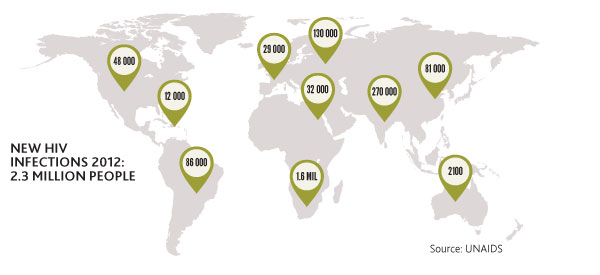
According to the World Health Organization, over two-thirds of all people infected with HIV/AIDS live in sub-Saharan Africa, yet the continent relies on just 3 percent of the world’s healthcare workforce, a disparity that creates tremendous stress for caregivers. It’s estimated that African health systems may lose 20 percent of their workers to HIV/AIDS in the coming years due to illness and unacceptable working conditions.

From the humble glass syringe, dozens of patents followed at BD, all aimed at delivering medication and diagnostic products that reveal quick results while protecting those that administered them. Generations of patients might recall some of their landmark inventions – the Bulb Syringe, the ACE bandage (All Cotton Elastic), the stethoscope, the first insulin syringe and the BD Vacutainer System, the now familiar device that draws blood by vacuum through a needle into a test tube – when you can bear to watch, of course.

BD now has a global presence in more than 50 countries and has branched out into three divisions: Medical, Diagnostics and Biosciences. It has also been named one of the World’s Most Admired Companies by Fortune and one of the most ethical ones, too. The company’s motto is “helping all people live healthy lives” and it has embarked on a two-pronged marketing approach – strengthening existing healthcare systems and increasing access to healthcare in the developing world.

Anyone who has ever anxiously awaited medical test results will know that the quality and speed of diagnosing infectious diseases or cancers is a crucial stage of treating illness effectively. While many pharmaceutical companies focus exclusively on developing drugs, BD has focused on a critical part of the treatment – delivery into your body. US$8 billion in annual revenue puts them in the category of serious global player, yet they’ve also realized that non-profit and humanitarian initiatives are an important part in helping create their vision of a healthier planet and stronger communities.

Around 60 percent of BD’s sales are outside the U.S., with 24 percent of this within emerging markets. Vincent Forlenza joined BD in 1980 and now holds three roles at the company, chairman of the board, CEO and president. When reflecting on how they’ve achieved such impact around the world since the founder’s sons took the company global in 1948, Forlenza cites values as a key ingredient. aids

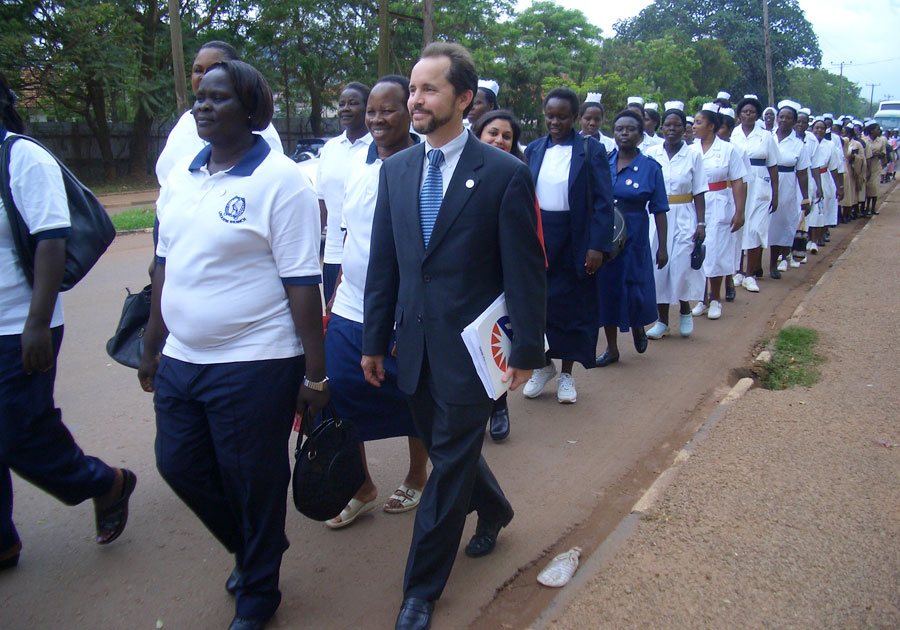
“Looking back, we’re built on a strong foundation of core values, that started with quality and giving back to the communities we serve,” he says.  “This came from the Becton and Dickinson families themselves and from their sense of purpose around improving healthcare. The values they preached from the start have been fundamental to the success of the company.” Gary Cohen, BD’s executive vice president (pictured above in Uganda), who has helped take the idea of shared value and turn it into a practical management system, has helped Forlenza with the ongoing maintenance of these values. “Shared value is in the DNA of our company, says Cohen.

“It goes all the way back to when the first polio vaccine trials were being done. They didn’t have disposable syringes at the time, so we had to invent one.” A huge focus on health and safety in the 1980s, coupled with large, emerging healthcare issues, made BD realize that society wasn’t aligned to meet those needs. BD’s company records show that the great medical needs of the time were always tackled with enthusiasm, and it’s no different today.

Much of their work has been on HIV/AIDS, one of the biggest medical threats of our time, and they have worked hard at refining CD4 cell testing, a white blood cell count that indicates the stage of HIV or AIDS in a patient. “This cutting-edge approach is something that’s embedded in our company history, and very much aligned with our founders,” says Forlenza.

“I’m the seventh CEO in 117 years, in a company that’s had uninterrupted structure, the only change being in 1962, when we went from being a family health company to a publicly traded company on the NYSE. There haven’t been any takeovers, major mergers or major changes in legal structure.” This unbroken culture of doing good was retained when the company became a global, publicly traded company.

It’s a culture that influences BD’s workers each day, by instilling a responsibility for doing well financially and understanding the needs of all stakeholders. “None of this would be sustainable without creating resources to keep moving forward and innovating continually,” says Forlenza. A company’s longevity seems to be directly linked to having strong principles, and a stable executive team with steady leadership is valuable, too.

“If you look back at Jim Collins’ work in the 1990s  – Built to Last and Good to Great  – he talks about Level Five Leadership,” says Cohen. There’s a continuity of leadership in the companies that are the highest performing, because they have missions that go beyond profit only.”


Stedman Graham on Africa, Oprah and Leadership

The best-selling author, educator and entrepreneur tells us why Africa is the next big thing and why he is not Oprah.

Part of what makes us human 
is our ability to be aware of our own existence, to both live and reflect on our own lives. It’s this capacity for self-awareness that allows us to see our authentic selves and build our own identity, rather than letting others dictate who we are and what we do with our lives. Stedman Graham has spent the last 15 years travelling the world, teaching people to become leaders, rather than followers.

His soul mate of 27 years, Oprah Winfrey, has also developed a career around self improvement, yet while Winfrey does this over the air, on television, Graham has chosen to do his work on the ground, meeting students, professionals and governments across the globe. He asks three basic questions of them: Who are you? Where are you going? How are you going to get there? You might even regard this as a three sentence business plan, but Graham believes that regardless of culture, race or creed, each person can begin to create positive change around them by simply asking these questions of themselves.

Many of us spend years trying to find out who we are and, sadly, too many of us never do, says Graham. If we fail to define ourselves, we risk letting others define us by our race, gender, and background.

We buy into the labels that keep us in a box and, as a result of those limitations, never reach or realize our greatest potential,” he says. And while his relationship with Oprah can sometimes overshadow many of the messages he takes with him around the world, he is adamant that he is, “not Oprah,” as he recently stressed on a CBS interview.

The author of eleven books, two of them New York Times bestsellers, Graham has acknowledged that he has a lifelong commitment to youth and community and has focused on the hidden potential of both top executives as well as people trying to make a difference in their communities. While acknowledging a universal desire among the worlds population to do something good with their lives, he tries to get people to commit to a personal mission that will empower them as individuals.

This lifelong commitment to empowerment and learning started in Graham’s early years, when he was a professional basketball player – he’s 6’6” tall. When he realized how the power of sport could influence young lives he established Athletes Against Drugs in 1985, dedicated to developing leadership among underserved youth in Chicago, now with programs countrywide.

“The positive sporting role models I had in my life showed me how important it was to be visible, and to show young people they could be somebody,” says Stedman. “The negative press around doping in sport at the time was the catalyst for me to create an organization that was not involved in drugs, and to develop a drug-free alternative.” Stedman’s attitude of never wanting to be “anti” but always “pro” a situation, has seen him take a keen interest in Africa recently. He believes there is huge unlocked potential on the continent, that requires self-awareness from locals and commitment from others. He shared his outlook with us.  

What potential do you see in Africa? Why is Africa seen as the next big opportunity for economic growth?

Africa is currently seen as the next big power house because it’s a pin-up economy – it hasn’t been developed. You have millions of people who’ve never been part of the mainstream economy. This is the perfect opportunity to create infrastructure and have people develop their own businesses, become educated, become entrepreneurs and develop organizations that give back and serve people.

I think there’s a greater opportunity in Africa than any other continent I’ve seen, because you have so many people with no place to go, but up. Once you start that process it’s going to explode. China and the U.S. are both investing in Africa, so that must mean something.

Are these countries investing in natural resources or investing in people? Natural resources are a prime reason people come to Africa, but if the countries were more structurally set up to do business, where everyone can benefit, then that’s where things really start to work. You can’t have people coming here to take all the resources away while the people who live here can’t even farm their own land or feed themselves.

The way to build anything is to first invest in people. You build a strong family, and then invest in family members, who then build strong communities. You need to prevent a community that can’t feed itself, that can’t have it’s own voice or educate itself. Otherwise, you’ll have a drain on that society and the community.

What kind of leadership is needed in this type of scenario?

Firstly, leadership you can trust, and secondly, leaders who understand the possibilities of what they are leading. You also need a vision, a plan and the ability to align people and bring them together to create opportunity. Education is important and people should understand who they are, including a sense of duty to others. People have to care.

What are you hoping to achieve personally?

I teach identity development to people around the world, helping them discover who they really are. Most people are stuck in a box and do the same thing, over and over, every single day. If you do the same thing today as you did yesterday, you wouldn’t have achieved much. At school the educational system teaches you how to memorize, take tests, and repeat information.

You just get labeled with a grade and two weeks later you’ve forgotten this information. So nothing from nothing, is nothing, and most people end up not truly knowing who they are, or how to take information and make it relevant to their development.

Most people in this situation are at a loss and end up being defined by their race, family, or religion. Being defined by all these external things, keeps people from becoming a leader. Basically, around one percent of the world is being followed by everyone else. Out of seven billion people on the planet, 99 percent are followers.

The challenge is to transform them from a follower to a leader. The system is not set up to do this because it teaches you to be a worker.  It doesn’t teach you to think or take ownership of your development. Leadership is about stepping out of the box and being able to define yourself, as opposed to having the world define you.  

Are you formally structured in business with Oprah in any way?

No, I don’t have any businesses with her, she does what she does, and does it well. My relationship with her is strong because I don’t have a business relationship with her. I support her 150 percent and I can still support her and have my own interests, otherwise I couldn’t teach what I teach. This is how I define myself, despite the fact that people are continually trying to put me in a box and make some connection between us, based on speculation that she’s supporting me. I maintain my own development, and if I need to travel, I can go and create my own ventures.

It’s a beautiful thing to have a partner with whom you can work together, because we’re basically working on the same things. She does it in the air, through television, and I do it on the ground but we’re both doing the same kind of work, which is why we get along so well. Oprah understands my work and I understand her work.

She loves what she does and I love what I do. I’m just more grassroots and community based, I go and talk to the people – the homeless, school children and institutions. I want to talk to people and connect with them.

Is America still a shining light for opportunity or have other countries now adopted this role?

The American Dream is now a global dream, but America is still strong to me. I knew a long time ago, when I used to play professional basketball in Europe and travelled widely, that America was not the only country in the world. I realized that people are basically the same everywhere, especially now, with our connection through technology and the Internet. Now we can speak to almost anyone, anywhere, and we all travel a lot more.

The world is almost becoming one economy, because each economy is so dependent on the other. We should continue to be open and assimilate people and cultures at all levels – class, race and nationality – and be bold enough to do that. Identity development helps you do that. It helps you identify what you love and what you care about. It helps you assimilate, get along with other people and build better relationships. It’s a good blueprint for the challenges we face in the 21st century.

We live in an ownership-driven society and you should also strive to own yourself too, your own thoughts, your own ideas, a self-directed learner. You need to be a life-long learner in these times, the global marketplace demands it. If you fall behind, you’ll be pushed back to a lower class, something that’s happening right now in the U.S.

The middle-classes are being pushed back to lower class, because they haven’t made the adjustments needed for the 21st century.

Many people in Africa don’t feel they have the right to independent thought. Many governments and leaders have held onto power longer than they should. How do you nurture entrepreneurship and independent thought in this environment?

It’s about adapting to a global marketplace, where you have other ideas and thoughts coming in, with outside people willing to help countries get to the next level. No one makes it alone and no woman or man is an island unto themselves.  No country can make it by themselves either. Having good trade agreements and encouraging experts from around the world to come to your country is a good idea.

Countries can provide their knowledge base to experts, who in turn, share their skills locally. This is a way to grow, and sometimes it’s just putting the right people together in a room. You need a team of people to help; you can’t do it by yourself. If you want to create wealth, you bring wealth in, if you want to create economic opportunity, you bring it in with you.


Confessions Of A Recovering Capitalist

The emergence of a new business model, effect marketing, promises to blend the needs of people and planet into a new form of capitalism.

The feature-length documentary Koyaanisqatsi, released in 1983, became an iconic, cult movie that aimed to show the relationship between humans, nature and technology. The title, meaning “life out of balance” in the indigenous Hopi language of Northeastern Arizona, was also filmed without dialogue or narration and has many interpretations.

The overall effect was to raise awareness among viewers about the wider world in which we live, creating a consciousness around our shared plight on a planet that now houses over 7 billion people.

One of the seemingly out of place people in the audience was Mike Martin. Martin’s career started as a real estate investment banker at Citibank on Wall Street. “I was basically just doing deal structuring and engineering every day,” says Martin. One weekend his best friend put on a James Taylor concert for the benefit of a wildlife organization, focused on stopping the human extinction of species.

“I looked at the purity and long-term importance of that and compared it with how I was spending my days. I reflected on Koyaanisqatsi recall thinking just how out of balance I was. I left a very lucrative career to focus my business knowledge on how to convert capitalism into capitalism for good.”

Coming from an investment banking background that had rung hollow for him, Martin decided that he needed to turn on capitalism, and spent seven years working on big campaigns that rallied against it. After seven years he realized he was getting nowhere and that he was basically just creating negative energy. “ I thought there was no way to change the system, so I began working with small companies that seemed to offer an alternative. I worked with Organic Valley, CLIF Bar, Earthbound Farm and Ben & Jerry’s and helped them grow bigger.

Another seven years went by and I realized that these type of companies only accounted for 3-5 percent of GDP, too small to make the kind of difference I had imagined,” says Martin. Martin’s work eventually started getting the attention of notable industry leaders, such as Ben and Jerry, Steve Jobs, and Lisa Jackson, the head of the U.S. EPA, with other big companies also starting to take an interest in what he was doing.

He began to realize the only way to really move the needle on sustainability and impact on a large scale was by working with big, mainstream companies. Ironically, the very companies he had run from at the outset of his career. But this time, rather than continuing to contribute to the problem, he is partnering with these companies to help them drive profits through good corporate citizenry. “Effect Partners was built on the principle that sustainability is necessary for the future of our planet, as well as for business.

To be truly sustainable, businesses need to profit from sustainability or they will not do it,” asserts Martin. And while companies must be allowed to profit, so too must consumers become more aware and interested than ever before in the social changes initiated by the brands they interact with daily. The very nature of consumerism is changing and so is the process with which to engage consumers.

In the 1990s Martin helped revolutionize social change in the music industry as the Executive Director of Concerts for the Environment. He went on to build MusicMatters, a pioneer in the world of music and sustainability marketing, and now a division of his company, Effect. Martin has advised U2, The Black Eyed Peas, Dave Matthews, Jack Johnson, and dozens of other artists, on sustainability practices and green issues around concerts and tours.

In 1997, MusicMatters played a key role in launching green energy in the US with their work with Green Mountain Energy. Offering “Green Energy” options was new at the time, so they created a grassroots connection with consumers to educate them about such unheard of concepts such as: Global warming, carbon offsets, renewable energy, and biomass. A green touring and event “bible” developed by Martin, called the EnviroRider ™ has become a global industry standard for the music industry’s environmental footprint. Collaborating with major, established brands is a key strategy for Martin, who believes these companies already have the infrastructure and influence to start shifting consumer behavior.

On the Live Nation U2 360 Tour, from 2009 through 2011, Effect brought Brita water filters on tour. Brita provided hydration stations and compostable cups to keep fans hydrated without any bottled water waste. The partnership also highlighted Brita’s Filter for Good initiative, and helped educate fans on the impact they can have simply by using reusable water bottles. He has also structured some powerful and effective programs with major companies such as Green Giant, Toyota, Proctor and Gamble and Ben & Jerry’s, all designed to catch the consumers’ attention in novel ways, effect positive change, market the brands and develop an emotional connection with the consumer, resulting in improved ROI.

For example, the average football game produces 50 to 100 tons of waste and an initiative last year with waste and food bag company Glad, saw Effect collaborate with Glad and the University of Southern California (USC) to reduce game day waste within the stadium. Glad and Effect have even developed a One Bag toolkit that provides a how-to guide on planning a waste-conscious event which can be found at gladtowasteless.com.

While Martin goes all out on creating sustainability programs for big corporations, he feels some of the meaning and context of sustainability has become a box to check for most companies. Some just ensure there’s liability insurance for the corporate officers or have a recycling program set up in their offices and think that’s enough.

“What needs to happen next,” says Martin, “is to ask what the short term AND long term Return On Investments (ROI) is on sustainability work. This is what the leading companies in the world are starting to do. In other words, how do company sustainability efforts drive profits for the company and also how do they fold into the bigger picture of the economy?”

“ExxonMobil will make $45 billion of profit in a year, yet not one penny of profit is going towards CO2 remediation. Coal energy plants give a lifetime of asthma to 30 percent of kids within a 30 mile radius of their plant, yet not one penny goes towards helping with their lifelong health costs,” says Martin.  “You have these costs that are being socialized, yet the profits are being privatized.

The whole notion is something which is a fundamental flaw of capitalism.” Martin stresses that we’ve created a capitalistic system that requires quarterly growth, yet is overlaid on a planet that has finite resources. Something has to give at some point. He’s not against capitalism and embraces it, being excited about the conscious capitalism movement and working exclusively with companies who improve the health of the people and the planet, or who are working to achieve this in their business model. Martin has unique marketing expertise from his work in the corporate world and a good grasp of marketing.

He often uncovers amazing work that’s being done by a company around sustainability, that’s not being communicated because management don’t see it for what is, or don’t want to subject themselves to criticism. Sometimes the marketing officer will suggest doing a green campaign, which is completely disconnected from what’s happening from a sustainability perspective, and it all ends up as green washing because it wasn’t thought through properly.

“When companies start realizing the power of combining their marketing departments with their corporate social responsibility departments, we’ll see the emergence of a new business relationship that has proven to drive profits: effect marketing,” says Martin.


Greg Smith On How To Make Capitalism More Transparent

In March 2012 a Goldman Sachs vice-president, Greg Smith, set the media world alight, and caused much anguish among financial institutions, when he resigned from Goldman Sachs in the most public way possible: an explosive reveal in The New York Times, which claimed the Goldman culture to be “toxic and destructive.” In this exclusive interview, Real Leaders asks him to reflect on this time and share his vision for the future of big finance.

What made you take on one of the most powerful financial institutions in the world? What did you hope to achieve?

First of all, I wasn’t trying to take on one institution – I was trying to do what I thought was the right thing. My message is not just about Goldman Sachs, which is very similar to many of the other major banks that survived the financial crisis. Some of it has to do with my generation, versus my parent’s generation. I grew up being very idealistic. Parts of big finance have become a golden goose that many know has serious ethical problems, but no one’s willing to talk about it. This became increasingly uncomfortable for me. To a large extent I drank the Kool-Aid at Goldman Sachs.

I was one of the heads of the summer intern program, used to fly to Stanford twice a year and recruit new people. I was very proud of what I would call the “old culture” of banking, that was focused on the long term, and where you aspired to develop ten year relationships with people. In the early 2000’s, the majority of regulations that kept this old banking system in place, got overturned. Derivatives got deregulated and leverage limits disappeared, which was actually a symptom of a much larger problem – that the industries with the most money effectively controlled politicians, who changed the rules in order to get more campaign contributions.

With less rules, the old world model of, “Let’s first do right by the customer and the profits will follow,” turned into, “Let’s make five times more profit today, because we’re only in this business for another five or six years.” There was an attitude of not caring what happened next.

And it wasn’t illegal either, as long as they followed the letter of the law. It was a scenario of drawing a line between what’s legal and ethical, and what was being done beyond that line, that many know is unethical. It was usually justified because their bosses were doing it or they were getting paid a lot of money to do it and customers weren’t going to realize anything for a long time.

This became something I didn’t want to do anymore. Much has been made of the letter I wrote, that was published in the New York Times, but this came at the end of five months of writing my thoughts down and realizing that I could actually do something positive.  I thought that if companies were not willing to change this culture internally, maybe forcing the change would work, because frankly, the systems are far too complex for politicians or the public to fix. I came to believe that people within the finance industry could become a part of positive change.

It was almost like a calling, that it was the right thing to do. If I hadn’t done it I would have felt I’d done the wrong thing by not speaking up.

Where does your idealism come from?

I am not sure but possibly from my upbringing in South Africa. I come from a Jewish family where my mother set a good example for us growing up. I always tried to be one of the kids who spoke up when I saw something being done wrong, instead of keeping my mouth shut. My upbringing in South Africa also made us see a lot of injustice and terrible inequality which I have thought has had a strong impact on me and the way I look at the world

Can you give an example of the real world effects of casino style Wall Street speculation?

During the European sovereign debt crisis I saw the panic being used as a reason to confuse investors and drum up business. I saw the very direct and very real world effect on hundreds of thousands of citizens in Greece and all over Europe, who were protesting on the streets, while behind the scenes the major banks were helping the governments gerrymander the books and make things look rosier than they were.

This was not a game anymore and brought financial issues into the real world very clearly. Banking is a vital service in society but the industry lost sight of what banking was. Previously it was about giving loans and helping people invest, but by 2012, 75 percent of revenues were being generated in a casino-style trading environment, which did not have any societal benefits.

Is the secretive world of big finance finally opening up?

No, I don’t think so. I’ve devoted time to understanding how the process works between banks, politicians and the public and what I’ve concluded is that the opaque system as it is today has purposefully been created. At worst there are politicians and regulators taking campaign contributions to keep quiet or change the laws, and at best there is just not enough knowledge around the intricacies of finance.

It seems purposefully so, because the more murky things become, the more money banks can make, without people directly being able to accuse them of doing wrong. In 2010 President Obama passed a massive financial reform bill, yet most people don’t know that only two thirds of that bill has ever been implemented. All the major structural causes of the financial crisis, such as derivatives, proprietary trading and being too big to fail, are all still in existence.

They have not been fixed and close to $500 million of lobbying money has been spent trying to kill these bills. I have spent time trying to advise some politicians in Washington DC, as well as regulators like the Federal Reserve, the U.S. Securities and Exchange Commission and the Office of the Comptroller of the Currency. I have been trying to bring a “no spin” approach of what’s right and wrong in banking and ways in which it potentially risks bringing down the whole economy.

What opportunities have arisen as a result of your decision to expose Goldman Sachs and the world of finance?

I must stress that Goldman Sachs is just one bank among many doing very similar things. Everyone has seen the $13 billion JP Morgan settlement, the Libor fixing scandal, the FX trading scandals and countless others. People said I couldn’t say the things I said, that Wall Street wouldn’t be happy, but the truth is Wall Street is made up of both banks and investors.

Investors don’t want to have the wool pulled over their eyes or have hidden fees extracted out of their accounts. People forget that trillions of dollars of public investments are wrapped up in things like teachers pension funds, charities and endowments. These investors are a vital part of Wall Street too, and should be just as much a part of the dialogue as banks. What I’ve been trying to do, aside from helping with some of the regulations, is to help empower investors, who’ve been very receptive as they’re worried and befuddled by this opaque system.

The answers you get from investors with $100 million pension funds who still do business with these banks, is that they’re too scared to ask questions or that there’s no competition, or they have no other choices. The two classes of investor, considered the least sophisticated by large financial institutions, are public investors, such as pension funds and charities and surprisingly, ultra high net worth individuals.

This is not because Wall Street perceives them as not being smart, but because they know that these CEO’s and business leaders spend 99 percent of their time focusing on running their own businesses, not watching and understanding their investments. They’ll extract as much money from a high net worth investor as possible, up to a point that the person does not get suspicious.  In my mind, that’s not banking. Banking should be about trust and fiduciary duty.

There seems to be an ongoing trend of people exposing the secretive dealings of large corporations and institutions. Julian Assange and Edward Snowden come to mind. What is causing this? 

I wouldn’t associate myself in the same category as those two individuals, more in the category of the millennial generation. Some people will say that capitalism is about doing anything as long as you don’t go to jail and if the person on the other side of the transaction is foolish enough to fall for it. It’s a case of “buyers beware,” and they should have known better. Business needs to have more idealistic leadership, where you do things right by the customer and know that profits will follow. Over the long run you will do far better.

We live in a world where its all about the short-term, maximizing your personal bonus and exiting the industry leaving whatever mess is left behind for someone else to clean up. I’m hopefully part of a movement that is steering us back towards doing the right thing with customers, having a long-term mindset and having transparent earnings that your investors can understand. Ironically, openness will actually increase stock valuations.

If investors have greater transparency into where banks’ revenues are coming from, they will value the stocks at higher levels. Leaders who have a long-term mindset and an ethical framework of capitalism realize that brand is important, customer loyalty is important, and not only important for six months or the next quarter, but for ten or even a hundred years, to guarantee the future existence of your franchise.

The Silicon Valley mentality is a good example. They make a lot of money but they create a product that actually does something, it actually adds some kind of value that changes the world in a meaningful way. The financial industry at times moves money around in ways that people don’t understand, and extract a fee to do that, until they’ve got a $10 million bonus in their pockets. Young people have realized this and become disillusioned. They want to live their lives along a moral framework.

Some people think they can change the system slowly from the inside and others, like you, decide enough is enough and accelerate the process. How do you suggest people begin this change?

Our parent’s generation was about loyalty to a company, regardless of what the company was doing. Our generation has a loyalty to values. I saw someone in the Christian Science Monitor write about this. When the money is so great and people are caught up in a system, it’s very hard for people to voluntarily change the game en masse. To find a solution you’d think we might need to elect politicians, who’ll do the right thing, but I don’t have a lot of faith in politicians because of the powerful lobbys and big money that’s around to defeat new legislation.

Change must come from people within the industry, who have a long-term mindset and who are not trying to hurt their industries, but rather make them stronger, more stable and more sustainable. I think it’s people’s moral obligation to try to change their organization for the better. Most people, behind closed doors, will admit that the ingredients of our financial crisis still exist and there are many bubbles still being inflated. Another worrying fact, that most people don’t know, is that almost 80 percent of stock traded on the NYSE is done by computer.

This doesn’t create a stable environment for the average investor. Companies are making billions of dollars profit by placing computers on a stock exchange and effectively extracting money. Computers are able to buy stocks in a split second, long before any manual purchase by an investor, and they’re effectively making an immediate profit of one cent, millions of times over. At the end of the year they have billions of dollars profit.

Why is it fair that some wealthy hedge funds can place their computers closer to the stock exchange than others, to take advantage of latency times on networks? Unfortunately, as the economy gets better, the crisis recedes into memory and the public just wants to get on with their lives. One example of changing things would be to educate retirees on how financial markets work, who could then apply pressure to fund managers who control the hundreds of billions of dollars of retirement money.

If the public doesn’t understand these things, the problems can go on forever. We’re seeing more and more black swans, hard-to-predict and rare events in history. These are only supposed to happen once every few hundred years, but are now happening once every ten years. It’s not a healthy sign. We need to make finance simple again, make it transparent, regulate derivatives, get rid of proprietary trading, makes banks smaller and educate the public. Yet, banks have a vested interested in keeping things complex.

Are you planning to set up a new company to achieve this or would consulting as an individual be more effective?

I am already consulting to and advising some investors on how to invest their money efficiently at lowest possible cost and without hidden fees. Another goal of mine has been to talk about and promote the Dodd-Frank Act in the U.S., which is aimed at protecting consumers and improving accountability, in particular the Volcker rule, designed to eliminate casino-style betting and speculation that played a key role in the 2007-10 financial crisis.

I’m also trying to speak to as many students as I can around the world about finance. The students expect me to tell them not to go into finance, but I actually tell them finance is great. The reason I went into finance is because I was interested in speaking to the smartest investors in the world. Young people should go into finance, but with their ideals intact. When they see things happening that are not in line with what they believe, they can make a huge difference from the bottom up, by changing the ways things are done and speaking up.

Do you think that large amounts of money can still be made in an ethical manner? Profit is usually made at the expense of others, that’s the nature of capitalism, but do you think people have to adjust their expectations?

I’m absolutely a capitalist, and every one of your readers is a capitalist, but I think we need to define what free market capitalism really is. There are a few principles you have to have in place for capitalism to work: an even playing field where everyone has an equal shot at making money, no-one taking short cuts, and no-one with inside information. Everyone needs to understand the rules and it all needs to be played out openly where everyone can see it.

In finance two thirds of money is made behind closed doors, unregulated, no one sees these things publicly. That’s not capitalism anymore; it’s a rigged system. New kids, right out of college and university, start copying what their bosses are doing and the cycle continues. This doesn’t happen over a few days, but over many years, so leaders should check their business principles daily to ensure they’re not surprised to find how far the culture has strayed in ten years time.  

Entire civilizations and cultures have eroded from bad financial judgments. Are there any lessons from history from which we can learn?

If we could go back in time to the 1990s and ask people if Arthur Andersen would still be around in the future, or ask the same about Enron, people would have bet significant money that these were real brands, pillars of business that would be around for a very long time. We forget that it can disappear in a second.  Once you’ve lost hold of your culture, your ethos and what you’re in business to do, things can unravel quickly.

Look at the big banks that are incurring billion dollar settlements, you would think the financial media would be calling for the leaders’ heads, but instead they’re praising them by saying how well they’ve survived the crisis. Because they’re making huge profits, it’s assumed they must be the best in the business.

The real test would be whether customers trust them, this is more important for forecasting long-term success, not by measuring quarterly profits. You should be asking whether you have a strong enough ethos in place, with a strong enough customer base to ensure you’ll still be doing business in 50 or 100 years time. If you only see your customers as a tool for profit you’re getting into very dangerous territory.

How do we create a world that is both economically prosperous and has conquered our numerous challenges, such as runaway consumption and resource scarcity?

The more that businesses can move into products and services that are net positive to the world, the more there will be profits to be made in these new spaces. Look at the many new and innovative environmentally impactful businesses that have emerged. Look at Tesla (founded by South African Elon Musk) – a company that makes electronic cars, or any of the many businesses that are trying to look towards an energy and environmentally sustainable future.

It shows the public is hungry to do things the right way. Show people a great product that’s good for the world and you’ll make a lot of money. Things that people recognize are essential for our collective greater good get people excited. The first movers into that space will capture huge pieces of the pie and build mindshare with consumers.

What characteristics do you consider essential in a real leader?

I was once told about a leadership idea that I found very powerful called the “authenticity test” or “onstage/offstage test”. Does the leader act the same way and treat respectfully all employees of the company, from the post officer, janitor and first year out of college, through to the CEO or chairman of the board? Is the leader the same authentic person in his or her personal life as in professional life?

I have often found that leaders who pass this test are not only the most admired leaders up and down the chain of command, but they are often also the most successful and effective. Because they are real and show their true selves at all times. Seeing the CEO of the company devote five minutes of undivided attention to the newest member of the team seems like a simple idea, but it has a profound impact on the culture of a place and sets the right tone from the very top down.

 

Extinction Inspires A New Breed of Human

We have a front row seat for the Sixth Great Extinction in the history of the Earth, and the only one caused by humans. Let’s face it, the planet will long outlive our fragile species, so any focus on “saving the planet” misses the point. We need to protect the delicate ecosystem that humans need to thrive and survive. It’s all about “nurturing our ecosystem in order to save our species.” Can the clothes we buy make a difference? Peruvian, Eduardo Balarezo thinks it can.

A small cluster of islands off Ecuador, with no history of an indigenous population, had one resident that inspired a Eduardo to start a business around his legacy. It began with a tortoise. After living in Ecuador for over 10 years and visiting the Galapagos Islands on several occasions Eduardo Balarezo came across Lonesome George – a 100 year-old resident of the island and a famous worldwide conservation icon.

As the last surviving Pinta tortoise, Lonesome George’s cautionary tale of extinction became evident to Balarezo as a result of human actions and mismanagement of scarce resources. Lonesome George died last year but Balarezo was so inspired by his story he began Lonesome George & Co., an apparel company with a youth development academy, to educate tomorrow’s youth about environmental issues and to prevent other Lonesome George situations from happening at a time of frightening and increasing extinction rates.

“When Lonesome George passed away his whole species became extinct,” says Balarezo. “It’s a sad story, but he leaves an incredibly legacy, one which I intend to keep alive.” The lone tortoise, which even has his own Wikipedia page, had such a profound effect on Balarezo that it inspired him to think how he could structure a business around it.

He leaned towards a social enterprise model, having explored multiple bottom lines in his various businesses in early 2000 and found them attractive. These initiatives not only focused on profit, but on bringing together a more balanced focus of people, planet and profit– a multiple bottom line – that has since evolved into several business ventures.

“I combined my business background with my passion for adventure, learning and social enterprise and came to realize that this is the best combination you could wish for to foster the creation of shared value,” explains Balarezo.

“Creating shared value is our model, which basically calls for leveraging your personal and professional assets into creating competition. This is basically business, but with a high regard for social benefit and environmental concern.” Lonesome George & Co. has a business model that ensures that 10 percent of gross sales of their clothing range goes directly to youth education programs that teach and empower future generations, to help make better choices in our interdependent world.

The online store, one of many sales channels Balarezo is exploring, stocks a relaxed range of clothing that have names such as Limits to Growth, Passport Flock, Biodiversity, Evolution and Cycle into Change. Their line of shirts and hoodies for men, women, and children are produced using high-quality Organic Peruvian Pima cotton and cutting-edge design elements. Balarezo has created each garment to tell a story, make a statement, and rally the community around a cause.

“By wearing a T-shirt or dress, your garment communicates the value your choices have in conserving one-of-a-kind treasured species, indigenous peoples, languages, cultures, art, and heritage spots around the world,” says Balarezo.   Ninety percent of their products are manufactured using certified organic cotton grown in ancient cotton fields in Peru.

“It’s about showing you care with the clothes you wear,” says Balarezo with a grin.

The Academy of Agents of Change, founded by Balarezo, is the beneficiary of the clothing sales, and is aimed at young people who are aware that their decisions have direct consequences in their local communities. “We make them aware that they are a vital part of the system in which they live, and as a result of that awareness, are capable of having a positive influence within their communities,” he says.

Speaking from London, where Balarezo is a guest speaker at the Sustainable Brands conference, he reflects on one of the main ingredients needed to bring about change. “Choosing wisely is not a difficult thing to do, but it requires character to make the right decisions,” he says. One of the ways he has done this is through a partnership with Outward Bound, a global organization in 36 countries, started in 1941 by German educator Kurt Hahn. Balarezo realized that developing character meant self-awareness and tapping into positive personality traits that he was sure existed inside everyone.

Hahn is once quoted as saying, “There is more to us than we know. If we can be made to see it, perhaps for the rest of our lives we will be unwilling to settle for less.”

The Outward Bound model was a good fit for Balarezo and he founded the Outward Bound Ecuador school that seeks to create individuals that can make wise decisions, beyond what is taught in school classrooms. “You need people to get out and experience hardship,” says Balarezo.

“It’s painful to overcome your fears, but this builds character. When I came across Lonesome George in the Galapagos, he had the exact opposite effect on me to how other people reacted when they saw him. Most said, ‘Oh poor thing, let’s find him a mate,’ my view was, ‘Don’t let this happen again.’ He seemed to say to me, ‘Take my example and use me to show others how to make wiser decisions.” “When you combine courage and understanding, by putting yourself in someone else’s shoes, that’s called compassion.

When you combine courage and compassion you build character. This is then an individual that makes wise choices. If you can have this individual sitting on the board in every company, you’re going to havea very different world out there, says Balarezo. “It’s a new version of capitalism.”

The vehicle Balarezo could have used to highlight this plight could have been anything, but he came to the conclusion that clothing was a main purchase in the Galapagos, driven by tourism that accounts for 51 percent of this tiny cluster of islands economy. Clothing would also be worn around the world and become a “wearable billboard” for his message. He also realized that a clothing range alone would not effect change, just raise money, and needed to plug his venture into local communities.

Many conservation NGO’s existed that supported the diversity of the Galapagos Islands, but the community had been left behind. “You can’t just bring in programs and money to conserve animals, wildlife and the eco system, because the community is part of the this eco system too. If we don’t educate and include the local population, they can become our greatest obstacle in promoting the cause,” says Balarezo.Using the consumer to monetize this cause and to support the not-for-profit side has been Balarezo’s greatest achievement.

“Once you’ve sent a message of change out with your brand, you have to align your value chain with that message too,” says Balarezo.

“We looked at sourcing from mainstream, big markets to make our clothing as affordable as possible for the consumer, but then realized that our best source was right next door, in Peru.” Peru has one of the best quality cottons in the world as well as the organic production of Pima cotton, the main material for the Lonesome George & Co. brand.

It took Balarezo three years to structure the supply chain from companies in Peru, as he wanted to look into these companies and ensure they were looking after their own communities in a sustainable manner too.  Lonesome George & Co. has their main stores in the Galapagos, an online store and will be open their first U.S. shop in 2014 in South Florida. Their first flagship store outside Galapagos, in Berlin, Germany has been hugely receptive to their message and impressed by the quality of the apparel.

“There’s been a shift from businesses only being controlled by shareholders, to one controlled by stakeholders, and increasingly consumers are becoming far more interested in making sure their purchasing power is doing good,” says Balarezo. “If you’re listening carefully as a company, and want to become successful, you’ll need to show a responsible change in values, innovative products and create development clusters within communities you serve.”

The US is probably the largest “light green” consumer market according to Balarezo. A light green consumer is a person who likes to know that their purchasing power is doing good, but is not likely to give up their comforts. He’s of the opinion that this will become the mainstream attitude as this sector grows.

“Companies will need to embark on this new sustainability growth curve in order to put their brands and companies ahead of their competitors and in front of these new consumers,” says Balarezo. Creating this business model has taken Balazero over five years and they’ve finally made enough noise to get the attention of a global media partner. Lonesome George & Co. now has distribution partners knocking on their doors seeking distribution deals or partnerships. “A global rollout of our brand will take another five or ten years,” says Balarezo.

“But I view this as a next generation business model. Its mission is to generate the next agents of change for the next generation.” George would be proud of him.


Jessica Alba: Hollywood Heroine To The Rescue

Better known for her role as the Invisible Woman in The Fantastic Four, and being voted “Sexiest Woman in the World” by FHM in 2007, actress Jessica Alba has an entrepreneurial side that aims to redefine the idea of the family brand.

In 2008 Alba became the mother of a little girl, Honor, and three years later gave birth to her second daughter, Haven. Call it maternal instinct or a new insight on life; Alba felt her priorities in life shift immediately. “I felt this intense responsibility to create the safest, loving and healthiest environment for my children,” says Alba.

Her inability to find baby products that didn’t have toxic chemicals in them, or even diapers that weren’t tainted with dyes and nasty substances that caused allergic reactions alarmed her as a parent.

Alba experience this first-hand one day when she did a load of washing, using “baby safe’ laundry detergent, and broke out in a rash. Knowing that this couldn’t be good for her baby she began educating herself about untested chemicals found in baby products and household cleaners. She found alternative, “safer” options, but they still contained other chemicals that were unsatisfactory.

She calls this a “social injustice” and was determined to create a range of products that made it easier for her, and others, to find safe and attractive products that worked. She met Christopher Gavigan, author of Healthy Child Healthy World, who also ran a non-profit aimed at children’s health, and they teamed up to source and sell the very products they saw lacking on supermarket shelves.

The company raised $27 million in venture funding in March this year, giving the company a healthy start, and bring total funding to date to $52 million.

To ensure sales and availability where made as easy as possible, they brought on board Brian Lee, a veteran of ecommerce, as their CEO, who also has kid’s the same age as Alba’s. As a business-minded entrepreneur Lee was aware that alternative products needed to be priced affordably, for consumers to buy into them. With many health and eco products charging a premium, he wanted to ensure that The Honest Company could challenge mass consumer goods at a similar price point. A customer service team now listens to customer requests and they have already launched 13 new products based on this direct feedback.

Alba’s celebrity status, and having over 6.8 million followers on Twitter, has also helped in creating a meaningful dialogue with customers.

Gavignan was aware of a growing trend among the Hollywood A-list that saw celebrities aligning themselves with tech startups and was at pains to avoid it. With household names lending their money and fame to products and commercial ventures outside of their entertainment image, Alba and Gavignan were aware of positioning The Honest Company differently. They didn’t want Alba’s fame to distract from the real differences they were trying to make.

Coming from a non-profit world, Gavignan wanted to found a business that had goals that went beyond profit, that didn’t have non-financial goals tagged on as an afterthought. He wanted it integrated into the DNA of the company. The star studded line-up of other celebrities who’d ventured beyond the entertainment spotlight include Magic Johnson, who has invested in Stylecaster and Sociocast through his Detroit Venture Partners, Leonardo DiCaprio who has invested in photo sharing service Mobli, Edward Norton backing fundraising site Crowdrise, Bono, who bought a 1.5 percent stake in Facebook, netting him a cool $1.5 billion profit and Justin Timberlake who is an investor and brand ambassador for social music sharing site Myspace.

While many of these ventures fit into traditional investment models, Alba and Gavignan wanted a company that would help transform the quality of life for millions, through education and choice. “Before you have children, there’s a classic selfishness about life with many people,” says Gavignan. “After you have children, you develop a new attitude that is prepared to do anything for this new, little being. Todays parents are facing new, and increasing, realities of autism, allergies and childhood cancer, without really understanding how to protect their children from these chronic diseases.”

“There’s an assumption that everything on a store shelf is safe,” says Gavignan. “This is not always the case. There are many toxic chemicals, found in everyday products that are linked to chronic diseases”

“There is so much information around about what you should be doing, that many parents are so confused, they can’t figure out the right choice anymore,” says Alba. “We started The Honest Company to make it easier for parents to buy safe products for their families.” And not happy to simply focus on her own business, Alba travelled to Washington D.C. in 2011to participate in a two-day lobbying effort in support of the Safe Chemicals Act, a revision of the Toxic Substances Control Act of 1976.

From inception, The Honest Company has placed corporate responsibility as a core part of the company’s DNA. They are constantly working towards innovative solutions to reduce their collective impact, causing no unnecessary environmental harm, and making products that are as safe as possible. Alba and Gavignan continually invest in eliminating supply chain waste by delivering directly to customers, using plant-based ingredients in their products to eliminate toxins, and using 100% renewable or recycled materials in all their packaging.

Their ultimate goal to positively change the way people, companies,and even governments make impactful decisions related to health and safety, social goodness, environmental protection, and sustainable business practices. “We are committed to operating with integrity and transparency, and with humble honesty, as we strive to always create better, do better, and be better,” says Alba. Far from crafting feel-good, marketing slogans, the partners have initiated real change in every part of their business. Some of these proactive measures have included donating a percentage of proceeds towards addressing critical health and social issues affecting children and families.

The Honest Company range is made from natural, organic, sustainably harvested, renewable, pure raw materials and they track the production journey of all materials so they can report on what’s known as cradle-to-grave impact. Electricity used in making their products is even from renewable energy sources. Customers are encouraged to choose ground shipping fortheir orders whenever possible, as expedited air freight generally uses six times more energy than ground shipping.

To highlight their sustainability point, Alba and Gavignan have registered The Honest Company as a B-Corp, a business accreditation in the U.S. that shows you’re serious about looking after the triple-bottom-line. And not content to be the only one’s doing the right thing, they have introduced a code of conduct for their suppliers too, making sure they comply with human rights, environmental and non-harmful practices.

A major reason for Gavignan wanting to start the company was a belief that what he wanted to accomplish couldn’t be achieved by a not-for-profit. His goal was to create an avenue through which parents could safely purchase products for their babies, and in so doing, change their behavior – to start using non-toxic chemicals and eating organically. An unseen benefit of this approach has now emerged, as they eye expansion abroad. Stricter chemical regulations in Australia and the U.K. mean they are now able to meet these legal requirements.

In the U.S. around nine chemicals are banned from baby products. In the U.K. this number is 1,000 and The Honest Company’s products avoid them all.

The Honest Company have an active focus on minimizing the presence of petroleum in their products and packaging, and are striving to one day be 100% plant-based. The online shop makes a point of listing all ingredients, where you’ll even find dishwasher pods made from minerals and plant extracts.

Even their floor cleaner, usually just below paint stripper in harshness, has shown an effectiveness that you would not expect from natural ingredients, showing that natural products can actually be highly effective. Generations of parents using harsh chemicals has created ignorance among consumers of what is possible. Alba and Gavignan hope to change all that… for the sake of the children.


The Art of Addiction

Whether you like it or not, you’re affected by addiction. Do you have more than four employees, four friends or four family members? If so, the odds are that you’ll encounter this problem sometime in your life. Statistics show that one in four families are touched by addiction, meaning that most of us will need to face ongoing challenges with this growing epidemic.

A unique drug rehabilitation center in Italy is giving the world hope by showing spectacular results, by transforming lives through creating amazing art and businesses that fund much of their overhead. Drug addiction can be a lonely and desperate place for a young  person, caught in a spiral of self-loathing and rejection by society. Many degenerate into crime, either from a need to financially fuel their habit, or because bad company and drugs always seem to find each other.

This drug rehabilitation center in the Rimini province of Northern Italy is showing that traditional ideas around the treatment of addiction no longer needs to be about deprivation or punishment. San Pantrignano runs its free rehabilitation program like a business, and the human dividends are showing.

The organization welcomes young men and women with serious problems linked to drug addiction, completely free of charge. They do this without requesting any kind of contribution from their families and without any state funding.  The organization also practices no ideological or social discrimination when admitting residents, who come from around the world. Letizia Moratti, former mayor of Milan, and an Ambassador and President of San Patrignano, is extremely proud of a recent achievement: presenting their impressive statistics to the World Bank.

The figure that raised eyebrows was the 72 percent success rate of people who had fully recovered after completing the rehabilitation program. She is working on raising awareness for their work, at the world’s largest drug rehabilitation center in the world. The current success rate in the U.S. is around 30 percent, where rehabilitation is typically short and expensive.

Moratti is keen for other countries to adopt their winning formula.  “Since our inception, 25,000 people have been successfully treated,” says Moratti. “We also make a concerted effort to help our residents acquire a professional certificate or diploma, that can be used to help rebuild their lives.”

It must be working, as 96 percent have found full-time employment upon leaving San Patrignano.

Calling the residents “guests” and  teaching them commercial skills within disciplines such as food, wine, home design, publishing and event management, might also be a reason why the waiting list to join has grown. Residents arrive with a bleak future and leave with skills that make then employable. Two other branches of the project have since been established in Novafeltria and Trento, enabling more young people to be accepted.

The value of their work has culminated in the community being recognized and accredited by the United Nations with the status of “Special Advisor to the Economic and Social Council of the UN.” They also received a visit from UN Secretary General, Ban Ki-moon,and were honored to address the General Assembly of the UN in June, to mark the worldwide day against drugs. Empathy and compassion have existed around San Pantrignano from the start. In 1985 the owner of the property, Vincenzo Muccioli, renounced his ownership of the 300 hectares of land and donated it to the San Pantrignano Foundation, in which he himself had played a part in establishing.

Muccioli’s family had a history of caring for the sick and offering alternative medicine to people as part of a cooperative they’d set up on the property in 1978. Moratti’s family joined him in 1979 and they’ve grown the organization into a social enterprise that currently houses 1,300 young men and women.

Residents at San Patrignano learn how to produce goods that are sold around the world. A collaboration, earlier this year, with leading architects and designers, such as Daniel Libeskind, Chiara Ferragamo and Arnaldo Pomodoro, has culminated in an exhibition of high-end furniture and décor that made its way from New York Design Week to cities across America. Other lines of goods produced by residents of San Patrignano are impressive as well.  They’ve produced 500,000 bottles of wine and attracted Japan as a major client, currently contracted to export  100,000 bottles a year to that country.

They produce cheeses, meat, ham and salami and run two restaurants, one of which is a Pizzeria, one of the most successful Pizzeria in Italy, and currently showing good profits. A textiles division produces scarves, bed linen and leather objects such as bags and belts. To add to the diversity, they also breed dogs and care for lost and abandoned animals. Not content to just keep residents busy, Moratti continually reminds them of their overriding goal: quality. “This is how we give our residents pride and dignity – quality is essential.

We give them the best teachers and training to produce the best quality,” she says. The community generates Eur15 million of revenue per year, but productivity remains low, due to young people wanting to leave the organization to practice their skills in the real world. This fact does not bother Moratti much. “We run a non-stop training process, that’s why productivity is not high.

We teach people to reach their potential and the work they do here is a tool to help them regain self-esteem, responsibility and dignity,” she says. “This is not something we can put a price to.”

While San Patrignano far exceeds most rehabilitation centers, with its innovative revenue generation by residents, it’s the human capital that excites Moratti the most.

“Two hundred of our residents are currently spending time with us as an alternative to jail time,” says Moratti.

“They are offered a home, healthcare, legal assistance, and the opportunity to study, learn a job, change their lives and regain their status as full members of society.” A policy decision they have taken is not to accept money from residents, their families or the state. It even extends to former residents who have left and want to donate. “We believe in this strongly,” says Moratti. “All the boys and girls find themselves equal and don’t feel different from each another.

The rich and poor, the ones who can pay and those who can’t, are all treated equally. As a result, when they have a crisis or face difficulties they are more willing to listen and trust in the process.” The fact that San Pantrignano is free, is very important for the success of the community, yet the staff turnover rate is high, probably due to the fact that the model they’ve adopted is a long-term recovery program, and can take it’s toll on the 109 volunteer staff.

Moratti values the donors and partnerships they have in place, yet also works hard at alternative fundraising ideas. The beginning of November saw six former drug addicts representing San Patrignano in the New York Marathon. Besides the runners pursuing their dream, it was also an opportunity to create visibility for their cause and make their small village in Italy known to people in need around the world.

“We have more than 100 boys and girls that have come from more than 30 countries,” says Moratti.

“From the U.S., Canada, Russia, Brazil, Columbia and  Eastern Europe, so we are truly an international facility for anyone in need.” The rest of the world is coming to this Italian coastal town for another reason too, Moratti regularly hosts government representatives from other countries seeking to replicate the San Patrignano success at home.

An agreement with Qatar to train volunteers at their facility is underway and discussions with Indonesia have begun. To attract interest, Moratti also hosts a yearly delegation of NGO’s from around the world to receive training, which might even teach us something from their perspective. “We don’t believe we’re the only answer, we love to share our  experiences with others,” says Moratti. In addition to the commercial projects at San Patrignano, there’s also a huge hidden saving that is directly linked to keeping residents off the payroll of the state.

“Over the last 25 years we’ve prevented our residents spending a total of 4,000 years in prison. This equates to a saving of Euro 300 million, or Eur16 million per year,” says Moratti.

Last year San Patrignano saved the state Eur32 million. This makes San Patrignano a likely candidate for the new social impact bond concept. Goldman Sachs in New York recently floated a $9.6 million bond for the Adolescent Behavioral Learning Experience program, a new curriculum that seeks to bring down the number of youth offenders going back to prison.

In 2012 the New York City Department of Corrections created a sensation by asking for private, corporate investors. In a new way of thinking about financing social goods, private capital is used to finance a government-sponsored program. Based on the success of the service, the government pays a dividend based on the level of impact achieved.

“This is a new frontier in financing, because it will help the state to pay for success,” says Moratti.

A few pilot projects in Italy have seen the percentage of repeat offences committed by incarcerated youths drop from 98 percent to 19 percent. The basic principles on which San Pantrignano is founded are respect for life, oneself, others and the environment, are universally recognized by various religious faiths around the world.

Moratti believes that this universal approach, combined with strong leadership, is where many organizations and companies should be heading. “Motivation, passion and an ability to convey to others what you believe are signs of a good leader.

I don’t believe in stand-alone leaders, only collaboration,” says Moratti.

Tyra Banks, Harvard Educated Venture Capitalist?

A serious businesswoman lurks beneath the former supermodel, who has launched a venture capital firm and wants to teach girls how to fiercely pursue their ambitions.

If you thought all models were only into their looks and had selfish, unlikeable personalities, think again. Television personality, actress and supermodel Tyra Banks has adopted a no nonsense approach to promote and empower women in business. Under the slogan “Fierce, Fearless, Flawsome,” Banks established the TZone in 1999, a leadership development program for girls, and more recently, venture capital company Fierce Capital LLC, that has a preference for funding start-ups that are predominantly female-led or focused.

The word “flawsome,” coined by Banks, is a combination of  you + your flaws + awesome = flawsome.” She explained the concept was tied to her years on America’s Next Top Model where she and producer Ken Mok cast over 70 percent of participants. Debate raged about what constituted beauty and Banks came up with the word as a way of expanding the concept of what beauty means. “Perfect is boring,” says Banks. “Flaws are awesome.”

Banks is a vocal critic of fashion magazines that show models who appear to have eating disorders. She saw models backstage, during her modeling days, who abused their bodies to maintain a certain weight and feed into commonly held ideals of what perfection and beauty was. In her early 20’s Banks was given a list of designers who no longer wanted to book her for shows because of her growing curves. Realizing she would need to deprive herself of nutrition to continue working, she broke down in tears.

Her mother’s solution saved the day, “’Eat pizza,’ she told me. We went to a tiny pizzeria in Milan together and strategized how to turn my curves into a curveball,” Banks recalls. “In a way, it was my decision not to starve myself that turned me into a supermodel, and later on, a businesswomen.”

She warns girls not to fall prey to thinspirational images of beauty and mothers to be careful about how they talk about their bodies in front of their daughters. With her parents divorced at the age of six, and having had her fair share of abusive relationships, Banks has first-hand experience of the self-esteem building that many young girls need. “The pre-teen and teen years are the most complex developmental years in a contemporary girl’s life,” says Bank’s.

“It’s terrifying, turbulent, and terrific… all at once. A girl’s body, family, friends, schools and community are all demanding growth and change.” For many inner-city girls living in poverty, low self-esteem, disengagement from school, pervasive community violence, risky behaviors and sexual experimentation contribute to a trip down a slippery personal slope. “As a young girl growing up, people are going to tell you, ‘no, you can’t,’ all the time.

You have to have tunnel vision and know that you want it, that you’re going to do it, through sacrifice, sacrifice, sacrifice. Saying, ‘ooh I want that’ – magic wand – is not going to happen.”

The Tzone, situated in the Lower Eastside of New York, inspires the hundreds of girls who attend to believe in themselves and to take control of their futures. The girls-only club encourages the awareness of the accomplishments of outstanding women, as a way of showing what’s possible.

Banks also wanted the Tzone to become an actual space that girls could come to instead of just another grant-making foundation that gives out money. The $20 million project is funded through fundraising initiatives, the City of New York and a yearly Flawsome Ball, which sees celebrities and sponsors raise nearly $1 million per event. Some of the activities at the Tzone include community activism, dance, filmmaking, leadership, sports, writing or financial literacy initiatives that will help create young entrepreneurs.

Originally started as a series of summer camp, Tzone’s is designed to reinforce positive values and encourage girls to resist social pressures through a fierce, self-esteem building adventure. Banks uses the word “fierce” a lot in her branding, although she balances it frequently with another of her crazy words, “smize” – smiling with your eyes. Her journey from supermodel to super-mogul has been a personal one, in which she has identified closely with her target market, rather than seeing them as another charitable tax break.

“I launched this venture with my own money,” says Banks. “ I feel I have a responsibility to lead by example and bring attention to the issues facing young women. I want them to take positive action to realize their ambitions.” Banks enrolled in a three-year Owner/President Management Program (OPM) at Harvard, graduating in 2012, and has been prolific in establishing new business ventures ever since, all with a slant towards empowering women.

Despite the shallowness found within much of the fashion and beauty industry, Banks is showing that it can evolve beyond this. She’s acutely aware of her celebrity status and knows she cannot allow it to become an overriding factor in her work at Tzone. “What I don’t want to be is Tyra, the ‘celebrity girl,’ coming here and the girls being excited when they see me,” says Banks. “I want them to be numb to me.

I can do normal work here and they can see me, to know that this is what a business is. It’s not about living on a red carpet. I am a businesswoman who goes to work every single day.”
 To fund her social ventures Banks established Fierce Capital, the investment arm of The Tyra Banks Company, of which she is both CEO and Chairman. Its aim is to help raise capital and develop profitable business strategies.

One of her early investments was in The Hunt, a community-driven online shopping experience, that will track down coveted items seen in social media photos and let you know where to buy them. The fun and innovative approach to shopping allows women to help other women find their perfect outfit.

Since its launch The Hunt has surged to one million unique monthly visitors, attracting hundreds of thousands of people who are drawn to this new approach to collective retail and styling. Through Fierce Capital, Banks is leveraging her unique background of 20 years as a leader in fashion, beauty and entertainment. And rather than moving away from her previous career as a model, she is using all she learnt to develop innovative products and businesses, for the ultimate benefit of women’s empowerment.

Fierce Capitals latest investment in Android application Locket, in November this year, had the CEO and Co-founder, Yunha Kim, reinforced this when she said, “As a female founder, I am excited to be able to lean on another female entrepreneur for advice and deep media expertise.”

Banks supports businesses through brand alignment and by giving financial support that entrepreneurs might otherwise find difficult to procure through traditional venture capital channels.

The successful businesses that she takes on will have the opportunity to leverage Bank’s social and traditional media sphere of influence, as well as tap into The Tyra Banks Company’s extensive network to build significant business relationships.

Banks does not see her business units in isolation, but rather as complimentary structures that might even give rise to new business ideas. In an age jaded with countless combinations of private investment meeting fashion, it’s impressive, and extremely rare to see a fashion model, leading a capital group with Harvard certificate in hand. While Banks is desperate for the young girls in her care to find women to look up to in society, she has inadvertently become their greatest role model.

“I’m encouraging girls to be leaders, not followers; in control, not out of control; powerful, not powerless,” she says.

0