Creating Global Well-being Through The Economy

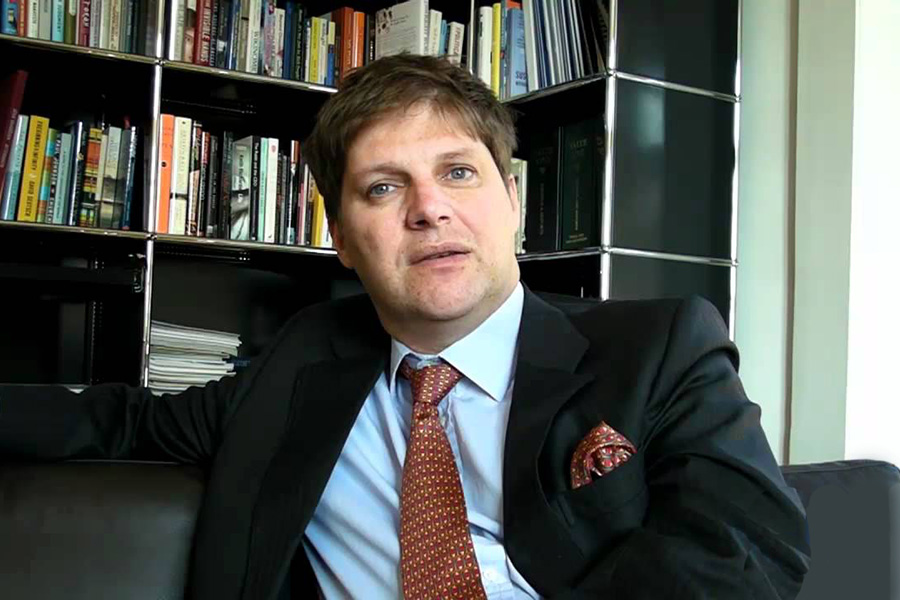
Robert Rubinstein is the CEO of the TBLI Group, dedicated to raising awareness and educating financial professionals on the benefits and opportunities of sustainable investing. We asked him how it started and where he’s going.

How would you describe your venture?

TBLI is a pioneer of sustainable investing with a proven track record. TBLI GROUP moves private capital towards sustainable liquid and illiquid investments by focusing on what really moves markets: self-interest, opportunity and money flows. Combining eco-effectiveness with market rate returns, TBLI makes the case and the connections for smart sustainable investment. Our activities and products include networking events, advisory services and a knowledge center highlighting scalability and best practices.

We have established one of the largest international networks in the sustainable finance sector with these objectives: firstly, to provide education, and secondly, to help move private capital towards sustainable investment. Sustainable investment (ESG and Impact Investing) is a key driver for sustainable development. It has beneficial effects on such global problems as poverty and climate change.

Our vision is a world that benefits when the economy creates well-being TBLI Group is dedicated to raising awareness and educating asset owners and managers on the benefits and opportunities of sustainable investing. The aim is to maximize investment flows into sustainable projects and new sustainable businesses.

What was the first memory you have that made you want to make a positive difference in the world?

I think I always had that. I probably got it from my parents. In all my jobs, I found integrity and doing the right thing essential. Showing some moral leadership was always important. I think the trigger for me with respect to being a social entrepreneur was when I was in publishing. I had started a bicycle magazine and that was a financial and spiritual success.

The next publication was a spiritual success but a financial disaster. During that period I was introduced to Social Venture Network, a network of companies that felt that business had an important role to play in improving society. After going to one event, I was sold. I needed to use entrepreneurial skills to develop a for-profit enterprise that provided a social and environmental added value.

What held you back? What were your fears of taking that on?

Nothing held me back. As soon, as the one publication failed financially, I jumped in to create the first European magazine on Sustainability. Basically how to integrate profits and principles. What was holding me back was being in a place I didn’t want to be. Namely, doing a project or running a company in an industry I didn’t like, and doing what I hated.That was publishing a cooking magazine in an industry dominated by processed food advertisers. I really didn’t want to be there. That ultimately led me to sustainability. First through Source Magazine, which evolved in to TBLI – Triple Bottom Line Investing.

Who encouraged you to step up and become a real leader?

No one. I felt that is what would give me fulfillment.

What was it like, stepping into that new world?

Great. I felt like someone had removed weights from my legs and I could fly. I had a great deal of energy and was doing what I loved to do. Unfortunately, I was so excited about the launch of Source Magazine, that I accepted starting with only 1/5 of the money I needed. That was a mistake. Not having the resources to properly do the marketing in publishing was a mistake.

What was the biggest challenge?

Not enough money to launch the magazine. In spite of receiving only 1/5 of the budget I needed, we were breakeven within 2.5 years. However, the investors felt things were going too slow and pulled the plug when I was on holiday.

Who were your greatest allies?

Professionals who were looking for fulfilment and felt that it was possible to make money and have a higher purpose. Corporates that were looking for strategies to motivate staff and attract talent.

What was unique about your strategy?

I think the marketing strategy that I implemented as a result of not having the resources I needed was quite innovative. We gave away 125,000 copies of the first magazine but only through a recommendation. Anyone could send us a list of people that they felt would appreciatee receiving a copy of Source. We made a special wrapper for sending the magazine with the name of the person who was sending them a copy. This built up our database and because our distributed circulation was so high, we sold quite a bit of advertising to cover the launch costs. If we did a normal direct mailing that would have cost us much more.

Was there any point where it appeared you might fail?

Ultimately the publication failed as the investors pulled the plug. With respect to my present company TBLI Group, there were several moments. I had to be hospitalized for 10 weeks and undergo open heart surgery one day before leaving for Asia to organise our TBLI Conference. Another was during the Tsunami in Japan, when we were hit hard financially, with all sponsors pulling out and a drop of 65% in attendance. When the bank cancelled our credit and all the cashflow we had went to pay the overdraft. This left us with no working capital. These events tested our grit and resolve to the maximum, but we always overcame and continued.

How did that turn out to be a good thing?

It forced us to be more innovative and creative in running our business with far fewer resources, reinvent our business model and drive down costs. We created an entire new model where the leading business schools partnered with us to host our event. This took away the need to spend so much time chasing sponsors to cover the high location and other costs. In addition, we were finally able to monetize our relations by creating strategic partnerships with leading asset owner networks to use TBLI as a convening venue for their members. This brings us asset owners and expands our sales and marketing without additional costs.

What is your most significant accomplishment as a leader so far?

I would say TBLI has been one of the most important driving forces in educating the financial sector about sustainable investments. Raising awareness among the financial sector on investments that improve the social and environmental balance as well as providing a financial return, is absolutely critical. However, the value we create is for the commons and hard to capture, which is why most don’t do this work. It’s heavy-lifting and hard to capture the true value. I think with the rethink we have done the last year, we will be able to capture the value and monetise our relationships.

What is the risk of it being undone?

I don’t see it being undone. I think the risk is how quickly TBLI can find additional funding sources through more paying attendance, sponsor money, turning opportunities we have from our vast network into concrete paying advisory mandates or investors (which we have now found) to continue and expand this work. To guarantee that we continue to play an important role in this financial sector, we will be launching an online community membership to offer a host of services, including access to events, social network, management briefing, retreats, business contacts of experts for the financial sector and education with certification.

What is the most valuable lesson you have learned on your journey?

Never give up, don’t believe what most people say, and get management partners that are complimentary and share your culture and vision. Follow your heart and your passion.


www.tbligroup.com

Why 2015 Will See Global Development Leaders Support African Impact

There are interesting developments underway in Africa. The vast continent repeatedly made news in 2014 for being home to seven of the world’s fastest growing economies, and drew interest for having a large part of its growth driven by the Small & Medium Enterprise (SME) sector. This latter tidbit is crucial. It signals a move away from ‘natural resources-led’ growth in GDP to something more sustainable, and in a manner that can help reap demographic dividend of a continent where 60% of the population is less than 25 years of age.

A significant number of these SMEs are social innovators, taking head-on critical, persistent challenges faced by income-poor populations in the region. They are creating indigenous products / services, building local supply chains, hiring local people and tapping into local markets at the base of the economic pyramid. A bulk of these social innovators also imbibes a crucial tenet of modern leadership – a business philosophy of sustainability.

For example, among the bright young SMEs we have met in the past year is Sun Culture, an enterprise that sells solar-powered irrigation systems. It defines performance in more-than-revenue terms, to the tune of “USD 400,000 in economic impact, delivered in terms of labor savings, input savings and enhanced crop yields.” Sun Culture makes irrigation systems but thinks of itself as a vehicle for improving farmer income and agriculture output. Africa has emerged as a hotbed of exciting social innovations, which in turn, are playing a crucial role in enabling inclusive growth opportunities and development.

However, there isn’t adequate local capital to support a lot of these investment needs, resulting in the need for bringing in blended financing including grants and foreign aid that can support the creation of a robust entrepreneurial ecosystem, before it becomes ready for commercial money to be deployed. Outside of money, success stories have emerged from creative collaborations for SMEs with large corporations and government, both on the procurement side as well as on delivery side.

We’ve seen powerful examples of government collaboration with WeCyclers which works with local municipality bodies in Nigeria to help households extract value from waste. WeCyclers starts creating solutions by first evangelizing the problem. In the words of the entrepreneurs, “One of our biggest challenges with recycling in Lagos is that people just aren’t used to it.”

Hear more from them through the short hyperlinked videos. And finally, with a lot of cultural similarities, shared social challenges and a similar spirit of finding shrewd ‘life hacks’, Africa offers a window into how SMEs and entrepreneurs are leveraging market gaps, reaching out to customers and navigating infrastructure and regulatory hurdles, in other emerging economies like India, Brazil and Mexico. In fact, there is an innovation transfer already underway with well-known innovations like M-Pesa.

So visit Africa if you are keen to learn more about exciting social innovations, witness how creative collaborations are playing out, have an interest in investing in its local markets or if you want to get a glimpse of how other emerging economies are driving creative solutions.

Charisma Murari is a digital marketing evangelist who loves encountering path breaking, new ideas – online and offline. Working in the entrepreneurial social development space with Intellecap, she is constantly inspired by astute innovators who are turning widely held notions upside down. She tweets at @CharismaMurari

How to Grow from the Storms in Your Life

There is a common myth that we are all resistant to change. I nearly always hear this when I’m working with an organization to bring about a cultural change of beliefs and behaviors that are necessary to thrive in a challenging environment.  But it’s wrong. Brain science and new advances in cognitive psychology reveal that we don’t resist change… we resist loss. It seems that human beings place a high-value on certainty.

We are constantly making predictions about our future. To the extent our predictions are true we feel secure and capable of meeting the challenges that show up every day. If, however life throws us a nasty surprise it triggers our insecurities, which immediately spurs us to write a mental screenplay about losing some things in our lives that we really value. This can turn into a personal horror movie, causing sleepless nights, relentless anxiety and dysfunctional coping. The three dysfunctions stimulated by fearing loss are:

  1. Denial. I see this constantly when businesses are merged or sold and employees are reluctant to embrace the fact they will need to find a new job. If there is any possibility that we might be retained for a job that we like then there is no disruption to our personal life and that’s what we cling to.  We hang on to low probability futures because it helps us cope with our fears of loss and the uncertainty of change. Denial is also at work when we refuse to take positive action to strengthen our health when we know we’ve gotten a little too overweight, become inactive or noticed our stamina is waning. We might also embrace denial when an important relationship is collapsing. When fear is strong, denial is our personality’s first line of defense but it is foolish and will inevitably make things worse when change is forced upon us.
  2. Blame. Our second dysfunctional strategy is to invest gobs of emotional and intellectual energy blaming others for the loss we fear. When a business is sold we often blame the greed of the owners. When a relationship is dying we blame the ‘other’ for betrayal. When our bad habits threaten our health we blame whoever is causing us the stress that stimulates our bad habits.
  3. Rationalization. This is essentially giving up. It means you accept that the loss is inevitable and are willing to dumb down your life to accommodate the negative impacts of things you do not control.  Common phrases your inner-voice might repeat are… “There’s nothing I can do, it is what it is or… once again, I am screwed.” This kind of self-talk sets you up for mal-adaptation.  This means you adapt to conditions that were previously acceptable because you’re unwilling to invest your energy to proactively create your new future.  This is not a small problem. People with little power and few resources are constantly mal-adapting because they have become hopeless. And hopelessness is a rational response to continuous failure.

However, hopelessness is a completely irrational response from highly capable people with reasonable emotional intelligence who are feeling beat down by change they do not control and fear losses that freak them out. I talk to people in these circumstances all the time. Here’s how I counsel them. Next to death our most primal psychological fear is that we won’t be happy in new circumstances. I point out that there are happy people in virtually all life circumstances.

Not to make light of real human suffering, there are people who are happy who have been paralyzed or have terminal cancer or whose spouse had an affair or who lost their job. Of course it’s true that virtually no one feels happy when they are going through sudden or deep suffering. The point is our fearful minds spin stories that we will never be happy again which is just not true unless we cling to our suffering and make it part of our permanent identity.

Research confirms that our emotional brains tend to overestimate the happiness caused by pleasure and the duration of sadness caused by life-changing disappointment. What this means is that we are wired to amplify the pain of our actual loss by expecting to control the uncontrollable conditions of our life. We are all like sailors in small boats trying to cross a vast ocean. Those of us who think we can control the wind and the weather are constantly frustrated and fearful. Sailors who pay attention to the changes in the weather and the direction of the wind actually learn to enjoy the journey.  Sailing through storms actually increases our skills and makes us wise sailors who can teach others.

Expert sailors do two things. They use a compass to make sure they’re heading in the right direction even when the winds are blowing the wrong way. And second, they focus their minds on optimism. They are solution-focused rather than problem obsessed. Our compass is our values. Our values are the character choices we make that we believe will make us both happy and fulfilled. Our values are always challenged when we face stormy changes in our lives. But it’s exactly at the time of our most fearsome challenges that our values are needed. This sailing journey we are on seems to be precisely designed to test our values. This is important. We have all inherited values from our parents, teachers, coaches, pastors and the overwhelming force of popular culture.

Our highest human capacity, our greatest gift is to evaluate all the values promoted by others and thoughtfully decide what is essential to our own character. 

Our choices shape our identity. Staying true to them is the basis of self-respect. For healthy people their values evolved over the course of their life as they became wiser. People who are guided by there 20-year-old identity are likely to be very unhappy and at least slightly irresponsible.

Since this evaluation of who we are and who we want to become never ends, daily reflection on the question… “What is most important to me?” is essential. As we become increasingly clear and committed to our values our lives improve as we develop the habit of optimistic thinking. Optimism is like having a powerful diesel engine in your sailboat. When there is no wind in your sails or when you’re trying to stay off the rocks in a storm, optimism becomes your power source to keep your boat on the path your compass is charting.

Optimism is fundamentally developed by changing the questions you ask yourself. 

“What can I learn from this mistake?” is a much more powerful way of talking to yourself than… “I am so lame, I always blow it.” Optimism thrives when you are clear and calm. When you’re clear on what you truly want for your work, your life and your relationships you will make the small daily choices as well as the big important ones that move you to a fuller and fuller life. As you train yourself to stay calm by taking the long view and reminding yourself that you can be happy no matter what happens you will find this calmness makes you both wise and powerful. This doesn’t mean you become emotionally dead.

Rather it means that you decide when and how to express your emotions rather than being driven by them. When either your exuberance or anger originate from your inner calm you will discover that there is a positive use to virtually every emotion.

So, no matter what you might be facing or denying you have a great capacity to successfully sail across the vastness of your personal ocean.  Be clear about who you are and what your soul desires. Stay calm. You can be happy no matter what.

The Organization Working At Ebola’s Ground Zero

To combat the unprecedented Ebola outbreak in West Africa, International Medical Corps has mobilized a comprehensive emergency response in Liberia, Sierra Leone and Mali, the epicenter of the humanitarian crisis. Led by President & CEO Nancy Aossey, International Medical Corps has responded to every major disaster of the last 30 years, delivering more than $1.8 billion in humanitarian relief and training in more than 70 countries.

The organization has been a First Responder in the world’s most challenging and remote places, including Darfur, the Democratic Republic of Congo, Syria, Afghanistan, Somalia, South Sudan, and Libya, among others. The Ebola outbreak has infected more than 17,000 people and caused more than 6,000 deaths in West Africa. The organization currently operates two Ebola Treatment Units in Liberia and one in Sierra Leone, where its first responders are providing lifesaving care.

In addition, they are  establishing another Ebola Treatment Unit in Sierra Leone and deploying an Emergency Response Team to Mali. Together, the four units will give more than 1.5 million people access to lifesaving care. International Medical Corps is also scaling up its training efforts and will train 3,500 frontline health workers to safely treat patients and manage Ebola treatment units that are critical to ending this deadly epidemic.

In addition, in Sierra Leone International Medical Corps has conducted ‘Ebola 101’ training of trainers for local organizations so that they can continue to safely operate.  This includes training 45 members of Street Child, an organization of schoolteachers, whom will themselves now train an additional 500 teachers in all provinces of the country.

Donating to a group like International Medical Corps, that is actually on the ground within the affected countries, treating patients, and helping to prevent further spread of disease is the best way to help. There are very few humanitarian agencies that have the capacity to manage and provide medical treatment to those infected with Ebola, and International Medical Corps is one of them.

For more information: httpss://internationalmedicalcorps.org/ebola To Donate: www.InternationalMedicalCorps.org/ebola-donate ebola2 ebola3

Business Takes a Decisive Leap: Breakthrough in Collaborating for Good

If Planet Earth were a business, no executive could look at the metrics — whether melting glaciers or widening income disparity, whether disappearing rainforests or the global economic crisis — and not come to the same conclusion: we need a turnaround. Assuming that NASA’s Mar. 2014 forecasting is right — or even half-right — we’ve got 20 years to stave off irreversible global industrial civilization collapse “due to unsustainable resource exploitation and increasingly unequal wealth distribution.” Business leaders see this compelling case for change. And increasingly, many are taking a stand to be accountable for addressing humanity’s challenges. They recognize how we’re all part of this breakdown and are saying it’s time to change the game. Now. For good.

These leaders see that concerns about the future have become so blinkered by deeply entrenched conventional financial parameters that we’ve entirely lost touch with the true purpose of business — to provide value-added goods and services for a socially just, environmentally sustainable and economically thriving world.

That’s why companies like Unilever, Whole Foods, Salesforce and HP are shifting their products and protocols away from ones that maintain disintegrative global trends. Instead, they are leading toward a more interconnected world for the sake of a flourishing future for all stakeholders. They’re awakening to a greater responsibility for generations to come, and in so doing are proving the correlation between doing good and doing well.

As Paul Herman, author of HIP Investor (Human Impact + Profit) says, “We have mounting indisputable evidence that investing in initiatives that serve people and the planet provides a greater economic return than not doing so.” And, they aren’t doing it alone. Some people, like forerunners in social entrepreneurism, responsible investment, and the Corporate Leaders Group saw the signals early. They’ve been working on win-win solutions that deliver returns and serve the world for 10 years and longer.

More recently, creative cross-sector business partnerships like BICEP, the Business Alliance for the Future and We Mean Businessare making their members’ collective voices heard. Others finding new ways to work together and signing on to difference-making social and environmental initiatives include business groups such as BCorp, American Sustainable Business Council, Sustainable Brands, Conscious Capitalism, Huffington Post, Real Leaders, UN Global Compact, World Business Academy and many more.

Individually, these groups are having real impact. Three examples are: Social Venture Network’s Divest-Invest energy campaign, Ceres’ Call for Action on Climate Change, and World Business Council for Sustainable Development (WBCSD)’s Vision 2050new agenda for business serving the world. Yet, a critical question remains — are these worthy, noble initiatives happening fast enough, or at a scale large enough to produce the systemic change we need to remedy the breakdowns we face?

This question was asked to leaders of 30 business associations and networks at a gathering of the Business Alliance for the Future earlier this year. All 30 agreed that the answer was “no.” The collective view was there is about 5 years left to turn the raging tide. Many said they’re clear that the business community has the solutions and resources to address our global challenges. But what’s missing, they said, is a way of unifying or working together, in interdependent ways to support aligned organizations. They want to work within business and with other sectors of the economy, to accelerate what’s already happening on the ground.

So what’s needed here is something to fill the gap and create a breakthrough in collaboration to exponentially accelerate needed systemic change — without creating another organization. It’s true that organizations have been working on collaborative cultures, high performance teamwork, coopetition for a few decades. Yet, the collision of immense global challenges with shifting social consciousness and exponential technological change requires totally new human commitments and capacities to think and act in unified and interdependent ways. This world isn’t a dreamscape.

New collaborations are possible, doable, and happening. Just last month, sustainability pioneer Paul Hawken revealed Drawdown.org to show how reversing climate disruption impacts is not just possible, but predictable, if we share solutions that we know already work. And in California, the World Business Academy’ Clean Energy Moonshot is calling for new partnerships across government, business, science and civil society for an audacious, accelerated pathway to 100% clean and renewable energy economy. This new way of thinking about business is the challenge — and opportunity — for our age.

The future of business is making the future its business. By accelerating Business’ Decisive Leap in creating a breakthrough collaborating for good, business will become the engine that pulls us away from the precipice of decline and collapse and toward a future where business, people and nature flourish. To learn more about the work of the authors in the Business Alliance for the Future, visit here.

About the authors Claire Sommer is a sustainability writer based in West Orange, NJ. Since 1999, her business writing consultancy, Kayak Media, has helped Fortune 500 companies tell their stories. Clients include Wyndham Worldwide, Unilever, McGraw Hill, BNY Mellon and Aetna. In recent years, Claire’s work has centered on sustainability writing and helping sustainable businesses grow. She also writes for Greenbiz, Sustainable Brands and Green People Media.

She is a Certified Rutgers Environmental Steward, a NOLs (National Outdoor Leadership School) alumna, and a graduate of the LeaderShip for Sustainability program. Vince DiBianca, senior partner of Praemia Group has worked with thousands of leaders inspired to achieve game changing results that make a world-changing difference – where business excels, people thrive and nature flourishes.

Over the last 40 years, Vince has served as coach and consultant to CEOs and C-suite executives from global organizations including: Allstate, Deloitte, Hughes Aircraft, Men’s Wearhouse, Novartis, Reebok, Sears, Whole Foods, and the United Nations and many smaller organizations. Recognizing that we face a once-in-a-civilization opportunity to impact global change, Vince is spearheading Business Alliance for the Future, an alliance of business associations and global affiliations to advance the emerging “business for good” movement.

The X-Man

Peter Diamandis has a dream: to open up Earth’s final frontier to private enterprise. This is the story of how one man kick-started a disruptive new era of space exploration.

In February 2012, Peter Diamandis took the stage at TED to talk about the subject that informs his new co-authored book, Abundance: The Future is Better than you Think. Following a barrage of bad news images beamed onto a screen behind him – foundering cruise ships, famine in Somalia, black fanfares of financial doomsday – Diamandis rebutted the notion of a world in irreparable tailspin. In an age of information overload, he said, the early warning centers of our animal brains continue to prioritize bad news over good for the purposes of survival – hence the ongoing media mentality of ‘if it bleeds, it leads.’ Yet behind the headlines, positive news stories too often go unnoticed.

The average human lifespan has doubled, per capita income tripled, and child mortality fallen tenfold in the last century alone. And with the exponential rate of development for emerging technologies like AI, robotics, and digital manufacturing, Diamandis argued that humanity will not only overcome its current problems, but will make more progress in the next two decades than in the last two centuries. Where others see crisis, Diamandis sees opportunity.

That’s nowhere more apparent than in the space exploration industry most often associated with the 51-year-old MIT and Harvard-educated entrepreneur, born to Greek immigrant parents in New York’s Bronx. When the last Shuttle mission rolled to a halt on the tarmac of the Kennedy Space Center in July 2011, the mood of grimly determined cynicism that gripped the world was summed up by a withering obituary in the Economist entitled ‘The End of the Space Age.’

For Diamandis, however, it marked a beginning: A shift of power from the grasping claws of governments and state agencies into the hands of the humans of Earth. “In the fifteenth and sixteenth centuries, when the first explorers set out across the oceans, missions were sporadic and risky,” says Diamandis. “It was only later on, in the seventeenth and eighteenth centuries, when we created the first commerce between the New World and the Old World, that the frequency and safety of those missions increased, and the Atlantic opened up. It’s a similar situation in space.

We’ve had 50 years of government programs that have started and stopped, and which did an amazing job of showing what was possible early on. But it’s not until we tap into the economic engines that open space up that we’re really going to set out on the true epic of space exploration. For me, that’s just beginning.” Diamandis sees the problems of a government-sponsored space industry as being tied up not only with the exorbitant costs of space travel, but also with a reluctance to take risks for fear of federal investigations and embarrassment on the world stage when things go wrong.

As such, NASA operated an ‘ain’t broke, don’t fix it’ policy that saw the space Shuttles Discovery, Atlantis, and Endeavour flying with a 20-year-old computer program, something that seems ridiculous to a new generation of entrepreneurs with both the capital and the character to take the risks that progress demands. “We’re living on a planet with some 1,000 to 2,000 billionaires, many of whom became inspired by space exploration as kids in the 1960s, and you’re starting to see a significant number of them begin to invest in space,” Diamandis explains. “Unlike government agencies, they’re motivated by creating viable businesses and revenue flows. As they take the risks necessary to make that happen, the cost of doing things in space is going to fall, and as the costs fall, more and more individuals will get involved and more incredible things will become possible.

It’s an exciting time.” Contrast that, he says, with the way NASA managed to make space so boring with its caution, its closed doors, and its absence of emotion in missions. (Diamandis wryly notes that successful operations are deemed ‘nominal’ rather than ‘phenomenal.’) If the next generation is to view space exploration as a viable alternative to video gaming, it has to be made participatory, something Diamandis has gone to great lengths to achieve through a range of companies. Zero G has taken over 12,000 people on a modified Boeing 747, inducing states of weightlessness by performing parabolic arcs.

Space Adventures, Ltd has taken eight commercial tourists on orbital space flights, and is planning to send two commercial astronauts on a circumlunar mission by 2017 (at $150m per seat). While the embryonic Rocket Racing League envisions rocket planes tearing around virtual sky courses over desert stadiums in scenes reminiscent of Star Wars’ pod racing marathon. Yet Diamandis is best known for the X PRIZE, a competition he launched in 1996 to catalyze space exploration in the manner of the grand aviation prizes of the early twentieth century. It offered $10 million to the first private team to build their own ship, fly it into suborbital space, and land it safely twice in two weeks.

The challenge was completed in 2004 by SpaceShipOne, built by Burt Ratan and funded by Microsoft co-founder Paul Allen, pre-empting Diamandis’ theory that both the risk-taking character and the capital needed to kick-start space exploration lay in the hands not of Earth’s space agencies, but its entrepreneurs. “First and foremost these guys want to fulfill their childhood dreams,” he says. “They grew up being motivated by the Apollo missions and episodes of Star Trek, and expecting space exploration to be much further advanced than it is today. Now they can afford to go and do it for themselves.

Secondly, a lot of these guys reinvented industries: Larry Page and Sergey Brin reinvented the information industry with Google; Jeff Bezos reinvented the shopping industry with Amazon; Elon Musk reinvented banking with PayPal. And when you’ve reinvented such huge industries and you’re looking at how slowly NASA has been progressing, you start to think, ‘Well, maybe I could do better.’” And they have done better.

With SpaceX, Diamandis sees Elon Musk achieving in 10 years what NASA couldn’t do in 40 – reducing the cost of rocket launches to a fraction of that offered by major competitors, and opening up countless commercial and federal space flight opportunities as a result. Richard Branson has enlisted Burt Ratan to design SpaceShipTwo for Virgin Galactic, which could spearhead an age of suborbital space tourism as early as 2013, creating a new generation of excitable explorers along the way. For his part, Diamandis continues to divide his time between a range of commitments: From the recent announcement of a second $10 million X PRIZE purse for the invention of a Star Trek-style ‘tricorder’ – a handheld device capable of scanning the human body and diagnosing disease – to overseeing the Singularity University, an institution co-founded with friend and fellow futurist Ray Kurzweil, that educates innovators capable of meeting the future head on with its graduate and business courses in the field of emerging technologies.

Diamandis also recently founded a new company, Planetary Resources, aimed at using robots to mine asteroids for fuels and precious metals – a hugely challenging enterprise and one that offers a neat insight into his approach to running projects for which there is no prescribed blueprint. “It’s about finding people who combine the right mix of experience and determination with a desire to jump into the unknown, and finding the right investors to help develop a creative economic engine that you can sustain over decades. Asteroid mining is a big, audacious goal –it’s going to be difficult but not impossible.

We humans typically do these things: Look at modern deep-water drilling operations, which invest between five and 50 billion dollars each setting up robot cities on the ocean floor, and which would have seemed impossible not long ago. The same is true of space: It’s about making the impossible possible, about realizing that we can achieve pretty much anything we set our minds to once we bring the right people, technology, and capital to bear.”

This story was originally published on www.thinkwithgoogle.com.

How To Reinvent Yourself And Change Your Life

Guy Spier started his finance career with the right pedigree, from Oxford to Harvard Business School. But when he took a job at what he soon discovered was an ethically challenged Wall Street firm (a number of its top leaders later pleaded guilty to fraud charges), he was ashamed. Spier didn’t participate in the malfeasance, but he felt embarrassed and tainted by the association: how could he have chosen so poorly? “It was just a horrible place. Literally, I left it off my resume; I tried not to talk about it,” he recalls. But in his new book The Education of a Value Investor: My Transformative Quest for Wealth, Wisdom, and Enlightenment, Spier – now, years later, a prominent investment manager – shares the hard-fought lessons he learned. Too often, memoirs are whitewashed to put forward the impression that success was inevitable.

But Spier wanted to tell the full story. “I really wanted [readers] to know the failures,” he says. “Last summer when I wrote that first chapter, I was like, ‘Am I really going to write this?’ It’s slightly scary…telling people what it’s really like and trying to help people to see that they can have terrible mistakes, they can have terrible misdirections, they can have utter greed and envy and it’s okay, because the rest of us do as well. That doesn’t make them bad.

It’s okay to embrace those emotions and to sublimate them into something better.” Spier reinvented himself nearly two decades ago when he formed the Aquamarine Fund, which he still manages. But in many ways, writing the book capped his reinvention. “In that first chapter, I got the courage to say, ‘Folks, I’m a different person now and I’m going to tell my story. I’ve got to tell you about who I was.’ You know that, perhaps, you’ve fully transformed yourself when you can confidently tell the narrative of how you were without it being painful.” Here are the lessons he learned in reinventing himself and building a business to be proud of.

Learn from the best.

Spier recalls his darkest days, sitting in his office at the disgraced company and feeling disillusioned with Wall Street’s underbelly. “Take any person, put them in the wrong environment and they can get off to some pretty bad things,” he says. “Warren Buffett has said that he would not like to get into debt because he doesn’t want to discover what behavior he’s capable of. Just having that biography of Warren Buffett to read pulled me back from [that culture].

It’s an environment that’s just saying, ‘Look, we’ll have you around for a year or two and if you’re willing to do some of our dirty work, we’ll keep you around and maybe you’ll make some money.’ The dirty work is never asked for, but it’s all about misrepresenting crappy investments to an unsuspecting person.” In reading about Buffett’s more honorable approach, Spier found inspiration. “In some way, he was my savior… I was modeling him based on the books and biographies I’d read.”

Associate with the right people.

Even better than reading about your heroes, however, is meeting them – something Spier had the opportunity to do in 2007 when he went in with his friend Mohnish Pabrai to buy lunch with Warren Buffett at a charity auction, for the princely sum of $650,100. Was it worth it? Spier says absolutely. “What I never understood before that was the impact of just meeting somebody once. When you actually sit in somebody’s presence, you have so much more of an ability to model [how they would act],” he says. “You get this resonance and this sense of what it’s like to be in the person’s presence…what emotionally makes them tick,” he says. In general, says Spier, it’s critical to “spend time with people who are better than you from whom you can learn. Powerful things can happen if you do that.”

Be honest – with yourself and others.

Part of Spier’s goal in telling his story so honestly is to live up to Buffett’s example. Buffett doesn’t put profit before all else; what’s far more important is being an honest and decent businessman. “I think that he showed me a way,” says Spier. “I was transformed. I learned to see myself and my role as a capitalist…as somebody who’s trying to harness, for myself and for society, the power of greed and the power of the will to acquire into something that makes the world a better place.

That’s the version of capitalism that we want.” Through modeling himself on Warren Buffett – first through articles and books he’d read, and later by meeting Buffett in person – Spier developed the vision and direction to reinvent himself. By asking what Buffett would do in any given situation, Spier gave himself a north star to follow and built a career worthy of his hero.

Doris Clark is the author of Reinventing You and the forthcoming Stand Out. You can subscribe to her e-newsletter and follow her on Twitter.

New Leadership And The Internet Of Things

We are leaving one age and entering another. The information age is waning and we are entering something new. Something beyond social, mobile and the cloud. The great synthesis perhaps. Between virtual and physical. Digital and analog. Silicon and carbon. Maybe, through the intelligent, intentional instrumentation of the physical world, we will create new ground truth. About water. Arable land. Energy. Population health. Nurtition. And with that ground truth, perhaps we will create more trust? And leadership. And meaning.

Some parts of this age need leaving The current, dominant instance of capitalism is marked by a mis-reading of Milton Friedman on the sole function of a private corporation being profit maximization. He thought, wrote, taught much more. And better. But a myopia about profit – particularly short term – limits some of the most talented people in the world to hedge, or turn away from their potential to create more and better for their customers, teams, and communities beyond shareholders. The current, advertised-as-most-advanced instance of governance is marked by a mis-reading of Darwin and the survival of the fittest that has arrived us at winner-take-all politics.

This has spawned the shaming of compromise that has cored out some of the most important local, regional, national and global institutions we have yet created. And this has severely limited the potential for our best and brightest to create systems that shed historical baggage, honor core values and leverage new insight.

The current instance of identity, marked by so many labels, likes and hashtags, has arrived us at a moment when a perception of a post in a distracted split second can be turned into reality for a product, a brand, a community, a segment of the population. This limits some of the most well intentioned people’s ability or ambition to connect deeply with the real world – including the people in the room, at the table, sitting beside them.

Who Says We Might Be In A New Leadership Moment?

Roy D Spence, Jr, is one of the planet’s greatest living ad-men. But, what a world this would be if they were all as inspired and intentional as Roy. I first met him in 2011, when we shared the stage at ScanSource’s annual partner conference. Suffice it to say, I did not belong in the same hall with the man. His primary thesis is much deeper than his pithy book title, Its Not What You Sell, Its What You Stand For. But that is a good start. Robert D. Kaplan, in his 2012 work, The Revenge of Geography, reminds us that despite the power of global tech, media and finance to obliterate many barriers, the physical world still has something to say about population health, culture, government, economy, security.

What is IoT if not the instrumentation of the physical world? Walter Isaacson, in his most recent work, The Innovators, homes in on a number of emerging themes that could likely be central to our success in selecting which systems to honor and invest in, and which to target for creative destruction, or something new. Among the arguments he hones throughout his work, is the cause for a re-elevation of the social and physical sciences. An homage to the mystery that is our creativity, our inventiveness, our unpredictability and our resilience. Great synthesis anyone?

The concept of leadership is undergoing a massive redefinition as we speak.

Our next great cadre of leaders is being forged in part by these ideas as expressed in the instrumentation of the physical world. These are the people defining, developing and deploying Internet of Things, or IoT solutions. They are doing it with intention, intelligence and a keen eye toward mitigating unintended consequences. We will benefit in many ways, especially their willful destruction of the false choices in too many systems. Following are a few examples of how they are going about conceiving and delivering their work Three maxims, three tactics, three examples of the new leadership expressing itself in IoT

During our TEDx talk on IoT last year, we were thrilled to share three maxims of emerging leadership in IoT. These are elements of a vision that we see over and over again in some of the most compelling IoT startups in the world.

  1. Grand challenges before small conveniences
  2. People above machines
  3. Faces more than screens

In an INEX post recently, we defined three ways that the new leadership in IoT is creating a new class of products, services and experiences, based in part on a new set of technical, commercial and social values. These are a core set of common tactics evident in some of the most powerful IoT solutions deployed today.

  1. Human-centered – or accessible analytics for anyone
  2. Persistent sockets – or the rise of reliable hardware
  3. Transparent business models – or the rise of authentic value over edge

And here they are. Three IoT companies with approaches that map – at the conceptual level with the maxims, and at the tactical level with the development approaches – to a number of elements of an emerging new leadership. In IoT. In national security and public safety. In resource management. In agriculture. Blueforce Development. Mike Helfrich’s team enables remote teams from multiple entities to rapidly stand-up manage and tear-down secure networks of people, proximate sensors and remote services. Securely. While the business began in the Tier 1 SOF (Special Operations Forces) and Intelligence communities, versions of these capabilities are now available to first responders and enterprises deploying mobile workers across a number of vertical markets.

Clearly a human-centered approach to IoT, Blueforce is a brilliant example of the faces more than screens maxim by delivering a single pane of glass common operating picture that enables operators to see only what they need to see quickly, accurately, actionably. They can get in a screen, get what they need, and get out quickly. Wellntel. Marian Singer and Nicholas Hayes have been bridging the mechanical engineering and geohydrology worlds, the real time control and extreme remote telemetry domains for nearly 20 years.

Their work made them global experts on pump equipment and machinery management. Their IoT company Wellntel goes beyond the pump to instrument the groundwater BEFORE it is consumed. Two of the strongest value propositions in their solution include: The design of their device, optimized to operate at the wellhead for years, and their focus on creating a business in profitable sustainability for them, well owner/ operators, and a number of other interested stakeholders. Farmobile.

Jason Tatge and his partners brought commodities markets to farmers on their hand held devices in the last decade. His new company aims to bring precision agriculture to the mid-sized, family and small scale agriculture operations. From application- specific sensors for ag equipment, machinery and ambient environments, to a cloud-based electronic farm record suitable for delivering regulator-authenticated intelligence, Farmobile is enable another revolution in ag, food, nutrition, population health and rural economic development.

There are a number of things unique about the Farmobile model, but, two map most closely to the maxims and tactics checklists: People above machines, and transparent business models. Each Farmobile client secures a licensing agreement that enables them to define the authorization of the re-exploitation of their data to 3rd/ 4th/ 5th parties – and share in the revenue from those subscriptions.

Chris Rezendes is responsible for leading client and partner engagements and new research initiatives at INEX Advisors, LLC. In his current advisory engagements  Rezendes focuses on helping clients define, select, and prosecute their most promising growth and investment opportunities in internet of things, M@M, and related kill enabling technologies markets. Rezendes has nearly 22 years of experience analyzing, advising, or operating in mission critical, real-time, embedded, mobile, and wireless technology businesses.

Meet The Next Generation Of World-Changing Entrepreneurs

Deforestation. Pollution. Soil degradation. Poverty. These are just a handful of the critical social and environmental problems Social Venture Network’s 2014 Innovation Award winners are addressing through groundbreaking business practices. From stoves that save 10 tons of firewood each year to a pioneering training program for low-income entrepreneurs, the SVN Innovation Awards program recognizes companies and organizations that are changing the way the world does business.

At SVN’s Fall Conference—where SVN’s peer-to-peer network of influential, values-driven entrepreneurs and investors gather every year—the SVN Innovation Award winners have the opportunity to share how they’re working in cutting edge ways to solve the most pressing social and environmental problems. They’ll take the stage in front of 300 high-impact founders and CEOs and spend four days immersed in the SVN experience.

With the right people, resource and ideas in the room, SVN’s Innovation Award winners can create the support system they need to improve their business, enhance their leadership and expand their impact. Selected by an expert panel of judges for their innovation, impact and capacity to scale, the Innovation Award winners share SVN’s imperative to leverage business to build a more just, humane and sustainable world. It’s the common thread that connects them to SVN’s 27-year history of innovation and leadership, and it goes a long way in building lasting business and personal relationships.

The Winners Jason Bradford and Craig Wichner, Farmland LP:

The demand for organic foods continues to grow exponentially, but the availability of organic farmland and raw materials lags far behind. With more than $50 million of acreage under management, Farmland LP demonstrates that sustainable agriculture at scale is economically superior to conventional agriculture, which relies on agrochemicals and commodity crops, due to the high cost of land. Farmland LP provides investors with the opportunity to own high quality farmland, while the company’s land management practices increase investor cash flow by using sustainable crop and livestock rotations. By providing access to high quality, organic, sustainable acreage, Farmland LP enables organic farmers and sustainable ranchers to focus on the crops and livestock they produce best.

Shannon Dosmegan, Public Lab:

A broken CD, an old VHS case and an inexpensive webcam. These three items usually end up as trash, but the innovators at Public Lab have turned them into a low-cost, do-it-yourself alternative to the traditional spectrometer – a tool used to detect neurotoxins that ordinarily costs thousands of dollars. This innovation is just one example of Public Lab’s unique approach to addressing environmental issues. Operating at the intersection of social entrepreneurship, the maker movement and citizen science, Public Lab makes inexpensive, do-it-yourself techniques available to underserved communities by applying open-source techniques to the development of tools for environmental exploration and investigation. In addition, Public Lab generates knowledge and shares data about community environmental health, while focusing on locally relevant outcomes that emphasize human capacity and understanding.

Alfa Demmellash, Rising Tide Capital:

Combatting poverty and isolation with opportunity and innovation, Rising Tide Capital believes the best way to revitalize local economies is to support and grow the entrepreneurial energy and talent that exists in every neighborhood. Rising Tide Capital works with a community of emerging entrepreneurs to equip them with the tools, skills and access to funding they need to grow successful businesses. When these entrepreneurs are empowered to succeed, they not only generate income for their families, they create a ripple effect that catalyzes the social and economic development of their local community.

Svati Bhogle, Sustaintech India:

Severe respiratory disease, unsustainable CO2 emissions and indoor air pollution are grave concerns facing India as a direct result of traditional cook stoves. Sustaintech India is a social enterprise that manufactures and sells sustainable energy products, including fuel-efficient commercial cook stoves, designed to improve the health of underserved populations, reduce firewood consumption, slow deforestation and contribute to India’s climate change mitigation efforts. Sustaintech’s smoke-free PYRO stoves provide a path out of poverty for street food vendors along with substantial environmental benefits: each stove in its lifetime conserves two acres of open forests and saves 10 tons of firewood per year.

Social Venture Network’s 2014 Fall Conference SVN’s Fall Conference unites these emerging innovators with pioneers like Linda Mason of Bright Horizons Family Solutions, Nikki Silvestri of Green for All, David Fenton of Fenton, Daniel Lubetzky of KIND Healthy Snacks and Baratunde Thurston of Cultivated Wit. The conference will be held October 23-26 in Greenwich, CT, and focuses on building valuable connections and collaborations among high-impact, innovative business leaders. More information on guest speakers and registration is available at www.svn.org/fall2014.

Since 1987, Social Venture Network (SVN, www.svn.org) has been the leading network of entrepreneurs who are transforming the way the world does business. SVN connects the leaders of socially responsible enterprises to share wisdom and resources, form strategic alliances and explore new solutions that build a more just and sustainable economy.

0