




Sustainable Harvest Brews Relationship Coffee
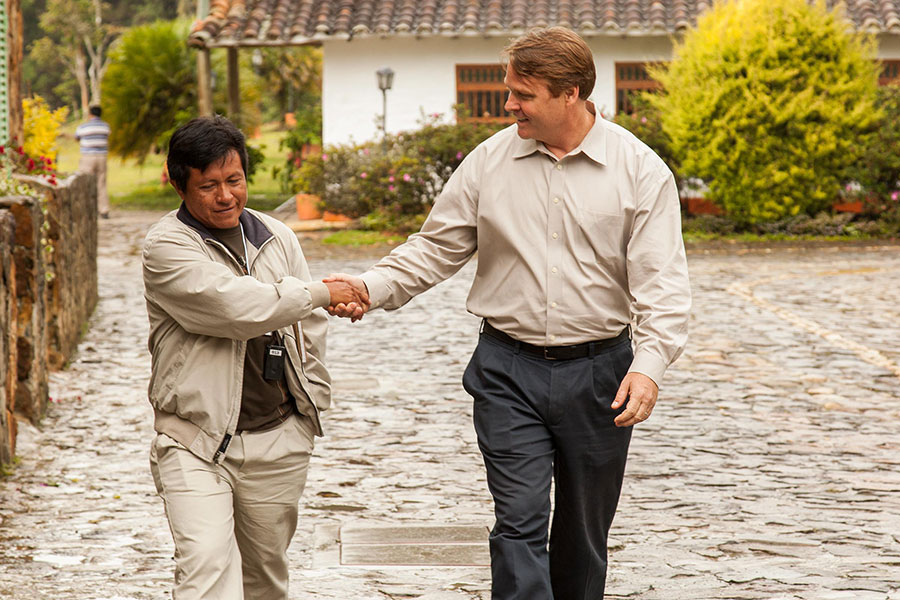
Coffee is a global product with billions of cups being drunk daily around the world. While most people appreciate their coffee as a secondary focus to reading their morning newspaper or as the backdrop to a great conversation at a coffee shop, David Griswold (pictured above, right) decided there were too many unnecessary middlemen involved in getting that cup of coffee to your table – many with a vested interest in keeping the supply chain opaque as a way of maximizing their profits. This moment of realization started with a knock on his door in 1989. Griswold was in Mexico City and a volunteer for the National Coordination Body of Coffee Farmer Cooperatives, his personal goodwill mission as a volunteer in the developing world before returning to the U.S. to get a master’s in business administration.
He had been hoping to answer a question that he’d been pondering over for a while: What work could I do to make a difference in the world? Griswold opened the door to find a man with deep lines etched in his leathery face. “He introduced himself as Pedro and at once thrust a plastic bag of coffee still in parchment into my hands,” recalls Griswold. “I have come from an ejido (communally owned land) in the state of Nayarit,” he began, “on behalf of 40 families who grow coffee.
We are told we have very good coffee. Can you help us find a way to sell it?” There was a note of cautious optimism in his voice. The Berlin Wall had just fallen in the West and in Mexico coffee prices had tumbled too because the Cold War coffee quota and pricing system run by the International Coffee Organization was no longer in place. Coffee prices had held firm for decades through a managed supply-demand system, but that had just ended.
As a result, prices went into a tailspin, dropping from $1.20 a pound to below $0.50. Griswold’s year of relaxed pondering was about to end. When he examined the coffee beans that Pedro had brought, he immediately saw that they were still in parchment: a peanut-like layer around the coffee seeds – inside which are the beans that are later roasted. Griswold knew little about coffee, but he knew that receiving un-milled coffee beans as a sample was something a coffee broker in New York would reject outright. “He didn’t know how to prepare the coffee sample for the American coffee market and I realized these farmers needed to understand the rules of engagement in a global market,” says Griswold.
As Griswold thought about Pedro’s question, he saw a path for his future come into focus. “At that time I I did not have a clear vision for my life’s work,” he says. “In asking his question, Pedro had answered mine. I knew then I would spend my life helping farmers find a sustainable market for their coffee and teaching them to succeed in supplying that market.” 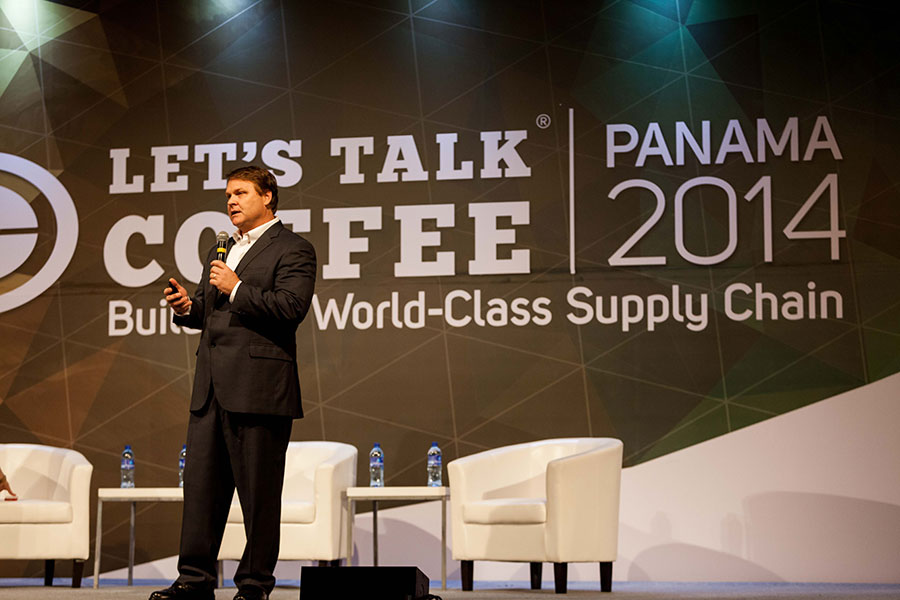
And so Relationship Coffee was born, a direct trading relationship model far ahead of its time. The business ethos aimed to understand coffee farmers’ point of view while giving them tools to better understand the market. Griswold had no earlier coffee or business background, so intuitively he established an environment of transparency that included all parties in the supply chain. It was an unheard-of business model in a volume-driven commodity world where a single-cent-per-pound differential could make the difference between a sale and a year of unsold product.
But his idea of full transparency was a leap of faith that has paid off hugely: Sustainable Harvest is now the largest organic fair trade coffee importer in North America. Consumer awareness around coffee has grown immensely in recent years, and the beverage is already a mature industry within the sustainability sector compared to many other commodities.
Today, the transparency that Griswold started in the early years has resulted in actual Facebook relationships between farmer and consumer. “At the outset people didn’t know who they were selling to and people didn’t know who there were buying from,” says Griswold. “Coffee is a little like wine, it’s something that people have become fascinated with and want to know more.” He points to the fact that when he started 25 years ago, coffee was simply “coffee.” No statement of origin, no fancy names and no branding with long stories of how it came about. George Clooney had yet to become the face of Nespresso and restaurant menus had yet to develop tongue-twisting lists of exotic-sounding varieties of Arabica coffees.
Coffee has historically been associated with social discourse. During the French and American Revolutions people had heated conversations in coffee houses, that would later form into political movements. Griswold is of the opinion that the close tie between social debate and coffee originally made the industry one of the first to inspect global supply chains. “Our most useful tool was building an iPad application that allowed farmers to taste coffee and share their results with their customers thousands of miles away. It’s called Tastify®, and it develops a common language of taste that is highly visual and can be translated into a language of their choice,” says Griswold.
A Tastify workshop, held anywhere in the world, can capture the coffee cupping (tasting) notes and make it available in multiple languages for the benefit of tasters in other countries. Has it paid off financially? “Yes it has,” says Griswold. “It’s not as profitable as being involved in traditional importing though. If you look at the value chain of any commodity the importing part will never be the most profitable.”
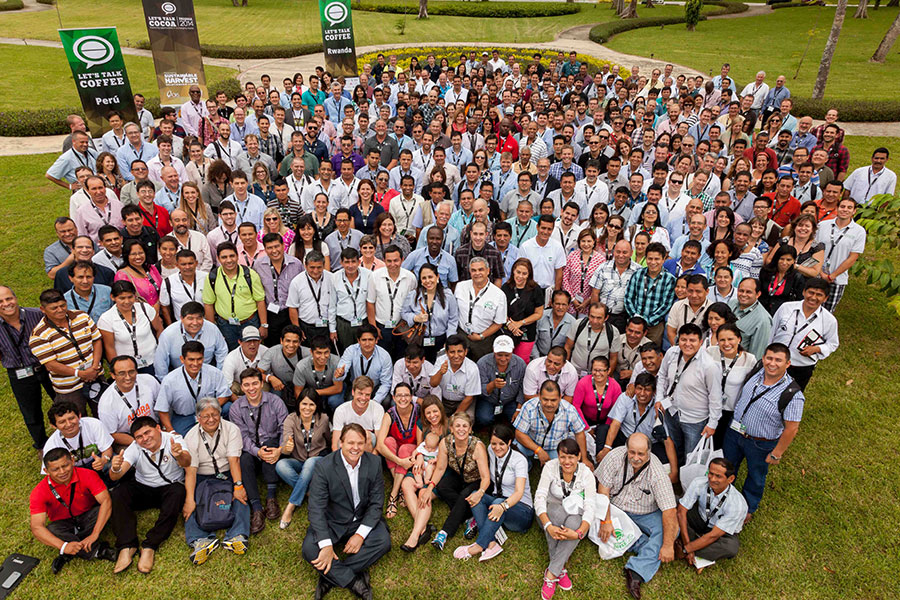
While companies might net 7-10% in profit, Griswold expects to only gross that amount and net around 1%. But that is fairly standard for commodity importers and why only big companies tend to survive. “We’ve still stayed in business,” he says. “We’ve been profitable for the last 15 years and been growing fast.”
His modesty stops him from mentioning that Sustainable Harvest has also made the Inc. 5000 list for the last five years, an amazing accomplishment when considering that Griswold reinvests up to half his budget back into training programs and offices at origin to help coffee farmers. “I wanted to share back more than just a tiny amount of pre-tax profit towards training farmers,” he says “For me it’s not a corporate social responsibility donation, but rather a central part of our mission. It’s a big part of why we’re still in business today. “Cost and production is often not covered along the way,” says Griswold.
“It’s impossible to make long-term investments in the current coffee market. Everybody’s wondering how to change something as big as global agriculture and make it better for the growers. I only know from my own experience, but what I’ve learned is that to solve big problems, you have to do it one relationship at a time.”
Incentive Travel That Makes An Impression

The right incentive can change your bottom line. And in a study conducted by Pulse Group of sales representatives, 75% of respondents said they saw Inspirato as better than their current employer’s incentive rewards.* Take advantage of Inspirato’s portfolio of luxury villas in more than 60 destinations.
Find out more here
Women and the Media: Fast Facts
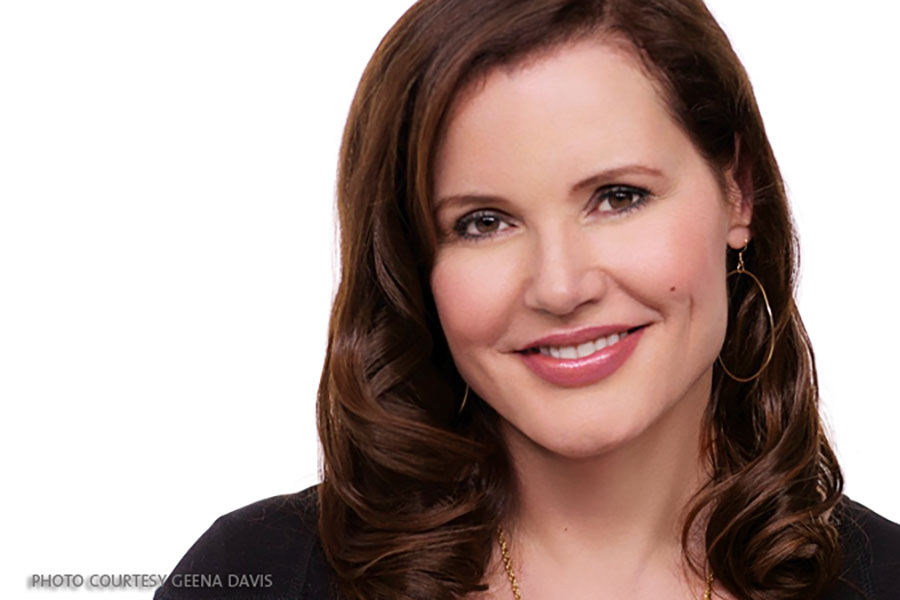
How are women portrayed in the media? There’s good chance you’ve never considered the shocking facts in the infographic below. 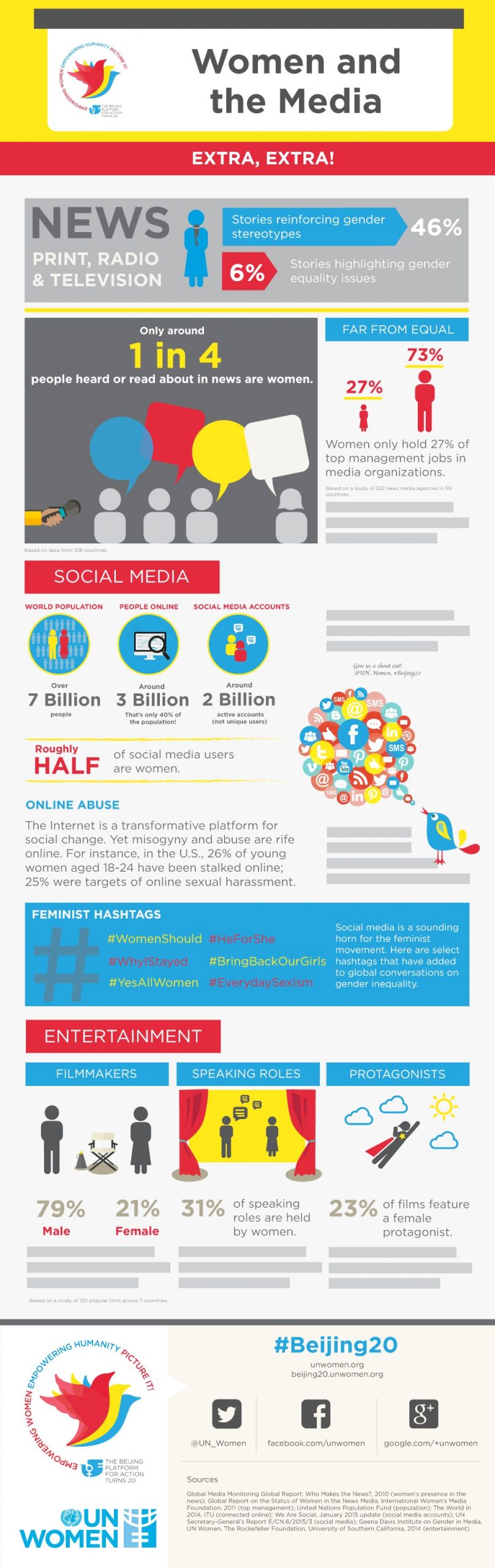
International Medical Corps Responds to Nepal Earthquake
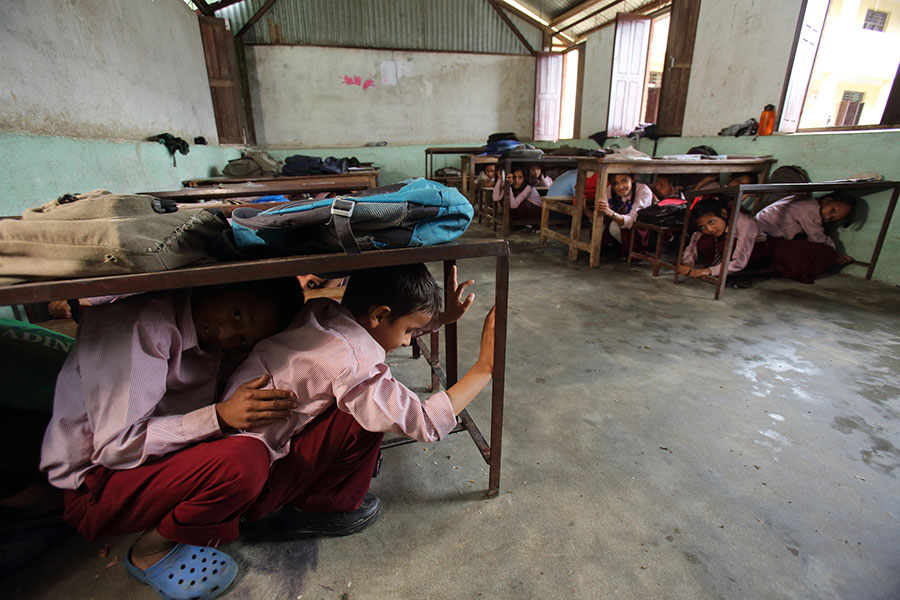
International Medical Corps is responding to the 7.8 magnitude earthquake that rocked Nepal less than 50 miles from the capital of Kathmandu at 11:41am local time. At least 1,800 people have died and the death toll is expected to climb much higher as rescue efforts are still in the early stages. Reports from the region show widespread damage. Aftershocks shook the region for several hours after the initial earthquake. Search and rescue operations are underway and hospitals in the capital have been inundated with patients. Medicines and supplies are expected to be depleted quickly. Communications with the region are limited.
International Medical Corps’ Emergency Response team leader Sean Casey is on the ground in Nepal and coordinating the organization’s emergency response. “The earthquake was incredibly powerful and the devastation in Kathmandu is considerable. Our team is gathering supplies and heading west towards the epicenter of the quake to provide support.”
The organization is also sending additional staff and resources to support relief efforts. They have extensive experience in the region and have responded to the Pakistan earthquake in 2005, the Haiti earthquake in 2010 and the Japan earthquake and tsunami in 2011.
About International Medical Corps: Since its inception 30 years ago, International Medical Corps’ mission has been consistent: relieve the suffering of those impacted by war, natural disaster and disease, by delivering vital health care services that focus on training. This approach of helping people help themselves is critical to returning devastated populations to self-reliance. Visit us on Facebook and follow us on Twitter. 
Earth Day 2015: 33 Commitments to Solve Climate Change

Critical Commitments Announced to Audience of Over 250,000 on the National Mall Washington D.C., April 19, 2015 – On Saturday, April 18, 2015, Earth Day Network and The Global Poverty Project hosted Global Citizen 2015 Earth Day on the National Mall in Washington, D.C. Global Citizen 2015 Earth Day, which celebrated achievements made and confronted challenges still facing the world toward solving climate change and ending extreme poverty, featured performances by Usher, Fall Out Boy, Mary J. Blige, Train, My Morning Jacket, Common, D’Banj, Fally Ipupa, Vixx, Roy Kim, and a finale by No Doubt.
Throughout the day, more than a quarter of a million people packed the National Mall and over two million watched live via YouTube. The event brought together global policymakers, finance ministers, environment and development NGOs, industry executives, and high-profile artists, all working to educate and inspire citizens to take immediate action to protect our planet and its people. The event was timed to coincide with the IMF/World Bank Spring Meetings – the only time world leaders would be in one place before September when they will set the world’s sustainability agenda at the UN General Assembly. Global Citizen 2015 Earth Day was a call to ensure that these world leaders act now to both address climate change and end extreme poverty.
The day’s event is a further testament to the idea that when citizens coalesce around a united goal, our world leaders pay attention. World leaders, corporate innovators, and other dignitaries announced 33 critical commitments on stage to end extreme poverty and solve climate change. Notable commitments made at Global Citizen 2015 Earth Day are outlined below:
WORLD LEADER MESSAGES ON SOLVING CLIMATE CHANGE AND ENDING EXTREME POVERTY
International Monetary Fund (IMF), Managing Director Christine Lagarde Quote: “At the IMF, 188 Ministers of Finance and Governors of Central Banks heard a big noise, and it was you. I’m here to give you a piece of good news – because they heard you, they are committed to ending poverty and financing development.”
United Nations, Secretary-General Ban Ki-moon Quote: “Will you support women’s empowerment? Will you speak up to bring all the children to school? Will you raise your voice for people and our planet? It’s our best chance to end global poverty. It’s our last chance to tackle climate change before it is too late. You have the power. Your generation can make it happen. Be a global citizen. Take your passion and compassion to make this world sustainable, prosperous. And, let’s make that our global reality!”
World Bank Group, President Jim Kim Quote: “Each person must do their part. We need engineers and entrepreneurs, we need doctors, we need lawyers, artists, teachers, we need students and activists – we need YOU. We are the first generation in human history with the opportunity to end extreme poverty.”
Sweden, Minister for International Development Cooperation and Minister for Foreign Affairs Isabella Löven Quote: “Bono actually dedicated his song One – to Sweden. Because Sweden gives one percent of our Gross National income to international development aid. And I’d like to take the opportunity here to make a recommitment on behalf of the Swedish citizens, of giving one percent of our Gross National Income to development assistance! And I hope other countries will follow as well.”
Organizer of the first Earth Day in 1970, Denis Hayes Quote: “Climate justice is THE issue facing this generation. Ruthless, powerful carbon companies are buying votes and lying like the cigarette industry did for so long. So far, they are winning. The main power on the other side is you—you and billions of other people who actually care about tomorrow.”
EDUCATION
Denmark’s Minister for Trade and Development Mogens Jensen committed an additional US $60 million to the Global Partnership for Education for 2015 – an increase of over 30%. Belgium’s Vice-prime Minister and Minister for Development Cooperation, Digitization, Telecommunications and Postal Services Alexander de Croo committed 50% of his country’s foreign aid to the world’s least developed countries, and also committed an additional €36,000,000 between 2015 and 2019 to Global Partnership for Education. This commitment is set to affect more than 300,000 lives.
In partnership with President Clinton and the Clinton Global Initiative, the Hult Prize has invested $25 million dollars in the next generation and mobilized hundreds of thousands of youth to solve our planet’s most crippling challenges through new and innovative business approaches that are both profitable and sustainable. Quote: “Today, we are excited to announce an incredible new partnership with Earth Day Network enabling 500,000 high school students from across the world to dream up innovative ideas and global solutions. We will pair their ideas with a million dollars of seed funding so that these students, our future, can make their dreams of a better world a reality.” – Ahmad Ashkar, CEO, The Hult Prize
WATER AND SANITATION
The World Bank Group’s Senior Director of its Global Water Practice, Junaid Ahmad, said it is on track to provide US $4 billion by September to support countries like India, Pakistan, Nepal and Haiti with water and sanitation efforts. The First Lady of Malawi, Gertrude Maseko Mutharika, presented a strong call to action through the Women on Water and Sanitation Declaration, signed by prominent women from around the world including CEOs, prime ministers, other first ladies and celebrities like Freida Pinto. Dutch Minister for Foreign Trade and Development Cooperation, Lilianne Ploumen announced a new commitment to reach 30 million people with water and another 50 million people with clean toilets.
FOOD SECURITY
US Representatives Betty McCollum (D-MN), Ed Royce (R-CA), Dave Reichert (R-WA), and Senator Isakson (R-GA) announced their support for passing the Global Food Security Act through Congress. Congressman Ed Royce, Chairman of the House Foreign Affairs Committee, committed to mark up the Global Food Security Act. Quote: “Next week, when the Foreign Affairs committee votes on the Global Food Security Act, we’ll get a second chance. And with your help we can get this important bill through Congress and to the President’s desk without further delay.”- Representative Ed Royce Via video message, Federal Chancellor of Germany Angela Merkel committed to put food security on the agenda for the G7 Summit.
HEALTH
The Obama Administration committed to provide $126 million dollars to Ebola-affected countries – Liberia, Sierra Leone, and Guinea – to improve health care. Norway’s Foreign Minister Børge Brende pledged US $12 million over four years to aid pollution reduction. This commitment is expected to affect the lives of 42 million people.
POLITICAL ACTION
The NAACP Voter Fund, Southwest Voter Registration Education Project (SVREP), League of Conservation Voters (LCV) and Earth Day Network (EDN) commited to registering one million new climate voters for the 2016 election. Quote: “Through the Million Climate Voters Campaign we will empower our communities to fight for real climate change legislation, and give more people a stronger voice in our democracy. One Person. One Vote. Money Out. Voters In.” – Greg Moore, Executive Director, NAACP Voter Fund.
MARINE PROTECTION
Over 80% of marine debris is plastic. Worldwide, we throw away 50 billion plastic bottles every year and 80% of them still end up in landfills and then our oceans where they take over 450 years to degrade. Quote: “We cannot sit by and watch this crisis unfold. We have to change the way we interact with plastics, redesign greener products and rethink our waste practices to ultimately clean-up our oceans. Over the next four years, my organization will commit over $200 million dollars to ocean and coastal issues. But we can’t do this alone. We need your commitment to be part of the solution to reduce, reuse and recycle our plastics. It all starts today, with your plastic bottle. Join us!”
ENVIRONMENTAL AWARENESS
Rovio Entertainment, whose Angry Birds game has been downloaded 2.8 billion times, in cooperation with the Earth Day Network, announced Angry Birds’ “Champions for Earth.” Quote: “I am now committing, on behalf of Rovio and Earth Day Network, to bring an amazing game experience to Angry Birds in time for Climate Week and the UN General Assembly in September. Stay tuned, get ready!” – Patrick Liu, Creative Director, Rovio Entertainment.
ENVIRONMENTAL SERVICE
40 million young people – boys and girls – from 223 countries and territories around the globe are Scouts. By learning to live with nature, Scouts are on the front line taking action to protect it. Quote: “I stand before you today to declare, with confidence, that Scouts worldwide will log an additional one billion hours of community service, including planting trees, over the next five years.” – Scott A. Teare, Secretary General, World Organization of the Scout Movement The proud partners for Global Citizen 2015 Earth Day included Caterpillar Inc., Citi, CJ Corporation, Toyota, iHeartMedia, Clear Channel Outdoor, MSNBC, YouTube, Google, Alcantara, and Connect4Climate.
Content was presented in partnership with the World Bank Group. Published on EarthDay.org
Celebrities Work Towards A More Sustainable Fashion Future This Earth Day
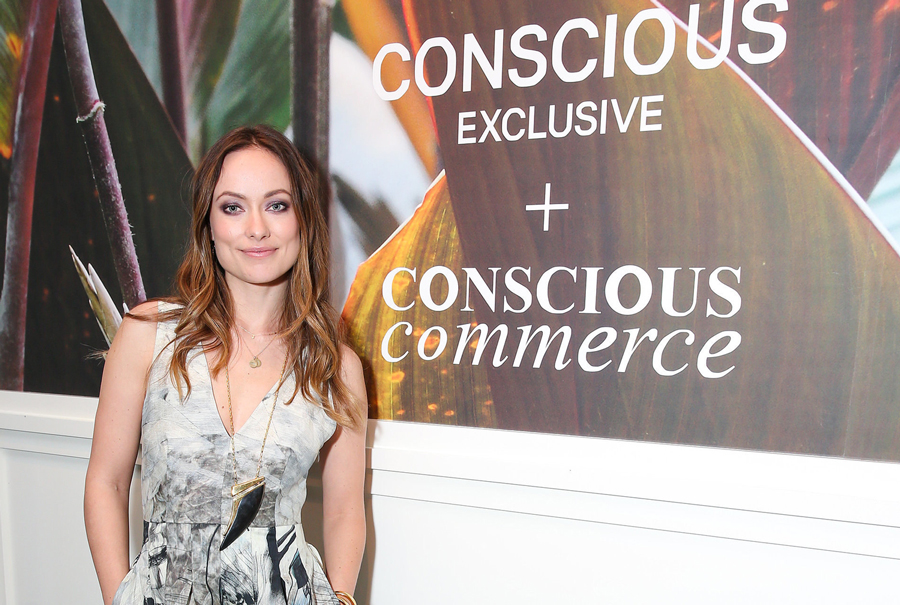
After learning the staggering fact that the vast majority of fabric can be recycled, yet 85% of all textiles end up in landfills each year, H&M became the first fashion company to launch a global garment collecting initiative. With the aim to minimize waste going into landfills by finding a solution to reuse and recycle textile fibers for new use, all donated clothing is sent to a recycling facility where they will be given a new life. Since the launch in 2013, almost thirty million pounds of product has been collected. H&M offers garments in every category made from more sustainable materials.
As the world’s number one user of organic cotton, the brand is consistently evolving to source new materials and innovative processes. New fabrications such as PET bottles turned into recycled polyester, and assessments on methods such as testing and using less energy and water to create capsule collections such as H&M’s Conscious Denim collection, all work together to create a positive impact on our planet. Most recently highlighted is H&M’s fourth Conscious Exclusive collection fronted by actress and humanitarian Olivia Wilde, which launched in stores on April 16th.
The limited-edition collection, which embodies details derived from global influences and cultures, is made from more sustainable and recycled materials including recycled sequins and beads, recycled silk, and Tencel/Lyocell. Coming off the heels of the release of the brand’s thirteenth Sustainability Report, everything that the brand does must be run in a way that is economically, socially, and environmentally friendly.
Focusing on the desire to increase the use of renewable energy and recycled materials, H&M’s goal is to make more sustainable fashion choices available, affordable, and attractive to as many people as possible.
Free The Children Celebrates 20 Years Of Children’s Rights
As Free The Children celebrates 20 years of empowering youth from every corner of the world to inspire change in their communities and beyond, we’d like to take a moment to extend a huge thank you to all of our supporters who have shown tremendous kindness, friendship and generosity over the years.
Without you, we’re not sure where we would be today. Certainly, we wouldn’t have offices across the world or a holistic and sustainable international development model that helps to change lives every single day. Nor would we have made it to 50 We Days across 14 major cities, spreading the message to young people that they have the power to create positive change in the world. Simply put, we wouldn’t be where we are today without you.
Thank you for being a part of our story so far, and we look forward to having you with us as we embark on this next exciting part of the journey. It is an honour to have your support and we can’t wait to see what the next 20 years will bring.
Find out more here Thank You Free The Children & Happy 20 Years!!
The Freedom of Choice
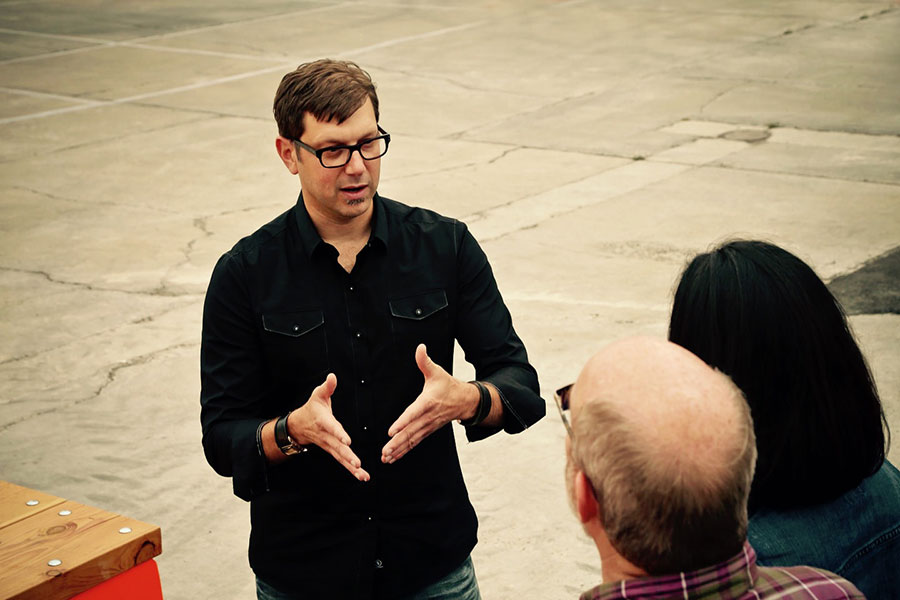
Former vegan punk rock kid. Band member. Previous animal rights activist. Artist. Baby food company CEO. Viewed through a wide lens, one of these things is not like the other. But zoom in and you’ll find they are all driven to impact the world in a positive way – through values, creativity and choice. “What is in my DNA that is consistent with the root of Plum Organics?” says Neil Grimmer, CEO of Plum Organics (pictured above). “When I was 20, I wanted to channel my creativity to inspire people to look differently at the world. It was music and animal rights then, but it was also the notion of living your own life. The idea that you can choose what you eat, what you are, how you live, what you wear. These are usually prescribed, but there is something meaningful to picking your path and living authentically. That is at the heart of it.”
Using creativity as his foundation, Neil got his “first official job” at IDEO, an international design firm. At that time, as an endurance athlete, he was exploring his relationship with food and using his body to experiment the fueling of it. “As the resident food guy, I worked with food companies in the midst of considering health and wellness for the first time. After six years, I realized, healthy food should come from a healthy company. That was meaningful to me personally, but I also saw the green shoots of that opinion emerging in other companies like Patagonia and Clif Bar.” Neil left IDEO to join Clif Bar in strategy and innovation, where he saw the practical aspects of codifying mission and vision, and of making transparent decisions.
And in 2007, with creativity, values and an idea driven by the birth of his first daughter, Neil co-founded Plum Organics, an organic baby food and toddler snack brand built on the core values of “healthy eating for life”. “When I was vegan, I was unhealthy and didn’t know what I was doing,” Neil said. “Being healthy can be complicated. But it doesn’t have to be. We want to make it simple for parents to feed their kids and live their values without compromise.” This led to successful and innovative products, as well as a strong culture that is interwoven in the daily life of the office. “We put our people first. We make every decision based on parents and their young children. In that process, we create a healthy business.
We hire people that are deeply passionate, talented, and personally connected to the work we do. They bring that mindset to the work and it creates a standard for excellence that comes from the heart.” In 2013, Plum Organics was acquired by The Campbell Soup Company. The acquisition provided Plum with structural support, the ability to grow and the ability to influence the larger corporation. “We knew the values of Plum would remain strong after the acquisition because behind every corporate deal, there are people. In our case, Denise Morrison, CEO of The Campbell Soup Company, was primarily the one behind the deal. When I met her, the first thing she said was ‘My grandchildren are Plum babies.
I understand what you do and why, because it is impacting my family in a positive way.’ For me, that personal commitment and sheer enthusiasm reassured me in the partnership.” Both inside Plum and Campbell, and outside to other businesses, Neil believes in sharing what Plum has done as an example of a fundamental refocus on how business should be done. “Pioneers before us showed us a path – that by doing good, you can create a great business.
Now consumers are backing companies that align with their values. Investors and corporations know this is the new economy, not just a marketing slogan. There is even more infrastructure and an acceleration of learning, measurement and guideposts from thought leaders. But we have to have courage and faith in the notion that you can lead a business with heart. We have to reinforce the message that you can have a personal and emotionally relevant vision for creating social good that is good for the business, too. We are demonstrating that through the Plum story.”
Neil will be speaking at the Conscious Capitalism 2015 annual conference, which will be held in Chicago April 7-9.
“There is radical values alignment between Plum and Conscious Capitalism. The credo and framework that built Conscious Capitalism as an organization and community are deeply embedded in our organization.” His practicum, Staying True to Your Mission in Times of Change, will provide valuable guidance on how to lead a mission-driven company through an acquisition, while reassuring stakeholders and protecting the company’s mission and purpose.
Deb Nelson, Director, Social Venture Network
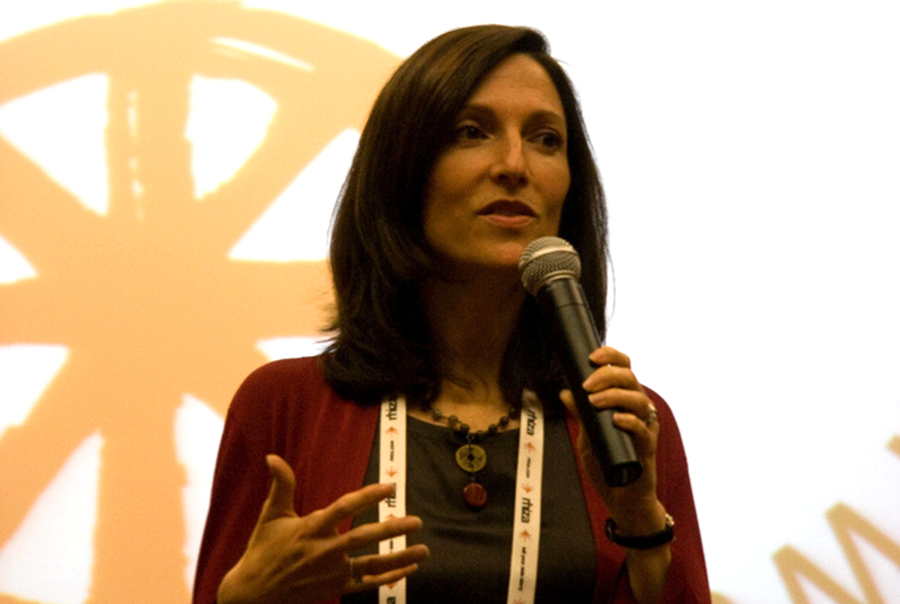
“We’re a network where members originally went to remind themselves that they’re not crazy.”
Vision: To support and empower diverse, innovative leaders who leverage business for a greater good. Action: Helps build valuable peer-to-peer connections among influential business leaders, social entrepreneurs and impact investors. This creates high-impact collaborations that contribute to a just, humane and sustainable world. www.SVN.org