Is Africa Hiding the Next Mark Zuckerberg?

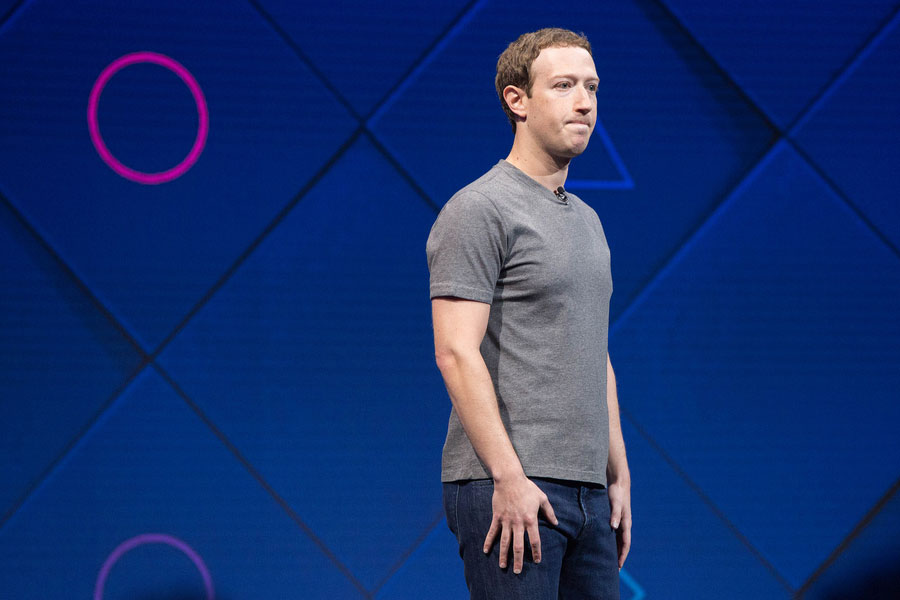
On May 14th, 1984, Mark Zuckerberg was born in Westchester County, N.Y., to a dentist and a psychiatrist. Twenty years later, he launched the initial version of “Thefacebook” out of his Harvard dorm room. In August, a decade after opening to its first members, Facebook had one billion users in a single day. Zuckerberg is undoubtedly brilliant. But what if he had been born into a working-class family in Nigeria or Kenya? Would Facebook exist? Would the social-media revolution have unfolded in the same way? It’s impossible to know. But for too long, much of the world’s talent has been shut out of the global economy. In the future, raw ability will be more important than the circumstances of one’s birth, reinforcing this fundamental truth: Brilliance and talent are evenly distributed, opportunity is not.

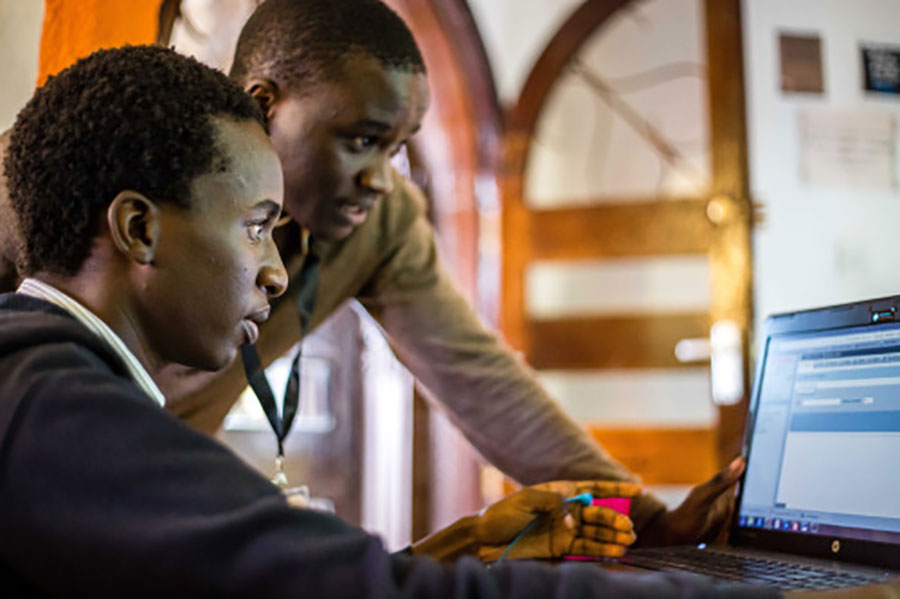
The starkest example of the disconnect between innate ability and opportunity can be found in Africa. With more than one billion people, approximately 60% of them under age 25, and more than 25% of young people out of work in many places, Africa is home to the world’s largest pool of untapped brainpower and talent. In the past, there was no scalable, cost-effective way to leverage and empower this human capital. But technology is quickly upending this paradigm, especially when it comes to identifying technical and quantitative aptitude.

Facebook-africa

We founded Andela to find and train the top 1% of tech talent across the continent. After six months in our software-development program, young men and women work remotely for Fortune 500 companies and startups around the world while receiving continuing training and support. Clients such as Microsoft are leveraging us to tap into Africa’s talent, integrating the continent’s best and brightest into their workforces in new ways.

‘If the digital revolution began in dorm rooms and Silicon Valley, its future will be written in Lagos, Nairobi and Johannesburg.’

As other companies adopt similar approaches, this new, meritocratic model of workforce development will expand across the world, accelerated by massive demographic shifts already under way. Indeed, while the populations of rich countries shrink and age, Africa’s overall population is expected to double by 2050. Nigeria is projected to have more than 750 million people by 2100. It’s time to stop viewing this as simply a youth bulge—it is a talent bulge. If the digital revolution began in dorm rooms and Silicon Valley, its future will be written in Lagos, Nairobi and Johannesburg. And when the next Mark Zuckerberg is born in Africa, he (or she) will have far greater access to the opportunities that enabled Mark to reach a billion people in a single day.

By Jeremy Johnson and Iyinoluwa Aboyeji. Andela.com

5 Tips For Leaders Who Are Nursing On The Go

For many new moms, the end of maternity leave induces anxiety. I know this from experience, having returned to work twice in the past three years after maternity leave.

But the challenges of returning from maternity leave are compounded when a nursing mother is sent on a business trip and has to leave her child not only for the day, but also one or more nights.

As a business leader, you’re required by law to support nursing employees, but advocating for them should go beyond compliance. It’s about valuing your employees so they enjoy coming to work every day. And as important as that support is in the office, it’s even more important for nursing women who have the added stress of being on the road.

Fortunately, there are several simple things employers can do to support new nursing mothers — and retain their top talent.

Support Starts at the Top

I recently got the chance to sit down with Sheila Janakos. She’s a highly trained certified lactation consultant and the owner of Healthy Horizons, a breastfeeding center and corporate lactation service provider. She’s seen firsthand the end result of supporting breastfeeding moms in the workplace.

“One of the largest corporate accounts I work with, a leader in the tech industry, stated that he never imagined what an impact it was that his company offered new moms prenatal and postpartum education, pump rooms, and support on working and breastfeeding,” said Janakos. “His employees were more likely to return to the workforce, and employee satisfaction hit an all-time high.”

The result was something her client hadn’t banked on. “He just thought he was doing the right thing by helping his employees combine working and breastfeeding,” she said. “Never did he imagine it was giving the company a competitive edge on talent retention.”

Here are five simple ways your company can support working mothers and retain top talent when they’re out in the field:

1. Build in Time for Pumping

New moms need to pump as often as every three hours, and on the road, it can be hard to find a spot that’s clean and private. Missing a pumping session can lead to decreased supply, engorgement, leaking, and even mastitis, a breast infection with flu-like symptoms.

Business trips are often jam-packed with conference sessions, meetings, and networking events. Of course, you want to get as much out of the trip as possible — and that’s understandable. It is, however, unreasonable to ask a nursing mom to block off every minute of the day for client meetings.

If you’re scheduling travel for a nursing mom, build breaks into her schedule so she has time to pump.

2. Be Cognizant of Lodging Needs

It’s easier for nursing mothers to stay at a hotel near the event they’re attending or — if at all possible — in the same hotel. This gives working moms easy access to the privacy of their hotel room, where they can easily pump and store the milk during the event. In addition, it’s important to make sure the room has a minifridge so the milk doesn’t spoil.

3. Get the Milk Home to Baby

If it’s a short trip, your nursing employee can likely take the milk home with her when she leaves — as long as she has enough milk stored at home to cover the baby’s needs for the duration of her trip. For longer trips or for moms who don’t have adequate reserves at home, it’s a good idea to arrange and pay to ship the milk home. Give your employee your FedEx number, a cooler, and dry ice, which will be used to ship the milk.

Also, be flexible on the length of the trip. If the employee requests to go for a shorter period of time, try to accommodate.

4. Book Direct Flights

Breast milk needs to be stored at specific temperatures, and keeping it cold while traveling can be challenging. One way to support your nursing employees is to book direct flights whenever possible. While this may seem like something small, the benefits are great to the mother: You’re providing her with a better chance to get her milk home safely, possibly reducing the number of times she needs to pump on the road and allowing her to see her little one sooner. If you can’t book direct flights, get her a day pass or membership to an airport lounge such as the Admirals Club. This will at least give her a nice place to pump and get additional ice for her cooler.

5. Offer Resources

It’s your job to understand the value of breastfeeding and support your employees when they leave to pump. Keep in mind how challenging it must be to leave your little one on a business trip. Now, image having to do so without any support from your team.

Providing informational resources from experts such as the U.S. Department of Health & Human Services, the Centers for Disease Control and Prevention, or the International Lactation Consultant Association when a new mom comes back from maternity leave lets her know that she’s supported.

The simple act of caring speaks volumes, but to go above and beyond, you can offer tangible resources, too. Create a “welcome back” kit for employees with a soft cooler to store milk, and fill it with snacks, water bottles, and leak pads she can use on their business trips. You can even brand the items to make them more personal from the company.

Going the extra mile to support nursing employees in the field will make a big difference for not only them, but also your company. “The moms I work with sing the praises of these supportive and generous companies and feel a loyalty that is priceless,” said Janakos. “Who wouldn’t want to be a part of a company that cares about you and your baby’s health and well-being?”

As a nursing mom who has had more than 70 work-related flights while nursing two children over the past three years, I can say that having American Airlines support me as a nursing mom has kept me with the company. The returns are tangible. Having team support while staffing booths at conferences, staying in the event hotel, keeping trips to four days or less so I could carry the milk home with me on a direct flight, and having the support of the company behind me has made the difference.

Had a pleasant or nasty experience trying to nurse on the go? Let us know in the comments below.

Aleda Schaffer is a strategic partnerships manager at American Airlines. Her team is focused on helping businesses through Business Extra, a complimentary business travel rewards and incentives program designed to help small and mid-sized companies reduce their travel costs.

 

Emotional Intelligence is the New IQ

Emotional intelligence helps us manage stress, it is vital for enhanced co-operation and teamwork, and it helps us to learn in relationships. Studies have found that 67% of all competencies deemed essential for high performance are related to emotional intelligence and leaders who score higher in emotional intelligence are more likely to be highly profitable in business. The Brighton School of Business and Management recently compiled the following infographic on why emotional intelligence is the new IQ.

Emotional-Intelligence

Martin Luther King: During Tough Times Your Response Can be Awesome

Martin Luther King, Jr. had a dream. He wanted to change things, and he did. He kept dreaming and sharing his dream. Not just his dream, but the dreams of others too. A great leader will capture the mood and sentiment of a time and make it vocal, explaining a simple concept again and again until it becomes a reality. King had the perseverance to keep going through tough times, yet he didn’t lose sight of his goal of a non-racial society. Instead of spreading the hate he saw around him, he spread the love. As leaders, we all have a choice in how we respond to tough situations. Your response can be awesome too.

King was an American Baptist minister, activist, humanitarian, and leader in the African-American Civil Rights Movement, best known for his role in the advancement of civil rights using nonviolent civil disobedience based on his Christian beliefs.

King saw his father’s proud and unafraid protests in relation to segregation, such as Martin, Sr., refusing to listen to a traffic policeman after being referred to as “boy” or stalking out of a store with his son when being told by a shoe clerk that they would have to move to the rear to be served.

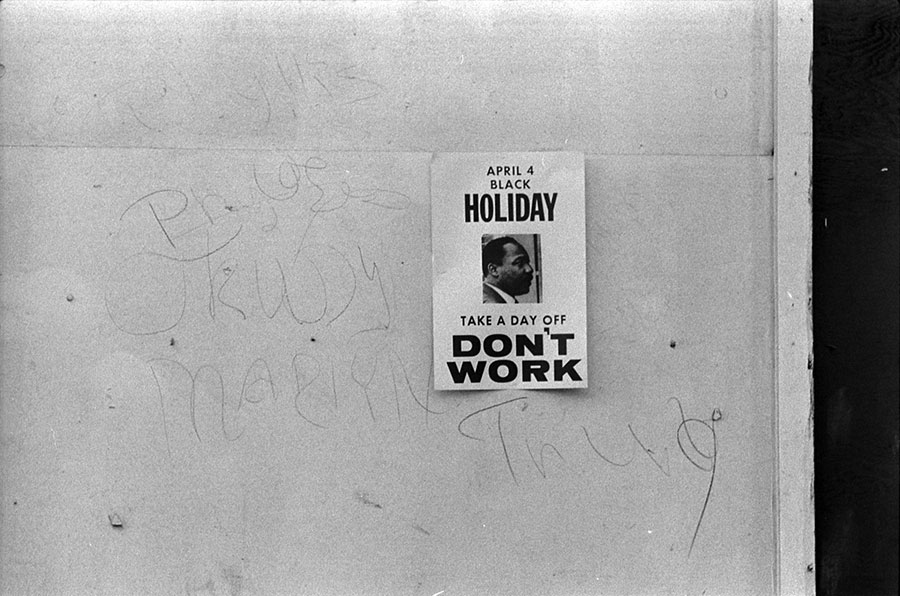
Sign from 1969 promoting a holiday to honor the anniversary of the assassination of Martin Luther King, Jr.

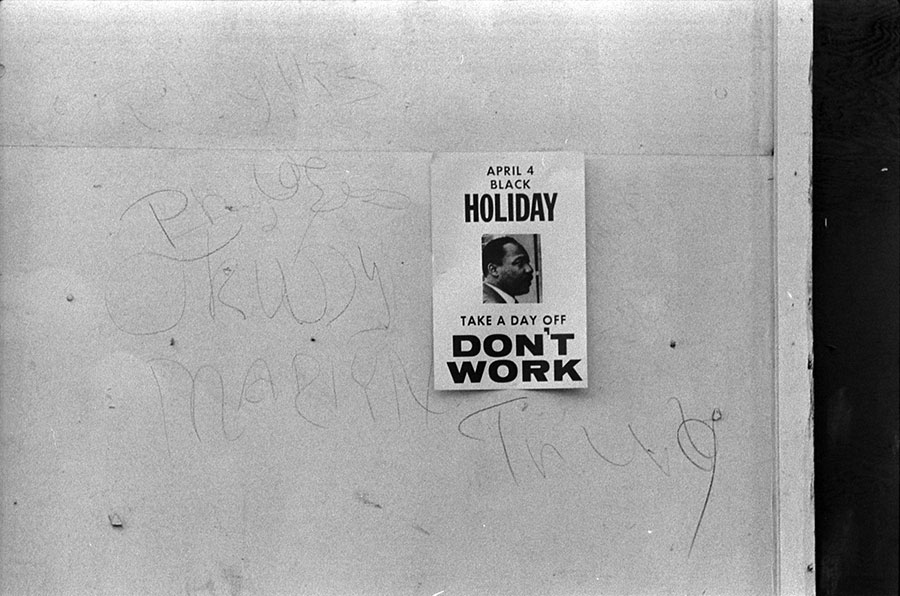
Sign from 1969 promoting a holiday to honor the anniversary of the assassination of Martin Luther King.


When King was a child, he befriended a white boy whose father owned a business near his family’s home. When the boys were 6, they attended different schools, with King attending a segregated school for African-Americans. King then lost his friend because the child’s father no longer wanted them to play together.

He became a civil rights activist early in his career. He led the 1955 Montgomery Bus Boycott and helped found the Southern Christian Leadership Conference (SCLC) in 1957, serving as its first president. With the SCLC, King led an unsuccessful 1962 struggle against segregation in Albany, Georgia (the Albany Movement), and helped organize the 1963 nonviolent protests in Birmingham, Alabama. King also helped to organize the 1963 March on Washington, where he delivered his famous “I Have a Dream” speech. There, he established his reputation as one of the greatest orators in American history.

Inspired by Mahatma Gandhi’s success with nonviolent activism, King had “for a long time … wanted to take a trip to India”. With assistance from Harris Wofford, the American Friends Service Committee, and other supporters, he was able to fund the journey in April 1959. The trip to India affected King, deepening his understanding of nonviolent resistance and his commitment to America’s struggle for civil rights. In a radio address made during his final evening in India, King reflected, “Since being in India, I am more convinced than ever before that the method of nonviolent resistance is the most potent weapon available to oppressed people in their struggle for justice and human dignity”.

The civil rights march from Selma to Montgomery, Alabama in 1965.

The civil rights march from Selma to Montgomery, Alabama in 1965.


On October 14, 1964, King received the Nobel Peace Prize for combating racial inequality through nonviolence. In 1965, he helped to organize the Selma to Montgomery marches, and the following year he took the movement north to Chicago to work on segregated housing. In the final years of his life, King expanded his focus to include poverty and speak against the Vietnam War, alienating many of his liberal allies with a 1967 speech titled “Beyond Vietnam”.

In 1968, King was planning a national occupation of Washington, D.C., to be called the Poor People’s Campaign, when he was assassinated on April 4 in Memphis, Tennessee. His death was followed by riots in many U.S. cities. Martin Luther King Jr. Day is celebrated each year on the third Monday of January to mark his birthday on January 15th.

Ronald Reagan and Coretta Scott King at the Martin Luther King, Jr. Day signing ceremony.

Ronald Reagan and Coretta Scott King at the Martin Luther King, Jr. Day signing ceremony.


Shaping Humanity Through A Lens

Photographer Jac de Villiers spoke to influential people who have shaped our world view. They shared their message of leadership and humanity.

Portraiture is a complex affair, where the photographer shares an intimate but brief relationship with a person, often a stranger. Usually, I have a rough mental image of the result I am looking for. I like to create a narrative around my subject: although the staging can be controlled, the communication can be unpredictable, often collaborative, always challenging – the challenge to tell a story.

Over a period of three months, I travelled to nine countries to photograph eminent leaders for the Desmond Tutu Peace Trust. Each person was asked to share their experience and insights in the form of a message that they would leave behind for humanity. The portraits and messages culminated in an exhibition called Hands That Shape Humanity.  

Queen Noor Al-Hussein of Jordan

Of Arab-American decent the queen seems to embody the best qualities of these two worlds in her graceful and confident manner in front of my camera. As a human rights campaigner and environmentalist, she works tirelessly to improve the lives of people. The queen is inspired by Henri Matisse, who said: “Find joy in the sky, in the trees, in the flowers.” She believes that by discovering the blessings in our lives, infinite possibility exists in all of us.

Shimon Peres

Peres is the elder statesman of Middle Eastern politics and, as such, a great survivor. Historical photographs line the walls of his office in Tel Aviv, bearing witness to his great leadership role spanning over half a century, culminating in 1994 when he was awarded the Nobel Peace Prize. Peres believes that the highest degree of wisdom is moral consideration. “Always look back with forgiveness. Always look ahead with hope. And when you look aside, do it with love.”

Carlos Santana

I meet the musician and songwriter at his recording studio in San Francisco. He is courteous and unassuming and his talk is a kind of a pop-philosophical monologue. Santana believes the world needs moral rejuvenation. “If you put your toe in the ocean, it doesn’t  matter if it’s the Pacific or the Atlantic, there’s really only one sea. If you asked God his religion, what’s he gonna say?” Santana believes that “We are all as important as Jesus Christ.”

Jane Campion

One of the world’s outstanding woman film directors, she has won an Academy Award, a Palme d’Or and a Silver Lion for her work. Campion is engaging and imaginative – it’s a joy to photograph her as she gives her all. She says: “You have to find your own way to yourself. It’s very universal. It’s being in my body. Being relaxed. Being sensitive.”

Jei Jinsheng

A Chinese human rights activist, Jingsheng has suffered enormous hardship for his political ideals, having spent ten years of a fifteen-year prison sentence in solitary confinement. It was a humbling experience for me to create his portrait, his face showing no remorse or self-pity, only joy at being alive.

We somehow communicated without using words, as we could not understand each other’s language. His message is a personal one relating to his political experience – he believes that one should not imitate the chameleon and adapt to circumstances. Although this is a good tactic for surviving, it is bad for the course of the world. Adhering to one’s principles can avoid unexpected catastrophes.

www.jacdevilliers.com


A Christmas Perspective: Heaven or Hell?

We live in an age of extremes. Most of us are a bit hypnotized by our smart phones overflowing with the stream of urgent trivia as well as vital information that impacts our work, our families and our lives. Our brains and emotions were not designed for this constant onslaught of stimulation.

At the same time personal meditation has gone mainstream. More and more business organizations are teaching their employees the disciplines of mindfulness and encouraging them to meditate, even at work. Yoga has never been so popular.

Extremes also dominate our inner life of meaning. Religions struggle to resolve their old doctrines that create tribal beliefs while the world culture simplifies spirituality into universal love.

Humans are designed to wrestle with the big questions. We seek certainty in an uncertain world. We want the light of unchanging truth as we try to make good decisions in the dark.

There are many big thinkers who believe that we are transitioning from a religious age through a secular age to a spiritual age. Time will tell. But I believe what really matters is that each of us wrestle with our theory of life until we arrive at a world that helps us to be the best person we can imagine becoming.

There is nothing more personal than our inner theory of the meaning of life. Even in the most ‘doctrinaire’ religions each individual creates their own personal theology.

It is inescapable. According to Gallup surveys a large percentage of avowed atheists sincerely pursue humanitarian ideals because they believe in a vague but real source of empathy-based morality… “The Golden Rule.”

So what is your theory of life?  How do you derive meaning? Research suggests that there are three main theories:

  1. I can control the events of my life through perfect obedience to moral rules. (This is the common belief that if you say your prayers and eat your Wheaties that bad things won’t happen.) Although this mindset is obviously flawed, millions of people hang onto it as their only strategy to control things that evidently can’t be controlled.  This is very stressful and creates a crisis of faith. After all, when a loving God allows really bad things to happen to really good people it makes you wonder, “What the hell is going on?” Psychological research tells us that this theory of life creates a lot of inner fears and anxiety.
  1. Life happens…deal with it. This theory suggests that life is ultimately meaningless and random. Seeking pleasure and avoiding pain is the only rational approach. The problem with this theory is that seeking pleasure does not fill the hole in our hearts that can only be filled with deeper meaning. Most often when we see people who have lived their lives on the pleasure maximization principle, those like Hugh Hefner, and we feel sad for them or disgusted.
  1. Life is for learning. End-of-life research reveals that people who have this life theory are most satisfied. This mindset allows for life’s undeserved ups and downs as a means to personally grow into a better person.  Again, at the end of our lives what most happy people have wished for is that they have become wiser and more loving. (Not richer or more famous.) This theory of life is very optimistic and robust because it trains our inner voice to tell us that we can learn something beneficial from everything that happens to us. It infuses meaning into everyday life. It makes our setbacks sacred. And it makes us grateful for our successes. When people say everything happens for a reason what they are acknowledging is that we can benefit from all of life’s experiences… if we choose to. That’s the inner story that will make you the most stress resilient and satisfied.

So now some thoughts on the meaning of Christmas. For a minute let me separate the message of Christ from Christian religions. But before I do, let me give you a few thoughts on religion. Contrary to popular belief most wars have been fought over land and money not religious ideology. Much, much good has been done by both individuals who are devoutly religious and by religions themselves.

However, when hard power, competitive people, who are almost always men, claim to have an exclusive relationship with God it brings out the worst in them. It legitimizes mind control, bigotry, slavery, holy war and terrorism. So, its also true that lots of very terrible things happen in the name of religion.

Religion can also serve a great human purpose by helping people gain impulse control and self-discipline, which are vital tools on the path to personal fulfillment. And it also turns out that people who worship together are psychologically happier and live longer. This is true even if they don’t believe exactly the same things.  There is something potent about communal celebration of a belief that life has purpose, love is the supreme value, and that our choices and actions matter.

Today there are thousands of Christian sects so Christianity is more of a tapestry of beliefs with thousands of individual threads.  Some Christians try to strip away the centuries of added dogmas and doctrines that obscure the message of Jesus. Sometimes these are called “Red Letter Christians” because in many New Testaments the words that are attributed to Christ are printed in red. These folks tend to downplay the words of Paul in his epistles as well as theologians, founders of religions and others who claim a special power to speak in the name of God. (Or for that matter to speak for the universe… or the force…)

The reason that Red Letter Christians like to focus on the words of Christ is because they are almost universally words of inclusion, non-judgment and forgiveness, even for big whopping moral flaws. Instead of commandments Christ gives us the Beatitudes. In fact he says the whole moral law can be reduced to one big idea. We need to actively love each other. Complicating things more than that destroys the power of universal compassion.

Of course we need to love each other wisely. Love does not mean co-dependence or allowing selfish, evil-acting people to cause suffering for the rest of us. Real love is not weak… it is strong. Christ did not hesitate to condemn the religious establishment of his time as being power-mad, greedy and mean.

My point in all this is that it doesn’t matter if someone says Merry Christmas or Happy Holidays or nothing at all. The spirit of Christ’s message is that loving-kindness really matters. When our personal characters are drenched in loving-kindness guided by wisdom we are becoming the best person we can imagine.

I have one last Christmas time thought.  Some of you might find it disturbing but I find it exciting.   The Christian mystic and scientist Emanuel Swedenborg writes that heaven and hell are really states of mind. The states of mind are so powerful they literally create our experience. And we actually create either heaven or hell right now through our conscious awareness.

Although Swedenborg does not actually seem to say this, the implication of his mystical experiences is that we are currently living in hell. That’s why bad things happen. That’s why life is so uncertain, so often unfair.  That’s why when people relate near death experiences they often say they don’t want to return to a world full of undeserved pain and sorrow.

This point of view gives rise to the idea that this is the best of all possible worlds.  If there could be any less suffering or uncertainty, there would be. What I find comforting about this possibility is that instead of being frustrated and angry with all the injustice we experience and see innocent others’ experiences I can be grateful that my higher self has an opportunity to make things just a little bit better. It also helps me relish all that is good in my life.  It makes me want to strive to bring the conditions of heaven into my life and the lives of others in anyway that I can.

Maybe I’m goofy. I don’t pretend to know what I don’t know.  And I don’t know a lot of things. But what I do know is that loving others wisely is my path to meaningful happiness. Loving makes me a better person.

I like to think about that Christmas time. Be happy.

Wear the Change You Want to See


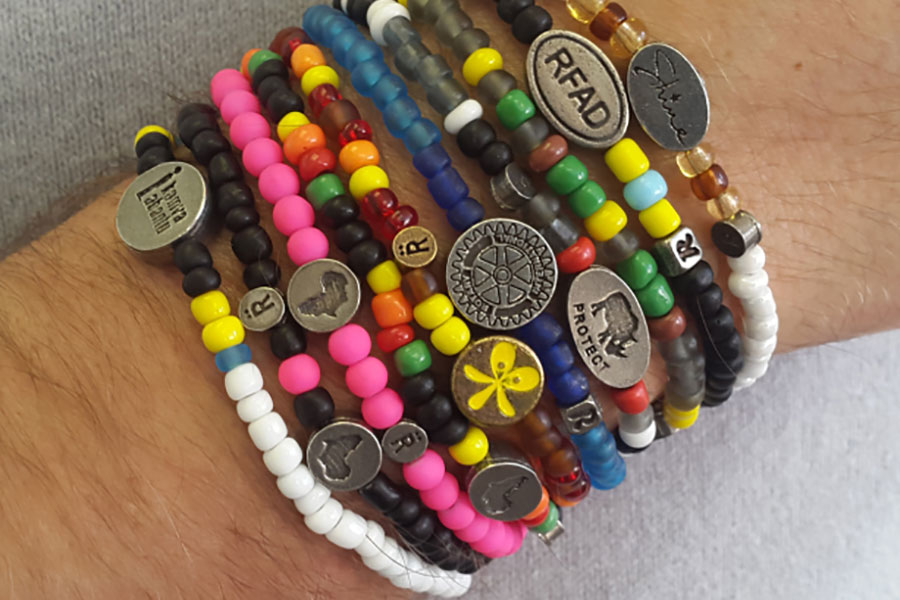
  • Using a simple string of beads made and sold through a uniquely sustainable business model, Cape Town-based Relate makes “cause” bracelets that create opportunities that change lives.
  • The organization has raised more than $1.2 million for causes and social upliftment.
  • The bracelets are made by the elderly, refugees and unemployed township youth, allowing them to earn an income and gain on-the-job training.
  • Formed in 2004 by Lauren Gillis to help reduce poverty, she explains the wider thinking behind her social impact.

A strong commitment to humanity and social justice was instilled in me from an early age. After studying social work at the University of the Witwatersrand in Johannesburg, my 30-year career evolved into forming businesses and philanthropic organizations committed to supporting individuals reach their greatest potential. It’s amazing how something as small as a bead can do something so big.

I believe that we are all connected, and that each of us has the responsibility and privilege to be an agent of social change. I am passionate that a small handmade connector, a simple string of beads, has the remarkable power to restore dignity, hope and resilience to humanity.

I want to share a story, a process, a model, a philosophy, and a tool that I am unbelievably excited to be involved with. It’s a story that is practical but has abstract implications. It’s a story that starts with a small bead and ends with impact across a continent. It’s a story about the power of connectivity and how creativity can find elegant solutions to lessen the divide between the haves and the have nots. It’s a story that deals with donor fatigue and the negative energy associated with NGOs begging for survival. It addresses corporate and NGO needs in a manner that benefits both. It’s a story about sustainability, leadership and bringing people together.

I was originally inspired by Lance Armstrong’s Livestrong rubber band that clearly showed us that humanity has a desire to be connected. I thought how cool it would have been if that machine-made band had rather been handmade, and how many lives could have benefited from it. I thought how awesome it would be if there was a beaded string that could connect people to a cause or a brand – and ultimately to each other. This might be an idea that went beyond job creation.

Let me take you through the life of one of our handmade beaded bracelets.

The United Against Malaria Bracelet is not made in a factory. It’s made in communities where it uplifts, up-skills and offers dignity and hope. A string of beads that bridges the gap between food on the table for pensioners and orphaned grandchildren, and also addresses bigger issues on the African continent.

Packs of beads and elastic are sent to senior clubs in the townships where the elderly thread the beads. Many are old and frail and taking care of orphaned children and grandchildren, sometimes from the consequence of HIV. These amazing people have taught me about the meaning of productivity at any age and the true meaning of the South African phrase Ubuntu. Ubuntu can be translated as “humanity to others.” Everything they earn, however little, is shared between family, neighbors and friends.

These seniors have been given a focus and purpose and they sing as they work in the knowledge that their hard work will result in the protection of moms and children from the deadly disease of malaria. Their dementia and arthritis improves and many health and social benefits have also been noted. They don’t want a handout. They are proud to have an opportunity to work, to earn and have a sense of purpose.

The beaded balls are then sent to younger groups in the townships, who complete the bracelets. These are predominantly single mothers who have a very low level of education, many of whom are illiterate. There is little chance of them ever getting a job.

Because we believe that the ability to communicate is a basic requirement for employment, we have made it compulsory that part of their earnings goes towards English classes. They are then assessed for potential new areas of interest and ability. Some are now learning how to use a computer, learning to drive, or doing different technician or trade courses. Every part of what we do is built into the cost of the bracelet.


The packers, who are refugees from war-torn African countries are up-skilled in the same way. One packer, who is passionate about soccer, has funded soccer coaching courses, and another is working toward becoming a truck driver.

The beads are all mixed up when they come back from the townships, and we then give them to the mentally challenged, who are paid to sort them into different colors.

So what happens to our bracelets then? They are sold to corporates and retailers.

More than a third of the cost is donated to the Global Fund, who in turn supply us with mosquito nets that the amazing humanitarian explorer Kingsley Holgate distributes throughout Africa to mothers and children below the age of five.

Malaria still kills a child every 60 seconds. In the past we have raised $500,000 to buy nets – A great example of where Africa is not asking the rest of the world for a handout. A simple hand-made bracelet was the catalyst that enabled us to take care of our own continent. The proceeds from one bracelet can protect a child for up to five years.

Our business model creates an opportunity for corporates to combine CSR with marketing and brand building too. Let me give you an example.

Hyundai Germany identified the need for a new school hall at an impoverished townships school and saw our bracelets as a great way to fundraise. They placed an order for branded Hyundai bracelets which they sold through their dealerships. In addition to the $0.50 that Relate paid per bracelet to a non-profit cause, Hyundai raised a further $2 from the sale of each bracelet. In under a year $50,000 was raised for the building of the school hall and more than $11,000 had been invested in skills development programs. Not forgetting, of course, how many people were now wearing cool and fashionable Hyundai bracelets.

I hope my story will serve as a reminder of the power of connectivity; that something small can have a big impact and that we all have the potential to become agents of social change.

10 Experts React to the COP21Paris Agreement

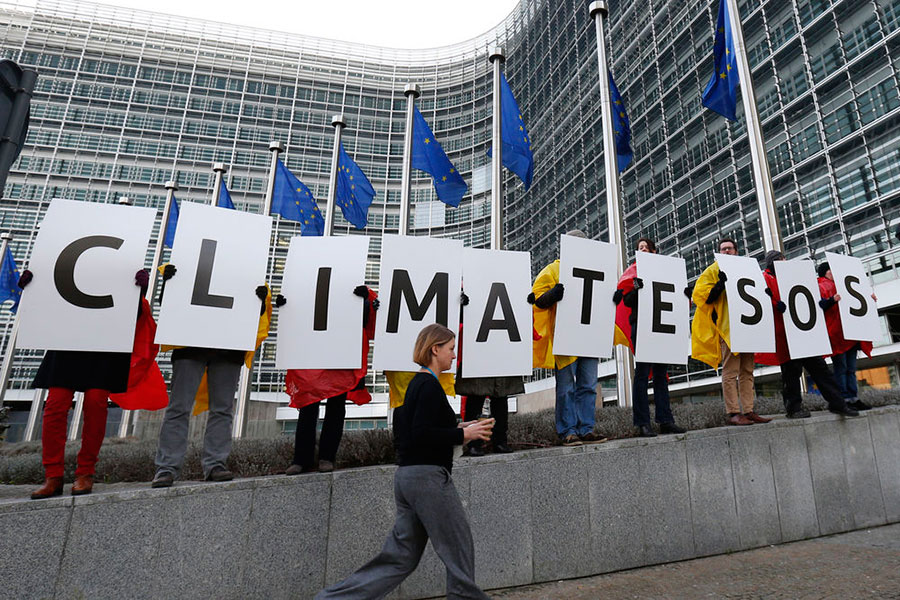
As the twenty-first session of the Conference of the Parties (COP21) comes to a close, the Centre for International Governance Innovation (CIGI) has released the following insights from its international law and global economy and politics experts regarding the outcomes, including the final Paris Agreement released on Saturday, December 12:

1. “The Paris accord represents a huge step forward in the move toward a low carbon economy. It also provides a new legitimacy for the United Nations in this area. More than 196 countries approved a deal which has some sharp teeth. It calls for efforts to limit the average increase in temperature to less than 2C (and even the unrealizable 1.5). It calls for the planet to be carbon neutral in the latter part of this century. It provides for resetting national targets every 5 years so that we might actually get to those temperature goals. And it calls for regular stocktakings of where we are. This is just a first step. Now the real challenge begins. These kinds of reductions in Greenhouse gas emissions will not come without pain or cost, especially in an energy intensive economy which has frittered away its earlier chances to do something. When Minister McKenna and her band of happy warriors return to Ottawa after a job well done, they will face a Herculean challenge to prepare a Canadian strategy capable of meeting these targets.” – David Runnalls, CIGI Distinguished Fellow 

2. “The road from Paris COP21 begins an epic journey. The new Paris Agreement, like the Sustainable Development Goals and the Addis Ababa Action Plan also concluded this pivotal year, embraces principles of solidarity, equity and sustainability and reframes intractably complex issues like climate change and poverty as matters of common concern for all human kind to resolve together in a spirit of sharing and cooperation.  This work is just beginning at the international and domestic levels.  In Canada we need to develop a comprehensive climate change strategy that leverages the powers, resources and capabilities of federal, provincial, territorial and municipal levels of government, and engages with civil society and indigenous peoples to determine how we will transform ourselves from a nation embedded in the fossil fuel economy to one founded on principles of global solidarity, equity and sustainability and enabled by knowledge and clean innovation.  An epic journey begins with a first step.” – Oonagh Fitzgerald, Director of CIGI’s International Law Research Program

3. “The Paris Agreement is a historic milestone. For the first time, all the world’s governments have pledged concrete steps to arrest climate change, and to ramp up their efforts in the future, through cooperation. Governments, companies, and families had already begun to transition to a low-carbon world economy.  This agreement means this transition is now irreversible and probably will accelerate. Investors, take notice.” – John Odell, CIGI Senior Fellow

4. “The new climate change treaty negotiated at Paris rules out business as usual growth in the demand for oil and other fossil fuels. The emission reductions that will be required to hold average global temperatures to under a 2 degree Celsius rise mandate both significant  and imminent declines in world oil consumption, challenging the sustainability of high cost sources of supply such as Canada’s oil sands.”   – Jeff Rubin, CIGI Senior Fellow

5. “This Agreement will not save the planet.  Although the Agreement contains lofty goals such as keeping the global temperature rise to less than 2 degree C, it fails to require individual countries or even groups of countries to reduce emissions by specific amounts or by any particular deadline.  Also, despite the words used by many world leaders and commentators, this is not a binding “legal agreement” by which Canada, or any other specific country, must reduce its emissions, and in any event the Agreement specifically forbids “enforcement” action that would punish a particular country for violations. In short, the Paris Agreement contains no specific legal requirements and no means to ensure that carbon emission will decrease and that humanity won’t be roasted, toasted, drowned or exiled.  Additionally, there are no lofty or indeed any specific goals in the Agreement to restrict new coal mines, new coal fired power plants or petrochemical projects and also no requirements to phase out existing carbon-based fuels, such as coal, oil or other fossil fuels by a specific date.” – David Estrin, CIGI Senior Research Fellow

6. “The agreement is a major milestone with regard to addressing climate change. What becomes clear is that we have to pay the costs for carbon emissions that we have externalized for the last century. Finance is one of the main issues for climate change mitigation and adaptation. A part of the payments will be to reduce carbon emission in developed countries and another part to help developing countries to follow a path of low carbon economic development. Finally, stranded assets caused by a carbon bubble become reality. Investors should be aware that we have to keep a large amount of fossil fuel resources in the ground to achieve the goals of the COP21 agreement. This will create a major shift of investments away from fossil fuels into renewable energy and sustainable infrastructure.” – Olaf Weber, CIGI Senior Fellow

7. “For clean technology innovators, a fully implemented Paris Agreement would set the conditions needed to remove the three most important barriers to climate solutions being deployed – Finance, Procurement and Regulation.  Finance flows consistent with a pathway towards low greenhouse gas emissions will redirect capital away from carbon-intensive sectors toward those that accelerate decarbonization. Asset managers also deploy capital toward climate mitigation project finance. Public procurement will accelerate as governments set examples with carbon-neutral operations and with greater attention to global commerce of environmental goods. Supported by public procurement in developed countries and by development support via $100 billion in annual climate finance, global trade in manufactured environmental goods will double to $2 trillion within 5 years, on a baseline of $970 billion in 2013. Finally, in keeping with obligations of all Parties to undertake and communicate ambitious efforts, countries will update GHG regulations to support intended National Determined Contributions.”  – Céline Bak, CIGI Senior Fellow 

8. “Legend has it King Canute ordered the tide to not come in. Canute syndrome – chronic belief based on aspirations rather than evidence or practicality – afflicts climate negotiators, governments and most of the media. The Paris aspirations to limit temperature increase and to mobilize funding are unattainable. Climate sensitivity to increased emissions is uncertain. We insure against many risks, but are blind to the probability that likely future concentrations of CO2 will lead to much higher increases than the 50% or 66% scenarios project. Never mind Marco Rubio’s “The government can’t change the weather….We can pass a bunch of laws that will destroy our economy, but it isn’t going to change the weather.” A serious effort would start with ensuring that global population does not increase by nearly two billion who will require food and energy services. The prospect is that we will all be as wet as Canute.” – Barry Carin, CIGI Senior Fellow

9. “Debates over fair differentiation of obligations, one of the most controversial topics placing developed against developing countries since the inception of climate negotiations, continued to the last minutes. The result, a nuanced and dynamic differentiation, is groundbreaking in international law. Developed countries wanted to ensure large developing emitters like China and India would do their share in reducing emissions. Developing countries wanted guarantees that developed countries would face their historic responsibility for accumulated emissions, and succeeded in including clear references to their greater development needs and the required leadership of developed countries in climate action and finance. The concept of progressive obligations enabled this compromise. Developed countries will immediately pursue absolute economy-wide reduction targets. Developing countries will reduce emissions intensity, peak their emissions as soon as possible, and move towards absolute economy-wide emissions reductions over time. More disputes on differentiation are expected during implementation, yet overcoming this intractable negotiation obstacle was one of the greatest achievements in Paris.” – Patrícia Galvão Ferreira, CIGI Post-Doctoral Fellow

10. “The momentum of the Paris Agreement should be picked up by WTO officials and trade ministers who will gather in Nairobi this week for the WTO Ministerial Conference and can do a lot to ensure the 1.5°C can be reached. The WTO’s 20th birthday is here with not much to celebrate – no significant agreements have been signed since 1995 and the future of the Doha Round is uncertain. This can be changed. If WTO member states want to capitalize on the Paris outcome, then this week in Nairobi they should make efforts towards progress on the Environmental Goods Agreement (EGA) which is currently on the negotiating table. The target of the EGA is the reduction or elimination of tariffs on several products that help clean the environment and contribute to renewable energy production. The agreement can create a robust green goods trading regime within the WTO, which would signal to world markets and investors that it is in their best interest to progressively switch to renewable energy sources and green goods’ trade. The world trading system can become the enabling force for the institution of green policies and market incentives, as long as its members negotiating in Nairobi this week, like their fellow ministers in Paris, think ‘green’.” – Maria Panezi, CIGI Post-Doctoral Fellow

World Leaders Celebrate Climate Deal

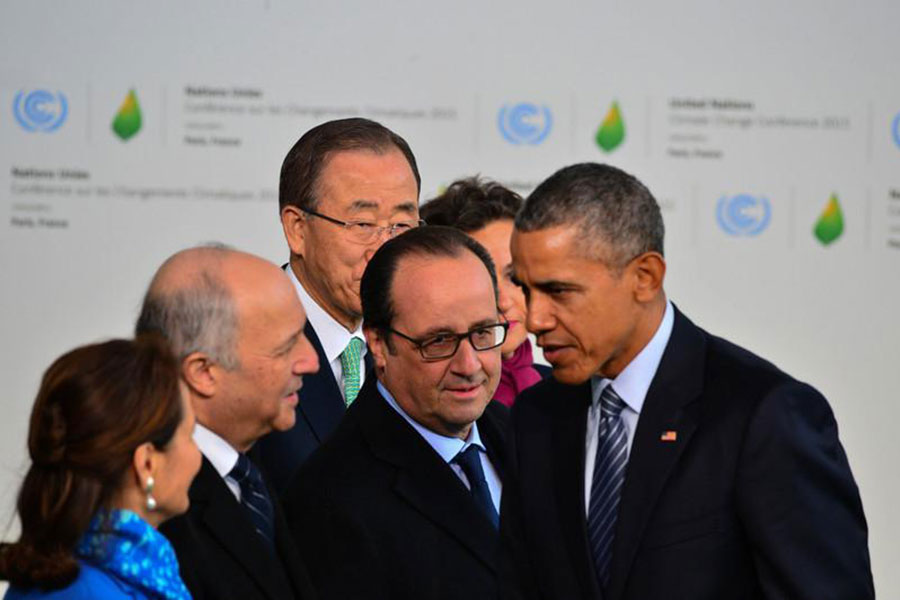
At the COP21 United Nations conference in Paris on Friday, officials from nearly 200 countries reached a new agreement to address the threat of global climate change. On behalf of the United Nations Foundation, Chair Ted Turner, Vice Chairs Senator Timothy E. Wirth and Dr. Gro Harlem Brundtland, and President and CEO Kathy Calvin commented on the agreement, saying:

“This conference will be remembered as a turning point in the fight against climate change and in our efforts to create a more peaceful, prosperous planet for all people. The new agreement creates a strong framework to launch an era of unprecedented climate action. Now we must move with great urgency to deliver on that promise. We know this agreement alone will not meet the threat of climate change; that will require continued ambitious action from governments, the private sector, and all of us to limit the global rise in temperature and move more rapidly toward a clean energy future with net zero emissions.

“After decades of debate, the battle over the reality of climate change is over. Countries from every region of the world and every stage of development have committed to act because they recognize that it is in their self-interest and in humanity’s common interest. The commitment to act by countries including Brazil, China, India, and the United States is a clear sign that countries are no longer focused on whether they should act, but how.

“Importantly, the conference in Paris went beyond national governments to welcome the engagement of civil society, the private sector, financial institutions, cities and states. More and more business leaders and investors recognize not just the obligation to act, but also the economic opportunities in the growing clean energy economy.

“The Paris conference made a number of significant advances, most importantly by agreeing to convene again on a regular basis every five years to bring forward increasingly ambitious steps to reduce greenhouse gas pollution, and by strengthening the world’s long-term goals for keeping down the rise in global average temperatures.

“Combined with the adoption of the Sustainable Development Goals, this has been a historic year for people and the planet. Our collective task is immense, but so is the opportunity to usher in a new era of sustainable development. The United Nations Foundation will continue to work with the United Nations and partners around the world to help achieve this future.” 

Coca-Cola’s New and Improved Formula: Greenfreeze


In 1932 Coca-Cola was extolling consumers to taste its “ice-cold sunshine.” After 129 years of selling carbonated soft-drink, one of the world’s largest companies has realized that consumers downing 1.8 billion of their beverages daily in 200 country’s comes with a wider responsibility. When that same sunshine becomes more associated with drought and global warming, it’s time to rethink your marketing slogan… and your business model.

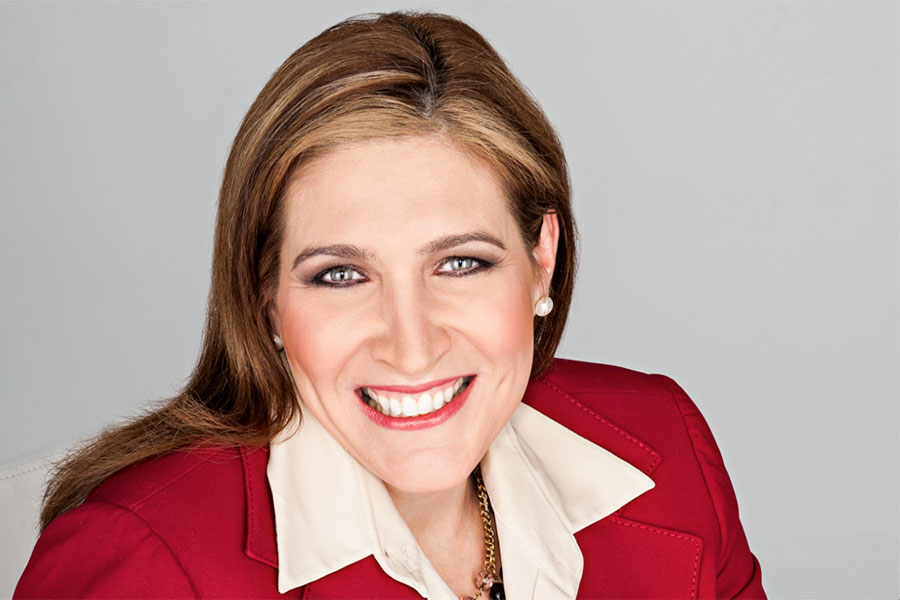
The Chief Sustainability Officer of Coca-Cola, Be a Perez (pictured above), attended the COP21 Climate conference in Paris recently, and joined 150 world leaders in negotiating our shared fate. The mood was far from the feel-good you get from cracking open a cold beverage on a hot day and there was a sense that no individual, company or government alone had the solution. As Perez explained, all companies and individuals have a duty to examine more closely how we produce and consume if we are to have a brighter future. Part of her passion for sustainability is closer to home – raising her own children and realizing that she must be mindful of what kind of world she will leave for them one day.

“It’s critical that business comes together with governments, civil society and NGOs to discuss solutions for climate change,” she says. “This issue is about future generations and we should be thinking seriously about how we protect the air and the water for them.”

Yet, as we’ve seen at the COP21 conference in Paris and others, part of the problem is that many people express good intentions, but without clear guidelines it’s hard to create detailed plans and put them into action. For all the goodwill that exists among consumers, who are more willing than ever to embrace change, how do we turn these words into global action?

“It’s important that this discussion is happening in the first place,” says Perez. “But you need goals that can be measured and tracked,” says Perez. “In 2013 we set a goal of reducing the carbon in our products by 25 percent. This affected our carbon footprint across the entire distribution chain.”

Coca-Cola has gone beyond the fizzy content in their trademarked red and white cans and developed plant-based packaging, eliminating the need for fossil fuels. At last count, this affected 35 billion packages around the world. “In addition, we have thought about our supply chains, and installed hybrid engines in our trucks,” says Perez. “On an even broader level, we want to examine the point where agriculture, water and energy efficiency meet – to examine how best we manage sustainability.”

Perez intents to monitor and track these goals annually for Coca Cola and then see how they stack up against an even bigger goal – the Sustainable Development Goals – adopted in September 2015 with the aim of ending poverty and protecting the planet over the next 15 years. Recognizing that the fate of all people and nations are linked, the United Nations has called for everyone to do their part: governments, the private sector, civil society, and yes, even people like us.

Despite all the talk and pledges, it all comes down to money at the end of the day. Many business leaders question how they can find the extra cash to change supply chains and introduce new ways of thinking – that sometimes involve the painful process of letting your less visionary employees go. The good news is that most major companies have now realized that going green actually saves money. And there’s no greater motivator than money.

“It does require an investment in people’s time and energy, and some funding, to put sustainable practices in place,” says Perez. “We’ve changed much of our equipment because we know we can save money. We now have 1.8 million HFC-free cooling machines and 5.6 million energy management systems in place.” The damaging affects of CFC coolant gases on our ozone layer was well-known in the 1980s, with it’s replacement, HFC, being added to the list of harmful gases at the Kyoto Protocol in 1997. The energy management systems Coca-Cola developed has improved energy efficiencies by 35 percent. Coca-Cola has not just saved money for themselves, but also millions of dollars for their customers too. With a can of Coca-Cola officially available in every country in the world, except for North Korea and Cuba, that’s a lot of refrigeration – and a lot of electricity saved. The benefits of research and development in new technologies has paid off.

Perez never sought the title of Chief Sustainability Officer, the opportunity arose when CEO Muhtar Kent told her about it being available. “This is not work for me,” she states. “It’s a fortunate combination of passion and purpose, and I truly believe we can make a difference in the world.”

The company’s campaign slogan for 2016 is “Always real.” It’s a multi-edged slogan that plays on early campaigns that position the permanence of the brand and its global appeal. With Perez at the helm, it takes on a more meaningful interpretation. While some may think it alludes to the closely guarded Coca-Cola recipe that is never altered, we can now assume that it means keeping a reality check on where we’re all headed as a species.

0