Disrupting the Ag Landscape: Nano-Yield


Cutting-edge nanotechnology helps combat food insecurity by producing higher yields and healthier crops.

By Real Leaders


Nano-Yield is a pioneering force in the world of nanotechnology, pushing the boundaries of what’s possible at the nanoscale since 2014. Nano-Yield leverages research and nano solutions to bring its patented nanotechnology to growers worldwide in the agriculture and turf industries.

“Our goal is to improve fertilizer and other crop input delivery systems to produce more food and create faster and more yielding harvests while requiring less energy, saving water, and greatly reducing overall environmental impact,” CEO and co-founder Clark T. Bell says. “We’ll do this using innovative and patent-protected nanotechnology, which offers a more precise, efficient, and eco-friendly approach to feeding our crops. Best of all, nanoparticles don’t create harmful side effects in our soil.”

Nanoliquid technology is a cutting-edge technology that delivers nutrients or crop protection more efficiently into the plant either through root or foliar uptake. Nano-Yield has engineered different nanoparticles to optimize chemistry and nutrition to maximize delivery to the plant.

Family Roots


T.H. Bell planted the seeds for Nano-Yield in 1979 when he bought 40 acres of sagebrush in Utah County so his sons could turn it into a sod farm and earn money for college and church missions. Warren Bell gradually built the family farm into a successful business, studying agriculture, improving the farm’s infrastructure, and expanding its operations.

Eventually, Warren’s son, Clark, took an interest in the family’s sod business too. Clark heard that a friend was using nanotechnology to enhance his dry-cleaning business and wondered if nanoparticles could improve farm production. The trials Warren conducted saw significant improvement over industry standards. 

Growing the Company


From there, Warren and Clark met Fraser and Mike Bullock, investors who are passionate about backing science-based companies. Together, they incorporated Aqua-Yield and formed an investor group, including sod growers from Australia, Canada, Norway, and South Africa. The company filed its first patent and discovered new liquid nano applications for agriculture.

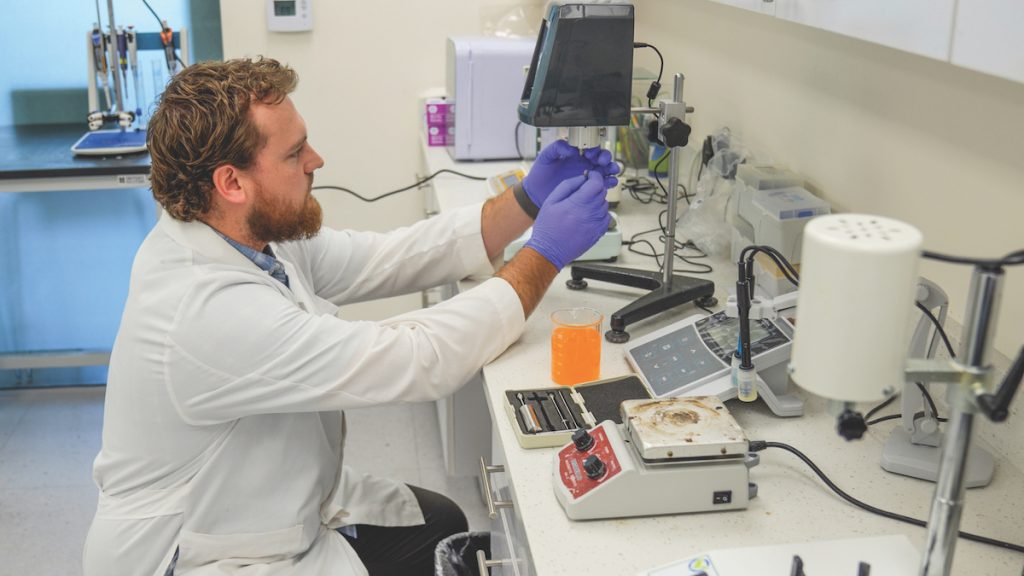
Making key hires has been pivotal in the company’s growth. Landon Bunderson has steered research and development, making significant discoveries and helping the company file additional patents. Hiring industry experts in sales and operations has been another important factor. 

Nano-Yield is now the leading nanoliquid company for agricultural production worldwide, located in 50 states and 22 countries covering 10.89 million acres, and holding eight U.S. patents.

How it Works



Nano-Yield nanoliquid technology works as a delivery system for crop inputs and is designed to deliver more of the crop inputs needed for maximum yield. While most nutrients enter the plant cell wall through diffusion or active transport, the nanoliquid particle loads the molecules and then bulk transports them through the wall by endocystosis. Nanoliquid products are highly compatible with fertilizers, biostimulants, and pesticide products. The increased product performance provided by nanoliquid products results in higher yields and healthier crops, engineered for driving nutrition into the plant. Once loaded, these technologies are ready to deliver your fertilizer to the plant via endocytosis.

Growers who add nanoliquid products with every application experience improvements in crop yield and quality, as well as improved control of weeds, diseases, and insect pests. They report an ROI starting at 3:1 and much higher in many cases. Proven through over 800 field trials and real worldwide farmer applications, this technology can cut fertilizer applications almost in half. 

The Latest


Nano-Yield announced in April 2024 that to make its line of nanoparticle-based products more readily available to farmers nationwide, it partnered with WestLink Ag Group to distribute all company products through WestLink’s 42 retail outlets. The WestLink Ag partnership is the largest retail agreement for Nano-Yield in the continental United States.

In other news, Nano-Yield is entering into its first collaboration with a global fertilizer company. Nano-Yield will supply COMPO EXPERT Mexico with several patented nano-based crop nutrition products to increase the efficiency of COMPO EXPERT’s liquid and dry products, ultimately enhancing nutrient delivery to specialty crops and row crops in Latin America.  ­


The company ranked No. 8 on the 2024 Real Leaders Top Impact Companies list.

7 Leaders’ Top Book Recommendations


C-level leaders from 2024 Real Leaders Top Impact Companies share what book has influenced them the most.

By Real Leaders


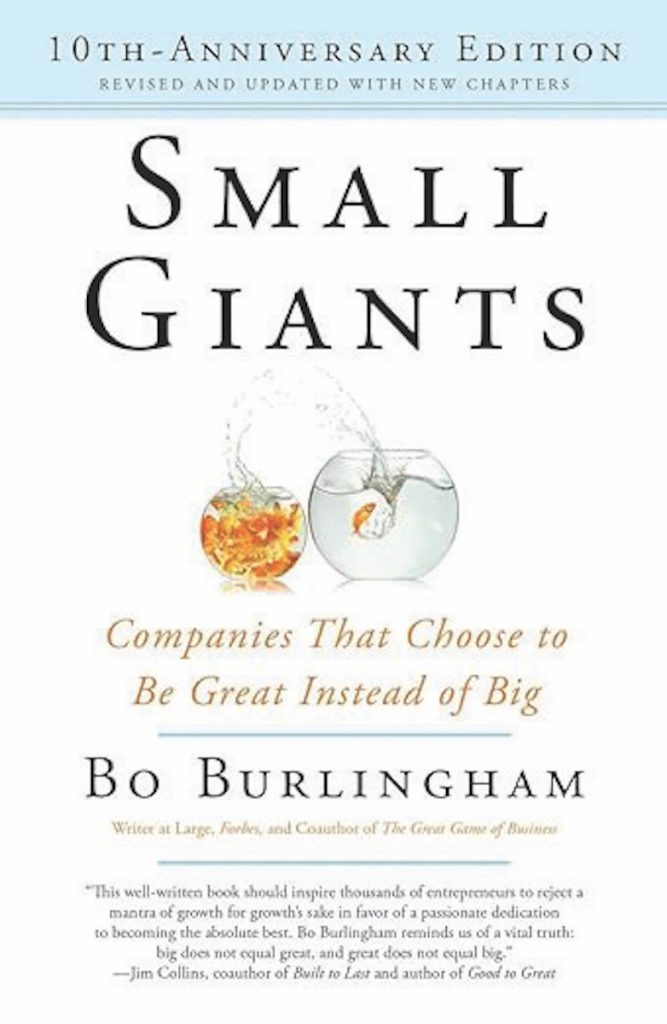
Small Giants: Companies That Choose to Be Great Instead of Big (2016)


Veteran journalist Bo Burlingham takes readers inside 14 companies that rejected the pressure of endless growth to focus on more satisfying business goals. Burlingham shows how the leaders of these small giants recognized their full range of choices and how we can all benefit by questioning the usual definitions of business success.

—Recommended by Adam Ryznar, CEO, Intex Solutions

You Are a Badass: How to Stop Doubting Your Greatness and Start Living an Awesome Life (2013)


Business owner, motivational coach, and speaker Jen Sincero’s self-development book uses humor, irreverence, and the occasional curse word to help others transform their mindsets and lives.

—Recommended by Sara Jensen, Co-CEO and co-founder, Hugh & Grace

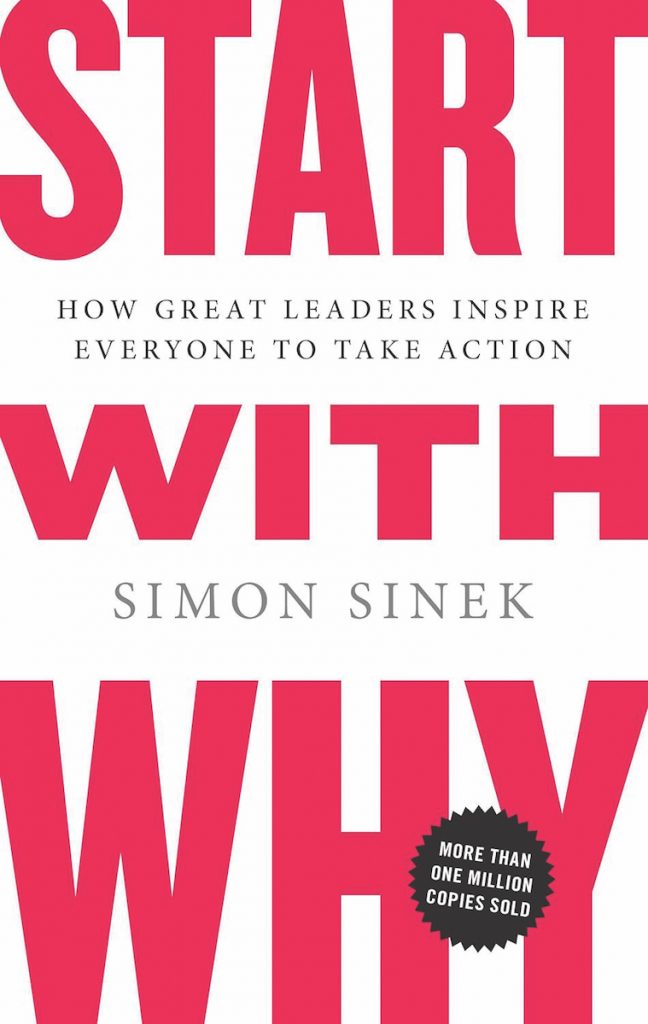
Start With Why: How Great Leaders Inspire Everyone to Take Action (2011)


Optimist Simon Sinek, a repeat Real Leaders Top 50 Keynote Speaker, shows that the leaders who have had the greatest influence in the world all think, act, and communicate in the same way — and it all starts with “why.” 

—Recommended by Drew Payne, CEO, UpMetrics

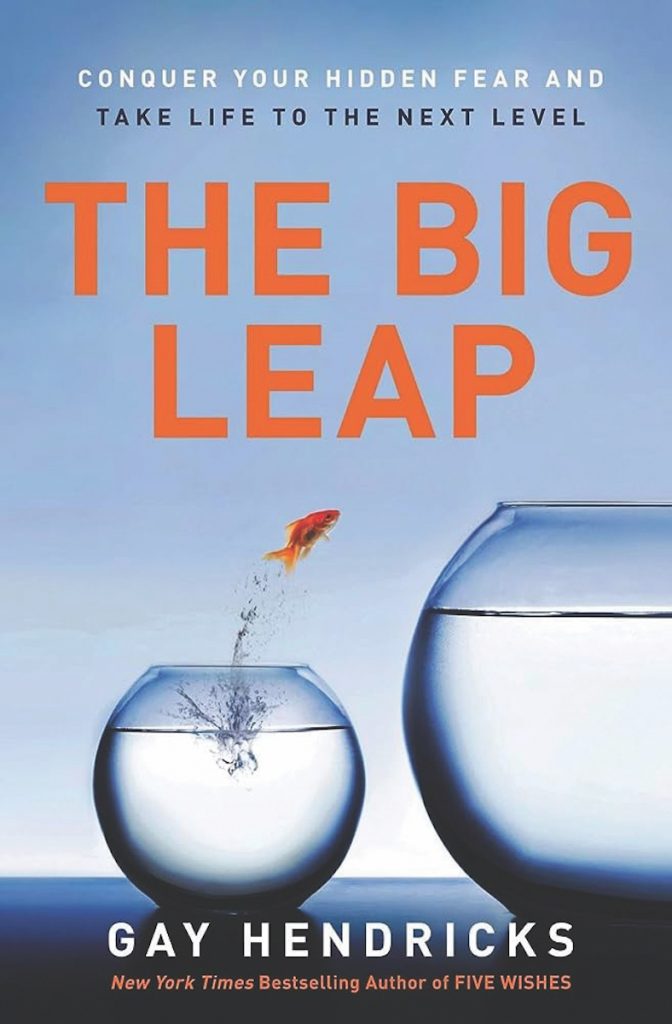
The Big Leap: Conquer Your Hidden Fear and Take Life to the Next Level (2010)


Psychologist Gay Hendricks demonstrates how to go beyond your internal limits, release outdated fears, and learn a new set of skills and habits to take your life to the next level.

—Recommended by Natalie Nichols, co-founder, Concertina Team Services


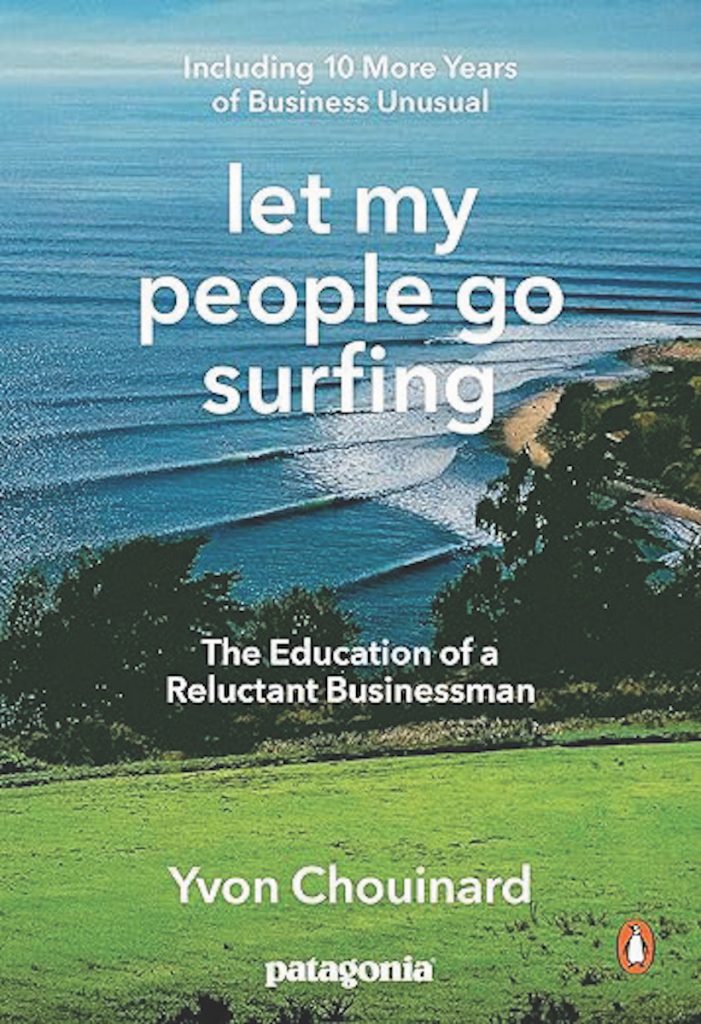
Let My People Go Surfing: The Education of a Reluctant Businessman (2006)


Yvon Chouinard — climber, businessman, environmentalist, and founder of Patagonia — shares the persistence and courage that have gone into being head of one of the most respected and environmentally responsible companies on earth. 

—Recommended by Michael Stausholm, CEO and founder, SproutWorld

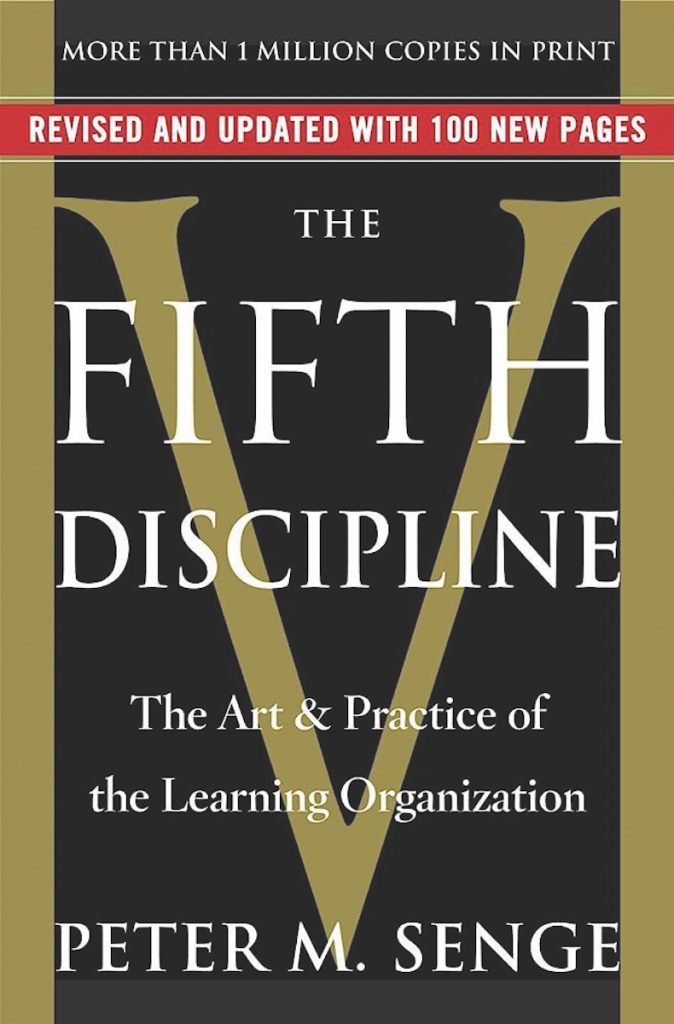
The Fifth Discipline: The Art & Practice of The Learning Organization (2006)


MIT professor Peter M. Senge unpacks the art and practice of building learning organizations — corporations that overcome inherent obstacles to learning and develop dynamic ways to pinpoint the threats that face them and to recognize new opportunities.

—Recommended by Steve Bilt, CEO and co-founder, Smile Brands

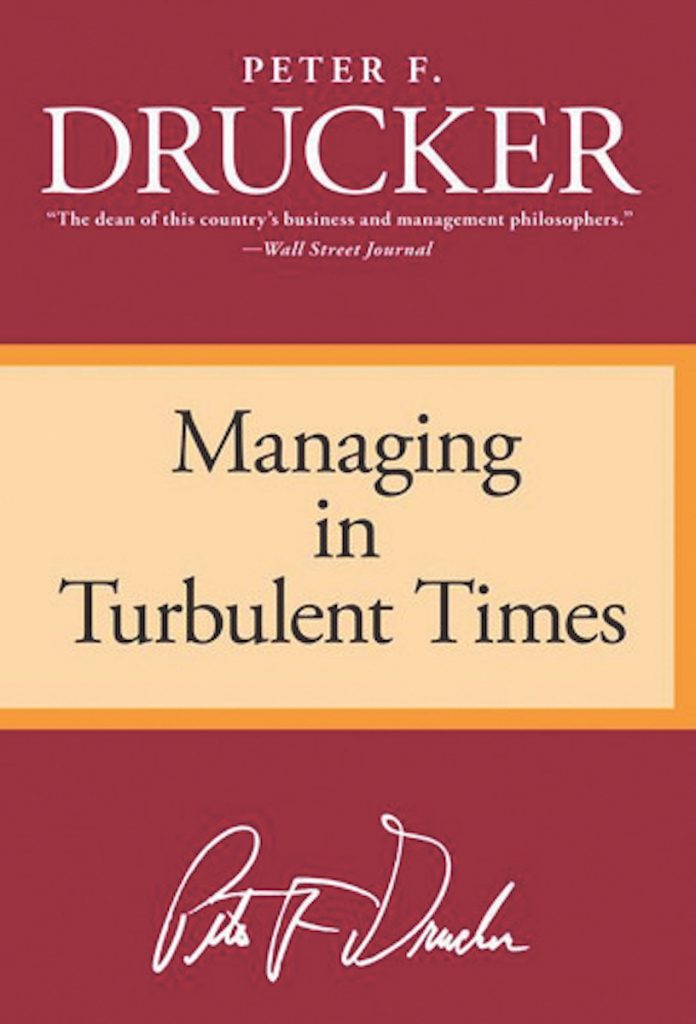
Managing in Turbulent Times (1980)


Management consultant Peter Drucker dives into strategies to turn the threat of rapid change into productive, profitable action that contributes positively to society, the economy, and the individual.

—Recommended by Matt Armanino, CEO and managing partner, Armanino

DEI Initiatives: Getting it Right


Learn five common threads among companies successfully scaling up diversity, equity, and inclusion initiatives.

By Real Leaders


In a global environment characterized by high volatility and rapid change, embedding diversity, equity, and inclusion in organizations and economies is increasingly important for sustainable growth, resilience, and fairer economic outcomes, the World Economic Forum says.

The forum’s DEI Lighthouse Program, hosted by the Center for the New Economy and Society, is an annual effort to identify proven, effective corporate DEI initiatives from companies across industries and geographies. At a time when DEI is generating a lot of attention, the aim of the program is to steer pragmatic, global, impact-oriented action to close existing economic gaps. By equipping leaders with best practices, DEI efforts can be focused on what works best and ultimately shape more resilient and inclusive economies.

Embracing DEI is not just a moral imperative, but also a strategic one that promotes sustainable growth and builds agile and flexible organizations capable of weathering global risks and challenges, WEF states. Extensive research underscores the long-term benefits of inclusive policy-making, business strategies, and sustained diversity programs in the private and public sectors.

The recently published report, Diversity, Equity, and Inclusion Lighthouses 2024, shares key lessons learned with business and public sector leaders around the world. Seven corporate initiatives were selected as DEI Lighthouses for the impact they have achieved: Banco Pichincha, Heineken, HKEX (Hong Kong Exchanges and Clearing Limited), Ingka Group (IKEA), McKinsey & Company, PepsiCo, and Salesforce. Five common threads were identified among them.

Success Factors Across DEI Lighthouses’ Initiatives


1. Nuanced understanding of root causes. Understand the problem with a deep fact base, identify the root causes, get input from the target population initially and throughout the process, and prioritize and sequence problem areas.

2. Meaningful definition of success. Set clear and quantifiable aspirations (when and by when), and articulate a clear case for change that moves employees to action.

3. Accountable and invested business leaders. Set initiative as a core business priority; hold senior leaders accountable for outcomes, not just inputs or activities; model and lead desired change, starting with the CEO and senior leaders; and ensure resources for longevity are in the budget, expertise, and timeline.

4. Solution designed for context. Develop solutions that address the root causes with scalability in mind, integrate changes into key processes so impact is sustained, and equip and encourage employees to contribute.

5. Rigorous tracking and course correction. Define KPIs, implement a rigorous tracking process, and use data and feedback to course-correct as needed.

A Closer Look 


Here’s a deeper dive into three of the 2024 DEI Lighthouse Companies.

Ingka Group (IKEA)


More than a decade ago, the Ingka Group — owner of IKEA — committed to achieving gender parity across its entire business. Ingka Group developed tailored approaches for each business unit and country, created mentorship programs, and launched inclusive succession plans. It also introduced gender-neutral salaries and corrected the pay gap. DEI goals are tied to each team manager’s talent reviews, with a DEI leader in every region appointed to ensure KPIs are met. The organization achieved 50/50 gender and pay equity across all its operations.

At Ingka Group, 48% of country CEO positions and 50.2% of all manager positions are occupied by women. The company introduced a gender-neutral salary review facilitated by an external auditor. Gender parity targets have been adopted globally. The Ingka Group also implemented local initiatives adapted to specific regional contexts, including on-premises childcare services to support working mothers in several countries in Asia.

McKinsey & Company


McKinsey & Company launched a reboarding program that ensures all colleagues (men and women) are supported in their return from leave greater than 12 weeks while reducing attrition gaps between them and the rest of the firm. The program was formally implemented across all its European offices in 2019, spanning 29 countries and 56 offices, and successfully scaled globally in 2022.

After analyzing its internal retention metrics, McKinsey & Company observed higher attrition rates among mothers returning from leave compared to the rest of the workforce. Drawing on its research and from the lived experiences of parents in leadership and consulting roles, the program has seen a 20% decline in attrition among EU consultant mothers returning from leave. McKinsey & Company suggests crafting a holistic program that touches on multiple aspects of the employee journey, designing a minimum offering that each local team can own, securing sufficient resources, and establishing clear success metrics that can be tracked.

HKEX


As a market regulator for more than 2,600 companies listed in Hong Kong, HKEX (Hong Kong Exchanges and Clearing Limited) is leveraging its regulatory capabilities to promote good corporate governance and strong environmental, social, and governance management among all issuers by setting robust disclosure standards, rules, and regulations. By making it mandatory for listed issuers to have at least one female director on their board, the company is showcasing the important role that regulation can play in advancing gender parity in leadership positions.

As a result of these efforts, the percentage of female directors on boards of listed issuers increased from 14.6% in 2020 to 17.3%, while the percentage of listed issuers with no female directors decreased from 31.5% in 2020 to 21.4%. This policy will pave the way for some 550 female board positions in Hong Kong to be filled by the end of 2024.

Learn MoreRead the Diversity, Equity, and Inclusion Lighthouses 2024 Insight Report by the World Economic Forum here.

Disrupting the Ag Landscape: Nano-Yield


Cutting-edge nanotechnology helps combat food insecurity by producing higher yields and healthier crops.

By Real Leaders


Nano-Yield is a pioneering force in the world of nanotechnology, pushing the boundaries of what’s possible at the nanoscale since 2014. Nano-Yield leverages research and nano solutions to bring its patented nanotechnology to growers worldwide in the agriculture and turf industries.

“Our goal is to improve fertilizer and other crop input delivery systems to produce more food and create faster and more yielding harvests while requiring less energy, saving water, and greatly reducing overall environmental impact,” CEO and co-founder Clark T. Bell says. “We’ll do this using innovative and patent-protected nanotechnology, which offers a more precise, efficient, and eco-friendly approach to feeding our crops. Best of all, nanoparticles don’t create harmful side effects in our soil.”

Nanoliquid technology is a cutting-edge technology that delivers nutrients or crop protection more efficiently into the plant either through root or foliar uptake. Nano-Yield has engineered different nanoparticles to optimize chemistry and nutrition to maximize delivery to the plant.

Family Roots


T.H. Bell planted the seeds for Nano-Yield in 1979 when he bought 40 acres of sagebrush in Utah County so his sons could turn it into a sod farm and earn money for college and church missions. Warren Bell gradually built the family farm into a successful business, studying agriculture, improving the farm’s infrastructure, and expanding its operations.

Eventually, Warren’s son, Clark, took an interest in the family’s sod business too. Clark heard that a friend was using nanotechnology to enhance his dry-cleaning business and wondered if nanoparticles could improve farm production. The trials Warren conducted saw significant improvement over industry standards. 

Growing the Company


From there, Warren and Clark met Fraser and Mike Bullock, investors who are passionate about backing science-based companies. Together, they incorporated Aqua-Yield and formed an investor group, including sod growers from Australia, Canada, Norway, and South Africa. The company filed its first patent and discovered new liquid nano applications for agriculture.

Making key hires has been pivotal in the company’s growth. Landon Bunderson has steered research and development, making significant discoveries and helping the company file additional patents. Hiring industry experts in sales and operations has been another important factor. 

Nano-Yield is now the leading nanoliquid company for agricultural production worldwide, located in 50 states and 22 countries covering 10.89 million acres, and holding eight U.S. patents.

How it Works


Nano-Yield nanoliquid technology works as a delivery system for crop inputs and is designed to deliver more of the crop inputs needed for maximum yield. While most nutrients enter the plant cell wall through diffusion or active transport, the nanoliquid particle loads the molecules and then bulk transports them through the wall by endocystosis. Nanoliquid products are highly compatible with fertilizers, biostimulants, and pesticide products. The increased product performance provided by nanoliquid products results in higher yields and healthier crops, engineered for driving nutrition into the plant. Once loaded, these technologies are ready to deliver your fertilizer to the plant via endocytosis.

Growers who add nanoliquid products with every application experience improvements in crop yield and quality, as well as improved control of weeds, diseases, and insect pests. They report an ROI starting at 3:1 and much higher in many cases. Proven through over 800 field trials and real worldwide farmer applications, this technology can cut fertilizer applications almost in half. 

The Latest


Nano-Yield announced in April 2024 that to make its line of nanoparticle-based products more readily available to farmers nationwide, it partnered with WestLink Ag Group to distribute all company products through WestLink’s 42 retail outlets. The WestLink Ag partnership is the largest retail agreement for Nano-Yield in the continental United States.

In other news, Nano-Yield is entering into its first collaboration with a global fertilizer company. Nano-Yield will supply COMPO EXPERT Mexico with several patented nano-based crop nutrition products to increase the efficiency of COMPO EXPERT’s liquid and dry products, ultimately enhancing nutrient delivery to specialty crops and row crops in Latin America.  ­


The company ranked No. 8 on the 2024 Real Leaders Top Impact Companies list.
Solving Poverty with Agroecology: Groundswell International


Aligning growth and impact are key to harnessing purpose for competitive advantage.

By Real Leaders


Groundswell International is a partnership of local organizations and their network of grassroots community groups in West Africa, the Americas, and South Asia. Founded in 2009, its programs catalyze the transition from unsustainable agriculture and extractive economies to regenerative and just farming and local food systems. Communities and family farmers improve their well-being, produce more abundant and nourishing food in ecologically sustainable ways, increase their incomes, build resilience to climate change, and strengthen local economies and cultures. Programs promote women’s leadership and gender equity. Here’s a look at its program in Haiti.

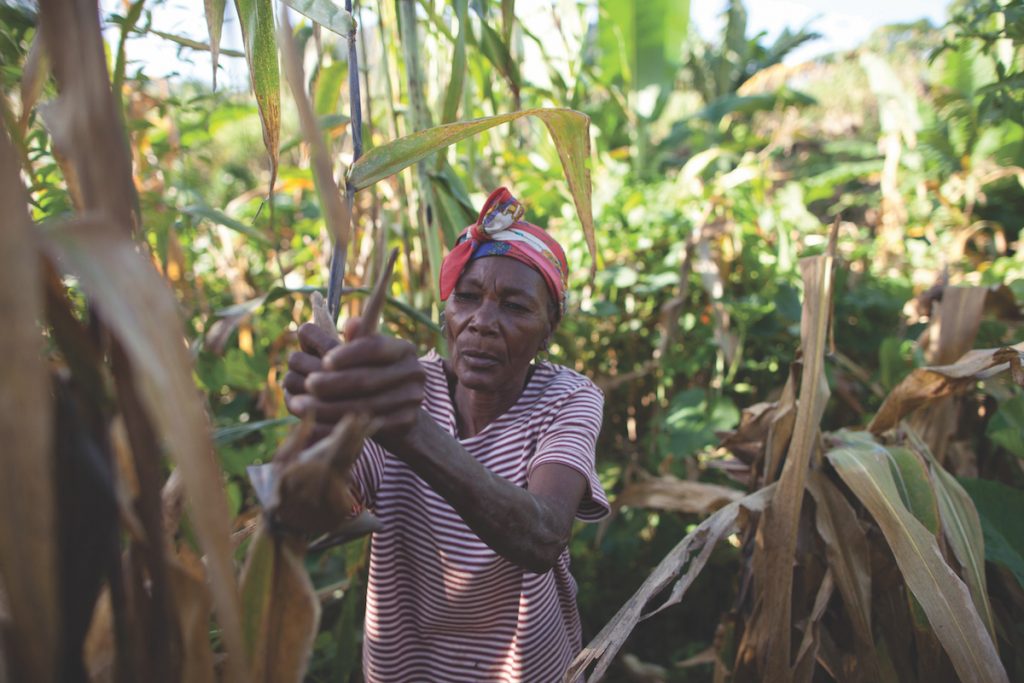
Mrs. Ovoyel Edouard picks corn. She is a member of the OPDL coopertive which is a PDL partner in La Victoire, Haiti.

Help for Haiti


Beans are saved in a seed bank for planting next season by members of the OPDL cooperative.

Working with farmer associations in northern Haiti, Groundswell International implements agroecological practices that regenerate farmland, increase small-scale family farmers’ income, and strengthen local markets. This project is done in collaboration with local partner nongovernmental organization Partenariat pour le Développement Local. In the face of Haiti’s escalating challenges, agroecology emerges as a potential poverty crisis solution.

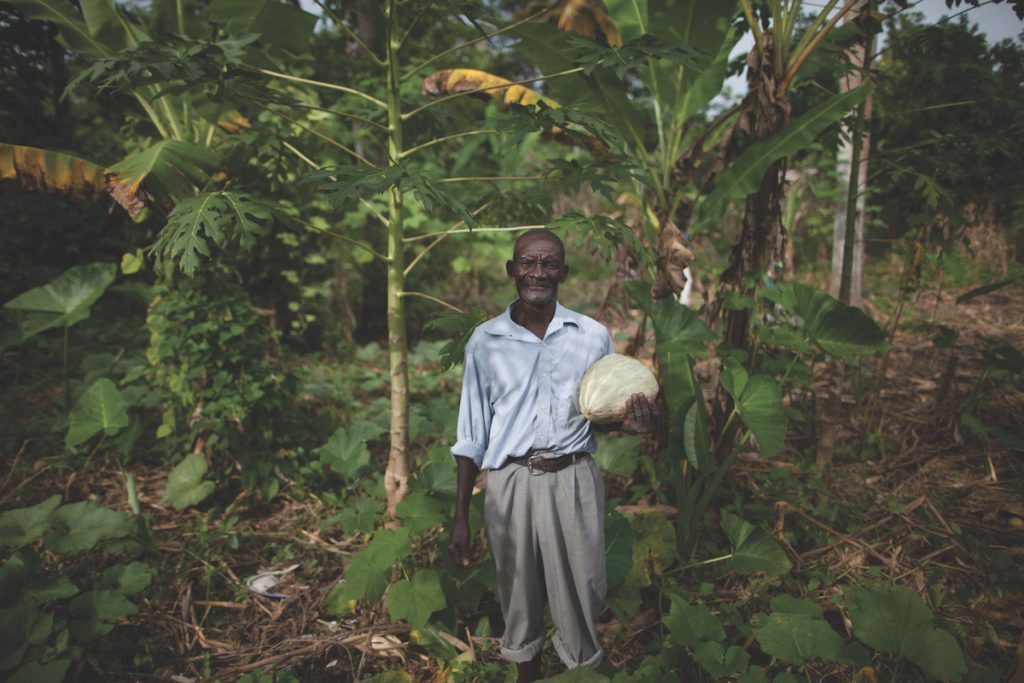
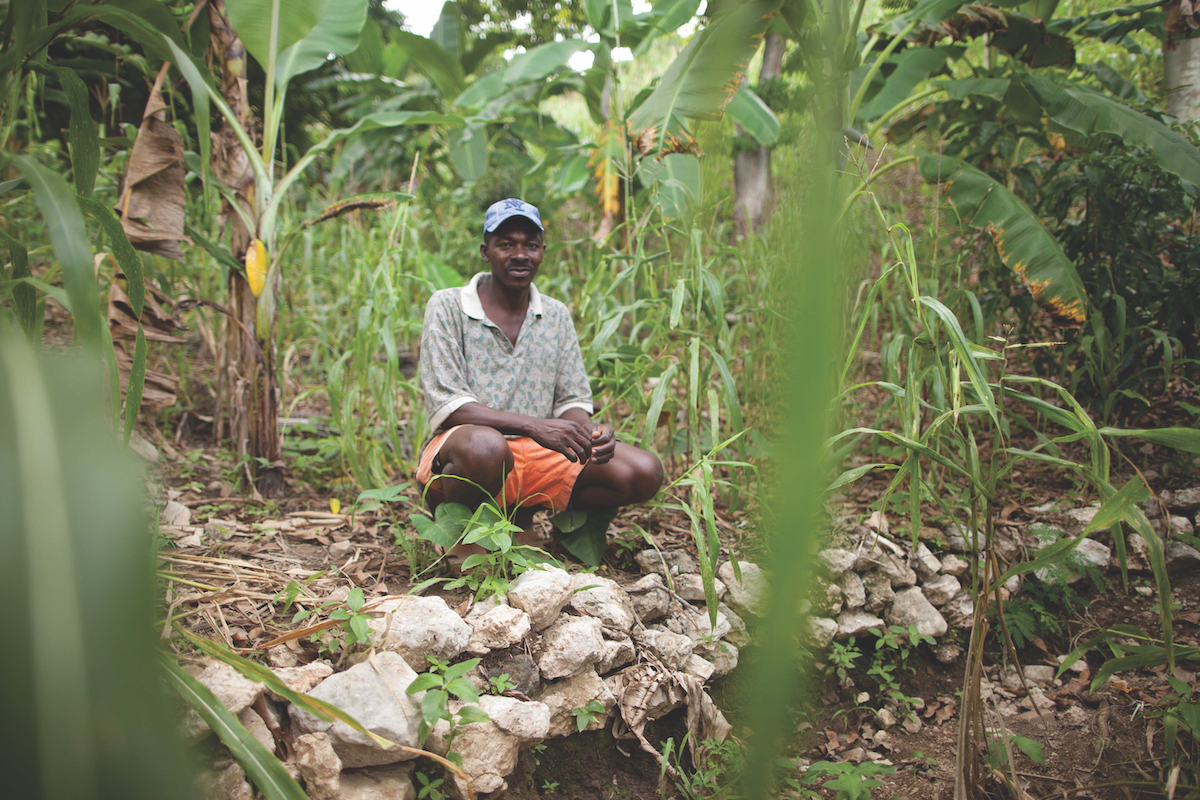
Rucial Colas, a member of a local peasant association in Haiti, diversified his agroecological farm plot with a variety of fruits and vegetables including squash.

Doubling Profitability

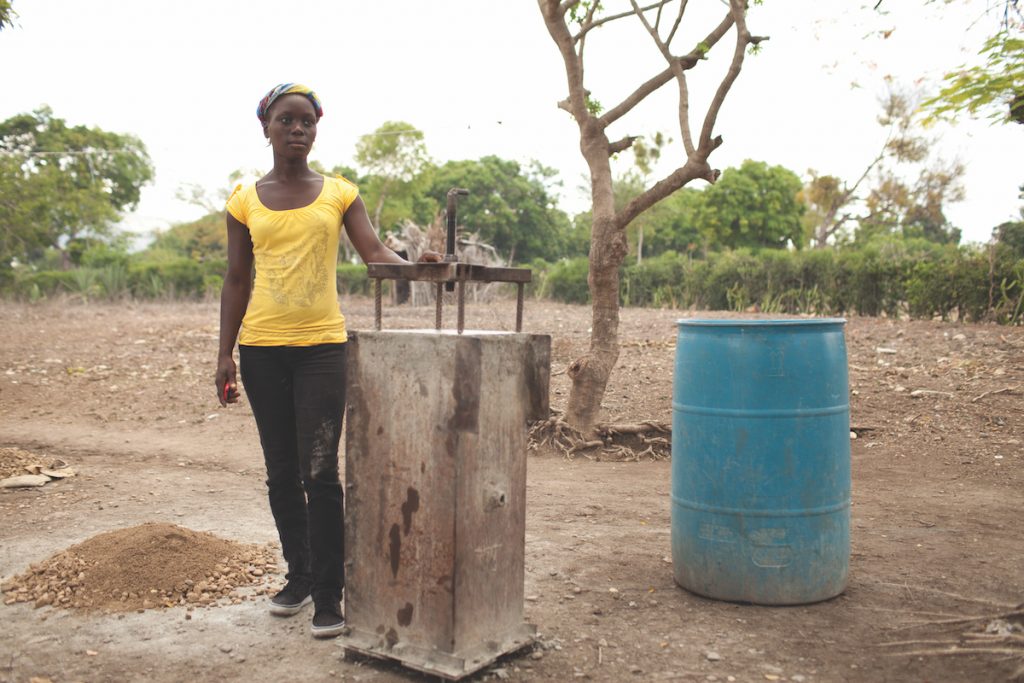
Mireille Petit-Frere, a water filter technician, builds cement water filters for gwoupman members in Carrefour, Haiti.


Recently, Groundswell International completed a cost-benefit analysis comparing agroecological farming to conventional farming in Haiti. Its program benefited over 9,900 farmers and has led to a doubling of per-hectare profitability within the program area. On average, agroecological farmers earn nearly double the net income of their conventional counterparts. In addition, the program enhanced land productivity, vegetative cover, and climate resilience for agroecological plots, despite lower amounts of rainfall. It also improved water retention and carbon sequestration in soil, reduced topsoil losses and mudslides, and heightened food security.


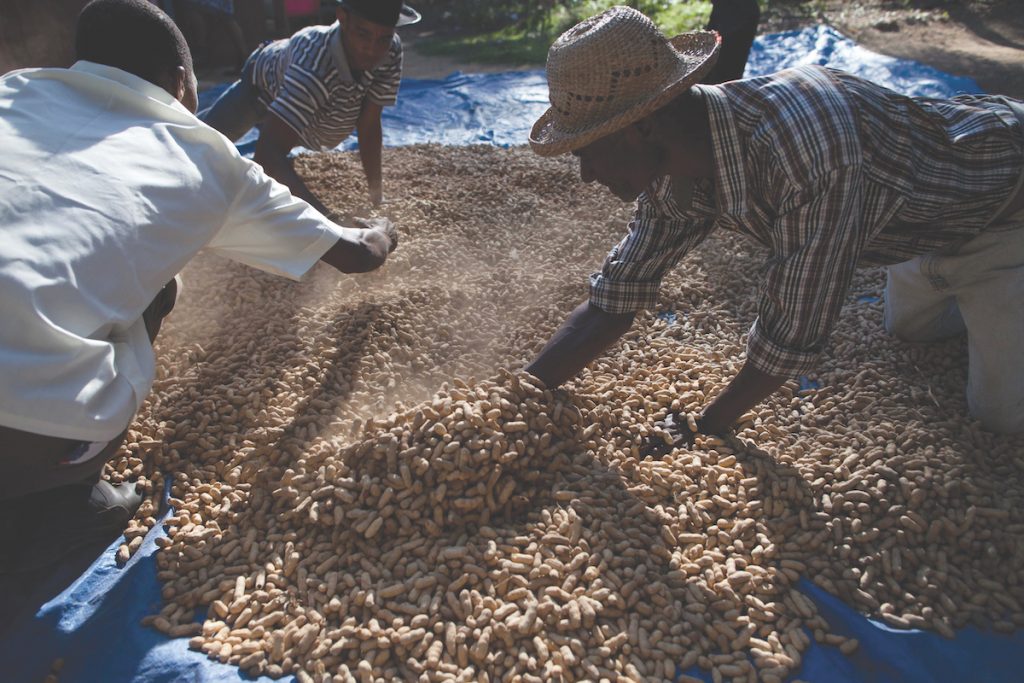
OPDL cooperative members spread out peanuts in the sun before storing them in the seed bank for next season.

Photo Credit: Ben Depp

Solving Poverty with Agroecology: Groundswell International


Aligning growth and impact are key to harnessing purpose for competitive advantage.

By Real Leaders


Groundswell International is a partnership of local organizations and their network of grassroots community groups in West Africa, the Americas, and South Asia. Founded in 2009, its programs catalyze the transition from unsustainable agriculture and extractive economies to regenerative and just farming and local food systems. Communities and family farmers improve their well-being, produce more abundant and nourishing food in ecologically sustainable ways, increase their incomes, build resilience to climate change, and strengthen local economies and cultures. Programs promote women’s leadership and gender equity. Here’s a look at its program in Haiti.

Mrs. Ovoyel Edouard picks corn. She is a member of the OPDL coopertive which is a PDL partner in La Victoire, Haiti.

Help for Haiti


Beans are saved in a seed bank for planting next season by members of the OPDL cooperative.

Working with farmer associations in northern Haiti, Groundswell International implements agroecological practices that regenerate farmland, increase small-scale family farmers’ income, and strengthen local markets. This project is done in collaboration with local partner nongovernmental organization Partenariat pour le Développement Local. In the face of Haiti’s escalating challenges, agroecology emerges as a potential poverty crisis solution.

Rucial Colas, a member of a local peasant association in Haiti, diversified his agroecological farm plot with a variety of fruits and vegetables including squash.

Doubling Profitability

Mireille Petit-Frere, a water filter technician, builds cement water filters for gwoupman members in Carrefour, Haiti.


Recently, Groundswell International completed a cost-benefit analysis comparing agroecological farming to conventional farming in Haiti. Its program benefited over 9,900 farmers and has led to a doubling of per-hectare profitability within the program area. On average, agroecological farmers earn nearly double the net income of their conventional counterparts. In addition, the program enhanced land productivity, vegetative cover, and climate resilience for agroecological plots, despite lower amounts of rainfall. It also improved water retention and carbon sequestration in soil, reduced topsoil losses and mudslides, and heightened food security.


OPDL cooperative members spread out peanuts in the sun before storing them in the seed bank for next season.

Photo Credit: Ben Depp

Defying the Naysayers: Clearinghouse Community Development Financial Institution


Not only can community development lending be done in low-income communities; it can be profitable.

By Real Leaders


Clearinghouse Community Development Financial Institution provides financing for low-income and disadvantaged communities and addresses their unmet credit needs to ensure that they have access to capital. The company was founded in 1996 in Southern California and has since expanded its reach across the U.S. Clearinghouse CDFI specializes in real-estate-based projects, including affordable housing, housing for developmentally disabled communities, charter schools, and community facilities. 

Real Leaders spoke with Douglas Bystry, president and CEO, about his journey from running a nonprofit to launching and growing a profitable lending company for good, despite plenty of skepticism and hurdles.

Real Leaders: How did Clearinghouse CDFI come about?


Douglas Bystry: I was running a nonprofit that was brokering community loans to regulated financial institutions or banks, and the idea was because of the Community Reinvestment Act that banks would jump at making loans to people who either live in or serve in low-income communities. I did it for four years and quite frankly, we couldn’t get banks to step up. 

That experience inspired me to say that if we want to ever make a difference in the low-income or distressed communities we serve, we need to raise our own capital and make our own credit decisions. That was the inspiration for me to start Clearinghouse CDFI. At the time, the only people doing this work for the most part were nonprofits, and I decided to incorporate Clearinghouse CDFI as for-profit. A lot of people said, “You’re crazy. This isn’t going to work. If you could do this kind of lending and be profitable, banks would be doing it. You’re going to be out of business in three years.” But we were able to prove that you can do community development lending in low-income communities — and you can do it profitably.

It’s a difficult task. Our company is walking this tightrope between impact and performance, safe and sound lending. It’s a balancing act because every loan we make has measurable community benefit, but it’s important that they also perform financially and that we get our money back.

RL: What are the biggest challenges you’ve overcome?


Bystry: Raising equity and debt capital has been and continues to be difficult — even after 27-plus years of success. It’s easy for people to say, “We don’t invest equity,” or, “You’re not traded publicly,” or “We can’t invest in an illiquid account,” or a variety of reasons. We’re recapitalizing the company, and we’re raising an additional $50 million of equity. We have a tremendous track record — and it’s still difficult. It continues to be one of the things I spend most of my time on.

In addition, we’ve faced challenges in the economic cycles of this country. For example, prior to the 2007 and ‘08 financial collapse, we were one of the successful single-family mortgage lenders to low-income, first-time homebuyers. At the time, we had originated over 700 single-family mortgages to people who would have been traditionally considered high-risk. At the time of the financial collapse, we had seven loans that had not performed, and that was a tremendous track record in light of what was going on with all the subprime mortgage collapse. But at the time, the sources that we borrowed from to allow us to do single-family mortgage lending stopped, and we had to stop providing that service to low-income families because the economy changed. Despite our successful track record, we had no source of capital to continue single-family lending.

We’re in a high-interest rate environment and a very tight credit market, and those always create new challenges. 

RL: How has Clearinghouse CDFI innovated?


Bystry: We were certified as a for-profit CDFI in the first round of certification. We have a number of other firsts: We were the first non-depository CDFI to join and borrow money from the Federal Home Loan Bank System. We’ve been members of the San Francisco Federal Home Loan Bank, and to this date, we’re the largest CDFI borrower of any non-depository CDFI. We were the first CDFI to obtain an S&P rating. We had to convince my board to get involved in New Markets Tax Credits, but it has proven to be an incredibly beneficial tool for the communities we serve. In March 2023, we received formal approval from the CDFI Fund to go nationally, and we’re very excited about providing the kind of impactful loans that we do as a company on a national basis.

We first got involved in making loans in Indian country 15-18 years ago, and at the time there was almost nobody else that would even think about doing loans on a reservation or in and around Native American communities. The Native American reservation system is set up in a way that hinders participation in the nation’s capitalist system. The hardest thing to do is to lend in Indian country and on a reservation, but we figured out a way to do it.

RL: What’s your best advice for others who want to follow suit?


Bystry: Go into it with your eyes open and understand the difficulties that it will present. For example, as a policy, foundations will not work with us for the most part. I still get this “nonprofit: good, for-profit: bad” mentality. It shuts that door. 

As a for-profit CDFI, we’re paying income taxes and we’re probably paying a higher cost for our borrowed debt capital than nonprofit CDFIs are paying, and that means that our rates have to be higher, unfortunately.

RL: What does Clearinghouse CDFI look for to consider a borrower a good risk?


Bystry: It starts with the mission and impact. We look at: Is this loan, this borrower, this project going to have a positive community impact and in what way? Then on the other side, we say, “If we loan this money, how can we be assured or at least have a good semblance of assurance that we’ll get paid back?” We also have to make sure because we charge interest that this borrower can make their payments on a monthly basis. 

What’s nice for us is we don’t have any programs per se, so we’re not trying to get our borrowers to fit into a box, and that’s the difference between us and a conventional financial institution. You have to meet the criteria, and it’s almost completely numerically based where we can say, “Let’s take a look at this borrower. Let’s figure out a way that we can make this loan. Let’s work outside the box.” We’re not constrained. We don’t have to do things “by the book” of underwriting alone, and our underwriting department, led by Kristy Ollendorff, develops loan structures that optimize borrower success, as opposed to saying, “Here’s our loan. Here’s our interest rate. Here’s the term. Here’s what you know. Here are the numbers that you have to hit to be approved, and if you don’t hit those numbers, you’re declined.” 

We can take that and we can say, “They really don’t have as much down, but maybe there are some other ways that we can do it. Maybe we can get clever with providing a second or maybe we can do two loans to them, one at first and one second. Maybe we can defer a part of the loan for another time. Maybe we can stretch out the amortization schedule longer.” We have a lot of underwriting flexibility, and our business development officers, our underwriters, and our loan committee do an outstanding job of finding ways to ensure that impactful loans get approved, instead of finding ways to turn them down.

Indulge with Kindness: Kind Traveler


Lose yourself in these conscientious luxury hotels around the world while supporting local charities.

By Real Leaders


Kind Traveler partners with hotels across the globe that are transparently advancing positive impact within their community, environmental sustainability practices, and individual wellness. We’ve rounded up four luxurious destinations from the company’s Every Stay Gives Back community impact program, which funds local charities advancing sustainable and regenerative tourism principles regardless of where the booking happens. 

“Travelers are more aware than ever of the need for travel that goes beyond doing no harm and gives back to support local communities and the environment,” says Jessica Blotter, CEO and co-founder of Kind Traveler.

Las Terrenas, Dominican Republic


Sublime Samana 


Tucked away on the unspoiled tropical paradise of the Samaná Peninsula on the northeast coast of the DR, this minimalist-modern, luxury resort’s style was conceived by one of the country’s most prestigious architects, Antonio Segundo Imbert. Indulge in organic spa treatments, fresh local cuisine, wild beaches, rainforests, and seasonal humpback whale watching. Every booking provides food for students impacted by poverty through the Dominican Joe Foundation.

Tuscany, Italy


Castello Di Vicarello 


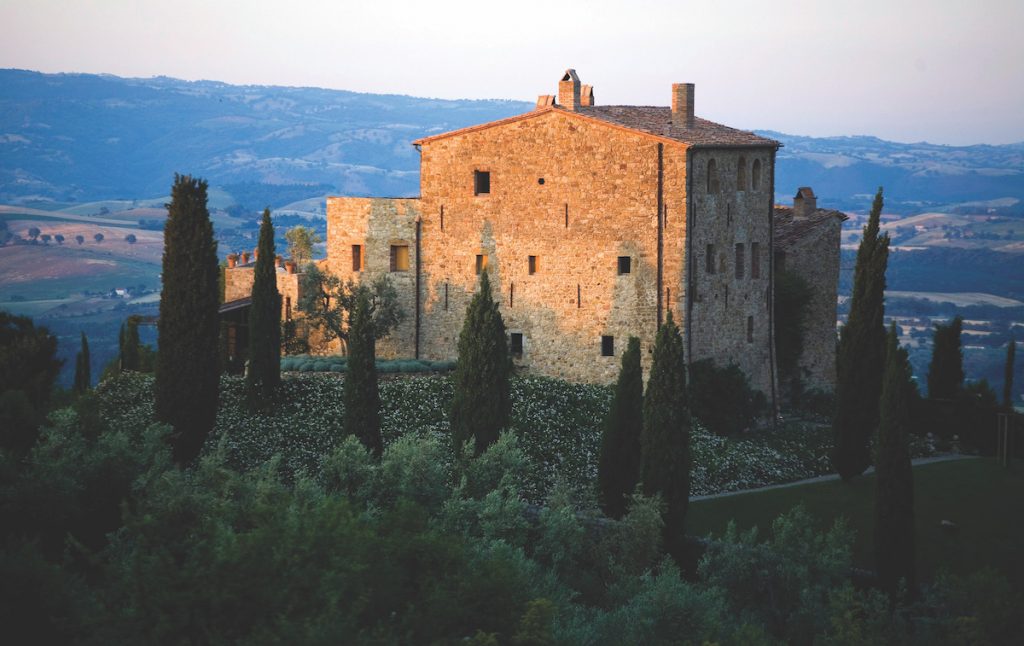
Built over 900 years ago by the Republic of Siena, this restored castle-turned-hotel towers over 1,000 feet above the Tyrrhenian Sea. Elegant guest suites feature original stone and brick walls and picturesque views. 

Visitors can immerse themselves in the natural rhythms of Tuscan life with wine tastings, cooking classes, horseback riding, truffle hunting, leather workshops, organic grape and olive harvesting, and more. Every booking supports pediatric research with Meyer Children’s Hospital Foundation.

Las Catalinas, Costa Rica


Casa Chameleon at Las Catalinas 


With spectacular rainforests on one side and the glory of the Pacific on the other, this is the first hotel in the new coastal town of Las Catalinas on the Guanacaste Coast. It was built with sustainability as a core principle and offers immersive and authentic experiences that boast a myriad of outdoor adventures and relaxation endeavors. The adults-only boutique resort embodies classic Costa Rican values that are reflected in its architecture and design. Every booking sends school supplies to rural and underserved students for after-school programs through Abriendo Mentes.

San Ignacio, Belize


GAÏA Riverlodge


Atop the magnificent Five-Sisters Waterfalls in the famed secluded Mountain Pine Ridge Forest Reserve, bask in private, spacious cabanas to nature’s soundtrack. Enjoy the rainforest’s intimacy with its native birds, butterflies, and remarkable flora. The Green Globe Award-certified hotel is sustainable by design, operating on hydropower and offering an electric tram from the lodge to the river. Most fruits and vegetables are farmed on-site by local staff in its Mayan organic garden. Every booking funds Cornerstone Foundation’s delivery of nutritious lunches to people facing food insecurity.

Indulge with Kindness: Kind Traveler


Lose yourself in these conscientious luxury hotels around the world while supporting local charities.

By Real Leaders


Kind Traveler partners with hotels across the globe that are transparently advancing positive impact within their community, environmental sustainability practices, and individual wellness. We’ve rounded up four luxurious destinations from the company’s Every Stay Gives Back community impact program, which funds local charities advancing sustainable and regenerative tourism principles regardless of where the booking happens. 

“Travelers are more aware than ever of the need for travel that goes beyond doing no harm and gives back to support local communities and the environment,” says Jessica Blotter, CEO and co-founder of Kind Traveler.

Las Terrenas, Dominican Republic


Sublime Samana 


Tucked away on the unspoiled tropical paradise of the Samaná Peninsula on the northeast coast of the DR, this minimalist-modern, luxury resort’s style was conceived by one of the country’s most prestigious architects, Antonio Segundo Imbert. Indulge in organic spa treatments, fresh local cuisine, wild beaches, rainforests, and seasonal humpback whale watching. Every booking provides food for students impacted by poverty through the Dominican Joe Foundation.

Tuscany, Italy


Castello Di Vicarello 


Built over 900 years ago by the Republic of Siena, this restored castle-turned-hotel towers over 1,000 feet above the Tyrrhenian Sea. Elegant guest suites feature original stone and brick walls and picturesque views. 

Visitors can immerse themselves in the natural rhythms of Tuscan life with wine tastings, cooking classes, horseback riding, truffle hunting, leather workshops, organic grape and olive harvesting, and more. Every booking supports pediatric research with Meyer Children’s Hospital Foundation.

Las Catalinas, Costa Rica


Casa Chameleon at Las Catalinas 


With spectacular rainforests on one side and the glory of the Pacific on the other, this is the first hotel in the new coastal town of Las Catalinas on the Guanacaste Coast. It was built with sustainability as a core principle and offers immersive and authentic experiences that boast a myriad of outdoor adventures and relaxation endeavors. The adults-only boutique resort embodies classic Costa Rican values that are reflected in its architecture and design. Every booking sends school supplies to rural and underserved students for after-school programs through Abriendo Mentes.

San Ignacio, Belize


GAÏA Riverlodge


Atop the magnificent Five-Sisters Waterfalls in the famed secluded Mountain Pine Ridge Forest Reserve, bask in private, spacious cabanas to nature’s soundtrack. Enjoy the rainforest’s intimacy with its native birds, butterflies, and remarkable flora. The Green Globe Award-certified hotel is sustainable by design, operating on hydropower and offering an electric tram from the lodge to the river. Most fruits and vegetables are farmed on-site by local staff in its Mayan organic garden. Every booking funds Cornerstone Foundation’s delivery of nutritious lunches to people facing food insecurity.

Defying the Naysayers: Clearinghouse Community Development Financial Institution


Not only can community development lending be done in low-income communities; it can be profitable.

By Real Leaders


Clearinghouse Community Development Financial Institution provides financing for low-income and disadvantaged communities and addresses their unmet credit needs to ensure that they have access to capital. The company was founded in 1996 in Southern California and has since expanded its reach across the U.S. Clearinghouse CDFI specializes in real-estate-based projects, including affordable housing, housing for developmentally disabled communities, charter schools, and community facilities. 

Real Leaders spoke with Douglas Bystry, president and CEO, about his journey from running a nonprofit to launching and growing a profitable lending company for good, despite plenty of skepticism and hurdles.

Real Leaders: How did Clearinghouse CDFI come about?


Douglas Bystry: I was running a nonprofit that was brokering community loans to regulated financial institutions or banks, and the idea was because of the Community Reinvestment Act that banks would jump at making loans to people who either live in or serve in low-income communities. I did it for four years and quite frankly, we couldn’t get banks to step up. 

That experience inspired me to say that if we want to ever make a difference in the low-income or distressed communities we serve, we need to raise our own capital and make our own credit decisions. That was the inspiration for me to start Clearinghouse CDFI. At the time, the only people doing this work for the most part were nonprofits, and I decided to incorporate Clearinghouse CDFI as for-profit. A lot of people said, “You’re crazy. This isn’t going to work. If you could do this kind of lending and be profitable, banks would be doing it. You’re going to be out of business in three years.” But we were able to prove that you can do community development lending in low-income communities — and you can do it profitably.

It’s a difficult task. Our company is walking this tightrope between impact and performance, safe and sound lending. It’s a balancing act because every loan we make has measurable community benefit, but it’s important that they also perform financially and that we get our money back.

RL: What are the biggest challenges you’ve overcome?


Bystry: Raising equity and debt capital has been and continues to be difficult — even after 27-plus years of success. It’s easy for people to say, “We don’t invest equity,” or, “You’re not traded publicly,” or “We can’t invest in an illiquid account,” or a variety of reasons. We’re recapitalizing the company, and we’re raising an additional $50 million of equity. We have a tremendous track record — and it’s still difficult. It continues to be one of the things I spend most of my time on.

In addition, we’ve faced challenges in the economic cycles of this country. For example, prior to the 2007 and ‘08 financial collapse, we were one of the successful single-family mortgage lenders to low-income, first-time homebuyers. At the time, we had originated over 700 single-family mortgages to people who would have been traditionally considered high-risk. At the time of the financial collapse, we had seven loans that had not performed, and that was a tremendous track record in light of what was going on with all the subprime mortgage collapse. But at the time, the sources that we borrowed from to allow us to do single-family mortgage lending stopped, and we had to stop providing that service to low-income families because the economy changed. Despite our successful track record, we had no source of capital to continue single-family lending.

We’re in a high-interest rate environment and a very tight credit market, and those always create new challenges. 

RL: How has Clearinghouse CDFI innovated?


Bystry: We were certified as a for-profit CDFI in the first round of certification. We have a number of other firsts: We were the first non-depository CDFI to join and borrow money from the Federal Home Loan Bank System. We’ve been members of the San Francisco Federal Home Loan Bank, and to this date, we’re the largest CDFI borrower of any non-depository CDFI. We were the first CDFI to obtain an S&P rating. We had to convince my board to get involved in New Markets Tax Credits, but it has proven to be an incredibly beneficial tool for the communities we serve. In March 2023, we received formal approval from the CDFI Fund to go nationally, and we’re very excited about providing the kind of impactful loans that we do as a company on a national basis.

We first got involved in making loans in Indian country 15-18 years ago, and at the time there was almost nobody else that would even think about doing loans on a reservation or in and around Native American communities. The Native American reservation system is set up in a way that hinders participation in the nation’s capitalist system. The hardest thing to do is to lend in Indian country and on a reservation, but we figured out a way to do it.

RL: What’s your best advice for others who want to follow suit?


Bystry: Go into it with your eyes open and understand the difficulties that it will present. For example, as a policy, foundations will not work with us for the most part. I still get this “nonprofit: good, for-profit: bad” mentality. It shuts that door. 

As a for-profit CDFI, we’re paying income taxes and we’re probably paying a higher cost for our borrowed debt capital than nonprofit CDFIs are paying, and that means that our rates have to be higher, unfortunately.

RL: What does Clearinghouse CDFI look for to consider a borrower a good risk?


Bystry: It starts with the mission and impact. We look at: Is this loan, this borrower, this project going to have a positive community impact and in what way? Then on the other side, we say, “If we loan this money, how can we be assured or at least have a good semblance of assurance that we’ll get paid back?” We also have to make sure because we charge interest that this borrower can make their payments on a monthly basis. 

What’s nice for us is we don’t have any programs per se, so we’re not trying to get our borrowers to fit into a box, and that’s the difference between us and a conventional financial institution. You have to meet the criteria, and it’s almost completely numerically based where we can say, “Let’s take a look at this borrower. Let’s figure out a way that we can make this loan. Let’s work outside the box.” We’re not constrained. We don’t have to do things “by the book” of underwriting alone, and our underwriting department, led by Kristy Ollendorff, develops loan structures that optimize borrower success, as opposed to saying, “Here’s our loan. Here’s our interest rate. Here’s the term. Here’s what you know. Here are the numbers that you have to hit to be approved, and if you don’t hit those numbers, you’re declined.” 

We can take that and we can say, “They really don’t have as much down, but maybe there are some other ways that we can do it. Maybe we can get clever with providing a second or maybe we can do two loans to them, one at first and one second. Maybe we can defer a part of the loan for another time. Maybe we can stretch out the amortization schedule longer.” We have a lot of underwriting flexibility, and our business development officers, our underwriters, and our loan committee do an outstanding job of finding ways to ensure that impactful loans get approved, instead of finding ways to turn them down.

0