Ever Been Told, “Don’t Act Like a Tourist”? Here’s Why

With nearly 200 countries in the world and countless communities, why do we all end up visiting the same tourist-infested places?

At 28, when she started her travel company, Elvira Museri was already a habitual traveller. Despite the thrill of seeing new places in countries they’d never seen before, she and her husband started feeling as if they were in a giant tourist trap.

The couple visited the same places that everybody else had visited, and took their travel advice from the same websites and guidebooks as all the other travelers they met. Meeting locals and seeing inside their homes was out of the question, made more difficult by the foreigner clothes they wore and backpacks slung over their shoulders, which marked them as strangers. Tour guides sometimes helped with introductions but it got Museri thinking about how best to meet local families and share a meal with them.

Realizing that the same phenomena happened in her home country, Argentina, Museri (pictured above) started researching responsible tourism and within three months of returning from yet another familiar-looking  trip she formulated a plan. Museri now runs Andara Travel from an office in Buenos Aires, helping hundreds of people discover a deeper and more responsible travel experience every year.

Her career started in social work and political science and she completed a stint in the charity sector for seven years before starting Andara Travel. “I wanted to give people an opportunity to meet local people and get to talk to them,” she says. It works equally as well in big cities as it does in rural villages. In fact, Museri decided to start her business in central Buenos Aires in one of the city’s most famous streets, Caminito; the very idea she was hoping to avoid.

“The street personifies Argentina to many tourists,” says Museri.  “It’s only 100 meters long and there’s nothing really to see in my opinion, so we started exploring the neighborhood behind this street,” she says. They discovered a wealth of social and art programs that they added to their new travel itinerary. Andara Travel now offers visits to indigenous Guarani communities in the Iguazú rain forest, where they learn about jungle resources, medicinal plants and belief systems, while those looking for something more active can take private tango lessons at real milongas (tango ball rooms) in Buenos Aires. A visit to the Mandoza winelands won’t have you sipping Chardonnay in an easy chair either, you’ll find yourself learning about wine culture first-hand – by picking the grapes.

Museri has found a unique way of combining her social work with tourism that is now seeing growth of between 200-400 percent a year. Even more remarkable is that she began Andara Travel at the age of 28.

Aligning herself with the World Wildlife Fund and being the founder of the Argentinian Responsible Travel Association has certainly helped to foster trust with her clients and to align her business with broader, internationally recognized values around conservation and sustainability.

People began to notice from the start. Lonely Planet listed them after only one year in business, helped in part by the fact that nothing like Andara Travel had ever existed before.  

Museri typically sends her clients a draft proposal for discussion on their trip. There’s no set package tour conveniently bundled by self-serving holiday resorts in Museri’s world. She sometimes refines up to five versions of a trip until she finds one that fits the client’s expectations. Many approach Andara Travel with no idea of where they want to go.

Museri doesn’t sit in an office all year round either, choosing to make at least two trips a year to new destinations or existing one’s on the itinerary that they want to check on again. Keeping tabs on their supply chain of operators, destinations and guides is particularly important in her remodeled tourism company. “We had real problems when we started,” she says. “Because we couldn’t find anyone with the same values as us. The customers weren’t happy and we weren’t happy either,” recalls Museri.

caminito

Now with an established reputation as a trusted tour operator she invites all her new partners to join the Argentinian Responsible Travel Association, inspiring them to get more involved in sustainable tourism. “In many instances they’ve already been practicing sustainable tourism, yet just didn’t know it yet, and the amazing benefits it can bring to their business,” says Museri.

Not fazed by the rise of online holiday and travel websites, Museri is of the opinion that much value can be found in a curated vacation that delivers the best local experience, while saving up to 40 hours of research. “What’s the big deal about just selling hotels?” she says. “Delivering an experience is a far more rewarding pastime for us.”

In an age of cheap air travel, that allows people to see the world, discover cultures and learn about the rest of humanity, an obvious dilemma arises: carbon footprint.  “That’s why we call ourselves ‘responsible travel’ and not ‘sustainable travel’,” says Museri. “If we were sustainable, we shouldn’t accept any traveler to Argentina arriving from more than 800 miles away. Obviously we can’t do that, it’s not realistic.”

buenos aires

Ninety-five percent of Andara’s travelers come from the U.S., Australia, Europe, Canada and New Zealand, making long trips to get to Buenos Aires. “We explain to our clients that they should make the best choices available at their destinations to lessen any further environmental impact,” says Museri.

“Hotels will ask you to refrain from changing your towels and bed sheets in your room, which is okay, but they also do this for commercial reasons. In addition, a hotel should have some type of water recycling and garbage separation. My biggest enemies are the amenities. I can’t believe that hotels still give you shampoo in little plastic bottles, it’s incredible.”  Museri suggests refillable containers and biodegradable products instead. She also discourages frantic hopping around, trying to spend two days at each destination and flying from place to place.

Every time Museri feels the need to re-charge her batteries and re-confirm she’s on the right track she visits the NGOs she began with. She sees the heads of these charities, struggling in terrible situations. “They get up and continue every day and for me that’s a big part of my inspiration.”

“To share finances and knowledge with your team might seem counter-intuitive to running a business, but I’ve partnered with some of my team members and consider this the best type of leadership,” she explains. A former employee is now a 15 percent shareholder of Andara Travel and has helped boost the company growth. The team of eight now makes monthly payments to dozens of charities that form part of their tourism network. At the outset Andara sent only two travelers a month to these charities. They now receive between 50 to 100 travelers, and are making a decent income from it.

“The team is so much wider than what we have in our office,” says Muresi.

 

Having A Heart Attack? There’s A Drone For That

Globalegrow, a global, cross-border online clothing retailer, has invested in research that will build a safe, fast and cost effective drone delivery system, in a move they hope will  improve the customer shopping experience.

In a recent report, drone delivery is likely to disrupt traditional package delivery, and expected to bring major change to the world of e-commerce within the next five years. To answer this future challenge, Chinese retailer Globalegrow intends to invest $150,000 in the coming year in a drone delivery research project. Their major motivation is to help with faster, safer and more economical logistics.

Many companies are presently looking at how drones can deliver their products – from pizza, electronic goods, clothing and even heart defibrillators to those who’ve just had a heart attack on a golf course.

It’s expected that the price consumers will pay for drone delivery will be much lower than traditional road deliveries. By how much, we don’t know, but as we’ve seen in the past, when technology is introduced to a service or product, prices usually start to fall steeply.

Drones typically use electric motors, so they will also be more environmentally friendly, resulting in fewer trucks on the road.

Globalegrow reckons that delivery times for their clothing will drop by 25% if their research project works out. A major challenge they face is around international logistics. Drone delivery, in combination with international warehouse management, will require a customized approach that will re-write rules on how things are delivered. Customs, flight paths and security are all things to be taken seriously.

For a start, Globalegrow has focused on safety, testing in different environments, tracking, flight range, battery life and regulatory support for the first phase of their research. Once the project “takes off” the company will also need to look at their ability to handle large volumes.

Delivery companies have never needed roboticists and aeronautical engineers before, but Globalegrow intends hiring these experts to ensure a great end-product and user experience. The aim of the research is to create a self-flying drone that is loaded with sensors that would help track the package, guide touchdown and enable a tether cable to retract and detach the goods. Added safety measures include a way to alert nearby pedestrians that something might be landing on your head.


Ethics is Not The Reason we Need More Women on Boards

There are many good reasons for increasing gender diversity on boards: better decisions, better performance, and better representation of the consumer base.

But the idea, put forward in a variety of research over the past twenty years or so, that women on boards improve the moral and ethical decision-making of those boards has a number of problems for both women and men, in the boardroom and out of it.

First, having gender equality on the board is increasingly part of corporate social responsibility initiatives. Rather than ethical standards improving when women are on boards, it may be that organisations with a corporate social responsibility focus create a climate of gender equality. This may mean their boards include more women simply because corporate social responsibility and equality are related concepts.

Second, the idea that women will set improved standards of moral and ethical behaviour for boards is based on the (faulty) assumption that when boards are made up of only men they will be morally and ethically lax. Surely that is a sexist view of men, based on notions of men as irresponsible risk-takers?

Third, it places the burden of responsibility on women to make sure that boys on boards don’t behave badly. Surely that is a sexist view of women, based on the idea that a mother will be the moral and ethical compass for a family unit?

WOMEN ON AUSTRALIAN BOARDS

Australia – like most other countries in the world – has a distinct lack of women on its corporate boards: just 17.6% of ASX 200 directors and only 5% of ASX 200 chairs are women, according to the Australian Institute of Company Directors. Australia’s Gender Equality Scorecard shows that in Australian organisations with 100 or more employees, 23.7% of directorships and 12% of chairs are held by women. More worryingly, only 8.8% have set targets to increase gender diversity on the board, yet 48.5% of employees in these organisations are women.

Researchers (and others) have consistently noted that this poor representation of women at board level is a problem and have sought to convince male-dominated boards to make room for women. In looking for evidence to support their arguments, some research linked women on boards with “…a strong moral overtone…”, with increased corporate social responsibility and with less unethical behaviour. Other research found the more women directors it had, the more likely a company was to appear on lists such as “The world’s most ethical companies”. And so over time women have come to be seen as the ethical “saviours” of boards.

Considered in the light of ambivalent sexism theory, this suggests that women might be allowed to join the – predominantly male – boardroom club provided they do so as nurturing, caring, peacemaking, ethical gatekeepers. In other words, boards might be convinced to accept women so long as those women conform to traditional ideas of feminine behaviour. I wonder what would happen if women turned out to be ineffective as ethical watchdogs in the boardroom?

DIVERSITY BENEFITS BOARDS

Putting aside the faintly fishy idea of women on boards as ethical gatekeepers and men on boards as lacking in ethical and moral principles, what are some of the valid and non-sexist reasons for taking steps to increase the gender diversity on boards of directors? Here are a few:

Diverse groups of people bring a greater variety of experience and different views to the decision-making process and then make better decisions

Gender diversity on boards helps to ensure that the entire consumer base is represented. This is particularly important because women now control the bulk of household spending globally, according to the World Economic Forum

Financial performance is better in companies that have gender diversity on the board. When women are included on executive committees, average return on equity improves by 47% and average earnings before interest and tax improve by 55%

Diversity in the membership of groups making investment decisions may lead to more social responsibility in decision-making around fossil fuel divestment.

Personally, I constantly wonder why we need to justify to the world that 50% of the adult population should have equal access to the same opportunities as the other 50%. It seems the argument that women should hold 50% of board positions because they comprise 50% of the population is not good enough.

There are many good arguments for ensuring there are more women on boards. That women have the moral and ethical high ground over men and will therefore be ethical gatekeepers on boards is possibly not a very valid justification and one that should not be given too much airspace.

This article was originally featured at www.womensagenda.com.au

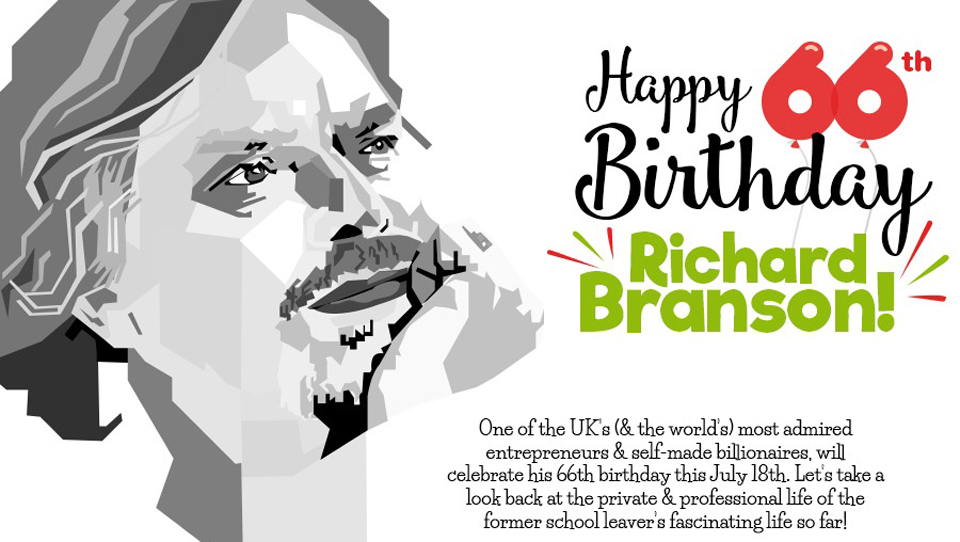
Richard Branson Celebrates 66 Years of Innovation

Richard Branson celebrates his birthday on 18 July. He is one of the entrepreneurs that we really admire, starting out in the world of media at age 16, by launching a student newspaper. He has since added numerous media companies to The Virgin Group which he founded, along with many other travel and hospitality companies. These include Virgin Media, Virgin Radio and V2 Records.

In the infographic below we examine some the highlights of his entrepreneur career.

Happy-66th-Birthday-Richard-Branson!-infographic

Frame Your TV

Bricks with Benefits

A new way to introduce you to sustainablity. Meet Mwayanjaya Bolokonya From Malawi: an environmentally friendly, brick-making entrepreneur whose products only use one-tenth of the energy that normal bricks require.

Building a village takes one brick at a time, and EcoBuild is setting out to build a better brick for Malawi homes. Bolokonya says the way they do this is through kilns that “use one-tenth of the energy of traditional kilns.”

EcoBuild claims their products lower construction costs while providing quality construction and are eco-friendly with lower carbon and particle emissions than standard Malawi products.


Legend of Tarzan Teams Up with Stop Ivory to End Poaching

Since the Victorian era in which The Legend of Tarzan unfolds, the overall population of elephant species in Africa dropped from 19 million to just 500,000.

So says nonprofit group Stop Ivory, that features the film’s stars, Alexander Skarsgard and Margot Robbie in a new Public Service Announcement video (below). The organization is raising the volume on the plight of endangered African elephants, a magnificent species hunted for their ivory.

In theaters today, the action adventure The Legend of Tarzan is joining the fight, as much of the movie’s backdrop was captured in Gabon, home to many endangered species, including the African forest elephant. The movie is receiving attention for the untapped beauty and diverse landscape of the Gabonese rainforest, home – and last hope – for roughly half of the world’s remaining 100,000 forest elephants.

In the new PSA, launched in partnership with Warner Bros., Skarsgard and Robbie, who play the film’s Tarzan and Jane, are raising awareness about the harsh truths of ivory poaching, revealing that, without immediate action, the remaining forest elephant population could be gone in a decade.

httpss://www.youtube.com/watch?v=WiUmr2hlzyU

“We’re facing an immediate crisis as the population of forest elephants dwindles to a dangerous level due to the continued threat of poachers,” said Josh Ponte, a Director with Stop Ivory, who also served as the African technical advisor on the film. “Through this partnership, we are providing an international platform for Stop Ivory’s Elephant Protection Initiative, which seeks to stop the illegal trade of ivory.”

The recently announced partnership also aims to promote the successful conservation work being done in the African country of Gabon, where crews spent six weeks shooting scenes for the film – a first for Hollywood.

Gabon was a founding member of the Elephant Protection Initiative, recognizing the important role the country’s landscape plays in the protection of the majestic forest elephant,” said Lee White Director of Agence Nationale des Parcs Nationaux (ANPN). “Since its founding, ANPN has continued to support initiatives and enforce wildlife laws that will safeguard Gabon’s environment and wildlife.”

ANPN is comprised of 13 national parks that safeguard more than 5 million acres of forestry, helping to conserve the diverse ecosystems and wildlife of Gabon. ANPN employs 700 – including a wildlife police force known as ecogardes – tasked with overseeing protection of the national parks and its wildlife. Since 2010, Gabon’secogardes have arrested more than 6,000 individuals involved in the illegal trafficking of ivory and other natural resources.


Making Cities Smarter With Connected Cars

We live in an age of new mobility, where the landscape of our digital life is expanding and evolving at unprecedented speed.

Wireless connectivity has spread from computers and smartphones to cars, homes and cities, and it’s simplifying and improving our way of living.

The rise of “smart” objects and machines powered by machine-to-machine (M2M) technology has been a huge catalyst for the Internet of Things – a web of connected objects and devices that communicate with one another to make life easier. The automotive industry is leading the way forward with more than 23 million connected cars on the road today and projections for 152 million by 2020.

Connected cars enhance our lives with rich services, including advanced 3D navigation, automatic emergency calling when accidents occur and always-on mobile WiFi. They can automatically exchange information with other smart objects, such as traffic lights, to help reduce road congestion and improve navigation. They can also direct drivers to the nearest open parking spot and turn on the heat and stereo system before arriving home.

The possibilities are exciting and limited only by our ability to securely manage wireless service plans for the long life of vehicles and smart city solutions.


5 Great Leadership Lessons from Cleveland’s Championship

Leading teams to sustained success is the essential skill of 21st century leaders.  This is not easy. It’s not easy because the way most work gets done in large organizations is like playing basketball.

What I mean by this is that in basketball all the players play offense and defense. All players need to have a wide skill set that involves shooting, rebounding, passing and defending. The game constantly flows and there are only a few time outs.  Decision-making is instantaneous and the need to keep everyone fully engaged is essential to success.

Winning teams are constantly innovating and getting better because once opposing teams figure out how to defend your style of play you are toast. The best leader-players of basketball teams gets everyone involved and is constantly putting other players in position to contribute their best skills. In fact one of the measures of basketball greatness is achieving what’s called a triple-double.  That’s when a player has at least 10 rebounds, 10 assists (for helping other players score) and 10 points or more.  This demonstrates fabulous versatility and the total command of the skill set necessary to lead the team.  LeBron James just had a massive triple-double in game seven of the NBA championship.

If you’re sick of sports analogies and wondering why I am even bringing this up it’s because I have recently been training members of siloed departments to work together as informal cross functional teams so better work can get done fast without drama. This is not easy because most organizations pursue work more like a football team.

Football teams are run as strong authoritarian structures.  The coaches have a playbook that players are required to memorize. In each play every player has a specific job to do.  Their coach tells them not to worry about the other teammates’ responsibilities but rather to “just do their job.” Quarterbacks don’t even call most plays. Coaches who often sit in press boxes high above the field send in plays via headphones to the quarterback. They do this because they believe they have more expertise and a better vision of the entire game than the players on the field. There is little flow to the game. In most cases between each play there is a huddle in which the quarterback relays the play called by the coach.  Then each player is expected to recall their memorized responsibility and do only what is required of them.

Well that might work well for football, in in which there is only an average of 18 minutes of action for every 3½ hour game (TV time). But In the rock’n roll world of highly disruptive business teamwork does not resemble football. In fact the football model of leadership pretty much sums up everything that is wrong with authoritarian leaders trying to lead agile companies.

With this in mind I recently did some research to discover the common principles of extraordinary successful basketball coaches.  People like John Wooden of UCLA, Mike Krzyzewski of Duke and our successful Olympic Teams, Phil Jackson of the Chicago Bulls and LA Lakers, and Pat Summit coach of the record-breaking Lady Vols at the University of Tennessee. Here are the 5 rules for success I discovered.

  1. Align your ruling priorities. When you’re in a situation where you have little authority, position power or control over another’s work schedule, it is vital to invest your time in trust-building and goal clarity with your cross functional teammates. This is best done by vividly creating a logic chain between your organization’s business strategy, current tactics and critical priorities.  Often you will have to make a case that failing to align around your goal will cause significant business failures such as customer loss, poor product quality, unnecessary costs and profit failure.  You will need to point out that the cost of failing is real, measurable and perhaps catastrophic.  Without goal alignment there is simply no teamwork. This is not a one time effort. In all businesses external pressures are constantly shifting so your attention on aligning priorities and goals is vital.
  1. Do more than you promised. Make promises carefully and keep them faithfully. Trust is built on making and keeping promises.  Today I find many professionals and managers being just a little evasive. “I will try or do my best” is not a promise.  It’s a pre-excuse for failure.  When you make and keep important promises you will attract other high-performing individuals who want to do extraordinary work.
  1. No excuses, no blaming. The core of personal and mutual accountability is committing to put forth your best efforts until you succeed.  Remember, failure plus a good excuse is still failure. In cross-functional teamwork excuses and blame are epidemic. If you are leading the team make sure you cut off any expressions or conversations that allow people to wallow excuses or blame.  If the goal is worthwhile then it is worth everyone’s best efforts until success is achieved.
  1. Focus on solving the “problem.” Significant goal achievement rests in your ability to overcome obstacles and solve difficult problems. Great team leaders reframe the work of the team by focusing team members on the few big problems that need to be solved to achieve extraordinary success.  This is not a negative way of pursuing great goals. Rather, it is the way life is set up to help us grow and become more capable and wise.  Success is primarily the result of problem-solving. (That’s was LeBron James’ mindset to overcome a 3-1 win-loss disadvantage to win the championship.)
  1. Work with enthusiasm and celebrate successes every day. I have done several major leadership–culture transformation projects for companies lead by engineers or financial executives. Generally these types of people put most of their attention on finding flaws and identifying risk.  I found them to be very bad at celebrating or even experiencing genuine positive emotion when they’ve achieved great goals.  This is not good. In fact a recent study released by the University of California Berkeley found that teams that both verbally and physically celebrated successful performance or goal achievement during the actual game won more games than teams who were more circumspect or “professional.” Turns out that chest bumping and high-fives trigger the release of endorphins and the bonding neurotransmitter that sustains high levels of motivation . . . so when was the last time you celebrated?


When trying to lead cross-functional teams in which your power and authority is minimal, the depth of mutual commitment driven by the quality of trust and positive personal relationships is simply the fuel that ignites the rocket.

So Consider this this…

What team are you trying to lead?  Maybe it’s a work team or your family.  How much effort are you putting in to the 5 rules of team success?  If you chose just one rule to invest more time and effort in, what will the result likely be?

Do it. It will be worth it. There is something simply amazing about engaging others to achieve great and worthy goals.


Anne Hathaway Announced as UN Goodwill Ambassador

UN Women, the United Nations organization dedicated to gender equality and the empowerment of women, today announced the appointment of American award-winning actor Anne Hathaway as global Goodwill Ambassador.

A long-standing supporter of women’s and girls’ rights, Ms. Hathaway will put the spotlight on the issue of the unequal burden of care work in the home as one of the key barriers to gender equality, working internationally to advance the adoption and implementation of policies that will bring measurable change. These include affordable childcare services and shared parental leave at both government and corporate levels.

“The appointment of Anne is timely because this year UN Women is driving hard to foster more positive mindsets and practical arrangements around workplaces that build and support equality for women,” stated Phumzile Mlambo-Ngcuka, UN Under-Secretary-General and UN Women Executive Director. “The ‘motherhood penalty’—which means that when they become mothers, women’s pay and opportunities at work suffer—is a particularly insidious demonstration of gender inequality in the workplace. For too long it has been difficult or impossible to view raising a child as being truly an equal responsibility for both parents.

“Stereotypes that make it hard for fathers to take time away from work to care for a child are outdated leftovers from the ‘male breadwinner’ model and have no place in today’s mixed workforce. Well-implemented parental leave is just one way for employers to demonstrate that they understand the value of their staff—both male and female,” added Ms. Mlambo-Ngcuka. “To make the case for how this will increase opportunities for women we needed an advocate who had the intellect and passion to tackle this complex issue. Within moments of meeting Anne I realized that we had found our woman. We are truly honoured to have her onboard.”

Childcare services and parental leave are two ways for employers and governments to demonstrate that they understand the value of their people. Just as they hinder women’s equal participation in the workforce, rigid gender roles keep men stuck in harmful cultural stasis. Consumed by a culture of overwork that penalizes them for taking time off for family-care responsibilities, men too face dire consequences from our failure to value care. Failing to involve men in the conversation about care as a core component of gender equality only calcifies harmfully rigid social norms about gender overall.

When it comes to equality, Ms. Hathaway is a committed voice for change. She previously served as an advocate for Nike Foundation and travelled to Kenya and Ethiopia to raise awareness on child marriage. In 2013, Ms. Hathaway provided the narration on ‘Girl Rising,’ a CNN documentary film, which focused on the power of female education as it followed seven girls around the world who sought to overcome obstacles and follow their dreams.

“I feel honoured and inspired by this opportunity to aid in advancing gender equality. Significant progress has already been made but it is time that we collectively intensify our efforts and ensure that true equality is finally realized,” said Ms. Hathaway.


0