Coca-Cola Gives $106 Million to 230 Global Organizations

The Coca-Cola Foundation and The Coca-Cola Company together donated more than US$106 million to more than 230 organizations in 2016.

These contributions will directly benefit communities across more than 200 countries and territories, with approximately 97 percent of the grants focused on The Coca-Cola Company’s core sustainability priorities of women, water and community well-being.

The amount donated in 2016 equates to 1.2 percent of the company’s 2016 operating income, surpassing its public commitment to donate at least 1 percent of operating income annually. Since 1984, The Coca-Cola Foundation has given back approximately $909 million to organizations and communities across the world.

“It’s an honor to support the missions of so many deserving and impactful organizations,” said Helen Smith Price, President of The Coca-Cola Foundation and Vice President of Global Community Affairs for The Coca-Cola Company. “It’s only when we work together that we have the opportunity to change lives and create meaningful change in communities.”

The breakdown of 2016 contributions is as follows:

  • The Coca-Cola Foundation awarded and paid $72 million in the following areas: $7 million to support women’s empowerment initiatives;
  • $27 million to support water and environmental initiatives; and
  • $38 million to support community strengthening initiatives including education, youth development, HIV/AIDS, arts and culture, and humanitarian/disaster relief.

Additionally, The Coca-Cola Company donated $34 million in funding and in-kind product donations to community events and programs around the world.


Mo Farah: British Track Athlete

Sir Mohamed Muktar Jama “Mo” Farah is a British distance runner, originally from Somalia.

Born in 1983 Farah moved to the UK as a child. He was originally based in London and ran for Newham and Essex Beagles athletics club. He is the European record holder for the 1,500 meters, 10,000 meters and half marathon. He also holds the British title for the 5,000 meters, the European indoor 5,000 meters and the current indoor world record holder for the two mile race.

He is the most decorated athlete in British athletics history, with nine global titles, and was the first British athlete to win two gold medals at the same world championships. His five gold medals at the European Athletics Championships make him the most successful individual athlete in championships history.

Farah is noted for his unique victory celebration dance known as the “Mobot”. 

Farah is involved in various philanthropic initiatives, launching the Mo Farah Foundation after a trip home to Somalia in 2011. The following year, he participated in ITV’s The Cube and won £250,000 for his foundation, becoming the first person ever to win the top prize on the show. Along with other high-profile athletes, Farah later took part in the 2012 Olympic hunger summit at 10 Downing Street hosted by then prime minister David Cameron, part of a series of international efforts which have sought to create awareness of hunger as a high-priority global issue.

Farah has endorsement deals with a number of companies, including Pace Sports Management, Nike, Lucozade, Quorn, Bupa and Virgin Media. He is expected to earn roughly £10 million in advertising and sponsorships in addition to making roughly £250,000 – £450,000 during exhibitions, and promoting “Brand Mo” with management firm Octagen.


Scientists Gather For Urgent Meeting On Significant Arctic Changes

The scale of the change that is happening in the Arctic is so significant that it’s sending out a warning cry but the rest of the world isn’t listening.

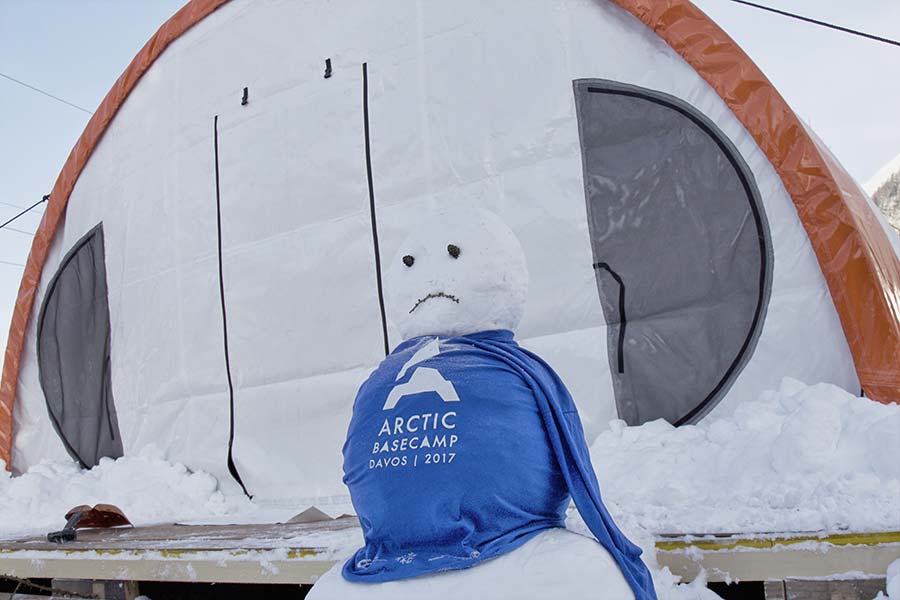
While politicians and business leaders walked briskly between meetings to try and stay out of the freezing cold at the World Economic Forum in Davos, Switzerland this year, a group of scientists set up an Arctic base camp at the event and spent most of their time outdoors. The group where trying to highlight the rapid melting of Arctic ice, and convince world leaders that the freezing extremes of our planet are crucial to a healthy world. Here’s what they had to say:

Professor Gail Whiteman, Rubin Chair in Sustainability. Lancaster University:

“We’re setting up the arctic basecamp in Davos because scientists are so worried about the changes that are happening in the arctic and the global risks associated with those. What happens in the arctic doesn’t stay there and it posts global risks throughout the world The scale of the change that is happening in the arctic is so significant that it’s sending out a warning cry but the rest of the world isn’t listening.

We want to set up a direct line of communication between arctic scientists and world leaders. I’m going to be sleeping in that tent over there. There’s going to be ten of us, it’s going to be cold and we’re all scientists here to bring our message of global change.”

Director of WSL, Professor ETH, Konrad Steff en, Swiss Federal Institute for Forest, Snow & Landscape Research WSL:

“Last year this glacier receded 70 metres and is moving up hill. What you see is a retreating of the glaciers, the retreating of the ice sheets and that is happening in the arctic as well as the rest of the world and if this continues then most of the glaciers won’t be here by the year 2100.

The glaciers worldwide are the biggest contributor to the global sea-level rise right now. There is a 1mm per year global sea level rise. I think it is time we start talking about the arctic basecamp and the fast changing arctic because we have seen it. But now it is so urgent, 2016 was the warmest year on record.”

Dr Jeremy Wilkinson – Sea Ice Physicist, British Antarctic Survey:

“Arctic basecamp is here because climate change is happening right now, the science is totally compelling. We’re here at Davos to bring our message of Arctic change. The Arctic Basecamp is here because climate change is real. Scientists have been studying the Arctic for years and can conclusively confirm that Arctic change is happening now and we need to bring that evidence of Arctic change to the wider community.”


Real Leaders Helps Set Guinness World Record

Real Leaders recently became part of record-breaking history when a new Guinness World Record title was set for the most people using virtual reality displays at a conference in Vancouver, British Columbia, Canada.

Mark Van Ness, founder of Real Leaders was in the audience of 1,867 members of The Young President’s Organization (YPO) at the organizations flagship annual event, the YPO EDGE, when it was announced that a new world record was to be set. Mobileye, the leading supplier of software that enables Advanced Driver Assist Systems (ADAS) surprised the gathering of business leaders with a virtual reality experience of riding in a driverless car.

An adjudicator from Guinness World Records was on hand to present Mobileye with a certificate of the Guinness World Records title and share it with the YPO members who were a part of this historic achievement.

Mobileye launched in 1999 with the belief that vision-safety technology will make our roads safer, reduce traffic congestion and save lives. With 27 automaker partners, including some of the world’s largest, Mobileye’s technology has rapidly evolved to support the three pillars of autonomous driving – sensing, mapping and driving policy.

Each year, YPO global chief executives and business leaders gather on a different continent for the YPO EDGE to shape the future of global industries. The 2017 EDGE in Vancouver was designed to spark idea exchange, introduce disruption, and infuse innovation into companies and communities around the world. 


Eyes Wide Open: How Perception Shapes Our Reality

In his popular new TED Talk “What reality are you creating for yourself?” former Saved by the Bell teen star-turned-entrepreneur Isaac Lidsky recalls how the clerk he waved to in the store was really a mannequin; how he reached down to wash his hands and realized it was a urinal and not a sink. Objects appeared, morphed, and disappeared in his reality, as he learned of his diagnosis at thirteen: Retinitis Piegmentosa, a degenerative eye disease that would lead to his blindness by age 25.

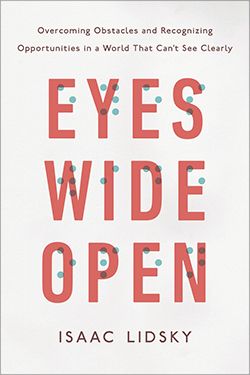
In his new book “Eyes Wide Open: Overcoming Obstacles and Recognizing Opportunities in a World That Cant’s See Clearly,” Lidsky explores what it really means to see eyes wide open. Dispelling the notion of disability, Isaac found his true vision and courage to overcome adversity, and achieve a remarkable range of accomplishments.
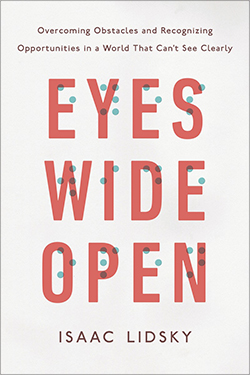
How did going blind end up helping you, instead of hindering your ability to see how much more you could achieve in a career with a remarkable number of accomplishments?

What we see feels like “truth”—something out there that is objective reality, factual; universal. But as my eyes progressively deteriorated, I literally saw firsthand that the experience of sight is altogether different. It is a unique, personal, virtual reality that is constructed in the brain, and it involves far more than our eyes. I began to search for other ways in which I was misperceiving as objective “truth” the beliefs and assumptions that were, in reality, creations of my own making—creations I could change. This was the “eyes wide open” vision that enabled me to take control of my reality and my destiny.                                          

Did your experience as a child actor have an impact on your later ambitions, and would you have liked to continue on that career path?

I love to connect with people, share ideas, and above all else, make them laugh. I don’t think that will ever change. But acting wasn’t a very good career path for me in the end. There was just too much disconnect for me between the hype and the daily reality of it all.

What was your primary motivation to write “Eyes Wide Open”?

When I was diagnosed with my blinding disease, I knew it would ruin my life. But I was wrong. While I lost my sight, I gained the vision to define and create the life I want for myself. It turned out to be a profound blessing, one that I want to share with others so they, too, can make use of these insights.

What are some signs that many people today can’t (or don’t) see clearly?

I think the test is simple: What are the differences between the way you’d like to live your life and the way you actually live it—the differences in terms of who you are, your career, how you treat others, how you allow others to treat you, how you spend your time, and what you accomplish? If those things are different and you aren’t doing anything about it, you’re not seeing your life very clearly.

What kind of vision is essential for people to reclaim their most meaningful senses?

Clarity of vision demands that you are absolutely honest with yourself and accountable to yourself—for your thoughts, beliefs, opinions, actions. We do ourselves great harm when we lie to ourselves. It’s even worse, though, when we avoid facing ourselves altogether. I think introspection is a neglected skill that is critical.

If fear and external circumstances need not rule our reality, and (as you note) it is how we respond to these circumstances that matters most, what might be an example of a positive, constructive response?

The biggest challenge is that our fears can lead us to buy into a false – and awful – reality. We fear the worst, assuming we’re going to face it. But most fears are born of, or at least fueled by, ignorance—the things we don’t know. The trick is to be crystal clear on what you truly know and what you think you know. When we’re afraid, we need to take in as much information as we can, expand our view, and question everything. But fear all too often has the opposite effect.

Can you explain how we can reframe our fears as fiction, and offer any suggestions for those who may feel confined by their fears or circumstances?

You are lulled into playing your part in the awful reality of your fears by perceived heroes and villains. This is how our fears become self-fulfilling—when we abdicate responsibility, blaming and celebrating others. Look for heroes and villains in your life. They’re figments of your imagination. You are the creator of your reality. You and only you.

What role, if any, does luck have in achieving our goals?

Of course luck plays a major role in life. But luck is a lot more complicated than we think. We’re too quick to characterize events of chance as “good” or “bad,” and we mistakenly see simplistic causal relationships between events not in our control and those that are in our control. The truth is that most often we will never know which is which, and almost always we play a substantial part—we determine whether events are “good” or “bad” in our lives.

Why is it so important that we hold ourselves accountable for our choices, and do you have a favorite examples?

Sure, I’ll give you an example: When my triplets were born, it would have been pretty easy for me to beg off diaper duty. Blind guy changing diapers?! A messy enough proposition that my wife would have understood—she would have given me a pass. But I was brutally honest with myself, and I realized a couple things. First, it wouldn’t really be all that difficult for me to figure out a system to get it done—no more difficult than it is for a sighted dad. Second, it was important to me to be helpful to Dorothy and involved with the childcare. I would have done myself a real disservice by surrendering to some notion that I wasn’t capable. There’s lasting damage when we make such limiting assumptions about ourselves.

Is there anything you wish you had known as a young entrepreneur, i.e., lesson learned later in your career?

It took some time for me to learn that a good leader aims to serve his or her team—the job is to empower your team to succeed and to help them do it. We tend to focus on what we might accomplish or contribute ourselves—on our performance—and expect others to assist us. But that’s backward from the perspective of effective leadership. A leader succeeds when his or her team succeeds.

What has been the most surprising discovery from your life’s experience?

I’ve been tremendously surprised, and pleased, to see how losing my sight has been a blessing in so many ways in my life. In the grip of visceral fear when I was diagnosed, I could not have imagined that I would feel grateful for the experience. Grateful because blindness gave me my eyes wide open vision, and because it has brought me great rewards in so many ways in my career and personal life.

How can we apply “Eyes Wide Open” thinking today, to advance our goals in business or life?

It starts with defining those goals. What is it that you truly want to accomplish? Who do you want to be and how do you want to live your life? Can you commit to your answers, and make the choice to work toward your goals? The rest is noise.

www.Lidsky.com

 

Strategies for Impact Investing Using a Donor-Advised Fund

[et_pb_section bb_built=”1″ admin_label=”section”][et_pb_row admin_label=”row”][et_pb_column type=”4_4″][et_pb_text admin_label=”Text” background_layout=”light” text_orientation=”left” use_border_color=”off” border_color=”#ffffff” border_style=”solid”]

In Dan Pallotta’s controversial book “Uncharitable” he encourages us to rethink the non-profit model for philanthropy and posits that the traditional structure for charities limits the impact they can have.

Three pioneering impact investors got together recently to discuss how they are leveraging a 501c3 Donor-Advised Fund to make impact investments in for-profit/for-purpose businesses. These industry leaders are not trying to change the system as Pallotta suggests, but are rather combining the best of the business and non-profit worlds: Recycling philanthropic dollars for maximum and ongoing impact.

Mark Van Ness, the Founder of Real Leaders, sat down with two other leading social entrepreneurs and impact investors: Seth Goldman, co-Founder and teaEO Emeritus of Honest Tea, and Tim Freundlich, co-Founder and President of ImpactAssets to chat about how they got involved in the impact investing space and why they chose a donor advised fund to help change the world.


[/et_pb_text][et_pb_image admin_label=”Image” src=”https://old.real-leaders.com/wp-content/uploads/2017/03/logo-banner.jpg” show_in_lightbox=”off” url_new_window=”off” use_overlay=”off” animation=”off” sticky=”off” align=”left” force_fullwidth=”off” always_center_on_mobile=”on” use_border_color=”off” border_color=”#ffffff” border_style=”solid” custom_margin=”||50px|”] [/et_pb_image][et_pb_text admin_label=”Text” background_layout=”light” text_orientation=”left” use_border_color=”off” border_color=”#ffffff” border_style=”solid”]

Why are you and others investing through the Donor-Advised Fund rather than just investing out of your own portfolio?

Seth Goldman: I do make investments out of my own portfolio, but I will take more of a risk with the donor-advised fund, because whether it succeeds or not, I’m not getting any money back personally. I know that if it is successful, that money will keep being passed on to others doing the same thing. To be able to support an entrepreneur’s vision and help achieve their mission is really fulfilling. That was the goal of putting my money in a charity – to support entrepreneurs and their vision. And we certainly didn’t say we’re only going to be supporting nonprofit entrepreneurs.

Mark Van Ness: I also like getting a tax deduction when I make the investment, versus if I do it from my portfolio and get no deduction. And I also personally like the fact that we don’t have to deal with tracking down a bunch of K-1’s at tax time.

[/et_pb_text][et_pb_testimonial admin_label=”Testimonial” author=”Mark Van Ness” job_title=”Founder” company_name=”Real Leaders” url=”www.old.real-leaders.com” url_new_window=”off” portrait_url=”https://old.real-leaders.com/wp-content/uploads/2017/03/mark_van_ness2.jpg” quote_icon=”off” use_background_color=”on” background_color=”#f5f5f5″ background_layout=”light” text_orientation=”left” use_border_color=”off” border_color=”#ffffff” border_style=”solid”]

Mark Van Ness has been active in impact investing since the 90s and serves on the Impact Assets Board of Directors. He is founder of SVN, the only major commercial real estate services company in the world with a gender-balanced leadership team and board. In 2010 he founded Real Leaders to inspire better leaders for a better world, via media, events and impact investments, including SOCAP, Impact Hubs, and Beyond Meat.

[/et_pb_testimonial][et_pb_text admin_label=”Text” background_layout=”light” text_orientation=”left” use_border_color=”off” border_color=”#ffffff” border_style=”solid”]

Tim Freundlich: Exactly. With folks who are active impact investors, K1’s are a big issue –something I began to realize a few years ago when I started getting more involved in direct investing myself and had to deal with the resulting K-1 issue. Some of the practicalities of a Donor-Advised Fund can make a big difference to an ImpactAssets client. It’s not just the fact that sharing a transaction across many shoulders can drive efficiencies, you also don’t have to sign all that paperwork. It’s really just an opportunity to insulate yourself from everything, from the K-1’s to subscription documents. It all gets centered in the Donor-Advised Fund at ImpactAssets. There are some practical reasons for doing it this way.

And then there’s the conceptual framing that Seth has just mentioned. As an investor, you will approach things a little differently – more creatively and aggressively – because you’re investing with your philanthropic dollars. You’ll think, “Wait a second. I’m trying to make the world better. I’m excited about these entrepreneurs. I’ve already got my tax break. Everything is aligned for me.” This doesn’t mean donors will check their brains at the door; they’re still assessing and making good investments. At Impact Assets, when we make options available to clients, we scrutinize them heavily around professional track records, managers and everything else that we can think of.

[/et_pb_text][et_pb_testimonial admin_label=”Testimonial” author=”Tim Frendlich” job_title=”President” company_name=”Impact Assets” url=”www.impactassets.org” url_new_window=”on” portrait_url=”https://old.real-leaders.com/wp-content/uploads/2017/03/Tim.jpg” quote_icon=”off” use_background_color=”on” background_color=”#f5f5f5″ background_layout=”light” text_orientation=”left” use_border_color=”off” border_color=”#ffffff” border_style=”solid”]

Tim Freundlich spent his early career at Calvert Social Investment Foundation. As President of ImpactAssets he has grown the Giving Fund to 10 times its size – to a $300 million impact investment, donor-advised fund. He is also the co-founder and President of Good Capital, which manages the Social Enterprise Expansion Fund LP, that has two operating structures: The annual SOCAP Conferences that attract more than 2,000 attendees and coworking and events space, Impact Hub Bay Area, NYC and DC.

[/et_pb_testimonial][et_pb_text admin_label=”Text” background_layout=”light” text_orientation=”left” use_border_color=”off” border_color=”#ffffff” border_style=”solid”]

Mark Van Ness: It’s helpful that I don’t feel the need to do due diligence to the same degree I would investing out of my own portfolio. With Beyond Meat, as an example, I knew that you had already vetted it and done the due diligence. Impact Assets has allowed me to do many deals that I would otherwise probably not do. For example, I’m now willing to do smaller deals because by investing through the DAF, I avoid the hassle of due diligence and chasing down all the K-1’s .

 Join us next week as we explore the reasons for choosing a Donor-Advised Fund over a private foundation.

[/et_pb_text][et_pb_testimonial admin_label=”Testimonial” author=”Seth Goldman” job_title=”Co-founder” company_name=”Honest Tea” url=”www.honesttea.com” url_new_window=”on” portrait_url=”https://old.real-leaders.com/wp-content/uploads/2017/03/seth.jpg” quote_icon=”off” use_background_color=”on” background_color=”#f5f5f5″ background_layout=”light” text_orientation=”left” use_border_color=”off” border_color=”#ffffff” border_style=”solid”]

Seth Goldman is best known as the co- founder of Honest Tea which he sold to Coca-Cola in 2011. Before he did, he put $1.5 million worth of company shares into a donor-advised fund at ImpactAssets. By donating stock before the sale, he claimed an immediate tax deduction for its full market value, avoided realizing a taxable gain, and left him with more capital for impact investing. Today he is Chairman of Beyond Meat.

[/et_pb_testimonial][/et_pb_column][/et_pb_row][/et_pb_section]

Tan Le: Co-founder of Emotiv

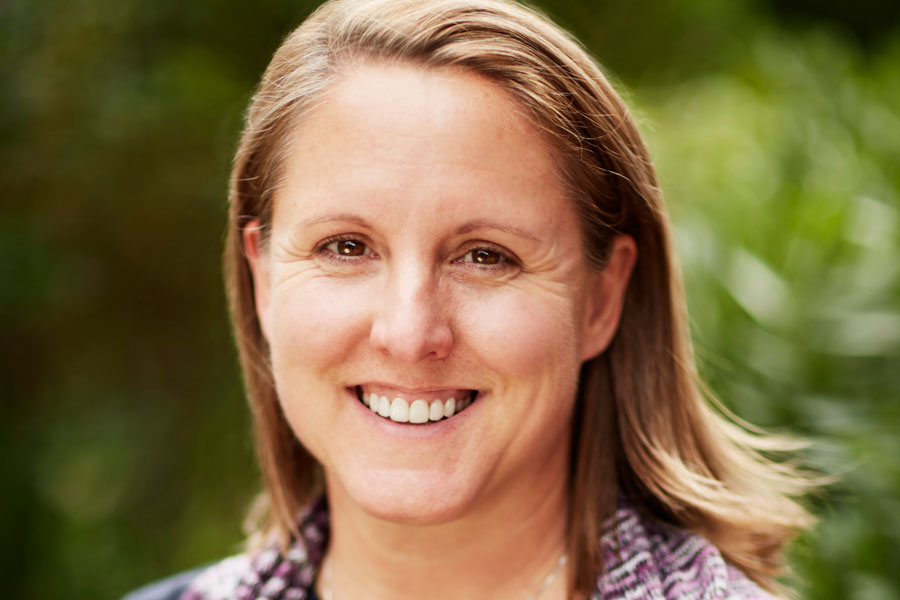
Tan Le is a Vietnamese-Australian telecommunications entrepreneur who co-founded brain monitoring company Emotiv.

Born in South Vietnam, Le migrated to Australia as a refugee with her family in 1982. She began university studies at the age of 16 and completed a bachelor’s degree in law and commerce at Monash University.

Her first venture was SASme, a pioneer in providing SMPP platforms to telecommunication carriers and content aggregators, that became one of the companies responsible for the creation of Australia’s SMS application market. Le helped grow SASme to 35 employees and multiple locations worldwide.

Le co-founded software company Emotiv which specializes in electroencephalography (EEG) headsets. Emotiv is the pioneer of simple to use, high quality, mobile headsets that do advanced brain monitoring. In 1998, she was named Young Australian of the Year and voted one of Australia’s 30 Most Successful Women Under 30.

She has been appointed Special Ambassador to the United Kingdom, a Goodwill Ambassador for Australia in Asia, and a Patron of the Australian Youth Ambassadors for Development Program. A role model for women in business, Le was made an Ambassador for the Status of Women in 2001 and been appointed to a number of prominent boards, including Plan International Australia, National Committee for Human Rights Education in Australia, Australian Citizenship Council and RMIT Business in Entrepreneurship.

Le has been featured in “Who’s Who in Australia” List since 1999 and “Who’s Who of Australian Women” List in 2007 & 2008, Fast Company’s Most Influential Women in Technology in 2010 and Forbes’ 50 Names You Need to Know in 2011. She has also been honored by the World Economic Forum as a Young Global Leader since 2009.


Red Bull Launches Social Entrepreneur Program in US

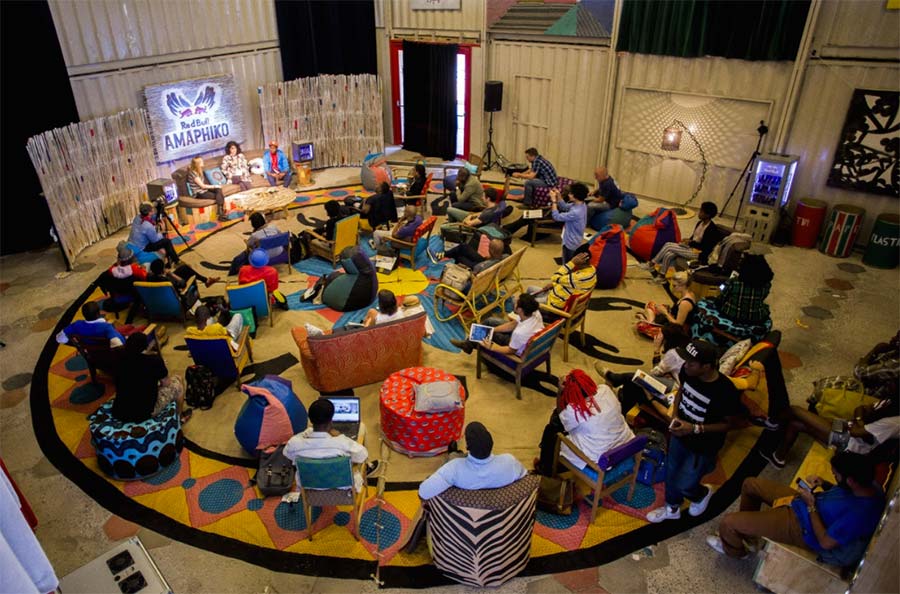
While Red Bull may not be a brand people immediately associate with social impact, the Red Bull Amaphiko project has started to change all that. And Baltimore’s emergence as a leading social impact city in the U.S. is a big part of the story.

Red Bull Amaphiko, a global program that supports social entrepreneurs, is coming to the U.S. for the first time starting March 1. “Amaphiko” translates to “wings” in the South African language of Zulu, the program’s origin country – and aims to bring together and uplift individuals from around the U.S. who are using their talent and energy to tackle social issues in their community.

“We often say, the people who are closest to the challenges in their community, are often closest to the solutions, and the Red Bull Amaphiko Academy was built around that belief,” says Michelle Geiss, co-founder and executive director of Impact Hub Baltimore, a community partner to Red Bull Amaphiko.

Red Bull Amaphiko’s primary platform is the Red Bull Amaphiko Academy. The Academy begins with a 10-day residency program that brings together hand selected social entrepreneurs to connect and collaborate with some of the world’s leading innovators, entrepreneurs and storytellers. The 10-day residency is followed by an 18-month individually tailored development program that further helps the social entrepreneurs bring their ideas to life.

Baltimore was selected as the host city because it continues its emergence as a leading social impact hub in the U.S. In just the past few years, Charm City has been the home to the Social Innovation Lab at John Hopkins University, the Front Lines of Innovation event in summer 2016 and Light City’s Social Innovation Conference.

“Your business can only survive and thrive if it is built on a solid foundation. That foundation is not a business plan, it’s you. It’s the individual who defines themselves, who is bold enough to call themselves a social entrepreneur,” said Thato Kgatlhanye, a graduate of the 2014 Red Bull Amaphiko Academy in South Africa and recipient of the ELLE International Impact 2 Award and the prestigious Anzisha Prize, the premier award for African entrepreneurs aged 15-22 who have developed businesses that positively impact their community. Thato’s company, Rethaka manufactures school bags from recycled plastic, which harnesses wearable solar technology during the day to provide a light source for a child to study at night.


The Red Bull Amaphiko Academy will begin in Baltimore, MD this August. Applications for participation are open from March 1, 2017 and close on April 30, 2017. For more information and to register, visit: www.amaphiko.redbull.com/en/academy/us-2017


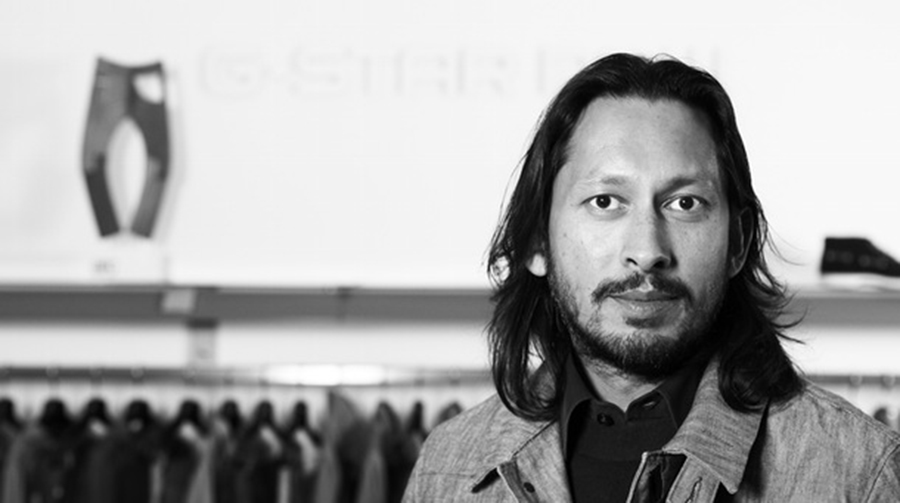
Shubhankar Ray: Former Global Brand Director, G-Star

Shubhankar Ray is the former global brand director of Amsterdam-based denim label G-Star.

Born in Calcutta, India, in 1968, Ray moved to Manchester, England, where he studied chemistry before moving into fashion branding. He began his career reinventing global fashion and lifestyle brands – a career that has spanned 20 years. 

Ray is mostly known for the innovative and award winning global campaigns and brand images he created for Caterpillar in the 90s, Camper in the 00s and G-Star since 2006, as their Global Brand Director. 

For G-Star, he pioneered groundbreaking marketing ideas, such as a record label, virtual nightclub-museum, pop-up gallery, infotainment fashion shows and the world’s first denim made from recycled ocean plastic.

His work is based in global branding, consumer-social reality and designing multi-level communications systems including international advertising campaigns, magazines, shop systems, TV spots, gallery installations, music, web and short films.

Ray left G-Star after ten years but is still involved as a consultant.


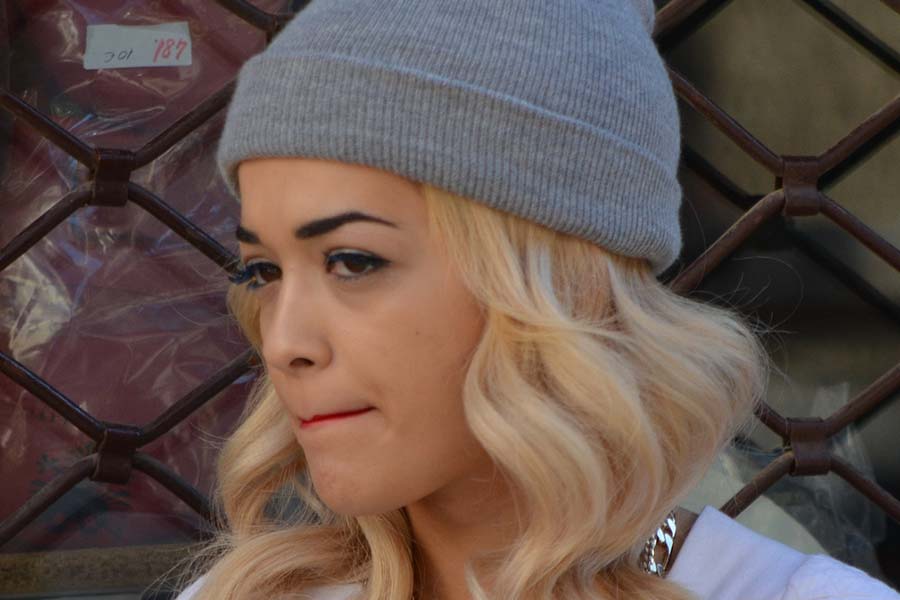
Rita Ora: Singer, Actress and Fashion Designer

Rita Sahatçiu Ora is a British singer, fashion designer and actress who rose to prominence in February 2012 when she was featured on DJ Fresh’s single, “Hot Right Now”, which reached number one in the UK.

She was born in Pristina, SFR Yugoslavia (present-day Kosovo) to Albanian parents. Her mother, Vera is a psychiatrist, and her father, Besnik Sahatçiu, is an economist and a pub owner. Ora speaks Albanian and her mother is Catholic and her father Muslim.

When asked about her religion, Ora said that she doesn’t consider herself religious, but “more of a spiritual person.” She also considers herself a feminist.

Her family left Kosovo for political reasons, because of the persecution of ethnic Albanians initiated with the disintegration of Yugoslavia. They relocated to London, England in 1991, when she was a year old.

Her debut studio album, Ora, released in August 2012, debuted at number one in the United Kingdom. The album contained the UK number-one singles, “R.I.P.” and “How We Do (Party)”. Ora was the artist with the most number-one singles on the UK Singles Chart in 2012, with three consecutive singles reaching the top position.

On 15 November 2014, Ora joined the charity group Band Aid 30 along with other British and Irish pop acts, recording the latest version of the track “Do They Know It’s Christmas?” to raise money for the 2014 Ebola crisis in West Africa. On 14 November 2015, Ora performed during half-time at David Beckham’s UNICEF charity “Match for Children” held at Old Trafford, Manchester and in March 2016, she gave a speech on immigration and the Syrian refugee crisis at the We Day UK event in London, organised by Free the Children.


0