

Is This The World’s Most Sustainable Shopping Mall?

Frasers Property Australia teams up with eco-warrior Joost Bakker to unveil rooftop plans for an ultra-green development in Burwood, Victoria.

The future of retail and hospitality will touch down in Burwood, Victoria from late 2019 when Frasers Property Australia opens what is destined to be the most sustainable shopping centre in the world.

With the aim of achieving the Living Building Challenge accreditation – Burwood Brickworks will put sustainability at its core, welcoming visitors to live, shop and dine in a futuristic model of mixed-used development.

If you like this, subscribe here for more stories that Inspire The Future.

Launching an EOI with Joost Bakker to kick off the retail and hospitality part of the project, Frasers Property today unveiled the opening of an Expression of Interest for tenants wanting to take over a 2,000sqm Rooftop Urban Farm & Restaurant.

Frasers Property Executive GM of Retail, Peri Macdonald says the concept will transform the way we think about the impact of hospitality and retail on the natural environment.

“This is an Australian first, that will completely reconsider how food is sourced and provided by retailers. Two thousand square metres of productive agricultural space has been evenly split between greenhouses, external planter boxes and landscaped growing areas,” said Macdonald.

“Burwood Brickworks is anticipated to be the world’s most sustainable shopping centre which will be determined a year after launch in 2019 and will have in excess of 12,700sqm of retail to share. We’re now interested in talking to unique food and beverage providers wanting to lease 2,000sqm of Urban Rooftop Farm & Restaurant site located on the shopping centre’s rooftop,” Macdonald said.

Following on from Frasers Property’s ground-breaking Central Park development in Chippendale NSW, a multi award-winning project with a building designed by Jean Nouvel, and housing the world’s largest living wall designed by landscape artist Patrick Blanc, Burwood Brickworks is set to become another pulsating community hub, located just 15 km from the City of Melbourne.

Joost Bakker said the invitation to creatively consult on design concept for the rooftop was an opportunity he ‘could not resist’.

“The vision driving the design comes from such a positive place. Frasers is seeking to re-invent the way we think about sustainable, mixed-used developments and food sourcing. Mulching excess organic material for compost, implementing ‘closed loop’ water reduction management and limiting food and waste transportation are just some of the measures that will be employed on the rooftop to lessen the ecological footprint.

“Minimising the amount of energy needed in Burwood Brickworks’ Urban Rooftop Farm & Restaurant underlines the commitment to an improved social conscious whilst providing genuine health benefits for both consumer and retailer alike,” he said. 


“I’ve really enjoyed helping Frasers to envision how such a bold concept can transform the way we think about food production and consumption. There is such a hunger for this kind of development throughout the world. It really fills a gap in the market to feed and nurture conscious consumers. New consumers wants to shop, eat and relax in environments that truly support a sustainable world,” Frasers Creative Consultant Joost Bakker said.

With construction kicking off in mid-2018, this is a high-profile mixed used project unlike any other of its scale in Australia. The sustainability concept for the rooftop is key to accrediting the building as Australia’s first 6 Star Green Star Design and As-Built retail building, and the world’s first Living Building Challenge certified retail development. A Living Building has a net zero carbon footprint, produces more electricity than it consumes, grows agriculture on 20% of the site and is net water and waste positive amongst other social and health benefits including access to natural daylight, indoor air quality and constructed from non-toxic and recycled materials.

Dutch-born florist, designer and sustainability warrior Joost Bakker is passionate about the natural environment.

Famous for his pop-up restaurant established next to Sydney Opera House in 2011, Joost Bakker promotes a thoughtful use of materials and recylcing and has become an eco-trailblazer in his adopted home of Australia.

Joost currently splits his time between farming on his property in Kallista Victoria, growing tulips and taking part on sustainability initiatives that promote a better world. He was engaged by Frasers as Creative Consultant to help define the concept and layout of the Burwood Brickworks Urban Farm which is due for completion in October 2019.

If you like this, subscribe here for more stories that Inspire The Future.

Can Blockchain Restore Americans’ Faith in Government?

Americans don’t trust the Federal government. The Pew Research Center found that only 18 percent of Americans say they trust the Feds. It’s small wonder we have a disruptor in chief in the White House.

Can technology restore our faith in Uncle Sam? Blockchain, the distributed ledger system not only allows for greater transparency, but it also is a way to codify good government principles and best practices.

Steve Escaravage, SVP at Booz Allen, and Marek Cyran, senior lead technologist, data science for Booz Allen, share how blockchain could improve government transparency and efficiency.

If you like this, subscribe here for more stories that Inspire The Future.

Open Government

Lack of transparency and various interpretations breed suspicion.  People want to know what is happening in their government–and blockchain can open the government to sunshine.

Escaravage said his interest in blockchain is centered on the flow of information from citizens through the Federal processes–especially where a Federal benefit is given to the citizen.

“Whether a citizen is sharing information with the IRS or Health and Human Services, these processes require coordination and organization,” he said. “Bringing in blockchain could give the processes greater transparency and efficiency. With blockchain solutions in place, we could see huge gains in citizen services and satisfaction.”

But how can blockchain help?

Blockchain uses a decentralized ledger–meaning all participating parties can see and verify data. By using a blockchain solution, there can be independent verification of government claims.

“There’s a lot of discussion across the Federal government about how to track information and data from an audit perspective,” said Escaravage. “Just having a way to enable awareness of how decisions are being made is perhaps what most excites me about blockchain.”

In terms of implementing blockchain to increase transparency, Escaravage said agencies need to go back to basics.

“You’re using blockchain as a framework to make business processes more transparent,” he said. “Before starting the solution, you need to understand the interactions. Go back to good business fundamentals and understand how your business processes are engineered.”

Good Government

A few short years ago, blockchain was almost exclusively discussed alongside the cryptocurrency Bitcoin–that is no longer the case.

“When we talk about blockchain, we aren’t talking about cryptocurrencies,” said Cyran. “We’re really talking about blockchain as a mechanism to create smart contracts.”

smart contract is similar to a traditional contract, except it uses blockchain. It does have significant benefit over a traditional contract. Not only does a smart contract define the rules and penalties around an agreement in the same way that a traditional contract does, but it also has mechanisms to automatically enforce those obligations.

“Because blockchain allows you to codify your business’ rules and processes, we can really fundamentally model how government operates with blockchain,” Cyran said. “The Federal government can model those processes as programs that run on blockchain. So each individual transaction is just a single interaction with a smart contract.”

While donkeys and elephants agree on little, few would argue against greater transparency.  At least not in the open…

If you like this, subscribe here for more stories that Inspire The Future.

Tips for Becoming a Socially Responsible Investor

When it comes to investing, a growing share of Americans think strong financial returns are not enough. They want to make a social impact, too.

According to the US SIF Foundation, sustainable, responsible and impact investing grew by more than a third from 2014 to 2016. The sector accounted for $8.72 trillion in investments in 2016 – roughly one out of every five dollars under professional management in the U.S.

If you like this, subscribe here for more stories that Inspire The Future.
Despite its growing popularity, especially among millennials, impact investing is still plagued by certain myths and not well understood by all consumers. As Morgan Stanley’s Institute for Sustainable Investing has found, more than half of investors believe sustainable investments require a financial trade-off, despite a large body of research that suggests this is not the case.

“Impact investing is a great way to contribute to meeting your long-term financial goals and support your personal values at the same time,” says Geoffrey Brown, CEO of the National Association of Personal Financial Advisors (NAPFA). “With a wide range of investment options and ever-changing definitions of industry terms, this space can be confusing for consumers.” These tips from NAPFA advisors offer guidance for anyone interested in becoming a socially responsible investor.

Tip #1: Understand your options


Socially responsible investing (SRI) can be as simple as opening a bank account with a community development financial institution (CDFI), which lends money in communities that do not have access to traditional forms of financing. But there are also exchange-traded funds (ETFs), mutual funds, loan funds and private investments that meet SRI criteria. 

Tip #2: Determine which issues matter to you


Are you more interested in protecting the environment or promoting workplace diversity? Do you want to make a difference in your community or at the national level? Figure out what’s most important to you and work with a financial advisor to find socially responsible investments that align with your values.

Tip #3: Decide how you want to drive change


Not all socially responsible investments have the same impact. One mutual fund may screen only for environmental factors, but do so across entire industries. Another mutual fund may file shareholder resolutions to bring about change on environmental, social and corporate governance (ESG) issues, but only at a few companies at a time. Make sure your impact investments deliver the type of change you’re hoping to see.

Tip #4: Measure performance 


As with any investment, you should measure the performance of your portfolio when you engage in impact investing. With mutual funds and ETFs, you might compare the return you are getting with the return on an index that tracks a representative sample of socially responsible companies, such as the MSCI ESG Indexes or Calvert US Large Cap Growth Responsible Index.

Tip #5: Develop an approach that works for you


Your first responsibility is your own financial well-being. Impact investing provides strong returns, but sometimes it’s best to sell a particular investment if it’s not meeting your expectations. Speak to a professional advisor to chart a course that helps you meet your long-term financial and social objectives.

If you like this, subscribe here for more stories that Inspire The Future.

Can Religions Help in The Fight Against Climate Change?

A growing share of the six billion believers around the world are getting personally involved in the fight against climate change.

In Sikh temples the world over, community kitchens offer free meals to anyone regardless of colour, creed or caste. But the langars – as the kitchens are called – often distribute food grown with chemical pesticides, which can contribute to pollution and leak into rivers and streams. In 2015, a push by Sikh environmental groups drove the Golden Temple, the Sikh faith’s holiest which feeds 100,000 people daily, to start growing its own organic food to reduce its impact on nature.

“There are many hints in our holy book to protect mother earth and to commit to the betterment of society for all life on earth,” said Ravneet Singh, South Asia manager of EcoSikh, a Sikh environmental group.

“The most vulnerable entity on the planet is the planet itself – the forest, the water, the air, the soil,” he told the Thomson Reuters Foundation in a telephone interview. Many of the world’s religions consider nature sacred and religious leaders have increasingly come out in favour of protecting it – including by acting to curb climate change.

Experts say religions, which connect with people’s emotions and personal lives, could help mobilise people in the fight against climate change where facts and politics have failed. Faith groups also control trillions of dollars in assets, which could support that fight. A range of religious organisations are meeting this week in Switzerland to issue rules on ethical investment – including backing away from fossil fuels and moving towards green projects.

A growing share of the six billion believers around the world are getting personally involved in the fight against climate change as well, from eco-friendly mosques in Britain to river cleanups by Hindu groups in India to tree-planting projects on religious land in sub-Saharan Africa.

EMOTIONS FIRST

Under a Paris climate change deal agreed by nearly 200 nations in 2015, countries pledged to keep the rise in average global temperatures below 2 degrees Celsius above pre-industrial levels to stave off the worst effects of climate change.

Despite mounting evidence that global warming will reach catastrophic levels if planet-warming emissions are not drastically cut, governments globally are falling short of the efforts required, experts say.

Average surface temperatures are already 1.2 degrees Celsius above pre-industrial times, the World Meteorological Organization says.

This – combined with an uptick in record floods, hurricanes and other weather disasters – has led a growing number of religious authorities to speak out in favour of climate action. In September, Pope Francis and Orthodox Christian leader Patriarch Bartholomew called for a collective response from world leaders to climate change, saying the planet was deteriorating and vulnerable people were the first to be affected.

Their words could more effectively change many people’s minds than scientific reports, experts say.

“All big faiths talk about caring for the most vulnerable and caring for the earth,” Cynthia Scharf, a former senior staff member on the United Nations secretary general’s climate team, told the Thomson Reuters Foundation.

“What really motivates people is not facts but values and emotions. Those are pretty universal feelings,” said Scharf, who was raised in a Christian Protestant family and whose brother is a missionary.

“Religious communities can address some of the questions which are at the heart of climate change, such as fairness,” she said.

Many religions already advocate environmentally-friendly behaviours as part of their cores values, such as living with fewer material luxuries, saving water or avoiding meat.

Jainism for example, practiced by over four million people in India, prohibits killing animals and promotes a vegetarian lifestyle, which scientists say could play a major role in reducing planet-warming greenhouse gas emissions.

HOLY INVESTMENTS

Around the world, religious investment funds handle trillions of dollars each year, according to environmental group The Alliance of Religion and Conservation (ARC).

Historically, faith-based funds have avoided investing in alcohol, weapons, tobacco and, more recently, fossil fuels that contribute to climate change.

Last month, 40 Roman Catholic groups in countries including Australia, South Africa and the United States said they were shunning investments in fossil fuels and switching to greener energy.

But beyond avoiding certain types of investments, faith groups are also increasingly looking to actively invest in projects that protect the planet, such as renewable energy, sustainable agriculture or forest protection.

“Deforestation is not stopped by divesting (from fossil fuels). Somebody else will buy your stock,” said Gunnela Hahn, the head of sustainable investment for the Church of Sweden. “We want to invest in the solution.” This week in the small Swiss town of Zug, investors and leaders from eight of the world’s biggest religions – including Buddhism, Christianity and Islam – published priorities they have set themselves for ethical investment.

Some of the guidelines include supporting recycling projects and waste reduction, investing in companies that widen access to clean water and education, and chosing enterprises that have a strong environmental record.

GREEN GROUPS

But grassroots faith groups across the globe also are bringing religious teachings into thousands of projects on the ground to protect people and nature from the effects of climate change and pollution.

Many Hindu groups are working to clean the Ganges and Yamuna rivers in India. Believed by Indians to have miraculous healing powers, the Ganges is also one of the world’s filthiest rivers, with tons of raw sewage and industrial waste dumped into it daily.

Muslims in sub-Saharan Africa, who farm some of the least fertile land on the continent and face threats to their food security from climate change, developed a training manual in 2014 to encourage more sustainable farming practices.

A growing number of temples, mosques and synagogues also are switching to renewable energy and ditching disposable plastic cutlery.

Half of China’s Daoist temples have now switched, at least in part, to renewable energy, according to ARC.

“Faiths have the infrastructure – schools, medical facilities, universities, millions of buildings, sacred mountains, rivers and cities” to take direct, on-the-ground action on environmental issues, said Martin Palmer, ARC’s secretary general.

“We have gone from a situation where faiths weren’t aware the environment was a problem to a situation in which now every major religious leader is saying something for the environment and doing something about it,” he told the Thomson Reuters Foundation.

“It’s been like watching a giant wake up.”

THE LIMITS

Faith groups may also have a role in saying how far the planet’s leaders can go to try to protect climate stability. As the risks of global warming get clearer, a small but increasingly vocal group of researchers are exploring using technology to reduce them – in essence by re-engineering planetary systems.

Such “geoengineering” proposals include large-scale, controversial projects that aim, for instance, to dim sunlight by spraying sulfuric acid into the upper atmosphere.

Such action presents a range of risks, including potentially shifting rainfall patterns in parts of the world, scientists say. But the idea of humans deliberately playing with the earth’s climate – which some believe is the prerogative of gods – could leave religious groups sceptical.

Geoengineering proposals are expected to stir the same emotional responses as other controversial scientific advances, from genetic modification to cloning, said Scharf, who now works for a body looking at governance of climate engineering.

“Geoengineering is a humanitarian concern,” said the strategy director at the Carnegie Climate Geoengineering Governance Initiative. “That’s the only reason we should be looking at this issue. The whole purpose of it should be to alleviate suffering,” she said.

By Anna Pujol-Mazzini @annapmzn, Editing by Laurie Goerin.

Meet The Guy Creating Clean Diesel Fuel From Beans

Positive environmental actions are celebrated on World Environment Day on June 5. But for South Africa’s Thabang Mabapa, who’s working on turning castor oil into a biodiesel, it’s a daily matter.

An agriculture and energy entrepreneur, Mabapa founded Selokong Sa Dimelana, an organization that focuses on the farming, processing and distribution of castor oil for biodiesel purposes in 2013.

If you like this, subscribe here for more stories that Inspire The Future.
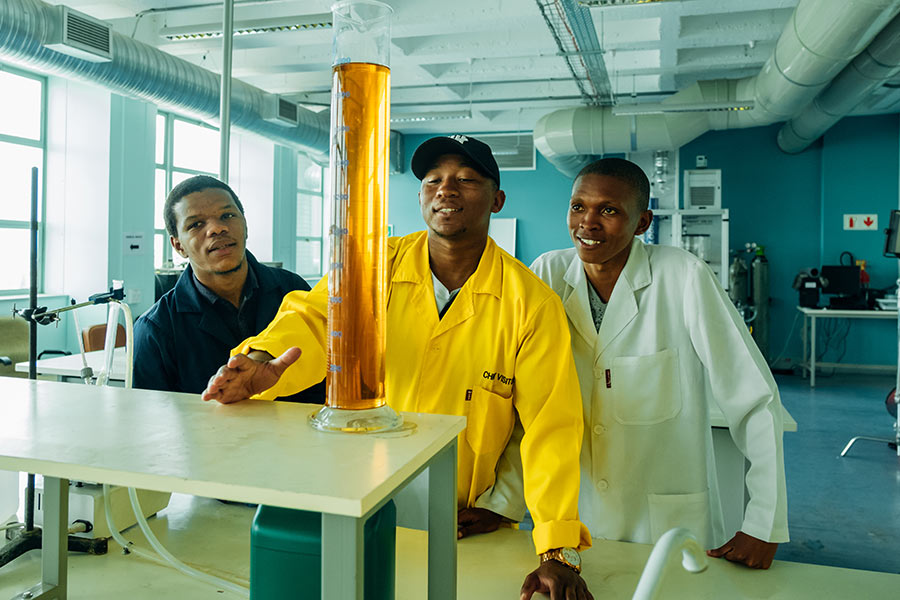
Mabapa (pictured above, far right) identified a global issue and matched it with a local problem: A crude oil crisis with a lack of alternative fuels and rural brain drain. His solution was to develop idle land for castor oil farming by planting castor beans to reduce dependency on oil and create jobs. The beans yield a high oil content of 55% which, when converted to biodiesel, becomes biodegradable and produces significantly lower emissions than fossil fuels. To date, Mabapa has 12 employees and 68 volunteers and fancies himself an eco-entrepreneur.

As is the custom in rural Africa, he found a chief in Limpopo province who was prepared to give him some land, and he got growing. More than 60 local people have got involved as volunteers, tilling the land, planting bushes and harvesting the beans every three months.

Mabapa started out extracting the oils in his mother’s kitchen and is currently using lab facilities at the University of Wits in Johannesburg before working towards his own factory facilities.

“My dream is to do the farming and the processing in Limpopo so that people here can have that skillset,” he says. “I want us to grow, to supply the whole of Africa, and produce tons and tons of biodiesel.”

Mabapa uses marginal land to grow the castor plants, which does not take away from crop-bearing land and pose a threat to food security. The castor cake, a by-product of the biodiesel extraction process and a type of organic manure, is supplied to food producing farmers, ensuring that even waste is put to good use.

Despite the project being primarily in the agricultural sector, it plays a significant role in a number of other industries including energy, medicine and cosmetics – all sectors that rely on crude oil as a basis for manufacturing end-products.

Mabapa has left plenty of room for trial and error as he builds his business. While extracting energy from beans is an exact science, a business plan can sometimes be led by what you discover along the way. “When you’re interested in something and you grow a passion for it, you can’t control how you are going to learn,” he says.

If you like this, subscribe here for more stories that Inspire The Future.

The 8 Cybersecurity Trends of 2018

How can businesses better protect themselves from the increasing volume and complexity of cyberattacks while preparing for the opportunities of automation and digitalization of industries? A new report by global company TÜV Rheinland, a company that tackles  challenges arising from the interaction between man, technology and the environment, aims to sheds some light on these questions. 

According to Frank Luzsicza, the Executive Vice President of ICT & Business Solutions at TÜV Rheinland, this years report highlights the implications of our increasingly connected world, how global regulation is responding and the need to inject trust into cybersecurity. It also highlights the importance of protecting ourselves from ‘intelligent’ cyberattacks, and what we should do to close the skills gap in an environment starved for cybersecurity talent, yet overwhelmed by volumes of data. 

If you like this, subscribe here for more stories that Inspire The Future.

Leading cybersecurity experts from Europe, North America and Asia identified the top eight cybersecurity trends for this year:

TREND 1: A rising global tide of cyber-regulation increasing the price of privacy

Data protection is a critical concern in an increasingly digital world and May 25, 2018 is a turning point for data protection in Europe. It marks the end of the transitional period for the EU General Data Protection Regulation (GDPR) as it becomes enforceable by law. It disrupts data governance and how information is protected for any organization controlling or processing EU citizen personal data, and leads a growing list of emerging data protection regulations from around the globe. Failure to comply could result in fines of up to 4% of global turnover – a significant sum that demands attention. Expect to see the EU Commission hold major global companies accountable for GDPR violations.

TREND 2: The Internet of Things drives the convergence of safety, cybersecurity, and data privacy

In 2016, Mirai proved that Internet of Things (IoT) devices can be effectively weaponized as botnets. Today, product development, time to market considerations, and technical power constraints leave IoT devices exposed by exploitation of critical vulnerabilities. The impact of data breaches now extends far beyond simple data monetization to ‘kinetic’ threats to health and safety, as devices and systems are directly connected to open networks. It’s widely accepted that the state of IoT security is poor and, with over 500 connected devices expected to cohabit with us in our homes by 2022, these represent a major risk to safety, cybersecurity, and data privacy.

TREND 3: Operational Technology emerges as a frontline for cyberattacks

The industrial internet is already transforming global industry and infrastructure, promising greater efficiency, productivity and safety. To compete means to move process equipment online, often unwittingly exposing component vulnerabilities to cyberattacks. Manufacturing plants are targeted to obtain intellectual property, trade secrets, and engineering information. Attacks on public infrastructure are motivated by financial gain, hacktivism, and national state agendas. Fear of a ‘worst-case scenario’, where attackers trigger a breakdown in systems that underpin society, was highlighted this year at the World Economic Forum. Industrial systems are particularly susceptible to supply-chain attacks, adversaries have recognized this, and are targeting them.

TREND 4: With cyber defences in place, focus shifts to threat detection & response

Recent cyberattacks on high-profile organizations are proving that, against the sophisticated and persistent cybercriminals, preventative controls alone are not enough. Today, it takes organizations, on average, over 191 days to detect a data breach. The longer it takes to detect and respond to threats the greater the financial and reputational damage done to the organization by the incident. Due to the vast growth of security log data, limitations of incumbent technologies, ineffective use of threat intelligence, inability to monitor IoT devices, and shortage of cybersecurity talent, organizations are exposed to costly dwell times.

TREND 5: Increasing use of Artificial Intelligence for cyberattacks and cyber defence

As organizations undergo a digital transformation, there is a growing volume of increasingly sophisticated and persistent cyberattacks. Malware is becoming smarter, able to ‘intelligently’ adapt to and evade traditional detection and eradication measures. With a global shortage of cybersecurity talent, organizations are losing the cyber arms race as a result. The volume of security data now far exceeds our legacy capability to use it effectively, leading to a growing number of AI-enabled cybersecurity use cases: accelerating incident detection and response; better identifying and communicating risks to the business; providing a unified view of security status across the organization.

TREND 6: Certifications become necessary to inject trust into cybersecurity

It’s broadly accepted that cybersecurity and data protection are of critical importance in an increasingly digital world, but how can you judge the effectiveness of an organization’s cybersecurity posture? There is a growing concern for trust in cybersecurity, evidenced by existing and emerging standards. For CISOs and product manufacturers alike, certification validates you have done what you say you have done. Today, however, product security assurance certification schemes tend to focus on the critical infrastructure and government sectors only. Where does that leave the manufacturers of consumer products?

TREND 7: Passwords being replaced by biometric authentication

Our digital lives are ruled by a complex web of online apps each requiring a username and password to control access. To protect the data behind these apps, selecting an obscure and complex password, and changing it often, is good practice, but also quite rare. With exponential improvements in computing power, and easy access to lots of it in the cloud, the time it takes to brute force passwords is rapidly reducing. What took nearly 4 years in 2000, now takes only 2 months. Add to that the fact that stolen, hacked, and traded, passwords have never before been so openly available. As a result, it’s increasingly commonplace to encounter biometric authentication (facial, fingerprint, iris, and voice) included in everyday mobile, tablet, and laptop devices, as well as physical access and online services.

TREND 8: Industries under siege: Healthcare, Finance, and Energy

The majority of cyberattacks are undertaken by criminal organizations and are motivated by money. The value of information on the dark web depends on demand for the data, the available supply, its completeness, and ability for reuse. As a result, healthcare and financial personal information are highly sought after. Medical records can fetch $1-$1,000, depending on how complete they are, while credit cards can fetch around $5-$30 dollars, if bundled with the information necessary to do immediate damage. Other cyberattacks have more political and nation-state motives, here disruption to critical services through attacks on the energy sector is a key risk in 2018; as evidenced by recent news of Russia’s campaign of cyberattacks targeting the US power grid, which is suspected to have been underway for several years.

If you like this, subscribe here for more stories that Inspire The Future.

The Power of The Founder’s Mentality

Matthew McCarthy, North American Vice President of Unilever, takes us back to his college days working for his father’s small print business, to fill us in on the importance of the founder’s mentality.

Now with Unilever, he sees the founder’s mentality come through in the form of passion from his business partners. Get the scoop on the importance of believing in your product.

https://wisdomcapture.wistia.com/medias/e54oegsuf4?embedType=async&videoFoam=true&videoWidth=640


Watch more Wisdom Capture videos here


Kate Hudson’s Fabletics Empowers Women to Lead

Fabletics, an active-lifestyle brand co-founded by Kate Hudson in 2013, has launched a global capsule collection to benefit the United Nations Foundation’s Girl Up initiative.

For over a year and a half, Fabletics and Girl Up have joined forces to support a common mission – to make girls leaders of tomorrow through the empowerment of girls worldwide. Since the launch of Girl Up in 2010, the organization has funded United Nations programs that promote the health, safety, education, and leadership of girls globally and has built a community of over half a million passionate advocates.

If you like this, subscribe here for more stories that Inspire The Future.

Inspired by Kate Hudson’s vision for Fabletics to be a fashion-focused activewear brand with the mission to empower women by making a healthy, active lifestyle accessible to everyone – the capsule collection embodies this message through branding select styles with “Girl Almighty” to inspire girls and women to stand up and celebrate each other regardless of size, shape, age or ability.

“It has been a truly rewarding experience to work closely with the organization and the girls to create a collection that spreads the message that girls and women are the fearless leaders of tomorrow,” says Hudson.

The Girl Almighty collection will support Girl Up’s SchoolCycle initiative, donating 20% of net proceeds to reach Fabletics’ goal of $50,000. Girl Up’s SchoolCycle initiative works with UNFPA to give girls bikes in developing countries – along with spare parts and maintenance training – so they can continue their education and travel quickly and safely to and from school, as well as give them independence and mobility to create a better future for themselves, their families and communities.

Girl Up is “by girls, for girls” – girl-led and girl-driven – and engages girls to take action to achieve global gender equality and change our world. It’s a shining example of the positive action that takes place when organizations, celebrities and business join forces for good.

If you like this, subscribe here for more stories that Inspire The Future.

The Opioid Crisis Proves That Medicine Safety Isn’t Only for Kids

Hydrocodone, Oxycontin, Codeine, Vicodin, Fentanyl, Methadone, Morphine, Heroin; what do these drugs have in common?

For starters, they all belong to the opiate class of compounds. Opiates are painkillers that act upon dopamine receptors in the brain, making you feel good even when your body tells you otherwise. Another thing they all have in common is their addiction potential.

According to the United States Department of Health and Human Services (HHS),11.5 million people misused prescription opioids in 2016 alone. The same year, 2.1 million people had an opioid use disorder. The potential for addiction is there, especially for medicine prescribed  by doctors.

The story gets even bleaker: 42,249 people died from an opioid overdose that year, 17,087 of which were a result of prescription medication. In fact, almost 2,000 more people died from prescription opiates than from heroin. The problem is real, and it’s terrifying.

What can we do?

President Trump declared a national health emergency late last summer to combat the mounting death toll. Following this executive order, the HHS set forth the following five points of resistance:

  • Improving access to treatment and recovery services;
  • Promoting the use of overdose-reversing drugs;
  • Strengthening our understanding of the epidemic through better public health surveillance;
  • Providing support for cutting-edge research on pain and addiction; and
  • Advancing better practices for pain management.

This is the U.S. government’s official plan of action, including several problem-solving and strategic solutions for each of these five, unquestionably crucial points. The plan doesn’t, however, show parents with children at risk of developing addiction how to handle medication safely. Nor does it inform parents themselves of the dangers they might face if they misused prescription painkillers.

What can you do?

There are a number of ways you can shield yourself from potential addiction. For starters, you can decide against being among the 31% who take medication that wasn’t prescribed to them. But, what about the drugs you were prescribed by your doctor?

There’s a prevailing assumption in America that medicine prescribed by doctors and received over the counter at a pharmacy can’t hurt you. As we’ve seen to date, this is far from true. If you sustain an injury and are prescribed a painkiller, you will likely want to take it to avoid the pain, a perfectly acceptable thing to do. To prevent a dangerous outcome, however, here are a few ways to safely take medication.

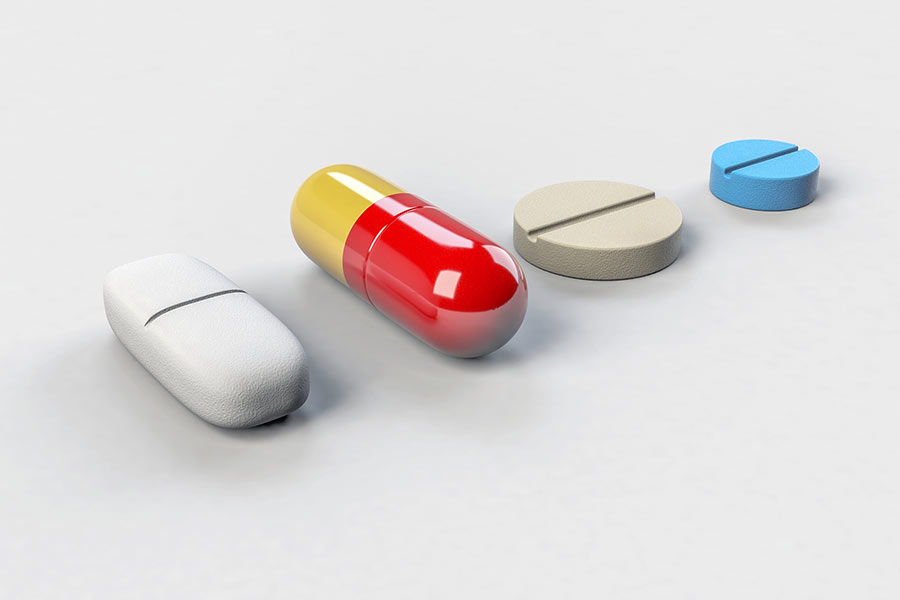
  • Even though it isn’t a common occurrence, pharmacies have been known to bottle and distribute counterfeit medication unwittingly. Due to a lack of awareness around this issue, 54% of Americans don’t check for authenticity before taking their prescriptions. This can lead to dangerous side-effects from cross-medication reactions. One way to stay safe is to read the label carefully. Typically, there will be a description of the pills’ shape, size, color, and markings on the label. Sometimes there are even pictures to help you better identify what you’re taking.
  • In a survey aimed at learning about the public’s comprehension of pharmaceutical labels, 35% of respondents said that they were confused by the dosage instructions. If you ever find yourself in this position, call your doctor and seek clarification before taking any medicine. Certain substances can be completely safe at a certain dose, yet quite dangerous at another.
  • For 34% of Americans, cutting a pill in half is exceedingly difficult. This has led many people to either skip a dose or take the whole pill instead. Depending on the medicine in question, either option could be a bad decision. If your prescription calls for the halving of pills, purchase a pill cutter to make it easier.

The best thing you can do to stay safe while taking doctor-prescribed medication, including opioids, is to keep in contact with your doctor. Having an open dialogue to ask questions, voice concerns, and seek guidance is an incredibly important resource. Likewise, if you notice anyone you know struggling with their prescription, don’t hesitate to help them in any way you can.

Other Medication Safety Strategies

Another option you have, especially when the situation calls for a prescription painkiller, is to talk with your doctor about non-opioid medication. A study suggests that higher doses of ibuprofen and acetaminophen (Tylenol and Asprin respectively) were significantly better at treating pain than oxycodone or Percocet. This flies in the face of conventional wisdom, but it holds true nonetheless.

Of course, prolonged use of acetaminophen can cause kidney disease and bleeding in the digestive tract, but that is the result of severe overuse. Also, since there’s little to none known addiction risk to non-steroidal anti-inflammatory drugs, the risks are minimal. No matter what medicine you are taking, you should always take it as directed.

The opioid epidemic rolls on, with too many Americans knowing too little about their prescriptions. The way forward is undoubtedly murky and filled with future tragedies, but if every person follows a plan that places safety first, we can make it through together. Opioids are a dangerous class of drug, one that has claimed many lives through overdose. Don’t let it be you.

If you have an addiction to prescription medication and need to talk to someone, call either your doctor or the Substance Abuse and Mental Health Service Administration’s national helpline: 1-800-662-4357

If you like this, subscribe here for more stories that Inspire The Future.

What it Means to Change For Good

Brands = Power, and brands like Seventh Generation are using theirs to bring about change for our planet and the lives of customers.

Hear how they rallied the necessary support of the nation to push toxic chemical reform through Congress, influencing a bright future for every company’s product development. Joey Bergstein of Unilever explains how 80,000 new chemicals have been introduced into the US marketplace since 1976 – the last year that chemicals legislation was put in place to regulate safety and human health. 

https://wisdomcapture.wistia.com/medias/johawichbq?embedType=async&videoFoam=true&videoWidth=640


Watch more Wisdom Capture videos here


0