Leaders on Purpose: How to Become One

What does a recent study by experts from Harvard, the London School of Economics and The World Bank reveal about Leadership for the 21st Century?

Today’s businesses operate amid a hot house of evolutionary pressures: collapsing industries, distrust of institutions, automation, artificial intelligence, rising inequality, climate change, and resource depletion. Not surprisingly, many leaders and organizations find it difficult to respond to this unprecedented degree of change. However, a small but growing number are exhibiting new leadership reflexes and organizational adaptations to ensure their business impact is conducive to life in the 21st century and beyond. We stand at a fork in the road. Over the next few years, both leaders and organizations will face two choices: rapidly evolve toward an equitable and sustainable relationship with our planet’s life support systems, or delay and face the wrath of angry citizens and alienated customers. 

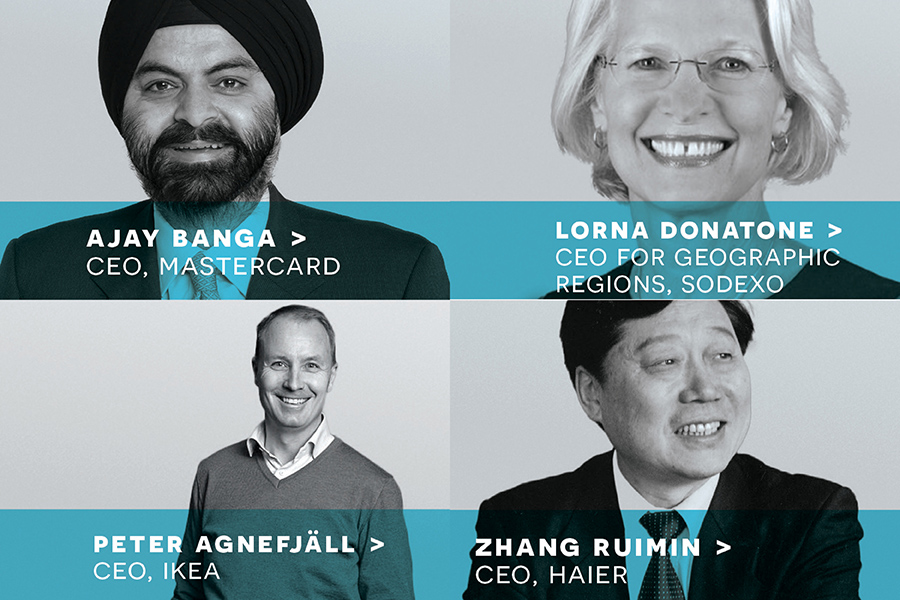
“The goal that I put out there – of 500 million people and 40 Million small merchants – I had no Idea how I’d get to 500 million people. Most people in my company thought I was crazy. Even I thought I was crazy. It’s amazing what’s possible once you put the target out there and let enough creative people at it. To date, we’ve reached more than 300 million individuals.” – Ajay Banga, CEO Mastercard

These leaders realize that, in an era of accelerating change, organizations need to innovate rapidly. After all, the choices businesses make today have the potential to either vastly improve the lives of future generations – or end them. There is no road map and the stakes have never been higher. So where do we go from here? Leaders on Purpose is a cross-sector international collaborative dedicated to recognizing, analyzing, and developing innovative leadership strategies related to the Sustainable Development Goals (SDGs). Combining expertise in the fields of business (Unilever), international organizations (World Bank), social impact (LSE) and sustainability leadership (Harvard), Leaders on Purpose have conducted a comprehensive and in-depth study of purpose-driven leadership. Here’s what they found.

The speed of socio-economic change is accelerating at an exponential rate. In the 1950s, the average time a company spent on the S&P500 was approximately 35 years. By 2027, experts predict this will have fallen to just 12 years. 50% of the companies listed today are expected to fall off the list within 10 years. Disruption is the new norm, and it is redefining the role of the CEO. Carlos Brito, the CEO of Anheuser-Busch InBev, highlighted: “The only reason we exist is because we are adding to the communities where we live, and because we are part of the solution… we have to think hard about how we can be part of a solution, and how can we be more active in issues that communities face. Then we become indispensible, and that’s what will guarantee that we will have a role to play.” The CEOs of the forward-thinking corporations interviewed for this report agree that the risks and opportunities arising every day as a result of increased global complexity need to be met with a new mindset as well as innovative collaborations. 

It is increasingly evident that achieving and sustaining corporate success is linked to a commitment to solving societal problems. Climate change, malnutrition, inequality of income and opportunity, pollution, and the lack of governance and institutional trust are just some of the pressing issues identified by CEOs as critical for their organizations to tackle as they make sense of their changing role in society. Furthermore, thanks to technological developments, it is now easier to make informed decisions about the trade-offs of various business decisions. As Grant Reid, the CEO of Mars, reflected: “I wish 5-to-10 years ago, I had some of the measurements on gender and climate that we have now – to help us understand the economics and the impact of our efforts better. The Stengel 50 ROI is much higher than the S&P 500. In hindsight, I would have had different measures, involved science more, talked more to external people when we were setting our original targets.”


“I think traditionally some big corporations tended to use a certain amount of their profits to reduce environmental pollution or they might try to minimize their pollution footprint by reducing energy consumption. Those are not permanent solutions to the problems. On the one hand, a manufacturer engages in production which pollutes the world, and on other hand, spends money to help solve the problem. We’re doing things differently. We’re trying to achieve a sharing of values, which means we connect to the community and work with them to achieve a sharing of benefits. To bring this together in a way that can benefit society.” – Zhang Ruimin, CEO Haier

In 2015, 193 countries committed to making the world more prosperous, resilient and sustainable by adopting the Sustainable Development Goals (SDGs). With this pledge, businesses accepted the responsibility and opportunity to play their part. The SDGs provide a common language and framework for business, government, and civil society to address the world’s most pressing challenges. They establish a shared understanding that makes sense of the challenges posed by global complexity. In this way, they assist companies in describing how they add value and communicate non-financial requirements and successes. For example, achieving the global goals can create US $12 trillion in opportunities around just four sectors: agriculture, cities, energy and materials, and health and wellbeing.

Furthermore, it can also generate an estimated 380 million jobs. Forward-thinking CEOs are aware of the opportunities the SDGs present, and 90% of those we spoke with have begun to align their strategies accordingly. According to Lorna Donatone, Sodexo’s CEO for Geographic Regions: “It’s about improving the quality of life of our employees and those that we serve. In our ‘Better Tomorrow 2025,’ we have nine commitments that we have made to align with the UN SDGs. They absolutely hit innovation and push us to act differently.” To fully benefit from the SDGs, businesses must embed them at the heart of their organizations. Many of the CEOs interviewed explained that linking the SDGs to their company’s core mission was important, and that supporting the national and local SDG goals gave them an opportunity to connect with the community at a deeper level and offered them a license to operate“Companies who can demonstrate a strong purpose are more successful. It takes the right leaders – today’s generation wants transparent, genuine leadership.”

“Companies who can demonstrate a strong purpose are more successful. It takes the right leaders – today’s generation wants transparent, genuine leadership.” – Lorna Donatone, CEO For Geographic Regions, Sodexo

At Mars, a set of “Five Principles” helps to guide the organization. Mars’ CEO Grant Reid told us: “It starts with the fact that this is in the very fabric of Mars… The ‘Five Principles’ is something we talk about every day. Every meeting we’re in, somebody will talk about, ‘Hey, what’s the decision we’re making, and how do the five principles guide that?’ We actually test that with our Associates every year through a survey. We ask them; ‘Do you feel you’re using the Five Principles?’ ‘Do you feel like Mars is working towards those?’ ‘Is your manager a leader using the principles?’ That gives us a very good gauge through our almost 100,000 associates to get a feel and vibe of how The Five Principles are working.”

Successful companies often find or rediscover their higher purpose in the legacy of their organization. John Fallon, CEO of Pearson, told us: “Pearson’s been in business for 180 years. It was in many very, very different industries, different sectors, before it came into education. But it always had a sense of this wider role in society. That’s the story we’ve always told about the company. My predecessor as CEO, Marjorie Scardino, would always say that profits are the byproduct of doing something useful in society, and that the profits sustain the company. They don’t define the company, and what defines the company is empowering people to progress through their lives through learning.”

One of the findings that emerged from the research is that transforming purpose into a “living state” requires two complementary ingredients: long-term perspective and adaptive strategy. The former relates to thinking ahead to ensure that actions taken today have a positive impact in the future. However, this is not enough – given that technology companies such as Google or Alibaba might disrupt any market at any given time, staying adaptive is crucial for companies across sectors. In the words of Haier’s CEO Zhang Ruimin: “

“You can, of course, give people a pay raise when they are being a good ambassador of your culture and values. Maybe, most importantly, you also promote based on values. You make sure that the best ambassadors are actually the ones that are getting bigger and bigger assignments as the company grows.” – Peter Agnefjall, CEO Ikea

We need to disrupt ourselves before we get disrupted.” In other words, successful 21st century leaders need to be both visionary and adaptive. This suggests a new business understanding: an adaptive mindset working in dialogue with long-term orientation at the highest level, within corporate strategy. While the North Star serves as a long-term aspirational goal, its achievement is tied to short-term markers of developmental progress, or “milestones.” Focusing on these allows stakeholders to respond to rapid changes, social contexts, and technological developments. 

Milestones also provide the benefits of immediate deadlines, trackable progress, and measurable results. IKEA’s CEO Peter Agnefjäll explained: “It starts with a vision. It continues with a plan to grow and develop IKEA towards 2020. We want to do it in a way that is people-and-planet-positive… That’s the way we work it through from
A to Z.”
The study found that successful companies define their milestones based on a rigorous context-assessment: What do people in this region care about? What is the political and economic landscape? What are the specific problems related to our core competencies?

This trend can be observed across industries. As AIG’s CEO Brian Duperreault told us: “A culture of collaboration and integrity is truly important. We are moving ahead toward a more decentralized structure, not moving back to a siloed structure – and that’s an important distinction. We want to be aggressive

but collegial, not competing against ourselves, but pulling together to solve problems like no other insurer can. At no time was this more evident than during all of the natural disasters last year. In Houston, Puerto Rico, Mexico, California, and other places, our employees were often heroic in their response to customers and communities, but also in how they were there for each other.”

Grant Reid, the CEO of Mars, shared some of the concerns driving this change: “What do we think can make the biggest difference? How can we use science to help? And how can we move quickly?” He then explained how addressing these questions is likely to transform his organization: “It will mean that there’ll be more failures, but we can’t give up progress waiting for perfection.”

Conclusion: A New Leadership Paradigm

Growth is fundamental to every business strategy, but not all growth is good. The world’s top CEOs are increasingly aware that the well-being of their organizations, of society, and of the entire planet are all intrinsically linked. In an era of increased political isolationism, these innovative leaders are thinking more expansively and collaboratively than ever. This begins with rejecting traditional performance metrics focused solely on the organization’s short-term financial performance. These CEOs view leadership as a process that is increasingly global, connected, and context-dependent.  Throughout the study, these leaders discussed the innovative strategies they employ to promote both responsible business growth and planetary well-being and through this process found new ways to unleash organizational potential and promote positive social change. To deliver on this, progressive senior leaders are engaging their workforces, supply chain partners, and sometimes, even competitors to find innovative solutions to complex issues. As organizations continue to reject short-termism and embrace the SDGs, creative tensions inevitably arise around the hard work of promoting ‘growth we can be proud of’ (Mars CEO Grant Reid).

The leaders in our study agree that the complexity of this endeavor should be addressed with non-traditional development strategies. Often this involves finding ways to fully deploy their organizations’ expertise by activating the potential of all employees. As Inditex CEO Pablo Isla states, “these challenges are not conceived as ‘external issues’ that could be dealt with through charity or donations, but should rather be addressed by every part of the company and throughout the whole value chain.” Former Novo-Nordisk CEO, Lars R. Sorensen elaborates on this idea, stating, “If the company doesn’t somehow try to reflect all of those developments into the way that we perform, and communicate, and interact, then we (Novo Nordisk) will not be successful at all in the future.”

The Leaders on Purpose research team found a consistent and encouraging correlation between economic success and a suite of new leadership approaches and strategies. CEOs embracing this new approach are finding that their organizations are finding significant rewards for their efforts ranging from increased revenues, improved resilience, heightened employee performance, and higher levels of trust across their broader stakeholder ecosystem.

This report was compiled by the co-founders of Leaders on Purpose: Christa Gyori, Harvard University; Dr. Christian Busch, London School of Economics; Leith Sharp, Harvard University;  Maya Brahmam, World Bank Group and Dr. Tatjana Kazakova, Chief of Strategy, Leaders on Purpose. 

Leaders on Purpose is where leaders, experts and top innovators across sectors turn ideas into action for a more just and sustainable world. Founded by experts & practitioners from Harvard University, The World Bank, The London School of Economics and MIT, Leaders on Purpose celebrates purpose-driven leadership – the kind of leadership that embodies the wisdom, agility and conviction to manage a growing population on a planet with finite resources.

www.leadersonpurpose.com

Pakistan Bets on ‘Tree Tsunami’ to Revive Climate Action

Pakistan is showing fresh interest in tackling climate change under new leader Imran Khan, after a period of favoring coal.

At this month’s U.N. climate talks in Poland, Pakistan promised to move away from coal investment and ensure climate-resilient growth. This was a departure from the previous government’s preference for fossil fuel energy, and in line with the “green political will” of new Prime Minister Imran Khan, according to his climate change advisor Malik Amin Aslam.

At the COP24 negotiations, Pakistan also became one of the first developing countries to commit to reviewing its Nationally Determined Contribution (NDC) to global climate action before the Paris Agreement starts in 2020. Announcing this at the talks, Aslam, head of Pakistan’s delegation, said the revised NDC would include measures the new government had initiated, which will strengthen Pakistan’s efforts to reduce planet-warming emissions.

Its programmes include the “Billion Tree Tsunami Afforestation Project” that was designed by Aslam and first implemented in Khyber Pakhtunkhwa province. Now the federal government under Khan, who took office in August, has launched a nationwide 10 Billion Tree Tsunami project.

Aslam said Pakistan’s willingness to “develop along a different pathway and become an enabler of the new transition economy” was demonstrated by the $120 million it has spent on planting and protecting trees so farIt plans to use a further $1 billion of its domestic resources to expand forests over the next five years.

Aslam said the current government is also committed to capitalising on Pakistan’s large potential for wind, solar and hydropower, as well as utilising nuclear energy. “More than 365 small run-of-the-river hydro projects have been set up in the north,” he said in his speech at COP24. “In the transport sector, with catalytic Green Climate Fund financing, Pakistan has finalised a multi-million-dollar zero emission bus metro system for the city of Karachi operating on cattle waste-generated biogas,” he added.

COAL NO LONGER KING?

Environmentalists had criticised the weak NDC document Pakistan initially submitted under the Paris Agreement. It projected a four-fold increase in emissions by 2030, noting the rise could be reduced but only with international assistance. Hammad Naqi Khan, director general of WWF-Pakistan, said the NDC reflected the desire of the previous government to explore the potential of coal as an energy resource.

Under Khan’s predecessor Nawaz Sharif, the government announced half a dozen coal power plants that are under currently construction. Two – at Sahiwal and Port Qasim with generation capacity of about 1.3 gigawatts each – are now operational, using imported coal.

While the new government cannot undo the coal power plants being built or already up and running, Aslam said the government would continue “strict monitoring” of their environmental impacts. It is also working to revoke a “criminal cap” on the amount of renewable power provinces can feed into the grid (50 megawatts each), which he said was aimed at boosting the use of coal and gas.

“We are in the process of removing this unholy subsidisation of coal and will be definitely focusing on renewables – wind, solar and hydro,” Aslam told the Thomson Reuters Foundation at the climate talks.

WWF’s Naqi Khan welcomed the news from COP24, noting that Pakistan’s previous NDC had lacked an ambitious plan to bring more renewables into the energy mix, as well as a solid commitment to avoid fossil fuel power plants.

A new report released by the Institute for Energy Economics and Financial Analysis this December noted that renewable energy, including wind and solar, is now the cheapest form of new electricity generation in Pakistan.

BACK IN THE GAME

Pakistan may have sent a small delegation to COP24, but the negotiators were able to highlight the country’s vulnerability to climate change and engage more effectively with the global process, observers said. Pakistan was elected Vice President and Rapporteur of the Conference of Parties (COP) to the UNFCCC, giving it a key role in the organisation of the talks in 2019. It also secured seats on five other technical bodies to regulate climate action and financial flows.

Pakistan’s re-engagement with the climate change negotiations comes after several years of being sidelined, said Shafqat Kakakhel, board chair of the Sustainable Development Policy Institute in Islamabad. “It was a Pakistani negotiator, Ambassador Jamsheed Marker, who was responsible for putting the F for Framework into the United Nations Framework Convention on Climate Change, and Pakistan was always known for its principled stance. But since 2012, Pakistan has not been a significant player at these negotiations due to the absence of skilled negotiators,” he told the Thomson Reuters Foundation.

That situation seems to have been reversed with a revitalised delegation led by Aslam, who is also global vice president of the International Union for the Conservation of Nature. According to Aisha Khan, head of Pakistan’s Civil Society Coalition for Climate Change, “Aslam’s understanding of the subject gives him an edge and the ability to represent Pakistan’s case convincingly.”

With Pakistan now forced to cope with worsening floods, droughts, heatwaves and melting glaciers, Aslam said the new government is working on a shift towards climate-resilient agriculture, plus an initiative to utilise the Indus River floodwaters for ecosystem restoration. “I must emphasis that these actions and initiatives go much beyond our NDC and are happening in spite of the expected external financial flows not materialising,” he said in his speech at the climate talks.

In its original NDC, Pakistan said it could lower its projected greenhouse gas emissions by up to 20 percent in 2030 if it received international climate finance of around $40 billion. Now it says it will revise the figures in its NDC once it has calculated all the emissions to be saved from its new green projects. “Pakistan must take action on the ground for the sake of its own people,” Aslam said.

By Rina Saeed Khan

Rod Stewart Turns Into a Singing Turtle To Promote Clean Oceans

SodaStream International has unveiled a video campaign that focuses on the global damage caused by single-use plastic bottles. The video features a singing sea turtle calling on people to take responsibility and make the simple and meaningful life change of going reusable.

The video acts as a metaphor for the green hills and blue oceans that have, over the years, become littered by plastic waste. The viral campaign garnered 20 million views in its first 48 hours.

“Plastic has become a pandemic threat with its impact upon human health still unknown, but with devastating environmental consequences to our oceans and marine life,” said Daniel Birnbaum. “In this campaign, we wanted to give a voice to marine animals and, together with them, encourage people and corporations to switch from single-use plastic to reusable packaging.”

https://www.youtube.com/watch?v=Tejd7ntLGeE&feature=youtu.be

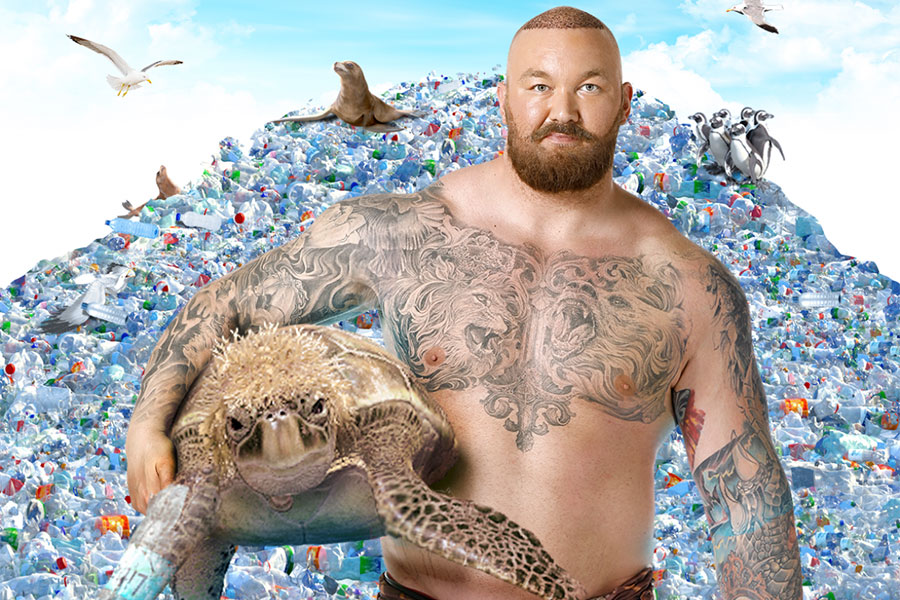
Lead by Sir Rod Stewart as the sea turtle, recurrent celebrity Thor “The Mountain” Bjornsson, rising talent Sarah Catherine Hook, a choir of people and marine animals injured by plastic parts sing extract from “Ocean of Change”, song written for SodaStream for this campaign.

A tear of sorrow

Tears of hope

An ocean of regret

I never meant to hurt you so

It is not over yet

We can still make this right again

We can still save ourselves

Oceans are the springs of life

They’re crying S.O.S

Now it is the time for a change it’s in our hands Now it is the time for a change it’s in our hands


Will piles of trash and poisoned seas

be our legacy? 

Our kids deserve much more than that

A world – pollution free

We can still make this right again

We can still save ourselves

Oceans are the springs of life

They’re crying S.O.S

Now it is the time for a change it’s in our hands Now it is the time for a change it’s in our hands

“I have a great love for our oceans and marine life and was happy to lend my voice and support to this campaign,” commented Sir Rod Stewart. “If it helps raise awareness and effect simple changes like switching to reusable bottles then I’m honored to be a part of it.” 

The video has been launched in tandem with the website www.FightPlastic.com, where SodaStream encourages consumers to take a stand against single-use plastic.

“While one reusable SodaStream bottle can save thousands of single-use plastic bottles, the world needs to change more than just its drinking habits to combat the global pollution hazard. We should all do our best to shift away from single-use plastic including straws, cups, bags and bottles,” continued Birnbaum. “SodaStream hopes that this campaign will encourage many to make the change. It’s in our hands.”


How to be an Effective Entrepreneurial Leader

An important aspect of entrepreneurship is leadership. Regardless of an entrepreneur’s role as the driving force of a company, they eventually need to incorporate others to help grow and drive their vision.

Effective leadership is more than just providing motivation for employees to carry out the vision of the company; it also involves working on one’s own personal growth and soft skills.

Being a leader requires looking internally as well as outwardly for solutions. Brandon Frere, entrepreneur and CEO of Frere Enterprises and several successful companies, values the importance of consistently reevaluating and refining leadership skills in order to continue moving a venture forward on the path of success.

“One way I work on my leadership skills is through reading,” said Frere. “I’m particularly drawn to authors who inspire me to look within and pay attention to my mindset, like Eckhart Tolle.”

An important part of being an effective leader is the ability to know oneself. Knowing what is meaningful and purposeful will help direct the focus of energy within a business and make it more valuable to the industry and the community. Having not only a vision but also the ability to articulate it is important.

This vision will inspire employees and management to work together for a common goal and increase the commitment they feel toward it. An effective entrepreneurial leader is also very devoted to their employees; they encourage them to grow and continue to develop their skills for the betterment of themselves and the company.

Listening skills are also crucial to being an effective leader. Listening to mentors, management staff, employees and customers can make or break a business. Those who are at the front lines of operations can be key in determining what works and what doesn’t, as well as potential solutions. Having a mindset that embraces a constantly evolving company ensures success and keeps a company agile. Being flexible in one’s mindset allows them to be open to new opportunities that could greatly enhance the success of the business.

“It’s important as a leader to stay curious and be open to new ideas,” said Frere. “Never stop learning, never stop growing.”

Brandon Frere is an entrepreneur and businessman who lives in Sonoma County, California. www.BrandonFrere.com


A View of Innovation – Smart Glass

Sometimes the opportunity for innovation is in plain sight. Have you ever considered how much is spent in real estate to feature picture-perfect views and install crystal-clear glass windows – only to have occupants miss those amazing views due to the heat and glare that also comes through?

Window coverings are purchased at an additional cost due to the discomfort of the individuals inside and the well-intended benefits are lost. Look around any major city, and you’ll notice that roughly two-thirds of building windows are permanently covered with blinds or shades. It defeats the whole idea of using windows in the first place. What if there was a better way?

If you like this, subscribe here for more stories that Inspire The Future.

After all, it hasn’t always been like this. For most of history, humans have lived in harmony with the outdoors; remember, we are originally an outdoor species. But over the course of history, we’ve found a way to create our own shelters, as a way of separating us from the elements and to protect ourselves. First came walls, doors, roofs and floors. Then we discovered that melting sand could make sheets of glass – a solid material you could see through. Windows were not always accessible to everyone in the early days and were indeed a source of luxury and pride for those who could afford them.

Now a staple of modern architecture, glass has kept some of its magical allure – creating a barrier to the outside world, yet still inviting in the views and natural light to lighten even the darkest of rooms. Recently, we’ve seen bigger and clearer windows appearing as the demand increases for a better connection to the outdoors. But this, “Also creates issues in terms of heat and glare – the building gets inefficient … and people are uncomfortable thermally and visually and then you are using blinds and shades to control the light,” says Dr. Rao Mulpuri, CEO of View, Inc. and a member of YPO.

My colleagues wake up each day believing in something that no one else believes yet. This common purpose and mission is what binds us together and enables us to create real change. 

Based in Silicon Valley, View manufactures a new generation of smart windows that let in natural light and views and enhance mental and physical wellbeing. View’s customers include Century Link, Overstock, FedEx, WeWork, Facebook, Hewlett Packard Enterprise, Regeneron and Kaiser Permanente across 35 million square feet of buildings space with another 35 million in progress. The company has also made great progress bringing smart windows to airports with installations at San Francisco International Airport, Boston Logan International Airport, Seattle-Tacoma International Airport and Charlotte Douglas International Airport. And in June 2018, Dallas Fort Worth International Airport announced they had awarded a contract to View to install smart windows in all DFW’s passenger terminals.

https://www.youtube.com/watch?v=B1ZI80-_feU

“While dynamically changing glass technology, that adjusts itself to light and heat is already 50 years old, it never managed to move past small applications, such as transition sunglasses, car rear-view mirrors, and some airplanes. Up until ten years ago, when View stepped in, it was an elusive technology that didn’t lend itself to large-scale use in real estate. We have developed a self-tinting smart window, powered by a sophisticated intelligence engine that responds intuitively to outside conditions, day or night,” says Mulpuri.

“Someday, every window will be smart,” muses Mulpuri. “Today, every communication device is mobile, yet landlines ruled only a short few years ago. Likewise, there’s no reason to install windows and then cover them up to the detriment of the occupants’ health and wellness.” The company has yet to come across a customer who says, “I love my blinds”.

The real estate industry is the largest in the world, to the tune of $10 trillion globally, but surprisingly, it’s also the slowest moving – partly due to risk aversion found within its ranks. Mulpuri recognized that technology advancement was the biggest disruptor of the past 100 years and wondered why real estate construction was lagging so far behind. The 21st century is not kind to slow-moving industries – think video stores, camera film and cellphones with keyboards. Mulpuri believes View’s mission is to not only make the simple window better, but to also transform the entire real estate industry. One of Mulpuri’s mentors and friends, Fred Smith, the CEO of FedEx, is keen on reminding his employees, “If you don’t like change, you will hate extinction.”

View currently holds more than 700 patents after ten years of development and an investment of around $1 billion – a hefty price-tag for staying true to their dream of developing technology that will enable smart glass to work at scale.

Aside from eliminating the need for blinds and reducing a building’s energy costs, Mulpuri is most excited about the substantial health benefits View’s windows bring to occupants. A recent HBR article  revealed natural light is the #1 office perk, and supports a research study by Cornell University Professor Dr. Alan Hedge who found optimization of natural light in an office significantly improves health and wellness among workers. In fact, this research revealed that workers in View Dynamic Glass office environments reported a 51% drop in eyestrain, a 63% drop in headaches and a 56% reduction in drowsiness.

Like most disruptive companies, success is usually a combination of great product and fearless, big thinking. Considering the advice he would give young leaders, Mulpuri believes that picking things that really mattered would be paramount. “Work on something game- changing, because then the journey becomes worth it. You’ll attract great talent and like-minded people and that powerful combination of talent, commitment, and upward spiral of creating something new will make it worthwhile. My biggest advice? Attempt bigger.” 

www.viewglass.com

If you like this, subscribe here for more stories that Inspire The Future.

Preventing Sexual Misconduct: A Leaders Guide

[et_pb_section bb_built=”1″][et_pb_row][et_pb_column type=”4_4″][et_pb_text _builder_version=”3.17.4″]

Since the New Yorker exposed the longstanding sexual predation by Harvey Weinstein in October 2017, headlines of other sexual harassment cases proliferated and public response has been emotionally charged, with demands for far-reaching reforms.

As leaders of their own organization and advisors to their clients, The River Group, a CEO advisory company, decided to publish a white paper around  their perspective on this social and organizational imperative. By sharing their thoughts, they hope to invite other companies and leaders to a meaningful and constructive conversation about this topic.

If you like this, subscribe here for more stories that Inspire The Future.

Any organization’s culture – built on accepted behaviors and practices – is mostly created by its leaders. Therefore, if sexual misconduct exists in the organization, it has been tolerated by – perhaps even started by – leadership. The authors wrote from their experience of working with leaders and shared their insights on the power of their role. This paper contends that allowing sexual misconduct in the workplace is a failure of leadership. Why? Because leaders hold a moral obligation to do the right thing. In this paper, they explore the definition of sexual misconduct, address the moral imperative of leadership, and provide suggestions on how to respond to an onset of sexual misconduct cases at work.

Leaders need a moral compass because they have a moral obligation to do the right thing – to do good. It’s part of the essence of leadership. Download the full report below:

[/et_pb_text][et_pb_button _builder_version=”3.17.4″ button_text=”DOWNLOAD” url_new_window=”on” button_url=”https://old.real-leaders.com/wp-content/uploads/2018/11/Sexual-Misconduct_TheRiverGroup.pdf” button_alignment=”center” custom_button=”on” button_bg_color=”#ffffff” button_border_color=”#e02b20″ button_font=”|700|||||||” button_text_color=”#e02b20″ button_border_width=”3″ /][et_pb_image _builder_version=”3.17.4″ /][/et_pb_column][/et_pb_row][/et_pb_section]

Barcelona to The Eiffel Tower For $50 on Methane

What is the fuel cost to drive from Barcelona to ParisAntonio Calvo, Head of Sustainable Mobility at Spanish car manufacturer SEAT, gets behind the wheel of a SEAT Leon 1.5 TGI to take on the more than 620 mile drive and calculate how much it costs to get there.

The catch? Calvo is attempting the trip in a gas powered car to evaluate consumption and cost. Compressed natural gas (CNG) is methane stored at high pressure and a fuel which can be used in place of gasoline, diesel fuel and propane/LPG. CNG costs about 50% less than gasoline and emits up to 90% fewer emissions than gasoline. The following log details the trip in a gas powered car to the French capital:

Starting point, the Sagrada Familia in Barcelona: Antonio Calvo sets off first thing in the morning from the steps of Antoni Gaudí’s basilica with a full tank of gas. Just a few miles into the challenge, the expert verifies that, “When you drive this kind of vehicle, the feeling is exactly the same as with a petrol car. You don’t feel any difference in the dynamic performance or power.”

– Barcelona-Toulouse, for $17: Antonio Calvo crosses the border with France and covers a distance of over 250 miles without stopping, at an average speed of 75 mph. He makes his first stop to refuel when leaving the city of Toulouse. While filling the tank, he comments that, “The process is very simple, as the universal nozzle enables you to refuel as usual at any gas station.” So far, he has spent $17 and has about 420 miles to go until reaching his final destination.

Next stop, Limoges: While driving through the French countryside, the driving expert points out that, “Driving a car powered with natural gas reduces CO2 emissions by 25% compared to a petrol car and nitrogen oxides by 75% compared to a diesel.” Calvo arrives in Limoges, where he stops again to refuel: “I’ve now covered 425 miles and spent $28 on about 53 pounds of gas,” he says. For the challenge, he has to cover the entire distance with this alternative fuel. The car drives on compressed natural gas by default, even though it also has a petrol tank, which only switches over when the compressed natural gas is depleted.

Last 243 miles to the City of Light: Calvo starts out on the last leg of his trip, and when he arrives at the city limits of Paris he faces the real possibility of being restricted from entering the city centre during episodes of air pollution. With a population of more than two million people, he recalls that this city, “Is putting more and more restrictions on the most polluting cars. But because I’m driving this CNG car I can get in without any problems, even if there happened to be traffic restrictions today from high pollution levels. Mobility using vehicular natural gas is considered by the EU as environmentally efficient due to its low emissions.”

Challenge accomplished at the foot of the Eiffel Tower: Upon arrival at the Champs-Élysées, the head of Sustainable Mobility makes his final assessment of the trip: “I covered a total distance of 670 miles and spent only $50, which amounts to an average of 8 pounds of gas for every 62 miles. The cost savings is certainly one of the many advantages of CNG. In fact, if I had made the same trip with a petrol powered car it would have cost me 50% more; and 30% more if it had been a diesel,” he concludes. Compressed natural gas cars are a growing trend, with more than 1.3 million CNG vehicles to be found on European roads, mostly in Italy.


World’s Largest Collection of Celebrity Mental Health Stories Aims to Heal

Supportiv, a support network that matches users with peers for anonymous, real-time chats on any mental wellness topic – from everyday life struggles, anxiety, stress and relationship or work conflicts to grief and loneliness – has launched the world’s largest collection of celebrity mental health stories at on their website.

“We typically see only bits and pieces of celebrities’ lives, the moments when they are the most polished, or the most charismatic,” says Supportiv Co-Founder Helena Plater-Zyberk. “There is a public presumption of invincibility which overshadows reality. It’s human to struggle, or to feel lonely or anxious. We applaud those who have revealed their raw moments.”

If you like this, subscribe here for more stories that Inspire The Future.

Supportiv announced its public beta in June 2018 and has already helped over 53,000 users feel less stressed, lonely, angry, sad, anxious, and depressed. It’s also available on the App Store and Google Play.

Featured celebrities include musicians, actors and athletes: 
·     Barrett Robbins 
·     Brandon Brooks 
·     Brandon Marshall 
·     Chrissy Tiegen 
·     Courtney Cox 
·     Demi Lovato 
·     Emily Maynard Johnson 
·     Hayden Panettiere 
·     Jay-Z 
·     Kanye West 
·     Kid Cudi 
·     Lady Gaga 
·     Lane Johnson 
·     Larry Johnson 
·     Lisa Rinna 
·     Logic 
·     Mariah Carey 
·     Michelle Williams 
·     Nicki Minaj 
·     Ryan Reynolds 
·     Scott Stapp

In the coming weeks many more celebrities and public figure will be added: 
·     Comedians 
·     Teen stars 
·     Premier League soccer stars 
·     National Basketball Association – NBA athletes 
·     Major League Baseball – MLB athletes

“By talking about their experiences, celebrities are de-stigmatizing not only serious mental health issues but also the vulnerabilities of everyday life. They are sending a hopeful message that if you are struggling, you are not alone! And if you express it, it might help you find your healing path,” says Supportiv Co-Founder Pouria Mojabi.

Supportiv invites celebrities of any background who’d be interested in sharing their stories to contact them at info@supportiv.com 

If you like this, subscribe here for more stories that Inspire The Future.

Stop Eating Our Wildlife And Trading Them as Pets

The International NGO founded by Dr. Jane Goodall has launched a campaign to raise awareness around the urgency to protect species from trafficking. 

With the imminent publication of Horizon Scan, a ground-breaking report that, for the first time, identifies and prioritizes the most urgent issues fueling wildlife trafficking, and as delegates gather for the Illegal Wildlife Trade Conference in London, UK, the Jane Goodall Institute (JGI) has announced the launch of the ForeverWild campaign to help end trafficking of endangered species, many on the brink of extinction.

If you like this, subscribe here for more stories that Inspire The Future.

“Without a concerted global effort to stop trafficking, primates and other wildlife will be gone for good,” says Dr. Goodall, a world-renowned primatologist and ethologist. “My hope is that we can work together and end one of the most dangerous threats to the survival of chimpanzees, elephants, rhinos, and many other animals for whom, like us, this planet is their only home.”

JGI’s Zara Bending, a legal expert in wildlife trafficking, is a contributor to both Horizon Scan and JGI Australia’s campaign to end the domestic trade in ivory and rhino horn. “Wildlife trafficking is a global problem that demands a global response,” she says. “There are actions everyone can take to turn the tide and put an end to the illegal wildlife trade. It starts with becoming informed and advocating for better law enforcement while eliminating demand for trafficked animals and animal parts.”

According to the most up-to-date analysis, as reported in Horizon Scan, emerging issues to watch closely range from rapid growth in urbanization in many African countries to increasingly active trading in endangered species through online platforms.

The ongoing migration of rural populations to urban centers has caused demand for bushmeat (wild animals including endangered chimpanzees sold as meat) to spike. At the same time, monitoring the global online sales of exotic pets and animal parts poses new challenges which must be addressed.

JGI is pushing back against wildlife crime on several fronts and has contributed to the development of new facial recognition software to counter online marketing of great apes. The institute also operates one of Africa’s largest chimpanzee sanctuaries where 138 rescued chimpanzees are protected and cared for under conditions that most closely mimic a natural life in the wild.

Providing sanctuary for chimpanzees that have been victims of trafficking is pivotal to ending the practice. Enforcement agencies can only be effective if there is a safe place to bring confiscated animals. Simultaneously, JGI is actively collaborating with local communities to educate people on how and why to protect great apes from the threat of illegal trade.

Through the ForeverWild (#4EverWild) campaign, the Jane Goodall Institute aims to raise awareness of the urgency with which we must end wildlife crime. In addition to JGI’s multiple approaches to stopping trafficking of chimpanzees, local JGI chapters around the world are engaged in efforts to save region-specific wildlife by reducing demand for exotic pets and animal parts, changing government policies, and public engagement activities.

Patrick van Veen, Chair of JGI Global, says: “The Jane Goodall Institute is in a unique position in that we can use our world-wide network to fight illegal trade of great apes and other wildlife in many places and in many ways whether it’s reducing demand or supporting sustainable alternatives for income generation. If we come together we can still secure a future where wild animals can live safely in the wild.”

If you like this, subscribe here for more stories that Inspire The Future.


SodaStream Builds Massive Device to Collect Ocean Plastic

SodaStream CEO Daniel Birnbaum has led 300 executives from around the world, local youth and environmental NGOs to clean the Caribbean Sea and the shores of Roatán island in the Honduras. 

SodaStream International has launched the “Holy Turtle” – a massive ocean contraption designed to clean plastic waste from open waters. The innovative device will be initially piloted in the Caribbean Sea, off the coast of Roatán, Honduras, as part of a bold ocean clean-up lead by CEO Daniel Birnbaum

This is the first-known attempt of a commercial company to undertake a physical clean-up of trash from open waters. SodaStream’s clean-up delegation includes 150 SodaStream executives from 45 countries, international environmental specialists, NGO Plastic Soup Foundation and hundreds of children from 7 different local schools with local Honduran government officials.

If you like this, subscribe here for more stories that Inspire The Future.

The “Holy Turtle” is a 1,000 ft. long floating unit designed to be gently towed by two marine vessels along kilometers of open waters. The contraption is uniquely engineered to capture floating waste while its large vent holes act to protect wildlife. The device design was inspired by oil spill containment systems and was developed by ABBCO in Florida, USA, who are leading experts in oil spill containment.

SodaStream’s Roatán initiative was inspired by a video filmed by Caroline Powers in October 2017 featured on BBC highlighting underwater photography of a floating trash patch off the Caribbean coast of Roatán. Moved by the disturbing video, SodaStream CEO, Daniel Birnbaum, himself an experienced skipper and naval officer, lead a search for a solution to clean up this floating waste. Birnbaum noted, “We can’t clean up all the plastic waste on the planet, but we each need to do whatever we can. The most important thing is to commit ourselves to stop using single-use plastic.”

The plastic pollution collected by the “Holy Turtle” will be used to create an exhibition to raise awareness and educate consumers around the world toward reducing consumption of single use plastic in all forms including plastic cups, straws, bags and bottles.

“More than 8 million tons of plastic goes into the ocean every year. This plastic doesn’t disappear. It breaks up into tiny particles, floats in the ocean, endangers marine life and ends up in our food chain,” said Birnbaum. “We must all put our hands together to reduce the use of single-use plastic and commit ourselves to changing our habits and go reusable. It’s in our hands.”

If you like this, subscribe here for more stories that Inspire The Future.

0