Why Everyone Needs Forums In Their Workplace

[et_pb_section fb_built=”1″ _builder_version=”3.22″ border_radii=”on|2px|2px|2px|2px” border_width_all=”2px” border_color_all=”#E02B20″][et_pb_row _builder_version=”3.25″ background_size=”initial” background_position=”top_left” background_repeat=”repeat”][et_pb_column type=”4_4″ _builder_version=”3.25″ custom_padding=”|||” custom_padding__hover=”|||”][et_pb_video src=”https://www.youtube.com/watch?v=p3l1IutC0iA&t=10s” image_src=”https://old.real-leaders.com/wp-content/uploads/2019/02/F@WThumbnail.png” _builder_version=”3.19.14″ max_width=”60%” module_alignment=”center”][/et_pb_video][/et_pb_column][/et_pb_row][/et_pb_section][et_pb_section fb_built=”1″ _builder_version=”3.22″ border_radii=”on|2px|2px|2px|2px” border_width_all=”2px” border_color_all=”#E02B20″][et_pb_row _builder_version=”3.25″ column_structure=”1_2,1_2″][et_pb_column type=”1_2″ _builder_version=”3.25″ custom_padding=”|||” custom_padding__hover=”|||”][et_pb_blurb use_icon=”on” _builder_version=”3.19.14″]

By 2020 an estimated 50% of the US workforce will work remotely. While millennials are increasingly yearning work-life balance, managers are witnessing first-hand the struggle of alignment, productivity, and lack of in-person leadership.

Ahad Ghadimi, CEO of Forums@Work might just have the remedy, “Forums@Work are company-peer groups who meet regularly in an open, honest, candid and safe setting with the purpose of becoming better leaders,” Ghadimi told Real Leaders magazine earlier this month.

Bringing forums to the workplace has already made an impact on Contegix and their CEO, David Turner. In the video above, Turner giddily explains the impact Ghadimi’s once-a-week peer group meetings have had on his remote workforce, “I’ve heard words like, ‘this has been the best thing in my career,’ ‘I’m honored to be a part of this,’ ‘it’s made such a difference in my home-life,’ you just don’t hear things like that from other leadership programs,” Turner revealed.

There is no way to undersell the value of leadership and its importance in any setting. When we asked Turner about his return on investment, he promptly stated, “there’s no better value, period, full-stop than creating forums within the workplace.”

Witness the impact of forums in your workplace and visit the website or email Forums@Work CEO, Ahad Ghadimi!

[/et_pb_blurb][/et_pb_column][et_pb_column type=”1_2″ _builder_version=”3.25″ custom_padding=”|||” custom_padding__hover=”|||”][et_pb_cta title=” I’d like to learn about the leadership culture program!” button_url=”https://goo.gl/2NuA3d” button_text=”Visit Forums@Work” _builder_version=”3.19.15″ header_font=”Times New Roman|700||on|||||” header_font_size=”30px” body_font=”||||||||” custom_button=”on” button_text_size=”26px” button_text_color=”#000000″ button_bg_color=”#ffffff” button_border_width=”5px” button_font=”||||||||”][/et_pb_cta][/et_pb_column][/et_pb_row][/et_pb_section]

My Journey Toward 100% Impact Investing

Eric Jacobsen, the serial entrepreneur and co-founder of private equity firm Dolphin Capital and impact investment platform Gratitude Railroad, spends his workdays at what he calls “the intersection of compassion and capitalism.”

“We work to create financial returns by solving the world’s problems,” Jacobsen says of his two companies. “Capitalism is an organism that changes and grows over time. Entities are realizing that caring about environmental, social and governance (ESG) criteria is better for the bottom line. We work to be ahead of that trend.” This viewpoint has worked well for Jacobsen. Dolphin Capital and Gratitude Road are thriving by investing in innovative businesses that Jacobsen and his partners can believe in.

But as great as Jacobsen feels about the impact of his work, his own personal and charitable investments weren’t always aligned with his beliefs. “I was spending my work time thinking about impact investing,” Jacobsen says, “but I wasn’t doing it personally. I never thought about how the assets in my portfolio could be doing something more meaningful.”

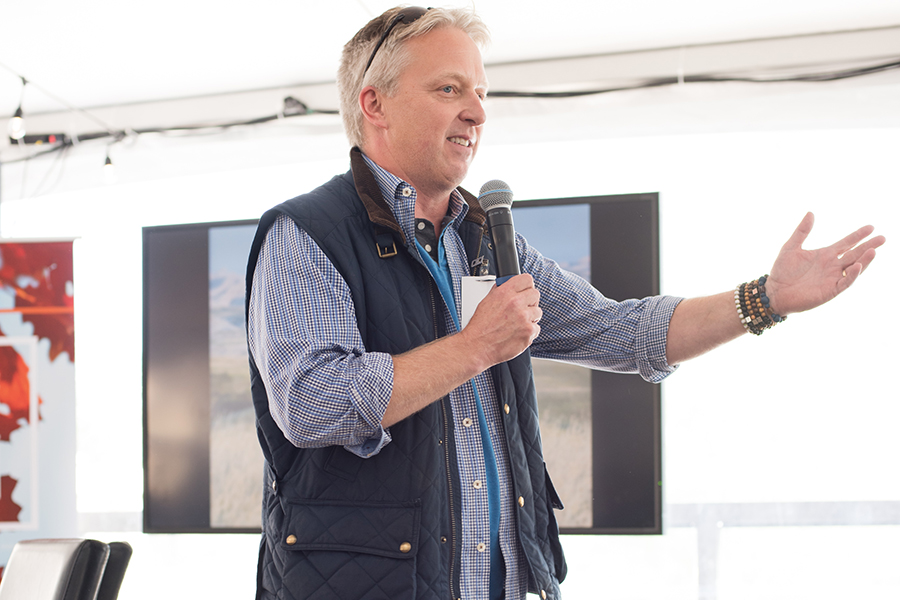
His discomfort with that misalignment kick-started his journey to 100% impact in his personal investments. “If I was going to do this, I needed to go all in,” he explains. This realization led Jacobsen to Toniic’s 100% Impact Network, where he met Brent Kessel of Abacus Wealth Partners (pictured above) at a gathering.

“I was there to share my own portfolio deep dive,” Kessel explains. “I described the progress I’d made towards having 100% of my assets dedicated to social and environmental impact as well as commercial financial returns. Eric was at the time interviewing firms to potentially take over the management of his personal and charitable assets. He was impressed by what I had been able to do personally, and hired Abacus to help him reach his 100% impact goal.”

Abacus has a long history of seeking both positive impact and profitability, and it has proved to be a great fit for Jacobsen. As far back as the early 1990s, the firm offered two to three socially responsible funds that also met Abacus’ standard for financial returns. Over the years, Abacus added more socially responsible funds that clients could opt into. But in 2008, the firm changed its strategy. “At that point, impact investing stopped being an opt-in and became the only thing we offered,” Kessel says. “Our clients have learned that they can have impact and financial returns at the same time, because doing well and doing good isn’t a cliché – it’s extremely doable, as proven by our tripling in size to over $2 billion under management in the past decade.”

Positive impact and positive returns are not the only benefits that Jacobsen has enjoyed in his partnership with Abacus. Going to 100% impact has also changed his relationship with his investments. “I never used to care much about the quarterly rebalancing of my portfolio,” he says. “Now I’m very active in my asset allocation because I’m thinking about how I can use my portfolio to empower women and girls, provide clean air and water, or stem global warming.”

Brent Kessel, Eric Jacobsen’s impact wealth advisor.


While these kinds of decisions may be harder than simply looking for the best returns, Jacobsen also finds them much more interesting. “The more we look at the world, the better off our investments are,” he says. That’s because investors can feel good that their money is creating both meaning and financial growth.

How much financial growth? As Kessel explains, impact investing may not always earn higher returns than traditional investing, but he advises clients not to expect lower returns either. Jacobsen believes that this is an important equilibrium to keep: both too much attention to values at the expense of profit and too much attention to profit at the expense of values are detrimental ways to do business.

“Heart and profit should have an equal balance, like yin and yang,” Jacobsen says. “Both are necessary for an institution’s success – and for humanity’s success.”

Jacobsen also makes it clear that shifting to 100% impact does not have to be an overnight change. “We all matter in the impact space. It’s like standing on the ground floor of a skyscraper looking up,” he explains. “Just take the first step. Choose to dine at the minority-owned local restaurant. Sell your tobacco stock. Invest in a company whose mission you believe in. The journey to 100% impact begins by understanding that every dollar you touch has an impact. Does it have the impact you want?”


CEO Confidence in Growth Dips But It’s Not All Gloom

What a difference a year makes. Nearly 30% of business leaders believe that global economic growth will decline in the next 12 months, approximately six times the level of 5% last year – a record jump in pessimism.
 
This is one of the key findings of PwC’s 22nd annual survey of 1,300 plus CEOs around the world, that was launched last month at the World Economic Forum Annual Meeting in Davos. This is in vivid contrast to last year’s record jump, 29% to 57%, in optimism about global economic growth prospects.
 
Although, all is not doom and gloom: 42% still see an improved economic outlook, though this is down significantly from a high of 57% in 2018. Overall, CEOs’ views on global economic growth are more polarized this year but trending downward.  The most pronounced shift was among CEOs in North America, where optimism dropped from 63% in 2018 to 37% likely due to fading of fiscal stimulus and emerging trade tensions. The Middle East also saw a big drop from 52% to 28% due to increased regional economic uncertainty.      
 
The drop in CEO optimism has also impacted growth plans beyond their own country borders. The US narrowly retains its position as the top market for growth at 27%, down significantly from 46% in 2018. The second most attractive market, China, also saw its popularity fall to 24%, down from 33% in 2018. Overall, India is the rising star on the list this year, recently surpassing China as the fastest growing large economy.
 
“CEOs’ views of the global economy mirror the major economic outlooks, which are adjusting their forecasts downward in 2019,” said Bob Moritz, Global Chairman, PwC. “With the rise of trade tension and protectionism it stands to reason that confidence is waning.”
 

Confidence in short-term revenue growth has fallen sharply

The unease about global economic growth is lowering CEOs’ confidence about their own companies’ outlook in the short term.  Thirty-five percent of CEOs said they are ‘very confident’ in their own organisation’s growth prospects over the next 12 months, down from 42% last year.  
 
Taking a closer look at some country-specific results, CEOs’ confidence reflected the global drop:
  • In China, dropping from 40% in 2018 to 35% this year – due to trade tensions, US tariffs  and weakened industrial production
  • In the US, dropping from 52% to 39% – due to trade tensions and slowing economy
  • In Germany, dropping from 33% to 20% – due to trade tensions, slowing economy and risk of disorderly Brexit
  • In Argentina, dropping from 57% to 19% – due to recession and currency collapse
  • In Russia, dropping from 25% to 15% – due to decline in export demand, currency volatility and higher unemployment
To drive revenue this year, CEOs plan to rely primarily on operational efficiencies at 77% and organic growth at 71%.
 

Top markets for growth: Confidence in US continues despite significant dip

The US retains its lead as the top market for growth over the next 12 months. However, many CEOs are also turning to other markets, reflected in the dramatic drop in the share of votes in favor of the US, from 46% in 2018 to just 27% in 2019. China narrowed the gap, but also saw its popularity fall from 33% in 2018 to 24% in 2019.
 
As a result of the ongoing trade conflict with the US, China’s CEOs have diversified their markets for growth, with only 17% selecting the US, down from 59% in 2018.
 
The other three countries rounding out the top five for growth include Germany at 13%, down from 20%; India at 8%, down from 9%; and the UK at 8%, down from 15%.
 
“The turn away from the US market and shift in Chinese investment to other countries are reactions to the uncertainty surrounding the ongoing trade dispute between the US and China,” stated Moritz.
 

Threats to growth: Driven by economy, not existential

As indicators predict an imminent global economic slowdown, CEOs have turned their focus to navigating the surge in populism in the markets where they operate. Trade conflicts, policy uncertainty, and protectionism have replaced terrorism, climate change, and increasing tax burden in the top ten list of threats to growth.
 
Of CEOs ‘extremely concerned’ about trade conflicts, 88% are specifically uneasy about the trade issues between China and the US. Ninety-eight percent of US CEOs and 90% of China’s CEOs have voiced these concerns.
 
Of China’s CEOs who are ‘extremely concerned’ about trade conflicts, a majority are taking a strong reactive approach, with 62% adjusting their supply chain and sourcing strategy. Fifty-eight percent are adjusting their growth strategy to different countries.
 
 
This year’s survey took a deep dive into Data & Analytics and Artificial Intelligence (AI), two key areas on leaders’ radar, to get CEOs’ insights on the challenges and opportunities.
 

Data & Analytics – Lingering information gap

 
This year’s survey revisited questions about data adequacy first asked in 2009. It was found that CEOs continue to face issues with their own data capabilities, resulting in a significant information gap that remains ten years on. Despite billions of dollars of investments made in IT infrastructure over this time period, CEOs report still not receiving comprehensive data needed to make key decisions about the long-term success and durability of their business.
 

Leaders’ expectations have certainly risen as technology advances, but CEOs are keenly aware that their analysis capabilities have not kept pace with the volume of data which has expanded exponentially over the past decade. When asked why they do not receive comprehensive data, CEOs point to the ‘lack of analytical talent’ (54%), followed by ‘data siloing’ (51%), and ‘poor data reliability’ (50%) as the primary reasons.  

When it comes to closing the skills gap in their organization, CEOs agree that there is no quick fix. Forty-six percent see significant retraining and upskilling as the answer, with 17% also citing establishing a strong pipeline directly from education as an option.

 
“As technological changes continue to disrupt the business world, people with strong data and digital skills are in even higher demand and increasingly harder to find,” shared Moritz. “That said, the need for people with soft skills is also critical, which is why business, government and educational institutions need to work together to address the demands of the evolving workforce.”
 

Artificial Intelligence

Eighty-five percent of CEOs agree that AI will dramatically change their business over the next five years. Nearly two-thirds view it as something that will have a larger impact than the internet.
 
Despite the bullish view on AI, 23% of CEOs currently have ‘no current plans’ to pursue AI, with a further 35% ‘planning to do so’ in the next three years. Thirty-three percent have taken ‘a very limited approach’.  Fewer than 1 in 10 CEOs have implemented AI on a wide scale.
 
When it comes to the impact AI will have on jobs, 88% of China’s CEOs believe AI will displace more jobs than it creates. Other Asia-Pacific CEOs are also pessimistic at 60%, compared to 49% globally. CEOs in Western Europe and North America are less doubtful, with 38% and 41% believing AI will displace more jobs than it creates. 
 
“Although organizations in Asia-Pacific, North America, and Western Europe have reported comparable levels of AI adoption, we see a growing divide over their belief about the potential impacts of AI on society and the role government should play in its development,” stated Moritz.  

 

4 Key Elements to Transform Your Company Culture

Here’s a dismal statistic from a recent survey of executives: a full 25% noted that culture efforts initiated at their organization yielded no tangible results.
 
In any large or well-established organization, behaviors can become so entrenched that it’s nearly impossible to undo them. And stuck behaviors belie a stuck company culture.
 
We’ve all witnessed (or made) attempts to stop smoking or improve organizational skills. People don’t change their habits easily — even when they have excellent reasons to do so. But with persistence and attention, habits can indeed be changed, and cultures can and do evolve. And the simpler the approach you take, the more effective you’ll be.
 
Whatever role you play in your company — CEO, senior leader, middle manager or frontline worker — you have the power to evolve the company culture. Instead of accepting the culture as immovable, focus on and accentuate its best aspects. You will help your organization let go of the old patterns that stall growth and progress, and stand in the way of achieving key objectives. The key is selective, targeted alignment rather than an effort to radically repeal and replace.
 

Identify and Measure

Focusing on these four vital elements can help truly shift your company culture and bring out its best:
 
1. Traits: The set of shared characteristics that represent the “family resemblance” of your entire enterprise— the qualities that transcend subcultures, and are at the heart of the shared assumptions people bring to work, and their emotional connection to what they do.
 
2. Keystone behaviors: The few carefully identified things that some people do, day after day, that would lead your company to succeed if they were replicated at greater scale.
 
3. Authentic informal leaders (AILs): That small percentage of people in your company who have a high degree of “emotional intuition” or social connectedness stand out. Identify these, and you can cultivate them to help motivate employees and align with your goals.
 
4. Metrics: The integrated, thought measures used to track progress, encourage the self-reinforcing cycle of true, lasting change, and link to business performance.
 

Act with Clarity and Discipline

As a leader, you need to help those in your sphere of influence become aligned with the company strategy. That means acting with clarity and discipline and making difficult choices. It means narrowing your focus — to those resonant traits, compelling behaviors, influential “authentic informal leaders. Granted, it’s not easy. What would happen if, right now, you had to select the three keystone actions your company should take immediately to build a better culture? You can probably think of twelve, and you’ll probably have a good reason to include each one. But select just three or four: if you can’t narrow down that list, you and everyone in your organization will be overwhelmed.
  
Another reason to go with the few, not the many: it will be very difficult to measure any change with so many elements. You won’t even know which new behaviors have catalyzed new results. If you want to be effective at change or boosting performance, you need to focus your attention on the critical few.
 

Take a Simple, Focused Approach

Maintain a sharp focus on these four elements and you can reduce complexity and have a positive, informal, and lasting cultural impact on performance. This approach taps into the power of simplicity and takes the emotional dimension of human behavior into account. It also strengthens community connections by encouraging the workforce to look to peers and colleagues for insight, support, and encouragement. When people you trust and admire can model and enable a few key behaviors and then help others do the same, those behaviors will spread quickly — and stick.
 
Complexity is distracting. Comprehensiveness wastes energy. To carry everyone forward together, you need crystal-clear simplicity and a few elements. You don’t need a lot of targets to hit or results to generate. You need to unify your organization’s people around a common, clear cultural movement, driven by a core of keystone behaviors and positive emotions.
 
If you can identify and deploy those critical few elements within the cultural situation in your work environment, you will create clarity and meaning for others. People around you will be more likely to make an emotional, not just a rational, commitment to change. They will trust and respect your choice of direction, and look for ways to follow it. Whether you are a leader close to the front lines or a CEO, it’s likely that that your career will known for your ability to successfully shift a cultural situation. And as you inspire enthusiasm and creativity, you can build the kind of powerful company that people recognize for its effectiveness, and its innate value. 
 
Jon Katzenbach is the author of the bestselling “The Wisdom of Teams.” The founder of the Katzenbach Center at Strategy&, PwC’s strategy consulting business, he has been an advisor on organizations and culture for more than forty years and writes extensively on leaders, organizations and teaming. Gretchen Anderson is a director at the Katzenbach Center who works with client teams across the globe. James Thomas is a partner with PwC’s Strategy&, and leads the Katzenbach Center in the Middle East. Their new book is The Critical Few: Energize Your Company’s Culture by Choosing What Really Matters. 


Mars Base Opens in The Gobi Desert

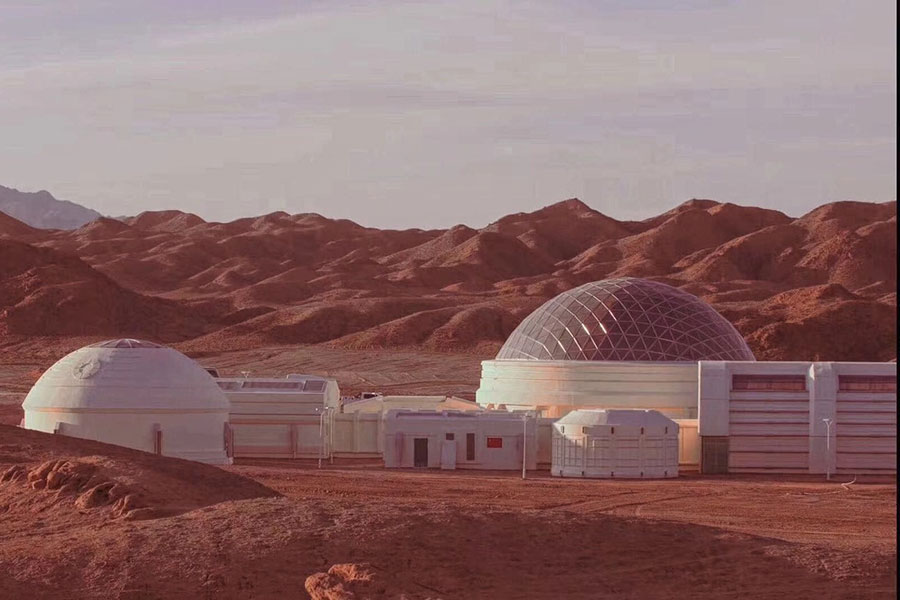
The Chinese C-Space Project recently unveiled its $61 million Mars Base in the Gobi Desert, leaving many curious about its objectives. The C-Space Project, where the C stands for Community, Culture and Creativity, is an education facility for Chinese teenagers, that will teach them about space exploration and living on Mars.

The Mars Base allows visitors to understand what it is like to live in closed quarters where every aspect of daily life must be controlled in an environment very limited resources. By all accounts, it will be an eye-opening experience for anyone wanting to know what Earth might be like one day if we continue to over-consume our natural resources. Water needs to be salvaged and recycled down to the last drop. Food sustenance needs to contain high protein to keep the base’s occupants fed and in good shape. If you want to take a walk outside you’ll need to don a space suit and exit through a pressurizing cabin. 

The base occupies a massive 11,996 square feet in the Gobi Desert, a location meant to re-create as closely as possible the current state of the distant planet – thanks to its harsh climate and sandstorms. Situated 40km from the small town Jinchang, in the Gansu Province, the Mars Base not only simulates the outside living conditions that Mars explorers would one day have to face, but also the inside living environment. It consists of nine capsules, that includes a control room, recycling unit, airlock room, storage, a bio-module, medical facilities, living quarters, bathroom and an entertainment & fitness room.

To bring this project to life, the ACC (Astronauts Center of China) and CICC (China Intercontinental Communication Center) were heavily involved in delivering state of the art technology and knowledge to make it as realistic as possible. A TV Reality show was allowed access and six volunteers, which included five Chinese celebrities, were the first to experience “life on Mars” after receiving some basic astronaut training. 

The show has had a huge impact on its audience since airing and fulfilled the expectations of the project’s initiators, who aim to bring awareness of China’s tremendous development in aerospace to the general public.

In preparation for future missions to Mars the originators want to make space a more attractive subject to the general public, inspire people about what’s possible and encourage exploration. The base will become China’s first cultural and tourist experience around space education, Mars-themed tourism and scientific research.

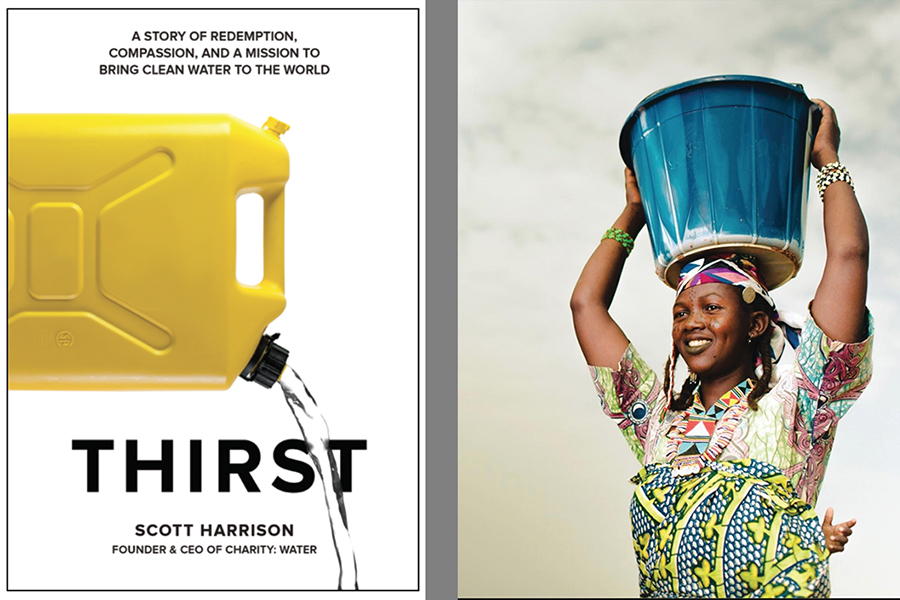
Thirst: A Story of Redemption, Compassion, and a Mission to Bring Clean Water to the World

At 28 years old, Scott Harrison was living large. A top nightclub promoter in New York City, his life was an endless cycle of nightlife, booze, models – repeat.

But 10 years in, desperately unhappy and morally bankrupt, he asked himself, “What would the exact opposite of my life look like?” Walking away from everything, Harrison spent the next 16 months on a hospital ship in West Africa and discovered his true calling. In 2006, with no money and less than no experience, Harrison founded charity: water. In Thirst, Harrison recounts the twists and turns that built charity: water into one of the most trusted and admired nonprofits in the world.

Why is water an issue you care so deeply about?

Dirty water steals time and it kills. In Africa alone, 40 billion hours are wasted each year collecting water. Not only does walking for water keep children out of school and prevent their parents from working to earn money, bad water and a lack of sanitation and hygiene contributes to up to half the disease throughout the developing world. Few people realize that dirty water is responsible for more deaths than all forms of violence, including war. That’s a shocking statistic. It’s particularly frightening for the 663 million people around the world – twice the population of the United States or 1 out of every 10 people alive – that live without access to clean water. I believe more strongly now in the transformative power of clean water than when I first set out to start charity: water. Water is life. It’s that simple. And we’ll continue fighting to see a day where everyone on Earth has access to it.

How do you connect donors in the developed world with a problem they are so far away from? 

People don’t respond well to mind-numbing statistics. When I tell an audience that 663 million people globally lack access to their most basic need for health and life, eyes can glaze over. But when I tell a story of a woman named Aissa who lost 8 children, and show the dirty water she drinks with her family, people can connect. From there, it’s about inspiring people by showing them the ways access to clean water can transform lives. 

What are you most excited about now?

I hope Thirst encourages readers to summon the courage that lies within each of us, to take bold leaps of faith, and find greater passion and purpose in their lives.

www.CharityWater.org

Scott Harrison is the founder and CEO of charity: water, a non-profit that has mobilized over one million donors around the world to fund nearly 30,000 water projects in 26 countries that will serve more than 8.5 million people. He has been recognized on Fortune’s 40 under 40 list, Forbes’ Impact 30 list, and was ranked #10 in Fast Company’s 100 Most Creative People in Business. Currently a World Economic Forum Young Global Leader, he lives in New York City with his wife and two children.  

The Real Leaders 100 Top Impact Companies 2019

Business can be a force for good and here’s the proof: 100 companies that are growing by doing good.

The Real Leaders 100 Top Impact Companies, in collaboration with Big Path Capital and B Lab, is the first ranking of positive impact companies. The Awards rank the top companies applying capitalism for greater profit and greater good. These companies are driving a dynamic segment of the economy, bearing a new vision of capitalism that demonstrates that every transaction is an opportunity for both growth and a better world.

Given the plethora of published lists that already exist – the richest people, sexiest celebrities, fastest growing companies, biggest organizations or most popular startups – a group of like-minded visionaries including Real Leaders, realized that what the world really needs is a list of companies that are a force for good in the world. Not a feel-good, cumbayah, granola list either; rather, a list of real companies that have shown actual economic growth by including the greater good in their mission and business strategies. 

1. Rescue Agency

2. Amalgamated Bank

3. Traditional Medicinals

4. World Centric

5. Grove Collaborative

6. OPTEL Group

7. BDC

8. Vital Farms

9. TriLinc Global

10. Koru Distribution

11. Simple Energy

12. BlueWave Solar

13. The Redwoods Group

14. Fully

15. Galileo Camps


16. CleanFund

17. CleanChoice Energy

18. NationSwell

19. Gaia Herbs

20. Encore Renewable Energy

21. Advantage Capital

22. SunCommon

23. Lotus Foods

24. Cascade Engineering

25. Sunrise Banks

26. Advanced Enviro Systems

27. Jitasa

28. EO Products

29. ID4A Technologies

30. Impact Makers


31. Chandos

32. Rhino Foods

33. The GFB: Gluten Free Bar

34. Bridges Fund Management

35. Luke’s Lobster

36. Modern Energy

37. Align Impact

38. Kuli Kuli

39. DUCA Financial Services Credit Union

40. P.L.A.Y. (Pet Lifestyle and You)

41. Participate

42. MPOWERD

43. Fit4D

44. Trillium Asset Management

45. VCC


46. Farmland LP

47. Goddess Garden

48. Cornerstone Capital Group

49. SJF Ventures

50. ResolutionCare Network

51. Cloud for Good

52. Leesa Sleep

53. Raffa-Marcum Nonprofit & Social Sector Group

54. Abacus Wealth

55. Energage

56. Vital Plan

57. Persephone Brewing Company

58. Network for Good

59. Good Clean Love

60. The Builder’s Fund


61. Ingage Partners

62. Natural Systems Utilities

63. Sudara

64. Biohabitats

65. Bi-Rite Family of Businesses

66. Chroma Technology Corp.

67. Waste Farmers

68. Noonday Collection

69. Forrest Firm

70. Firespring

71. Facilities Management Services

72. Andean Naturals

73. Taos Ski Valley

74. We First

75. Green Canopy


76. Sunshine Nut Company

77. W.S. Badger Company

78. First Green Bank

79. Soapbox

80. Charter School Business Management

81. Schoolzilla

82. Dewey’s Bakery

83. Gelfand Partners Architects

84. The Caprock Group

85. Greentech Capital Advisors

86. Solberg Manufacturing

87. Amavida Coffee

88. Metropolitan Group

89. Crystal Creek Logistics

90. Grower’s Secret

91. Yin Yang Naturals

92. Aslan Brewing Company

93. Coda Coffee Company

94. Vera Solutions

95. Elephants Delicatessen

96. Cause Strategy Partners

97. Ellevate Network

98. Boston Common Asset Management

99. Nossa Familia Coffee

100. West Paw

The Real Leaders 100 Top Impact Companies is exactly that – a world-first list that proves that business can thrive as a force for good. So, how did we ultimately measure business as a force for good? We came up with a simple formula. If you’ve ever studied science you’ll know that the formula for force is mass multiplied by acceleration. The Real Leaders 100 formula for Business as a Force For Good is therefore: Revenue X Growth Rate X B Impact  Assessment = Force For Good. We hope you’re inspired by the companies featured here and apply in 2019 to be internationally recognized for our next Real Leaders 100 Top Impact Companies list. 

Nasdaq Iceland Welcomes First Green Bond Issuer

Nasdaq Iceland has welcomed the City of Reykjavik as its first green bond issuer on the Exchange’s sustainable bond market. The bond was issued on 17 December and is sized at ISK 4.1 billion with a maturity of 30 years. Reykjavik intends to issue further bonds in the bond class in the coming years and add market making services.  

The purpose of the issuance is to finance the City of Reykjavik’s green investment projects in accordance with the Green Bond Framework. Green bonds can only be used to finance projects within the Green Bond Framework that meet strict requirements. Some of these investments, that could meet the requirements of the Green Bond Framework, include pedestrian and cycle pathways, introduction of LED lights for street lighting and electric vehicle charging stations.

“This is a milestone for Reykjavik.”, says Dagur Eggertsson, Mayor of Reykjavik. “Our aim is to constantly strengthen our position as a green city which will be carbon neutral by 2040. We approved the Green Bond Framework where CICERO (Center for International Climate Research) rated the overall assessment of the project types that will be financed by the green bonds Dark Green and the overall assessment of the governance structure of Reykjavik got the rating of Excellent. I’m also very happy about the anticipation and interest we have received from investors. That is indeed a very promising start for this project and for us to become a sustainable city.”

Sustainability is fast becoming a key driver of economic success for countries and cities and the City of  Reykjavik’s first green bond issuance is a step in the right direction. “This marks the first listing on Nasdaq Iceland’s sustainable bond market. Given the great interest the issuance received we look forward to building this market for green bonds. It’s an honor to welcome our capital city to lead the way on our sustainable bond market,” said Magnus Hardarson, the Head of Exchange Trading and Listing Services at Nasdaq Iceland.

SDG Impact Hero: Joby Weeks

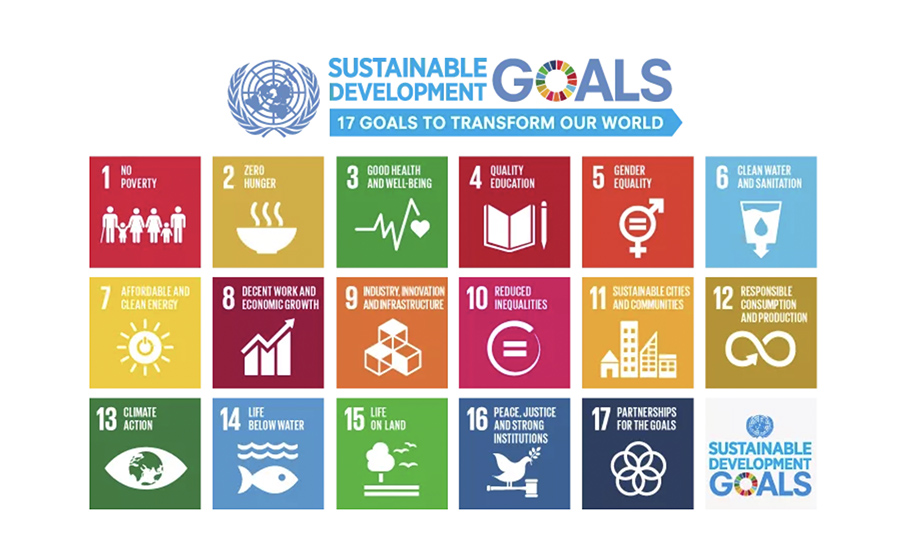
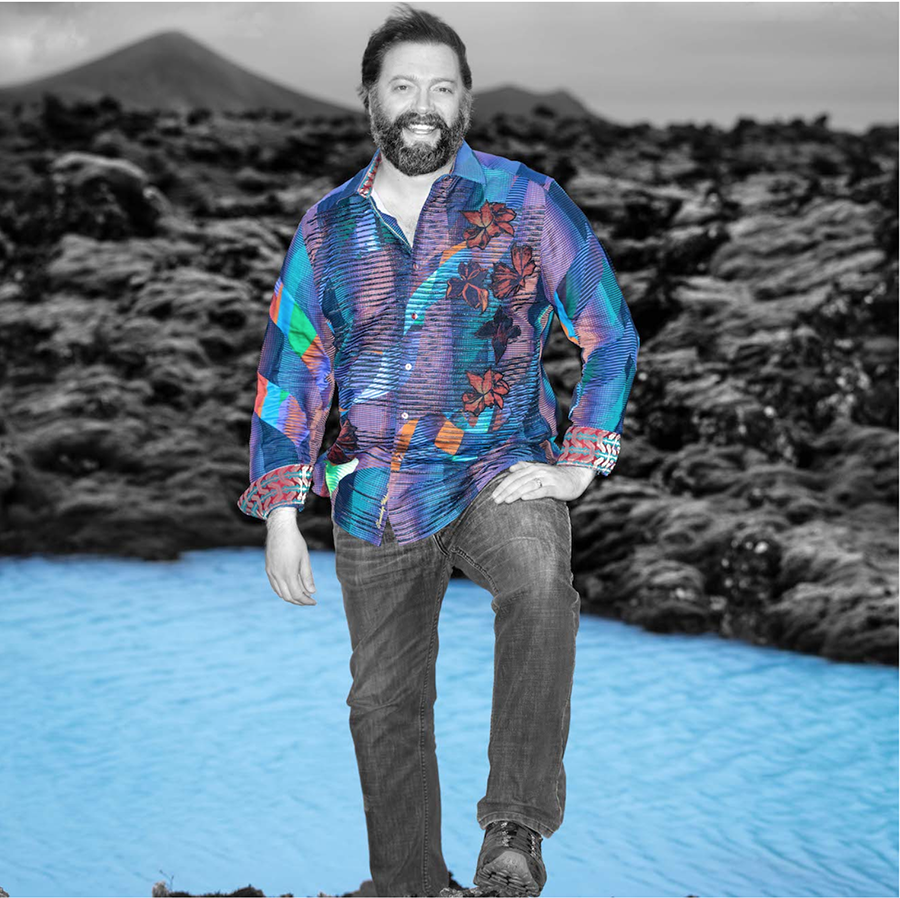
Motivated by love and filled with passion. “SDG Impact Heroes” is a unique photographic series by Ralph Reutimann celebrating local and global leaders from all walks of life at the forefront meeting the 17 UN Sustainable Development Goals. Each of the SDG Heroes holds a personal object symbolizing the single Goal they feel is most vital for them.

Name: Joby Weeks better known as Joby-Wan Kenobi (May the force be with you)

SDG Object: Shirt of Many Colors

SDG of Choice: All of them!

Having only learned about the Sustainable Development Goals (SDGs) recently, I decided to look them up and see if my work over the last couple of decades matched any of the goals. I was surprised to see that I’ve been working on every single one of them!

The SDGs are represented by different colors, which is why I have chosen this shirt to be my SDG Object of choice. Joby and the shirt of many colors!

I LIV them everyday!

For instance:

I have a Clean Water project (#6) that uses a compostable water bottle made out of plants. (#12) And of course for every case of water that we sell we donate a percentage to CharityWater.org which drills wells all over the world. (#11)

We use clean green geo-thermal energy (#7) to run our Bitcoin miners (#9), which secure the blockchain, (#9) which is helping to lift people out of poverty, because they can now move money all around the world without having to ask for permission from a bank or government. (#1) This is a HUGE deal!

People need education, not medication! (#4) I have spent close to 20 years teaching people how to stay healthy (#3) so they don’t need to take deadly, debilitating, destructive, addictive, toxic, pharmaceutical drugs!

Every time we sell our wellness tech, we donate the same amount of product to a malnourished orphan. (#2) We are currently feeding 250,000 children around the world every day with the best nutrition known to science.

We created an opportunity where men and women can make a full time income sharing the gift of wellness and blockchain technology with their friends and loved ones. (#8) We pay both men and women the same. (#5) In fact, over 80% of Women who make $100k a year or more, did it through Network Marketing and Direct Sales. I love empowering people to become business owners instead of wage slaves!

I have invested in many frontier technology companies that all tackle the SDGs. Too many to list. Here are some of them that I am most excited about.

I helped start a University that trains people how to code for blockchain projects. (#4)

I bought a Hemp Farm to suck carbon dioxide out of the atmosphere (#13) and create CBD products at the same time. (#3) I have funded several documentaries that expose geo engineering, aerosol spraying and population control…(#4)

I funded a company that is crowdfunding solar farms in Africa called the Sun Exchange. Our latest project was an elephant orphanage. They now have power and the investors now have an income stream. (#11)

I’ve spent millions developing tech that can convert heat into electricity. (#9) and (#7) There is heat everywhere! When energy is “free” then your food and water become free, your heating and air conditioning becomes free… transportation becomes free (if you drive a tesla) basically everything becomes free because we can convert energy into almost anything! Talk about eliminating inequality! (#10) Don’t even get me started on my 3D printing business. (#9)

I’ve invested and helped found a real estate company called Social Equity which helps get the average person into their first home as an OWNER 15 years earlier than the current global credit system will allow. Turning the millions of renters into homeowners will really help eliminate poverty and inequality because now people will be participating in capitalism! (property ownership being one of the pillars of capitalism) (#15) I’ve also been working on a crowdfunding app for large real estate development projects. (#1) and (#11) I invested in a submarine company called Aquatica too. We recently took Sir Richard Branson and Fabian Cousteau to the bottom of the Blue Hole in Belize. It was aired on Discovery Channel! We mapped it all out with sophisticated sonar equipment for science as well! What a blast! (#14)

What drives me to tackle ALL of the SDGs? My daughter… baby Liberty. She will one day be Lady Liberty. As a Libertarian father I believe all human interactions should be voluntary. I believe it’s morally wrong and illegitimate to use force, fraud and coercion to get one’s way. The Non Aggression principle is one of the pillars of peace, prosperity and freedom! (#16) There can be no justice without it. So as you can imagine, its all I talk about!

I’ve traveled to 150+ countries of the world looking for like minded people to partner with to achieve these goals! (#17)

My wife runs an awesome travel company called www.WeeksAbroad.com where we bring our friends on EPIC trips all over the world with us. We would love for you to join us as we check things off the bucket list or as I like to say, the LIV LIST. It is not one of the SDGs, but we are going to do it anyways! Join us and LIV a GREAT story!  

They Killed my Mother, This is How I fought Back

The life of a child in a refugee camp is hard. There are shortages everywhere, But the worst is growing up without a future. A Congolese child refugee learned that if you don’t risk anything, you risk even more.

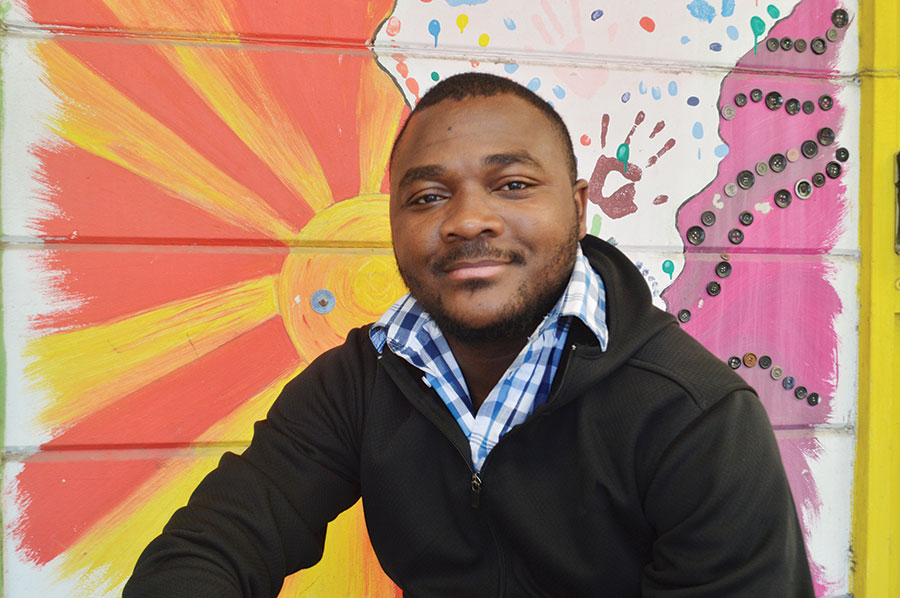
Seven-year-old Baruani Ndume was almost another silent statistic of the ongoing conflict in the Democratic Republic of Congo. The rebel soldiers spared him because of his age, but his mother was not so lucky – rounded up with the rest of the group trying to flee to neighboring Tanzania, locked inside a house and burnt to death.

Now 26-years-old Baruani is one of 33 million refugee children trying to live his life in limbo – stateless and without parents. The Nyarugusu refugee camp in Tanzania, where he spent the next 18 years, and where noone was allowed to leave, taught him that hope only came if you created it yourself. He started a radio station with the help of the U.N. Refugee Agency to help reunite children like himself with their families.

“You are given the gift of life for free. Use it to live freely with others and to create big things. ”  – Baruani Ndume

Thousands of children and adults tuned in every Sunday, and tens of thousands have been reunited. His radio show ‘Sisi Kwa Sisi’ (Children for Children), saw 20 child reporters address the problems, challenges and frustrations faced by children in refugee camps by teaching them to speak from the heart and not be afraid.

In 2009 he won the International Children’s Peace Prize. “I was amazed at age nine to learn that kid’s actually have rights,” he says. “I wanted to see what I could do with this new information. By defending my rights I worked on my future; it’s the only way to escape these camps. 

www.kidsrights.org

0