Gaza Amputees Turn To Football To Overcome Disabilities And Trauma

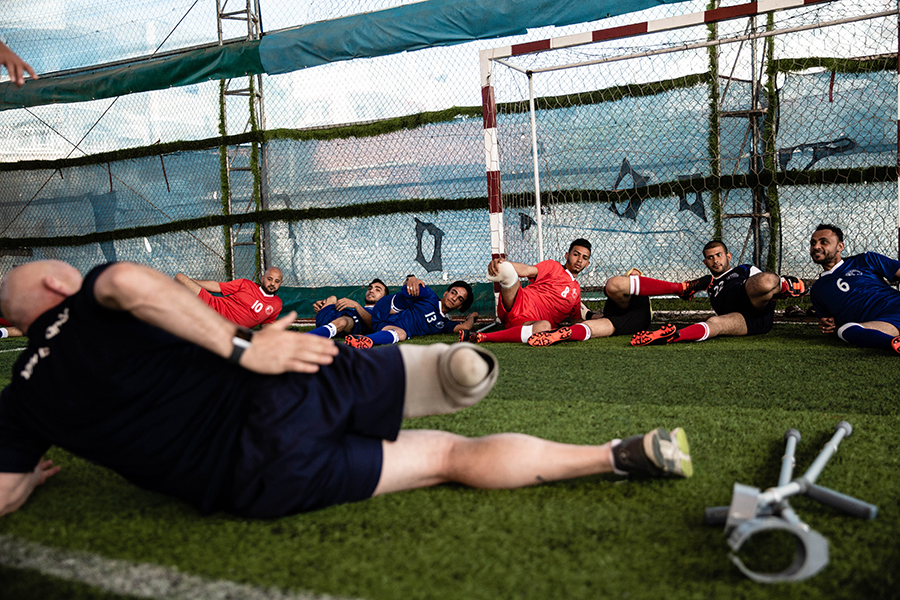
Omar was 19 when he lost his leg after a bullet tore through it on May 14, 2018, the worst day in a series of border demonstrations in Gaza. Today, following months of suffering from physical pain and psychological trauma, Omar is sending a ball across the football field with great force and determination.

“I asked myself: ‘Until when I am going to stay like this? Depressed and doing nothing,’ and so I started playing football on crutches,” Omar says. Gaza has some 1,600 amputees among a population of two million people. According to the Ministry of Health, 136 people lost limbs since violence escalated in the border areas one year ago. Out of 80 amputee football players, 20 lost their limbs after being injured in the border violence. 

The first amputee football team organized a game in Gaza a year ago. Earlier this year, a weeklong visit by Simon Baker, the General Secretary of the European Amputee Football Federation, became the first opportunity for the players to receive high-level coaching and hone their skills. It helped boost interest in the amputee football games in the strip, where five new teams were created, and the first tournament attracted crowds of fans.

Invited by the International Committee of the Red Cross (ICRC), Baker trained 15 coaches, 12 referees and 80 amputee players in the Gaza strip. The project will continue in the coming months with the goal of creating a strong team to represent Gaza in international competitions.

An amputee himself, Baker lost his leg in 2004 in a building site accident. Since then he has pushed every boundary to prove that amputees can be athletes. ICRC helps people with disabilities fight stigma and gain confidence through sports, as part of its physical rehabilitation program in Gaza.

How to Kill Conformity and Pursue Meaningful Work

PODCAST PEOPLE: A Summary from the Real Leaders Podcast

“Most people have the desire to change. They have the skill but what they don’t have is the permission. What we needed to do was actually create a culture that would allow people to have the behaviors of innovation.”

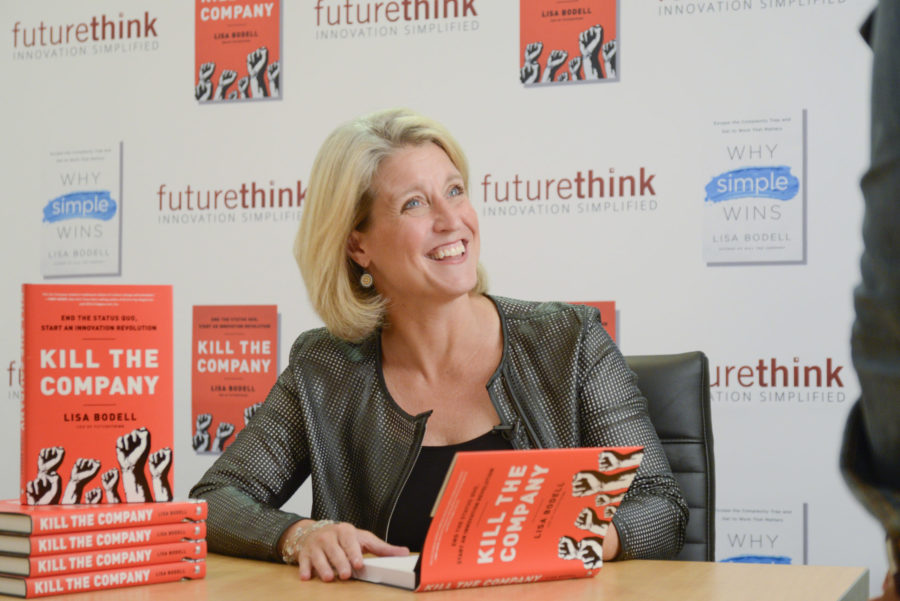
Lisa Bodell is a best-selling author, the CEO of FutureThink, and one of the top 50 keynote speakers worldwide. As a futurist and expert on the topic of innovation and simplicity, she is helping both individuals and businesses to ignite innovation.

Real Leaders Impact Awards, The World’s Top Impact Companies: APPLY NOW

The following is a summary of Episode 119 of the Real Leaders Podcast, a conversation with keynote speaker Lisa Bodell. Watch, read, or listen to the full conversation below.

The Mindset of a Futurist

Lisa explains that futurists are big-picture thinkers who consequently think beyond activity-driven quarters or years. As a result, they employ foresight to anticipate trends 5, 10, 20, or more years ahead.

“Futuring is about helping people reach their potential. The future isn’t about who you are, the future is about who you’re becoming. So you can start planning for that now.” 

Listen to Episode 119 on Spotify, Anchor, Crowdcast, and Apple Podcasts

Kill a Stupid Rule

Through FutureThink, Lisa helps businesses pursue innovation, though the journey forward often requires companies to address what is actually holding them back. Oftentimes, innovation is less about generating new ideas and more about unexpected barriers. And sometimes these barriers are the rules built into company policy.

“We are taught to follow rules, not challenge them, and the companies that are more simplified and more innovative give permission to challenge and simplify those things. What became our number one tool was called ‘kill a stupid rule.’ It was not about having people come up with ideas, it was knocking down the things that were holding them back from doing it the first place.”

More Meaningful Work

Lisa states that many employees often can’t define what meaningful work is, because they spend the majority of their time bogged down by more mundane tasks, such as meetings and emails. It is human behavior, however, that most often prevents us from eliminating unnecessary work. This manifests accordingly as a fear of confrontation or direct feedback.

“Everyone has an agenda, a behavior, and everyone’s human. That’s why I say most of complexity is driven by behavior. Risk and fear and power and trust. No matter what organization we’re in, it’s the same thing.”

An overload of unnecessary tasks leaves employees overwhelmed, and consequently less productive. Beyond simplifying internal and obligatory thinking, the goal is to foster external, big-picture visions.

“Prouctivity is ‘you’re not being productive enough,’ simplicity is ‘I want to help you focus on what matters.’ Those are very very different.”

Transcript

Connect

Find Lisa Bodell at: futurethink.com

Uncompromising Values from the Pitbull of Personal Development

PODCAST PEOPLE: A Summary from the Real Leaders Podcast

“I think at the end of the day, people pretty much don’t believe what you have to say. I don’t think people even listen to what you have to say. But I do think they listen to see if you believe what you have to say.”

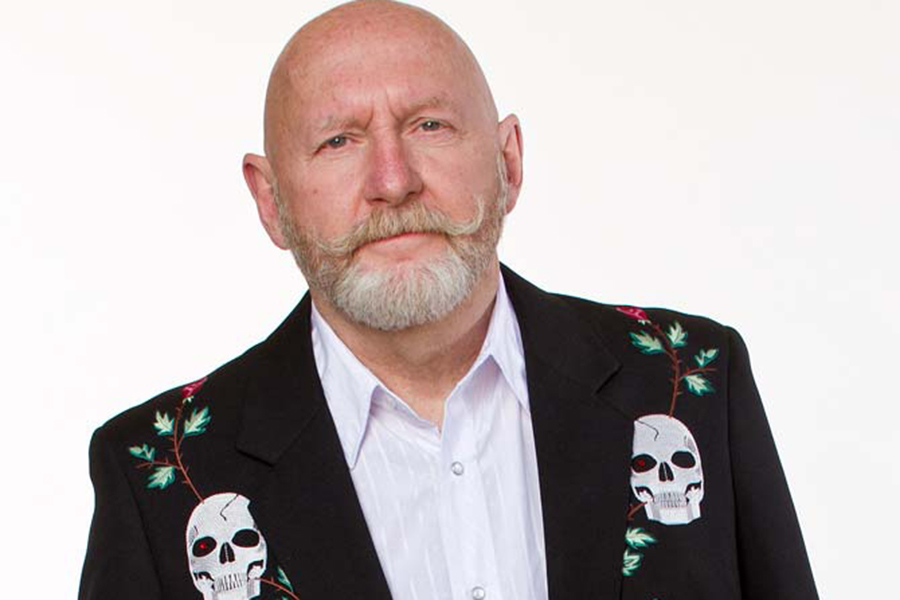
Larry Winget is a professional speaker and bestselling author, trademarked the Pitbull of Personal Development and The World’s Only Irritational Speaker. He has addressed nearly 400 of the Fortune 500.

Real Leaders Impact Awards, the World’s Top Impact Companies: APPLY NOW

The following is a summary of Episode 117 of the Real Leaders Podcast, a conversation with the Pitbull of Personal Development, Larry Winget. Watch, read, or listen to the full conversation below.

The World’s Only Irritational Speaker

Winget considers himself a contrarian of the personal development industry:

I went out and I sort of trashed all the motivational clichés that are out there and told people the truth: chances are if you’re not doing well, it’s cuz you’re lazy. Chances are you’re not working hard enough. Chances are you don’t have any core values. People don’t like you. People don’t trust you. You’re dishonest. You don’t have integrity, and you need to get off your butt and go to work.”

He has his own approach to inspire motivation, which comes with developing and sustaining core values.

“I believe I can make you so irritated with where you are, you will do anything that goes someplace else. We don’t change seeking comfort, we change to avoid pain. So if I understand the pain you’re going through and what it’s costing you and get you to agree with me, you’ll be willing to make that change. People don’t change because you want them to change. People change when they want to change because it’s so uncomfortable doing what they’ve been doing.”

Listen to Episode 117 on Spotify, Anchor, Crowdcast, and Apple Podcasts

Inspirational Irritational Quotes

“I believe this, if any one can do it, anyone can do it.”

“Regardless of what you want to stop doing in your life, it really comes down to this. Just stop.”

“We allow people to suffer in comfort. Most people don’t change their ways when they suffer in comfort. They change their ways when it hurts so bad that they’re not going to do it anymore.”

“If anything is going to take us down as a society, it won’t be Coronavirus, it won’t be politics, it’s going to be a sense of entitlement.”

Titles Mentioned

Written by Larry Winget:

  • Shut Up, Stop Whining, and Get a Life
  • Grow a Pair
  • People Are Idiots and I can Prove It!
  • Your Kids are Your Own Fault
  • What’s Wrong with Damn Near Everything

Transcript

Connect

Keep it Real Series: A Conversation with Simon Mainwaring

PODCAST PEOPLE: A Summary from the Real Leaders Podcast

“So what does it mean for your business? It means that you show up as a whole human being. You’re not just a job title with a skill set. You’re showing up with your heart and your hands and your head. And your work is an expression of who you want to be and the difference you want to make in the world.”

Simon Mainwaring is a brand futurist, global keynote speaker, and best-selling author of We First: How Brands and Consumers Use Social Media to Build a Better World. He is also the founder and CEO of We First, a creative consultancy helping companies build brand reputation, profits, and social impact.

Real Leaders Impact Awards, The World’s Top Impact Companies: APPLY NOW

The following is a summary of #1 of the Keep It Real Series from the Real Leaders Podcast. This is a conversation with brand futurist and global keynote speaker, Simon Mainwaring. Watch, read, or listen to the full conversation below.

Meaningful Work

Simon discusses the importance of fulfillment in any given career, and consequently shares how he has found success to be an “inside-out” kind of job:

“There’s a big fundamental difference between people who go to work to do a job, and people who go to work to give their gift, to give their skills. The way that you’re fulfilled is that you fill yourself up from the inside, through what you give to others. You don’t get filled up by what others say about you from the outside. And that sounds very simplistic, but I swear to God, it is transformative in your life.” 

Listen to #1 of the Keep it Real Series on Spotify, Anchor, Crowdcast, and Apple Podcasts

Rethinking the Business Model

Simon discusses the need to re-distribute our global business model. He emphasizes, however, that capitalism reimagined could be essential for improving the world on both a societal and ecological level.

“I am a deep, deep believer in capitalism. But I think the benefits of it need to be distributed more evenly so that it’s actually sustainable. And what you’re seeing right now is a breakdown, you’re seeing the natural ecosystem breakdown through climate crisis, ocean acidification, loss of biodiversity, and extreme weather and all these things that fall out of it. And you’re seeing that global social fabric breakdown, and Black Lives Matter, and all of these issues are a function of that.”

Responsibility comes with this new business opportunity, and it will have to be a gradual process of evolution:

“Only when you’ve got that coalition of all the different key players, can you start to build out a viable alternative to the way capitalism is being practiced. And a lot of people talk about how we’re trying to switch out the engine of capitalism as we’re hurtling down the road. But until we have all the parts, we don’t have an engine, it can’t actually operate as a viable alternative. And so I do think we will change where there’s sufficient pain. There’s a sufficient coalition, stakeholders that want the same things, and that we’re collaborating in new ways to make that happen.”

Environmental Optimism

The interconnectedness of environmental issues is a cause for hope in healing our planet:

“The same way all these issues are connected from climate, the same way they hurt us more because they’re connected, they can help us if we do the right thing, because they’re all connected. If we start to treat the planet more effectively, that’ll have a better effect on the environments in which we live and the species and biodiversity out there, and so on and so on. This connectivity can work in our favor, not just against us.”

https://www.instagram.com/p/CEsRUAhHAIg/?utm_source=ig_web_copy_link

Transcript

Connect

Find Simon at: simonmainwaring.com

Will the Next Big City be Built Underwater?

PODCAST PEOPLE: A Summary from the Real Leaders Podcast

“The flora and fauna of the planet are a natural resource bank account, and that bank account is going bankrupt. So we need to not only protect what’s left, but reinvest in that capital, so that we can live off the interest that it bears, rather than eating away what’s left of the capital, because at the end of the day, we can’t afford to go bankrupt. Because no one’s going to bail us out. So really, it’s all about us. It’s about our future and our survival as a species.”

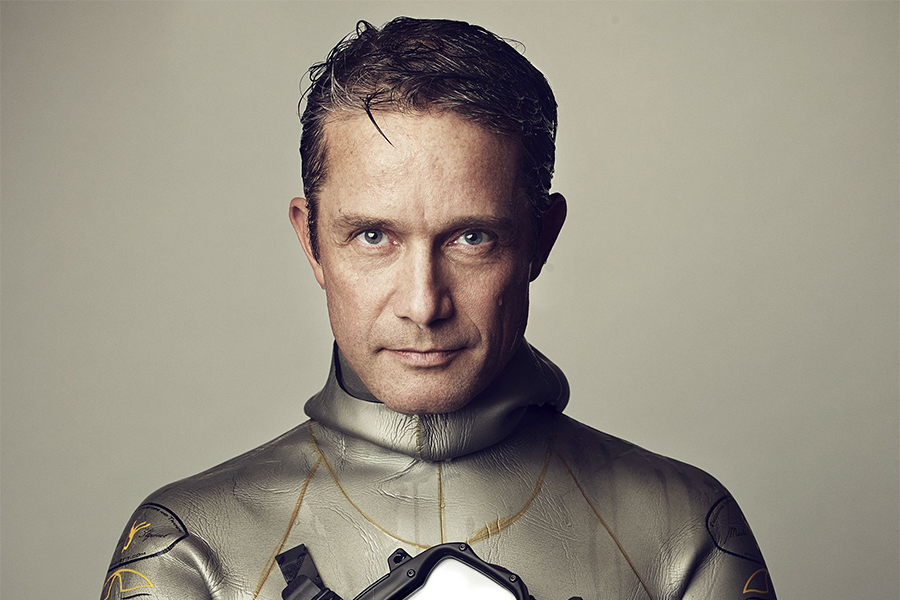
Fabien Cousteau is a third generation ocean explorer, aquanaut, and environmentalist who is at the forefront of today’s ocean exploration. His latest project, Project Proteus, entails an underwater research center for the betterment of the ocean, the earth, and humanity.

The following is a summary of Episode 116 of the Real Leaders Podcast, a conversation with ocean explorer and aquanaut Fabien Cousteau. Watch, read, or listen to the full conversation below.

Project PROTEUS

PROTEUS is a project out of the Fabien Cousteau Ocean Learning Center (FCOLC). It will be the world’s most advanced underwater station, a revolutionary research site and habitat located at a depth of 60 feet (3 atmospheres) below the ocean’s surface. It will be the site of research that will address the planet’s most pressing problems.

Fabien Cousteau’s PROTEUS™. Concept designs by Yves Béhar and fuseproject.

The research station will be accessible to hosting academics, private companies, scientists, and NGOs involved in ocean exploration, research and development.

“PROTEUS is the next step in ocean exploration. Imagine building the International Space Station underwater, and being able to have that platform as a common good, and as an Advanced Research Station for bettering humanity, for being able to address things like COVID, to find those next cures for cancer and pain mitigation and of course, pandemics.”

Listen to Episode 116 on Spotify, Anchor, Crowdcast, and Apple Podcasts

Redefining Sustainability

Cousteau proposes three ways to change our language when discussing what sustainability really means:

  1. There’s no such thing as “away”
  2. We need to stop calling it “seafood” and start calling it “sea life”
  3. We the individuals are responsible for making a positive impact with our daily decisions

Considering the Ocean

As a wild frontier, the ocean’s resources aren’t regulated by conservation as easily or effectively as wildlife on land. Ocean life has more often than not been taken for granted.

“We’re on the cusp of a major extinction, of the Sixth Extinction, as it’s called, for the first time ever by one species ourselves. But we’re smart enough to know this, are we wise enough to make the proper decisions?”

The ocean makes up 99% of the world’s living space, but we’ve changed Earth’s landscape such that 95% of the planet’s biomass is now represented by human beings and domesticated animals.

“At the end of the day, ocean is life, no ocean, no life, no healthy ocean, no healthy future. And we are all beholden to the ocean, whether we like the ocean or not, whether we think of the ocean as a vacation spot, or as the essence of every other breath that we take and every glass of water that we drink.”

Transcript

Connect

Learn more about Fabien Cousteau’s ocean initiatives here: www.fabiencousteauolc.org/

Using Super Foods to Transform Lives

PODCAST PEOPLE: A Summary of the Real Leaders Podcast

“I think it really came through my personal journey. And I realized, I want to help people, I want to help people make the right choices, and I want to help millions of people that maybe just don’t know better like me. I didn’t know better, and I educated myself, and I’m still educating myself on all the various things in how nutrition plays a role.”

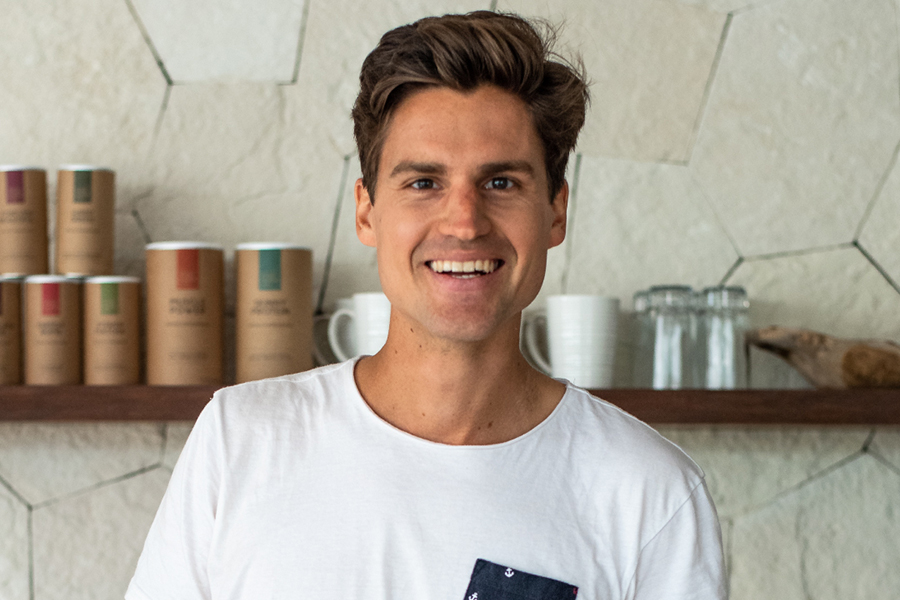
Michael Kuech is the co-founder and CEO of Your Super, which creates superfood mixes for extra energy, immunity, antioxidants and vegan protein. Your Super is a certified B corp committed to improving people’s health with the power of plants.

The following is a summary of Episode 113 of the Real Leaders Podcast, a conversation with Your Super CEO, Michael Kuech. Watch, read, or listen to the full conversation below.

Listen to Episode 113 on Spotify, Anchor, Crowdcast, and Apple Podcasts

Superfoods to Recovery

After overcoming cancer at age 24, Kuech turned to superfoods. They helped rebuild his immune system and forever changed his view on nutrition. Your Super became a way to share the benefits of healthy eating with others.

“I realized I can’t control everything in my life, but I can control what I eat. And the more I researched about why people are getting sick, and why people are experiencing diseases, is to a certain extent about lifestyle choices and what you eat. It’s not everything, there’s a puzzle, a big puzzle. But one big piece of the puzzle, how I can prevent from getting ever sick again, is the way I eat.”

Bootstrapping to Big Business

Without a budget for marketing, Your Super took a nontraditional route and focused solely on influencer marketing through social media.

“That was our earliest marketing strategy. Can we get big on Instagram and Facebook and get our audience engaged that way? And that really propelled our international brand exposure. Because social media is not bound by boundaries from any country.”

Kuech’s role has changed as the company continues to grow along with demand:

“I have to remind myself every day still to not do everything by myself. We did every job in the beginning. I packed boxes, for years I packed boxes, and called the customers. I’m making that step also now as a leader to let people do their own thing. I think that’s a huge learning call for any CEO. It’s not easy to let go.”

Impact on All Sides

Your Super is dedicated to a responsibility to its supply chain, paying fair wages and maintaining an income for farmers who are now living better lives with a stable revenue.

“I think impact for me is leaving something more positively, or having a positive influence on something. So having an impact on the way we source means we are having a positive influence on communities where we source.”

The end product superfood mixes are also created with impact in mind:

“We really are transforming people’s lives with our products. We have a massive impact there because people who have not had the chance and didn’t know anything about healthy food, they can come to us and we can actually teach them.”

Transcript

Connect

Find out more at: https://yoursuper.com/

Why I Transformed My Business Mindset To Something More Meaningful

PODCAST PEOPLE: A Summary from the Real Leaders Podcast

“This is a business that is not only about bringing about all of those things inside of us that are gifts that we can recognize, but growing a culture in our company that recognizes the gifts in one another.”

David Kahl is the founder and CEO of Fully. Fully creates and sells workplace furniture designed to inspire a positive business mindset and a healthy, supportive workplace where everyone can feel and do their best.

The following is a summary of Episode 109 of the Real Leaders Podcast, a conversation with Fully founder and CEO, David Kahl. Watch, read, or listen to the full conversation below.

Transitioning from Big Business

After a successful career as a Wall Street accountant, and witnessing the events of 9/11, David was presented with a personal and professional wake-up call:

“I want to know that I’ve done something that makes this world that we’re in a little bit better, helps us to love one another a little bit better, invites more empathy, transparency, leaning into who we are as people and connecting with one another. And I hadn’t been doing that for the first 30 years of my life. But I had a lot of my life left to do.”

Emotional awareness has given David a more holistic view of the workplace and revolutionized his business mindset:

“Leading with that emotional awareness is, I think, really important for leaders, especially in the kinds of times that we find ourselves in. There’s waves I think of when we need to practice a lot of emotional intelligence. This is one of those times when having the skills and the experience to do that really pays off as a CEO and leader.”

Listen to Episode 109 on Spotify, Anchor, Crowdcast, and Apple Podcasts

B Corp Benefits

Fully is the result of a re-worked business mindset and holds strongly to its values as a dedicated B Corporation:

“We practice a lot of empathy. We practice a lot of mindfulness. And we certainly love to be able to lead with vulnerability and transparency and all that we do. But at the same time, recognizing that we have an opportunity and a responsibility to take care of all of the stakeholders around us as well, [we] believe really strongly in this idea that businesses have a responsibility to make the world better.”

David asserts that the transparency and collaboration built into Fully’s company culture is the reason for Fully’s success, both internally and externally:

“I think it’s really important in our culture to realize when we’re in meetings or when we’re in a group, one of the big gifts we have is a big diversity of perspectives, a big diversity of life experiences. We’re going to be able to find out some great things as a company, when people feel the refuge of being together and that they can speak their mind, disagree with respect and compassion. And if we’re in a room of people, there’s nobody in that room smarter than all of us together.”

Transcript

Download the full conversation here:

Connect

Find out more about Fully here: https://www.fully.com/

How to Find Your Passion And Fuel Your Burn

PODCAST PEOPLE: A Summary from the Real Leaders Podcast

“Every single day is this fire and this burn that lies inside of me that I won’t stop, I won’t quit. I want to serve. I want to give everything that I have. One day at a time. And I think for all of us, we have that burn. And if you can get yourself to the point where your mind is controlled by your burn every single morning, not the fears, doubts and uncertainties, and you wake up, and you connect to that burn, it allows us to respond positively in a world right now that is very, very tough.”

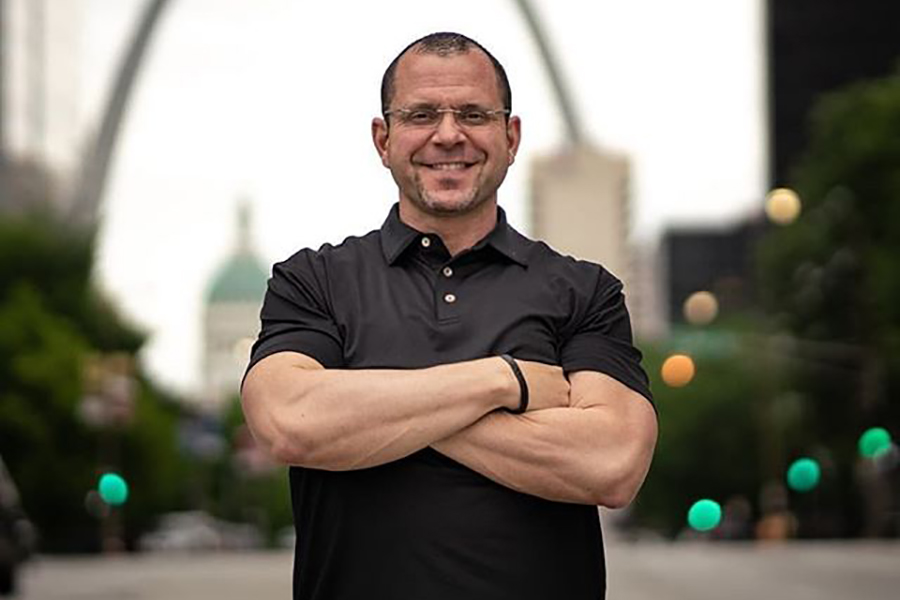
Ben Newman is a highly regarded Performance Coach, International Speaker and Best-Selling Author, though you may also know him as the host of The BURN Podcast. He coaches a wide range of clients from sports teams to Fortune 500 companies, encouraging them all to pursue what fuels their burn.

The following is a summary of Episode 115 of the Real Leaders Podcast, a conversation with performance coach Ben Newman. Watch, read, or listen to the full conversation below.

Purpose Overtakes Pain

Ben shares his the impact of his mother’s death when he was a child and her lasting legacy. Her strength and determination through a terminal illness inspired fortitude that would carry him through the rest of life:

“I knew my mother’s story drove me. I didn’t articulate it as “the burn” then, but I was trying to encourage people to find what inspires you. Because when you’re inspired, and you create consistent action in your life, the consistent action is what causes you to go write one hell of a story. And so, for all of us, that’s what we’re looking for. It’s the consistent action, it’s the answer. The magic answer is typically the work and the action connected to a big belief in yourself.”

The BURN Comes from the Heart

Ben encourages us all to pursue passion. Connecting from the heart generates a mindset of thinking bigger and believing beyond what we might think possible for ourselves.

“When you connect somebody’s heart to their passion, and you teach them to think bigger and believe in all the greatness that lies inside of them, they’re going to work like they have never worked before. And the relationships I’ve had in my life, whether I’m coaching an individual, coaching a company, working with a team, to me, that’s what it’s all about. It’s about being able to connect with the heart, get them to think about what’s possible, and then you go attack it one day at a time.”

Listen to Episode 115 on Spotify, Anchor, Crowdcast, and Apple Podcasts

How to Sustain the BURN

Ben presents us with key questions for taking on any future successes: What exactly is it that you want? What type of life do you want to lead? And then what does that person do on a daily basis? And how do you have to live? What does your purpose have to be to achieve all those things?

“Grab your future. Bring it to today. A lot of times the things we want in the future help us find clarity on what our purpose is, or the reason why we want to take the necessary action to have the things that we want in the future.”

Transcript

Read the full conversation here:

Connect

Find Ben at: https://www.bennewman.net/

Between Grit and Grace: The Art of Being Formidable

“It’s okay to be kind and commanding,” says Sasha Shillcutt (above), CEO of Brave Enough, an organization that encourages women to live authentically and stop apologizing for their strength. Leading an organization with more than 10,000 women, Shillcutt’s mission is to share life lessons learned from falling down and getting back up again.

I was angry. I had been in an important negotiation but left empty handed. I had gone in prepared with impressive data and a good argument. As I lamented my frustration to a coworker, she interrupted. “Don’t get upset about it. The guys wouldn’t.”

Of course, they wouldn’t be upset, I thought. Statistically, a man wouldn’t have left empty-handed! But I took her words to heart and thought about how I could have negotiated better, more like a man. After reading Crucial Conversations and other books on negotiating, I knew men were seen more favorably than women when negotiating. Surely this meant that if I wanted a better outcome, I needed to model a man, right?

When I went into my next negotiation and tried to emulate a man, I felt ridiculous — unauthentic, rehearsed, and forced. I was incredibly direct, didn’t mince words, and spoke more than I listened. I tried to be as flat and unswerving as possible. It makes me laugh at myself now as I tell this story, but this is what I had pictured a man would do: state forcefully why I deserved what I was asking for, as I had witnessed a few men do in prior meetings. Needless to say, my strategy didn’t work, and I vowed that day never to negotiate, lead, speak, or teach in any way other than as myself. I should have gone into the negotiation with transparency, honesty, and facts. Now when I negotiate, I state at the beginning of the conversation, “Look, I’m going to negotiate, and I know from the data that women are looked upon unfavorably and face backlash when they negotiate. I’m telling you this now so that doesn’t happen, and we can both be as transparent as possible.”

The path to success in the corporate world fits a man’s walking shoes: the more assertive men are, the more competent they are judged to be. We know this is opposite for women, as the more assertive we are in the workplace, the more we face leadership backlash. Academia, science, and technology fields are similar, and women receive societal cues that tell us to follow the path made for men. We struggle to follow the unwritten rules that tell us if we want to succeed professionally, we must alter our authentic selves or face backlash. Some of us choose the latter. We rise up and fight the status quo, engaging in the workplace as our authentic selves. But we often find ourselves exhausted, constantly fighting the internal battle of who we truly are. And then what happens? We retreat. We grab the manual off the shelf and pick back up in chapter one. We grow war weary.

Some of us don’t even realize we are following the manual. We are constantly conflicted in predominantly male environments and thus blame ourselves when we fail to get what we seek. We think we must not be strong enough, or we are too strong and stepped on toes, or it must be a personality flaw or blind spot we need to fix.

We operate in a constant flux of indecisiveness, unassured if we can step forward into roles or areas dominated by men. We think we just need a few more classes, more experience, and more mentorship. We blame ourselves for not arriving. We wonder why we were looked over, passed over, or told no. We assume we just need more of something. I want to challenge the status quo on the notion that women need more. Actually, I want to flip the tables (except for the one I’ll stand on) and shout this: You do not need more classes, more mentorship, more of anything to strip yourself of being you and thus emulating men in the workplace to succeed. You do need opportunities to grow, strong mentors to follow, and sponsorships to open doors for you so you can learn from your failures and wins as a woman. You will become the best version of yourself by growing within experiences
and roles. 

One of the loudest messages women hear in the workplace is that if we think like a man, we think like a leader. No, no, no! Did you hear me?! (Sorry if you haven’t had coffee yet.)

We are not men. Many men have great attributes and make great leaders. But it’s not because they are men. It’s because they are wise people, servant-minded, strategic thinkers, and have strong work ethics. Guess what? Strong women leaders possess those same attributes but display them in different ways. Women are communal, great listeners, strategic thinkers, and also have incredibly strong work ethics.

Leaders with these attributes are what make organizations strong. There is room at the table for both men’s and women’s ideas. We are not the same but are wonderfully different. Each human being was created with a specific set of strengths, creativity, and diversity that is radically and desperately needed within our organizations and workplaces. We must unlink the concept of men and women competing against one another in the workplace. We must embrace our differences and celebrate the distinctive qualities and abilities we each possess.

Men and women were created differently for a reason, and our differences are our strengths. When we lead as women, we may lead contrarily to our male colleagues, and that’s a worthy thing. Research has shown that diverse thinking is great for innovation and for teams. Fortune 500 companies that have diverse boards, made up of both men and women, not only have more innovation but also demonstrate better financial growth and return on investment.

When we come together as diverse people, we see things differently, we hear things in ways others may not, and, thus, we may identify groups of people or important concerns that would otherwise go unnoticed.

To lead as strong women, we must embrace the fact that we are women. We need to stop hiding our mix of attributes, both feminine and masculine — the special sauce that makes us unique individuals. Recognizing that we may experience internal conflict when expressing our strengths as women and understanding what it means to thrive in a world in which we are not the elevated gender requires clarity. Clarity requires time alone with ourselves to come to these truths. Therefore, one of the most important gifts we can give ourselves is time. 

Time alone to pour into our authenticity is often referred to as self care. I like to call it internal work because, quite frankly, it isn’t easy. It’s how I feed my soul, identify my weaknesses, process my failures, and reset my mental health. It is work. Time with ourselves is the single most difficult thing women seem to be able to find these days. 

There is value to both men and women when we are vulnerable enough to open up and be honest with how women must navigate our workplaces, our families, and our expertise. When we share our biggest struggles and our biggest challenges, we normalize what it means to be a woman. We step out of the shadows and find courage, hope, and solidarity. We also find the strength to say enough is enough.

This is an adapted excerpt from Between Grit and Grace: How to Be Feminine and Formidable by Dr. Sasha Shillcutt. HCI Books. Copyright 2020. Used with permission.

Fearless Girl Confronts Bull, Then Moves To Wall Street

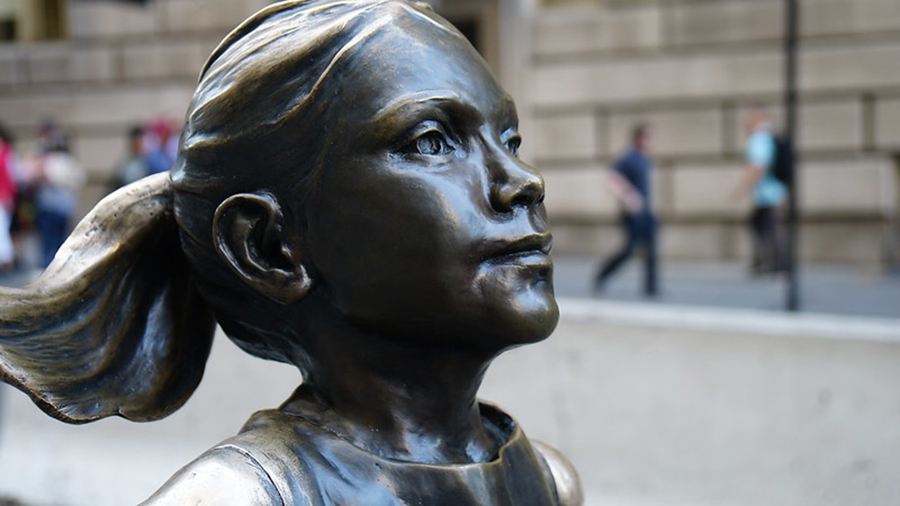
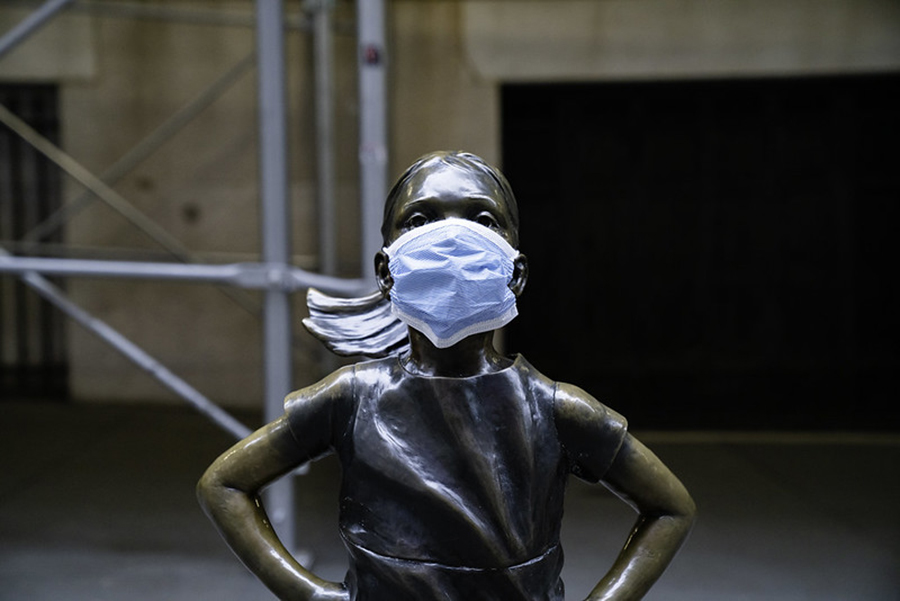
Fearless Girl is a bronze sculpture by artist Kristen Visbal, that was commissioned by State Street Global Advisors (SSGA), a large asset management company 2017, in anticipation of International Women’s Day that year.

The statue shows a girl four foot high, and represents female empowerment. Symbolically, it stands across from the New York Stock Exchange Building in the Financial District of Manhattan, New York City.

Fearless Girl was commissioned to advertise an index fund that was comprised of gender-diverse companies with a high percentage of women within senior leadership positions. A plaque below the statue states: “Know the power of women in leadership. SHE makes a difference,” with “SHE” being both a descriptive pronoun and the fund’s NASDAQ ticker symbol.

The statue’s first location was at Bowling Green, at the intersection of Broadway and Morris Street, facing down the Charging Bull statue. But, following complaints from that statue’s sculptor, Fearless Girl was removed in November 2018 and relocated to its current location near the stock exchange. A plaque with footprints was placed at the original site of Fearless Girl, where people could “stand in her shoes.”

The bull’s creator, Sicilian-born artist Arturo Di Modica, claimed copyright infringement and his attorneys said that the three-and-a-half-ton bull, was improperly commercialized and “transformed into a negative force and a threat” by the 250-pound girl.

New York Mayor Bill de Blasio tweeted: “Men who don’t like women taking up space are exactly why we need the Fearless Girl.”

Fearless Girl is meant to send a message about workplace gender diversity and encourage companies to recruit women to their boards.

The creative brief from State Street Global Advisors specified that the statue should depict a girl with hands on her hips and chin up, with a height of 36 inches. Visbal and her collaborators increased the height to 50 inches, to better match the size of the Charging Bull statue. “I made sure to keep her features soft; she’s not defiant, she’s brave, proud, and strong, not belligerent,” said Visbal. She modeled the sculpture on two ordinary children from Delaware, “so that everyone can relate to the Fearless Girl.”

0