Please fill out this form to complete your 2022 Real Leaders Impact Awards Application. If you qualify as a finalist, a representative will reach out with next steps. For questions or comments please email us at awards@old.real-leaders.com.




Please fill out this form to complete your 2022 Real Leaders Impact Awards Application. If you qualify as a finalist, a representative will reach out with next steps. For questions or comments please email us at awards@old.real-leaders.com.
Please fill out this form to complete your 2022 Real Leaders Impact Awards Application. If you qualify as a finalist, a representative will reach out with next steps. For questions or comments please email us at awards@old.real-leaders.com.
“If we work together, then we can both be part of something that’s much bigger, that’s much more sustainable. How we frame success has a big impact on whether we’re able to explore our potential or not.”
Dr. Cath Bishop is a former olympic athlete and diplomat, and current business coach and author. Her mission is to reimagine the winner-take-all approach that still dominates everywhere from classrooms to boardrooms. In her book The Long Win, she proposes a new approach to achieve more meaningful, sustained success.
The following is a summary of Episode 177 of the Real Leaders Podcast, a conversation with former olympic athlete and diplomat Dr. Cath Bishop. Watch, read, or listen to the full conversation below.
Cath shares how her athletic career as an Olympic rower helped her to uniquely understand teamwork and the pursuit of a common goal. Rowing with a team requires self-awareness and awareness of others in equal parts. As a result, all team members must all be in perfect agreement in order to move forward, let alone make it to the finish line.
“You can never completely focus on yourself because you have to be in time as much as possible with those around you. So you’re always pushing yourself. But in the same frame you’re thinking, how can I do it in a way that enables us all to go as fast as we can together?”
Understanding the pursuit of a common goal prepared Cath for a career in conflict negotiation. She shares her insights on how to effectively negotiate, and suggests that listening is actually the most influential tool. She emphasizes the importance of connecting with whomever is on the other side of the conversation, especially if you don’t initially get along. While building upon something in common, it’s also important to embrace fundamental differences.
“We all face complex issues, whether its business, politics, the world is complex. We need multiple perspectives. And the more we can get used to that and get comfortable with different ways of seeing the world, the more we learn, the more we grow. It’s a very learning mindset to think like that. How can I learn about your perspective of the world and through that grow my own?”
As both a professional athlete and senior diplomat, Cath recognized that a global culture of (and obsession with) winning has actually created behaviors that hold us back. In business just as much as sports, a focus on external rewards actually hinders motivation — a gold medal or a bonus are only superficial goals. It is focusing on intrinsic motivations, such as purpose and autonomy, that inspire people to be more motivated, creative, and resilient.
Cath explores this idea of shifting our winning mindset to in her book, The Long Win: The Search for a Better Way to Succeed. She suggests we could all benefit from reframing success away from the narrow, short-term, win-at-all-costs approach. In contrast, she emphasizes a more meaningful, sustainable approach, which she calls “The Long Win.”
“It’s about creating more meaningful metrics that are longer term, that are much more qualitative than quantitative. These are about stories, about diversity, about exploring possibilities. Our very tight metric system breeds compliance and conformity, and that’s why it’s not very successful, because those things don’t help us in this complex, uncertain world.”
“If we work together, then we can both be part of something that’s much bigger, that’s much more sustainable. How we frame success has a big impact on whether we’re able to explore our potential or not.”
Dr. Cath Bishop is a former olympic athlete and diplomat, and current business coach and author. Her mission is to reimagine the winner-take-all approach that still dominates everywhere from classrooms to boardrooms. In her book The Long Win, she proposes a new approach to achieve more meaningful, sustained success.
The following is a summary of Episode 177 of the Real Leaders Podcast, a conversation with former olympic athlete and diplomat Dr. Cath Bishop. Watch, read, or listen to the full conversation below.
Cath shares how her athletic career as an Olympic rower helped her to uniquely understand teamwork and the pursuit of a common goal. Rowing with a team requires self-awareness and awareness of others in equal parts. As a result, all team members must all be in perfect agreement in order to move forward, let alone make it to the finish line.
“You can never completely focus on yourself because you have to be in time as much as possible with those around you. So you’re always pushing yourself. But in the same frame you’re thinking, how can I do it in a way that enables us all to go as fast as we can together?”
Understanding the pursuit of a common goal prepared Cath for a career in conflict negotiation. She shares her insights on how to effectively negotiate, and suggests that listening is actually the most influential tool. She emphasizes the importance of connecting with whomever is on the other side of the conversation, especially if you don’t initially get along. While building upon something in common, it’s also important to embrace fundamental differences.
“We all face complex issues, whether its business, politics, the world is complex. We need multiple perspectives. And the more we can get used to that and get comfortable with different ways of seeing the world, the more we learn, the more we grow. It’s a very learning mindset to think like that. How can I learn about your perspective of the world and through that grow my own?”
As both a professional athlete and senior diplomat, Cath recognized that a global culture of (and obsession with) winning has actually created behaviors that hold us back. In business just as much as sports, a focus on external rewards actually hinders motivation — a gold medal or a bonus are only superficial goals. It is focusing on intrinsic motivations, such as purpose and autonomy, that inspire people to be more motivated, creative, and resilient.
Cath explores this idea of shifting our winning mindset to in her book, The Long Win: The Search for a Better Way to Succeed. She suggests we could all benefit from reframing success away from the narrow, short-term, win-at-all-costs approach. In contrast, she emphasizes a more meaningful, sustainable approach, which she calls “The Long Win.”
“It’s about creating more meaningful metrics that are longer term, that are much more qualitative than quantitative. These are about stories, about diversity, about exploring possibilities. Our very tight metric system breeds compliance and conformity, and that’s why it’s not very successful, because those things don’t help us in this complex, uncertain world.”
“Emotional intelligence, the way I look at it, is self awareness, knowing what you’re feeling and why you’re feeling it, how it affects what you do. Managing your emotions, using that awareness to handle your destructive emotions and keep your goal in mind. Staying positive, tuning into other people, empathy. And then putting that all together to have effective relationships.”
Daniel Goleman is an internationally known psychologist and bestselling author, known for his works discussing emotional and social intelligence, leadership, and education.
The following is a summary of Episode 174 of the Real Leaders Podcast, a conversation with psychologist and author Daniel Goleman. Watch, read, or listen to the full conversation below.
According to Daniel, emotional intelligence (also known as EI or EQ) does not plateau like IQ once the brain is fully developed. Lucky for us, EI can always improve and, when managed effectively, makes for better communication, understanding, and leadership.
“Our brain was designed for the jungle, for an earlier time. We don’t have brain 2.3, we have brain 1.0.”
Daniel explains that uncontrolled emotions are due to primitive survival instincts hardwired within our brains. Reactions brought about by anger and fear are responses similar to the fight or flight survival that has kept us alive since primal days. While we may no longer be in danger of being eaten, our brains operate in a symbolic reality. This triggers emotional circuitry to take over the more rational part of our reasoning.
Because we still rely on webs of circuitry in the brain that evolved from living in tribes, the modern technological world operates against our internal wiring. Consequently, this limits our ability to properly connect with others more than we may have realized. AI hinders EI, and virtual living has affected the social part of our brains that was designed to function optimally in the presence of others.
“We have to make more effort to tune into the people around us, because the brain wasn’t designed for the reality we’re living right now. Emotion channels are really important for the brain, and they’re maximal when we’re face to face.”
Daniel emphasizes that emotional intelligence is an important attribute for good leadership, especially in the workplace. He equates leadership with influence and suggests that telling people what to do will never be as effective as listening first.
“The big challenge is to be fully present, which means you want to know what the other person is thinking and feeling, and then you want to respond to that. Then the person feels felt, feels heard, and you get more information. So from a leadership point of view I think it’s an essential skill.”
Daniel mentions a few of his publications that discuss these topics in greater detail. Find more about them here:
“Emotional intelligence, the way I look at it, is self awareness, knowing what you’re feeling and why you’re feeling it, how it affects what you do. Managing your emotions, using that awareness to handle your destructive emotions and keep your goal in mind. Staying positive, tuning into other people, empathy. And then putting that all together to have effective relationships.”
Daniel Goleman is an internationally known psychologist and bestselling author, known for his works discussing emotional and social intelligence, leadership, and education.
The following is a summary of Episode 174 of the Real Leaders Podcast, a conversation with psychologist and author Daniel Goleman. Watch, read, or listen to the full conversation below.
According to Daniel, emotional intelligence (also known as EI or EQ) does not plateau like IQ once the brain is fully developed. Lucky for us, EI can always improve and, when managed effectively, makes for better communication, understanding, and leadership.
“Our brain was designed for the jungle, for an earlier time. We don’t have brain 2.3, we have brain 1.0.”
Daniel explains that uncontrolled emotions are due to primitive survival instincts hardwired within our brains. Reactions brought about by anger and fear are responses similar to the fight or flight survival that has kept us alive since primal days. While we may no longer be in danger of being eaten, our brains operate in a symbolic reality. This triggers emotional circuitry to take over the more rational part of our reasoning.
Because we still rely on webs of circuitry in the brain that evolved from living in tribes, the modern technological world operates against our internal wiring. Consequently, this limits our ability to properly connect with others more than we may have realized. AI hinders EI, and virtual living has affected the social part of our brains that was designed to function optimally in the presence of others.
“We have to make more effort to tune into the people around us, because the brain wasn’t designed for the reality we’re living right now. Emotion channels are really important for the brain, and they’re maximal when we’re face to face.”
Daniel emphasizes that emotional intelligence is an important attribute for good leadership, especially in the workplace. He equates leadership with influence and suggests that telling people what to do will never be as effective as listening first.
“The big challenge is to be fully present, which means you want to know what the other person is thinking and feeling, and then you want to respond to that. Then the person feels felt, feels heard, and you get more information. So from a leadership point of view I think it’s an essential skill.”
Daniel mentions a few of his publications that discuss these topics in greater detail. Find more about them here:
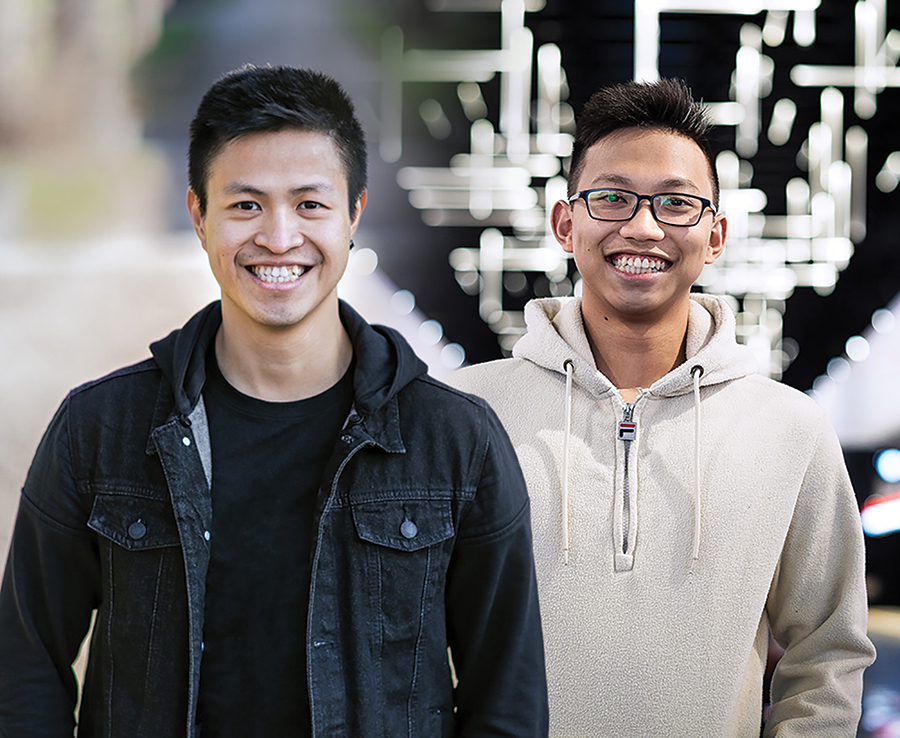
A Finnish start-up, Rens, is making shoes from waste coffee. Every pair is made from 300 grams of used coffee grounds— the equivalent of 21 cups of coffee. They are waterproof and vegan and also contain the recycled material of six plastic water bottles. Founded in the heart of Helsinki, the idea started as a conversation between two sneakerheads — Son Chu and Jesse Tran (pictured below) — about the environmental impacts of the global sneaker industry and the less-than-stylish sustainable options on the market. Thousands of pairs have been sold across the world since their launch in November 2019.
The start-up is not the only company to reinvent food waste. Luxury German brand Hugo Boss has made shoes from pineapple leaf fibers, and Swedish fashion retailer H&M makes the soles of sandals from algae. British designer Stella McCartney is even making clothes from mushrooms. The fashion industry has a huge environmental impact, consuming large amounts of land, energy, and water, with the United Nations estimating that the fashion sector generates 20 percent of the world’s wastewater.
The Underground Railroad was a network of secret routes and safe houses established in the United States during the early to mid-19th century. They were used by African American slaves to escape into free states and Canada with the aid of abolitionists and allies sympathetic to their cause. The original Underground Railroad was a group that acted and infiltrated, and that’s precisely what Ballard is inspired to do today.
In the past six years, OUR has rescued more than 3,800 victims and assisted in the arrests of more than 2,100 traffickers worldwide. Through partnerships with like-minded organizations, they have collectively rescued more than 10,000 survivors who were enslaved, exploited, or at risk.
“The only thing necessary for the triumph of evil is for good men and women to do nothing,” says Ballard, quoting 18th Century statesman, Edmund Burke.
“The original Underground Railroad saw people of all colors and creeds coming together to rescue people. Some of these people would pose as slave catchers to learn who was being sought and then devise plans to throw the slave owners off their trails. It’s one of the most inspiring stories of history I have ever heard,” says Ballard. Today, Ballard is doing just that, using similar covert operations to put sex traffickers and pedophiles behind bars. Slavery is not only part of history, either. According to Sean Reves, Utah’s Attorney General, there is more modern-day slavery than at any other time in history.
“You have to make a decision,” says Ballard. “The world is in turmoil in so many ways, and it’s sometimes easier to crawl into a fetal position and ride it out. But that’s not what we should do — indecision is also a decision. It’s important to stand up for what you believe in and do something that benefits society. Stand up to the evils that hurt people.”
Ballard reckons that many of us aren’t paying attention when our calling comes. He thinks we should keep our minds open to significant events that move us; it could signal the start of a whole new journey. For Ballard, that moment happened 10 years ago, while still considering a career in fighting crimes against children. “We were rescuing a little boy who had been kidnapped from Mexico,” he recalls. “During the investigation, he gave me a necklace on which was written, “Man of God.” It was a necklace his sister had given him, who had also been trafficked. I found power in that symbol and still wear it today.”
Despite the horrific things he has seen, Ballard believes that through all the darkness, there are still more good people in the world than bad. “Humanity is good by nature, and most people want to improve their lives continually,” he says. “I focus on the light that I can see in people around me, and I have seen more light this year than ever.
“A leader must be optimistic and bring hope; a plan that inspires others to be confident,” he concludes. “Leaders can’t always have the right answer, but surround yourself with people who have great ideas and empower them — it doesn’t always have to be about you.”
The Underground Railroad was a network of secret routes and safe houses established in the United States during the early to mid-19th century. They were used by African American slaves to escape into free states and Canada with the aid of abolitionists and allies sympathetic to their cause. The original Underground Railroad was a group that acted and infiltrated, and that’s precisely what Ballard is inspired to do today.
In the past six years, OUR has rescued more than 3,800 victims and assisted in the arrests of more than 2,100 traffickers worldwide. Through partnerships with like-minded organizations, they have collectively rescued more than 10,000 survivors who were enslaved, exploited, or at risk.
“The only thing necessary for the triumph of evil is for good men and women to do nothing,” says Ballard, quoting 18th Century statesman, Edmund Burke.
“The original Underground Railroad saw people of all colors and creeds coming together to rescue people. Some of these people would pose as slave catchers to learn who was being sought and then devise plans to throw the slave owners off their trails. It’s one of the most inspiring stories of history I have ever heard,” says Ballard. Today, Ballard is doing just that, using similar covert operations to put sex traffickers and pedophiles behind bars. Slavery is not only part of history, either. According to Sean Reves, Utah’s Attorney General, there is more modern-day slavery than at any other time in history.
“You have to make a decision,” says Ballard. “The world is in turmoil in so many ways, and it’s sometimes easier to crawl into a fetal position and ride it out. But that’s not what we should do — indecision is also a decision. It’s important to stand up for what you believe in and do something that benefits society. Stand up to the evils that hurt people.”
Ballard reckons that many of us aren’t paying attention when our calling comes. He thinks we should keep our minds open to significant events that move us; it could signal the start of a whole new journey. For Ballard, that moment happened 10 years ago, while still considering a career in fighting crimes against children. “We were rescuing a little boy who had been kidnapped from Mexico,” he recalls. “During the investigation, he gave me a necklace on which was written, “Man of God.” It was a necklace his sister had given him, who had also been trafficked. I found power in that symbol and still wear it today.”
Despite the horrific things he has seen, Ballard believes that through all the darkness, there are still more good people in the world than bad. “Humanity is good by nature, and most people want to improve their lives continually,” he says. “I focus on the light that I can see in people around me, and I have seen more light this year than ever.
“A leader must be optimistic and bring hope; a plan that inspires others to be confident,” he concludes. “Leaders can’t always have the right answer, but surround yourself with people who have great ideas and empower them — it doesn’t always have to be about you.”
A Finnish start-up, Rens, is making shoes from waste coffee. Every pair is made from 300 grams of used coffee grounds— the equivalent of 21 cups of coffee. They are waterproof and vegan and also contain the recycled material of six plastic water bottles. Founded in the heart of Helsinki, the idea started as a conversation between two sneakerheads — Son Chu and Jesse Tran (pictured below) — about the environmental impacts of the global sneaker industry and the less-than-stylish sustainable options on the market. Thousands of pairs have been sold across the world since their launch in November 2019.
The start-up is not the only company to reinvent food waste. Luxury German brand Hugo Boss has made shoes from pineapple leaf fibers, and Swedish fashion retailer H&M makes the soles of sandals from algae. British designer Stella McCartney is even making clothes from mushrooms. The fashion industry has a huge environmental impact, consuming large amounts of land, energy, and water, with the United Nations estimating that the fashion sector generates 20 percent of the world’s wastewater.