Do I Really Need To Give Up My Personal Values And Ethics In Business?

  • An 18 year old woman wants to “bring humanity to business” but doesn’t know how. More than 35 years later, and despite having no role models, she still hasn’t surrendered her values.
  • Brigitte Baumann was told that a CEO must simply look after the bottom line. That’s all.
  • Go Beyond is born; an angel investor company that shows that social impact investments can make a profit and change lives.
  • While recognizing that women ‘get’ certain projects more than men, she wants to harness the ‘gets’ for the benefit of male investors too.

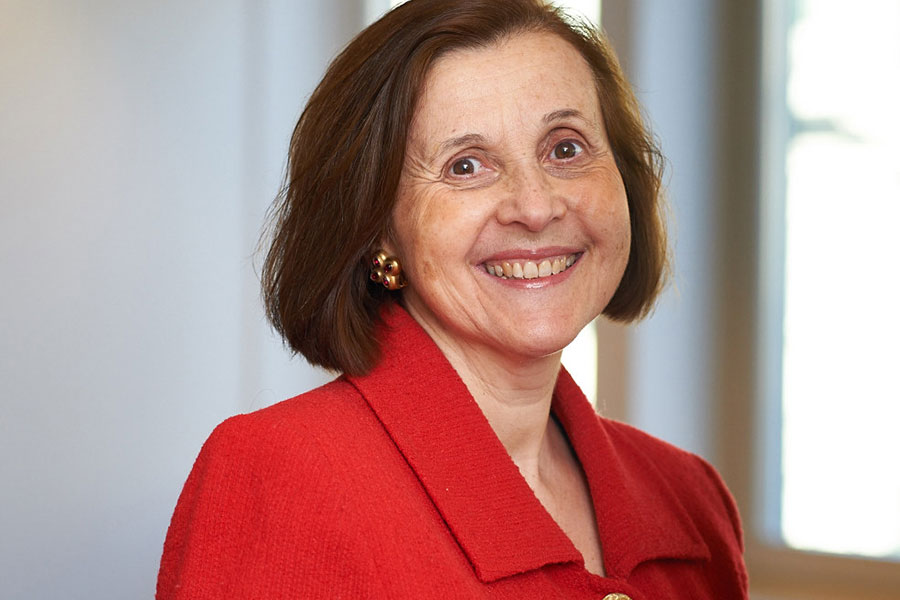
There can sometimes be a downside to being an early adopter. Brigitte Baumann (pictured above), founder of Go Beyond, discovered this harsh fact as an angel investor 17 years ago. The term “impact investing” hadn’t even been coined yet and she innocently assumed that investors, shareholders and board members shared her values. It was a big mistake. “I wanted to find companies that had values which represented the business of the future,” she says. “The idea of people over profit, an uncommon idea back then, was how I thought all business should be run.”

She encountered resistance from big corporations and eventually decided that it was much easier to support entrepreneurs for profit – but who considered all stakeholders, not just shareholders. As they say, if you can’t win people over, find people who already think like you. When Baumann entered the workforce 35 years ago she had expressed a desire to focus more on people. Short-sighted work colleagues told her to pursue a career in Human Resources, to which she replied, “No, I want to be the CEO.”

A stint at Wharton and then Mackenzie at Oxford in the 1990s had people whispering, “Wow! She’s going to be a CEO really fast.” Yet little-by-little she kept seeing the people-centric values and ethics she held dear beginning to divert. She recalls thinking, “Do I really need to give up my personal values and ethics in business?” When she eventually became a CEO people laughed at her approach and called her idealistic. “Don’t you get it?” they said, “This is how you should act as a CEO,” and gave her tired and stereotypical formulas.

Baumann’s had an uncompromising streak in her since she was 18 years old. When asked what she wanted to do with her life she’d say, ‘”I want to bring humanity to business.” She had no idea what “humanity” meant or even how business worked at the time. Fast forward to the present and Baumann has now founded her own company, Go Beyond. It allows novices and sophisticated investors alike to build, manage and exit portfolios and invests in young and fast growing companies. This year she was named European Business Angel Of The Year after delivering annualized returns of 15 percent and quadrupling investors’ money over a two-year period.

Seventy rounds of investment and 30 start-ups later, Go Beyond has created social impact within the traditional for-profit sector that now outweighs anything Baumann might have achieved if she’d stuck to the “traditional” way of investing.

Charitic in France is a web platform that brings charities and companies together to develop resources and corporate responsibility. Inakis is an online shopping guide for bio, eco and fair trade. Shadow Government is a simulation game that allows players to explore strategic planning models for countries, encouraging people to solve the world’s problems without a single election. Ecowizz helps utility customers better understand their energy consumption.

“We filter every deal on impact,” says Baumann. “Our dream is that impact will be how everyone does business one day. Yet, importantly, we don’t label it as such. We’re aware that some of our investors will look at our impact criteria carefully and others less so.” Baumann wants her impact investments to be shining examples of standalone returns, rather than having investors think they are simply supporting a good cause.

Angel investing in the early 2000s also had no women. “There are a lot of products that we as women totally ‘get’, and that most men don’t,” says Baumann. Once again, rather than creating a niche image that might alienate some investors, she decided against creating a women’s-only network, but rather a gender-inclusive one that incorporates ideas and inspirations on how to encourage more women business angels. Some of these considerations have been around the hours they set for meetings or calls, mindful that many female investors are still busy raising families or caring for aging parents. Go Beyond is now the only angel investor company in the world that has over a third women membership.

“I’ve found with women that we tend to want to do good and do well, as opposed to first doing well and then hoping it will do good,” says Baumann. “When you create an angel network and you want to attract more women, you need to have certain products and services that women can connect to – ones that suggest, ‘Hey this is useful to me, but it’s also useful to society.’”

A profound insight came to Baumann when she was pregnant, highlighting the magnitude of the responsibility she has to future generations. “Something happened to me physically, it wasn’t intellectual at all,” she recalls. “I felt my baby in my womb and thought, ‘Oh yeah, that’s what I am living for.’ I became more sensitive to how my investing would impact people in the future.”

Have you ever been faced with a dilemma at work where you’ve been forced to choose between your values and the status quo? Have you ever tried to introduce values in your business that go beyond profit?

Do I Really Need To Give Up My Personal Values And Ethics In Business?

  • An 18 year old woman wants to “bring humanity to business” but doesn’t know how. More than 35 years later, and despite having no role models, she still hasn’t surrendered her values.
  • Brigitte Baumann was told that a CEO must simply look after the bottom line. That’s all.
  • Go Beyond is born; an angel investor company that shows that social impact investments can make a profit and change lives.
  • While recognizing that women ‘get’ certain projects more than men, she wants to harness the ‘gets’ for the benefit of male investors too.

There can sometimes be a downside to being an early adopter. Brigitte Baumann (pictured above), founder of Go Beyond, discovered this harsh fact as an angel investor 17 years ago. The term “impact investing” hadn’t even been coined yet and she innocently assumed that investors, shareholders and board members shared her values. It was a big mistake. “I wanted to find companies that had values which represented the business of the future,” she says. “The idea of people over profit, an uncommon idea back then, was how I thought all business should be run.”

She encountered resistance from big corporations and eventually decided that it was much easier to support entrepreneurs for profit – but who considered all stakeholders, not just shareholders. As they say, if you can’t win people over, find people who already think like you. When Baumann entered the workforce 35 years ago she had expressed a desire to focus more on people. Short-sighted work colleagues told her to pursue a career in Human Resources, to which she replied, “No, I want to be the CEO.”

A stint at Wharton and then Mackenzie at Oxford in the 1990s had people whispering, “Wow! She’s going to be a CEO really fast.” Yet little-by-little she kept seeing the people-centric values and ethics she held dear beginning to divert. She recalls thinking, “Do I really need to give up my personal values and ethics in business?” When she eventually became a CEO people laughed at her approach and called her idealistic. “Don’t you get it?” they said, “This is how you should act as a CEO,” and gave her tired and stereotypical formulas.

Baumann’s had an uncompromising streak in her since she was 18 years old. When asked what she wanted to do with her life she’d say, ‘”I want to bring humanity to business.” She had no idea what “humanity” meant or even how business worked at the time. Fast forward to the present and Baumann has now founded her own company, Go Beyond. It allows novices and sophisticated investors alike to build, manage and exit portfolios and invests in young and fast growing companies. This year she was named European Business Angel Of The Year after delivering annualized returns of 15 percent and quadrupling investors’ money over a two-year period.

Seventy rounds of investment and 30 start-ups later, Go Beyond has created social impact within the traditional for-profit sector that now outweighs anything Baumann might have achieved if she’d stuck to the “traditional” way of investing.

Charitic in France is a web platform that brings charities and companies together to develop resources and corporate responsibility. Inakis is an online shopping guide for bio, eco and fair trade. Shadow Government is a simulation game that allows players to explore strategic planning models for countries, encouraging people to solve the world’s problems without a single election. Ecowizz helps utility customers better understand their energy consumption.

“We filter every deal on impact,” says Baumann. “Our dream is that impact will be how everyone does business one day. Yet, importantly, we don’t label it as such. We’re aware that some of our investors will look at our impact criteria carefully and others less so.” Baumann wants her impact investments to be shining examples of standalone returns, rather than having investors think they are simply supporting a good cause.

Angel investing in the early 2000s also had no women. “There are a lot of products that we as women totally ‘get’, and that most men don’t,” says Baumann. Once again, rather than creating a niche image that might alienate some investors, she decided against creating a women’s-only network, but rather a gender-inclusive one that incorporates ideas and inspirations on how to encourage more women business angels. Some of these considerations have been around the hours they set for meetings or calls, mindful that many female investors are still busy raising families or caring for aging parents. Go Beyond is now the only angel investor company in the world that has over a third women membership.

“I’ve found with women that we tend to want to do good and do well, as opposed to first doing well and then hoping it will do good,” says Baumann. “When you create an angel network and you want to attract more women, you need to have certain products and services that women can connect to – ones that suggest, ‘Hey this is useful to me, but it’s also useful to society.’”

A profound insight came to Baumann when she was pregnant, highlighting the magnitude of the responsibility she has to future generations. “Something happened to me physically, it wasn’t intellectual at all,” she recalls. “I felt my baby in my womb and thought, ‘Oh yeah, that’s what I am living for.’ I became more sensitive to how my investing would impact people in the future.”

Have you ever been faced with a dilemma at work where you’ve been forced to choose between your values and the status quo? Have you ever tried to introduce values in your business that go beyond profit?

U.S. Small Towns Take On Energy-Guzzling Bitcoin Miners

Environmentalists warn carbon emissions from power-intensive bitcoin mining could harm efforts to limit global warming.

In mid-April, nearly 150 local environmentalists marched to the gates of Greenidge Generation, a bitcoin mining facility in upstate New York, in a last-ditch effort to block its expansion.

Their objection: that the creation of the cryptocurrency, an energy-intensive process in which computers compete to solve mathematical puzzles, may harm efforts to limit global warming.

Three days later, the planning board in the small town of Torrey voted 4-1 to allow Greenidge Generation to more than double the number of machines it has mining bitcoin.

“Everything we want to do to fight climate change could be erased,” Yvonne Taylor, one of the march’s leaders, told the Thomson Reuters Foundation.

The showdown in New York – where a private equity firm turned a moth-balled coal power plant into one fired by natural gas that provides electricity to mine bitcoin onsite – is part of an increasingly fraught debate over the social benefits and environmental costs of the world’s most popular cryptocurrency.

Bitcoin consumes almost the same amount of electricity annually as Egypt did in 2019, according to an index compiled by the University of Cambridge.

On Wednesday, Elon Musk, the chief executive of Tesla Inc, said his company would no longer accept bitcoin for car purchases, citing environmental concerns, in a swift reversal of its position on the currency after criticism by some investors.

“As the price rises, bitcoin could consume as much energy as all the data centers in the world combined,” said Alex de Vries, founder of research platform Digiconomist, which publishes estimates of bitcoin’s climate impact.

“At least other data centers are providing us with cloud computing used by billions every day. Hardly anybody is using bitcoin,” he added.

Greenidge spokesman Michael McKeon said in an emailed statement the firm was doing all it could to address environmental concerns.

“Natural gas is a bridge to the future and it’s an important part of the energy mix for New York State,” he said. “We are committed to further investing in ways to enhance our green profile and are looking at various options right now.”

U.S. Small Towns Take On Energy-Guzzling Bitcoin Miners

Environmentalists warn carbon emissions from power-intensive bitcoin mining could harm efforts to limit global warming.

In mid-April, nearly 150 local environmentalists marched to the gates of Greenidge Generation, a bitcoin mining facility in upstate New York, in a last-ditch effort to block its expansion.

Their objection: that the creation of the cryptocurrency, an energy-intensive process in which computers compete to solve mathematical puzzles, may harm efforts to limit global warming.

Three days later, the planning board in the small town of Torrey voted 4-1 to allow Greenidge Generation to more than double the number of machines it has mining bitcoin.

“Everything we want to do to fight climate change could be erased,” Yvonne Taylor, one of the march’s leaders, told the Thomson Reuters Foundation.

The showdown in New York – where a private equity firm turned a moth-balled coal power plant into one fired by natural gas that provides electricity to mine bitcoin onsite – is part of an increasingly fraught debate over the social benefits and environmental costs of the world’s most popular cryptocurrency.

Bitcoin consumes almost the same amount of electricity annually as Egypt did in 2019, according to an index compiled by the University of Cambridge.

On Wednesday, Elon Musk, the chief executive of Tesla Inc, said his company would no longer accept bitcoin for car purchases, citing environmental concerns, in a swift reversal of its position on the currency after criticism by some investors.

“As the price rises, bitcoin could consume as much energy as all the data centers in the world combined,” said Alex de Vries, founder of research platform Digiconomist, which publishes estimates of bitcoin’s climate impact.

“At least other data centers are providing us with cloud computing used by billions every day. Hardly anybody is using bitcoin,” he added.

Greenidge spokesman Michael McKeon said in an emailed statement the firm was doing all it could to address environmental concerns.

“Natural gas is a bridge to the future and it’s an important part of the energy mix for New York State,” he said. “We are committed to further investing in ways to enhance our green profile and are looking at various options right now.”

How to Lead Loudmouthed Associates

On the first day of school when I was a young boy, my mother suggested to my new teacher that she (they were all she’s) sit me at the school desk right in front of her. “You will thank me later,” she would tell them. I enjoyed hearing myself talk over quietly listening to the teacher. A few teachers ignored my mother’s advice and arranged the class seating alphabetically. After a week or so, I was seated at the desk right in front of the teacher.

Every leader at some point has an associate with way too much “extravertness” and a propensity to offer an opinion on any topic, regardless of qualifications. Consider it a gift — a much better extreme than the quiet associates who keep all opinions and views inside unless compelled to surface. The challenge is using a governor on the noisy team member without it becoming a muzzle.

Why Leaders Need Loudmouths

Noisy associates might need to be the center of attention, but they also can bring a level of honesty and transparency needed by a work group. They can encourage quieter associates to act on, “if she can say it, so can I.” Giving some rein to a live wire can signal openness for healthy dissent and alternative points of view. As the leader, you telegraph the actual boundaries of decorum by what you allow loud mouths to “get away with.” Done correctly, it can foster authenticity and elevate trust.

History has had its share of noisy people of influence. President Bill Clinton, TV personality Oprah, actor Tom Hanks, both prime minister Margaret Thatcher and Winston Churchill were all people who could talk their way out of almost anything. Apple founder Steve Jobs and boxer Muhammed Ali were famous for pontificating on most any topic and enjoying an egocentric status. Their propensity to talk provided assertive leadership; it also sometimes squelched other speakers around them.

Why Loudmouths Need Leadership

My most frequent critique growing up was, “Can you just be quiet for a while?” My cousins were more graphic, labeling me a “blabbermouth” — meaning “just talking to hear oneself talk” with little consideration for substance. The moniker comes in several other forms — chatterbox, motormouth, or windbag. Loudmouths need external guidance to surface relevance and meaning rather than it solely becoming time-wasting noise.

Loudmouths are sometimes like the smart kid in school who put his or her hand up first every time the teacher asked a question. They gave little consideration to “let someone else have a turn.” They can dominate a discussion by assertively controlling who gets in. Their non-ending monologue can create boredom and impatience from other team members. Without supervision, their voices (and opinions) are the only ones considered, potentially leading to poor decisions and conclusions that fail to reflect the expertise of others. It takes leadership to ensure there is a diversity of views and airtime to others. Here are three ways to lead a loudmouth.

1. Provide Private Coaching

In a one-on-one conversation, thank the noisy team member for her or his consistent contribution. Let the person know you value their passion and interest. Solicit the person’s help in allowing others to have an opportunity to speak their mind. Let the person know you are not bothered by long periods of silence after soliciting input. To a highly extroverted associate, silence is uncomfortable, often compelling them to fill it with verbiage. Be prepared to have another coaching session, one that is sterner. Remind the person that your guidance is grounded in your concern for the entire team and your leadership responsibility to give everyone a voice.

2. Gently Rein in Loudmouth Dominance

Despite your thoughtful coaching, old habits may be hard to break. There may still be times when the dominating talker wants to take over a team discussion. Comments like, “George, I know you have an opinion on this; let’s find out what someone else thinks about this” can nip an assertive talker in the bud before it blossoms into their taking over. You might need to specifically ask another person for a view as in, “Jane, what are your thoughts?” It might be necessary to interrupt a long monologue with, “Pardon me for interrupting, George, but could you give me a brief example?” As soon as the “short example” has ended, direct the discussion to someone else.

3. Let the Person Switch Places

Sometimes, allowing the person in charge can help. I worked with an effective CEO who rotated leadership of regular staff meetings. He always opened meetings by making it clear all views were to be given a voice and the discussion shared by everyone. He also reminded the team that the only way to get through the agenda was to have no grandstanding or soapbox speeches. After his resident loudmouth team member had taken a turn in the leadership seat, the person commented that he never realized how much he dominated meetings until he was “forced”to be on the other side as a listener.

It is easy to communicate dark judgment when publicly dealing with a loudmouth. While you may gain their quietness, you risk nurturing a culture of caution on the part of your whole team. However, as the guardian of team communication, it is your role to find productive ways to channel verbosity, quill individual dominance, and support diverse views. Remember: loudmouths are rarely noisy to lessen your authority but rather to spotlight their presence.

How to Lead Loudmouthed Associates

On the first day of school when I was a young boy, my mother suggested to my new teacher that she (they were all she’s) sit me at the school desk right in front of her. “You will thank me later,” she would tell them. I enjoyed hearing myself talk over quietly listening to the teacher. A few teachers ignored my mother’s advice and arranged the class seating alphabetically. After a week or so, I was seated at the desk right in front of the teacher.

Every leader at some point has an associate with way too much “extravertness” and a propensity to offer an opinion on any topic, regardless of qualifications. Consider it a gift — a much better extreme than the quiet associates who keep all opinions and views inside unless compelled to surface. The challenge is using a governor on the noisy team member without it becoming a muzzle.

Why Leaders Need Loudmouths

Noisy associates might need to be the center of attention, but they also can bring a level of honesty and transparency needed by a work group. They can encourage quieter associates to act on, “if she can say it, so can I.” Giving some rein to a live wire can signal openness for healthy dissent and alternative points of view. As the leader, you telegraph the actual boundaries of decorum by what you allow loud mouths to “get away with.” Done correctly, it can foster authenticity and elevate trust.

History has had its share of noisy people of influence. President Bill Clinton, TV personality Oprah, actor Tom Hanks, both prime minister Margaret Thatcher and Winston Churchill were all people who could talk their way out of almost anything. Apple founder Steve Jobs and boxer Muhammed Ali were famous for pontificating on most any topic and enjoying an egocentric status. Their propensity to talk provided assertive leadership; it also sometimes squelched other speakers around them.

Why Loudmouths Need Leadership

My most frequent critique growing up was, “Can you just be quiet for a while?” My cousins were more graphic, labeling me a “blabbermouth” — meaning “just talking to hear oneself talk” with little consideration for substance. The moniker comes in several other forms — chatterbox, motormouth, or windbag. Loudmouths need external guidance to surface relevance and meaning rather than it solely becoming time-wasting noise.

Loudmouths are sometimes like the smart kid in school who put his or her hand up first every time the teacher asked a question. They gave little consideration to “let someone else have a turn.” They can dominate a discussion by assertively controlling who gets in. Their non-ending monologue can create boredom and impatience from other team members. Without supervision, their voices (and opinions) are the only ones considered, potentially leading to poor decisions and conclusions that fail to reflect the expertise of others. It takes leadership to ensure there is a diversity of views and airtime to others. Here are three ways to lead a loudmouth.

1. Provide Private Coaching

In a one-on-one conversation, thank the noisy team member for her or his consistent contribution. Let the person know you value their passion and interest. Solicit the person’s help in allowing others to have an opportunity to speak their mind. Let the person know you are not bothered by long periods of silence after soliciting input. To a highly extroverted associate, silence is uncomfortable, often compelling them to fill it with verbiage. Be prepared to have another coaching session, one that is sterner. Remind the person that your guidance is grounded in your concern for the entire team and your leadership responsibility to give everyone a voice.

2. Gently Rein in Loudmouth Dominance

Despite your thoughtful coaching, old habits may be hard to break. There may still be times when the dominating talker wants to take over a team discussion. Comments like, “George, I know you have an opinion on this; let’s find out what someone else thinks about this” can nip an assertive talker in the bud before it blossoms into their taking over. You might need to specifically ask another person for a view as in, “Jane, what are your thoughts?” It might be necessary to interrupt a long monologue with, “Pardon me for interrupting, George, but could you give me a brief example?” As soon as the “short example” has ended, direct the discussion to someone else.

3. Let the Person Switch Places

Sometimes, allowing the person in charge can help. I worked with an effective CEO who rotated leadership of regular staff meetings. He always opened meetings by making it clear all views were to be given a voice and the discussion shared by everyone. He also reminded the team that the only way to get through the agenda was to have no grandstanding or soapbox speeches. After his resident loudmouth team member had taken a turn in the leadership seat, the person commented that he never realized how much he dominated meetings until he was “forced”to be on the other side as a listener.

It is easy to communicate dark judgment when publicly dealing with a loudmouth. While you may gain their quietness, you risk nurturing a culture of caution on the part of your whole team. However, as the guardian of team communication, it is your role to find productive ways to channel verbosity, quill individual dominance, and support diverse views. Remember: loudmouths are rarely noisy to lessen your authority but rather to spotlight their presence.

Qatar Airways Cargo Returns Seven Rescued Lions To Their Natural Habitat For Free

By helping the Ukraine-based NGO Warriors of Wildlife (WOW), Qatar Airways Cargo kept its promise to fly lions to their natural habitat for free. It took six months of hard work involving no less than a dozen departments and over 50 employees to ensure a successful operation.

On Thursday, April 29, the Kouga and Swinburne nature reserves in South Africa welcomed three lions, one lioness and three cubs. This involved a three-day trip from Kiev to Doha and Johannesburg so that the lions could walk on grass for the first time in their lives. So far, all are in good health.

Transporting wild animals back to their natural environment at the request of wildlife protection bodies is a promise made by Qatar Airways Cargo as part its “Rewild the Planet” initiative and is chapter two of the airline’s WeQare sustainability program.

“Repatriating wild animals is a major undertaking, especially over such a great distance,” said Lionel De Lange, Founder and Director of WOW. “But we were able to count on the Qatar Airways Cargo teams who are 100% behind us and the work we do. They played a critical role. Without them, these seven lions would still be in captivity in atrocious conditions.”

Transporting wild animals requires close cooperation between the specific services involved within Qatar Airways Cargo and the NGO staff. The NGO staff look after the animals’ well-being during the entire journey and handlers from the Qatar Airways Cargo’s Live Animals facility are present at every stage. The NGO was authorised to stay with the lions in special holding areas to maintain a constant link with them.

These lions have lived in captivity for years and will never be able to adapt in the wild. They will spend the next few months in a protected area where they will simply learn to explore nature again. They will then be transferred to a much larger nature reserve where they will be protected and taken care of for the rest of their lives.

Qatar Airways Cargo has pledged to continue the program so that the transport costs and logistics will never prevent NGOs from Rewilding the Planet.

Qatar Airways Cargo Returns Seven Rescued Lions To Their Natural Habitat For Free

By helping the Ukraine-based NGO Warriors of Wildlife (WOW), Qatar Airways Cargo kept its promise to fly lions to their natural habitat for free. It took six months of hard work involving no less than a dozen departments and over 50 employees to ensure a successful operation.

On Thursday, April 29, the Kouga and Swinburne nature reserves in South Africa welcomed three lions, one lioness and three cubs. This involved a three-day trip from Kiev to Doha and Johannesburg so that the lions could walk on grass for the first time in their lives. So far, all are in good health.

Transporting wild animals back to their natural environment at the request of wildlife protection bodies is a promise made by Qatar Airways Cargo as part its “Rewild the Planet” initiative and is chapter two of the airline’s WeQare sustainability program.

“Repatriating wild animals is a major undertaking, especially over such a great distance,” said Lionel De Lange, Founder and Director of WOW. “But we were able to count on the Qatar Airways Cargo teams who are 100% behind us and the work we do. They played a critical role. Without them, these seven lions would still be in captivity in atrocious conditions.”

Transporting wild animals requires close cooperation between the specific services involved within Qatar Airways Cargo and the NGO staff. The NGO staff look after the animals’ well-being during the entire journey and handlers from the Qatar Airways Cargo’s Live Animals facility are present at every stage. The NGO was authorised to stay with the lions in special holding areas to maintain a constant link with them.

These lions have lived in captivity for years and will never be able to adapt in the wild. They will spend the next few months in a protected area where they will simply learn to explore nature again. They will then be transferred to a much larger nature reserve where they will be protected and taken care of for the rest of their lives.

Qatar Airways Cargo has pledged to continue the program so that the transport costs and logistics will never prevent NGOs from Rewilding the Planet.

Trust Comes On a Bicycle and Leaves On a Ferrari

PODCAST PEOPLE: A Summary from the Real Leaders Podcast

“We used to have a saying when I was at Shell: Trust comes to you on a bicycle, trust leaves you on a Ferrari. It’s so difficult to build trust but it’s so easy to lose trust. And trust is earned, really. You have to earn it, you can’t demand it.” 

Babs Omotowa is an expert in strategy, commercial, technical, operations, governance, energy transition, stakeholder, change, and supply chain management, built though an expansive career at Shell International. He shares a message of resilience in his book, From Storeroom to Boardroom: How Integrity and Courage Shape Global Business. 

The following is a summary of Episode 188 of the Real Leaders Podcast, a conversation with Chairman of Montserrado, Babs Omotowa. Watch or listen to the full conversation below.

Building Trust in Your Community

Babs outlines the things required of a leader in order to earn the trust of their organization. He declares that a trustworthy leader must be consistent, authentic, and able to follow-through. People need to hear exactly what you plan to do, and be confident that you will do exactly what you say. Your vision also needs to be beyond self-actualization. 

Babs also emphasizes that in order to maintain trust, a leader needs to admit and be transparent about failure. If you don’t acknowledge your mistakes, your staff will never trust you. 

“A leader must make clear that you are indeed a human being as well. Sometimes leaders try to show a persona that sometimes can feel larger than life. But people connect to you more when you make mistakes as well, when you admit your mistakes, and you learn, you move forward and you correct those mistakes. It’s very important that people see you as that, that you are human.”

Listen to Episode 188 on Spotify, Anchor, Crowdcast, and Apple Podcasts

Mature Leadership

Babs outlines that the organizations with the greatest success function under mature leadership, and his experience sees mature leaders as those who are willing to listen, who understand that they don’t have all the answers, who really understand where they want to go, but are open to consulting other resources and talents. He emphasizes that a good leader should be comfortable having individuals on their team more intelligent than they are. 

“As a leader you should not be the most intelligent in the room. You should have the good vision, the clarity on where you are going, the strength to be able to help your team overcome hurdles, but you should have in your team those who are able to have different perspectives, but even those who will have new creativity, new ideas.” 

Babs offers three traits of successful leadership: 

  1. A vision of where they need to get to, because people want to know where they are going, and they want to know that where they’re going is going to be better than where they are. 
  2. The ability to inspire the team, to motivate them to want to get on that journey, to coach them, and make sure they have the tools and techniques to get to that next level. 
  3. The ability to support and help the people, the staff, to go on that journey. Because workers will go through challenges as they go on that journey, and they will need help to overcome these challenges.

Trust Comes On a Bicycle and Leaves On a Ferrari

PODCAST PEOPLE: A Summary from the Real Leaders Podcast

“We used to have a saying when I was at Shell: Trust comes to you on a bicycle, trust leaves you on a Ferrari. It’s so difficult to build trust but it’s so easy to lose trust. And trust is earned, really. You have to earn it, you can’t demand it.” 

Babs Omotowa is an expert in strategy, commercial, technical, operations, governance, energy transition, stakeholder, change, and supply chain management, built though an expansive career at Shell International. He shares a message of resilience in his book, From Storeroom to Boardroom: How Integrity and Courage Shape Global Business. 

The following is a summary of Episode 188 of the Real Leaders Podcast, a conversation with Chairman of Montserrado, Babs Omotowa. Watch or listen to the full conversation below.

Building Trust in Your Community

Babs outlines the things required of a leader in order to earn the trust of their organization. He declares that a trustworthy leader must be consistent, authentic, and able to follow-through. People need to hear exactly what you plan to do, and be confident that you will do exactly what you say. Your vision also needs to be beyond self-actualization. 

Babs also emphasizes that in order to maintain trust, a leader needs to admit and be transparent about failure. If you don’t acknowledge your mistakes, your staff will never trust you. 

“A leader must make clear that you are indeed a human being as well. Sometimes leaders try to show a persona that sometimes can feel larger than life. But people connect to you more when you make mistakes as well, when you admit your mistakes, and you learn, you move forward and you correct those mistakes. It’s very important that people see you as that, that you are human.”

Listen to Episode 188 on Spotify, Anchor, Crowdcast, and Apple Podcasts

Mature Leadership

Babs outlines that the organizations with the greatest success function under mature leadership, and his experience sees mature leaders as those who are willing to listen, who understand that they don’t have all the answers, who really understand where they want to go, but are open to consulting other resources and talents. He emphasizes that a good leader should be comfortable having individuals on their team more intelligent than they are. 

“As a leader you should not be the most intelligent in the room. You should have the good vision, the clarity on where you are going, the strength to be able to help your team overcome hurdles, but you should have in your team those who are able to have different perspectives, but even those who will have new creativity, new ideas.” 

Babs offers three traits of successful leadership: 

  1. A vision of where they need to get to, because people want to know where they are going, and they want to know that where they’re going is going to be better than where they are. 
  2. The ability to inspire the team, to motivate them to want to get on that journey, to coach them, and make sure they have the tools and techniques to get to that next level. 
  3. The ability to support and help the people, the staff, to go on that journey. Because workers will go through challenges as they go on that journey, and they will need help to overcome these challenges.
0