Your Success May Also be Your Biggest Blindspot

Like most of you reading this article, I was initially dismayed and stunned by what happened at the Oscar awards ceremony earlier this year. As someone who studies the motivations of leaders and how they influence the people they lead, upon further reflection, my surprise gradually ebbed away. In this article, I’ll explain why.

First, we must all understand that the Slap Heard Around the World struck a chord around the world because it so closely mirrored what we’ve all been watching for over a month now on the global stage—a larger physical and economic power sauntering into the sovereign territory of a smaller one unannounced and attempting to strike it down. Hard.

You Used to Be Like Me

A leadership principle I teach to companies and organizations is called “Nothing Blinds Like Success.” As social psychologist Michael Hogg has uncovered, leaders are elected or selected because they have internalized the values, characteristics, and features of the group.

Over time, however, something unfortunate happens: they shift from being prototypical and representing what the group most cares about to being expelled—socially at first and, eventually for most, physically—from the same group they used to represent so well.

Consider Robert Mugabe. After winning the revolution against the white Ian Smith regime in Rhodesia, the ZANU-Patriotic Front rebel leader became the prime minister of the newly independent republic of Zimbabwe in 1980.

Did Mugabe apply the caring and compassion for everyday Zimbabweans that caused his countrymen and women to follow him as a revolutionary in the governance of the country?

Not at all. Instead, he became a ruthless dictator who stewarded his country into becoming rated by the UN as one of the least habitable on the planet and a paragon of human rights violations for almost four decades until he was put under house arrest in 2017.

It Starts On the Way Up

How do leaders go from regular folks to first to worst? It begins with their ascent. As they rise to power, their followers focus on everything they say and do. Why? Their livelihoods depend on it.

With all this attention on them, leaders begin to believe they are larger than life. They start to believe their own press, to breathe their own exhaust. They start having thoughts such as, “I am extraordinary. That’s why I’ve risen to this role. That’s why so many are focused on my every move.”

As a consequence of this type of thinking, they stop paying attention to the people they lead. Social psychological research has found that leaders are more likely to eat more than their share of the cookies, to allow more crumbs to fall from their mouths, and to eat with their mouths open than their subordinates.

Why? The higher an individual climbs the ladder of success, the less they attune to and empathize with others.

King Richard

Enough about the general dynamics of leadership: let’s now consider Will Smith. The veteran actor and producer is the third-highest-paid organizational member (at $40 million per movie) in an industry that currently employs over 250,000 people (down from over 440,000 before the pandemic).

Smith knew he was a shoe-in to receive its highest accolade to an individual member—the Best Actor award—and continue his ascent to becoming the highest-paid individual in the industry. Perhaps he really does merit the name King Richard.

Then, after his slap-down of Rock, like a highly powerful senior executive that offends many people in the room but knows it will damage the CEO more to make a scene of his forced departure than it will benefit the company, Smith refused to leave when asked by the Academy.

Power and Our Brightest Stars

As with Mugabe and most of our leaders who are comfortably embedded in their roles at the top of their fields and become disconnected from the rank-and-file (Pope Francis, the first pope to refuse to live in the Papal Palace in over a century, is a notable exception), Smith enacts a code of living that most of us cannot even fathom.

King Richard’s behavior is an unfortunate outcome of the delusion many leaders allow to guide them every day. Encircled by sycophantic followers rather than upright colleagues willing to share with them the real information of what’s happening in their organization that they desperately need to listen to in order to sustain their success, they live in a filter bubble almost entirely conceived by their own imagination. When you live at the top of the pyramid, you’re only surrounded by air.

Sometimes, like the recent Oscars, this unfortunate byproduct of a leader’s ascent to power can produce disastrous results—for the people they lead and the leaders themselves.


Your Success May Also be Your Biggest Blindspot

Like most of you reading this article, I was initially dismayed and stunned by what happened at the Oscar awards ceremony earlier this year. As someone who studies the motivations of leaders and how they influence the people they lead, upon further reflection, my surprise gradually ebbed away. In this article, I’ll explain why.

First, we must all understand that the Slap Heard Around the World struck a chord around the world because it so closely mirrored what we’ve all been watching for over a month now on the global stage—a larger physical and economic power sauntering into the sovereign territory of a smaller one unannounced and attempting to strike it down. Hard.

You Used to Be Like Me

A leadership principle I teach to companies and organizations is called “Nothing Blinds Like Success.” As social psychologist Michael Hogg has uncovered, leaders are elected or selected because they have internalized the values, characteristics, and features of the group.

Over time, however, something unfortunate happens: they shift from being prototypical and representing what the group most cares about to being expelled—socially at first and, eventually for most, physically—from the same group they used to represent so well.

Consider Robert Mugabe. After winning the revolution against the white Ian Smith regime in Rhodesia, the ZANU-Patriotic Front rebel leader became the prime minister of the newly independent republic of Zimbabwe in 1980.

Did Mugabe apply the caring and compassion for everyday Zimbabweans that caused his countrymen and women to follow him as a revolutionary in the governance of the country?

Not at all. Instead, he became a ruthless dictator who stewarded his country into becoming rated by the UN as one of the least habitable on the planet and a paragon of human rights violations for almost four decades until he was put under house arrest in 2017.

It Starts On the Way Up

How do leaders go from regular folks to first to worst? It begins with their ascent. As they rise to power, their followers focus on everything they say and do. Why? Their livelihoods depend on it.

With all this attention on them, leaders begin to believe they are larger than life. They start to believe their own press, to breathe their own exhaust. They start having thoughts such as, “I am extraordinary. That’s why I’ve risen to this role. That’s why so many are focused on my every move.”

As a consequence of this type of thinking, they stop paying attention to the people they lead. Social psychological research has found that leaders are more likely to eat more than their share of the cookies, to allow more crumbs to fall from their mouths, and to eat with their mouths open than their subordinates.

Why? The higher an individual climbs the ladder of success, the less they attune to and empathize with others.

King Richard

Enough about the general dynamics of leadership: let’s now consider Will Smith. The veteran actor and producer is the third-highest-paid organizational member (at $40 million per movie) in an industry that currently employs over 250,000 people (down from over 440,000 before the pandemic).

Smith knew he was a shoe-in to receive its highest accolade to an individual member—the Best Actor award—and continue his ascent to becoming the highest-paid individual in the industry. Perhaps he really does merit the name King Richard.

Then, after his slap-down of Rock, like a highly powerful senior executive that offends many people in the room but knows it will damage the CEO more to make a scene of his forced departure than it will benefit the company, Smith refused to leave when asked by the Academy.

Power and Our Brightest Stars

As with Mugabe and most of our leaders who are comfortably embedded in their roles at the top of their fields and become disconnected from the rank-and-file (Pope Francis, the first pope to refuse to live in the Papal Palace in over a century, is a notable exception), Smith enacts a code of living that most of us cannot even fathom.

King Richard’s behavior is an unfortunate outcome of the delusion many leaders allow to guide them every day. Encircled by sycophantic followers rather than upright colleagues willing to share with them the real information of what’s happening in their organization that they desperately need to listen to in order to sustain their success, they live in a filter bubble almost entirely conceived by their own imagination. When you live at the top of the pyramid, you’re only surrounded by air.

Sometimes, like the recent Oscars, this unfortunate byproduct of a leader’s ascent to power can produce disastrous results—for the people they lead and the leaders themselves.
10 Ways You’ll Benefit from Being a Mentor

As a leader, you’re really busy. While mentoring a rising high performer may sound like a great opportunity, you might worry that you just don’t have the bandwidth. But here’s something you may not have considered: Most people think of mentoring as a giving exchange, but it’s really a getting exchange.

Bert Thornton, the former president and COO of Waffle House, and Dr. Sherry Hartnett founder of the experiential learning Executive Mentor Program, share ten ways this relationship can benefit to you.

1. Mentoring can reignite your engagement. 

As you share your accumulated knowledge with your mentee, you’ll explain why you chose the path you did and reflect on what your career means to you. Especially if you’ve just been going through the motions for a while, this self-reflection can help you rediscover your enthusiasm for your job and reconnect you with your professional purpose. 

2. It can help you hone new skills

Mentees can teach, too! Often, they keep their mentors up to speed with current tools and technologies (for instance, what apps they’re using for productivity), help them learn to work with those of a different generation or background, and give them new insights into topics like inclusivity and unconscious bias.

3. Mentoring can help you get to know yourself better

You’ll sometimes need to take a step back and ponder what you really “know.” You’ll confront topics such as the nature of leadership, what success really means, and how to be a better person. This introspection will either reinforce your viewpoint or change it, driving learning and personal growth. 

4. You can develop lifelong relationships

“I still have contact with men and women who sat across the table from me 40 years ago,” shares Thornton. “Through the years, we’ve talked about college, jobs, surviving and thriving in the business world, marriage and kids, finances, and stress. Now we talk about how they enjoy the fruits of a successful life. No one can doubt this is the perfect outcome.” 

5. It expands your network

Over the years, many of your mentees will go on to work for other organizations. Maybe you will too. You never know how these connections might eventually help you, your company, or your future mentees.

6. It raises your profile in the organization

In most organizations—especially those with a formal mentoring program—mentors are considered an influential, successful group of leaders. When you add value to your company by developing mentees, your reputation will benefit.

7. Being a mentor pushes you to always do your best

“Knowing that your mentee is closely observing how you think, act, tackle challenges, manage conflict, etc., will ensure that you’re not cutting any corners,” points out Dr. Hartnett. “If you give your mentee advice, they need to see you implementing it in your career as well.”

8. Mentoring feels good

“To me, true success isn’t as much about wealth or power as it is about adding value, and where better to add value than in another person’s life?” says Thornton. “It’s a privilege to pay my experience forward to deserving, emerging leaders, and I have gained a deep, abiding sense of satisfaction from doing so.”

9. It can give new life to your self-development

Great leaders consistently consume an impactful list of books, articles, podcasts, websites, videos, etc. If your self-development has fallen by the wayside, you’ll need to kickstart it again if you expect your mentee to invest in themselves in a similar way. Revisit resources that have been of value in the past and discover new ones.

10. Mentoring gives you faith in the future

“Mentors often report that their opinion of the next generation has improved because they have a better understanding of younger workers’ strengths and potential,” says Dr. Hartnett. “Mentors also say they’ve become more effective leaders because they’ve gained important insights about younger people’s outlooks and priorities.”

“When you pass on your hard-won knowledge, experience, and wisdom, you powerfully impact rising high performers, your organization, and your industry,” says Thornton. “What better legacy can you leave?” 

“And remember, developing mentees into better employees helps not just them, but your whole organization,” adds Dr. Hartnett. “An investment in a mentoring relationship is an investment in your professional success.”

Bert Thornton and Dr. Sherry Hartnett’s new book is High-Impact Mentoring: A Practical Guide to Creating Value in Other People’s Lives.

10 Ways You’ll Benefit from Being a Mentor

As a leader, you’re really busy. While mentoring a rising high performer may sound like a great opportunity, you might worry that you just don’t have the bandwidth. But here’s something you may not have considered: Most people think of mentoring as a giving exchange, but it’s really a getting exchange.

Bert Thornton, the former president and COO of Waffle House, and Dr. Sherry Hartnett founder of the experiential learning Executive Mentor Program, share ten ways this relationship can benefit to you.

1. Mentoring can reignite your engagement. 

As you share your accumulated knowledge with your mentee, you’ll explain why you chose the path you did and reflect on what your career means to you. Especially if you’ve just been going through the motions for a while, this self-reflection can help you rediscover your enthusiasm for your job and reconnect you with your professional purpose. 

2. It can help you hone new skills

Mentees can teach, too! Often, they keep their mentors up to speed with current tools and technologies (for instance, what apps they’re using for productivity), help them learn to work with those of a different generation or background, and give them new insights into topics like inclusivity and unconscious bias.

3. Mentoring can help you get to know yourself better

You’ll sometimes need to take a step back and ponder what you really “know.” You’ll confront topics such as the nature of leadership, what success really means, and how to be a better person. This introspection will either reinforce your viewpoint or change it, driving learning and personal growth. 

4. You can develop lifelong relationships

“I still have contact with men and women who sat across the table from me 40 years ago,” shares Thornton. “Through the years, we’ve talked about college, jobs, surviving and thriving in the business world, marriage and kids, finances, and stress. Now we talk about how they enjoy the fruits of a successful life. No one can doubt this is the perfect outcome.” 

5. It expands your network

Over the years, many of your mentees will go on to work for other organizations. Maybe you will too. You never know how these connections might eventually help you, your company, or your future mentees.

6. It raises your profile in the organization

In most organizations—especially those with a formal mentoring program—mentors are considered an influential, successful group of leaders. When you add value to your company by developing mentees, your reputation will benefit.

7. Being a mentor pushes you to always do your best

“Knowing that your mentee is closely observing how you think, act, tackle challenges, manage conflict, etc., will ensure that you’re not cutting any corners,” points out Dr. Hartnett. “If you give your mentee advice, they need to see you implementing it in your career as well.”

8. Mentoring feels good

“To me, true success isn’t as much about wealth or power as it is about adding value, and where better to add value than in another person’s life?” says Thornton. “It’s a privilege to pay my experience forward to deserving, emerging leaders, and I have gained a deep, abiding sense of satisfaction from doing so.”

9. It can give new life to your self-development

Great leaders consistently consume an impactful list of books, articles, podcasts, websites, videos, etc. If your self-development has fallen by the wayside, you’ll need to kickstart it again if you expect your mentee to invest in themselves in a similar way. Revisit resources that have been of value in the past and discover new ones.

10. Mentoring gives you faith in the future

“Mentors often report that their opinion of the next generation has improved because they have a better understanding of younger workers’ strengths and potential,” says Dr. Hartnett. “Mentors also say they’ve become more effective leaders because they’ve gained important insights about younger people’s outlooks and priorities.”

“When you pass on your hard-won knowledge, experience, and wisdom, you powerfully impact rising high performers, your organization, and your industry,” says Thornton. “What better legacy can you leave?” 

“And remember, developing mentees into better employees helps not just them, but your whole organization,” adds Dr. Hartnett. “An investment in a mentoring relationship is an investment in your professional success.”

Bert Thornton and Dr. Sherry Hartnett’s new book is High-Impact Mentoring: A Practical Guide to Creating Value in Other People’s Lives.

Methane-busting Seaweed Industry Begins Growing in South Australia

An emerging commercial seaweed industry is gaining pace in South Australia and it has the methane produced by cows firmly in its sights.

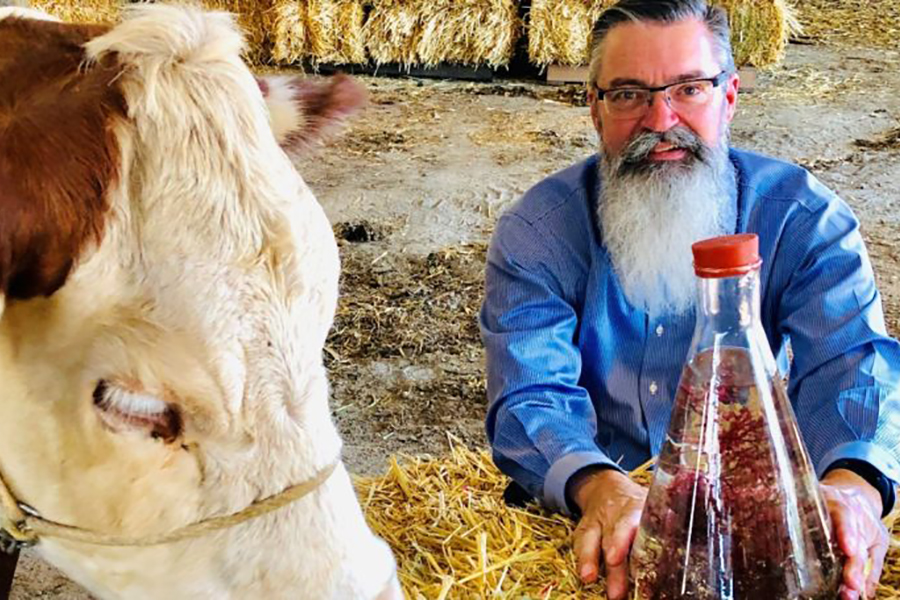
Australian researchers have found red seaweed has the ability to reduce cow and sheep methane production by up to 90 per cent when mixed with stock feed. The findings have led the South Australian Government to recently announce $1.5 million over two years to support the establishment of a commercial seaweed industry in the state.

It says seaweed production could be worth $140 million a year in South Australia with the potential to create 1,200 jobs. This has also prompted the first licences to establish a commercial seaweed farm to be granted and a partnership between seaweed producers and livestock companies.

Two licences were granted in January 2021 to allow a commercial seaweed farm to be established on South Australia’s Yorke Peninsula. The production leases and licences for 10 hectares within the east Point Pearce intertidal aquaculture zone, and 30 hectares within the west zone have been granted to the Narungga Nation Aboriginal Corporation (NNAC).

NNAC is working in partnership with CH4 Global, a company focused on farming marine seaweeds for commercial purposes to reduce greenhouse emissions in the livestock industry.

Meanwhile, CH4 Global has announced a world-first agreement to supply enough Asparagopsis seaweed supplement for up to 10,000 head of cattle to an agriculture hub near the South Australian city of Port Pirie.

Cattle are a major contributor to greenhouse gas emissions with every one of the 1.5 billion cows on the planet producing about 100kg of methane a year.

Research by Australia’s peak scientific body CSIRO found that the red seaweed Asparagopsis mixed with regular cattle feed at a rate of 100 grams per cow per day reduced methane production by 90 per cent.

CH4 Global has purchased a licence from patent owners CSIRO, Meat & Livestock Australia and James Cook University and gained regulatory approval for the material to be allowed to sell it in Australia.

The red seaweed will be cultivated by CH4 in South Australia where the company has signed a partnership agreement with the NNAC.

“CH4 believes in circular and regenerative economic principles and is extremely excited by our collaboration and partnership with NNAC,” said CH4 Global CEO and co-founder Steve Meller.

“Working with the Narungga Aboriginal Nation to generate maximum sustainable benefit for its people – jobs, training, and a leadership role in climate mitigation is what CH4 is all about.”

The first farm at Point Pearce will produce two species of red algae: the warm water species Asparagopsis taxiformis and a cool water species Asparagopsis armata. This will ensure high growth rates throughout the year.

It takes about 45-60 days for a seaweed seedling from the hatchery to grow into a matured plant ready for harvest and processing.

NNAC Chief Executive Officer Klynton Wanganeen said the algae is native to the Narungga Nation’s traditional waters in Gulf St Vincent, which have the perfect climate to grow both cold and warm water varieties of the seaweed.

“We’re in the process of planning and putting in the infrastructure for two one-hectare leases, so that we can start growing with a view to working out the optimal depth for the warm water species,” he said.

CH4 has also applied for 839 ha of potential aquaculture space across three sites in South Australia’s Spencer Gulf, around Port Lincoln in Boston Bay, Louth Bay and Tumby Bay and is looking to establish further farms.

Beyond South Australia, it is anticipated that seaweed-based stock feed supplements will be in strong demand for improved growing rates, particularly in jurisdictions like California where limits have been imposed on livestock emissions.

South Australian Minister for Primary Industries and Regional Development David Basham said the granting of the first licence on Yorke Peninsula was an important first step for the emerging industry.

“These are the first marine algae aquaculture leases and licences issued for South Australia, marking the start of a new sector for our aquaculture industry,” he said.

“This is expected to bring new economic development and employment activity to the Yorke Peninsula region, including local Aboriginal communities.

“This is a great outcome for the social and economic wellbeing of the Narungga people, while also having benefits for the whole state.”

Methane-busting Seaweed Industry Begins Growing in South Australia

An emerging commercial seaweed industry is gaining pace in South Australia and it has the methane produced by cows firmly in its sights.

Australian researchers have found red seaweed has the ability to reduce cow and sheep methane production by up to 90 per cent when mixed with stock feed. The findings have led the South Australian Government to recently announce $1.5 million over two years to support the establishment of a commercial seaweed industry in the state.

It says seaweed production could be worth $140 million a year in South Australia with the potential to create 1,200 jobs. This has also prompted the first licences to establish a commercial seaweed farm to be granted and a partnership between seaweed producers and livestock companies.

Two licences were granted in January 2021 to allow a commercial seaweed farm to be established on South Australia’s Yorke Peninsula. The production leases and licences for 10 hectares within the east Point Pearce intertidal aquaculture zone, and 30 hectares within the west zone have been granted to the Narungga Nation Aboriginal Corporation (NNAC).

NNAC is working in partnership with CH4 Global, a company focused on farming marine seaweeds for commercial purposes to reduce greenhouse emissions in the livestock industry.

Meanwhile, CH4 Global has announced a world-first agreement to supply enough Asparagopsis seaweed supplement for up to 10,000 head of cattle to an agriculture hub near the South Australian city of Port Pirie.

Cattle are a major contributor to greenhouse gas emissions with every one of the 1.5 billion cows on the planet producing about 100kg of methane a year.

Research by Australia’s peak scientific body CSIRO found that the red seaweed Asparagopsis mixed with regular cattle feed at a rate of 100 grams per cow per day reduced methane production by 90 per cent.

CH4 Global has purchased a licence from patent owners CSIRO, Meat & Livestock Australia and James Cook University and gained regulatory approval for the material to be allowed to sell it in Australia.

The red seaweed will be cultivated by CH4 in South Australia where the company has signed a partnership agreement with the NNAC.

“CH4 believes in circular and regenerative economic principles and is extremely excited by our collaboration and partnership with NNAC,” said CH4 Global CEO and co-founder Steve Meller.

“Working with the Narungga Aboriginal Nation to generate maximum sustainable benefit for its people – jobs, training, and a leadership role in climate mitigation is what CH4 is all about.”

The first farm at Point Pearce will produce two species of red algae: the warm water species Asparagopsis taxiformis and a cool water species Asparagopsis armata. This will ensure high growth rates throughout the year.

It takes about 45-60 days for a seaweed seedling from the hatchery to grow into a matured plant ready for harvest and processing.

NNAC Chief Executive Officer Klynton Wanganeen said the algae is native to the Narungga Nation’s traditional waters in Gulf St Vincent, which have the perfect climate to grow both cold and warm water varieties of the seaweed.

“We’re in the process of planning and putting in the infrastructure for two one-hectare leases, so that we can start growing with a view to working out the optimal depth for the warm water species,” he said.

CH4 has also applied for 839 ha of potential aquaculture space across three sites in South Australia’s Spencer Gulf, around Port Lincoln in Boston Bay, Louth Bay and Tumby Bay and is looking to establish further farms.

Beyond South Australia, it is anticipated that seaweed-based stock feed supplements will be in strong demand for improved growing rates, particularly in jurisdictions like California where limits have been imposed on livestock emissions.

South Australian Minister for Primary Industries and Regional Development David Basham said the granting of the first licence on Yorke Peninsula was an important first step for the emerging industry.

“These are the first marine algae aquaculture leases and licences issued for South Australia, marking the start of a new sector for our aquaculture industry,” he said.

“This is expected to bring new economic development and employment activity to the Yorke Peninsula region, including local Aboriginal communities.

“This is a great outcome for the social and economic wellbeing of the Narungga people, while also having benefits for the whole state.”

Making Antibacterial Bandages From Fruit Waste

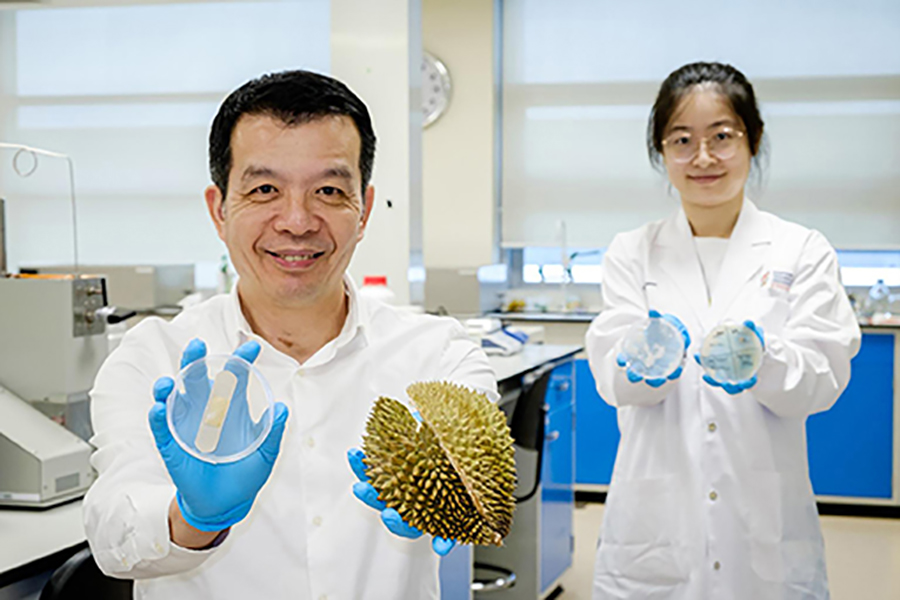
At Nanyang Technological University (NTU) in Singapore, scientists are tackling food waste by turning discarded durian husks into antibacterial gel bandages.

The process extracts cellulose powder from the fruit’s husks after they are sliced and freeze-dried, then mixes it with glycerol. This mixture becomes soft hydrogel, which is then cut into bandage strips. “In Singapore, we consume about 12 million durians a year. So besides the flesh, we can’t do much about the husk and the seeds, and this causes environmental pollution,” says Professor William Chen, director of the food science and technology program at NTU. The fruit’s husks, which make up more than half of the composition of durians, are usually discarded and incinerated, contributing to environmental waste.

Chen added that the technology can also turn other food waste into hydrogel, such as soybeans and spent grains, helping limit the country’s food waste. Compared to conventional bandages, the organo-hydrogel bandages also keep wound areas cooler and moist, which can help accelerate healing. The researchers say using waste materials and yeast for the antimicrobial bandages is more cost-effective than producing conventional bandages, whose antimicrobial properties come from more expensive metallic compounds like silver or copper ions.

Making Antibacterial Bandages From Fruit Waste

At Nanyang Technological University (NTU) in Singapore, scientists are tackling food waste by turning discarded durian husks into antibacterial gel bandages.

The process extracts cellulose powder from the fruit’s husks after they are sliced and freeze-dried, then mixes it with glycerol. This mixture becomes soft hydrogel, which is then cut into bandage strips. “In Singapore, we consume about 12 million durians a year. So besides the flesh, we can’t do much about the husk and the seeds, and this causes environmental pollution,” says Professor William Chen, director of the food science and technology program at NTU. The fruit’s husks, which make up more than half of the composition of durians, are usually discarded and incinerated, contributing to environmental waste.

Chen added that the technology can also turn other food waste into hydrogel, such as soybeans and spent grains, helping limit the country’s food waste. Compared to conventional bandages, the organo-hydrogel bandages also keep wound areas cooler and moist, which can help accelerate healing. The researchers say using waste materials and yeast for the antimicrobial bandages is more cost-effective than producing conventional bandages, whose antimicrobial properties come from more expensive metallic compounds like silver or copper ions.

Boats That Eat Trash

A trash-eating boat could clean up the world’s rivers.

A Dutch foundation devoted to fighting plastic pollution in the world’s oceans has unveiled a new device designed to stop it from reaching the sea in the first place: by collecting and cleaning plastic waste from major rivers. The Ocean Cleanup Foundation, a non-governmental organization, best known for its attempts to collect and clean plastic from the “Great Pacific Garbage Patch,” says it has been testing a system based on similar principles — a floating barrier to collect plastic passively — for use in rivers.

“To solve the plastic pollution problem, we need to do two things: Clean up what’s already in the oceans and prevent more plastic from reaching the ocean in the first place,” says 25-year-old founder Boyan Slat (pictured above). The system has already been tested on rivers in Jakarta, Indonesia, and Malaysia, with two more planned for Vietnam’s Mekong Delta and the Dominican Republic. According to Slat, 1 percent of rivers are responsible for 80 percent of the pollution in the world’s seas. “That makes finding a solution to the problem of plastic pollution emanating from rivers quite achievable,” he says. The venture has attracted $1 million in funding from the Benioff Ocean Initiative, and the ocean trash will be transformed into quality, sustainable products, that will be sold to fund the project.

Boats That Eat Trash

A trash-eating boat could clean up the world’s rivers.

A Dutch foundation devoted to fighting plastic pollution in the world’s oceans has unveiled a new device designed to stop it from reaching the sea in the first place: by collecting and cleaning plastic waste from major rivers. The Ocean Cleanup Foundation, a non-governmental organization, best known for its attempts to collect and clean plastic from the “Great Pacific Garbage Patch,” says it has been testing a system based on similar principles — a floating barrier to collect plastic passively — for use in rivers.

“To solve the plastic pollution problem, we need to do two things: Clean up what’s already in the oceans and prevent more plastic from reaching the ocean in the first place,” says 25-year-old founder Boyan Slat (pictured above). The system has already been tested on rivers in Jakarta, Indonesia, and Malaysia, with two more planned for Vietnam’s Mekong Delta and the Dominican Republic. According to Slat, 1 percent of rivers are responsible for 80 percent of the pollution in the world’s seas. “That makes finding a solution to the problem of plastic pollution emanating from rivers quite achievable,” he says. The venture has attracted $1 million in funding from the Benioff Ocean Initiative, and the ocean trash will be transformed into quality, sustainable products, that will be sold to fund the project.

0