The Future of Roof Rejuvenation: Soy Bio-oil

Mike and Todd Feazel spent 25 years growing one of the largest and most successful roofing companies in the United States.

As time passed, it became apparent that shingles were changing. The amount of shingles per bundle increased, which meant individual shingles were lighter and less durable. The brothers witnessed roofs failing at astounding rates. In many cases, a “30-year roof” lasted less than half its promised life. Mike and Todd didn’t like what this decline in quality meant for homeowners across the country. Add that to a massive increase in costs of labor and materials, as well as home insurance complications, and a grim picture emerges.

“My brother and I could see the staggering number of roofs at risk across the country and wanted to do something about it.” – Mike Feazel.

The connection between early roof failure and its negative environmental impact also becomes apparent. They found that if 1% of homes applied this treatment instead of installing a new roof, It could eliminate 2.8 million tons of landfill waste and 1.1 million metric tons of CO2 emissions. (Vasco-Correa/Shah “Technical, economic and environmental performance of soy methyl ester emulsions applied to aging asphalt roofing.” CFAES, Ohio State University.)

Discovering new advancements in plant-based chemistry, they sold Feazel Roofing and partnered with the largest research and development laboratory in the country to develop Roof Maxx roof rejuvenation. After extensive testing, 17-year-old shingles treated with Roof Maxx passed the same tests required of brand-new shingles. (Study conducted by Ohio State University.)

Untreated, today’s shingles quickly become brittle, leading to loss of granules, cracking, and breaking. This spray-on treatment penetrates the shingle replacing lost oils, and reverses aging. The treated shingles now act more like new shingles, expanding and contracting as they should. This improves their ability to hold the protective granules onto the shingle. In many cases, the shingle’s dried glue tabs are reactivated. This helps to keep shingles from breaking and minimizes blow-offs in high winds.

Roof Maxx had developed a product that was needed in the marketplace and a sustainable way
to create that product. They also needed an innovative way to deliver the product to those who could benefit. Roof Maxx decided to make its product available through a dealership model and granted hundreds of independent dealerships to sustainability-minded entrepreneurs across the country over a few short months.

Each dealership can be as small as one person or as large as an existing roofing company that wants to offer cost-effective and environmentally friendly alternatives for its customers. A Roof Maxx dealership is a unique offering with high returns on a small investment. Dealers need little training and few tools and can be up and running in as few as six weeks. Even those without roofing or construction experience can maintain an exciting, successful, and growing business. After start-up costs of equipment and branding, all a dealer pays for is the product itself. Roof Maxx corporate even provides inexpensive leads gathered from national marketing opportunities.

“We have several roofing companies who have added Roof Maxx because they know it is a real science-based product, and they’ve seen it save roofs. Being the roofing company that only replaces a roof if it absolutely needs to be replaced builds lifelong customers,” says Mike Feazel. “As a dealership/small-business opportunity, Roof Maxx has proven itself to be recession-proof. Dealerships were born and grew during an international pandemic and its economic aftermath. Roof Maxx’s robust nature also has a clear benefit for consumers needing to delay large, expensive projects like re-roofs during difficult times.”
 
Roof Maxx dealers are entrepreneurs like the American Farmer who grows the raw material for the Roof Maxx formula. They are also innovators like Henry Ford and George Washington Carver who worked together to invent synthesized rubber from soybeans, among other advanced products. When you fast forward the better part of a century, soy technology is even used to make Goodyear Tires. Roof Maxx is partnered with the Ohio Soybean Council and Airable Labs which works tirelessly to adapt this renewable resource to revolutionary products across the board.

“Roof Maxx not only provides a green solution to a petroleum-based challenge of losing petroleum oils from a shingle but also can be as low as 20% of the costs of replacing an old roof,” says Barry McGraw, Director of Product Development and Commercialization, Ohio Soybean Council.

Roof Maxx is a win-win-win for dealers and customers. It’s a renewable product that reduces
construction waste AND saves homeowners money while protecting their homes. Dealers get
to make a meaningful impact on their community and the environment while growing a
successful business. roofmaxx.com

The Future of Roof Rejuvenation: Soy Bio-oil

Mike and Todd Feazel spent 25 years growing one of the largest and most successful roofing companies in the United States.

As time passed, it became apparent that shingles were changing. The amount of shingles per bundle increased, which meant individual shingles were lighter and less durable. The brothers witnessed roofs failing at astounding rates. In many cases, a “30-year roof” lasted less than half its promised life. Mike and Todd didn’t like what this decline in quality meant for homeowners across the country. Add that to a massive increase in costs of labor and materials, as well as home insurance complications, and a grim picture emerges.

“My brother and I could see the staggering number of roofs at risk across the country and wanted to do something about it.” – Mike Feazel.

The connection between early roof failure and its negative environmental impact also becomes apparent. They found that if 1% of homes applied this treatment instead of installing a new roof, It could eliminate 2.8 million tons of landfill waste and 1.1 million metric tons of CO2 emissions. (Vasco-Correa/Shah “Technical, economic and environmental performance of soy methyl ester emulsions applied to aging asphalt roofing.” CFAES, Ohio State University.)

Discovering new advancements in plant-based chemistry, they sold Feazel Roofing and partnered with the largest research and development laboratory in the country to develop Roof Maxx roof rejuvenation. After extensive testing, 17-year-old shingles treated with Roof Maxx passed the same tests required of brand-new shingles. (Study conducted by Ohio State University.)

Untreated, today’s shingles quickly become brittle, leading to loss of granules, cracking, and breaking. This spray-on treatment penetrates the shingle replacing lost oils, and reverses aging. The treated shingles now act more like new shingles, expanding and contracting as they should. This improves their ability to hold the protective granules onto the shingle. In many cases, the shingle’s dried glue tabs are reactivated. This helps to keep shingles from breaking and minimizes blow-offs in high winds.

Roof Maxx had developed a product that was needed in the marketplace and a sustainable way
to create that product. They also needed an innovative way to deliver the product to those who could benefit. Roof Maxx decided to make its product available through a dealership model and granted hundreds of independent dealerships to sustainability-minded entrepreneurs across the country over a few short months.

Each dealership can be as small as one person or as large as an existing roofing company that wants to offer cost-effective and environmentally friendly alternatives for its customers. A Roof Maxx dealership is a unique offering with high returns on a small investment. Dealers need little training and few tools and can be up and running in as few as six weeks. Even those without roofing or construction experience can maintain an exciting, successful, and growing business. After start-up costs of equipment and branding, all a dealer pays for is the product itself. Roof Maxx corporate even provides inexpensive leads gathered from national marketing opportunities.

“We have several roofing companies who have added Roof Maxx because they know it is a real science-based product, and they’ve seen it save roofs. Being the roofing company that only replaces a roof if it absolutely needs to be replaced builds lifelong customers,” says Mike Feazel. “As a dealership/small-business opportunity, Roof Maxx has proven itself to be recession-proof. Dealerships were born and grew during an international pandemic and its economic aftermath. Roof Maxx’s robust nature also has a clear benefit for consumers needing to delay large, expensive projects like re-roofs during difficult times.”
 
Roof Maxx dealers are entrepreneurs like the American Farmer who grows the raw material for the Roof Maxx formula. They are also innovators like Henry Ford and George Washington Carver who worked together to invent synthesized rubber from soybeans, among other advanced products. When you fast forward the better part of a century, soy technology is even used to make Goodyear Tires. Roof Maxx is partnered with the Ohio Soybean Council and Airable Labs which works tirelessly to adapt this renewable resource to revolutionary products across the board.

“Roof Maxx not only provides a green solution to a petroleum-based challenge of losing petroleum oils from a shingle but also can be as low as 20% of the costs of replacing an old roof,” says Barry McGraw, Director of Product Development and Commercialization, Ohio Soybean Council.

Roof Maxx is a win-win-win for dealers and customers. It’s a renewable product that reduces
construction waste AND saves homeowners money while protecting their homes. Dealers get
to make a meaningful impact on their community and the environment while growing a
successful business. roofmaxx.com
5 Year-End Gifts That Are Good for the Planet

Glass Straws: Now It’s Cool to Suck

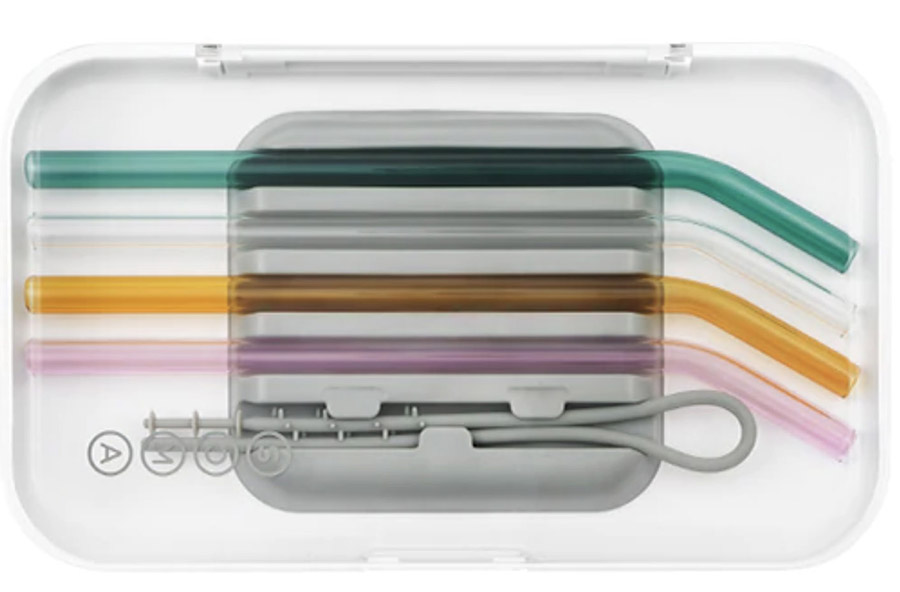
This set of four colorful glass straws with angled heads elevates your drinking experience while helping put an end to single-use plastic. It includes a companion tool that is custom designed for cleaning straws, and the sleek case has air holes, which means your straws will dry even while tucked neatly away. Made from Borosilicate glass, the straws have a very low coefficient of thermal expansion, making them more resistant to thermal shock than any other standard glass. Over 663 million people lack access to clean drinking water. With every purchase of a Soma product, a donation is made to charity: water projects. These contributions go directly to sustainable, community-owned water projects in developing countries. To date, charity: water has funded over 22,000 projects and given access to clean water to over 7 million people in 24 countries. GiftsForGood.com

Light Up Your Life: An Intelligent Table Lamp that Senses You’re There

The Dyson Lightcycle is the last desk lamp you will ever need. It automatically simulates the properties of natural daylight and adjusts its glow to the room around it and noting whether or not anyone is present, ensuring that it’s not wasting energy. The light tracks the color temperature and brightness of the daylight where you live and adjusts the light accordingly to avoid eye strain. Special technology keeps six high-power LEDs cool enough to protect light quality for 60 years, and motion sensors switch the light on when you’re near and off when you’re away for more than 5 minutes. “Our bodies can be influenced by daylight’s changing spectrum of color and brightness. So our new light adjusts with the daylight where you live,” says designer Jake Dyson, son of legendary designer James Dyson. Connect the lamp to a smartphone app through Bluetooth, and when the light is connected, it will sync the color temp to the ideal setting to match your location anywhere on Earth. It’s a clever function and is said to have a host of mental and physical benefits. Dyson.com

Sparkling Life: Put the Fun Back in Your (Re-usable) Bottle

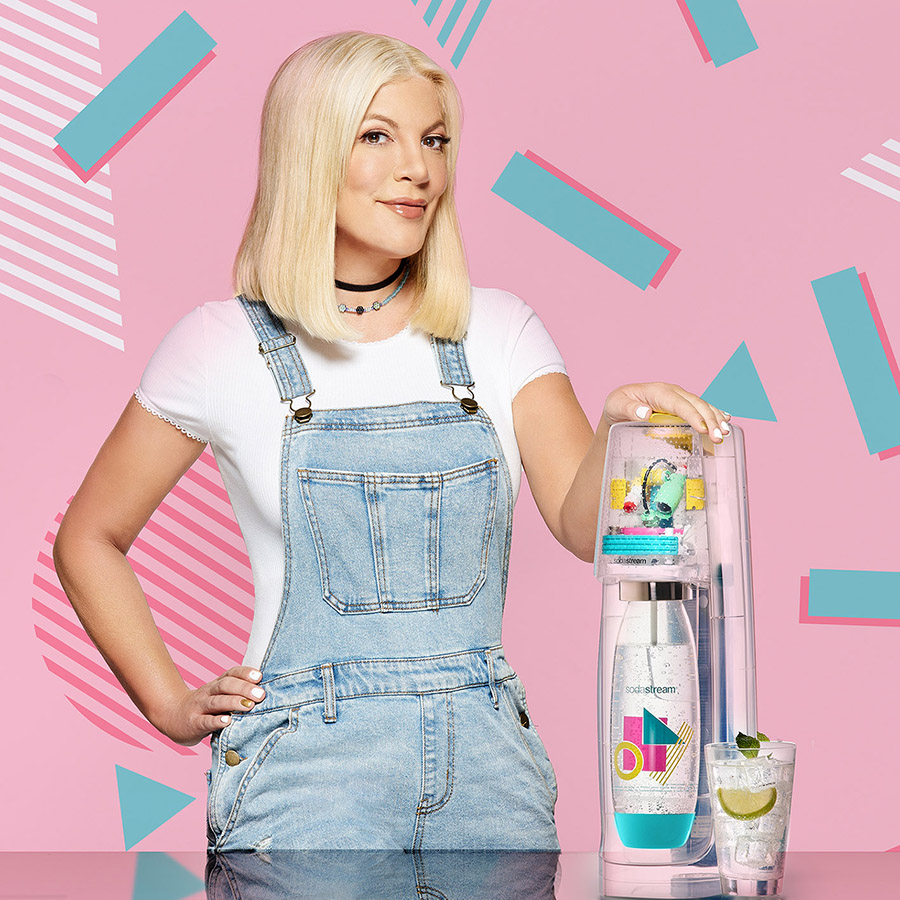
By the time you finish reading this Gifts for Good page, another 5 million single-use plastic bottles will have been sold around the world. One SodaStream carbonating bottle can save up to thousands of single-use plastic bottles and cans. While Sodastream has been around for decades, the brand has changed from the novelty idea of creating your own carbonated water at home to one focused on conserving resources. The company also makes a conscious effort to recycle its CO2 carbonating cylinders. Each exchanged cylinder shipped back to its facility is cleaned, inspected, and refilled with fresh CO2. SodaStream.com

Go Natural: Seaweed You Can Wear

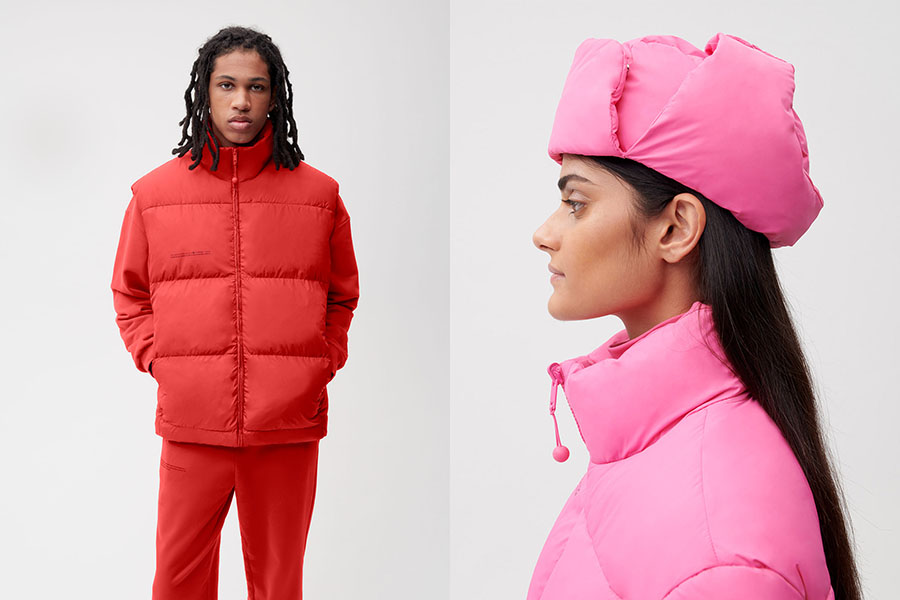
Pangaia’s mission is simple: to save our environment, one colorful hoody, tracksuit, and sweatshirt at a time. Its labels list everything from eucalyptus pulp and seaweed powder to wildflowers and non-toxic dyes, each one designed to reduce its impact on the planet. Science, purpose, and design are three things the company keeps in mind when designing innovative new materials. Two such innovations are FLWRDWN, A down-fill material made using a combination of wildflowers, a biopolymer, an aerogel, and C-FIBER, which combines eucalyptus pulp and seaweed powder — harvested every four years from Iceland — to create soft and silky styles you can wear, support the ecosystems used to make it, and give back to the planet whatever they take. The resulting fabric is water-saving, biobased, and 100% biodegradable. Around one-quarter of the chemical substances manufactured in the world are used to make textiles. Traces of these chemicals can end up in our waterways, from lakes and oceans to the water that comes out of our faucets. Pangaia.com

Engage the Wild: Quieter, Cleaner Snowmobiles

Canadian company Taiga has launched its first all-electric snowmobile, the Nomad. It allows outdoor enthusiasts to consciously explore winter terrains without compromising performance while silently gliding through nature without noise or CO2 emissions. The 90 HP Nomad has a range of 65 miles and seamlessly integrates with existing electric vehicle charging networks. “The delivery of our Nomad snowmobile is the realization of a seven-year vision to provide riders an electric snowmobile that does not compromise performance while preserving the environment,” says CEO Sam Bruneau. TaigaMotors.com

5 Year-End Gifts That Are Good for the Planet

Glass Straws: Now It’s Cool to Suck

This set of four colorful glass straws with angled heads elevates your drinking experience while helping put an end to single-use plastic. It includes a companion tool that is custom designed for cleaning straws, and the sleek case has air holes, which means your straws will dry even while tucked neatly away. Made from Borosilicate glass, the straws have a very low coefficient of thermal expansion, making them more resistant to thermal shock than any other standard glass. Over 663 million people lack access to clean drinking water. With every purchase of a Soma product, a donation is made to charity: water projects. These contributions go directly to sustainable, community-owned water projects in developing countries. To date, charity: water has funded over 22,000 projects and given access to clean water to over 7 million people in 24 countries. GiftsForGood.com

Light Up Your Life: An Intelligent Table Lamp that Senses You’re There

The Dyson Lightcycle is the last desk lamp you will ever need. It automatically simulates the properties of natural daylight and adjusts its glow to the room around it and noting whether or not anyone is present, ensuring that it’s not wasting energy. The light tracks the color temperature and brightness of the daylight where you live and adjusts the light accordingly to avoid eye strain. Special technology keeps six high-power LEDs cool enough to protect light quality for 60 years, and motion sensors switch the light on when you’re near and off when you’re away for more than 5 minutes. “Our bodies can be influenced by daylight’s changing spectrum of color and brightness. So our new light adjusts with the daylight where you live,” says designer Jake Dyson, son of legendary designer James Dyson. Connect the lamp to a smartphone app through Bluetooth, and when the light is connected, it will sync the color temp to the ideal setting to match your location anywhere on Earth. It’s a clever function and is said to have a host of mental and physical benefits. Dyson.com

Sparkling Life: Put the Fun Back in Your (Re-usable) Bottle

By the time you finish reading this Gifts for Good page, another 5 million single-use plastic bottles will have been sold around the world. One SodaStream carbonating bottle can save up to thousands of single-use plastic bottles and cans. While Sodastream has been around for decades, the brand has changed from the novelty idea of creating your own carbonated water at home to one focused on conserving resources. The company also makes a conscious effort to recycle its CO2 carbonating cylinders. Each exchanged cylinder shipped back to its facility is cleaned, inspected, and refilled with fresh CO2. SodaStream.com

Go Natural: Seaweed You Can Wear

Pangaia’s mission is simple: to save our environment, one colorful hoody, tracksuit, and sweatshirt at a time. Its labels list everything from eucalyptus pulp and seaweed powder to wildflowers and non-toxic dyes, each one designed to reduce its impact on the planet. Science, purpose, and design are three things the company keeps in mind when designing innovative new materials. Two such innovations are FLWRDWN, A down-fill material made using a combination of wildflowers, a biopolymer, an aerogel, and C-FIBER, which combines eucalyptus pulp and seaweed powder — harvested every four years from Iceland — to create soft and silky styles you can wear, support the ecosystems used to make it, and give back to the planet whatever they take. The resulting fabric is water-saving, biobased, and 100% biodegradable. Around one-quarter of the chemical substances manufactured in the world are used to make textiles. Traces of these chemicals can end up in our waterways, from lakes and oceans to the water that comes out of our faucets. Pangaia.com

Engage the Wild: Quieter, Cleaner Snowmobiles

Canadian company Taiga has launched its first all-electric snowmobile, the Nomad. It allows outdoor enthusiasts to consciously explore winter terrains without compromising performance while silently gliding through nature without noise or CO2 emissions. The 90 HP Nomad has a range of 65 miles and seamlessly integrates with existing electric vehicle charging networks. “The delivery of our Nomad snowmobile is the realization of a seven-year vision to provide riders an electric snowmobile that does not compromise performance while preserving the environment,” says CEO Sam Bruneau. TaigaMotors.com

Imagine Building a Business from Trash and Sand

“Don’t quit your day job” – or so entrepreneurs are often advised when trying to build a business.

But Nzambi Matee of Kenya did quit her day job — and her social life and  invested all her savings into an experimental project in her mother’s back garden. “My friends were worried,” she admits. “Everyone thought I was crazy, and so many people told me to give up.” Matee is the founder of Gjenge Makers, a company that uses discarded plastic to produce building materials.

After noticing the volumes of plastic bags polluting the streets of Nairobi, she developed a machine that compresses a mixture of plastic and sand into bricks. Lighter and more durable than cement, they are affordable and have been used to pave walkways for homes and schools —including those in low-income areas where students would otherwise have to walk on dirt paths. Her business now produces 1,500 pavers per day, proving it is possible to move from a linear economy toward a circular one in which products and materials remain in use for as long as possible.

Imagine Building a Business from Trash and Sand

“Don’t quit your day job” – or so entrepreneurs are often advised when trying to build a business.

But Nzambi Matee of Kenya did quit her day job — and her social life and  invested all her savings into an experimental project in her mother’s back garden. “My friends were worried,” she admits. “Everyone thought I was crazy, and so many people told me to give up.” Matee is the founder of Gjenge Makers, a company that uses discarded plastic to produce building materials.

After noticing the volumes of plastic bags polluting the streets of Nairobi, she developed a machine that compresses a mixture of plastic and sand into bricks. Lighter and more durable than cement, they are affordable and have been used to pave walkways for homes and schools —including those in low-income areas where students would otherwise have to walk on dirt paths. Her business now produces 1,500 pavers per day, proving it is possible to move from a linear economy toward a circular one in which products and materials remain in use for as long as possible.

Flourish: Design Paradigms for Our Planetary Emergency

Can indigenous knowledge help us design a more sustainable future?

What will it take to restore balance to our world, repair past injustices, and support future generations’ survival? Reaching beyond sustainability, “regenerative” practice is increasingly named as a new goal, but what does this emerging term really mean? And which key mindset shifts might enable truly regenerative transformation? Looking deeply into the web of life that created and supports us and drawing inspiration from diverse cultural traditions and perspectives, spirited thinkers Michael Pawlyn and Sarah Ichioka propose a bold set of regenerative principles with the potential to transform how we design, make, and manage our buildings, infrastructure, and communities.

Whether you’re a built environment professional or client, an activist, or a policymaker, Flourish offers an urgent invitation to inhabit a new array of possibilities through which we can build a thriving future together. “Rather than seeing the future as something that happens to us, we need to decide on the future we want and then set about creating it,” says Ichioka.

Flourish: Design Paradigms for Our Planetary Emergency

Can indigenous knowledge help us design a more sustainable future?

What will it take to restore balance to our world, repair past injustices, and support future generations’ survival? Reaching beyond sustainability, “regenerative” practice is increasingly named as a new goal, but what does this emerging term really mean? And which key mindset shifts might enable truly regenerative transformation? Looking deeply into the web of life that created and supports us and drawing inspiration from diverse cultural traditions and perspectives, spirited thinkers Michael Pawlyn and Sarah Ichioka propose a bold set of regenerative principles with the potential to transform how we design, make, and manage our buildings, infrastructure, and communities.

Whether you’re a built environment professional or client, an activist, or a policymaker, Flourish offers an urgent invitation to inhabit a new array of possibilities through which we can build a thriving future together. “Rather than seeing the future as something that happens to us, we need to decide on the future we want and then set about creating it,” says Ichioka.

How to Convert Concern Into an Achievable Solution

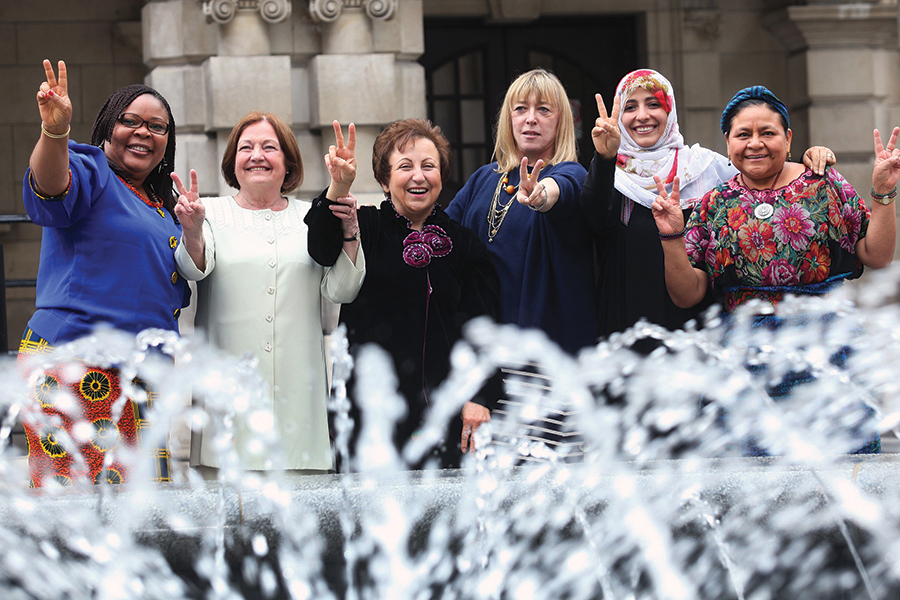
Jody Williams, the 1997 Nobel Peace Prize recipient, led a movement that successfully banned the use, production, and sale of anti-personnel landmines. She writes that feel-good, sentimental feelings around peace are a waste of time.

The image of peace with a dove flying over a rainbow and people holding hands singing kumbaya ends up infantilizing people who believe that sustainable peace is possible. If you think that singing and looking at a rainbow will suddenly make peace appear, then you’re not capable of meaningful thought or understanding the difficulties of the world. Most people, when confronted with these images of peace, and the derogatory terms that go with it, such as “tree-hugger,” “liberal” or “granola-eating hippie,” become ashamed to say they believe in peace. 

It’s critical that humanity reclaims the meaning of peace. Peace is not just an absence of conflict or personal serenity. Peace means actively engaging in the world to create one in which we all want to live. It’s hard work — every day. It’s about making a commitment to a greater good, even with the people you don’t like in the world. I certainly don’t like everyone in the world; the Nobel Peace Prize did not suddenly turn me into Mother Teresa. There are those whose politics and worldview I don’t like at all. However, if I only wish for a greater good for my friends or those who think like me, I’m no different from the people I dislike.

I want to see a world in which everybody benefits from sustainable peace. To achieve this, we need to focus on human security, not national security. Theoretically, within a national security framework, if the state is secure, then the people are secure — but I don’t believe that. I look at my own country, the United States, where democracy is under siege. A huge number of people live on, or below, the poverty line, and the things I consider important to making a nation secure, such as job security, are collapsing under the weight of global corporatism. A lust for more and the selling of weapons of war do not make us secure.

I don’t believe you need to be a full-time activist to be an involved citizen and to bring about positive change. The media wants us to believe that the problems of the world are so overwhelming that there’s nothing we can do — to leave it to people in power to solve, the so-called “experts.”

When I speak with people of any age, I suggest they think for a few moments about what issue upsets them the most and what change they’d like to see. When I started the International Campaign to Ban Landmines in 1991, it wasn’t about changing our world from a planet of war into one of peace overnight. It was about banning one weapon, which started a process of change. The campaign grew within six years to 1,000 organizations in 60 countries. It resulted in the signing of The Ottawa Convention by 120 states, banning the use, production, and sale of anti-personnel mines. There’s nothing magical about bringing about change — it’s about converting your concern into action. If you teach people different ways of looking at this little planet we all share, you can change the world. Anything is possible if you believe it. You’ve just got to get up off your butt and participate in creating change.

How to Convert Concern Into an Achievable Solution

Jody Williams, the 1997 Nobel Peace Prize recipient, led a movement that successfully banned the use, production, and sale of anti-personnel landmines. She writes that feel-good, sentimental feelings around peace are a waste of time.

The image of peace with a dove flying over a rainbow and people holding hands singing kumbaya ends up infantilizing people who believe that sustainable peace is possible. If you think that singing and looking at a rainbow will suddenly make peace appear, then you’re not capable of meaningful thought or understanding the difficulties of the world. Most people, when confronted with these images of peace, and the derogatory terms that go with it, such as “tree-hugger,” “liberal” or “granola-eating hippie,” become ashamed to say they believe in peace. 

It’s critical that humanity reclaims the meaning of peace. Peace is not just an absence of conflict or personal serenity. Peace means actively engaging in the world to create one in which we all want to live. It’s hard work — every day. It’s about making a commitment to a greater good, even with the people you don’t like in the world. I certainly don’t like everyone in the world; the Nobel Peace Prize did not suddenly turn me into Mother Teresa. There are those whose politics and worldview I don’t like at all. However, if I only wish for a greater good for my friends or those who think like me, I’m no different from the people I dislike.

I want to see a world in which everybody benefits from sustainable peace. To achieve this, we need to focus on human security, not national security. Theoretically, within a national security framework, if the state is secure, then the people are secure — but I don’t believe that. I look at my own country, the United States, where democracy is under siege. A huge number of people live on, or below, the poverty line, and the things I consider important to making a nation secure, such as job security, are collapsing under the weight of global corporatism. A lust for more and the selling of weapons of war do not make us secure.

I don’t believe you need to be a full-time activist to be an involved citizen and to bring about positive change. The media wants us to believe that the problems of the world are so overwhelming that there’s nothing we can do — to leave it to people in power to solve, the so-called “experts.”

When I speak with people of any age, I suggest they think for a few moments about what issue upsets them the most and what change they’d like to see. When I started the International Campaign to Ban Landmines in 1991, it wasn’t about changing our world from a planet of war into one of peace overnight. It was about banning one weapon, which started a process of change. The campaign grew within six years to 1,000 organizations in 60 countries. It resulted in the signing of The Ottawa Convention by 120 states, banning the use, production, and sale of anti-personnel mines. There’s nothing magical about bringing about change — it’s about converting your concern into action. If you teach people different ways of looking at this little planet we all share, you can change the world. Anything is possible if you believe it. You’ve just got to get up off your butt and participate in creating change.

0