Vital Farms is Cracking the Code on the Egg Industry

Vital Farms accelerates its growth while continuing to expand its impact in farming.

By Real Leaders

Vital Farms has grown from an idea to the leading seller of pasture-raised eggs in the U.S.

Founded in 2007, Matt O’Hayer set out to improve the standards of animal welfare in an industry with an ethics challenge. There are over 300 million commercial laying hens in the U.S., and around two-thirds of them are caged. The vast majority of them live packed in battery cages, unable to spread their wings, which makes them among the most intensively confined animals in agribusiness, according to the Humane Society.

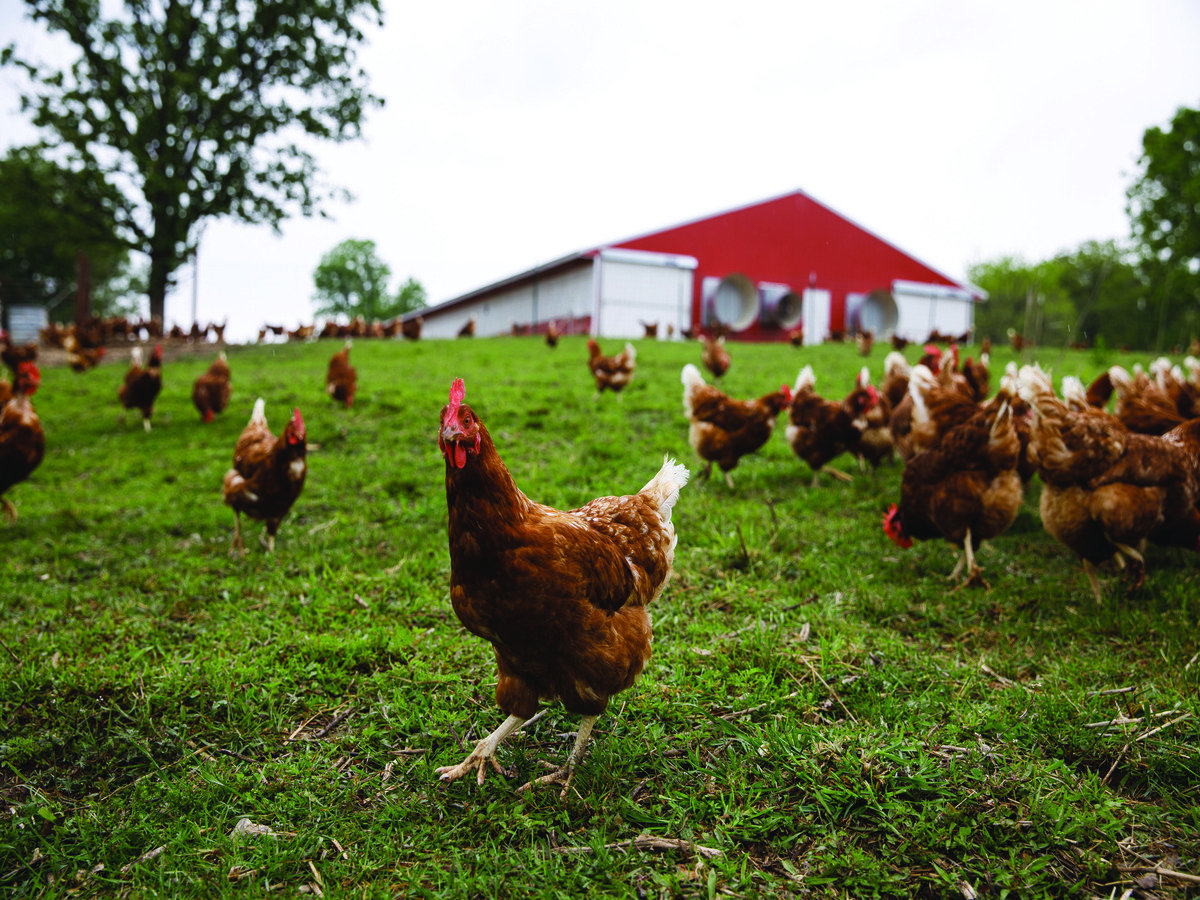
Instead, Vital Farms raises its hens in pastures with outdoor access year round, focusing on humane treatment. It also looks out for the health of the land through sustainable farming practices. Its farmers rotate pastures and do not use pesticides or herbicides.

“Our mission is to bring ethical food to the table,” says Russell Diez-Canseco, president and CEO of Vital Farms. “We do everything we can to improve the lives of people, animals, and the planet through food.”

The company has grown from a single farm in Austin, Texas, to a national consumer brand that works with over 300 small family farms. More than 24,000 stores across the U.S. sell its products, including standard egg cartons, hard-boiled eggs, liquid whole eggs, and butter (added in 2015). They’re also on the menus of hundreds of foodservice operators across the country. From 2019-22 alone, Vital Farms has more than doubled its employees and increased its revenue by over 2.5x.

From Farm to Future: Vital Farms’ Roadmap for Positive Impact

“We continue to invest in our crew, innovate with our farmers, drive meaningful progress for the environment and our communities, support our consumers and customers, and deliver on our commitments to stockholders,” Diez-Canseco says. “We’re challenging ourselves every day to forge a path that we believe will deliver strong results and positive impact well into the future. We’re committed to raising the standards in the food industry, and as our goals demonstrate, we are taking cumulative steps every day.”

A Certified B Corporation, Vital Farms also provides long-term benefits to its stakeholders. Its core values include transparency and honesty, as evidenced by its traceability initiative that allows consumers to trace each carton of eggs back to the farm where they were laid.

In 2021, Vital Farms started producing some of its eggs using regenerative farming practices, planting certain cover crops and following other practices that revitalize and restore ecosystem functions while regenerating the soil to advance biodiversity, soil health, water quality, and nutrient density. Regenerative practices can result in higher profits for farmers, increase the land’s resiliency, and improve the health of waterways. In recognition of those efforts, in 2023, Vital Farms became the first national egg brand to earn a Regenified verification for four of its farms.

“We believe we should be restoring instead of depleting the earth through the practices we use to grow food,” Diez-Canseco says.

Vital Farms is working toward scaling regenerative agriculture practices to all of its farmers by 2026, as well as reducing carbon intensity in its operations by 25% by 2027. 

A Greener Facility

Here’s a closer look at Vital Farms’ award-winning egg washing and packing facility.

  • The building was designed to LEED Silver standards and is pursuing certification with the U.S. Green Building Council.
  • Crew-focused features capture natural light and manage engine room humidity.
  • A water filtration system allows for water reuse for up to eight hours (30+ wash cycles).
  • An offsite underground cold storage facility uses at least 25 percent less energy than above-ground storage.
  • LED lights improve energy efficiency by 50 percent.
  • Bioretention features clean and cool rainwater, provide for the recharge of local aquifers rather than runoff into storm sewers, and conserve over 700,000 gallons of water per year.
  • A solar array was added in 2023, generating close to 20 percent of the facility’s energy usage, lowering energy costs, and reducing greenhouse gas emissions. 
Vital Farms is Cracking the Code on the Egg Industry

Vital Farms accelerates its growth while continuing to expand its impact in farming.

By Real Leaders

Vital Farms has grown from an idea to the leading seller of pasture-raised eggs in the U.S.

Founded in 2007, Matt O’Hayer set out to improve the standards of animal welfare in an industry with an ethics challenge. There are over 300 million commercial laying hens in the U.S., and around two-thirds of them are caged. The vast majority of them live packed in battery cages, unable to spread their wings, which makes them among the most intensively confined animals in agribusiness, according to the Humane Society.

Instead, Vital Farms raises its hens in pastures with outdoor access year round, focusing on humane treatment. It also looks out for the health of the land through sustainable farming practices. Its farmers rotate pastures and do not use pesticides or herbicides.

“Our mission is to bring ethical food to the table,” says Russell Diez-Canseco, president and CEO of Vital Farms. “We do everything we can to improve the lives of people, animals, and the planet through food.”

The company has grown from a single farm in Austin, Texas, to a national consumer brand that works with over 300 small family farms. More than 24,000 stores across the U.S. sell its products, including standard egg cartons, hard-boiled eggs, liquid whole eggs, and butter (added in 2015). They’re also on the menus of hundreds of foodservice operators across the country. From 2019-22 alone, Vital Farms has more than doubled its employees and increased its revenue by over 2.5x.

From Farm to Future: Vital Farms’ Roadmap for Positive Impact

“We continue to invest in our crew, innovate with our farmers, drive meaningful progress for the environment and our communities, support our consumers and customers, and deliver on our commitments to stockholders,” Diez-Canseco says. “We’re challenging ourselves every day to forge a path that we believe will deliver strong results and positive impact well into the future. We’re committed to raising the standards in the food industry, and as our goals demonstrate, we are taking cumulative steps every day.”

A Certified B Corporation, Vital Farms also provides long-term benefits to its stakeholders. Its core values include transparency and honesty, as evidenced by its traceability initiative that allows consumers to trace each carton of eggs back to the farm where they were laid.

In 2021, Vital Farms started producing some of its eggs using regenerative farming practices, planting certain cover crops and following other practices that revitalize and restore ecosystem functions while regenerating the soil to advance biodiversity, soil health, water quality, and nutrient density. Regenerative practices can result in higher profits for farmers, increase the land’s resiliency, and improve the health of waterways. In recognition of those efforts, in 2023, Vital Farms became the first national egg brand to earn a Regenified verification for four of its farms.

“We believe we should be restoring instead of depleting the earth through the practices we use to grow food,” Diez-Canseco says.

Vital Farms is working toward scaling regenerative agriculture practices to all of its farmers by 2026, as well as reducing carbon intensity in its operations by 25% by 2027. 

A Greener Facility

Here’s a closer look at Vital Farms’ award-winning egg washing and packing facility.

  • The building was designed to LEED Silver standards and is pursuing certification with the U.S. Green Building Council.
  • Crew-focused features capture natural light and manage engine room humidity.
  • A water filtration system allows for water reuse for up to eight hours (30+ wash cycles).
  • An offsite underground cold storage facility uses at least 25 percent less energy than above-ground storage.
  • LED lights improve energy efficiency by 50 percent.
  • Bioretention features clean and cool rainwater, provide for the recharge of local aquifers rather than runoff into storm sewers, and conserve over 700,000 gallons of water per year.
  • A solar array was added in 2023, generating close to 20 percent of the facility’s energy usage, lowering energy costs, and reducing greenhouse gas emissions. 
3 YPO Alternatives: A Comprehensive Guide to Selecting a Leadership Network

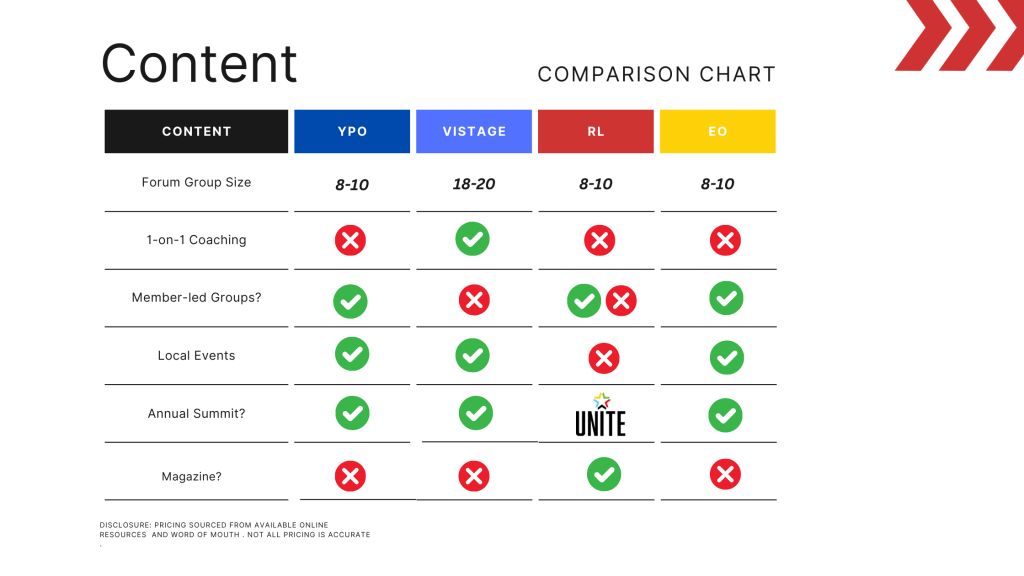
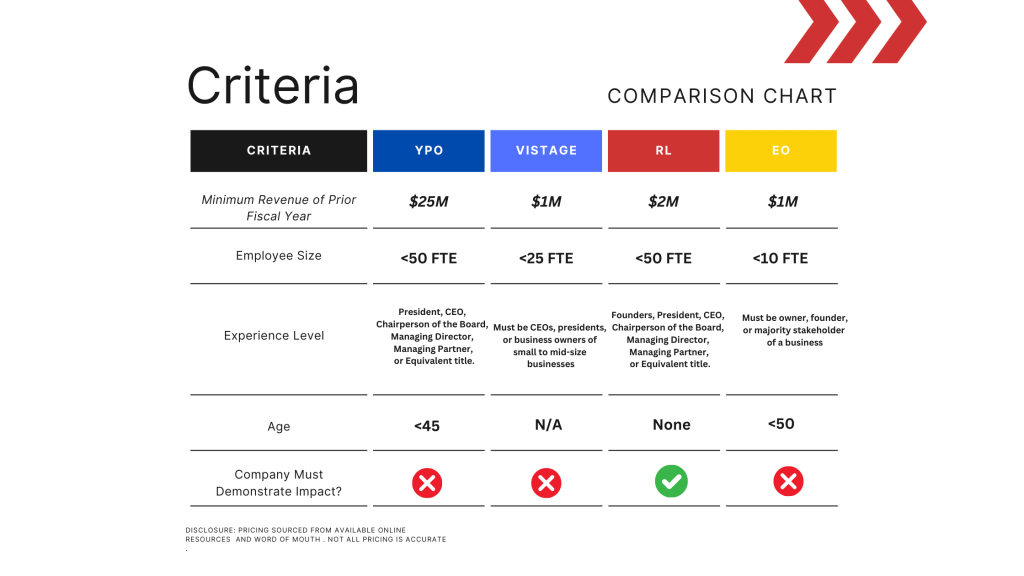
Whether you’re at the beginning or final stages selecting a leadership network, it’s important to know what to look for and what questions to ask your recruiter so that you have clarity on what to expect. This comprehensive guide was created to guide you through 3 crucial categories—Criteria, Commitment, and Content to determine which of the 4 major networks (YPO, Vistage, EO, and RL) are best for you.

Criteria:

Leaders face different challenges at different stages of growth. The conversations and experience levels are just different. If you’re a large and growing company you don’t want to be in a group with leaders trying to make payroll and if you’re a SMB owner, you may feel imposter syndrome if you haven’t raised over $100M in capital before. 

3 Questions to ask your recruiter is:

  1. What are the minimum revenue and employee requirements? 
  2. How are the groups formed?
  3. Do the members share my values?

RL difference: If you’re an impact company CEO, ask, “do you have forums or networks specifically for impact or ESG-minded businesses? Is that a requirement for you?” If you’re in a traditional network, you may get called “cute”, “Pollyanna”, or “get looked at like you have 3 heads” (all real experiences).

At the end of the day, you want to surround yourself around individuals who inspire you and there’s no quicker death of a forum if this balance isn’t right.

Commitment:

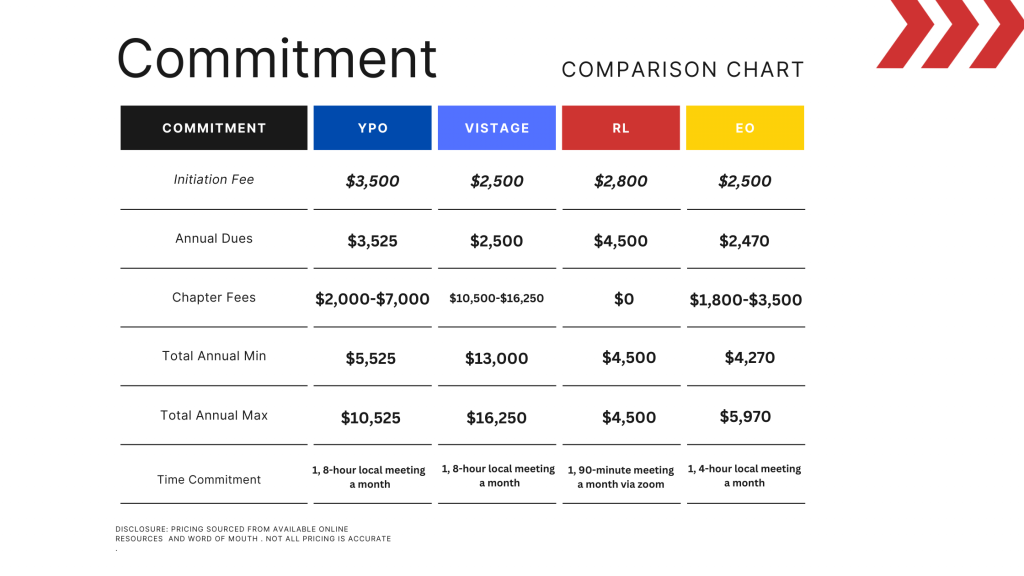
Generally speaking, a CEOs responsibility is to maximize their return on investment with the scarce resources they have.  Forums are sacred and should be taken very seriously and seen as a “must not miss meeting” but if you end up joining the wrong network, fees can create stress and the time commitment can become burdensome. Be wary of the recruiter who doesn’t let you be flexible with your annual dues and avoid joining the groups who don’t honor their time commitments. To avoid falling into a trap, you could ask: 

  1. Are there chapter dues on top of the annual dues? 
  2. What does the initiation fee go towards?
  3. How much of a monthly time commitment is this from me?
  4. Are the financing options available? 

RL Difference: Real Leaders offers the most competitive pricing and your initiation fee (orientation fee) goes toward your first Real Leaders UNITE summit. 

Content:

Whether you have experienced a forum or not, it’s important to know what to expect before registering for a leadership network. Each network also provides more content and networking opportunities called “micro-forums” outside of their confidential meetings. Another difference Vistage has is that their groups are recruited and facilitated by an executive coach or retired CEO. This is great if you’re looking for both forum and a 1-on-1 format. A few questions to ask your recruiter would be:

  1. How many members will be in my forum?
  2. Are they member-led or facilitated?
  3. Are the annual summits included in my membership? 
  4. Do you support my thought leadership as a CEO?

RL Difference: Warren Buffet is famous for saying, “speaking can improve your value by 50%.” Building your thought leadership can elevate your brand and business development and joining a leadership network is a great way to do this. Real Leaders editors go to members first for stories and quotes to be featured in its global publication.

Conclusion:

Joining a forum is one of the best decisions you can make as a CEO. Whether it’s the relationships you build, the insights you discover, or just the flat out energy you get after leaving the meeting, there’s a reason why forums have existed for centuries. At the end of the day, you get out what you put in. At Real Leaders, we have members in all 3 of the other networks who come to surround themselves with values-aligned leaders who get them. Regardless, you qualify for a network like YPO or not, we believe every isolated leader needs an outlet to get help with whatever is keeping them up at night and hope that this guide was helpful in finding alternatives. Best of luck on your journey.

3 YPO Alternatives: A Comprehensive Guide to Selecting a Leadership Network

Whether you’re at the beginning or final stages selecting a leadership network, it’s important to know what to look for and what questions to ask your recruiter so that you have clarity on what to expect. This comprehensive guide was created to guide you through 3 crucial categories—Criteria, Commitment, and Content to determine which of the 4 major networks (YPO, Vistage, EO, and RL) are best for you.

Criteria:

Leaders face different challenges at different stages of growth. The conversations and experience levels are just different. If you’re a large and growing company you don’t want to be in a group with leaders trying to make payroll and if you’re a SMB owner, you may feel imposter syndrome if you haven’t raised over $100M in capital before. 

3 Questions to ask your recruiter is:

  1. What are the minimum revenue and employee requirements? 
  2. How are the groups formed?
  3. Do the members share my values?

RL difference: If you’re an impact company CEO, ask, “do you have forums or networks specifically for impact or ESG-minded businesses? Is that a requirement for you?” If you’re in a traditional network, you may get called “cute”, “Pollyanna”, or “get looked at like you have 3 heads” (all real experiences).

At the end of the day, you want to surround yourself around individuals who inspire you and there’s no quicker death of a forum if this balance isn’t right.

Commitment:

Generally speaking, a CEOs responsibility is to maximize their return on investment with the scarce resources they have.  Forums are sacred and should be taken very seriously and seen as a “must not miss meeting” but if you end up joining the wrong network, fees can create stress and the time commitment can become burdensome. Be wary of the recruiter who doesn’t let you be flexible with your annual dues and avoid joining the groups who don’t honor their time commitments. To avoid falling into a trap, you could ask: 

  1. Are there chapter dues on top of the annual dues? 
  2. What does the initiation fee go towards?
  3. How much of a monthly time commitment is this from me?
  4. Are the financing options available? 

RL Difference: Real Leaders offers the most competitive pricing and your initiation fee (orientation fee) goes toward your first Real Leaders UNITE summit. 

Content:

Whether you have experienced a forum or not, it’s important to know what to expect before registering for a leadership network. Each network also provides more content and networking opportunities called “micro-forums” outside of their confidential meetings. Another difference Vistage has is that their groups are recruited and facilitated by an executive coach or retired CEO. This is great if you’re looking for both forum and a 1-on-1 format. A few questions to ask your recruiter would be:

  1. How many members will be in my forum?
  2. Are they member-led or facilitated?
  3. Are the annual summits included in my membership? 
  4. Do you support my thought leadership as a CEO?

RL Difference: Warren Buffet is famous for saying, “speaking can improve your value by 50%.” Building your thought leadership can elevate your brand and business development and joining a leadership network is a great way to do this. Real Leaders editors go to members first for stories and quotes to be featured in its global publication.

Conclusion:

Joining a forum is one of the best decisions you can make as a CEO. Whether it’s the relationships you build, the insights you discover, or just the flat out energy you get after leaving the meeting, there’s a reason why forums have existed for centuries. At the end of the day, you get out what you put in. At Real Leaders, we have members in all 3 of the other networks who come to surround themselves with values-aligned leaders who get them. Regardless, you qualify for a network like YPO or not, we believe every isolated leader needs an outlet to get help with whatever is keeping them up at night and hope that this guide was helpful in finding alternatives. Best of luck on your journey.

Reimagining Sustainable Building Practices

Mass Timber Home by Green Canopy Node revolutionizes construction and advances sustainable building practices.

By Real Leaders

For the last several decades, the U.S. housing supply has not kept pace with demand, leaving America short millions of homes today in a gap that continues to widen. To help address that problem, Green Canopy NODE, a sustainable construction technology company, developed a Mass Timber Model Home Assembly Kit that provides developers a path to deliver housing twice as fast with greater predictability.

Green Canopy NODE’s Mass Timber Model Home is a game-changer for developers,” Co-CEO Bec Wilder says. “We all want to solve the housing market’s pains, but we get stuck in long development timelines and traditional construction schedules. Our model home will help cut out a lot of hurdles and risks we all have traditionally struggled with and help us all simply deliver more housing.”

Pictured Above is Bec Wilder (Chapin) Co-CEO of Green Canopy NODE

From Months, Not Years: Building Better & Faster for Communities

The model home was designed as a turnkey housing unit and completed it in March 2023 in partnership with Mercer Mass Timber. They controlled costs with pre-planned and streamlined construction, delivered it faster through simultaneous manufacturing and site prep, and avoided weather delays in construction through off-site manufactured modular installation.

“Addressing the housing crisis with the same solutions we’ve been using for the last 100+ years simply isn’t going to achieve the outcomes we need,” Co-CEO Aaron Fairchild says. “We are excited to bring the power of manufacturing to help regenerate communities and environments all while reducing waste and minimizing embodied carbon.”

The Mass Timber Model Home is a 1,200-square foot, two-story modular home with a rooftop deck, two bedrooms, and one-and-a-half bathrooms. It was built using precision-engineered mass timber components manufactured offsite, demonstrating the power of prefabrication, installation, and logistics. 

Game-Changer for Developers: Speed & Sustainability

The modules for the home were assembled offsite in Spokane, Washington, and were ready for shipping in two days. Onsite assembly for the entire home occurred in two days during a blizzard, further testing the company’s process and capabilities to build under extreme conditions.

“Building with mass timber delivers increased efficiency, enhanced sustainability, health benefits, and unparalleled aesthetics, making it an ideal choice for developers and investors interested in low- and mid-rise residential construction technology,” Fairchild says. “One of our bigger goals is carbon negativity. I think that we will crack the code and we will be able to have people housed affordably, humanely, and with dignity.” 

Benefits of Mass Timber Homes

  • Increases efficiency and is 44% faster to complete than traditional construction (under 100 days from project start to completion)
  • Controls costs with pre-planned and streamlined construction
  • Avoids weather delays through off-site manufactured modular installation
  • Enhances sustainability by reducing embodied carbon footprint and waste 
  • Stores 6.6 times more carbon than a stick frame home and offsets two-and-a-half stick frame houses with carbon storage
  • Lasts longer than standard code-built homes and can be deconstructed and reused

Reimagining Sustainable Building Practices

Mass Timber Home by Green Canopy Node revolutionizes construction and advances sustainable building practices.

By Real Leaders

For the last several decades, the U.S. housing supply has not kept pace with demand, leaving America short millions of homes today in a gap that continues to widen. To help address that problem, Green Canopy NODE, a sustainable construction technology company, developed a Mass Timber Model Home Assembly Kit that provides developers a path to deliver housing twice as fast with greater predictability.

Green Canopy NODE’s Mass Timber Model Home is a game-changer for developers,” Co-CEO Bec Wilder says. “We all want to solve the housing market’s pains, but we get stuck in long development timelines and traditional construction schedules. Our model home will help cut out a lot of hurdles and risks we all have traditionally struggled with and help us all simply deliver more housing.”

Pictured Above is Bec Wilder (Chapin) Co-CEO of Green Canopy NODE

From Months, Not Years: Building Better & Faster for Communities

The model home was designed as a turnkey housing unit and completed it in March 2023 in partnership with Mercer Mass Timber. They controlled costs with pre-planned and streamlined construction, delivered it faster through simultaneous manufacturing and site prep, and avoided weather delays in construction through off-site manufactured modular installation.

“Addressing the housing crisis with the same solutions we’ve been using for the last 100+ years simply isn’t going to achieve the outcomes we need,” Co-CEO Aaron Fairchild says. “We are excited to bring the power of manufacturing to help regenerate communities and environments all while reducing waste and minimizing embodied carbon.”

The Mass Timber Model Home is a 1,200-square foot, two-story modular home with a rooftop deck, two bedrooms, and one-and-a-half bathrooms. It was built using precision-engineered mass timber components manufactured offsite, demonstrating the power of prefabrication, installation, and logistics. 

Game-Changer for Developers: Speed & Sustainability

The modules for the home were assembled offsite in Spokane, Washington, and were ready for shipping in two days. Onsite assembly for the entire home occurred in two days during a blizzard, further testing the company’s process and capabilities to build under extreme conditions.

“Building with mass timber delivers increased efficiency, enhanced sustainability, health benefits, and unparalleled aesthetics, making it an ideal choice for developers and investors interested in low- and mid-rise residential construction technology,” Fairchild says. “One of our bigger goals is carbon negativity. I think that we will crack the code and we will be able to have people housed affordably, humanely, and with dignity.” 

Benefits of Mass Timber Homes

  • Increases efficiency and is 44% faster to complete than traditional construction (under 100 days from project start to completion)
  • Controls costs with pre-planned and streamlined construction
  • Avoids weather delays through off-site manufactured modular installation
  • Enhances sustainability by reducing embodied carbon footprint and waste 
  • Stores 6.6 times more carbon than a stick frame home and offsets two-and-a-half stick frame houses with carbon storage
  • Lasts longer than standard code-built homes and can be deconstructed and reused

DYPER is Lightening the Load

DYPER is revolutionizing the disposable diaper industry with environmental ingenuity.

By Real Leaders

Diapers are the third-leading contributor to U.S. landfills by mass, taking up to 500 years to break down. The average child uses around 3,700 disposable diapers, and more than 27 billion of them end up in U.S. landfills each year.

A Sustainable Solution for Happy Bottoms and a Healthy Planet

That’s where DYPER founder and CEO Sergio Radovcic saw an opportunity to help reduce the negative impact of these baby basics on the planet. The Certified B Corp has been working since 2018 toward its goal of making a fully plant-based diaper that reduces fossil-fuel use and avoids landfills. Along the way, the company has grown its employee base over sixfold from 2019–22. 

Radovcic, a father of three, started DYPER as an alternative to mainstream options made with chemicals and plastic. The vast majority of disposable diapers are constructed with two water bottles worth of plastic and sold in single packs with new plastic packaging. 

“While there are no silver bullets to solving the plastic diaper dilemma, we feel it is our obligation to continuously look for solutions,” Radovcic says. 

DYPER makes diapers and wipes with plant-based materials and avoids harmful chemicals and irritants such as chlorine, latex, alcohol, perfumes, PVC, lotions, TBT, and phthalates. Wood pulp from responsibly managed bamboo and eucalyptus forests is converted using closed-loop systems in accordance with OEKO-TEX STeP standards, and DYPER’s supply chain is independently audited. 

Plants are renewable and more sustainable than using conventional plastic, which is made from chemicals sourced from fossil fuels. The company’s diapers were rated a Certified USDA BioPreferred 55% Product and degraded more than 70% in 180 days when tested. Plus, they come in eco-friendly packaging. The products have already made their way to major distributors, including Walmart, Target, and Amazon.

“Parents shouldn’t have to choose between their baby’s well-being and the environment,” Radovcic says. “By using materials such as paper, natural wax, and clay in our packaging and plant-based materials in our diapers, we hope to set an industrywide example that we can all reduce our reliance on plastics as a society.”

Breaking Free from Plastic: Embracing Plant-Based Power

A challenge remains, as 100% plant-based superabsorbent polymers, elastics, glues, and fastening systems are currently not available at scale or at the performance needed for daily use. Thus, the evolution of DYPER continues. 

In addition to its main diaper packs, DYPER also makes charcoal-enhanced diapers, cloth diapers, and training pants. It introduced its first Impact Box in 2023, benefitting Hope for the Warriors, a nonprofit that supports service members, veterans, and families. 

Thinking even bigger than diapers and wipes, DYPER has created additional programs centered around holistic care for babies and the planet:

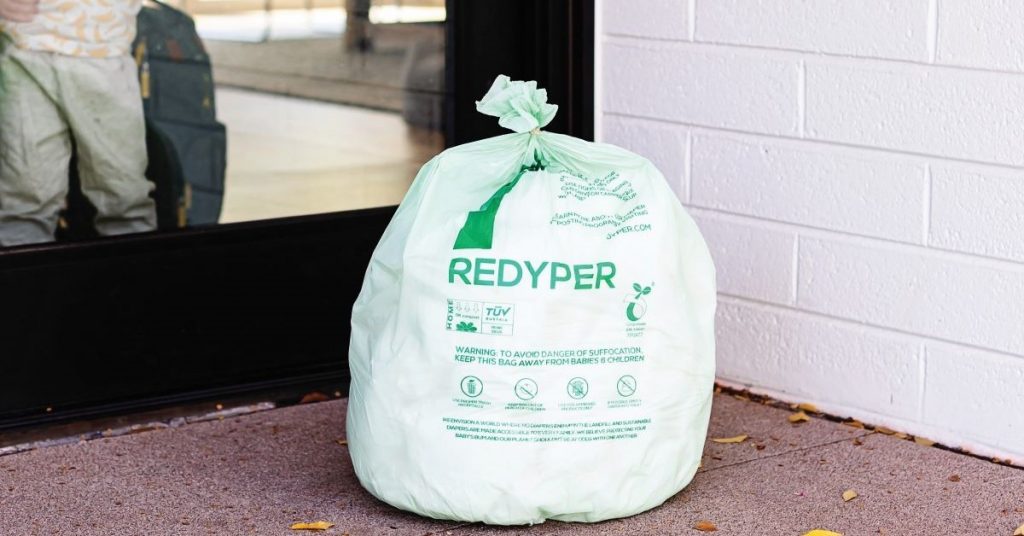
  • REDYPER: An opt-in program offers curbside pickup of soiled products in 22+ cities and growing, or they can ship them back for responsible disposal. To date, over 11.5 million pounds of dirty diapers have been diverted from landfills and converted into topsoil. Introduced in 2023 to select markets, Byochar technology also helps reduce landfill waste by converting soiled diapers and wipes into usable biochar at scale, ultimately transforming an environmental hazard into a carbon-neutral footprint without the use of offsets. Biochar is a carbon-rich product created through a heating process called pyrolysis, which allows for waste to be transformed into a reusable commodity that can improve soil, assist in air and water purification, and be an additive to paints and inks for improved pigment.  
  • DYPER Health: At-home testing provides science-based insights, including a Baby Gut Health Kit, Children’s Advanced DNA Kit, Breast Milk Test Kit, and Adult Vaginal Microbiome Test Kit, with other tests in the works.
  • DYPER Card: A credit card offers qualified customers the ability to earn free diapers or a cash back investment into an EarlyBird savings account. When children are no longer in diapers, EarlyBird will allow a percentage of spending to be transferred into a minor custodial account for tax-optimized growth.

“We strive to be at the forefront of innovation and cater to the needs of modern parents,” Radovcic says.

DYPER is Lightening the Load

DYPER is revolutionizing the disposable diaper industry with environmental ingenuity.

By Real Leaders

Diapers are the third-leading contributor to U.S. landfills by mass, taking up to 500 years to break down. The average child uses around 3,700 disposable diapers, and more than 27 billion of them end up in U.S. landfills each year.

A Sustainable Solution for Happy Bottoms and a Healthy Planet

That’s where DYPER founder and CEO Sergio Radovcic saw an opportunity to help reduce the negative impact of these baby basics on the planet. The Certified B Corp has been working since 2018 toward its goal of making a fully plant-based diaper that reduces fossil-fuel use and avoids landfills. Along the way, the company has grown its employee base over sixfold from 2019–22. 

Radovcic, a father of three, started DYPER as an alternative to mainstream options made with chemicals and plastic. The vast majority of disposable diapers are constructed with two water bottles worth of plastic and sold in single packs with new plastic packaging. 

“While there are no silver bullets to solving the plastic diaper dilemma, we feel it is our obligation to continuously look for solutions,” Radovcic says. 

DYPER makes diapers and wipes with plant-based materials and avoids harmful chemicals and irritants such as chlorine, latex, alcohol, perfumes, PVC, lotions, TBT, and phthalates. Wood pulp from responsibly managed bamboo and eucalyptus forests is converted using closed-loop systems in accordance with OEKO-TEX STeP standards, and DYPER’s supply chain is independently audited. 

Plants are renewable and more sustainable than using conventional plastic, which is made from chemicals sourced from fossil fuels. The company’s diapers were rated a Certified USDA BioPreferred 55% Product and degraded more than 70% in 180 days when tested. Plus, they come in eco-friendly packaging. The products have already made their way to major distributors, including Walmart, Target, and Amazon.

“Parents shouldn’t have to choose between their baby’s well-being and the environment,” Radovcic says. “By using materials such as paper, natural wax, and clay in our packaging and plant-based materials in our diapers, we hope to set an industrywide example that we can all reduce our reliance on plastics as a society.”

Breaking Free from Plastic: Embracing Plant-Based Power

A challenge remains, as 100% plant-based superabsorbent polymers, elastics, glues, and fastening systems are currently not available at scale or at the performance needed for daily use. Thus, the evolution of DYPER continues. 

In addition to its main diaper packs, DYPER also makes charcoal-enhanced diapers, cloth diapers, and training pants. It introduced its first Impact Box in 2023, benefitting Hope for the Warriors, a nonprofit that supports service members, veterans, and families. 

Thinking even bigger than diapers and wipes, DYPER has created additional programs centered around holistic care for babies and the planet:

  • REDYPER: An opt-in program offers curbside pickup of soiled products in 22+ cities and growing, or they can ship them back for responsible disposal. To date, over 11.5 million pounds of dirty diapers have been diverted from landfills and converted into topsoil. Introduced in 2023 to select markets, Byochar technology also helps reduce landfill waste by converting soiled diapers and wipes into usable biochar at scale, ultimately transforming an environmental hazard into a carbon-neutral footprint without the use of offsets. Biochar is a carbon-rich product created through a heating process called pyrolysis, which allows for waste to be transformed into a reusable commodity that can improve soil, assist in air and water purification, and be an additive to paints and inks for improved pigment.  
  • DYPER Health: At-home testing provides science-based insights, including a Baby Gut Health Kit, Children’s Advanced DNA Kit, Breast Milk Test Kit, and Adult Vaginal Microbiome Test Kit, with other tests in the works.
  • DYPER Card: A credit card offers qualified customers the ability to earn free diapers or a cash back investment into an EarlyBird savings account. When children are no longer in diapers, EarlyBird will allow a percentage of spending to be transferred into a minor custodial account for tax-optimized growth.

“We strive to be at the forefront of innovation and cater to the needs of modern parents,” Radovcic says.

Sustainable American Adventures

By Real Leaders

Legacy Vacation Resorts offers affordable, sustainable vacation experiences and is the first multi-state resort hospitality company in the U.S. to achieve B Corp Certification. It partners with environmental organizations to highlight important initiatives and encourages guests to support other B Corps. 

Green Getaways: Legacy Vacation Resorts Show How to Have Fun Sustainably

“We do this in a variety of approachable ways including an informational, yet comedic in-room video, signage across each property highlighting environmental impact projects like our renewable energy use and water reduction initiatives, as well as information in-room at different touch points to encourage things like recycling and avoidance of single-use items,” says Jared Meyers, CEO of Legacy Vacation Resorts

The company reached carbon neutrality by offsetting 100% of guest stays and activities. Here’s a look at four of its eco-focused properties across the U.S.

Steamboat Springs, Colorado

Just moments from the gondola and within walking distance of shops and restaurants, these suites are steps from world-class skiing in the winter and exhilarating mountain recreation the remainder of the year. Escape on a mountain biking trek, navigate whitewater rapids, fish for river trout, or explore the mountain trails on horseback. Return to the warmth of a dog-friendly condominium for Rocky Mountain-style rest in the hot tub or sauna, a barbecue at the grilling area, or more fun at nine-hole miniature golf onsite.

Indian Shores, Florida

Stunning Gulf Intracoastal Waterway views and the beauty of Florida’s West Coast beaches set a spectacular backdrop for an escape to this tranquil resort near Clearwater Beach and Tampa Bay. With fully equipped studio, one-, and two-bedrooms and elite units, its accommodations also include access to a swimming pool, hot tub, game room, grilling area, and an outdoor deck with magnificent views, beach access, a dock, and boat slips.

Reno, Nevada

A vibrant, diverse destination of sky’s-the-limit casino gaming, world-class outdoor recreation, and thrilling nightlife, Reno, Nevada, is an anything-goes town in the shadow of the Sierra Nevada mountains. Explore whitewater rapids at the Truckee River, the Reno Aces baseball team, and annual events like the Reno River Festival and Great Balloon Race. Beautifully appointed hotel accommodations and amenities include an indoor pool, saunas, and a sundeck.

Brigantine Beach, New Jersey

Perhaps New Jersey’s best-kept secret, this timeless seaside town is a pristine hideaway from the larger New Jersey beaches. Directly on the white sandy shores of Brigantine Island, this historic beachfront resort is close to the action. Spend the day on the beach, cast a line into the surf, or book a deep-sea fishing charter. Stroll the boardwalk, tee off on a championship golf course, or take a short trip over to Atlantic City. Enjoy spacious, dog-friendly suites, along with a heated indoor pool and a seasonal ocean-view restaurant. The resort achieved 100% renewable electricity through Renewable Energy Certificates.

Sustainable American Adventures

By Real Leaders

Legacy Vacation Resorts offers affordable, sustainable vacation experiences and is the first multi-state resort hospitality company in the U.S. to achieve B Corp Certification. It partners with environmental organizations to highlight important initiatives and encourages guests to support other B Corps. 

Green Getaways: Legacy Vacation Resorts Show How to Have Fun Sustainably

“We do this in a variety of approachable ways including an informational, yet comedic in-room video, signage across each property highlighting environmental impact projects like our renewable energy use and water reduction initiatives, as well as information in-room at different touch points to encourage things like recycling and avoidance of single-use items,” says Jared Meyers, CEO of Legacy Vacation Resorts

The company reached carbon neutrality by offsetting 100% of guest stays and activities. Here’s a look at four of its eco-focused properties across the U.S.

Steamboat Springs, Colorado

Just moments from the gondola and within walking distance of shops and restaurants, these suites are steps from world-class skiing in the winter and exhilarating mountain recreation the remainder of the year. Escape on a mountain biking trek, navigate whitewater rapids, fish for river trout, or explore the mountain trails on horseback. Return to the warmth of a dog-friendly condominium for Rocky Mountain-style rest in the hot tub or sauna, a barbecue at the grilling area, or more fun at nine-hole miniature golf onsite.

Indian Shores, Florida

Stunning Gulf Intracoastal Waterway views and the beauty of Florida’s West Coast beaches set a spectacular backdrop for an escape to this tranquil resort near Clearwater Beach and Tampa Bay. With fully equipped studio, one-, and two-bedrooms and elite units, its accommodations also include access to a swimming pool, hot tub, game room, grilling area, and an outdoor deck with magnificent views, beach access, a dock, and boat slips.

Reno, Nevada

A vibrant, diverse destination of sky’s-the-limit casino gaming, world-class outdoor recreation, and thrilling nightlife, Reno, Nevada, is an anything-goes town in the shadow of the Sierra Nevada mountains. Explore whitewater rapids at the Truckee River, the Reno Aces baseball team, and annual events like the Reno River Festival and Great Balloon Race. Beautifully appointed hotel accommodations and amenities include an indoor pool, saunas, and a sundeck.

Brigantine Beach, New Jersey

Perhaps New Jersey’s best-kept secret, this timeless seaside town is a pristine hideaway from the larger New Jersey beaches. Directly on the white sandy shores of Brigantine Island, this historic beachfront resort is close to the action. Spend the day on the beach, cast a line into the surf, or book a deep-sea fishing charter. Stroll the boardwalk, tee off on a championship golf course, or take a short trip over to Atlantic City. Enjoy spacious, dog-friendly suites, along with a heated indoor pool and a seasonal ocean-view restaurant. The resort achieved 100% renewable electricity through Renewable Energy Certificates.

0