“Lean in” To Your Leadership

Sheryl Sandberg popularized this expression recently when talking about women in business. It was such a simple and powerful way to put career wisdom into words that the expression grew into a bestselling book worldwide. Well, I’m going to borrow Sheryl’s expression today to write about how women AND men fail to lean in to their own leadership growth.

Spain is quite the example of leaning back, looking away, bending down and ducking under any visible table within a ten mile radius when anybody starts talking about self-awareness, introspection and growth. I often wonder what I’m still doing here, in a market where an overgrown coaching offer makes demand look like a teeny-weeny, shy little kitten.

Lots of executives take up coaching careers when they lose their jobs. But they all want to coach somebody else. It’s tough finding an executive who is serious about getting coached. Maybe I’m a little suicidal. Maybe I love a difficult challenge. Maybe it’s just my destiny. Whatever the reason, I still haven’t given up after ten really hard years of executive coaching and leadership training in this country. Of course I work a lot outside of Spain too. I might be dead otherwise. Still, nothing builds purpose and tenacity like repeated rejection.

And Spain is not the only country where top executives lean far back from their own leadership growth. Sandberg’s core message is inspiring to women because it states an obvious truth. If you take yourself off the table nobody else is going to bother to keep you involved in the game. Women lean back out of fear that they won’t be good enough, smart enough, strong enough. It’s not that different to what keeps executives away from serious self-evaluation and soul searching. Both men and women avoid conversations, events and people who confront them with scary shadows inside themselves.

Both men and women leaders fear they won’t be good enough, smart enough, or strong enough to overcome their own inner darkness. The problem is, if you don’t lean in to your own self-improvement, you are also erasing plenty of unsuspected business opportunities from your future career.

If you don’t proactively search the best possible version of yourself, nobody else can do it for you. And what’s worse, nobody under you will try to do it either. You will nurture a company culture of avoidance, lazy complacence and over-inflated egos. The more you fear who you really are, the bigger an ego you need to hide yourself when facing your colleagues.

So how do CEOs get from “not me” to “me first” in leadership development efforts? In my experience timing is key. An old oriental saying says that “when the student is ready, the master appears”, and I have found it to be true lots of times, both as student and as master. Clients who fall into my hands are seriously looking for intense awakenings. People who appear in my life, in fact, and stay in it, are also in search of something meaningful.

It’s very humbling to accept that something inside you is somehow operating on others, despite you and whatever it is you may think you’re doing. So I do strongly believe there is some kind of synchronicity or magic randomness bringing the right coaches to the right executives at the right moment. But if you have to push a CEO to show up to his executive coaching sessions, you’re probably too early for him or her.

Everybody needs to build up some personal strength before looking at ugliness. This specific kind of strength can’t be imposed by will power. It can’t be forced, pushed or bullied. It’s not hard. It’s a kind of strength that is soft and relaxed. Unwavering and often unbreakable. It comes from years of painful experience. It is built by suffering the consequences of your own repeated mistakes again and again and again. Every executive has a minimum required number of erroneous repetitions before he’s ready to question himself. The distance between “not me” and “me first” is paved by an unknown number of well-known falls.

This is a very interesting fact of behavioral change that very few coaches or therapists dare to realize or admit: repetition is absolutely necessary to growth and sustainable change. We need X number of blind repetitions in order to accept that we are doing something weird, and start observing ourselves. Then we need Y number of aware, self-analyzing repetitions in order to gradually undo the pattern altogether. And nobody knows how much X+Y will be. We always wish for a low number. We’re often exasperated by how high a figure it turns out to be.

Any coach or therapist who pretends to reduce a client’s number of repetitions is acting out of an over-inflated ego. No master can impact his student’s learning path. No master should. Learning and growing as a leader is not a destination. It’s a journey full of emotion that makes the student strong, interesting, seasoned, humane. And youthfully attractive, I might add. Exhaustion, frustration, fear of internal shadows and grief over past mistakes are all crucial ingredients of that unique learning journey. Facing and overcoming these demons is the mark of true, irresistible leaders. Executives who don’t lean in, will never be inspiring or visionary or worth following in any way.

They will need plenty of botox and hours at the gym to get any attention at all. ;-)! Yesterday I was discussing this notion with a colleague and I wondered out loud what Spain was repeating in order to get from “not me” to “me first”. He sent me a quote attributed to XIXth-century German aristocrat and statesman Otto von Bismarck, also known as the Iron Chancellor: “The strongest nation in the world is undoubtedly Spain. They’ve always tried to destroy themselves though they’ve never been successful. The day they stop trying, they will once again lead the world!”

Maybe this is why I’m still here, coaxing Spanish leaders to lean in to their leadership growth. Maybe I’m just a suicidal coach acting out of an over-inflated ego. But maybe, just maybe, we’re in for a really wild ride of leadership growth in this beloved country of mine. God knows we keep repeating our patterns like crazy.

We must be getting very, very strong. Lean in, my friends! I guarantee you won’t look back.
How Endings Teach Us To Lead Heroically

Last Sunday I got up early and looked out the window at the weather to see whether horse riding would be possible. A clear sky and lots of puddles from the night’s rainstorm invited me to try. But I never did get on the horse. A bigger lesson was meant for me that day.

When I arrived at Yeguada Olmaz, the horse breeding ranch I’ve come to call a second home, owners Jesús and Guiomar looked worried. One of the foals, Pagolín, had lain down in a field and would not get up. We tried to flip him over to his other side to help circulation and to push him back onto his feet. It didn’t work. Guiomar called the vet. We put a cover on him to keep him warm and a sack of hay under his head to avoid damage to his eye socket.

A possible ending loomed as we all faced our own feelings about death. I felt incapable of concentrating on a riding class or listening to the instructions that Guiomar tried to provide. I struggled to momentarily forget the concern for the six-month-old foal lying on the field. So while she and her husband tended to their herd’s needs that day, I made myself a little dry seat out of stones beside Pagolín and his mother Lorca. I must have spent two hours out there on that wet field. It felt important to be there. It felt like there was no other place I should be. Not because I was needed in any way.

But because something very important was happening right in front of me. Something I didn’t want to miss. A lesson on how to face death without resistance. On how leaders are supposed to react to difficult crisis like terrorist attacks, or impending foreclosures, or even the outbreak of a deadly new virus. I remembered all the times I’d hung out in the stall with newborn Pagolín and mother Lorca in the previous six months, coming up with unique leadership training exercises.

They were always there for me when I wanted them. How could I not be there for them at a time like this? Once again, they taught me something about life and leadership that I hadn’t fully comprehended before. Once again, I confirmed that animals are here to teach us how to be better people and better leaders. They didn’t resist. They didn’t try to fight. They didn’t protest. They simply experienced those two hours with me in total serenity. The kind of serenity we humans search for all the time. Pagolín nuzzled my hands and very slowly teased my palm with a playful bite.

His limbs rigidly stretched out in front of him. His mother standing behind me in silence. Both breathing deeply and slowly, facing each passing moment of pain and fear without judgment or complaint. It’s not that leaders should do nothing in the face of catastrophe. Far from it. This learning is about staying calm if you want to use your full talent and skill. In serenity we know exactly what to do, while in evasive anxiety we rigidify into tunnel vision and blind repetition. Still, we waste so much energy trying to escape from the endings we fear in life. We run around worrying, gossiping hysterically in corridors and venting frustration during long, circular meetings. Or we deny the obvious, convincing ourselves we can conquer anything while acting as if everything will magically turn out okay.

The only way we know to keep calm is to repeat “it’s gonna be alright!” to others and to ourselves. A formula which actually does very little to tranquilize our followers, be they adult employees, or our own children and pets. I stood up eventually to bring some feeling back to my bottom and stood alongside Lorca the mare. I remembered she had lost a foal the year before. This is what our grandmothers used to go through. Bearing children one after the other, losing many of them to wars, plagues or accidents. How did they do it? It’s incomprehensible to parents of today.

I buried my face in Lorca’s neck, just behind her head. And she leaned on me softly. Tired, maybe grieving, maybe holding me in my own sadness. We each face our own weaknesses when we look at death. Endings bring out the stuff we haven’t yet resolved about ourselves. Today we live in a culture with absolutely no tolerance to death. A lot of what we do is about staying young and healthy as long as we possibly can. We pursue success and happiness like no other generation has before. We escape difficulty and ostracize losers. At the same time we struggle to stay motivated or to keep our employees involved in our business adventures.

We talk endlessly about creativity, inspiration, passion… all the things true heroes are made of. We forget that heroes are not forged by sitting in bliss. Endless success or unbreakable health does not make us heroic. It just makes us weak and dependent on more good stuff in order to keep going. Warriors become worthy of such a title by facing hardship and difficulty many, many times. Warriors become heroes by facing death. Why not us?

What I learned that Sunday on the field is that death is part of life. The horses already knew it. It’s not something to understand from the head. It’s a truth to be felt from the heart. That’s why we humans still don’t get it no matter how many times we’re told about it. We don’t become warriors or good leaders by reading books. We learn to be brave by facing death in its many forms.

When I look at all the startups I’ve had to bury, I finally sense this need for endings if there are to be any new beginnings. As I embark on yet another hugely ambitious business adventure, I wonder every day if it will make it to adult life. I think of how much I’ve lost in the past: the money, the partnerships, the long days of tireless work, the credibility in a failure-averse country like Spain. And then I remember how very much I’ve learned. In my head, for sure, but especially in my heart.

Bravery and ambition are not concepts of the mind! When the vet arrived we all helped the foal back on its feet and got it out of the field with its mother, into a warm stall. X-rays and other tests ensued, eventually finding a fracture of the tibia, which may not be fatal if cured correctly. A ray of hope still shines over Pagolín’s future today.

None of us know if “it’s gonna be alright”, but we’re all a little bit braver than we were before, because testing ourselves against imminent endings slowly brings out the heroes we all carry…somewhere deep inside ourselves.


Why Business Is Like Surfing

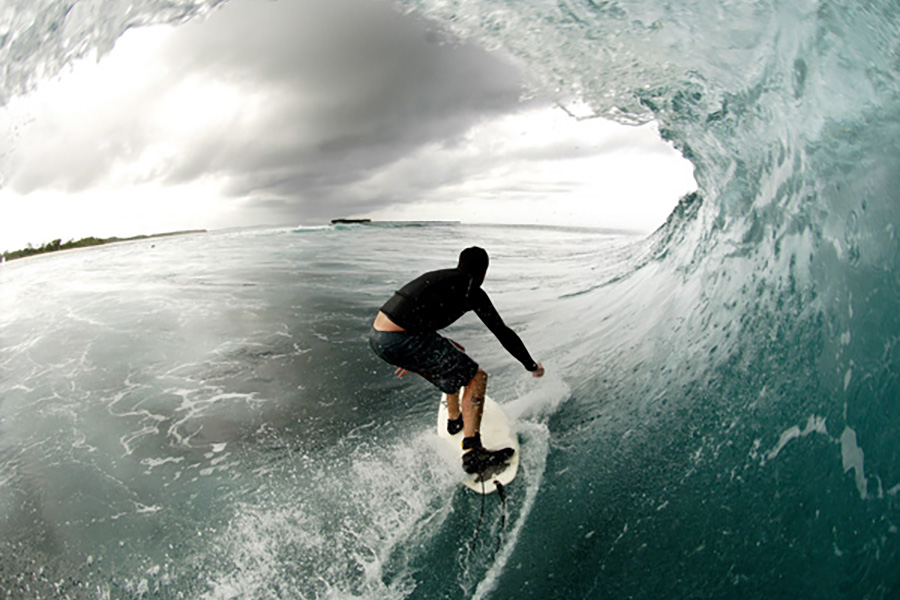
“I’ve decided business is like surfing. There needs to be a wave underneath us. We can’t do all the pedaling!” I joked over Skype to one of our partners in Holland last week. The hardest part of building new business models may be exactly this: knowing which waves to surf and which ones to stay away from. Because business, and life, are like a huge, turbulent ocean. It can carry you to success. Or it can drown you to death. At any given moment.

Many savvy business leaders rely on their instinct. Like old weathered sailors, they smell something’s in the air before the rest of us do. They feel it. And they go for it. Ruthlessly. Tirelessly. Fearlessly. They can spot the wave that will carry their surfboards high up in the air for many miles to come. Statistics, smart consultants and industry experts may provide background information, but each CEO builds his own vision. Each man must choose his own wave. Even while knowing that choosing the wrong one may be the death of him and everything he’s built.

But how does a CEO build an accurate instinct about waves of opportunity? Where does he get the stable security needed to swoosh from one ocean crest to the next without falling over, losing balance and falling off his chosen salty curl? Not his mind, I can tell you. He gets it from his body. I interviewed my osteopath recently. Car mechanics can tell a lot about the way we drive by looking at the cars we drive: how our tires wear out, or where our brakes and motor lose effectiveness. Professionals who work with our bodies are no different. The way our bodies break can tell us a lot about the way we’re surfing the ripples of our profession. Alvaro Moran is a reputed osteopath in Madrid with twenty years of experience.

He is my first visit after I fall off my horse. Yes, his specialty is the musculoskeletal system. But it’s not only about bones, muscles and joints. It’s about what causes injuries to happen and what keeps them from healing. He has studied traditional Chinese medicine, homeopathy and Bach floral therapy. And I have to say he asks great questions about what’s going on with me by looking at where my body gets stuck.

So I asked Alvaro about the sample of patients who walk through his doors and what their bodies show about their biz surfing abilities. After a long strenuous disclaimer paragraph, which I promised to respect, he illustrated some basic ideas which –caution please!— can’t be considered scientific certainties. Yet they do provide some very interesting questions to think about.

Four key elements move our skeletal structure in response to the oceans of our lives: our feet, our knees, our hips and our neck. While our feet connect us to the ground and to our roots, knees flex to deal with ups and downs in life. Our hips allow us to advance and grow, whereas our necks turn to focus our eyes, ears and noses on what we wish to learn more about…told you this wasn’t science! It’s much more interesting than that 😉 If your feet often act up on you, then, you may want to ask yourself about what’s going on in your support structures: home life is a big one of course.

But so are shareholders, key knowledge holders in your organizations, support teams, anything and everything that you stand on to do business. Feet are used to support the body on the floor and to identify irregularities on the path we walk. Surfers need their feet to judge the strength and speed of the wave underneath them. And leaders who can’t trust their feet tend to operate more on theory than on reality because they are blind to the undercurrents that shape their industries.

Knees are about flexibility. Just as a surfer will absorb the bumps or shifting flows in the water by bending and stretching his knees, so too do leaders need to bend to higher powers: cash flows, market regulations, prices fixed by others, technological limitations…repetitive knee trouble may be pointing to a lack of flexibility. Do you fight more than you can realistically win? Do you make a business out of defying the establishment? Do you fail to bend your knee when your company needs you to? Hip problems relate to advancement and growth.

Hips are essential to weight shifts on a surfboard. Hanging back can sink the board into the water, slowing you down. While too much weight on the front can throw you right off the crest into a rolling, tumbling, even life-endangering tunnel of salty foam. Hip trouble raises questions about big decisions involving greater levels of responsibility. From having a new child to starting a new business, taking over our father’s company or launching a sophisticated new product.

Advancing in life requires complex shifts and adaptations which articulate through our hip joints. And finally the neck. Who doesn’t have neck trouble after forty? This power joint brings together upper back muscles and shoulders in coordination with the head. Not only does our neck determine what we look at and listen to. It also keeps our head stuck to our body, no matter how much it tries to fly off into excel projection paradise!

For a surfer, to look at where he’s going is essential. His entire body adapts instantly to the direction marked by his head and eyes. Neck tension is often related to combats between head and body that could never happen on a surfboard, but often take place in executives’ lives: CEOs that don’t want to look at their company’s problems, business owners who want to pull their companies faster along than they can go, investors who fall prey to fantasies of grandeur in their heads while denying their bodies’ insistent objections.

Necks that try to control their bodies into strict obedience quickly become painful. Our physical body is the most important business tool we possess. It is built to surf waves of uncertainty and swirls of chaos instinctively. When it breaks down it’s very often trying to tell us something critical about the way we surf our professional oceans. Forget external gurus, experts and advisors. Nobody knows your business like your body does. Listen to its advice. And it won’t have to get injured to make you listen anymore!

Women Leaders: Learn To Run With Wolves

Over the years I have trained and coached hundreds of women to help them advance their careers in corporations, foundations and start-ups. From the smart engineers of ArcelorMittal who had braved their way through remote mining assignments in places where women are at serious risk, to posh strategy consultants at Boston Consulting Group who avoided political landmines on a daily basis in multi-billion dollar strategy projects…

The challenges we discussed were often similar: more networking despite life balance constraints, better visibility and greater assertiveness when negotiating were almost always on the table.

The one thing I have never discussed with women leaders is running with wolves. I was reminded this weekend of a book that’s been sitting on my shelf for the last ten years. I bought it in a small bookstore in Paris on the Rue de Rivoli because the title called me in some way: Women Who Run With The Wolves by Clarissa Pinkola Estés. I must confess I’ve picked it up several times over the years and read a couple pages, but no more. Until this weekend.

This is exactly what is missing in all our training, coaching and theorizing about women’s leadership: the pleasure of running with wild wolves. And I would go as far as inviting men to read this book as well. It’s twenty years old now. But it brings together a collection of myths and stories about the archetype of the wild woman.

That collective ideal hidden somewhere inside all our minds that describes the most animal, guttural, instinctive, passionate, unruly part of feminine nature. We have lost touch with this part of ourselves, both women and men. Because women who shy away from the wild within them can’t teach their men to adore and admire the she-wolves in other women either.

For years I’ve been telling women to learn to play the rules of male power games if they ever want to have a say in how the rules are shaped. So we talk about doing more networking and getting out there to give talks, get on high-visibility projects, smile at the camera from the center of the picture instead of the sideline. We match high-potential women with super-powerful men to help them think about business the way men do. Not because it’s any better. Just because that’s the way business has been conducted for centuries now.

To the point that the few women that do make it to the top are often accused of being more macho than the men themselves. And guess what? Women hate it. They absolutely hate it. They hate leaving their kids home alone to go schmooze after a long day of work in order to get on the CEO’s agenda. They hate having to dominate conversations to get their budgets approved and they hate working so hard they often forget what if feels like to be a woman at all. An INSEAD report by Professor Herminia Ybarra a couple of years ago showed that mentored men still got more promotions and career opportunities than mentored women.

There is something deeply insulting to all women about being made to behave like men in order to get any serious business done around here. And the insult goes way deeper because it’s not only about how we work. It’s also about how we mother our kids and how we dress, how we must diet to stay fit, and how we’re supposed to be interested in fifty shades of acrobatic sex at any given moment!! The pressure on women to fulfill ridiculous ideals of any and every kind is so pervasive across industries, stereotypes and role models, in every possible aspect of our lives, that we are all killing the woman inside ourselves. Slowly but surely.

Domesticating her to extinction, just as we’re spoiling our planet with dirt, trash, plastic and compulsive consumerist ignorance. It’s like we’re asking women to lead from their heads, leaving their bodies behind them. We advise their minds to express concepts like men do, to take over meetings like young unthinking studs do. We tell them to study men’s strategies and imitate them. And we say to their bodies: “Forget what you feel, ignore your emotions, don’t cry in the office, and for heaven’s sake, please don’t act crazy around executives because they really can’t take it!”

Is it any wonder this line of work is not getting us anywhere at all? Statistics of women in top leadership crawl up and down year after year like a depressed snail on a very slippery wall. If you want to lead, women, run with the wolves! Learn to value and honor everything that is wild inside of you. It’s the source of your passion, your creativity, your selfless nurturing of family, business and society around you.

Forget the rules of how men achieve success. Get people’s attention without doing anything to look for it. Just stand in all your feminine, provocative strength. Uncover your own way of solving problems, building business, fueling profitability that doesn’t kill nature. Above all, stop feeling ashamed of what you are. Stop believing that you are weak, helpless or in need of a protective Daddy to haul you to the top. In her book, Pinkola Estés describes a dream in which she was standing on the shoulders of an old woman, or a crone, as Irish might call her. She asks the woman to stand on her instead, but the crone tells her that it would not make sense. She too is standing on the shoulders of a much older woman.

The strength of women comes from standing on their mothers’ shoulders. Just as she-wolves learn to howl with their own mother wolves in the wilderness. We draw our strength from our mothers. It’s not about what they studied or whether they worked outside the home. It’s about the female torrent of energy that runs through generations and generations of women before us.

Even further back in time, serene wisdom and an instinct for chaos made females perfect leaders of mammal packs… even the first human deities were women. We learn to howl with power and influence by leaning on our mothers, grandmothers, and all the women who lived before us. A woman who knows her own worth is irresistible. She doesn’t go find suitors, investors or buyers. She lets them find her. A woman who dares to become crazy with emotion can conquer chaos and surf crisis like nobody else.

A woman who enjoys the sheer pleasure of running with wolves, or horses, or any other wild animal around her is in touch with the deepest currents of nature that shape our world. And the man who stands beside her will never fear the future again.


Leaders: Stop Kicking & Slow Down

Speed is the hallmark of our time. It’s funny to hear how many industries and professions regard it as essential to survival and leadership. Reporters want to be the first ones to tell a story, brands try to plant their flags on a new market before anybody else, and well, don’t even get me started on the spectacle of cut-throat racing offered to us by the techno-gadget and services industry on a daily basis. Something is definitely not right.

Last week I attended a women’s event in Madrid. A roundtable discussion among top executives from best-in-class companies such as Microsoft, Atos, Orange and Manpower were discussing what they were doing to make our societies more resilient. No doubt they all had impressive track records of exposure to uncertainty. There couldn’t have been a better selection of panelists to discuss solutions in technology, connectivity and workforce.

But I was restless in my chair throughout the entire conversation. Something was wrong. I couldn’t put my finger on it. And then, out of nowhere, it hit me. I raised my hand to ask the question I’m asking you now: how much time do you dedicate to just contemplating life? The smartest and best prepared executives on the planet are in charge of formulating plans to help our societies meet future challenges. This sounds perfect to me.

The problem is these four brilliant thinkers were working at least ten hours a day. Probably more like twelve to fifteen hours a day. Are our destinies in the hands of superbly educated hamsters who can’t take a minute to themselves? Our earliest ancestors experienced incredible levels of uncertainty. Every day was full of unpredicted novelties that could wipe out a whole tribe. They could be attacked by hostile hunters, or the weather could turn on them before they could get to a safe place. Food could run out just as easily as it became available.

Small groups of humans survived and even thrived in complete aloneness. And who were the thinkers and the planners of everybody’s future? They were not tireless hamsters. That’s for sure! The people who advised hunters on the strategies to follow were older warriors. Shamans and elders spent entire days alone in Nature or cooking up sophisticated rituals to help the tribe decide where to go, what to do, what risks to take, which losses to accept and let go.

Many caves bear witness today to the evocative paintings which framed rituals and profound tribal ceremonies tens of thousands of years ago. The planners and thinkers of humanity’s most challenging beginnings did not work fifteen hours a day. It’s just as well they didn’t…otherwise we may not have come this far! One huge truth is that our best executives take no pride on running like hamsters. The system we’ve created insults their intelligence and wastes their talent on a daily basis. The four executives on that panel last Friday opened their eyes as big as saucers when I asked my question.

They recognized a doubt that had already plagued their minds. Our global economic system is trapping our best people in unending wheels of repetitive problem-solving in order to maximize the bottom line. I seriously doubt corporations and publicly traded companies are going to come up with realistic solutions to future threats to humanity. They seem to be too busy building hamster wheels and cornering talented executives into running for their lives.

But, if we concentrate on the truths that we can do something about, then our own personal speed comes into focus. Is it so hard to simply slow down? Is it worth it to even try? It’s a little bit like horse riding, which has become one of my absolutely favorite areas of growth, enjoyment and profound personal learning. Imagine that your body is a magnificent stallion. It’s a sight to be seen when it runs wild. His mere strength and power, the joy in his stride matching the shine on his black hide, his elegant sprints and effortless way around trees and over bushes.

There is nothing your wild horse can’t do when you give it some space. Now suppose you have domesticated it heavily for the last twenty, thirty or forty years. You’ve become accustomed to speedy racing at all times, always worried somebody else will outdo you. If you constantly kick the horse to make it run faster, the horse falls into the habit of lazily trailing along behind you at minimum effort. It just waits for your kick before it pays any attention to what you’re trying to achieve. You do all the work. You exhaust yourself with your kicks.

You look like a ghost. And your horse’s magnificent prowess is permanently absent from what you produce. If, however, you stop constantly kicking your horse to run faster at all cost, learning to do so only when absolutely necessary, an interesting transformation occurs. Your horse stops opposing you and begins to play with you. You go from mercilessly milking results out of it to unsuspected wonder at the amazing things it can do when you trust it. Our unconscious minds and bodies are full of magnificent tricks to show the world, if only we stop kicking the life out of them!

Our current obsession with speed turns us into evil intellectual jockeys, so obsessed by winning races, we’ve completely lost touch with our horse-bodies. The pleasure of working together, the complicity that comes with sharing success, the mutual respect imbued by hours of watching each other excel… they are all gone. Our bodies no longer trust our minds. All we have left is restless scenario planning in our heads as we drag our exhausted skeletons to meetings where we won’t come up with anything creative, or exciting, or worth remembering in any way.

Everything worth living for comes from the wild horse that is our body and unconscious mind. Our passion and out-of-the-box visions don’t come to us when we kick ourselves to perform. They come up inside us when our body is engaged and joyfully involved in our game. Creative ideas and approaches pop into our conscious minds when least expected, like my question to the panel did last week.

Leadership charisma comes from something in our voice and in our eyes that is closer to wild animal warmth than it is to intellectual reasoning…leading is more about the unpredictable wild within us than planned speed. Learning to slow down is not just a nice habit to think about. It’s an entire change of paradigm. It’s a choice worthy of courageous leaders, facing a global system of oppressive, compulsive hamster-wheel racing.

Please stop kicking. Slow down. The future of humanity just might depend on it.

Leaders: Stop Kicking & Slow Down

Speed is the hallmark of our time. It’s funny to hear how many industries and professions regard it as essential to survival and leadership. Reporters want to be the first ones to tell a story, brands try to plant their flags on a new market before anybody else, and well, don’t even get me started on the spectacle of cut-throat racing offered to us by the techno-gadget and services industry on a daily basis. Something is definitely not right.

Last week I attended a women’s event in Madrid. A roundtable discussion among top executives from best-in-class companies such as Microsoft, Atos, Orange and Manpower were discussing what they were doing to make our societies more resilient. No doubt they all had impressive track records of exposure to uncertainty. There couldn’t have been a better selection of panelists to discuss solutions in technology, connectivity and workforce.

But I was restless in my chair throughout the entire conversation. Something was wrong. I couldn’t put my finger on it. And then, out of nowhere, it hit me. I raised my hand to ask the question I’m asking you now: how much time do you dedicate to just contemplating life? The smartest and best prepared executives on the planet are in charge of formulating plans to help our societies meet future challenges. This sounds perfect to me.

The problem is these four brilliant thinkers were working at least ten hours a day. Probably more like twelve to fifteen hours a day. Are our destinies in the hands of superbly educated hamsters who can’t take a minute to themselves? Our earliest ancestors experienced incredible levels of uncertainty. Every day was full of unpredicted novelties that could wipe out a whole tribe. They could be attacked by hostile hunters, or the weather could turn on them before they could get to a safe place. Food could run out just as easily as it became available.

Small groups of humans survived and even thrived in complete aloneness. And who were the thinkers and the planners of everybody’s future? They were not tireless hamsters. That’s for sure! The people who advised hunters on the strategies to follow were older warriors. Shamans and elders spent entire days alone in Nature or cooking up sophisticated rituals to help the tribe decide where to go, what to do, what risks to take, which losses to accept and let go.

Many caves bear witness today to the evocative paintings which framed rituals and profound tribal ceremonies tens of thousands of years ago. The planners and thinkers of humanity’s most challenging beginnings did not work fifteen hours a day. It’s just as well they didn’t…otherwise we may not have come this far! One huge truth is that our best executives take no pride on running like hamsters. The system we’ve created insults their intelligence and wastes their talent on a daily basis. The four executives on that panel last Friday opened their eyes as big as saucers when I asked my question.

They recognized a doubt that had already plagued their minds. Our global economic system is trapping our best people in unending wheels of repetitive problem-solving in order to maximize the bottom line. I seriously doubt corporations and publicly traded companies are going to come up with realistic solutions to future threats to humanity. They seem to be too busy building hamster wheels and cornering talented executives into running for their lives.

But, if we concentrate on the truths that we can do something about, then our own personal speed comes into focus. Is it so hard to simply slow down? Is it worth it to even try? It’s a little bit like horse riding, which has become one of my absolutely favorite areas of growth, enjoyment and profound personal learning. Imagine that your body is a magnificent stallion. It’s a sight to be seen when it runs wild. His mere strength and power, the joy in his stride matching the shine on his black hide, his elegant sprints and effortless way around trees and over bushes.

There is nothing your wild horse can’t do when you give it some space. Now suppose you have domesticated it heavily for the last twenty, thirty or forty years. You’ve become accustomed to speedy racing at all times, always worried somebody else will outdo you. If you constantly kick the horse to make it run faster, the horse falls into the habit of lazily trailing along behind you at minimum effort. It just waits for your kick before it pays any attention to what you’re trying to achieve. You do all the work. You exhaust yourself with your kicks.

You look like a ghost. And your horse’s magnificent prowess is permanently absent from what you produce. If, however, you stop constantly kicking your horse to run faster at all cost, learning to do so only when absolutely necessary, an interesting transformation occurs. Your horse stops opposing you and begins to play with you. You go from mercilessly milking results out of it to unsuspected wonder at the amazing things it can do when you trust it. Our unconscious minds and bodies are full of magnificent tricks to show the world, if only we stop kicking the life out of them!

Our current obsession with speed turns us into evil intellectual jockeys, so obsessed by winning races, we’ve completely lost touch with our horse-bodies. The pleasure of working together, the complicity that comes with sharing success, the mutual respect imbued by hours of watching each other excel… they are all gone. Our bodies no longer trust our minds. All we have left is restless scenario planning in our heads as we drag our exhausted skeletons to meetings where we won’t come up with anything creative, or exciting, or worth remembering in any way.

Everything worth living for comes from the wild horse that is our body and unconscious mind. Our passion and out-of-the-box visions don’t come to us when we kick ourselves to perform. They come up inside us when our body is engaged and joyfully involved in our game. Creative ideas and approaches pop into our conscious minds when least expected, like my question to the panel did last week.

Leadership charisma comes from something in our voice and in our eyes that is closer to wild animal warmth than it is to intellectual reasoning…leading is more about the unpredictable wild within us than planned speed. Learning to slow down is not just a nice habit to think about. It’s an entire change of paradigm. It’s a choice worthy of courageous leaders, facing a global system of oppressive, compulsive hamster-wheel racing.

Please stop kicking. Slow down. The future of humanity just might depend on it.

Leaders Don’t “Have To” Anything!

Many are now coming back to routine these days with heavy hearts. Summer prepares to leave our gardens in search of southern destinations, while we lazily wake up to find all the stressors we’d happily left behind a few weeks ago. As it turns out, however, the worst stressor of all is our own excessive self-discipline.

It just might be our biggest weakness as leaders. One of my clients was complaining on a phone session about how his last week on holiday had become a nightmare. His son had got into teenage trouble and he had fought with his wife: “this is exactly the opposite of what I needed from my family when I’m preparing to take on a new company! I have to get ahead of our key Asian competitors a.s.a.p. and break in a whole new management team before Christmas…”

It’s typical to see tension building in families as the end of the holiday approaches. Nights become restless with nightmares and fights break out of nowhere over the dumbest little mishaps. Our bodies know that routine, work and school are right around the corner, and though our minds may still try to get the most out of our vacation, pressure activates uncomfortable feelings and sensations. Because we are mammal animals, we share the pressure unconsciously through sighs, snappy remarks, curt replies and an entire assortment of non-verbal cues which kids (and pets) immediately pick up on and act out in full color. No doubt my client’s challenges were big enough to keep anybody awake at night.

Still, he was carefully hand-picked by very selective shareholders to take on that job. If anybody can turn that company around it’s him. All he needs to do is reduce the pressure, and everything else will fall into place, including his rebellious teenage son and angry wife. But how?

Very often the quickest way to reduce excessive pressure is to eliminate “have to” from our vocabulary. Let’s be clear: Leaders don’t “have to” do anything. If you “have to” move or act in a certain way, then something or somebody else is leading you. This is the quickest way to identify the leader in a fish tank full of males. Who chases everybody else? The number of sentences containing “have to” we tell ourselves each day, therefore, is an interesting indicator that betrays our own excessive pressure on ourselves. Yes, we may be pursued by shareholders, we may be provoked by the speed of our competitors.

But we can choose to be rudely pushed by the situation, or become graceful pushers ourselves. It’s all about managing pressure and knowing when to send it right back to where it came from. If fish can do it, can’t we? In Spanish there’s a saying that goes “más sabe el diablo por viejo que por diablo”, which translated to English, means that the devil is smarter because he’s old, than as a result of his devilish nature. Board level executives are much the same.

The older they get, the smarter they are at keeping their cool under every kind of attack, patiently waiting for the perfect opportunity to strike back. They know that the first rule of leadership is keeping your cool at all times. Because when you feel cool, at ease, in perfect control of your own skills and resources, you don’t have to anything. You know you are killing it with every gesture, you can hear your own tone of voice rounding syllables in beautiful symphony, and you know exactly where the conversation is going to go: where you want it. An insecure player has to win the contest.

A cool, savvy player enjoys displaying his own talent without pressure or obligation, knowing full well he’s going to win. He just knows it in his gut. He can feel it. I’m sure you’ve felt this way at some point in your life. It’s unforgettable. When “have to” expressions pop up too often in our minds, we’re probably losing our cool and transforming into little helpless fish in a tank full of much larger, mean, bully-type fish. Yet it’s an illusion driven by our own insecurity. We aren’t fish in a fish tank. We’re leaders! We choose our battles. We can figure out a way to knock the other guy off his pedestal of certainty. We… just need a little more time.

Which is what I advised my frustrated client: “stop forcing yourself to over-perform and give yourself the space you need to regroup, relax and plan a strong, well-rooted strategy. Nobody is pushing you. Stop pushing yourself!” You should have heard his sigh of relief. I should have recorded it! I’m sure his family is secretly thanking me for that momentary shift. So, so simple. Yet so counterintuitive for us these days.

For some reason we are literally obsessed with self-discipline and effort. It reminds me of sweaty, worn posters on the walls of small gyms where unlikely bodybuilders slave away at their abs: “No pain, no gain!” If we’re not killing ourselves –rather than killing it at work – we may even feel guilty… sound familiar? All our leadership theories, our research publications and self-help books reinforce this global attitude of self-punishment in order to reach our goals. To the point that many executives actually decrease their own performance because they consume huge portions of energy in silent, often unconscious, self-recrimination and judgment: shouldn’t have said this, must improve that, have to do this a.s.a.p…. we are pushing ourselves to win instead of enjoying the test of our talent.

We will ourselves to be more like Mark Zuckerberg, Sheryl Sandberg or Bill Gates with excessive force, and even silent cruelty at times. Somehow we’ve become shamefully violent trainers to our innocent, animal bodies. The minute they stray from the path we’ve dreamed up in our heads, we beat down on them like there’s no tomorrow.

This, my friends, is the biggest source of pressure I see in many, many CEO’s and business owners today. It’s incredible! Leadership is not about pain. It’s about flow. And flowing is one of the most pleasurable sensations in life. Forget “have to.” Trust your body to flow. It’s strong, powerful and talented. And it simply loves to show off! The rest will fall into place. Family included.

How To Fulfill Your Leadership Destiny

Most high executives and business owners don’t believe in destiny. The very concept that our future paths could be predetermined by something or someone other than ourselves has been long outdated. Yet giving in to the life roadmap deeply encoded in our minds and bodies may be the only way to uncover the true leader within ourselves. This is one of those arguments you can never win: do we make our own destiny or does it make us?

Each one of us has a clear-cut, unquestionable answer to this question, because like all matters pertaining to the why of things in our world, a large part of the reasoning we use to justify our choice is not of this world: all those ideas and certainties we inherit from the religions and spiritual paths we’re exposed to from the beginning of time. Let me just tickle your brain with an intermediate shade of grey between the white slavery-to-the-unknown and the black know-it-all-control, ok? Many early human cultures were convinced that a man’s destiny was decided by “the Gods”.

All one could do was try to play nice to these scary invisible characters, some of which could have terrible, unpredictable mood-swings and honestly irresponsible passions. Greek and Roman mythology tales are as full of drama and suspense as any of our modern day TV thrillers. But alas, in the last few thousand years we’ve dominated unruly rivers with our dams, turned fire into our slave and figured out most mysteries hiding in our skies, beneath our skin, or beyond what our eyes can see or our ears can hear…we must be just about to finally predict the weather!

Humans have resolved so many puzzles about the world we live — and play – in, that we now see ourselves above Nature all too often. Not even volcanoes impress us now…we have a scientific explanation to deconstruct and downsize any and every aspect of random mystery around us. I won’t argue with you about how divinity may or may not hide beneath or behind the magnificent planet we live on. I’ll just point you to the part of yourself that is going to happen whether you like it or not: emotions, impulses, huge mistakes, and even sickness.

The secret pool of your unconscious mind and body hides many a prediction about who you will fall in love with, what kind of profession you will choose, and what type of bias you will repeat again, again and again, sabotaging your own leadership despite your best intentions.

Much to our middle-age dismay, our bodies and minds go through an elaborate process of unconscious imprinting from the day we are conceived to the day we come of age. Once we are eighteen, more or less, we are ready to go on our way, choose the lives we’ve always wanted and fight for them tirelessly. If only we hadn’t chosen them because our parents liked them or because they absolutely hated them, right?

By the time we become adults we have experienced millions of interactions with our parents and families which carry two intentions: a tangible, most often unimportant one like making us eat our macaroni, and an invisible, inescapable, inevitable one. An unconscious intention our parents may never become aware of, just as their own folks ignored what was being passed down to them.

These unconscious messages we inherit from old ancestors in our family tree are indefinable. They are not made up of words or reason. They are made of feelings, emotions, wants, frustrations…silent tears, forbidden loves, muffled screams and denied fears. A mother who loved another man lies to her husband, seeking secret complicity in her son.

A father who can’t get over his orphan complex is cold and distant to his kids….emotional wounds of different kinds take place in every family. As adults do their best to deal with life’s tests, children pay the price of what can’t be faced, can’t be admitted, or can’t be overcome. And so a part of our future lives is decided for us as we eat our macaroni or rebelliously make a scene about not eating at all. Because if we were exposed to an excess of parental pressure we will become leaders who push employees too hard, or we’ll be pushovers to prove our parents wrong.

If our parents were too distant, we ourselves will be cold, evasive bosses like them, or exhaustingly intense communicators who give too much of what they never got. Those of us who grew up in submissive poverty will build organizations to be above any risk of failure, or drive every enterprise we start up into the ground. Millions of childhood interactions gradually shape the map of highways and roads between our neurons, joining thoughts to feelings, connecting instincts to movements. They conform our views of life, family, and business, sculpting our characters and preferences.

They also trap us, however, into frustrating patterns of repetition in every aspect of our lives. Until we stop hiding from them or fighting them. Until we become aware of them and release them. Yes. We are driven by a certain kind of destinies. As long as we deny them, ignore them, oppose them, we’re forced to repeat well-known family failures.

The only way we conquer our fortunes like true heroic leaders, is by giving in to the emotional destiny our parents left to us. We can’t truly lead with passion and bravery until we stop wasting energy on hiding our deeper selves in a cage. We can’t envision truly motivational strategies if our hearts are locked in a battle against unresolved grief, anger or fear from our past.

We won’t make our followers feel safe under our guidance if one side of ourselves is violently attacking the other. Efficiency, growth and business success elude us as long as we still judge the part of our parents that lives on inside our souls.

When we finally give in to the emotional destiny imprinted in our bodies, we begin to lead others by example. As we slowly release each layer of unconscious emotion, our eyes gain luminous wisdom, our face relaxes to smile playfully at the future, our body regains juvenile flexibility and our presence inspires everyone to join us behind our energetic stride.

When we discover the unforgettable leaders we were meant to be, we come to actually get our parents at last.

Want To Lead? Surrender Your Armor

Have you ever heard of Wilhelm Reich? If you pride yourself a leader, you certainly should. Reich was the unique rebel who revolutionized the world of twentieth century therapy by bringing the body into the discussion of mental illness. Now well into the twenty-first century, it’s about time we did the same with our leadership thinking. I should warn you: Reich died in jail.

Of course I’m secretly hoping I won’t end up the same way, but you never know what you’re starting when you tease people to think differently, do you? Helping CEOs realize that the shortest path to improving their company’s results is to connect back into their own bodies and “embrace the wild within them” is quite the provocation in our over-intellectualized leadership industry. But what can I say? I’m convinced it’s true!

Reich argued that mental illness couldn’t be cured without involving the body in the process. He thought all mental rigidities were reflected as matching holding patterns or tensions in the body. Much to traditional psychoanalysts’ dismay, Reich touched his patients. He used his thumbs or palms to press on different parts of his clients’ bodies in order to help them become aware of their tension armors. And he talked about sex all the time, which didn’t make anybody feel more comfortable. So I will refrain from writing about sex in leadership discussions. At least for the time being! 😉 I’m leaving it for my next book! Chuckle, chuckle!

But seriously, Reich’s ideas fuelled the development of several schools of therapy that thrive today, such as Alexander Lowen’s Bioenergetic analysis, Fritz Perl’s Gestalt therapy, or Arthur Janov’s Primal therapy. While the mind dwells mostly on thoughts, the body feeds on emotion and lives through movement. Trying to change a person’s thought patterns without looking at his body is limited at best.

Thus, ninety-nine percent of leadership training is simply not enough to achieve real change. It’s just thinking, talking and arguing. Bla,bla,bla! Here’s the thing. If leadership is about getting it right in every situation, then it requires total flexibility from us. If a leader is to walk into an unknown market, build a customer base out of strangers and grow an organizational structure that can counter unprecedented levels of uncertainty, perfect adaptability to each and every change of circumstances is a must in this day and age. The human body is designed to do this. Evolution filtered out all the other technologic versions that couldn’t adapt as well as we did. So improving our leadership is about increasing our flexibility and adaptability. In our minds and in our exquisitely designed bodies.

As much as many gurus will try to convince you that you can learn flexibility from a business case discussion, reading a book or watching somebody else do it, we all know this only leads to needing more books, more coaching, more MBAs…and more money for gurus! Reich’s point is more relevant today than ever before. Our limitations to greater adaptability can be found in our bodies in the form of armors that impede our movement, bury our emotions and restrict our thought processes inside rigid frames of impossibility. CEOs are especially convinced that they know everything there is to know about their situation, having carefully analyzed every nook and cranny in their minds.

Because they are often highly intelligent individuals who work tirelessly, diligently looking up all relevant information, you can be sure they have checked everywhere. The labyrinth of a CEO’s mind, however, has secret doors the CEO can’t see or feel. Opening only one of these doors changes the entire configuration completely, uncovering new solutions to his mental maze.

One of my favorite clients came to a session with a complex decision on his mind. A successful entrepreneur in the eco-fashion industry, he is about to close an important capital increase operation. He brought me piles and piles of financial projections, market studies and business case narratives to help me get up to speed with the complexity of the issue we were to analyze. He makes me laugh! I of course didn’t read a single page. All his documents are projections of the labyrinth he carries in his ambitious, world-conquering mind. I simply asked him to tell me briefly the biggest reason to go ahead with the operation, and the biggest reason to stay put. “Briefly, please!” I insisted.

So he walked me through his elaborate paths of thought as he had already done so many times on his own. As he thought and talked, his body had a parallel conversation with me that I found quite interesting: when he dwelled on the capital increase, the new investors, structural enhancements and market impact, his eyes emptied out, his face skin seemed to detach itself and his body tensed up into a rigid, upright position.

When he described a scenario where he did nothing, however, his entire body seemed to come back to life: Expressive worry in his eyes, twitches and moving wrinkles around each gesture, even a strangling of his voice to control escaping emotion. I didn’t tell him what to do because that’s not my job. What do I know about the eco-fashion industry? I just opened a secret door in the maze of his mind by telling him what I saw in his body. The capital increase operation took him away from his present reality, stealing him entirely out of his body. His mind flew away into oblivion and future possibilities.

Doing nothing kept him connected to the problems he was facing, inside his body, with its unpleasant sensations. My observation was that he ran the risk of complicating his business enormously just to escape the ugliness of now. And if this was true, those problems would only get bigger, and eventually catch up with him. This client actually lost his first company precisely because he increased corporate debt to a point where the global financial crisis ate it alive in minutes when it hit.

In his case, the risk of repeating a well-known pattern of escape into the future is pretty high. I didn’t press my thumb into his chest or ask him about his sex life like Reich may have done. But I did bring his body into the discussion. By telling him what I saw, he became aware of physical sensations and reactions that were always there in his background, hiding behind the secret door he couldn’t discern in his mind’s jungle of thoughts. His entire demeanor relaxed visibly, as he connected the dots and acclimated to a new mental configuration. He looked more tired, sadder, slower.

But he was significantly more connected to reality, his breathing was more ample and his eyes were full of life. He had regained an inch of flexibility lost long, long ago. In the twenty-first century our bodies are more armored up than ever before in human history. We ignore it because we’ve been that way as far back as we can remember, and most people around us are too. But our armors steal away the natural adaptability we were designed for, the flexibility and split-second reactivity to our context that we need in order to lead our organizations successfully.

If you want to lead, you need to let down your guard and dissolve your body’s armor of tension. Just start by paying more attention to what your body feels and does about what you are thinking. Bring it into your discussions with yourself and listen to what it has to say. And in case you’re wondering… Yes.

Your sex life will also improve as you relinquish your armor. But that, my friend, is a whole other story…

How Smallness Can Make You A Better Leader

One of the most counter-intuitive notions of true leadership is smallness. In a culture where size seems to matter a lot more than it should, we’ve lost sight of the real proportions at play in life and business. The unbelievable truth is that the higher up you rise in business hierarchies, the smaller a fly you become in the pie of affairs you manage. Trying to stay big is a sure way to mess everything up. The Spanish country manager for one of the big four consulting firms told me recently that he felt smaller and smaller every day. He had realized that his role was more about channeling requests and needs to the right people than it was about anything else.

His learning efforts were completely focused on navigating the oceans of complexity with maximum efficiency: Which were the problems he needed to attack and which ones should he ignore? How fast could he get a grip of what each issue implied for his organization? And how quickly could he hand it off to somebody who would solve it autonomously? Spreading his reach and influence on the market was directly related to how small he could make himself in each deal. Sadly, his insightful perspective as leader of several thousand employees does not abound like it should.

Too many CEOs still think of themselves as larger than life, falling into delusions of grandeur and risk miscalculations like the ones that blew up global financial markets just a few years ago. What’s this obsession with size about? For one thing, it’s unconscious. We don’t realize our bodies and minds are itching for opportunities to make us look and feel big. Some won’t even admit to it when told through friendly feedback or hostile third-party gossip.

Our bodies automatically inflate like blowfish before we’ve even had the chance to analyze our context: we separate our legs stiffly into cowboy-like positions, or our voice booms out with excessive volume. We may pet colleagues on the shoulder in patronizing fashion or always shake hands with our own hand on top. We may use exaggerated language and superlative words, or use up too much meeting time to ramble on in an effort to be more present than others. Dressing in eye-catching color schemes and fashion styles, or buying flashy cars are also ways our bodies favor to get the largeness they’re looking for.

A lot of bulky behaviors across the animal kingdom are about alert and fear. Humans are no different. Our bodies choose to enlarge because they perceive danger. Often our bodies still insist on over-stepping once we’ve judged the room to be safe and alert-free, silently telling us they don’t trust our judgment. We could even ask ourselves whether our judgment is biased by the feelings of false security we draw from our bodies’ swollen stances. Once we go large, we feel safe, and everything else around us seems small. But our bodies could be over-reacting for many reasons completely unrelated to the present moment.

Remember that our emotional reading of context happens in the amygdala, inside the limbic brain. The amygdala is known for reacting very fast, though it does so by loosely associating scenarios without considering details. Thus, our amygdala can trigger a full-fledged Master of the Universe type statement in a conversation just because the other person’s features vaguely remind us of a scary school teacher from childhood. Our oversized behaviors can involve old episodes of fear, but also grief or anger.

Another reason why we unduly jack up is our inherited love of forceful whips. For many generations before us, violence, excessive discipline and punishment were seen as ideal remedies to many problems. When we inflate our egos into comically bloated Buzz Lightyear costumes or tough Marlon Brando attitudes, we literally armor up against our own sensations, emotions or impulses. We demand good behavior from ourselves and forbid our bodies to express or even hint at any unpleasant feelings. Forcing ourselves to play big when our bodies are feeling like itsy-bitsy spider is exactly like using a whip to dominate a horse, a dog or any other innocently honest animal. It’s fast and it’s effective. But it’s also cruel. And as experience shows, it destroys our own body’s trust in anything we say. Which would explain why our body would distrust our judgment.

Just as horses and sea lions rebel against unfair masters as soon as opportunity arises, so will our bodies override our mental instructions with apparently random panic attacks or fury frenzies. When we over-discipline ourselves to appear confidently oversized, our bodies wait to get back at us the second we loosen our grip, get distracted or relax. Sound familiar? In every case you can bet it’s impossible to focus on nimbleness, fluidity and effective channeling of demands for a person engaged in fierce battles with his own body. Now you know why we seem to use only ten percent of our brain power.

The rest of our brain is too busy bickering internally behind the closed doors of that mysterious closet we call unconscious. Giving into smallness is not only counter-intuitive to our modern business minds, it’s far beyond our current ability to practice. But only because we’re focusing on the wrong things. Instead of investing so much useless energy on analyzing business scenarios before us, all we need to do is focus our attention on what’s going on inside. Stop obsessing with outside information, other people’s words, macroeconomic indicators, world issues and negative micro-gestures on your shareholder’s face.

Start paying attention to what your body feels right now. You’ll be on your way to the kind of spontaneous petiteness and adaptability historic sports heroes have always displayed. A little bit of looking at ourselves at work can go a long way to deprogram our bodies’ excessive displays of power. Write down how many times you catch yourself over-inflating each week. Examine the details of your oversized reactions: what were you thinking about? Which details of the context did you focus on? What ways did your body choose to make itself bigger? What kind of sensations or emotions did you feel and where were they located in your body? Register how many times your body retaliates against you as well.

Ask yourself if there is a pattern, or a connection to highly important events in which you overdid your self-discipline. Learn to make yourself small by helping your body release excess emotions from its past.

Slowly, with patience and trust, like you would train a child or an animal. The smaller you become, the bigger and more flexible your leadership will be. The farther your influence will reach. And as a bonus, the more relaxed your will feel: you will lead with the flow!

0