The Pains And Gains Of Leading

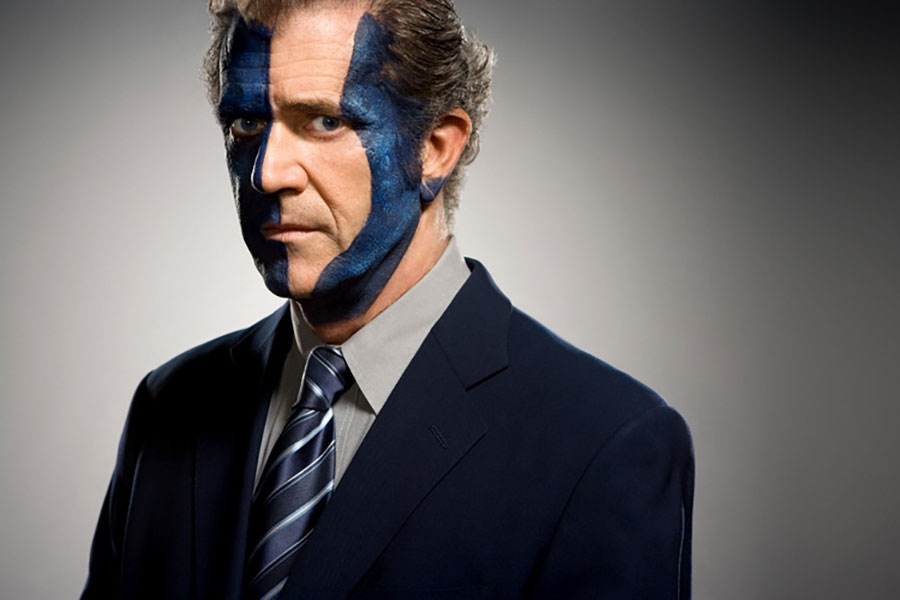
Last night I watched Braveheart, the 1995 Mel Gibson movie about Scottish hero William Wallace. It’s one of those movies we trainers can draw lots of clips from to teach leadership, and the story is as good as it gets where hearts are concerned. Of course they didn’t spoil an epic romance with the truth. It’s more of a legend than a factual depiction of what really happened. Legends have inspired many generations before us. This one may inspire you and your kids too.

The whole theme of the movie is freedom, one of humanity’s eternal challenges which I just wrote about last week. But the reason why it’s a great story to watch again with your kids, is pain. Braveheart shows how leaders are actually transformed by hurting emotionally and physically. It tells how humans used to march straight into pain instead of avoiding it and escaping it at all cost. Our current intolerance of pain in any of its forms, however, is holding us back.

Last week I fell off my horse. It was a clean fall on soft soil, but all the energy of the impact shot straight into my left hip. It took me about thirty minutes to get up, another thirty minutes to get back to my car, and another good while to breathe my way through aching joints and muscles as I drove very carefully and slowly back home. Something very important realigned in me that day, and diminishing physical aches throughout the week have impacted my way of thinking and feeling significantly. Oh, and the walking! Walking around like an old lady for a few days is a learning lesson in itself. But here’s what most impressed me: it’s how everybody advised me all the different things I could take to avoid feeling the pain.

It was so close to harassment that it was quicker just to act like I felt fine. People couldn’t even look at me straight in the face when I told them about the fall and its consequences. They winced, they looked away, they grimaced with imagined torture. All ages, genders, cultural backgrounds, races. Seriously. How can we become leaders if we can’t hear talk of potential bruises and contusions? Mel Gibson’s very handsome impersonation of William Wallace shows a man who loses his new wife, endures several injuries, faces betrayal from trusted allies and, not to spoil the ending for you, but it’s public record how Wallace was tortured once he was captured. During the entire movie different people come to him suggesting ways to reduce future agonies.

And every time he rejects their solutions. Every time he says that “every man dies but not every man truly lives”. When was the last time you rejected a pharmaceutical remedy to escape from physical or emotional distress? If there is one thing I have learned in my studies of human behavior and leadership, it’s that pain is the most effective master. Without a doubt. Pain in all its forms is “fuel for learning”, as Michael Brown puts it in his bestselling book The Presence Process.

Michael defines real learning as “an irreversible shift in perception,” a definition I retell to many clients and students. Without hurting, without falling, without failing, we remain innocent and naïve to leadership’s deepest and most significant mysteries. We remain weak in the face of greater, more complex battles. Not only is pain essential to actual leadership growth. It’s also a small price to pay for the qualitative jump ahead experienced when we come out the other side.

Once we have endured the ugly and challenging sensations that life’s setbacks impose on us, we suddenly begin to feel more alive and inspired than ever before. We reach a new level of performance that was unimaginable before we dared to fall apart. And it feels so incredibly great. It feels AWESOME! This is why escaping harm, or trying to surf over it with sedatives is delusional. If we don’t face and feel the aches life and business bring upon us, we waste a chance to grow as human beings and as leaders.

We remain just as we are. Not for long, though. Every man does die. We modern humans like to think that we have improved our quality of life enormously. It’s part of our credo of progress, democracy and capitalism. And it’s easy to believe because we didn’t actually witness any of the earlier, wilder forms of life. It’s easy to buy into the comforts of cozy homes, over-the-counter sedatives and mostly secure ways of life. It’s not, however, easy to truly live.

It’s increasingly hard to feel heroic, to feel brave and adventurous, to feel proud and passionate after thirty or forty. It takes very brave hearts to truly live through middle and old age. The only secret to becoming a leader is to slow down and breath. This is the summary of everything I have learned about leading others. Pain comes and goes. It’s a wave that grows and then suddenly diminishes. In all its forms. It just goes away exactly the same way it came.

And it only does so once learning has been achieved. But the only way we learn to go throw the waves of aching sensation is by going through them. There is no other way. Leaders don’t become leaders by reading, or copying other peoples’ tricks, or hiring experts to tell them how to do it. Leaders grow themselves by facing hardship, feeling the many pains that come with it, and breathing deeply until aches and grievances dissolve. It’s obvious the film inspired me.

I do recommend you watch Braveheart with your kids to help them see the role of pain in life, in freedom, in everything that makes life worth living. Nobody will have a bigger impact on your kids’ future leadership than you. Over a hundred years of psychological science and thousands of philosophical knowledge confirm this.

If you can teach your kids to slow down in the face of pain and breathe through it, you can also show your employees how slowing down reduces errors and focuses attention on the nuclear cause of pain. If you stop avoiding all the incredible assortment of bruises, mishaps and grazes life provides you with to help you grow as a leader, you won’t even have to talk about it out loud.

People around you will naturally follow your example, feeling comforted by your slow, breathing presence behind them. We all have a Braveheart inside us. We can all truly live before we die. All we need to do is face pain, slow down, and breathe until we feel our heart beating the timeless tune of heroes.

Conquering Fear and Setting Leadership Free

Do you feel like a slave? I bet your answer is no. Ok. Let me rephrase the question. Have you ever felt like you weren’t free to do as you wished? Mmmm…that one’s harder, isn’t it? Well, don’t give up on liberty just yet. Sometimes, the quest for total freedom builds irresistible leaders. Terminator was the first robot to develop human emotions in our generation. Well, that is if you don’t count Pinoccio, who was, in fact, the only kind of robot people could imagine before steel, machines and computers invaded our lives. Anyway.

Terminator came back from the future to help a boy prepare for war against an impersonal empire dominated by the very software programs and engineering devices humanity had created. We loved him so much that two more movies ensued, and don’t be surprised if he comes back yet again. A horribly grey, lifeless world dominated my impersonal machines was a deep fear in our collective minds that we all responded strongly to. Nobody wanted that to happen. The movie Matrix, several years later, also touched upon that same hidden worry of ours with lots of success.

Today, once again, our hidden fears about technology’s growing grip on our lives are alive and well. Jon Ander García, Continental Tires’ General Manager for Iberia and EMEA, came to Capital Radio’s morning talk show today to discuss some of their latest innovations. He hadn’t finished his first sentence before we plunged into the opportunities and threats of increasingly intelligent cars: Do you really mean we’ll be able to read the paper on the way to work as our car drives itself through traffic jams, finds a place to park itself and then finishes the full job? But in case of an accident, who shall we blame? Yes. It’s the same debate. And it’s getting hotter as we speak.

Machines are taking over a lot of our simplest daily routines, theoretically to free us up for more entertaining, value adding tasks, as Ander García assured us. Still, complex algorithms, cookies and all sorts of legal and illegal research tactics on internet are creeping up on our privacy, anticipating our preferences with geo-locators and selling juicy details about our online habits to who knows who. Are we being liberated or are we being enslaved by a new era of automation? Because in our growing world of oversized cities, huge corporations, and our most impersonal enormous creation yet, “big data”, we inevitably feel smaller and smaller. We seem to work harder and harder. And judging by black circles under the eyes of too many executives, we seem to enjoy our jobs less and less. Big decisions are made elsewhere.

Unquestionable policies are designed in remote headquarters. Innovation is imposed on us more often than pushed by us. Historians say slavery appeared with large civilizations. It didn’t exist in previous, tribal societies where everybody pulled their own weight in the face of Nature’s cruel uncertainty. It was only when the invention of agriculture secured food supply that humanity began to think bigger. As villages and empires became larger, big numbers of bodies were needed to keep the wheels of civilization running. Bodies without choice or will of their own.

Bodies who would be kept alive in exchange for their freedom. And herein lies the clue. Fear. Always fear. If you’re not afraid, nobody can turn you into a slave. No warrior, no arrogant Emperor, no lifeless machine. Fear is what holds us back, once and again throughout history, as individuals and as a species. To fight for our freedom is to conquer our own fear. This is how our most charismatic leaders were built. What are we scared of? Nothing and everything. We’re scared of losing our jobs. We fear public humiliation or judgment if we step off the train of corporate career success.

We’re scared of losing our homes, our possessions, our loved ones’ affections, our ambiguous places in impersonal cities where nobody really cares about yesterday’s news. We’re terrified of violence and power in other people’s hands. We’re scared of risk itself. We may be the most fearsome generation that ever lived on this planet. Thus, we seek to control our lives like no other generation before us. We develop technology to increase our grasp on uncertainty, and reduce it to nothing.

We give up growing parcels of privacy and independence in order to be kept alive. Ironically, we are more vulnerable to slavery than ever before as a species. Will machines and publicly traded corporations take over our lives? Only if we let them. Only if we use them to hide from what scares us. Only if we keep escaping our fears instead of facing them. Only if we forget where we come from. All aboriginal warrior training rituals around the world were designed to help youths face and conquer their own fears.

The day they stood their ground and breathed through their bodies’ tremors, their minds’ doubts and imaginary ghosts, they became adults. That day they experienced the kind of trust that nobody could ever take from them. The trust that comes from feeling yourself conquer and dissolve your own inner phantoms at all times. We need to relearn these ancient skills of emotional grounding once again.

We must develop our technology and grow our companies on the same grounded mindset that guided our earliest ancestors. Trusting leadership and bravery are encoded in our DNA. Humans were never designed to live in slavery. Freedom is our middle name.

Here’s An Idea: Learn To Lead By Receiving

In our society we love to give. I bet you’ve been mulling over new year resolutions related to helping others, doing good for those in need, or being nicer to your family and colleagues. Well, I’ve got news for you. The true secret of leadership is not giving. It’s about receiving. Today’s article was born in a truly singular place: the “Ría de Rodiles” in Northern Spain. My dear friend Soha Nashaat, reputedly one of the 100 most influential women in the Arab world, fell in love with Asturias a few years ago.

This special natural paradise knocked on her door to offer her a dream house whose windows boast a magnificent spectacle of natural beauty all day long, all year round. Soha redid the entire house to make it worthy of such a magical setting. I still can’t understand why she’s spent so many years leading financial markets from top class corporations. Her amazing talent for decoration and design have remained as hidden to the world as this beautiful oasis of great food, soothing tides and discrete animal neighbors. I guess the best kept secrets only reveal themselves to those who learn how to receive.

And receive I did, I can tell you. Not only was I lavishly hosted by generous friends with the best money can buy in every possible way. Mother Nature also cradled me with lullabies sung by all kinds of birds and ducks, warm sunny days to bask in, and the irresistible magnetism of tides flowing in and out before us.

The Ria is a charming coastal inlet running eight kilometers inland to Villaviciosa village from Rodiles beach. Formed by a drowned river valley that remained open to the sea in the Jurassic period, it was declared a natural reserve in 1995. I swear there isn’t a better place to reflect on leadership, life and the new year. Because there is nothing to get here. Nothing to fight for. Nothing to worry about achieving. Nobody to help and nobody to give to. Only you. Only the tide. Only birds and fish going about their daily business without you. Green fields and beige hills kissing murky waters under the sun.

All you are asked to do is to sit quietly and learn. Learn to receive. We learn to receive from our parents. They learn from theirs. This is how it works across the animal kingdom. One generation gives everything it has to the next generation, so that they too will nurture and fight for their offspring. Modern humans, however, have become pretty terrible at practicing this law of life. And the smartest, best educated of humans are often the very worst. I wonder if all those humble little birds and slow grass-chewing cows look tenderly at us in our highly intelligent inability to accept what we get from others.

Taking makes us feel small. But we’ve become very hoity-toity about life in general. Maybe we’re too scared. Maybe we’re too proud. Maybe it just hurts too much to feel that familiar softness inside our hardened executive hearts. Whatever our reasons, our difficulty to accept what life gives us sabotages our performance in everything we do. Our culturally accepted preference for giving doesn’t make us better leaders. It actually makes us worse.

Leaders who can’t accept what comes to them tend to find fault in everything they do get. That’s a bad start. Investing a whole lot of energy, man-hours and money to change the companies they are hired to manage, for example. Complaining endlessly about the orientation of their office, or the lack of sophistication of their teams, or whatever it is that helps them feel better about not accepting the reality that cradles them and pushes them to create something useful with it.

When they’re done verbally trashing the place, they launch improvement initiatives that often interfere with the general flow of things, bringing no end of conflict to other departments, rebellions against company founders and veteran bosses, and resulting in numerous failures to materialize flashy figures projected on no less flashy excel sheets. As if this generally counterproductive leadership style wasn’t bad enough, leaders who can’t receive can’t actually give either.

An inability that is sadly “transparent to the user”, as IT experts would describe it. They think they are giving, but they are actually asking for more. They may give you a job and then hold it over your head for the following five years every time they demand more time and more effort from you. They will help you as a way to secretly feed on your company or friendship with endless advice or too many favors that don’t actually change anything for you and make you feel exhausted. They will overspend company resources in an effort to buy approval or popularity in such a way that still feels big, independent and hoity-toity all at once. NGOs and foundations suffer this daily.

I have a client who’s had to fight off several huge banks and multinational companies whose CSR initiatives were actually going to kill her budding foundation with bureaucracy and eternal internal meetings, ambitious programs that completely derailed her from her actual mission, and inappropriate publicity to boost their own corporate brands. My client doubted her own judgment and wondered whether she was the one being ungrateful. But I suggested a simple test.

Pay attention to how your body feels during conversations and exchanges with these leaders. If you feel bigger or stronger than them, then you’re probably the one giving. Taking, accepting, and getting make us feel smaller than the other person. That’s the way it’s supposed to feel! So if feeling smaller in a conversation makes you feel uncomfortable, then you know you’ve got a critical lesson to learn as leader. The problem is not feeling small. It’s feeling uncomfortable about it.

As long as you shy away from receiving, you sabotage your own present performance, and you debilitate your capacity to give in the future. One has to receive in order to give. It’s a simple law of Nature, like gravity. Stop fighting with it and learn to go with it. These are all the things I thought about on a wooden bench overlooking the Ria at the end of Soha’s garden.

I watched how every living thing before me received the incoming tide with pleasure and glee. I thought about how hard it always was for me to accept what others gave me, how hard I tried and how sorely I failed, time and time again, for many years. And I basked in the recently found delight of receiving all day long, day in and day out, until it was time to come home.

Thank you, Soha, for a wonderful retreat of nurturing warmth. Thank you, Ria of Rodiles, for bathing my heart in silent wisdom for a few days. Thank you, family, friends and past employers, for putting up with my inability to receive as a young ambitious executive years ago.

And thank you, readers of Real Leaders, for this space to share my thoughts and air my doubts about leadership and life. I will create great things this new year with what you’ve given me.

Here’s An Idea: Learn To Lead By Receiving

In our society we love to give. I bet you’ve been mulling over new year resolutions related to helping others, doing good for those in need, or being nicer to your family and colleagues. Well, I’ve got news for you. The true secret of leadership is not giving. It’s about receiving. Today’s article was born in a truly singular place: the “Ría de Rodiles” in Northern Spain. My dear friend Soha Nashaat, reputedly one of the 100 most influential women in the Arab world, fell in love with Asturias a few years ago.

This special natural paradise knocked on her door to offer her a dream house whose windows boast a magnificent spectacle of natural beauty all day long, all year round. Soha redid the entire house to make it worthy of such a magical setting. I still can’t understand why she’s spent so many years leading financial markets from top class corporations. Her amazing talent for decoration and design have remained as hidden to the world as this beautiful oasis of great food, soothing tides and discrete animal neighbors. I guess the best kept secrets only reveal themselves to those who learn how to receive.

And receive I did, I can tell you. Not only was I lavishly hosted by generous friends with the best money can buy in every possible way. Mother Nature also cradled me with lullabies sung by all kinds of birds and ducks, warm sunny days to bask in, and the irresistible magnetism of tides flowing in and out before us.

The Ria is a charming coastal inlet running eight kilometers inland to Villaviciosa village from Rodiles beach. Formed by a drowned river valley that remained open to the sea in the Jurassic period, it was declared a natural reserve in 1995. I swear there isn’t a better place to reflect on leadership, life and the new year. Because there is nothing to get here. Nothing to fight for. Nothing to worry about achieving. Nobody to help and nobody to give to. Only you. Only the tide. Only birds and fish going about their daily business without you. Green fields and beige hills kissing murky waters under the sun.

All you are asked to do is to sit quietly and learn. Learn to receive. We learn to receive from our parents. They learn from theirs. This is how it works across the animal kingdom. One generation gives everything it has to the next generation, so that they too will nurture and fight for their offspring. Modern humans, however, have become pretty terrible at practicing this law of life. And the smartest, best educated of humans are often the very worst. I wonder if all those humble little birds and slow grass-chewing cows look tenderly at us in our highly intelligent inability to accept what we get from others.

Taking makes us feel small. But we’ve become very hoity-toity about life in general. Maybe we’re too scared. Maybe we’re too proud. Maybe it just hurts too much to feel that familiar softness inside our hardened executive hearts. Whatever our reasons, our difficulty to accept what life gives us sabotages our performance in everything we do. Our culturally accepted preference for giving doesn’t make us better leaders. It actually makes us worse.

Leaders who can’t accept what comes to them tend to find fault in everything they do get. That’s a bad start. Investing a whole lot of energy, man-hours and money to change the companies they are hired to manage, for example. Complaining endlessly about the orientation of their office, or the lack of sophistication of their teams, or whatever it is that helps them feel better about not accepting the reality that cradles them and pushes them to create something useful with it.

When they’re done verbally trashing the place, they launch improvement initiatives that often interfere with the general flow of things, bringing no end of conflict to other departments, rebellions against company founders and veteran bosses, and resulting in numerous failures to materialize flashy figures projected on no less flashy excel sheets. As if this generally counterproductive leadership style wasn’t bad enough, leaders who can’t receive can’t actually give either.

An inability that is sadly “transparent to the user”, as IT experts would describe it. They think they are giving, but they are actually asking for more. They may give you a job and then hold it over your head for the following five years every time they demand more time and more effort from you. They will help you as a way to secretly feed on your company or friendship with endless advice or too many favors that don’t actually change anything for you and make you feel exhausted. They will overspend company resources in an effort to buy approval or popularity in such a way that still feels big, independent and hoity-toity all at once. NGOs and foundations suffer this daily.

I have a client who’s had to fight off several huge banks and multinational companies whose CSR initiatives were actually going to kill her budding foundation with bureaucracy and eternal internal meetings, ambitious programs that completely derailed her from her actual mission, and inappropriate publicity to boost their own corporate brands. My client doubted her own judgment and wondered whether she was the one being ungrateful. But I suggested a simple test.

Pay attention to how your body feels during conversations and exchanges with these leaders. If you feel bigger or stronger than them, then you’re probably the one giving. Taking, accepting, and getting make us feel smaller than the other person. That’s the way it’s supposed to feel! So if feeling smaller in a conversation makes you feel uncomfortable, then you know you’ve got a critical lesson to learn as leader. The problem is not feeling small. It’s feeling uncomfortable about it.

As long as you shy away from receiving, you sabotage your own present performance, and you debilitate your capacity to give in the future. One has to receive in order to give. It’s a simple law of Nature, like gravity. Stop fighting with it and learn to go with it. These are all the things I thought about on a wooden bench overlooking the Ria at the end of Soha’s garden.

I watched how every living thing before me received the incoming tide with pleasure and glee. I thought about how hard it always was for me to accept what others gave me, how hard I tried and how sorely I failed, time and time again, for many years. And I basked in the recently found delight of receiving all day long, day in and day out, until it was time to come home.

Thank you, Soha, for a wonderful retreat of nurturing warmth. Thank you, Ria of Rodiles, for bathing my heart in silent wisdom for a few days. Thank you, family, friends and past employers, for putting up with my inability to receive as a young ambitious executive years ago.

And thank you, readers of Real Leaders, for this space to share my thoughts and air my doubts about leadership and life. I will create great things this new year with what you’ve given me.

Leaders Who Almost Die For Their Followers

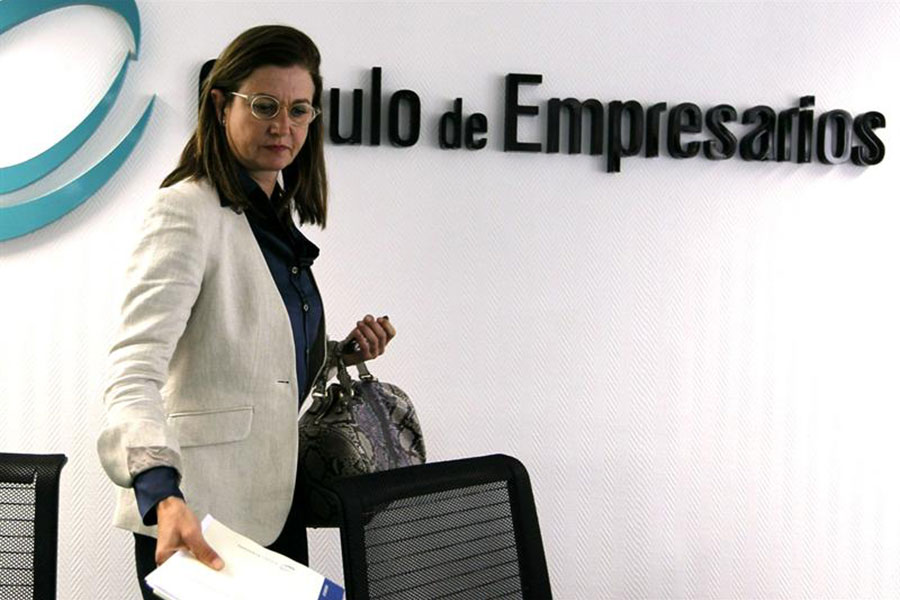
Mónica Oriol is a strong female leader if there ever was one. Former President of the Spanish YPO chapter and successful builder of Seguriber security services, she became the first woman to ever preside “Círculo de Empresarios”, the prestigious socioeconomic think tank including Spain’s most influential executives and business owners. Today Monica is paying very high prices. The kind that bring many great leaders to their knees. The hardest tests fall to those who are strongest. Or so they say.

It all started in an all too familiar way. She said what she thought about women’s struggle in the workplace. She said it in the way she says everything: with amazing strength, impacting and down-to-earth expressions, and fiery defiance in her eyes. Before she saw it coming, she was publicly burned on the stake in a modern day version of the obscure medieval witch hunts we’re supposed to be a lot smarter about. Apparently we’re not. For one thing, she laid down all the ugly facts about pregnancy, child care and how they pressure business models as we know them.

Being the tenacious, highly-educated, and even more demanding woman that she is, she had done her homework. Unfortunately, she’d also done everybody else’s. She pointed out all the ugly truths hidden in this complex debate. Which didn’t earn her many friends. It actually earned her enemies on every side of this subtly invisible war. Because Monica had the dubious privilege of planting her powerful flag on one of our most secretive and denied battle fields.

Men and women worldwide are engaged in an amazingly complex negotiation to redefine our roles in business, society, family, and even love. We have all been wounded by now in this war. And some of those wounds can run as deep and as thick as blood: breakups over work related absences, marital disputes over child care or eventually child custody, sexual harassment law suits and discriminating campaigns, gender violence, startup failures due to unfair exploitation of over-protective workforce policies…we could write an entire book about all the ways we are knifing each other in the painful process of materializing gender balance across the table. We hate to admit it. But we are all unknowingly at war with the opposite sex on some level.

And sometimes it hurts like hell. Fearless in her passion to shed light on the conflict between reproduction and profitability, Monica innocently became the “witch” everybody needed to burn. She became the perfect target for all sorts of abuse. Her reputation, her family, her business…everything connected to her has been mercilessly burned in social networks and Spanish media. Throwing stones at Monica was the perfect way to vent individual pain, anger and impotence under the protective umbrella of the anonymous crowd. And well, the media couldn’t stay away from the excitement. Let’s not forget.

Excitement brings crowds and crowds bring advertising income. It’s hard to find a journalist who can resist adding fuel to the flames. Last week I visited the valley of Baztan, in the North of Spain. Damp, cold and rainy most of the year, this valley holds many priceless secrets of Spanish History. There is a small town very near the French border with the most impossible name you can try to pronounce: Zugarramurdi. Wonderful way to practice rolling your r’s in Spanish, though! Zugarramurdi, as it turns out, is most famous for its caves and its witches.

Oh yes. Excitement and mystery abound in this magical valley. To cut a fascinating — and very well documented — long story short, 53 people were arrested by the Spanish Inquisition in the early sixteen hundreds. Accused of witchcraft, most of them were painfully pardoned or punished for minor crimes. But eleven of them were burned. Well, excuse me. Half of these last poor souls didn’t make it to the burning stake. They died during interrogations. It is one of the most obscure witch hunt episodes in Europe. Crazy, inflamed persecutions were heartily executed by mostly ignorant, fearsome crowds.

Some say that many of these witch hunts were initiated against powerful women. Women who were independent, or owned land that somebody else wanted. Women whose influence was built on ancient herbal remedies to common illnesses in isolated mountain villages. Women who may have facilitated community gatherings in evocative caves just outside Zugarramurdi: Emotional ceremonies to heal and mourn losses among the peoples of Baztan, where paganism fought an undercover rebellion against the growing authority of the Catholic Church for centuries.

Women with fiery defiance in their eyes, strong words and fearless passions. It’s never been exclusive to women, however. Celtic male druids, aboriginal shamans and the very Catholic apostles went through similar ordeals. Spiritual guides, shamans and druids were nuclear leaders to small tribal societies. It’s just all too easy to fire up a wounded, ignorant crowd against a powerful leader. We’ve done it so many times in so many ways in human history.

It’s quite humbling to acknowledge that we’re still doing it today, with all our university degrees, sophisticated knowledge and internet technology. And it’s scary to realize that sometimes these horribly destructive media frenzies aren’t even sparked intentionally by an obscure, machinating villain. They just happen. Like a burning blaze blowing across miles of forestry just because some guy roasted a couple marshmallows in the wrong corner of the woods.

I guess the hardest tests do come to the strongest leaders, don’t they? I hate to see a well-proven, generally respected leader like Monica be treated in this manner. Especially considering the fact that she is one of the very few women who have reached the circles of power where public policy and business practice are defined for us all. Most ardently knowing how hard she has fought to build everything she has, as well as every job, every area of economic growth, and every innovation she has brought to her fellow citizens. Still, I am grateful. I am unspeakably grateful to Monica.

Somebody has to “take the bull by the horns”, as we would say in Spanish, if we want to tackle our dwindling birth rates and enormous child care and educational challenges without killing our companies. Spain is not alone in this. All developed countries are struggling with these demons. If it weren’t for fearless, passionate women leaders like Monica, we might be stuck in obscure denial and passive inaction for a long time yet.

Let her undeserved punishment bring awareness to our crowds and enlightened inspiration to our policy makers. And let us all acknowledge the inner strength and bravery of those who are willing to die, physically or economically, to help us all resolve our own inner battles. Gracias Mónica.

What Leadership Legacy Is Victoria’s Secret Leaving For Our Children?

On today’s TV news Victoria’s Secret was showcased with their upcoming world-celebrated parade of angels. Admittedly the show they will put on in London in a few days is spectacular. No other fashion parade in the world creates as much expectation and interest. Servers and entire networks are said to have gone down as global internet surfers tried to watch the show. Under every parameter of modern society, Victoria’s Secret parades rule. This is what we call leadership. Is it? Really?

It our current ideals of leadership is where all our invisible demons begin to show themselves. Twenty-first century society has reduced leadership to the smallest, most insignificant meaning of the term. We think of leaders as those who win. Those who appear on global rankings, make the most money, have the most followers on twitter. If we are to believe our own books, news articles and business school cases, Victoria’s Secret models, Rihanna, Beyoncé and Madonna are role models to be followed and copied. Seriously? Do you agree with this? Will this be our legacy to our children?

I always dreamed I would call my first daughter Tara. I haven’t had any children yet. But one day I looked up where the name came from. Everybody remembers the famous movie “Gone with the wind”, where a female role model of her time, Scarlett O ‘Hara, fought for Red Butler’s love and the survival of her family’s ranch, named Tara. But Tara actually comes from the Hill of Tara in Ireland. And it is a symbol of what leadership meant to Celtic societies in Europe two thousand years ago. To them leadership was, above all, about loving Nature. The Hill of Tara is about forty minutes outside of Dublin by car.

For more than six thousand years people have been going to this mysteriously simple hill to perform life changing rituals. An ancient tomb passage and deep ridges on the ground are all that you can see today. They bear witness to burials of Celtic druids and old wooden constructions which housed banquets, competitions and the very special crowning of no less than 142 Celtic High Kings of Ireland. How can we compare this ancient yearly gathering of Celtic tribes in Ireland to dispute the honor of being proclaimed High King to the Victoria’s Secret fashion parades of our current era?

We may be ashamed to see how far we’ve strayed from fundamental values of life and respect of Nature. We may be angered to see how differently we now portray women and sexuality. We may be worried to imagine our daughters and sons aspiring to imitate fancy video clips and play with priceless jeweled bras they see only on the internet.

The Celts were probably the last civilization to treat women as equals in Europe. It’s interesting to read how the Romans and Greeks who fought them already treated women as helpless, needy objects to be made pretty and to be passed on from father to husband like cattle. They joked in their journals about how scary Celtic women seemed in comparison, strong warriors and decision makers that they were. Celtic women had the right to inherit property and to divorce if they didn’t love their husbands. Celtic women only married for love. And they ate everything they felt like eating without feeling judged.

Today’s most desired angels, our daughters’ role models of success and attractiveness and our sons’ objects of desire, are starving away in some five-star resort to try and look as skinny and pretty as possible for this year’s parade. The leader of the parade, that is, the most spectacular, sought-after lingerie model, will be crowned by a beautiful ensemble made up of expensive diamonds, rubies and the like, framed by architecturally designed wings of fantasy. The reasons for this regal honor will be invisible to most of us, and probably most unknown to her. She will be proclaimed a global queen of feminine beauty because she was born that way, and because she harshly disciplined her body all week to hide all its small defects, in order to fabricate the materialistic angel the world expects to see. I remember the first time I visited a Victoria’s Secret store in some city in the USA.

It was the biggest disappointment in my life. I’ve loved and admired lingerie since I was very young: the faultless design of Italian craftsmen, the sophisticated engineering of French lingerie manufacturers, or the cheeky playfulness in British brands. Victoria’s Secret, as it turns out, seems to bet all their talent on their yearly fashion show. The product itself is like falling out of Heaven straight into a Hell of mass production, just-in-time carelessness and overseas outsourcing to the cheapest manufacturer. Leading the market of lingerie sales is pursued by investing a huge portion of product margin into an elaborate, unreal one-day dream, where everything we see if faked, pushed up, dieted down, blown out of proportion.

The man crowned as High King in Celtic Ireland twenty centuries ago, in stark contrast, was chosen among all others because he was an example of the leadership ideals they all aspired to fulfill. Many tests and competitions took place during these yearly gatherings, to prove which King was most intimately in tune with Mother Nature. Horse bones line the deepest layers of Tara soil because Epona, the Celtic Goddess of Natural abundance, was represented as a horse.

Pagan rituals of different sorts allowed aspiring candidates to prove themselves worthy of symbolically wedding Epona, thus guaranteeing good crops and plentiful living for all kingdoms under his rule. To the European Celts leadership was never about photo-shopped beauty or fancy marketing campaigns to hide mediocre wear and tear. It was about authenticity, about total respect to every single resource Nature provided, about men and women joining as equals to decide what was best for their young ones. It was about real, flesh-and-bone women with tummies and bad moods and circles under their eyes from fighting hardships alongside their husbands.

It was about taking what you needed from the planet in order to give back everything you managed to create with it. When you compare these two opposed examples of human celebration you may think that the fashion parade looks prettier. It looks great. It just feels really, really wrong. On so many levels I can only briefly point out in this short article of today. I love the Hill of Tara. I am in love with it. All those men and women thousands of years ago were also in love with Nature. They were in love with each other in ways we modern humans can’t begin to understand from our comfort-lined lives far from wild emotion and instinctive Nature. And when you are in love with something or someone, there is nothing you wouldn’t do to save it from harm.

No amount of money, fame or global admiration could drive you to tell the world that being happy is about a fancy show full of unrealistic images of perfection. Our angels of today hide the demons of our consumeristic culture. Our female role models hide the esthetically ugly things that make real women the most desirable creatures. And our men can’t feel like heroes or High Kings because they don’t know how to honor the Goddesses of abundance in their lives.

If I bear a daughter I will call her Tara and I will teach her to fall in love with her body exactly the way it is. I will wish her to fall in love with a man who sees a Goddess of abundance in her during her ugliest moments, and I will fight to show her that falling in love with Nature is the greatest legacy I could ever leave behind me.

What Leadership Legacy Is Victoria’s Secret Leaving For Our Children?

On today’s TV news Victoria’s Secret was showcased with their upcoming world-celebrated parade of angels. Admittedly the show they will put on in London in a few days is spectacular. No other fashion parade in the world creates as much expectation and interest. Servers and entire networks are said to have gone down as global internet surfers tried to watch the show. Under every parameter of modern society, Victoria’s Secret parades rule. This is what we call leadership. Is it? Really?

It our current ideals of leadership is where all our invisible demons begin to show themselves. Twenty-first century society has reduced leadership to the smallest, most insignificant meaning of the term. We think of leaders as those who win. Those who appear on global rankings, make the most money, have the most followers on twitter. If we are to believe our own books, news articles and business school cases, Victoria’s Secret models, Rihanna, Beyoncé and Madonna are role models to be followed and copied. Seriously? Do you agree with this? Will this be our legacy to our children?

I always dreamed I would call my first daughter Tara. I haven’t had any children yet. But one day I looked up where the name came from. Everybody remembers the famous movie “Gone with the wind”, where a female role model of her time, Scarlett O ‘Hara, fought for Red Butler’s love and the survival of her family’s ranch, named Tara. But Tara actually comes from the Hill of Tara in Ireland. And it is a symbol of what leadership meant to Celtic societies in Europe two thousand years ago. To them leadership was, above all, about loving Nature. The Hill of Tara is about forty minutes outside of Dublin by car.

For more than six thousand years people have been going to this mysteriously simple hill to perform life changing rituals. An ancient tomb passage and deep ridges on the ground are all that you can see today. They bear witness to burials of Celtic druids and old wooden constructions which housed banquets, competitions and the very special crowning of no less than 142 Celtic High Kings of Ireland. How can we compare this ancient yearly gathering of Celtic tribes in Ireland to dispute the honor of being proclaimed High King to the Victoria’s Secret fashion parades of our current era?

We may be ashamed to see how far we’ve strayed from fundamental values of life and respect of Nature. We may be angered to see how differently we now portray women and sexuality. We may be worried to imagine our daughters and sons aspiring to imitate fancy video clips and play with priceless jeweled bras they see only on the internet.

The Celts were probably the last civilization to treat women as equals in Europe. It’s interesting to read how the Romans and Greeks who fought them already treated women as helpless, needy objects to be made pretty and to be passed on from father to husband like cattle. They joked in their journals about how scary Celtic women seemed in comparison, strong warriors and decision makers that they were. Celtic women had the right to inherit property and to divorce if they didn’t love their husbands. Celtic women only married for love. And they ate everything they felt like eating without feeling judged.

Today’s most desired angels, our daughters’ role models of success and attractiveness and our sons’ objects of desire, are starving away in some five-star resort to try and look as skinny and pretty as possible for this year’s parade. The leader of the parade, that is, the most spectacular, sought-after lingerie model, will be crowned by a beautiful ensemble made up of expensive diamonds, rubies and the like, framed by architecturally designed wings of fantasy. The reasons for this regal honor will be invisible to most of us, and probably most unknown to her. She will be proclaimed a global queen of feminine beauty because she was born that way, and because she harshly disciplined her body all week to hide all its small defects, in order to fabricate the materialistic angel the world expects to see. I remember the first time I visited a Victoria’s Secret store in some city in the USA.

It was the biggest disappointment in my life. I’ve loved and admired lingerie since I was very young: the faultless design of Italian craftsmen, the sophisticated engineering of French lingerie manufacturers, or the cheeky playfulness in British brands. Victoria’s Secret, as it turns out, seems to bet all their talent on their yearly fashion show. The product itself is like falling out of Heaven straight into a Hell of mass production, just-in-time carelessness and overseas outsourcing to the cheapest manufacturer. Leading the market of lingerie sales is pursued by investing a huge portion of product margin into an elaborate, unreal one-day dream, where everything we see if faked, pushed up, dieted down, blown out of proportion.

The man crowned as High King in Celtic Ireland twenty centuries ago, in stark contrast, was chosen among all others because he was an example of the leadership ideals they all aspired to fulfill. Many tests and competitions took place during these yearly gatherings, to prove which King was most intimately in tune with Mother Nature. Horse bones line the deepest layers of Tara soil because Epona, the Celtic Goddess of Natural abundance, was represented as a horse.

Pagan rituals of different sorts allowed aspiring candidates to prove themselves worthy of symbolically wedding Epona, thus guaranteeing good crops and plentiful living for all kingdoms under his rule. To the European Celts leadership was never about photo-shopped beauty or fancy marketing campaigns to hide mediocre wear and tear. It was about authenticity, about total respect to every single resource Nature provided, about men and women joining as equals to decide what was best for their young ones. It was about real, flesh-and-bone women with tummies and bad moods and circles under their eyes from fighting hardships alongside their husbands.

It was about taking what you needed from the planet in order to give back everything you managed to create with it. When you compare these two opposed examples of human celebration you may think that the fashion parade looks prettier. It looks great. It just feels really, really wrong. On so many levels I can only briefly point out in this short article of today. I love the Hill of Tara. I am in love with it. All those men and women thousands of years ago were also in love with Nature. They were in love with each other in ways we modern humans can’t begin to understand from our comfort-lined lives far from wild emotion and instinctive Nature. And when you are in love with something or someone, there is nothing you wouldn’t do to save it from harm.

No amount of money, fame or global admiration could drive you to tell the world that being happy is about a fancy show full of unrealistic images of perfection. Our angels of today hide the demons of our consumeristic culture. Our female role models hide the esthetically ugly things that make real women the most desirable creatures. And our men can’t feel like heroes or High Kings because they don’t know how to honor the Goddesses of abundance in their lives.

If I bear a daughter I will call her Tara and I will teach her to fall in love with her body exactly the way it is. I will wish her to fall in love with a man who sees a Goddess of abundance in her during her ugliest moments, and I will fight to show her that falling in love with Nature is the greatest legacy I could ever leave behind me.

The Yin and Yang of Leadership

I had an intensely brief debate on Twitter about leadership last week. The fact that we’re limited to 140 characters makes articulate expression that much more challenging, doesn’t it? And then there’s an audience to think about. We can’t really bore followers with endless replies. Still, a few tweets containing two opposing views of how to become a leader planted the seed of today’s post. Leadership is, after all, whatever you want it to be. The issue was a great one: is leading an art or a science? Is it something we learn by experience, trial and error, or is it a set of techniques and knowledge to be studied and perfected?

It’s kind of like another very provocative question I’ve thought a lot about over the years: is leadership more masculine or feminine? Oh yes! This is near heresy!! Trust me to put it out there! Now that it’s out there, maybe we can play! Because the sophisticated attitude embraces both. Leadership is both an art and a science. Both manly and womanly.

The beauty of true, irresistible leaders is that they draw you in. No matter your type, your ideals, or your particular resistances…real leaders make you an admiring follower before you know it…gushing, smiling and performing at your best without a moment’s hesitation. Before you even realize what’s happening.

Yet only when we master seamless combinations of both extremes can we excel. Like Alan Watts put it in his wonderfully amused philosophic voice, “the universe is made of opposing elements engaged in ecstatic play”. The day we finally come to effortlessly mix our yin and our yang in every gesture, every word, every swirl of our wand…that is the day we lead without words. The first step to ever achieving such a feat, however, is to understand the right order of things. And here I borrow from another provocative thinker. Bert Hellinger, much to every feminist’s dismay, says that “the woman follows the man, but the man serves the woman”.

Before you crucify us both, though, think of it in symbolic terms: The feminine in our own personality follows the masculine, but the masculine is supposed to serve the feminine. What is our dark, cloudy, female yin about? Feelings, emotions, impulses, instincts and intuitions. What’s our more transparent and obvious, manly, sunny yang? Thoughts, strategies, plans, willpower, discipline. Our hot-blooded emotions follow our cold brain’s direction only when it works for our deeper wild nature.

This is the division of power between the sexes that we, modern humans, find so difficult to accept and integrate into our lives. These are the opposing elements of our leadership style, constantly engaged in ecstatic play, taking us to our very limits and beyond once and again. The Mother Earth follows the Father Sun, revolving around him as she provides sustenance for life in every form we know. She is drawn to Him in a profoundly loyal gravitational orbit.

But He serves Her with warm, protective light. Mother Earth could not nurture anything without Father Sun’s warm and sunny servitude. This simple exchange is still followed by many species of mammals in Nature today. It was the cornerstone of hominid Evolution and later human survival for hundreds of thousands of years. If only we men and women weren’t so busy fighting each other nowadays, we might come to admit how much fun this ecstatic game of ours can actually be.

Between us, and within us. In both male and female leaders, abundance, emotional closeness and nurturance come from our feminine side, with its deep passions and unpredictable impulses. Only to be shaped and channeled by our more manly self-discipline, our calculating science and army-like, effortful technique. One can’t succeed without the other. Yin and yang enhance each other if we let them, dancing a sweet, effortless waltz in which male and female aspects take the lead in alternative turns as reality demands one or the other to trigger our response.

The deeper, more powerful side, however, is feminine, passive and visceral. Like a proactive rider with his reactive horse: all speed and actual power come from the purebred mare under his saddle. Professional dressage champions often prefer a mysterious mare with her mood swings, her demanding rhythms and enchanting grace. The rider trains her, pulls her and pushes her to show off her very best when it most counts.

The mare follows her rider’s instructions only when her rider is fair, considerate, protective and loveable to her. There is no competition between them. It’s not about who wins over who. It’s about the most enjoyable mammal complicity. She weighs five times more than he does. She only plays along because her passion is fulfilled by following her handsome rider’s strategic thinking. Best results come to those who are best paired together, those whose chemistry with each other conquers all obstacles. With ecstatic pleasure.

It’s exactly the same for your male brain and your female heart. Your brain likes to think it controls everything your heart wants. How foolish! Your body decides when you fall asleep, who you fall in love with, which teams you fall into step with. That mysterious emotional treasure of impractical whims and deep animal instincts draws you towards business deals, partners and adventures your controlling mind would never get into if it could stop you.

And thank God it can’t! So yes, technique, knowledge and science are important components of your leadership. Especially when you reach a level of maturity in which you no longer fight with your own deeper self. When you bend your pretentious knee to serve the needs of your wild, inner animal.

When you come to trust your own instincts more than any practical word of advice or string of scientific evidence. When you accept that your motivation to keep going has little or nothing to do with whether it’s good business. When you follow your passion in such an intelligent way, that you’ll never have to worry about demotivated organizations again.

And business turns good because everything about it feels good. Your leadership is whatever you want it to be. Just remember that if you exclude any one of your two opposite ingredients, there won’t be any ecstatic play!

Fantastic Power or Powerful Fantasy?

Haven’t you heard? The media is having a ball with a very unlikely story that has questioned every authority in Spain. A mysterious twenty-year-old we’ve called “little Nicolas” claims to have been involved in critical State affairs under orders from the CNI — The National Center of Intelligence — and the Spanish Vice-President herself.

What’s most surprising, however, is that he made it all the way to national television last Saturday evening, becoming a global trending topic on social networks. Everybody wants a say in the matter of separating fiction from fact. Huge laughs are an added bonus! I kid you not.

This story has been on every credible journal’s cover for the last month. The boy has been photographed with every politician and business man in Spain. He managed to get himself into carefully planned and protected celebrations of all sorts, including our King’s proclamation ceremony, and he got driven around by Madrid security agents in official cars. Until he was detained by six undercover agents who supposedly belong to police internal affairs.

Once the giddy giggles stop, we have to ask ourselves: is he the victim of powerful fantasies or did he actually build the fantastic power many attributed to him? I’m fascinated by this whole phenomenon. On one hand I love our Spanish sense of humor. We Spanish can be acutely funny and creative in our sarcasm when we gossip on the radio, television and social networks about stories like this one. But on the other hand I wonder, like most of us, what is real and what isn’t.

To each of us the plausibility of little Nicolas’s story is entirely different, which tells us that our own interpretation of reality is not sound proof either. It’s where many, many leaders have failed in the past. And where many yet will fall to ruin in the future. Because a leader is in charge of formulating a strategic vision for himself and his followers.

Whether he is the father of a small family or the CEO of a Fortune 500 multi-billion dollar organization, any mistake in his interpretation of the challenges and realities he faces can cost his followers everything. In battle it can cost them their lives. In our world of economic wars, it can cost many families their freedom to live with dignity for life. A leader’s interpretation of the opportunities and threats in his market is the foundation of all his followers’ future wellbeing.

But as the saying goes, there are always three versions of what happened: his version, her version, and what really went down. Reality is not what we think it is. Another great pearl of wisdom says that the truth is nothing more than a big lie we’ve all agreed to call true. Every human conflict in the world has two sides who can’t agree on what the truth is. Our individual perception of the world around us drags us into fights and conflicts on every level throughout our lives: family disputes, business partner fall outs, political divorces, organizational strikes…we can drag them out as long as money, power and technology allow us to.

Or we can learn to take a step back and question our own perception of things. I remember a time when I rarely questioned what I thought about how things were. I grilled everybody else, of course. But I never really challenged myself. I was sure that I was right. And yet I wasn’t. Failure taught me many times how wrong I was about so many things. Ten or fifteen years later I think that the biggest indicator of my ‘rightness’ is how often I step back and ask myself if I’m getting it all wrong again.

If I’m being fooled by my hidden wants and unconscious filters of perception. If I’m making a move out of fear or out of grounded serenity. If you ever found yourself leading a bunch of people to disaster, you know the guilt of the Pied Piper of Hamelin, who, as a German medieval legend says, led children out of the city to be drowned. You ask yourself with incredulity how you could have been so fooled by your own tune that you never even considered that you might guiding your team, or your family and friends’ investments, or your entire corporation, to certain economic death.

And the response is always the same: we are fooled by our own fantastic tune when we use it to escape from our own ugly emotions. We don’t ask ourselves if our excel sheets are too optimistic because we’re scared of contemplating a less positive scenario. We convince ourselves that our business plans have to be right because we don’t want to accept how angrily important other people’s approval is to us. We run into futuristic fantasies because we’re running away from something in our past…something that is still present in the emotions and impulses our physical body briefly betrays when nobody’s looking.

We buy into fantastic strategy when we can’t face the intensity of deep ugliness in our own person. There’s no amount of money, success or power, however, to protect us from the stuff inside ourselves. It always, always, always catches up with us. When I’m done giggling at the spectacle, I feel bad for little Nicolas.

His glazed eyes, enlarged pupils and unexpressive face would raise an eyebrow in any savvy observer. They are not the features of a grounded, realistic young man. Sadly he’s managed to hold on to unlikely interpretations of events that may cost him and his family very dearly. The legal and reputational consequences of his last month of choices, declarations and actions may follow them all for many decades to come. The best indicator of mental health I know looks at the distance between a person’s wannabe talk and his real walk.

The gap between a family’s or company’s official self-description and the secret burdened reality that nobody dares discuss is a telling sign of problems. As more and more national institutions publish statements to deny absolutely everything this young man has said to the media, it becomes blatantly apparent that the gap between his talk and his walk is much wider than most.

Still, mental health is not an on-off button. It’s a continuum of shades that go from spick ‘n span healthy white to mentally ill black. Nobody is in the white. At least not anybody I know. Despite what our mirrors may tell us when we beg for a proof of reality every morning.

We’re all struggling with our very own shade of grey: Am I crazy? Does anybody else see what I see? Should I trust my gut or should I take my friends’ advice? Leading others is a huge responsibility. If we ask others to follow our dreams of power and success, we must conquer the hidden powers of our own fantasies first.

The next time you question your mirror in the morning, look at the ugly part. That’s how it will lose all fantastic power over you.

How To Recycle Your Leadership

I’ve been working on my new company’s vision and mission these last few weeks. No other strategic exercise takes you deeper into unexpected soul searching than this one, right? Funnily enough, I’ve learned that what I’m doing with my life is all about recycling. Recycling leadership worldwide, to be more exact. I’m even more amazed when I remind myself that the greatest trigger of my evolution into a radically new approach to leadership training was a man I met four years ago. Javier was recycling plastic waste into fashion accessories. He was grieving the slow painful death of his first, fifteen-year-old company.

He was both a crazy fool and a brave, awe inspiring genius. He still is, in fact. The day I met him I was stirred by a very deep calling to follow his streak. I too wanted to recycle the world’s trash, even if I didn’t actually manufacture anything tangible like a handbag or a pair of shoes. My trade was coaching. Intangible as they come! After my first executive development firm went belly up in 2009 I told myself I was done with building organizations.

I had tried it, learned a lot about myself, and now I wanted to be free to coach, train, write and create. I no longer wanted to be tied down by a team of people looking to me for direction, organization, motivation, yaddi-yaddi-yaddi-ya… But the future is full of surprises. “If you want to make God laugh, tell him your plans” is what they say, isn’t it? So yes, plenty of laughs were heard in Heaven that day. Because here I am, five years later, building away! And so I found myself drawing up power-point slides and drafting mission statements on post-it notes last week to define what it is we’re trying to achieve.

A last minute quick-and-dirty video-pitch for the upcoming TEDxCibeles event, themed “I’mpossible”, jolted me to my end result: We are recycling leadership worldwide. I am recycling!!! I’m cleaning out all the impurities from the limited, polluted interpretations of leadership our modern society puts up with: unlimited thirst for money, expectations of chronic success and corrupt addictions to power. I’m surfacing the primal origins and aboriginal understandings of leadership which were present among our earliest ancestors, and are still practiced by animals in Nature.

Yet when I insist on embracing the wild within ourselves, however, I’m not inventing anything new. I’m simply uncovering the timeless wisdom hidden underneath all our mind trash.

My first fundamental innovation is to democratize leadership: We are all leaders. Leadership is not about a few guys at the top of society. It concerns every human being. No matter your age, your gender, your race or your status in society as you read these lines. Every time you take responsibility for another person’s results, you are acting as a leader. Every parent leads his children. Every daughter leads her sick parents through hospitals. Every friend leads colleagues when driving them home. And because every human being is designed to lead, wherever you go, every other species on the planet will treat you as a leader. Whether you notice or not. My second innovation is to bring the body into executive conversations about leadership: It doesn’t happen in your head. It’s in your body. Your body talks to other bodies in order to decide who is in charge before you have time to come up with something interesting to say.

Your body is still a mammal animal. It is designed by millions of years of evolution to synchronize behavior immediately with other human bodies in order to survive every minute. But the true beauty of my challenging message lies in the third realization I’m about to share with you now: Even if you fully agree with the two ideas I just laid out for you, we are still far away from finding the authentic leader buried inside you. Because this definition of leadership is not something you understand with your head. It’s something you feel with your heart. And learning from the heart is a whole other battle in itself. For years I asked myself how the heck I was going to get executives to understand what I was talking about.

For years I feared I might be a crazy fool myself! Which is why I found myself engaging the invaluable help of our beloved Mother Nature. I discovered that horses, and wild dolphins, and silent treks up beautiful mountains overlooking magnificent canyons and rivers had an irresistible way of pulling up a wilder version of who we are. Nature brings out the powerful wild animal that still is the human body. Huge wild animals and open breath-taking landscapes make us cry, or swallow back our tears. They make us jump with joy, or shudder with fear.

They uncover all the impurities and trash we unknowingly carry in our hearts as they awaken our bodies out of civilized sleep. They train us exactly the same way youngsters were prepared to become adult warriors in tribal rituals all over the world. I’m not inventing anything new. I’m simply reminding us all what leadership used to be like thousands of years ago for humans, and still is for many animals.

Like every ancestral Shaman depicted in awe-inspiring pictures tens of thousands of years ago, the world is a perfect mirror image of what you carry in your heart. All you need to recycle your leadership is to focus on your body and learn its wild language of emotions, instincts and impulses. And if you can’t hear it or can’t understand it, you can always go back into Nature to feel how animals and trees shake you out of your unfeeling comfort zone, back through time to discover your ancestral animal self. All this may sound crazy to you. Trust me.

I’ve been called crazy by so many people so many times that I’m beginning to like it! Javier and I love to fight over who’s craziest of the two. Every week somebody tells me that it can’t be done, that my company is too hard to build. And yet, here I am, drawing comfort from that iconic ad campaign Steve Jobs orchestrated in the late nineties, when he came back to Apple to remind everybody, his own employees included, of what his company had always been about: Here’s to the crazy ones…think different.

You see, for a very, very, very long time, everything about my life was impossible and nothing was possible. In a way that was impossible to explain, let alone understand. So if I’m here writing to you today it’s because I don’t take no for an answer. I never give up. As long as there is a breath of air in my lungs or a beat in my recycled heart, I’m-possible. And so are you.

0