Real Meditation: Don’t Rise Above Your Thoughts and Emotions

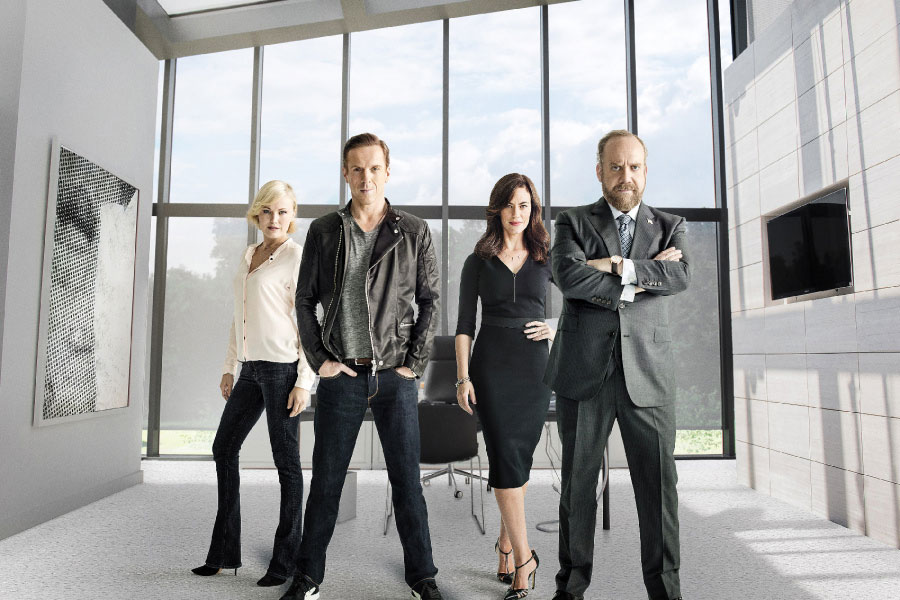
Television reflects us in so many ways. The new series “Billions” starts off with a big, bad, reckless hedge-fund investor and his natural enemy, a ruthless US attorney, both meditating in their offices about how best to cheat each other. Nice use of meditation, right?

Yes sir! Meditation is here to stay. When two power-hungry TV characters, both of whom will probably cheat, lie, manipulate and even kill before the first season is over, sit silently waiting for their flashy phone alarms to go off, you gasp at how we’ve managed to corrupt yet another tool for leadership growth and illumination. Now it turns out we can use meditation to do evil unto our enemies too. Very nice indeed.

As a prospective client told me yesterday, “I know all the theory already, I just can’t get my mind to stop for a second!” The eldest of five talented brothers and founder of their rather impressive family business, he can’t rest for a second without a sibling challenging his lifelong leadership. Thus, he leads them like a tired father, too young to be so bored with parenting at only 45. Let’s call him Jerry.

In the meantime, I’m also exchanging insights on WhatsApp with the male leader of another important family office. I will call him Tom. He found meditation and spirituality a few years ago, boasting daily ritual and a very virtuous lifestyle. No alcohol, careful diet, strict discipline and lots of happiness. He tells me that, “when I feel a negative emotion I simply acknowledge it, let it go, and go back to being my very happy self without a second thought. I don’t let anger or pain hold on to me!”

Well, I beg to differ. I find something terribly amiss in this shared meditational philosophy about “rising above thoughts and emotions.” What for? Why do we need to pull ourselves up into heavenly bliss while we’re still walking our challenging lives down here in hellish civilization? Won’t we have plenty of time for delicious and obligated happiness when we die?

We seem to be stuck in this chronic inability to face, accept and actually feel our emotions. Some of us are so terrified of feeling anything that we are ready to work ourselves to our graves if it saves us from facing the demons inside our hearts. Others have invented magnificently complex intellectual beliefs to create a vertical, disdainful distance high above all that is fuzzy, wuzzy, icky and rooarrrrry inside our bodies. Meditation becomes a tool to avoid emotion rather than the vehicle to help us connect with it. And I, for one, believe it’s a huge mistake.

Tom and Jerry seem to live in the same endless world of chasing of each other, that we saw in cartoons when we were kids. Tom tries to catch Jerry and trap him inside an unwanted meditation seminar while Jerry thinks that Tom is too simple, making him run round the entire kitchen in circles. Their deeper animal selves witness this cerebral orchestration in resignation… instincts, impulses, feelings, sensations and emotions must keep silent or hide appropriately until the chase is over. But when it finally ends it will be too late, won’t it?

The road to Nirvana runs through the body, with all its stressful instincts and uncomfortable realities. Those who try to fly directly to an illumination without their bodies are fooling themselves. Proof is quite visible when you listen to Tom’s routines and logic: they’re simply too much hard work. Too strict, too self-judging, too elevated above those messy tears, greasy pizza or sex. It sounds like sad, old nuns and skinny monks renouncing their lives to hide away in a convent of ascetical self-denial. It amazes me how frequently this interpretation of spirituality is repeated around the world, in many cultures and religions – an idea that in order to find God you need to flee all pleasures in life, and rise above weakness or want in every form. Jerry can’t imagine how to achieve it. Tom spends too much energy justifying it.

If only they both stopped running, thinking, doing, or chasing long enough to let their own feelings come up into consciousness. This is, in fact, the true path to the spirit (or to God) or to deep leadership wisdom: doing nothing. Pursuing nothing. Trying nothing. Letting thoughts and emotions run around wild until you begin to see a pattern in them. And just as you identify this pattern it gently dissolves and disappears, releasing you to sink down into greater levels of simplicity, fluidity, intensity of feeling.

This is what transcending negative emotions is all about. Jerry can’t stop thinking because he is scared of feeling them. Tom can’t stop forcing ritual and discipline on himself because he too is scared of being drowned by them.

Yet when you’ve recognized and understood the patterns of emotion and sensation that tug at your body’s tissues and your mind’s neurons, you slide into a state of zero effort and total passion. Total presence in this moment is all about not having to ward off anything. No hiding away in the corner of your mind with some repetitive chant. It’s this effortless quiet that brings on deep insights about life, business, love and spirituality. The quiet that invites feelings to come as often as they need to, stay as long as they want to, grow as intense as they must.

Emotion, sensation and impulse are precisely the path to inner wisdom and total presence:  Pulsations, vibrations, tears, growls, kicks and screams that kidnap your entire body like an overpowering wave of energy. Like when you were a baby or a toddler without any notion of ridicule or judgment of yourself. Like any animal. Like everything that pushes life forward in the wild, willful overpowering passion that we call Nature.

This is meditation. All else is pure fiction. Embrace the Wild within you!

Real Meditation: Don’t Rise Above Your Thoughts and Emotions

Television reflects us in so many ways. The new series “Billions” starts off with a big, bad, reckless hedge-fund investor and his natural enemy, a ruthless US attorney, both meditating in their offices about how best to cheat each other. Nice use of meditation, right?

Yes sir! Meditation is here to stay. When two power-hungry TV characters, both of whom will probably cheat, lie, manipulate and even kill before the first season is over, sit silently waiting for their flashy phone alarms to go off, you gasp at how we’ve managed to corrupt yet another tool for leadership growth and illumination. Now it turns out we can use meditation to do evil unto our enemies too. Very nice indeed.

As a prospective client told me yesterday, “I know all the theory already, I just can’t get my mind to stop for a second!” The eldest of five talented brothers and founder of their rather impressive family business, he can’t rest for a second without a sibling challenging his lifelong leadership. Thus, he leads them like a tired father, too young to be so bored with parenting at only 45. Let’s call him Jerry.

In the meantime, I’m also exchanging insights on WhatsApp with the male leader of another important family office. I will call him Tom. He found meditation and spirituality a few years ago, boasting daily ritual and a very virtuous lifestyle. No alcohol, careful diet, strict discipline and lots of happiness. He tells me that, “when I feel a negative emotion I simply acknowledge it, let it go, and go back to being my very happy self without a second thought. I don’t let anger or pain hold on to me!”

Well, I beg to differ. I find something terribly amiss in this shared meditational philosophy about “rising above thoughts and emotions.” What for? Why do we need to pull ourselves up into heavenly bliss while we’re still walking our challenging lives down here in hellish civilization? Won’t we have plenty of time for delicious and obligated happiness when we die?

We seem to be stuck in this chronic inability to face, accept and actually feel our emotions. Some of us are so terrified of feeling anything that we are ready to work ourselves to our graves if it saves us from facing the demons inside our hearts. Others have invented magnificently complex intellectual beliefs to create a vertical, disdainful distance high above all that is fuzzy, wuzzy, icky and rooarrrrry inside our bodies. Meditation becomes a tool to avoid emotion rather than the vehicle to help us connect with it. And I, for one, believe it’s a huge mistake.

Tom and Jerry seem to live in the same endless world of chasing of each other, that we saw in cartoons when we were kids. Tom tries to catch Jerry and trap him inside an unwanted meditation seminar while Jerry thinks that Tom is too simple, making him run round the entire kitchen in circles. Their deeper animal selves witness this cerebral orchestration in resignation… instincts, impulses, feelings, sensations and emotions must keep silent or hide appropriately until the chase is over. But when it finally ends it will be too late, won’t it?

The road to Nirvana runs through the body, with all its stressful instincts and uncomfortable realities. Those who try to fly directly to an illumination without their bodies are fooling themselves. Proof is quite visible when you listen to Tom’s routines and logic: they’re simply too much hard work. Too strict, too self-judging, too elevated above those messy tears, greasy pizza or sex. It sounds like sad, old nuns and skinny monks renouncing their lives to hide away in a convent of ascetical self-denial. It amazes me how frequently this interpretation of spirituality is repeated around the world, in many cultures and religions – an idea that in order to find God you need to flee all pleasures in life, and rise above weakness or want in every form. Jerry can’t imagine how to achieve it. Tom spends too much energy justifying it.

If only they both stopped running, thinking, doing, or chasing long enough to let their own feelings come up into consciousness. This is, in fact, the true path to the spirit (or to God) or to deep leadership wisdom: doing nothing. Pursuing nothing. Trying nothing. Letting thoughts and emotions run around wild until you begin to see a pattern in them. And just as you identify this pattern it gently dissolves and disappears, releasing you to sink down into greater levels of simplicity, fluidity, intensity of feeling.

This is what transcending negative emotions is all about. Jerry can’t stop thinking because he is scared of feeling them. Tom can’t stop forcing ritual and discipline on himself because he too is scared of being drowned by them.

Yet when you’ve recognized and understood the patterns of emotion and sensation that tug at your body’s tissues and your mind’s neurons, you slide into a state of zero effort and total passion. Total presence in this moment is all about not having to ward off anything. No hiding away in the corner of your mind with some repetitive chant. It’s this effortless quiet that brings on deep insights about life, business, love and spirituality. The quiet that invites feelings to come as often as they need to, stay as long as they want to, grow as intense as they must.

Emotion, sensation and impulse are precisely the path to inner wisdom and total presence:  Pulsations, vibrations, tears, growls, kicks and screams that kidnap your entire body like an overpowering wave of energy. Like when you were a baby or a toddler without any notion of ridicule or judgment of yourself. Like any animal. Like everything that pushes life forward in the wild, willful overpowering passion that we call Nature.

This is meditation. All else is pure fiction. Embrace the Wild within you!
Be More Like an Egg and Less Like a Sperm

Thank goodness, the Climate Change talks in Paris have actually ended in an agreement to reduce carbon emissions, supported by 195 countries. Many world leaders have now committed to doing what many of us have been doing for a very long time. It’s taken many, many years –and a few natural disasters—to finally contain our sperm-like impetus. Acting less like sperm and more like eggs, however, could solve the situation without effort.

I was speaking at an event for entrepreneurs recently in Madrid. The previous speaker kept telling the audience how “sperm strategy” would make them rich. It was funny, a little mischievous, and very compelling: get to the goal before anybody else, push and shove your way there, never relax, seek the shortest path, etc. It sounds exactly like most of our business mumbo-jumbo, doesn’t it?

Twitter is full of spermfully reflected uses of the allowed 140 characters, designed to catch our eye and drive us to a product, a person or an idea: “the secrets of…,” “How to conquer…,” “Why you need (this) to succeed.” A total explosion of sperm-tweets pushing us to find our egg and break into it as quickly as possible, every minute of the day. Exhausting quite frankly, and you can imagine that no real egg is going to spend a lot of time sitting around in there! It’s like gang-rape!

It’s overwhelming, excessive, over-anxious and far too thrusty. Sadly, we’re all playing the same game, and though we would never, in our wildest dreams or most decadent moments actually consider anything like actual rape, we do give off this vibe of excess enthusiasm that can be quite counter-productive. Is it any wonder we’re generating too much of everything? Too much carbon dioxide, too much plastic residue, too much production is regularly dumped to control prices, too much trash is growing in piles and puddles around us every day. Enough with the proactive sperm vibes!

Now visualize the egg. The first thing we notice is size. Sheer size. The enormity of the egg beside the tiny, little jumpy sperm hovering around it. The egg is just there. Doesn’t need to move, chase, try, scream or tweet. No need at all. It just waits for the right opportunity to come along. And it somehow always knows. The cost of choosing the wrong business partner to create a new business baby is simply not worth it. Too much investment, too many years spent growing arduously, too many hopes and expectations to fail. The egg doesn’t rush into a business deal of any sort. It sits and waits.

But it’s not an anxious wait – full of hopes and expectations. No. It’s serene and mysteriously calm in its movement. Like waves on the surface of a pond going nowhere. It can recognize the absence of a feeling, a very specific chemistry of infinite success and passion without which there can be no conception. The egg knows that it will die if the right guy never comes along. But the egg has no fear. It is not worried about what other eggs will think. It doesn’t need to leave a legacy. It doesn’t need an award. The egg lives to serve life, at whatever cost that life demands of it.

Think of the calm tranquility of life. The slow, love-full accumulation of energy inside that majestic miracle of organic potential. The silence and darkness surrounding that egg, protecting it from any possible harm. The mystery of its entire future, in perfect communion with whatever it is that moves our world forward. The egg surrenders to the mysteries of its destiny without judgment, expectation or criticism.

And when that perfect tiny mate finally appears, among thousands of  wiggly little tricksters jumping over each other and kicking each other in the guts, the egg simply dissolves with pleasurable love. It opens just as little as needed to let him in. Only him. Always him. Forever him. There never was any other. It never felt this right. Only he feels like he was meant to be. Life takes off in a total explosion of growth and development that still surprises us with its magic, its wild strength, its very own agenda.

We need a lot more egg energy in our lives and businesses. It’s that dark, chaotic and mesmerizing Yin energy which Chinese philosophers described long before the war of the sexes began. We all have it. We all need it. We all recognize it as slow, serene, generous, self-confident and fully open to serve others. We’ve forgotten to give it space and respect its utter power… so impressed are we with the blind racing of millions of tiny, Yang-infused sperm.

Including the egg strategy in our lives is so simple we don’t know how to do it. Because there is nothing to do. It’s precisely about doing the opposite of doing! Stop talking. Stop tweeting. Stop thinking a million thoughts about how to get this or achieve that. Forget all that “make a difference” gibberish. Surrender. Meditate. Contemplate.

Go to your meetings and events without a sperm strategy. Forget your plans. Give up the careful games you want to play with others to get what you came for. Just sit there and breathe. Breathe in other people’s nervous energy. Breathe up your own fears, anxieties and worries. And as you notice them, they begin to disappear. They just dissolve as easily as they arose.

Create quietness around you two or three times a day. You don’t need to sperm-fight your way to total emptiness of the mind in a yoga pose that crushes your joints until you feel numb. No. A few minutes will do. Wherever and whenever you find them. Like the egg, you won’t even have to look for them. Somebody will be late for an appointment. Some electronic glitch will kill your phone battery. Some airplane crisis will ground you in an airport for a little longer than expected. But instead of opening your laptop or searching internet for sperm-friends to compete with, you can just sit there and take life in as it happens around you.

The egg strategy contains the mysteries of the feminine. It opens up to unpredictable encounters, unbelievable creativity, impassioned certainty about who you are and why you are hear. It helps us relieve the excess running, racing, thinking, doing, planning, trying, blah,blah,blah….

We are all made up of feminine, or Yin, and masculine, or Yang. But we’ve become terribly imbalanced on all individual and collective levels. We’re chronically exhausted with ourselves and others, trying to think of ways to recuperate our energy levels again. What a ridiculous hamster cycle.

Let go. Surrender. Trust. Trust yourself. Trust your destiny. Trust life. Our feminine energy is full of love, passion and abundance. All we need to do is let it come up to the surface to bathe us in everything we ever wanted but never dared to wish for.


How Trophy Hunting Perverts Leadership

Do you think trophy hunting is only a problem for innocent lions in Africa? Think again. We’re doing to animals exactly what we sometimes do to ourselves. It makes us very small leaders, compared to what we could be if we stopped competing for trophies.

Javier is a human trophy I know especially well. He’s always been very handsome. He holds several nobility titles, which places him within the very special, highly coveted elite in Europe. You can imagine how women swarm around him. He married the smartest, most strategic –and beautiful, of course! – princess of them all. His life looks like a Disneyland fairytale where everybody smiles, looks great in bikinis and swim trunks on yachts, rubbing shoulders with other handsome and influential Barbies and Kens from diverse social groups. They’re the picture of success. Although, something’s amiss.

Javier’s eyes often go blank. Very often. He’s developed an amazing talent to deviate a conversation away from himself, to escape undetected into his own hidden world of freedom. And this, my friends, is the smallest fact overlooked by most – a crack in the perfection that betrays the fact that all is not what it seems.

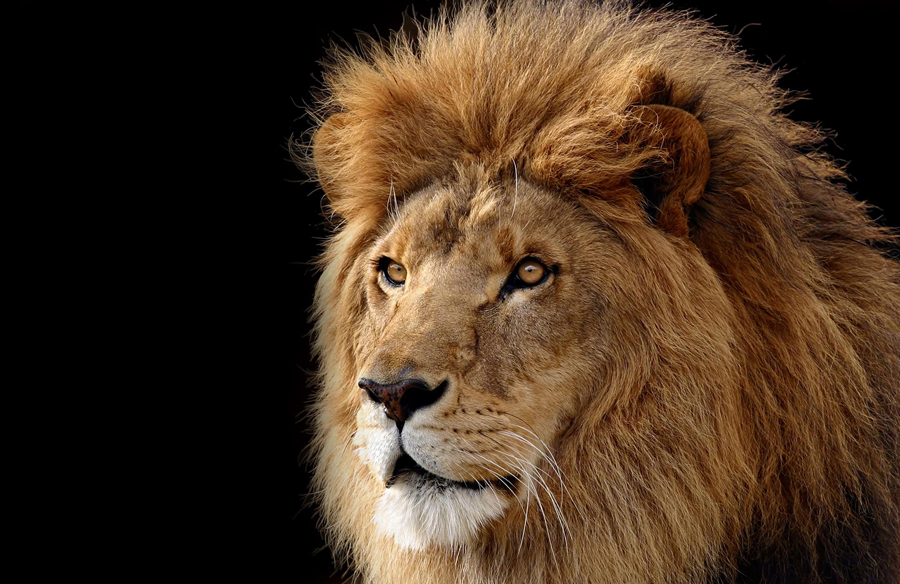
Javier is a trophy. He was raised to be a trophy, just like those tame lions who are secretly sold for canned hunting, as described in the new movie Blood Lions. He is hunted daily by men and women, who want to put a piece of his handsome aristocracy on their walls. Having been raised to smile and respond positively, Javier plays right into the hands of these savvy hunters.

Javier may end up being another tragic story of destruction through a lack of awareness. He doesn’t see or feel the wild lion that he is, underneath all that tame, well-behaved protocol. His loved ones love him as long as he keeps playing the game, keeps bringing prizes home, making them look good, smiling and submitting to what they need from him. They love his historically pure-bred exquisiteness so much, that they fail to notice his empty, absent eyes.

The small crack in this Disneyland family game, however, has been growing silently, slowly, almost imperceptibly. I take some credit in this, though Javier might say I’m the witch in his fairytale. I started asking questions. I gave feedback. I remained silent when his eyes went blank until he returned to the conversation, which he obviously found very annoying. He denied everything. Like many animal activists, I fought his denial. Eventually I learned that fighting isn’t the way to go if you want to raise awareness. The only thing that raises awareness is light. And time. Lots of time. Exasperating amounts of time. Light will find its way through the cracks naturally, if we allow it.

Everybody tells me I’m wrong. Everybody sees him as a silly, selfish, good-looking trophy husband and prize-winner who basks in his own glory. Women compete with each other for this attention. Brands grant him awards to get a photo of him in their corporate colors, shaking hands with their top executives in the press. Because this is what we do all day long – we compete for things.

This is what we’re taught as young children:

“Work hard. Try harder. Be smarter. Network the right people. Get Javier on your shortlist of closest friends. Give him free stuff. Invite him to your parties. Buy his products. Flatter him a little. Even better, flatter him a lot. Do him favors. Cuddle him like you would cuddle a lion cub until he walks right into your arms and can’t give up your comforting hands. Then show him off to the world and receive rightful praise. You truly must be the smartest and most beautiful of them all. Look in your mirror and ask again. Congratulations! Now others will compete to get closer to you too!”

On paper Javier is a leader. He started his own company, then ran it into the ground in a very elegant and aristocratic way. That kind of blew a few holes in his untainted Disneyland décor of success, happiness and perfection. He started a new company that now gives his owners what they want, while he can fly away to do what he loves, unbeknownst to all. This one seems to be doing well. At least on paper.

I met him when he was the only person who hadn’t yet realized that his first company was dead. It was horrible. He was in pain. Not only was he failing to bring home the prizes the entire family expected of him, he was beginning to actually feel something real – instead of manipulation, photogenic lovey-dovey and happy-happy nonsense. To lose a company you’ve built tirelessly for fifteen years is like losing a child, it’s awful. It’s a huge wake-up call in life.

To lose a company you’ve built tirelessly for over fifteen years is like losing a son, it’s awful. It’s a huge wake-up call in life.

Five years on, I’ve shed a lot of light on the wild within Javier, like the wild lion, who is magnificent when you let it do what it does best. Everything we admire and dream about in wild animals is taken away from them when we jail them or force them under our will. Everything that could be admirable in our own animal selves is forced into silent submission by the instructions we receive from society to compete, succeed, win races: “Feel happy and deny all other feelings. Smile Godammit!”

Because everybody in his life wants something from him, Javier suspects I too want to use him. I too was raised in a similar society, and yes, I did what everybody else did when we met. I too unknowingly played the hunting game. I felt very frustrated because I had no interest in the prizes, the titles or the handsomeness. I was taken by a challenge to uncover a mysterious wild beauty in him. He was the perfect trap for a leadership coach like me, who brings light into the darkest, most loveless of places.

I often laugh at the fact that learning to ride a horse as an adult was my most enlightening initiation into what true leadership is. Trying to coach the most un-coachable man I’ve ever met turned out to be even more so. He resisted me with such force that I was forced to look at myself in the mirror again and again. As I often find by learning from animals, I also received incredible insights in my battle against this mystery of a man.

As it turned out, he kicked all competitive and hunting tendencies right out of me. I slowly woke up to many of the deep truths about leadership that I regularly share at Real Leaders. It took a long time and it hurt like hell. We don’t become wise by sitting in bliss.

We don’t become wise by sitting in bliss.

I really hope Javier’s wildest self does break free from the chains of Disneyland. It must be hard to give up so much. Everybody he loves will resist violently to keep him tame inside a gold-plated cage. Society would label him a fool for giving up the glory we’re all supposed to be hunting for. If he does succeed, he will prove how incredibly superior wild passion is compared to our petty mind games. And once he’s free, deeply, truly free, he’ll be a hell of a leader. The kind our planet desperately needs: the might of a lion and the courage of a king.

True Victory is Honoring the Dead on Both Sides

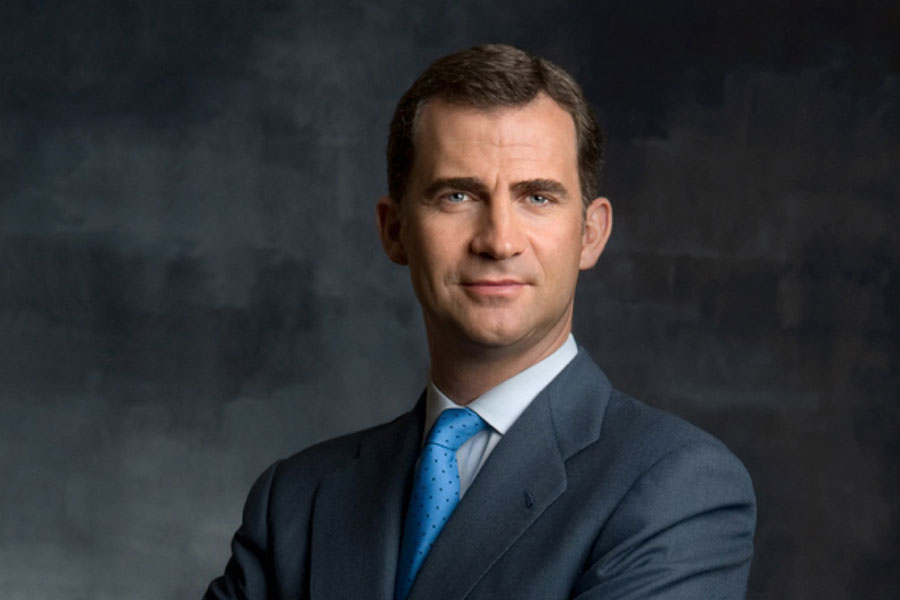
On 12th of October we held Spain’s national holiday to celebrate the arrival of Christopher Columbus on American soil in 1492. More than five hundred years later, our ability to include everyone under Spanish King Felipe’s (pictured above) leadership is being tested. Here’s why.

If you’ve followed the news lately, you must have read that Cataluña is threatening to separate from Spain. At least, a group of its politicians wants to. Polls, votes and individual declarations of allegiance seem to have divided the Catalans in half. It’s an enormous issue for us Spaniards because if Catalunya did go that route, they might soon be followed by the Basque region. Then…well, Galicia, Valencia and Balear Islands might want to reinstate their autonomy too. Spain is what you might call an acutely diverse team.

Spain is what you might call an acutely diverse team.

As if this wasn’t enough, we’re also quite conflicted about our role in Latin America. Like many other European countries, once we’ve finished exploring and conquering our own continent, we focused on the rest of the world. Shamefully, we weren’t exactly elegant about it. Who was?

Twitter burned all day recently with two lines of conversation: One celebrating our country, Hispanic culture, national unity and our ambition to lead the Spanish speaking world. The other, sparked by the new mayor of Barcelona, under a Spanish hashtag, meaning “nothing to celebrate,” denounced genocide, massacre and exploitation on the new continent. Representatives of left-wing parties and regional governments, those most inclined to exit, showed their disdain by their silence. They were mentioned by the media all day long due to their angry absence. Spain gave a colorful demonstration of diversity at its most extreme.

Still, nobody was indifferent. Those opposed to the separation didn’t fail to come to Madrid to see the armed forces march down Castellana Avenue. And they obviously spent much time analyzing the press, deciding what to tweet, and gossiped with friends about proceedings at the political party they wanted nothing to do with. There couldn’t have been a more intense emotional entanglement joining us together under that red, yellow and white smoke left in the sky above our heads from the Eagle Patrol fly-by.

The opposite of love isn’t hatred. You can’t hate somebody or something you don’t still love on some level.

The opposite of love isn’t hatred. You can’t hate somebody that you don’t still love on some smaller level. This is the key to conquering the challenges of our Spanish diversity. It’s the key to leadership everywhere on our planet of infinite diversity. It requires a stronger type of leader to zap us all out of conflict, back into joyful performance. The kind of leader we haven’t seen for a long while, and certainly not in Spain by any means.


At the beginning of this holiday ceremony, once the royal family has arrived and taken their places, there’s an offering to those who have fallen during war. A large laurel wreath, adorned with a bow is placed at the foot of a monument by the King, after which, an anthem is sung. Many of these words are clearly directed at God. Not surprising, when we consider that military forces remain more tied to religion than civilians. Making a job out of death does that to you.

The problem is this: the absence of those who didn’t fight for the red, yellow and red of our flag, but for an opposing symbol. Their ancestors don’t feel included in this ritual. Their symbols are missing. It reads, or feels, like their dead aren’t being honored. As long as they aren’t included, Spain will not be united. Hispanics will also not feel allegiance. Every person who may have had an uncle, a grandfather or a great grandmother on the rebel side will feel a pang of exclusion.

And herein lies most of the leadership challenges we face today: the constant contractions and sensations within our bodies that tell us there are secrets we’ve overlooked. A deep, wild wisdom that speaks to us without words, pumping thick, emotion through our bodies throughout our lives.

Is the King consciously including all the indigenous leaders who died to hand America over to the Spanish when he sings this ritual tune? Is he honoring the powerful aboriginal warrior queens who defended Northern Spain from Roman Catholic attacks for centuries? Are we all thinking beyond our own flag when we say “brothers” in our song? Or are we still playing belittling games of rivalry, competition and satisfaction at having won? Are we looking down on those whose flags no longer fly before us? Or are we thanking them for their sacrifice?

Are we all thinking beyond our own flag when we say “brothers” in our song?

True wisdom, the kind we most lack in the rational societies of today, points to the example of ancestral leaders, who included the losers in their celebrations of battle. Magnanimous generals who pardoned an opposing fighter because he had shown courage, heroism and deep loyalty. Even Spanish bulls can be pardoned and honored in a bull-fight if they have demonstrated exceptional qualities of nobility and bravery. If we can honor a bull, why not the strong men and women who fought us to their deaths? How can we not bow our heads for the people who willfully gave up everything to build our nation, as they inevitably lost their own?

How can we not bow our heads for the people who willfully gave up everything to build our nation, as they inevitably lost their own?

This is our biggest obstacle to greatness. This is the next level of inclusion, that we all need to build  into our lives, businesses and families: respect and gratitude for all those who’ve died in battles that have shaped our world today. Heroism is heroism, no matter what flag it fights for. It should always be remembered. And once every fallen fighter is included in our songs, all hearts can then truly sing together.

How pain releases our inner leader for good


While doing a course on dolphin therapy this summer I learned that caretakers must be very vigilant of health risks and carry out rigorous daily testing. These animals don’t show any change in their behavior until they’re irreversibly sick – in the wild it would make them easy prey to predators. Do our executives do the same?

It’s safe to say that showing weakness in high power circles is dangerous for any leader. Some companies are famous for back-stabbing practices. Many a country’s government used to change in history if the rightful heirs were killed or Roman generals were openly knifed in plain daylight. We’ve become less tangible and more sophisticated about such things in recent centuries, though power moguls must still watch their backs. Visible vulnerability is just as dangerous for todays leaders as it might be for dolphins in the wild.

Sadly, it’s not only powerful CEOs and heavily botoxed country leaders who must remain as fit (and sexually obsessed) as Supermen. They’re only the very visible tip of an iceberg that permeates our entire modern society, for which showing pain or admitting flaws has become a really big “No,no!” We’re addicted to happy meals, happy songs and equally happy faces, even if it takes stashes of prescription drugs to keep up the performance. Dolphins aren’t the only ones that fake fitness.

Pain is not tolerated as a conversation topic, especially not emotional pain. It must be hidden, lied about, or kept under the rug. Our world-saving banter takes place on many layers, with the surface showing off our own success, unending drive and perfection. Meanwhile lower, more subtle levels of exchange betray exhaustion in dark rings under our eyes, lack of shine in our gazes, flat voices, shallow or forced breathing, sagging tummies and bulging curves. We’re actually much worse at acting fit than dolphins.

Our woes submerge into the deep dark unconscious pools of our minds, our muscles, bones and tissues. It’s what some call cellular memory. I used to find this expression ludicrous a few years ago. It sounded like some whacko cult leader’s made-up, and heavily copyrighted, term. What type of memory could a tiny cell contain anyway. DNA?

Well, there is some truth to it, though tissue or muscle memory are more satisfying terms to my mind. Our body tissues do store some type of memory, traces of which science may spend a long time chasing. Such recollections aren’t sitting around waiting for a microscope to take a selfie. They only show up in motion, and they may lay dormant in the shadows of what we call the unconscious. While many strive to step on the moon or find life on Mars, I’ve found myself exploring the depths of this uncanny black mystery we each have inside us.

Hidden pain is best understood in extreme situations: when people go through traumatic life or death experiences which they totally forget about. Their conscious memory mechanisms stop recording, though sensorial information is still taken in and kept somewhere in our unconscious mind. While the term ‘mind’ inevitably brings the picture of a head to our imaginations, most of our unconscious nervous system is actually under our necks, contained in the sophisticated network of nerve cells running through our entire bodies. Randomly organized visions, scents, sounds, frozen responses and sensations wait silently in that huge, not clearly localized darkness until something brings them back up to the surface of consciousness. I say not localized because, honestly, every single neuroscientific study I’ve seen shows lots of lights and colors in the wrong places: The whole thing works so synchronously that it’s never this part or that side. It’s always a whole network of overlapping dialogues between fuzzy, shiny neurons all over the MRI scan!

Trauma experts like Peter Levine or David Berceli describe multiple cases of individuals healing from past trauma, ranging from war veterans to people in car accidents or survivors of violent attacks and child abuse. What is most impacting in these cases is how certain movements bring back memories. The same muscles and tissues which would have been activated to respond, if the individual had not gone into freeze response, retain that impulse to wait for a safer situation. As the person expresses the frozen pain, anger or fear in a safe space held by an experienced therapist, memories come back, reconnect and rebuild the story of what happened so long ago. Better yet, chronic patterns of muscle tension dissipate, physical pains slowly dissolve, and repetitive behaviors also improve.

We executives like to think our childhoods were exempt of traumatic events, but we’ve actually forgotten all the things that went wrong. Forgotten as in amnesia, typical of events the brain considers deathly. Lots of non-ideal things happened during our first seven years of age, even during gestation in our mother’s wombs. Slowly developing cognitive functions could not yet interpret subtle layers of information, triggering frequent life or death freeze responses all the way to our seventh birthday (more or less).

In a society based on discipline, logic and economic incentive, the baby-body’s critical need for physical closeness to its mother’s body is totally underestimated and criticized as savage, infantile, primitive and weak. Radically opposing and reinventing parenting practices which all other mammal animals and all our less civilized ancestors have always followed, we submit our babies to unprecedented levels of unintended cruelty. Thus the many levels of very intense and carefully hidden pain executives carry today in the apparently unending blackness of our unconscious.

Our human body is one fascinating machine of wisdom and we are probably the most ignorant generation yet to interpret it. So exclusively scientific in our ways, we’ve discarded and rejected ancient forms of indigenous wisdom that understood the impact of trauma, instinct and emotion way better than we do. Many a ritual in aboriginal tribes was destined to recreate and release old frozen emotions and impulses. But hey, we’re a lot smarter, right?

Pain is the best professor. Admitting pain is painful. Facing it is hard. Letting ourselves feel it in order to release it makes us feel like ridiculous, forty-year-old fragile babies. But once it’s out, we remember everything. We realize everything our parents were going through when we were young and how well we saw it on their faces even if we couldn’t actually explain it.

More importantly, we stop hiding from ourselves and our deeper truths in superficial conversations about nothing interesting or real. We unleash that infinite life force that unites us to the rest of the animal kingdom, to our ancestors, to our heirs, to the planet we’re unintentionally and cruelly hurting. Overcoming our pain makes us infinitely deeper leaders. And when we’ve conquered that big black hole inside ourselves, we stop fearing predators. That’s the freedom of the wild for you right there!

How Profit Stifles Your leadership

I woke up this morning to an angry journalist on the radio who vigorously complained about Pope Francis’ latest comments on profits. Apparently His Sanctity had spoken about the dangers of “capital dominating men instead of men controlling capital” at an event with cooperative credit banks last Friday.

Although angry radio talk is not my cup of tea, I found this popular Spanish journalist’s rant very interesting. It took me back to something I read yesterday in a fascinating book called “Wild”, by Jay Griffiths. The author describes Peruvian indigenous tribes and their beliefs about the lush Amazon landscape they inhabit. It seems that they are angered by how large pharmaceutical companies come to them in search of knowledge around plants’ curative properties.

Once they have it, they slap an international patent on it and exploit it for profit. As Griffiths writes: “They rob us and make large amounts of money from our knowledge. Not for nothing is wild knowledge called ‘common knowledge’— common … is free, open, unenclosed; and ‘free’ financially; it must not be bought or sold for profit.”

In awe of what I understood to be another simple, obvious piece of indigenous, wild wisdom, I spent all afternoon thinking about how profit is blinding us today. Why are we so obsessed by profit? Why have we built an economy where operating without profit makes no sense? And how much more destruction can profit bring upon our planet before we come back to the wild, primal senses we once had, but have never forgotten?

Of course, if we take profit off the table 99% of western population will be up in arms. Profit seems to be the only good reason we have to keep working our lives away, missing out on our kids, our families and our own right to playful enjoyment of life. Everybody says it’s great and yearly rankings on every well-respected economic publication heartily praise those who have peaked the list of profit. Pressure to make profits is so huge that the freedom to not make them has disappeared. In our economy, those who don’t make a profit are mismanaging their companies: What losers!!

And yet we go back to look at the way indigenous people live in remote corners of our planet and we learn that a big part of training for young hunters has to do with knowing that taking too much is not sustainable. Young adults in the wild are taught respect, self-restraint, and the importance of doing something useful with what they take in order to honor the very gift they received. Young men and women in our world do an MBA where they are instructed to pursue profit whatever it takes.

Our collective obsession with profit is the very root of our ecological disasters, as Pope Francis pointed out in his latest encyclical, published last June. We don’t need to be Catholic to recognize the fundamental questions the Pope is courageously hitting on. It always takes a courageous leader to say what everybody knows, but prefers not to mention.

So why aren’t we doing anything about it? Because it’s easier to remain scared. Profit hides our fears. Profit is that hidden stash we save for when things turn bad. We need profit in order to sleep at night. Profit patronizes and stifles us to stay small, terrified, weak and not courageous at all. An indigenous tribal leader, in contrast, would feel deeply ashamed of making a profit.

It’s also true that aboriginal peoples are much better at dealing with their emotions than we are. They have not been corrupted by centuries of cruel wars and senseless slaughter. Wild tribes still live childhoods in which wildness and emotion are not dangerous, but playful tests to be savored and eventually overcome. We, on the other hand, live fearfully in comfortable lives in which quality is determined by the amount of material comfort protecting us from our own angst.

We, then, have the chance to be greater. You and I both have a bigger challenge on our hands if we decide to drop our profit mindsets and dare to approach lifestyles of uncertainty and a little more scarcity. What is it we fear? Not having enough? Ironically, this crisis should have taught us all that living with a little less isn’t so bad. The lesson in scarcity is not one of strict sacrifice, as some would have us believe, but rather an invitation to flow with what comes and goes. Not giving into our temptation to buy a new car, for example, would allow us to resolve our feelings instead of smothering them temporarily. Once we did face and release such feelings, that car might fall right into our laps for a bargain price!

Profit has become king in a society riveted with fear. All we need to do is face it. As long as we hide behind profit to keep our own fear away, we prolong this paradigm, and what’s worse, we teach our children to do the same. We set them up for little lives of shudders and tremors under the large, powerful shadow of what we dread.

We are all called to become warriors of the wild. The wild is full of wisdom and abundance. But in order to get back to the original state our species was designed for, we westerners have to face up to our legacy of wars, slaughter, pillage and violent profit. A warrior of the wild is he who has learned to fight through his own fear, resist the intensity of his own grief, and brave the expression of his own anger. It takes a lot of courage to let go of profit and face the unconscious history of emotional wreckage left behind from our many disputes over profit in the past.

Time is running out. The planet is too. Profit is not our friend. Embrace the Wild!

Want To Lead? Let Go Of Your Plans!

“If you want to make God laugh, tell him your plans,” said Woody Allen once. Ingenious as always, he hit on a fact of life we all struggle with. As we get back to work and face the year to come, we are severely tempted to set goals and commit to plans. But plans, my friend, are actually holding your leadership back!

Did I say tempted? I came up short: in today’s society planning is expected, enforced, trained and evaluated constantly on every front. “What are your plans for Christmas? How do you expect to have a nice family holiday if you don’t schedule it now?” These are the type of questions asked of you over coffee. Then you’re told you should really start thinking about the school you want to apply to for your unborn child. After that, somebody comments on how you will be a total failure in life if you have not written down exactly where you want to be working in ten years time. Are you exhausted from this pressure yet? I certainly am!

Being constantly subjected to this kind of pressure as an adult is annoying, but we’re supposed to be ready for life’s challenges, right? Our kids, however, are not. And our shared obsession with controlling future outcomes of everything we do is spreading to the way we educate new generations. We find ourselves pressuring our children to decide what career they want when they grow up, which skills and sports they want to develop in order to be happy and how to set goals in every aspect of their lives and how to achieve them.

Setting goals and working towards them is a wonderful trait when used correctly. However, it’s a total waste of time and an obstacle to our leadership performance when it becomes as obsessive as it is now. Because as we all know, God is laughing belly-up as we speak, thinking of all the different ways we will be pushed straight out of our paths.

Many of the world’s most respected winners never expected to become so successful. Think of Steve Jobs and Bill Gates building nerdy computers in their garages, or innocent fifteen year-old girls discovered on the streets by  photographers who became top models. Even those who actively pursued stardom got their break at the most unexpected moment, from the least probable friend or social gathering. The most frequently repeated phrase in interviews with famous people is: it just happened.

What would have happened if Giselle Bündchen had turned down her first modelling opportunities because she had planned to become a doctor. Or if Bill Gates had ignored his computer geek friends and their nerdy afternoons of programming in order to pursue a journalistic career instead. Fortunately, passion easily overrides the most prepared plans, and destiny, luck or divinity – whatever you believe makes the world go round – stop us in our tracks all the time.

Our intellectual minds are severely distraught by this unpredictability. The beauty of goals and plans is their linear nature: they are orderly and sequential, they can be added and subtracted, stretched out, pushed back and squeezed. Our minds love to spend time playing around with the little building blocks of our future goals.

Thinking ahead not only keeps us busy. It helps us feel we are in control of our lives. But mostly it just keeps us hidden safely away from any possible feelings of helplessness, fear or apprehension we may hold about the future and the enormity of the world around us. And so we make God laugh. Over and over again. Every Monday morning. Every first of January. And every first Monday of the new shool year.

Yet a leader who hides from himself behind plans and goals is no leader at all. He’s hiding! The very definition of leadership requires standing out in the light, in front of everyone else.

Our complex excel sheets and cash projections, our super strategic business plans and over intellectualized expectations of the future have become silly stories we tell ourselves to hold it together on a Monday morning. Or to help investors and analysts hold it together throughout the week. It’s not only God that laughs. Anybody with two eyes on their face and two feet on the ground is laughing as well.

If only we had the guts to stay in the present moment. If only we hadn’t become so scared of our own emotions rising to meet us on Monday mornings. Imagine where the world would be if all our heroes in history had hidden behind a pretty story or well-constructed plan on the day they had to step up to a new unpredictable challenge.

The key to be taken seriously by our followers is not in our minds or the strategies they can concoct, but in our hearts. This can be done by taking a deep breath when we sit at our desk in the morning and scanning ourselves for feelings, sensations, intuitions, yearnings and fears. It’s found in asking our minds to shut up for a minute: “Just give me a little space to feel myself today…”

Our hearts and their unpredictably curvy impressions, wants and passions are specifically designed to play with the uncertainty and playful dance of destiny, luck or divinity. Our hearts are the seats of our hidden wisdom. All we need to do is let go of our plans and surrender our minds…

…and let the fun begin!

How To Release Your Inner Hero

The first man who thought about building a fence around a piece of land and calling it his own, had no idea how much he would change the world. As if foretold by a magic elf, in enclosing a part of nature, he also trapped a part of himself forever. Thousands of years later, breaking down our walls to discover our own secrets may finally set us free.

You see, when a part of ourselves has been trapped in a hidden cage, we can’t feel that part anymore. And because we can’t feel our deeper selves, we lose the ability to connect to others on that level. We can only swim over the surface of relationships, both personal and professional. We often go round in circles, repeating the same patterns over and over again… unknowingly looking for an entrance to that mystery within us.

A glimpse at the conversations on Twitter shows how incredibly superficial we’ve all become. Articles about leadership are amazingly shallow. The same quotes are repeated over and over by celebrities, successful business moguls and celebrities. We take our advice from the luckiest people on the planet, whose experience of life is mostly limited to success and popularity. That is how deep we dare to go these days!

True leadership, however, is as deep and timeless as our soul. Medieval symbolism already knew it, with heroes from many cultures and legends going down into deep scary caves to slay dragons. Admirable men penetrated impossible mazes to kill the ghostly beasts who ruled them. We’ve known for hundreds of years that the only path to true heroism and authentic leadership is found deep beneath the surface. Still, we shy away from the dreadful horrors we may find. And so here we are, tweeting and retweeting gibberish.

Luckily for our hidden inner heroes, the world is a magical place after all. Communication bring us an inch closer every day, and resource scarcity is shrinking our world as we speak. We’ve come up with new business models to share. It began timidly, by timesharing our second homes and boats. Now we’re sharing cars, bikes and even phones. Sharing space and objects forces us to become more considerate of others, unless we want to pay big ugly fines. Despite our intention to keep growing our own businesses, our potential, and owning our piece of private land, sharing our stuff may become the future.

As often happened in ancient tales, divine intervention is right on time. Our trapped hidden selves had relentlessly increased their hold on our souls. When heroes lost confidence in their ability to triumph over injustice, men and women stopped reading legends, no longer dreaming of true love, creative passion or Holy Grails. Unfair convenience took over almost everything in life, making each generation grayer, more passive, more focused on pure survival. Feeling deep, real emotion became the obstacle to happiness in somebody’s ridiculous playbook. The playbook of superficial leadership we all seem to be quoting on twitter these days.

Schizoid personality disorder is not discussed very often. Those who suffer from it never get around to asking for help. Those who don’t present it hardly know what it’s about. Yet experts calculate one percent of the population suffers from it, and the number is growing. More than a few high powered businessmen and women have made a lonesome life out of constant travel, important work-related interruptions and just-in-time socializing. Great at small talk, incapable of heart-to-hearts. And our younger generation is even worse.

An inability to experience closeness, deep connection and belonging is as tough as life can get if you find yourself a schizoid (broken) personality. A part of you is trapped on the surface, unable to feel anything real. Another secret part of you is trapped inside an invisible cage nobody can see or touch. A cage that threatens to hold you forever in endless, unfeeling isolation. A mean old dragon guards the door, driving those who get close far, far away.

We obviously need heroes and dragon legends more than ever before. The beastly monsters who await under the surface of our tweets are nothing more than our own unexpressed emotions. It’s true that in the case of schizoid disorders these monsters are bigger and meaner than anything we’ve ever tried to engage in history. The wounds that shape such invisible fortresses are generated as early on in life as gestation in the womb, repeating frequently throughout the first years of life. Small babys’ most primal reactions are surely the most intense emotions to be found on Earth.

Still, they are only emotions. We know how to process them now. We have tools and techniques to work through them. Many experts and weathered warriors of wild emotion are on call to lend us a hand when we get lost. All we need is a will to be better, to live better, to not give up.

Take it from a former schizoid who was once sentenced to eternal invisible jail. It can be done. It takes courage, and it may take longer than you would like. But dragons will give in and walls will topple down. And when you’ve slain the demons nobody even dared to look at, well, you find yourself a true hero. Your jail transforms itself from unfair punishment to the challenge you were always meant to solve. Like all legends tell, you will have become a leader, and admirable warrior, an irresistible force of life.

And you bring faith and strength to others who still battle on. Don’t give up. Don’t give in to convenient moroseness. Don’t listen to advice from those who’ve never dared to climb down into their own caves, or look their own monsters in the eye. It’s time to share, to believe in legends and magic, to bring down old walls and clean out our earliest, most primal wounds.

It’s time to remember there is a hero inside us all. As this year’s Eurovision contest winner sings: “We are the heroes of our time, but we’re fighting with the demons in our mind!”

To Find Your Inner Wisdom, Stop Running

As everybody in Spain races to their chosen getaway to spend a couple weeks fighting with other holiday makers over a table at the best restaurants, best spot to anchor their boat, or nicest hammock on the beach, I seem to be the wise one: Madrid is at its most relaxed and calm in August. It’s a perfect setting for book writing, reflecting, self-mirroring, learning and growing. It’s ideal for the cultivation of wisdom. Have you considered growing yours?

Ironically, the word wisdom in Spanish – sabiduría – is spoken of as an unattainable ideal.

Ironically, the word wisdom in Spanish – sabiduría – is spoken of as an unattainable ideal. Having worked in Holland a lot this year, I noticed the contrast in our cultural perceptions because the Dutch talk about finding their wisdom all the time. It made me realize how this special kind of knowing has traditionally been considered a privilege only available to a few.

In olden times – and I mean olden – before civilization, progress and technology became our kings, wisdom was not written about at all. It made no sense. It still doesn’t help much in the sense that you only understand these things when you feel them. The same book that is an incomprehensible bore at twenty, can suddenly turn into a magical piece of insight thirty years later. The book hasn’t changed. We have. We’ve developed our perception and fine-tuned our thinking to exclude all the dead-ends and dumb ideas we’ve run into over decades.

We’ve developed our perception and fine-tuned our thinking to exclude all the dead-ends and dumb ideas we’ve run into over decades.

The good news is that time works in favor of wisdom, because we are living and experiencing many things every day. Whether we pay attention to it or not, our body, or the part of our brain that continues under our neck, is always absorbing information. While our minds keep racing forward to find the next best thing, our hearts and guts worry only about the present, and the parts of our past that keep overshadowing it. Because wisdom is always in the present. Everything is now. You must have heard this before.

The bad news is that we can’t listen to it or follow it in any way if we don’t stop racing, competing, fighting, thinking, talking and doing stuff non-stop. Our bodies may be full of wise insights on which path to follow, which investment to choose, which employee to let go. If our minds can’t correctly decipher our own body’s messages of wisdom, we remain non wise. That is, pretty stupid in our endless repetitions of similar mistakes: “Oh yes! We MUST book a table at this place before anybody else does!” Ha, ha, ha!!

Our heart and guts, as we’ve also heard before, are crucial to smelling out business opportunities and doing the right thing.

Our heart and guts, as we’ve also heard before, are crucial to smelling out business opportunities and doing the right thing. They don’t speak in words or numbers, however, and that makes them a little challenging to heed. If symbolic language was the only problem, we’d be fine with racing around Ibiza. The other very annoying thing about heart and guts is that they are not linear, and they speak veeeeeery slooooooowly. So much for running, huh?

Wisdom speaks to us through body sensations, symbolic visions, and a sense of recognition that connects unlikely dots in our perception. It’s completely unpredictable and it comes to us in moments of quietness. So there can’t be any racing, competing, fighting, thinking, talking or doing stuff if you expect any wisdom to make an appearance.

While intelligence loves to operate in the future, projecting better versions of an insistently analyzed past, wisdom is now. There’s no logic to it, and there is no order or timing – no before or after. What really sets wisdom apart from intelligence is that once you truly know something in your gut and in your heart, there is absolutely no amount of information or logic that can change your mind again. When intellect fights with wisdom it always loses. It’s simply too small, and too needy of reasons, information and outside certainties, mostly known today as scientifically proven facts.

When intellect fights with wisdom it always loses.

But here’s the quality of wisdom that most amazes me: it is unique. All wise people share increasingly similar visions of the world, of humanity and of our history. Almost seven billion completely different interpretations of the same universe live together on our small, tiny planet. Seven billion little heads reason and talk and do stuff all the time to judge, change and conquer the way they interact with the world around them. They keep running into other little heads with radically different views who insist on bending them over to their own view. Blah, blah, blah… just look at the news or open your internet browser.

Those who stop to take a breath and question their own vision, however, begin on a path of wisdom. As they increase their ability to focus attention on what’s really important, as they express and release old layers of emotion, as they come to honor their family’s past and feel unreasonable gratitude for the hardships their ancestors passed on to them… wisdom grows inside them. A common feeling of connection to everything, everybody and every age rises inside these individuals. Differences dissipate and judgments melt, as wisdom slowly creeps up around us, bathing all in its comforting warmth and joyful safety.

The path to wisdom is not outside ourselves, but inside.

The path to wisdom is not outside ourselves, but inside. There are no gurus. There are no absolute truths to hang on to. Walking this path inevitably demonstrates that nobody can understand your choices or your feelings of the world except you. You leave stuff behind. Things, clothes, cars, other people’s opinions and hot tables at restaurants become less important. Always very enjoyable when you have them, but also very irrelevant when you don’t. You no longer need to change anybody or anything. You realize they are all on their own path of awakening to their own inner realm of knowing without knowing. You know that every step of your own path was essential, necessary and beautiful in the global picture of what you have walked until now. I wouldn’t dream of stealing a step from someone else’s journey, or rushing anyone around a corner that needed to be savored slowly in order to build awareness of what was coming.

You become contagious. You bring peace and calm to people without trying. You just look at them and breathe with them. And they break down a little. Stop running a bit. Start feeling a lot. Forget about the cool table you’re both sitting at. Just bask in the moment. Feel the connection. Sense the timelessness and let the joy come up inside you underneath the grief, the fear and the anger.

Because all you need to do to find your inner wisdom is to stop running, start breathing and release your feelings.

Because all you need to do to find your inner wisdom is to stop running, start breathing and release your feelings. Don’t worry about time. The path is long, but it’s never boring. Every week is different. Every month feels lighter, more efficient, more intense. Every day you learn something new about yourself, your patterns of repetition, your old habits of avoidance and your very legitimate reasons for being sad, afraid, angry or disgusted. Techniques fall in your hands before you knew you wanted them. You never know who’s going to say something that will resonate inside you for weeks or years, slowly unwrapping a pearl of wisdom in your heart.

Maybe wisdom is spiritual. All religions and spiritual traditions share similar messages at their core, from the most elevated intellectual cults to the primal rituals performed in caves and forests for thousands of years. There is something unspeakable that connects us all within it, and which we recognize instinctively when we are exposed to it.

I really can’t say what wisdom is made of. All I can tell you for sure is that it is inside you, just as much as it is inside me. You will know it when you feel it. And once you know what you’re looking for, there is no amount of intellect, information or hardship that will keep you from coming back to it again and again.

Happy holidays, everyone. Wisdom awaits when you’re ready.

0