Who’s the Banker of the Future?

Digital disruption will make tomorrow’s banking workforce unrecognizable from today’s. Banks must build a culture that nurtures diversity of thought and ensure bankers have the new skills they need to succeed.

The brain drain is a very real outcome of the low Canadian dollar. US companies can now offer more for high-demand talent in compliance and risk. It’s a worrying development for banks, but also an opportunity for them to re-think their long-term strategy and ask, who’s the banker of the future?

“Since the financial crisis of 2008, banks have been focusing on their core businesses, redesigning their structures and reshaping themselves through the use of technology,” says Andre de Haan, EY’s Financial Services Leader. “But to take their financial performance further, they also need to focus on their people, who will help them win in the future.”

de Haan says in the face of continuously declining ROE, increasing regulation and pressure to reduce workforce, Canadian banks need to identify which employees really create value and what they need to do to attract and retain those individuals.

Understanding the expectations of a new generation of bankers 

Millennials (those born between 1981 and 2000) will constitute 72% of the global workforce by 2025. Yet banks have little brand appeal to young employees. Globally, among IT and engineering graduates, banks are absent from the top 25 most-attractive companies to work for. Banks will need these graduates in the future as they will require highly educated talent. They need to make sure they understand this generation and their expectations of:

  • Greater labour mobility
  • Greater technological capabilities
  • More entrepreneurial mindset
  • Greater sense of entitlement

In addition, millennials are more likely to value flexibility, learning opportunities and mentorship more than monetary compensation. In choosing a place to work, they also consider whether a company’s values align with theirs. Purpose matters to millennials and banks must emphasize it.

Assessing technology’s impact on the workforce

“In the coming decade, all things digital will revolutionize the banking workforce,” says de Haan. “There will be fewer bankers in traditional roles, and the roles of those who remain will be fundamentally different.”

As the role of technology transforms from adding value in efficiency, cost, speed and accuracy and towards managing more complex tasks, banks will have to determine appropriate controls. In addition they’ll have to ensure that employees with the right skills monitor the correct and safe use of technology.

Equally important is understanding, even if automation is possible, where it may not be desirable. This will help reallocate investment across the business and develop plans to retrain and redeploy staff to other parts of the business.

Changing culture to encourage diversity of thought

The key to creating a culture of innovation is encouraging diversity of thought. An adaptable, ‘intrapreneurial’, diverse workforce promotes innovation and there’s evidence that it leads to improved financial performance. To overcome traditional homogeneity, banks must draw talent from a broader pool and build a culture that supports and retains people from different backgrounds, with different views and experiences. For example, EY research across a number of industries shows that the highest-performing companies invest more in the advancement of women than their peers.

“If banks want to attract and retain valuable, innovative talent, they need to transform their HR approach,” says de Haan. “Starting from recruitment all the way to performance reviews, banks should reconsider their employee propositions. Especially for millennials, who are set to become a significant portion of the workforce very soon, the salary alone isn’t an enticing enough offer. They’re looking for much more than that, and more often than not, they’re finding it somewhere else.”

EY are committed to building a better working world.

 

Ezra Jack Keats: The Grandfather of Diversity in Children’s Literature

Ezra Jack Keats, the acclaimed author-illustrator of The Snowy Day, which broke the color barrier in mainstream children’s literature, would have turned 100 on 11 March. He died in 1983, aged 67. His 1962 classic, with its protagonist a little African American boy in an iconic red snowsuit, was instantly embraced across social and racial boundaries. It was awarded the Caldecott Medal in 1963 and designated a “book that shaped America” by the Library of Congress in 2012.

The Ezra Jack Keats Foundation is making the late author-illustrator’s centenary a year-long celebration with events planned across the country. Birthday parties for Ezra are on the calendars of museums in New YorkSan FranciscoNew OrleansHouston and Los Angeles. Keats stories have inspired an original musical in Minneapolis and a musical revival in Manhattan. A park statue of Keats characters is being designated a Literary Landmark. And an animated holiday special based on Ezra’s books is in the works.

“Ezra wanted all children to be able to see themselves in picture books,” says Deborah Pope, Executive Director of The Ezra Jack Keats Foundation, which supports efforts to foster children’s love of reading and creative expression in our multicultural world. “With The Snowy Day and the nearly 30 picture books he went on to write and illustrate, Ezra transformed the landscape of children’s literature.”

Ezra Jack Keats

“Many people don’t realize that Ezra wasn’t African American,” Pope says. “However, he knew discrimination and poverty firsthand, and identified with people of different races and ethnicities who suffered similar hardships.”

One of Keats’s signature story elements is that his characters are consistently challenged with real problems that are recognizable to young readers. They deal with them, change their outlook and grow. Yet, as children do, his characters live in their imaginations, a world to which the adult Keats had extraordinary access.

Generations of children have recognized themselves in the books of Ezra Jack Keats, experiencing the joy of a day in the snow, the magic of imagination, the strength in friendship. He knew that experiences like these belong to children of all races and wanted to make sure children understood that, too.

Celebrating Courageous Women on International Women’s Day

In honor of International Women’s Day, we’re celebrating women who are telling their stories and changing the world.

Women like Jaha Dukureh, a female genital mutilation (FGM) survivor and mother of two in the U.S., who successfully petitioned President Obama to start a task force to investigate the prevalence of FGM, and went on to help drive the ban of FGM in her native country of The Gambia.

And women like Sara Wolff, who was born with Down syndrome, and who made incredible change happen by working with Congress to pass the ABLE Act, allowing people with disabilities to easily save for their futures.

It is these women and girls, and all the people who raise their voices to support them, that give me hope for the future of my daughters and women everywhere. While there is a long road to equality, with our own stories as inspiration and using technology to spread those stories to others, women everywhere can be as powerful as Jaha, Sara, the inspiring women in this video, and the millions of other women fighting to make the world a better place.

Thank you for all that you do,

Jennifer Dulski, President, Change.org

httpss://youtu.be/hVmj6Fp-N7w

Leonardo DiCaprio: Don’t be on the Wrong Side of History

Forget the movie “The Wolf Of Wall Street,” Leonardo DiCaprio hasn’t got a bad bone in his body. In real life, he can be found raising awareness around global warming and driving his electric Tesla around town. What kind of villan has solar panels on his roof anyway?

Winning his first Oscar for best actor in “The Revenant” at the 88th Academy Awards in Hollywood yesterday, DiCaprio devoted much of his speech to the urgency of talking climate change.

“Climate change is real, and it’s happening right now,” DiCaprio said. “It is the most urgent threat facing our entire species, and we need to work collectively together and stop procrastinating. We need to support leaders around the world who do not speak for the big polluters or the big corporations, but who speak for all of humanity, for the indigenous people of the world…and for those people out there whose voices have been drowned out by the politics of greed.”

DiCaprio is also one of 13 U.N. Messengers of Peace, distinguished individuals who have agreed to help focus attention on the work of the U.N. and improve the lives of billions of people everywhere. His focus area for this role is the environment, and he wants to build a more harmonious relationship between humanity and the natural world. “I feel a moral obligation to speak out at this key moment in human history – it is a moment for action,” he says. “How we respond to the climate crisis in the coming years will likely determine the fate of humanity and our planet.”

“If you have do not believe in climate change, you do not believe in modern science or empirical truths and you will be on the wrong side of history,” said DiCaprio. “And we need to all join together and vote for leaders who care about the future of this civilization and the world as we know it.”

Matt Damon: Lead Actor On The World’s Water Crisis

More people have access to cellphones than to clean water. This is a shocking fact in a world that has the technology and financial means to resolve one of humanity’s most basic problems, but in which we have failed to apply the solutions.

Matt Damon has taken his tough-guy, action hero character off the screen and chosen to tackle the ultimate global threat – lack of clean water. To Damon, water and sanitation are enormous problems that have a solution – they’re just not being implemented. Frustrated by what he saw on trips to developing countries, he realized that many practical solutions were already around. He found a like-minded partner and rolled up his sleeves to give the issue some attention.

Every 90 seconds a child dies from a water-borne disease,” says Damon. “This is a problem we, here in the West, solved over a hundred years ago. To put this in perspective, imagine if we cured AIDS or cancer tomorrow and in 100 years from now children were still dying in the millions from curable diseases. It’s unconscionable.” Damon founded H2O Africa to try and help, and in 2009  met Gary White, a lead advisor to major companies and organizations wanting to respond to the global water crisis. White had established WaterPartners a few years earlier. The pair decided to join forces and create Water.org.

Lack of clean water affects about 2.6 billion people on the planet. In addition to the obvious health concerns, Damon is of the opinion that we cannot solve poverty without first solving the water problem. He’s no armchair critic either, having seen the water crisis first-hand by meeting with people in different countries affected by it.

“The last time I was in Ethiopia, I was sitting over a hand-dug well and watching these children pull water out of this filthy hole. The water looked like chocolate milk,” says Damon. “We put a shot up on our website of a clean bottle of water next to one of these bottles of water to give people an idea of just how filthy the water was.”

Seeing these kids collecting dirty water in containers so they’d have something to drink during school, deeply affected Damon. Talking to some of the villagers revealed that some children had already died in the area from drinking the water.

“They were aware of the dangers, but they didn’t have a choice,” he says. “To be standing there watching these little kids, the same age as my four children, smiling and drinking something that could make them very sick or kill them was a disturbing moment. To stand there knowing there is clean water 20 ft. under your feet and those kids just can’t get to it was just unbelievable. It had a pretty big impact on me,” says the actor.

What resonates most with White is seeing people living without clean water and being forced to spend their entire day scavenging for an essential  commodity that will see them survive another day. Many people around the world find themselves in the grip of a crippling poverty cycle; a death spin they can’t possibly escape. Damon and White had seen lives change when clean water suddenly became available.

“It’s not only about children surviving but also about their hopes and dreams going forward, a chance at a real life, of getting an education,” says Damon.

“As a guy who has four daughters, this is also a huge issue for women and girls. Girls in many countries often have to leave school to go and find water, and it ends up having an enormous impact on the quality of their lives,” he says. With women and children spending 266 million hours a day collecting water and a child dying every 90 seconds somewhere from a water-related disease, there wasn’t a moment to spare.

Damon is a realist and acknowledges there’s never going to be enough charity in the world to solve the water problem. “You are never going to dig enough wells. That’s not the way to do it. What you need are smart solutions,” he explains.  One of these smart solutions was pioneered by White, who started WaterCredit. Using the ideas behind microfinance, White leverages small loans for people to be connected to a clean water source.

Purely through his observations, White realized that in many slums the municipality was pumping water right through a neighborhood to a single communal water source. This meant that residents would need to walk half a mile and sit in a line of people waiting to fill jugs and containers. Most of these people had jobs and fetching water was eating away at valuable time needed to earn an income.

“Gary figured out that the cost to directly connect to the water source could be as little as US$75. If they could secure a loan for this amount, they could connect a pipe that ran right inside their house,” says Damon. The pair genuinely feel they can help solve the water problem. Small, proven solutions can act as an inspiration to larger organizations and governments.  “It starts to get exciting when I walk down the street, and people come up and want to talk about this stuff,” says Damon.

It feels like we’re approaching a tipping point where enough people will say ‘enough’ and take action. We’re getting close, and once we get there, things are going to move very fast.” 


Marc Benioff of Salesforce: We’re One Step Closer To Equal Pay

One day last year, two female executives in my company came to me and said we might be paying women less than men. 

This was a complete surprise to me. It didn’t occur to me that inequality could creep into our company culture at Salesforce. We then looked at the salary of every employee in the company, and it turned out we did have a pay gap.

Now, we are spending $3 million on closing the gap so that women and men are paid equally at Salesforce, and we’ve instilled equality as one of the core values of our company.

The President has said that a world in which women are treated as equal to men is safer, more stable, and more prosperous — and I wholeheartedly agree. I believe that businesses are more successful when equality is built into the fabric of the company.

But we will never solve the issue of pay inequality if CEOs and business leaders continue to turn a blind eye to what’s happening right in their own organizations.

Businesses are the greatest platforms for change in the world — and business leaders, as well as government leaders, must set an example when it comes to equal pay for equal work.
Today, the government is taking a big step toward building a better world where every woman is paid the same as her male counterpart. Under the Equal Employment Opportunity Commission’s proposal, many businesses would be required to report their pay data by gender and race so that we can know when and how wage discrimination is happening.

It’s time for every leader to make equal pay for equal work a top priority. Going forward, we will be judged on whether we made the world a more equitable place for all.
I applaud the President and his team for continuing to look for ways to close the pay gap and bring more attention to this important issue.

Thanks, Marc Benioff
Chairman and CEO, Salesforce


Seventeen Year-Old Liberian Wins Children’s Peace Prize

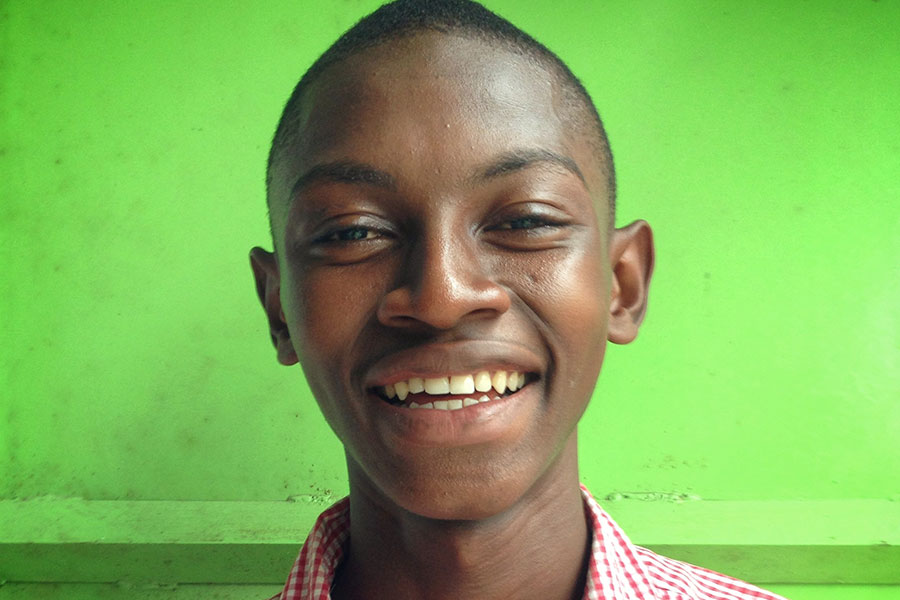
Seventeen-year old Abraham M. Keita from Liberia is the 2015 winner of the International Children’s Peace Prize. He was presented with the prestigious award for demanding justice for children who are victims of physical or sexual violence, and for successfully campaigning for the Liberian parliament to adopt the Children’s Law. The award was given to him at a ceremony at The Hague in the Netherlands on 9 October.

In the presence of the world press Keita received the Prize from Nobel Laureate Leymah Gbowee who in 2011 was the first Liberian to receive the Nobel Peace Prize for her nonviolent struggle for the safety of women and for women’s rights to full participation in Liberia’s peace-building process. Gbowee said: “It is a great honour to award the Prize. It is very special and inspiring that Keita, already at such a young age, demands that perpetrators and would be perpetrators be held accountable. I recognise in him a true changemaker: fighting to end the extreme violence against children!

In September, Keita was nominated by Nobel Peace Laureate Desmond Tutu, patron of KidsRights and the International Children’s Peace Prize, together with Aziza Rahim Zada from Afghanistan and Jeanesha Bou from Puerto Rico. Keita’s tireless work as a campaigner, bringing attention to crimes against children and campaigning until the perpetrators are locked away, stood out and convinced the jury. Keita also played a leading role in the Liberian Children’s Parliament where he successfully lobbied the Liberian Parliament to adopt the Children’s Law to protect children’s rights.

The KidsRights Youngsters, the group of winners of the International Children’s Peace Prize, which includes Nobel Peace Laureate Malala Yousafzai, congratulated Keita wholeheartedly: “We are happy to welcome Abraham to the Youngsters. Together we will continue the fight to improve children’s rights and advocate for an immediate end to violence against children.”

Upon receiving the Prize today, Keita confirmed that their work will continue: “Together with my peers I have successfully lobbied for children’s rights laws, but they now need to be put into practice. Children worldwide are still exposed to violence and injustice while thugs often go unpunished. I want people across the globe to acknowledge that this is unacceptable and that every world citizen, whether young or old, can be an agent of change.”

The International Children’s Peace Prize is an initiative of KidsRights, the foundation committed to defending children’s rights worldwide. The award ceremony is held annually in The Hague, the Netherlands, the international city of peace and justice. The prize is awarded annually to a child who fights courageously for children’s rights. Every year, the message of the new young winner has enormous impact and demonstrates to millions of people globally that change is possible.

Surely it’s Too Late for Outrage When a Child is Dead?


  • The director of a South African organization that aims to prevent child abuse and promote children’s rights suggests that violence in society begins in the home.
  • If you don’t spank our kids at home, are you prepared to voice your concern when you see it happening to other kids in public?
  • Christina Nomdo asks why certain sectors of society, such as cultural or religious groups, seem to think that assault against children is “love” and “discipline”.

Sensationalist news reports on children killed by their parents was the reason someone called to wake me up at 6am one morning this week. Well, I have news for these reporters – I go to sleep with the knowledge that it has happened before and will happen again in South Africa. I try to put my energies into finding a strategic solution to this problem. I focus on prevention and the roles of all duty bearers, including myself, who should be ensuring that our children are safe – especially in their own homes.

Why are we expressing outrage so late, when children have died? Should we not be expressing outrage when members of our society use physical force, at any time and in any place, to control the behaviour of their children? I bet there will be many who immediately fight hard for the right to assault their children in their own homes. I’m told it’s called discipline and love and has religious or cultural justifications. Strangely I thought commonly held religious values were peace, care and respect. I read the Bill of Rights a few times and nowhere did I find the right to abuse children. So if we don’t have religious grounds and we don’t have a rights argument, what do we have? An intransigent society, unwilling to change, even when logic is applied.

It is no wonder we have a violence pandemic in South Africa. We are complicit! Professor Shanaaz Mathews, head of the Children’s Institute, helps us get to the bottom of this. In her PHD research she asked men in maximum security prisons how they came to kill their partners. She found that an underlying factor was how they were disciplined as children. Most men had emotionally unavailable parents and were not disciplined or they were beaten severely by their parents under the guise of discipline. So because we can’t find the right balance of discipline, we end up with murdered women and men in prison and the children left behind.

South Africa is revising the Children’s Act now but it is silent about a ban on corporal and humiliating punishment of children in the home. It is a political hot potato. It’s been jumping in and out of different versions and drafts of the Children’s Act since 2002. Those in power are not committed to take a clear stance. I’m not talking about government… I’m talking about us – South African society. Politicians and government officials fear condemnation from the voting public if they become ‘too progressive’ on the matter. But surely we need to progress from killing our children?

So now we’ll become defensive as parents. We will say, ‘I’m not a killer I only smack or spank them lightly.’ ‘In fact my children want me to spank them and I also encourage their teachers to do so.’ Let’s reflect on a scenario one step removed from our own parenting… What is our response when in a toy shop, for instance, we notice an adult beating a child to control their behaviour? What do we do? What do we think? Are we change agents or are we accepting of the behaviour, silently condoning? I am not going to arrange the words in order of severity – beating, spanking, smacking, killing, abusing, assaulting – to assuage our conscience, the bottom line is they are all rooted in physical violence by one person on another.

I am also a product of this society so I understand we have few models for using positive discipline with our children and we sometimes allow our worst selves to prevail when we become frustrated. I’ve been there. 

I want something different for our children. Children need guidance, discipline and boundaries to develop optimally. I want them to have parents who discipline by modeling respect and care. Who always think their children are as special as when they were born. Parents who guide inappropriate behaviour by engaging calmly with their child explaining the boundaries. RAPCAN’s understanding of positive discipline includes adults as positive role models for non violent conflict resolution; problem-solving rather than punitive and humiliating approaches to correct behaviour; and children’s involvement in decision-making and the setting of ground rules.

It is a challenge right now because some parents have so much trauma to recover from that emanated from their own childhood. Or they are so disenfranchised, economically marginalised and disempowered right now that the fight for daily survival is anathema to the dignity rights they should be enjoying. This is the story of South African adults today. Let us not write the sequels about trauma in generations to come.  Most of us are already trying to be more positive in our child rearing. Let’s think, feel and act together to create better lives for today’s children… and their children

Christina Nomdo is the Executive Director of Resources Aimed at the Prevention of Child Abuse and Neglect (RAPCAN) in South Africa. Christina is a PHD candidate in the Public Law Department of the University of Cape Town with a keen interest in the concepts of children’s rights and adolescent sexuality.

What do you think of Christina’s standpoint on spanking kids? Let us know in the comments below.

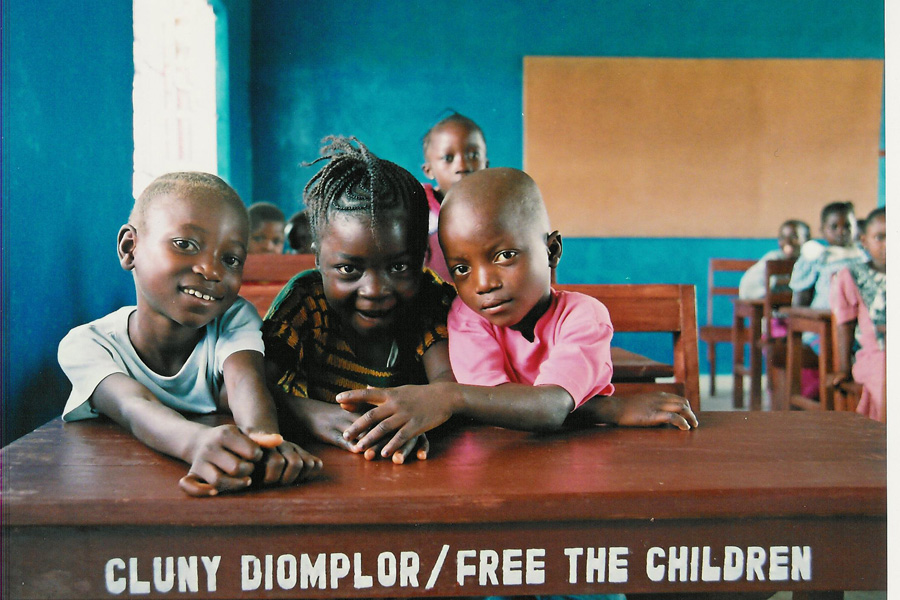
Free The Children Celebrates 20 Years Of Children’s Rights

As Free The Children celebrates 20 years of empowering youth from every corner of the world to inspire change in their communities and beyond, we’d like to take a moment to extend a huge thank you to all of our supporters who have shown tremendous kindness, friendship and generosity over the years.

Without you, we’re not sure where we would be today. Certainly, we wouldn’t have offices across the world or a holistic and sustainable international development model that helps to change lives every single day. Nor would we have made it to 50 We Days across 14 major cities, spreading the message to young people that they have the power to create positive change in the world. Simply put, we wouldn’t be where we are today without you.

Thank you for being a part of our story so far, and we look forward to having you with us as we embark on this next exciting part of the journey. It is an honour to have your support and we can’t wait to see what the next 20 years will bring.

Find out more here Thank You Free The Children & Happy 20 Years!!

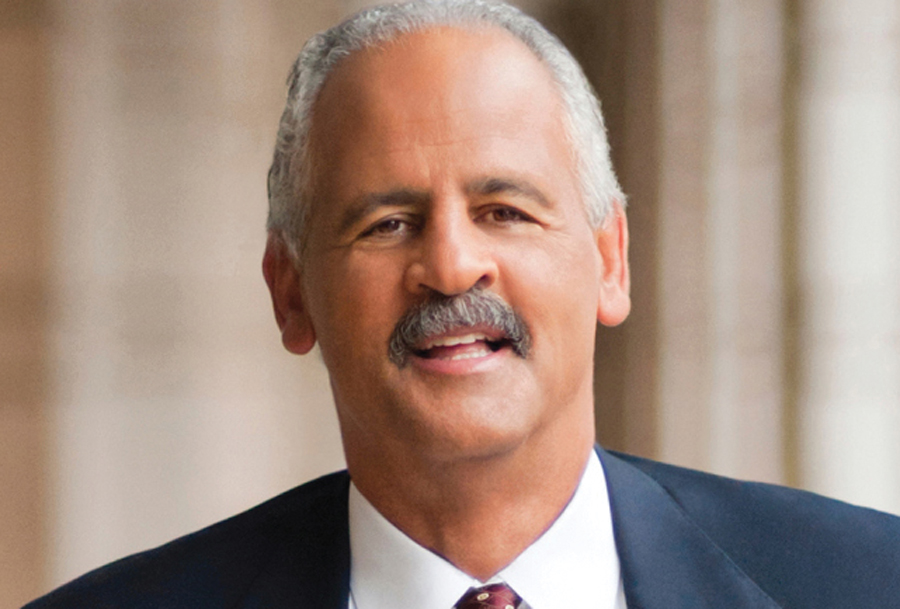
Stedman Graham, CEO, S. Graham & Associates

RL-100-badge40

“You are not your circumstances. You are your possibilities.”

Vision: To help people understand their potential, develop an identity, and recognize the value of knowledge and how it applies to their lives each day. Action: Graham teaches identity development and leadership to people all over the world – from youth to executives. He has written 11 books to share these messages. Graham wants to transform people from followers to leaders. www.StedmanGraham.com