Bereavement is defined as a period of intense grief, especially following the death of a loved one. Unfortunately, society has no respect for those grieving. Society views grief as something to get over, like the flu.
After a few days, and the griever is expected to function as if life hadn’t shattered into a million little pieces.
Corporate America is no better. Statistics show that 89% of employers offer three days of paid bereavement leave. Corporate America continues to set unrealistic expectations regarding how quickly employees must return to an operational level as before their loss.
You may wonder why I became involved in advocating to change society’s perception of how long a griever is permitted to grieve.
In January 2015, I was employed at one of the largest hospital systems in my state of Delaware. My employment as a registered nurse stretched over 36 years. I was never late. I never missed a shift. I foolishly believed I was a valued employee. I never imagined grieving my son might be a cause for termination. What I learned from this experience set me on a new trajectory of advocacy work.
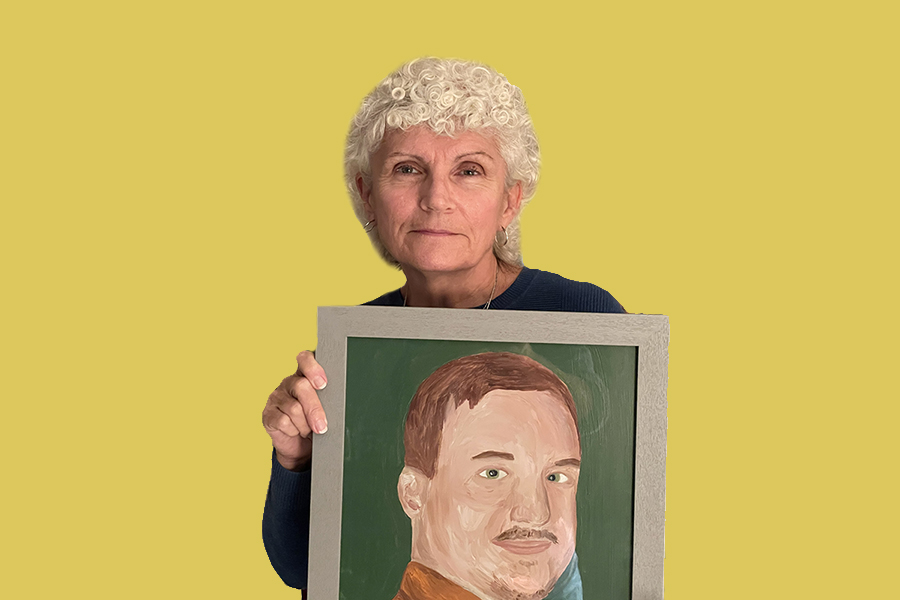
January 3rd, 2015, was the day my world spun off its axis. Matt, my youngest son, died suddenly and unexpectedly.
Ironically, I was working a 12-hour shift when the news hit me with a force I still cannot put into words. His death shattered me to my core.
I could no longer function. My brain, along with my heart, was irreparably broken. The three-day bereavement leave allowed by the hospital was spent sitting in a shocked state. Numb and barely surviving. Three days flew by as I tried to pull myself together enough to plan his funeral.
Three days of pure hell pretending to be aware of what I was expected to do when all I wanted to do was disappear.
Although I had plenty of Family and Medical Leave (FMLA), my employer never informed me that it doesn’t cover bereavement, nor does it protect your job. There is no legislation in place to protect your livelihood after losing a child, parent, or spouse.
Imagine being a newborn intensive care unit nurse, responsible for the sickest newborns and expecting to return to that role when you can barely put one foot in front of the other. Imagine staring at your microwave, not remembering how to get it to work. Yet, my employer was demanding my return to my role as if I could function as I did before my son’s death.
What society fails to recognize is the death of a child results in a tsunami of unresolved grief. Society is reluctant to talk about grief.
Bereavement continues to be that elephant in the room, especially in the corporate world. Many parents suffer from cardiac issues, physical disabilities, alcoholism, depression, and death after child loss, but these issues are not addressed.
Gloria Vanderbilt. once said: “I’ve heard it said that the greatest loss a human being can experience is the loss of a child. This is true. It doesn’t just change you, it demolishes you.”
Needless to say, I was terminated from my job weeks after my son’s death. I was still out on FMLA when I was terminated.
I received no letter of termination nor a phone call from my manager. To my shock, this was legal, and the hospital was in their rights. As mentioned, FMLA doesn’t protect bereaved employees.
Years passed, and the coronavirus hit. Our country is now full of grieving people. Unfortunately, not much has changed in how bereaved employees are treated. I continued to get calls from grieving parents, and sadly our stories continue to mimic each other’s. First came the loss of a child, then came job loss.
Imagine my surprise when I was contacted by a group known as Evermore.
They asked if I would use my personal experience to assist in their advocacy initiative. Joyal Mulheron founded this organization after the death of her infant daughter, and is no stranger to this life-shattering grief.
She, too, was asked to leave a job of advising high-ranking politicians when she struggled to make sense of her life.
She watched her surviving children struggle, too, as her family turned upside down.
Joyal witnessed the broken system firsthand as she tried to navigate her daughter’s illness, subsequent death, and dealing with the insurance industry. “Every facet of life, every interaction you have is so hurtful,” she says.
They say that when God closes one door, He opens another. Both Joyal and I have experienced exactly that. Coronavirus restrictions and a cancer diagnosis put a stop to my advocacy work. The loss of Eleanora changed the path of Joyal’s career.
Two mothers, once strangers, were now bonded by the loss of their child, both fighting to change how the world saw their grief.
Evermore, founded in 2014 by Joyal, is a nonprofit dedicated to making the world a more livable place for bereaved families. They are committed to making America a place where all families have access to care, programs, policies, and resources that provide support after life-altering loss.
In March, Evermore advanced a bereavement care provision in the U.S. House of Representatives, and today this provision is being considered in the U.S. Senate.
On November 19th, Evermore held a public summit that addressed grief, and the changes needed to become legislation. Many experienced grief attended, including Cindy McCain and Casey Affleck. The summit reached hundreds of people, who have now joined a movement for change.
“As founder and director, I’m building a social movement to change the way America views, responds and respects bereavement care for families, providers, and our nation’s communities,” said Joyal, at the summit.
Bereavement is a public health epidemic that has a significant impact on our jobs and health — affecting both the physical and psychological aspects of our lives. Evermore is working toward implementing a national standard regarding the treatment of the bereaved and working toward establishing the first-ever White House Office of Bereavement Care.
In our country, we have many rights. Taking time to grieve is not one of them. Together we will start the change.
To learn how you can become involved, go to www.Live-Evermore.org. To sign our petition https://live-evermore.org/bereavement-care-petition/.