
We Need to Tell 2,000 People Before the World Finds Out


Tragically losing our CEO led us to build something that will outlast all of us. 

It was a sunny Saturday morning. My wife, Julie, and I had just finished breakfast at home. The windows were open, letting in that soft hum of summer — birds, a breeze, kids’ laughter as families rode by on their bikes. Then the phone rang.

Julie answered. I couldn’t hear the other end, just her voice — and the way it changed. “Oh my God. What happened?” Her tone told me everything before the words did. I felt it in my gut before she even said his name — Kevin. He died in his sleep on his boat at just 50 years old. I was in shock, disbelief, like the ground had disappeared from under me. We didn’t even get a moment to sit with it.

Our first thought was, “What can we do to help?” But almost instantly it became clear — we had to step in fast. Kevin was our CEO — a beloved 22-year veteran of the company — and now I had to figure out how to tell 2,000 people that the leader they knew, trusted, and followed was gone.

This wasn’t in any playbook. I’ve lost people — my sister, my brother, my parents — but I had never been the bearer of news like this. Never the one to hold the weight of so much collective grief. We called Sarah, Kevin’s closest executive confidant. His wife had just spoken with her. No one else knew, but that window wouldn’t last long. By Monday morning, the world would know, and we had less than 48 hours to get ready.

We prepared communications for the entire company, the advisory board, the public. It wasn’t just about messaging — it was about mourning. For some, Kevin was a mentor, a friend, a brother. For others, this was more about stability: “What happens now? Is my job safe? Is the company OK?” I had to somehow hold both the pain and the plan.

And the truth? I was grieving more than most of them. Kevin and I were close. After naming him my successor, I had stepped away from the day-to-day operations of the company and served as his mentor behind the scenes for over a decade. He was living the dream — guiding the company, spending weekends on his boat, fully in stride — and now he was gone.

I didn’t have experience leading through grief like this. I cracked time and time again, but I let people see it. I let them see me sad, and when I could, I offered comfort. I didn’t have all the answers, but I could offer my presence.

I relied heavily on others — internally and externally. Julie, whose background in crisis PR became a lifeline. Senior advisors, team leaders — I hadn’t been a visible face to many in the company for years, but there I was, showing up fragile and unsure, and even in that fragility, I had to become a lighthouse.

What kept me grounded was this: 2,000 people needed me to show them that we would find a way forward — and we did. That weekend and the months that followed taught me that leadership doesn’t mean knowing everything. It means being real. It means holding space for the mess, the hurt, the fear, and still saying, “There’s a way through.”

I learned to lean on others more than I ever had, and that changed everything. We transformed what had been a passive advisory board into an active leadership body. Together, we identified the top three priorities for the year — and we’ve done it every year since. That simple act aligned our organization like never before.

But perhaps the most powerful shift was what happened around succession. I used to think a succession plan was about picking the next CEO, but it’s so much bigger. Real succession is about building a structure that can survive anything — people coming and going, markets shifting, tragedies you never imagined.

Years earlier, we’d restructured into a franchise model, giving office leaders real equity and entrepreneurial control, but after Kevin’s death, we took it even further. We became an employee-owned public benefit corporation. From the CEO to the newest team member, everyone now has a stake. Everyone is building wealth from the value they create.

Here’s the hardest truth: This wouldn’t have happened without Kevin’s passing. If that tragedy hadn’t occurred, we likely would’ve followed the standard script — sold to private equity, disrupted the culture, maybe even lost what made us special.

Instead, we built something that will outlast all of us. My signature move — if I have one — is this: I love supporting entrepreneurs who are making a difference in their communities. Commercial real estate isn’t just about deals. It’s about the fabric of a community, a thriving main street, a place where people can live, work, and build something lasting.

What makes me proud isn’t that I founded this company. It’s that I’m leaving behind a structure where it can thrive without me, where leaders across the organization — not just one at the top — have real power and ownership. That’s a legacy I believe in.

To any CEO reading this, your moment will come, maybe more than once — a moment that upends your plans and cracks you wide open. When it does, let it. Let it change you. Let it show you what really matters. Let it invite you to build something not centered around you, but around us. It won’t be easy, but it will be worth it.



“I had to somehow hold both the pain and the plan.”

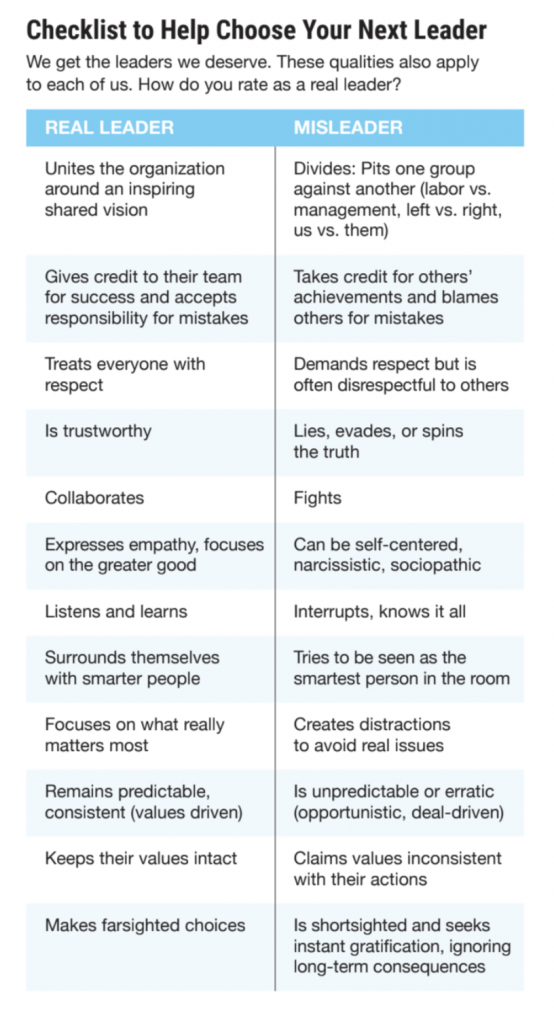
How to Recognize a Real Leader Versus a Misleader


By Mark Van Ness

The message below was written several years ago but still rings true today with even more relevance given that global leadership affects so many lives, so we thought it prudent to rerun.

Do you ever wonder why we choose the leaders that we do?


Successful people win leadership positions based on their track record of high performance in comparable roles. What the candidate claims they will do is meaningless compared to what the candidate has actually done in the past. Company leadership checks the candidate’s references and public records to make sure there is no trail of litigation, burned bridges, or bad credit history.

Imagine what a disaster it would be if business leaders were chosen the same way voters do. We often elect government representatives with little or no experience governing. Instead of choosing the most qualified candidate, we often vote for the best salespeople, the best campaigners, who analyze opinion polls and tell us what we want to hear. Then we allow those unqualified people to appoint even less-qualified people (often donors) to key positions throughout our government. Would anyone invest in a public company that operated that way? Would such a company ever survive long enough to go public?

We have the power to be more thoughtful about choosing our leaders. There is too much at stake to make emotional decisions about who we “like” the most. In the last 10 years, Real Leaders has interviewed hundreds of successful leaders from all over the world. We often ask what they see as the difference between a real leader and a misleader. Their answers may be helpful for all of us to consider whenever we are hiring or voting for anyone in a leadership position. It’s up to us to choose real leaders in all sectors and to send the misleaders packing. Imagine the impact farsighted leadership could have.

The Power of Collaborating with Competitors

Creating competitive bidding is far more effective than the commonly used wholesale buyer approach.


By Mark Van Ness


Can you start a company with no debt, no private equity investors, and no initial public offering strategy and grow it to be one of the top 10 companies in your industry — all with a strategy of collaborating with all your competitors?

At the age of 30, that’s what I set out to do. Today, SVN is the trusted advisor on over $20 billion a year in commercial real estate transactions — that’s about a deal every hour, 24/7. Perhaps our story will inspire you to see your competitors in a completely new light.

Imagine what it would be like to be trusted by all your competitors. Now, picture the power of mobilizing every one of your competitors to increase the value that you bring to your clients. This strategy enabled SVN to quickly grow into a top 10 commercial real estate services firm, first locally, then regionally and nationally.  

I had previously led a turnaround for a typical investment real estate company that looked at its business as a zero-sum game. Like everyone else in the industry, the company did its best to keep the competition from selling its listings in an attempt to retain the entire commission. I saw countless listings expire or sell for less than they were worth with this all-or-nothing policy, and I realized that there was a better way than this very limited, dual-agency approach. 

SVN was founded on the client-first principle of sharing our fee with the procuring broker with the best offer. Yes, it means we sometimes make less so that our clients can make more. Our clients appreciate that, and their loyalty and referrals have placed SVN among the Real Leaders Top Impact Companies and Inc. 5000 fastest-growing companies several times. 


This concept of making more by making less per transaction can work in other industries as well.

Investment bankers, for example, operate under the same limited competition model with high fees and underwhelming results. By increasing the demand and the number of retail bidders, anyone can increase the sales price of their assets. An enterprising young entrepreneur could disrupt that industry today. This is the basic law of supply-and-demand at work. The more qualified buyers you have, the higher the competition for your asset, so the higher the price and terms you will achieve.  

A few years ago, we put this fundamental strategy to the test. We commissioned an academic study of nearly 15,000 commercial real estate sales over a 10-year period. When the buyer was represented by a different brokerage company than the seller, they generated a 9.6% higher price, on average, than those kept in-house with the same brokerage company representing the buyer and seller. 

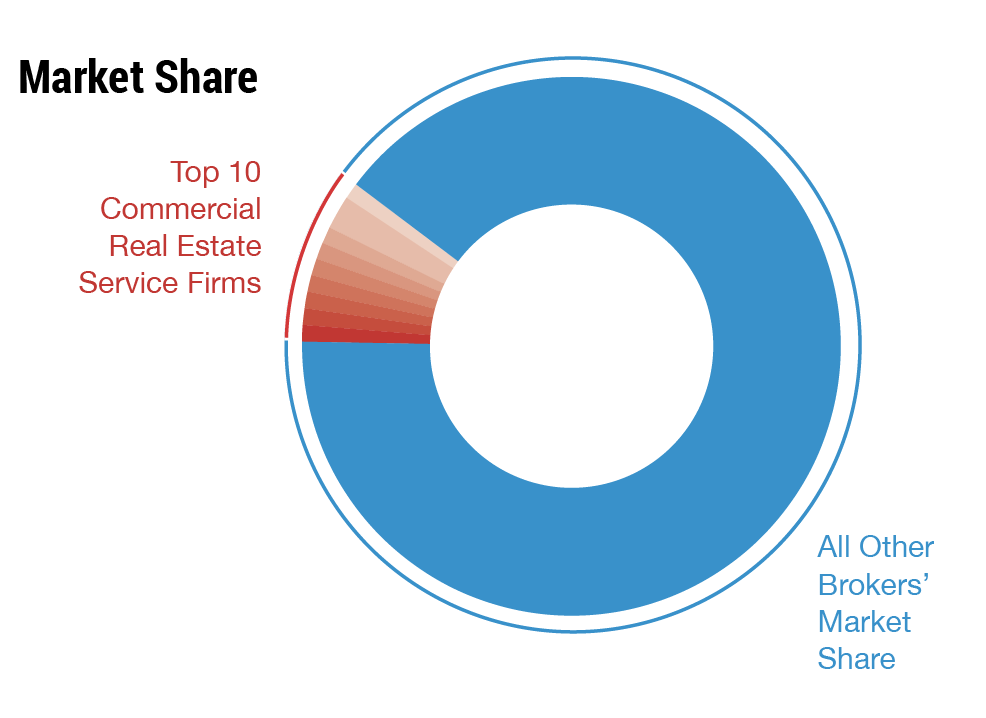
It makes sense that no one company can have trusted relationships with the hundreds of thousands of ultra-high-net-worth investors plus millions of high-net-worth investors. And no one brokerage company represents more than a tiny fraction of the market. In fact, the top 10 brokerage companies combined only represented 10% of the transactions last year. That’s why the SVN strategy of collaborating with our competitors to create competitive bidding for our clients has been far more effective than the wholesale buyer approach that the majority of the industry practices.

This strategy would be easy to duplicate, and we only expected a two-year edge before competitors copied us. But 37 years later, they’re still stuck operating in the shortsighted, outdated model from the last century. Meanwhile, SVN has risen from a startup to the youngest player in the top 10 companies in its field. To us, this proves that if you actually deliver more value to your clients and customers, they will beat a path to your door. And if you can find a way to collaborate with your competitors for the benefit of your clients, magic happens. 


SVN’s Core Covenants

A company’s core values provide clarity on what is truly important for organizational success, personal and professional conduct, and what to expect from each other. SVN’s Core Covenants personify its values and culture and differentiate it from the competition.

As members of the SVN Shared Value Network, each employee commits to do the following:

  •  Create amazing value with their clients, colleagues, and community. 
  •  Cooperate proactively and place their clients’ best interests above their own. 
  •  Include, respect, and support all members of the commercial real estate industry. 
  •  Honor their commitments. 
  •  Personify and uphold the SVN brand. 
  •  Resolve conflicts quickly, positively, and effectively.
  •  Take personal responsibility for achieving their own potential. 
  •  Excel in their market area and specialty. 
  •  Focus on the positive and the possible. 
  •  Nurture their career while valuing 
  • the importance of family, health, 
  • and community.

For more on SVN’s Core Covenants, visit https://bit.ly/3H4ypc4.

Download SVN’s 9.6% Report on the pricing advantage of cooperation at https://bit.ly/4aUB0TJ.

3 Decisions That Will Define Your Life

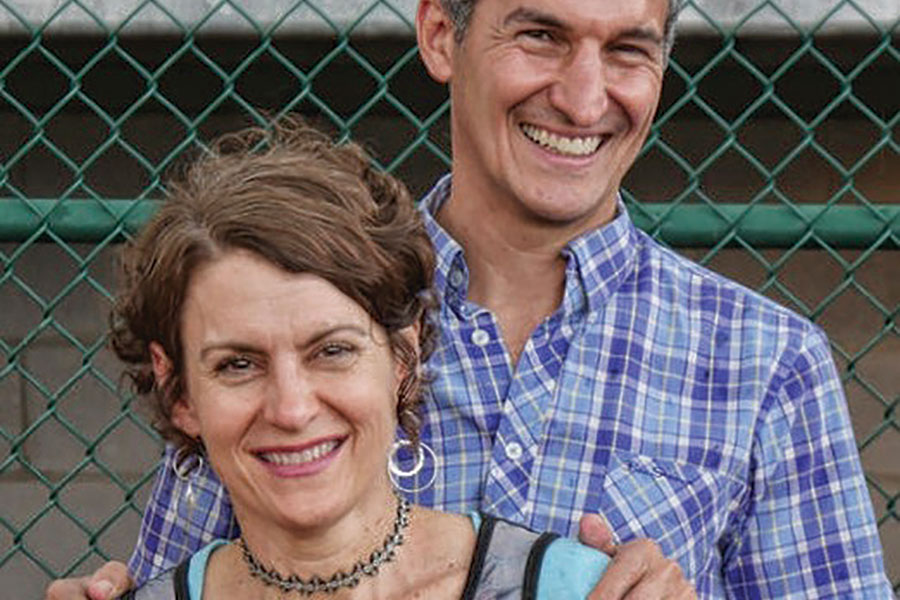
It’s been 28 years since Julie Farkas and Seth Goldman made one of the most important decisions of their lives; to marry each other.

In time, they chose careers they loved that were fulfilling: Julie creating and running programs focused on economic and racial equity and Seth as a social entrepreneur, both agreeing to take the risk of entrepreneurship with the co-founding of Honest Tea a few years later. The mission was to create great-tasting, healthy, organic beverages. In 2011, Honest Tea was acquired by The Coca-Cola Company, becoming the first organic and Fair Trade brand in the world’s largest beverage distribution system. Today, Honest Tea is the nation’s top selling ready-to-drink organic bottled tea and carried in more than 140,000 outlets in the United States. Over the years Julie and Seth have identified the three decisions we all make that have the greatest influence on our success and happiness. Here is some of the timeless wisdom they recently shared with me.

Who you choose as a life partner

It’s critical to find someone who shares your values, who you respect intellectually and professionally. That person should be a partner in every way. Entrepreneurs usually have a certain tolerance for risk, but if their partner doesn’t share that same tolerance, then you may end up with an unsuccessful home life. There are many examples of entrepreneurs who have successful companies, yet unsuccessful family lives. We’re fortunate to be aligned around the goals and vision for our careers, and most importantly, a willingness to venture into the unknown.  Having a male and female opinion on the branding of Honest Tea has been invaluable – after all, our product is sold to both. It’s interesting how many consumer-driven companies are led by male teams, and yet their customer base is at least 50% women.

What work you do

There is one thing we always warn people about: Don’t become good at something you don’t like doing. At business school, recruiters may present you with an amazing career opportunity – a fantastic job in a big city. They will try and convince you that this is crucial for your next big opportunity in life. The danger of taking this job, is that you may actually do well at it; at the expense of something you may really be passionate about.

Julie’s father was the son of immigrants who wanted him to become an engineer, because that was the practical thing for an immigrant child to do. He became a television producer instead, and he didn’t want his children to do things just because they were practical either. He wanted his children to follow their passions. And that’s the advice we gave our sons. It’s advice we’d give to any 18-year-old: Develop a passion for things and then follow them and make a life and career from it. Then you’ll enjoy what you do every day.

If you’ve earned the capital to invest, remember these same principles. There are many investment advisors that will place your money with companies that are not aligned with your values. Instead, make investments that are sound AND create social good in the world, and avoid investing in practices and impact that go against your values. We make some of our impact investments through our Donor Advised Fund at ImpactAssets, and whether you’re passionate about finding a cure for Parkinson’s disease or wanting to promote vegetarian alternatives to meat, options now exist to align your investments with your personal values.

Where you choose to live

We chose a location with a strong sense of community. There’s a park at the back of our house which is a gathering place and our children were lucky enough to walk to school. Everyone walked, and so we got to know all our neighbors too. We made a commitment to invest back into our community by supporting the local schools and leading efforts to plant more than 200 trees in our neighborhood. One of the lessons we’ve learned with work is to make sure you have a short commute. So much of your life can be spent in traffic. It’s unproductive for your health, your family and your social life. It helps us spend more time with our family, which is far more enjoyable than traffic.

www.HonestTea.com / www.ImpactAssets.com

How Deval Patrick Shaped A Life Worth Living

Deval Patrick has been successful in the world of business, government and non-profits. In a recent conversation, I was curious to learn what leadership lesson he had taken away from each.

Emerging from a childhood in a Chicago tenement to graduating from Harvard Law School, and serving as Governor of Massachusetts, his journey has been a fascinating one. He is now a Managing Director at Bain Capital Double Impact, a social impact private equity fund he conceived and founded. Here, he shares refreshing words of wisdom, his life’s journey and some lessons along the way:


I keep meeting people my age who tell me they’ve reached a stage in their lives where they’re searching for meaning – something separate from their business or professional lives. I feel fortunate to have figured out relatively early how to inject this deeper meaning into my career. We all spend so much time at work that there is hardly time to separate our work lives from the rest of our lives, and little reason to separate our work values from our personal values in any event. Finding that deeper meaning won’t happen overnight. For me, it required moving out of my comfort zone.

When I was 21 years old and freshly graduated from college, I wasn’t sure what I wanted to do with my life. I thought about going to business school, joining the bank I’d worked at during summer break, going to law school, or even the seminary. Winning a Rockefeller Traveling Fellowship eventually made that decision for me. The scholarship required that I live for a year in a non-Western culture and find a project to work on. They offered me just enough money to get there and back. I had never traveled outside the United States before and wanted to go to Africa, despite not knowing a soul. After much correspondence, I finally got a response from a guy in Khartoum in Sudan, who said, “I don’t know what you’ll do, but we’ll figure it out.” So, I bought a backpack and set off for Khartoum. When I arrived, my contact guy had left for Long Beach, California for two years and had notified no-one of my arrival!

Eventually, I persuaded the folks in the office (who wanted nothing to do with me) that I could do something if they just gave me a chance. To get rid of me, they sent me to do a research project in Darfur – 700 miles away, across a desert. I rode on the back of a cargo truck for five days to a village with no mail, phones, airport or trains. I stayed for seven months and figured it out – learned the language, how to do the job, how to make friends in a foreign language, and how local customs worked.

When you find yourself in a strange place, without your familiar support systems, you start focusing on what’s essential in life. You think about what’s meaningful and what really matters, not only short-term issues but what lasts. These revelations don’t come to you in a flash, it marinates over time, and as I look back at the zig-zag path of my career, one of the reasons I’ve been willing to try new things outside my comfort zone is because this comfort zone is pretty broad. Like my experience in Darfur, I knew I’d figure things out. What I initially mistook for a problem became a blessing.

The qualities of a leader, regardless whether the setting is political or business or law, are basically the same: Intellectual honesty, rigor, curiosity and humility. We need to stay curious and open to other people’s ideas. I’ve been fortunate to surround myself with people who are smarter than me. They raise my game and have interesting ideas. It doesn’t matter whether these people are my superiors or my subordinates.  I just want to be around people who will challenge me to be better.

From my experience, it’s middle management that makes things happen. You can issue as many edicts as you want, but if you don’t win middle management and they don’t understand what you’re trying to do and that you respect their role in making it happen, then you can fire off all the directives you want, but nothing will move. You need to be open to hearing, “We tried this approach before you got here, and here’s why it didn’t work. Here’s a better way to accomplish the same thing. Here’s what you should be focused on instead.” Humility, curiosity and being open to ideas can sometimes get the job done faster and better.

As a leader, you need the courage sometimes to fail. An extraordinary result of a superior education is all the options it brings. Yet, one of the strange things I’ve noticed is that graduates from these schools frequently seize up. They’re afraid that if they exercise one of their many options, they’ll lose out on others. Activating one of those options may open up others you didn’t realize you had. One of the fascinating things about the innovation economy in which we currently find ourselves is that it’s required us to raise our tolerance for failure. We’re going to have to learn to tolerate failure in public policy too if we want to find new ways of doing things as a nation.

When I was in 6th grade my teacher, Mrs. Quaintance, had 35 kids in her class who were just like me – all from challenged backgrounds – yet she managed to do much more than keep order in our class. She took us to our first opera. I didn’t have a clue what they were singing about (and still don’t today), but I loved it, and still do. She took us to see The Sound of Music to expose us to modern European history and taught us to count and greet in German. She was the first person to give me a sense of what a global citizen might be.

Mrs. Quaintance’s leadership was subtle and responsive to the gaps in our lives (that we didn’t even know we had) and it made me hungry for more. That’s the kind of generous leadership that lifts you up and broadens your horizons. It begins with an open mind and ends with a richer, more rewarding life.  I hope to become that kind of leader.


How to Lead a Divided America

The challenges facing the current U.S. president and congress is unlike anything in living memory. In case you haven’t noticed, the citizens of America are angry, and our patience with the dysfunction and corruption in Washington DC has run out.

This election campaign in 2016 may have been a warning shot over your bow, your last chance to take action before a more violent revolution takes hold in the most heavily armed nation on the planet. We ignore these signs at our peril.

Fast-forward to 2019 and with elections looming in 2020, it’s time for our elected leaders to stop misleading us and become real leaders, who address the real problems facing real Americans. How do leaders solve these problems when citizens disagree on so much? That is the biggest question!

Things to consider: Start by avoiding the temptation and tradition of playing to your base, which would further alienate half the country. Instead, bring the country together by identifying and acting on the issues that most Americans agree on.

Stop playing to your base and talk respectfully with each other, not at each other, and most importantly, listen for areas of agreement on which to build compromise. There are many areas that most Americans would gladly address, such as:

  • Taking the money out of politics and making us feel as if you actually represent us – not the lobbyists, special interests and rich donors.
  • Ending the dysfunction and doing your jobs (your job is to work together as Americans to do what is best for Americans, NOT to get re-elected or put yourself or your party over our country).
  • Revive the American Dream, where hard work assures us a good life. Invest our tax dollars in the real issues to improve life for all Americans, not in foreign wars.
  • Rebuild America’s infrastructure.

Show us that you can work together on important issues and prove that democracy can work for all of us, and that our institutions will have a future. If you fail then the great American experiment will be replaced by something else. We have no reason to believe that this “something else” will be as good as what you might have saved. And that’s something that we can all agree on. Let’s rise to the challenge, embrace our common interests and be real leaders.

The United Nations Means Business!

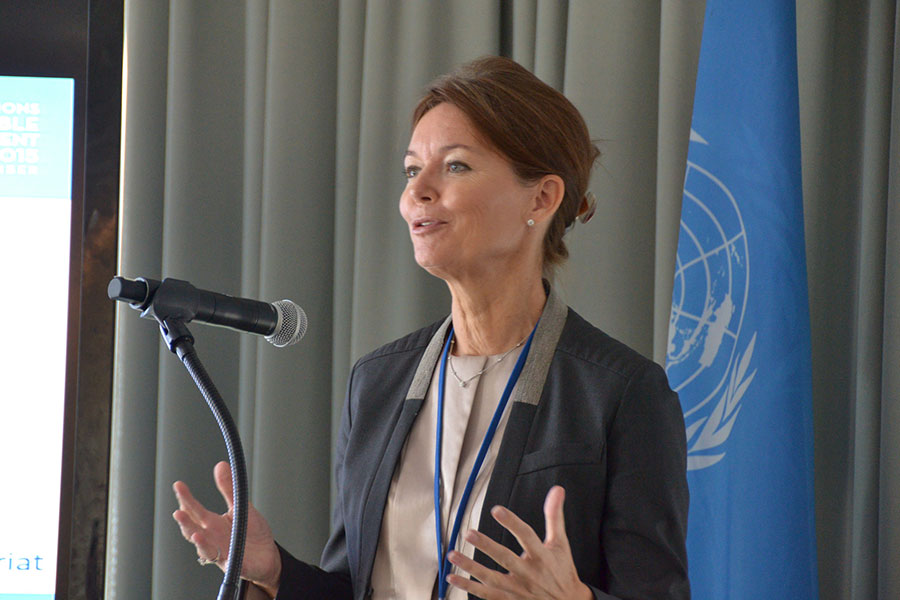
Why have over 13,000 businesses (including Real Leaders) already joined the U.N. Global Compact in support of the new 17 Sustainable Development Goals for 2030? The answer is not what you might expect. Real Leaders founder Mark Van Ness sat down with U.N. Global Compact Executive Director Lise Kingo in New York to discuss how and why so many business leaders have begun making the success of humanity their business. Here are some of the highlights.

When we think of someone whose mission is to save humanity, we typically think of some fictional superhero with muscles bulging beneath brightly colored outfits. But Lise Kingo is not your stereotypical superhero. She’s a real leader with a job that would intimidate most people; mobilize the business leaders of the world to take immediate action to save humanity from self-destruction. Can you imagine her job-interview: “Can you give me an example of how you saved a species from extinction in your previous position?” Most of us would respond: “Er, can I get back to you on that?” But Lise Kingo appears confident, capable and compassionate in the face of seemingly unrealistic expectations. And a 2030 deadline. She’s bringing 25 years of business experience to a sector previously dominated by NGO’s and government agencies.

Amazingly, Kingo won’t be looking for business to give more. Instead, she’s presenting business leaders with the biggest business opportunities of their lifetimes. Over seven billion people are desperate for solutions to the 17 Sustainable Development Goals, solutions that will benefit everyone on the planet to varying degrees. The companies that come up with the most effective solutions will have access to billions of new customers and the subsequent profits. Huge business opportunities exist in each of these goals, from clean water and sanitation to sustainable communities and education. And if the profit motivator isn’t enough, Kingo points out the added benefit of: “leaving our children a world we can be proud of.”

For the skeptics out there, Unilever and McKinsey and Company have produced a report to show how achieving the Global Goals can add to the global economy and what the consequences will be if we choose to ignore them. After all, survival of the species is not enough for many people; they need to see the economic impact. This short-sighted view overlooks the devastating impact of conflict, climate disasters, forced migration and the resulting political and business uncertainty that results from the failure to anticipate social needs. This world view is also rapidly becoming obsolete, as leaders recognize the value and critical importance of far-sighted leadership.

For some reason, it took us thousands of years to realize that our species could benefit from agreeing on a set of long-term objectives for the joint success of humanity. Imagine the chaos that would ensue in an organization without clear objectives. That has been our world.

In 2000, the first eight goals were launched as the Millennium Development Goals with a 15 year horizon. Click here to see the success of those goals. These goals were replaced in 2015 by the 17 Sustainable Development Goals (SDG’s or Global Goals).

The idea, originally put forward by former Secretary-General Kofi Anan in Davos in 2000, was to create an ongoing campaign between business and the U.N., in the hope that companies would begin to align their strategies and operations with universal principles: human rights, labor, the environment and anti-corruption. The idea to establish global goals for humanity, just as you would for any successful organization, began 15 years ago with the Millennium Development Goals, an eight-point blueprint that focused on meeting the needs of the world’s poorest.

Lise Kingo with Mark Zuckerberg of Facebook and German Chancellor Angela Merkel.

Lise Kingo with Mark Zuckerberg of Facebook and German Chancellor Angela Merkel.

“While the Millennium Development Goals (MDGs) were good from a developmental perspective, they were created in the basement of the U.N. (in 2000) and had no intention of involving business, or the rest of the world,” says Kingo.

“Our principles were developed after a wide consultation with companies, civil society and governments and I think we ended up with a fair reflection of what the people of the world want,” explains Kingo.

With a Master of Science in Responsibility & Business Practice and a Bachelor of Commmerce in Marketing Economics, Kingo is uniquely positioned to see the best of both worlds. “We needed to launch the concept of the SDGs like a company would launch a new product,” she says. To achieve this, Kingo hauled out an old marketing strategy from her studies, that stressed the need for raising awareness, interest, desire and action in a product.

This strategy has resulted in the “Making Global Goals Local Business” campaign, that now has over 80 networks across the globe, each of which follows guidelines in a playbook that demonstrates how to organise local events with local companies.

While the U.N. is not yet under threat from being overrun by the business world, a start has been made. Each year business delegates from around the world will be meeting in New York to discuss how best to advance societal goals through business.

“We’re encouraging all companies to use the new goals to set a new direction for their business. It’s a way of managing risk while utilising opportunities,” says Kingo.

She wants to include both big and small companies and thinks that small companies are presently too invisible.  “They are the ones that will be the medium or big companies of the future and we want to demonstrate that they too can make a major difference.”

Kingo believes leadership starts with small, individual steps and she is influenced by a good friend, Professor Gareth Jones from the London Business School, who wrote the book ‘Why Should Anyone Be Led By You?

“Jones’ definition of leadership is, ‘be yourself – more,’ and I really like that,” explains Kingo.  “It means that if you want to be a leader you must continue to be yourself, not turn into someone else’s expectation of success. If you have points of view or special capabilities make them even more visible for your employees and stakeholders – don’t be afraid to say what you mean and don’t be afraid to take action and start something dramatic.”

This approach may be okay for the already converted, but how do you motivate companies that are clueless about sustainability, or might not even care?

Kingo’s attitude is that new business opportunities and profit will always be an attraction to entrepreneurs, regardless of the cause. “If we explain to companies how the new goals can help them create innovation and grow new market opportunities, then we move away from the ‘please help the U.N.’ message – which you can forget about. There must be something in it for business – a business plan. We also need to look our children and grandchildren in the eye one day without feeling we have failed them,” she says.

Kingo is out to create an army of business “pioneers” who will spread success stories far and wide. As the business arm of the U.N. she feels a special responsibility to translate the feel-good words of a charter into actionable items that any business person can understand.

“We have no plan B, and if we don’t achieve these goals in 15 years’ time, the world will basically be a wreck,” warns Kingo. “Look at the current data on poverty, refugees, how many countries are at war, environmental liquidation, how the temperature of the planet is increasing and the looming water crisis – we need to act now.”

Your Next Big Business Opportunity: The United Nations

The United Nations Global Compact has made the private sector a central focus of its ongoing commitment to solving the world’s pressing problems. 

“With less than 4,000 days to meet the UN Sustainable Development Goals by the 2030 deadline, there is urgent need for greater ambition and action from the global business community, and this year’s UNGA is the perfect moment to engage,” said UN Global Compact CEO & Executive Director Lise Kingo.

“The UN Global Compact is excited to engage a diverse group of business leaders at our inaugural CEO Roundtable, annual UN Private Sector Forum and our Leaders Summit, as we will release new tools this year to enable greater private sector support for the SDGs.”

Kingo welcomed the partnership of their global membership, and the new private sector leaders who had already committed to their Ten Principles for responsible business.

In 2015, the 193 members of the United Nations agreed to 17 Global Goals for Sustainable Development — known as the Sustainable Development Goals (SDGs).  If these Global Goals are achieved, it would mean an end to extreme poverty, inequality and climate change by 2030 — and Governments are calling on private actors to be a part of the solution. The SDGs represent the most ambitious global development agenda in history and a tremendous opportunity to create a global movement for sustainable business.

This year’s UNGA will largely focus on progress to date on the SDGs, as well as the road forward to reaching these goals by 2030. The UN Global Compact, which plays a vital role in facilitating strategic partnership between the United Nations and the private sector in support of UN values and responsible business.

U.N. Global Compact CEO: Business Must Fight on After Climate Setback

At the U.N. General Assembly Week in New York last week, I asked Lise Kingo, CEO of the U.N. Global Compact, on her reaction to the climate crisis and if any repercussions had since come from the United States pulling out of the Paris Climate Accord back in June 2017. Should we despair and how should business react?

In 2017, the U.S withdrew from the Paris Climate Accord. Has all the hard work regarding climate action been undone? 

We are disappointed by the decision of the United States to leave the Paris Agreement, which is a historic global accord to combat climate change and protect our planet for future generations. But, despite this setback, there is also cause for optimism. The Paris Agreement has activated an unstoppable momentum for climate action, with an essential role spelled out for responsible business.

At the United Nations Global Compact, we have built a coalition of businesses taking action on climate and we are seeing private sector engagement on climate change grow exponentially across the board, with businesses everywhere committing to a suite of effective policies including pricing carbon and setting science-based targets.

Has business yet realized the value of the Sustainable Goals, especially climate change, and how addressing it might benefit their balance sheets?

Investors are increasingly demanding climate information, while consumers are demonstrating a willingness to pay a premium for environmentally-friendly products. There is a clear and growing market opportunity for climate compatible products, services and investments.

In the case of an absence by a Member State to take climate action, sub-national governments can continue to support the shift to a green, resilient economy. Individual states and cities can lead the charge and advance the goals of the Paris Agreement in the service of the health and economic prosperity of their constituents.

How will the U.N. Global Compact continue to raise awareness around climate issues, despite the world’s most powerful country deciding otherwise?

We believe that what was discussed in Paris in 2017 sends the right market signals to provide predictability, unlock capital, drive innovation and reward responsible companies. The UN Global Compact is committed to working with businesses large and small to mainstream today’s leadership standards on climate and we will continue to challenge companies to go further in transforming their business models and adopting policies that reduce their emissions and transition to a sustainable future.

Though setbacks may try to impede climate progress, we will push onwards in the spirit of solidarity and unity that first brought the world together in support of the Paris Agreement. The business community can and must rise to meet the climate change challenge. Together with Governments and civil society, the UN Global Compact stands ready to mobilize a global movement of responsible companies and stakeholders to create the world we want.

Nearly 4 Million Americans Are Being Held Hostage by Violent Forces

Please share their urgent plea. WTF… Where’s the FEMA?

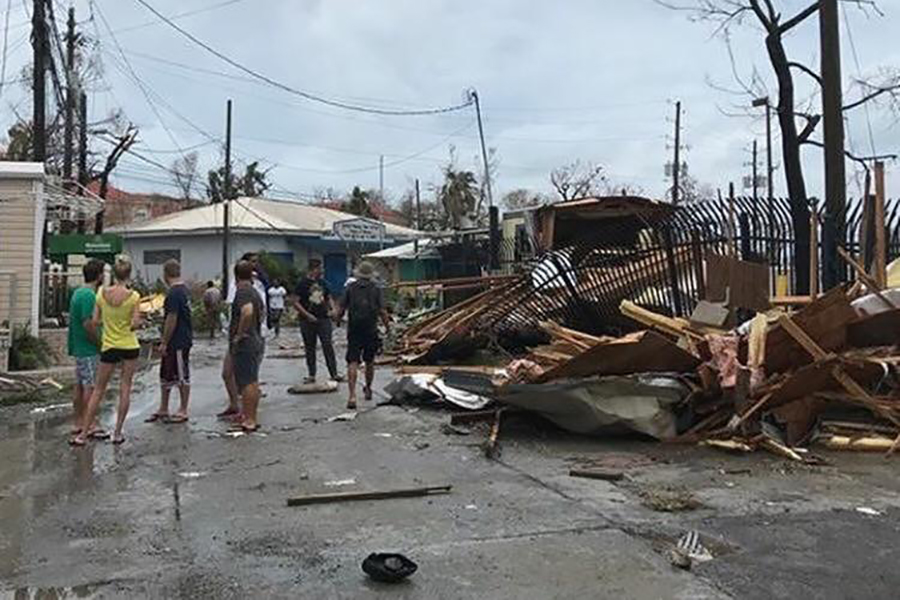
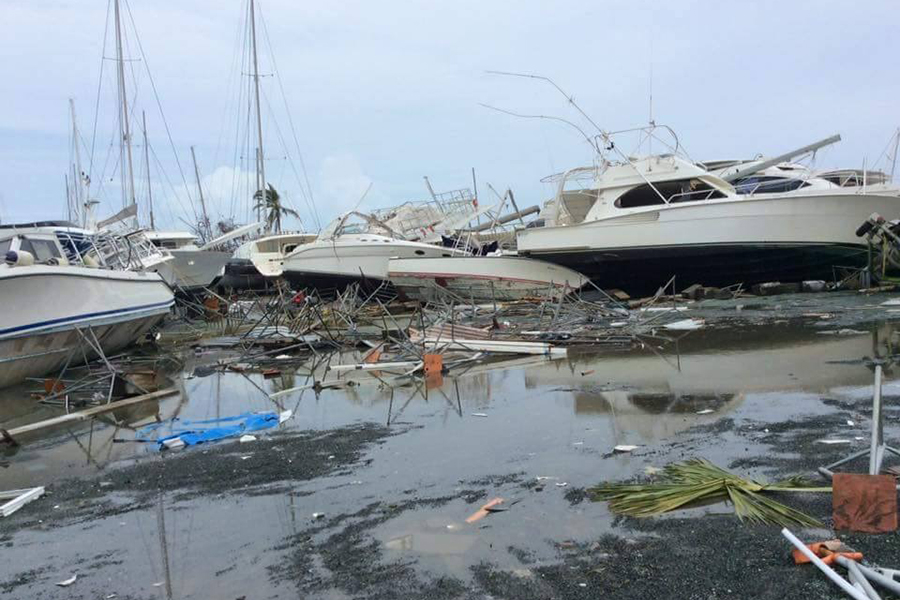
Did you know that nearly four million Americans are trapped in the path of a killer hurricane with no way to escape? Yes, media was on the scene reporting on Category 4 Hurricane Harvey’s destruction to Houston’s 2.3 million residents. Now they are in Miami reporting heavily on the potential impact on Miami-Dade’s 2.7 million residents by the approaching Category 5 Hurricane Irma. Both events are important news and both areas are getting a great deal of needed assistance.

But what is being under-reported is the devastation and isolation of the nearly 4 million Americans reeling from the attack by Irma and the Category 4 Hurricane Jose that is following her. Many reporters appear to be unaware that everyone born in the United States Virgin Islands and Puerto Rico are American citizens living in American territory. If millions of US citizens were victims anywhere else in the world, it would be our highest priority to save them. Do you wonder why we choose not to respond to these victims of natural disasters with the same powerful efficiency that we stage military operations?

The people of the United States Virgin Islands provide fun, rest and relaxation to 2.5 million vacationers every year. I am a resident of St. John who is on the mainland today and very worried about my friends and neighbors on one of the most beautiful places on the planet. We have no way to communicate with them or help them other than to let them know that help is coming and they are not forgotten.

If you would like to know and share more about what is happening on St. John there is a Facebook group called Stateside St. Johnians Alliance for Hurricane Irma.

If you want to help your fellow Americans recover from this devastation, please donate to one of these local 501c3 non-profit organizations:

And call your representatives and demand FEMA assistance for the island victims of these devastating hurricanes NOW.


0