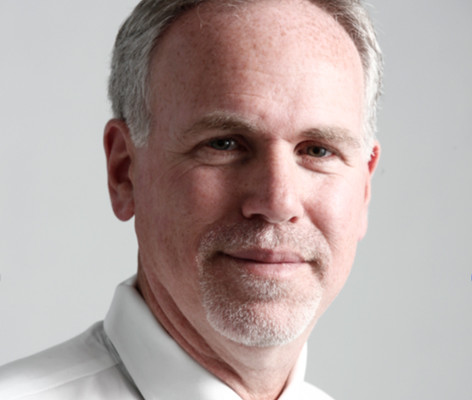
If You Want to Succeed Leave Your Ego at the Door

Dave DuPont is the CEO of TeamSnap. Founded in 2009 and headquartered in Boulder, Colorado, TeamSnap has taken the organization of youth, recreational and competitive sports into the 21st century.

Eleven million coaches, administrators, players and parents use TeamSnap’s web and smartphone apps to sign up, schedule, communicate and coordinate their team or club for the season ahead. In 2015, they were awarded Outside Magazine’s “Best Company to Work For” and named “Best Company Culture” by Entrepreneur Magazine. With their millions of users and a steep revenue-growth trajectory, they are leaders in their industry. Led by a humble and determined leader, CEO Dave DuPont (pictured above), their success has as much to do with solid leadership as it has with letting go of ego.

Tell me a little about your company: what’s unique or distinct about TeamSnap?

Basically, our people. We started out with a core group, that had a certain outlook and set of values. We’ve managed to retain this group as we’ve grown and reinforce the values as we recruit new people who mirror them, and quite frankly, eliminating those who didn’t. It’s resulted in an organization that is for the most part very smart, and mission-aligned. Around 70% of our employees work from home, which means we have to be very communicative, and although this has resulted in many introverts, we have to develop effective communication within a dispersed team.

We have smart people who are very capable with good communication skills and we consciously strive to ensure the work environment is without big egos. One of our values is: “Big ideas, tiny egos.” We have no prima donnas.

What do you do that helps stamp out the egos?

I make a point of de-emphasizing where an idea came from. In many organizations, employees take a lot of pride in stating, “I started this” or, “This is my idea.” What we care more about is that great ideas get developed and that we execute them. Where they come from doesn’t matter. We solicit ideas all the time from all levels, but it does become harder as you grow.

We pride ourselves on being very pragmatic and will experiment with different angles. We try not to hammer people for championing unsuccessful efforts because as I constantly say, “If you don’t fall, you’re not skiing hard enough.”

All of us help with customer support. In the early days, we did this because we didn’t have enough people, but now we do it because it gives everyone a better appreciation for what support does and a better connection to our products and customers.

Another example is our diverse approach to work. We don’t care where you’re based, we don’t care when you work, as long as you can work with your colleagues and get the work done. One of our customers contacted us and said, “Love your products. I’ve worked in IT before and would love to help out 5 to 10 hours a week. I’m a stay-at-home mom. Can we work something out?” She now heads-up a support team of 10 part-time moms and four of those moms have gone on to full-time positions in other parts of the company.

Adopting an analytical approach also helps eliminate ego. We’re in a data-driven industry and we’ve always tried to use data to make decisions. This eliminates a lot of personal opinions and provides a lot of humility as the data informs you, rather than an individual. It also made me realize that I knew nothing about consumers and that we needed to test, refine, and then test again.

Tell me about your background, and why the ‘no ego’ approach is so important to you?

Everyone is a prisoner of their history. I had the good fortune to work in companies where there was a lack of ego and I saw the benefits. My childhood upbringing within a military environment also taught me about teamwork. I was maybe 17 years old before I began to think of civilians as normal people. When I got out into the world, I realized the benefits of freedom, creativity and the more positive aspects of a less authoritarian structure. I was constantly getting into trouble in school and naturally resisted methodologies being imposed on me. I met people later in life who taught me that whatever everyone else is doing, you should do something different. This was less about rebellion and more about innovation.

If you have a big ego, you want to accomplish big things, but I’m smart enough to realize that trying to do everything alone can actually prevent me from reaching my lofty goals.

How would you define a great leader?

Someone who motivates and inspires his team to do great things. One who can assemble a great team and help them extract the most from themselves. Importantly, it’s someone who gets great satisfaction from the accomplishment of the team, not himself, and strives for the greater good of the organization as a whole. Nobody likes the king of the hill, everybody wants to knock him off, your goal is ultimately to make everybody feel like a king (or queen).

There are an infinite number of things to focus on as a leader. Where do you put your focus?

My people and how I communicate with them. But there’s a conflict. On one hand, I tend to be very task-oriented and want to get things done. On the other, I need to strengthen relationships and keep channels of communication open. My approach is to make time for both of them. I also spend a lot of time making sure everyone’s on the same page. At most large organizations, people put together finely-honed presentations and spend a lot of time on them. I have found that being engaged with our vision and mission long before the press release or presentation is even written is critical to aligning with our message.

I want to see bullet points on a whiteboard or a hand-drawn sketch before anyone does any work. I want to see early ideas in rough format first. If I get in early, then I can disappear shortly after and leave the team to get on with it.

What are some of your weaknesses as a leader?

Many times one’s weaknesses are just the flip-side of your strengths. I’m very transparent and people know how I feel. This can be negative if you’re not thinking positive thoughts about an individual or situation. One way to get things done is by being impatient, but one of our major values is respect. I want to hear from everyone, and it’s okay if ideas are half-baked. Airtime for the sake of airtime, however, is just wasting time.

What’s the most valuable lesson you’ve learned in your life as a leader?

Humility. The one thing I wish someone had taught me in business is that nobody can do it alone. It’s ultimately your team that will be successful, not you, so make sure you assemble the best team you can – that works with you, not for you. Your people will make you successful.


 

The Sad Fable of The Successful Business that Failed

In the land of Milk and Honey, there was once a first-time CEO who founded a company that he intended to become a gamechanger. And it was. The CEO did all the right things, or so he thought.

He hired a team of people that were incredibly bright and hungry to make their mark. The company had a brilliant business plan, built on a solid and unique software platform, executed almost flawlessly in an emerging market that took off like wildfire. Within two years his company was the darling of the industry. His original team seemed to grow along with the company and after four years had 500 employees. The spirit in the place was wonderful. It had all of the accoutrements of a dazzling workplace—free lunches and ping pong tables. The feel of the place was creative and electric.

Then, as the company continued to grow, backed by the usual crowd of investors, the company went public. And like so many others of its kind, found itself with a huge market cap, tons of money, and room to grow. And so it did. Within three years it had well over 3,000 employees. Everything seemed wonderful, except for one thing. There was no company culture to speak of. In fact, the CEO and the team didn’t think about culture much. Who could? It was all they could do to keep up with the market growth. There were no clear values other than the usual, highly aggressive goals, aspirations, and expectations. There were few women at the top of the company. The few that did emerge at the top were just as “masculine” as the men. The leaders of the company were uber smart and they cultivated a culture made up of mental gunslingers. You know the kind: they rip you to shreds mentally when they find a flaw in your reasoning or program design. The ones who succeeded were wickedly smart, highly aggressive and quite heroic. Sadly, there was one thing missing: A collaborative spirit.

Now the company finds it has a huge problem. Having made a bunch of money, many of the early employees are leaving. And with it, much of the company’s heart left as well. Some of the leaders are being replaced by more experienced people who are not as respected by the young mental gunslingers. Profitability has become a mantra, much more so than revenue growth, and the fire is burning out.

This story is not made up. I just visited a company exactly like this. It will likely fall by the wayside and join the many other companies who have experienced rapid growth, fueled by smart people with big ideas, who sold a good game, but couldn’t sustain it. The company will get bought out eventually and become a ghost of its former self. The leaders have no clue. They are arrogant, wealthy beyond their dreams, and believe in their story. As a result, any conversation around changing its culture to make it collaborative and sustainable fell on deaf ears.

And as I reflect on their situation, I believe there is little chance they could, or would, change. More importantly, the opportunity for real and sustainable growth was lost a long time ago. The time to build a culture is before a company grows too fast. I have long believed that it’s much easier to create a culture than to change one. When the company consisted of 25 or 50 employees, that was the time to think about practices and policies that invited collaboration. That was the time to be extra careful about whom they hired in leadership roles – those that care more about heart and wisdom than about cleverness and passion. That was the time to be selective about their employees and for them to hire for integrity, rather than the ability to skewer one another with acumen and mental quickness. When you hire people who can easily work together and who honor and respect one another, and who can slow down enough to bring wisdom to the conversation, you have the potential for creating a sustainable culture, one that is built for growth rather than built to sell.

I know this message will fall on some deaf ears, but my hope is that there are a few wise leaders out there who will take this message to heart.


Leaders: Are Your Vines Happy?

George MacLeod is a 92-year-old man who grows grapes and produces award-winning wine. In addition to the inspiration I draw from him as an elder, who has done so much with his life and continues to stay vibrant and alive, enacting his plans and vision for the future, I’m also inspired by his approach to wine making and what it can teach us about leadership. In contrast to so many wine makers who focus on the fermentation process, George focuses on the quality of the grapes.

He carefully nurtures the vine upon which they grow, to maximize conditions so that the grapes can be at their succulent best. Like a gourmet chef, who believes that high quality ingredients are essential to superior taste, he believes that the best grapes make the best wine. His fundamental question about growing wonderful grapes is simply this: Are the vines happy? In other words, his philosophy is, happy vines make delicious grapes, which in turn make extraordinary wine.

This philosophy is profoundly relevant to leadership and creating a conscious and healthy organization. Organizations are significantly effected by the quality of relationships, much like wine and the quality of the grapes. And what causes relationships to flourish? The answer is trust. Trust is at the core of all relationships. Trust is the vine of the relationship, without which everything else breaks down. It’s the glue that holds the relationship together. The quality of that trust determines the quality of the relationship. When trust breaks down, many other things break down too.

Communication suffers, information does not flow well, people tend to contract and withhold, and that often results in a lot of political game playing and self-protective actions. This creates a vicious cycle, which reinforces low levels of trust and negative behavior. So many leaders forget this. They focus solely on their goals at the expense of relationships to get the results they want. They forget that when they use actions that feel manipulative and don’t honor relationships, they damage and erode trust.

They may get the immediate results they want, but the vine of the relationship is weakened. Conscious leaders develop relationships with others. They seek to create bonds born out of mutuality and trust. They know that the stronger and more connected people are in their organizations, the better. Trust is the glue and needs to be built, maintained, and repaired if broken. Leaders would be well served to follow George MacLeod’s guidance and tend to their vines.

Here are some ways to fertilize the soil and water the plant so that the vine of trust becomes healthy:

  1. Tell the truth, always, no matter what. However make sure you balance candor and respect.
  2. Do what you say you are going to do. Keep your promises. Or re-negotiate. Be your word. If you don’t, be willing to take responsibility and apologize.
  3. Care for the well-being of all people involved in your plans or projects.
  4. Don’t take more than you have earned. Go overboard in honoring the contributions of others. Share the responsibility and rewards for success.
  5. Take responsibility for the whole system.


Encouragement versus Discouragement: A Personal Journey

For the past few months, I’ve been guided by a simple notion that appears to be quite powerful in how I relate to others. It has to do with encouraging versus discouraging. About a year ago, I began to see this distinction clearly, which begs the question, why hadn’t I seen this before? We’ll come to that later.

The question I’ve been left with is the following: Is the person I just interacted with left with a feeling of encouragement or discouragement? The question came to me after talking with my son about a concern I had with the way he was conducting himself. It was obvious that he left the conversation feeling down. I noticed his gait was slower, his shoulders slumped, and his energy clearly deflated. Now this is not how I want my son to be walking in his life. And yet that is how he left our conversation. My hope was that he would feel challenged and inspired to change.

However, he left feeling the exact opposite. I began to reflect on other times he had walked away from conversations we’d had and the impact of my opinions on him. I then began to notice that too often other people also left my presence in much the same way.

My wish is for people to be challenged, supported and uplifted—to be called to their better selves as a result of spending time with me. To make change in one’s life requires resolve, determination, and belief in oneself. In addition, some kind of disequilibrium or disruptive event or crisis is required. This can motivate people and ignite a desire for growth and development. However, change will be inhibited if a person only feels discouragement. And yet that is what I did – focused too much on the ‘challenge’ part.

Now this doesn’t happen all the time with everyone, mind you, but I recognized enough situations that I began to see a simple, yet profound pattern. When I am critical without compassion, and focusing solely on the negative, without seeing the potential of the person in front of me or communicating my belief in them, they leave discouraged and not feeling supported. It’s that simple. You know it and I know it. We all know it. Yet despite this knowledge, I kept repeating the pattern. When looking deeper into my own history of criticism, I began to see that I’d always been critical toward myself.

My pattern for learning had been focused on what I was doing wrong. This actually used to work for me (to a point) as I kept trying to fix what was broken. Yet at the same time, it was a very hard way of life. I was hard on myself and rarely, if ever, really enjoyed life. Yes, I was growing along the way, but the journey was very difficult. It was only when I began to see the beauty in my life and appreciate who I was, and had ultimately become, that my pattern of inner criticism began to change. And as it did, I felt more encouraged.

And as I felt more encouraged, I enjoyed the journey more and more. My success grew geometrically, not arithmetically as it had done earlier in my life. In other words, my capacity to grow had developed because of my changed stance in life.

Now my focus is directed toward others, to see if my behavior leaves people encouraged or discouraged. The question is front and center for me. If they leave encouraged, then I’ve done a greater service to them than if I‘d simply pointed out their flaws. This doesn’t mean I avoid speaking the truth when I see something wrong or needing improvement. It simply means that, when consulting others, I offer them the following:

  1. You are good by me—I respect you and honor who you are.
  2. I believe in you and your capability. I trust your ability to solve this.
  3. I care about you – I would not be sharing this feedback with you unless I cared about you and our relationship.
  4. Everything has an upside and a downside. The challenges you are facing are a natural expression of the upside of who you are. Let’s not throw out the positive as you try and find ways to minimize the negative. Let’s appreciate that the negative cannot exist without the positive and vice versa.
  5. You need resolve to tackle the challenges you face right now. This is a journey that may take time. Take it slow, and break it down into mini steps so you can monitor and acknowledge your progress. Don’t try to change it all at once.
  6. Accept and embrace any ‘failure’ you may have along the journey. Learn from these ‘setbacks’. Expect and don’t expect miracles!
  7. I am not attached to you after offering my suggestions or guidance. I trust you to create your own experiences and own the decisions and consequences that arise from them.
  8. You are not your results. You are far more than your personality, your actions, and your ability. Remember the deeper essence of who you are.

As I’ve been pondering the way in which people leave my presence, I’ve realized the profound impact it has had on me. I’ve realized that if people are discouraged, then I must not be completely satisfied with myself. The influence I’ve had on others, in other words, has become a teacher to me. As a result, I’ve become a source of encouragement for myself.

Almost every day I feel grateful, alive, full and whole, and the more I feel like this, the more people feel encouraged in my presence. Why couldn’t I see this before? Well, I couldn’t see that I was caught in my own paradigm of self-deflating behavior. I looked at others and myself through a lens of limited belief in what was possible.

These beliefs were not conscious and therefore my behavior was outside of my awareness. It was only when I desired more than walking through life with my shoulders slumped and feeling discouraged that my life changed. Who knew life could be so good?

Gender Intelligence: Integrating Masculine and Feminine

Many traditions have as a model, the power of the integration of the masculine and feminine. In the Chinese tradition, Yin and Yang (feminine and masculine) are seen as forces that when brought together, become a natural whole. In the Hindu tradition, Shakti is the goddess of the feminine and Shiva the god of the masculine. They come together to form a unified whole – different sides of the same coin, often depicted in images side by side.

Carl Jung spoke of the power of the masculine and feminine and even holds that the soul of a man is feminine (Anima) and the soul of a woman is masculine (Animus), suggesting that to become whole, one is required to embody the opposite. Each wisdom tradition, throughout the ages, values this integration, the coming together, the unification of the masculine and feminine, and suggests that if we are too far in either end of the polarity, something in us gets disconnected. If we move too far toward the masculine, we often do damage, are over aggressive, and don’t listen. Our expression becomes dominant, excessive and rigid. We become over controlling.

If we move too far toward the feminine, we have no movement. We have no direction, drive or force. We become tentative and too yielding.

More often than not we equate the masculine polarity with men, and the feminine polarity with women however both genders have the potential to embody both polarities at any given moment, in both healthy and unhealthy ways. Every man and every woman carries a certain combination of these energies within.

In leadership, a healthy masculine and a healthy feminine are both needed. A healthy masculine embodies enough of the feminine such that it can express the beauty or upsides of the masculine. The masculine is the impulse of change, evolution and freedom. It is constantly looking for movement and to achieve something meaningful. It can be firm without being rigid; provide direction without blinders, and be direct and clear without being closed.

A healthy feminine embodies enough of the masculine such that it can manifest its beauty. The feminine feels at home in a relational context and in fact grows through inclusion and connection. It is deeply anchored in the web of life and creates and gives structure and substance. Intuition is a spontaneous emergence of this energy. It can be open without being flaccid, yielding without acquiescing, and fluid and flowing with enough intention as to facilitate transformation. Both a healthy masculine and a healthy feminine are crucial to effective leadership and can come in many forms and expressions. Whatever the form or manner, together they embody the best of leadership.

As leaders, if we can expand our capacity in the masculine and feminine, where we can play with and express both, our ability to consciously lead and choose our response in different situations is expanded.

If I am not able to move within these polarities inside, when I meet one or the other in the outside world, I will feel more challenged and contracted in relating to it. As I look at the arc of human history in business and organizational life, it appears we have overly emphasized the value of the masculine. We have bowed at the alter of the masculine in business to the point that it has become our own undoing. However it must also be acknowledged the masculine force and its expression in leadership has worked well, and in fact, has contributed a great deal to our advancement as a society.

The drive to create, innovate, grow, develop, reach new heights, and compete for the betterment of the system, are deep expressions of the masculine polarity. We have created extraordinary outcomes and results from that masculine drive. Unfortunately, despite the positive effects of this force, there are two significant downsides. First there is a tendency for the masculine to dominate the environment for its own desires. As a result, our environment is showing clear signs of suffering.

It is no accident we call our planet, Mother Earth, and she is in pain. We are driving forward without considering the severe consequences, without a sense of connection to her. This is a reflection of the masculine gone awry. The second downside is that the masculine is highly linear and operates much better when the variables are known, consistent and manageable. To the extent that the world is highly changing, ever fluid, and highly unpredictable, the masculine is limited in its ability. A more feminine force is needed to partner with the masculine drive in order to navigate in an ever changing dynamic.

Fluidity and the ability to dynamically steer are now far more important than holding tight to five year strategic plans, no matter what reality is showing us.

Far more than ever before, a style of leadership combining a healthy masculine and feminine is needed to navigate our way through this continuously evolving world.

Progress and movement, including mindfulness about the larger picture, considering multiple perspectives, and decision-making with awareness are crucial to organizational success. Companies that understand this and have a blend of men and woman in senior positions, animating the healthy aspects of the masculine and feminine polarities, have broken their own glass ceiling, and are much better at producing results.

As chronicled in my recent book, Gender Intelligence 1, coauthored with Barbara Annis, through more balanced leadership, decisions tend to be more aligned with sustainable results, creating better cultures, that are more responsive to their markets, and utilize their talent more effectively.

All this adds up to greater profitability and performance. So take a look around your organization. Do you see a healthy balance of the masculine and feminine? How do these polarities arise in you, as a leader? Do you have some agility in expressing and valuing both the masculine and feminine poles? Are you taking advantage of the full depth and breadth of your talent pool by welcoming and utilizing the natural differences between the masculine and the feminine? Or are you holding on tightly to an imbalanced masculine model of leadership that is rapidly becoming a dying breed in today’s highly volatile and ever changing environment?

1 Annis, B. and Merron, K., Gender Intelligence: Breakthrough Strategies for Increasing Diversity and Improving Your Bottom Line, Harper Collins, 2014.


The Comfort of Sameness

In Touched With Fire psychologist Kay Redfield Jamison reveals her own extraordinary emotional challenges that gave rise to her own career as a psychiatrist and speaks about how many of history’s greatest artists have faced similar enormous hardships in their lives—mental and emotional disorders such as manic depression, bipolar disease, and severe mood swings. Like her own life, these conditions were likely the underlying fuel of their intense creativity.

Although anecdotal, her story and her thesis are compelling to say the least. A Swedish study of roughly ¾ of a million high students lends powerful evidence to her thesis. In this study, MacCabe, JH and associates sought to investigate possible associations between scholastic achievement and later bipolar disorder, Using individual school grades from all individuals finishing compulsory schooling in Sweden between 1988 and 1997, they tested associations between scholastic achievement at age 15-16 and hospital admission for psychosis between ages 17 and 31.

Their study found that exceptional intellectual ability is associated with bipolar disorder. Said differently, bright students and bright people sometimes have psychological problems. See here for more information. This reminds me of a related piece of research by George Valliant three decades ago, where he tracked the lives of Harvard students.

It seems that the most successful of the bunch had a significantly higher degree of problems as children. They were restless, class clowns, rebellious, and had trouble with their studies. It appears that problem children often grow up to be highly successful adults and even great leaders.

In addition to being of some comfort for parents of these so-called problem children, I find this research quite fascinating. In a world where the comfort of sameness and homogeneity is still sought out by so many leaders, there is a growing body of evidence that heterogeneity, and sometimes rebelliousness, correlates with success. It makes sense when you think about how important innovation and creativity is in a constantly changing world.

To be clear: no, I don’t want a pistol packin’ member of the Hells Angels running my R and D department (they probably wouldn’t want to anyway). But in the face of someone who does not appear to “fit in” or someone who appears to suffer from some psychological malady, that appears to be strange, but has no bearing on how they do their job, perhaps we should make room for these unusual people – even revel in their creative sparks. In the grand words of one of my partners: “It used to be that great thinkers thought alike.  Now, great thinkers think unalike.”

Great leaders seek out the unusual, and instead of being threatened by difference, they welcome it. They understand the homogeneity breeds comfort but at the same time creates staleness in the organization.

If you have someone in your company who suffers from some psychological disorder, or is quite quirky, you might want to think twice before asking them to leave. They may be among your best thinkers.


The Long View

I have been reading a ton about all of human history in anticipation of a new book I’m working on. It has provided me with a fresh perspective on life that has been an unexpected and welcome surprise. I notice that in so much of my life I see patterns that appear to be quite clear and meaningful. The rise of poverty, pollution, and crime are but many of the trends today that give me pause for concern.

In my lifetime, it feels like these trends are ever increasing and may never end. By reading about huge epochs in human history, I’ve come to learn that these trends have come and gone. They move up and down. There are long periods in major civilizations when a large group of people appears to be experiencing abundance and then equally long periods of decay. And the wealth shifts.

We, in the United States, often have this sense of privilege compared to other countries. And yet our experience is just a blip on the screen—perhaps fleeting. Other countries may be on the rise, while others are on the decline. Brazil, for example, is experiencing a remarkable economic and social transformation and is quickly emerging as a world power. This rise and fall is the way of the world when viewed through the wide-angle lens of history. This wide-angle perspective for me does just that — it gives me perspective, and thanks to it I place less importance on momentary concerns in my life for they too come and go.

Last year’s failure will be but a dim memory in the span of a lifetime. What to me seemed like a critical breakdown worthy of concern and anxiety later becomes but a dim memory and eventually disappears. While trends come and go, the trends that seem to endure through time are most troubling to me — especially population growth, for there is a limit to what we can sustain on this planet. In a business, the repeated inability to deliver on time and on budget is a trend worthy of attention because it reveals either poor planning, poor goal setting or poor execution. Great leaders focus more on trends and patterns than on moments in time.

They see patterns and seek to shift the pattern. One CEO I know and work closely with has an enormous ability to keep things in perspective. He lets others focus on the small things while he puts his attention on strategy, culture and patterns worthy of his attention. In other words, he never sweats the small stuff.

The Principle of Three

There is a principle I have found powerfully constructive in my coaching of leaders. I call it the principle of three. The idea is to rarely if ever intervene as a leader unless there is a pattern, revealed but at least 3 similar instances of the same problem. It takes two points to make a line, but three points to make a curve. Patterns are curves in time and they are the things conscious leaders tend to care about most.

This very same principle invites us to never be reactive. Wait before you act (unless it is an emergency, of course!) and your actions will be far more meaningful and powerful. Conscious leaders tend to widen their lens when looking at their organizations and life in general. They also tend to lengthen their lens to see the implications of their actions (and others) well down the read.

At the Long Now Foundation, they are developing a 10,000-year clock that will measure time in far greater increments than we naturally do in our 24-hour clock. In so doing, they are encouraging a different view of life, much like the Native Americans encourage us to make choices that positively affect the world 7 generations down the road. With a longer perspective on life, I see and value things very differently.

The whole concept of sustainability is based on a view that I find quite compelling and the more I take a sweeping view of human history, the more I see the experiences I have and that all of us have on this earth at this time as just a blip on the screen. This larger, more encompassing perspective has everything to do with great leadership for the farther we see down the road in time and the more we care about what we see, the larger our perspective and the more we will make the kinds of choices that truly matter.


We are all the Same

Last year, an aspiring artist, Jonathan Harris, visited Bhutan to learn about why this country is so imbued with happiness. Bhutan, is noted for measuring its Gross Happiness Product, rather than what we do in western cultures, which is to measure our Gross National Product. This model cares more about social and spiritual well-being than financial well-being. Jonathan’s project, Balloons for Bhutan documents his effort in capturing “a portrait of happiness in the last Himalayan kingdom.”

As part of this project, Jonathan asked 117 people of all different shapes, ages, and occupations five simple questions related to happiness: What makes them happy; what is their happiest memory; what is their favorite joke; what is their happiness level on a scale of 1 to 10 and if they could make one wish, what would it be. He then gave each person a certain quantity of balloons, that related to their level of happiness.

On one balloon, he wrote each person’s wish and then strung it up on a sacred mountain pass. What strikes me about this particular story is the artist’s ingenuity. He combines artistry with humanity in a way that teaches us something meaningful and helps to connect us all. He also shares his lessons freely on Youtube.

You can see his Tedtalk here: https://www.ted.com/talks/jonathan_harris_collects_stories.html

Even more striking is his underlying message. This particular project, and countless others like it popping up all over the world, are showing us all how the world has changed in a meaningful way over the last 10 years. Through the ingenuity and courage of people like Jonathan, we can now source stories that demonstrate how we are all connected.

The stories that Jonathan heard and shares with us could have been told in any country in the world and when we hear them we are reminded of our shared humanity. They help cultivate a global consciousness – the awareness that we are all one and must contribute positively to our commonly shared planet. Leaders within business with a global consciousness tend to do a number of things:

  1. Reach out to others with kindness
  2. Search for common ground in conflict
  3. Assume the positive intentions of others and therefore rarely react – instead they respond thoughtfully
  4. Seed win-win solutions
  5. Focus on the needs of the whole system

This is the wave of future leadership and it’s growing as we speak. I teach at Hult International School of Business. In any given year, we have over 2,000 masters level students spread over five different campuses across the globe. Our student body represents 100 different countries. The students come to our particular school, among other things, to learn how to become business leaders in a growing international climate.

They are truly excited to work with people from different nationalities and discover during the course of their work that, while on the surface we all appear different, deep down we all share so much in common. They discover that they all have a desire to make the world a better place, want to do right by their families, hunger for challenges that will help them grow and they want to strive for excellence.

These qualities bind them together in a tapestry of brilliant color and texture. They reach out across boundaries and find delight in discovering themselves, others and the world. The efforts at our school, and similar institutions across the world, give me hope that eventually we will heal the dissonance on our planet.

It may not happen in my lifetime, but I’m hopeful it will happen in my grandchildren’s lifetime, or perhaps seven generations down the road.


George Fink: I Tip My Hat to You

I sat next to a well-dressed older gentleman on the plane the other day. For quite a while he and I exchanged pleasantries, nothing more than the typical, “do you mind getting up so I can go to the rest room,” kind of exchange.

And then, about half way through the trip he struck up a conversation. It was a memorable one for it gave me a glimpse into what I believe is the wave of future of conscious leadership. Paradoxically, it’s a blast from the past where more leaders were pure in heart and intent.

The gentleman in question was George Fink, the Chairman and CEO of the Bonterra Energy Corporation, a company that primarily produces oil. Its assets consist mainly of concentrated, stable and underdeveloped properties across western Canada, where large quantities of oil reserves still exist; a long reserve life and low-risk drilling locations. Bonterra is the third largest operator in the Pembina Cardium region, one of the world’s largest and prolific oil fields and the largest reservoir in Canada.

George has been at the helm since it’s inception in 1998. He enjoys being the CEO, but not for reasons most might suspect. In contrast to the typical “I like the power” kind of reason that causes many CEOs to become CEOs, George’s sole focus is on developing people. He sees his role as a privilege, a way of contributing to his employees and returning spectacularly steady and reliable returns to its shareholders, of which all employees are members.

I found myself marveling at this man, not just for what he’s accomplished, but more importantly about his way of being. When I asked him why he wasn’t sitting in first class among the other wealthier people, he said to me that it’s not his custom. Coach is “just fine for me,” he said in his amiable Canadian accent, even though I thought his old bones might prefer a little more room. In musing further on the subject, he said, “As executives we don’t expect anything more than what we provide for others.”

In a world where CEOs seem much like celebrities, he shies away from the spotlight and also anything that might put attention on himself. “I’m just a human being doing my best to help out,” seemed to be his attitude. George spoke confidently, yet without self-aggrandizement. If anything, he was quite understated. It was a quality I have grown accustomed to appreciating in some great leaders. It seems that the best leaders I know have this rare combination of solidity or certainty, and humility.

As we talked further, I found myself reflecting a bit on this combination and have since done some more. The way I see it, the qualities of certainty and humility are often seen as opposites, and yet paradoxically, in the most conscious of leaders I know, they live comfortably together. They certainly did so with George. He didn’t tout his own horn in any way. Instead, he seemed happy to ask questions of me, as if he was a sponge, seeking to learn from my work. He even went so far as to request we talk again, in hopes that he might gain some wisdom from my work. “I have so much to learn,” he said more than once, “and I really don’t know much about a lot of things.”

Here was an extraordinarily accomplished man, who has been a CEO for over 40 years, talking like a young man who is just starting out on his journey of leadership and learning. It reminded me of the old Buddhist story of the scholar who sat with a Buddhist master to seek wisdom. The scholar regaled the master with his knowledge of Buddhism. The master listened and as he poured tea for the scholar, he let the tea overflow and spill from the cup. When the scholar exclaimed, “What are you doing!?,” the master replied, “Your brain, like this cup, is too full. You must empty it and approach this work with your mind open before I can teach you anything.” This is the essence of the Buddhist mind — to explore with the child’s mind of deep curiosity.

George embodies this attitude beautifully and without an ounce of self-deprecation. Humility was all over this man, but at the same time, so too was his sense of certainty. He spoke confidently and with quiet self-assured tones about why his company was so successful and his role within it. He believed strongly that success comes from steady progress and not reaching for the stars. In contrast to the typical audacious goals, dreams and visions

I hear from charismatic CEOs, his was a deliberate path toward success, born out of a solid foundation of understanding, a commitment to share the fruits of the company’s success with all employees, bar none, and a belief that anything is possible with determination, hard work, and collaboration. Whether or not this man was true to his word, was beyond my ken for it was just a passing conversation on a plane, but he struck me in his tone and kind manner as a man of his word. He had no need to prove anything to me, or anyone else for that matter.

George’s self effaced assuredness is in stark contrast to the tendency of so many charismatic leaders to be so self-focused. It appears that the drive to become a CEO, so laden with the need for power and influence, also results in a high tendency to be self-focused. It’s understandable. Often people choose to be leaders because of a deeply felt need to be seen and recognized. From this place, they enjoy and even crave the spotlight.

This underbelly of leadership has been explored a great deal of late and the phrase “The Narcissistic Leader” certainly has gotten plenty of attention. I see it all the time in my work. And yet, in my research on remarkable leaders, the best leaders have a strong inner compass while at the same time having an outer focus on the needs of the whole.

This is what I saw in George Fink, and I want to honor all leaders like him. George Fink, I tip my hat to you! You show us the type of leadership, that in my estimation, great leaders are meant to be.

The Leadership Chain

My purpose for writing this on-going column about conscious leadership is nothing less than to promote a shift in the thoughts and mindsets of leaders; ensuring organizations are run more effectively. By that I mean that organization becomes more fluid and productive in the long run, and that it contributes to a healthy, sustainable planet (socially as well as environmentally).

The shift requires that leaders fully understand a simple yet profound chain of logic, that if embraced to the full extent of its meaning, points to the type of leadership that will make a difference in organizational life and more importantly, on the planet. It’s based on a huge and growing amount of research around each element of the leadership chain. Each piece of research cannot stand on its own, and yet the totality of the research is both profound and compelling.

It tells us there is, irrefutably, a direct linkage between a leader’s mindset and an organization and its results. It tells us, in effect, that the leader casts a wide shadow – she leaves an enormous impact in her wake, whether she is aware of it or not. In other words, the quality of the culture is a reflection of the consciousness of the leader. It is the leader’s shadow reflecting back the best and worst of whom he or she is as a leader. This means that the attitudes, beliefs, personalities and inner paradigms that the leaders hold will inevitably show up in the organization and its culture and ultimately shape its dynamics. You can see it in almost all organizations.

Steve Jobs was brash, bold and creative and so, too, is Apple. Bill Gates is brilliantly strategic and aggressive and so, too, is Microsoft. Herb Kelleher is quite playful while his COO, Colleen Barrett, is quite organized; Southwest Airlines is a rare combination of the two. The chain of logic is simply this. What you want as a leader is extraordinary and sustainable results. While many factors contribute to this outcome such as market timing, strategy, product excellence, operational efficiency, the quality of people you hire, and luck, the biggest factor that contributes to your long term results is the quality of your culture.

And while many different factors contribute to your culture such as geography, history, the industry in which you reside, etc., by far, the single greatest factor that contributes to your organizations culture is your leadership behavior and that of your leadership team. In fact, research shows unequivocally that as much as 50% of an organization’s culture is directly a result of the quality of the leadership of that organization.

Without a doubt the environment affects one’s behavior, as does good old fashioned training and know-how, yet the biggest factor affecting a leader’s behavior is his or her mindset — beliefs, attitudes, perceptions, and ways of seeing and being. As a consultant to businesses, I’ve been asked by leaders to fix some part of their organization. “Those folks aren’t working hard enough,” or “they’re confused,” or “we just don’t hire the right people.” They might say to me, for example, “Keith, I’m troubled by how so many people don’t take initiative. Would you help me create an organization guided by a greater sense of personal responsibility?”

What they often don’t understand is that the dynamics they seek to change are a reflection of their own leadership patterns — more often than not toward a command-and-control style of management where their micromanagement tendencies snuff the life force out of the very culture they want to change. They create organizations centered on themselves and wonder why people don’t take more initiative.

Or consider the charismatic leader filled with vision and wonderful ideas:   underneath the organization’s brilliant marketing machine is a culture of scattered initiatives where so much falls through the cracks and a lack of coordination runs rampant. Simply put, it’s the mindset of the leader that profoundly affects the culture and ultimately its results, for good or for bad.

Take a moment to consider a problem you might have in your organization. Be sure to pick a problem that appears to be impervious to change. Now consider how this problem may be a reflection of you. In other words, look in the mirror and ask yourself, how do my leadership traits and I cause this? What don’t I see that may cause this problem? If nothing comes to mind, ask some trusted members of your team. You know, the ones who’re not afraid to tell you the truth about you!

As difficult and painful as it might be, all leaders would benefit from looking in the mirror when they feel frustrated with their organization, the results or its counterproductive patterns. This is what conscious leaders do. This column, The Conscious Leader, is dedicated to stories, ideas, research and insights to pique the imagination and help cultivate the great leader inside.

In this column, I will share what I know and what I believe to be true about remarkable leadership. Having worked with well over 350 companies and leaders of all types, and having coached literally hundreds of top level executives, I seek to share the stories and observations I encounter along the way. All this is done in the interest of supporting an ongoing examination of the most important variable to your organization’s success, or lack thereof — YOU!