
The Biggest Cyber Challenges Facing CEOs Today. And What to do About It

Michael Brice has played a lead role in providing cybersecurity solutions to many companies, and has deep commercial and military experience in the financial services industry and in classified government operations. He answers questions around the growing concern of online security — and why CEOs can no longer afford to ignore it.

How did you become involved in Cybersecurity?

As a Marine Signals Intelligence and Electronic Warfare Officer, I was involved in cybersecurity before the word “cyber” was even in our lexicon. In that capacity, I served in the First Gulf War and saw how rapidly evolving communications technologies could be weaponized for immediate effect. Previously, electronic intelligence activities had predominantly been more of a nation-state, strategic chess game that didn’t involve the average person. 

After leaving the Marine Corps, I became a Chief Information Officer for a publicly-traded company where I learned that the civilian consequences of a cyber event could have significant shareholder impact. This concept was not something I had ever considered while in the military. 

Specifically, the concept that a hack with no operational objective could result in a huge public relations fiasco or result in the firing of a CEO from a simple loss of data (e.g., personally identifiable information) was a new concept to me. 

With this new understanding, I realized that I wanted the same adrenaline rush I had only previously felt when dealing with nation-state actors while on active duty. I wanted to find a way to go head-to-head with the bad guys. While it didn’t happen overnight, I eventually created a cyber consulting and forensic firm focused on the financial services vertical. While I’m never pleased to see the carnage cybercriminals can inflict on our clients, I still get a rush every time we work on an investigation, knowing that we can and will make a big difference.   

What would you consider the most significant cyber challenges facing CEOs today?

Although we work with extremely intelligent C-suite leaders, I find that many have not elevated cyber or prioritized cyber to their executive agenda. It’s somewhat stunning because cyber risks can often result in a catastrophic financial and reputational event for a company and an existential risk for the CEO. Many of the CEOs we work with assume that their CIO, CTO, or IT department have it covered. One thing I’ve learned in business is that when it comes to existential risks, you may trust, but you must always verify. CEOs often have a poor understanding of strategic cyber risk. As a result, they don’t require critical additional security oversight controls to ensure they know the actual dimensions of the strategic risks associated with cyber.

Many executives don’t grasp the crucial difference between Information Technology (IT) staff and cyber staff. While IT staff members spend their entire career focused on making IT operations work as smoothly as possible, cyber staff spend their careers discerning how a malicious actor might disrupt those operations. The epitome of this example is when I see an organization allow the IT department to conduct an internal investigation into a breach. Often, the breach was a mistake or failing of IT in the first place — so having IT investigate themselves is clearly not an optimal approach. Yet, I continue to see this misguided reliance on IT when cyber professionals should be involved.

Let’s assume a CEO has a proper appreciation for strategic cyber risk — what issues might they still face?

I see many executives address cyber risk as if there’s an end-state solution with execution that is single-threaded — that focuses on remediation of a specific vulnerability. By single-threaded, I mean a presumption that the risk will be remediated by merely performing several discrete actions (e.g., annual training, quarterly phishing, penetration testing, etc.) — to address what I consider the ‘low hanging fruit.’ While this is a good start, it misses the key issue – which is the undeniable fact that cyber is a continuously evolving science in which today’s solutions will not prevent tomorrow’s threats. The CEO’s cyber plan needs to address cybersecurity as a continuously living program that will quickly evolve in ways that we cannot currently foresee or even budget for — and that last one (budget) is a real challenge right now. If you ask ten CEOs how much investment is required in cybersecurity, I suspect you will get ten different answers. Cyber program development and related budgeting are challenges that genuinely need an experienced security expert who can quantify risk and translate it into a budget so that the CEO can understand and accept.  

What’s your biggest challenge? 

Finding and retaining world-class cybersecurity talent. Due to the nascent nature of the many diverse technologies associated with cybersecurity, it’s tough to find experienced employees. Consequently, it’s easy to fall into the trap of hiring a person who might look good on paper with the appropriate certifications, but have very little real-world experience. While we don’t mind developing our talent, inexperience sometimes results in poor decision-making, making a bad cyber situation much worse. On top of that, due to the shortage of talent, retention is also a challenge. It’s not unusual for a highly skilled cyber employee to change jobs every 12-18 months. 

Tell me about your best success story.

That’s easy – we saved a PE firm from losing $300 million. We were brought in to do a forensic investigation by a Private Equity (PE) firm with a holding company that had lost $1 million to wire fraud. 

The PE firm wanted us to determine how the holding company had been breached and confirm that it wasn’t an inside job. In the course of our investigation, we discovered that the holding company hadn’t suffered a breach, nor was there a malicious insider who had been involved. 

Instead, it was the PE company that had been breached. Moreover, the breach was ongoing. We were able to terminate the malicious actor’s access approximately one week prior to the PE company making a $300m wire transfer. We were also able to explain how the prior wire had been fraudulently misdirected and not detected — primarily from a combination of poor security controls and no voice wire transfer confirmation controls. We’ll never know what might have happened with that wire if the corrective actions hadn’t been implemented per the investigation. However, I believe the criminals would have targeted the entire $300 million in the same way they successfully redirected the prior $1 million wire.
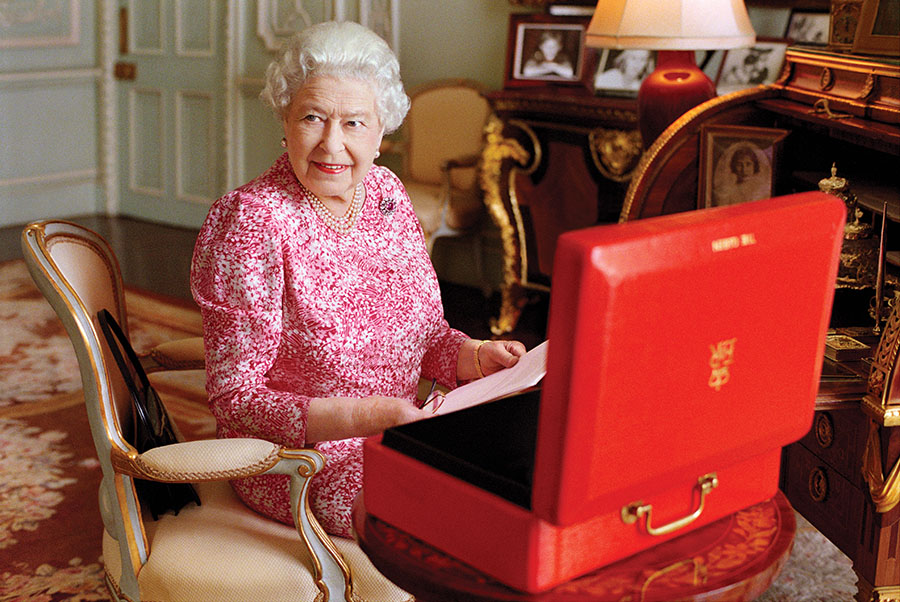

Talking with Queen Elizabeth II Taught Me a Powerful Lesson About the Art of Conversation

Here are three ways to improve the circulation of ideas through useful conversation — and increase the likelihood of successful negotiations at the same time.

Over the years, I’ve had the privilege of conversing with a number of the world’s great leaders. These conversations have not only yielded substantial information, but have been instructive on how to have a productive, enjoyable, and memorable conversation.

Through these talks, I began to see that the delivery of the conversation is as important as the content itself, and that natural curiosity in others is one of the most valuable traits a person can have.

 The good news is that this skill can be acquired.

I remember one of my first bosses, a senior corporate executive. I was incredibly frustrated because he had the habit of starting every meeting with at least 10 minutes of small talk before getting down to business. In my inexperience, I thought this was a useless waste of time.

I finally caught the strategy. During the introductory banter, he was building bridges that he could cross when the talk became more specific and detailed — maybe even heated. He was creating mutual trust through his natural curiosity in others.

The Queen of England, clocking in as the world’s longest reigning head of state, was to me by far the best purveyor of the art of conversation. Having had the opportunity to talk with her on many occasions over several years, I was flabbergasted at how she had honed the skill to perfection.

“Jim,” she would say, “what do you think about the increasing use of computers today?” (After I had arranged for one to be given to her from the American people for her personal use.) “What’s in that drink you’re having tonight? Tell me about it…” commenting on what I had ordered when she took us to dinner at Trader Vic’s in San Francisco.

It could be anything. Trivial or significant. It was, however, always focused on me — as if I were the important one. She never, ever talked about herself or complained about anything. The focus was always on the other person and delivered as if she were really interested in my answers.

George and Barbara Bush had similar skills. They were expert at deflecting attention from themselves. I remember telling her she was doing a great job as First Lady — which was true. I wanted to tell her why I thought so. 

She would have nothing of it. She immediately started asking me about my daughters and how they were doing in school. In this case, I had started the conversation about her and she miraculously turned it back to me!

George Bush had these skills as well, and is famous for his prolific letter writing and verbal communicating. Have a look at these letters and you see a person intent on showing interest in his subjects rather than himself.

Have you ever had a conversation and later realized that during the talk no one asked any questions about each other? There is a serious cost when leaders pay little attention to others. If you lack the ability to define the person, it is much harder to negotiate with him or her and conclude with a positive outcome. Here are three ways to improve the circulation of ideas through useful conversation:

1. Extreme self-centeredness is crippling and can result in the failure of effective communication

People don’t change their personalities and narcissistic tendencies all that easily. The first step though, is to recognize the price we pay for insufficient interest in others. Lost business deals, failed governmental negotiations, poor personal relationships, and doomed marriages can be costly if we do not at least attempt a sincere level of interest in other people. 

Admit the problem is the beginning of the solution. Becoming an outward-facing person with genuine interest in others does not happen overnight, but there are a few key skills that will help move you in the right direction. Becoming more interested in the views of others than in your own opinions makes life more interesting at the most personal level — and more successful when the stakes are bigger.

2. Conduct thorough due diligence on the other person

Prepare yourself for any discussion, meeting, or negotiation by researching the background and life details of the person with whom you are meeting. If you do not do this, you may be walking in blind to a situation that could waste time for everyone because you are ignorant of what the other person is bringing to the table.

This research is easy to conduct online. Once the meeting starts, you can deploy the information strategically to show that you took the time to learn more about the individual prior to the meeting. When I worked in the White House, we prepared President Ronald Reagan with extensive briefing books about the people with whom he was meeting. We also produced videos illustrating how the other leaders walked, talked, and conducted themselves in various situations.

This brought a high degree of texture to the person being profiled and contributed to the success of many bi-lateral meetings. You may not be the President, but you can utilize the same principles and access a good deal of data about the individuals in your meeting.

3. Let the questions roll

When I am meeting someone for the first time, I put my curiosity to work. I usually ask them where they were born and brought up. Do they have siblings? How long have they worked in their current capacity and how
did they get into it? People are usually flattered by you asking these questions — if they are sincere.

Ask these questions because you’re genuinely interested in hearing the answers. If you are listening carefully, you can suggest a follow up, and soon you’ll gain their confidence. Most people like to talk about themselves and will not find it difficult to tell you helpful personal stories, if you ask the right way. These insights are indispensable in negotiation.

Have a question you’ve always wanted to ask about speechmaking? Email James Rosebush your questions and he’ll publish them each week: jsrosebush@growthstrategy.us

www.GrowthStrategy.us

How to Build Unity When Speaking to a Diverse Audience

SPEAKING WITH IMPACT
Each week, speech coach and leadership mentor James Rosebush will answer a question on how to improve your public speaking
.

This week, Mark Percy, President, and CEO of CLA Orange County, asks: “Collaboration is essential to get anything done these days. How can you authentically connect to your audience to help further this goal?”

Dear Mark,

Great question, and crucially related to today’s disruptive and partitioned culture. There are active and destructive forces wanting to divide communities, businesses, families, and schools. The public speaker is a leader and has an opportunity to enlighten, lead, and unify. Although diverse opinion is essential, unity around a standard premise or goal is critical to getting anything done. This particular public speaking skill is also equivalent to living productively. Let me propose three things a speaker can do.

  1. Approach the podium with a genuinely open mind, lack of prejudice, and appreciation for everyone in the audience, regardless of their opinions or beliefs. The audience will feel any baggage you carry when you stand in front of them, so keep it light!
  2. Be thoroughly educated and get briefed on the views, attitudes, and opinions of those in your audience. There is no excuse for not knowing who you are speaking to.
  3. Decide ahead of time that you will not show any anger or react adversely, despite your audience throwing these emotions at you. Don’t take their poison!
  4. Commit yourself to leave the audience inspired, and even if not unified, then at least appreciative of each another. You might end your speech by saying how much you’ve enjoyed being together and that your collective strength rests in your ability to work together. Then, thank them for their efforts — on any point or issue you feel will resonate. Respect them!

How do other readers of this column feel about creating a sense of collaboration with an audience? Comment below.

How to Deliver a Complex Speech Without Losing Half Your Audience

SPEAKING WITH IMPACT
Each week, speech coach and leadership mentor James Rosebush will answer a question on how to improve your public speaking
.

Barbara Bellafiore, CEO, Bell Media, asks: “What is the best way to begin or end a speech to an audience with differing levels of technical expertise?”

Dear Barbara,

Great question! The first thing is to make a connection and build a bridge to your audience. You need them to trust you. Start with a little story, perhaps about the use of a technical skill you have, and how you applied it to a situation — and what happened as a result. It might even be about failing in that attempt. This will make you seem human, adaptive, and available to your audience — and a little vulnerable as well.

This is your warm-up — gain their confidence first. Then, explain that you’ll be speaking about some technical terms and apologize in advance for possibly overreaching. Reassure your audience that you’ll be happy to stay around afterward to explain anything to people who want to learn more. You don’t need to dumb down your content, but make sure you use words and communicate in ways that the audience can relate to.

I remember one time, listening to a speech about systems integration by a brilliant and fast-talking woman who impressed me for her intellect, but left me reeling from her vocabulary — which was almost exclusively, new, made-up terms. I was impressed with her intelligence and my lack of it. I don’t think she cared much about relating to her audience. It seemed more about a show of superiority for her. Don’t fall into that trap. Relate to the audience around your perceived knowledge level they possess — and learn as much as you can about them before you craft your remarks. Then you are sure to win them over and educate them at the same time. Good luck!

Giving a Public Speech While Your Partner Listens? Here’s How to Cope

SPEAKING WITH IMPACT
Each week, speech coach and leadership mentor James Rosebush will answer a question on how to improve your public speaking
.

Lynda Webster, CEO of The Webster Group, asks: “I consider myself a decent speaker, but I get a little flustered when people I know, such as my husband or close business colleagues, are in the audience. How do I overcome this? “

Lynda, you are not alone! We all feel this way. Sometimes when my wife is in the audience, I think that she’s the only one I need to impress — because if I don’t do my best, I’ll hear about it all the way home on the plane!
To want to please is a good thing. It helps us stay alert and on our toes, and to be competitive makes us better speakers. Now let’s stop right there because we don’t want our self-consciousness to get in the way of an excellent presentation. Yes, we can certainly feel inhibited when people we know are in the audience.

The best antidote for this problem is to become more immersed in the content of your speech. Try and forget about the physical space you’re standing in. Get yourself lost in what you’re saying and increase your energy and enthusiasm levels around your subject matter. This technique is a “germ-blocker” for the encroaching insecurity you may feel. Try raising the level of your voice, too, and say to yourself (as Margaret Thatcher once told me): “OK, you can do this!”

Have a question you’ve always wanted to ask about public speaking? Email James at JSRosebush@impactspeakercoach.com and your answer may feature here.

Facing Tough Questions and a Hostile Crowd? Here’s How to Respond

SPEAKING WITH IMPACT
Each week, speech coach and leadership mentor James Rosebush will answer a question on how to improve your public speaking
.

Bruce Bond, CEO of Common Ground, asks: “How do I approach a skeptical or antagonist audience on a controversial topic?”

Dear Bruce,

What a timely question and one that perplexes many speakers today. As a speaker, you have a dual role, and you must function on both to make your speech work. First, you must thoroughly know and understand your content and material, and you need to know all aspects and points of view related to it. When you create a thesis for your talk, interview yourself, as if a journalist was questioning you and give yourself some tough questions. In this way, you’ll be vetting your material, turning it over, and considering it from different perspectives.

This is critical because there are always many different viewpoints on almost any topic. Don’t assume you only need to know your point of view. That is why there is so much anger in discourse today. We generally only take the time to establish and confirm our points of view and don’t educate ourselves on other ways of seeing the world. If you want to have a successful experience on stage, follow this advice.

The second tip is to know your audience. Get a briefing from your host on who might be in the audience. Do they reflect regional concerns? Do they represent specific age groups or educational levels? You’ll want to adjust your presentation material based on what you know about them. To build a bridge to your audience and to bring down any barrier between you, you must love your audience.

If you think you’ll meet some hostility or resistance, remember that there is something good in every audience and each individual listening to you. Don’t return hostility with hostility. Your job as the speaker is to represent your material capably, appreciate your audience and the effort they’ve made to come and hear you, and leave it at that.

Have a question you’ve always wanted to ask about public speaking? Email James at JSRosebush@impactspeakercoach.com and your answer may feature here.

Pitching Investors? Here’s How to be Powerful, Human and Authentic

SPEAKING WITH IMPACT
Each week, speech coach and leadership mentor James Rosebush will answer a question on how to improve your public speaking
.

Catherine Nguyen, CEO of Wild Willett Food, asks: “As a woman pitching investors who may mostly be men how do I represent myself as powerful and yet human and authentic?”

Dear Catherine,

Great question and thanks for having the honesty an insight to ask this rarely spoken conundrum. I have found through doing pitches to investors that the winning formula is authenticity and competency.  This means that you don’t change your demeanor or personality to suit what you think might be the predispositions of the audience. At the same time, you do need to be aware of your own identity and feel confident about it.

Regardless of whether you are male or female, investors look for leadership skills and experience, as well as clarity of vision and competence in grasping the market and finer details of what you’re seeking investment for.   If you’re a woman, be polished and professional with a clear, unwavering and strong voice. Stand and deliver with a straightforward confidence in your business , back straight, chin up, and good eye contact. Then, add the passion for your product — that in some cases might only be achieved by a woman.  This is what can give a woman an undeniable edge — enthusiasm and verve. Go for it!

For Your Best Speech Ever, Know Who You’re Speaking to

SPEAKING WITH IMPACT
Each week, speech coach and leadership mentor James Rosebush will answer a question on how to improve your public speaking
.

L. Clay Parrill, President and CEO, Electrocube Inc. asks: “How should I change my speaking style and delivery when speaking to different types of audiences, such as employees, peers and customers” 

Dear Clay,

This is a terrific question, and one shared by many CEOs. Since your primary style of communication comes from your authenticity and self-knowledge, a unique way you communicate would not be affected by your audience. After all, you are already steady and consistent in all your personal relationships each day. Developing a degree of honesty and integrity about who you are, relative to those you communicate with, is a crucial element in effective public speaking. Your audience — employees or the general public — can immediately sense whether you are comfortable with yourself, your content or message. There exists a perfect trifecta — speaker, audience and message. All three are interlinked and support the other.

Once you have mastered this essential skill, you can move on to knowing your audience. This can result in changing your strategy for each: inflection, patience with speaking, the degree of teaching or encouragement. These factors may vary depending on your audience. After finding your authenticity you’ll want to understand more about an audience — what they need, who they are, what their concerns might be. This shows you care about them, and if you do, they will care enough about you to respond with respect and thoughtfulness.

An excellent example of how you might change your manner of speaking is to recognize a familiar scenario for many executives. CEOs and people in authority often come home from work and bark orders at their spouse and children! They have forgotten their audience, and it can prove costly at a speaking event as much as it can ruin family life. This example is a poignant reminder of how each audience is unique, and should be treated that way.

Let’s say the subject of your speech is how to safeguard lives against a terrorist threat. Talking to your peers, you might approach this as a shared learning experience, trading helpful suggestions and more than likely being in listening mode. With customers, you might take a more knowing, informative, and favorable disposition when speaking. With employees, you might show your concern for their safety, while conveying preventative actions that should be implemented — your tone will be more direct and clear.

I would love to hear about how other leaders have handled this challenge. Comment below.

Have a question you’ve always wanted to ask about public speaking? Email James at JSRosebush@impactspeakercoach.com and your answer may feature here.

Lights, Camera, Action! How to Use Drama in Your Speech

SPEAKING WITH IMPACT
Each week, speech coach and leadership mentor James Rosebush will answer a question on how to improve your public speaking
.

Jeff Haydon, CEO of Caramoor Center for Music and the Arts, asks: “How can a speaker most effectively use production elements in a speech, such as lighting, music and visuals?

Dear Jeff,

What an exciting and stimulating question. Recently we attended an inspiring and impressive presentation that helps answer your question. It was given by the author, William McKeever, who published Emperors of the Deep, in June this year — a fascinating book about shrinking shark populations. 

William is a genial man, who took the stage after a very inadequate introduction from his host. He quickly gave the audience comfort that he knew his subject. After this, we were in for a treat. He began with a short introduction to the subject of his book and how he came to be enamored with sharks. Then, the lights dimmed, and he showed us a ten-minute video — a sort of companion to his book. The video, shot underwater, was high quality, beautiful and dramatic. It gave a sparkle to the evening. When it ended, the audience couldn’t wait to hear more from this intrepid explorer. Clearly, sharks are made for film, and this film made the talk more exciting and urgent.

On my recent book tour talks, I occasionally include a discussion of President Reagan’s love of church hymns. I cite his favorite hymn and then ask the audience if they would like to sing it — to which I always receive an enthusiastic response. On more than one occasion, when there was a piano available near the podium, I have accompanied the audience. All I can say is that it turns a speech into a memorable evening by adding a big dose of emotion. It’s also an excellent way to bring home your message. I always spot many in the audience with tears in their eyes as they sing.

Although I’m adamant about not using PowerPoint presentations, I do encourage speakers with a visual or musical angle to use it! If you’re discussing art, architecture, music, construction — even public policy — having graphic illustrations can significantly enhance your presentation. 

One of my favorite speakers, who I’ve now heard speak three times, uses a large and dramatic drawing of the world as a backdrop. He educates the audience on all the current world wars and future hot spots where war may break out. He also shows on this map the China Belt and Road Strategy, which can only really be understood on a map. 

I have another friend who has spoken alongside the well-known architect Addison Mizner, on his relationship to contemporary culture, art, and fashion. He uses illustrations very effectively, to rave reviews by his audience.

My only caution to this approach is to remember that technology is not perfect. Make sure you rehearse with your visual support tools and have a dedicated technician on hand if the link from your laptop to the projector fails. That is not only an embarrassment, but can become a real downer for your entire time on stage.

If you want to try something unique, test it first on family or friends. By all means, include some dramatic and supportive elements to your message. Yes! I can hear the music playing already.
 

Convince Your Audience They Made The Right Choice Listening to You

SPEAKING WITH IMPACT
Each week, speech coach and leadership mentor James Rosebush will answer a question on how to improve your public speaking
.

David Forster, CEO of Leron Inc. asks: “When people used to ask, ‘who is your competition’ I used to answer ‘other linen companies.’ Now my main obstacle is a customer who is distracted by the things I say. When speaking before a public audience, how do I capture and hold their attention?

Dear David,

What a great question and something we all have to deal with in a multi-channel society running at warp speed. The real challenge is getting an audience to focus, and remain focused, long enough to drive your message down the fairway and into the hole. I get it. When I speak, I sometimes get the feeling that members of the audience are thinking, “I could have been doing something else… now that I’ve decided to sit here and listen, I want the speaker to prove that I made the right choice to be here.”

It can sometimes be a harsh climate for an audience and speakers have to up their game.
 
I suggest that your audience needs to feel that they are going to receive critical knowledge that is of value to them if they remain in their seats and listen. Everything today is about impact. Will your speech affect the listener? Will it provide them with something they could monetize? 
 
I suggest you begin something like this: “I’m going to share something with you today that is unique, and when I discovered it, it changed my view and opened my mind to a whole new industry. Here it is, in four points.”

Now you may think this is fine for a sales pitch but not for a serious academic lecture. Not so. It doesn’t matter what the subject is; it’s incumbent on the speaker to ask themselves, “What is the most valuable information I can impart, and is this what the audience is looking for?” Once you get the audience hooked and you start telling stories about your product or thesis, you will make them think they’ve made the right choice by coming to hear you.