Nude Foods: Cape Town’s First Plastic-Free Grocery Store

While walking the streets of Cape Town recently, I discovered South Africa’s very first plastic-free grocery store: Nude Foods. It has an old-school ambience with a simple, modern-twist.

Founder Paul Rubin has created an environmentally friendly shopping experience for those who care about their food and how it’s packaged. Launched in December 2017 the store helps care for our environment and the health of others, offering a variety of organic and earth-friendly foods – all of which are GMO free.

If you like this, subscribe here for more stories that Inspire The Future.
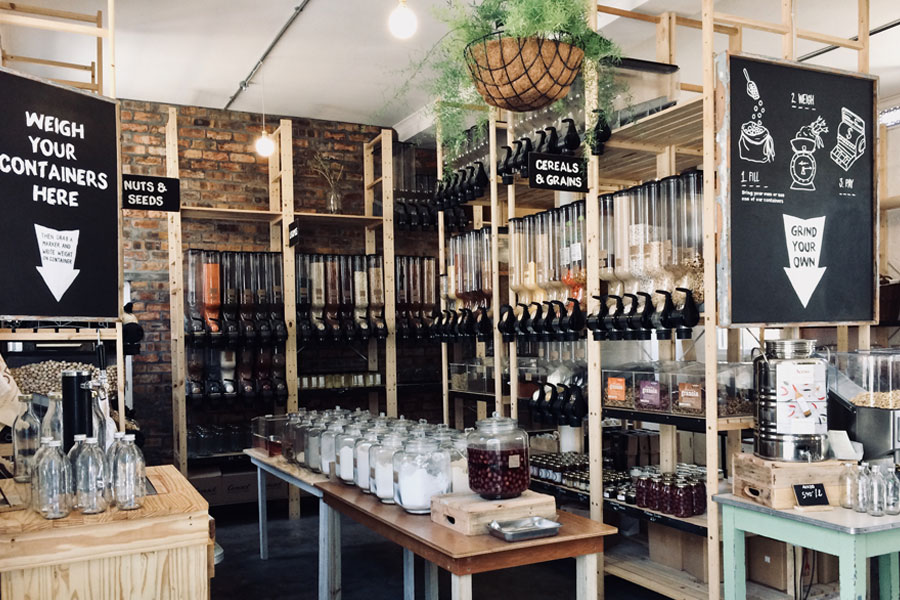
Stepping into the store was rejuvenating, I had a look around and asked Paul a few questions:

What was the motivation behind creating this plastic-free store?

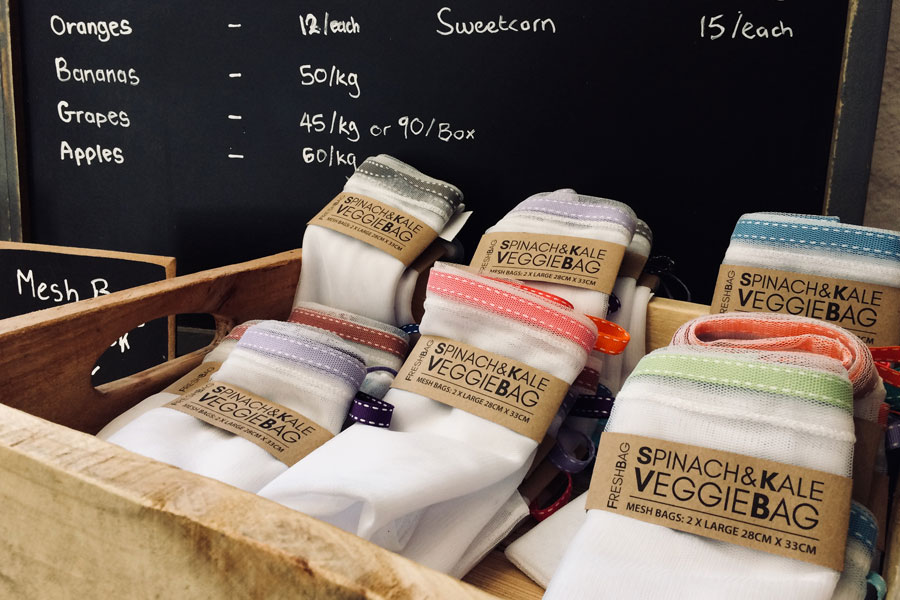
The ethos of my store is to eliminate single-use plastic and unnecessary packaging. We encourage our customers to bring their own containers where we weigh them in a jar at a pre-weigh station. Customers can fill the jar with their purchase and we then deduct the weight of the container from the amount owing. If you don’t have your own container, we sell glass jars and bottles, pure cotton, reusable dry goods bags, mesh bags for fresh produce and free brown paper bags.
 

How do you intend growing Nude Foods?

We like to engage with our customers, educating them on the reason behind our mission and purpose. We also ask for feedback because we want to establish the types of products people want (and don’t want) so we can fine-tune our food to cater to residents in the area. We want to appeal to people with an environmental conscience and hope this becomes a growing movement.

In addition to being plastic free we support quality food brands, which have eliminated preservatives and fillers. We get our fresh produce from a local farm called Naturally Organic, an EU certified 100% organic farm in Phillipi, an agricultural area near Cape Town. We try and source everything locally, and by doing so, we support local business.

 

Are you looking to create partnerships with existing businesses?

Not yet, but we are open to collaborating with small local businesses. We recently collaborated with a nearby coffee store called Kamili. They created a pop-up coffee stand in our store that offered customers free coffee. Although we have no formal partnerships, we seek suppliers that work with the same ethos, and are happy to help support other startups and entrepreneurs.

How will you scale your idea?

We plan on opening another store within a few months in Cape Town. It will be a smaller version of our first store, which will offer only our most popular goods. My longterm plan is to open a few more stores, maybe six, around the Western Cape province, but we first want to learn to walk before we can run.

What feedback have you received from regular customers?

Many of our customers love shopping this way as they feel more connected to their food. It allows them to be precise in how much they need to buy, as opposed to buying pre-packaged goods that might sit on shelves for weeks, spoil, and go uneaten.

After visiting this innovative store I came to the realization that a plastic-free grocery store can play an important role in showing how to take action around environmental issues. It tackles three important goals of the 17 Sustainable Development Goals, laid out by the United Nations: Goal no.3: Good Health & Well-being, Goal no.12: Responsible Consumption & Production and Goal no.13: Climate Action. Consumers have a choice in where they choose to spend their money, and shopping at stores that promote a healthier, cleaner planet can help achieve these goals. 

If you like this, subscribe here for more stories that Inspire The Future.
Ignorance is Not Bliss. We Must Take Action

We live in an ignorant world. A world that’s made to believe that it’s ok to live the same way each day: wake up, go to work, earn your salary, feed your children and do just enough to get by. But to me, this is real ignorance.

Life often feels unfulfilling if we just do enough to get by. What are we leaving behind for the next generation? Do we know what is happening around us? Or do we choose to ignore it?

People often have an egocentric approach to life, and we tend to believe that as long as we aren’t directly affected by a problem, then we are excused from addressing it. This gives a false sense of security. Things may not affect us directly, but whether we believe it or not, events such as climate change affect us all, and it’s happening right before our eyes.

Despite the decision made by the U.S. government to pull out of the Paris Agreement, individuals, organizations, companies, and communities in that country and around the world, should continue to take action on global climate. Our future is at stake, and it’s up to us to make a collective effort by working together and forming partnerships to implement a plan. 

We all have different ideas and skills, and when we team up and combine our thinking, innovation, and expertise, we are capable of developing a greater impact. Here are a few ways we can all take action.

Don’t buy a car – Cycle instead

If more people ride bikes, this will cut down the co2 emissions and also keep people fit and healthy. One of the biggest global warming contributors is the burning of fossil fuels and with the world’s population increasing each year emissions are escalating rapidly. If we cut down on the use of cars that emit co2 and ride bikes instead, there would be a gradual decrease in emissions.

Eat less red meat, or none at all

Did you know eating red meat contributes to the emissions of greenhouse gasses? On a global level, approximately 14.5% of all greenhouse gas pollution is caused by livestock. Animal flatulence creates methane – a potent greenhouse gas – and the manufacture of cattle food uses a lot of resources. We can live a much healthier life without red meat, and if you’re worried about not getting enough protein, you can get it from white meat, beans, eggs, milk, and nuts.

Recycle & Up-cycle

Trash in landfills is growing. Most of the time we buy things we don’t need, and we should start spending less on things we don’t need and get creative with what we already have. Reuse your plastic, paper, scrap metal, clothes and other non-biodegradable materials. Don’t throw it away, create something from it and decrease the trash in our landfills.

Below is a list of young leaders, who are making a positive impact on the environment, helping further sustainable growth and inspiring others to do the same:

1. The Vello Bike

https://www.instagram.com/p/BK8eiAAhlvM/?taken-by=vellobike

Vello bikes are high-performance, handmade and foldable bikes developed for urban commuting. The are the first self-charging electric folding bike.


2. Urban Green Farms

https://www.instagram.com/p/BRDG1fAANpR/?taken-by=urbangreenfarms

Australian-based Urban Green Farms is helping reduce our environmental impact by finding sustainable ways to farm and offer great healthy recipes that don’t include red meat.


3. South African Art

https://www.instagram.com/p/BPo1TMigaCU/?taken-by=caitlinmkhasibe

A South African artist who recycles old notes, cardboard and old paper to create moulds for her paintings.


4. Ocean Clean Up

https://www.instagram.com/p/6U2Ec5LP4Z/?taken-by=theoceancleanup

The Ocean Clean Up is an innovative start up that is dedicated to developing technologies that extract, prevent and intercept ocean plastic pollution. They are also investigating how they can reuse the material once it is back on shore.


5. Weaver Green

https://www.instagram.com/p/BGwYIIXRMSx/?taken-by=weaver.green

Weaver Green makes indoor and outdoor rugs and textiles from yarn spun entirely from recycled plastic bottles. 100% recycled, environmentally friendly and ethically produced.


6. Sustainable Surf

https://www.instagram.com/p/BTxpbBmjz_R/?taken-by=sustainsurf

Sustainable Surf create surfboards from styrofoam and up-cycles damaged surfboards.


Are we Using Social Media Responsibly or Dangerously?

Many people I know are victims of social media addiction and usually struggle to contain their online cravings.

Some of the social media apps we tend to abuse include Facebook, WhatsApp, Instagram, Twitter and Snapchat. Because these apps were developed for commercial use, they’re designed to attract a maximum number of users, and as a result, many find it difficult to resist the temptation of spending hours posting, messaging and checking their devices every few minutes.

This leads me to a question: Are we using Social Media responsibly or dangerously?

In the not too distant a past, communication was mainly by telephone, letters (snail mail) or physical contact. These were either slow, expensive or inconvenient. However, back then communication was usually thoroughly thought-through and relevant. Since the emergence of the current social media platforms we now have instant communication at minimal cost. This development has created both efficiencies and inefficiencies.

Efficiency.

  • Our reach is broader. We can reach a large network of people around the world (basically anyone with a computer or phone)
  • It’s faster. We are able to send messages to intended recipients rapidly.
  • It’s cheaper. Social media provides an affordable way to communicate for the majority of people.

Inefficiency.

  • Many irrelevant messages are received. This creates an obvious, and hidden, economic cost for society – from the time wasted dealing with distractions that have nothing to do with moving your day forward. 

Social media can negatively affect our productivity at work too, from the ease we access social media platforms during working hours. On the positive side – and being such effective tools – we can find ways of incorporating them into our work communication for greater productivity.

Here are a few advantages and disadvantages:

Strengths.

  • Cost effective
  • Direct communication
  • Easy Targeting
  • Fast
  • Wide audience reach

Weaknesses.

  • Much false or misleading information (most not based on facts)
  • Irrelevant, wasteful information

Opportunities.

  • Can be used for official communication
  • An opportunity for a massive reduction in costs for individuals or organizations
  • A great target-marketing tool

Threats.

  • Social media has the potential to threaten the profitability of traditional media (print, etc.)
  • A backlash against you personally if too much personal information is exposed on social media. This is one of the most dangerous threats as it can cost you your life in extreme situations (shaming, extremist thought and violence)
  • Confidential information can be leaked and fall into the wrong hands.
  • The increased threat of hacking can see personal information exposed to criminal syndicates

Distraction can affect productivity, so we need to find ways to make social media work positively for us.

How to use Social media productively:

1. Practice Self-control.

Use social media in moderation. Create a timetable which schedules and specific times that might allow us to use social media productively. Limiting this time will encourage you to engage your social media meaningfully and productively.

2. Use social media platforms that are relevant.

Ensure that the platforms you use can produce a beneficial outcome for your organization. Avoid joining social media groups that will add no value to your objectives and goals.

3. Create a co-working environment.

If you’re in school or college, you can use certain apps to host study groups/ online discussions. This is an effective way to study with friends while in the comfort of our own home. For organizations, it’s a good tool for open team discussions and project planning.

4. Use it as a marketing tool.

Some social media apps are excellent for advertising your business, product, project or company. This can help you boost your market and grow your audience.

I personally see social media as an opportunity to spread awareness around global social issues and a brilliant cost-effective marketing tool. Here are some examples of people using Instagram productively:


https://www.instagram.com/p/BP8m1W1hkF1/

A post by The Fashion Revolution Organization. They used Instagram to run a sustainable fashion campaign entitled: #whomademyclothes. The campaign went viral, caught much-needed attention and got other organizations and individuals involved.


https://www.instagram.com/p/BSPe3xFg3-j/

A blogger who promotes sustainability with upcycled design ideas – promoting great ideas to his audience – that may inspire others.


https://www.instagram.com/p/BTfe0BTFpyE/

A home farm that uses Instagram to market their organic micro-green kits that are 100% sustainable; prompting healthy food and a sustainable way of living.


https://www.instagram.com/p/BTgY6dojigx/?taken-by=girlsofsudan

A non-profit that spreads awareness about young school children in Sudan in need of quality education. It helps bridge the educational gap in the rural areas of Sudan and could possibly attract funders to donate to the cause.


https://www.instagram.com/p/BTfL83_gdTs/?taken-by=havserve

A NGO organization that hosts voluntary youth summer camps that inspire them to give back to their community. They also offer information on sustainable ways to make an impact within communities, that might change the lives of others for the better.


https://www.instagram.com/p/BST15b5h0d9/?taken-by=dominicanwavesoaps

A soap factory in The Dominican Republic that produces sustainable ways of making soap and run a hygiene educational program for youth. They use Instagram to promote both their product and program.


Try Crowdfunding to Start Your Business

Crowdfunding has become very popular over the past few years. One of the most difficult parts of starting up a business is securing enough finance to get it up and running.

If you’re unable to get a bank loan and have no connection to any investors, it can be extremely difficult to take your awesome idea and make it come to life. Crowdfunding has become an increasingly popular solution to this problem, by allowing start-ups to pitch their idea to a large number of prospective investors at the same time.

The Benefits of Crowdfunding

1. Efficiency – Crowdfunding is useful at the beginning phase of a business, where a pre-existing, online platform gives you the tools to get started, at low (or no) cost. With crowdfunding you are able to share your business story and produce a short motivational video that can entice investors to fund your idea.

2. Building Social Proof – Once investors have funded your idea this provides you with social proof to potential customers that your business/product is worth trying out.

3. Global Investment – By pitching your idea through online crowdfunding you are actively reaching out to investors from across the globe, helping to build greater geographical reach.

4. Media and Marketing Attention – crowdfunding creates exposure to the media who can direct more attention to your business idea and this further creates awareness, helping your idea reach more viewers.

Crowdsourcing is a brilliant way for young entrepreneurs to get their business ideas started. Here are a few crowdfunding companies you can approach if you’re looking to start-up a business; Indiego, Kickstarter, Crowdfunder, CircleUp, MicroVentures, RocketHub, EquityNet and Fundable.

Below is a list of successful, young entrepreneurs who have started their businesses using this beneficial crowdfunding process.


httpss://www.instagram.com/p/5UtxVEKwol/?tagged=crowdfunded


httpss://www.instagram.com/p/BKqmBCojyHQ/?tagged=crowdfunded


httpss://www.instagram.com/p/BHWx0XVDv_d/?tagged=baubax


httpss://www.instagram.com/p/BFu3CCMBddh/


httpss://www.instagram.com/p/BMnmEMJDUlV/


Six Great Sustainable Building Ideas

Young architects from around the world have created some amazing sustainable structures that are helping to solve everyday problems, while also decreasing carbon emissions and utilizing natural materials. Below are six innovative and sustainable architectural solutions that are contributing to a better world.


http://www.instagram.com/p/BLE7gW2heEu/?taken-by=hi.its.gabor


http://www.instagram.com/p/BKkvJrugvHe/


http://www.instagram.com/p/BKrPI7djYCC/?taken-by=aussietruffles


http://www.instagram.com/p/BK48KFiAzsK/?taken-by=sigitkusumawijaya


http://www.instagram.com/p/BKnwNuPjqKS/?tagged=sustainablearchitecture


http://www.instagram.com/p/BC8OXasBf2P/?taken-by=partisansarchitecture


Six Young Leaders Show the way

Young entrepreneurs are creating amazing solutions that are helping to solve everyday problems. Young-preneurs are now inspiring other young people to take up the challenge too. View below how a few young people on Instagram are sharing their solutions for a better and more connected world.


https://www.instagram.com/p/BHxaI8NAJqM/?taken-by=hovding


https://www.instagram.com/p/tDkHQJE1Oz/?tagged=drybath


https://www.instagram.com/p/2RPXQHhx8e/?tagged=volumental


https://www.instagram.com/p/BKiMZsSgJwY/?tagged=sustainablefashion


https://www.instagram.com/p/ua-8_jjdrt/?taken-by=codietherobot


https://www.instagram.com/p/BG1SGrEm9mt/?taken-by=theaudiogram


0