
The $70 Trillion Arctic Ice Problem We Shouldn’t Ignore

Atmospheric CO2 has been consistently measured since 1956 in Hawaii. Calculated figures over geological times have suggested vast changes in CO2 levels, surface temperatures and changes in the climate; now we are in the Anthropocene Era, in which mankind alone is responsible for rapid climate change, implied from the very rapid rise in CO2 and other atmospheric pollutant volumes. 

The economic impact of change is large – the melting of Arctic ice alone might cost $70 trillion, under current national pledges to cut carbon emissions.

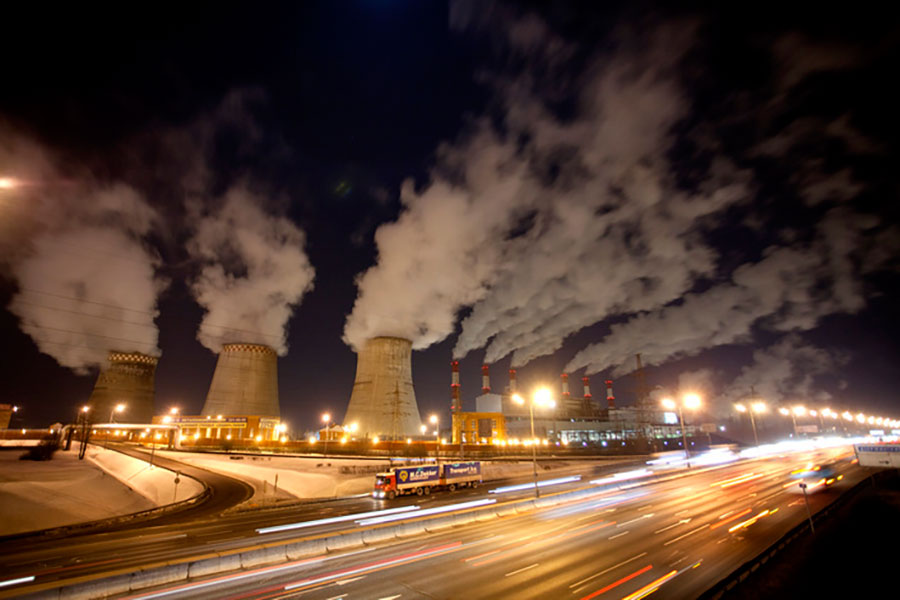
Pre-industry pollution levels were unchanged for centuries, then industry demanded more energy. The global population numbers increased, and a rapid upward spiral began, creating today’s issues – now the big question is how to reverse the pollution, and thus diminish its effect. Confusingly, it is not only CO2 that is problematic, but a range of other pollutants that were drawn into an equation formulated before the 1989 Montreal Protocol on the Ozone Hole – creating the ‘CO2 equivalent’, conveniently called the Carbon Footprint. In parallel, the 1987 UN Brundtland Committee suggested there were three major energy-demanding, thus polluting sectors – Industry, Transport, Buildings. Since then all developed nations’ governments have implemented programs designed to reduce their pollution. Above all, fossil fuel demand has fallen globally relative to early predictions due to better engineering of efficient engines, and the capturing of renewable energy at scale. 

Scientific studies on the climate became focused when the IPCC (Intergovernmental Panel on Climate Change) was incorporated in 1988, charged with regularizing and extending the science and to produce Framework Reports, now at the 5th Edition. In the latter they call strongly to halt average annual surface temperature rising above 1.5 Celsius annually (against pre-industrial levels) by reducing pollution levels.  Beyond 2.0 C massive disasters are predicted: severe droughts, tempests, and fluctuating weather patterns: “climate is what we have, weather is what we get”.

The IPCC holds annual global meetings and regularly pressures heads of government to ‘do something’ – one such at Kyoto in 1997 resulted in the world’s first attempt to co-ordinate against pollution with the target date of national actions being 2015. Following, a new set of global actions were agreed in the 2015 Paris Accord with a target date of 2030: supplementary resolutions were formulated at the IPCC COP24 in Katowice, December 2018.

Sadly, many governments are defaulting on their new interim goals, and observers worldwide have become anxious – even schoolchildren are protesting against perceived inaction on the part of governments, science and businesses. The media apparatus has focused on these  worldwide protests – such as in the UK, highlighting Greta Thunberg a Swedish schoolchild who flew in to join UK children; and upon many other protesters who blocked parts of London and its airport. 

Fact finding, one can read data which shows the EU is on target, averaged over its nations. As part of the Europe 2020 strategy, the EU set three climate and energy targets called the ‘20-20-20.’ That is, a 20 percent reduction in pollution emissions compared with 1990 levels, a 20 percent share of renewable energy in gross final energy consumption, and a 20 percent cut in the energy consumption compared to the 2020 business-as-usual projection. If the EU can do this, why not others? And, if the EU has done so well up to now, why don’t people know this? Why protest – causing havoc, and loading the policing costs upon tax-payers?

We ought to note that global leaders and businesses have done much to support science and its commercialization. For instance –

  • The Brundtland Commission forced a redesign of fossil-fuelled power stations to thoroughly clean their exhaust gasses. Plus, fossil-fuelled power plants can be co-located with others manufacturing that demands CO2 as a feedstock. Furthermore, science shows how to extract CO2 from the air, converting it into an inert chemical that has potential to be further converted into a clean-burning fuel (but of course re-creating CO2 to be captured later). 
  • The IMO (International Maritime Organization) is to ban the use of heavy oil by shipping from 2020. Ships will use much less polluting low-sulphur diesel fuel. 
  • In cities many governments and mayors are banning fossil-fuelled vehicles, commencing with diesels, in favour of battery power. In fact, this has a low effect on overall pollution as the electricity needed for battery charging comes from power stations (though fossil-fuelled ones are polluting, electricity is often sourced from renewables – wind and solar, predominantly). This modal change reduces city pollution, especially of the killer smog which is derived from vehicle exhausts combining with ozone, and with sun-light.

These brief examples indicate wide-spread progress is being made, and businesses are seeing strong opportunities to combat climate change. 

Too little calm and realistic discussion is taking place between action takers (governments, businesses and scientists) with the client population: presently confusion reigns. Also, rampant consumerism across the relatively rich world ensures we produce and buy too much, only to send it unused to land-fills.

We do have solutions that are perhaps too weakly applied (all are well formulated in the IPCC targets) but some Big Business as well as lobbyists resist change: and some government leaders are climate change deniers.  And as the results of the 1997 Kyoto Protocol showed, those who did not meet their legally binding obligations had no sanctions placed on them thereafter – thus the 2015 Paris Accord was not formulated as a legally enforceable document.

However, I am optimistic – global population will soon begin to fall, demand for fossil fuels is falling as many more renewables come on-line and battery technology advances; and we are becoming more personally aware of our own pollution patterns. 

Stemming from protests and from better, clearer information, as well as a transparent analysis of future decisions about their feasibility and cost-benefit we will be able to proceed. The developed nations should accede to the reasonable demands of the poorer. Eventually, let us hope, social pressures will force better management of pollution and climate change in the future.

The Next Financial Crisis will be Worse Than 2008. Here’s How the World Can Prepare For it

Still psychologically scarred, few were keen last month to commemorate the 10th anniversary of the Dow’s rock bottom close in March 2009. 

Even so, all month long, calls to heed lessons from the last great recession echoed across the media as ominous signs pointing to another pending financial crisis loom. In late March, the US Department of Commerce revised growth forecasts downward. Growth across major European economies is either slowing or negative. And the Chinese economy, a critical global growth engine, is decelerating.
We can, however, dispense with platitudes about remembering the past or being doomed to repeat it.

The fact is we aren’t set to relive a recession like that of 2008. The next great recession is likely to unfold in a manner fundamentally different from the last one.

Unilateralism, fragmented regulatory bodies and a depleted arsenal of tools for reviving growth will mean that the next recession is likely to be more prolonged and more devastating.

Few experts would claim regulators have implemented sufficient protections against the banking practices culpable in the 2008 crisis. But even if we had learned from past mistakes, the financial institutions and instruments requiring oversight are evolving at an unprecedented rate, becoming increasingly complex.

The Bank for International Settlements has raised concerns about the proliferation of shadows banks – a sector which, according to a report last year from the Financial Stability Board, grew by nearly 8 percent globally to more than US$45 trillion in assets. They warn that existing macroprudential policies were designed with traditional banking institutions in mind, and thus permit shadow banks to operate with little relevant oversight.

Regulation is equally ill prepared to oversee many innovative financial instruments reshaping the industry. Fintech platforms, which determine creditworthiness through algorithms rather than credit scores, are often not subject to the same rules as banks, and may often operate in the absence of interest rate limits altogether.

Such novel institutions and instruments present features that are unfamiliar, and that require an evolving set of policy responses. This, in turn, necessitates integrated, cooperative regulatory bodies with streamlined information-sharing practices that allow regulators to stay abreast of developments.

Alas, global regulatory bodies remain far too fragmented. The US, for instance, has three federal bank regulators and two market regulators that often compete instead of cooperating. Meanwhile, the vice-chair of the supervisory board of the European Central Bank admitted last year that Europe’s regulators remain too fragmented to effectively supervise.

Moreover, post-2008 calls for central banks to play a more vigilant role have paradoxically led them to focus inward and neglect collaboration at the international level. This lack of communication and collaborative action hinders regulators’ ability to police practices – and when the next crisis occurs, these disconnects will impede attempts to mitigate damage.

After Lehman Brothers collapsed, central banks worldwide simultaneously reduced interest rates. In the months that followed, governments would take recourse to this time-tested monetary tool to combat the recession, using rate cuts to encourage borrowing and spending. Such expansionary monetary policies are battle-proven and, in tandem with prudent fiscal policies, they enabled central banks to slowly restore the global economy to health. The hard truth, however, is that governments won’t have this weapon at their disposal this time around.

In the wake of the 2008 crisis, rates across the world were cut to zero, and the fragile recovery has kept them there. For much of the world, including the US and Europe, very low to near-zero rates mean historically little leeway for lowering.

Fiscal stimulus could provide an effective alternative. But increased government spending faced stiff opposition during the last recession and is likely to confront more during the next. For advanced economies, the average government debt is now worth more than 100 per cent of gross domestic product, up 30 per cent since 2007.

If near-zero interest rates and a lack of information-sharing will impede and blind regulators, hopes of reversing a downturn will rest on a multilateral global response.

In 2009, collaboration helped avert disaster as Group of 20 nations pledged to borrow and spend what they could, and to abstain from new tariffs. But today’s political landscape is characterized by discord and economic nationalism – and joint action seems far less likely. Without communication and concerted action, the next crisis is likely to prove far more intractable.

Central banks and governments must share information and align strategies. They must once more promise not to throw up tariffs or depreciate their currencies. If, at the moment of crisis, politicians will be too wary to support fiscal stimulus, governments should work together now to devise mechanisms automatically triggering spending increases at the onset of turmoil. Also, to help maintain sufficient demand, governments should work with private firms to make wage increases of 5 to 10 percent manageable.

To achieve such reforms, we’ll need more than the support of the IMF, the World Bank and Bretton Woods – bodies too often steered by politics and national interests. Depoliticized private-sector global leadership forums, inviting people not just from business and politics, but from non-profits, religious communities and social ventures, may succeed in shaping solutions that forgo self-serving interests. Such forums, however, are at best symbolic as long as they do not hold themselves to the highest standards.


US-China Climate Pact A Good Start, But Not Quite Enough

The meeting in Lima, Peru, of the United Nations Framework Convention on Global Warming, which concluded on Sunday without a pathbreaking agreement, sent a strong message about how seriously we should be treating the global climate crisis.

But, really, it is only the actions of a select few nations that will have any lasting impact in terms of stopping or reversing global warming. Among those critical nations are the United States and China, who together contribute massively to climate change. In the wake of the Cold War, the US emerged as the dominant superpower on the world stage.

The Americans’ capitalist system had outlasted Soviet Russia’s communist philosophy and the US seemed poised to dominate the globe for decades to come. And, for some years after, it seemed there would be no new rival and no new war. However, recent decades have brought on a new superpower to rival the US: China.

Beijing’s rise was swift and it continues to this day, bringing new meaning to the relationship the countries have and new meaning to China’s place in geopolitics. Historically, relations between the US and China have been somewhat shaky but they are relatively stable today, despite significant cultural and political rifts that persist. The rise of China coincided with the increased significance of a new war of sorts, a war where China and the US are on the front lines.

This war is not being fought between China and the US, or between any nations. Instead, it is a war against human-induced climate change. Though this war has no singular enemy, in November the world’s leading and emerging superpowers united in response to climate change. The agreement between them on November 12 was unprecedented in the history of either country: the US will cut total emissions by more than a quarter by 2025 while China – whose industrial sector is still in the ascendant – will hope to reach peak greenhouse gas emissions by 2030. As ambitious as the terms of this deal were – and whether either country will be able to follow-through is unknown – the real question has to be: is it even enough?

China is a superpower on the rise, whose ancient cultures have pressed for environmental stewardship since long before the discovery of fossil fuels. America, on the other hand, has been spewing massive amounts of greenhouse gases for decades and is only just beginning to see the error of its ways. Together, though, I believe the US and China have the power to either save or destroy our planet, based on their actions in the coming decades and their adherence to this deal.

The key factor in determining whether our fight to contain global warming is succeeding or failing is global average temperature – and the temperature of our planet is on the rise, dangerously so. Right now, the signs are looking particularly bleak: if our global temperature rises by more than two percent, the scientific community tells us that there is likely no turning back. So what does this mean for you and me?

The United Nations Environmental Program released its 2014 report last month and the world’s leading panel of experts on global warming and climate change gave us a very direct, tough prognosis: to keep below the two percent rise in global average temperatures, humans can only dump another 1,000 gigatons of carbon dioxide into the atmosphere, in total. Should we fail, the consequences would not only be irreversible, but catastrophic.

So, is the China-US climate deal going to be enough to stop us from getting to 1,000 gigatons? Sadly, this writer is not very optimistic. According to a report by Business Insider, China and the US alone will contribute more than 600 gigatons of carbon dioxide to our atmosphere between now and 2050. All the other countries together, meanwhile, make up approximately 60 percent of global carbon emissions.

This means that by 2050, even if the US-China deal holds, we’ll have dramatically exceeded our 1,000-gigaton limit and the global temperature will have surely rise past the two percent threshold. I appreciate the value of the US and China coming together as partners in the war against human-induced climate change.

However, I think that neither country truly appreciates the scale of the problem – China is too busy growing and America is too busy clinging to its power. It’s easier to think about this problem in terms of something even larger than the moon landings – solving global warming is bigger than any single leader, bigger than any single nation. It’s a global problem that will require a global solution.  

Frank-Jürgen Richter is founder and chairman of Horasis, a global visions community.

Digital Currencies do Represent the Future

In the past few years, a curious new economic fad has swept across the world, spurred by the rapid rise of one simple piece of software. You’ve heard about it on the news, you’ve read about it on the Internet and if you’re bold, daring and wealthy enough, you may have actually bought something with it. I am speaking of course, about bitcoin.

Bitcoin is a digital currency that was released as open source software in 2009 and which has led to the meteoric rise of digital currencies in every corner of the globe. As lucrative as they are dangerous, in their short lifetime, digital currencies have seen stunning rises and destructive implosions – making and breaking millionaires faster than the regulated markets ever could. The volatility of bitcoin and other currencies is worrisome, but their popularity and rise cannot be denied.

As I write this, one bitcoin is worth US$582. What one will be worth when you read this is anyone’s guess. And therein lies the true question: Do digital currencies represent the future of economic transactions; is the rise of currencies such as bitcoin an inevitable part of the future, or just a temporary fad?

Certainly, varying forms of digitised currency have been in existence for years. PayPal is still one of the most popular forms of payment worldwide, but PayPal is not a currency in itself and it acts within the regulated markets of the nations that it operates in.

In Brazil, a couple of ingenious economists made clever use of digital currency to save the nation from hyper-inflation that had plagued it for decades. In order to stop the runaway prices, Brazil began to pay people not in the regular cruzeiro, but in the URV (Unit of Real Value) which was in fact a virtual currency.

By listing all prices and monetary information in URVs and by paying all Brazilians in URVs – an entirely fictional currency – the central bank could control the exchange rate between the URV and the cruzeiro until stability was achieved. In 1994, the URV was converted into the real, Brazil’s current currency, and the cycle of hyperinflation was broken.

In theory there is nothing wrong with companies such as PayPal virtualising payments or Brazil’s inspired use of digital currencies with the URV. But bitcoin, is essentially unregulated.

In most modern nations, the national currency is tightly regulated and has a complex web of backups and insurances to back it up in case of collapse. When things go wrong, when companies go bankrupt or stock markets crash there, there is some retribution for those affected.

The lack of regulation and consistent government acceptance, and the lack of a safety net truly make the future of bitcoin a scary prospect.

Recently, one of the major bitcoin exchanges went into bankruptcy. Known as MtGox, this bitcoin exchange was the victim of a hacking attack which cost them US$460 million. Frighteningly, speculative markets have even sprung up around the the money tied up in the bankruptcy of MtGox, paradoxically creating entirely new possibilities for calamitous failure. Perhaps even more worrisome though, is the rise of competitors and imitators. Cryptocurrencies, as they are technically known, have sprung up all over the world with names such as litecoin, peercoin, namecoin and megacoin.

Perhaps it is from Brazil that we can learn the strongest lesson about bitcoin and these other “startup” currencies. Despite using electronic currency to save their economy, just last month the Central Bank of Brazil released a statement warning about the dangers of bitcoin. In essence, they warned that unregulated digital currencies lack one of the most important features a currency must have: trust of the players involved. Without the trust of governments, corporations, financial institutions and the people at large, I believe bitcoin will always remain on the periphery of legitimacy.

As with almost every other aspect of our lives, digitisation is inevitable and therefore digital currency as an idea will not die off. However, I do not think that the current incarnation of digital currencies will live on much longer.

Bitcoin and its imitators will eventually lose out in favour of new alternatives that are either government sanctioned or government sponsored, giving them stability, a safety net and the trust of the people. Digitising currencies across the globe could lead to greater market stability, and even the eventual adoption of a single world currency.

So back to the central question: Are digital currencies the future, or just the fad of the moment? Well, I think that digital currencies do represent the future but bitcoin and its rivals are the fad of the moment, eventually to be replaced by regulated, trusted institutions.

And The Most Promising Green Technologies Of 2014 Are…

Looking back on 2013 it is apparent that we’ve reached a unique place in history where technology and the modern lifestyle are merging. And we seem to have finally reached a point where the technologies we build and choose to integrate into our lives have been developed with environmental impact in mind. In the past, when companies were developing new technology for public consumption, they were concentrated solely on which features were going to attract the most customers.

The environmental impact of a given technology, however great or small, was something that was simply not on the minds of most consumers and did not affect their buying decisions. Last year saw the growth of a mass movement of consumers concerned about the environmental impact their lives. This has obvious implications for technology. For the first time it seems, companies can win customers by being green, and not just that niche group of Priuses buyers. Everyone wants to be green today.

This years promises to be a big one for the technology we use and its impact on the environment. Expect 2014 to be the year of the green gadget, as consumers grow more and more educated about global warming and the impact we humans have on our own environment. We are barely a month into the new year and there are already dozens of promising new technologies and gadgets coming out that will bring us closer to the technologically and environmentally integrated world we desire. Including an honorable mention from 2013, here are a few technologies that could revolutionize the way we live and treat our planet in 2014:

The Tesla Model S

This is the 2013 honorable mention and If you haven’t already heard of the Tesla, you’ve probably been living under a rock for the past few years. The Model S and the earlier Tesla Roadster have been making waves around the world both in design and technological circles for quite some time. The Roadster, while stunning to look at and exhilarating to drive, was little more than a modified Lotus Elise- but one which performed worse in almost every category other than raw speed. The Model S, however, changed the equation.

This luxury sedan was built from the ground up to be an all-electric car for everyday. Its 320-plus kilometer range is sufficient for almost any commute, and the quality of the car and its handling are equal to or better than any contemporary luxury car made by BMW, Mercedes or Lexus. With the Model S, Tesla has done something brilliant: made an electric car that average drivers will want to buy. They had better hurry, though, there surely won’t be enough to go around in 2014.

ISI Technology’s Heatworks Model 1

The Heatworks Model 1 is almost as far as you can get from an electric luxury automobile, but its impact could be just as great. The Model 1 is a water heater, but it is far from ordinary. Its claims to slash electricity bills and save the planet at the same time is every bit as bold as Tesla’s. Conventional water heaters use gas or electric heating elements to heat up a container of water for bathing, washing dishes and the like.

Tankless heaters that have recently appeared on the market pass the water directly over a heating element and on to the faucet. But the temperatures needed to heat the water in tankless heaters – upwards of 1000 C – make the systems inefficient and prone to failure. Heatworks is a tankless heater, but its technology is brand new.

According to Digital Trends, its “direct electric resistance” technology uses two graphite electrodes and the water’s own resistance for heating. However strange that may sound, it is a true revolution in technology. The new heating system, combined with advanced computer controls, is up to 40% more efficient than conventional water heaters, and the whole unit is little bigger than a soccer ball.

The McLaren P1, The Porsche 918 Spyder and the Ferrari LaFerrari

Heading back to the track for the third and final notable environmental technology of 2014, it is worth looking at a few examples of the best that the automotive world has to offer and how, even in the top tier, things are turning green. Is is one thing to make an electric car for the average driver, but it is another thing to make a green car that makes the world’s 10-year-old boys drool. This is exactly what Ferrari, Porsche and McLaren have done this year.

The Ferrari LaFerrari, the Porsche 918 Spyder and the McLaren P1 are not pure electric cars, and they aren’t exactly built for a run to the supermarket, but these hybrids make a statement that most auto enthusiasts have refused to hear for years: Not only can green cars work in the real world, they can be faster than anything you’ve ever seen.

All three cars use advanced hybrid systems that make use of electricity not to extend driving range, but to be the fastest cars in the world. Gone are the days when seeing a lavishly expensive supercar in the street must come with the smell of gasoline fumes and burning rubber.


Why the U.S. Should Grant Edward Snowden Amnesty

As we say goodbye to 2013 and look forward to all that is to come in the New Year, I would like to take a quick opportunity to look back at one particular globe-changing event that began this past June. The event – which is still ongoing – was the leaking of classified information regarding the extent of the United States’ surveillance programme, by former National Security Agency (NSA) contractor Edward Snowden.

Throughout 2013, the leak was greeted with mixed feelings by the public and received condemnation from some governments – but none more fervently than the United States. In the U.S., a leak like Mr Snowden’s (if not classified as the act of a whistleblower) can be considered treason and could carry immense penalties.

This reality forced him to flee the United States in the immediate aftermath of the leak. He fled to Hong Kong and then to Russia, where he was granted temporary asylum. It has been thought that should Mr Snowden attempt to return to the U.S., he would be arrested immediately and put on trial. Recently, however, new information was brought to light by senior officials within the American intelligence community that may change his fate.

Polarising figure

It seems that – at least in internal discussions – the United States may be open to granting him amnesty for his crimes. This brings about the question: should Edward Snowden receive amnesty? Like everything else related to the NSA leaks, the notion of giving him amnesty has received mixed reactions in the public and in the US government. In fact, it could be argued that he may be one of the most polarising figures in recent history. Across the globe, the wake of his revelations has been rocking nation after nation.

While it seems overly evident that the public is happy to have the information he provided, how those people actually feel about Mr Snowden himself is much more open for interpretation. In the minds of some US officials, he is a criminal and nothing more. In the eyes of some members of the public, he is a hero and everything in between. The reality, as I see it, however, is quite different and not nearly as black-and-white.

Whether you abhor or applaud the actions of Mr Snowden, what is clear is that, above all, this is a public relations battle. The battle is not between the United States government and Edward Snowden; rather, it is between the US government and world public opinion. At stake is the public’s overall trust that the US has the world’s citizens’ – and, at the very least, its own citizens’ – best interests at heart. The leaks have not only eroded government support among the public in the US, they have eroded public support for the United States’ global initiatives in nations across the world. Many of these initiatives – like the global war on terror – were relying on the NSA and its international cooperative network for overall success.

What is evident is that the US government is losing the war for public support – and losing it badly. Therefore, I believe they have one effective course of action: grant amnesty to Edward Snowden, with no conditions whatsoever. What the White House needs to realise right now is that Mr Snowden did not set out to ruin the government, or take down the NSA. Rather, he intended to do something much simpler: start a dialogue.

He himself recently was quoted as saying: “I didn’t want to change society. I wanted to give society a chance to determine if it should change itself.” This statement embodies why he deserves amnesty. He did not set out to destroy America; he set out to give Americans the chance to have a say in their own future through an open dialogue.

Immature teenagers

And start a dialogue he did. The entire world is still talking about the NSA leaks to this day, and it is the White House and the NSA – not Edward Snowden – who appear like immature teenagers unable to admit they were caught red-handed. To earn back the public’s trust, President Barack Obama has to show that he is ready to sit at the table and discuss government spying openly.

So far, his attempts to do so via commissions and press briefings have done little to quell the fury. So far, every word spoken by the Obama administration is tainted by the fact that many of those listening consider Mr Snowden a hero, yet those speaking still consider him a criminal. As long as Mr Snowden remains a criminal abroad, his support will grow stronger every day and public trust in the United States will wane.

By giving him amnesty, the Obama administration would be making a bold statement, admitting that they were wrong and being willing to open up and take steps to correct past mistakes. A move like this would not only bring some much needed humanity to the United States government but it will be taking a major leap in acting more like the mature arbiter of the public good that it has been in the past.


May we be more optimistic!

Two years ago, writing for Khaleej Times, a leading daily in the United Arab Emirates, I was mildly pessimistic yet held out hope for the future in 2012. I was too early! The real fallouts of the big financial crisis had yet to take place — and indeed are still ongoing with the big banks being fined heavily for their misconduct. And the insurrections we called the “Arab Spring” were underway, but as yet seem not to have settled.

So why am I more confident? First, the uprisings: It is true that at present we see issues being fought over from West to Central Africa, round the North African coast and into the Middle East with Syria having, sadly, the largest death toll. Yet even in the latter country there is some easement of the situation — not so much on the ground where killings take place hourly, but at the negotiating tables in many countries.

There is a hint the solution might be as in Lebanon when Hussein Al Husseini brokered a solution in 1989: A plan was laid down by all sides (those internally involved, those supplying proxy aid and the major observers) to stop fighting and to talk. We all hope for Syria! We hope too in the wider Arab world that their deep divisions may be addressed by discussion rather than the tit-for-tat that has continued over centuries.

Can’t people see that such actions do not create solutions? The various “springs” need to acknowledge what Nature intended — it is the time for new growth. Second, the finances: The globe is slowly recovering its economic stability. This will indeed take a long time, as we were once too optimistic: We did not acknowledge the long time-span of the supply chains and their linkages into the money supply.

Crudely summarising — the banks failed, money lending slowed, and firms destocked both physical and human capital. Then customers again demanded products, firms tried to ramp up but found capital illusive so could not produce, and thus demand slumped. Meanwhile, technological inventiveness moved on; some firms invested to gain markets, others found they had to change their machinery to keep up, and also to engage and retrain staff… and all the while this is being played out in a global marketplace wherein each nation exhibits a different business cycle with differing time-frames.

For too long we have succumbed to the business guru who extolled that “lean is mean” and firms had to operate with less stock as it represented unproductive capital. However, once supply chains are broken firms need their stocks (physical and human) to be the elasticity to get them through the difficult times. That was the case: Now firms are rebuilding stocks and rebuilding global supply chains.

Almost everywhere GDP is rising, though not as fast as in the boom days. This boosts customer confidence as well as in the wider service industry and in the minds of the government decision makers. And last, We The People.  That was part of the title of the United Nations document defining the Millennium Goals.

These were a series of eight targets to be reached by 2015 defining how “we the people” would all be better off if we could jointly pursue actions to meet goals like “eradicate poverty for the mass of people living below $1.00 per day”. The 2010 review of progress has found that we have indeed already reached this target and are well on the way to reaching other targets.

The 2015 goals look achievable, and work is underway to set new global growth targets to support our weaker brethren after 2015 passes. One goal in particular to promote gender equality and empower women is of vital importance globally. Another UN study shows that most nations’ birth rates have fallen below their sustainable rate of two children per family.

Although this will not slow down the total global population growth until after 2075 all nations need a larger young population than at present to create a workforce able to support their ever older and longer living population. Thus we all need to see women, who represent 50 per cent of the natural population, well educated and able to do all the tasks that men do. All in all I am now more optimistic than a couple of years ago.

Perhaps it is just that I have “grown up” and look more clearly at the world. Perhaps the world too has “grown up” and is less complacent; working rather more actively towards global solutions rather than the self-interest that was widely practised.


0