

Sugar Ray Leonard Fights to Knock Out Diabetes

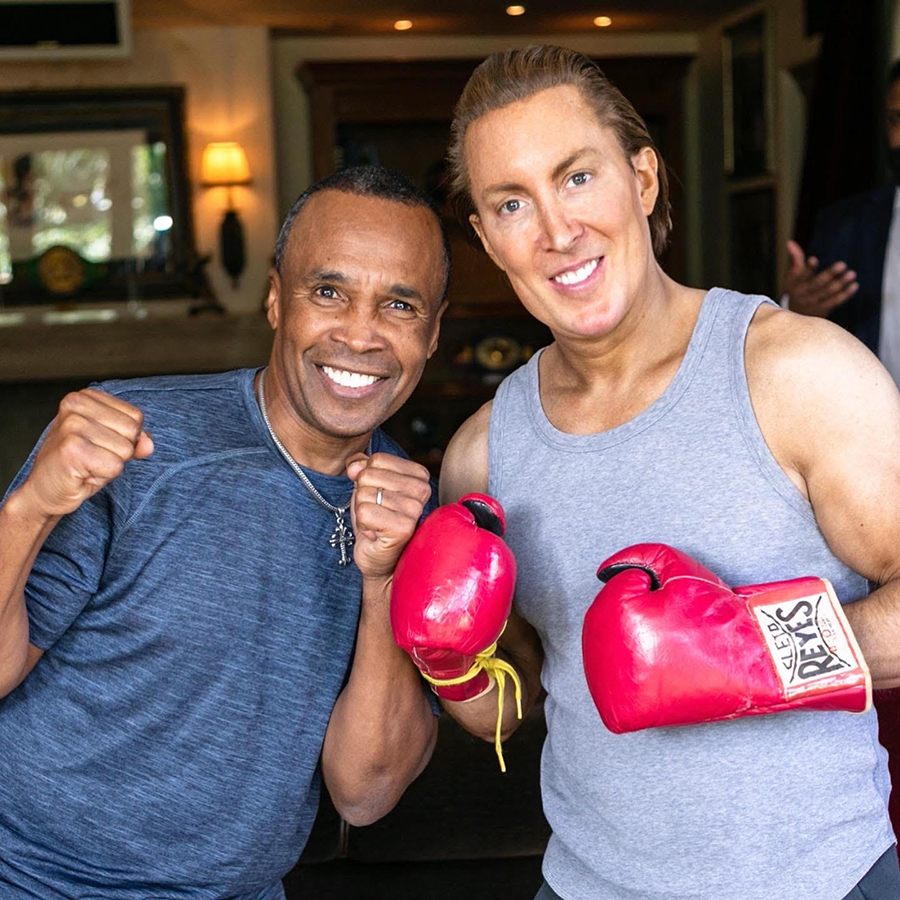
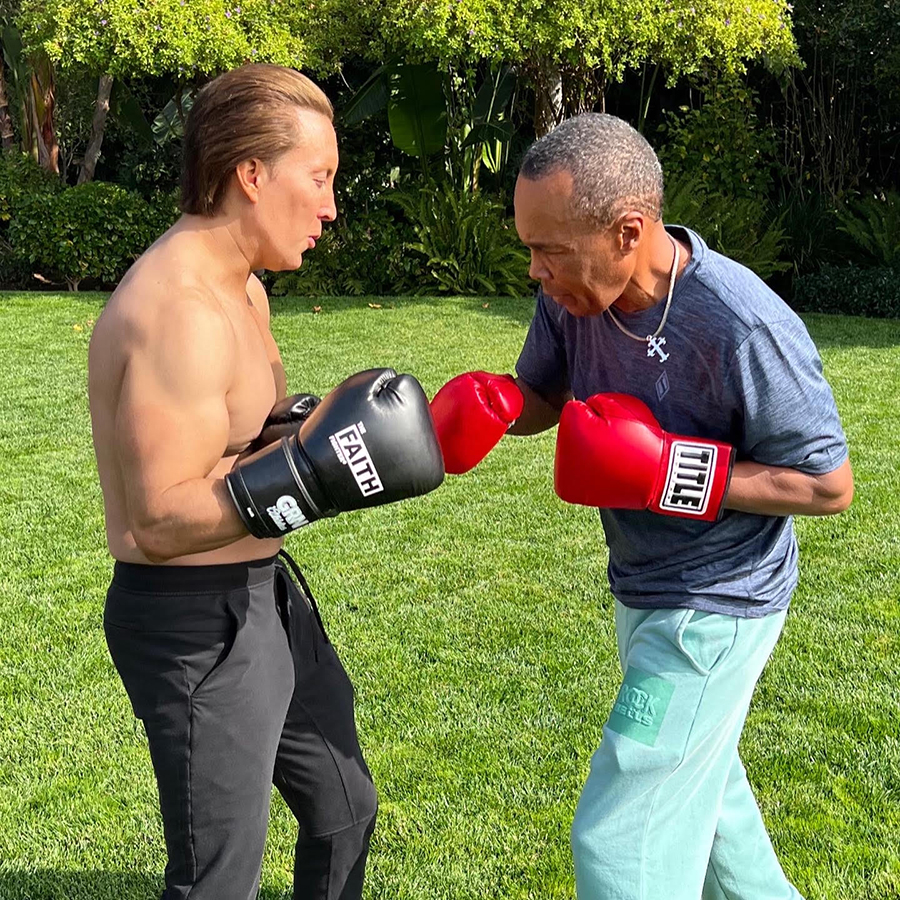
Sugar Ray Leonard is back in the fight, but this time, he’s not swinging his lightning-fast fists to knock out a lightweight competitor. The champion boxer recently teamed up with New York City entrepreneur and philanthropist Daniel Neiditch – a heavy hitter in his own field – to face off in a friendly boxing match in support of the Sugar Ray Leonard Foundation, which supports childhood diabetes. 

The fundraiser took place at Sugar Ray Leonard’s Pacific Palisades residence, where donors and supporters of the Foundation gathered to watch the match. Leonard and myself clocked in for the super middleweight standoff, both weighing in at 165 pounds. After throwing a few well-calculated punches and swift hooks, the match ended in good humor, with both contestants sharing the victory. 

Once the gloves came off, the six-time world champion, 1976 gold medal winner, and three-time golden glove champion showed off his gold medal and championship belts. The event successfully raised donations from generous benefactors and boxing enthusiasts to fund research and care for pediatric diabetic patients. 
Leonard, whose father struggled with diabetes, established the Sugar Ray Leonard Foundation with his wife, Bernadette, in 2009 to benefit and create awareness for childhood type one and two diabetes. The former boxer was inspired to jumpstart his charity after witnessing his father’s uphill battle with the disease and the complications that affected every aspect of his life. His foundation strives to help children with diabetes live healthier, longer lives through diet and exercise while supporting research efforts to fight back against the childhood condition that affects more than 20,000 children in America alone. 

This boxing match my first fight either. In October of 2019, I entered the ring with heavyweight champ Evander Holyfield, that time in support of Global Autism awareness. He may have been punching above his weight class in that match but still came out on top as a champion for his cause. 

Leonard and Holyfield are just two of the famous faces I have worked with to support various charitable causes. My philanthropic work, is aimed primarily at empowering disadvantaged children and harnessing celebrity influence’s potential for a good cause. In the past, I’ve teamed up with other famous faces to benefit charity. I have bowled a few frames with Paul Rudd on behalf of the Stuttering Association for the Young and joined Steven Colbert and Julia Louis-Dreyfus for Montclair Film’s annual fundraiser in Newark, benefitting children in underprivileged communities. 

In 2019, I took to the mound at Target Field to throw out the first pitch at a Twins game on behalf of the Cal Ripken Sr. Foundation, and also tossed one across the plate at Fenway Park in front of Red Sox fans. I once led a live auction that offered donors the chance of an enlightening lunch and ride in a Lamborghini to benefit the Max Alexander Foundation.
Through my philanthropic work, I aim to show that the combination of creative fundraising efforts with the power of the celebrity can be an effective strategy in creating awareness around a cause for good. While celebrities themselves are more than capable of giving to charitable foundations on their own, the influence they evoke when they publicly support a specific cause creates a much larger ripple. 

Bringing a well-known name or face to a movement enhances the awareness around the cause and even lends credibility to it. While marketing and advertising agencies use this “celebrity effect” to boost profit, I see it as an opportunity to make a positive difference where it counts. Celebrities, socialites, and business moguls worldwide have a tremendous power that, yielded in the right way, can make a monumental impact on philanthropy and charitable efforts. Their superstar status amplifies their voice and gives them a stage from which they can encourage a giving spirit and draw attention to important issues that desperately need resolution.

So, while the match with Leonard may have ended in a draw, it marks a victory in the endeavor to use celebrity influence for good, and a win for the kids of the Sugar Ray Leonard Foundation. 

CEOs Can Leverage Their Networking Skills for Community Good

I’ll borrow a quote from management researchers Herminia Ibarra and Mark Lee Hunter. “What differentiates a leader from a manager, research tells us, is the ability to figure out where to go and to enlist the people and groups necessary to get there. Recruiting stakeholders, lining up allies and sympathizers, diagnosing the political landscape, and brokering conversations among unconnected parties are all part of a leader’s job.”

Data backs the pair’s conclusions. Generally speaking, organizations with better-connected CEOs and board members tend to snag cheaper financing and see better performance, respectively. Networking skills empower leaders to build the relationships they need to extend their reach, tap into talent pools, and achieve more than they ever would have if they had gone it alone. 

But I believe that a CEO’s networking skillset does more than smooth the way in business — that it can empower corporate leaders to help their communities. 

To be honest, I’ve been on this train of thought for a while. I realized that my work as a corporate leader in luxury real estate gave me the networking opportunities I needed to connect with high-profile philanthropists in New York City and inspire real change in my home city

It was a game-changing realization for me. I might work in Manhattan now, but I’ll always be a kid from the Bronx — even as I grew up, I realized how much work could be done to improve the lives of the people in my neighborhood. 

Shortly after that, I started applying the networking and collaboration skills I’d honed as a CEO to the nonprofit sector. I found one of my first causes, Literacy Partners, through a friend who used to be a board member for the organization. Since 2015, I’ve also been involved with the Room to Grow program, which provides coaching services, community connections, and goods to support parents and children in the Bronx. Just last year, I virtually co-hosted the organization’s annual benefit with Bruce Willis and Uma Thurman. 

To be clear — I’m not saying that all CEOs should step away from their desks and connect with celebrities. Instead, I’m saying that their communication skills make them uniquely positioned to connect with and activate potential donors and collaborators. 

Past research tells us that high net worth individuals give when they feel they’re responding to an organizational need, believe they can make a difference, believe in a nonprofit’s values, and are concerned about the cause at hand. Now, a philanthropically-motivated CEO might not telegraph shared values or concerns, but they can certainly communicate a need and sell the donor on a cause’s importance. Donor activation requires negotiation, sales, pitching — all skills that are well-taught in the boardroom. 

That said, if a CEO isn’t necessarily comfortable focusing on donors, they may also want to consider lending their counsel, support, and mentorship to nonprofit leaders. 

This kind of assistance is more wanted than you might think at first listen. The nonprofit sector’s problems with personnel development and succession planning are well-documented. According to a report published in the Stanford Social Innovation Review (SSIR), only 30 percent of C-Suite roles in nonprofits are filled via internal promotion; this is about half the rate reported in the for-profit sector. 

“Our new study surfaced what we call a leadership development deficit. The sector’s C-suite leaders, frustrated at the lack of opportunities and mentoring, are not staying around long enough to move up,” SSIR researchers wrote. 

“Even CEOs are exiting because their boards aren’t supporting them and helping them to grow. This syndrome is coming at a high financial and productivity cost to organizations, undermining their effectiveness and hampering their ability to address social and economic inequities.”

As you might imagine, the turnover can be expensive. By some reports, the cost of locating a capable high-level leader can be as much as half of the person’s annual salary. This monetary expense doesn’t encompass the “softer” turnover costs — i.e., productivity lapses, fundraising, and the general distraction posed by recruiting. 

Taking some time to provide mentorship or advice to upcoming nonprofit leaders could be an easy way for CEOs to use their networking skills and business savvy to cultivate positive change. In offering their time, these corporate executives help facilitate effective leadership, reduce nonprofit turnover, and further their community efforts. 

All CEOs take a slightly different approach to leadership. Some are more direct in their oversight; others prefer to delegate. But by and large, all successful executives are stellar communicators. Those skills don’t need to be — or perhaps shouldn’t be — confined to boardrooms and C-suite offices. As corporate leaders, we can do more to support the causes we love than only contributing funds. 

0