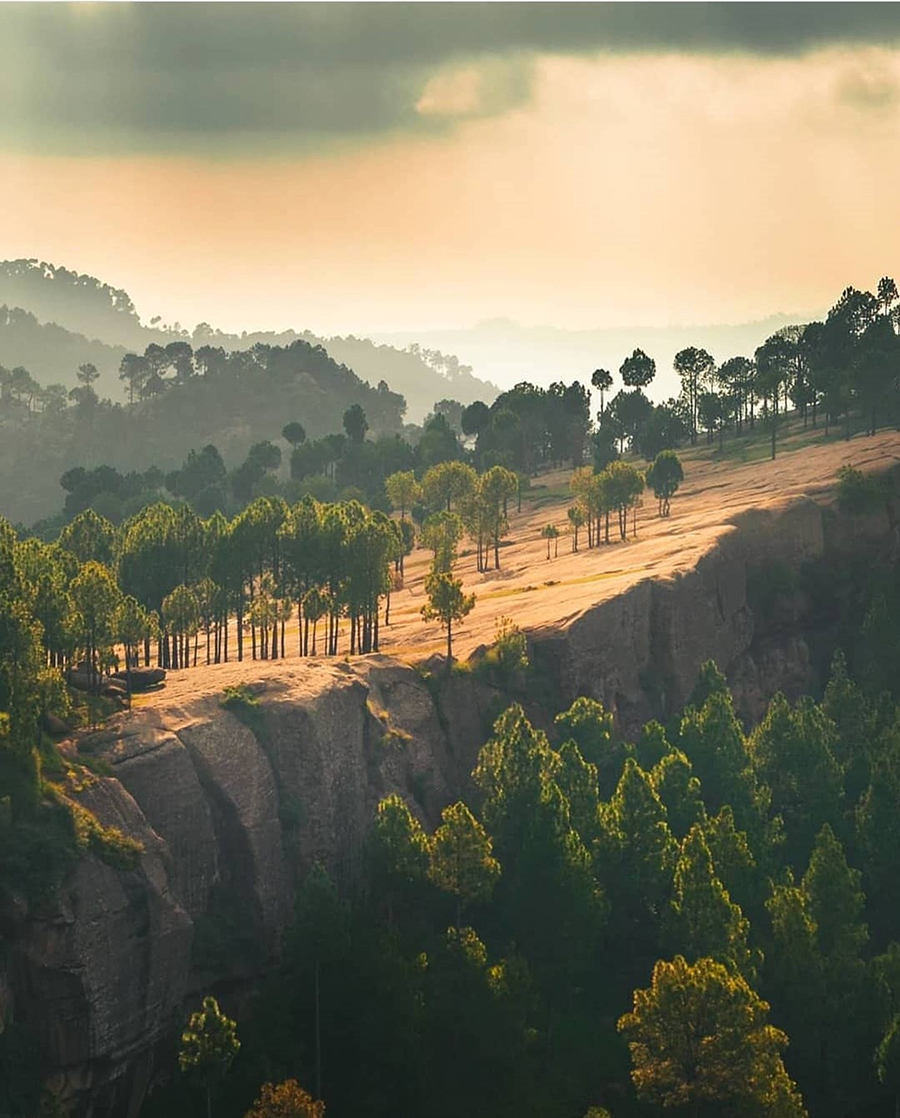
The forest fire stopped just before arriving at Nieves Fernández Vidueira’s farm, but it burned all day in the area surrounding Quintela do Pando in Galicia, northwestern Spain.
“I will never forget the terror that I felt,” Fernández said. “When we woke up we couldn’t even breathe, everything was covered with smoke, it seemed like night, chunks of scorched bark fell from the sky.”
Fernández, 59, is a shepherd and poet who says she will always remember Oct. 16, 2017, when all the neighbors went to the nearby village of Fradelo to help the firefighters. “The trees made a terrible noise and fell to the charred ground. I saw rabbits and roe deer escaping from the fire, people cried all around. Right now, I still cry when I remember it.”
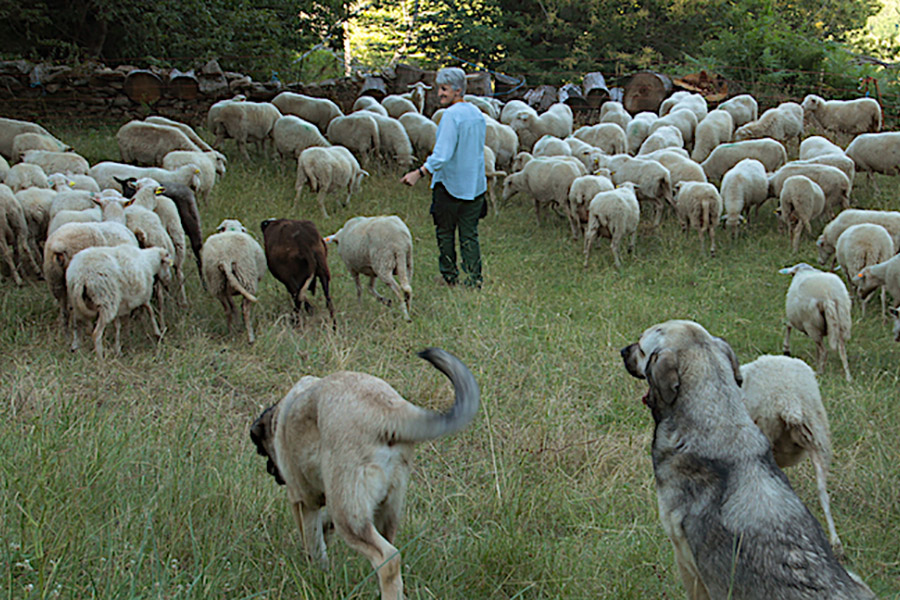
During that time, Galicia experienced an unusual heat wave, as happened in other parts of the Iberian Peninsula. “Many hectares were destroyed during a day of flames and the fire stopped at an area of chestnut trees grazed by sheep, surrounding my field. Livestock are a fundamental part of forest fire prevention, by eating the grass in the undergrowth, and highly combustible lichens on the trees,” Fernández said.
That day, she composed a poem to express feelings of sadness and impotence after seeing the woods transformed into a dark desert.
Writing poetry under the centenary chestnut trees
Fernández became a shepherd at 19 when she was expecting her first son. She decided at the time to leave Madrid and come back to Quintela do Pando, where she grew up.
“In the past, practically only men worked as shepherds: a woman like me broke all the existing patterns. Then, if in the meantime sheep are grazing, you bring with you a knife and carve wood toys for your children [as I was used to] you break all the molds,” she explains.
It all started with the 18 sheep owned by her grandmother. Now she has 400 Galician sheep, or ovella galega, a breed classified as in danger of extinction, grazing among chestnut trees (Castanea sativa), oak (Quercus robur), elm (Ulmus spp.) and hazelnut (Corylus spp.). The sheep eat lichens and bushes such as tojo (or gorse, Ulex europaeus), brezo (heather, Erica ciliaris), and xesta (Scotch broom, Cytisus scoparius).
This is a kind of agricultural system called agroforestry because it’s done among trees, which cool the surroundings, provide habitat for biodiversity, and promote humidity that helps crops like hay and grains grow even in dry conditions. The trees in an agroforestry system also sequester carbon from the atmosphere to cool the atmosphere. In this case, since livestock graze between the trees, it’s also called silvopasture, which is an ancestral farming system typical of Galicia.
Fernández’s farm is self-sufficient, producing sustainable forage for its sheep and selling meat and chestnuts. Every evening as she brings the sheep to graze and sits under the old chestnut trees, Fernández also writes poetry; designs clothes made with lichens and leaves and inspired by the Celtic mythologies deeply rooted in this area; and carves sculptures from tree branches to portray life through the lens of nature. In her handicrafts, one also finds stories of the meigas, witches whom local folklore ascribe to these woods. Her work is exhibited in a tiny museum in the center of the village.
“Being a shepherd inspires me, makes me feel free, that I’m part of nature,” Fernández says.
Climate crisis fans the flames
As Fernández experienced in her village, silvopasture systems deliver key ecosystem services. “Livestock reduce the risk of forest fires, eliminating [the] biomass of bushes and lichens from the ground,” says María Rosa Mosquera-Losada, president of the European Agroforestry Federation (EURAF), who’s in charge of the Department of Crop Production at the University of Santiago de Compostela (USC). “Silvopasture systems also provide an important carbon sink service: shepherding increases soil sequestration” of carbon, she says.
In Galicia, researchers observed a significant change in summer days over recent decades. “In the region, as in Spain, temperatures have risen by 1.7° [Celsius, or 3° Fahrenheit] since 1970. They are having great oscillations, with warm periods, followed by cold ones,” explains Dominic Royé, physical geography researcher at USC.
Many variables influence this, as Royé explained in a paper published in 2020. “Climate variability leads to years with more or less forest fire activity due to more favorable conditions. We must understand that a drought followed by heat waves greatly increases the risk,” Royé says. “The easterly winds in Portugal and Galicia are dry and warm in summer, dramatically increasing the risk of forest fires, and a few fires could burn huge areas.”
How’s the weather? ‘It depends’
North of here, the winding road passes through rivers and villages with few inhabitants nestled in hills colored by the violet flowers of heather, known locally as brezo. News of the forest fires tearing through the U.S. West Coast dominate the radio bulletins on the car stereo: tales of flames worsened by climate variability, a global issue that is part of the climate crisis.
“Depende [it depends], it’s a word that represents part of our character,” Mosquera-Losada says. “As Galician people we are well-known [as] undecided. Right now, depende is also our attitude to climate variability. We have more summer days but you’ll never know how the weather will be: extremely cold, rainy or windy.”
Indeed, local shepherds have observed weather changing very much during recent decades. “Depende is a good answer to identify our weather,” says Javier González Méndez, 43, who works as a firefighter by day and as a shepherd in the evening, taking care of 45 rubia gallega cattle, a breed native to Galicia.
The youngest of seven siblings, Javier González became a fireman at 18, and is the only one of them still living in the village of Robledo de Domiz, here in the heart of Galicia.
After he sheds his firefighter uniform, he brings the cows to the Os Ancares mountains. Climbing up to 1,600 meters (5,250 feet), they graze in a silvopasture system with oak, birch (Betula pubescens), hazelnuts (Corylus avellana), holly (Ilex aquifolium), cherry (Prunus avium), teixo (or yew, Taxus baccata), and bushes such as uz branca (Erica arborea), xesta, and cardo (thistle, or Cirsium vulgare). There are also medicinal plants such as arnica (wolf’s bane, Arnica montana) and lemon balm (Melissa officinalis). These mountains are also the last redoubt of brown bears (Ursus arctos) in Galicia, which González reports meeting several times on the nearby peak.
If just one remains, who will take care of these woods?
“Rubia ven acá” — Blondie come here — González calls out to gather each of his cows, most of them a light brown or cinnamon color. He gives each of them a proper name, such as Rubia or Marella.
When they graze on the mountaintop, he follows them on his mobile phone, thanks to GPS chips in their collars. Over the years, he says, “I saw forest fires each time more intense, since there is less flock cleaning the mountains,” he explains, walking in an area that was razed to the ground by a forest fire. That occurred in October of 2017, when 2,000 hectares (nearly 5,000 acres) burned in a week. Oak and birch skeletons still remain as testimonies to the blaze.
“Before, we were 13 shepherds on this mountain,” González says. “Now I’m the only one on more than 100 hectares [250 acres].”
His flock does the work that’s needed more than ever because the forest fire season just began. Last year, 14,805 hectares (36,584 acres) burned in Galicia, more than in 2018 and 2019 combined, according to the latest governmental statistics.
Galicia has the highest density of forest fires and largest burned area in Europe, according to USC research coordinated by Mosquera-Losada. “There are three conditions that make fires happen: temperature over 30°[C, or 86°F], 30-plus percent humidity, and wind speeds superior to 30 km/h [19 mph],” she says. “These conditions are more frequent due to climate variability.”
‘You won’t last long’: Female goatherd smashes stereotypes
Going north and west in the direction of Lugo, the landscape changes. Pine trees (Pinus pinaster) and eucalyptus (Eucalyptus globulus) emerge from a landscape covered by light early-morning fog.
“When I arrived here, I was 30, just divorced and a single mother of a little girl of 4. All the people said I won’t last long with my goats,” says Gemma San Pedro Jiménez, 42, now a goatherd for the past 11 years. “Nobody had expectations of me. They would say: what are you doing here with goats? But I’m still here and I’ll remain with my goats.”
Her house is in front of the paddock containing a flock of 400. Originally from Barcelona and after with a forest engineering degree from Lugo University, San Pedro Jiménez decided to become a goatherd when her mother inherited 50 hectares (124 acres) of pine woods in the area surrounding the village of Borreiques.
Every evening she brings her goats to the woods; they take different routes through the pines, which filter the light and draw kaleidoscopic shadows on the undergrowth. They graze in an agroforestry system among eucalyptus and oak, known locally as carballos, looming above tojo, brezos and xesta bushes.
Younger people like her are returning to such depopulated areas, making a choice with social and ecological implications, as is also happening in Sardinia. “Rural abandonment and the consequent abandonment of traditional uses, together with the increase in forest area lacking forest management, forests adrift due to increasingly noticeable climate change, and the lack of protection measures in rural households are the perfect spark to start the forest fire disaster every year,” according to a WWF report focused on the Mediterranean.
Taking care of this forest is a daily challenge for San Pedro Jiménez. “Consumers have to understand and support the work of shepherds, changing their habits, considering that eating meat produced in this condition has strong social and ecological values. Prices are the same for 30 years and it’s not easy to survive,” she says, cuddling Chis and Jazz, her border collies. “I wish that we could be more and more working in this way, to make our voice heard.”
20,000 euros in pesticides saved
Moving west from the San Pedro Jiménez farm toward Santiago de Compostela, some pilgrims appear. COVID-19 restrictions earlier forced the suspension of the Camino de Santiago pilgrimage, but the pilgrims are now back walking the trail.
In Boimorto, 30 km from Santiago de Compostela, some pilgrims on foot and others on bikes have found shade under cherry and walnut trees that comprise the silvopasture system of a local timber enterprise called Bosques Naturales.
USC researchers study the farm’s clonal tree species’ resistance to climate change. In the trees’ shade, maize also grows, and bushes offer forage for the 400 sheep that keep the undergrowth trimmed.
The economic sustainability of the agroforestry system is crucial: with silvopasture, the researchers report savings of more than 20,000 euros ($23,500) in pesticides and related costs at Bosques Naturales, thanks to the forage that grows well in the trees’ shade. They are also experimenting with other crops to further boost the farm’s economic sustainability, such as hemp for textiles.
Shepherds as a forest fire solution
The shepherds of Galicia are working hard to find a balance between their work among silvopasture systems and long-term sustainability.
“They need more administrative support to recognize the importance of their work,” says USC’s. Mosquera-Losada. “Adequate management of the mountains with shepherding could be part of the solution to preventing fires. They understand nature and they are living examples of the solutions.”
This opinion is shared by the shepherds such as Nieves Fernández Vidueira. “Local administration should support people that work with a farm and take care of the mountains,” she says. “Forest fires are prevented with livestock, that is crucial. They have to invest in prevention.”
Yet her village is home to just 18 inhabitants, none of them young. “If the people keep leaving,” she asks, “who will protect the woods?”
This story originally appeared in Monga Bay and is republished here as part of Covering Climate Now, a global journalism collaboration strengthening coverage of the climate story.
With warming environments, landscapes are shifting. But life is still abundant.
When ecologist Craig Allen looks across the brown, grassy shrublands on the east flank of the Jemez Mountains in northern New Mexico, he feels no satisfaction that he was right.
Right that the world was warming. Right that warming would spur such large, severe fires that the forest he studied for decades would disappear. And right that increasing temperatures here—and across the globe—have made it too warm for conifer trees to regain even a toehold across many of their old landscapes.
“It’s hard not to feel…well, it has felt like failure there,” says Allen, who recently retired from the U.S. Geological Survey, and has monitored landscape change in these mountains since he was a Ph.D. student in the late 1970s. “We saw the vulnerability. But we could not act substantively enough, quickly enough to deal with it.”
Across the Earth, people are watching the impacts of climate change play out across their homelands, the places they depend upon and love. From rising seas lapping at the shores and inundating coasts to the highest mountains, where snowpacks are dwindling and glaciers receding, we are reeling from how these changes affect every aspect of our lives. In all of this, there is room for grief. These changes are dangerous and disorienting. But building new relationships with the landscapes around us will allow us to survive—and give the other species we still share this planet with the chance to thrive.
Aside from a few exceptional years, the past two decades have been marked by warmer temperatures and a severe drought that have sucked up snowpacks and streamflows around the U.S. Southwest and northern Mexico. Hand in hand with other human interventions, like fire suppression, drought and warming have made forests increasingly vulnerable to die-offs, insect outbreaks and larger, more severe wildfires.
In the late 1980s, when NASA climate scientist James Hansen testified before the U.S. Congress about the link between human-emitted greenhouse gases and warming, Allen says the impacts of climate change still seemed theoretical. But by the early 1990s, temperatures were clearly rising, and in 1998, he co-authored a paper with David Breshears, looking at how climate change would produce large shifts in forests at “unprecedented rates.”
All too quickly, Allen and his colleagues watched this play out worldwide, including in the Jemez. In 1996, the Dome Fire burned over 16,000 acres of the Santa Fe National Forest and the adjoining Bandelier National Monument. Then in 2000, a prescribed fire ran out of control in the area; the Cerro Grande Fire burned 48,000 acres. Part of the problem in the Jemez, as with millions of acres of forests across the western U.S., lies with a century of fire suppression. By not letting even naturally-ignited fires burn, we allowed our forests to become overly dense and stuffed full of downed and dead trees that now more easily fuel bigger and more catastrophic wildfires.
But warming changed the whole dynamic.
“As soon as we started to go through multiyear drying, society no longer had the capacity to suppress those fires,” Allen says. “If you get an ignition on the wrong day, just forget it.”
That’s what happened when the 2011 Las Conchas Fire ripped through the Jemez with astonishing heat and unprecedented speed. No one had seen a fire like Las Conchas. And modelers still can’t get a grip on it.
Las Conchas ignited around 1 p.m. on a sunny Sunday in late June, shooting a huge, pyrocumulus cloud above the mountains. By 3 a.m., it had burned more than 40,000 acres. In all, it devastated 156,000 acres.
In some places where the highest severity fires burned, aspen groves are replacing the scorched and root-ripped pines that have tipped and fallen. Some scattered pines do survive, but most are skeletons, creaking and whistling in the whipping wind. And within about 30,000 acres of the burn scar, there’s simply no forest. A decade after the fire, it’s dusty. And even in mid-April, the sun feels punishing. No longer a cool, moist conifer forest, this land is now wide open to the Rio Grande Valley below—and covered with tufts of deer-munched grasses, low prickly bushes and a smattering of scrubby Gambel oak.
“It hurts to see the loss of the forest in the Jemez,” says Allen. “There are always winners and losers in change, right?” he says, repeating the mantra ecologists adhere to, that change is inherent in all ecosystems at all time scales.
“There’s life up there,” Allen says. “Abundant life. But it’s not forest life.”
More than 20 years ago, aquatic ecologist Michael Bogan interned with the California Department of Fish and Wildlife in Bishop, east of the Sierra Nevadas. It was 1998, a wet year for California, and the idea of studying water in the desert lodged in his brain.
Desert streams are approachable subjects, especially compared to, say, a massive and murky system like the Mississippi River, says Bogan, now a professor at the University of Arizona’s School of Natural Resources and the Environment: “The entire world is shrunk down to the size of your living room. To understand why something is going on, why the species are there, or why they’re disappearing — you have a pretty good chance of figuring it out.”
For Bogan, studying those small systems over the past two decades has meant witnessing their decline.
When he first started visiting one of his research sites in southern Arizona, French Joe Canyon, he’d hear birds singing from the cottonwood trees as he approached. “It was so full of life all the time. I knew the invertebrates there, I knew the species,” he says. Now, it’s hard to go back. “Most of the time now, it’s dry. The birds are definitely not there, the aquatic species are not there,” he says. “And even when it does have water, it’s not the same species that were there beforehand.”Santa Cruz River, Arizona. (Photo: Elnogalense)
That sense of loss is magnified from knowing change isn’t just occurring at that one living room-sized place he happened to be paying attention to—but knowing that springs and streams are drying up across the entire region, the entire world.
“The scientist in me knows that stasis is a myth, right?” he says. Ten thousand years ago, for example, southern Arizona hosted a forest of Joshua trees, not saguaros. “There was almost no similarity to what you see today. So, the scientist in me knows that nothing is ever stable and things are always changing,” he says. But he still feels grief at the rapid changes we’re experiencing.
To seek out joy, he also studies ecosystems that might persist or that can respond when we make different decisions.
The Santa Cruz River in Tucson, Arizona, had been dry—thanks to rampant development and reckless groundwater pumping—for roughly a century. A few years ago, the local water utility agreed to use its treated effluent to rewater the river.
Some fish species had gone extinct, like an endemic species of pupfish. But they’ve now reintroduced the Gila topminnow and are watching greenery come back, as well as myriad species of dragonflies. Coyotes and bobcats make appearances on game cameras set up along the Santa Cruz.
“That’s a situation where it’s treated wastewater, but where you do it right, where you are purposeful about how you do it, now it does support a lot of species, it shows resilience. It was dry for 100 years, but species are back,” he says. “The birds found it again, the ducks came back, down to the snails, they came back.”
Bogan keeps coming back to the idea of resilience: “French Joe Canyon is not resilient; it’s never coming back unless we enter a new Ice Age period,” he says. “But species themselves, and some ecosystems, they can be resilient if we change our actions, if we change the way we manage our water or other resources.”
Of course, many people already know how to adapt to change: climatic changes, cultural disruptions and shifting relationships with landscapes over lifetimes and generations.
Pueblo people in the Southwest have been adapting to their landscapes since long before colonial times—and they hold within them a “genetic memory of how to have a healthy watershed,” says Julia Bernal. She works on water issues in New Mexico and is executive director of the Pueblo Action Alliance, an environmental and social justice group.
There are 19 pueblos in New Mexico. Each of these Native American tribes is different, and a distinct, sovereign nation. But they share some commonalities, including ancestry traced back to places like Chaco Canyon and Mesa Verde. Bernal is an enrolled tribal member of the Pueblo of Sandia and is also from the Pueblo of Taos and the Yuchi-Creek Nations of Oklahoma.
Since pre-colonial times, Pueblo people have been adapting to their changing climates—migrating due to an epic drought in the 1100s from Chaco Canyon, for example, to live along the Rio Grande.
Today, that river’s waters are damned, diverted and overallocated. The state’s largest river, the Rio Grande now regularly dries up each summer downstream of the city of Albuquerque. And in southern New Mexico, the river channel is dry for most of the year.
Bernal recalls a recent conversation with her dad, who told her about almost falling into the river because it overbanked so much. “That really resonated with me, because I’ve only seen it as a very narrow, channelized system because of the dam,” she says, referring to the Cochiti Dam, built upstream in the 1960s and ’70s by the U.S. Army Corps of Engineers. “I don’t think we’ll ever see the river look the same way that it did,” she says.
The alliance’s movement of reclaiming what was stolen, first by the Spanish and then by the U.S. government, involves the recognition and reclaiming of lands. And waters. “Everything that we do is … for everybody, for the health of the whole because we understand the watershed system as a whole,” she says, adding, “This isn’t about taking all of the water resources. It’s not about taking all the land and not leaving anything for anybody—that’s a capitalist and colonialist concept.”
Bernal challenges non-Indigenous people to think more deeply about what Indigenous-led movements are trying to do. And to recognize they will benefit the global majority, particularly in this climate-changed world. “Some people think ‘decolonizing’ means we go back centuries,” she says. What it really means is having choices—in terms of energy, for example—and learning how to meet the needs of the community by building an economy around particular values.
It’s sad to see changes on the landscape, she says—whether they’re due to development, oil and gas, even recreational infrastructure, or to warming and its impacts. “Unfortunately, we’re going to see more of that; it’s inevitable, and especially at this rate we’re going at right now,” she says.
Whether it’s Bernal’s father recalling the Rio Grande before Cochiti Dam, or Bogan, Allen and others monitoring ecosystems and telling the stories of changing landscapes through the data they collect, storytelling helps us remember the past, and find new ways of living with the future.
Today, when Allen goes out to the burn scars in the Jemez, he says he’s starting now to see it as “normal.” The conifer forest is gone, and it’s not coming back. And this isn’t just happening in the Southwest: Studies over the last decade show that by 2100, at least half of the Northern Hemisphere’s conifer forests will have died due to rising temperatures and the associated impacts.
“It’s a different world,” he says. “But I guess the gut punch of it wore off some time ago, and I’m now more engaged in appreciating and fostering what we have.”
This story originally appeared in Capital And Main and is republished here as part of Covering Climate Now, a global journalism collaboration strengthening coverage of the climate story, of which Real Leaders is a member.
Lingering sunlight and suggestions of swelter are lifting spirits across the United States. For many, the spring air marks a transition out of the seasonal depression that comes with winter. For others, however, rising temperatures mean it’s time to find a cooling center.
These centers, which are used by cities like New York to provide air-conditioning for residents who don’t have it at home, are the end result of a decades-long fight against “environmental racism,” a term which refers to environmental injustice that occurs both in practice and policy. Factors like rising temperatures and a pandemic affect how comfortably people can live in their communities, and more often than not discomforts fall disproportionately on communities of color.
Young people have advocated for an intersectional approach to the climate crisis that addresses the realities of environmental racism. Here’s what to know about the unexpected effects of discriminatory environmental policies.
1. Living amid industry can impact mental health.
While it is acknowledged that living near landfills or toxic dump sites can disrupt physical health, there is less research available on how this impacts mental health. However, a 2007 study from Social Science Research found “sociodemographic, perceived exposure, objective exposure, and food consumption variables are significant predictors of physical health and psychological well-being,” and that there was “a significant relationship between physical health and psychological well-being,” specifically in low-income, Black communities in close proximity to a hazardous waste site.
A 2005 study published in the Journal of Health and Social Behavior also found that perceived exposure can affect the mental well-being of communities of color. “Residential proximity to industrial activity is psychologically harmful because many individuals perceive industrial activity negatively, as a potential health threat or a sign of neighborhood disorder,” the authors wrote.
Neighborhoods with higher temperatures are the same areas that were subject to the racist practice of redlining, in which banks and insurance companies systematically refused or limited loans, mortgages, or insurance to communities of color.
According to NPR, in a study of 108 urban areas nationwide, the formerly redlined neighborhoods in nearly every city studied were hotter than those not subjected to redlining. The temperature difference in some areas was nearly 13 degrees.
“[Formerly segregated communities] tend to have less green space — fewer trees along the street, less access to parks,” Gerald Torres, a professor at Yale Law School and the Yale School of the Environment, tells Teen Vogue. “Urban areas tend to be hotter, in general, just because there’s more concrete that stores heat. But where they store heat and they don’t have the mediating environmental amenities, the places just get hot.”
This phenomenon explains the “urban heat island effect,” meaning areas are much hotter with fewer places to cool down. In 2019, Los Angeles hired the city’s first forest officer in an effort to increase the amount of shade in underserved areas by planting more trees. L.A. mayor Eric Garcetti has described shade as “an equity issue.”
3. Environmental racism is a leading cause of death in communities of color.
There are many factors that threaten the well-being of minority communities, such as discriminatory policing and housing availability, but environmental discrimination is actually one of the main causes of mortality for these residents.
“Air pollution and extreme heat are killing inner-city residents at a higher rate than almost all other causes,” Scientific American reported. “And as average temperatures continue to rise — contributing to what scientists call the ‘urban heat island effect’ — death and illness from the effects of climate change are expected to rise further.”
4. It is cheaper for a corporation to pollute communities of color than white communities.
“Research has shown that if you have a corporation who has violated environmental laws, the corporation is going to be fined. The fines tend to be lower in communities of color, especially Black communities and poor communities,” Dorceta Taylor, professor at the Yale School of the Environment and author of Toxic Communities: Environmental Racism, Industrial Pollution, and Residential Mobility, tells Teen Vogue. “Corporations, they’re not idiots — they can see this difference.”
Lower fines lead to more pollution, which often decreases the land value of existing homes near a factory or landfill. As a result, more industry moves into the area, creating a vicious cycle. Left with little opportunity for mobility and sparse political clout, the remaining residents are subjected to continually worsening living conditions.
“One factor that might be playing into this is whether or not the communities are able to organize and mobilize to push for the cleanup that they should be getting,” Taylor says, “or even know when these [cleanup] cases are going to court.”
5. Many environmental conservation organizations have racist founders or namesakes.
Some of the best-known environmental conservation groups have racist histories. For example, John Muir, known as the “father” of the national parks system and founder of the nation’s oldest conservation organization, the Sierra Club, used offensive slurs and called Indigenous people he encountered on a walk “dirty.” John James Audubon, namesake of the famous bird conservation group, was a slaveholder. Henry Field Osborn, a founder of the Save the Redwoods League, supported eugenics.
6. A lack of government and organizational diversity perpetuates the problem.
In a similar vein, many argue that a lack of diversity at climate conservation organizations and in government sectors affects whether or not an entity will rightfully put communities of color at the forefront of the conversation about climate change.
“Where you have people from marginalized communities [in leadership], they’re going to cause you to ask questions you might not have considered,” Torres says. “You can think of it as, essentially, improving information flows so that decisions are better.”
7. Environmental racism doesn’t affect only low-income communities.
“Even if you are a middle-class, highly educated Black person in this country, you’re more likely to still be living beside or close to communities with hazardous waste sites than if you are white, working-class with low educational attainment,” Taylor says. “So, however we slice it, there is a ratio that is more correlated with exposure to toxics and hazards with race than with the class.”
In the notable 1978 court case Bean vs. Southwestern Waste ManagementCorp., a Black neighborhood of homeowners in Houston sued a waste management company, arguing that a permit for a new facility violated their constitutional rights. A judge ruled in favor of the waste management company. According to sociologist Robert Bullard, who collected data for the lawsuit and has since been dubbed “the father of environmental justice,” of the plaintiffs in the case, 85% of the people owned their homes and were considered middle-class.
8. Minority communities often live in affected areasbeforehazardous facilities are built.
A study by University of Southern California sociology professor Manuel Pastor reviewed data for minority populations and move-ins before and after the arrival of toxic storage and disposal facilities in Los Angeles County from 1970 to 1990. Areas scheduled to receive waste factories were mostly minority communities; after the facilities arrived, there were no significant increases in the minority population.
According to Bullard, in Houston during the time of the Bean vs. Southwestern case, all the city-owned landfills and 75% of the city-owned incinerators were in Black neighborhoods, even though they made up only 25% of the population during that period of time.
“There is a deliberate attempt to move into people of color communities. So that path of least resistance tends to run through people of color communities — if you look in the South, you’ll find Black communities, Latinx communities, Native American communities that were there before,” says Taylor. “That big, polluting factory came just before the waste dump was put beside their neighborhood.”
9. Environmental racism can also be expensive for people of color.
Energy and utility bills are a more subtle indicator of the ways that environmental policies can impact people unequally based on race. A paper from the University of California, Berkeley’s Energy Institute at Haasfound that, when controlling for year, income, household size, and city of residence, Black renters paid $273 more per year for energy than white renters between 2010 and 2017.
Additionally, an American Public Radio report found that residents in Detroit and other cities near the Great Lakes with large Black populations pay a lot more for their water than those in a city like Phoenix, which pumps its water from 300 miles aways.
“[Communities of color] get higher bills because their houses are not as weather-tight and therefore use more energy to heat a similar space [as their white counterparts],” says Torres. “To reduce [energy] bills to marginalized communities, you would put in new weather stripping around the doors or double-glaze windows — things that are really low-tech. But [without these measures], the course of a year [can] generate enormous costs because of the loss of energy.”
10. United States policies aren’t just a United States issue.
Discriminatory environmental policies within the U.S. extend far beyond the borders of our country. According to reporting from Mother Jones, in Ipoh, a city in Western Malaysia, only half of the waste found at a dump site appeared to have originated in the country. The other half came from a wide variety of other countries, including the U.S. Much of the overseas waste was comprised of items collected for “recycling.”
Other countries, such as Indonesia, Vietnam, India, Thailand, and Taiwan, are subjected to similar waste dumping. Without a coordinated effort to combat dumping in the Global South, marginalized communities overseas are disproportionately affected by the polluting practices of the United States and other countries.
Ivana Ramirez is a student at Yale University and a writer for the Yale Politic. She is an intern at the United Nations Foundation where she contributes to digital storytelling and data visualization. This story originally appeared in TeenVogue and is republished here as part of Covering Climate Now, a global journalism collaboration strengthening coverage of the climate story, of which Real Leaders is a partner.
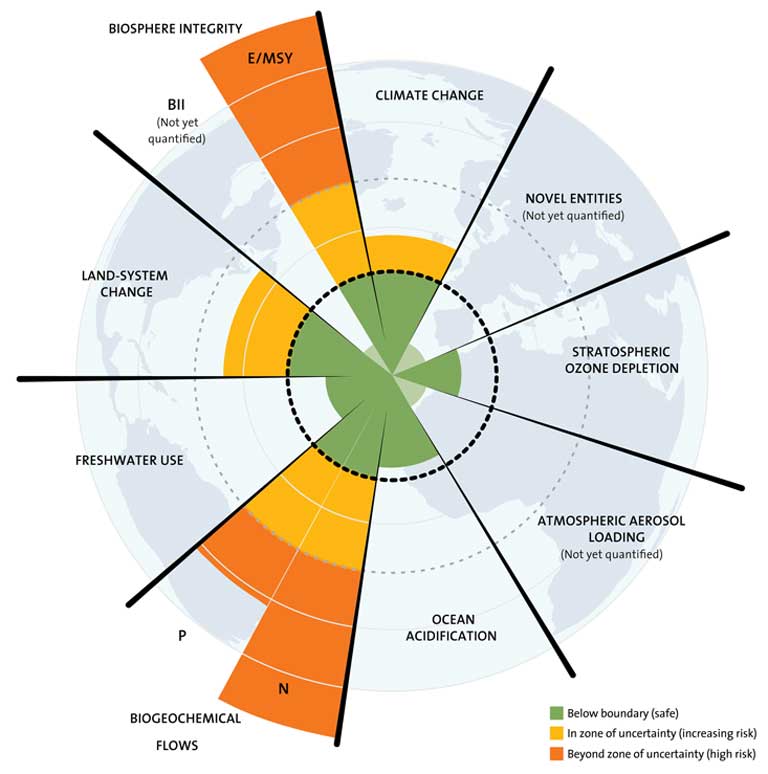
All life on Earth, and human civilization, are sustained by vital biogeochemical systems, which are in delicate balance. However, our species — due largely to rapid population growth and explosive consumption — is destabilizing these Earth processes, endangering the stability of the “safe operating space for humanity.”
Advanced human societies emerged during an unprecedented period of stability on Earth. During the 12,000 years prior to the Industrial Revolution, our planet’s surface temperature varied by less than 1° Celsius (1.8° Fahrenheit) above or below the average for that entire period. As a result, life — both human and wild — thrived.
But over the past two centuries, humanity has dramatically increased greenhouse gas concentrations in the atmosphere, pushing us outside this “safe” climate zone; outside the conditions for which civilization has been designed.
Unfortunately for us, climate change represents just one of nine critical planetary boundaries, which the imprudent actions of our species risk dangerously destabilizing and overshooting.
The Nine Planetary Boundaries
The Planetary Boundaries Framework (last updated in 2015) defines nine key Earth System processes and sets safe boundaries for human activities. They are:
1. Climate change: Rising concentrations of greenhouse gases in the atmosphere are leading to increasing global temperatures. We passed the safe boundary of 350 parts per million of CO2 in 1988. By 2020, levels were 417ppm.
2. Novel entities: One of the more elusive planetary boundaries, novel entities refers to harmful chemicals, materials, and other new substances (such as plastics), as well as naturally-occurring substances such as heavy metals and radioactive materials released by human activities. We release tens of thousands of synthetic substances into the environment every day, often with unknown effects. These risks are exemplified by the danger posed by CFCs to the ozone layer, or of DDT to biodiversity.
3. Stratospheric ozone depletion: The depletion of O3 in the stratosphere as a result of chemical pollutants was first discovered in the 1980s and led to the 1987 Montreal Protocol on Substances that Deplete the Ozone Layer. The ozone layer is now showing signs of recovery.
4. Atmospheric aerosols: Atmospheric aerosol pollution is a bane to human health and can also influence air and ocean circulation systems that affect the climate. For example, severe aerosol pollution over the Indian subcontinent may cause the monsoon system to abruptly switch to a drier state.
5. Ocean acidification: Rising atmospheric CO2 levels are increasing the acidity of the world’s oceans, posing a severe risk to marine biodiversity and particularly invertebrates whose shells dissolve in acidic waters.
6. Biogeochemical flows: We have profoundly altered the planet’s natural nitrogen and phosphorus cycles by applying these vital nutrients in large quantities to agricultural land, leading to runoff into neighboring ecosystems.
7. Freshwater use: Agriculture, industry and a growing global population are putting ever greater strain on the freshwater cycle, while climate change is altering weather patterns, causing drought in some regions and flooding in others.
8. Land-system change: Changes in land-use, particularly the conversion of tropical forests to farmland, have a major effect on climate because of the impact on atmospheric carbon dioxide concentrations, on biodiversity, freshwater, and the reflectivity of the Earth’s surface.
9. Biosphere Integrity: The functional integrity of ecosystems is a core planetary boundary because of the many ecoservices they provide, from pollination to clean air and water. Scientists are concerned about rapid declines in plant and animal populations, the degradation of ecosystems, and the loss of genetic diversity which could disrupt essential biosphere services.
The nine planetary boundaries, counterclockwise from top: climate change, biosphere integrity (functional and genetic), land-system change, freshwater use, biogeochemical flows (nitrogen and phosphorus), ocean acidification, atmospheric aerosol pollution, stratospheric ozone depletion, and release of novel chemicals (including heavy metals, radioactive materials, plastics, and more). Image courtesy of J. Lokrantz/Azote based on Steffen et al. 2015 (via Stockholm Resilience Centre).
A safe operating space for humanity
In the mid-2000s, Johan Rockström, founding director of Sweden’s Stockholm Resilience Centre, gathered an international, interdisciplinary team of scientists to unite behind a single goal: define the boundaries for a “safe operating space for humanity” on Earth. They asked themselves: what are the safe operating limits of our planet, and what changes can we force on it before we trigger rapid, catastrophic environmental harm?
In 2009, the center published the Planetary Boundaries Framework, which outlined nine key processes, influenced by humanity, that threaten the stability of the entire Earth System. These are: climate change, biodiversity integrity (functional and genetic), ocean acidification, depletion of the ozone layer, atmospheric aerosol pollution, biogeochemical flows of nitrogen and phosphorus, freshwater use, land-system change, and release of novel chemicals (including heavy metals, radioactive materials, plastics, and more).
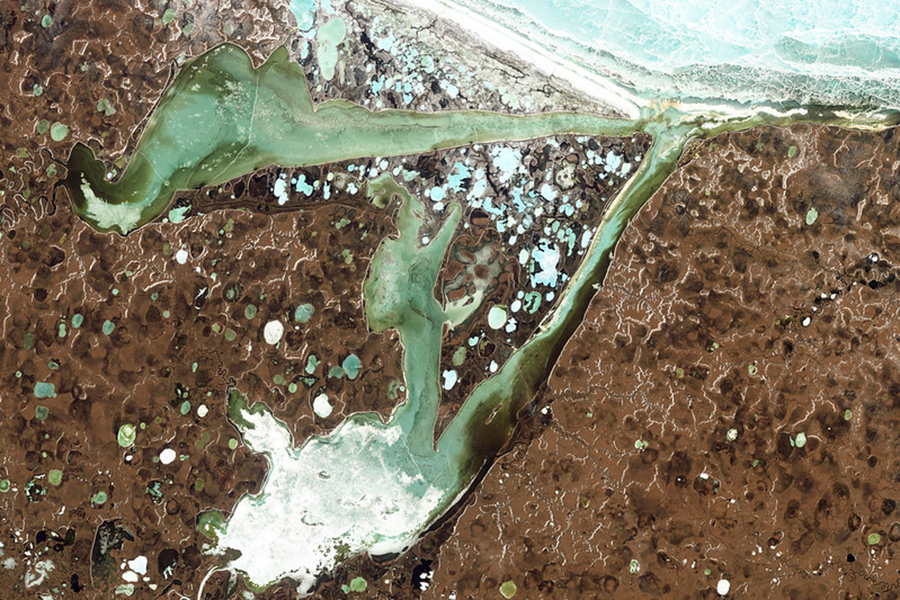
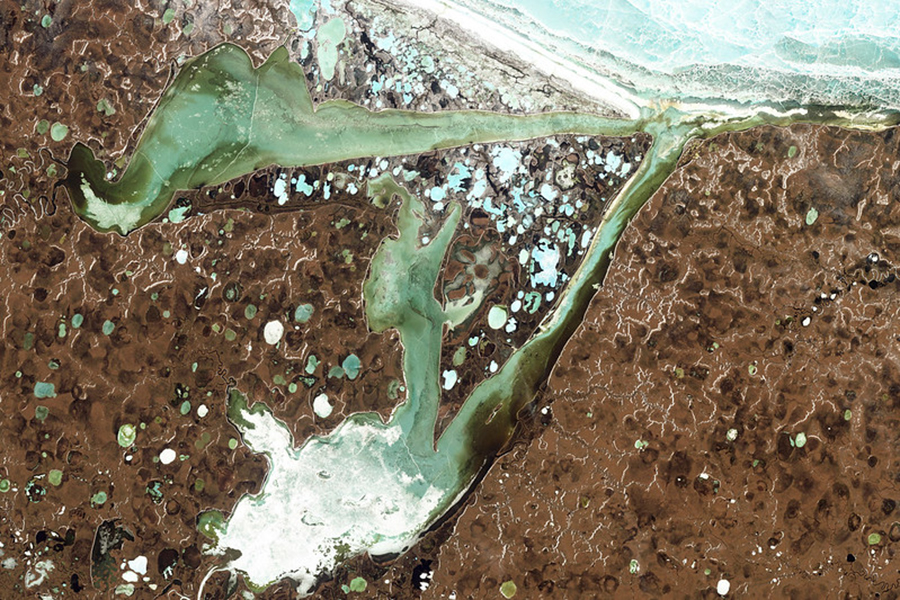
Omulyakhskaya and Khromskaya bays, northern Siberia, an Arctic region where permafrost melt and methane release to the atmosphere is rapidly escalating, contributing to climate change. Image by NASA Goddard Space Flight Center.
Together, the stability of these nine processes is essential to maintaining the Earth’s atmosphere, oceans and ecosystems in the delicate balance that has allowed human civilizations to flourish. However, these are also the processes that human activities have impacted most profoundly.
The researchers then estimated a limit of just how much human activities could exploit and alter each of these processes before the global system would pass a tipping point — a threshold beyond which we risk sending the Earth spiraling into a state that hasn’t been experienced for the entirety of human existence, bringing extreme change that could crash civilization and endanger humanity.
“Systems — from the oceans and ice sheets and climate system and ecosystems — can have multiple stable states separated by tipping points,” explained Rockström, now the director of the Potsdam Institute for Climate Impact Research. If those “stable” systems are pushed too far, he said, they lose resilience and can transition, abruptly and irreversibly, into a new self-reinforcing state — one that might not support humanity.
The original 2009 Planetary Boundaries report, and its update in 2015, revealed a stark assessment: researchers found that humanity is already existing outside the safe operating space for at least four of the nine planetary boundaries: climate change, biodiversity, land-system change, and biogeochemical flows (Earth’s nitrogen and phosphorous cycles, which are being heavily impacted by global agribusiness and industry).
However, the experts warn, these limits are estimates: what we don’t know is how long we can keep pushing these key planetary boundaries before combined pressures lead to irreversible change and harm. Think of humanity, blindfolded, simultaneously walking toward nine cliff edges, and you gain some sense of the seriousness and urgency of our situation.
However, the experts warn, these limits are estimates: what we don’t know is how long we can keep pushing these key planetary boundaries before combined pressures lead to irreversible change and harm. Think of humanity, blindfolded, simultaneously walking toward nine cliff edges, and you gain some sense of the seriousness and urgency of our situation.
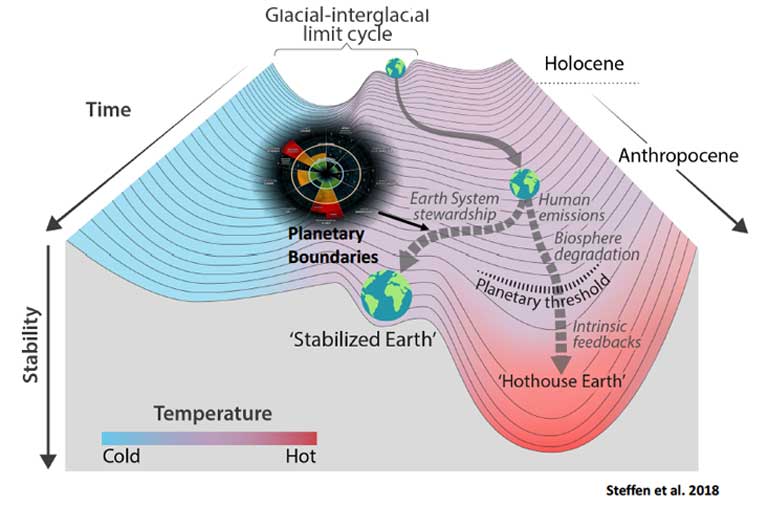
Earth Trajectories: Think of the Earth’s climate taking different trajectories through time — pathways weaving between different climate states. Different paths through all the possible climates can be influenced by distinct tipping points. Self-reinforcing feedback processes can lock the planet into a particular trajectory for centuries or millennia. There is no evidence that modern societies can exist, let alone thrive, in conditions substantially different from the Holocene. Image courtesy of Steffen et al. (2018).
Earth Trajectories: Think of the Earth’s climate taking different trajectories through time — pathways weaving between different climate states. Different paths through all the possible climates can be influenced by distinct tipping points. Self-reinforcing feedback processes can lock the planet into a particular trajectory for centuries or millennia. There is no evidence that modern societies can exist, let alone thrive, in conditions substantially different from the Holocene. Image courtesy of Steffen et al. (2018).
Dawn of the Anthropocene
The dynamics of large, complex and interconnected biogeochemical systems like those operating on Planet Earth can be thought of in terms of pathways or trajectories, weaving between different steady states. The Earth’s trajectory can be altered by tipping points, which shift us from one steady state to another (something like a car changing gears). A number of complex feedback processes can either reinforce the current steady state, or weaken it, and send the planet spiraling toward a completely new state, like a bowling ball with too much spin careening toward the gutter.
Climate change, the best known of the nine planetary boundaries on which we’re encroaching, offers a good example of how this equilibrium process works.
Today, “We are at risk of triggering tipping elements in the Earth System towards a ‘Hothouse Earth’ from which it would be very difficult to recover to pre-industrial climate,” explained Steven Lade, a Stockholm Resilience Centre researcher specializing in social-ecological system modeling.
However, “with rapid decarbonization we could possibly reach a ‘Stabilized Earth,’” he added, maintaining our climate within the safe window of conditions to which humanity has adapted over the last 12,000 years.
The period of Earth climate stability in which our societies have thrived is known as the Holocene epoch. Beginning some 12,000 years ago, it marked the end of more than 100,000 years of alternating glacial and interglacial periods that saw the planet’s temperature fluctuate by as much as 6°C (10.8°F).
Modern humans have existed for about 200,000 years, but it was “only in the last 10,000 years that we were able to develop civilization as we know it,” Rockström said. “The very origins of modern civilization, namely domestication of animals and plants and the establishment of agriculture, happened in the Holocene.”
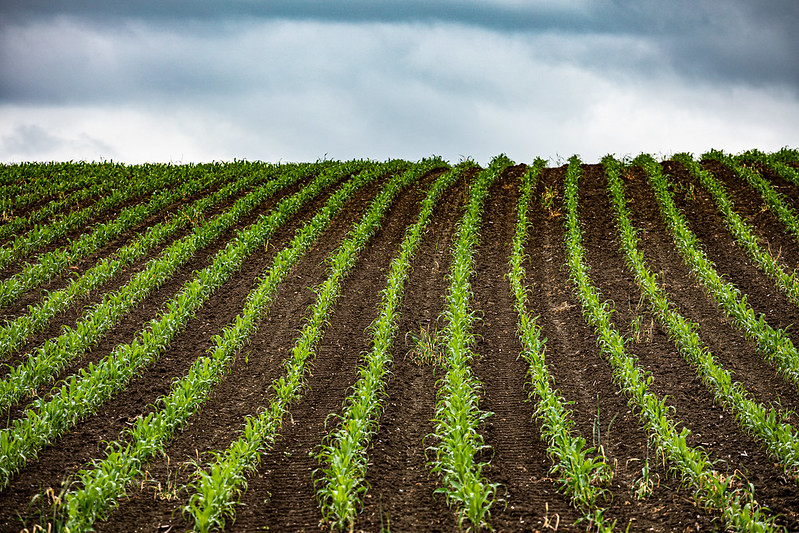
The world’s crops will need to feed 8 billion people by 2023, putting incredible pressure on Earth Systems. Image by Albert Aschl.
Yet these very same hallmarks of our extraordinary success — agriculture, sedentary living, industrial manufacturing — are today fundamentally altering many Earth System processes responsible for keeping conditions on Earth stable.
In fact, our transgressions of the nine planetary boundaries have been so severe that geologists believe we have entered a new epoch in the Earth’s history. The start of the Anthropocene — a human-influenced period that scientists say was initiated somewhere between 10,000 and 70 years ago — has been marked by rapid, human-triggered increases in greenhouse gas emissions, large-scale land-use change, extreme biodiversity loss, and massive global consumption and pollution brought on by rapidly advancing technology and a booming Homo sapiens population.
The dawn of the Anthropocene, a new epoch, needs to serve as a warning, Rockström said, that “we’re starting to hit the ceiling of the biophysical coping capacity of the whole Earth System.”
On a path to climate and biodiversity overshoot
Six years on from the last Stockholm Resilience Centre update (another is due this year), Rockström noted there is little evidence we’ve reversed course to avoid looming tipping points. “If anything, we are even deeper into the transgression of climate, on biodiversity, on land-use, and on nitrogen and phosphorus. So we have not turned around the [2015] trends.”
Of the four boundaries that researchers say we have already exceeded, climate change and biosphere integrity are considered “core” planetary boundaries because either one, on its own, could change the course of Earth’s trajectory and endanger humanity.
“There’s enough science today to say that [human-induced climate change] on its own can knock the planet away from the Holocene state,” Rockström said. “Similarly, if we just continue our mass extinction, losing more and more species, from phytoplankton to top predators, you will come to a point where the whole planet [system] collapses.”
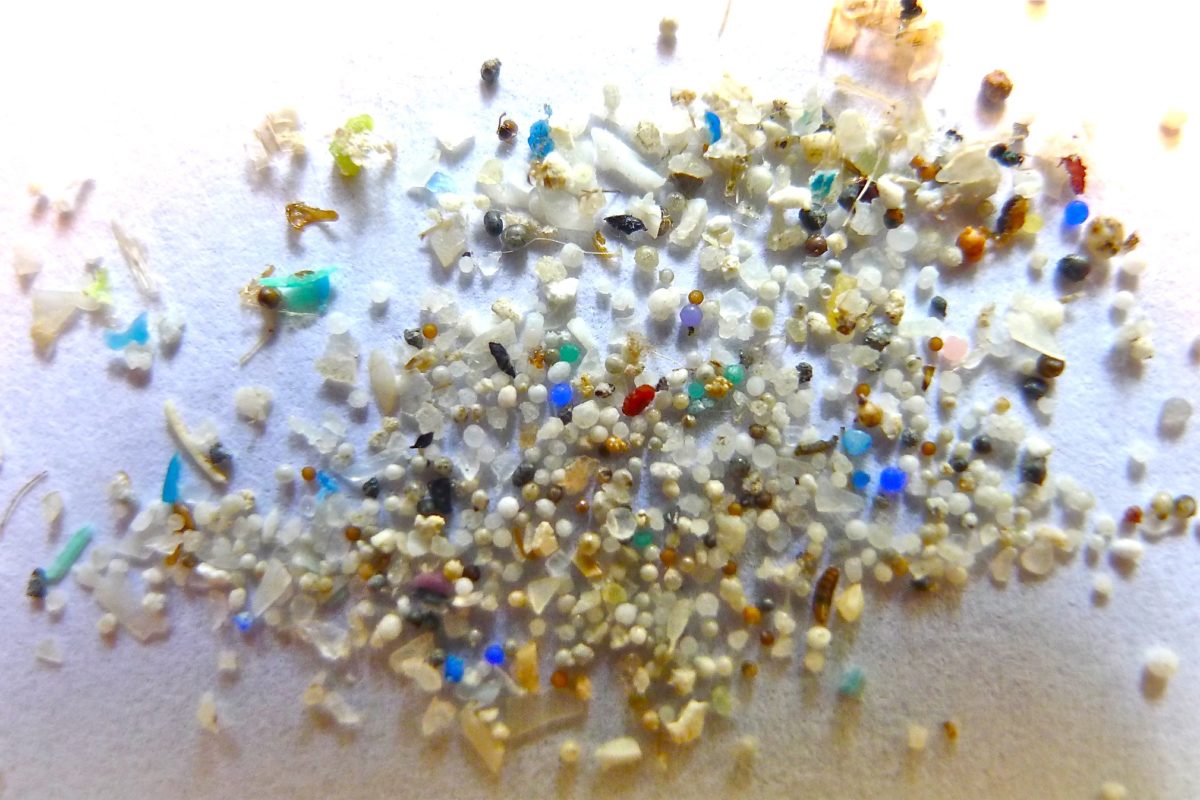
What we can’t see can hurt us: Microplastics like these are an example of novel entities — materials, chemicals, nanotech particles, even new life forms, created by humans and released into the environment, often with unknown effects. Novel entities may represent a third core boundary, in addition to climate and biodiversity, because of the potential for a global disaster resulting from a human-made substance that, for example, influenced animal and human fertility. Image by Oregon State University.
There is strong evidence we’re already in the midst of a global mass extinction. A 2019 assessment by the Intergovernmental Science-Policy Platform on Biodiversity and Ecosystem Services (IPBES) reported that 25% of plants and animals assessed — totaling 1 million species worldwide — are threatened with extinction. A separate study found that more than 500 vertebrate species are on the brink, each with fewer than a thousand individuals remaining in the wild.
Importantly, researchers say we are flying blind when it comes to both the quantity or quality of biodiversity loss that can be tolerated by ecosystems before triggering irreversible change.
“IPBES made it clear that we have really high extinction rates right now and they’re getting higher,” said Rebecca Shaw, chief scientist and senior vice president of WWF. However, data not on extinctions, but on total population declines, are actually more informative for assessing biosphere health, she said, noting, “By the time species are moving to extinction there’s very little you can do.”
“We should really be looking at population [abundance] declines around the world, and nest that with ecosystem integrity measures, and nest that in [measures of] the way ecosystems are functioning to deliver services to humans,” Shaw explained.
According to WWF and the Zoological Society of London’s (ZSL) 2020 Living Planet Report, population sizes of mammals, birds, amphibians, reptiles and fish declined by 68% on average between 1970 and 2016 — a strong alarm call.
Early warnings
Scientists are now detecting the first flashing warning lights on the Earth System dashboard, telling us humanity is already pushing beyond our world’s safe operating space for multiple planetary boundaries and approaching tipping points.
“We have changed the planet so much that it is very likely that there will be significant impacts, and we’re seeing those impacts in the last five years,” Shaw said.
An example: melting of the Greenland and West Antarctic ice sheets has accelerated since the early 1990s, suggesting these colossal ice deposits may have now entered a new state of sustained and escalating retreat, after many centuries of stability. Contained within these now vulnerable ice sheets is enough water to raise the global sea level by more than 65 meters (213 feet).
Similarly, Arctic sea ice is retreating and scientists predict the region could be mostly ice-free in the summer as early as 2035 — with no certainty of what extreme changes this might bring.
Other early warning signs that we are approaching a climate change tipping point include increasingly frequent and severe droughts, heat waves, storms, and tropical cyclones.
“The number of climate-related natural disasters is climbing at an alarming rate, with significant economic and health impacts, especially for the most vulnerable,” said Ana María Loboguerrero Rodríguez, head of Global Policy Research for the CGIAR Research Program on Climate Change, Agriculture and Food Security (CCAFS).
No one knows how much stress civilization can withstand before it starts to collapse.
Feedback loops upon feedback loops
These early changes are signs of an impending shift from once stable Holocene conditions, say scientists. More concerning: many of these changes are expected to create positive feedback loops that further accelerate change.
For example, the continued melting of the Greenland ice sheet will not only cause major sea level rise, but also could alter ocean surface temperature and salinity, potentially triggering a transition in ocean circulation systems like the Atlantic Meridional Ocean Circulation (AMOC), which in turn could drastically alter global climate, and even accelerate the loss of the East Antarctic Ice Sheet.
However, it’s not all likely to be bad news: some feedback loops may have a balancing effect on the climate and on other planetary boundaries. “Which of these feedback loops wins, and when, is one of the big questions about our future climate,” Lade said.
Still, these reinforcing loops could trigger more complicated cascades of change. “The whole Earth System is a complex self-regulating system,” Rockström said, “if you push one [planetary boundary] too far it can cascade like a domino and impact the others.”
For example, land-use change due to agriculture is the leading cause of deforestation worldwide; it reduces the amount of water released to the air from plant leaves. In the Amazon Basin, this transpiration is a major source of rainfall. But signs are strong that rapid Amazon deforestation — combined with global climate change — may be triggering more extreme drought, leading to an abrupt shift from rainforest to degraded savanna, with profound implications for the entire planet. That biome-wide shift would release a vast store of ancient sequestered carbon, exacerbating climate change, leading to more drought and more tree die-off — a vicious, self-multiplying cycle.
“There is growing concern that, with the recent increase in deforestation rates under Brazil’s [Jair] Bolsonaro government, we may be approaching a tipping point for the Amazon rainforest,” said Will Steffen, emeritus professor at the Australian National University, Canberra, who was part of the team that developed the original planetary boundaries framework. “The three [Earth System tipping points] of greatest concern in my view are the Amazon rainforest, the Greenland ice sheet, and Siberian permafrost.”
The Amazon Rainforest example shows how disruptions to regional processes — such as the cycling of water by trees — can add up and push us toward planet-wide tipping points.
Another tipping point example: the devastating wildfires striking Australia and California in 2019 and 2020. They arose from multiple factors — intensifying drought due to climate change, accumulated leaf litter, unusual wind patterns — that built up slowly. Then, a small human intervention, such as a spark from a utility company power transformer as happened in California, was enough to “change a forest to a shrubland overnight because of climate change,” potentially altering biodiversity, Shaw said. “Climate change really manifests itself in these bursts of catastrophes.”
Regional interactions between planetary boundaries may already be accelerating our trajectory away from a safe Earth operating space. “At a planet scale, you don’t [yet clearly] see these types of things; [but] at the regional scale, it’s really phenomenal how [the interaction between] climate change and biodiversity loss [for example] is manifesting itself,” Shaw noted. “We never thought we’d see [biodiversity] collapse like we’re seeing at the regional scale this early.”
As regional and global change intensifies, scientists warn that it’s what we don’t know about the vast complexity of interactions between Earth System processes — only a fraction of which have been well studied — that concerns them most.
“It is quite frustrating to have to admit that we don’t yet fully understand the fundamental interactions between planetary boundaries,” Rockström said. Even if we are able to bring the climate system back into a safe operating space, he added, “we may by that time have triggered so much forest dieback and so much permafrost thawing and so much ice melt … that the planet has already chosen another route” — another trajectory and steady state not conducive to human civilization.
Food systems key to conserving a habitable Earth
If we are to steer our planet away from a devastating new trajectory, phasing out fossil fuels to reach a net-zero greenhouse gas emissions world economy is a key priority. But even more pressing, experts say, is a change to our food systems.
Food production accounts for nearly 25% of climate-changing greenhouse gas emissions, is the biggest driver of biodiversity loss, the primary cause of land-use change, one of the largest sources of nitrogen and phosphorus pollution, and it generates huge freshwater demand. Because food production generates big carbon emissions, it adds to ocean acidification too. That covers six of the nine planetary boundaries.
Together, “a food-system transformation and an energy transformation would take us a long way back into the safe space,” Rockström said.
“Nothing short of a systemic transformation of food systems is required to feed the world’s current and future population sustainably under climate change,” said CGIAR’s Loboguerrero. Making that sweeping change would not only reduce emissions, but improve health and food security, “providing multiple incentives for behavior change.”
Setting ambitious policy priorities
The next 12 months offer golden opportunities for the global community to come together and agree on policy priorities to set Earth on a trajectory for long-term stability.
Three major international meetings are scheduled for 2021: the Convention on Biological Diversity’s (CBD) 15th meeting of the Conference of the Parties in Kunming, China, from Oct. 11-24; the U.N. Climate Change Conference (COP26) in Glasgow, U.K., from Nov. 1-12; and the U.N. Food Systems Summit in Rome from July 19-21. Measurable, implementable, verifiable, time sensitive, and most importantly, binding targets and agreements are vital.
“It’s a big year for outcomes and for commitments for the next 10 years that will determine whether or not we stay within these planetary boundaries,” Shaw said. At WWF, she added, “we’re looking to work with other stakeholders through those three meetings to get actions to stay within the safe operating zone at both the regional scale and planetary scale.”
Experts are calling for a transformative, holistic approach to avoid risky tipping points, seeing the entire Earth System as a shared global commons, with humans as stewards. “The intertwisted nature of this framework calls for the development of a novel governance approach at global, regional, and local scales,” Loboguerrero said.
One such framework is the Global Commons Alliance, which brings together more than 50 international NGOs, multinational corporations, and city policymakers to promote the adoption of science-based targets to operate within planetary boundaries. But that partnership will need to grow geometrically if we are to act effectively.
Cause for hope
That’s a daunting global goal. But there is one planetary boundary — the first we ever realized we were in danger of crossing — that offers hope: the depletion of the ozone layer. In 1987, the world’s nations recognized the urgency and validity of the science, and embraced the politically binding requirements of the Montreal Protocol. We stepped back from the brink, shrinking the ozone hole, which could now be healed by 2050.
If nations can come together to address climate change, biodiversity loss, and pollution, as they did to address the threat to the ozone layer, then there is a chance we can reverse current trends and steer Earth’s trajectory back toward a stable Holocene state. That chance is growing dimmer — but it is an effort we absolutely need to make.
This story originally appeared in Monga Bay and is republished here as part of Covering Climate Now, a global journalism collaboration strengthening coverage of the climate story, of which Real Leaders is a partner.
An open letter from geoscientists supports a bill to remove racist slurs from federally recognized lakes, creeks, canyons, and other small landforms.
Content warning: This article contains examples of racist slurs used in federally recognized place-names. This language has been used to harass and discriminate against people of color.
More than a thousand geographic features in the United States have racial slurs in their name. The slurs include derogatory terms for people who are Black, Indigenous, and of Asian descent and are used in names for small features across the landscape, like valleys, creeks, and lakes. Phoenix’s Piestewa Peak (pictured above) was renamed in 2008 to honor Lori Piestewa, the first Native American woman to die serving in the U.S. military. Previously, the mountain’s name contained an offensive slur for Indigenous women.
Now an open letter from four graduate students at the Massachusetts Institute of Technology is calling on geoscientists to support a recent bill in Congress to help remove the names. The Reconciliation in Place Names Act would give a federal board more power to change offensive place-names. The letter authors say that geoscientists must make the outdoors safe for people of color by removing harmful language that makes the profession less welcoming.
“There hasn’t been a push within the geosciences to figure out how we handle the fact that these are historical names,” said coauthor Meghana Ranganathan, who studies Antarctic ice sheets. The group became aware of the issue after one encountered a racial slur on a geologic map.
“These place-names serve a silent, yet visibly obtrusive and constant reminder of the deeply rooted white supremacist ideologies that continue to haunt many of these landscapes,” said Tamara Pico, one of the more than 400 scientists who have signed the letter.
A Legacy of Oppression Written on the Land
An investigation in 2015 by the data-mining company Vocativ found 1,441 federally recognized place-names that contained slurs. Every state contains at least one, and Western and Southern states had the most instances.
Vocativ found at least 558 places across the United States that have offensive words for Black people, including the words “Negro,” “Uncle Tom,” and “Jim Crow.” They also found derogatory names for Asian Americans. By far the most common term was the slur “Squaw,” considered an offensive term for Indigenous women, which appears on the map 828 times.
“A lot of [the offensive names] are in places where a lot of science is being done, which is why this became something that we thought would be a great way for the geoscience community to get behind the bill because it is relevant to all of us,” Ranganathan said.
A Racist Slur in a New Mexican Canyon
The letter came about from the experience of letter writer Julia Wilcots, who was surprised to see a racist name used in a place-name for a canyon in New Mexico at one of her potential field sites. The canyon was identified as “(N-word) Ed Canyon.”
Although the U.S. Board on Geographic Names removed all instances of this particular word in 1963 (as well as a slur for Japanese people in 1974), the predominant geologic map of the area was published before the name change. Wilcots found at least 11 instances of the slur in the scientific report. The feature’s formal name today is Negro Ed Canyon.
With help from a lab partner, Wilcots redacted all instances of the slur in the document, changing it to “Ed Canyon,” and shared it with her adviser, who passed it along to colleagues.
Wilcots urges others to redact racist slurs from their research materials as an act of anti-racism.
“You could say, ‘I’m not going to be racist myself. When I write my paper about this area, I’m not going to use the N-word. I’m going to use the formal name on the map,’” she said. But that doesn’t go far enough to protect researchers of color, she explained.
“I’m pretty fully committed to geology, and this hasn’t deterred me from continuing in the field. It’s emboldened me to be more outspoken in the field,” Wilcots said. “But I think people should recognize that…if you hand this map to a Black student who is considering geosciences and it’s full of the N-word, you know that has an impact.”
The U.S. Board on Geographic Names handles alterations to names, but the board can’t actively seek out names to change: They merely review proposals and are not a rubber stamp for submitted changes. The board blocked the state of Texas from removing the word “Negro” from nearly two dozen place-names, for instance, because of the lack of both local support and a historical connection to the new names.
Instead of relying on proposals to the board, the new bill creates an advisory committee that will seek out offensive names to change. People appointed to the committee will have backgrounds in civil rights and race relations, as well as come from tribes or tribal organizations. The committee will be required to make recommendations to the board, thus speeding up the process.
“It’s past time to change the offensive names of public lands, especially with input from groups who have been discriminated against,” said Haaland, a member of New Mexico’s Laguna Pueblo. The bill targets names with racial slurs as well as places named in honor of individuals who “held racially repugnant views, committed atrocities against Native Americans, or supported or effectuated discriminatory policies,” stated the bill.
Name changes can be simple, said Ranganathan. In Utah, the board approved changing the name of Negro Bill Canyon to Grandstaff Canyon in 2017. William Grandstaff was a mixed-race rancher in the area for whom the canyon was named.
“It still honors the person that the canyon was originally named after,” Ranganathan said, “but it does so in a way that is not offensive.”
By Jenessa Duncombe (@jrdscience). This story originally appeared in EOS.org and is republished here as part of Covering Climate Now, a global journalism collaboration strengthening coverage of the climate story.
The planet had already warmed by around 1.2℃ since pre-industrial times when the World Health Organization officially declared a pandemic on March 11 2020. This began a sudden and unprecedented drop in human activity, as much of the world went into lockdown and factories stopped operating, cars kept their engines off and planes were grounded.
There have been many monumental changes since then, but for those of us who work as climate scientists this period has also brought some entirely new and sometimes unexpected insights.
Here are three things we have learned:
1. Climate science can operate in real time
The pandemic made us think on our feet about how to get around some of the difficulties of monitoring greenhouse gas emissions, and CO₂ in particular, in real time. When many lockdowns were beginning in March 2020, the next comprehensive Global Carbon Budget setting out the year’s emissions trends was not due until the end of the year. So climate scientists set about looking for other data that might indicate how CO₂ was changing.
We used information on lockdown as a mirror for global emissions. In other words, if we knew what the emissions were from various economic sectors or countries pre-pandemic, and we knew by how much activity had fallen, we could assume that their emissions had fallen by the same amount.
By May 2020, a landmark study combined government lockdown policies and activity data from around the world to predict a 7% fall in CO₂ emissions by the end of the year, a figure later confirmed by the Global Carbon Project. This was soon followed by research by my own team, which used Google and Apple mobility data to reflect changes in ten different pollutants, while a third study again tracked CO₂ emissions using data on fossil fuel combustion and cement production.
The latest Google mobility data shows that although daily activity hasn’t yet returned to pre-pandemic levels, it has recovered to some extent. This is reflected in our latest emissions estimate, which shows, following a limited bounce back after the first lockdown, a fairly steady growth in global emissions during the second half of 2020. This was followed by a second and smaller dip representing the second wave in late 2020/early 2021.
Meanwhile, as the pandemic progressed, the Carbon Monitor project established methods for tracking CO₂ emissions in close to real time, giving us a valuable new way to do this kind of science.
2. No dramatic effect on climate change
In both the short and long term, the pandemic will have less effect on efforts to tackle climate change than many people had hoped.
Despite the clear and quiet skies, research I was involved in found that lockdown actually had a slight warming effect in spring 2020: as industry ground to a halt, air pollution dropped and so did the ability of aerosols, tiny particles produced by the burning of fossil fuels, to cool the planet by reflecting sunlight away from the Earth. The impact on global temperatures was short-lived and very small (just 0.03°C), but it was still bigger than anything caused by lockdown-related changes in ozone, CO₂ or aviation.
Looking further ahead to 2030, simple climate models have estimated that global temperatures will only be around 0.01°C lower as a result of COVID-19 than if countries followed the emissions pledges they already had in place at the height of the pandemic. These findings were later backed up by more complex model simulations.
Many of these national pledges have been updated and strengthened over the past year, but they still aren’t enough to avoid dangerous climate change, and as long as emissions continue we will be eating into the remaining carbon budget. The longer we delay action, the steeper the emissions cuts will need to be.
3. This isn’t a plan for climate action
The temporary halt to normal life we have now seen with successive lockdowns is not only not enough to stop climate change, it is also not sustainable: like climate change, COVID-19 has hit the most vulnerable the hardest. We need to find ways to reduce emissions without the economic and social impacts of lockdowns, and find solutions that also promote health, welfare and equity. Widespread climate ambition and action by individuals, institutions and businesses is still vital, but it must be underpinned and supported by structural economic change.
Colleagues and I have estimated that investing just 1.2% of global GDP in economic recovery packages could mean the difference between keeping global temperature rise below 1.5°C, and a future where we are facing much more severe impacts – and higher costs.
Unfortunately, green investment is not being made at anything like the level needed. However, many more investments will be made over the next few months. It’s essential that strong climate action is integrated into future investments. The stakes may seem high, but the potential rewards are far higher.
This story originally appeared in The Conversation and is republished here as part of Covering Climate Now, a global journalism collaboration strengthening coverage of the climate story.
Europe is launching an ambitious mission to decarbonize many of its urban areas within a decade. But is it realistic?
More people are moving to cities. Some forecasts predict that two thirds of the world’s population will live in urban areas by the middle of the century, and in Europe that figure may be 84%. Recognizing the need to act quickly, the European Union (EU) is launching a mission to reach 100 climate-neutral cities by 2030.
Through its European Green Deal, the 27 EU member states have committed to becoming net carbon neutral by 2050. The idea behind the new mission is for 100 cities to lead the way, becoming experimentation and innovation hubs for the rest of Europe. Support will also be given to additional partner cities, prioritizing places where structural issues make such rapid change difficult.
Details of the plans were published by the mission board in September. Cities will be selected by 2025, though none have been announced so far. Funding will initially come through Horizon Europe, the EU’s €80.9 billion research and innovation program for the years 2021–2027.
Under the plans, selected locations will commit to achieving net zero carbon emissions by 2030, as well as a number of social and economic goals adapted for each city. Ultimately, the question of whether these places become climate neutral will also depend on how city boundaries are defined and how the carbon is counted. For the purposes of the mission, city districts and conglomerations of neighboring cities will be eligible to apply.
The move builds on smaller EU projects, including REMOURBAN (Regeneration Model for Accelerating the Smart Urban Transformation), which delivered energy, mobility, and digital solutions in the cities of Valladolid (Spain), Nottingham (United Kingdom), and Tepebaşı/Eskişehir (Turkey), along with several follower cities. Interventions there included electrification of public transport, smart street lighting, and retrofitting buildings with thermal insulation and smart meters.
But although earlier projects have seen local success, the EU’s new mission is an entirely different proposition. Do urban researchers think it is realistic?
New City Models
James Evans, a human geography researcher at the University of Manchester, believes the EU is right to invest in flagship cities that have track records of successful projects. He is concerned, however, that this conventional approach to innovation doesn’t take into account the complexities of how ideas transfer. “The [approach] works if you are creating a new drug or robot, but doesn’t always work with cities, as giving money to the ‘best’ places and then expecting less-able places to do it without the public subsidy is flawed,” he said.
Evans believes that deep and widespread urban transformation will be very difficult without significant changes in the way municipalities are funded and governed. “New business models also require new city models,” he added.
Researchers say the project will also have to determine how carbon emissions are classified. Some difficulties are highlighted by Joe Blakey, a political geographer at the University of Manchester. “Imagine a cup of Kenyan coffee consumed in an American coffee chain in Manchester city center by a visitor from Beijing. There are a whole host of emissions that can be associated with this cup of coffee—but who gets the blame?”
Blakey said that airports within city boundaries are particularly contentious, as emissions associated with them are usually not included in a city’s carbon footprint.
Nature-Based Solutions
The September mission proposal makes it clear that investment will prioritize solutions that offer cobenefits. One example of this might be a project that reduces a district’s carbon emissions while also creating jobs and improving air quality. In this respect, nature-based solutions are expected to play a key role in the project. European residents can expect more urban forests and green corridors, which absorb carbon, boost biodiversity, and improve conditions for citizens by cooling the urban environment.
“We often think of the ways in which the excess carbon can be neutralized—by planting trees or growing seagrass beds, for example,” said Harriet Bulkeley, project coordinator of the EU’s Nature-Based Urban Innovation (NATURVATION) project. “But nature-based solutions also have a direct role in getting to climate neutral in cities themselves, especially in terms of reducing the reliance on air conditioning for addressing summer heat.”
Bulkeley said that select locations might develop partnerships with rural communities to create solutions with benefits for those areas while at the same time offsetting carbon emissions in cities.
This story originally appeared at EOS.org and is republished here as part of Covering Climate Now, a global journalism collaboration strengthening coverage of the climate, of which Real Leaders is a partner.
Monetizing environmental services of biofuel feedstocks could incentivize farmers to take advantage of marginal agricultural lands while also benefiting the landscape.
Transitioning from the use of fossil fuels to biofuels—particularly in the transportation sector, which is a major source of direct greenhouse gas emissions—is one of the key means envisioned to reach emissions reduction targets outlined in the Paris Agreement. Growth rates of biofuel production are lagging, however.
Providing sustainably sourced biomass that supports biofuel production but does not displace food crops or biodiversity conservation is a challenge. To avoid such displacements, farmers often use marginal agricultural lands, but this can come with economic disadvantages. One way to balance the checkbook is to pay farmers for environmental services—that is, for benefits proffered by cultivated landscapes, like increased pollination, carbon sequestration, and flood control, among others. (Ecosystem services refer to the contributions of native landscapes.)
Monetizing environmental services can guide public subsidies for biofuel crops and incentivize agricultural producers to put their marginal lands to work. In a new study, Von Cossel et al.calculated the value of environmental services provided by Miscanthus Andersson, a promising biofuel feedstock, in the agricultural region of Brandenburg, Germany. Native to East Asia, the perennial grass can be used to produce isobutanol, a replacement for ethanol, and it delivers high yields in varied environments. Research has shown that the plant also reduces erosion, improves soil fertility, and protects groundwater; however, it remains underused in the United States and Europe.
The researchers referenced previous work to valorize various environmental services associated with Miscanthus. In total, the authors found that Miscanthus cultivation is annually worth between about $1,400 and $4,900 (€1,200–€4,183) per hectare, 3 times more than the value of the raw material for biofuel. The results showed that Miscanthus annually provides up to $900 (€771) per hectare for flood control and almost $60 (€50) for pollination, for instance.
The authors say that analyses such as this one are critical components in the transition to a bioeconomy. And they suggest that monetizing environmental services can help pave the way for the world to reach established biofuel targets, such as that set by the International Energy Agency, which envisions biofuels with a 10% share in the transportation sector by 2030. (Earth’s Future, 2020)
This story originally appeared in eos.org and is published here as part of Covering Climate Now, a global journalism collaboration strengthening coverage of the climate story, of which Real Leaders is a partner.
All too often, the conversations around climate change erase the voices of the people who are most affected by it. In this series of interviews, we talk to climate activists from throughout the Global South about the fight for climate justice and their visions for a sustainable future.
Do an internet search for “climate activist” and you’ll be presented with several pages featuring the name of one famous Swedish teenager. Greta Thunberg’s achievements are undoubtedly astounding – from kickstarting the global climate strikes, to popularising concepts such as flygskam and even shaking up the stuffy world of the climate conference with her impassioned speeches. But the media’s ongoing focus on this one particular activist’s story is a reflection of wider mainstream climate reporting – that often lacks diversity when it comes to voices, experiences and opinions.
Not only are people in the Global South often among the most vulnerable to rising global temperatures, but they are also activists, educators and changemakers – fighting for a better world, innovating and inspiring others to tackle the issues that we as a planet face.
In this series of interviews with Fridays for Future activists from Latin America, Africa and Asia, we want to do our bit to tackle this imbalance, decolonise the conversation around climate change and lift up the underrepresented voices within the climate movement.
In Interview #2 in this Voices of Climate Justice series, we talk to Iqbal Badruddin, founder of Fridays for Future Pakistan. Pakistan is in a challenging position. The country emits only a tiny portion of the global greenhouse gases, but it is also predicted to be among the hardest hit by extreme weather events, including droughts and floods, in the wake of climate change. And on top of all that, there is very little awareness about climate change in Pakistani society, and about the need to fight it and adapt to its effects. We talked to Iqbal about Fridays for Future Pakistan’s work to raise awareness about the climate crisis, the role of digital and online media in their climate change education projects and the importance of bringing climate change into the school curriculum.
How did you first learn about climate change? Was it through the news, or is it already affecting you directly in Pakistan?
I first learned about climate change when I personally experienced extreme weather events in my country – in particular the floods of 2010 when the country faced huge economic damage. It hit the agriculture sector, which affected food production. It affected the whole country. This made me do research on extreme weather and climate change and now I aim to raise peoples’ awareness of it in my country.
How and when did you get involved in the student strikes? And what was your motivation?
Strikes are the backbone of this movement, but when it comes to Pakistan, doing weekly strikes means mobilising people who want to take action on climate change. But how could we find so many of them? Because according to a BBC report, 65% of the people in Pakistan don’t know what “climate change” means. So, we have demonstrated, but we focus more on raising awareness among the masses. We started striking from late December 2018, starting in different universities in Pakistan. This was mainly because we wanted draw everyone’s attention to the fact we are doing something for the planet that we have in common. The main motivation was that Pakistan is one of the most vulnerable countries to climate change, but we emit less than 1% of the total global greenhouse gases.
What do you see as the role of digital media in your own development as an activist?
Social and digital media was and will remain an important pillar for activism. Whatever we do, we convey our messages through them. Without them nothing positive is possible in an activist’s life. For me, digital media played an important role in shaping me and the campaign for the climate that I lead in Pakistan. Shaping the minds of people in Pakistan can be done through the use of media and we are doing our best to use this platform to reach as many people as possible.
How has the coronavirus affected your protest actions? Are you perhaps taking the protest online and if so, how are you doing it?
The pandemic has affected our physical protests in every respect. The social distancing guidelines have made it harder for us to protest during these times, so, to keep the momentum going we have switched to online protests. I feel that the online protests may not create as much impact as the street protests, but we have to keep putting pressure on the policymakers.
We are posting weekly protest pictures from our social media accounts and also, because FridayForFuture Pakistan focuses more on awareness, we are now also conducting online awareness sessions to educate people about climate change. We’ve also working on developing a virtual 5-day activist training session, which started recently.
What do you think we can learn from the coronavirus crisis and what are some positives you hope will come out of it?
The coronavirus crisis has taught us that we can make big changes in the way we live our lives. This is the same thing that the climate crisis has always demanded. The world has witnessed that anything is possible, all we need is the will to do it. Health is wealth and we need to make sure that whatever we do, it doesn’t harm the coming generations. COVID-19 has taught us that we can live balance our lives and nature and live in harmony with it – and also that we absolutely cannot survive without the natural world.
The Fridays for Future protests have been getting a lot of attention in the media – but that’s not translating into much action on the part of decision-makers. Why do you think that is?
Protests are meant to gain attention from the policymakers and our protests have made a fruitful impact overall but what is missing is climate action. Rather than taking action in advance, we always wait for the crisis to hit us and then we take action. And this is what is happening now. We aim to carry on with our strikes though, and keep bringing attention to the issue so that one day we might be able to make them implement green policies. We know this might take time, but we won’t give up.
What are the key messages behind your particular protest? What does your poster say when you hold it up? And who do you want to see it?
The main slogans on our poster are “Make Earth Great Again” and “Youth Climate Strike”. We want our policymakers and the international community to see our posters and protests so that they know we are concerned about ours and everybody’s future. The main goals of the Global Climate Strikes are to stop policymakers from investing money into environmentally unfriendly industries and also to help countries that are been impacted the most due to climate change. The government should make it compulsory for the schools to teach climate change, meaning that they should introduce a curriculum that is environmentally friendly. Our main message is to raise peoples’ awareness of climate change because here the majority of people are not aware of this crisis, and teaching people about climate change is the first step in fighting it.
What do you hope the Global Strike for Climate can achieve?
Well, the main message behind our protests is to wake the government and the international community up and encourage them to take action on climate change. Pakistan only emits a tiny amount of global greenhouse gases, but we are one of the countries most affected by climate change. We are a developing state and an agrarian economy and the fifth most vulnerable to climate change in the world. We demand, and we need, for people to pay attention.
Is there anything else you’d like our readers to know?
I would like to let the readers know that being a country that is one of the most vulnerable to climate change it is very tough to survive – the economy is another factor that makes a country vulnerable. And we all need to fight this common enemy together. I believe that one day we all will unite like we have come together against the COVID-19 crisis.
This story originally appeared in Reset.org and is republished here as part of Covering Climate Now, a global journalism collaborative strengthening coverage of the climate story, of which Real Leaders is a member. You can visitFridays for Future Pakistan’s website right here where you can find out more about the team and read their blog. Follow them at their official Twitter accountto keep up to date with their (online) strikes and other activities. And connect with Iqbal Badruddin right here. Co-authored by Jan Wisniewski and Marisa Pettit.
All too often, the conversations around climate change erase the voices of the people who are most affected by it. In this series of interviews, we talk to climate activists from throughout the Global South about the fight for climate justice and their visions for a sustainable future.
Do an internet search for “climate activist” and you’ll be presented with several pages featuring the name of one famous Swedish teenager. Greta Thunberg’s achievements are undoubtedly astounding – from kickstarting the global climate strikes, to popularising concepts such as flygskam and even shaking up the stuffy world of the climate conference with her impassioned speeches. But the media’s ongoing focus on this one particular activist’s story is a reflection of wider mainstream climate reporting – that often lacks diversity when it comes to voices, experiences and opinions.
Not only are people in the Global South often among the most vulnerable to rising global temperatures, but they are also activists, educators and changemakers – fighting for a better world, innovating and inspiring others to tackle the issues that we as a planet face.
In this series of interviews with Fridays for Future activists from Latin America, Africa and Asia, we want to do our bit to tackle this imbalance, decolonise the conversation around climate change and lift up the underrepresented voices within the climate movement.
In Interview #2 in this Voices of Climate Justice series, we talk to Iqbal Badruddin, founder of Fridays for Future Pakistan. Pakistan is in a challenging position. The country emits only a tiny portion of the global greenhouse gases, but it is also predicted to be among the hardest hit by extreme weather events, including droughts and floods, in the wake of climate change. And on top of all that, there is very little awareness about climate change in Pakistani society, and about the need to fight it and adapt to its effects. We talked to Iqbal about Fridays for Future Pakistan’s work to raise awareness about the climate crisis, the role of digital and online media in their climate change education projects and the importance of bringing climate change into the school curriculum.
How did you first learn about climate change? Was it through the news, or is it already affecting you directly in Pakistan?
I first learned about climate change when I personally experienced extreme weather events in my country – in particular the floods of 2010 when the country faced huge economic damage. It hit the agriculture sector, which affected food production. It affected the whole country. This made me do research on extreme weather and climate change and now I aim to raise peoples’ awareness of it in my country.
How and when did you get involved in the student strikes? And what was your motivation?
Strikes are the backbone of this movement, but when it comes to Pakistan, doing weekly strikes means mobilising people who want to take action on climate change. But how could we find so many of them? Because according to a BBC report, 65% of the people in Pakistan don’t know what “climate change” means. So, we have demonstrated, but we focus more on raising awareness among the masses. We started striking from late December 2018, starting in different universities in Pakistan. This was mainly because we wanted draw everyone’s attention to the fact we are doing something for the planet that we have in common. The main motivation was that Pakistan is one of the most vulnerable countries to climate change, but we emit less than 1% of the total global greenhouse gases.
What do you see as the role of digital media in your own development as an activist?
Social and digital media was and will remain an important pillar for activism. Whatever we do, we convey our messages through them. Without them nothing positive is possible in an activist’s life. For me, digital media played an important role in shaping me and the campaign for the climate that I lead in Pakistan. Shaping the minds of people in Pakistan can be done through the use of media and we are doing our best to use this platform to reach as many people as possible.
How has the coronavirus affected your protest actions? Are you perhaps taking the protest online and if so, how are you doing it?
The pandemic has affected our physical protests in every respect. The social distancing guidelines have made it harder for us to protest during these times, so, to keep the momentum going we have switched to online protests. I feel that the online protests may not create as much impact as the street protests, but we have to keep putting pressure on the policymakers.
We are posting weekly protest pictures from our social media accounts and also, because FridayForFuture Pakistan focuses more on awareness, we are now also conducting online awareness sessions to educate people about climate change. We’ve also working on developing a virtual 5-day activist training session, which started recently.
What do you think we can learn from the coronavirus crisis and what are some positives you hope will come out of it?
The coronavirus crisis has taught us that we can make big changes in the way we live our lives. This is the same thing that the climate crisis has always demanded. The world has witnessed that anything is possible, all we need is the will to do it. Health is wealth and we need to make sure that whatever we do, it doesn’t harm the coming generations. COVID-19 has taught us that we can live balance our lives and nature and live in harmony with it – and also that we absolutely cannot survive without the natural world.
The Fridays for Future protests have been getting a lot of attention in the media – but that’s not translating into much action on the part of decision-makers. Why do you think that is?
Protests are meant to gain attention from the policymakers and our protests have made a fruitful impact overall but what is missing is climate action. Rather than taking action in advance, we always wait for the crisis to hit us and then we take action. And this is what is happening now. We aim to carry on with our strikes though, and keep bringing attention to the issue so that one day we might be able to make them implement green policies. We know this might take time, but we won’t give up.
What are the key messages behind your particular protest? What does your poster say when you hold it up? And who do you want to see it?
The main slogans on our poster are “Make Earth Great Again” and “Youth Climate Strike”. We want our policymakers and the international community to see our posters and protests so that they know we are concerned about ours and everybody’s future. The main goals of the Global Climate Strikes are to stop policymakers from investing money into environmentally unfriendly industries and also to help countries that are been impacted the most due to climate change. The government should make it compulsory for the schools to teach climate change, meaning that they should introduce a curriculum that is environmentally friendly. Our main message is to raise peoples’ awareness of climate change because here the majority of people are not aware of this crisis, and teaching people about climate change is the first step in fighting it.
What do you hope the Global Strike for Climate can achieve?
Well, the main message behind our protests is to wake the government and the international community up and encourage them to take action on climate change. Pakistan only emits a tiny amount of global greenhouse gases, but we are one of the countries most affected by climate change. We are a developing state and an agrarian economy and the fifth most vulnerable to climate change in the world. We demand, and we need, for people to pay attention.
Is there anything else you’d like our readers to know?
I would like to let the readers know that being a country that is one of the most vulnerable to climate change it is very tough to survive – the economy is another factor that makes a country vulnerable. And we all need to fight this common enemy together. I believe that one day we all will unite like we have come together against the COVID-19 crisis.
This story originally appeared in Reset.org and is republished here as part of Covering Climate Now, a global journalism collaborative strengthening coverage of the climate story, of which Real Leaders is a member. You can visitFridays for Future Pakistan’s website right here where you can find out more about the team and read their blog. Follow them at their official Twitter accountto keep up to date with their (online) strikes and other activities. And connect with Iqbal Badruddin right here. Co-authored by Jan Wisniewski and Marisa Pettit.