Sweetening the Deal: Greyston Bakery

The company’s open-hiring model helps break the cycle of poverty.


By Christopher Marquis


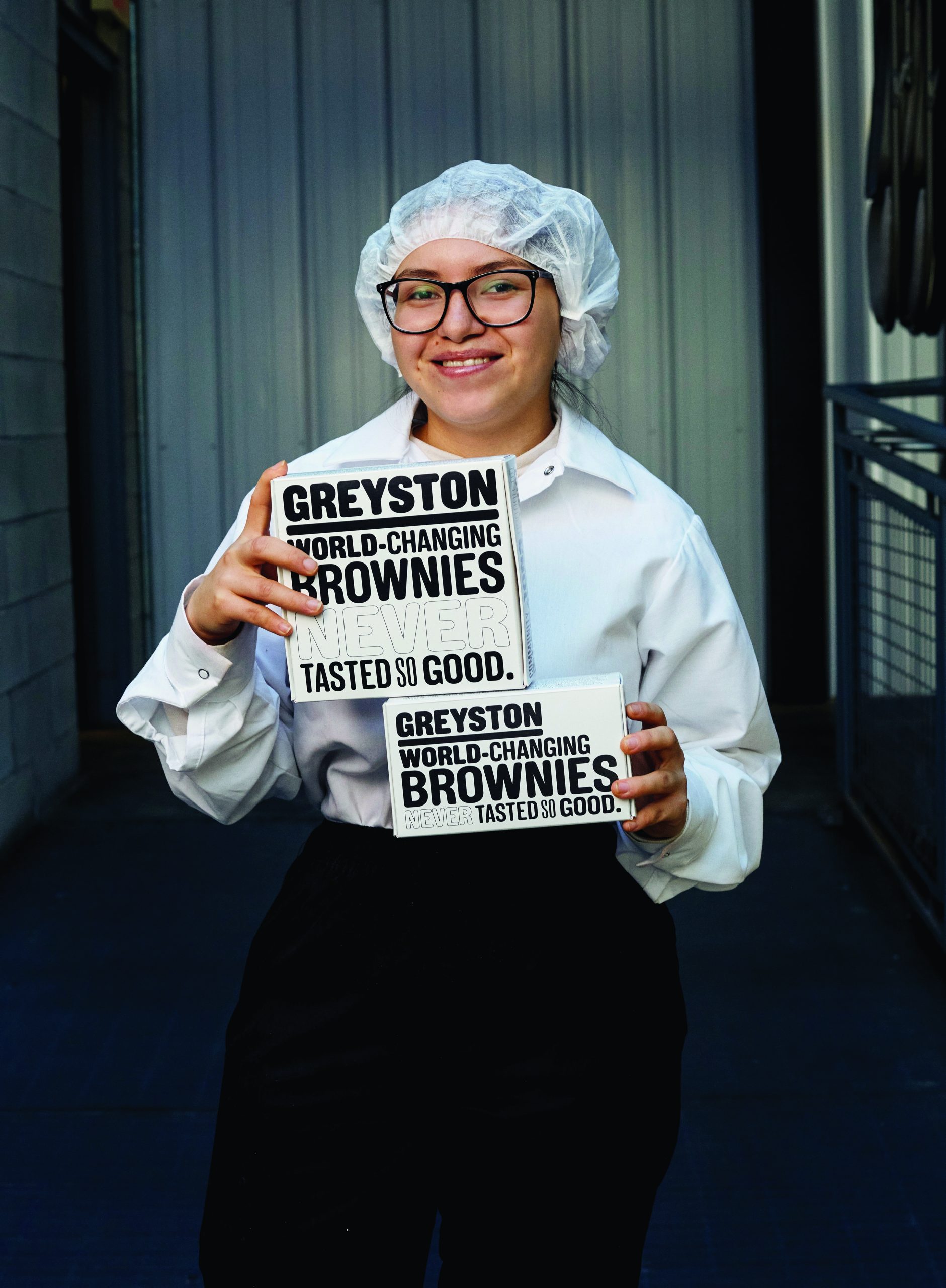
Greyston Bakery — the maker of gourmet brownies, cookies, and those chunky bits in Ben & Jerry’s ice cream — has recruited employees through open hiring for nearly 40 years. Its program helps break the cycle of poverty by hiring nearly anyone who wants to work — minorities, dropouts, refugees, the formerly incarcerated — without requiring resumes, interviews, or background checks.

Shawna Swanson, a Black single mother of five in Yonkers, New York, says the company gave her the chance she needed, as her financial situation became so dire that she considered putting some of her children up for adoption.

While Swanson’s story may seem extreme, it is all too common in the United States today, where marginalized groups have disproportionately high unemployment rates, financial instability, and food and housing insecurity. Black and Hispanic communities have continued to experience the highest poverty rate for the past three decades, reveals 2021 data released by the U.S. Census Bureau and the U.S. Department of Agriculture. 

To address the systemic nature of the underlying issues, it is important to start with companies.


Corporate hiring processes that disproportionately screen out candidates based on race, gender, ethnicity, and other factors are pervasive. For example, studies have found that when HR managers screen resumes, Black first names receive much lower call-back rates, indicating an unconscious bias. A 2019 World Economic Forum study calculated that because of the low rate of change in recent decades in women’s participation in the economy, we would need 257 years to achieve gender parity on economic factors like income and workforce participation. 

But through Greyston’s opening hiring, people who face situations like Swanson’s can be offered employment opportunities and community support. Instead of conventional vetting processes, open-hiring positions are filled on a first-come, first-served basis, giving opportunities to those who might otherwise face significant obstacles in finding employment. Open hiring ensures that candidates are judged solely on their willingness to work rather than on potentially discriminatory criteria. 

When individuals often excluded from the workforce gain employment, the positive effects ripple through their communities.


Families become more stable, local economies strengthen, and social services face less strain. The practice encourages companies to rethink their hiring criteria and actively works against the systemic discrimination embedded in traditional hiring processes. 

Greyston president and CEO Joe Kenner shares, “It’s opportunity. It’s access. We’ve been bringing folks into the mainstream for decades by investing in their potential with no judgment.” The bakery’s demographics reflect its community. Since 2017, approximately 95% of its open-hire employees are people of color, and a third are women. Latinx representation has risen steadily, consistent with the growth of the Latinx population in Yonkers, the company’s location. There has also been a significant increase in non-white employees in management positions.

Kenner explains that the company’s founder, Bernie Glassman, was overwhelmed by the myriad of unemployed and homeless people he saw daily in the Bronx. “The genesis was Bernie’s belief that we lose as a society when folks are not realizing their full potential,” Kenner states. “Open hiring isn’t charity; it’s a talent management strategy. We offer jobs to people, no questions asked. But at the end of the day, we still need to run a business that needs to make a profit, that needs to supply a product for Ben & Jerry’s. There’s accountability there.”
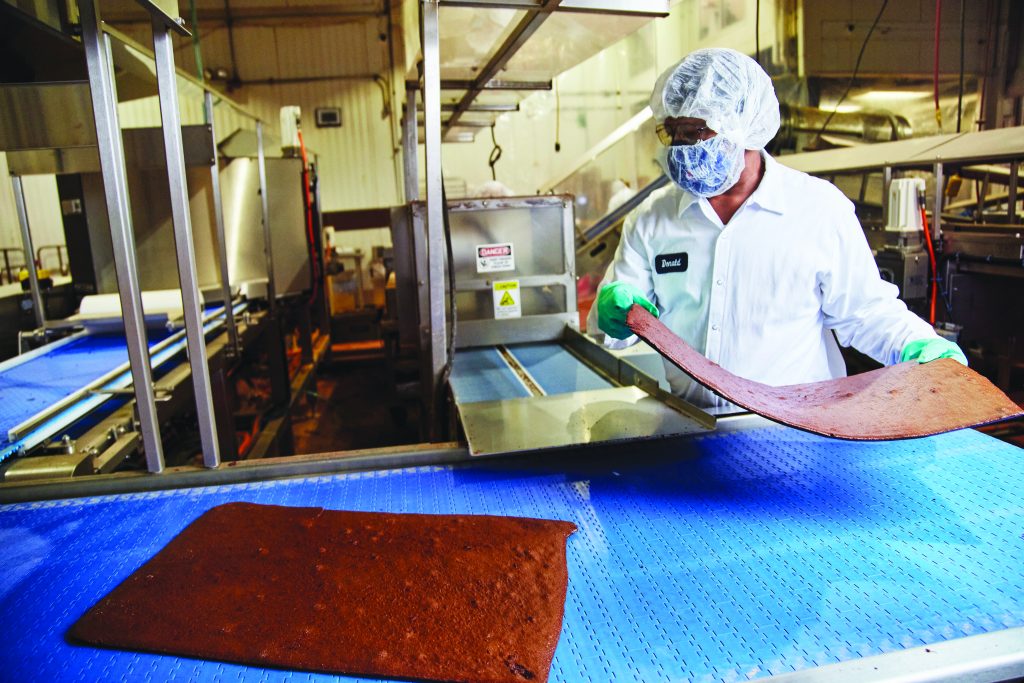


Glassman started open hiring by pulling unemployed people off the streets, saying, “Do you want to work? Do you want to learn a new skill? The skills are manual, and you can learn them on the job.” Greyston provides resources to help with childcare, mental health, housing, and other obstacles perpetuating poverty and inequity.

“We want to invest in bringing you in and keeping you here, as opposed to expending resources on keeping you out through, for example, interviews and background checks,” Kenner notes. With about 100 bakery employees, including 70 or so from open hiring, Greyston operates with an eye on employees’ long-term success.

The Greyston Employment Opportunity Center shares its hiring model with businesses large and small around the world. “We want to educate as many people as we can on the possibility of open hiring,” Kenner states. “If a business is skeptical about open hiring, we tell them to open up just one job. It is low risk. It can be whatever position you think works for your organization.”

Ten million Americans face a barrier to employment such as homelessness, substance abuse, or a criminal record — yet, there are roughly eight million jobs available, the Bureau of Labor Statistics reports in 2024. This hurts all of us. 


Data show that open hiring is working. In 2022, Greyston filled over 2,000 new jobs through open hiring, with 95% of open hires being people of color and over one-third being women. Its board of directors has almost equal representation of men and women. Kenner concludes that the practice is “good for business, it’s good for the economy, and there are some societal implications. It’s good for the hire; it’s good for their family; it’s good for the community the family lives in.”

An important element of Greyston’s model is changing the broader employment system across the globe, and it recently began scaling the open-hiring model internationally. Kenner says, “If we fill 40,000 jobs through inclusive hiring and open hiring by 2030, that computes to about $3 billion of economic impact — and that’s before you consider the savings from corrections, people getting off public assistance, and the tax revenue that they generate from their wages. That is a huge opportunity.”  

This article was adapted from Christopher Marquis’ book The Profiteers: How Business Privatizes Profit and Socializes Cost.

Sweetening the Deal: Greyston Bakery

The company’s open-hiring model helps break the cycle of poverty.


By Christopher Marquis


Greyston Bakery — the maker of gourmet brownies, cookies, and those chunky bits in Ben & Jerry’s ice cream — has recruited employees through open hiring for nearly 40 years. Its program helps break the cycle of poverty by hiring nearly anyone who wants to work — minorities, dropouts, refugees, the formerly incarcerated — without requiring resumes, interviews, or background checks.

Shawna Swanson, a Black single mother of five in Yonkers, New York, says the company gave her the chance she needed, as her financial situation became so dire that she considered putting some of her children up for adoption.

While Swanson’s story may seem extreme, it is all too common in the United States today, where marginalized groups have disproportionately high unemployment rates, financial instability, and food and housing insecurity. Black and Hispanic communities have continued to experience the highest poverty rate for the past three decades, reveals 2021 data released by the U.S. Census Bureau and the U.S. Department of Agriculture. 

To address the systemic nature of the underlying issues, it is important to start with companies.


Corporate hiring processes that disproportionately screen out candidates based on race, gender, ethnicity, and other factors are pervasive. For example, studies have found that when HR managers screen resumes, Black first names receive much lower call-back rates, indicating an unconscious bias. A 2019 World Economic Forum study calculated that because of the low rate of change in recent decades in women’s participation in the economy, we would need 257 years to achieve gender parity on economic factors like income and workforce participation. 

But through Greyston’s opening hiring, people who face situations like Swanson’s can be offered employment opportunities and community support. Instead of conventional vetting processes, open-hiring positions are filled on a first-come, first-served basis, giving opportunities to those who might otherwise face significant obstacles in finding employment. Open hiring ensures that candidates are judged solely on their willingness to work rather than on potentially discriminatory criteria. 

When individuals often excluded from the workforce gain employment, the positive effects ripple through their communities.


Families become more stable, local economies strengthen, and social services face less strain. The practice encourages companies to rethink their hiring criteria and actively works against the systemic discrimination embedded in traditional hiring processes. 

Greyston president and CEO Joe Kenner shares, “It’s opportunity. It’s access. We’ve been bringing folks into the mainstream for decades by investing in their potential with no judgment.” The bakery’s demographics reflect its community. Since 2017, approximately 95% of its open-hire employees are people of color, and a third are women. Latinx representation has risen steadily, consistent with the growth of the Latinx population in Yonkers, the company’s location. There has also been a significant increase in non-white employees in management positions.

Kenner explains that the company’s founder, Bernie Glassman, was overwhelmed by the myriad of unemployed and homeless people he saw daily in the Bronx. “The genesis was Bernie’s belief that we lose as a society when folks are not realizing their full potential,” Kenner states. “Open hiring isn’t charity; it’s a talent management strategy. We offer jobs to people, no questions asked. But at the end of the day, we still need to run a business that needs to make a profit, that needs to supply a product for Ben & Jerry’s. There’s accountability there.”


Glassman started open hiring by pulling unemployed people off the streets, saying, “Do you want to work? Do you want to learn a new skill? The skills are manual, and you can learn them on the job.” Greyston provides resources to help with childcare, mental health, housing, and other obstacles perpetuating poverty and inequity.

“We want to invest in bringing you in and keeping you here, as opposed to expending resources on keeping you out through, for example, interviews and background checks,” Kenner notes. With about 100 bakery employees, including 70 or so from open hiring, Greyston operates with an eye on employees’ long-term success.

The Greyston Employment Opportunity Center shares its hiring model with businesses large and small around the world. “We want to educate as many people as we can on the possibility of open hiring,” Kenner states. “If a business is skeptical about open hiring, we tell them to open up just one job. It is low risk. It can be whatever position you think works for your organization.”

Ten million Americans face a barrier to employment such as homelessness, substance abuse, or a criminal record — yet, there are roughly eight million jobs available, the Bureau of Labor Statistics reports in 2024. This hurts all of us. 


Data show that open hiring is working. In 2022, Greyston filled over 2,000 new jobs through open hiring, with 95% of open hires being people of color and over one-third being women. Its board of directors has almost equal representation of men and women. Kenner concludes that the practice is “good for business, it’s good for the economy, and there are some societal implications. It’s good for the hire; it’s good for their family; it’s good for the community the family lives in.”

An important element of Greyston’s model is changing the broader employment system across the globe, and it recently began scaling the open-hiring model internationally. Kenner says, “If we fill 40,000 jobs through inclusive hiring and open hiring by 2030, that computes to about $3 billion of economic impact — and that’s before you consider the savings from corrections, people getting off public assistance, and the tax revenue that they generate from their wages. That is a huge opportunity.”  

This article was adapted from Christopher Marquis’ book The Profiteers: How Business Privatizes Profit and Socializes Cost.
When Insurance Companies Give You Lemons — Make Lemonade

A leading innovator in the insurance space is a B Corporation called Lemonade. This startup insurer builds its business on a give-back system that allows customers to select nonprofits that receive any unused premiums.

Lemonade Cofounder and CEO Daniel Schreiber says donating that money rather than keeping it as profit has produced more than $1 million in donations in 2020 (and over $2.3 million in 2021). It’s a practice that he says goes against the industry’s traditional relationship with customers.

“I don’t think about what we’re doing as being charitable in the traditional sense of the word,” he says. “We do give money to charity, we do partner with charities, and in so doing, we are solving an absolute business challenge, which is that insurance companies are deeply distrusted.”

Lemonade has built trust with customers looking for a new way to insure their homes and lives. Schreiber says Lemonade’s intention to do insurance differently gets at the conflict inherent in the product. 

“There is an asymmetry of power: You’ve given me the money; I have it. You feel disadvantaged because it’s not a level playing field. I’ve been collecting your premiums for the last ten years, and now you’re trying to get them out. There is an asymmetry of information: You don’t really know what the policy says; I do,” he says. “That’s what we were contending with in founding Lemonade: How do you create a trusting and trustworthy brand in a domain where the business fundamentals are designed for conflict of interest?”

While launching Lemonade, Schreiber talked with a Nobel Laureate in game theory and another with a Nobel Prize in behavioral economics. “We ultimately concluded that the problem isn’t with the players; it’s with the game. There’s something structural about insurance that produces these predictable results,” he says. “The fundamental problem is I make money by denying your claim. So I have a fundamental interest in you not being paid. I’m simplifying things, but it’s a zero-sum game: One of us is going to be $1,000 richer, one of us is going to be $1,000 poorer, and so long as that’s the case, there’s a problem.”

Schreiber says incorporating a new component — the Giveback program — serves as a game-changer. “By adding a nonprofit to the room, we change the very fundamentals of the dynamics and other incentives. We tell you upfront that our profit is not going to depend on how many claims we pay,” he says. “If there’s money left over, it will go to a charity of your choice. That changes my incentive because I don’t make money by denying your claim.”

Like Burnham Benefits, Lemonade shows that it’s possible to incorporate a stakeholder-minded and profitable way of doing business in a traditional industry and find a receptive and appreciative customer audience. “I think people should work hard at creating that kind of win-win,” Schreiber says. “It’s good to be able to build a business model where the act of giving something to the wider community isn’t at the expense of your shareholders.”

When Insurance Companies Give You Lemons — Make Lemonade

A leading innovator in the insurance space is a B Corporation called Lemonade. This startup insurer builds its business on a give-back system that allows customers to select nonprofits that receive any unused premiums.

Lemonade Cofounder and CEO Daniel Schreiber says donating that money rather than keeping it as profit has produced more than $1 million in donations in 2020 (and over $2.3 million in 2021). It’s a practice that he says goes against the industry’s traditional relationship with customers.

“I don’t think about what we’re doing as being charitable in the traditional sense of the word,” he says. “We do give money to charity, we do partner with charities, and in so doing, we are solving an absolute business challenge, which is that insurance companies are deeply distrusted.”

Lemonade has built trust with customers looking for a new way to insure their homes and lives. Schreiber says Lemonade’s intention to do insurance differently gets at the conflict inherent in the product. 

“There is an asymmetry of power: You’ve given me the money; I have it. You feel disadvantaged because it’s not a level playing field. I’ve been collecting your premiums for the last ten years, and now you’re trying to get them out. There is an asymmetry of information: You don’t really know what the policy says; I do,” he says. “That’s what we were contending with in founding Lemonade: How do you create a trusting and trustworthy brand in a domain where the business fundamentals are designed for conflict of interest?”

While launching Lemonade, Schreiber talked with a Nobel Laureate in game theory and another with a Nobel Prize in behavioral economics. “We ultimately concluded that the problem isn’t with the players; it’s with the game. There’s something structural about insurance that produces these predictable results,” he says. “The fundamental problem is I make money by denying your claim. So I have a fundamental interest in you not being paid. I’m simplifying things, but it’s a zero-sum game: One of us is going to be $1,000 richer, one of us is going to be $1,000 poorer, and so long as that’s the case, there’s a problem.”

Schreiber says incorporating a new component — the Giveback program — serves as a game-changer. “By adding a nonprofit to the room, we change the very fundamentals of the dynamics and other incentives. We tell you upfront that our profit is not going to depend on how many claims we pay,” he says. “If there’s money left over, it will go to a charity of your choice. That changes my incentive because I don’t make money by denying your claim.”

Like Burnham Benefits, Lemonade shows that it’s possible to incorporate a stakeholder-minded and profitable way of doing business in a traditional industry and find a receptive and appreciative customer audience. “I think people should work hard at creating that kind of win-win,” Schreiber says. “It’s good to be able to build a business model where the act of giving something to the wider community isn’t at the expense of your shareholders.”

For Plastic-Free to take Hold, Businesses Need to Form Strong Partnerships, Compete with Conventional Products

As the impacts of plastic pollution have received greater attention in recent years, many companies have begun committing to reduce their plastic usage and production. Plastic pollution is such a major issue for many reasons. It doesn’t decompose quickly, there is not sufficient infrastructure to recycle it, and its production often involves oil, natural gas, or coal. Plastic waste usually ends up in landfills and our waterways if it is not incinerated — a process that is harmful to the environment and toxic to nearby communities as well.

Some more ambitious companies, like Grove Collaborative, have gone even further by setting a goal to become completely plastic-free. In Grove Collaborative’s case, the company aims to be plastic-free by 2025 and is already plastic neutral. Grove Collaborative is a leading sustainable household and cleaning goods company that creates products and sells products from other companies through its online store. It also recently began selling a collection of signature cleaning products from Grove Co.’s plastic-free cleaning line at Target stores nationwide. This industry relies heavily on plastic, meaning innovation is key to going plastic-free.

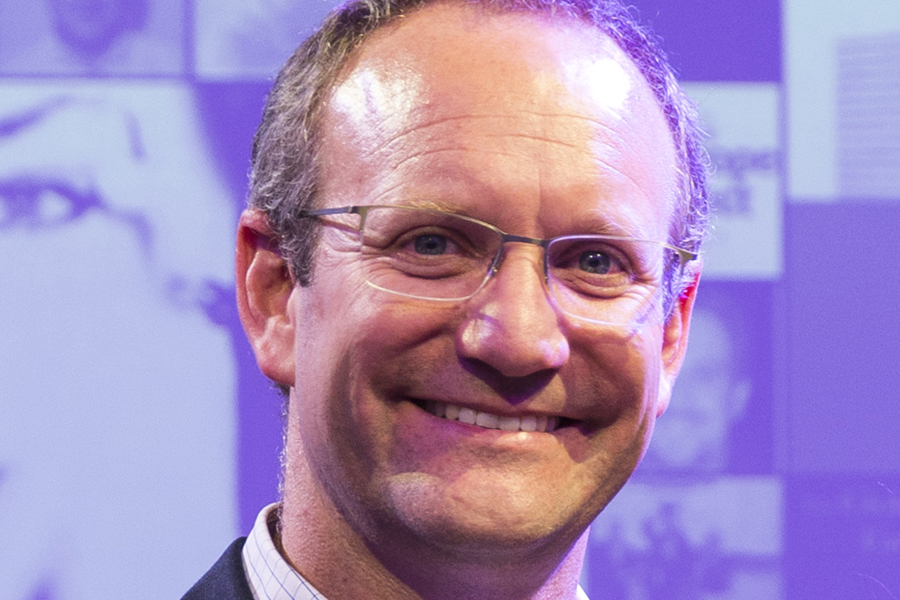
“I’ve had the idea of plastic neutral for a long time,” said Stuart Landesberg, co-founder and CEO of Grove Collaborative (pictured above) and member of the SF Bay YPO Chapter. “I felt like I was just some sort of crazy hippie guy banging pots and pans at the industry like, ‘Hey, we should really be paying attention.’ And now I feel like, ‘oh, you big companies are actually starting to really follow in our footsteps.’ And, on a personal level, when I started the company, I wasn’t thinking, ‘I want to make half a billion dollars or a billion dollars.’ I wanted to change this industry.”

As part of my research of purpose-driven businesses, I spoke with Landesberg to learn about what the company is doing to become plastic-free and what it will take to change the industry as a whole.

What do you think is the key to creating an achievable plastic-free goal for a company?

Having a super close goal, timewise, is key. That’s why we made the ambitious goal for Grove to become 100% plastic-free by 2025. You can’t be shooting for 20 or 50 years because your successor may not continue pursuing the goal. A shorter timeline puts the heat on me, it puts the heat on the whole executive team, and it really makes our goal clear to all of the decision-makers, down to people who started working at Grove yesterday. They all understand that our goal is to change this industry for the better and that plastic is one of the huge problems in the industry.

So say someone has a project on their desk to work on deodorant. You have to think, how should we approach that problem? Do we want to make a deodorant with a recycled plastic case? Do we want to make a deodorant in a single-use aluminum case? What are our first principles? Do we want the ones that have the highest profit margin? Or do we want the ones with the best design? Do we want to copy the market leader? In our case, it’s really clear that we want to be zero plastic. We want as much waste reduction as possible. So, having a clear goal with a close timeline is the second half of the equation for driving real change — the first is you don’t have to accept incremental change. The second being the timeline is short enough that everybody has to work on it every day.

I also think it starts with talent. Any success or growth we’ve had has been because we’ve had a fantastic team. And the only reason we’ve been able to attract this team is our mission. If you believe — which I deeply do — that the companies that will win are the companies that can attract the best talent, and the companies with the best purpose will attract the best talent, then the companies that have the best results will be purpose-driven.

There’s a big generation of people for whom this idea and environmental issues were not as important. I grew up thinking, “Oh man. Climate change and environmental devastation are problems we totally need to solve. And I need to work to solve them every day.” But for someone who grew up during a different time, you probably didn’t grow up with that orientation. Anybody graduating from college now who’s paying attention, they’re interested in solving these issues. So I think the talent advantage is where it all starts. Across industries, organizations that have aligned themselves towards a values-driven approach to the future will outperform others in their industry.

Could you share some examples of partnerships you have made in your efforts to become plastic-free?

One person I work closely with is Joey Bergstein, the CEO of Seventh Generation. One of the amazing things about working in our space is it is collaborative because people genuinely care. I’ve known Joey for a decade now, and he wants to do the right thing. Joey is a fantastic collaborator. And it’s not just Joey. We have great relationships across the space because people genuinely want to do right.
.
One of the other great things is that we have a stake in the ground since we’ve stated where we believe the industry is going, so players and partners will bring us their zero plastic innovation ideas. We get them data that they can’t possibly get anywhere else, and they can watch the data with us first. We’ll feed them back data about what consumers like and what consumers didn’t like, which allows them to drive faster innovation than they would otherwise be able to drive.

In addition to our combination of packaging and ingredient advocacy, our direct-to-consumer business model allows for faster innovation than has ever been possible in this space before. The amount of data that I have at my fingertips massively differentiates from what even the biggest consumer packaged goods (CPG) executive has because of the direct relationships with the consumer. If I want to take a product to market, I can get that product to market in a day on my site. We will launch 100 plus products this year.

The ability to iterate and innovate with a low cost of failure and a super quick feedback cycle in a way that’s just never been present in the CPG space is huge. Typically in the CPG space, you go incrementally, where you learn, you double down, you learn a little more, and you double down again. But the pace of learning in a direct-to-consumer environment is so accelerated. I view the combination of low cost of failure and fast iteration speed as a little bit of the secret sauce to why we’ll succeed in creating products that people really love. It allows us to outcompete traditional CPG firms which don’t have that speed or data.

In that way, Grove benefits because we get the zero plastic products first, and we get to see their innovation, which feeds our own innovation. So it’s great for our consumers and Seventh Generation or whoever the partner is. You get to help push their roadmap.

But I think the thing that’s been most surprising to me is that since we went plastic neutral by partnering with a couple of smaller companies, the larger companies that bring in are starting to go plastic neutral. There have been giant companies that just announced these initiatives.

We have a lot of changing left to do, but I am totally blown away when I see giant companies copy us. It’s just an amazing feeling. I feel so lucky to have my job. I love my job. And I really feel like we’re lucky to have the wind at our back in terms of the way the industry is moving.

How do you ensure that the innovative, plastic-free products you are selling from other companies through your site meet your sustainability standards and are compelling products?

I think efficacy has to come first from the consumer perspective. And I think one of the big challenges in the natural products category is that people have a perception that the product doesn’t work. So we hold ourselves to the same bar as the highest performing conventional brands and products. How do we do that? The same way we do anything else: good people, clear goals, good data. That’s how it happens: people, culture, data. And that’s how innovation gets created.

But I do think there are companies that have been willing to compromise on efficacy for the sake of sustainability or product innovation. I view that as very short-term thinking because you may be able to get a consumer to try a sustainable format with some hook or nifty design, but if the product doesn’t work, they’re going back to the conventional option. The company might have gotten one purchase, but will the customer make a second purchase if the performance is not there. That’s why we’ve always been focused on top-tier efficacy since the very, very beginning. It all starts with products that consumers love, and it can’t just be because the products have zero waste. It has to be a product that performs to the absolute highest standard while also not being harmful to the person or the environment.

One exciting thing happening right now in our industry that I think is creating momentum for Grove and the sustainable CPG space is that natural chemistry is catching up to conventional product chemistry. Our laundry detergent pods perform just as well as the leading brand. Our dish soaps perform as well as the leading brand.

Natural chemistry has really caught up from an efficacy perspective. At the same time, there’s a super visible transition away from wasteful packaging, so people are trying the category again or for the first time, and they’re staying because the product really performs. I think that the natural products industry — and really companies like Grove that are on the leading edge of sustainability and high-performance plant-based products — are the ones that will win. We may not always win the PR game, but we’ll win in the long term because it’s all about creating products that customers love and will buy again and again.

For Plastic-Free to take Hold, Businesses Need to Form Strong Partnerships, Compete with Conventional Products

As the impacts of plastic pollution have received greater attention in recent years, many companies have begun committing to reduce their plastic usage and production. Plastic pollution is such a major issue for many reasons. It doesn’t decompose quickly, there is not sufficient infrastructure to recycle it, and its production often involves oil, natural gas, or coal. Plastic waste usually ends up in landfills and our waterways if it is not incinerated — a process that is harmful to the environment and toxic to nearby communities as well.

Some more ambitious companies, like Grove Collaborative, have gone even further by setting a goal to become completely plastic-free. In Grove Collaborative’s case, the company aims to be plastic-free by 2025 and is already plastic neutral. Grove Collaborative is a leading sustainable household and cleaning goods company that creates products and sells products from other companies through its online store. It also recently began selling a collection of signature cleaning products from Grove Co.’s plastic-free cleaning line at Target stores nationwide. This industry relies heavily on plastic, meaning innovation is key to going plastic-free.

“I’ve had the idea of plastic neutral for a long time,” said Stuart Landesberg, co-founder and CEO of Grove Collaborative (pictured above) and member of the SF Bay YPO Chapter. “I felt like I was just some sort of crazy hippie guy banging pots and pans at the industry like, ‘Hey, we should really be paying attention.’ And now I feel like, ‘oh, you big companies are actually starting to really follow in our footsteps.’ And, on a personal level, when I started the company, I wasn’t thinking, ‘I want to make half a billion dollars or a billion dollars.’ I wanted to change this industry.”

As part of my research of purpose-driven businesses, I spoke with Landesberg to learn about what the company is doing to become plastic-free and what it will take to change the industry as a whole.

What do you think is the key to creating an achievable plastic-free goal for a company?

Having a super close goal, timewise, is key. That’s why we made the ambitious goal for Grove to become 100% plastic-free by 2025. You can’t be shooting for 20 or 50 years because your successor may not continue pursuing the goal. A shorter timeline puts the heat on me, it puts the heat on the whole executive team, and it really makes our goal clear to all of the decision-makers, down to people who started working at Grove yesterday. They all understand that our goal is to change this industry for the better and that plastic is one of the huge problems in the industry.

So say someone has a project on their desk to work on deodorant. You have to think, how should we approach that problem? Do we want to make a deodorant with a recycled plastic case? Do we want to make a deodorant in a single-use aluminum case? What are our first principles? Do we want the ones that have the highest profit margin? Or do we want the ones with the best design? Do we want to copy the market leader? In our case, it’s really clear that we want to be zero plastic. We want as much waste reduction as possible. So, having a clear goal with a close timeline is the second half of the equation for driving real change — the first is you don’t have to accept incremental change. The second being the timeline is short enough that everybody has to work on it every day.

I also think it starts with talent. Any success or growth we’ve had has been because we’ve had a fantastic team. And the only reason we’ve been able to attract this team is our mission. If you believe — which I deeply do — that the companies that will win are the companies that can attract the best talent, and the companies with the best purpose will attract the best talent, then the companies that have the best results will be purpose-driven.

There’s a big generation of people for whom this idea and environmental issues were not as important. I grew up thinking, “Oh man. Climate change and environmental devastation are problems we totally need to solve. And I need to work to solve them every day.” But for someone who grew up during a different time, you probably didn’t grow up with that orientation. Anybody graduating from college now who’s paying attention, they’re interested in solving these issues. So I think the talent advantage is where it all starts. Across industries, organizations that have aligned themselves towards a values-driven approach to the future will outperform others in their industry.

Could you share some examples of partnerships you have made in your efforts to become plastic-free?

One person I work closely with is Joey Bergstein, the CEO of Seventh Generation. One of the amazing things about working in our space is it is collaborative because people genuinely care. I’ve known Joey for a decade now, and he wants to do the right thing. Joey is a fantastic collaborator. And it’s not just Joey. We have great relationships across the space because people genuinely want to do right.
.
One of the other great things is that we have a stake in the ground since we’ve stated where we believe the industry is going, so players and partners will bring us their zero plastic innovation ideas. We get them data that they can’t possibly get anywhere else, and they can watch the data with us first. We’ll feed them back data about what consumers like and what consumers didn’t like, which allows them to drive faster innovation than they would otherwise be able to drive.

In addition to our combination of packaging and ingredient advocacy, our direct-to-consumer business model allows for faster innovation than has ever been possible in this space before. The amount of data that I have at my fingertips massively differentiates from what even the biggest consumer packaged goods (CPG) executive has because of the direct relationships with the consumer. If I want to take a product to market, I can get that product to market in a day on my site. We will launch 100 plus products this year.

The ability to iterate and innovate with a low cost of failure and a super quick feedback cycle in a way that’s just never been present in the CPG space is huge. Typically in the CPG space, you go incrementally, where you learn, you double down, you learn a little more, and you double down again. But the pace of learning in a direct-to-consumer environment is so accelerated. I view the combination of low cost of failure and fast iteration speed as a little bit of the secret sauce to why we’ll succeed in creating products that people really love. It allows us to outcompete traditional CPG firms which don’t have that speed or data.

In that way, Grove benefits because we get the zero plastic products first, and we get to see their innovation, which feeds our own innovation. So it’s great for our consumers and Seventh Generation or whoever the partner is. You get to help push their roadmap.

But I think the thing that’s been most surprising to me is that since we went plastic neutral by partnering with a couple of smaller companies, the larger companies that bring in are starting to go plastic neutral. There have been giant companies that just announced these initiatives.

We have a lot of changing left to do, but I am totally blown away when I see giant companies copy us. It’s just an amazing feeling. I feel so lucky to have my job. I love my job. And I really feel like we’re lucky to have the wind at our back in terms of the way the industry is moving.

How do you ensure that the innovative, plastic-free products you are selling from other companies through your site meet your sustainability standards and are compelling products?

I think efficacy has to come first from the consumer perspective. And I think one of the big challenges in the natural products category is that people have a perception that the product doesn’t work. So we hold ourselves to the same bar as the highest performing conventional brands and products. How do we do that? The same way we do anything else: good people, clear goals, good data. That’s how it happens: people, culture, data. And that’s how innovation gets created.

But I do think there are companies that have been willing to compromise on efficacy for the sake of sustainability or product innovation. I view that as very short-term thinking because you may be able to get a consumer to try a sustainable format with some hook or nifty design, but if the product doesn’t work, they’re going back to the conventional option. The company might have gotten one purchase, but will the customer make a second purchase if the performance is not there. That’s why we’ve always been focused on top-tier efficacy since the very, very beginning. It all starts with products that consumers love, and it can’t just be because the products have zero waste. It has to be a product that performs to the absolute highest standard while also not being harmful to the person or the environment.

One exciting thing happening right now in our industry that I think is creating momentum for Grove and the sustainable CPG space is that natural chemistry is catching up to conventional product chemistry. Our laundry detergent pods perform just as well as the leading brand. Our dish soaps perform as well as the leading brand.

Natural chemistry has really caught up from an efficacy perspective. At the same time, there’s a super visible transition away from wasteful packaging, so people are trying the category again or for the first time, and they’re staying because the product really performs. I think that the natural products industry — and really companies like Grove that are on the leading edge of sustainability and high-performance plant-based products — are the ones that will win. We may not always win the PR game, but we’ll win in the long term because it’s all about creating products that customers love and will buy again and again.

How B Corps Offer Real-World Lessons for Future Business Leaders

Certified B Corporations are a growing field of study for the business leaders of the future — the students at a number of universities where faculty are part of B Academics, the global B Corp academic community.

The group’s leaders include Jessica Yinka Thomas, Director of the Business Sustainability Collaborative and Lecturer at the Poole College of Management at North Carolina State University. She oversees the university’s B Corp Clinic, where students can get real-world experience. They work with companies pursuing B Corp Certification or improving their social and environmental impact. She incorporates B Corps into her curriculum, including her undergraduate business ethics class.

“We look at how businesses can operate in a socially, environmentally, and ethically responsible manner, studying B Corps throughout that class,” she says. This includes a case study on New Belgium involving open-book management and employee ownership as strategies for engaging workers and speakers. An alumnus who works at Athleta also shared what it’s like to be a B Corp within a major multinational brand that offers products with innovative materials and an empowerment message for women and girls.

Professor Thomas says awareness of B Corps has grown in the last few years among students. They embrace the shift toward a stakeholder capitalism model as a primary method to confront the climate crisis and economic inequalities projected to worsen in their lifetimes.

“It’s a combination of a very clear and ambitious vision for the movement, and a comprehensive and clear framework for explaining what it means to have a strong impact across your business stakeholders,” she says. “Something just clicks with the students. They say, ‘I get this. I want to work at a B Corp. I want to buy from B Corps. I want to learn more about what it means to be a B Corp.'”

Thomas and I recently talked about the group’s history and plans for growth as part of my research on the B Corp community. She shared more about the B Academics group’s plans to expand knowledge and awareness of B Corps among students of all ages. They also plan to grow the number of participating faculty around the globe.

Christopher Marquis: Share a little bit more about the student experience. How are B Corps incorporated into curricula? How do students react if they are first learning about the B Corp community?

Jessica Yinka Thomas: I’ve had the opportunity to work in academia for about 15 years now. And I have never seen anything that really captures the imagination and inspires students like B Corps. There’s something about having such a clear framework for impact that’s very accessible and understandable, and at the same time very rigorous and comprehensive but not a one-size-fits-all. It can be understood by entrepreneurs and by business leaders simultaneously, which makes it really accessible and attractive. It’s also engaging for students as a movement that includes well-known brands, like Patagonia, Ben & Jerry’s, Seventh Generation, and New Belgium.

It’s a combination of a very clear and ambitious vision for the movement, and a comprehensive and clear framework for explaining what it means to have a strong impact across your business stakeholders. Something just clicks with the students. They say, ‘I get this. I want to work at a B Corp. I want to buy from B Corps. I want to learn more about what it means to be a B Corp .'”

When I first started teaching about B Corps around 10 years ago, I would ask “How many of you have seen this logo?” And you might get a hand or two. Now I would say it’s a majority of students I have the opportunity to interact with who are at least familiar with the concept of a B Corp.

Christopher Marquis: As a co-founder of B Academics, how did you come up with the idea? How did the group get its start and gain traction?

Jessica Yinka Thomas: I learned about B Corps around 2009. I was running a sustainable business accelerator at the Center for Sustainable Enterprise at University of North Carolina Kenan Flagler Business School. We were looking for an impact measurement tool for the companies going through the accelerator. Two people who were critical in the early days were the other co-founders, Rosanna Garcia and Joel Gehman. Since then, we have been, from a grassroots level, building what is now a global network of educators and researchers who have this shared vision of studying business as a force for good. We want to teach the next generation of business leaders, entrepreneurs, and workers how to embed impact into business.

For the first few years, it was a very informal network. We hosted regular webinars, an annual B Academics Roundtable, and started to build out a founding leadership team. In 2019, we became a 501(c)3 nonprofit and have really started to formalize the organization. B Academics is an independent organization from B Lab, the nonprofit that oversees B Corp Certification.

We had about thirty people attend that first B Academics Roundtable in 2016. Now we have a mailing list of close to 2,000 people from at least 52 countries, representing more than 600 academic institutions or organizations that have expressed interest in engaging with B Academics. There is a core group of 12 board members at different academic institutions worldwide who are deeply involved in our work.

We’re building a resource platform with over 400 paper abstracts, cases, videos, podcasts — just a range of different research and teaching tools that will be accessible to members. Often, the research that academics publish is not easily digestible by non-academics. So we are developing a series of briefs that will translate some of the faculty and our network’s research in a way that highlights the lessons that industry can take away.

Christopher Marquis: Can you tell me a bit more about the B Corp Clinic at North Carolina State and the work students do there?

Jessica Yinka Thomas: We’ve been through many iterations of the B Corp Clinic since we launched the program in the Summer of 2015. Over the last 11 semesters, we’ve worked on 68 projects with more than 60 companies — from start-ups to multinationals — from various industries and from around the world. Some are on the road to B Corp Certification, and others are recertifying. We’ve worked with 15 companies that have become B Corp certified.

We have coaches who are typically leaders from North Carolina B Corps who provide guidance and subject matter expertise to the teams. In the first four years of the program, we designed a co-curricular model where students applied to participate in the program. At that point, we had students from seven different academic institutions across the state, including public and private universities, community colleges, and HBCUs.

Each university looks a little different, and you can adapt the model to meet the needs of the companies and the students you’re working with — undergraduate, grad students, business school students, or those from different disciplines.

How B Corps Offer Real-World Lessons for Future Business Leaders

Certified B Corporations are a growing field of study for the business leaders of the future — the students at a number of universities where faculty are part of B Academics, the global B Corp academic community.

The group’s leaders include Jessica Yinka Thomas, Director of the Business Sustainability Collaborative and Lecturer at the Poole College of Management at North Carolina State University. She oversees the university’s B Corp Clinic, where students can get real-world experience. They work with companies pursuing B Corp Certification or improving their social and environmental impact. She incorporates B Corps into her curriculum, including her undergraduate business ethics class.

“We look at how businesses can operate in a socially, environmentally, and ethically responsible manner, studying B Corps throughout that class,” she says. This includes a case study on New Belgium involving open-book management and employee ownership as strategies for engaging workers and speakers. An alumnus who works at Athleta also shared what it’s like to be a B Corp within a major multinational brand that offers products with innovative materials and an empowerment message for women and girls.

Professor Thomas says awareness of B Corps has grown in the last few years among students. They embrace the shift toward a stakeholder capitalism model as a primary method to confront the climate crisis and economic inequalities projected to worsen in their lifetimes.

“It’s a combination of a very clear and ambitious vision for the movement, and a comprehensive and clear framework for explaining what it means to have a strong impact across your business stakeholders,” she says. “Something just clicks with the students. They say, ‘I get this. I want to work at a B Corp. I want to buy from B Corps. I want to learn more about what it means to be a B Corp.'”

Thomas and I recently talked about the group’s history and plans for growth as part of my research on the B Corp community. She shared more about the B Academics group’s plans to expand knowledge and awareness of B Corps among students of all ages. They also plan to grow the number of participating faculty around the globe.

Christopher Marquis: Share a little bit more about the student experience. How are B Corps incorporated into curricula? How do students react if they are first learning about the B Corp community?

Jessica Yinka Thomas: I’ve had the opportunity to work in academia for about 15 years now. And I have never seen anything that really captures the imagination and inspires students like B Corps. There’s something about having such a clear framework for impact that’s very accessible and understandable, and at the same time very rigorous and comprehensive but not a one-size-fits-all. It can be understood by entrepreneurs and by business leaders simultaneously, which makes it really accessible and attractive. It’s also engaging for students as a movement that includes well-known brands, like Patagonia, Ben & Jerry’s, Seventh Generation, and New Belgium.

It’s a combination of a very clear and ambitious vision for the movement, and a comprehensive and clear framework for explaining what it means to have a strong impact across your business stakeholders. Something just clicks with the students. They say, ‘I get this. I want to work at a B Corp. I want to buy from B Corps. I want to learn more about what it means to be a B Corp .'”

When I first started teaching about B Corps around 10 years ago, I would ask “How many of you have seen this logo?” And you might get a hand or two. Now I would say it’s a majority of students I have the opportunity to interact with who are at least familiar with the concept of a B Corp.

Christopher Marquis: As a co-founder of B Academics, how did you come up with the idea? How did the group get its start and gain traction?

Jessica Yinka Thomas: I learned about B Corps around 2009. I was running a sustainable business accelerator at the Center for Sustainable Enterprise at University of North Carolina Kenan Flagler Business School. We were looking for an impact measurement tool for the companies going through the accelerator. Two people who were critical in the early days were the other co-founders, Rosanna Garcia and Joel Gehman. Since then, we have been, from a grassroots level, building what is now a global network of educators and researchers who have this shared vision of studying business as a force for good. We want to teach the next generation of business leaders, entrepreneurs, and workers how to embed impact into business.

For the first few years, it was a very informal network. We hosted regular webinars, an annual B Academics Roundtable, and started to build out a founding leadership team. In 2019, we became a 501(c)3 nonprofit and have really started to formalize the organization. B Academics is an independent organization from B Lab, the nonprofit that oversees B Corp Certification.

We had about thirty people attend that first B Academics Roundtable in 2016. Now we have a mailing list of close to 2,000 people from at least 52 countries, representing more than 600 academic institutions or organizations that have expressed interest in engaging with B Academics. There is a core group of 12 board members at different academic institutions worldwide who are deeply involved in our work.

We’re building a resource platform with over 400 paper abstracts, cases, videos, podcasts — just a range of different research and teaching tools that will be accessible to members. Often, the research that academics publish is not easily digestible by non-academics. So we are developing a series of briefs that will translate some of the faculty and our network’s research in a way that highlights the lessons that industry can take away.

Christopher Marquis: Can you tell me a bit more about the B Corp Clinic at North Carolina State and the work students do there?

Jessica Yinka Thomas: We’ve been through many iterations of the B Corp Clinic since we launched the program in the Summer of 2015. Over the last 11 semesters, we’ve worked on 68 projects with more than 60 companies — from start-ups to multinationals — from various industries and from around the world. Some are on the road to B Corp Certification, and others are recertifying. We’ve worked with 15 companies that have become B Corp certified.

We have coaches who are typically leaders from North Carolina B Corps who provide guidance and subject matter expertise to the teams. In the first four years of the program, we designed a co-curricular model where students applied to participate in the program. At that point, we had students from seven different academic institutions across the state, including public and private universities, community colleges, and HBCUs.

Each university looks a little different, and you can adapt the model to meet the needs of the companies and the students you’re working with — undergraduate, grad students, business school students, or those from different disciplines.

6 Ways You Can Commit to NetZero 2050, And Become a Part of the Solution

The science behind climate change is clear: If we don’t achieve net zero emissions by 2050, we will not limit the planet to a 1.5 degrees Centigrade temperature change. The level of climate impact will be catastrophic to life as we know it on Earth. This realization is what drives Gonzalo Muñoz (above), co-founder of Sistema B, a 2019 UN COP Climate Champion.

Starting with the 2019 UN Climate Conference, COP25, through this year and into next year’s COP in Glasgow, the private sector’s role in addressing climate change and taking climate action has taken a front seat alongside the duties of the public sector and civil service. According to Muñoz, business leadership must either commit to becoming net-zero by 2050, or even better, 2030, or “be comfortable being a part of the problem.” 

Muñoz believes Certified B Corporations, businesses that have been verified for their positive impact on people and the planet, have an imperative to pledge, commit, and take action on their climate impact. He argues that to not do so would be a reason to forfeit their certification in coming years. This direct, science-centered approach is how Muñoz and the UN are working to make meaningful action — before it’s too late. And this passion has helped result in the NetZero2030 commitments by now nearly 1,000 B Corps, meaning that companies are aiming to hit the net-zero goal 20 years before required to do so by the Paris Agreements.

I recently spoke with Muñoz as part of my research on B Corps and stakeholder capitalism. Here’s part of our conversation, where he discussed NetZero 2030, #RaceToZero, and how businesses of all sizes can get involved and take climate action today.

Tell me about the NetZero 2030, how it began, and the commitment of companies such as B Corporations to this goal. 

Gonzalo Munoz:­ It’s important to begin the story before NetZero 2030, because what was instrumental was that Chile took the lead on the UN Climate Change Conference, COP25, after Brazil stepped away. COP rotates through five major areas of the world, and it was time for Latin America to be the host. Chile took the baton, and one of the things that an incoming presidency for COP must decide is naming what is called the High Level Climate Action Champion, a role created in the Paris Agreement, to lead non-party stakeholders.

The role of the High Level Climate Action Champion is to mobilize action among those sectors, and until COP25, all of the previous champions were civil servants. For Chile, it was evident that the role had to be led by somebody coming from the non-state sector, and they named me. For the first time, the High Level Climate Action Champion came from the private sector, which has since been replicated by the U.K. who nominated Nigel Topping from We Mean Business, another private sector individual. 

The second action Chile took was to ask the team and me to position science at the center. They wanted us to say, “Okay, we have to follow science, and science has just spoken.” In October 2018, a couple of months before COP24, climate scientists at the APCC (APEC Climate Center) released a report saying that the best option was to aim for a temperature increase of 1.5 degrees centigrade. To achieve this, the world has to be net-zero on carbon emissions by 2050. Meaning that by 2050, we have to emit equal, or lesser, amounts of CO2 that nature is capable of sequestering. 

We launched the Climate Ambition Alliance at the Secretary-General Summit in September 2019 for everyone who wanted to follow a NetZero 2050 target. At that time, 66 countries said, “We’re in.” But it’s not just about the countries. We started putting together businesses, investors, sub-national regions, and cities to work together toward NetZero by 2050. 

To write the material for 2050, you need some organizations, people, and countries to lead the way and set their targets sooner than 2050. That’s why on September 1 last year, I went to different meetings with B Corps, and said, “Guys, B Corps always lead the way. We have an understanding of how important it is to follow science. We operate on a vision that certain moral duties are higher than local regulation. I think it would be important for the B Corps to step forward and say, ‘If the world needs to be NetZero by 2050, then we, too, will be NetZero by 2030.'” 

We had 533 B Corps join this commitment before COP25. It was the most significant number of companies at that time. 

This year, we expect all B Corps to commit. Not committing, at least to 2050, is recognizing that you are comfortable being part of the problem. So, we are sending the message this year that every B Corp in the world should at least be committed to becoming net-zero by 2050. Hopefully, we can reach Glasgow with at least half of them being dedicated to this goal. 

What practices, tools, and advice exists for companies to get started? How do they do it? How do they get guidance?

When it comes to the business sector, there are six ways to join Race to Zero, and all of them include science-based targets — that’s super important. It’s not just stating that you will do something, be something, or make a commitment. It’s called the Four P’s — you have to: pledge, plan, proceed, and publish. 

When it comes to pledging, you have six ways to pledge. If you’re a B Corp, you can join immediately through the NetZero 2030, or even the NetZero 2050, target.  

When it comes to big companies, the UN global compact has one entry point created by the Secretary-General Summit in 2019; it’s called the 1.5 Business Pledge. Any business of the world can join whether you are part of the UN Global Compact or not. 

If you are a SME and part of a chamber of commerce or connected to a chamber of commerce, the SME Climate Hub would be the best approach. 

If you’re a tech company, Amazon has created the Climate Pledge; which now has around 15 companies worldwide. We have the fashion charters for companies related to the fashion industry, through the United Nations. If you’re a company that is part of the B Team, then you can join through there. 

All of these entry points are aligned with science-based targets. And we’re expecting to create at least two or three more. For example, we’re working with international wineries for climate action, that creates broader possibilities for the agribusiness sector. 

We also are creating a new category for climate action under the United Nations Convention for Climate Change. Hopefully, at the end of the year, we will have the possibility of creating this entry point for sports, such as clubs, associations, and media sports organizations. Then, we’ll try and create another one for schools. 

What do you say to businesses affected by the COVID economic downturn that are more focused on getting their businesses back on track, instead of focusing on goals such as climate change, which may still be decades away?

I started small businesses, so I walk in those shoes, too. Despite the hardships, many business owners are declaring a commitment to this cause. When you’re a small company, it’s a lot easier than when you’re a big multinational. Realize that at this point, you’re 30 years ahead when it comes to the Net Zero by 2050 target. Of course, you don’t know how the world will look like 30 years, but things wont change for the better unless we start to commit now.

We need to increase the number of commitments to change the culture. When it comes to small business, this is a massive opportunity. We already have many of the big multinationals declaring they will be net-zero by 2050. Now, they urgently need the SMEs of the world to follow, and say, “I’m with you, count on me.”

It’s not about ESG; it’s about how much a lack of climate risk action will increase your investment’s general risk. We’re seeing more money moving a lot faster toward companies that have this commitment in place. So, even just taking the pledge gives you the possibility of becoming a better choice for financial markets. 

Do you have any case studies or examples of projects, companies, or people that inspire you?

We launched the Race to Zero brand formally on June 5, 2020, and recently, we had the Race to Zero Dialogues. We had more than 63 million #RacetoZero instances. How does a brand go from zero to 63 million in less than five months? That’s incredible. It’s not only about the brand itself; it’s everything related to it. From Antonio Gutierrez to Matt Damon, you can see how different personalities of the world are speaking about Race to Zero as a concept, and including it in their speeches. That is a very positive narrative, and hopefully, we can reach Glasgow with impact still at that level.

0