Life is full of problems, right? But that isn’t necessarily a bad thing. Looked at a certain way, every problem is a challenge to be solved – from figuring out how to boost sales to choosing a birthday gift for a colleague. If you have good problem-solving skills, you are well-equipped to deal with anything your career throws at you.
In fact, problem-solving is so fulfilling that we often set ourselves challenges to keep our monkey-minds occupied. Playing a game of chess or making home improvements in your spare time are good examples. You don’t even notice most ‘problems’ as you’re solving them.
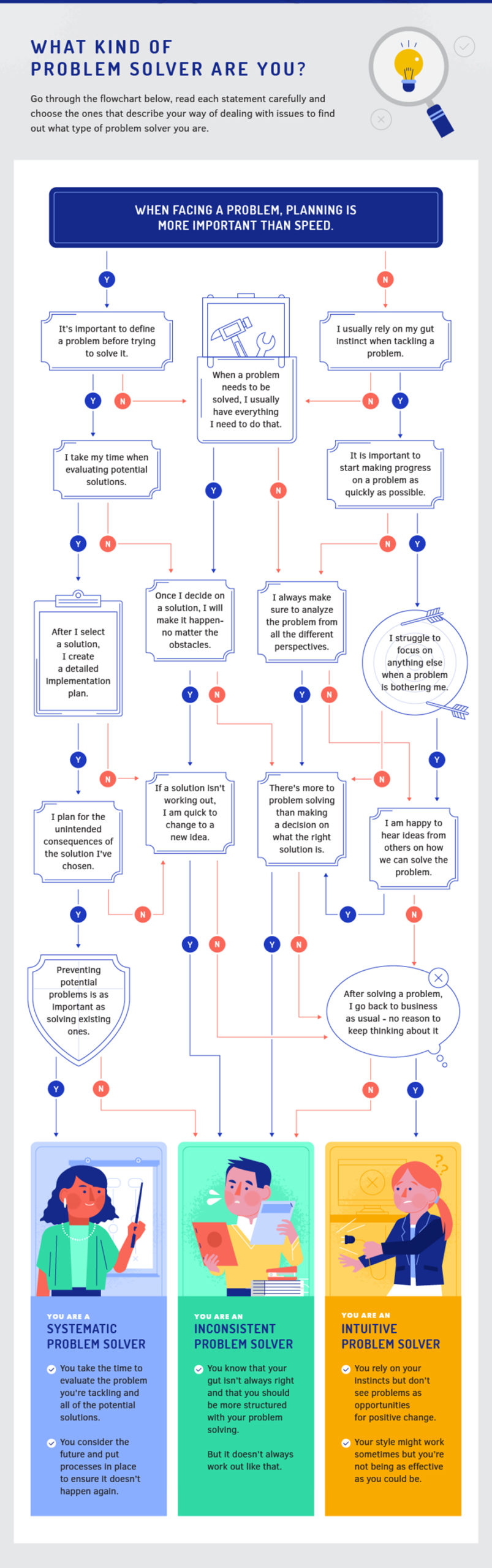
But in a professional context, sometimes more complex issues arise that require serious application if you are to find a solution. So how can you improve your problem-solving skills? First, you need to know what type of problem solver you are. Maybe you approach puzzles systematically, or maybe intuitively, or maybe somewhere in between.
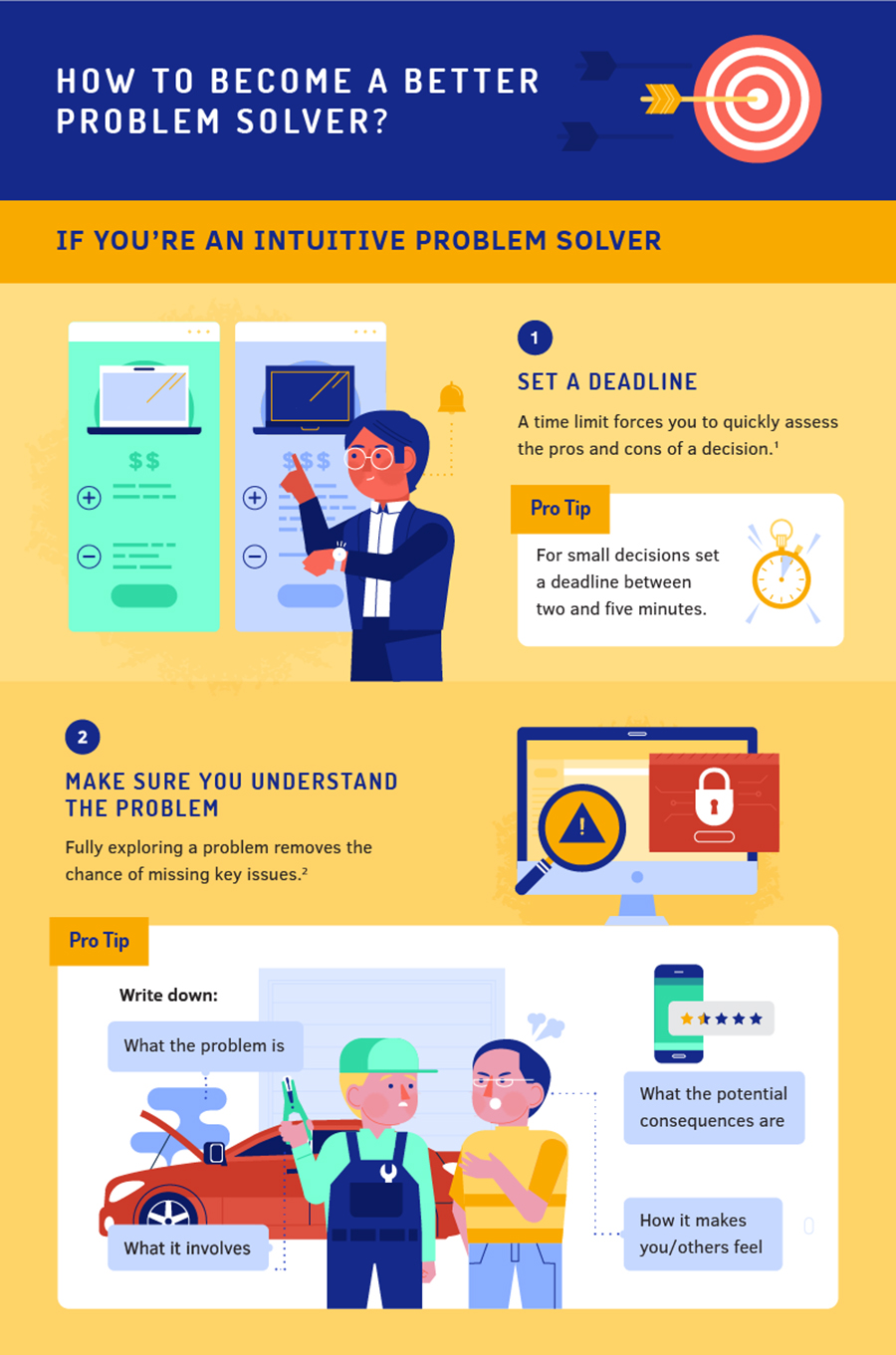
If you’re the type who trusts your gut when approaching a challenge and things usually work out fine – good for you! But it will benefit you to try to frame your good instincts with a bit of professional discipline to minimize the chance of making a serious mistake. You should at least approach a problem by examining it systematically to ensure you’re not missing anything, even if you end up using your intuition to cook up a solution.
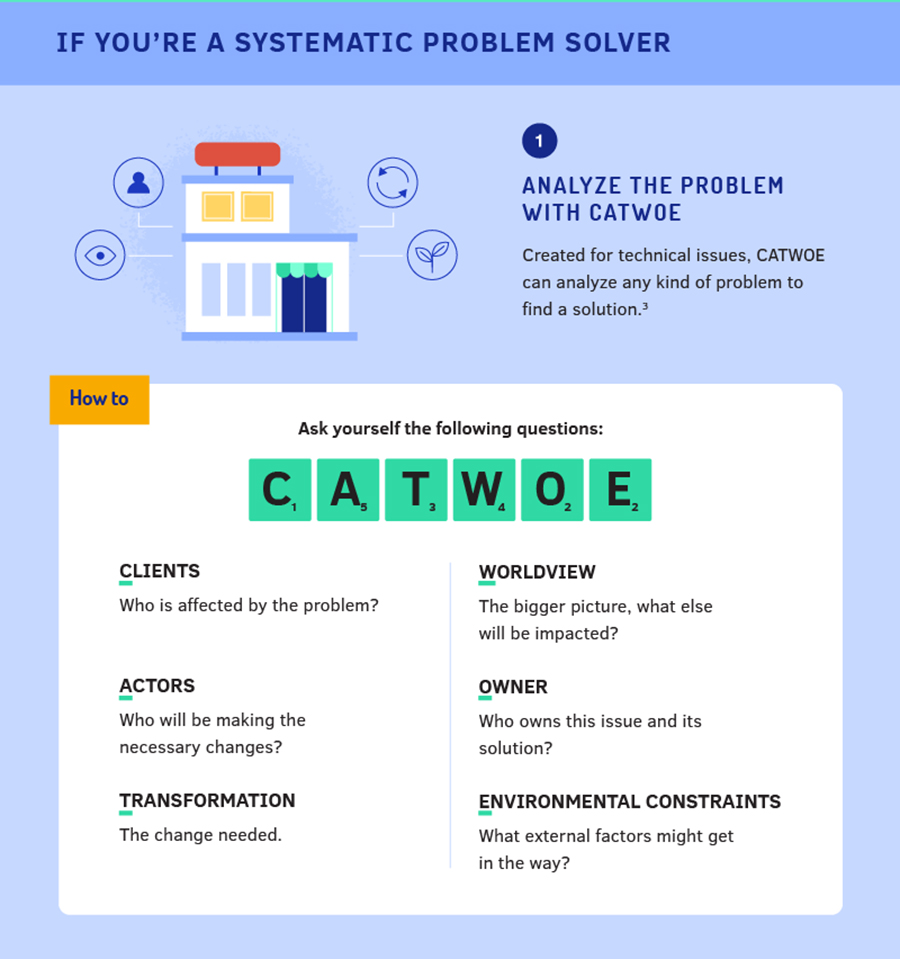
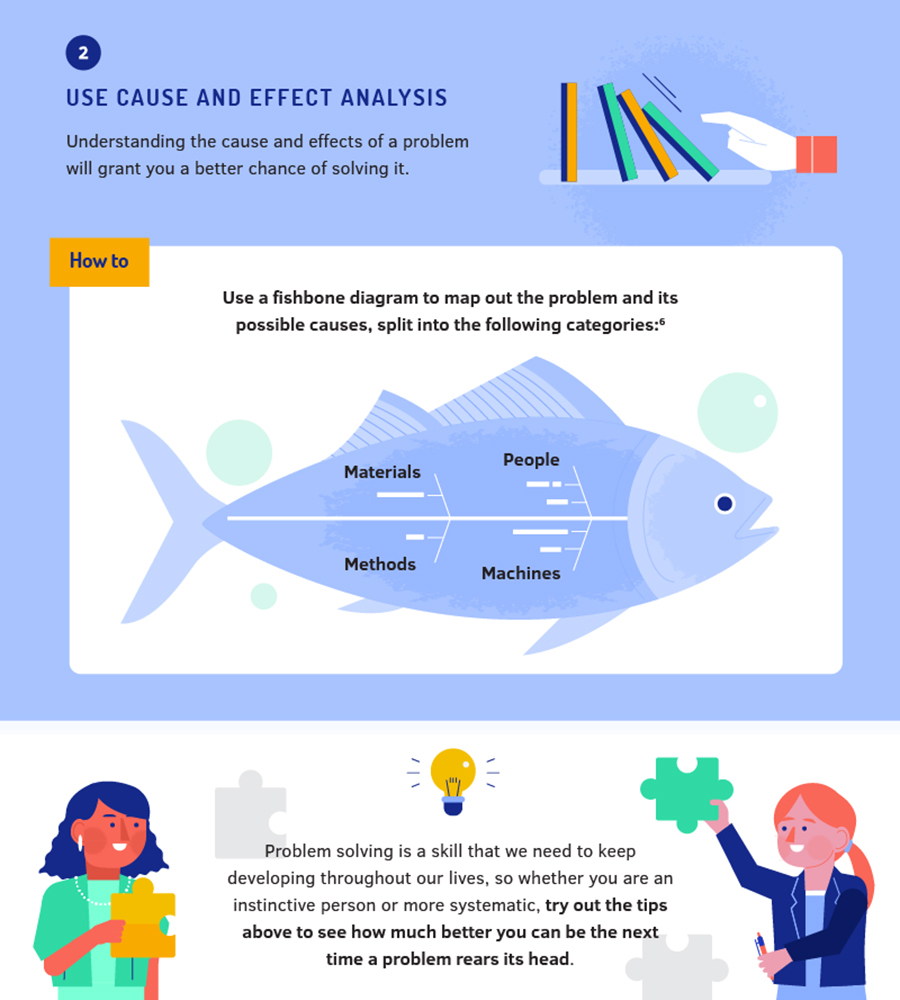
And if you’re more systematic to begin with, try using diagrams or even physical props to get you out of your head and into the real world. And be careful not to get so fond of your own problem-solving system that you neglect to try others. If you always do things the same way, you’ll never get better results!
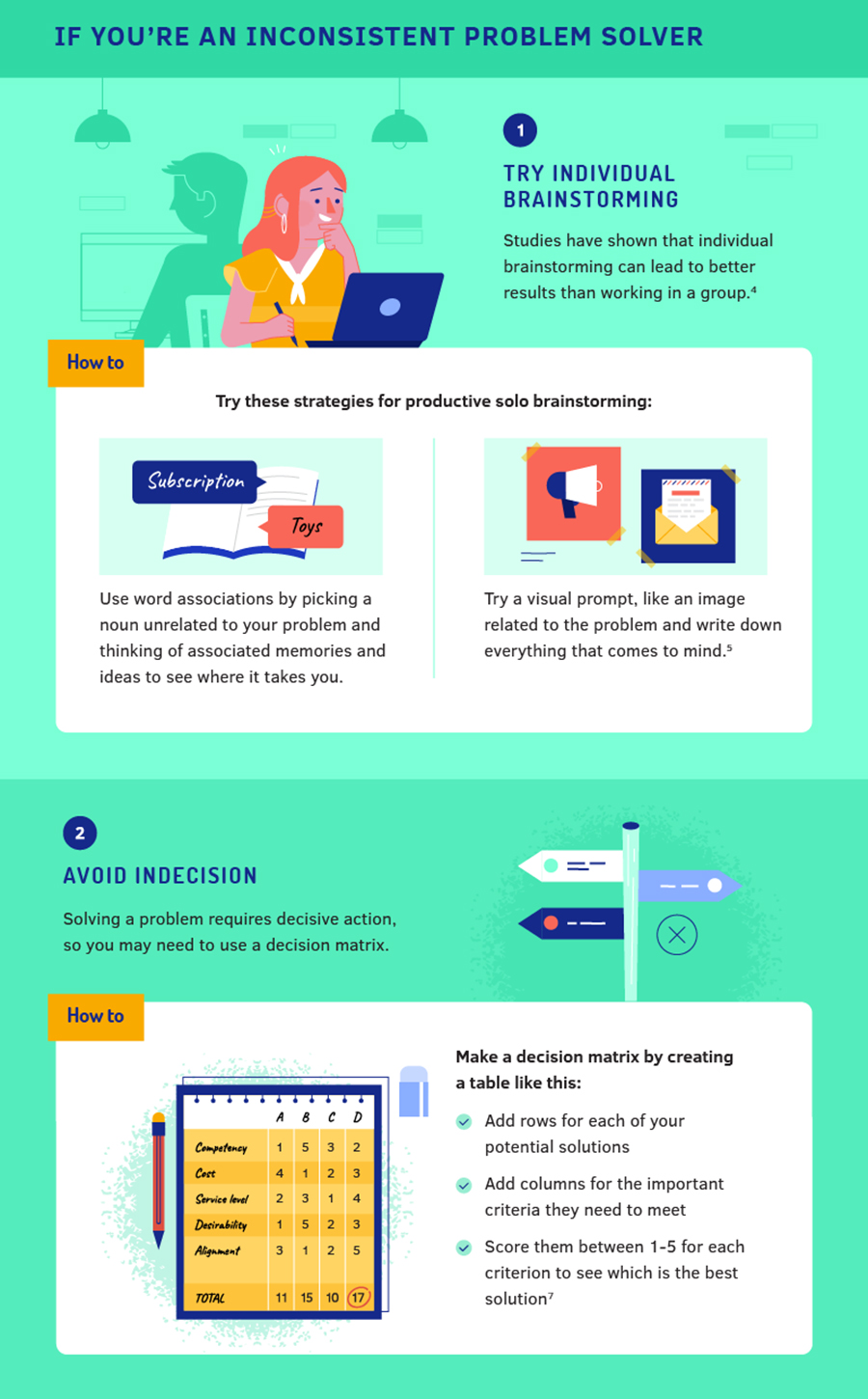
We’ve assembled a guide to help you discover which type of problem solver you are and to suggest how you can develop your problem-solving skills. It’s a useful resource even if you’re an ‘inbetweener’ who doesn’t quite consider themselves to be intuitive or instinctive.
Success comes as a result of successfully navigating a diverse series of challenges at every stage in your career. With powerful problem-solving skills, you might even have a little fun along the way.
World leaders, like everyone else, should not just be understood by the job they have now or the money they claim to have made along the way. Like everyone else, our leaders are shaped by where they started: their first job. Here are the roles they had to fight for, and the ones they had to take to make ends meet.
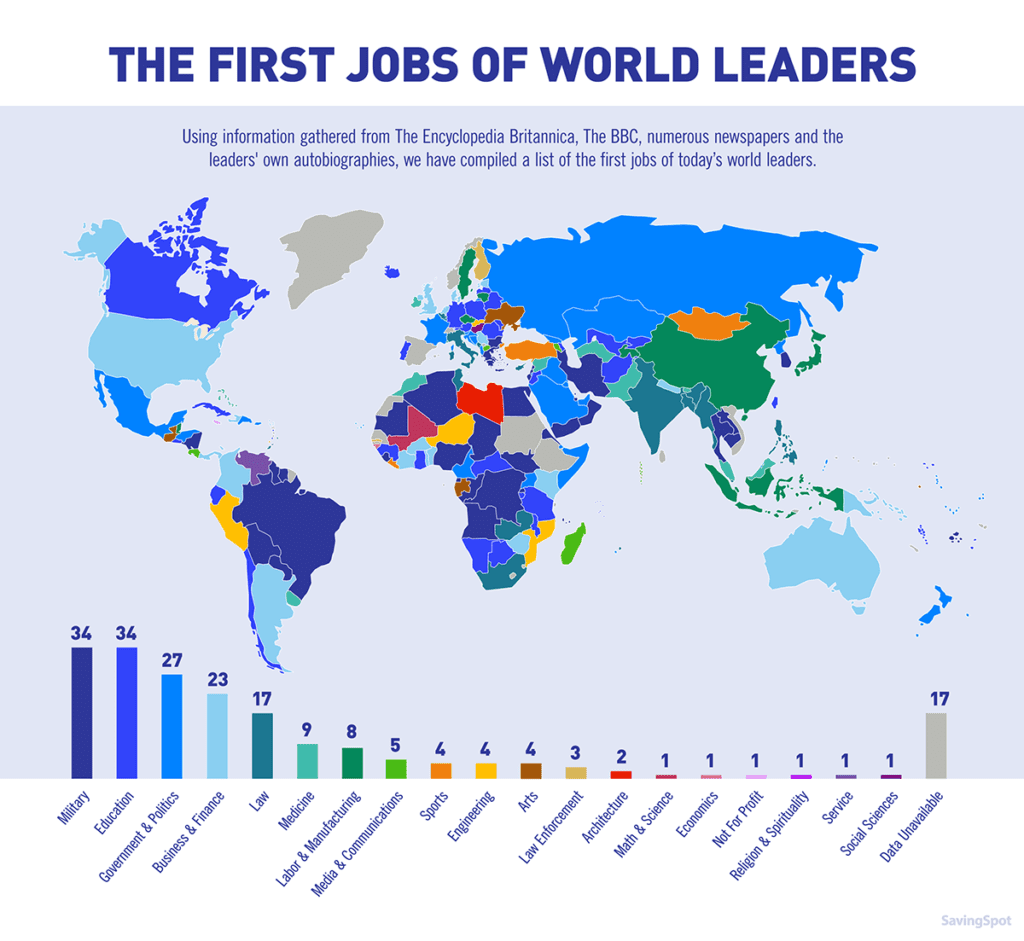
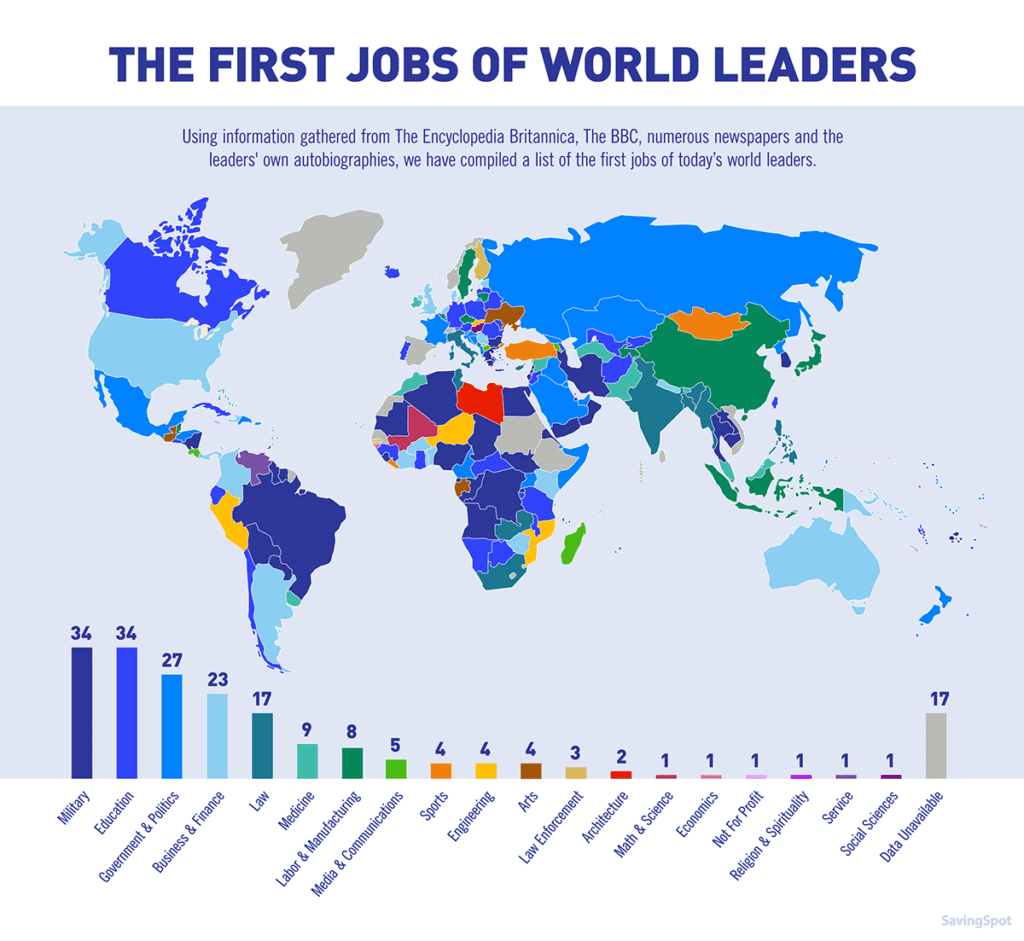
A few months ago, we looked at what today’s world leaders studied at college. But their first jobs can say just as much about the people they were and who they would become. Using information gathered from The Encyclopedia Britannica, The BBC, numerous newspapers and the leaders’ own autobiographies, we compiled a list of the fist jobs of today’s world leaders. Some started in the military, some were teachers, some even played sports professionally. Surprisingly few started in customer service – a shame, since customer-facing jobs help you learn to love the people who yell at you!
The map below shows the various industries that world leaders first jobs were in. Read on to see each country’s leader and what they did in their first full-time position.
The United States, of course, is run by America’s most famous real estate agent. Although Donald Trump made his first pocket money by collecting bottles from his father’s construction sites and later got experience rent-collecting from tenants, he was assured a job in real estate from the outset, thanks to a family fortune in the hotel business.
Further north, Canada’s Prime Minister Justin Trudeau was also helped along the way by family connections: his father was Prime Minister for 16 years from the end of the ‘60s. But Trudeau Jr. kept things real, working as a nightclub bouncer, snowboard instructor and radio host along the way. His first full time job was as a “highly valued, spirited and enthusiastic teacher” of math, according to his boss at West Point Grey Academy.
Antigua and Barbuda Gaston Browne Banker Bahamas Hubert Minnis Doctor Barbados Mia Mottley Lawyer Belize Dean Barrow Lawyer Canada Justin Trudeau Teacher Costa Rica Carlos Alvarado Quesada Journalist Cuba Miguel Díaz-Canel Engineering professor Dominica Charles Savarin Teacher Dominican Republic Danilo Medina Deputy of National Congress El Salvador Salvador Sánchez Cerén Teacher Grenada Keith Mitchell Cricket player Guatemala Jimmy Morales Comedian Haiti Jovenel Moïse Business owner (auto part store) Honduras Juan Orlando Hernández Executive assistant Jamaica Andrew Holness Executive Director of a children’s organization Mexico Andrés Manuel López Obrador Variousgovernment positions within the government of Tabasco Panama Juan Carlos Varela Executive Vice-President of Varela Hermanos S.A. Saint Kitts and Nevis Timothy Harris Business Manager Saint Lucia Allen Chastanet Unknown Saint Vincentand the Grenadines Ralph Gonsalves Lecturer Trinidad and Tobago Paula-Mae Weekes Lawyer United States of America Donald Trump Real estate professional
South America
It’s in Venezuela that we find the world’s only customer service-oriented world leader: Nicolás Maduro, who worked as a bus driver in Caracas, the country’s capital. While he no doubt learned a lot about life and the wants and needs of people in this job, he supplemented his development as a future world leader with extracurricular activities. Both at school, and during life as a driver, he was involved in leadership roles within the unions. He also played to adoring rock concert audiences as a musician.
Brazil, Bolivia and Paraguay are run by former soldiers, but Uruguay has the world’s only oncologist-president, Tabaré Vázquez. The respected cancer physician is the nation’s first left-wing premier and is currently enjoying his second term at the top.
Argentina Mauricio Macri Junior analyst at Holding Company (Economics / stocks) Bolivia Evo Morales Soldier Brazil Jair Bolsonaro Soldier Chile Sebastián Piñera Economics professor Colombia Iván Duque Banking consultant Ecuador Lenín Moreno Director of the Continental Professional Training Center Guyana David A. Granger Cadet Officer / Soldier Paraguay Mario Abdo Benítez Lieutenant – Armed forces Peru Martín Vizcarra Civil engineer Suriname Dési Bouterse Soldier Uruguay Tabaré Vázquez Oncologist Venezuela Nicolás Maduro Bus driver
Europe
Ukraine’s new president, Volodymyr Zelensky, famously rose to power after portraying a fictional president in a TV sitcom. His predecessor, Petro Poroshenko, was a Willy Wonka-style candy billionaire known as the “Chocolate King.” Like his teacher-turned-president character before him, it was Zelensky’s inexperience and no-nonsense (and no-corruption) approach that voters found alluring. While Zelensky does have a law degree, he was originally a comedian, transforming the comic troupe he established at age 17 into a production company and becoming a millionaire in the process.
You might imagine that Lithuania’s “Iron Lady,” Dalia Grybauskaitė, earned her nickname for her industrial past: she worked in a factory while studying political economics. In fact, the country’s first female president (elected with record-breaking numbers) earned the title through a combination of her black belt in karate and no-nonsense speechmaking. To complete the jigsaw puzzle of her odd political development, she cites the disparate characters of original Iron Lady, Margaret Thatcher and Mahatma Gandhi as her biggest influences.
Albania Ilir Meta Deputy Chairman of Albanian Euro-socialist Youth Movement (FRESSH) Andorra Antoni Martí Architect Armenia Nikol Pashinyan Journalist Austria Alexander van der Bellen Economics professor Belarus Alexander Lukashenko Political instructor Belgium Charles Michel Lawyer Bosnia and Herzegovina Valentin Inzko Diplomat Bulgaria Rumen Radev Air Force pilot Croatia Kolinda Grabar-Kitarović Advisor to the International Cooperation Department of Croatia Cyprus Nicos Anastasiades Lawyer Czech Republic Miloš Zeman Engineering plant worker Denmark Lars Løkke Rasmussen Consultant Estonia Kersti Kaljulaid Sales manager Finland Sauli Niinistö Police chief France Emmanuel Macron Inspector – French Finance Ministry Germany Angela Merkel Academic faculty (teacher) Greece Prokopis Pavlopoulos Soldier Vatican City Giuseppe Bertello Priest Hungary János Áder Researcher Iceland Guðni Th. Jóhannesson Lecturer Ireland Leo Varadkar Doctor Italy Sergio Mattarella Lawyer Kosovo Hashim Thaçi Unknown Latvia Raimonds Vējonis Biology Teacher Liechtenstein Adrian Hasler Head of Controlling at Balzers AG Lithuania Dalia Grybauskaitė Factory worker Luxembourg Xavier Bettel Lawyer Macedonia Gjorge Ivanov Journalist Malta Marie-Louise Coleiro Preca Unknown Moldova Igor Dodon Assistant professor Monaco Pavel Filip Factory worker Montenegro Milo Đêukanović Legal aid Netherlands Mark Rutte HR Manager Norway Erna Solberg Unknown Poland Andrzej Duda Teacher Portugal Marcelo Rebelo de Sousa Law professor Romania Klaus Iohannis Physics Teacher San Marino Mirko Tomassoni Civil Police officer Serbia Aleksandar Vučić Merchant Slovakia Andrej Kiska Design engineer Slovenia Borut Pahor Delegate, Assembly of the Republic of Slovenia Spain Pedro Sánchez Unknown Sweden Stefan Löfven Welder Switzerland Ueli Maurer Unknown Turkey Recep Tayyip Erdoƒüan Professional Football player Ukraine Petro Poroshenko Soldier United Kingdom Boris Johnson Management Consultant
Africa
Many of Africa’s leaders started out in military or political positions, which seems indicative of the troubled recent past of states such as Congo and Chad. But the continent’s most internationally famous ‘president with a past’ has to be Liberia’s George Weah.
The former A.C. Milan footballer, who won three Series A titles, three African Player of the Year awards, and a FIFA player of the year trophy, defeated his opponents (by 13 states to two) to take the presidency and was sworn in at the beginning of 2018. “I have spent many years of my life in stadiums,” Weah told the crowds, “but today is a feeling like no other.”Algeria Abdelaziz Bouteflika Soldier (Officer, National Liberation Army)
Angola João Lourenço Soldier Benin Patrice Talon Business owner Botswana Mokgweetsi Masisi Teacher Burkina Faso Roch Marc Christian Kaboré Banker Burundi Pierre Nkurunziza Sports professor Cameroon Paul Biya Head of Department of Foreign Development Aid Cape Verde Jorge Carlos Fonseca Director General of Immigration Central Africa Republic Faustin-Archange Touadéra Assistant lecturer Chad Idriss Déby Soldier Comoros Azali Assoumani Parchutist Congo Félix Tshisekedi UDPS national secretary for external relations Congo (Republic of the: Brazzaville) Denis Sassou Nguesso Soldier Ivory Coast Alassane Ouattara Economist Djibouti Ismaïl Omar Guelleh Civil servant Egypt Abdel Fattah el-Sisi Military officer EquatorialGuinea Teodoro Obiang Nguema Mbasogo Soldier Eritrea Isaias Afwerki Soldier Ethiopia Sahle-Work Zewde Unknown Gabon Ali Bongo Ondimba Musician Ghana Nana Akufo-Addo Teacher Guinea Alpha Condé Teacher Guinea-Bissau José Mário Vaz Economist Kenya Uhuru Kenyatta Business owner Lesotho Tom Thabane Unknown Liberia George Weah Football player Libya Fayez al-Sarraj Architect Madagascar Andry Rajoelina Media entrepreneur Malawi Peter Mutharika Law professor Mali Ibrahim Boubacar Keïta Researcher (at French National Center for Scientific Research) Mauritania Mohamed Ould Abdel Aziz Soldier Mauritius Barlen Vyapoory Barrister-at-law / lawyer Morocco Saadeddine Othmani Psychiatrist Mozambique Filipe Nyusi Mechanical engineer Namibia Hage Geingob Teacher Niger Mahamadou Issoufou Mining engineer Nigeria Muhammadu Buhari Soldier Rwanda Paul Kagame Chief of Intelligence Sao Tome and Principe Evaristo Carvalho Unknown Senegal Macky Sall Unknown Seychelles Danny Faure Assistant curriculum officer Sierra Leone Julius Maada Bio Soldier Somalia Mohamed Abdullahi Mohamed Secretary in the Somali embassy in Washington DC South Africa Cyril Ramaphosa Law clerk South Sudan Salva Kiir Mayardit Soldier Swaziland Ambrose Mandvulo Dlamini Unknown Tanzania John Magufuli Teacher The Gambia Adama Barrow Security guard Togo Faure Gnassingbé Financial advisor Tunisia Beji Caid Essebsi Lawyer Uganda Yoweri Museveni Leader – political resistance movements Zambia Edgar Lungu Lawyer Zimbabwe Emmerson Mnangagwa Business owner (construction company)
Asia
Like Weah, Mongolia’s President Battulga Khaltmaa started out in sports; and like Dalia Grybauskaitė, you wouldn’t want to get into a fight with him either. This judo master is also a former Sambo wrestling champion. He first tasted power as chairman of the Mongolian Judo Federation, and during his reign the Mongolian judo team became Olympic Champions.
North Korea’s ‘supreme leader’ Kim Jong-Un kept a low profile before succeeding his father as head of the government and military. It’s believed that he worked either for the Korean Workers’ Party or the army’s General Political Bureau, possibly in surveillance. He took further roles in defense and state security over the years, gaining the enviable title “Brilliant Comrade” in 2009.
Afghanistan Ashraf Ghani Anthropology professor Azerbaijan Ilham Aliyev Lecturer Bahrain Hamad bin Isa Al Khalifa Soldier (Commander in Chief of the Bahrain Defense Force) Bangladesh Abdul Hamid Lawyer Bhutan Lotay Tshering Urologist Brunei Hassanal Bolkiah Sultan Cambodia Hun Sen Soldier China Xi Jinping Manual laborer Georgia Salome Zourabichvili Diplomat India Ram Nath Kovind Lawyer Indonesia Joko Widodo Pulp mill worker Iran Hassan Rouhani Soldier Iraq Barham Salih Foreign relations with the Patriotic Union of Kurdistan Israel Benjamin Netanyahu Soldier Japan Abe Shinzo Manufacturing professional Jordan Omar Razzaz Assistant professor Kazakhstan Kassym-Jomart Tokayev Diplomat Kuwait Jaber Al-Ahmad Al-Jaber Al-Sabah Director of Public Security for the Ahmadi region Kyrgyzstan Sooronbay Jeenbekov Teacher Laos Bounnhang Vorachith Military service Lebanon Michel Aoun Military service – artillery officer Malaysia Mahathir Mohamad Doctor Maldives Ibrahim Mohamed Solih Journalist Mongolia Khaltmaagiin Battulga Professional wrestler Myanmar (Burma) Win Myint Lawyer Nepal Bidhya Devi Bhandari Union Representative NorthKorea Kim Jong-un Surveillance of Government Officials Oman Qaboos bin Said al Said Soldier Pakistan Arif Alvi Doctor Palestine Mahmoud Abbas Civil servant Philippines Rodrigo Duterte Lawyer Qatar Abdullah bin Nasser bin Khalifa Al Thani Military officer Russia Vladimir Putin Foreign Intelligence Officer Saudi Arabia King Salman bin Abdulaziz Al Saud Governor of Riyadh Singapore Halimah Yacob Lawyer South Korea Moon Jae-in Soldier Sri Lanka Maithripala Sirisena Unknown Syria Bashar al-Assad Army doctor Taiwan (Republic of China) Tsai Ing-wen Law professor Tajikistan Emomali Rahmon Electrician Thailand Prayut Chan-o-cha Soldier (Queen’s Guard) East Timor Francisco Guterres Unknown Turkmenistan Gurbanguly Berdimuhamedow Dentist United Arab Emirates Khalifa bin Zayed Al Nahyan Ruler’s Representative in the Eastern Region of Abu Dhabi Uzbekistan Shavkat Mirziyoyev Junior Research Fellow Vietnam Nguyễn Phú Unknown Yemen Abdrabbuh Mansur Hadi Soldier
Oceania
New Zealand’s inspiring prime minister Jacinda Ardern has been in politics from the start, working as a researcher for the Labour Party straight out of college. But she had ample chance to develop empathy and a social conscience growing up in a poor and gang-infested area among “children without shoes on their feet or anything to eat for lunch.”
Baron Waqa, 14th President of the island country of Nauru, is the only leader on our map to have started out as a composer. Today, his son has taken over the family business – updating some of the president’s traditional-sounding songs with modern pop beats.
Australia Scott Morrison Policy head at the Property Council of Australia Fiji Jioji Konrote Soldier Kiribati Taneti Mamau Civil Servant (Planning Officer with the Ministry of Finance) Marshall Islands Hilda Heine Teacher Micronesia, Federated States of Peter Christian Unknown Nauru Baron Waqa Composer New Zealand Jacinda Ardern Researcher with the Labour Party Palau Thomas Remengesau Jr. Senator Papua New Guinea Peter O’Neill Accountant Samoa Tuilaepa Aiono Sailele Malielegaoi Unknown Solomon Islands Rick Houenipwela Banker Tonga Akilisi Pōhiva Teacher Tuvalu Enele Sopoaga Education Administrator within the Ministry of Social Services Vanuatu Tallis Obed Moses Teacher
Methodology
To create these maps, we scoured articles, interviews and biographies of 197 leaders from all over the world. We then made sure all of our leaders were current leaders, as several countries have recently had elections. What we were looking for were the first jobs of our political leaders – not their first governmental job or their first gig for pocket-money – but their first real job as a young adult.
From there, we gathered all of the information – the country, the world leader’s name, their first job and the source used to find their job – and organized it in a spreadsheet. After fact-checking all of our information, we moved on to sort these jobs into broader categories; things like “Politics & Government,” “Military,” and “Medicine.”
Finally, we collected various maps online, first of the continents specifically, and then of the world at large. These were then modified and color-coded to illustrate the various job categories.