Occupy, Entrepreneurship, and Why Businesses Must Evolve

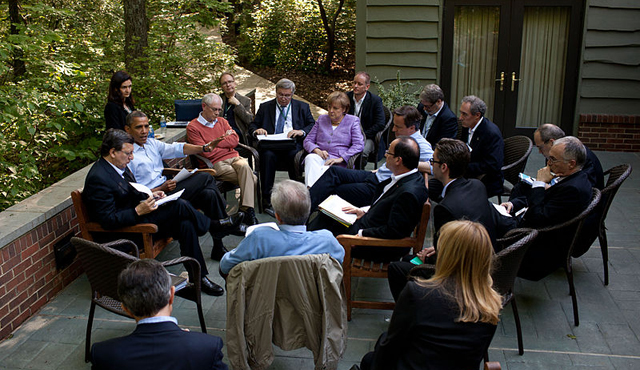
In September 2011 what started as a social movement in a public space at Zuccotti Park in New York City, became an opportunity for those unsatisfied with the way things were to speak out and demand change. At the Ben & Jerry’s Board of Directors (which, by the way, is full of activists who first handedly understand the importance of getting arrested while protesting) we were adamant that we take a public stance to support the movement. While the media focused on the camps themselves, and any sensational stories they could, we as a company found an opportunity to weave together issues we had been involved with historically to build a case for us and potentially other companies to support the Occupy Wall Street movement.

The similarities we envisioned included the issues: there is too much corporate influence in politics, the inequity that exists between classes is unacceptable, and that we were in an unemployment crisis with 13 to 14 million unemployed people in the U.S. and this was particularly challenging for the young. Ironically we also became the first company to support an inherently anti corporate movement angry at the excesses of Wall Street and overpaid senior executives. We were proud to work with many of the Occupy leaders from Zuccotti Park on an ongoing basis, not only providing them ice cream scooped by our cofounders and board, but also bicycle-powered generators to power their phones and laptops as fuel-powered generators weren’t allowed.

After organizing a press conference at the National Press Club in the nation’s capital to speak about our general support of the movement (and encouraging other companies to join us – none did), we coordinated Occupy leaders to bring their message to Vermont to speak to both Ben & Jerry’s employees and the Vermont media. What we were witnessing in the United States at the time wasn’t simply a national issue – it was indicative of a global crisis. The Occupy movement was doing its best to focus on the core issues, however, as with any social movement there were tactical and operational challenges, and the Occupy movement was no different.

Still, it’s hard to criticize how quickly the movement grew and solidified, how it highlighted the message of organizational greed by countries and corporations, and how it drew considerable interest across the world. We were impressed that the Occupy movement was led by young, thoughtful and intelligent activists who argued that it was time to speak out against the way things were. This unrest and understanding of the greater challenges we face was impetus for the Ben & Jerry’s team in Europe to consider what their executional campaign focus would be in 2012 to address this global void of employment opportunity and recognize the potential of our youth.

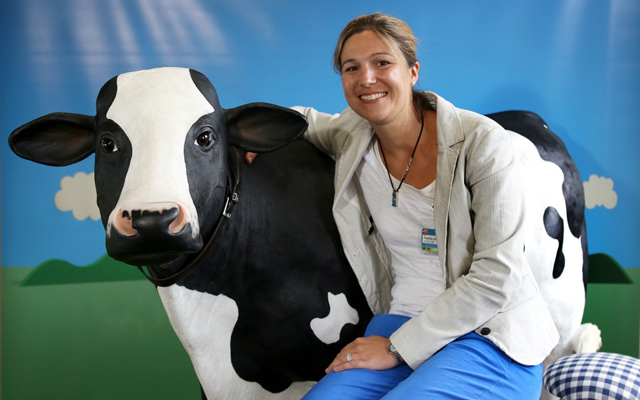
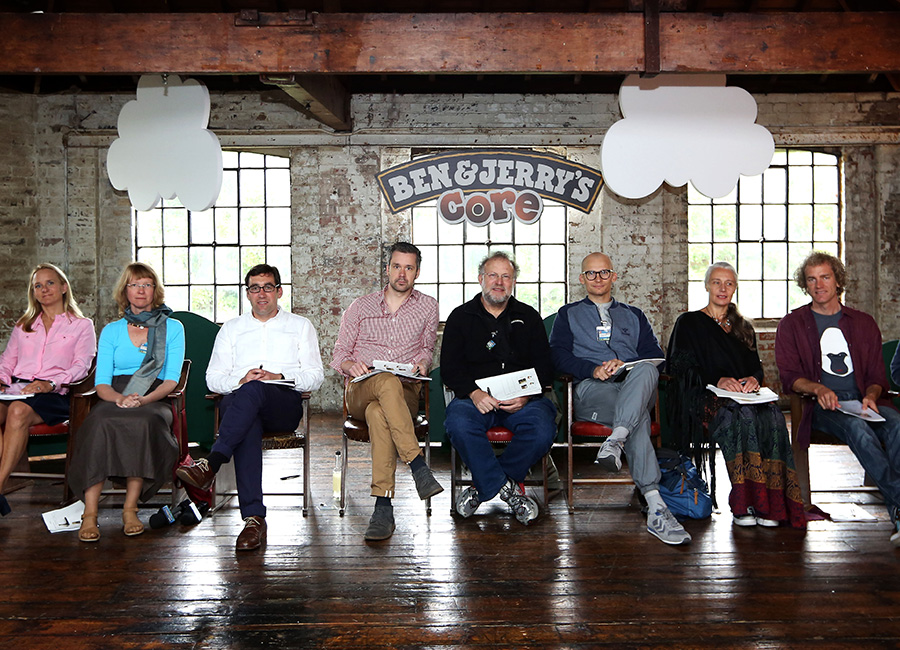
The idea was inherently to try to find the next Ben & Jerry’s, the next values led company that can create jobs, prosperity and address critical social issues. Our first Join Our Core (JOC) event was held in London in 2012 with five finalists who were selected from nearly 200 entries across Europe as the best in class. The JOC effort was to support young entrepreneurs who believe in more than simply being successful at business, but also in incorporating a concern for the global community around them.

The winning individuals would be featured on the packaging of a Ben & Jerry’s container, would receive a €10,000 Euro cash consideration, and would have ongoing professional mentoring, courteously offered by JOC program co-partner and global social entrepreneurial powerhouse, Ashoka. We at Ben & Jerry’s have been extremely fortunate to have knowledgeable and valued partners throughout our history, and in this case it was no different.

I’m not exaggerating to say that many of the winners were more excited to receive coaching from Ashoka versus the cash prize, or even being on their own tub of Ben & Jerry’s! While the JOC program was designed to focus on helping young entrepreneurs, we know that we at Ben & Jerry’s have benefitted as much as anyone. The program has reminded us of the power behind having an idea, that business can exist and care about more than simply making a profit, and that there are entrepreneurs who care passionately about being a positive force for change in society.

In today’s Wall Street Journal, the first three stories I noticed included headlines with the troubling words: “Artillery,” “Captors,” and “Attack.” I’m proud to work at a business that believes that as we’re successful we can share that success with our global community. With that focus in mind, we will expand the Join Our Core program this year into three global hubs for Ben & Jerry’s including Europe expanding its program to include even more countries, as Ben & Jerry’s in both Singapore and Japan will host their initial JOC gatherings.

Our cofounder, Jerry, will be on the road serving as the official JOC Ambassador, and I will proudly host the winners from across the globe here in Vermont at the Ben & Jerry’s company headquarters to explore how we can continue to support this burgeoning spirit, and to harness the power of young social entrepreneurs to remind us why existing businesses – with all the power that we have – must continue to evolve to better support and build prosperity in our local and global communities.

Jostein Solheim is CEO of Ben & Jerry’s Are you under 34 and on a mission to change the world? Enter you social business to Join Our Core for a chance to win 10,000 Euros, mentoring from Ashoka and a trip to the Ben & Jerry’s HQ in Vermont. Head to www.joinourcore.com

4 Ways to do Good Business

The term “breaking down the silos,” is commonly used in business to illustrate how a task can avoid or reduce duplication of effort.

By taking two teams, for example, that might compete on a project and instead get them to work together and collaborate, the hope is that you’ll get a better output; one that incorporates the best ideas from every employee throughout the company.

Role of business in shaping a better tomorrow

Solutions to the world’s most pressing problems and exciting opportunities are global, interconnected and interdependent. Business’ resources dwarf those of the philanthropic and public sectors combined. All require leaders with vision and capacity to build systems for change across industries and borders. Yet alone, now and in the future, no one of these sectors can put together the social entrepreneurial ecosystems necessary for major innovation and change to work at scale. As global citizens, we must work together to unleash the great potential of the business world in creating social change. How?

1. Break the siloes: intrapreneur, meet entrepreneur!

“While there is a Western business stereotype that celebrates the heroic efforts of the intrepid business entrepreneur” says David Grayson, “a successful social intrapreneur must learn to work in, and then help to create, “ensembles” of like-minded individuals with complementary skills and ideas in order to succeed.” Social entrepreneurs are innovating to create opportunities for low income people. Meanwhile, and increasingly, corporate employees, or ‘intrapreneurs’ are pioneering business innovations with a social impact.  The combination of both can and will be incredibly powerful. We learnt of some silo-busting intra-entre partnerships at this year’s Skoll World Forum:

Kickstart and Citi. Kickstart, a social enterprise that makes low-cost irrigation equipment, has partnered with Citi Group, which provides a line of credit to help Kickstart survive the lumpiness of donor cash infusion.

Embrace and GE. Embrace makes low-cost incubators for premature infants that operate without electricity. They partnered with GE originally to scale up the distribution of their product and give their work more ‘credibility’ in the marketplace.

Root Capital and Starbucks. Root Capital is working with Starbucks to provide financing and capacity support to coffee farmers to help strengthen Starbucks supply chain. They also are working as part of a global consortium of coffee companies and development agencies to address the leaf rust epidemic hitting coffee farmers in Latin America.

2. Convene business leaders: The B Team

While we do not yet have a World Economic Forum or a Davos dedicated specifically to social change; the power, ambition, rigour and relentlessness of the leading few is inciting a movement amongst socially conscious business leaders.  The B Team, co-created by Richard Branson and Virgin Unite, brings together an initial 14 leaders from major corporations around the world, including Unilever, Natura, Celtel, Tata and Kering, in an attempt to demonstrate that long-term business success can be built only by prioritising people and planet alongside profit.

In an interview with Guardian Sustainable Business, Branson says he hopes the B Team will succeed where others have failed by harnessing the energy of a small group of respected leaders who have access to heads of state and other key opinion formers. But rather than go it alone, the B Team is forging partnerships with other organisations such as the World Business Council for Sustainable Development and Ashoka.

3. Co-creation that matters: Danone Ecosystem Fund

Danone chose to go beyond corporate social responsibility by implementing innovative business models that generate social and environmental value in a sustainable way. Danone seeks to address critical issues related to the corporation’s expertise and goals—issues like malnutrition, access to water, sustainable resources management, and sustainable supply and value chains. The Danone Ecosystem Fund is one of these platforms: it supports the partners of Danone’s “ecosystem” (small agricultural producers, small suppliers, proximity distributors) to effect powerful social changes—and reinforces the company at the same time.

The Ecosystem approach promotes open source knowledge in terms of business models and project management: good practices, practical tips, and decision-making tools are being formalised and shared within the business community. Danone’s Guide to Co-creation, is an accessible online tool for anyone to learn more about public/private partnerships and to facilitate co-creation implementation through a structured process.

4. Disrupt the status quo: Open Data, for good

Giant consumer corporations such as Tesco have some of the largest data banks in the world, and this has enormous positive potential. Rufus Pollock, and Ashoka Fellow who runs the Open Knowledge Foundation, is catalysing a global movement that opens raw data sources to larger populations of people.

By democratizing access to data, the Open Knowledge Foundation is creating a global change in transparency, citizen empowerment, social justice, and accountability for policy makers, companies, and those in positions of power. Currently, data is being used to predict and prompt purchasing.

However the potential of this data to map trends and create positive social change is enormous. OKFN has the infrastructure, skills and knowledge to guide companies to use their consumer databanks to bring about positive social change as well as creating a genuine boost to their bottom line.

The stage is set. Business-social collaborations which activate the power of partnerships in creating real social change will be the only way to survive in an age of conscious consumerism. Ashoka’s network is working to define a compelling value proposition for social impact across the business – not just for CMOs, CFOs and CEOs but for all stakeholders. With this in place, social innovation within powerful brands and global corporation will not be sidelined, but core to the longevity and triple bottom line. Article by Felicity McLean, Communications and Framework Change Manager at Ashoka.


Microfinance – a Local Solution to a Local Problem

Lily Lapenna spent thousands of Pounds on her education growing up but had no clue on how to manage her finances as an adult. Sound familiar?  She gives a first-hand account of setting up MyBnk, a London-based social enterprise that works with young people to build the knowledge, skills and the confidence to manage their money effectively. The idea for MyBnk started when I was at school, disillusioned with the overtheoretical nature of learning and frustrated at having so many ideas and so little I could do with them. So I started running car boot sales, making and selling things and putting on plays at school, all my profits went to charity.

These little entrepreneurial endeavours gave me the energy I needed to survive the many hours in the classroom. As I grew up and started to study and work in international development in amazing places like Zimbabwe and  Bangladesh I developed 2 passions, one for education and one for microfinance. At the age of 18 I finished school in London where I was born and I decided to go and work in Zimbabwe, where I worked in a rural primary school on non-formal education programmes. The school became a hub for community involvement and social innovation.

Together with the community, the teachers and the children, we created huge AIDS awareness campaigns, built libraries and influenced local policy makers on issues relating to education and health. I realised how non-formal education could change communities for the better. More importantly, I realised how much joy and energy I got out of working with young people and how I could happily spend the rest of my life working with and for young people, helping them improve their lives.

My interest in microfinance started after my work in Zimbabwe when I returned to London and did a degree at the unorthodox university SOAS (School  for Oriental and Africa Studies). In my three years of study at SOAS and a year Erasmus at the Istituto Orientale in Naples, I became very disillusioned with trends in international development.

It was apparent that the aid industry had created many dependencies across countries and had in many cases failed to acknowledge and utilise local knowledge and local problem solving. It was common for the western aid organisations to go to the majority worlds and impose development solutions and often these didn’t lead to the desired outcomes.

In contrast to this, I started to learn about microfinance a local solution to a local problem, a movement in Bangladesh led by superheroes such as Professor Yunus and Faisel Abed (the founder of BRAC). Microfinance is a self-sustaining development model that creates a ladder to self-sufficiency for the poor. In essence micro finance is about unleashing enterprising ideas by giving women small loans to set up businesses. Three days after I graduated, I moved to Bangladesh and there I worked in the rural north with women borrowers and savers. These women, where using microfinance to change their lives and those of their children. They inspired me!

I was lucky enough to spend months with them and to realise how microfinance was not only a powerful financial tool but also a powerful educational tool. I started exploring how small enterprise loans and saving schemes provided a transformational educational experience for the Bangladeshi women. They were in many cases illiterate and yet they had a business acumen that no MBA programme could teach. They were innumerate and yet were savvy at  managing their family finances in a way that most of us in the UK would envy. I came to the conclusion that I had spend thousands of pounds on my education but sadly I had no clue how to manage my money nor did I have business skills.

Coming back to the UK I found many people my age facing spiralling debt, the majority of adults being financially illiterate (myself included of course), more people in the country getting a divorce than changing banks and a staggering 150,000 young people  growing up believing that an ISA (Individual Saving Account) is an IPod accessory!

The government rhetoric in the UK at the time (2007) was that if we didn’t have an enterprising new generation “China would have us for breakfast and India would have us for tea.” At this point, it all started to make sense to me; the need for a sort of microfinance and education programme in the UK was evident. In 2007, I set up MyBnk – a London based social enterprise that works with young people to build the knowledge, the skills and the confidence to manage their money effectively and to make enterprising choices throughout their lives.

Right at the start of the MyBnk journey, when it was just me, my laptop and this idea, a group of friends took me to a Chinese restaurant for dinner. We ate, talked, and after dinner we were given a fortune cookie each. I opened mine to find this Chinese proverb: “I do not know the solution, but I admire the problem”


A Revolution in Healthcare – Viewing Patients as Assets, Not Liabilities

Mohammad Al-Ubaydli, founder of Patients Know Best, examines attitudes towards healthcare and argues that prevailing views miss an opportunity to invest in patients. Patients are not the problem, he asserts, they are the solution.

My parents were exiled from Bahrain as prodemocracy activists, so I spent my childhood in many countries. At the age of ten we arrived in the UK as my father started his PhD and continued his academic career. From my parents I learned scholarship, service and stealth.

Scholarship is the great value my family places on education. While I was completing my high school and later studying at college, both my parents were still enrolling in local colleges and studying new degrees. This passion got me studying two fields simultaneously, medicine and computing, and at medical school I spent all of my spare time writing medical software.

Service is a principle my parents taught me: that every problem I face is also faced by many other people, so I should try and generalise the solution so that the community benefits. Education allows finding these solutions, so it is a duty to make them happen to benefit others.

Stealth is about the principles of nonviolent action and civil society. Once you have a solution that empowers the powerless, the powerful will fight it. Stealth is about helping the idea survive the early fragile stage, ideally by convincing those in power to believe it is their idea, and in their interest. I was born with a genetic immune deficiency and this had many effects on me throughout my life. Until my rare condition was diagnosed and treated, at the age of 10, I was ill and away from school for much of each year. I lost most of my hearing.

I learned a lot of things from growing up in this way. I learned about the power of medicine. My wonderful doctors and nurses literally saved my life, and got me well enough that I could work in hospitals, an environment full of infections, even though my illness made me so vulnerable to them.

I also learned that none of this was possible without the patient, or more accurately in my early years, the parents. None of my doctors in the UK could understand how I had managed to survive the early years living in countries with civil war and poor medical care.

The secret was my mother, who kept meticulous records of my problems and made sure I received the right antibiotics and care. (Incidentally, she wanted PKB to be called Parents Know Best.) While in the UK, she taught each specialist what every other specialist had taught her, so that the care they delivered was coordinated and safe. Medicine continues to become more specialised, even for common diseases coordination is key, and that means the patient is key.

And I learned to learn. I was away from school often, and even while in school my deafness meant I could hear little of what was said in class. But with the right technology, I could continue. This started with new books the school was using for students to learn at their own pace, and accelerated with computers.

It frustrates me to see discussions about the digital divide miss the point – computers are a bridge, they are the equaliser for patients with disabilities, allowing us to fill in the gaps at our own pace, when we are given the chance to do so.

All too often public discourse about health care focuses on increased spending and the economic dangers of an ageing population. This view misses the miracle of increasing life spans and decreasing deaths.

Patients Know Best views patients as assets rather than liabilities. All too often public discourse about health care focuses on increased spending and the economic dangers of an ageing population. This view misses the miracle of increasing life spans and decreasing deaths. They also miss the opportunity of investing in the patient: new technology allows self-assessment and self-management. Patients are not the problem, they are the solution.

Not only is this the only scalable solution, it is also a really good one. Patients Know Best is the first company to successfully make this solution work on the ground. A lot is required because health care systems are so complex and because they have been organised around institutions rather than patients. So you have to please all stakeholders in the short term, as well as the long-term.

In other words in the short term, every one of our customers – hospitals, charities, concierge medicine providers, pharmaceutical companies and commissioning groups – either saves money or makes money from putting patients in control. As each increases the scale of their deployments, putting more patients in control, the quantitative financial improvements become structural improvements in providing low cost and high quality health care.

This is why local governments are approaching us about putting all their citizens in control of their records. Being a social enterprise is a key part of the trust that these local governments can place in us. Previous commercial efforts failed because the businesses were either intent on selling patients’ data, or it was not clear how they could prevented from doing so in the future. With such players there could be no trust in sharing data, and if no data are shared high cost low quality health care is the result.

PKB’s software was built with patient-level encryption from day one. Technologically this is extremely difficult, but it meant that we could earily prove that the company could never sell the data, because we could never even access the data. Only the patient and the people the patient chooses could use the data. With the patient in control, trust is possible, sharing happens, costs go down and quality goes up. Every PKB customer is a change maker. Each champion who initiated the purchase has had to convince their colleagues and institution of the value of putting patients in control.

And each did so because they personally wanted to improve health care for their patients. We call their efforts a “noble conspiracy”, as these champions quietly fight for their patients. I always find it interesting to speak to new customers. Great Ormond Street Hospital’s Dr Susan Hill, the first doctor who used PKB had spent five years asking her different suppliers to provide a way to give patients a copy of the medical record to increase safety.

As she spoke to me I could see that she genuinely cared about the safety of the children she was looking after, and frustrated that no one else had helped them. But once she started using the software, she convinced her team to also use it, and then her team convinced clinicians across the UK, continental Europe and the Middle East to also use it.

One of these was Dr Simon Gabe, already a change maker at St Mark’s Hospital, who explained to BBC Radio 4 the importance of putting patients in control. Thalidomide Trust’s management team had spent seven years working with different providers to assemble a system to hold the records of their beneficiaries, 500 patients with a rare medical condition. Once they started working with PKB, they campaigned for patients to be in control, and for local clinicians to work with their patients in this way. Torbay Hospital has been a pioneer in integrated care.

Their IT Director, Gary Hotine, has consistently facilitated patient-centered innovations. He documented the security that meant that Torbay Hospital was the first in the UK to use Skype video for online consultations with patients. We share these stories with all our other customers so that they learn from each other and with each other. Whenever we add a new feature, like providing patients with all their lab results, the local institutions’ response is a series of speedily-articulated but usually incorrect reasons why the innovation cannot be used.

But we help our customers as change makers by telling them who else has already deployed the feature. As soon as an organisation hears that another has already been deployed, opposition melts away, and local adoption begins. We are reaching the critical mass of patients as change makers. So far they have been hobbled by the lack of access to information, unable to understand their health because they are unable to view their health record.

But once enough of them see and understand their records, they will  work together to create citizen services of patients helping each other understand and improve their health. At PKB, we call this a Lutheran revolution, a reformation for health care.

This is why we translate the medical record from its Latin jargon to the local language of the patient. It is why we put the patient in control. It is how patients know best. Patient control is a democratic issue to me. It does have tangible benefits of reducing costs and raising quality just as democratic countries’ economies are wealthier and more efficient. But we pursue democracy for principle not profit: the principle that citizens must be in control.

And so it is with patient control – the reason each PKB employee goes to work every day is to put patients in control. 2013 is already shaping up to be an amazing year for us with customers and deployments in the USA and Netherlands. We told our developers in the beginning that they should build our software for 7 billion people.

We are well on the way to putting every citizen in control of their health care.


Empathy in Action

Empathy – the ability to understand and share the feelings of others, is a key skill for entrepreneurs that want to create impact. Without this foundational skill, we will hurt people and disrupt institutions. Everyone needs the empathic skill in order to adapt, make good decisions, collaborate effectively and thrive. Research in cognitive neuroscience has shown a strong correlation between mindfulness and our ability to empathize.

Stress, meanwhile, activates our less social, more primitive survival instincts, which impedes our ability to empathize and be compassionate—and even makes it harder to absorb new information. But what does empathy look like in action, and how can you incorporate into your business model? Three social entrepreneurs from around the world share their stories of developing empathy in themselves and others.

Mary Gordon / Roots of Empathy

Roots of Empathy helps young school children develop their emotional competence. In multiple studies across various countries it has been proven to reduce levels of aggression and bullying.  So far, the organisation has reached over 500,000 children around the world.  Mary Gordon believes that the root of empathy is the bond between a mother and her child. How does it work? The organisation brings a new baby and mother into the classroom of primary school students. During the class, a trained facilitator prompts the students to interact with the baby, and understand how it feels.

For this lucky class, Mary Gordon Founder of Roots of Empathy is the facilitator.  She asks the class about baby;  “How is she feeling? How do you know? What is she focused on?  How do you feel when she is sad?” The students answer with surprising clarity. They talk about how the class has affected them in other ways. From one 9 year old, “We can tell when someone is sad, and we know how that feels.  We’ve learned to how to feel empathy for each other”.

The students were asked what their hopes and dreams are for Abby.  “To do well in school,” “To grow up safely,” “To be happy”.  The program runs in 11 countries, in different languages, and as Mary Gordon points out, someone always says to be happy. “Children around the world are not different in their hopes for next generation”. At the end of the class, the head teacher of the school has an admission.

“This was the most challenging class in the school this time last year. Many of the children have learning difficulties. Since Roots for Empathy started, everyone has noticed a dramatic change for the better.  We’ll be rolling it out in two more classes at the start of the next school year”. As the programme continues to grow, it sows the seeds of empathy in the next generation.

Lili Lapenna / MyBnK

By designing programmes that teach financial literacy, Lapenna is paving the way for ethical banking, spending and investment. MyBnk is training school children to make informed financial decisions as they become young adults and face the challenges of an increasingly competitive job market. “Empathy plays an important role in the work we do at MyBnk,” says Lapenna.

MyBnk involves a youth advisory council of 16-35 year olds to redesign their programs to keep them relevant. Lapennas latest project is to bring the work she has been doing with children, to the adult market as well. The first step in designing a programme is to get deep, honest feedback from different audiences and engage them in the process.

Lily is fostering and educating a generation of people who will become the enterprising and financially empowered citizens of the future. Her aim is to fundamentally change the way they relate to finance, financial services, enterprise, and ultimately their attitudes toward achieving a fulfilled life.

Charlie Murphy / Partners for Youth Empowerment

At the core of Charlie Murphy’s work is the belief in the transformative power of creativity. His vision is to revolutionise the way teachers, educators, facilitators, and youth workers engage with young people to bring out their sense of purpose in the world. “Young people tend to thrive in the company of adults who are alive to their own creativity,” says Murphy.

Partners for Youth Empowerment currently works in seven countries, having reached over 150,000 young people through camp programmes and trainings in 2012. In an engaging and interactive sessions Charlie enticed workshop participants out of their comfort zones by focusing on creativity based engagement (pictured above). Activities centred around sharing and listening exercises, role playing games, and creating metaphors for how people can see themselves as changemakers.

He invites social entrepreneurs to think of themselves as “the crack that opens up over time to bring down the wall.” “We’re working to create a world where education becomes synonymous with engagement and real-world solutions and problems, because you don’t need to be an ‘artist’ to use the arts in your work or your life.”

All of these social entrepreneurs have scalable, replicable ideas. They are all working to empower the current and next generation with empathy. What can you do in your organisation to make it more empathetic? Can you work with these entrepreneurs, or develop your own programmes? Think of new ways to incorporate more empathy in your daily life. The more of us that practice empathy, the more impact we all can have on the lives of others.

Three Tips For Successful Systems Of The Future

When looking at the future, social entrepreneurs often talk about a “systems change” – about a vision for a healthier, happier, more productive and symbiotic world. But what is the difference that will make the difference? When looking into the crystal ball of the future, how can business tip the system in our favour? Here are 3 tips to help your business succeed in the long-term:  

Shift the Focus What are you focusing on in your business today? The next quarter’s sales figures? Keeping your shareholders happy?  Shift your focus to create a long-term strategic vision that encompasses both your bottom line and your long term impact. How can you shift the focus in your market? Let’s use Education as an example. Many traditional models of improving education focus on getting more students to pass exams.

Exams are great, and an important part of education, but not the only part. Instead of creating a programme that helps students pass exams, Mary Gordon created Roots of Empathy. It’s a social enterprise that brings babies into primary school classrooms. The result is that, through the work of a trained facilitator, the students learn to empathise with the baby, and with each other. Studies have proven that this programme dramatically reduces bullying.

An evolving ecosystem of change cannot be self-sustained without equipping the next generation with the skills and tools they will need to enable change in their communities, and to keep up with a fast-moving world. As Mary’s project is enabling, young people must be able to master cognitive empathy as a basic and key skill to become an active participant in an Everyone a Changemaker World.

Change Behaviours Successful systems of the future will challenge and change existing behaviours. Think about the ways to win the hearts and minds of your customers, if you want them to change. Take the example of developing organic produce. You can build the farms, educate the farmers, and produce a quality product. But are customers going to buy it? Do they know why they should? Is it better for your target market to buy organic from abroad, or buy local non-organic produce?

Should they be doing urban farming with the support of an organisation like Grow It Yourself? These are difficult questions, so if you want your business model to win in the future help your customers answer them. Educate your target market about the importance of your product or service. Raise awareness of the problem you are trying to solve. The key is that your market knows why it wants to change and that you have the solution for them.

Think about the System Find and solve new problems. Where do you sit in the ecosystem of your market?  Who are the other players? What are they thinking and talking about? Are you ready to work with them? Take the example of supermarkets. Supermarkets throw out tonnes of food everyday that has only just passed its sell-by date.

A number of great projects have been set up to counter this waste, like Foodcycle, or Rubies in the Rubble. But analysing the food chain from farm to consumer shows that this is not where most waste is happening. Around 20% of the food produced doesn’t reach the supermarket, because it’s not what consumers are looking for.

Think bent cucumbers, and unusually shaped carrots. Of what does get to the supermarket, on average only 3% of that stock actually goes to waste. But the biggest percentage is wasted in the consumer’s home. Roughly 30% of the food that consumers buy goes to waste.

Systems of the future won’t be making supermarkets 3% more efficient, they will be changing the behaviour of 30% of the population. Major challenges lay ahead but by shifting the focus, working on changing behaviours and thinking systemically you could tip the system in your favour.

Words by Richard Brownsdon


5 Ways To Make An Impact

The recent Ashoka Change Week saw two hot topics being debated: social enterprise and how to create a “triple bottom line.”

The emerging movement of social enterprise around the world has compelled a growing number of businesses to consider their social impact. Both traditional businesses and citizen sector organisations are increasingly taking on the mantra of making money while making the world a better place.

The creation of the “triple-bottom line” – that of people, planet and profit – is becoming more and more part of the traditional business model. Central to understanding the triple bottom line is the desire to create impact. But how do social enterprises ensure impact? Here are our top five ways:

1. Communicate clearly You influence your contacts through the stories you tell. “It’s all about the snowball effect,” says Navroze Mehta, Ashoka Support Network Member. “Be clear about what you do, how you do it, and what you want. Repeat it over and over, so you don’t even have to think about it.”

By being confident in your own story, it lets others experience your impact for themselves. So don’t be vague about your vision. Engage listeners by using vivid examples to activate as many senses as you can. Show and tell people about your journey and invite them to join.

2. Stay on target As entrepreneurs, what you start with and what you end with are rarely the same. Throw out the notion of complex business plans and five-year budget projections. Stay focused on your vision and the impact you want to create, even as your business model changes. Have clear goals and work together with your mentors and advisors to constantly make them a reality.

3. Create a shared vision with your partners “It’s a two-way street. If there’s a disconnect, the magic doesn’t happen,” says Kovin Naidoo, Ashoka Fellow. What ever you are working on, you will be working with other people. Especially in social enterprise, collaboration is key. Create your vision with your partners and mentors not in spite of them. You are all partners together in creating impact.

4. Rewire the empathetic feelings If you want to make an impact, keep empathy at the forefront of your mind. The real people you are working for are not investors but beneficiaries. Never forget why you started and who you are helping. Empathy is the fuel that will keep you and your team motivated in the hard times.

5. Stop doing everything, start doing something Don’t fall into the trap of being a superhero and trying to do everything yourself. This will ultimately results in you being mediocre at everything. Use your supporters and team to help you focus on the big picture. Stop working in the business and start working on the business.

Words by Jonah Brotman

Technology and Transparency

Eric Clayton, an Ashoka Changemaker, examines how transparency and technology can benefit society for the better and ponders on a few examples. At their annual G8 summit meeting, world leaders reacted to the world’s most pressing issues, such as the ongoing tragedy in Syria. At the same time, thoughtful citizens and social innovators were gathering to offer new approaches that could avert these crises all together.

Questions Worth Asking

Taking its cue from the recent G8 summit – and then expanding the invitation list a little – G-everyone  initiative – a collaborative effort of the Bill and Melinda Gates Foundation, the United Nations Development Programme, the United Nations Foundation, Mashable, the 92ndStreet Y, and Ashoka—posed three pertinent questions:

  • How can innovation stimulate your local economy?
  • How can technology make your government more open?
  • How can online communities help build healthier societies?

In the Right Hands…

Most recently, in the United States, we’ve seen what can happen when the second question is inverted. The Obama administration’s involvement in the Prism scheme once again demonstrates how much power technology can give to those who know how to use it – both in developed and developing nations alike. In the hands of the citizen sector, technology can have an equally powerful effect, institutionalizing democratic structures and ensuring increased transparency in governments and corporations. It’s not just about spreading good technologies, its also training individuals that are willing to work for more open governments.

The Media Crunch

Orazio Bellettini’s Grupo FARO (Foundation for the Advance of Reforms and Opportunities) trains local communities in Ecuador how to access and analyze the actions of government. FARO’s work reaches Ecuadoreans at the grassroots level, using various media technologies, and empowers them to hold their government accountable.

Grupo FARO has been able to hold the Ecuadorean government accountable by building a coalition of diverse citizen organizations, and pressuring public officials and ministries to sign transparency agreements. Public officials are incentivized to support transparency in order to help their own political careers because of Orazio’s high profile interaction with the Ecuadorean media.

Once the agreements have been signed, FARO serves as both consultant and watchdog, advising government ministries about how to act transparently, and holding them accountable when they do not. Building a grassroots level of support is essential to the sustainability of the project. With the help of focus groups, information on such topics as budgets and government services can be translated into accessible language and distributed to the public through a network of radio stations.

Grupo FARO’s method highlights both a top-down and bottom-up approach, utilizing media technologies to pressure and bolster support for government transparency across the spectrum of Ecuador’s population.

The Business of Transparency

Knowing when and how to exert influence is just as important as being able to do so. Ben Cokelet’s Project on Organizing, Development, Education, and Research (PODER) works to hold corporations in Mexico accountable through prudent application of open source research and a strategic network of contacts. Using media resources, web-based communities, social media, public records, and other open sources of information, PODER uncovers undisclosed corporate practices that may pose risks to an organization’s reputation.

Yet, rather than waging open war with the information, Cokelet’s team discovered there are better avenues to success. By utilizing the information to pressure key stakeholders in a corporation, change is motivated from the inside. Rather than fleeing Mexico and leaving hundreds of people without work, these corporations reform their practices and maintain operations in the country.

Like Grupo FARO, PODER also aims to empower the citizen sector in a sustainable way. To fight Mexico’s lax financial disclosure standards, Cokelet and his team are developing a “Who’s Who Wiki” to both compile and disseminate information about business elites and their interests, and provide the public with an avenue to share and contribute their own findings.

Open Source Righting

In Israel, Amity Korn found another usage for a wiki-based platform that would expand the citizen sector’s influence. Kol Zchut is an online database of Israeli citizens’ rights and eligibility for entitlements. Drawing on four decades of experience in the computer and hi-tech industry, Korn discovered a lack of transparency in legal and social rights.

In realizing that Israeli citizens simply did not know how to take full advantage of their rights, Korn also realized that a substantial amount of money that should have been going towards welfare and social services was not being claimed by citizens.

In response, Kol Zchut was developed as a transparent system in which communities, ministries, public agencies, citizen organizations, and governments could collaborate to better provide citizens with practical knowledge concerning their rights and benefits. And, because of the wiki technology, multiple groups can contribute tips, know-how, and advice to keep the system constantly up-to-date.

Open Source, Open Government

Interested in learning about more ways to use technology to make governments more transparent? Check out the Google+ Hangouts at +SocialGood and see how some of the other pressing G-Everyone questions have been answered.


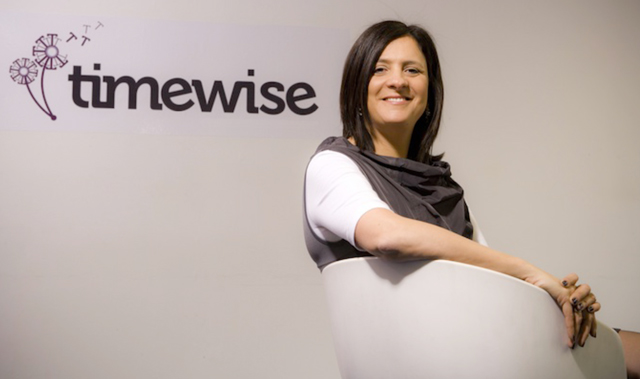
Timewise Jobs: Making Part Time Work

Why Karen Mattison refused to be boxed in by inflexible work hours and how she gave thousands of household women their professional, part time careers back.

I grew up in Liverpool. Like many children, I was bought up to believe that ‘anything is possible, as long as you work hard enough for it’. This belief carried me to Oxford, helped me to find a job in the charity sector, where I felt I could make change happen in the world and has always given me strength and purpose.

However, when I had children, this core belief was shaken for the first time. I wanted to work in a CEO level job, as I had done before having kids, on a part time basis. But I couldn’t find such a role, anywhere. Every day, I’d meet other women at the school gates, in the exactly the same situation. They came from all kinds of backgrounds – lawyers, office managers, graphic designers – and we all felt backed into a corner.

Our choices were completely limited: work full time, don’t work at all, or find a flexible job but accept you’ll have to slide five rungs down the career ladder. One day I was struck by a thought – what business wouldn’t want to recruit from such an incredible pool of talent, and on a part time – and thus more affordable basis?

I teamed up with Emma Stewart and carried out research. We found that as many as half a million women in the UK feel ‘barred’ from working, because of the lack of good quality flexible and part time jobs, that are visible.

Changing a Sector

We are seen as radicals in the recruitment industry, because we don’t conform to type. Traditionally, a recruiter would focus on one kind of job, and find candidates that fit exactly that role. We refuse to be about ‘one kind of job’ or ‘one kind of industry’ because our social aim means we want to help as many people as possible, to find work they can fit with other commitments in life. Instead, ‘part time’ is our sector.

And it works – 40,000 people have flocked to our site, precisely because they want a source of good quality part time jobs. By consequence, we have an incredible range of candidates on our books, from all kinds of backgrounds and skill levels – meaning that employers know we are a ‘one stop shop’ where they can experienced candidates in abundance, for a whole variety of jobs. ‘Part time work’ had never been of commercial interest to traditional recruiters.

After all – part time, means part fee. For years, the way in which part time work has been undervalued, has meant that the good quality vacancies that are out there, have been locked away in the office drawer or shoved to the bottom of the pile.

This, in spite of the fact that there is enormous demand from skilled candidates for such jobs – and a reciprocal need from employers for experienced workers, who can work shorter hours. We saw this market failure, and the huge potential latent within it. Part time work needed a better status, and a visible market place where the businesses could find the candidates, and the candidates, the role.

Changemaking

When I first launched Timewise Jobs, I started to get email after email from incredibly senior people, working for some of Britain’s leading employers, to offer congratulations and their support for our idea. It really caught fire. Most would end with ‘I work part time (not that I make a big deal of it). This frustrated me, because for those 10 rungs down the career ladder there were no open role models of people working in part time jobs, which made it look like it ‘couldn’t be done’.

We investigated this further, and discovered that there is a real stigma attached to admitting you work part time. People fear it affects their status in the office, their chances of promotion, and the impression of how committed they are. Contrary to the stigma, further research revealed that 9 in 10 senior part time workers are incredibly successful. As such, we conducted a call for people to ‘role model’ themselves, tell their personal story and make themselves ambassadors for part time.

We have 50 such changemakers now and are looking to build more. To me, a changemaker is someone who won’t take ‘no’ for an answer, and will push on every closed door. A social entrepreneur can’t sleep at night, because they absolutely know they have the solution to something, and they have to do something about it. They don’t just ‘have ideas’ they act on them, obsess about them, and instill belief in others.

Conclusions

Because it affects at least half the population, it’s crucial we solve this, and not just for our generation but for all those to come. The UK workplace is changing, and the tired old world must catch up. At present, the recruitment industry is focused on helping one kind of person to find a job – someone who can work a minimum of 35 hrs/wk, uninterrupted, until retirement. People don’t live their lives like that.

Things happen, change comes to you and you are still the same person, with all the skills and experience that you had before. Why should you be written off from the market, just because you have something else crucial in your life that you need to fit work with? And why should employers be forced to miss out on your talent?

It makes sense – economically, socially and for business – to provide employment opportunities that allow them to work at the maximum of their potential, rather than just a tenth. The support of the Ashoka network has strengthened our business in every way. From opening doors, to spreading the work about what we do, to giving us a likeminded network of social entrepreneurs who we can trade and work with.


Taking Mental Health To The Streets

The search for Europe’s best social business minds by Ashoka and Ben & Jerrry’s has started delivering results. The 434 applicants from nine countries have revealed the first shining stars among them. Charlie Alcock is Founder and CEO of MAC-UK . She’s a trained clinical psychologist and takes mental health to street level by delivering interventions to young offenders. She finds them on benches, buses and stairwells: anywhere where they feel comfortable.

She’s also just scooped the winning prize in the Ashoka and Ben & Jerry’s Join Our Core competition. We caught up with her and asked her a few questions around her big win and her project.  

How do you feel?!

I’m still struggling to believe it! We entered because we thought it would be good experience, but never thought that we would win! It’s credit to our young people and staff team. They are the ones who do the hard work and who give me energy to do things like this. Everything we do is a full team effort. It’s an amazing feeling when it all comes together. I’m still buzzing about it!

What made you become a social entrepreneur?

I’ve always been interested in why we are the way we are and how our similarities and differences come about. When I was 15, I started volunteering regularly at a homeless shelter, where I had the privilege of seeing a whole new world. I remember one guy who always used to wear headphones.

One day I asked him what he listened to and he told me that he didn’t listen to anything. He just wore his headphones to keep people away. These sorts of experiences taught me that you can’t take things at face value. We need to understand things from an individual’s perspective. It’s too easy to draw our own conclusions and in most cases they are probably wrong. There is no one size fits all.

The competition picked you out for your innovative approach – Can you dive a little deeper?

The MAC-UK approach is all about putting mental health at the heart of the solution for youth offenders. This approach is different because mental health usually comes downstream, as an intervention, rather than being the first port of call. We only need to look at our own lives to realize that how we feel each day effects what we do. If we oversleep and miss our train to work, then the rest of the day usually feels a bit all over the place.

Well, for me anyway. Young people are no different. We need to start with our mental wellbeing – if we can get that right then the rest will follow. MAC-UK is also different because we take mental health to the streets. We deliver what young people need, where they need it and when they want it.

This can be on a bus, bench, stairwell or a court of law waiting room. This is a completely different way of delivering services but it’s what young people have asked for – they won’t go to clinics due to the stigma and in some cases they are not safe to go: the clinic is in the wrong gang postcode.

What are you doing differently to others working in this same space?

Our projects are authentically person-led by young people. This is essential for their sense of ownership, which in turn is essential for their willingness to attend. We don’t take any referrals, young people refer each other. We also wrap the mental health stuff around activities which they design and really want.

They usually want a job or to create a CV, it might also be music or football. These are the upfront activities and the mental health issues are wrapped around them. Sometimes being youth-led means that things happen really slowly and it can be incredibly frustrating at times. But, it ultimately works. We also work at a systems level.

We believe it’s about getting the young person ready for the system AND getting the system ready for the young person. Young people might, for example, co-deliver mental health training to police officers. They would be paid to do this too, giving them actual employment experience. Getting young offenders and police together in a room is pretty radical in itself – the training is almost the bonus.

Can you give us a story about the great social impact MAC-UK has?

There are many and it’s hard to know which one to choose! There is one young man who I find particularly inspiring. We met him in the early days of founding the charity. He covered his eyes with a hood most of the time and barely spoke to me. He was smoking a lot of cannabis, was depressed and was really embroiled in an offending lifestyle. By working with us doing street therapy, he slowly began to change.

Four years on, he’s an ambassador in his community and has won awards for encouraging his peers to change. He is trained in basic mental health awareness which he then takes to others. He’s also a phenomenal musician. He was a co-founder of our Mini MAC social enterprise which takes music and mental health promotion into schools and prisons.

Then there’s the guy we spoke to through his letterbox for six months. He was too scared to leave his flat. He worked with us and went on to complete a work experience placement. Again, absolutely inspirational.

What are the key challenges you’ll be taking to Ashoka?

There are so many challenges that the first task will be to decide which one to address first!  The one on our minds a lot is how to scale. We want street-based mental health to become the status quo. It has the potential to reach all excluded young people in every community across the world. The challenge is working out the best way to do this and how to also keep young people at the heart of it.

I know Ashoka have worked with hundreds of others with similar dilemmas. We are so lucky to have their support. It’s going to make a world of difference. I’m a clinician after all… I’ve never even read a book on business.

What excites you the most about winning the Join Our Core Comeptition?

Our work is pretty tough and unglamorous day-to-day and we have to get excited about the little things, like a young person responding to a text message for the first time. It’s so validating to be recognized by such a strong and socially aware brand. It gives us the assurance that we need to move forward on our journey.

It reassures us that others share our vision and that it’s possible. My dream would be to create a new ice cream flavor which is made and designed by disadvantaged young people from start to finish. How cool would that be. Young people need jobs. We would love to work with Ben & Jerry’s on a project like this.

What’s your favorite Ben and Jerry’s Flavour?!

Cookie Dough. I absolutely love it!

Why are your ideas and work so important to you?

I have a pretty strong determination and when I see that something isn’t right I can’t rest until I solve it. Young offenders, gangs and the absence of mental health care really got to me. I used to sit in a clinic waiting to see young people and nobody came.

It made no sense. I had to find a better way to deliver services in the best possible way. That’s what we’re now doing and we’re making headway. It’s thanks to young people, it really is. They are the ones who hold the solutions. We just need to listen.

For more information about Charlie and MAC-UK, head to https://www.mac-uk.org