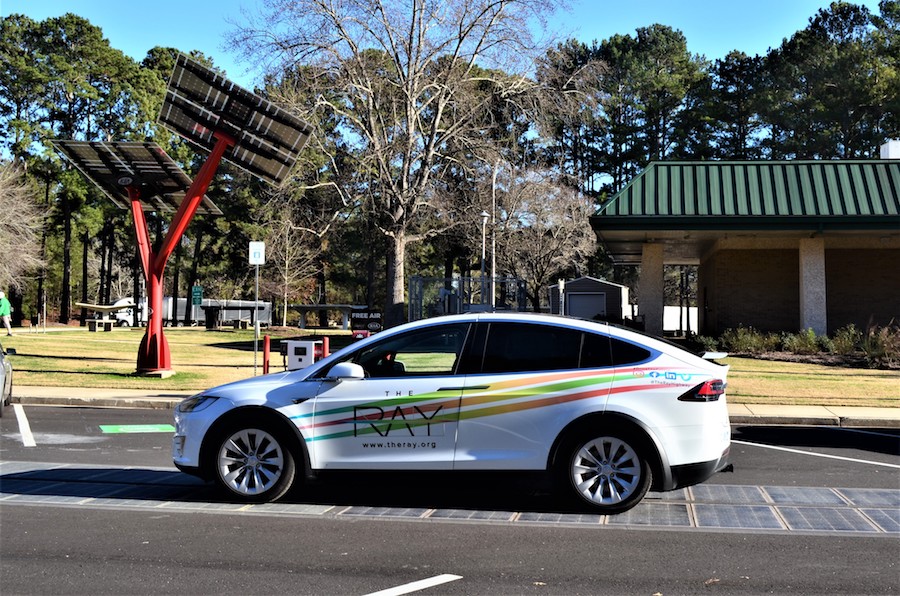
The Ray Highway, an 18-mile stretch of the I-85 in Georgia, is furthering a transportation revolution.
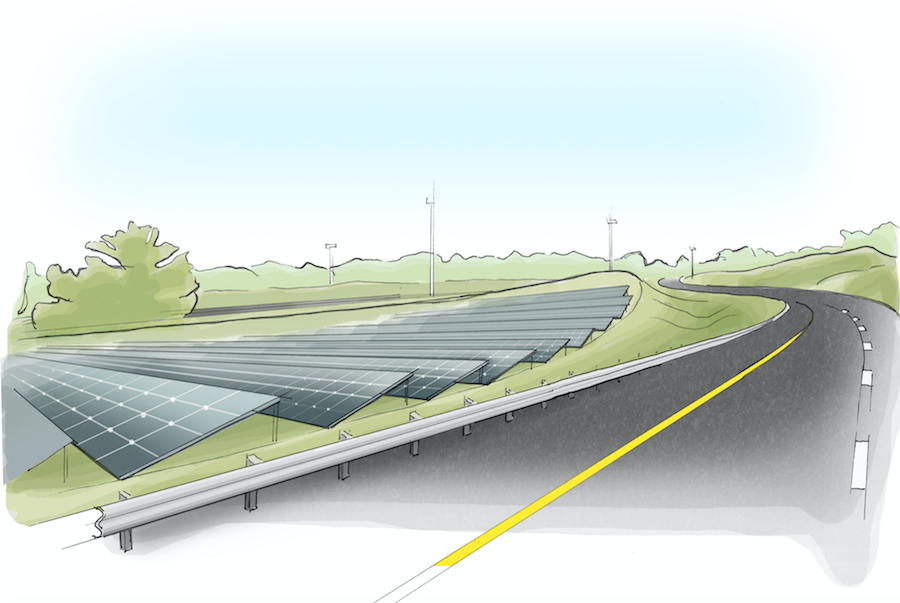
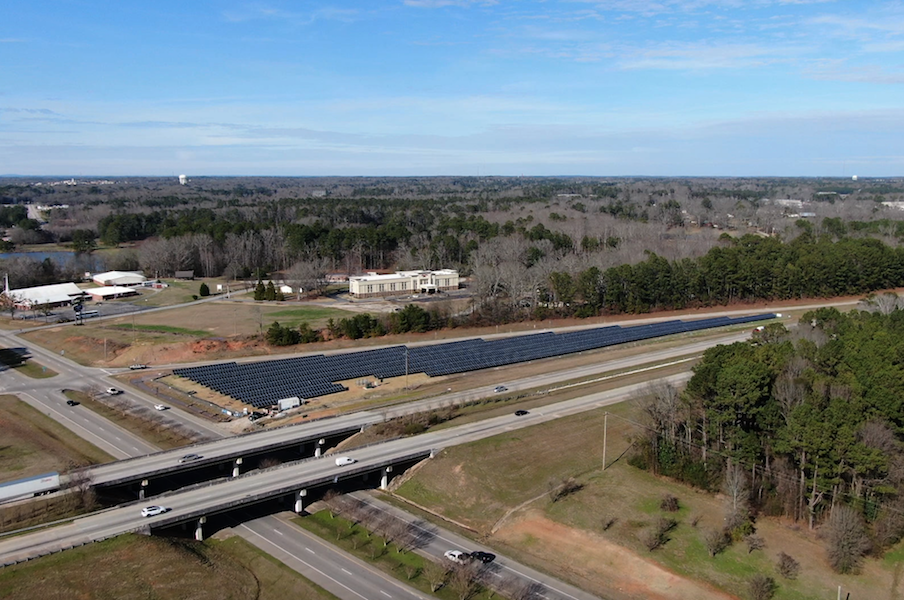
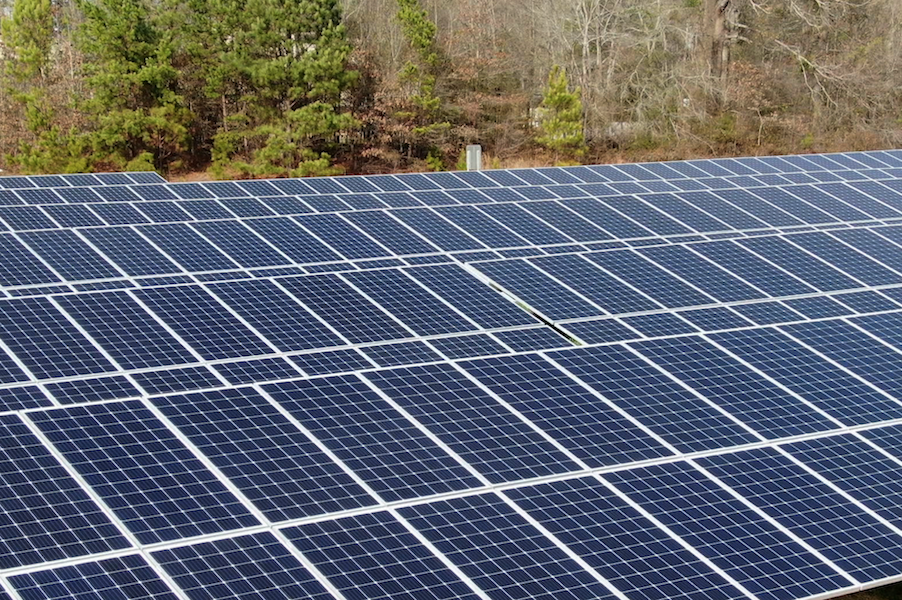
A configuration of 2,600 high efficiency solar panels at Exit 14 are maximizing the potential of right-of-way land with a megawatt of renewable energy.
“Right-of-way” (ROW) areas are roadside lands owned by state departments of transportation (DOTs). They stretch for miles as otherwise unused acreage, making them ideal locations for renewable energy development. Already cleared, currently idle, and easy to access, these areas present a built-in solution for addressing a growing demand for energy infrastructure.
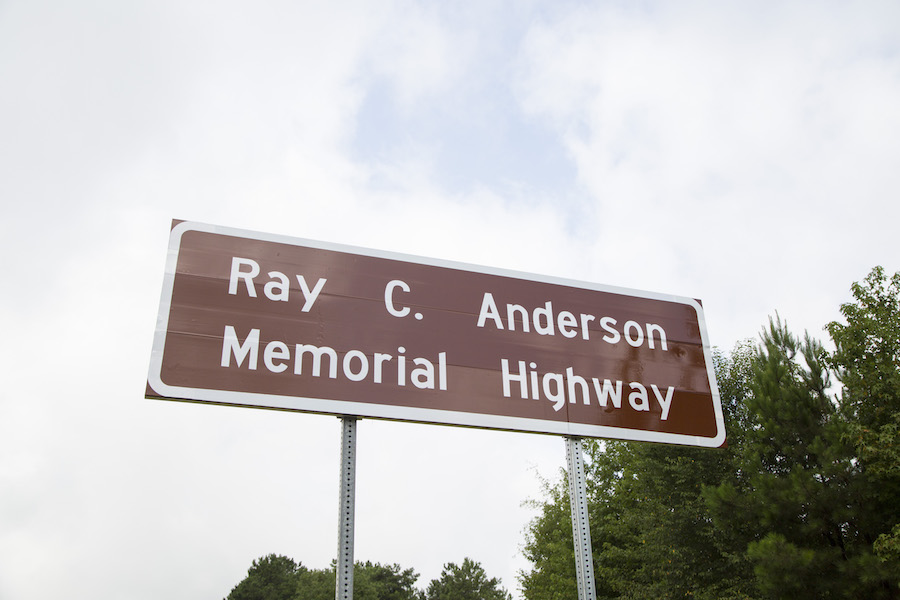
The Georgia ROW solar project is the result of a collaboration between Georgia Power and The Ray, a non-profit living lab and proving ground. Founder and president Harriet Langford named the organization in honor of her father, industrialist and environmentalist Ray C. Anderson. Ray was a trailblazer who had the same goal as the organization — transforming the future of global transportation infrastructure. To further this goal, The Ray is working towards a future of highway transportation with zero deaths, zero waste, and zero carbon.
“As our transportation systems become smarter and electrified, we will need more energy available, closer to the interstate and interstate exits, and more funding to support the infrastructure demands,” Harriet explains. “By enabling renewable energy generation using the idle roadsides, our DOTs can help to fill this gap.”
“The Ray Highway”
Built-In Benefits
The majority of the 48 contiguous U.S. states have more than 200 miles of empty roadside land that could accommodate solar energy development. Altogether this amounts to 127,500 acres across the nation. Such acreage has the potential to generate up to 36 tera-watt hours (TWh) of electricity, and consequently produce 1% of the entire country’s energy demand.
These solar ROWs would not only be an easy way to generate clean electricity, but a huge economic incentive. ROW solar is a $4 billion economic opportunity for State DOTs, which would additionally benefit from reduced energy and roadside maintenance costs, and the creation of new revenue streams. Depending on the state and amount of suitable roadside land, there’s the opportunity for states themselves to generate a value up to $180 million of carbon-free electricity each year.
The Ray Solar Site off the I-85
“No matter how they decide to structure the deal,” says Laura Rogers, Director of Strategic Partnerships at The Ray, “State DOTs win on all fronts by optimizing underutilized land to generate clean renewable energy that benefits their communities, the environment, and their budgets.”
Solar Mapping
That’s why The Ray partnered with the Webber Energy Group at the University of Texas, Austin to create ground-breaking mapping research to bring right-of-way solar to the next level. The Webber Energy Group analyzed the unpaved roadside areas at exits across the U.S. interstate system for their solar energy generation potential. The result is an interactive web-based mapping tool that will help State DOTs and other interested parties assess the potential for interstate solar across the contiguous United States.
“We have found that when stakeholders have unbiased information available to them, they can make energy decisions with a lot more clarity and confidence,” says Michael Webber, Josey Centennial Professor in Energy Resources and Professor of Mechanical Engineering at UT. “That’s our goal with this study: to help people understand the potential for interstate solar so that policymakers, developers, and investors have a clearer view of the opportunity.”
Solar Site Up Close
Pollinator-Friendly Projects
Georgia is the third state to make use of interstate property for renewable energy development, behind Oregon and Massachusetts’ “solar highway” projects. But The Ray’s right-of-way solar is the first to incorporate a holistic approach to the function of this roadside land, optimizing every inch for land regeneration and beautification.
Planted underneath and around each of The Ray’s ROW solar panels are native, pollinator-friendly wildflowers, a more aesthetic and stable ground cover alternative to typical turf grass. These native plants naturally prevent erosion on account of their deep root structures. They also cut back on maintenance and resources, as they are drought resistant and optimized for the local climate. Additionally, this pollinator meadow provides a home for bees and butterflies, which benefits local agriculture in the surrounding area, and is a much more appealing visual for those commuting along the highway.
Testing Solar Paving
Further Innovations
The Ray’s solar innovation continues with further research to pursue solar development at highway rest stops and the possibility of solar highway sound barriers. The organization is also partnering with Colas and INES (the French National Institute for Solar Energy) to create solar-paved highways with the first U.S. installation of Wattway (a road pavement embedded with solar cells in a patented frame), which would allow roads themselves to generate clean energy. Each of these initiatives support The Ray’s ultimate mission: to pave the way to a safer and more prosperous future for all.
Filmed over four years in twelve countries, The Last Glaciers captures the fragility of the natural world, human impact on our life support systems, and depicts the personal challenges encountered along the way while making this striking film.
Call it global warming, climate change, or the greenhouse effect, they’re all titles for the same troubling story, which for many of us remains as distant as a nightmare. If we’re missing the scientific evidence that our (carbon) footprints on this planet are the cause, then documentary filmmakers Craig Leeson and Malcolm Wood have news to share. Their latest film, The Last Glaciers, proves that the evidence has been around all along.
“We want to eradicate any doubt that climate change is unreal,” Malcolm says, “It’s a political tool, there are a lot of mixed messages out there, but it is unanimous with scientists from around the world that we are in a climate emergency. It’s not about change anymore, it’s a state of emergency.”
The idea for the film started during a winter holiday in the French Alps, where the driest December on record prevented Craig and Malcolm, long-time friends, from their ski touring plans. As the film began to take shape, the story proved beyond measure that it needed to be told when the team witnessed one of the now frequent avalanches in the Alps (the result of warmer temperatures and a destabilized mountain climate). This avalanche took the lives of fellow mountaineers in front of the team, and was their wake-up call that climate change poses a very immediate threat to humanity, not just the environment.
Craig filming on the summit of Mont Blanc
More than an Informational Film
The Last Glaciers isn’t another climate change documentary to scare people into not knowing what to do. “We wanted to engage a new audience, a wider audience,” Malcolm explains, “we wanted them to come on the journey with us, share the adventure. We wanted to experience climate change ourselves, first hand. And the way to do that is to climb a mountain, to go see the glaciers, and get out there and prove our point, ourselves, to our audience while putting ourselves in the field, at risk, and through the elements.”
Malcolm, a well-known adventurer and athlete himself, brought extreme athlete Dave Turner onto the team to join him and Craig on a glacial expedition. The two athletes taught Craig to overcome his fear of heights in order to access glacial ranges with scientists and witness first-hand (as well as capture on camera) the dramatic evidence of climate change causing the world’s glaciers to disappear. Their journey spanned twelve countries over the course of four years, and included mountaineering, para-alpinism, and the first tandem paraglide flight off the 5,800 meter peak of Vallunaraju in Peru.
Malcolm and Dave climbing in the Alps
Through chronicling the expedition team’s adventures (and misadventures), The Last Glaciers tells a story using the world’s vanishing glaciers as a representative symbol of a warming climate. The undeniable visual evidence that glaciers are disappearing makes them an easily understood visual tool — they have become the martyrs of climate change.
Despite the film’s dire subject matter, both Craig and Malcolm wanted to ensure that this film wouldn’t be a holier-than-thou message of the apocalypse. The reality revealed comes from a place of sincerity, as the team realizes along the journey in equal parts the urgency of the Earth’s situation and their own complicity in the problem.
“In order to film The Last Glaciers, we’ve had to fly on airlines, we’ve had to drive fossil fuel-driven cars to get to these places, we are as much of the problem as everyone else is,” Craig admits, “Which is why we want to start the debate, so that we can drive technologies, so that we can start to develop systems where we don’t need to rely on these problems… we’re looking for solutions.”
Investigating Every Perspective
To give credence to their solutions, the team had to unpack why climate change is still a matter that many refuse to believe. “I think it’s important when you’re making documentaries that you always show both sides of the argument,” Malcolm says. “What we find is a lot of the deniers are unwilling to give documentary interviews.”
Behind the Scenes
The team consulted a psychologist who specializes in understanding climate change deniers, and whose research has brought him to the conclusion that the people who don’t believe in climate change instead believe in a free market. “To substantiate that belief,” Craig elaborates, “They have to say that they don’t believe in climate change. But as we say, climate change is based on scientific research and fact. So if you choose to say you don’t believe in it, you choose not to understand or to willfully ignore the facts behind the science.”
And the facts are overwhelming. “We’ve found that 98% of scientists globally have research that shows the climate is changing at the hand of man,” Craig continues. “The remaining percent of scientific research papers that have said otherwise have actually been discredited.”
Listen to the entire interview with Craig and Malcom on the Real Leaders Podcast
The Ice Memory Project
To further emphasize that humanity is the cause for more rapid climate change, The Last Glaciers investigates how glaciers house evidence of climate history. This evidence comes from France’s Ice Memory Project, where scientists are drilling ice cores and amassing the first world library of archived glacier ice.
The Last Glaciers team met with Gerome Chapelais, head of the project, to learn about ice core findings. “And what they were finding,” Craig says, “Was that by measuring ice deep down in glaciers all around the world, they’re able to tell how the atmosphere has changed in the past 800,000 years up until the present day, because this ice contains the gases, the atmosphere, that was present at those points in time.”
This preserved glacial record of acts as a timeline of how the earth has evolved, providing a record of events before human records began. The extracted ice cores reveal that there has been a substantial amount of troubling change to the atmosphere since the rise of emissions that began with the Industrial Revolution.
“There’s been this natural oscillation of hot and cold as the earth has wobbled around its elliptical orbit,” Craig explains. “But this natural oscillation has changed since the Industrial Age. And what we’re seeing is four times the amount of methane, twice the amount of carbon dioxide.” This is how scientists know that human intervention is the cause of the drastic climate change we’re seeing now. Craig affirms, “That’s why they understand that climate change is a fact. They’re able to measure it and they’re able to measure it very accurately.”
The Ice Memory Project is operating under urgency because the story ice cores tell of a warming climate is a story that ends with the evidence disappearing. As glaciers melt, the millennia of information archived within the ice melts with them.
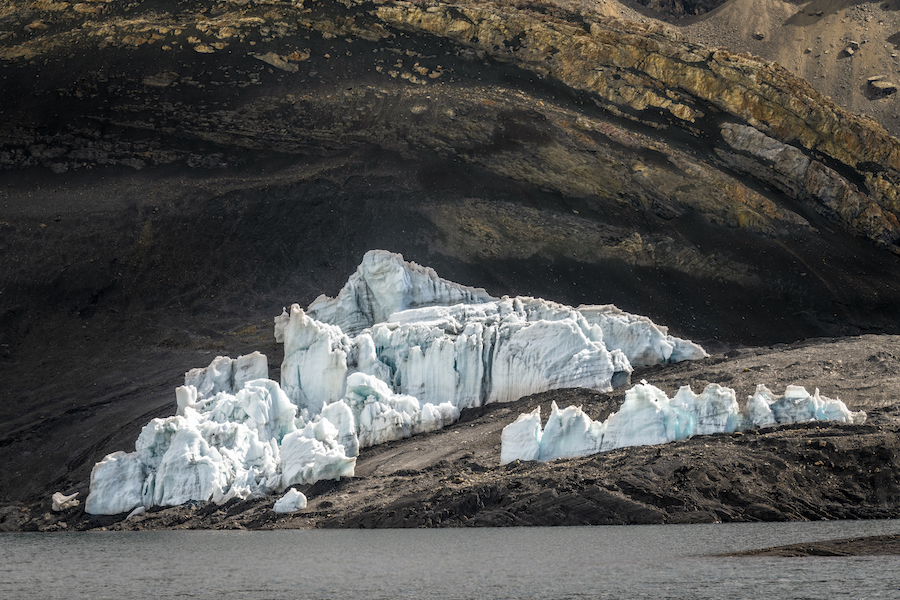
Melted Glaciers
What Scientists are Saying
As for just how fast the glaciers are melting, the Last Glaciers team joined NASA on an airborne research mission over the Antarctic Ice Sheet, the largest ice sheet in the world, and discovered some alarming statistics. John Sontag, head of NASA’s Operation IceBridge, which monitors movement in the South Pole and across the Antarctic, explained to the team how much ice is lost each moment. Craig declared it was such a big figure he couldn’t comprehend the number, “[John] came back to us and said, ‘we’re losing ice the size of the Titanic every ten seconds.’ Now when you think about that kind of mass that’s going, never to be seen again, you start to understand why these guys are getting concerned.”
Scientists have been advertising these kinds of facts as evidence of humanity’s contribution to climate change for decades, ever since a consensus on climate change was reached in the 1980s. But the Last Glaciers team felt that these findings haven’t gained traction; the language of scientific explanations remains difficult for the general public to comprehend.
That’s why The Last Glaciers pares down this research and evidence into a story that we can all understand, taking the facts from highly regarded scientific institutions — from Peru’s INAIGEM to France’s CNRS.The film presents this scientific evidence in a way that is easily digestible, even if it might be hard to swallow.
On the summit of Vallunaraju, Peru
“Scientists are very factually based individuals, there’s no emotion when you interview them. They tell you the facts, they tell you the research that presents the facts, they tell you how we got there, and they give an idea of what they think the future will look like.” Craig states. “This is the first documentary where I’ve interviewed scientists where they are getting emotional, where they’re tearing up. You never hear scientists speak with that kind of emotion.”
“These things are happening right now, and they’re happening faster than we can control,” Malcolm says. “I think it’s a scary statistic that almost 50% of the American population still thinks it’s a hoax.”
Our Separation from Reality
The reason half of the country still approaches the subject with a laissez-faire attitude could be because it is currently developing nations that are experiencing the most immediate consequences of glaciers melting. “It’s the poorer countries that are really going to suffer from climate change,” Malcolm states, “There’s going to be more disease, there’s going to be lack of water.”
LDCs like Nepal have already been experiencing this dearth for decades. In Kathmandu, subsistence farmers have been forced to relocate for lack of water because their only source — the glaciers — has melted away. What remains of fresh water is subject to contamination from heavy metals, which have been trapped in ice for millennia and are now exposed to the elements and oxidizing, running into rivers to turn them toxic red.
Nepal subsists at the base of the Himalayas, the highest mountain range in the world, and which harbors the planet’s third largest deposit of ice and snow (surpassed only by Antarctica and the Arctic). Considering the climate continues to warm, Malcolm explains, “If the highest mountain range in the world loses all of its ice, 1.8 billion people will not have fresh water. So almost a third of the world’s population will suffer from the loss of [those] glaciers.”
While the Last Glaciersteam consulted Nepal’s International Centre for Integrated Mountain Development (ICIMOD) to get the facts behind this problem, the film aims to take the audience beyond facts to help us understand the situation. “We want people to be able to experience what we’re experiencing, seeing what it’s like to be someone in a village in Nepal that is forced to give up their house and give up their crops and move because you don’t have water anymore, because those glaciers don’t exist,” Craig states, “And for people to be able to understand, they need to be able to live that.”
Summit push in Nepal
Evidence of Climate Change Beyond the Ice
Throughout the four year filming journey, however, the Last Glaciers team discovered that across the globe we are all in fact living through the extended extreme consequences of climate change. The team pivoted away from the ice to capture the devastating Australian Bush Fires and the aftermath of super Typhoon Mangkhut in Hong Kong, where both Craig and Malcolm currently reside.
But in the wake of these environmental disasters, the team saw hope in the youth across the globe taking to the streets to protest political negligence towards tackling climate change. Craig determined that including younger perspectives would be important for the film because, “Driving awareness this time around, we need to be driving awareness to the children. The children need to be aware of the situation, and we can already see from the demonstrations, the Greta Thurnburgs, that this is having an effect. And we feel that this is probably one of the quickest ways to get the planet to wake up.”
By 2025, 95% of the American workforce will be millennials. Though governments and corporations seem reluctant to make the policy changes the next generation demands, Craig and Malcolm affirm that such changes are truly in everyone’s best interest. “If you don’t have sustainability development goals within your business infrastructure,” Craig affirms, “You won’t have a business in the future. Because the kids of today who are the clients and consumers of tomorrow do not want to be part of spoiling the planet.”
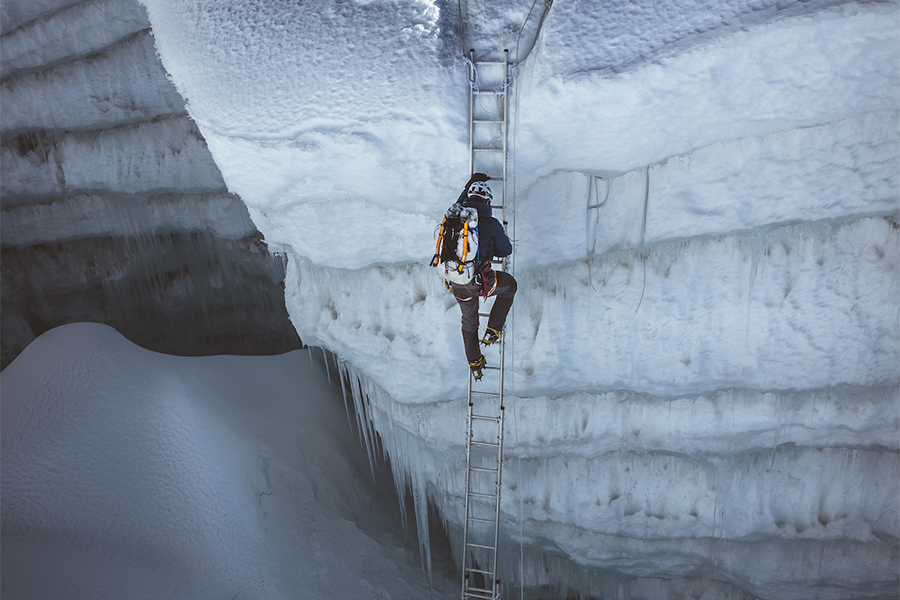
Malcolm climbing a hanging glacier
Optimism for Our Climate’s Future
It’s not yet too late, and that’s the optimistic view on climate change that Craig and Malcolm want to shine through the film. They’ve partnered to create a documentary before — the award-winning A Plastic Ocean, which revealed an equally unsettling truth about the dire state of the world’s waters, but has been instrumental in enacting a great deal of change. Not only is A Plastic Ocean now an educational tool translated into 30 languages and screened in over 60 countries, it has inspired policy change to limit plastic production.
“This is not sugar-coating the problem, but there’s hope,” Malcolm says, “We’re optimistic. We’ve seen a wave of change with single-use plastics, and we hope to inspire young people to do the same about climate change, and driving their politicians to make the necessary changes in their respective countries.”
Climbing in Nepal
Craig states, “The solution is to stop burning, stop creating these products that cause the raising of these greenhouse gases. And the best way to do that is to stop chopping down forests, stop burning fossil fuels. These are very easy ways.” We all caught a glimpse this Spring of how effective this could be when the world stopped functioning at normal speed due to the Coronavirus stay-at-home order. Smog and water cleared with less vehicles on roads and waterways, evidence that a worldwide effort to change our impact on the climate is not only possible, but will yield results.
Simply minimizing daily stresses on the planet, however, is only the tip of the iceberg — climate change has feedback loops that will take decades to stop, and the glaciers that have already melted are not coming back. Even if we stopped climate change today, we wouldn’t see a reversal of effects for at least 20 years. Malcolm concludes that this is why we have to clear the path now. “The solution,” he says, “Is driving awareness, getting everyone behind this idea, and insisting on policy change around the world.”
The Last Glaciers is scheduled to release this fall. Find out more here.
With dry seasons extended and temperatures on the rise, wildfire seasons have become longer and more dangerous than ever.
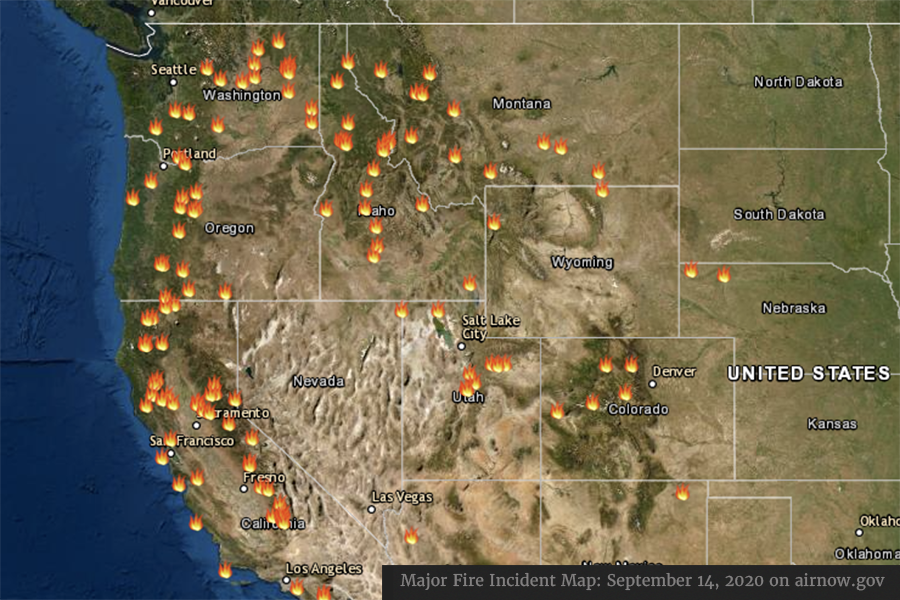
Fires in the American West this summer, and other parts of the world, have reached air quality levels of unprecedented hazard, breaking records as the worst in the world and forcing entire communities to evacuate. Below is a compilation of wildfire resources to keep you informed of evacuation and safety protocols.
Air Quality
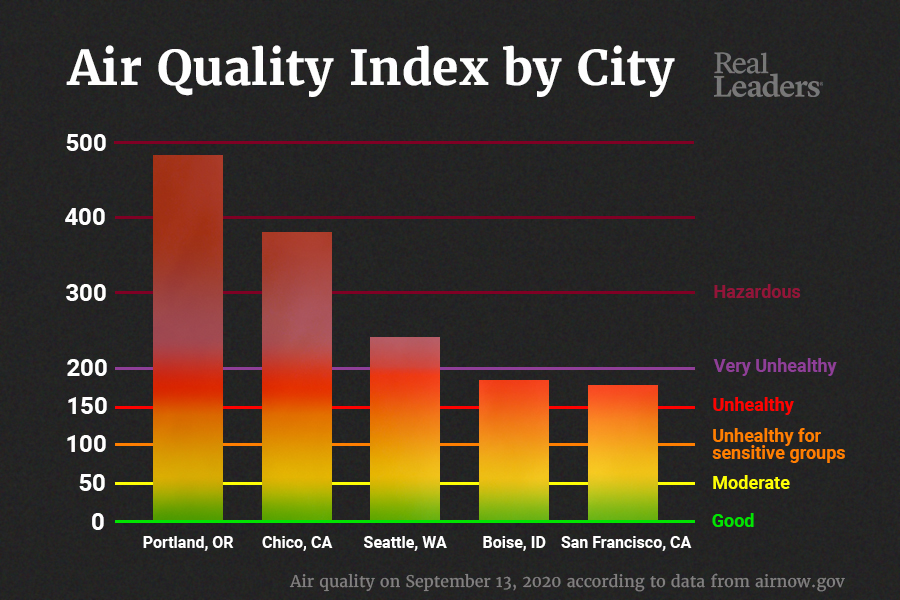
Air Quality is measured through the Air Quality Index (AQI), and accounts for five major air pollutants: ground-level ozone, particle pollution, carbon monoxide, sulfur dioxide and nitrogen dioxide. In the U.S., these measurements range from 0 to 500, least to most harmful. Measurements below 100 are not considered detrimental to one’s health, but measurements above 100 may be harmful to sensitive groups (children, pregnant women, and the elderly, as well as those who smoke or have conditions such as asthma or heart disease). Measurements above 300 are considered hazardous to everyone.
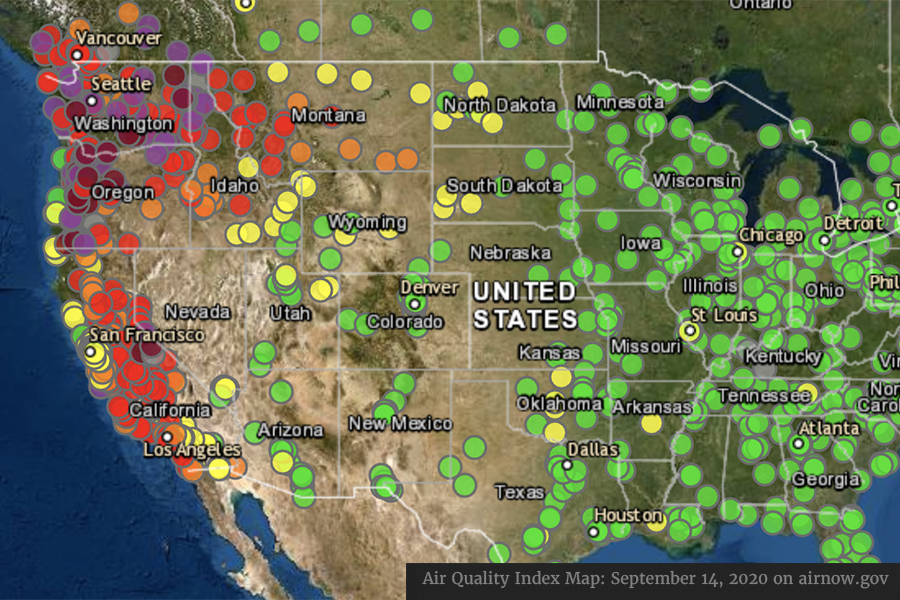
Many cities along the West Coast are currently experiencing unhealthy — and in many cases, hazardous — air conditions. This week, areas in Western Oregon reached air quality levels so hazardous that they surpassed the AQI scale. As a result, the EPA declared “emergency conditions” for anyone exposed to such air for 24 hours or more.
Health Risks
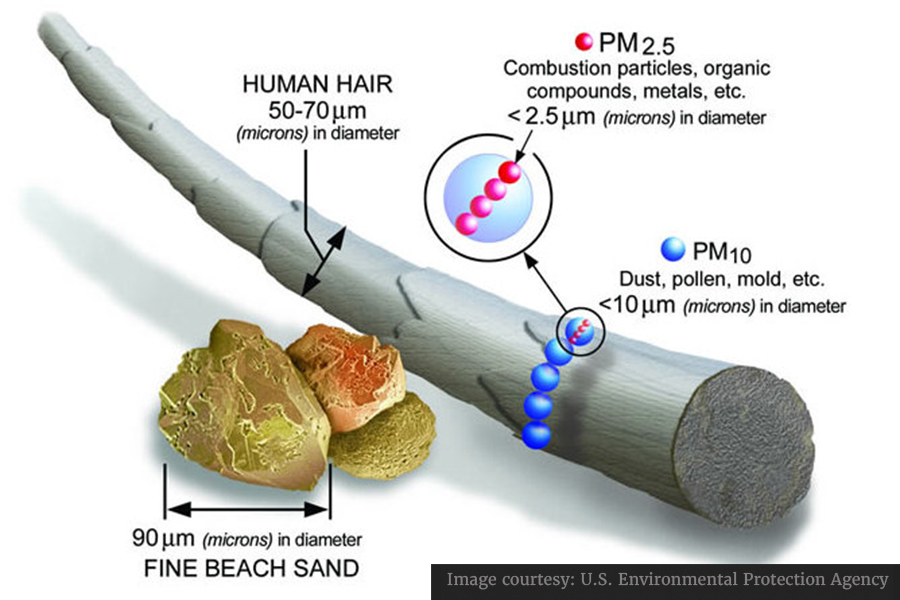
The danger with poor air quality comes with inhaling harmful particulate matter and toxic carcinogens created by wildfire smoke. Four smoke (PM2.5) particles can fit into a single particle of dust. They are so small that the body can’t naturally filter them out, so they easily reach the lungs and enter the bloodstream.
Some common symptoms of this smoke exposure include: irritated eyes, nose, and/or throat, a cough, headaches, sleeplessness, and slight shortness of breath. This exposure is especially harmful to those with pre-existing conditions, and can lead to increased chances of asthma or heart attacks. Contact your doctor or call 911 if you have breathing trouble or chest pain.
While levels above 300 AQI are considered hazardous for anyone exposed, it is not known how exposure to recent off-the-charts hazardous air will affect human health. Therefore, it is necessary to be vigilant about limiting exposure.
Prevention
When it is smoky outside you should reduce time spent outdoors, and avoid outdoor activities that require exertion and heavy breathing. Opt for light exercise indoors and drink plenty of water to stay hydrated.
Keep doors and windows closed. If you have an HVAC system, set your air conditioning to “recirculate” mode to filter the air in your home. If you have central ducted air conditioning, make sure the system setting is switched to “on,” rather than “auto,” to ensure air is being filtered constantly rather than intermittently.
Reduce other sources of indoor smoke. Avoid burning cigarettes, candles or gas, propane, and wood burning stoves and furnaces. Also avoid vacuuming to limit dust in the air — use a damp mop or cloth to clear away dust particles instead.
Protection
Cloth masks and face coverings provide protection from ash, but they will not protect against inhaling minute particulate matter from smoke. N-95 masks may provide protection if worn and fitted properly. However, they are in short supply since they are the verified protection for essential workers to combat Covid-19.
The most effective way to protect yourself from harmful wildfire conditions is to remain indoors and limit your time outdoors as much as possible. Even if the sky looks clear, air quality can be deceptive, because it accounts for particles too small to see. You can monitor your air quality with airnow.gov or through the Forest Service.
If you must drive in your car, keep headlights on at all times — not only to see, but to be seen. Turn on your Air Recirculation button to close vents and keep smoky air out of the car.
Evacuation
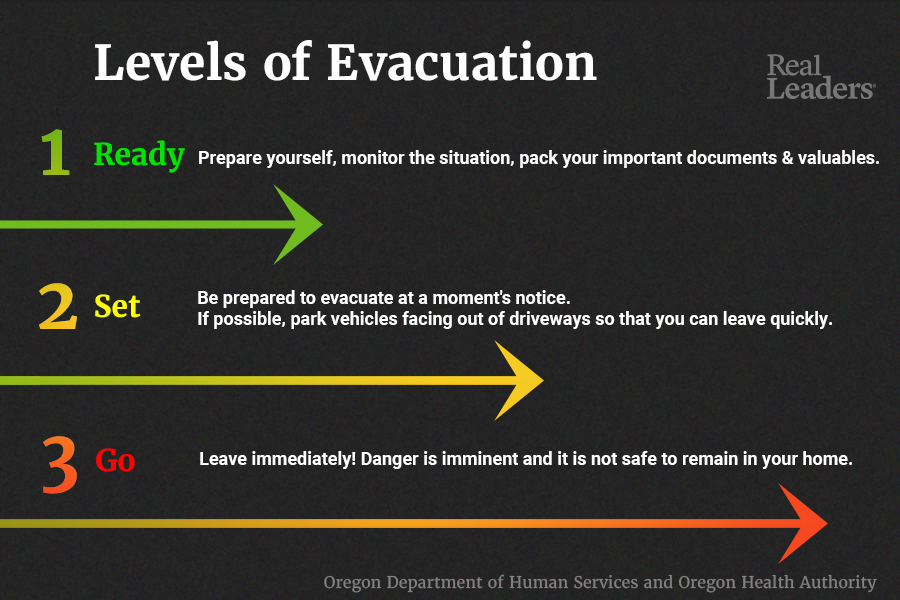
Be Informed
Sign up for Public Alerts or emergency alerts specific to your county. The Emergency Alert System (EAS) and National Oceanic and Atmospheric Administration (NOAA) Weather Radio will also provide emergency alerts, but will not reach you as quickly or reliably as a more localized alert system.
Check your county and state websites. There, you can find specific information on evacuation points, emergency housing, prescription medication discounts, mental health resources, DMV replacement documents, unemployment, etc.
Familiarize yourself with your community’s evacuation routes. Be aware of several ways to leave the area in the event that some roadways are closed due to fire damage. See your Department of Transportation for information on road conditions and closures.
Stay up to date on social media. Many people will post important information and resources, and community members will circulate information specific to your area that you might not find elsewhere.
Be Prepared
Charge electronics such as smartphones, laptops, and flashlights. Turn volume up on phones in order to hear emergency alerts right away.
Compile an emergency kit (if you are not otherwise ordered to evacuate immediately). This should include important documents (birth certificates, passports), irreplaceable items (family photographs, hard drives, etc), and enough resources to last you and your family members two weeks.
For insurance purposes, videotape every corner of your home and talk through every item you own, down to the smallest details (i.e. how many dishes in your cupboard or pairs of jeans in your dresser). Having your house documented will make insurance claims easier if anything is damaged during the fire or stolen while you are away.
Be prepared in the event that your electricity is turned off. Many energy companies will shut off electricity in areas in imminent fire danger. Make sure you are able to open garage doors manually so your vehicle will not be stuck inside the house, and have emergency cash on hand in case ATMs don’t work.
If your area is not ordered to evacuate, stay put and continue to monitor conditions and updates closely. This leaves room on roadways for residents and emergency responders in urgent evacuation zones. You can protect yourself and first responders by evacuating only when you are advised to.
Check on your friends, family, and neighbors, to make sure they are prepared as well.
Continue to follow COVID-19 recommendations. While cloth masks do not prevent inhaling harmful smoke particles, they do still slow the spread of Covid-19 and should still be worn in public places at all times.
Animal Safety
Pets
Make sure all of your pets or livestock are included in your evacuation plan, and have a pet evacuation kit prepared for them as well. Pets are equally susceptible to the harmful effects of wildfire smoke, particularly older animals, or those with preexisting conditions. To protect pets, limit their time outside (shorter bathroom breaks and walks) and keep them in a well-ventilated room. They should have access to plenty of fresh water and their favorite toys, blankets, and treats, so as to limit potential anxiety in a more stressful environment.
Livestock/Large Animals
To protect your large animals in wildfires, limit strenuous work and give them 4 to 6 weeks to recover fully from smoky conditions before resuming strenuous activity. If smoke continues to worsen, stay up-to-date on locations that will accept livestock if you need to evacuate. Contact your local fairgrounds, stockyards, race tracks, and equestrian centers about temporary shelter. Train all livestock to load into trailers in the event that relocation becomes necessary.
If evacuating large animals cannot be accomplished in a safe and timely way, open gates, cut fences, or herd livestock into areas of lower fire risk. Leave enough food and water for 48 to 72 hours (do not rely on automatic watering systems). Remove all halters or harnesses from livestock to prevent anything extraneous from burning into their skin or getting caught while they roam freely. If your animals do not have permanent identification (ear tags, tattoos, electronic microchips, brands, etc.), write your phone number in permanent marker on your their hooves so that anyone who finds them can contact you.
Wildlife
Many wild animals are displaced by the fires, and may start wandering into neighborhoods because they are scared or thirsty. If you have spare buckets or large containers, you can fill them with fresh water and place them outside of your home.
How to Help
Volunteer your time at food banks and emergency shelters.
Donate clothing and household items to organizations like the Red Cross and Salvation Army
Host people in need of emergency housing through Air BnB.
Zimbabwe’s all-female anti-poaching team is helping to improve the economy by empowering women and protecting wildlife.
Poaching has taken a severe toll on the elephant population of Zimbabwe. By 2017, numbers in the Lower Zambezi region had declined by 40 percent since 2001. According to the African Wildlife Foundation (AWF) as many as 35,000 elephants are killed in Africa each year. If this rate continues, African elephants (along with other vulnerable species such as Black Rhinos, Lions, and Mountain Gorillas) may become extinct within our lifetime.
Illegal trophy hunting and poaching has become such a large part of Africa’s economy that there has become little incentive to promote conservation. Without alternate sources of income, poaching will continue to destroy the rich biodiversity of the continents ecosystem.
Enter the Akashinga, “The Brave Ones,” a branch of the International Anti-Poaching Foundation with a new approach to protecting Africa’s wildlife — employing only marginalized women from rural communities. Single mothers, abandoned wives, survivors of sexual and physical abuse, widows, and orphaned girls are trained as rangers and biodiversity managers. They now protect the vast tracts of land previously ruled by poachers. Their business model gives the most vulnerable women an opportunity to become empowered by earning a living, while protecting wildlife.
Training to become an Akashinga ranger is rigorous and grueling. The women must be prepared to face the harshest conditions, and heavily-armed poachers. But the wet, cold, and hunger isn’t something that intimidates them — the hellish conditions they face aren’t any worse than the conditions they already endured as marginalized members of their community. Troubled backgrounds make the Akashinga rangers particularly adept at their job.
Over 60 percent of Akashinga’s operational costs go directly back to local communities, and up to 80 percent of this goes directly to households. It’s a more profitable and longterm, sustainable income for the community than the short-term financial returns of poaching. Akashinga yields the same profit in 34 days than trophy hunting yields in a year, with the added benefit of simultaneously promoting conservation. It demonstrates that endangered wildlife are more valuable to the Zambezi Ecosystem alive than dead, and provides an incentive to promote conservation.
The success of Akashinga’s business model is proof that empowering women in the workforce leads to economic growth. According to the UN, closing the gender gap in the workplace is a key component to achieving the 17 Sustainable Development Goals.
Akashinga plans to expand its conservation work. By 2025, they intend to recruit 1,000 women to protect a network of 20 former hunting reserves — securing a future for the species that live there, creating better lives for their communities, and inspiring people around the world to take action in bettering our world. These women prove each day that taking action can have an immediate, positive effect.
Click here to make a donation to the IAPF and Akashinga project
Zimbabwe’s all-female anti-poaching team is helping to improve the economy by empowering women and protecting wildlife.
Poaching has taken a severe toll on the elephant population of Zimbabwe. By 2017, numbers in the Lower Zambezi region had declined by 40 percent since 2001. According to the African Wildlife Foundation (AWF) as many as 35,000 elephants are killed in Africa each year. If this rate continues, African elephants (along with other vulnerable species such as Black Rhinos, Lions, and Mountain Gorillas) may become extinct within our lifetime.
Illegal trophy hunting and poaching has become such a large part of Africa’s economy that there has become little incentive to promote conservation. Without alternate sources of income, poaching will continue to destroy the rich biodiversity of the continents ecosystem.
Enter the Akashinga, “The Brave Ones,” a branch of the International Anti-Poaching Foundation with a new approach to protecting Africa’s wildlife — employing only marginalized women from rural communities. Single mothers, abandoned wives, survivors of sexual and physical abuse, widows, and orphaned girls are trained as rangers and biodiversity managers. They now protect the vast tracts of land previously ruled by poachers. Their business model gives the most vulnerable women an opportunity to become empowered by earning a living, while protecting wildlife.
Training to become an Akashinga ranger is rigorous and grueling. The women must be prepared to face the harshest conditions, and heavily-armed poachers. But the wet, cold, and hunger isn’t something that intimidates them — the hellish conditions they face aren’t any worse than the conditions they already endured as marginalized members of their community. Troubled backgrounds make the Akashinga rangers particularly adept at their job.
Over 60 percent of Akashinga’s operational costs go directly back to local communities, and up to 80 percent of this goes directly to households. It’s a more profitable and longterm, sustainable income for the community than the short-term financial returns of poaching. Akashinga yields the same profit in 34 days than trophy hunting yields in a year, with the added benefit of simultaneously promoting conservation. It demonstrates that endangered wildlife are more valuable to the Zambezi Ecosystem alive than dead, and provides an incentive to promote conservation.
The success of Akashinga’s business model is proof that empowering women in the workforce leads to economic growth. According to the UN, closing the gender gap in the workplace is a key component to achieving the 17 Sustainable Development Goals.
Akashinga plans to expand its conservation work. By 2025, they intend to recruit 1,000 women to protect a network of 20 former hunting reserves — securing a future for the species that live there, creating better lives for their communities, and inspiring people around the world to take action in bettering our world. These women prove each day that taking action can have an immediate, positive effect.
Click here to make a donation to the IAPF and Akashinga project
Firespring is Nebraska’s first certified B-Corporation, and helps organizations identify their purpose and bring it to life. Their media company offers a range of services, from creative and print production to marketing campaigns, and culture alignment solutions. The company was recently ranked #87 on the 2020 Real Leaders Impact Awards, but there was a time when they almost failed.
During Firespring’s infancy, a catastrophic financial event occurred. Board members asked founder and CEO Jay Wilkinson to lay off 80 percent of their employees. “I refused to do it,” says Wilkinson. “I dug in my heels and wouldn’t do it.” After this firm stance of defiance, and in an unusual turn of events, his board fired him as the CEO of his own company.
Wilkinson, a serial entrepreneur of more than 20 companies, explains that he was left disheartened by the board’s decision. What could he possibly tell the people of his company, that he considered his greatest assets? Little did he know what he was about to say to them would transform the company forever.
“That’s when I first learned the power of just throwing it out there, let’s be real here, let’s call crap, crap.”
He gathered all the staff into a room and explained precisely what was going on. To his surprise, the staff members understood the circumstances and remained determined to keep the company going, even offering to take a cut in pay to keep everyone together. Wilkinson recalls: “That’s when I first learned the power of just throwing things out there. I thought, ‘let’s be real here, let’s call crap, crap.”’ After this surprising intervention, the staff of Firespring rallied together to become financially solvent again. “It was really due to everything being put openly on the table,” he continues. “Everyone knew exactly where we stood.”
Listen to Episode 55 of the Real Leaders Podcast to learn how they overcame failure with vulnerability:
Listen on Spotify
“There’s no human who doesn’t want to be a part of something. And that’s what good leaders like to create.”
During their darkest hour, it was transparency, vulnerability, and inclusivity that the staff of Firespring leaned on. Asked about the merits of this style of leadership, Wilkinson ponders for a while, and then says one word:“Inclusive.”
“The word inclusive may be the word best suited to a particular style of leadership that’s not about leaders and followers,” he says. “This entails introducing a vision into a situation and letting the staff fill that vision — collectively. Everybody wants to be a part of something bigger than themselves, it’s a natural human desire, and that’s what good leaders want to create.”
Now, more than 20 years later, Firespring has over 180 employees and 3 offices — Lincoln & Omaha, NE and Council Bluffs, IA.
Please share this story with someone who might find these leadership lessons beneficial. Click the red email share icon below!
Firespring is Nebraska’s first certified B-Corporation, and helps organizations identify their purpose and bring it to life. Their media company offers a range of services, from creative and print production to marketing campaigns, and culture alignment solutions. The company was recently ranked #87 on the 2020 Real Leaders Impact Awards, but there was a time when they almost failed.
During Firespring’s infancy, a catastrophic financial event occurred. Board members asked founder and CEO Jay Wilkinson to lay off 80 percent of their employees. “I refused to do it,” says Wilkinson. “I dug in my heels and wouldn’t do it.” After this firm stance of defiance, and in an unusual turn of events, his board fired him as the CEO of his own company.
Wilkinson, a serial entrepreneur of more than 20 companies, explains that he was left disheartened by the board’s decision. What could he possibly tell the people of his company, that he considered his greatest assets? Little did he know what he was about to say to them would transform the company forever.
“That’s when I first learned the power of just throwing it out there, let’s be real here, let’s call crap, crap.”
He gathered all the staff into a room and explained precisely what was going on. To his surprise, the staff members understood the circumstances and remained determined to keep the company going, even offering to take a cut in pay to keep everyone together. Wilkinson recalls: “That’s when I first learned the power of just throwing things out there. I thought, ‘let’s be real here, let’s call crap, crap.”’ After this surprising intervention, the staff of Firespring rallied together to become financially solvent again. “It was really due to everything being put openly on the table,” he continues. “Everyone knew exactly where we stood.”
Listen to Episode 55 of the Real Leaders Podcast to learn how they overcame failure with vulnerability:
Listen on Spotify
“There’s no human who doesn’t want to be a part of something. And that’s what good leaders like to create.”
During their darkest hour, it was transparency, vulnerability, and inclusivity that the staff of Firespring leaned on. Asked about the merits of this style of leadership, Wilkinson ponders for a while, and then says one word:“Inclusive.”
“The word inclusive may be the word best suited to a particular style of leadership that’s not about leaders and followers,” he says. “This entails introducing a vision into a situation and letting the staff fill that vision — collectively. Everybody wants to be a part of something bigger than themselves, it’s a natural human desire, and that’s what good leaders want to create.”
Now, more than 20 years later, Firespring has over 180 employees and 3 offices — Lincoln & Omaha, NE and Council Bluffs, IA.
Please share this story with someone who might find these leadership lessons beneficial. Click the red email share icon below!
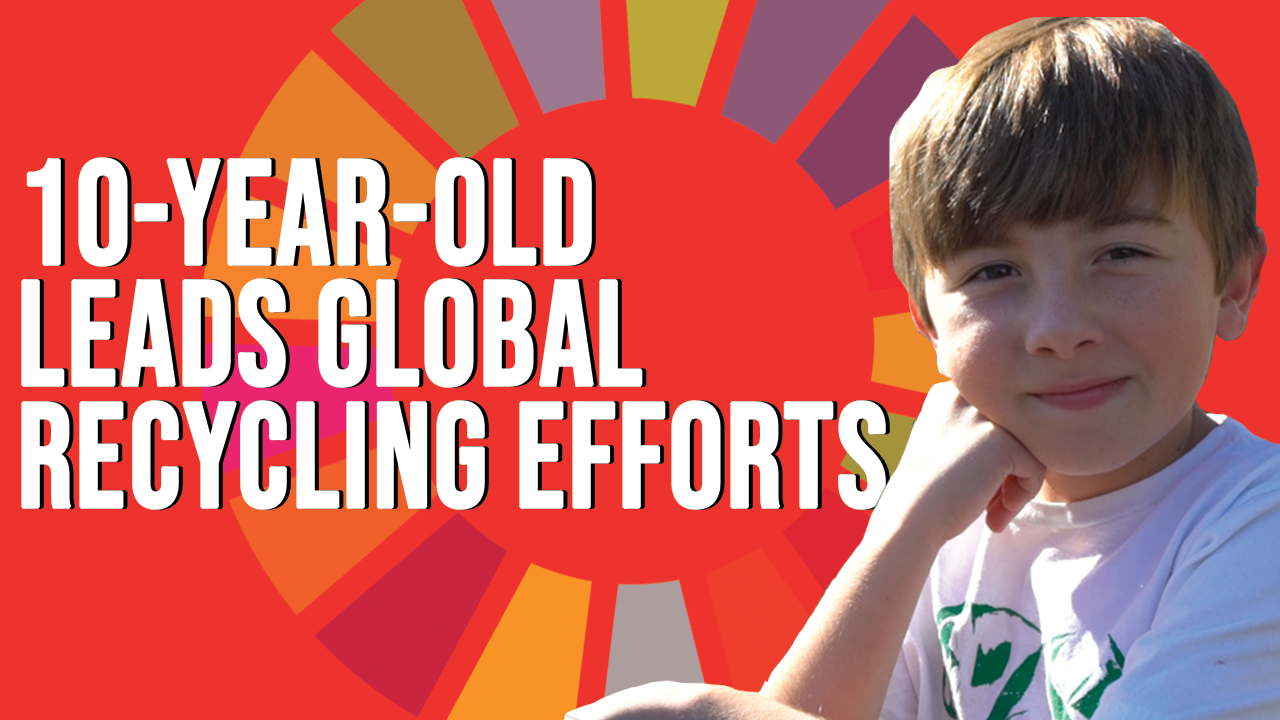
Ten-year-old Ryan Hickman has been operating his own recycling company since he was three years old. Ryan’s Recycling started out as something fun that was also beneficial for the environment and has since turned into a means of addressing a recycling problem in California. Many California redemption centers have recently shut down because of a new conundrum: increased costs to maintain recycling programs and a decreased value for recycled aluminum and PET (Polyethylene terephthalate) plastic.
Ryan’s increased passion for recycling caught wind amongst the San Juan Capistrano community where members became conscious of their complacent waste and environmental impact and started dropping off their recyclables for the youngster. By gathering bottles and cans in his community that would have otherwise been sorted at redemption centers or ended up in landfills Ryan has made recycling convenient for all by doing the sorting himself. His goal is to prevent aluminum, plastic, and glass from ending up in landfills, where they can take anywhere from 90 to one million years to break down. The young professional also wants to prevent bottles and cans from making their way to the ocean, where they become harmful to marine life. Over the last 7 years, Ryan has now collected over 700,000 bottles and cans—that’s over 100,000 pounds of recyclables!
Public attention to the recycling crisis has resulted in business development for Ryan’s recycling; partnering with organizations to further address recyclings importance. He’s working with Recycle Across America (RAA) to develop standardized recycling labels and is set to travel around the world with Valley Living to educate others about filtering. His advice? “If a kid like me can do it, anybody can do it. It’s easy.”
This cosmetics company has laid some non-carbon footprints worth following.
When you walk into any of the 931 Lush stores spread across 49 countries, you’re immediately tantalized by colors and flavors you can only imagine before you’ve tried them with names like Moroccan Argan, Ugandan Moringa and Indonesian Illipe.
These ingredients are mixed together with the hand-crafted assurance that everything is fresh and cruelty-free. In fact, Lush enlists an entire ethical buying team to strategically source its materials from around the globe.
“It’s all about transparency to me,” says Lush’s Ethical Buying Manager, Heather Deeth. “We want to know all the people and faces connected to each ingredient.” Supply chain transparency is nothing new to the company. For years they’ve been cultivating a lasting relationship with growers around the world, to ensure their ethical standard is maintained from seed to shelf.
Since 2010 Lush has implemented the Sustainable Lush Fund, dedicated to investing in sustainable farming and projects that rejuvenate the land so as to support global communities from the ground up and establish lasting business partnerships that will guarantee quality ingredients for all of Lush’s products. “The power of ethical buying is that you get to connect all the way back to these producers and see what’s really happening to them,” Heather explains. “We’re connected to the land and where these things come from.”
Lush’s current agricultural investments include farms in Arizona, Guatemala, Peru, and Uganda. The Fund supports fair wages and working conditions for growers, as well as the development of sustainable farming practices by challenging the methods—and profits—of traditional agriculture.
“We had to provide an economic alternative to chopping down the trees,”Heather says,“and find a way to value the forest as it is.”
Partnerships with these growers insures a steady income for those who might otherwise be forced to turn to monoculture as a means of survival. This is a sustainable alternative to the profits from palm plantations and cattle pastures that decimate local ecosystems by clearing forest land for crops and livestock that quickly deplete the nutrients from the soil. Conventional monoculture may be more profitable in the short term, but Lush is striving to provide a more stable, long-term alternative, for growers and the land they harvest.
Since 2014, Lush has promoted regenerative farming among its agricultural projects, a system that rejuvenates degraded land while simultaneously producing ingredients for their products. This method of farming transforms formerly fallow fields into diverse agroforestry systems, a process that steps away from monoculture by growing trees and multiple crops on the same pastureland. By combining agriculture and forestry into a lush garden of plenty, numerous crops can be grown at the same time, creating a richer, healthier, and more diverse ecosystem (and providing farmers with the added benefit of growing food for their families while also growing crops for profit). Instead of working against nature by clearing land, the reforestation aspect allows forest ecosystems to thrive, more resilient than before because the combination of crops generates a microclimate regulated by the trees, which improve water purity, soil fertility, and shelter for both flora and fauna.
Through this system, Heather explains, “We can provide good jobs that are in line with sustainability. We need these projects to go deeper than charity. We actually want to be a long term partner so we can regenerate the land and buy ingredients.”
By investing in its supply chain, Lush sets out to prove that working with nature instead of against it is the key to long-term success. Lush is a company in a special position because it relies directly on the health of the planet in order to flourish.
“The environmental aspect is also very important,” Heather emphasizes, “Because many of our ingredients are natural and come from the earth at some point. We want to limit our footprint.”
Lush has done this from the beginning, leaving a trail of non-carbon footprints worth following. They’ve worked towards locally sourcing post-consumer products to reduce emissions associated with shipping packaging materials. They run a closed loop recycling system with their black pots. They’ve even recently begun harvesting salvageable ocean plastic and using that as a percentage of their packaging.
And Lush has gone even beyond recycling. 50% of Lush’s product range is naked, which means it’s completely packaging free, a sustainability choice that not only supports the movement to reduce waste, but saves on packaging costs. “When you are clever and you can formulate without packaging,” Heather says, “you can put more value into the ingredients you’re sourcing. It means I can buy the best ingredients I can get, and we can put more value into supporting ecosystems and supporting farmers around the world. We can prove that businesses can be sustainable.”
Nike is pledging zero waste to erase its carbon footprint
Nike’s new European distribution center in Ham, Belgium is powered by 100% renewable energy. All 1.5 million square feet of the new facility, known as the Court, are powered by locally generated wind, solar, geothermal, hydroelectric, and biomass sources. This is part of Nike’s sustainability pledge to power all owned-and-operated facilities with 100% renewable energy by 2025, and another huge step towards Nike’s pledge for zero carbon and zero waste.
The Court’s location is significantly factored into the environmental equation. It lies in the middle of an infrastructure of railways and canals, eliminating the need for trucks to bring inbound and outbound shipments, and consequently reducing the carbon emissions that come with them. This supports Nike in line with the Paris Agreement of 2015, aiming to reduce carbon emissions across its global supply chain by 30% by 2030.
Going one step further, Nike’s facilities are operating production in conjunction with the Zero Discharge of Hazardous Chemicals Foundation (ZDHC), committed to reaching its goal of zero discharge of hazardous chemicals in its supply chain by 2020.
The Court’s facility itself is committed to managing waste among its products, in line with the UN’s Sustainable Development Goals of Responsible Production and Consumption. The Court’s walkways have been engineered from reclaimed footwear material, and over 95% of on-site waste is recycled.
Upcycling waste materials has long since been a part of Nike’s waste-free initiative, and follows the UN’s SDG for Industry, Innovation, and Infrastructure. Already, Nike diverts 99% of footwear manufacturing waste from landfills, and annually redirects over 1 billion plastic bottles from landfills to be recycled into yarn for new jerseys and uppers for Flyknit shoes. The Reuse-A-Shoe and Nike Grind programs also convert materials into new products, playgrounds, running tracks and courts, bringing Nike one step closer to zero waste.