Meet the Scrollholder: The New Viral Shareholder

Read Time
7 min read
Posted on
August 13, 2026
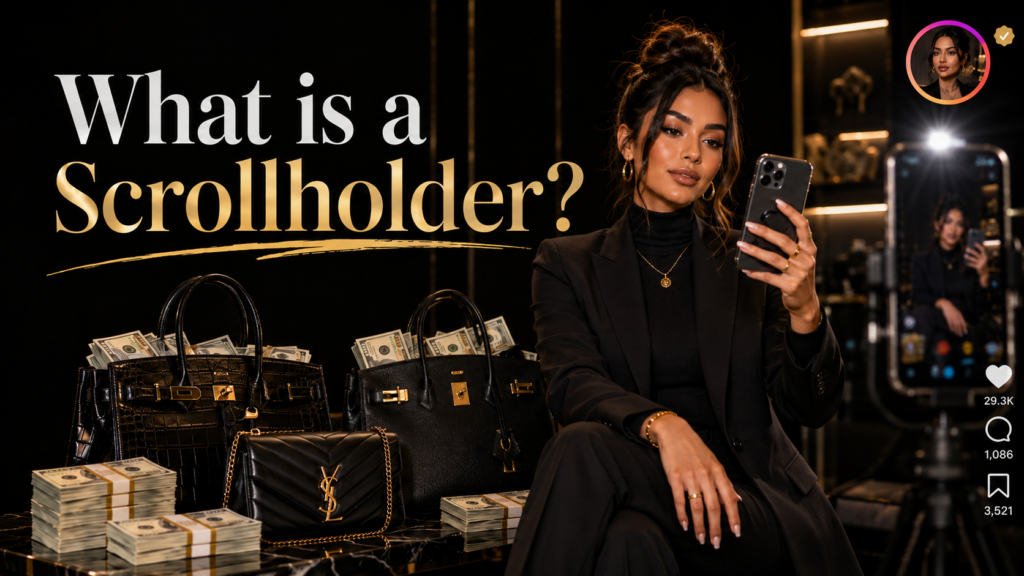
Influencers used to get paid to promote brands. Now they’re starting to own them. Real Leaders Top Impact Company Cymbiotika’s newest investor, Alix Earle, shows why the next generation of creators may be as important to the cap table as they are to the content calendar.
For decades, celebrity marketing followed a simple formula.
Build a successful company.
Hire someone famous.
Put them in an advertisement.
Pay them a large check.
Hope some of their influence rubs off on your brand.
The celebrity got paid. The media company got paid. The business rented their attention.
Then the campaign ended.
Social media changed that equation because it changed who owns the media.
Today, an individual with an iPhone can build an audience larger than many traditional media properties. Their bedroom can become a studio. Their bathroom mirror can become a set. Their morning routine can become a media franchise.
They don’t need a television executive to put them on air.
They are the network.
Now another evolution is underway.
Instead of simply accepting checks from the companies they promote, some creators are writing checks into them.
Meet the Scrollholder.
Scrollholder: An influencer who invests into brands they want to generate more scrolls for using their financial and social capital to participate in—and potentially accelerate—the company’s growth.
Think of them as the shareholders who get their companies audience to scroll.
The Third Era of Influence
The evolution is relatively easy to see.
Era One: Celebrity Endorsement
Companies rented fame.
Michael Jordan wore the shoes. George Clooney appeared in the commercial. Jennifer Aniston held the product.
The celebrity received compensation for access to their image.
Era Two: Influencer Marketing
Social media democratized fame.
Instead of needing Hollywood, anyone capable of consistently earning attention could build an audience.
Brands began paying creators for posts, Reels, TikToks and mentions.
But fundamentally, the economic relationship remained similar:
We pay you. You give us attention.
Now we’re entering a third era.
Era Three: The Scrollholder
Instead of asking:
“How much will you pay me to post this?”
Creators are increasingly asking:
“Can I invest?”
That’s a fundamentally different relationship.
The creator isn’t simply renting out their audience.
They’re putting their own capital and reputation behind the company and participating in the value they help create.
We’ve already started seeing it happen.
1. Keith Lee Didn’t Start the Restaurant. He Invested in It.
Few people demonstrate the economic power of social influence better than food creator Keith Lee.
Lee built an enormous following reviewing restaurants on TikTok. A favorable review from Lee has become capable of generating lines around the block and dramatically increasing attention for previously little-known restaurants.
In March 2026, he took the logical next step.
He became an investor in Brooklyn Dumpling Shop, entering a multiyear strategic partnership with the restaurant company. Brooklyn Dumpling Shop itself describes the progression simply: Lee tried the food, became a fan, and then became an investor.
Lee didn’t invent Brooklyn Dumpling Shop.
He didn’t spend years building its kitchens.
He built something different:
trust around food.
Now that trust sits alongside his financial capital.
He’s a Scrollholder.
And consider the alignment.
If Lee recommends a restaurant as a paid influencer, consumers know there was a transaction.
But when he says:
“I believe in this business enough that I invested in it,”
the signal is different.
It’s no longer just endorsement.
It’s conviction.
2. Sofia Richie Grainge Invested in the Platform Behind Influence
Sofia Richie Grainge offers another variation.
She didn’t start creator-commerce platform ShopMy. The company was founded by Chris Tinsley, Tiffany Lopinsky and Harry Rein.
But after establishing herself as one of social media’s most influential fashion personalities, Richie Grainge took an equity stake in ShopMy in 2025. The platform helps creators curate products and monetize recommendations to their audiences.
The investment is particularly interesting because she’s investing in infrastructure connected directly to her own economic power.
She understands creator commerce because she lives it.
Her audience watches what she wears.
People search for the products.
Products sell.
ShopMy helps facilitate that transaction.
Rather than simply being a user of the creator economy, she now owns a piece of its infrastructure.
Again:
Scrollholder.
3. Charli XCX Didn’t Start Nothing. She Bought In.
Then there’s Charli XCX and Nothing.
Nothing is the British technology company founded by entrepreneur Carl Pei in 2020.
Charli XCX didn’t create it.
But in May 2026, she became both a shareholder and global brand ambassador for the company. Inc. reported that Nothing deliberately wanted something deeper than the traditional celebrity-brand relationship: a cultural figure with actual “skin in the game.”
This may be where the distinction between celebrity and influencer starts disappearing entirely.
Charli isn’t merely a musician.
She creates culture.
Culture creates attention.
Attention creates demand.
And increasingly, the people who create that demand are asking to own some of the value on the other side of it.
That is the Scrollholder economy.
Now Alix Earle Is Doubling Down on the Model
Which brings us to one of the clearest recent examples.
On August 11, 2026, San Diego-based wellness company Cymbiotika announced that Alix Earle had become an investor.
Earle commands roughly 14 million followers across TikTok, Instagram and YouTube. As part of the partnership, she will use her platforms to promote Cymbiotika, and the company has said a future co-branded product is possible.
But here’s what makes the deal particularly interesting.
Earle was already using Cymbiotika products before investing.
That’s almost the perfect Scrollholder sequence:
Customer → Fan → Investor → Advocate.
Cymbiotika doesn’t need to manufacture belief first.
The belief was already there.
Now the economics are aligned with it.
Alix Earle Has Already Seen What Equity Can Do
This isn’t Earle’s first experiment with becoming a Scrollholder.
She previously invested in prebiotic soda company Poppi rather than simply acting as a traditional spokesperson.
Then PepsiCo announced a deal to acquire Poppi for $1.95 billion in 2025. The Wall Street Journal reported that Earle’s equity involvement expanded the way she thought about brand partnerships.
That experience matters.
Imagine being a creator and watching a business you helped introduce to your audience become a multibillion-dollar acquisition.
The lesson is obvious:
Why rent out your influence when you can own some of the upside it creates?
Cymbiotika Is Building a Cap Table of Influence
Cymbiotika makes an especially interesting case study because Earle isn’t alone.
The company was bootstrapped until January 2026, when it raised $25 million in outside capital, much of it from celebrity fans-turned-investors including Kendall Jenner, Hailey Bieber, The Weeknd, Zac Efron, Steve Aoki and the Jonas Brothers.
Cymbiotika reported $150 million in 2025 revenue and is now available through more than 3,000 retail outlets.
The strategy creates a fascinating alternative to the traditional marketing funnel.
Traditionally, a company raises money from investors.
Then it takes some of that money and gives it to influencers.
The influencers promote the company.
The money leaves the business.
Cymbiotika is helping flip that equation.
Influential people aren’t merely receiving money from the company.
They’re putting money into it.
Now those influential people benefit if the enterprise becomes more valuable.
Instead of buying attention, Cymbiotika is aligning itself with the people who already command it.
That’s powerful.
Cymbiotika was recognized by Real Leaders as a Top Impact Company in both 2024 and 2025, ranking No. 4 on the 2025 list. Founder and CEO Shahab Elmi also appeared on Episode 445 of the Real Leaders Podcast.
Now the company’s latest move offers another reason for CEOs to pay attention to how it is scaling.
Overview
Influencers used to get paid to promote brands. Now they’re starting to own them. Real Leaders Top Impact Company Cymbiotika’s newest investor, Alix Earle, shows why the next generation of creators may be as important to the cap table as they are to the content calendar. For decades, celebrity marketing followed a simple formula. Build […]
AI-Generated Overview.