The Day I Decided to Own It
Read Time
4 min read
Posted on
February 26, 2026
You are hard to work for. You drive and drive and drive. You think you are disruptive, but you are erratic. You think you are inspiring, but you are feeding your ego. The problem isn’t me; it’s you.” A former executive on my team told me that on his way out a few years ago. It was the harshest feedback I have ever been given — and the most helpful. It hit me where I was most vulnerable. I have always wanted to be seen as valuable and successful and to make a meaningful difference. That drive has fueled my career, but it can also push me too hard and too fast. His words forced me to confront that truth.
The word that cut the deepest was erratic because erratic leaders don’t inspire confidence. Who wants to follow someone unpredictable? But I could see it. My energy, intensity, and constant stream of ideas could be overwhelming. I moved fast and changed direction, but to others that could feel chaotic.
That night, through tears, I told my husband at the time what happened. He smiled softly. “You’re brilliant and inspiring. You make mistakes, but you own them. That’s what makes you real. Take the good from his feedback and let the rest go.” Those words landed deep. From that moment on, I chose to be unflappable — cool, calm, and collected. I asked my executive team to hold me accountable.
A few months later a ransomware attack shut down all our company’s systems. It was our busiest time of year, and the situation could have sent me spiraling, but I didn’t lose my composure. I gathered my team, shared the facts, and focused on what we could control. Instead of panicking we worked together with focus and resolve. We manually shipped every order, kept our customers informed, and refused to let fear dictate our decisions. Four weeks later we were fully operational again. We hadn’t paid the ransom, lost a customer, or fractured as a team. That crisis became the proof I needed. My decision to lead with calm was no longer an intention; it had become my way of being. My team saw it, trusted it, and followed my lead. What could have been a breaking point became one of our proudest moments.
I often reflect on the courage it takes to receive feedback with grace. On my podcast, Reflect Forward, I spoke with Garry Ridge, former WD-40 CEO, who models that courage beautifully. Garry told me he introduced himself as the consciously incompetent, probably wrong, and roughly right chairman and CEO of WD-40 who needs all the help he can get.
When people offered him feedback, he learned to silence the voice in his head that wanted to argue. Instead he said, “Thank you.” Then he owned what he could and let the rest go. That philosophy struck me. Feedback isn’t an attack; it’s an invitation to grow. When we stop trying to prove ourselves right, we become easier to trust and far more effective as leaders. Every leader says they want honest input, but our instinct is to defend ourselves. Ownership means doing the opposite by asking, “What part of this is mine to own?” When we take feedback with humility and courage, we transform it into growth. We become far more self-aware, approachable, and human. The ownership mindset is about taking even the hardest truths and using them to become better.
I could have dismissed my teammate’s words, blamed him, or hardened myself. Instead I chose to own it — and that changed everything.
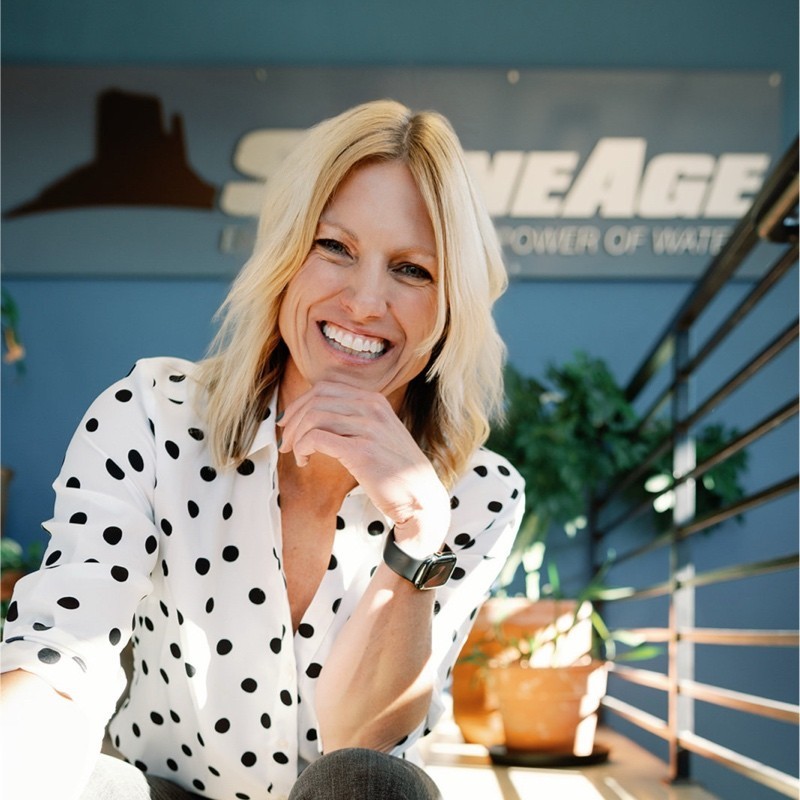
Kerry Siggins is CEO of StoneAge, a global high pressure industrial cleaning equipment manufacturer founded in 1979 and headquartered in Durango, Colorado. She also is a speaker, author, and advisor.
Overview
A departing executive’s blunt feedback forced a driven leader to confront how her intensity and unpredictability were affecting her team. Choosing to become more steady and accountable, she proved her growth during a major ransomware crisis by leading with calm and clarity. The experience reinforced that receiving feedback with humility — and owning what’s yours — is the key to becoming a stronger, more trusted leader.
AI-Generated Overview.