How to Survive a Flight Without Fuel

Read Time
6 min read
Posted on
April 26, 2016
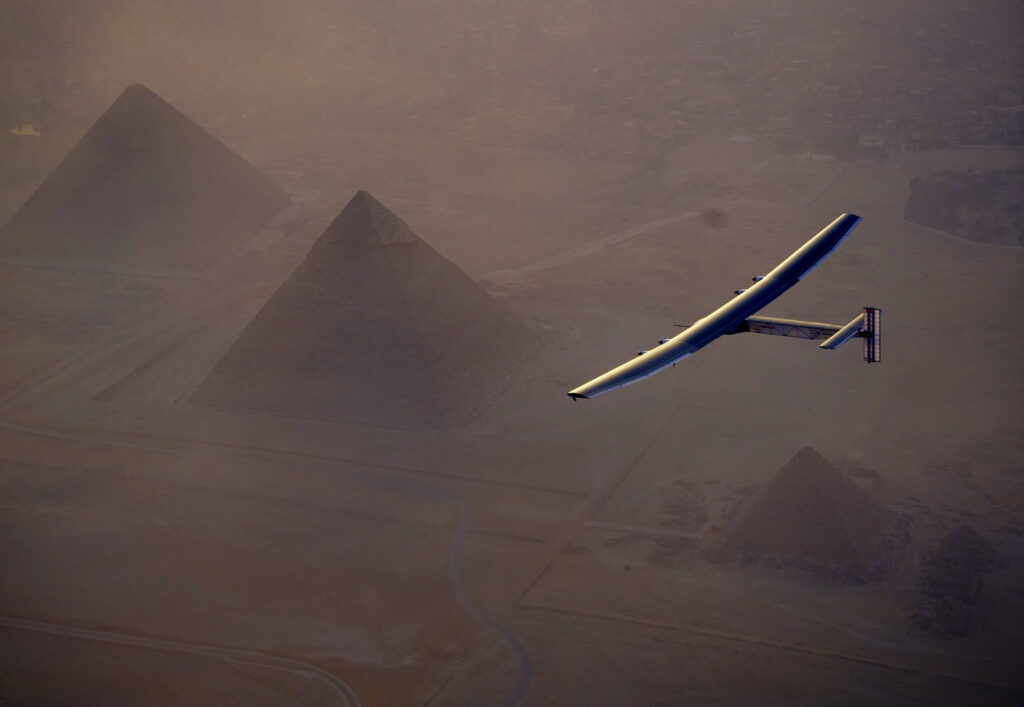
In silence, without using a drop of fuel, but with much wonder in the eyes of hundreds of enchanted supporters, Solar Impulse 2 (Si2) took off on 21 April to complete a crossing of the Pacific.
Si2, the solar airplane of Bertrand Piccard and André Borschberg, capable of flying day and night powered only by the energy of the sun, was airborne during Earth Day – a powerful symbol. The flight, took three days and was another challenging leg of the Round-The-World Solar Flight.
Bertrand Piccard took off from Hawaii to North America – a journey similar to the one of American aviator Amelia Earhart, who set off from Honolulu for the first solo flight to California. Despite the many parallels between these flights, one significant difference remains: while Earhart’s airplane took off carrying more than 500 gallons of gasoline, Si2 flies with no fuel. Across the main wing, fuselage and horizontal stabilizer, 17’248 solar cells power the four lithium batteries, which in turn power the four motors and propellers, allowing Si2 to fly through the night towards the next dawn.
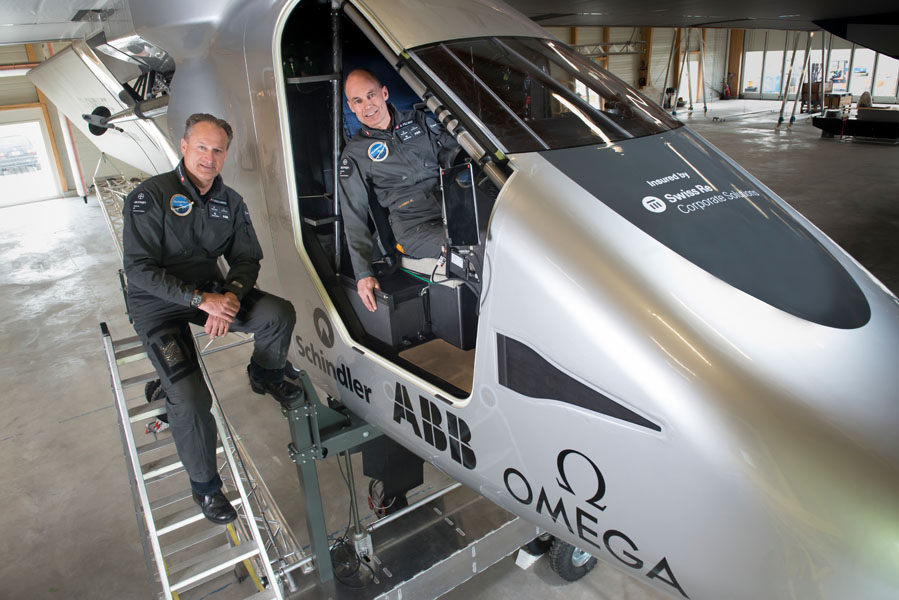
(From left to right) André Borschberg, Co-founder and CEO and Bertrand Piccard, Initiator and Chairman beside the cockpit of Solar Impulse 2. © Solar Impulse | Revillard | Rezo.ch
“During my round the world balloon flight in 1999, the seven days I spent over the Pacific were the most nerve- wrecking and thrilling,” said Bertrand Piccard, Initiator and Chairman of Solar Impulse, currently at the controls of the solar airplane. “With Solar Impulse the flight should last for three days, but this time I am alone in the cockpit, so the intensity is no less important. Every morning you have the suspense of knowing how much energy is left in your batteries. Then, with the sunrise comes the virtuous circle of perpetual flight.”
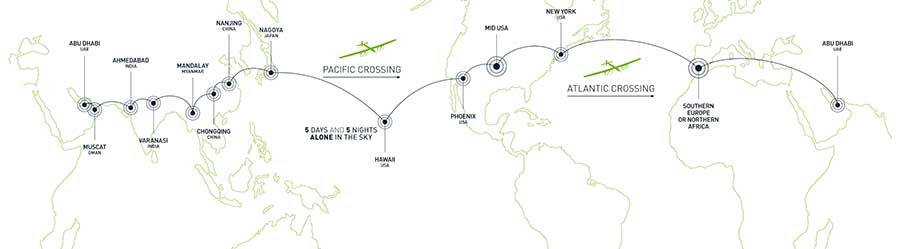
After his record breaking non-stop balloon flight around the world, Bertrand Piccard, a medical doctor and explorer at heart, decided that the next time he would circumnavigate the globe it would be with no fuel. He teamed up with André Borschberg, an innovation savvy entrepreneur and expert aviator. It was Borschberg who in July 2015, landed Si2 in Hawaii after a record breaking flight of five days and nights and around 8’900km from Japan. With the completion of the Pacific crossing by Bertrand Piccard, Si2 will not only be marking a first in the history of aviation, but also in the history of renewable energy.
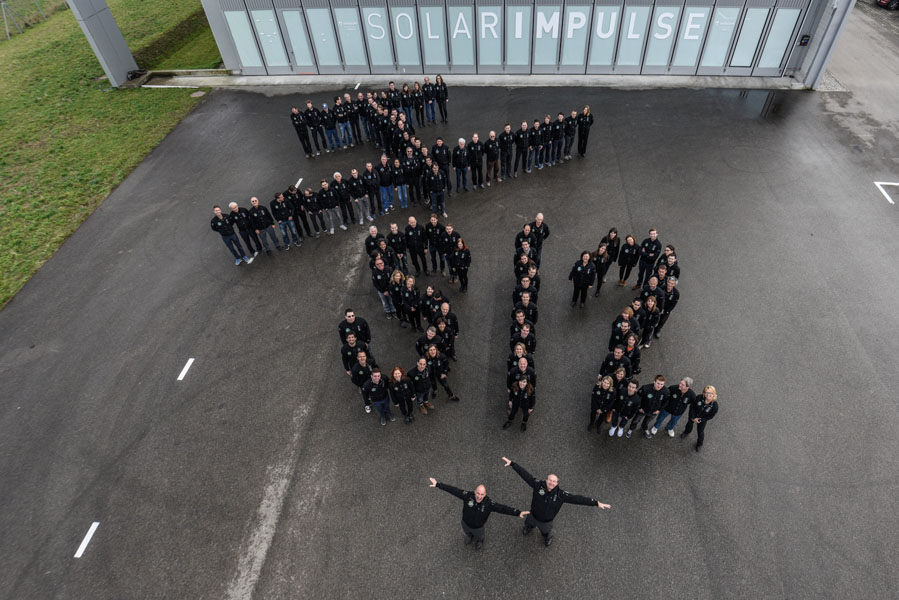
The Solar Impulse team. © Solar Impulse | Revillard | Rezo.ch
“Last year we demonstrated that Solar Impulse is capable of flying five days and five nights non-stop: the airplane, the technologies, the human being,” commented André Borschberg, CEO and Pilot of Solar Impulse. “Now what we want to do is continue our flight around the world and demonstrate that these technologies can be used, not only in an airplane, but on the ground. That is why Bertrand initiated the project and I am moved that he will be experiencing full day and night cycles without any fuel.”
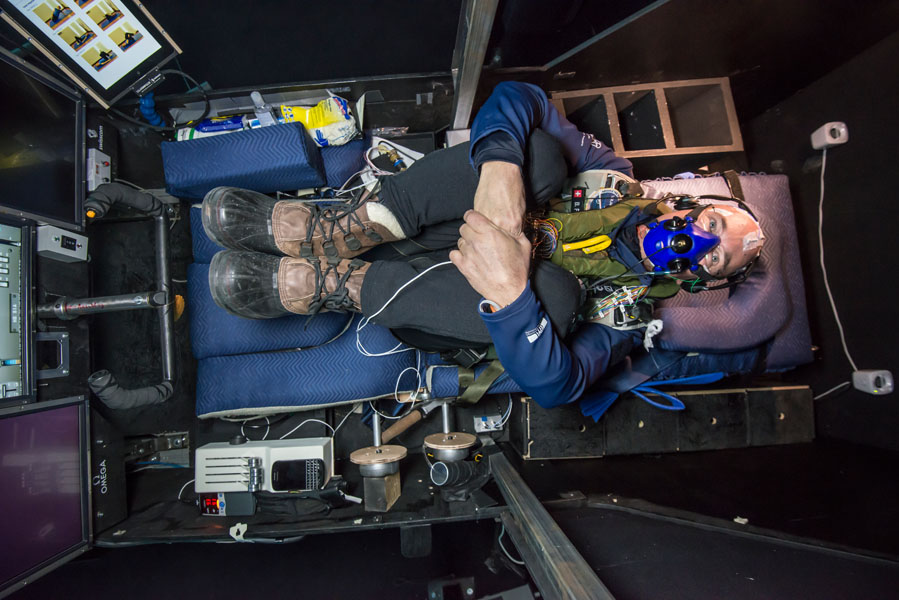
A 72 hours non-stop flight simulation. The goal is to make the pilot as “sustainable” as the aircraft. © Solar Impulse | Revillard | Rezo.ch
Both men take turns piloting Si2 around the world, but have different respective roles within the project – while Piccard outlines the project’s vision, philosophy and political reach and brings together the partners to fund this adventure, Borschberg pulled together the team that designed and constructed Si2 and drives the airplane’s technological innovations into new engineering solutions. Together the two Swiss pioneers are attempting the first Round-The-World Solar Flight with no fuel, to support concrete actions for sustainability and demonstrate that the world can be run on clean technologies.
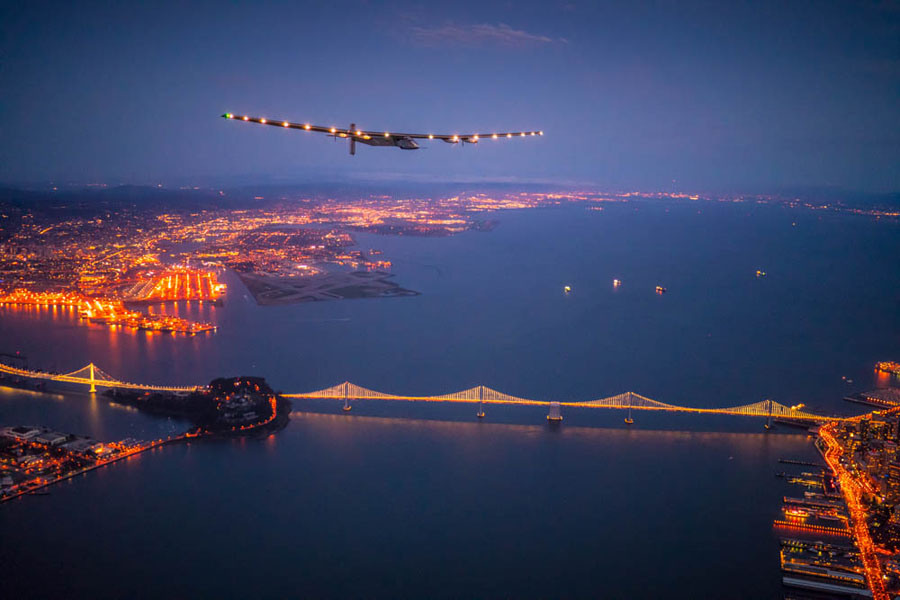
Flying over the Golden Gate Bridge, San Francisco. © Solar Impulse | Revillard | Rezo.ch
Bertrand Piccard spoke with UN Secretary-General Ban Ki-moon directly from the cockpit of Solar Impulse 2 while flying over the Pacific Ocean during a video conference on Friday April 22 from the United Nations in New York where 175 nations had just signed the Paris Agreement on ClimateChange.
“You know, Mr Secretary-General, what you are doing today in New York by signing the Paris Agreement is more than protecting the environment – it is the launch of the clean revolution,” said Piccard. He urged Ban Ki-moon and the delegates to keep working hard to overcome resistance to fighting climate change.
“If an airplane like Solar Impulse 2 can fly day and night without fuel, the world can be much cleaner.”
“I am inspired by your pioneering spirit,” the Secretary-General said after telling Piccard he looked like an astronaut flying to the moon. “While you are making history flying around the world, we also are making history today. More than 175 countries signed the Climate Change Agreement. Thank you for your leadership and inspiration. We wish you a smooth flight. You are leading us into a new era. Bon voyage!”
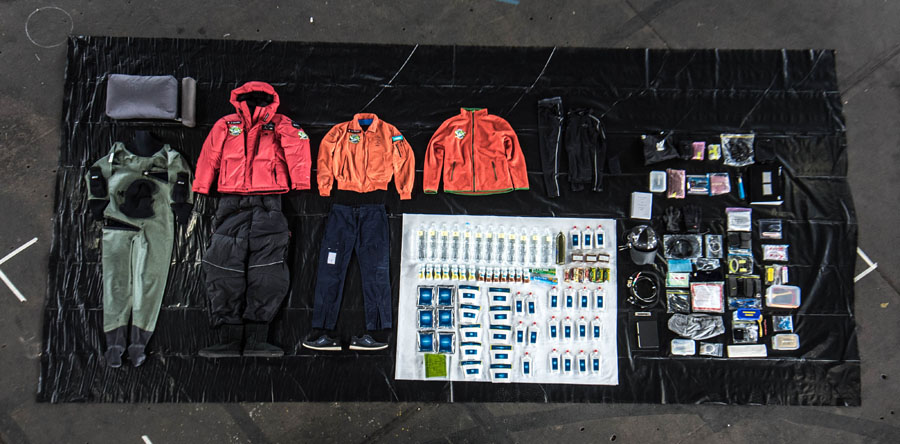
Cockpit Equipment laid out for the journey. © Solar Impulse | Revillard | Rezo.ch
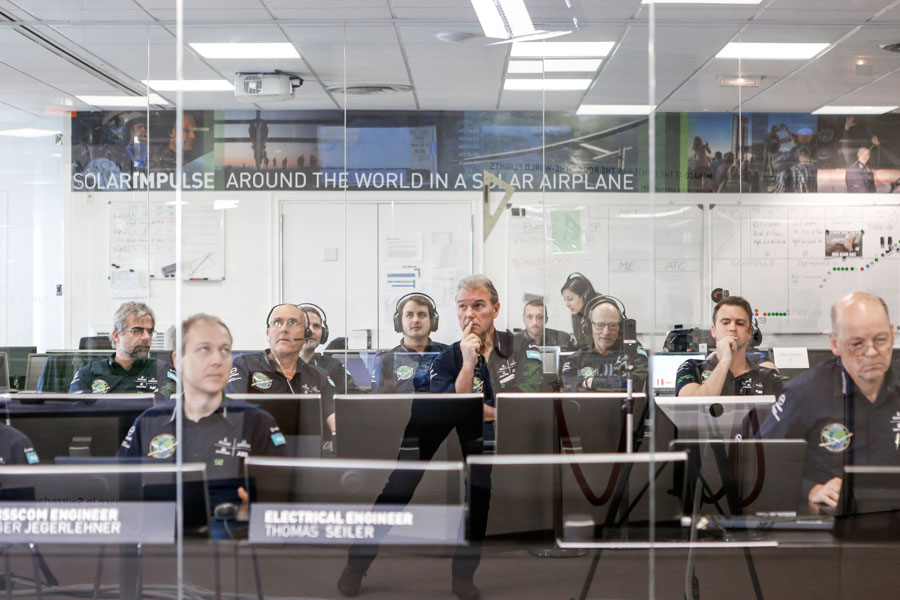
The Mission Control Center in Monaco. Landings will be made every few days to switch pilots and organize public events for governments, schools and universities. © Solar Impulse | Ottenwaelter | Rezo.ch
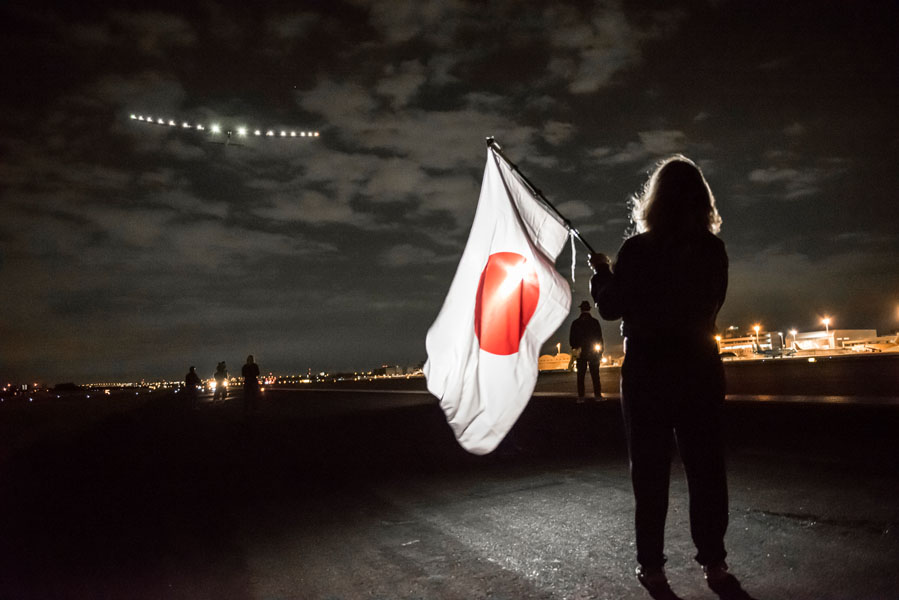
Takes-off from Nagoya, Japan. André Borschberg’s wife wishes him good luck. © Solar Impulse | Revillard | Rezo.ch
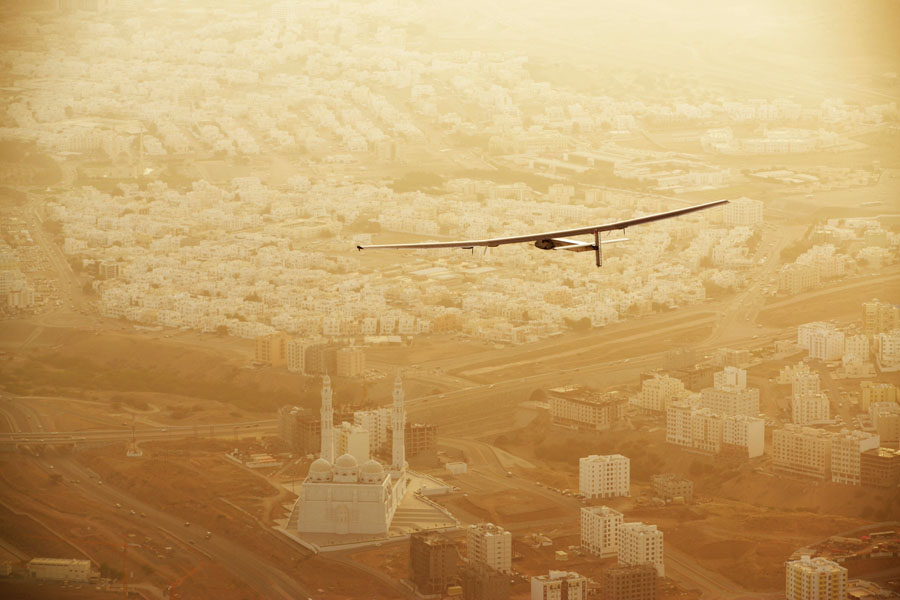
Flying over Muscat, Oman. © Solar Impulse | Stefatou | Rezo.ch
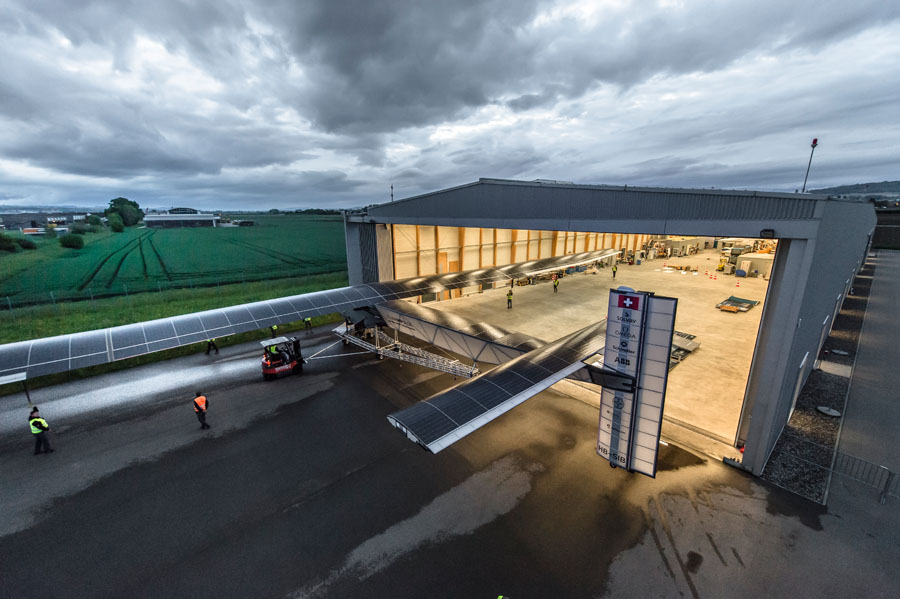
Solar Impulse 2, the single-seater solar aircraft is designed to take up the challenge of the first round-the-world solar flight, without any fuel. © Solar Impulse | Revillard | Rezo.ch
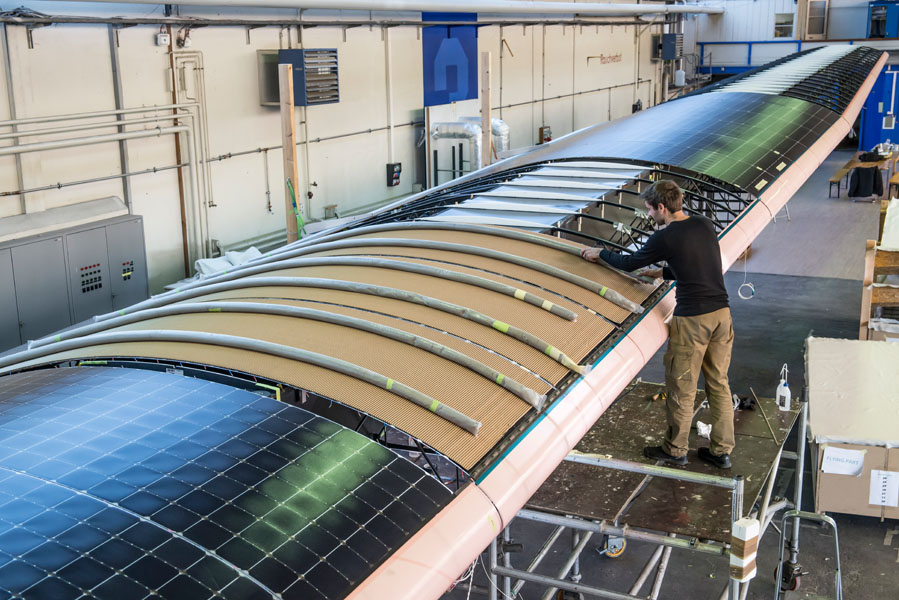
A wing of Solar Impulse 2, showing the solar panels. © Solar Impulse | Revillard | Rezo.ch
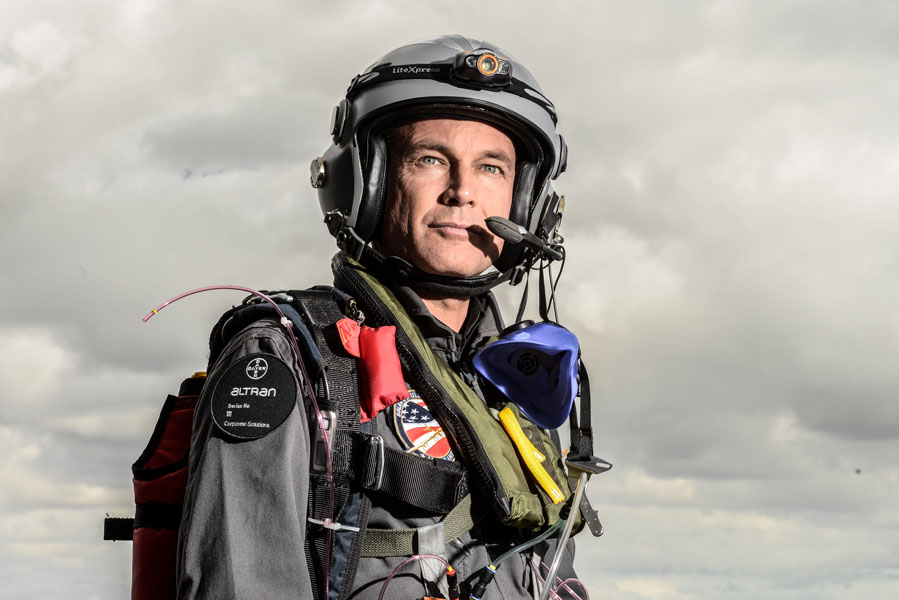
Solar Impulse pilot Bertrand Piccard with his equipment in Moffatt, CA. © Solar Impulse | Revillard | Rezo.ch
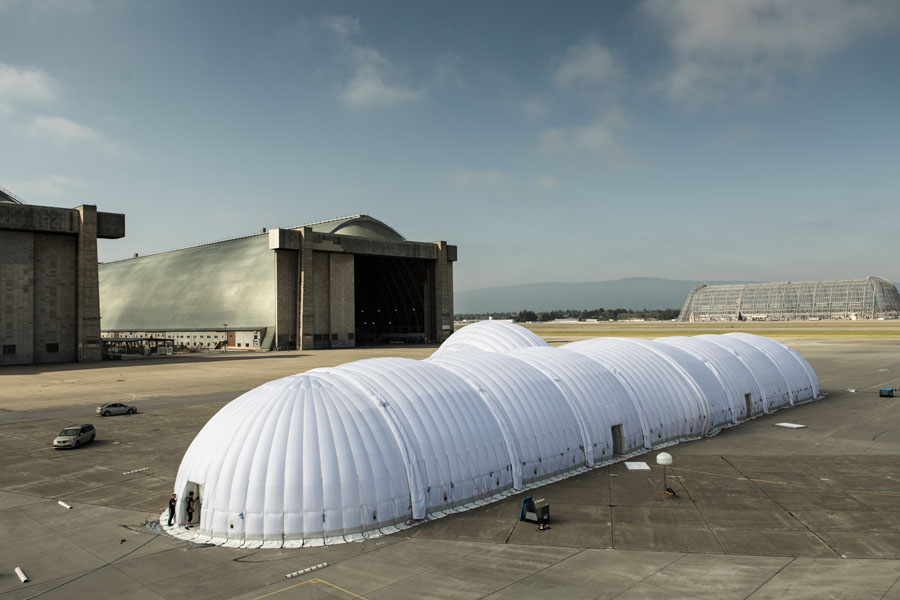
A mobile hangar can be inflated and deflated, allowing it to move around the world. © Solar Impulse | Ackermann | Rezo.ch

Overview
In silence, without using a drop of fuel, but with much wonder in the eyes of hundreds of enchanted supporters, Solar Impulse 2 (Si2) took off on 21 April to complete a crossing of the Pacific. Si2, the solar airplane of Bertrand Piccard and André Borschberg, capable of flying day and night powered only by the energy […]
AI-Generated Overview.