



leadersleadersleadersleadersleadersleadersleadersleadersleadersleadersleadersleadersleadersleadersleadersleadersleadersleadersleadersleaders
Defying the Naysayers: Clearinghouse Community Development Financial Institution
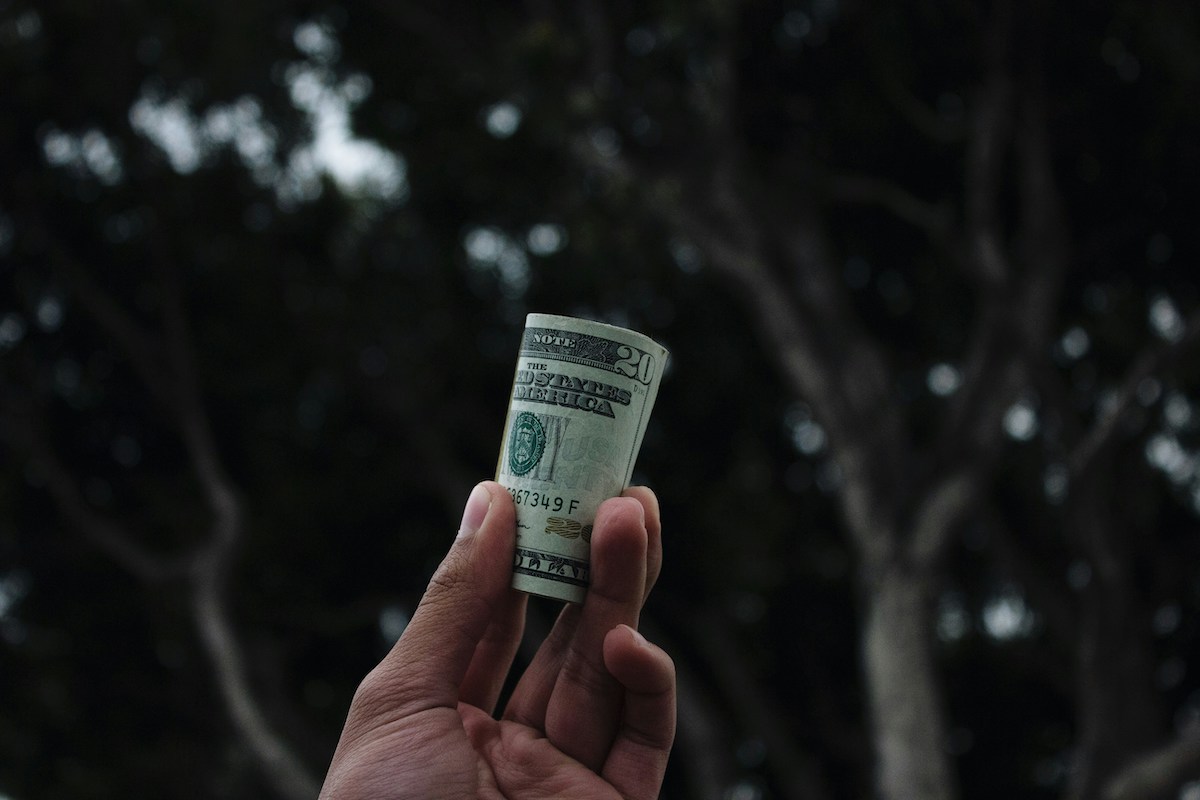
Not only can community development lending be done in low-income communities; it can be profitable.
By Real Leaders
Clearinghouse Community Development Financial Institution provides financing for low-income and disadvantaged communities and addresses their unmet credit needs to ensure that they have access to capital. The company was founded in 1996 in Southern California and has since expanded its reach across the U.S. Clearinghouse CDFI specializes in real-estate-based projects, including affordable housing, housing for developmentally disabled communities, charter schools, and community facilities.
Real Leaders spoke with Douglas Bystry, president and CEO, about his journey from running a nonprofit to launching and growing a profitable lending company for good, despite plenty of skepticism and hurdles.
Real Leaders: How did Clearinghouse CDFI come about?
Douglas Bystry: I was running a nonprofit that was brokering community loans to regulated financial institutions or banks, and the idea was because of the Community Reinvestment Act that banks would jump at making loans to people who either live in or serve in low-income communities. I did it for four years and quite frankly, we couldn’t get banks to step up.
That experience inspired me to say that if we want to ever make a difference in the low-income or distressed communities we serve, we need to raise our own capital and make our own credit decisions. That was the inspiration for me to start Clearinghouse CDFI. At the time, the only people doing this work for the most part were nonprofits, and I decided to incorporate Clearinghouse CDFI as for-profit. A lot of people said, “You’re crazy. This isn’t going to work. If you could do this kind of lending and be profitable, banks would be doing it. You’re going to be out of business in three years.” But we were able to prove that you can do community development lending in low-income communities — and you can do it profitably.
It’s a difficult task. Our company is walking this tightrope between impact and performance, safe and sound lending. It’s a balancing act because every loan we make has measurable community benefit, but it’s important that they also perform financially and that we get our money back.
RL: What are the biggest challenges you’ve overcome?
Bystry: Raising equity and debt capital has been and continues to be difficult — even after 27-plus years of success. It’s easy for people to say, “We don’t invest equity,” or, “You’re not traded publicly,” or “We can’t invest in an illiquid account,” or a variety of reasons. We’re recapitalizing the company, and we’re raising an additional $50 million of equity. We have a tremendous track record — and it’s still difficult. It continues to be one of the things I spend most of my time on.
In addition, we’ve faced challenges in the economic cycles of this country. For example, prior to the 2007 and ‘08 financial collapse, we were one of the successful single-family mortgage lenders to low-income, first-time homebuyers. At the time, we had originated over 700 single-family mortgages to people who would have been traditionally considered high-risk. At the time of the financial collapse, we had seven loans that had not performed, and that was a tremendous track record in light of what was going on with all the subprime mortgage collapse. But at the time, the sources that we borrowed from to allow us to do single-family mortgage lending stopped, and we had to stop providing that service to low-income families because the economy changed. Despite our successful track record, we had no source of capital to continue single-family lending.
We’re in a high-interest rate environment and a very tight credit market, and those always create new challenges.
RL: How has Clearinghouse CDFI innovated?
Bystry: We were certified as a for-profit CDFI in the first round of certification. We have a number of other firsts: We were the first non-depository CDFI to join and borrow money from the Federal Home Loan Bank System. We’ve been members of the San Francisco Federal Home Loan Bank, and to this date, we’re the largest CDFI borrower of any non-depository CDFI. We were the first CDFI to obtain an S&P rating. We had to convince my board to get involved in New Markets Tax Credits, but it has proven to be an incredibly beneficial tool for the communities we serve. In March 2023, we received formal approval from the CDFI Fund to go nationally, and we’re very excited about providing the kind of impactful loans that we do as a company on a national basis.
We first got involved in making loans in Indian country 15-18 years ago, and at the time there was almost nobody else that would even think about doing loans on a reservation or in and around Native American communities. The Native American reservation system is set up in a way that hinders participation in the nation’s capitalist system. The hardest thing to do is to lend in Indian country and on a reservation, but we figured out a way to do it.
RL: What’s your best advice for others who want to follow suit?
Bystry: Go into it with your eyes open and understand the difficulties that it will present. For example, as a policy, foundations will not work with us for the most part. I still get this “nonprofit: good, for-profit: bad” mentality. It shuts that door.
As a for-profit CDFI, we’re paying income taxes and we’re probably paying a higher cost for our borrowed debt capital than nonprofit CDFIs are paying, and that means that our rates have to be higher, unfortunately.
RL: What does Clearinghouse CDFI look for to consider a borrower a good risk?
Bystry: It starts with the mission and impact. We look at: Is this loan, this borrower, this project going to have a positive community impact and in what way? Then on the other side, we say, “If we loan this money, how can we be assured or at least have a good semblance of assurance that we’ll get paid back?” We also have to make sure because we charge interest that this borrower can make their payments on a monthly basis.
What’s nice for us is we don’t have any programs per se, so we’re not trying to get our borrowers to fit into a box, and that’s the difference between us and a conventional financial institution. You have to meet the criteria, and it’s almost completely numerically based where we can say, “Let’s take a look at this borrower. Let’s figure out a way that we can make this loan. Let’s work outside the box.” We’re not constrained. We don’t have to do things “by the book” of underwriting alone, and our underwriting department, led by Kristy Ollendorff, develops loan structures that optimize borrower success, as opposed to saying, “Here’s our loan. Here’s our interest rate. Here’s the term. Here’s what you know. Here are the numbers that you have to hit to be approved, and if you don’t hit those numbers, you’re declined.”
We can take that and we can say, “They really don’t have as much down, but maybe there are some other ways that we can do it. Maybe we can get clever with providing a second or maybe we can do two loans to them, one at first and one second. Maybe we can defer a part of the loan for another time. Maybe we can stretch out the amortization schedule longer.” We have a lot of underwriting flexibility, and our business development officers, our underwriters, and our loan committee do an outstanding job of finding ways to ensure that impactful loans get approved, instead of finding ways to turn them down.
Improving Accessibility with Ava
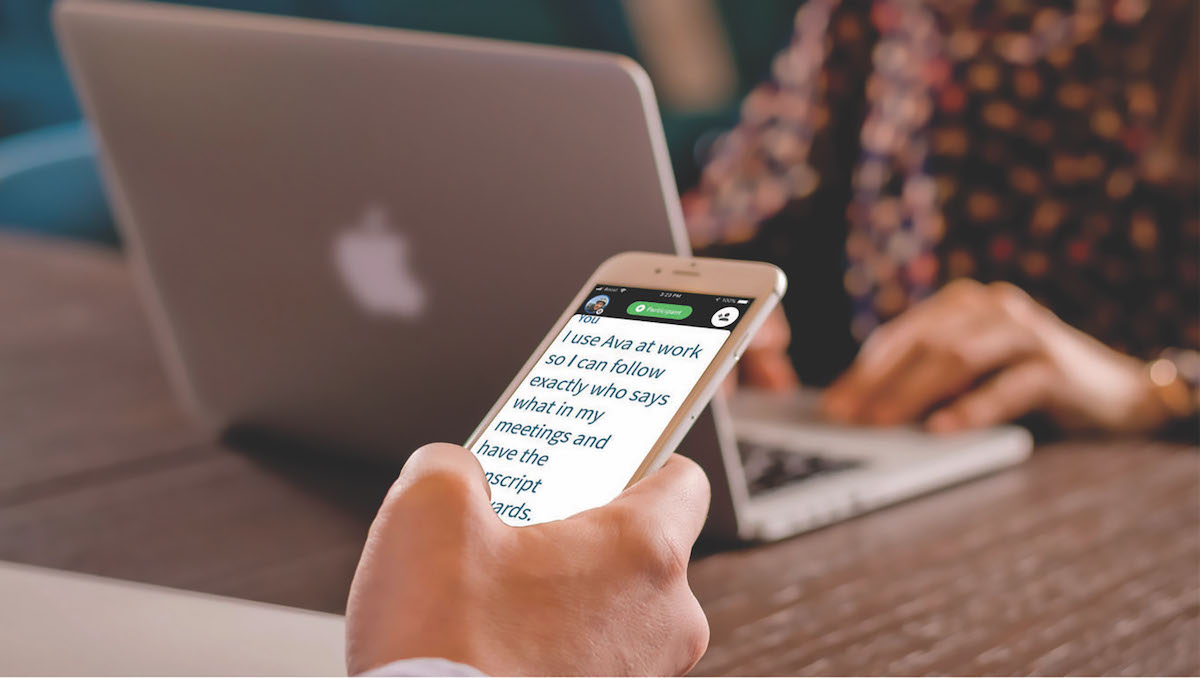
AI captioning empowers deaf people to better participate at work and beyond.
By Real Leaders
Thibault Duchemin grew up with two deaf parents and a deaf sister, interpreting for them since age 5. He witnessed firsthand the accessibility challenges that isolated and excluded his loved ones from participating in the world around them, and he yearned for a better way.
After a life-changing trip to India and a double master’s in machine learning and AI from Ecole des Ponts ParisTech and the University of California, Berkeley, Duchemin was ready to put his skills and determination to work for the deaf and hard-of-hearing community. In 2014 he founded Ava with Skinner Cheng, deaf since age 2, to help create the change they wished to see. Early on, they met with the founders of Google Speech, Siri, and Shazam to learn about where their products fell short.
The Beginning
In 2018, the company merged real-time captioners with AI, reinventing AI-based speech recognition technology, revolutionizing the industry, and changing the structure of professional accessibility. The company pioneered group captioning technology to differentiate multiple voices in a conversation, leading the field and inspiring others to research and develop similar solutions. Ava continues to innovate and advance its speech recognition technology, such as recently adding a feature that allows deaf people to connect on Zoom calls and type their own voice in real time.
Ava has built among the fastest captioning systems for any conversation, letting any individual or organization be fully accessible to those with hearing limitations on ava.me and on its app. Ava’s award-winning accessibility system is used in some of the world’s largest companies, schools, conferences, and museums for events, meetings, and regular communication.
Bringing it home, it’s also used by Duchemin’s family.
“I’m super proud to report that my sister uses Ava every day,” Duchemin says. “She became a lawyer and uses it when she goes to trial.”
Of course, there are challenges to adopting the technology, such as convincing employers who may be resistant to change and an added cost.
Another challenge is that AI poses risks, such as creating deepfakes and applying biases. Ava takes precautions to help mitigate these risks, such as developing real-time differentiation of voices and information.
While AI threatens to replace the jobs of people providing real-time captioning services, he sees the solution in providing training for them to become supersubscribes to handle the trickier conversations and voices that are more difficult for AI to discern.
Ava is always working on its next innovation. “Think of us like tinker innovators in the field of accessibility to bring it further where it was not before and to keep churning new things,” Duchemin says.
Take Action
Duchemin encourages leaders to make these moves to create a more inclusive, accessible workplace.
- Accommodate diverse employees’ needs in technology and communication in the office and remotely.
- Conduct a survey to gather insights on your workforce’s awareness of people with disabilities.
- Hire an accessibility consultant to help the company work toward inclusivity, and address any biases or stigmas that may exist.
- Include people with disabilities in decision-making processes. It’s a win-win that will bring more ideas to the table.
Making Antibacterial Bandages From Fruit Waste
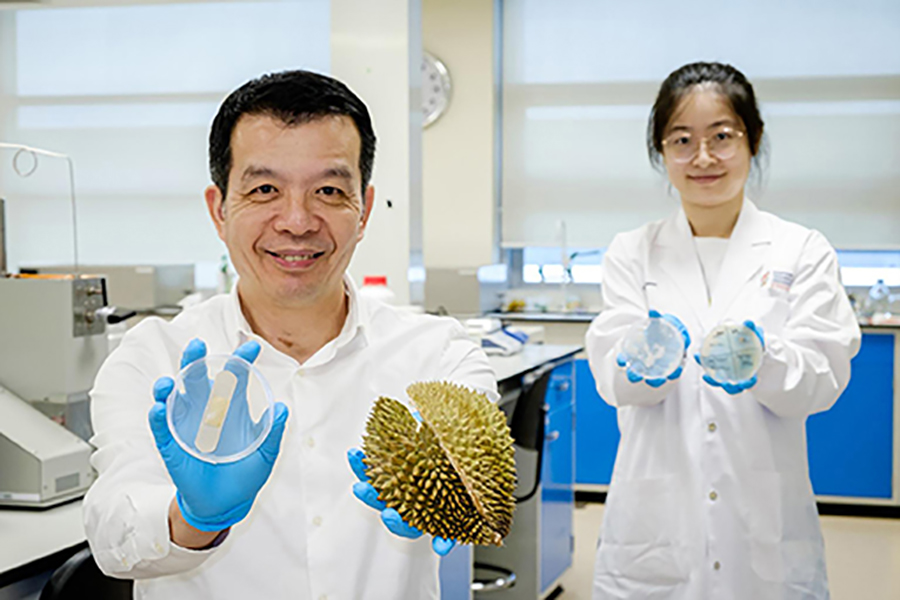
At Nanyang Technological University (NTU) in Singapore, scientists are tackling food waste by turning discarded durian husks into antibacterial gel bandages.
The process extracts cellulose powder from the fruit’s husks after they are sliced and freeze-dried, then mixes it with glycerol. This mixture becomes soft hydrogel, which is then cut into bandage strips. “In Singapore, we consume about 12 million durians a year. So besides the flesh, we can’t do much about the husk and the seeds, and this causes environmental pollution,” says Professor William Chen, director of the food science and technology program at NTU. The fruit’s husks, which make up more than half of the composition of durians, are usually discarded and incinerated, contributing to environmental waste.
Chen added that the technology can also turn other food waste into hydrogel, such as soybeans and spent grains, helping limit the country’s food waste. Compared to conventional bandages, the organo-hydrogel bandages also keep wound areas cooler and moist, which can help accelerate healing. The researchers say using waste materials and yeast for the antimicrobial bandages is more cost-effective than producing conventional bandages, whose antimicrobial properties come from more expensive metallic compounds like silver or copper ions.
Will You be LinkedIn or LinkedOut?

Take one look at the Real Leaders Team page on the old.real-leaders.com website, and you will see the word, LinkedIn at the end of every featured member. Actually, LinkedIn appears on more pages than that one.
In my book, Tactical LinkedIn Secrets: Rantings from a Superconnector, I coin the phrase, “Will you be LinkedIn or LinkedOut?” The LinkedIn platform is the ‘go to’ for the seeker, the creator, and the already arrived. Life and business are often much alike in the strategies needed to succeed. And success means you need to know the tactical details and become a true tactician of your trade or any of your passions for that matter.
The value of LinkedIn? Superconnecting.
When you have the access to connect at all echelons, and with various cultures, backgrounds, and people, you have uncovered opportunity. If you are a fundraiser for social change, you will find a niche. If you are a purveyor of leadership principles, you will find a niche. If you are keen to find purpose and make a difference, you will be in good company as you connect on LinkedIn.
Your only limitation in the use of LinkedIn is not using it. If you don’t have a decent LinkedIn profile you will look like a dinosaur. And become fossilized. Dinosaur is not tantamount to the reptilian or aged, but reflective of basically being outdated – or left in the dust – LinkedOut.
The ultimate indication of fossilization is a skeleton profile—a missing or antiquated picture, empty bio, no endorsements or posts. It will T-wreck your personal digital resume (PDR) and is worse than being a ghost. Those in the B2B segment who operate in the 20th Century, like it’s 1999, well, you won’t be the prince – that Prince was in that era.
Facebook or facsimile? PDF or paper?
Deep dive or devoid of competitive knowledge?
Retargeted niche marketing or recruiter?
Real Estate Trends. Climate Change. Health. Education. Economics. Pandemonium in pandemic.
Each topic, and many more are given attention, through the consortium of people on LinkedIn. There are those who challenge, offer insight, and who are advocating and assessing a better way and a better place. It’s a premium space to play.
Allow me to leave you with three tips to arm your digital quiver. In your quiver are the tools that will make your intentions fly – personal or professional:
1. Manage your Perpetual Digital Résumé (Your PDR)
You do have a PDR, and your colleagues, clients, co-workers and competitors are paying attention. Your PDR is vital to the health and wellness of your reputation — online and real world.
A word of advice: Approach the digital waters cautiously, deliberately and tactically. Digital tides will sweep out inconsequential posts, self-promotion and bland content. Avoid the dilemma of lack of preparation for online success. Corporate, philanthropic or individual, your digital legacy matters.
2. Set your notifications and Superconnect
Your notification settings are an especially useful tool for prospecting your competitors’ leads. Pick executives at your top five competing companies and set your notification to anytime. It is also useful in finding funding sources, event sponsors, career and job information. It’s all about staying connected to the relationships. It is worth the investment in LinkedIn Premium to enable ease of connection and communication.
A word of advice: Approach your content and contribution from a generous frame of mind. Don’t ration your passion — share your knowledge. And above all, don’t be fake. Authenticity and specialized problem solving are a key tactical secret to your success. Also, a picture is worth 1,000 words. A video is worth 1,000 pictures.
3. Communicate (and Advocate)
Since the dawn of the printing press nothing has been more influential than the written word. In your marketing and outreach, whatever your cause or intention may be, you must have a strategy and plan to communicate and engage. This may differ for your client, customer, employee, candidate, community, or funding source.
A word of advice: Communication and the frequency and relevance of it are fast paced. Address: What will you write? How will you write it? How do you unleash your creativity? When do you deliver your messages? How do you make an impact? You must have tangible, dynamic and eye-popping marketing assets (e.g., video, interviews, commercials, social marketing posts, blogs, infographics, and newsletters).
In sum, the new LinkedIn theater of competition is enabling small and medium-sized organizations to not only compete at a different level, but to outmaneuver and outperform larger, established, cumbersome organizations through nimble creativity. Size doesn’t matter. Relevance does. No matter your current state – or your industry.
Don’t be LinkedOut. It is an impediment to intel. LinkedIn is your new first impression, news source, publishing forum and networking tool—the novel handshake is digital, along with the information and follow up. An arrow you must have in your relationship building quiver.
Celebrating Courageous Women on International Women’s Day
In honor of International Women’s Day, we’re celebrating women who are telling their stories and changing the world.
Women like Jaha Dukureh, a female genital mutilation (FGM) survivor and mother of two in the U.S., who successfully petitioned President Obama to start a task force to investigate the prevalence of FGM, and went on to help drive the ban of FGM in her native country of The Gambia.
And women like Sara Wolff, who was born with Down syndrome, and who made incredible change happen by working with Congress to pass the ABLE Act, allowing people with disabilities to easily save for their futures.
It is these women and girls, and all the people who raise their voices to support them, that give me hope for the future of my daughters and women everywhere. While there is a long road to equality, with our own stories as inspiration and using technology to spread those stories to others, women everywhere can be as powerful as Jaha, Sara, the inspiring women in this video, and the millions of other women fighting to make the world a better place.
Thank you for all that you do,
Jennifer Dulski, President, Change.org
httpss://youtu.be/hVmj6Fp-N7w
Celebrating Courageous Women on International Women’s Day

In honor of International Women’s Day, we’re celebrating women who are telling their stories and changing the world.
Women like Jaha Dukureh, a female genital mutilation (FGM) survivor and mother of two in the U.S., who successfully petitioned President Obama to start a task force to investigate the prevalence of FGM, and went on to help drive the ban of FGM in her native country of The Gambia.
And women like Sara Wolff, who was born with Down syndrome, and who made incredible change happen by working with Congress to pass the ABLE Act, allowing people with disabilities to easily save for their futures.
It is these women and girls, and all the people who raise their voices to support them, that give me hope for the future of my daughters and women everywhere. While there is a long road to equality, with our own stories as inspiration and using technology to spread those stories to others, women everywhere can be as powerful as Jaha, Sara, the inspiring women in this video, and the millions of other women fighting to make the world a better place.
Thank you for all that you do,
Jennifer Dulski, President, Change.org
httpss://youtu.be/hVmj6Fp-N7w
Sparrow Mobile Steps Up To Refugee Crisis

In America today there are more than 250 million mobile devices in service. Yet, within a country that’s viewed as the global leader in technology, there are over 45 million people living in poverty, and millions left unable to afford a quality mobile device or service.
While many consider a smartphone a luxury, to those at or below the poverty line it can be the difference between spending the night on a street or Googling the nearest night shelter, between using the emergency room for their doctor and finding medical services and help online, or allowing those estranged from family to reconnect with relatives and help get their lives back on track.
Within this environment of impact potential, married with strong consumer demand for companies doing the right thing, SparrowMobile.com was born, the brainchild of Jim Kenefick, Amy Tucker, and Matt Bauer. Sparrow is a national U.S. wireless carrier bringing the successful buy-one-give-one business model to the $250 billion U.S. mobile services industry. For every customer that signs up for service, a smart phone device or a month’s service is donated to someone in need via one of Sparrow’s impact area programs serving the homeless, foster youth and refugee families. The company provides a mainstream way for consumers in the U.S. to do well and do good through their mobile voice, data and text services, while enjoying the same levels of quality and pricing they currently get from the major providers.
Kenefick, Tucker and Bauer adopted a balanced hybrid business model, with the for-profit Sparrow Mobile focused on profitable product and service delivery; while its nonprofit, Mobile for All, focusing on social impact through a network of partnerships. It’s a business plan that has already attracted grants and donations from a wide variety of supporters including Google, Citi, Tipping Point Communities and Twitter.
“Everything we do has a purpose and aligns with our vision, mission and values,” notes co-founder and Chief Impact Officer, Amy Tucker. “From our radically inclusive business model, to our strategic partnerships, and even down to the name, Sparrow, which means hope in Latin, is also one of the most common and beautiful species in the world. We connect people in meaningful ways through impactful partnerships and inviting consumers to join in helping to support their fellow citizens,” adds Tucker.
Quick to spot new opportunities for mobile to make a difference, Sparrow Mobile has helped form a new partnership, RefugeeMobile, focused on the historic and growing global refugee crisis. Launching in April 2016, RefugeeMobile will bring the benefits of smartphones, Internet connectivity, mobile services and tailored apps to refugees through a 15-month trial. RefugeeMobile will enable refugees to access tools that are most sought after by displaced people on the move to foreign lands: translation, navigation, transportation, and job seeking. It won’t just be the refugees that benefit either, social workers, case managers and aid workers will be freed to focus on the deeper challenges of integration.
“The world is at a critical moment that tests our commitment to displaced people around the world,” says Bauer. “Over 60 million people are displaced, and more people have been forced to flee their home countries than at any point since World War II,” notes co-founder and CEO Bauer.
“Companies such as Google and Goldman Sachs have stepped up by contributing millions to help the refugee crisis. But donations alone, while welcome, are not enough,” says Bauer. “Think about your business and put yourself in the shoes of someone desperate for housing, communication, food or education. Think about how your business can move beyond charity towards becoming a profitable business that solves social problems too.”
www.sparrowmobile.com
Leonardo DiCaprio: Don’t be on the Wrong Side of History
Forget the movie “The Wolf Of Wall Street,” Leonardo DiCaprio hasn’t got a bad bone in his body. In real life, he can be found raising awareness around global warming and driving his electric Tesla around town. What kind of villan has solar panels on his roof anyway?
Winning his first Oscar for best actor in “The Revenant” at the 88th Academy Awards in Hollywood yesterday, DiCaprio devoted much of his speech to the urgency of talking climate change.
“Climate change is real, and it’s happening right now,” DiCaprio said. “It is the most urgent threat facing our entire species, and we need to work collectively together and stop procrastinating. We need to support leaders around the world who do not speak for the big polluters or the big corporations, but who speak for all of humanity, for the indigenous people of the world…and for those people out there whose voices have been drowned out by the politics of greed.”
DiCaprio is also one of 13 U.N. Messengers of Peace, distinguished individuals who have agreed to help focus attention on the work of the U.N. and improve the lives of billions of people everywhere. His focus area for this role is the environment, and he wants to build a more harmonious relationship between humanity and the natural world. “I feel a moral obligation to speak out at this key moment in human history – it is a moment for action,” he says. “How we respond to the climate crisis in the coming years will likely determine the fate of humanity and our planet.”
“If you have do not believe in climate change, you do not believe in modern science or empirical truths and you will be on the wrong side of history,” said DiCaprio. “And we need to all join together and vote for leaders who care about the future of this civilization and the world as we know it.”
Leonardo DiCaprio: Don’t be on the Wrong Side of History
Forget the movie “The Wolf Of Wall Street,” Leonardo DiCaprio hasn’t got a bad bone in his body. In real life, he can be found raising awareness around global warming and driving his electric Tesla around town. What kind of villan has solar panels on his roof anyway?
Winning his first Oscar for best actor in “The Revenant” at the 88th Academy Awards in Hollywood yesterday, DiCaprio devoted much of his speech to the urgency of talking climate change.
“Climate change is real, and it’s happening right now,” DiCaprio said. “It is the most urgent threat facing our entire species, and we need to work collectively together and stop procrastinating. We need to support leaders around the world who do not speak for the big polluters or the big corporations, but who speak for all of humanity, for the indigenous people of the world…and for those people out there whose voices have been drowned out by the politics of greed.”
DiCaprio is also one of 13 U.N. Messengers of Peace, distinguished individuals who have agreed to help focus attention on the work of the U.N. and improve the lives of billions of people everywhere. His focus area for this role is the environment, and he wants to build a more harmonious relationship between humanity and the natural world. “I feel a moral obligation to speak out at this key moment in human history – it is a moment for action,” he says. “How we respond to the climate crisis in the coming years will likely determine the fate of humanity and our planet.”
“If you have do not believe in climate change, you do not believe in modern science or empirical truths and you will be on the wrong side of history,” said DiCaprio. “And we need to all join together and vote for leaders who care about the future of this civilization and the world as we know it.”