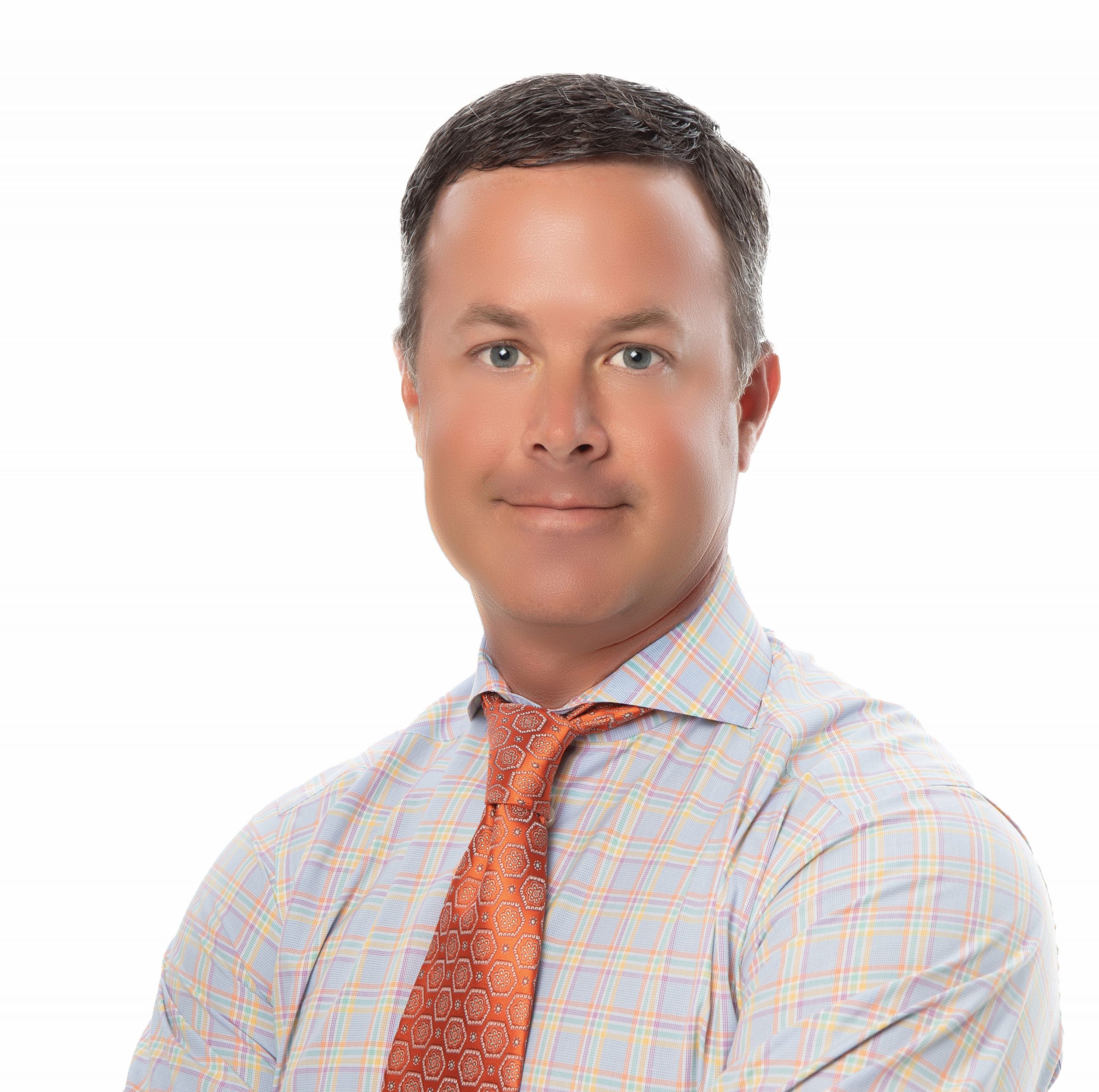
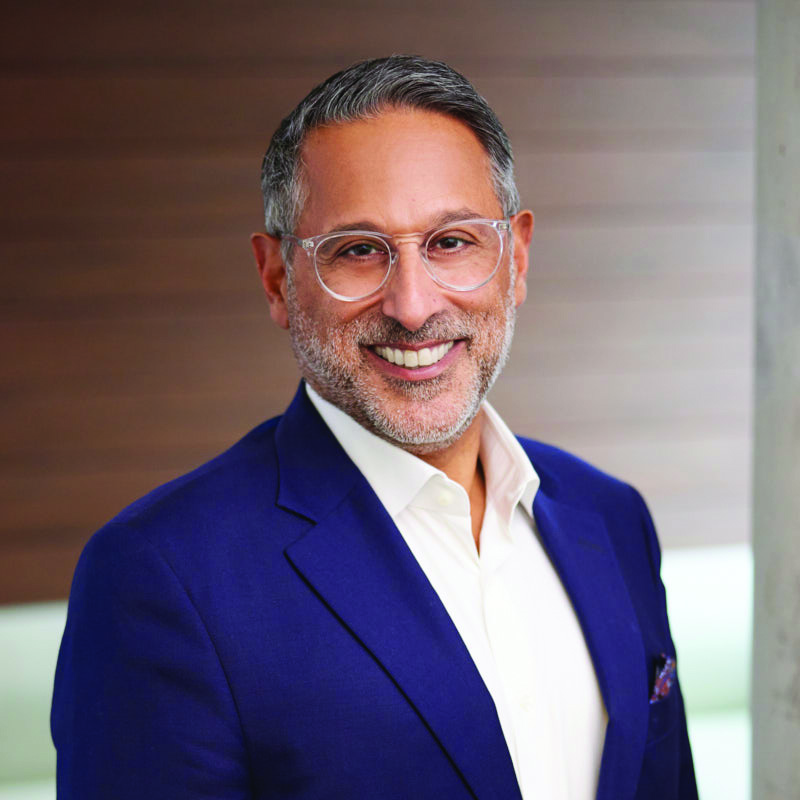
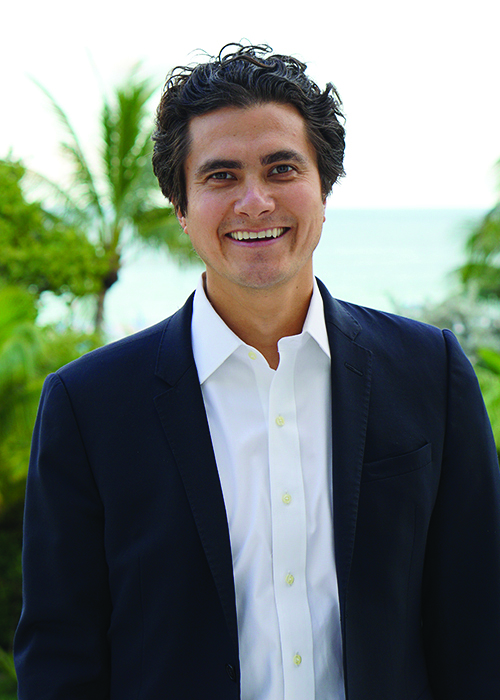
Priority Power is a leading independent energy solutions provider focused on lowering energy costs, meeting sustainability goals, and removing growth impediments for large corporate and industrial customers. Priority serves over 10,000 clients, totaling approximately $1 billion in energy spend across 40 states. Its team of subject matter experts has a long history of successfully working together, along with deeply embedded relationships with its broad base of customers. To date the company has reduced over 10 million metric tons of greenhouse gas emissions. Here Priority Power CEO Brandon Schwertner shares his knowledge and experience with Real Leaders.
Real Leaders: How do you thrive in the impact space?
Brandon Schwertner: To thrive in the impact space, a business must achieve profitability and scale. The two are interrelated and co-dependent. To truly set an example of a lasting impact platform, scale must be achieved in order to be noticed, inspired, and replicated.
RL:What milestones have you achieved this year?
Schwertner: Priority Power builds electrical infrastructure that covers over $1 billion of energy spend a year — and that is the OPEX portion. Violent weather impacts our customers directly. During winter storm Uri, over 80% of the natural gas processing plants in Texas were Priority Power clients. As the ice fell over north and west Texas, these facilities began to fail, and the power plants failed due to lack of fuel. Our teams worked 24-hour shifts that week — hand in hand with customers, the public utility commission, and the governor’s office — to restore power in the field and get fuel to the plants. The grid was within minutes of a complete failure where the entire state would have lost power for multiple weeks. Without our impact during this and other storms, things would be much worse.
Also, in July 2024 I Squared Capital (“I Squared”), a leading independent global infrastructure investment manager, entered into an agreement to acquire Priority Power.
RL: What is the biggest challenge you’ve overcome?
Schwertner: Our biggest challenges have been a six-year, 45% compound annual growth rate during the pandemic, inflation, and rising interest rates. Energy prices are more volatile — and the grid is less reliable — but the demand for power has risen significantly, driven by the growth in data centers and manufacturing. Priority Power helps businesses and institutions manage their energy costs and accelerate their expansion plans by delivering innovative solutions that marry data, market expertise, infrastructure, and sustainability while reducing emissions.
RL: What is your best strategy for finding investors?
Schwertner: Profitability at scale while reducing greenhouse gas emissions.
RL: What is your long-term, mission-oriented dream?
Schwertner: To automate the economic consumption of power across the planet, including bringing electricity to every human on the planet.
RL: What is your best advice for fellow impact CEOs?
Schwertner: Put yourself in uncomfortable situations, and outwork everyone around you.
I learned fear is the real signpost showing if I’m building something meaningful.
I was genuinely upset the day my first book became a bestseller. The book, based on an idea I’d been passionate about for a full year, was now flying off shelves — but someone else had written it.
About a year earlier, while working in marketing, I had developed a client acquisition strategy that worked exceptionally well. Fueled by inspiration and results, I did what so many do in a flash of clarity and ambition: I opened a blank Word document and began writing what I believed would be my first book. I typed pages of notes and frameworks, mapping out a book that I felt could truly help others in the same field. It felt urgent and important at the time. I promised myself I would write a little every day.
That promise lasted a week. Deadlines at work mounted. Life intruded. The project — like so many ambitious starts — was paused, then ignored. I returned to it months later only to find I didn’t like what I’d written. So I rewrote it and then forgot about it again. The momentum vanished.
Eventually someone else published a book built around the same idea. It had the same core thesis, the same approach, and even the same general framework. The only difference was they had actually finished it — and I had not. I wasn’t bitter because the truth was obvious. The reason my name wasn’t on the cover wasn’t theft or bad luck. It was delay. It was indecision. It was inaction.
Fear Is a Signal, Not a Stop Sign
In the moments that followed, my disappointment quickly gave way to something far more intense: fear. It was fear that I had missed my opportunity, that I had sabotaged my own potential, that by waiting for the perfect draft or the perfect moment, I had handed off the future I wanted to someone else who simply acted faster.
That experience redefined how I viewed fear. I began to realize that fear is one of the most accurate indicators of meaningful opportunity. While most of us are taught to interpret fear as a signal to slow down or reassess, I’ve learned to interpret it as a green light. When I feel fear — the kind that stems from possibility, not danger — I now take it as a KPI. It means I’m moving in the right direction, toward work that actually matters.
In business we obsess over data. We track every metric from conversion rates to churn to cost per click. We measure everything we can quantify. But in doing so, we often ignore one of the most powerful internal metrics we all carry with us. Fear may not be as easy to graph on a dashboard, but it’s just as measurable if you pay attention.
Track Fear Through Action
After the book that wasn’t mine, I made a promise to myself: The next time I had an idea worth pursuing, I wouldn’t wait. When inspiration to write struck again, I didn’t overthink it. I gave myself a tight deadline and published the book — even though it wasn’t perfect. What mattered was that it was out in the world, and once it was, real feedback came in, allowing me to revise it and re-release a stronger version.
When I had the idea for a conference, I didn’t spend a year planning it. I launched it within months. The first event was messy in parts, but I learned from the experience, made adjustments, and tripled attendance the next year. Not everything worked. I launched a workshop series prematurely, and it failed — but even that gave me the data I needed to understand my market and relaunch it more effectively later on.
In each of these instances, I felt fear before acting, and in each case, fear pointed to a threshold I needed to cross. It didn’t always predict success, but it always signaled significance. I started to pay attention to that sensation: where it showed up, how it felt, and what kinds of ideas triggered it. I treated fear like a performance indicator — not always comfortable, but consistently useful.
Fear Is Feedback
Fear is not the enemy — it’s feedback. It tells you something matters. It shows up at the edge of comfort, right where growth begins. If you’re not feeling any fear in your work, there’s a good chance you’re not stretching yourself. Fear often lives next to opportunity, yet most of us treat it as a warning to stop. We should be treating it like a signal to dig deeper.
Entrepreneurs especially should pay close attention to fear. We operate within rapid iteration, constant learning, and imperfect action. Fear is part of the territory. If you’re not afraid at some point during your product launch, pitch, or business decision, it might be a sign you’re playing it too safe.
I’ve learned that fear often accompanies ideas with real potential. It’s not a guarantee of success, but it’s a reliable compass for direction. If you let it, fear can become your most honest KPI because it only shows up when the work really matters.
How I Use Fear to My Advantage
Fear gets a bad rap, but it can actually be one of your most powerful tools for growth. Whether you’re chasing a big goal, launching something new, or simply stepping outside your comfort zone, fear shows up for a reason. Here are three practical ways to harness fear and make it work for you.
1. Follow the fear. Fear often points to what matters most. Learn to distinguish protective fear from the kind that signals you’re stretching your limits. When it’s tied to visibility, growth, or risk, lean in.
2. Move through the messy middle. Fear loves to stall progress. Break it down, name what you’re scared of, and act anyway, even if it’s imperfect. Clarity comes through motion, not hesitation.
3. Mine the lessons. After every bold move, pause to reflect. What were you afraid of? What actually happened? Use those insights to build emotional resilience and make smarter, braver decisions next time.
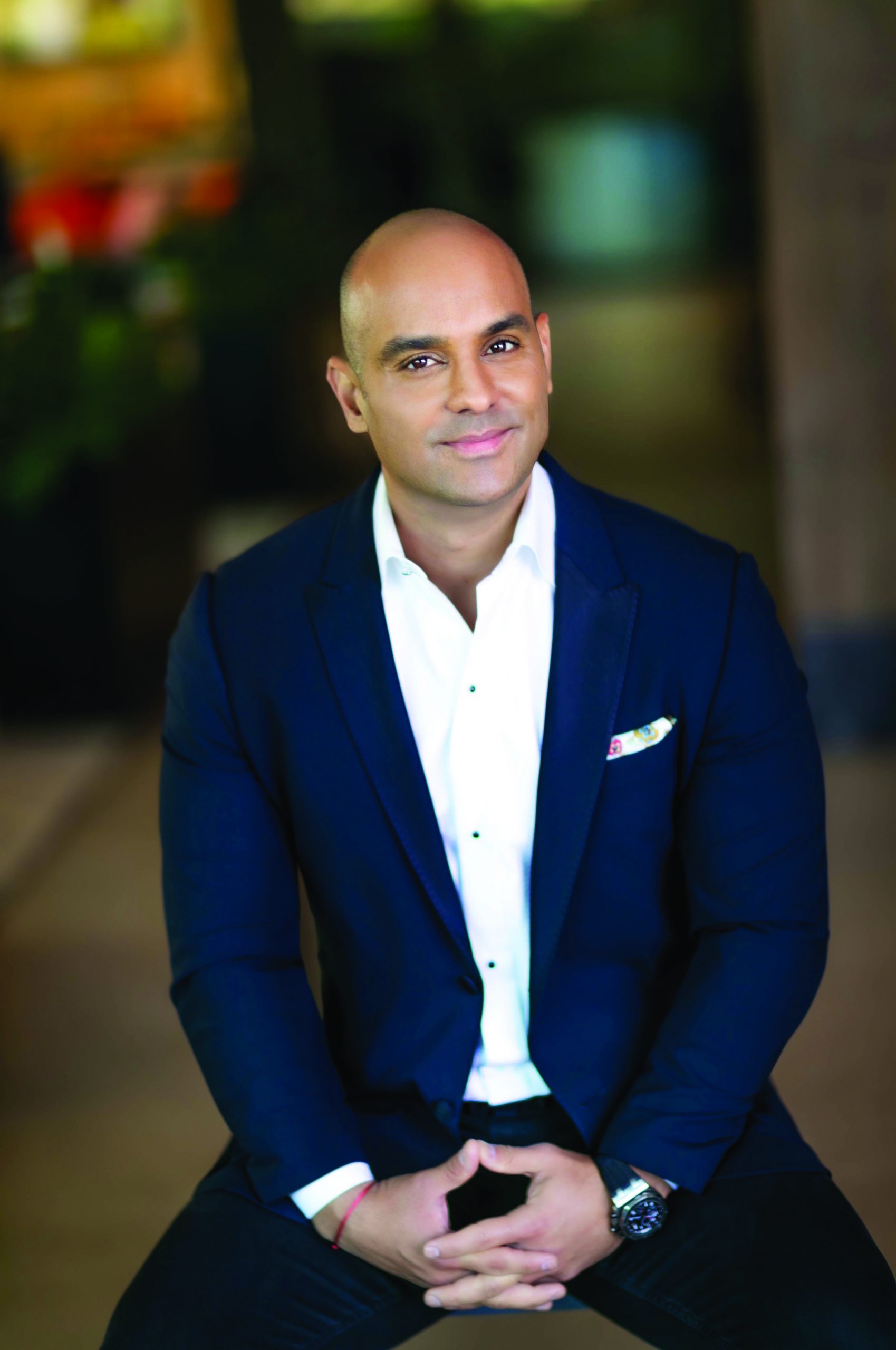
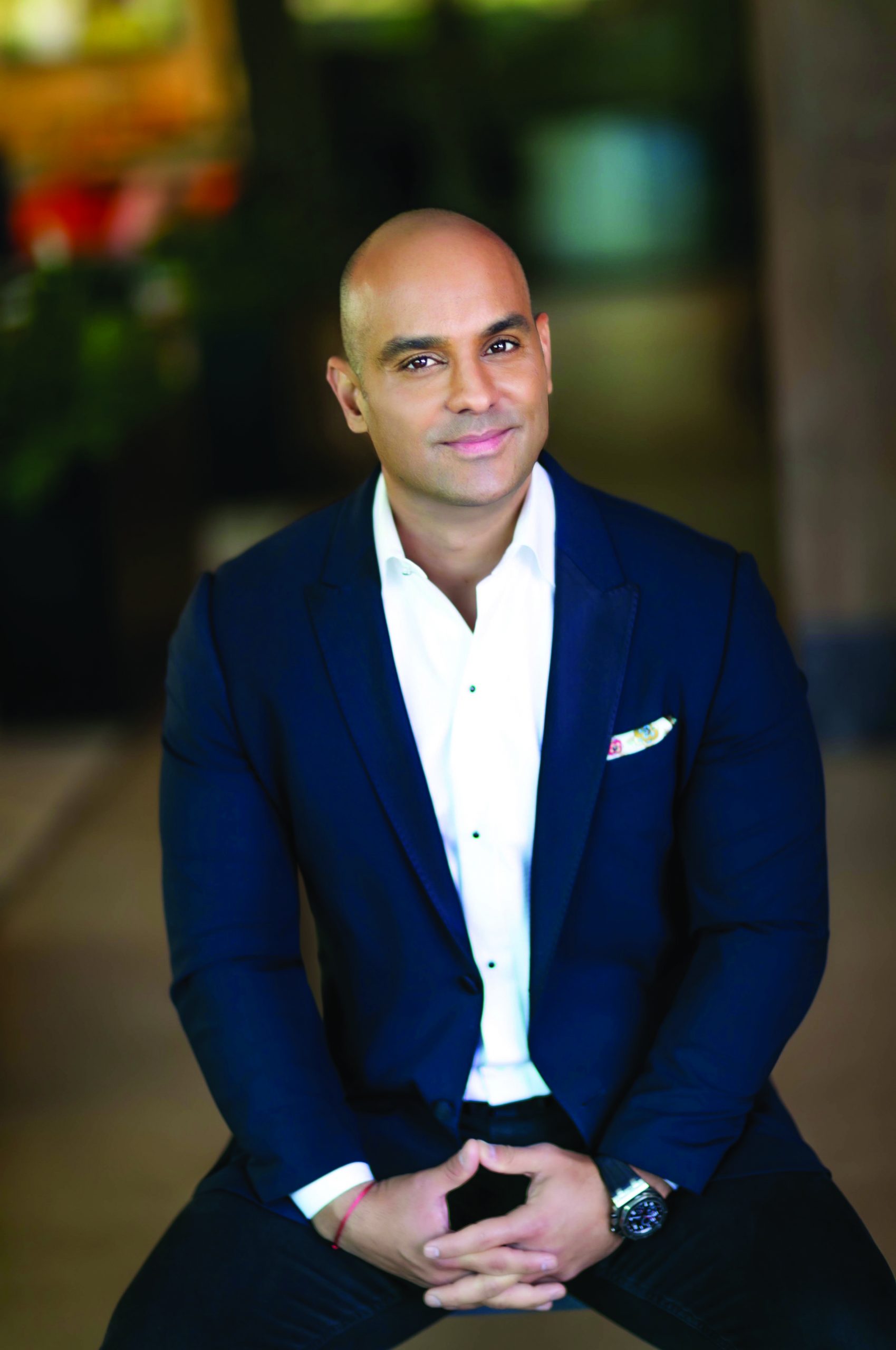
DLP Capital is a private real estate investment firm focused on transforming lives by building thriving communities. Through its sponsored funds comprised of accredited investors, DLP finances, develops, constructs, and operates safe, attainable rental housing communities for those priced out of homeownership. Here DLP Capital Founder and CEO Don Wenner shares his knowledge and experience with Real Leaders.
Real Leaders: How do you thrive in the impact space?
Don Wenner: It takes grit, dedication, drive, and discipline to make meaningful change in anything — especially the world. It’s not enough just to want to make an impact, no matter how strong that drive is. Grit is the passion and perseverance to wake up each day and continue progressing toward the big picture, even when it feels out of reach or when you must pivot in an unexpected direction. Grit is born from clarity and fueled by authenticity. Before you can make an impact, you need to know the what, why, and how — that’s the clarity. These elements of clarity are something you can turn to again and again when you feel off course. Authenticity and truly believing and caring about the work you do are crucial to thriving in the impact space. It keeps you going. True authenticity and passion can be felt by others, drawing them in to join you and magnify your impact.
RL: What milestones have you achieved this year?
Wenner: For the 12th consecutive year, DLP was recognized by the Inc. 5000 annual list of America’s fastest-growing companies. The funds that DLP sponsors had a range of successes, including surpassing $1 billion in assets under management in the DLP Lending Fund as of June 2024.
RL: What is the biggest challenge you’ve overcome?
Wenner: Amid the interest rate hikes and other market distress, it was challenging over the last year to source and find deals that the firm was confident would make sense for investors, which is paramount in the decision to invest or not invest in an asset. Despite these challenges, the firm has continued its track record of exceeding return targets in all funds since inception.
RL: What is your best strategy for finding investors?
Wenner: When you’re passionate about what you’re doing, when you do what you say you are going to do, when you believe in how powerful the work you are doing is, people are going to be drawn to that. The world is full of people who want to do good; they just don’t always know where to start. People lose sight of just how valuable — actually, let me go stronger with that — essential it is to create relationships. We don’t just talk to investors from behind a computer or a phone. We talk to them over dinner, in workshops, and live on webinars. The reason investors stay with DLP isn’t just about returns; it’s about the team support they feel on everything from investments to building extraordinary families and financial legacies.
RL: What is your long-term, mission-oriented dream?
Wenner: It is to make an impact on 10 million lives through the funding and building of 5,000 thriving communities.
RL: What is your best advice for fellow impact CEOs?
Wenner: Don’t lose sight of why you started. There will be pivots, challenges, and people who don’t believe in what you’re doing. Keep going. Stay true to your mission with an open mind about new opportunities that could potentially magnify your impact.
When I was preparing to raise my first fund, the accelerator I joined pushed hard for me to follow the playbook: Move fast, create momentum, close early. I was operating on fear of missing out, and I’ve never liked that energy. If something is aligned, the decision should feel clear; if it’s not, you wait — but I didn’t wait.
I ignored the tension building inside me. I brushed past the local conversations — the ones where angels shared their limited time, their desire to mentor, their need for something different. One had sold his company to Microsoft and founded two angel groups; another explained how local angels weren’t retirees with time to spare — they were builders themselves, craving connection and impact with limited hours.
Then came the moment that stopped everything: my wife’s high-risk pregnancy. Suddenly none of it mattered. The fund could wait.
Out of the fundraising race, I finally listened to the angels, the founders, and the reality of our region. The answer was obvious: We needed to build something for our own context, not someone else’s.
This wasn’t my first pivot. Years earlier at 26 I walked away from a successful mergers and acquisitions career in Spain. On paper I had everything, but I couldn’t stomach a career of moving money without purpose. I traveled, sat in silence, and reconnected with what mattered. That’s when I made a decision: I would only build what felt aligned.
That brought me to Puerto Rico, my mother’s island, during one of its worst economic crises. I ran the first seed fund in Puerto Rico but quickly realized founders didn’t just need capital — they needed partners who understood the grind. I couldn’t help unless I lived it.
So I did. I joined a university spinout developing a molecule to block cancer metastasis. I knew nothing about pharma, but I knew how to build. Today that company holds the first-ever pharma license from the University of Puerto Rico — still alive, still promising.
When I returned to fund-building, I rejected the playbook. I was tired of signaling to limited partners that I was a low-risk, first-time fund manager. I wasn’t here to conform. I was here to unlock capital for founders who shared our values — and to give angels a way to back entrepreneurs in their own communities.
At Carbono3 we’re doing just that: building founder-centered infrastructure to unlock capital where good opportunities are being lost. We combine company-building tools, investment readiness programs, education, and access to capital — all grounded in the realities we’ve seen firsthand. Every piece is designed to reflect our region’s context and make the capital journey more accessible for founders and angels.
We launched our own investment readiness platform with workshops, templates, and tools that founders could access at their own pace. We built programs with universities, won a Small Business Administration award to boost STEM entrepreneurship, and launched a software that automates compliance and due diligence — solving pain points on both sides of the capital table.
I tell founders to challenge everything including me because real impact doesn’t come from chasing external fit. It comes from internal alignment. Like Gandhi said, “Happiness is when what you think, what you say, and what you do are in harmony.”
That’s the only formula I trust — and trust is where impact begins.
The AZEK Company is an industry-leading designer and manufacturer of beautiful, low-maintenance, and environmentally sustainable outdoor living products. Recognized as a leader in innovation, quality, aesthetics, and sustainability, its products are made from up to 85% recycled material, providing a long-lasting, eco-friendly, and stylish solution to consumers. Here, The AZEK Company President and CEO Jesse Singh shares his knowledge and experience with Real Leaders.
Real Leaders: How do you thrive in the impact space?
Jesse Singh: We thrive by staying true to our core purpose, which is to revolutionize outdoor living. Our decisions are centered on creating long-lasting products that reduce environmental impact, while enhancing the beauty, functionality, and resilience of outdoor living spaces. By transforming waste into opportunity, we use up to 85% recycled waste and scrap materials to manufacture products across our portfolio, which enhances our commitment to sustainability and circularity.
RL: What milestones have you achieved this year?
Singh: This year we set a new industry standard by becoming the first to earn an Ignition Resistant designation from California’s state fire marshal. Our products offer top-rated fire resistance and are made with an increasing amount of recycled waste and scrap material.
RL: What is the biggest challenge you’ve overcome?
Singh: Historical biases around synthetic materials still exist in the built environment. As we continue to expand and engage the market in a broader way, we are increasingly optimistic about the long-term opportunity for growth and material conversion away from wood and toward our types of materials. Our success is evidenced by a 10-year track record of delivering double-digit compound annual growth in net sales. This positions us to capitalize on the growing demand for sustainable materials.
RL: What is your best strategy for finding investors?
Singh: Communicate your vision clearly and demonstrate tangible results. Building strong relationships and maintaining transparency helps attract the right investors. Getting your story out there — whether at conferences, trade shows, virtual webcasts, or in-person meetings — creates valuable opportunities to engage with new potential investors.
RL: What is your long-term, mission-oriented dream?
Singh: Our long-term dream is to lead the building products industry toward a fully circular economy, where waste is eliminated and most of our materials come from recycled or renewable sources. We aim to inspire a broader shift across industries toward sustainable practices that positively impact both people and the planet.
RL: What is your best advice for fellow impact CEOs?
Singh: Stay focused on your big ambition while creating a maniacal focus on execution. Hold fast to your mission and values, especially when challenges arise; authenticity resonates with customers, employees, and investors. Prioritize delivering real, measurable impact and embrace innovation. Do not be afraid to take calculated risks. Building a strong, purpose-driven team is also crucial; surround yourself with passionate, experienced individuals who share your vision and are committed to delivering results and making an impact.
It all fell apart so quickly. On Dec 8, 2008, I had raised millions of dollars for a distinguished arts charity. Three days later, Bernie Madoff was arrested, and we lost millions. I had been at this job for three years, starting when I was 26. Donors called, furious.
I took responsibility, even though the decision had been made carefully 15 years prior. Everyone had an opinion, but no one had a solution. The charity needed to survive and to fulfill $1.7 million in obligations to kids and other nonprofits. My incredible board chair, Bill Schwartz, led by example, and without him I would never have gotten the chance to succeed.
I had to say to a notable billionaire, “I am extremely sorry we are in this situation. It was not my intention when I was 13 years old and had never been to New York City to convince a multimillion-dollar foundation to invest with someone who eventually would be proven to steal all this money so that I can be in the situation of being yelled at by you and likely losing my job.”
The man paused, hearing how ridiculous and misdirected his anger actually was. That was my first lesson in taking responsibility. The second came when working with Paul and Kristina Dalio, along with their father, Ray Dalio, years later. Two days into my position, we faced an extremely challenging choice that, in hindsight, could have been made differently. I immediately took responsibility for fixing it, but that wasn’t good enough.
What I learned, which has shaped me to this day, was that I had to take full responsibility for the decision that had been made by someone else as if I had made that decision, which led to my making the most informed next step possible. I wasn’t to blame for what happened. It wasn’t about my ego or even my desire to fix it. If I hadn’t accepted that full responsibility, then the outcome may have been colored by the fact that I knew deep down I hadn’t created this challenge in the first place.
That was my second lesson in taking responsibility. The third one defined my life. There is a lot written about the power of hearing “no.” At this point, I had heard “no” about 10,000 times, or even more. As I faced numerous challenges to resurrect the arts charity from disaster, I sat above the blame game. Instead of walking away defeated, I stayed curious, taking the time to learn about what made that investor/business leader/philanthropist actually passionate, and what they were focused on.
I purposefully expanded my circles by getting involved in dozens of things completely antithetical to my day-to-day. Everyone told me I should stick to my “tribe” and network in it. I did — and also said “yes” to everything else. Two years later, I had a network of thousands of people from over two dozen circles. And I had three things no one else had — but at that time I thought I only had two.
First, I had built trust amongst everyone by leaning in, delivering value, and asking nothing in return. Second, all of these incredible people had told me their passions in order for me to help them, which meant now I knew what they wanted.
A few years passed, and then every week was filled with 10–15 calls from extremely connected people asking me for introductions they couldn’t get for themselves. That’s when I realized the third thing: I had built a diverse network based on action and trust with the most valuable resource in business and philanthropy, the connector. This is the person who knows everyone, makes introductions all the time, and now trusted me.
I had built trust amongst the trust makers, people whose soft skills of vulnerability and curiosity had become strengths, and all of whom acted with generosity and practiced daily gratitude. I had been told as CEO to focus on what was in front of me, and we’d get through it. Instead, I chose to expand my capabilities, study everyone around me, and learn who to spend my time with.
Every year, I faced criticism for my focus, but the data never lied. I was responsible for 60–85% of the fundraising for the arts charity, bringing in 200–350 donors annually. My close rate for meetings was 45%, which fell so far above the norm in fundraising because I had begun to master connection at a whole new level.
I would not have succeeded and gotten to this point in my career as CEO, which I have been for 20 years, now running my own companies, if I had stayed the course without these lessons:
I embraced the power of “no” and turned it into incredible actionable insight.
I gave without an expectation of return, building trust through action.
I led with humility, never defensive, but instead focused on the outcome.
Embracing purposeful community will change our world — as long as we all do the self-work needed to do more than just help ourselves and blame others, and we rise up as leaders to enrich others before we enrich ourselves.
My Keys to Building Capital Relationships
1. Capital raising is a long game, so build a relationship first to demonstrate your value. This is about building relationships, not transactional interactions.
2. People only invest in other people, so embrace the principles of vulnerability and curiosity to be a leader who asks what your investors want to see from their investment and in you, rather than telling them only what you want.
3. You would never invest in someone who tells you to “trust me;” you would only invest in those who have demonstrated how they would hold your trust, so embrace the principles of generosity and gratitude, as they keep doors open without being opportunistic.
4. Anytime you get a no, offer to help with what that investor needs. In return, they will value you and make the intro you actually want. By being a connector, you build a stronger community even if your day-to-day interests do not become integrated.
5. Don’t partner with people whose values are not aligned. Be bold and share what you want and what you believe. Make sure you hear back as to any investor’s “why” as well.
Cymbiotika is a wellness company that revolutionizes health through advanced supplements that support optimal vitality and well-being. With a focus on holistic wellness, Cymbiotika is leading a movement toward improved quality of life by offering science-backed solutions for enhancing internal health. Here, Cymbiotika Founder and CEO Shahab Elmi shares his knowledge and experience with Real Leaders.
Real Leaders: How do you thrive in the impact space?
Shahab Elmi: As a rapidly growing company Cymbiotika integrates cutting-edge supplements and holistic wellness practices to enhance the well-being of its community. Cymbiotika is a movement dedicated to improving lives and making a meaningful impact in the wellness industry.
RL: What milestones have you achieved this year?
Elmi: Cymbiotika launched six innovative products and achieved a significant retail expansion in The Vitamin Shoppe and Sprouts. Cymbiotika was recognized by Inc. Magazine as No. 31 on the Pacific Region’s Fastest-Growing Private Companies list and secured a spot on the Inc. 5000 list of America’s Fastest-Growing Private Companies.
RL: What is the biggest challenge you’ve overcome?
Elmi: Cymbiotika’s greatest challenge has been navigating the significant demands and product shortages that have heavily impacted its cash flow. The company’s rapid, triple-digit growth year over year has created overwhelming demand. As a result, the company has completed a first round of external funding to sustain its growth.
RL: What is your best strategy for finding investors?
Elmi: Thanks to the company’s viral success, high-profile celebrities and athletes have become advocates for the products, which has naturally attracted inbound investor interest. Building and nurturing these relationships has been key to Cymbiotika’s growth.
RL: What is your long-term, mission-oriented dream?
Elmi: Cymbiotika’s dream is to help as many people as possible live longer, healthier lives. Central to this mission is creation of a powerful hub for learning, empowering individuals with the tools they need to make informed decisions about their health.
RL: What is your best advice for fellow impact CEOs?
Elmi: Instead of running from failure, embrace it. It’s an integral part of the journey to success. Confidence in your mantra and purpose is crucial; it’s what will guide you through tough times. Embrace those challenges — remember, resilience is what builds champions.
Asking the next question unlocked lasting impact for my company.
I thought the leap was getting on the plane. Turns out the real leap came when I realized we’d been doing it wrong all along.
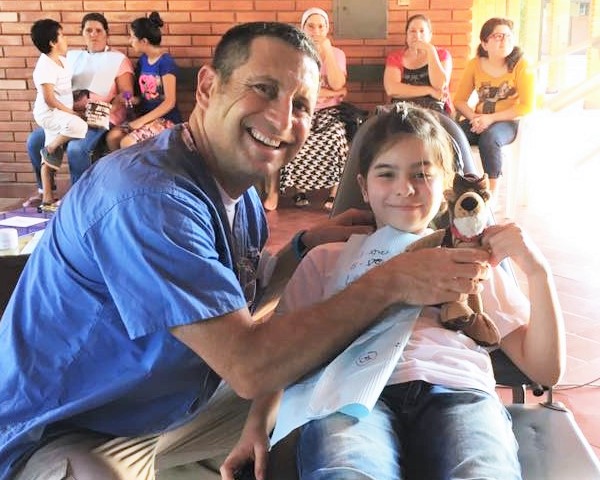
For 10 years I was the frog on the log. I told everyone I was going to jump — someday. I’d been talking about doing structured outreach work for nearly a decade. Then in November 2011, 30 days after saying “go,” I stepped off a plane in Paraguay with 12 people, 30 bags of dental equipment, and no real idea what we were walking into.
We set up our first clinic on the basketball court of an orphanage with 236 children. We had no instructions for the chairs, no practice run for the clinic flow, and only a loose plan. Half of our team were dentists. The other half including me, a CPA, were suddenly dental assistants. The Paraguayan Ministry of Health had even licensed us all as dentists for the week.
What Happens to the Next Ramon?
By the second morning, we’d already seen heartbreaking cases — children with teeth fused to their jawbones, mouths ravaged by decay. Then I noticed a boy lying in one of the darkened rooms downstairs. “That’s Ramon,” someone said. “He wasn’t feeling well enough to come up yesterday.”
When he rolled over, I saw a swelling the size of a golf ball on his cheek. I called over our surgeon, Dr. David Jones. His easygoing face turned serious instantly. We carried Ramon upstairs. Over the next 30 minutes, Dr. Jones drained an abscess so severe that when he finished, he said, “Steve, I’ve never seen anywhere near that much infection in a patient in my 40 years of practice. I don’t think Ramon would have gotten out of that bed alive.” I should have felt relief. Instead I felt dread. I asked myself, “What happens to the next Ramon when we’re back in the U.S.?”
Starting Isn’t Enough
That question wouldn’t let go. I called over our local partner, a 26-year-old missionary named Judah. “If I were to leave you my equipment and supplies, could you get a local dentist to come back here with you every month or two to provide care and be a resource so we know the next Ramon also gets support?” He thought for a second and then replied, “You’d probably need to help me with some gas money.”
That was it — the moment the Smiles for Everyone Foundation changed forever. We went from one-off service trips to building ongoing, sustainable dental outposts. Today we operate in nine countries and turn every $1 raised into more than $25 of delivered care.
Here’s what that day taught me: Starting is everything, but starting isn’t enough. The real leap in leadership is asking the next question: How does this last when I’m gone? That’s when you stop being the frog and finally hit the water.
Crusoe Energy Systems is a vertically integrated AI infrastructure company dedicated to sustainably powering computing. Here, Crusoe CEO and Co-Founder Chase Lochmiller shares his knowledge and experience with Real Leaders.
Real Leaders: How do you thrive in the impact space?
Chase Lochmiller: To minimize the environmental impacts of computing-led innovation, Crusoe takes an energy-first approach to providing a sustainable and cost-effective AI cloud platform. Since our inception in 2018, we’ve dedicated ourselves to driving change in advanced computing by utilizing wasted, stranded, and clean energy sources to sustainably power our data centers and AI-focused cloud computing infrastructure. Crusoe leverages cutting-edge technology to catalyze human progress across the globe while mitigating the ecological consequences typically associated with large-scale data processing.
RL: What milestones have you achieved this year?
Lochmiller: Crusoe avoided over 680,000 metric tons of greenhouse gas emissions by scaling Digital Flare Mitigation® (DFM) technology in the U.S. We expanded to 33 sites across six states, including 12 new deployments. Our company prevented over 5.4 billion cubic feet of natural gas from being flared and avoided over 8,500 metric tons of methane emissions. We generated over 635,000 megawatt-hours of electricity by harnessing stranded energy. We expanded internationally through a partnership with Unblock Computing. Lastly, Crusoe licensed our technology to enable a reduction in flaring by over 85 million cubic feet across two sites in Argentina.
RL: What is your best strategy for finding investors?
Lochmiller: None of this would be possible without the lasting commitment and dedication of our employees, investors, energy partners, cloud customers, and other key stakeholders — many of whom have been with us from the beginning. We cannot begin to express our appreciation enough for the many people working tirelessly to bring our mission to life. The key is finding the right people, partners, employees, and stakeholders who not only believe in our mission but can help us grow and succeed.
RL: What is your long-term, mission-oriented dream?
Lochmiller: Crusoe is working to transform the system of computing infrastructure — from the energy that powers it, to the data centers that serve it, to our purpose-built AI computing stack that supports the work of innovators using our technology. Through our vertically integrated approach, we are reimagining how large-scale AI computing should operate from the ground up. Our mission is to align the future of computing with the future of the climate, and that drives us day in and day out.
RL: What is your best advice for fellow impact CEOs?
Lochmiller: We are deeply grateful for the opportunity to continue to shape and scale the computing industry as we strive to always do more and do better, and that is the advice we would pass on: Strive to always do more and do better.
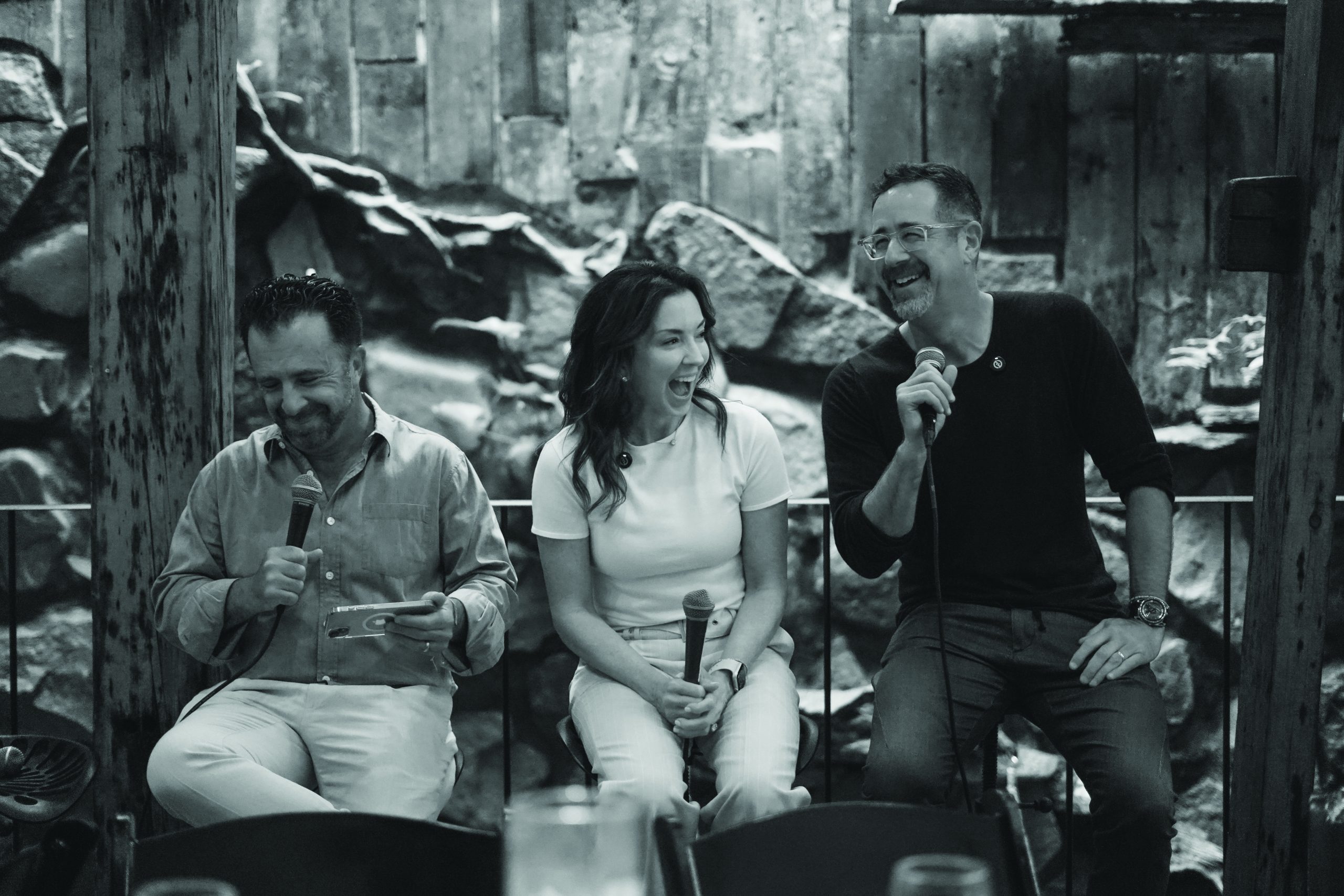
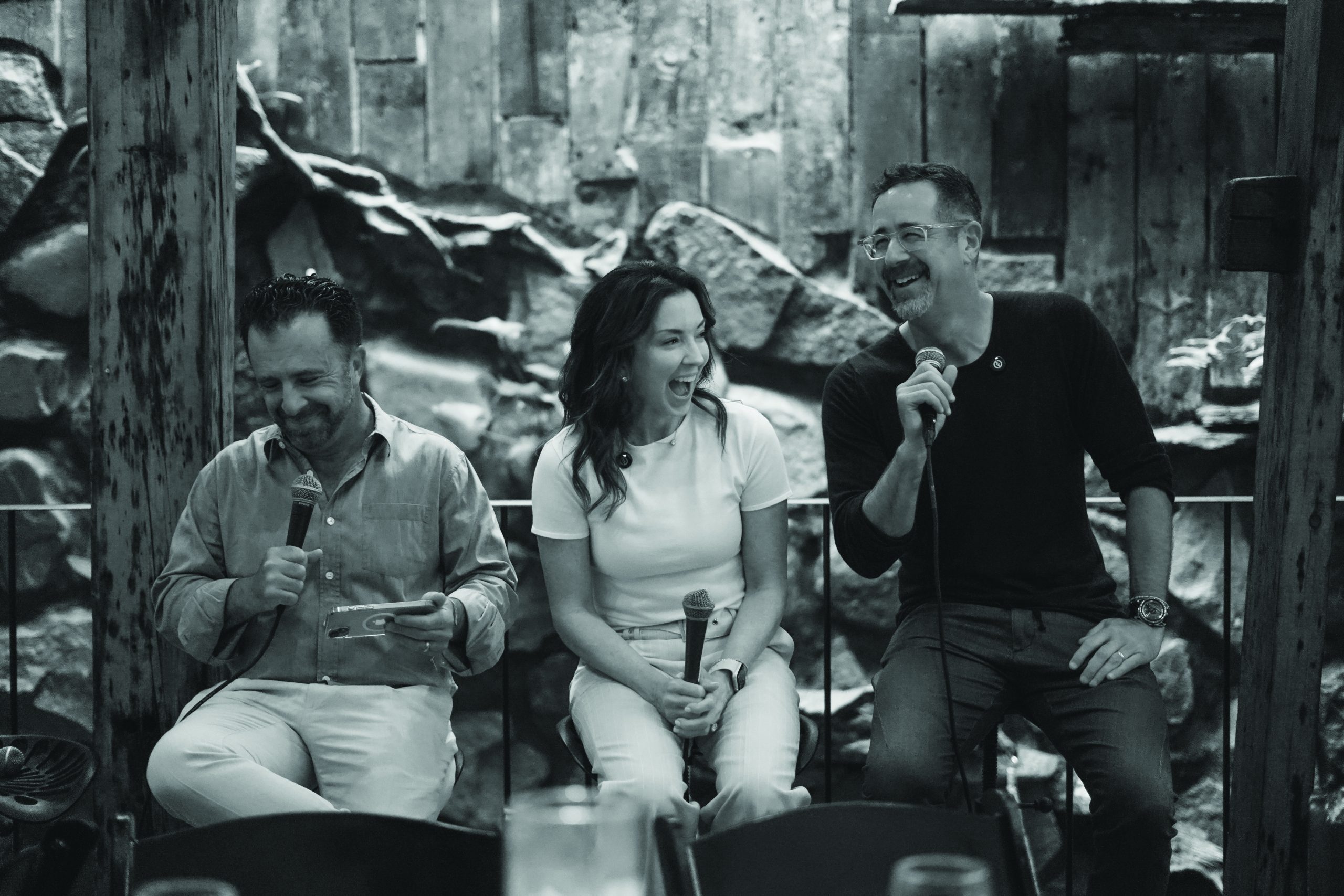
The husband-and-wife team tell raw, personal stories that show how to triumph over the uncertainty that they say most certainly awaits new entrepreneurs.
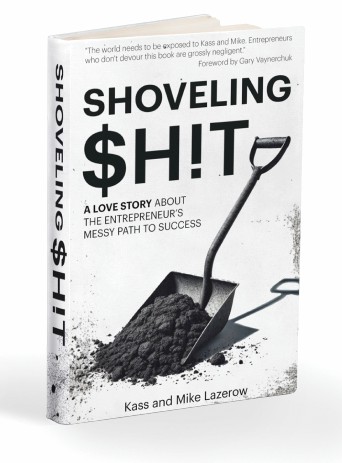
Mike and Kass Lazerow wrote a newly released love letter to entrepreneurs starring a four-letter word. If you’ve ever launched a business, the book’s title, Shoveling $h!t, won’t surprise you — in fact, many battle-worn business warriors are surely reading this and nodding their heads in surrender. The book encourages embracing the beauty of the struggle and draws from decades of helping entrepreneurs build companies.
Kass and Mike are serial entrepreneurs and investors best known as the co-founders of Golf.com (sold to Time Warner in 2006) and Buddy Media, the leading social media marketing platform that sold to Salesforce in 2012 for $745 million. Since then they have focused on providing capital and advice to the world’s most innovative founders and have been co-founders and early investors in almost 100 startups generating more than $10 billion in realized gains.
They served as angel investors and advisors to Scopely, which sold to Savvy Games for $5 billion in 2022, and Liquid Death, the canned water company whose “evil mission” is to make people laugh and drink healthy beverages more often, all while helping to kill plastic pollution. He is business development, sales, and product. She is operations and HR.
“The first thing I look at when deciding whether to invest in a startup is the market,” says Mike. “I’ve never seen huge companies come out of tiny markets, so it always starts with that, but the most important thing is the founders. Do they know what they don’t know? Are they humble enough to realize that they’re not going to know the answer to everything? I’m not looking for someone to spin me a great story. I’m looking for humility and authenticity. If they tell me they have the product vision but they aren’t a salesman, that’s the perfect answer to me because I know they get it.”
When considering an investment, Mike and Kass don’t care much about the competition because most markets aren’t winner takes all. They are more focused on building a psychological profile of the founder: Who are they? What motivates them? What’s the product, and why is it different? How well do they know the customer?
Sales and marketing is next. “We care a lot about whether your product can get to market,” says Mike. “You need to be able to explain how to get this into your customers’ hands. How do they find out about it? How do you deliver it?”
Finally, does the financial model make sense? “Yes, you’ll pivot, you’ll change,” Mike says. “But if it doesn’t make sense at the beginning on a piece of paper or back of a napkin, it’s not going to make sense when you launch it.”
So what’s trending right now? Mike and Kass say now is a critical time for investors to look at social impact companies. “Diversity, equity, and inclusion as a corporate marketing term is dead — DEI has been killed,” Mike says. “However, the principles behind it have never been more essential for businesses to embrace because any business that isn’t diverse and celebrates equality for everyone — not only in the company but customers and partners, any company that’s not inclusive to their stakeholders — what kind of company is that? Look at the news. It’s depressing. This is a better time than ever to double down on these principles.”
For example, Kass and Mike are helping Dylan Zajac’s company, Computers 4 People, fix the inequity gap when it comes to computer access across the world. “Dylan’s goal is to donate a million computers, and he’s been working on this all through college. He even came up with a way to give computer lessons to the people he’s giving the computers to,” says Kass. “I love it because I’m seeing a big group of young adults who are very much looking for companies to run that have a social good component, if not the whole business model.”
Oh, $h!t
Kass and Mike hear a lot of pitches, and there are a few things that make them cringe. “First is if they’ve done zero research with their name, and it’s pretty obvious that it’s going to get them in trouble down the road and they’ll have to pivot and rebrand,” says Kass.
Another concern is the inflation of titles. “Everyone wants to seem cool, so when everyone in the group is running around with some C-level title with zero experience, that also makes me cringe,” she continues. “How are you going to operate efficiently and move at the speed you need to as a startup with as many pivots as you’re going to need to do? You’ve got to protect who you hire, give those people the right titles, and put the structure in place from the beginning.”
Mike’s No. 1 pet peeve is a lack of focus. “One of the questions I ask is: What are the top three priorities for your business this year? You would be shocked at how many young founders — and frankly, business owners — don’t know that,” he says. “If you don’t know what you need to be focused on, how do you know where you’re going and what you want to accomplish? If you as the founder don’t know it, your whole organization definitely doesn’t know it. We like clarity. You have to know how to spend your resources, and if you don’t have clarity of vision, you have no chance.”
The Culture Formula
The Lazerows are often asked how to build a strong culture, especially in remote work environments. “It definitely stems from leadership,” Kass says. “It’s your job as the leader to make sure you know what you’re concentrating on. What is the mission of this company over the next 12 months? Your job is to make sure everyone is on the same page.”
Kass emphasizes that an important part of the culture formula is making sure everyone understands the focus. “They’ve got to understand it because they have a role in that focus,” she points out. “The goal might be $10 million in revenue, but you have to show them how every team within the company should work to get that. You explain it, you show diagrams on how every person in the company connects to that mission, and then your job is to say it over and over and over again. You can never say it enough. You’re saying it in one-on-one meetings, in small groups, to teams, to investors, in press releases.”
Kass says most companies believe that it’s easier to have people remote, but there are problems with that. “You learn a lot from being around other people. You learn the skill of reading other people, understanding how to negotiate, how to pick up on little nuances,” she says. “As the leader you have to show them how you interact with people. Companies hate when I say this but if they are going to have remote teams, then the leaders need a budget so they can go around the country. If you can’t afford to bring everyone in, you’ve got to do the road show, you’ve got to have hubs, you’ve got to have in-person meetings. I feel very strongly about this.”
Building culture is about the traditions, the symbols, the celebrations. “Whether you have a remote workforce or everyone in person, culture isn’t just about the good times,” Kass says. “It’s getting through a necessary pivot or losing a big customer. Is everyone going to stay with you even though they’re scared about the unknown and what’s going to happen? Do they believe the leaders got this? Are the leaders communicative and transparent about everything? Don’t shine the turd. Culture is built on the tough times and how you tell people what’s happening and what they should be doing.”
Mike adds that while he and Kass are realists, his belief is that companies should be in person. “If I am starting a company today, I want to be together,” he says. “I think we’ve all got to go back to the office, even if it’s hybrid. That’s the way you execute strategies and have any chance of creating relationships that stick.”
Forget Work-Life Balance
In the new book, Kass and Mike write about the imbalanced life of an entrepreneur. “You can only do one great thing at a time,” says Kass. “When I think about entrepreneurs and the amount of crap thrown at them — you lose your office space, three people quit, there’s a lawsuit, you have to rebrand — there’s never enough time to do everything at its top level.”
She says she and Mike accepted from the beginning that they would be sacrificing their kids’ childhood for a while. “Our hope was that we could give more back to them when they were a little bit older,” she says. “We calculated for that. We didn’t have many friends outside of work. Spring break was our family time.”
“There’s no balance because it’s unlimited work,” Mike says. “You’re not just doing a job — there’s this whole world that you’re in charge of — and that leads to a lot of fear and doubt. You will be miserable many days, and you’ll say to yourself, ‘I don’t want to do this.’ You will be miserable and realize at the same time that it’s the only thing you were put on earth to do. It’s where you’ll find your passion, your purpose, but it comes with significant personal costs.”
Kass and Mike want to help leaders embrace the uncertainty because they say that’s the best way to handle the fear — not eliminate it but thrive inside it, and be able to make better, more confident decisions.
“Don’t try to separate personal from business — just live your life,” Mike advises. “If it’s important, make it part of your day-to-day living. Make giving back part of your nine-to-five, not just nights and weekends. You’ll get better at navigating risks and helping people. All of a sudden you’re a better employer, mentor, friend. You’re communicating better, having the hard conversations, staying healthy. There will be this new-found calmness inside the shitstorm. The shitstorm doesn’t go away — and you don’t want it to — because the shitstorm is what takes people and companies to the next level.”
Check Your Ego
The sacrifices paid off for Kass and Mike, who live happily in New York City and Hudson Valley and have three grown children and two rescue dogs. “One of our family’s favorite phrases when our kids were young was, ‘We never give up, and we always give back,’” says Kass. “I love that even with everything going on, our kids saw and recognized this was our way. There’s no better drug out there than giving back as leaders with unconditional support and love to help glue the culture together.”
Even with disruptions, rising costs, and trade wars, they believe it’s a great time to be an entrepreneur. “The best time to start a company is today,” says Mike. “Whether you’re in a depression or have zero revenue, you’re not going to do less than zero. It’s time to build — but always be ready to pivot.”
“The pivot is not something to fear,” adds Kass. “It’s something to embrace just like other uncertainties. Your ego can’t drive decisions. If ego drives the decision, you’re too late. You might have to pivot three, four times. Ask, ‘What do my customers really want, and did I build that?’ You literally have to step aside and check your ego.”
Mike and Kass also encourage entrepreneurs to fully integrate the impact that they want to make into the business. “Businesses and entrepreneurs are the biggest drivers of good in this country,” he says. “It feels so good to use your resources and your company for good. When you give, you get so much more in return. You get a company with a purpose and people who feel like they’re not only working together but doing good together.”